CANVAS Weekly Update – April 2, 2021

Dear friends, 

CANVAS is pleased to bring you another weekly report! This week covers the continuing violence in Myanmar, negotiations between Iran and the U.S over a new nuclear agreement, and a resumption of conflict in eastern Ukraine  

Conflict Update:

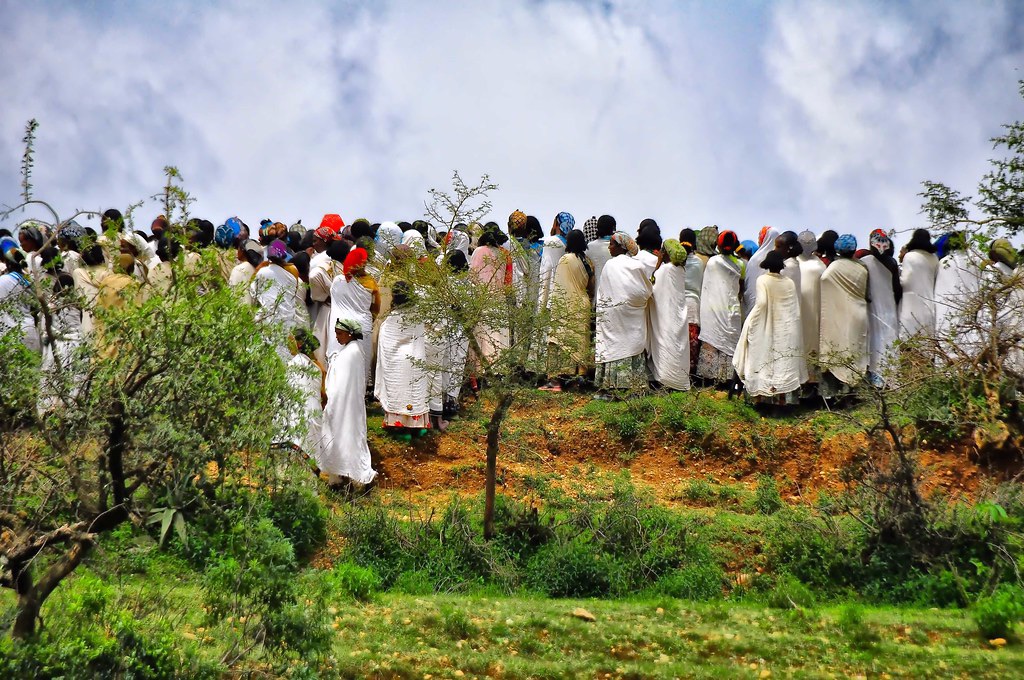
More than 5,000 Venezuelan civilians fled over the country’s border with Colombia after the Venezuelan government began targeting what it says is a criminal group operating within the border region. The assault, which began with several days of airstrikes that security experts have described as Venezuela’s largest use of firepower in decades, represents a significant shift in the largely hands-off strategy the government has taken in dealing with the illicit organizations that flourish along the Venezuela-Colombia border. For years, the Maduro government has tolerated and sometimes even cooperated with these armed groups. The reason for the change in strategy is unknown. The Venezuelan assault, centered around the town of La Victoria, has been focused on a faction of FARC dissidents known as the Tenth Front. A senior United Nations official told the Security Council last week that more than 500 Ethiopian women had formally reported sexual violence in Tigray, although the actual toll is likely much higher. Hundreds of accounts detail abused committed in Tigray, the mountainous region in northern Ethiopia where a grinding civil war has been accompanied by atrocities including widespread sexual assault targeting women. Addressing parliament on Tuesday, Ethiopian Prime Minister Abiy Ahmed publicly acknowledged that sexual assault had become an integral part of a war that he once promised would be swift and bloodless. “Anyone who raped our Tigrayan sisters, anybody who is involved in looting, will be held accountable in a court of law,” Ahmed told lawmakers. 

Violence in eastern Ukraine has escalated in recent days, according to statements from the Russian and Ukranian governments. In the deadliest engagement so far this year, four Ukranian soldiers were killed and another seriously wounded in a battle against Russian-backed separatists in the Donetsk region of eastern Ukraine. The soldiers’ deaths, along with a build up of Russian forces on the Ukranian border, has seized the attention of senior officials in Europe and in Washington. The Ukranian Parliament this week approved a statement declaring an “escalation” along the front, essentially acknowledging that a cease-fire negotiated in July 2020 had broken down. 

Three health workers, all women, were shot and killed in Jalalabad in eastern Afghanistan this week while working for the country’s polio vaccination program. The attack came only weeks after three women working in television were killed in a similar attack in Jalalabad. No group immediately claimed responsibility for the killings. Zabihullah Mujahid, a Taliban spokesperson, rejected any involvement in the incident. Afghanistan, along with neighboring Pakistan, are the only two countries where polio has not yet been eradicated. 

The Islamic State has claimed responsibility for a days-long ambush of a port town in northern Mozambique last week that forced tens of thousands of people to flee the area and left dozens dead, including foreigners. The attack, which centered on the town of Palma, was an alarming escalation of the war in the gas-rich province of Cabo Delgado, where insurgents with loose ties to the Islamic State have killed at least 2,000 people over the past three years. In recent months, the local insurgency has grown in strength and seized large swaths of territory, including the region’s other main port town. Last week’s attack demonstrated a new level of boldness for the insurgents and was the closest yet that militants have come to a multibillion-dollar gas project operated by international energy companies. 

Coronavirus Update:

COVID-19 infections and deaths have continued to rise internationally. World leaders from 25 countries and the head of the WHO called for an international treaty to improve pandemic preparedness this week that would advance national, regional and global capacities and improve global resilience to future pandemics. While promised COVAX vaccines failed to make it to South Korea, Indonesia and the Philippines this week due to Indian exportation restrictions, Yemen and Kosovo received their first vaccines through the program. In other vaccine news,  

this week Canada and the Netherlands both suspended their use of the AstraZeneca vaccine for people under 55 and 60, respectively. Suspensions of the vaccine have coincided with the WHO’s criticism of Europe’s vaccine rollout as “unacceptable slow,” as cases increase across the continent. 
 

Myanmar:

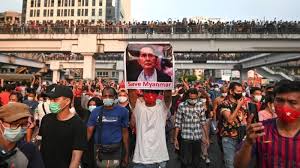
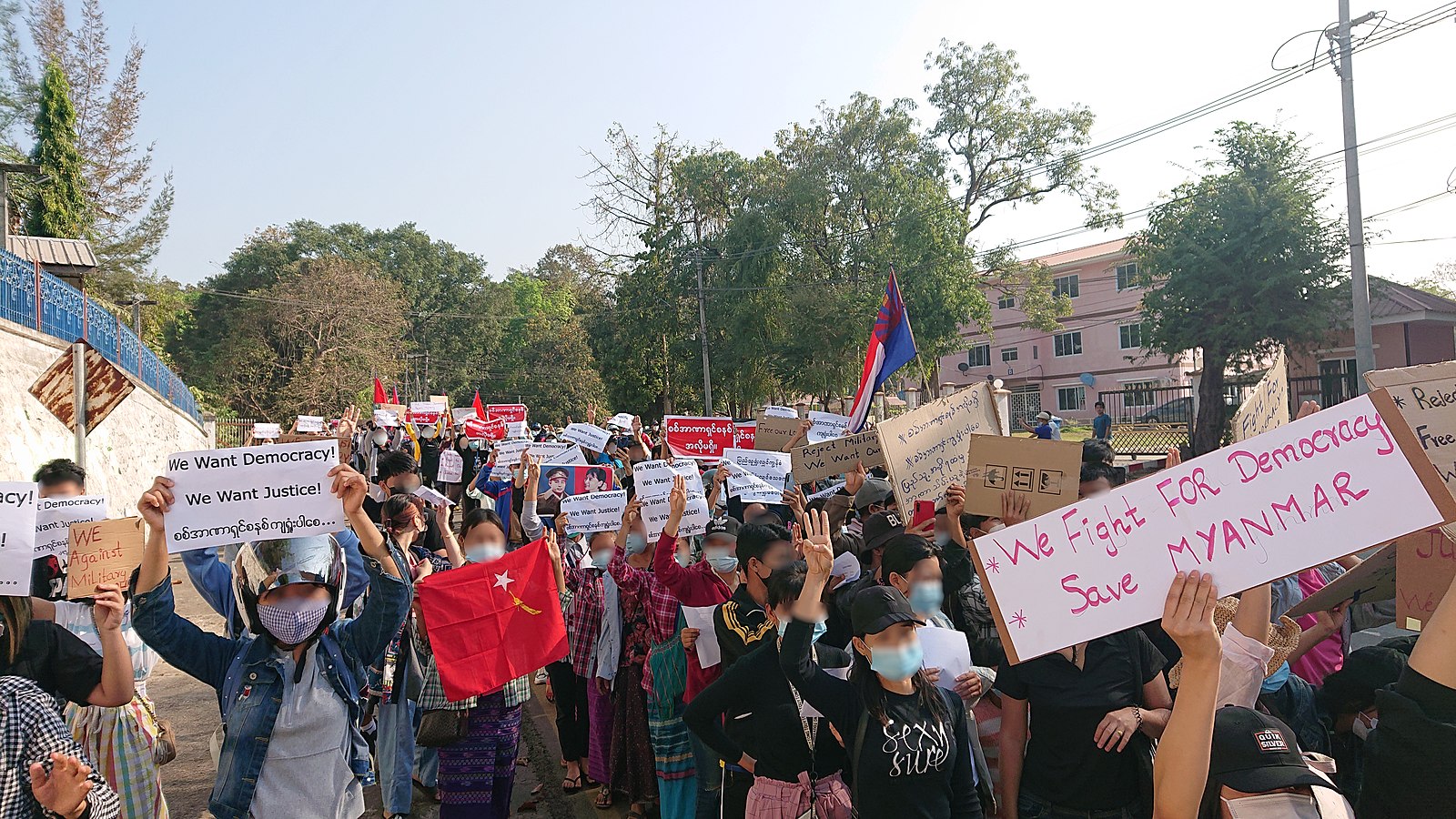
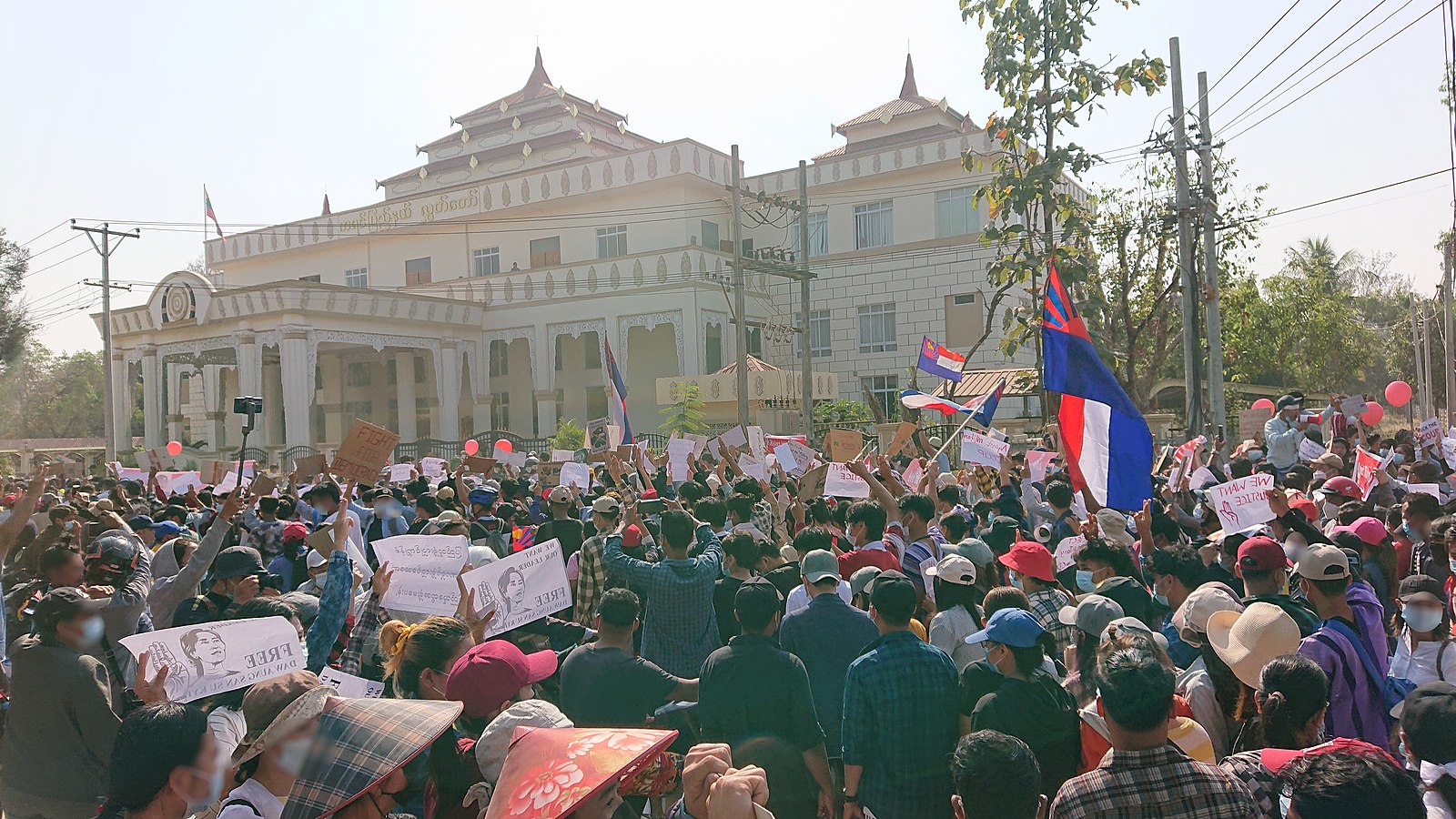
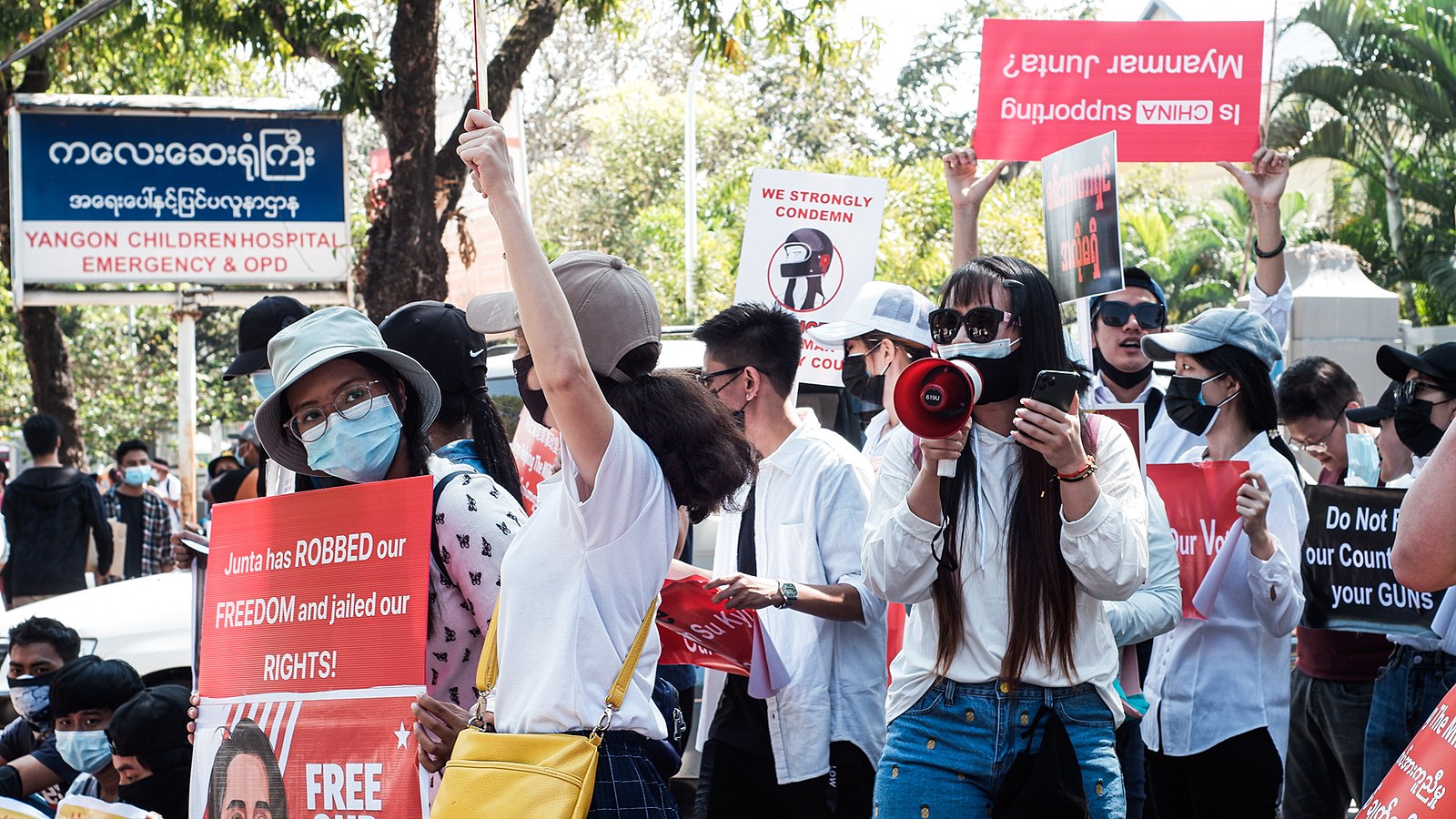
According to international humanitarian group Save the Children, at least 43 children have been killed by armed forces in Myanmar since the military junta seized power in February of this year. In a statement, the organization said that “it is clear that Myanmar is no longer a safe place for children.” Overall, at least 543 people have been killed since the coup, although the actual number of fatalities is likely much higher. The death toll for children has more than doubled in the past two weeks. A total of fifteen children under the age of 16 were killed, with the youngest being a six-year-old girl. Also among the casualties are a fourteen-year-old boy who reportedly died after being shot in the head in his own home. To commemorate the dead, protesters across the country have held flower strikes, placing floral tributes at locations where protesters have been killed by security forces. On Saturday, which saw security forces open fire on protesters in more than 40 locations in Myanmar, the military government held a luxurious gala to mark the annual Armed Forces Day, which commemorates the start of Myanmar’s military resistance against Japanese occupation in 1945. Images shared on social media showed military officials, including Myanmar’s leader Min Aung Hlaing, wearing white uniforms and bowties, walking along a red carpet, and seated at large tables for dinner. 

Aung San Suu Kyi, Myanmar’s ousted civilian leader, was charged with violating the official secrets act this week, according to her lawyer. The charge is the fifth and most serious charge that has been leveled against Suu Kyi since her arrest following the February 1 coup; a conviction can carry a prison sentence of up to fourteen years. On Friday, the military junta ordered an internet shut down across the entire country. Local wireless broadband internet service providers said they were ordered to shut down until further notice by the Ministry of Transport and Communications. 

In response to the escalating violence, opponents of Myanmar’s military government declared the country’s 2008 constitution void and put forward an interim replacement charter Wednesday. While more symbolic than practical, the moves could help to entice Myanmar’s armed ethnic militias to ally themselves with the mass protest movement. The actions were taken by the CRPH, an underground, self-styled alternative government established by elected lawmakers who were not allowed to take their seats when the military staged the coup and ousted civilian leader Aung San Suu Kyi. The CRPH also presented a Federal Democracy Charter as an interim constitution which seeks to end the military dictatorship and meet the longstanding demands of the country’s myriad ethnic groups and their demands for further autonomy. The proposals are politically significant because the protest movement has been seeking an alliance with the ethnic minority armed groups and would like them to form a federal army as a counterweight to the government armed forces. 

Further, the U.S. State Department has ordered all non-essential personnel and their family members to leave Myanmar as the junta’s violent crackdown on peaceful protesters continues. The order updates an advisory issued by the State Department last month that allowed non-emergency U.S. personnel to leave the country if they wanted.

 

The United States:

The U.S. also has many big financial headlines this week after Biden held his first cabinet meeting. Firstly, the government has announced a massive $2trillion infrastructure project led by 5 cabinet members, however, Senate minority leader McConnell claims Republicans will oppose the plans on the grounds that it will raise corporate taxes to fund the project. Secondly, $5bn is planned to be allocated to tackling gun violence through community-based prevention schemes. Finally, the economy saw an increase of 916,000 jobs in the month of March, owing to businesses reopening, the stimulus check and the progress of the vaccine rollout.

The media globally has been following the trial of ex-police officer Derek Chavin for the death of George Floyd which sparked massive Black Lives Matter protests last summer. The trial started on Monday, and witnesses have emotionally testified, and notably, a police lieutenant testified that the use of force was “totally unnecessary”. In other news, on Friday, a car drove into two police officers and wielded a knife outside the White House, killing one officer and crashing the vehicle into a barricade. As of yet, there is no claim to terrorist motive or any connection to the Capitol riots in January. Meanwhile, it has been reported that in March, migrant border crossings into the US from Mexico is the highest recorded monthly figure since 2006. Finally, transgender rights are being threatened as 28 states across the U.S. consider anti-trans legislation, with bills already passed in Tennessee, Mississippi and Arkansas.  
 

A long-awaited World Health Organization (WHO) report investigating the origins of the Coronavirus was released this week, putting China in the headlines around the world. The report claims the disease originated in wildlife farms, rather than the wet market as initially believed, however, it has also drawn criticism from scientists for its inaccuracy, insufficiency and the power China retained over information access for investigators. Meanwhile, experts are claiming Russia and China are excelling in global vaccine diplomacy by selling or donating Coronavirus vaccines to economically weaker states in return for allyship in other international political developments. According to one source, China has already sent 118 million doses of its Sinopharm vaccine to 49 countries. Moreover, a study conducted by US-based AidData claims that China’s loan deals with low and middle-income countries have unusual terms which favour China, including confidentiality clauses. These clauses mean little is known about the conditions attached to China’s lending despite them supplying 65% of bilateral debt globally.
 

Hong Kong:

A court in Hong Kong this week convicted seven veteran pro-democracy activists for unauthorized assembly associated with a protest march in 2019. Martin Lee, an 82-year-old lawyer known as the “father of democracy” in Hong Kong, Jimmy Lai, a media tycoon and founder of the pro-democracy newspaper Apple Daily, and Margaret Ng, a lawyer and columnist, along with four others, were convicted of participating and organizing the unauthorized march. They each face up to five years in prison; sentences will be handed down April 16. The gathering which the case centered on took place on August 18, 2019, when hundreds of thousands of Hong Kong citizens gathered for an anti-government protest.

A spokesperson for the Chinese foreign ministry accused the American envoy to Hong Kong of “blatantly supporting anti-China troublemakers,” and making threats a day after he said the overhaul of Hong Kong’s electoral system would produce neither “meaningful democratic results” nor credibly represent the will of the people. The statement did not name U.S. Consul General Hanscom Smith, but a spokesman for the Chinese foreign ministry’s office in Hong Kong said “He [Smith] made much effort to support and cheer for anti-China troublemakers who mess up Hong Kong, and threatened us with so-called sanctions.” Smith has called the overhaul of Hong Kong’s electoral system “an enormous step backwards,” and said the U.S.’s concern was that the system “has been essentially rigged.”

In other news, Hong Kong has an abundant supply of Covid-19 vaccines available to all adults above age 30 and is offering a choice between Western-produced and Chinese-produced shots. However, many in Hong Kong are not in a rush to get immunized and many of the city’s vaccination centers are running at below capacity. Sign-ups for the Chinese-made Sinovac vaccine have been slow after many residents were spooked by several deaths among the thousands vaccinated; experts said the deaths weren’t related to the vaccine. On March 24, the Hong Kong government suspended injections of the Pfizer BioNTech vaccine after small flaws, such as defects in some vial caps, were detected. Local experts have calculated that it will take until the end of 2021 to vaccinate all Hong Kong residents at the current vaccination rate.
 

Zimbabwe:

A “2020 Human Rights Report”, which details a number of abuses in Zimbabwe, was released by the U.S. Embassy. The report highlights issues of transparency, intimidation, biased media, excessive force, and disenfranchisement in Zimbabwe’s electoral processes. Moreover, it claims serious human rights violations by security forces, notably, arbitrary killings and detention, the use of torture and inhumane treatment, poor prison conditions, threats toward media and censorship and lack of independence for the judiciary. Meanwhile, a report produced by the government titled the “Zimbabwe Vulnerability Assessment”, claims that 2.4 million Zimbabweans live with food insecurity and are struggling to meet basic needs, and the World Food Program claims the issue predominantly impacts unemployed people in urban settings. The issue of food insecurity has been exacerbated by Coronavirus lockdowns. Finally, the Coronavirus vaccine rollout, using the Sinopharm donations from China, has been slow as even health workers remain wary.
Cuba:

On Sunday, hundreds of Cubans gathered in Havana to demand an end to the United States trade embargo that has been in place for years. Protesters attended the rally on bikes and motorcycles as they waved Cuban flags and passed the US embassy. “Down with the blockade” was shouted by many in this caravan, just one of the 50 demonstrations that called for the end of the blockade. Many were hopeful that now president, Joe Biden, would reverse the harsh sanctions that were put in place by Donald Trump in his 4 years as president. The Cuban foreign minister showed his support of the demonstration as he said that the blockade has been “harmful, illegal, immoral [and] criminal” a sentiment shared by many in Cuba and the United States. Joe Biden stated on his campaign trail last year that he hoped to reverse the policies put in place by Trump, but at this time, the administration has only said that the policy is under review.
 

Iraq:

Iraqi prime minister Mustafa al-Kahdimi traveled to the Saudi capital of Riyadh this week to meet with the Kingdom’s de facto ruler, Crown Prince Mohammed bin Salman. Al-Kadhimi pledged during the visit that Iraq would never become a launchpad for attacks on Saudi Arabia. The statement came after U.S. officials said that explosive-laden drones which crashed into the main royal palace in Riyadh in January had been launched by Iranian-backed militias in Iraq. A relatively unknown group which calls itself Righteous Promise Brigade claimed responsibility for the attack. Al-Kadhimi said the group’s claim was not true and insisted that the attack had not been launched from Iraq. Aside from a discussion on border security, Iraq and Saudi Arabia signed five agreements on Wednesday covering financial, commercial, economic, cultural, and media fields, according to the Saudi-owned Al-Arabiya TV channel.

During the meetings, Saudi Arabia announced that it would contribute $3 billion to an investment fund for Iraq. The joint fund will accelerate investment in Iraq with participation from the private sectors in both countries, according to a statement from the state-run Saudi Press Agency. Saudi Arabia and Iraq also agreed to cooperate in renewable energy and in the oil sector under the scope of OPEC and OPEC+. Saudi Arabia and Iraq are OPEC’s largest oil producers.

In other news, Covid-19 infections in Iraq have surged in recent weeks, largely driven by the arrival of the more infectious U.K. variant of the coronavirus. According to the Iraqi Ministry of Health, since the beginning of the pandemic, Iraq has increased the number of intensive care unit beds equipped with ventilators from 700 to 10,000. On Wednesday of this week, a spokesperson from the Ministry of Health said that 468 of these beds were in use. However, many medical workers are unconvinced by these figures. A medical source who wished to remain anonymous said “All the hospitals I’m talking to in Baghdad are reporting a bed occupancy rate of 95 percent or more.” The Iraqi Health Ministry says that more than half of the recent cases in the country are from the highly infectious U.K. variant, which arrived in Iraq in February 2021.
 

Georgia:

EU-mediated talks between the opposition and the ruling Georgia Dream party failed for a second time this week after both sides refused to sign the document offered by EU mediator Christian Danielsson. MP’s from the ruling party have said that the talks failed because the opposition refused to sign an agreement that did not include repeat parliamentary elections and the release of opposition figures. Seven Members of the European Parliament (MEPs) released a statement following the failed negotiations which said that “both the ruling and the main opposition parties taking part in the discussions are to be blamed for this outcome and a special responsibility lies with the party in government,” and that “Georgia’s leaders should not expect a return to business as usual from the European Union.”
 

Iran:

Negotiations on bringing back the United States and Iran into compliance with the 2015 Iran nuclear deal will resume among all parties in Vienna next week. While there will be no direct talks between Iran and the U.S just yet, this will be the first “serious effort” taken since the inauguration of President Biden

The South African Defence Community this week agreed to deploy troops to Mozambique in order to help the country battle a violent insurgency in Cabo Delgado province, but offered few details on how many troops would be involved, which countries would provide them, or what their mission in Mozambique would be. Attacks by the terrorist organization al-Shabaab, which has ties to ISIS, have steadily increased in Cabo Delgado since 2017. Since August 2020, al-Shabaab fighters have controlled the key port town of Mocimboa de Praia and launched an attack against the city of Palma earlier this year which forced 67,000 people to flee their homes.

 

Indonesia:

LastSunday, a suicide bombing occurred outside the cathedral church in Makassar. The Coordinating Political, legal Security Affairs Minister confirmed that the two suspected bombers died, and an estimated number of twenty civilians were wounded. President Joko Widodo has denounced the explosion as a terrorist attack and has reassured the public the state will guarantee the safety of church goers. 
 

Thailand:

Sixty-four protesters were arrested last Sunday, March 28,2021. About 300 anti-riot police officers cleared the sites of a Government House demonstration camp, shouting through loudspeakers and giving protesters three minutes to pack up and vacate the area. The police denied the peaceful request of protesters to ask for more time to gather their belongings, and quickly arrested almost seventy people. 

In other news, The United Front for Democracy against Dictatorship will be leading a protest on April 4th with their supporters more commonly known as the Red Shirts. The main goal of the protest is to oust the administration of Prime Minister Prayut Chan-o-cha. The chairman of the organization, Jatuporn Promphan, says that the protest will be similar to the Black May event from 1992. While he admits that the United Front for Democracy against Dictatorship has lost its credibility to politicians in the country, he still hopes to gather a mass following and mobilize the country to hold the office of PM Prayut Chan-o-cha accountable.
 

Nicaragua:

The deal signed on the 29th of March 2019 between Ortega’s regime and the Civic Alliance, the opposition group, remains unrealised exactly two years later. The deal from the “Second National Dialogue” promised to reestablish constitutional rights for all and the freedom of political prisoners, however, the two years since have been characterised by deteriorating human rights standards, more imprisonment of political activists and the introduction of new laws curtailing civic space. 

The gold mining industry is also hitting headlines as the companies Condor Gold, Mako Mining and Calibre Mining plan to increase efforts to drill for gold, with the latter reporting a 202% increase in mineral reserves. However, Calibre Mining is a Canadian company. In other news, Nicaragua received a donation of 650,000 polio vaccines from Mexico, facilitated by the humanitarian organization DirectRelief. Finally, the Nicaraguan army has reported it turned back 1,116 migrants attempting to travel northward to the United States.
 

Belarus:

Belarus this week added former presidential candidate Sviatlana Tsikhanouskaya, who has been living in exile in neighboring Lithuania, along with other political activists, to a list of people the government links to terrorism. Pavel Latuska, a former diplomat and minister of culture now living in Poland, and popular blogger Anton Motolko were also put on the list maintained by Belarus’s State Security Committee, still officially abbreviated as the KGB. The move came after Belarusian authorities said they arrested a man last week who, according to them, was preparing an explosion in the capital, Minsk, as well as at a military unit near the town of Borisov. Prosecutor general Andrei Shved said Tsikhanouskaya was involved in the preparation of the terrorist attack, but provided no details.

The United Nations Human Rights Council adopted a resolution which condemned the use of force against peaceful protesters in mass demonstrations across Belarus after the disputed re-election of President Alexander Lukashenko last August. Rejecting the resolution, which passed with twenty votes for, seven against, and twenty abstentions, Belarus’s ambassador, Yury Ambravezic, said the country regarded the resolution “as yet another attempt to interfere in the domestic affairs of our State and we reject it.”

In other news, organizers of the Eurovision Song Contest have ejected Belarus from the competition for songs that were found to have violated the competition’s ban on political lyrics. Belarus’s original entry, “Ya Nauchu Tebya” (I’ll Teach You), by the band Galasy ZMesta, was criticized by opposition figures who asserted that the song endorsed President Lukashenko’s violent crackdown on anti-government protests. The country was given an opportunity to submit a modified version of the song, or a new tune. However, after evaluating the replacement, the European Broadcasting Union, which organizes the competition, said in another statement that “the new submission was also in breach of the rules” and that Belarus would be disqualified. 

 

Sudan:

United States Secretary of State, Anthony Blinken, commended the efforts of the Sudanese civilian-led transitional government this week as they paid $335 million to compensate victims of previous attacks. This was part of an agreement that would take Sudan off of the US list of state-sponsored terrorists. The attacks were on the US embassies in Kenya and Tanzania in 1998 by al-Qaeda who was backed by the previous Sudanese leader, Omar al-Bashir. Bashir was toppled in 2019 and this agreement and payment is the beginning of the expansion of a bilateral relationship between the United States and Sudan. 

Leaders from Egypt, Ethiopia, and Sudan are set to begin talks this Saturday in Kinshasa, DR Congo. The talks will last for three days and will hopefully end in an agreement about the Grand Renaissance Dam. President Felix Tshisekedi who took over the chair of the African Union recently will be the host of the talks and other influential members in the union will also be present. The official talks have come at the perfect time as tensions have heightened this past week after Egypt claims that nobody will take a drop of their water. Hopefully though, by the end of the long weekend, a decision will be made peacefully over the dam.  
 

Bolivia:

Bolivia’s former President, Jeanine Anez, was arrested last week over allegations that she came to power illegitimately, among other issues. This week, a Bolivian judge ordered her to be moved to a hospital and receive professional treatment due to poor health as questions arose from Anez’s daughter. Since being detained, Anez had been on a form of a hunger strike, she would eat and throw up, greatly harming her health and she was becoming more delicate each day. After receiving medical treatment and being sent back to jail in La Paz, Anez has written a long and emotional letter, directed at the country’s citizens. In the letter, she declares that she came to power legitimately as well as discussed that her rights were being abused in detention. She alleges that the abusive treatment has come from both the police and the state, especially after she was denied medical treatment. Despite the continued pleas from Anez that she is innocent and came to power legitimately, the Bolivian government continues to say that they are seeking justice for the situation.
 

Uganda:

The Ugandan government has continued its persecution of civilians accused of being linked to the opposition movement. Yoweri Museveni, Uganda’s President, has admitted that the army has “arrested” more than 300 civilians in recent months, most of whom are supporters of opposition leader Bobi Wine. Those arrested are typically held for long periods of time before being charged with a crime, and without access to legal counsel. Many say they were tortured while in detention. Mr. Wine’s party, the National Unity Platform (NUP), has released a list of 600 activists who have disappeared altogether. An army spokesperson denied claims that detainees were tortured, calling them “unfounded allegations,” but nonetheless, many activists bear scars and missing teeth from their time detained.

Uganda also announced this week that the government has detained an American citizen for their involvement in subversive activities. In a brief statement on its Facebook account, the Ugandan Police said it had arrested the American man in a town in Western Uganda last Sunday.

In other news, six lions were found dead and dismembered in Queen Elizabeth National Park in what is suspected as a poisoning. The Uganda Wildlife Authority (UWA) said the cats were found last Friday evening with “most of their body parts missing,” their carcasses surrounded by dead scavenger animals. The discovery could be a devastating blow to Uganda’s tourism sector, which brings in an estimated $1.6 billion in revenue yearly.

We hope you have a great week.

If you enjoyed our content, please share and tell your friends to subscribe!

CANVAS Weekly Update – March 26th, 2021

Dear Friends,

CANVAS is pleased to bring you another weekly report! This week covers calls for protest in Belarus, the arrest of Bolivian ex-President, and sanctions against Chinese officials.

Conflict Update:

On Thursday North Korea launched two short-range ballistic missiles an action which defies the UN Security Council’s ban on such tests by the country. The test happened one day after U.S. officials dismissed a test on Sunday as “normal military activity.” On Sunday, violent protests erupted in Britain over a proposed bill that would restrict protests and grant new powers to the police. Eritrea has agreed to withdraw its troops from Tigray after a military offensive drew criticism which marks a turning point in the conflict that has been raging in the region since November.

Coronavirus Update:

Covid-19 cases have risen for a fourth week in a row while the number of deaths has remained the same. A third wave of infections has begun in the EU despite vaccination progress. The EU has announced that it is potentially going to block vaccine exports to highly vaccinated countries and has said that AstraZeneca cannot export any more COVID-19 vaccines from Europe until the company fulfills their contract. India has also suspended exports of the AstraZeneca jab to meet domestic demand while cases surge. The head of the UN health agency said this week that the growing gap between the number of vaccines being given in rich countries and those administered through COVAX grows “more grotesque every day.” Meanwhile, concerns over the AstraZeneca vaccine continue as Denmark and Norway extend their suspensions of its use while they continue to review the vaccine, despite the European Medicines Agency’s assessment that it is “safe and effective.”


Myanmar:

The United States and the United Kingdom have ramped up international pressure on the regime in Myanmar by blacklisting more military-controlled businesses after nine more protesters were reportedly killed by the Burmese army. The U.S. Treasury Department announced sanctions targeting Myanma Economic Holdings Public Company Limited and Myanmar Economic Corporation Limited. Both companies are part of a wide military-controlled network which spans a variety of sectors and has enriched the military. British Foreign Secretary Dominic Raab announced that the U.K. would also target Myanma Economic Holdings Public Company Limited in order to help drain the military’s sources of revenue. The violence perpetrated by the ruling junta has helped to build solidarity among Myanmar’s different religious groups, which often play an outsized role in influencing the course of events in the country. New networks involving Buddhists, Christians, and Muslims are pooling resources and coordinating support for protests in different parts of the country. Inter-religious unity poses a grave threat to the military dictatorship because of the historically symbiotic relationship between Buddhism and the state; the support of the sangha, or community of Buddhist monks, provide moral legitimacy, spiritual power, and religious legitimacy to the state. In a potentially ominous development for the ruling government, Myanmar’s influential, state-appointed Buddhist monks’ association, the State Sangha Maha Nayaka Committee, last week called on the military to halt its violence against protesters, potentially foreshadowing a break between the government and the Buddhist group. The independent U.N. special rapporteur investigating human rights violations in Myanmar, Tom Andrews, warned that the “pace and scope” of the international response to the military coup in Myanmar “is falling short of what is required to head off a deepening crisis.” Mr. Andrews added that the “limited sanctions” imposed so far by member states do not do enough to cut off the regime’s flow of revenue and that the most lucrative assets of the Burmese state have been left untouched.


The United States:

This week the US grapples with yet another mass shooting. In Boulder, Colorado, a 21-year-old man fatally shot 10 people in a store, and while the motives are unknown, the tragedy is sparking debate surrounding gun ownership laws. In other news, Republicans are pursuing a national strategy to contract voter access as bills in Iowa and Georgia have been passed, and similar legislation is planned in Arizona, Florida and Texas. This week, lawmakers in Georgia, have passed a bill seriously restricting voter rights by increasing identification requirements and reducing the number of drop boxes; the restrictions are justified by allegations of voter fraud in the 2020 elections. Activists claim the legislation targets people of colour who swung the election to President Biden’s favour. Meanwhile, in Wisconsin, Jacob Blake, a black man who was paralysed last summer after a white Kenosha police officer shot him in the back, has filed a lawsuit of excessive force.


China:

Western allies, the EU, the US, Canada and the UK, have coordinately imposed sanctions on China to criticise the government’s persecution of Uighur peoples and human rights abuses against the approximately 1 million people of minority identity in detention. The sanctions target senior officials with leadership roles in the Xinjiang province with asset freezes and travel bans.  China has retaliated with sanctions targeting high profile individuals ad institutions, claiming the abuse allegations were “lies and disinformation”.  Moreover, social media users in China, including state-owned users, are calling to boycott popular western brands, notably, H&M and Nike, for criticising their government.


Hong Kong:

Last week, the Hong Kong government told fourteen countries to stop accepting the British National Overseas (BNO) passport, a travel document that many young people in Hong Kong use to apply for working holiday visas in Europe, North America, and parts of Asia. The government informed foreign consulates that the BNO would no longer be deemed a valid travel document as of January 31, 2021 and demanded that the Hong Kong visa be used instead. A spokeswoman for the British Foreign Office, when asked about the move, said “the Hong Kong government has no authority to dictate which passports foreign governments recognize as valid.” Almost three million Hong Kong residents hold or are eligible for BNO passports, which were created ahead of the 1997 transfer of Hong Kong back to Chinese sovereignty. In other news, Hong Kong has temporarily halted the use of the Pfizer Covid-19 vaccine after its Chinese distributor informed the city that one batch of the vaccine doses had defective bottle lids. BioNTech and Fosun Pharma, the distributor of the Pfizer vaccine in Hong Kong, have not found any reason to believe that the affected batch is unsafe, but vaccinations will be suspended as a preventive and safety measure. The move leaves Hong Kong residents with access to only one Covid-19 vaccine for the time being, the Chinese-produced Sinovac shot.


Zimbabwe:

Last week, infighting in Zimbabwe’s opposition party the Movement for Democratic Change (MDC), led to the expulsion of six lawmakers from Parliament, including ex-finance minister Tendai Biti. Zimbabwe’s laws dictate that if a member of parliament is expelled from the political party, they lose their seat. The MDC has been split into two factions since last year after a court ruling which declared the party leader Chamisa illegitimate; now Chamisa and the MDC claim that the expelled faction is cooperating with the ruling ZANU-FP and punishing Chamisa for refusing to recognise President Mnangagwa as legitimate. In other news, the price of bread increased by 6.8% due to increased production and distribution costs.


Cuba:

As phase three trials for two different homegrown Covid-19 vaccines are underway in Cuba, State officials are saying that up to 50% of the population could be vaccinated by August. Director of science and technological innovation at the island’s ministry of public health, Ileana Morales, stated that they could vaccinate the nation’s elderly population, its healthcare workers, and those with underlying health conditions. Further, government officials have announced that they will administer experimental Covid-19 shots to nearly the entire population of the Cuban capital, Havana by May as health authorities carry out large interventional studies and late stage trials. This comes as the country tries to curb their largest spike in cases to date, they hope that by the end of the year the whole population will be vaccinated. For much of 2020, Cuba kept its Covid-19 case count extremely low, some days only reporting one or two cases. The virus only took off once the country reopened to tourists last November.


Iraq:

The Biden Administration in the United States is set to resume strategic talks with Iraqi officials in April on the withdrawal of the remaining American troops from the country, along with other matters related to the bilateral relationship between the two countries. Talks began last June under the Trump Administration, and next month’s talks will be the first talks under Joe Biden’s leadership. A U.S. State Department official said that the United States intended to use the talks to clarify that coalition forces remain in the country at “the invitation of the Iraqi government and solely for the purpose of training and advising Iraqi forces,” and to ensure that ISIS “cannot reconstitute.” Tensions between the U.S. and Iraq have escalated in the past year, particularly following the U.S. airstrike last year that killed Iranian General Qassem Soleimani and Iraqi militia leader Abu Mahdi al-Muhandis near the Baghdad airport. Incensed by that event, Iraqi lawmakers passed a non-binding resolution to oust U.S. coalition forces from the country. In another development in U.S.-Iraq relations, the U.S. House of Representatives Foreign Affairs Committee voted this week to repeal a nearly two-decade-old authorization for the use of military force in Iraq. The vote, which easily passed with support from both Democrats and Republicans, ends the 2002 authorization for the use of military force (AUMF) against Iraq, which was at the time led by Saddam Hussein. A similar push is underway in the U.S. Senate. In other news, Iraq this week received 336,000 doses of the AstraZeneca Covid-19 vaccine through the U.N. Covax program. This marks the second shipment of vaccine doses to Iraq, the state in the Arab world which has been hit hardest by the pandemic. Covid-19 cases in Iraq have skyrocketed recently, with a new record of 6,513 confirmed cases being reported within a 24 hour window Thursday.


Georgia:

Special representative to the EU Council President, Christian Danielson, will return to Tbilisi to continue mediating talks between the opposition, United National Movement (UNM), and the ruling party, Georgia Dream (GD) after they failed to reach an agreement on his last visit to Georgia. The Speaker of Parliament, Archil Talakvadze, released a statement saying that GD will not consider repeat parliamentary elections or the release of Nika Melia, chair of UNM, during negotiations. PM Garibashvili said that the opposition can “either listen to the EU and the US partners and take up their mandates in the state legislature, or continue their marginal actions,” following confirmation from the US and EU that the “2020 parliamentary elections in Georgia were free and competitive.”


Iran:

Iran’s political leaders appear to be divided over negotiations with Washington regarding the international nuclear agreement that would limit Iran’s nuclear endeavours but would put an end to the sanctions imposed during Trump’s administration. Iran’s leaders are split on how long they can withstand the economic damage before resuming talks with the U.S. They continue to hold on to the proposal of having the U.S. lift sanctions before complying with the deal, while the U.S. insists on having Iran follow through the deal first before lifting the sanctions.


Indonesia:

Indonesia’s National Police Chief General Listyo Sigit Prabowo initially pledged to move towards a more humane approach to law enforcement upon his appointment in early January. While his track record was spotty and questionable to activists, he reassured them that there will be changes made around Indonesia’s law enforcement system. Unfortunately, cases of police brutality have only continued under his leadership. One of the ongoing cases involved a drunk police officer who had a heated argument with the cafe’s employees. The officer took out his gun and shot four people, with two employees and an Army personnel dying at the scene. The Commission for Missing Persons and Victims of Violence (Kontras) emphasized that the recurring police brutality was the result of training methods and tendency of the police to avoid criminal prosecution of offending officers. One of the leaders of Kontra’s legal division said that the type of training employed to these police officers can lead to militaristic policing and such incidents are ultimately the result of the ingrained combative culture and training.


Thailand:

Pro-democracy activist and leader of Ratsadon group Parit Chiwarak, also known as Penguin, has been given an additional 15 days for detention. The latest ruling relates to the March 15 incident where Parit tried to read a statement at the end of the court hearing stating that he would be going on a hunger strike if he and his fellow activists were not granted bail. Footage shows that officers attempted to restrain him while judges walked out of the courtroom as he tried to read his statement. On Wednesday, the group announced another anti-government protest to be held in Bangkok. Organizers assured the attendees that they will do their best to ensure their safety. Protestors gathered and called for the release of the activists and the resignation of the Thai Prime Minister. The activists are also calling for the lese majeste law to be abolished as a priority as it “does not reflect Thai identity or Thai culture”, according to Yingcheep Atchanont. Today, Bangkok’s deputy police chief, Piya Tavichai, vowed to charge the eleven activists who addressed the participants in Wednesday’s rally. He notes that he has already identified ten of the leaders and plans to summon the others.


Nicaragua:

This week the resolution “Promotion and Protection of Human Rights in Nicaragua” was passed by 20-8 votes (18 abstentions) in the UNHCR. The resolution calls on President Ortega’s regime to negotiate with civil society and to ensure fair elections in November which adhere to international standards with the presence of observers. The resolution goes as far as to condemn the violence, repression and deteriorating human rights conditions under the government’s leadership. In other news, health workers describe the experience of tackling the Covid-19 pandemic under a government that denies the extent of the health crisis. Scientists claim that researching the pandemic has been challenging, especially due to spying, intimidation and one researcher was even fired for criticising management. Meanwhile, President Ortega claimed on national television this week that vaccines will be made available to all people of all backgrounds, but fell short of explaining how this will be accomplished.


Belarus:

Earlier this week, Belarusian opposition leader Sviatlana Tsikhanouskaya continued to call on Belarusian citizens to return to the streets in protest of the rule of long-time leader Alexander Lukashenko. Calling herself the “leader of democratic Belarus,” Tsikhanouskaya has criss-crossed Europe in recent weeks trying to drum up support from European Union leaders. Tsikhanouskaya also plans to travel to Washington, D.C. in the near future to speak with U.S. President Joe Biden, who voiced support for Tsikhanouskaya as a candidate in Belarus’s elections last year. The regime, however, shows no signs of giving in. Last week, the commander of Internal Ministry soldiers, Nikolai Karpenkov, warned protestors that they are “absolutely enemies of our state.” Protests continued in Belarus this week and hundreds were arrested after protesters calling for the resignation of President Lukashenko marched in small groups throughout Minsk, marking the first sizable turnout of demonstrators since major protests last year. Interior Ministry spokeswoman Olga Chemodanova said that more than 200 people were detained in connection with unauthorized gatherings across the country. The protest Thursday marked the anniversary of the 1918 declaration of the Belarus People’s Republic, which only lasted a few months before the Soviet Union’s Red Army moved in. In a further escalation of tensions between Minsk and Warsaw, Belarus detained Andrzej Poczobut, a journalist and member of the Association of Poles in Belarus, in Hrdona on March 25. The leader of the Association, Andzelika Borys, was arrested two days earlier. Warsaw has called for coordinated action to help the protests movement in Belarus. Polish prime minister Mateusz Morawiecki said he would raise the matter during a video conference of European Union leaders this week.


Sudan:

This week, Sudan has formally approved the United Arab Emirates (UAE) to meditate on the border dispute with Ethiopia in an initiative they have devised. They will also be discussing the row over the mega dam that is to be built. The al-Fashaga farmlands is claimed by both Sudan and Ethiopia and has become a recent area of conflicts between the two nation’s troops. This adds to the tension between the two nations, as they disagree over Ethiopia’s building of the dam on the Nile, which Egypt adamantly opposes due to the effects that it would have on its freshwater needs. The Ethiopian Prime Minister, Abiy Ahmed, has said that he does not want to go to war with Sudan and hopes that the al-Fashaga region conflict can be solved peacefully. In other news, the Sudanese government said Friday that it has cleared all of its overdue payments to the World Bank, a move which will give the highly-indebted country access to new types of international financing for the first time in decades. The repayment will allow Sudan to resume normal relations with the World Bank after being suspended for nearly 30 years. Sudan will now have access to nearly $2 billion in grants for poverty reduction and sustainable development.


Uganda:

The Ugandan government has continued its persecution of civilians accused of being linked to the opposition movement. Yoweri Museveni, Uganda’s President, has admitted that the army has “arrested” more than 300 civilians in recent months, most of whom are supporters of opposition leader Bobi Wine. Those arrested are typically held for long periods of time before being charged with a crime, and without access to legal counsel. Many say they were tortured while in detention. Mr. Wine’s party, the National Unity Platform (NUP), has released a list of 600 activists who have disappeared altogether. An army spokesperson denied claims that detainees were tortured, calling them “unfounded allegations,” but nonetheless, many activists bear scars and missing teeth from their time detained. Uganda also announced this week that the government has detained an American citizen for their involvement in subversive activities. In a brief statement on its Facebook account, the Ugandan Police said it had arrested the American man in a town in Western Uganda last Sunday. In other news, six lions were found dead and dismembered in Queen Elizabeth National Park in what is suspected as a poisoning. The Uganda Wildlife Authority (UWA) said the cats were found last Friday evening with “most of their body parts missing,” their carcasses surrounded by dead scavenger animals. The discovery could be a devastating blow to Uganda’s tourism sector, which brings in an estimated $1.6 billion in revenue yearly.


Bolivia:

Bolivia’s former President, Jeanine Anez, was arrested last week over allegations that she came to power illegitimately, among other issues. This week, a Bolivian judge ordered her to be moved to a hospital and receive professional treatment due to poor health as questions arose from Anez’s daughter. Since being detained, Anez had been on a form of a hunger strike, she would eat and throw up, greatly harming her health and she was becoming more delicate each day. After receiving medical treatment and being sent back to jail in La Paz, Anez has written a long and emotional letter, directed at the country’s citizens. In the letter, she declares that she came to power legitimately as well as discussed that her rights were being abused in detention. She alleges that the abusive treatment has come from both the police and the state, especially after she was denied medical treatment. Despite the continued pleas from Anez that she is innocent and came to power legitimately, the Bolivian government continues to say that they are seeking justice for the situation.

CANVAS Weekly Update – March 19th, 2021

Dear Friends,

CANVAS is pleased to bring you another weekly report! This week covers the fifth denial of bail of pro-democracy activists in Thailand, the increasing tensions in North Darfur, and the new cyber patrol established by the Indonesian police force.

Conflict Update:

Gunmen in Nigeria kidnapped three teachers from a primary school in the northwestern part of the country on Monday as parents of students kidnapped in another school last week staged a protest demanding the government bring home their children safely. Monday’s attack was the fifth mass school abduction in Nigeria’s northwest since December 2020, where a surge in armed militancy has led to worsening security conditions and kidnapping for ransom has become a lucrative industry. Hundreds of school campuses have been closed across four states out of fear of further abductions, leaving an estimated 20 million Nigerian children out of school. North Korea on Friday severed ties with Malaysia after that country’s highest court agreed to extradite a North Korean man accused of money laundering to the United States. In a ruling last week, Malaysia’s high court approved the extradition of Mun Chol-myong, a North Korean citizen, rejecting his argument that the case against him was politically motivated. The American government has sought to bring Mun to the United States to face criminal charges that he laundered money through front companies and violated international sanctions by helping to ship prohibited luxury goods from Singapore to North Korea on behalf of the North Korean leadership in Pyongyang. Mr. Mun would be the first North Korean citizen to be extradited to the United States to face a criminal trial. Thirteen Mexican prosecutors and police officers were killed in an ambush by gunmen south of Mexico City on Thursday. The Mexican government convoy was conducting a security patrol southwest of the Mexican capital when gunmen opened fire, marking the deadliest assault on Mexican law enforcement personnel in well over a year. Thursday’s killings in central Mexico added to the 86 police officers who have already been killed this year, according to Causa en Comun, a Mexican anti-corruption group that focuses on public security. The attack was a major setback to government security forces and President Manuel Lopez Obrador, who has promised to make Mexico a safer place.

Coronavirus Update:

number of countries paused their use of the AstraZeneca/Oxford vaccine due to fears that it could be causing blood clots this week. European countries will resume use after the vaccine was deemed “safe and effective” by the EU’s medical regulator, who said there was no association to higher blood clot risk. Norway and Sweeden have chosen to wait and will issue guidance on usage of the vaccine at the end of the week. In other vaccine news, the WHO has approved the Johnson and Johnson jab for global use while China has approved a fifth vaccine for emergency use. In Brazil, which reported it’s highest number of Covid-19 deaths on Tuesday, the healthcare system is facing “the most severe crisis in its history” with a lack of staff in intensive care units and patients dying as they wait for beds. Papua New Guinea is also facing a crisis, which Australia has responded to by providing 8,000 vaccines and critical health equipment.


Myanmar:

The crackdown by Myanmar’s junta government against protesters continues to escalate. Security forces reportedly shot and killed nine anti-government protesters on Friday, bringing the number killed since the February 1 coup to well over 200. According to the latest report from the Assistance Association for Political Prisoners, a Myanmar-focused human rights organization based in Thailand, some 224 people have been killed and 2,258 have been arrested, charged, or sentenced. Among the recent arrests is U Kyi Toe, a leading spokesman for Suu Kyi’s National League for Democracy (N.L.D.). Before his arrest Thursday, Kyi Toe had been a primary source of information about the events in Myanmar for the outside world. In other news, members of the Myanmar parliament who were removed by the military are exploring whether the International Criminal Court (I.C.C.) can investigate any crimes against humanity committed since the February 1 coup. Myanmar is not a state party to the I.C.C., but U.N. human rights experts in Geneva have denounced forced evictions, arbitrary detentions, and the killings of pro-democracy protesters. The protests against Myanmar’s junta have also expanded beyond the country’s borders. Since the coup, some protesters have launched an online campaign to denounce family members and associates of the Myanmar junta living abroad. Aside from shaming friends, associates, and family of the ruling government, activists have also created a website, called socialpunishment.com, information from which has been widely shared on Facebook.


The United States:

This week, eight people, of which six women of Asian descent were fatally shot in massage spa’s in Atlanta, have dominated headlines. A white man, Robert Aaron Long has been charged for the attacks, while politicians and communities grapple with discussions regarding the safety of Asian-Americans, hate crimes, domestic terrorism and misogyny; the anger was further provoked by the sheriff claiming the suspect was having a “bad day”. Reportedly, 3,800 hate incidents against Asia-Americans were recorded in the last year, driven by racist Covid-19 rhetoric. In other news, the American Dream and Promise Act of 2021 was passed by the House of Representatives and, if approved by the divided Senate, could offer 4.4 million individuals legal residency. Tom Reed, a Republican and potential challenger to Cuomo has been accused of sexual misconduct by a former lobbyist, meanwhile, Governor Cuomo, a Democrat accused of sexual misconduct continues to refuse to step down. In international news, relations between the US and Russia have deteriorated following a report confirming Russian interference in the US elections and President Biden claiming President Putin a killer.


China:

The news has been dominated by the Alaska summit, the first public meeting between US and Chinese diplomats under Bidens administration. Secretary of State Antony Blinken raised issues regarding the treatment of Uighur peoples, cyber-attacks, international norms and stability and the use of economic coercion. China retorted by condemning attempts of US interference with China’s domestic affairs, highlighting US democracy is not the only form of democracy, insinuated the failures of the US to uphold human rights in light of Black Lives Matter. The meeting, which was intended to be a short press opportunity, deteriorated into an hour-long spat with as of yet unclear consequences. Meanwhile, a Canadian businessman, Michael Spavor, stood trial accused of spying with the verdict expected on another date. Moreover, former Canadian diplomat Michael Kovrig is due to appear in court next week on spying charges. The court cases are being regarded as hostage diplomacy following the arrest of Huawei’s Chief Financial Officer Meng Wanzhou. In other news, it has been reported that China is increasingly buying Iranian and Venezuelan oil, potentially undermining US influence as Iran becomes disincentivised to negotiate.


Hong Kong:

This week, the United States instituted sanctions which target twenty-four Chinese and Hong Kong officials over China’s ongoing crackdown on political freedoms in the semi-autonomous city of Hong Kong. The move came just days ahead of the Biden Administration’s first face-to-face talks with China; U.S. Secretary of State Antony Blinken and national security advisor Jake Sullivan met with Chinese foreign minister Wang Yi and foreign affairs chief of China’s Communist Party, Yang Jiechi, in Anchorage, Alaska on Thursday. The American announcement was made during a visit by Blinken and U.S. Secretary of Defense Lloyd Austin to Japan and South Korea, two states which are wary of China’s growing military, economic, and political might. Similarly, the European Union agreed Wednesday to blacklist Chinese officials for human rights abuses, the first E.U. sanctions targeting China since an arms embargo in 1989 following the Tiananmen Square crackdown. The Chinese officials targeted were accused of human rights abuses against China’s Uighur Muslim minority, according to E.U. diplomats.


Zimbabwe:

In Zimbabwe, evictions from Chilonga continue to threaten the homes and livelihoods of thousands of villagers. Locals are reporting they are receiving no assistance or direction with resettlement, meanwhile, the government is not only ignoring the villager’s challenges but is changing statutes (Statutory Instrument 63A of 2021, correcting Statutory Instrument 50 of 2021) in order to offer the private enterprise the land. In other news, prisoners in overcrowded jails may be pardoned, according to Zimbabwe’s Information Minister Monica Mutsvangwa. Prisoners who have served one-third of their sentence may be pardoned in order to reduce overcrowding in prisons during the Covid-19 pandemic. Meanwhile, Zimbabwe has received its second donation of China’s Sinopharm Covid-19 vaccine.


Cuba:

The Biden administration has announced that they are not in a rush to change the current Cuba policy put in place by former President Trump. The policy is currently under review, and while the administration says their goal is to continue having human rights as a pillar of their policy, a Cuba policy shift is not a top priority. Another Cuban designed Covid-19 vaccine, Abdala was approved on Thursday to begin its phase three trial. The vaccine had success in phases one and two which allowed The Regulatory Authority of Medicines, Equipment, and Medical Devices of the Republic of Cuba to approve the start of this phase. The vaccine will be administered to 48 thousand volunteers between the ages of 19 and 80 who have given their consent. The study design will hopefully demonstrate the efficacy of the product based on guidelines given by the World Health Organization. This comes at a great time as the country currently has 3,596 active cases of the virus and up to 4 more people have died.


Iraq:

Violence continues to proliferate in Iraq, with multiple attacks taking place throughout the country this week. On Thursday, a U.S.-led coalition convoy of trucks carrying logistical equipment for international coalition forces in southern Iraq was targeted with explosives. A source confirmed that the explosion did not cause any casualties or material damage. No party has yet claimed responsibility for the attack. On Friday, unidentified gunmen opened fire with machine guns on the headquarters of the Kurdish Democratic Party in Iraq’s Kurdistan region. “The guards at the headquarters responded to the assailants by firing back at them, which prompted them to flee” and there were no reports of casualties, according to a source. The Kurdish Democratic Party is currently the ruling party in Iraqi Kurdistan. In other news, Thafer Fuad Elyahou, reportedly Iraq’s last Jewish doctor, died in Baghdad this week of heart failure. Elyahou was one of a handful of Jews still living in Iraq, which until the 1970s had a large and ancient Jewish population. The London-based Jewish Cultural Heritage Initiative reported last year that at least 68 of Iraq’s 297 Jewish heritage sites have been lost.


Georgia:

After the 6th EU-Georgia Association Council meeting during PM Garibashvili’s visit to Brussels this week, EU officials released a document stating that both rounds of 2020 election in October and November “were competitive and that, overall, fundamental freedoms were respected.” The Council simultaneously highlighted the importance of conducting electoral reform to address shortcomings identified by international observers. The EU’s view of the elections contradicts the position of most of the Goergian opposition, who have refused to join the parliament they were elected to without repeat elections. On Friday, the EU mediator for the country’s political crisis talks, Christian Danielsson, left with no conclusion on the issues of political prisoners or elections, despite extending his stay in the country. 


Iran:

Majid Takht-Ravanchi addressed the United Nations Security Council last Monday, stating that the path to peace in Syria is for foreign forces who do not have the government’s approval to evacuate as soon as possible. He noted that the American troops in particular must leave the country given that it is in violation of Syria’s sovereignty, and it “contravenes the most basic principles of international law”. Takht-Ravanchi also emphasized that the unilateral sanctions against Syria only harms their citizens and further exacerbates the crisis. In other news, the first dose of the Fakhra vaccine was administered last Tuesday. The vaccine’s research and development began in March 2020, reaching its experimental production stage in June 2020, and finally the clinical trials this month. Iran continues to be hopeful that they could be one of the world’s most important manufacturers of the COVID-19 vaccine.


Indonesia:

The cyber patrol of Indonesia was set up last month and fears of state surveillance have been widespread amongst citizens. The new unit aims to counter the rampant misinformation, which the government has described “not that dangerous, but ruining public opinion”. While the police force have repeatedly stated that this unit is merely to control cybercrime in Indonesia, citizens fear it is a tactic to restrict freedom of expression, which ultimately shrinks the online civic space. In other news, Indonesia continues to call for the ASEAN meeting on Myanmar’s crisis. While Western countries have suggested a more “antagonistic” approach in dealing with Myanmar, the ASEAN has been firm in choosing a more diplomatic strategy without imposing sanctions to prevent the conflict from further escalating.


Thailand:

The leaders of pro-democracy group, Ratsadon, have been denied bail for the fifth time by Thailand’s Criminal Court. Their charges of lese majeste offences stem from the protests that took place last year in front of Thammasat University and Sanan Luang. One of the co-founders of the Ratsadon group, Parit Chiwarak, has threatened to go on a hunger strike if his fellow leaders are not released. Fellow detainee and human rights lawyer, Anon Nampa, has claimed that there have been multiple attempts to remove the activists from prison, one of which being a supposed COVID-19 test at 2AM. While the ministry has insisted that it was only for testing, detainees have noted that it constituted intimidation, threatening their safety.


Nicaragua:

On Thursday, the InterAmerican Commission on Human Rights held a hearing regarding complaints from indigenous peoples from Nicaragua. The hearing focused on the rights of the Miskito and Mayangna communities, which reported 13 murders, eight assaults and numerous forced displacements in 2020. The rights abuses are linked to land takeovers and settlers, and President Ortega and his regime are criticised for not ensuring indigenous rights are protected. In other news, the COVAX scheme from WHO has ensured Nicaragua’s first batch of Covid-19 vaccines.


Belarus:

Belarus opposition leader Sviatlana Tsikhanouskaya, who is currently in exile in Lithuania, said on Thursday that the Organization for Security and Cooperation in Europe (O.S.C.E.) and the United Nations were ready to mediate in any negotiations with the Lukashenko government. Tsikhanouskaya said that talks could begin in May, with elections slated for the fall. However, there was no immediate comment from the O.S.C.E. or the U.N. The statement appears to be an attempt to rekindle protests against the Lukashenko regime which have faltered in recent months after an extensive crackdown by the government. On Thursday, Tsikhanouskaya urged Belarusian citizens to vote in an online poll to support her call for international negotiations with the Lukashenko government; the website allows users to vote anonymously from their phones using the Viber or Telegram messaging apps. In other news, the U.N. special rapporteur on the situation of human rights defenders has expressed concerns over an “increasing crackdown” against activists in Belarus, following reports of “suspected reprisals” against two defenders who have collaborated with the U.N. Human Rights Office. The comments were made in reference to the arrests of Syarhey Drazdouski and Aleh Hrableuski who work for the Office of the Rights for People with Disabilities NGO.


Sudan:

The Sudanese Minister of Cabinet Affairs stated on Saturday that Prime Minister Abdallah Hamdok had a successful visit to Egypt and Saudi Arabia. The three countries have been described as “strategic partners” as they figure out the best solution to the filling of the dam that is on the Blue Nile. Sudan and Egypt have agreed that only once all the parties have reached a binding agreement will the Grand Ethiopian Resistance Dam (GERD) be filled. Both countries also agreed that efforts to include various international parties in the decisions about the GERD should be continued, they are hopeful that both the EU and the US could become a part of the decision-making process. Still, there is a long way to go until a decision is reached. In other news, tensions in North Darfur are increasing along with the security concerns in the region. There is a widespread presence of militias and continuous security violations that concerns many officials and groups, including the Transitional Sovereign Council and the Sudan Liberation Army. The tensions and security concerns are also increasing in other areas of Darfur and joint security forces are being deployed to all the different regions with the highest concerns, rebel movements are not represented in these forces.


Uganda:

Uganda’s main opposition leader, Bobi Wine, was arrested and later released after he took part in a small protest against the detention of his supporters in Uganda’s capital Kampala on Monday. Last week, Wine called on Ugandans to “rise up peacefully and unarmed” against President Yoweri Museveni who won a sixth term in office following disputed elections in January. About 15 members of parliament and activists from Wine’s National Unity Platform (N.U.P.) political party, wearing business suits and red ties, took part in a brief protest which was quickly halted by police officers and soldiers. In other news, Ugandan President Museveni is suing the Daily Monitor, an independent newspaper, for publishing claims that Museveni and his inner circle received COVID-19 vaccinations provided by Chinese state-owned drug maker Sinopharm in March, weeks before Uganda received any COVID-19 vaccinations for public distribution. Museveni denies that he has received a vaccine, saying that he is still weighing which vaccine to take, and the lawsuit alleges that the article published by the Monitor was intentionally reckless, malicious, and published without due care. Museveni has attacked the Daily Monitor twice recently, saying it is one of Uganda’s problems. He described the newspaper as evil, irresponsible, and needing self-discipline.


Bolivia:

A Bolivian judge has ordered that the country’s former interim President, Jeanine Anez, report to four months of preventative detention due to her role in the ouster of leader Evo Morales. Prosecutors have charged her with sedition, terrorism, and conspiracy along with two other of her former cabinet members. The judge has sent Anez to a women’s prison in La Paz after Morales claims events led to a coup, something she denies. The arrest of Anez has brought concern from around the world, as the US, EU, and UN have spoken about the importance of due process as well as the courts to deal with the events without political pressures. However, the Bolivian government does not like the outside comments and on Thursday asked nations such as the US and Brazil to avoid any interference in their affairs. Tens of thousands have taken to the streets in at least four major cities in protest of the detention of Jeanine Anez. The stronghold of supporters gathered in order to denounce the four month detention of Anez and her cabinet members, chanting “Freedom, Freedom” as they wave their country’s flag. The judge and prosecution have said that they will not release those who are imprisoned despite claims that Morales chose to flee and there was no coup. The situation is evolving and does not look like it will be over at any time soon.

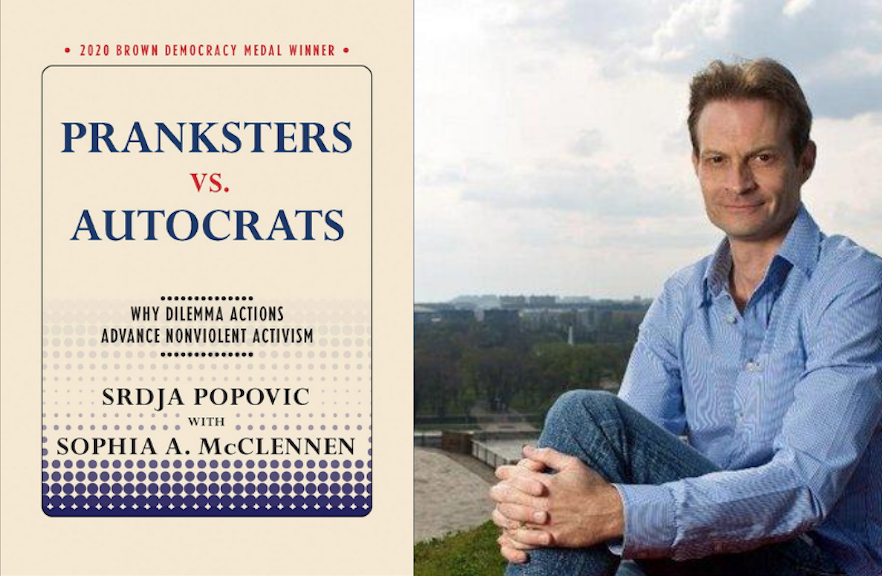
CANVAS Executive Director Srdja Popovic to receive Brown Democracy Medal

Why dictators hate pranks, why Nazis are so afraid of clowns and why a mix of wits and dilemma actions may be the most powerful tool to change the world? The answer is simply – humor and creativity beat fear and apathy. Every time!

— Srdja Popovic

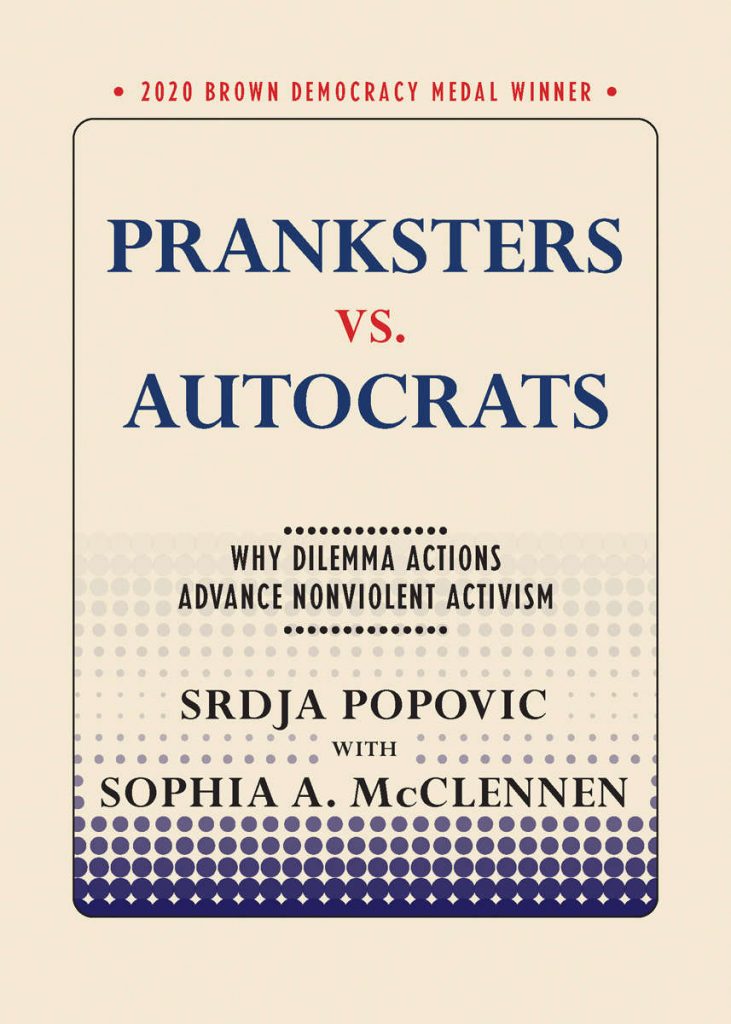
Join us on March 25th at 4:00PM EST for the Brown Democracy Medal ceremony, to see Srdja Popovic be awarded for his work with CANVAS! Find out about our research and the new book Pranksters vs. Autocrats!

Have a good giggle with us, as Srjda shares inspirational stories of social change, through the brilliant efficiency of dilemma actions. Come learn about how laughtivism, dilemma actions, and creativity can scare dictators and build democracies across the world. Who knew laughter could be the death of a dictatorship?!

Register for the award ceremony below to learn and laugh!

Download it for free or order a hard copy HERE

CANVAS Weekly Update – March 12th, 2021

Dear Friends,

CANVAS is pleased to bring you another weekly report! This week covers human rights violations in Zimbabwe, the continued violence in Myanmar, and the Bolivian election.

Conflict Update:

Gunmen kidnapped dozens of students from a college in northwestern Nigeria late Thursday, the fourth mass abduction in as many months in a region that is suffering a worsening breakdown of law and order. The attackers breached the fence surrounding the Federal College of Forestry in Mando, located in Kaduna state, just before midnight and began rounding up students. Shehu Sani, a former senator of Kaduna, said he had been briefed by security officials that the attackers had separated the girls from the boys and only took the girls. In a recent report on kidnappings across Nigeria, SB Morgen, a Lagos-based geopolitical research firm, found that almost $11 million was paid to kidnappers between January 2016 and March 2020. According to United Nations relief workers, more than 240,000 people have been displaced in the Central African Republic after rebels who call themselves the Coalition of Patriots for Change launched attacks, first to disrupt last December’s elections, and now to destabilize the newly-formed government of President Faustin Archange Touadera. The rebels currently control nearly two thirds of the country, making it difficult to deliver humanitarian aid. Hundreds of thousands of people have been left without food or basic healthcare and the closure of the main road between the Central African Republic and Cameroon has caused food prices to skyrocket. Ethiopia’s government is facing mounting pressure to withdraw troops from the northern Tigray region amid growing reports of war crimes in an area that now faces a humanitarian crisis. Criticism of the conduct of government troops has grown after U.S. Secretary of State Antony Blinken said Wednesday that “ethnic cleansing” has happened in parts of Tigray. The conflict began last November when Ethiopian Prime Minister Abiy Ahmed sent government troops into Tigray after an attack there on federal military facilities.

Coronavirus Update:

Multiple European countries, including Denmark, Norway, Iceland, Italy, and Romania, suspended the use of the AstraZeneca COVID-19 vaccine because of concerns that it might increase the risk of blood clots, but emphasized that they were taking action as a precaution and that there is no evidence of any causal link. The scare is a setback for the AstraZeneca vaccine, which has already struggled with the perception that it is a less desirable option because it has a lower overall efficacy rate in clinical trials compared to other COVID-19 vaccines. However, extensive data shows that the vaccine is safe and effective, and in many places across the world, it is the only shot currently available. Tens of millions of doses of the same vaccine manufactured by AstraZeneca are sitting idly in American manufacturing facilities awaiting results from its U.S. clinical trials while the more than 70 countries that have already authorized the use of the AstraZeneca vaccine are begging the U.S. to give them access to the stockpile. The fate of the American AstraZeneca vaccine doses is the subject of an intense debate among U.S. federal health officials, with some arguing that the Biden Administration should let the doses go abroad where they are desperately needed right now, while others are not ready to relinquish the vaccines. Under pressure to donate excess COVID-19 vaccination to needy nations, the U.S. has announced that it will partner with Japan, India, and Australia to finance a large expansion of the vaccine manufacturing capacity. The agreement was announced Friday at the Quad Summit, a virtual meeting held between the heads of state of the aforementioned four countries. The goal, according to senior administration officials, is to address an acute vaccine shortage in Southeast Asia, which will eventually boost worldwide supply.


Myanmar:

Violence continues to escalate in Myanmar after at least twelve people were killed by the ruling junta Thursday, according to a watchdog group. A top U.N. official said the crackdown on peaceful protests is “likely meeting the legal threshold for crimes against humanity.” The United Nations human rights office has said that at least 80 people have been killed since the military invalidated the results of Myanmar’s democratic election earlier this year, with an additional more than 2,000 arbitrarily detained since the coup. Student activists have made up a significant number of arrested protestors, with many being taken to Insein Prison without access to legal counsel. Insein Prison is an infamous facility in the Burmese capital of Yangon that has long been used to house and torture political prisoners, including those arrested following uprisings against the previous military dictatorship in 1988. U.N. special rapporteur for human rights in Myanmar Thomas Andrews has noted that there is extensive video footage of security forces brutally beating protesters, medics, and bystanders, as well as destroying property, looting shops, and firing indiscriminately into people’s homes. There is growing evidence that the violence has forced people to flee the country, with India’s Mizoram state reporting that between 200 and 300 people had crossed the border from Myanmar into India. Sister Ann Rose Nu Tawng, a Catholic nun from the city of Myitkyina in Kachin state, has won praise from Myanmar’s majority Buddhist population after she begged a group of heavily armed security officers to take her life instead of the lives of the children nearby. Additionally, the United States this week imposed sanctions on six companies controlled by two children of Myanmar’s military leader Min Aung Hlaing in response to the coup and the killing of protesters. U.S. Secretary of State Antony Blinken warned that more punitive actions could follow and condemned attacks by Myanmar’s security forces targeting peaceful protesters.


The United States:

This week, the highly anticipated $1.9trillion Covid-19 relief package was approved by the House of Representatives, with not a single vote in favour from Republicans. The stimulus package includes a $1,400 stimulus check for up to 85% of households, an extension of the $300 unemployment benefits until September, $350billion for state agencies to combat the pandemic, financial support in accessing health insurance coverage, and measures for housing, food, child tax credit, and vaccination programs. According to projections by the Urban Institute, the package could reduce poverty in the US by over a third. In Texas, Attorney General Ken Paxton is threatening legal action against local decision-makers if they refuse to lift mask mandates after Republican Governor Greg Abbott lifted restriction last week. In New York, Democrat Governor Cuomo refuses to step down following allegations of sexual misconduct and mishandling of Covid-19, despite 13 House Democrats calling for his resignation. Finally, in Portland, clashes between police and rioters have re-erupted following protective fences around the courthouse being removed; reportedly the rioters have set fire to the courthouse and the police have used heavy responses such as green smoke and pepper balls.


China:

This week the Chinese legislature made the decision to tighten their control over Hong Kong by overhauling the city’s electoral system. The “patriots governing Hong Kong” resolution will reduce the democratic representation in the city as well as allow a panel that is very pro-Beijing to vet all candidates before elections. This decision was made on Thursday and is just one of many of China’s decisions made to tighten their grip over Hong Kong. In other news, China has announced that they, alongside Russia, will be building a lunar space station. There will be a lot of various research conducted on the space station, including exploration of the moon. This is going to be a collaborative effort between both countries and is the largest international space project for China and the station will be available for use by other nations, according to both sides.


Hong Kong:

On the last day of its annual meeting, China’s National People’s Congress passed new rules governing the electoral system in Hong Kong with a near unanimous vote. The overhaul of Hong Kong’s electoral system will give Beijing much greater control over local elections by allowing China to disqualify candidates deemed “unpatriotic.” Opposition groups in Hong Kong say the changes are part of the mainland government’s attempts to wipe out local dissent, which peaked during protests in response to a Beijing-backed extradition bill in 2019. The stated goal of the changes is to ensure that only “patriots” govern Hong Kong, a definition which Chinese officials have made clear includes loyalty to the Chinese Communist Party. One of the changes involves the election for Hong Kong’s chief executive, currently scheduled for 2022. The 1,200 member election committee which selects the chief executive was already stacked with Beijing loyalists, but changes will increase the size of the committee by 300 members, reducing the power of any remaining pro-democracy legislators. This expanded committee will also have a role in selecting the new members of the Legislative Council, which is expected to grow from 70 to 90 members. In other news, fewer Hong Kong residents are showing up to their appointments to receive the Chinese-produced Sinovac Biotech Ltd. vaccine, amid reports of side effects, even as demand for the Pfizer Inc.-BioNTech SE vaccine remained high. The number of people who received their scheduled Sinovac vaccine fell to 72% on Wednesday, down from a high of more than 90% last week. The skipping of vaccination appointments comes after Hong Kong reported three deaths and three critical illnesses in people who had received the Sinovac vaccine. As of now, none of the deaths of illnesses have been linked to the vaccine.


Zimbabwe:

Eviction notices threaten 13,000 persons of the Shangani minority identity from approximately 12,940 hectares of land in Chilonga. In February, July Moyo, the Local Government, Urban and Rural Development Minister, issued the eviction notice as the government plans to clear the land for private commercial ventures of stockfeed. International human rights organizations such as Amnesty International and Human Rights Watch are condemning the decision for ignoring the rights of indigenous populations, and leaving people vulnerable during the Covid-19 pandemic. The notices claim the residence must leave immediately and will not receive compensation. Meanwhile, the Zimbabwe Vulnerability Assessment Committee has reported that food insecurity has increased by 12% since 2019 claiming 2.4 million persons are at risk in terms of access to food and basic services. In other news, Zimbabwean women celebrated International Women’s Day by highlighting women refusing to conform to gender expectations such as Molly Manatse, one of Harare’s few female truck drivers.


Cuba:

U.S. President Joe Biden’s Administration is reviewing former President Donald Trump’s last-minute decision to designate Cuba as a state sponsor of terrorism, but a broader Cuba policy shift is not among Biden’s top priorities, the White House said this week. The Trump Administration added Cuba to the list nine days before Joe Biden took office, citing the country’s harboring of American fugitives and Colombian rebel leaders and support for Venezuelan President Nicolas Maduro. In other news, Cuba’s homegrown COVID-19 vaccine candidates have entered late-stage trials, two of which are set to begin Phase III trials. The Soberana-2 vaccine is currently the leading candidate, and Cuba’s government has announced that Phase III trials with 44,000 participants will commence this month. The Sobreana-2 vaccine has also begun widespread trials in Iran and Venezuela. Mexico is reported to be in talks with the Cuban government to begin trials shortly, and Suriname and Ghana have demonstrated their interest in ordering doses when they are ready.


Iraq:

Iranian-backed paramilitary groups have agreed to stop attacks against U.S. forces in Iraq on the condition that Iraqi Prime Minister Mustafa al-Kadhimi formally demands an American withdrawal from the country. Kadhimi must tell Washington that the pullout must be completed within 12 months, according to sources. Sources indicated that Kadhimi will likely comply and make the formal request. At the beginning of March, the armed factions announced the end of an unofficial truce with the U.S.-led coalition forces in Iraq which had been in place since October with few violations. Prior to the armistice, attacks on U.S. troops and western allies in Iraq were commonplace, as paramilitary groups sought to push the United States from the country. However, a rocket attack on a military base in Erbil earlier this year was linked to the group Kataeb Sayyid al-Shuhada, and escalating tit-for-tat attacks have greatly increased tensions in the region. This latest deescalation agreement was made by a group of faction leaders known as the Coordinating Committee for the Resistance Factions, and the Iraqi government. In other news, Jasb Hattab Aboud, the outspoken father of a missing Iraqi anti-government activist who waged a campaign to bring the militia suspected of abducting his son to justice, was killed this week, according to a local human rights monitor. Aboud was uncommonly vocal in his search for his son Ali Jasb, a lawyer who was one of a number of activists who vanished at the height of Iraq’s anti-government protests in 2019. Authorities have not identified the culprit.


Georgia:

TV Pirveli aired audiotapes this week featuring Bera Ivanishvili, the son of former Georgia Dream (GD) party chair Bidzina Ivanishvili, speaking with Anzor Chubinidze, the current head of the special state protection service, and current PM Irakli Garibashvili about an intimidation campaign designed to ‘humiliate and punish’ young people for posting insults about the Ivanishvili family online. The date of the conversation is unknown. Opposition parties have demanded PM Garibashvili’s resignation since the release of the tapes, saying they show ‘the signs of the heaviest organized crime’ and  ‘informal, undemocratic practice of governing the state under the Georgian Dream government and the extremely severe forms of dismantling state institutions.’ GD has since released a statement claiming that the recordings are fabricated. PM Garibashvili has blamed ex-president Mikheil Saakashvili for the ‘fake’ recordings and Ivanishvili has claimed the tapes were made by the United National Movement government when they were ‘illegally listening to the entire country.’ Ivanishvili failed to comment on the authenticity of the tapes, instead, saying ‘it does not matter for him, because if someone insults his family he will again ask for a response.’ The Prosecutor’s Office of Georgia has launched an investigation into the alleged wiretap and Tbilisi’s City Court has granted their request for the seizure of audiotapes. The release of the recordings has coincided with the GD government and the opposition’s talks about the political crisis and the recent detainment of the main opposition leader. GD chairperson Mamuka Mdinaradze said he expects talks between the government and the opposition to continue, despite the impact of the recordings.


Iran:

Iran has reported that one of its cargo vessels was attacked in the Mediterranean Sea this week in what the government has called a “terrorist attack.” No casualties were reported. Ali Ghiasian, a spokesperson for the state shipping line, said that Wednesday’s attack damaged Shahr-e Kord, a commercial vessel traveling to Europe. Ghiasian added that an “explosive device” damaged the hull of the ship and started a small fire which was quickly extinguished. Earlier this week, Israel accused Iran’s Revolutionary Guard of attaching an explosive device to the Israeli-owned cargo vessel Helios Ray in international waters near the Gulf of Oman earlier this year. Iran rejected the claim as an unfounded allegation. This comes as U.S. and regional officials say Israel has targeted at least a dozen ships bound for Syria and mostly carrying Iranian oil out of concern that petroleum profits and funding extremism in the region. Since late 2019, Israel has used weaponry, including water mines, to strike Iranian vessels or those carrying Iranian cargo as they navigate the Red Sea and in other parts of the region. In other news, Iranian authorities have arrested multiple music producers linked to California-based Iranian pop singer Sasy, whose real name is Sasan Heidari Yafteh, after the release of the music video for the song “Tehran Tokyo.” The video features actresses, including an American pornographic film star, dancing in short dresses atop cars and inside bars. Iranian security forces detained two popular music arrangers who worked on the song in Shiraz and raided their studio. Semi-official news organizations in Iran confirmed the arrests Wednesday, saying that Sasy’s associates in Iran had produced music “contrary to culture.”


Indonesia:

A bus carrying 66 people on a return trip from an Islamic pilgrimage site, including schoolchildren and parents, crashed into a ravine on the island of Java this week, killing 27. The Indonesian search and rescue agency said in a statement Thursday that the driver of the bus lost control shortly before the crash due to poor road conditions and a failure of the vehicle’s brakes. A police spokesperson said that the bus plunged 65 feet to the bottom of the ravine in a valley surrounded by farmland. The road is government-owned and is frequently used by commuters traveling between provinces. In other news, Indonesia’s Sinabung volcano erupted on Thursday. No casualties were reported. Armen Putra, an official at the Sinabung monitoring center, said villagers were advised to stay at least 5 kilometers away from the crater of the volcano and should be aware of lava. Approximately 30,000 people have been forced to leave their homes near Sinabung in recent years after eruptions in 2010, 2014, and 2016 killed numerous people.


Thailand:

On Saturday, March 6th, Thailand’s government placed a ban on assemblies, protests, and mass gatherings citing fears of spreading COVID-19. Bangkok and five other provinces in Thailand have the ban in place. While government officials insist that the ban is not political in any way, shape, or form, demonstrators are skeptical given the current arrests citing the lese majeste law and the decreasing numbers of COVID-19 cases in the country. In other news, Thailand’s Ministry of Foreign Affairs has released a statement calling on Myanmar to release everyone who has been detained by the military following the coup. Talks are still ongoing between Thailand, Indonesia, and Myanmar.


Nicaragua:

This week Sergio Beteta, who was arrested in December 2020 for burning a Nicaraguan flag outside Managua’s University, has received a guilty verdict in a court case accusing him of drug and weapons possession offences. Beteta’s lawyer Julio Montenegro claims that his client is a political prisoner victim to police planting evidence and a hearing riddled with anomalies. In other news, the ongoing attacks against independent media by President Daniel Ortega’s regime continue to raise concerns, as the Editor of Confidencial recount the confiscation of their media offices in 2018. The article recalls person sentences for journalists, exile, the unlawful police storming of their premises, and the attempts to bring the case to the Nicaraguan Supreme Court citing Constitution Article 44 “confiscating private property is forbidden.”. The offices remain in government hands and independent critical journalists continue to face harassment and censorship. Finally, UNICEF’s regional director has publicly issued concerns regarding the “institutional neglect of Nicaragua’s North Caribbean Coast Autonomous Region (RACN)” following hurricanes Eta and Iota. The region is home to thousands of indigenous communities and remains one of the countries poorest areas.


Belarus:

Organizers of the Eurovision Song Contest this week declined a song entry from Belarus due to its controversial political lyrics. The European Broadcasting Union, which runs the Contest, demanded Belarus submit a new entry or risk disqualification from the Eurovision Contest. Featuring lyrics such as “I will teach you to toe the line,” the entry, entitled “I’ll Teach You” and performed by Belarusian outfit Galasy ZMesta, has sparked backlash from opposition figures and fuelled calls by a European Parliament legislator for Belarus to be banned from Eurovision. The band’s frontman Dmitry Butakov denied the song breached the competition’s rules, even as the lyrics openly mock protests against the Lukashenko government. In other news, Belarus expelled two more Polish diplomats this week in a tit-for-tat spat that has erupted following a World War Two commemoration in the southwestern Belarusian city of Brest. The event, which took place on February 28, took place in honor of so-called “cursed soldiers,” Polish fighters who initially fought against Nazi occupation but later fought the Soviet Union. The soldiers often acted violently against non-Poles, especially Belarusians.


Sudan:

Sudan’s Prime Minister Abdalla Hamdok is in Cairo this week to meet with Egyptian President Abdel Fattah al-Sisi as both nations seek to build a united front in the ongoing dispute over the controversial dam that Ethiopia is building on the Blue Nile. The dispute centers on the Grand Ethiopia Renaissance Dam and how much water Ethiopia will release downstream in the event of a multi-year drought, as well as how the three countries would settle any future disputes. Egypt and Sudan have called for a legally binding agreement on the dam’s filling, but Ethiopia insists on only establishing “guidelines” for use. Despite years-long negotiations, the three countries have failed to come to agreement. Around 85% of the Nile’s flow originates from Ethiopia, and Egypt has called the dam an existential threat to the country. In other news, Sudan has released former Janjaweed leader Musa Hilal after three years of imprisonment. Speaking on behalf of the family, Amani Musa Hilal announced that the military court cancelled all the restricted cases against her father. Hilal is held responsible for numerous atrocities committed against civilians in Darfur after the conflict there began in 2003.


Uganda:

Opposition figure Bobi Wine, a singer and lawmaker whose real name is Kyagulanyi Sentamu, is calling for peaceful protests in the aftermath of the January elections which showed victory for incumbent president Yoweri Museveni. Wine has said that the electoral authorities are “grappling with forged results” and claimed that he was the true winner of the election with 54% of the vote, based on results forms from independent polling sites. Museveni has previously described the January election as the “most cheating-free” election in Ugandan history. The vote was conducted under an internet blackout after campaigns during which opposition candidates were routinely obstructed by police, and many people were shot dead by security forces. In his speech, Bobi Wine also listed four demands: an independent audit of the election, an end to abductions, the release of political prisoners, and an end to the practice of trying civilians in military courts. In other news, Uganda began nationwide COVID-19 vaccinations this week after receiving nearly 100,000 doses through donations. Health minister Jane Ruth Aceng said healthcare workers would be the first to get the shot, followed by teachers and those in high risk groups, including the elderly.


Bolivia:

On March 7th, Bolivians were finally able to go to the polls for their regional elections, which were delayed a year due to the coronavirus pandemic. There were mixed results within these elections, with the MAS party, the party of the current President, Luis Arce, splitting votes with multiple other opposition parties. In Santa Cruz, one of the most popular departments in the nation, MAS surprisingly lost its governorship. The results of the election very similarly reflect the 2015 election results, however, there are some races that have yet to be called due to cyber attacks that occurred. According to the Bolivian government, on the evening of March 9th, the site that holds the results of the elections was attacked. The government said that the attack, which came from abroad, did not affect any of the vote counts but they still chose to withhold some results to double-check the counts. In other news, the government is still trying to make changes to its laws to help protect its students and other citizens after the deadly railing collapse last week at the Public University of El Alto.

CANVAS Weekly Update – March 5th, 2021

Dear friends,

CANVAS is pleased to bring you another weekly report! This week covers the reshuffling of political leadership in Zimbabwe, cyberattacks in Indonesia, and the relationship between Uganda and The United States.


Conflict Update:

In Myanmar on Sunday, dozens of protestors were wounded and at least 18 people were killed by the military’s security forces. On Wednesday, an additional 38 people were killed in what has been the deadliest crackdown since the February 1st coup and six journalists were detained on criminal charges. Myanmar’s ousted leader, Aung San Suu Kyi, was seen for the first time since the coup when she appeared on video in court where she was given two additional charges.   The slogan ‘everything will be okay’ was written on Angel’s shirt, a 19-year-old anti-coup protester, who joined activists in Myanmar on Wednesday before she was shot and killed in the streets. She was one of many hundreds of activists who were peacefully protesting in Myanmar’s second city before police opened fire. Myanmar police, numbering at least 19, have entered into India in order to escape the military force. The men were lower-ranking members who chose to leave due to their lack of alliance with the military control, they are expecting many more to come. They entered into India unarmed and feared persecution in Myanmar for disobeying orders against the disobedience movement. The United States has begun to block the ministries of defense and home affairs as well as top military personnel from different types of trade. This action has been taken in response to the military’s crackdowns on the protests within Myanmar. This action comes a month after President Joe Biden’s sanctions on the nation and as the US Commerce Department announced it is considering more potential actions. In Armenia,  the military called for Prime Minister Nikol Pashiyan’s resignation over his handling of the Nagorno-Karabakh conflict, which he called a coup attempt. His supporters took to the streets to demonstrate their support. The opposition also held rallies and at one point protestors successfully forced their way into a government building. In Spain, protests that began over the arrest of a Spanish rapper have continued. They have become a collective outcry by a generation that has struggled through years of economic hardship and that sees a lost future even after the pandemic ends.”


Coronavirus Update:

The WHO has announced that COVID-19 cases have increased for the first time in six weeks. Studies have suggested that the variant found in Brazil is able to infect people who have already had the virus. There are concerns that vaccine passports, a government-issued document that confirms someone’s status as vaccinated, could be ethically problematic due to the imbalance in vaccine distribution that favors wealthier nations. Israel is the first country to roll out such a policy, the “green pass,” which allows vaccinated people to engage in normal activities. The following countries have begun vaccinations this week: Nigeria, Angola, DR Congo, Kenya, Iraq, Sudan and Rwanda.


The United States:

This week the George Floyd Justice in Policing Act, H.R. 1280, police reform legislation introduced by Democratic Representative Karen Bass, was passed in the House with 220-212 votes. The bill, if approved by the Senate which would require 10 Republican votes, would ban neck restraints, remove no-knock warrants in federal drug cases and reform qualified immunity making it more legally accessible to sue a police officer. While the bill hopes to rebuild trust between law enforcement and communities, the bill is facing criticism for failing to address the various methods at polices’ disposal to kill people beyond chokeholds, such as shooting, punching, tasing or kneeling and suffocating, which actually killed George Floyd. In other news, the Covid-19 relief package is being debated in the Senate following a tie-breaker vote cast by Vice President Harris. Republican representatives are planning on stalling the process, for example, by insisting the entire 628-page bill is readout. In the news, Texas is still dominating headlines. The monitor Potomac Economics claimed that energy companies overcharged $16 billion amidst the extreme weather crisis that hit the state last month. The network is largely privatised allowing business to set prices according to demand and supply.  Furthermore, the Republican state governor, Greg Abbott, has lifted face mask mandates and lockdown restrictions while blaming migrants for the spread of Covid-19 which President Biden called “Neanderthal thinking”; both decisions are receiving backlash.


China:

The Communist Party leader Xi Jinping made remarks on the global position of China, claiming that while in various regards “the West is strong and the East is weak,”, we are in a time that “the East is rising and the West is declining.”; speeches claimed the United States posed the largest threat to China. The National People’s Congress is set to convene for a week during which Mr Xi is expected to detail a long-term blueprint for China’s increasingly prominent role in global politics. Amidst the East versus West rhetoric, Microsoft has accused Hafnium, a Chinese, state-sponsored cyber-espionage group of hacking emails and calendars on their server Exchange; this is Microsoft’s 8th accusation in just 12 months. In response,  the U.S. Cybersecurity and Infrastructure Security Agency issued an emergency directive, a rare decision, ordering all government agencies to update their Exchange servers by Friday noon. The accusations go further, claiming the China-based spies have accessed “infectious disease researchers, law firms, higher education institutions, defence contractors, policy think tanks and NGOs.”. Moreover, a U.S. firm has reported to the Indian authorities that the cyber-hack from a Chinese-based hacker group known as RedEcho from early February is still active. The hack targeted an Indian port network system and attempted to penetrate the electrical sector; there are claims the group has targeted up to 10 critical infrastructures and that the hacks began after the Sino-Indian skirmishes last summer. Meanwhile, the think tank Australian Strategic Policy Institute has reported its findings that the Chinese Communist Party ran a coordinated campaign to discredit the BBC.


Hong Kong:

Legislators at twin meetings of the Chinese People’s Political Consultative Committee (CPPCC) and the National People’s Congress in Beijing this week plan to introduce legislation which would squash political opposition in the Chinese-run financial hub. The Chinese government has not yet published the details of the proposals, but has outlined broad changes that would effectively allow Beijing to vet candidates for Hong Kong’s legislative council and pack an election committee which chooses Hong Kong’s chief executive. Among the proposals is an increase in the size of Hong Kong’s legislative council and its election committee, essentially giving Beijing-backed politicians a majority in each body. These moves come after China proposed a new loyalty oath for all Hong Kong elected officials, from local councilors to legislators, that could be used to bar democratic politicians. Xia Baolong, China’s top official in charge of Hong Kong, said “the administrative power in Hong Kong must be maintained in the hands of patriots.” In related news, the European Union has called on the Chinese government to “carefully consider the political and economic implications of any decision to reform the electoral system in Hong Kong,” and warned that the EU was ready to take additional steps if human rights conditions in Hong Kong continue to deteriorate. Reinhard Butikofer, the head of the European Parliament’s delegation on China, called for the EU to use its newly-created global human rights sanction regime to punish China for the moves.


Zimbabwe:

Zimbabwe’s political leadership is reshuffling as one of the two Vice Presidents, Kembo Mohadi, resigned following sexual misconduct allegations. The allegations emerged after a news site published sexually explicit phone recordings of him propositioning married women. Mohadi denies the allegations claiming he is a victim of a smear campaign using voice technology, although does not identify who may conspire against him. The resignation decision comes as a surprise, raising speculation about potential opposition against him from within the leading ZANU-FP. Meanwhile, President Emmerson Mnangagwa has used controversial threats to promote Covid vaccination by stating “You are not going to be forced to be vaccinated, but the time shall come when those who are not vaccinated won’t get jobs,”. The threats come as some frontline health workers are resisting the Sinopharm vaccine donated from China, however, observers claim the comments may have undermined trust further. In other news, the Cairo-based bank Afreximbank has an agreement with Zimbabwe allowing the rearrangement of $1.4billion of debt; the country is reported to have $8 billion in foreign debt.  Finally, the residents in the town of Kariba are concerned as extreme rain pour has caused landslides dangerously close to roads and homes, and the dam fills quicker than previously projected.


Cuba:

While facing Covid-19, February was the deadliest month to date for Cuba with over 100 deaths and over 7,000 cases. The country may be saved however by the multiple vaccines that are beginning their last phase of trials this month. One of the vaccine trials, Soberana-02, will vaccinate 44,000 people and they have already made over 300,000 doses as they hope the trial will prove to be successful. The government is figuring out how they will be able to vaccinate their 11 million person population as they may need to provide up to 3 doses of the vaccine. According to Reuters, eighty US House of Representatives members have written a letter to President Joe Biden urging him to lift the sanctions former President Trump imposed. They hope that Biden will end the restrictions on travel and remittances, as many people in Cuba rely heavily on them.


Iraq:

Pope Francis is visiting Iraq this week, having landed in Baghdad on Friday. Two previous popes, John Paul II and Benedict XVI, had planned to visit Iraq previously, but those visits were cancelled as a result of conflict in the country. Pope Francis will visit Our Lady of Salvation, a Syriac Catholic Church in Baghdad which was the site of a 2010 terrorist attack which killed more than 50 people. On Saturday, the pope will fly to Najaf, the holiest city for Shiites in Iraq, to meet with Grand Ayatollah Ali al-Sistani, the most revered Shiite cleric in the country. The Pope’s visit comes as a spike in coronavirus cases has prompted the Iraqi government to re-impose lockdowns and Shiite authorities have suspended religious pilgrimages. The Vatican has insisted that the March 5-8 trip will be a safe, socially distant, and sober visit devoid of the usual fanfare and celebrations that accompany a papal visit. Pope Francis arrives in Iraq, where an estimated 95% of the population in Muslim, at a difficult time for the country’s Christians. Before the beginning of the war in Iraq in 2003, an estimated 1.2 million Christians lived in the country. Today, that number is less than 250,000, comprising less than 1% of Iraq’s total population.


Georgia:

On Monday, the Prime Minister and United National Movement (UNM) opposition leaders met with the President of the European Council to relaunch talks about the political crisis. The opposition said that they would potentially concede on their request for snap elections in favor of a plebiscite but that they are not willing to concede on their demands for the release of UNM Chair Nika Melia and Mtavari Arkhi TV shareholder Giorgi Rurua, who they have deemed “political prisoners.” The Prime Minister has said that opposition parties have “continued destructive actions and tried to block the functioning of the state legislature,” referencing the anti-government rallies held at the Georgian parliament. The opposition has since announced that it will postpone protests until negotiations have concluded.


Iran:

The spokesman for Iran’s Foreign Ministry, Saeed Khatibzadeh, has announced that the plan to adopt a resolution that is “anti-Iran” at the International Atomic Energy Agency (IAEA) has been set aside due to the intensive diplomatic efforts among the member states of the board of governors. The European signatories to the nuclear deal, Joint Comprehensive Plan of Action (JCPOA), were expected to adopt a resolution that criticized Iran for its reduction to nuclear commitments. The resolution was then cancelled to avoid conflict escalation and make room for diplomacy. While the U.S. has yet to lift sanctions, it has expressed its support to the Europeans in withdrawing the resolution.


Indonesia:

Cyberattacks against activists criticizing the government’s handling of the pandemic have been increasingly more prevalent in Asia. In Indonesia, WhatsApp accounts of an activist and his friend were hacked, and both were accused of inciting riots and hate speech. These cyberattacks have also been directed towards journalists. These have come in the form of hacked Instagram and Twitter accounts, WhatsApp numbers being taken over, and online threats. A recent survey has shown that nearly 70% of Indonesians are now afraid to express their sentiments on the government online.


Thailand:

For 17 days now, a group of pro-democracy protesters have been marching to protest the imprisonment of nine pro-democracy demonstrators who have been denied bail. The march began on February 16th and is expected to end at Bangkok’s Democracy Monument on March 7th. The increasing number of arrests of pro-democracy groups and individuals taking place in the country have garnered international attention. In the recent Freedom House report, Thailand has declined in its ranking of rights and liberties, from partly free to not free. Thailand scored a 30 at a 100 point scale, with 100 being absolute freedom. This is mostly attributed to the dissolution of an opposition party in the 2019 elections and the military crackdown on youth-led pro-democracy protests. The Prime Minister, Prayut Chan-o-cha has only continued to defend the military and police for their actions towards protesters. Just this week, he insisted to the public that the use of the tear gas, water cannon, and rubber bullets in last week’s protests were justified and in accordance with international standards. In other news, Facebook has taken down 185 accounts run by the Thai military who have been allegedly involved in spreading misinformation. In addition to 18 Instagram accounts, the Facebook accounts, pages, and groups were removed from the platform. It was emphasized that the reason for the removal is due to the misleading behavior and not the very content being posted. Nevertheless, this is the first instance in which Facebook has taken action against accounts linked to the Thai government.


Nicaragua:

Journalist Wilih Narváez has reported harassment outside of his residents in Managua, where an unidentified man threw rocks, motioned cutting off a head and shouted that he knew the journalist from Chanel 10 was there. In a phone interview, Narváez told the Committee to Protect Journalists (CPJ) that he informed the Nicaraguan National Police of the harassment, however, the authorities are yet to act. Followingly, on the Day of the Journalist, the CPJ and regional human rights organizations IFEX-ALC, AMARC-ALC, and The Institute of Race, Equality, and Human Rights, released a joint statement condemning the failure of the authorities to protect the press from harassment and threats. The statement also criticises the legislation compelling organisations to register any foreign funding. According to CPJ, “news outlets have been forced to close and individual journalists threatened, harassed, sued, surveilled and jailed, as dozens more fled the country for their own safety” since the 2018 crackdown. Meanwhile, Freedom House, a prominent think tank, has reported that Nicaragua is among the countries with “the greatest democratic setbacks over the past 10 years worldwide”. In other news, a boat of 6 deceased irregular migrants was found off the coast; the government’s refusal to allow the migrant to cross to the United States has led to boats entering more dangerous waters.


Belarus:

Lithuania on Friday refused Belarus’s request for the Baltic nation to extradite opposition figure Sviatlana Tsikhanouskaya, with the Lithuanian foreign minister saying “hell will freeze over first,” before the demand by Belarus’s leader Alexander Lukashenko is granted. Tsikhanouskaya, who challenged Lukashenko in a presidential election last August that the opposition decried as rigged, sought refuge in neighboring Lithuania after Lukshenko’s government moved to crack down wide-ranging protests in the aftermath of the vote. The Belarus General Prosecutor’s Office said on Friday that it had requested Lithuania, a European Union member state, extradite Tsikhanouskaya “to face prosecution for crimes against the governing order, public safety, and the state.” In related news, Belarusian President Alexander Lukashenko has said there will be “no transfer of power,” in the country and highlighted that any change in the balance of power would come from a new constitution which Belarus plans to adopt next year. Further, a court in Minsk earlier this week sentenced Katsiaryna Barysevich, an independent journalist, to six months in prison on charges of revealing personal data in her report on the death of Raman Bandarenka, a protester who was killed during demonstrations last year.


Sudan:

joint statement from Sudan and Egypt’s foreign ministers has affirmed their support of the Democratic Republic of Congo and their desire to lead negotiations with Ethiopia over the dam. There is huge support for an enhanced structure of negotiations that will include the United States, European Union, and United Nations. The dam is a huge part of many nation’s water supplies and affects the lives of many within different countries, therefore the conflict needs to be carefully thought out. In other news, a US warship (the USS Winston S Churchill) has docked in the Port of Sudan, the docking demonstrates the strengthening of the relationship between the two countries as Sudan is no longer on the US terrorist watch list.


Uganda:

The relationship between Uganda and the United States has become strained recently after the government of Yoweri Museveni has been accused of multiple human rights violations. In January 2021, Museveni was declared the victor in a race the opposition said was rigged in the government’s favor. During the campaign, state security forces shot dead scores of people on the streets and abducted hundreds of others, many of whom are still missing. Ned Price, the U.S. State Department spokesperson, said in a statement last week that “Uganda’s January 14th elections were marred by election irregularities and abuses by the government’s security forces against opposition candidates and members of civil society.” Some members of Congress have pushed for visa bans and asset freezes for human rights violations under the United States’s Magnitsky Act. Museveni has accused the U.S. government of trying to impose American standards on Uganda, but singer and opposition candidate Robert Kyagulanyi, better known by his stage name Bobi Wine, has said that the Biden Administration in the U.S. should follow through with its threats. Bobi Wine recently released a list of 423 opposition supporters who were kidnapped and are still missing following January’s election. In a recent televised speech, Ugandan President Museveni called the missing people “terrorists” who were planning anarchy in the country. Museveni also said that missing people were arrested by either Chieftaincy of Military Intelligence (CMI), the intelligence wing of the Uganda People’s Defense Forces (UPDF), or by commando units.


Bolivia:

At least 7 have died with 5 more seriously injured as a railing gave way and students fell four stories at El Alto Public University. The authorities are looking into the tragic incident that occurred as students were traveling into their assembly hall. This event has sparked the senate president, Andrónico Rodríguez, to propose the review of the university autonomy and begin conversations with the sectors involved. In other news, regional elections in Bolivia are less than a week away. The United Nations has declared that they are hopeful the country will continue to have democratic elections in the same way that they did in October 2020, allowing everyone to go out to vote as well as remain safe from the Covid-19 pandemic.

Don’t Fight the Fascists. Laugh at Them. – How to use humor against hate.

The article has been originally published here .

If you have watched the recent footage from postelection protests in Little Rock or Los Angeles, in Dallas or Detroit, the images are by now familiar. Angry crowds chanting with hatred, huge “Black Lives Matter” signs torn and then burnt in front of an ecstatic mob, violent attacks on people who disagree, police forces under siege or using force to arrest protesters.
This Wednesday, as Congress meets to certify the results of the Electoral College, crowds of alt-right protesters will once again descend on D.C. President Donald Trump, in his ongoing denial of the reality of his election loss, has called for a “wild rally” to take place. Violence is likely.

At the core of this situation is a thorny problem: How best to effectively respond to hate speech, xenophobia, racism, and political extremism? The level of delusion and aggression among “Proud Boys”-style protesters logically triggers a response. In many cases, though, counterprotesters have met the alt-right’s anger with anti-alt-right anger, or even violence.  The results have been predictably disastrous.
ADVERTISEMENT

While it’s completely reasonable to feel angry at these marches and the odious ideas they represent, it isn’t a good political strategy for the simple reason that it doesn’t help advance your goals and may actually strengthen the alt-right. It may be tempting to combat the extremism of the alt-right with righteous anger, and for many, it sounds like a logical response; but our research shows that it is a terrible tactical one. Meeting anger with anger not only increases violence; it tends to diminish support for your movement and distract media coverage so that it centers on the violence rather than the core issues at stake.
Though it may seem counterintuitive, anger, while a useful rallying cry for a political movement, is generally not as effective in achieving a movement’s goals and often backfires during demonstrations. In the case of neo-Nazi and alt-right groups, it is an even worse tactic. As Pulitzer Prize–winning  journalist Tina Rosenberg noted in a 2017 New York Times article on how best to counterprotest Nazis following that year’s deadly “Unite the Right” rally in Charlottesville, Virginia, alt-right rallies have six core goals: legitimize their views, strengthen their self-image as part of the downtrodden, unite their squabbling factions, attract new people to the movement, control media coverage, and feel powerful and heroic.

In her piece, she explains that aggressively counterprotesting the alt-right is exactly what they want. It allows them to build on the narrative of themselves as victims. In fact, she points out that when antifa protesters angrily respond, it helps alt-right groups accomplish all of the above goals. Since Charlottesville, examples of far-right violence have only been on the rise.
This means that if we want to meaningfully counter the far right, we need to choose a tactic different than anger. In our new study, Pranksters vs. Autocrats: Why Dilemma Actions Advance Democracy, we came up with a surprising answer: The best counter to the aggressive and delusional anger of the right is creative, playful, often humorous counterprotests. Strange as it may seem, there is a lot of evidence that proves that the lighthearted, fun-loving, ironic challenges to Nazis are more effective than anger.

One especially strong example of effective laughtivism is the case of clowns versus Nazis.
Clowns have been a successful way to counterprotest Nazis in a range of nations from Finland to Germany to the United States. In one brilliant example, Sarah Freeman-Woolpert describes a Nazi rally in Whitefish, Montana, where counterprotesters showed up in bright blue wigs with signs that read “Trolls Against Trolls” and “Fascists Fear Fun.” When the Nazi rally fizzled out, the counterprotesters gleefully deemed it a “Sieg Fail.”
Not only were the counterprotesters successful at defusing the energy at the right-wing rally; they defused each of the six core goals of alt-right rallies. They made the Nazis look like idiots and in so doing made anyone wanting to join them seem stupid too.
The reason why clowns work better than angry protesters is because they put the alt-right in a dilemma they can’t win. Either they ignore the clowns and look weak or they attack the clowns and look violent and stupid. Violent clashes between the alt-right and clowns will only backfire for the right and strengthen the left. In contrast, violent clashes where both sides are angry tend to increase polarization and alienate moderate observers.

This doesn’t always require literal clowns. There are a range of creative, playful tactics that are at the disposal of counterprotesters. Feminists have been known to sling used panties at toxic males in Burma, environmental activists have superglued their butts to Parliament in the United Kingdom, democratic activists have silent-clapped at an autocrat’s speech in Belarus, and more. The key is crafting the right dilemma—one that brings to light the internal hypocrisies that define your opponent.

Looking into a range of nonviolent movements in different contexts teaches us that not only is it the case that nonviolence is more effective when you are facing violence and oppression, but that using a strategic approach and dilemma tactics tends to make your opponent’s violence backfire.

For instance, take the recent “involuntary walk-a-thon” organized in response to an annual neo-Nazi march in the German town of Wunsiedel. The organizers used chalk markers to draw lines along the planned parade route marking the starting point, halfway point, and finish line. Then they enlisted local residents and businesses to pledge to donate 10 euros for every meter the white supremacists marched to a group called Exit Deutschland, which is dedicated to helping people leave right-wing extremist groups.

Rather than attempt to block the neo-Nazi marchers, counterprotesters chose the tactic of ironic encouragement. They came out to cheer the marchers on the day of the event, flanking the route with signs that read, “If only the Fuhrer knew!” and “Mein Mamph!” (or “My Munch”) by a table of bananas offered to the walkers. This turned the marchers into involuntary resistors of their own cause and brought the community together in unity to counter the messages of white supremacy.

These examples of creative resistance are especially helpful in the current context. With the extreme right losing its “mainstream ground” in the United States and the majority of European countries after four years of a “populist wave,” and as the topics of race, environment, and gender equality continue to become more central in social debates across the globe, it is likely that alt-right anger and aggression are only going to grow.

If we want to effectively resist the increasingly angry alt-right, progressive activists should consider confronting political divisions by using the examples of creative pranksters. Because the last thing an angry right-wing protester wants to deal with is a counterprotester making fun of them and getting all the attention. In other words: Before you hit the streets to protest the alt-right, leave your anger hanging in your closet and instead pull out your creativity, humor, or even a clown nose.

CANVAS Weekly Update – February 26th, 2021

Dear friends,

CANVAS is pleased to bring you another weekly report! This week covers U.S. airstrikes in Syria, Georgia’s escalating political crisis, and the current situation in Myanmar.

Conflict Update:

In Myanmar, protestors ordered a strike that shut businesses across the country to demonstrate dissatisfaction with the February 1st coup. Demonstrators have continued to gather nationwide despite the military’s threats of violence. More than 1,200 citizens of Myanmar were deported from Malaysia on Wednesday despite the Kuala Lumpur High Court’s decision to grant them a stay of deportation without explanation from the government. In Algeria on Monday, thousands of protestors commemorated the second anniversary of the country’s mass protest movement which was ended by the COVID-19 pandemic. The protestors marched again on Friday, possibly signaling the resumption of the protests. In Iraq, 5 protestors were killed and 175 were injured during clashes with security forces. The demonstrators are calling for justice for protesters killed since 2019 and for the removal of the governor. The conflict in Yemen saw its deadliest clash in three years with hundreds of fighters killed during a weeks-long Houthi offensive.

Coronavirus Update:

The WHO has announced that COVID deaths have dropped 20% in the past week and that their global vaccine-sharing initiative, COVAX, delivered its first shipment on Wednesday. The delivery marks a shift towards improved vaccine equality but preferential vaccinations for government officials have become a problem in multiplecountries. This week the EU was told to expect less than half the number of AstraZeneca vaccines it had been initially promised and the Philippines has announced that it will relax its ban on healthcare staff working in Germany and Britain if the two countries donate vaccines. In Greece, frustrations over the “suffocating” conditions in hospitals led to doctors engaging in a day-long strike. Vaccinations have begun in the following countries: Hungary, Senegal, Ukraine, Afghanistan, Thailand, Malaysia, South Korea.


The United States:

For the first time under the Biden administration, military force was used as President Biden ordered airstrikes over Eastern Syria, killing at least 22 people. The Pentagon claimed that the buildings targeted in Syria were connected to Iranian-backed militias and the rocket attack on U.S. personnel in Iraq; the attacks are thought to signal to Iran the tone of the administration. In domestic politics, the minimum wage hike to $15 an hour has been removed from the Covid-19 relief package as parliamentarian Elizabeth MacDonough ruled its inclusion fell beyond the scope of budget reconciliation. President Biden has claimed he would work on a “standalone $15 minimum wage proposal”, although there is resistance to the motion, even from within the Democrat Party. In other news, the new Voting Rights Act of Virginia which hopes to ensure better voter protections and more accessible election processes has been approved. Meanwhile, the House has passed comprehensive legislation which bans discrimination on the grounds of sexual orientation or gender identity. The LGBTQ+ rights protections are a success, however, the harassing comments of Republican Marjorie Taylor Greene towards Democrat Marie Newman and her transgender daughter caused controversy and rifts within the Republicans.


China:

The Netherlands becomes the first EU state to accuse China of committing genocidein its treatment of Uighur peoples, the Chinese embassy has retorted that the motion was a smear campaign and an “outright lie”.  The decision came shortly after the Canadian government voted to accuse China of genocide with an overwhelming majority. In other news, Vietnam’s Foreign Affairs Ministry is currently verifying whether China is building potentially two missile bases near the border, one as close as 20km from the border. The information came to light as NGO South China Sea News published satellite images. In the South China Sea, China has responded to the US navy’s presence by completing a military exercise with 10 bombers; the drills are rising concerns over stability of the conflict regarding the disputed waters. Meanwhile, China’s economy is believed to double in size by 2035 meaning it could become the largest economy in the world and bypass the United States.


Hong Kong:

Hong Kong began administering the Chinese-ruled city’s first COVID-19 vaccinations this week; the program will eventually offer free vaccines to the entire population of 7.5 million. Residents will receive the vaccine developed by Chinese biopharmaceutical company Sinovac, a million doses of which were delivered to Hong Kong last week. A panel of Hong Kong experts found the Sinovac vaccine to have an efficacy rate of 62.3% after two doses, compared to the 92% efficacy of the two-dose Pfizer-BioNTech vaccine. In other news, China plans to impose restrictionson Hong Kong’s electoral system in an attempt to disqualify candidates the Communist Party views as disloyal. The move could block democracy advocates from running for any elected office in Hong Kong. Xia Baolong, China’s director of Hong Kong and Macau affairs, said the central government wants Hong Kong to be governed only by “patriots” loyal to the Communist Party and that Beijing will not allow the Hong Kong government to rewrite the territory’s laws, as previously expected.


Zimbabwe:

In response to reports of human rights violations and attacks on democracy in Zimbabwe, the European Union has reimposed an arms embargo and frozen the assets to state-owned Zimbabwe Defence Industries. The EU is concerned with the “proliferation of arrests and prosecutions of journalists, opposition actors and individuals expressing dissenting views, and the use by high-level officials of speech that could be interpreted as incitement to violence.”, and is hoping the sanctions will pressure the government to commit to human rights and the “recommendations of the Motlanthe Commission of Inquiry are implemented”. Weeks prior on February 1., the UK sanctioned senior members of the security apparatus, Owen Ncube, Isaac Moyo, Godwin Matanga, and former Brig. Gen. Anselem Sanyatwe, with travel bans and asset freezes. Meanwhile, the “The Cartel Power Dynamics in Zimbabwe” published by the Daily Maverick newspaper is continuing to make headlines. According to the report, billions of dollars are being illegally handled particularly in gold and diamonds. In other news, the director of epidemiology and disease control Portia Manangazira is standing trial this week for embezzling funds reserved for Covid-19.


Cuba:

United States President, Joe Biden, has said his goal is to shut down Guantanamo Bay within his presidency. His team has made clear that this is simply a goal, but shutting down the prison will be a long difficult task, something that former President Obama attempted in his term. Many in Cuba are reverting to new ways of making money amidst the continued Covid-19 crisis. Hotel owners are turning to farming as restaurants and hotels continue to remain empty. Musicians and film-makers are cooking and baking and selling as they have more time to work and earn money in other ways. The country is continuing to struggle as they are still unable to have tourists but remain helpful for their vaccines.

Iraq:

The United States launched airstrikes in Syria on Thursday, targeting a facility on the Iraqi border used by Iranian-backed militia groups. The attack was in retaliation for a rocket attack which killed a civilian contractor and injured a U.S. service member in Iraq earlier this month. American Defense Secretary Lloyd Austin said that the U.S. was confident that the target was being used by the same militants who launched the aforementioned rocket attack. A Pentagon spokesman said that the U.S. airstrikes “destroyed multiple facilities at a border control point used by a number of Iranian-backed militant groups,” including Kataib Hezbollah and Kataib Sayyid al-Shuhada. In other news, Pope Francis is set to arrive in Baghdad next week on the first ever Papal visit to Iraq. The Pope will visit Grand Ayatollah Ali al-Sistani, the leader of Iraq’s Shiite Muslims and will attend an inter-religious service in Ur. The visit comes as Iraq’s dwindling Christian population has suffered immensely in recent years. Christians were specifically targeted in the communal violence that overtook Iraq following the U.S. invasion in 2003 and many were displaced by ISIS.

Georgia:

Nika Melia, the leader of Georgia’s main opposition party, the United National Movement (UNM), was arrested on Tuesday for refusing to post bail. Melia was arrested one day after parliamentary approval of the new prime minister, Irakli Gariashvili, who has said that the ‘door is closed’ for any talks on repeat parliamentary elections. During Melia’s arrest, 21 of his supporters were detained. On Friday, thousands of protestors demanded Melia’s release and renewed their calls for repeat elections.

Iran:

Iran and the United States continue to attempt to get back to the negotiating table. With the United States acknowledging that Trump’s maximum pressure policy “failed to achieve each and every single one of its aims”, parties hope to embark on a diplomatic path under the Biden administration. Iran’s foreign minister has said that the US sanctions have inflicted $1 trillion damage on Iran’s economy and they expect compensation for the damage. Iran is firm that if the US fails to lift sanctions, they will continue to boost its nuclear program as per the law. 


Indonesia:

Indonesia’s regional diplomatic efforts intensified in resolving Myanmar’s political crisis. The Indonesian Foreign Minister, Retno Marsudi, flew to Bangkok for three-way talks with the Thai and Myanmar foreign ministers. Indonesia has expressed their concern about the situation and Myanmar and emphasized the need for dialogue, reconciliation, and trust-building. 

Members of the Association of Southeast Asian Nations are hoping to ease tensions before further violence occurs by promoting concessions for Myanmar’s military. Indonesia’s intervention, however, has raised suspicion among the opposition as they cited that Indonesia was proposing a “free and fair” re-run as opposed to recognizing the vote last November. Protesters gathered outside the Indonesian embassies in Yangon and Bangkok to show their opposition to the proposal. 

Thailand:

Prime Minister Prayut Chan-o-cha survived the no-confidence vote last Saturday, with 272 lawmakers rejecting the motion. While some ministers received fewer votes than others, all the nine ministers of his administration survived the no-confidence votes. Given that this is the second no-confidence vote since the 2019 elections, the government’s win suggests that the coalition would last its full term. Pro-democracy groups are eager to step up their initiatives and began gathering that very Saturday afternoon. 

In other news, Myanmar’s foreign minister visited Thailand on Wednesday, marking it his first trip since the coup. Thailand’s Foreign Minister Don Pramudwinai is expected to hold three-way talks with both Indonesia and Myanmar ministers.

Nicaragua:

UN Rights Chief Michelle Bachelet has condemned the deteriorating standards of the rule of law in Nicaragua. The human rights crisis dates back to the protest of 2018, has led to the erosion of protections and liberties, and Bachelet is concerned about the November 2021 elections. Meanwhile, Nicaragua has been placed on the CIVICUS Monitor, an international watchdog based in South Africa which assesses the decline of human and civil rights around the world. They classified Nicaragua as “repressed”, one category above their worst “closed”. In other news, the government is being criticised for approving the creation of the National Ministry for Extraterrestrial Space Affairs, The Moon and Other Celestial Bodies amidst the socio-economic fallout of the human rights crisis, Covid-19, and two major storms. Criticism has been voiced on social media through memes of President Ortega dressed as an astronaut.  

Belarus:

The European Union has extended sanctions targeting dozens of Belarusian officials, including President Alexander Lukashenko, for one year. The announcement was posted on the website of the European Council on February 25. The sanctions were originally imposed between October-December 2020 after the Belarusian government’s brutal crackdown on protests against the August 2020 election which many international observers have deemed fraudulent. The extension means sanctions will remain in place until at least February 28, 2022.  In other news, a Belarusian court sentenced an anti-government protester to ten years in prison this week on charges the opposition said were trumped up as part of the ongoing crackdown to keep President Lukashenko in power. Aliaksandr Kardziukou was convicted of attempted murder for attacking security forces who were trying to disperse nationwide protests last August. In comments to the United Nations Human Rights Council last week, the High Commissioner for Human Rights, Michelle Bachelet, warned of a “human rights crisis of unprecedented dimension in the country,” adding that 246 people have been jailed on allegedly politically-motivated charges as of February 9, 2021. 


Sudan:

Fleeing ethnic violence in Western Ethiopia, the UN believes about 7,000 people have fled into Sudan. This violence is unrelated to that in the Tigray region and the Ethiopians are currently living with host families as authorities work to understand how to better help them. In order to help fix the economic crisis and bring debt relief, the Central Bank of Sudan has largely devalued their currency. The goal is to bring the official and black market prices back together in order to help stabilize the economy. 


Bolivia:

With access to Chinese vaccines, Bolivia begins to vaccinate its population starting with those with preexisting conditions as well as health professionals. The country has received 500,000 doses and the government officials thank the Chinese government for their support. Bolivia is also one of the countries that is a part of the UN’s COVAX facility that will provide vaccines to poorer countries. They are among the group set to receive the vaccine at no charge due to their poor economic conditions. In other news, Bolivian president, Luis Arce, has encouraged residents to go and vote in elections on March 7th. He urges his people to go and vote, keeping in mind that it is important to have mayors and governors who will work with the national government.

CANVAS Weekly Update – February 19th, 2021

Dear friends,

CANVAS is pleased to bring you another weekly report! This week covers conflict updates on Myanmar, Former President Trump’s acquittal, and the state of emergency in Sudan.

Conflict Update:

In Myanmar, the military junta has been continuously increasing its presence through the deployment of armoured vehicles and soldiers. The heightened security presence and increasing violence of the military has reduced the number of protestors. On Tuesday, the military junta promised it would hold a fair election but on the same day police filed an additional charge against detained former leader Aung San Suu Kyi.  On Thursday, the busy streets of Yangon were brought to a standstill. Slow-moving and “broken down” cars were parked across the roads to block security forces and prevent civil servants from going to work. Moreover, protestors have also targeted the military online, disrupting the central bank website and military-run propaganda agency True News Information Team. A young woman, Mya Thwe Thwe Khaing, has become the first protester to die in the anti-coup protests in Myanmar as she was shot in the head just two days before her 20th birthday. While the police have denied that they used lethal ammunition, doctors have confirmed that two other protesters were also hit by live rounds.

In the wake of a deadly rocket attack in Iraq, NATO announced it will expand its security training mission in the country. The attack killed one civilian contractor and injured nine others. Also in Iraq, 13 Turkish citizens, including military and police personnel, were kidnapped and executed. Officials say they were killed by Kurdistan Workers Party (PKK) militants. The murders led Turkish police to detain over 700 people, including members of a pro-Kurdish political party. In Somalia, delayed elections have led to heavy gunfire in the capital as opposition leaders defied a ban on public gatherings to protest and clashed with security forces. The president’s term expired last week and the opposition wants him to vacate the office. In Spain on Tuesday, riots broke out over the arrest of a rapper who is accused of glorifying terrorism and insulting royalty in his songs. Police arrested 18 people, 55 were injured, including 25 officers.

Coronavirus Update:

According to the UN health agency, coronavirus infections have dropped 16% in the past week, while deaths have dropped 10%. This week, the following countries began vaccinations: South Africa, Venezuela, Japan, El Salvador, New Zealand and Zimbabwe. The AstraZeneca vaccine has been facing resistance in Europe, with doctors and public health officials reduced to pleading with Germans to get the vaccine after a number of “no shows” left hundreds of vaccines unused. Officials in Italy, Austria, Bulgaria and Sweden have signaled some public resistance to the vaccine after side-effects led hospital staff and other frontline workers to call in sick, while officials in France have televised their vaccinations to increase public support. In other news, Japanese Health authorities have found more than 90 cases of a new variant.


The United States:

Last Saturday, the US Senate voted to acquit ex-President Trump in his second impeachment trial – for inciting the Capitol rioters in January. However, the evidence presented, like the evacuation of ex-Vice President Pence, failed to sway Republican Senators who remain loyal to Trump; only 7 Republicans voted to impeach, raising concerns about his ongoing influence in the party.  Meanwhile, President Biden has declared a state of emergency in Texas due to extreme storms which have left millions without power, as power grids fail, and wind power plants are damaged; others are suffering from lack of heating or access to water and food. Moreover, 21 have reportedly died and several more have been injured, and, according to the National Weather Service, the storms are thought to affect 150 million Americans. Texas Senator Ted Cruz, Republican, is facing backlash for flying to Cancun on holiday amidst the emergency, although he has since returned, he remains under scrutiny. In international news, the Biden government is currently reviewing whether to withdraw NATO troops from Afganistan on the grounds that the Taliban is fulfilling their end of the 2020 peace agreement. Before leaving office, ex-President Trump drafted plans to have troops removed by the Spring, it is unclear if this will go ahead.


China:

The Taiwan Defense Ministry has reported that Chinese fighter aircrafts entered their air defence zone in the South China Sea, by the Pratas Islands, controlled by Taiwan. Meanwhile, the US, an ally of Taiwan, has sailed through the disputed territorial sea for the second time since President Biden took office. It has also come to light that during the military clashes between India and China along the Himalayan border last summer, 4 Chinese Peoples Liberation Army soldiers were killed in the violent “hand-to-hand” battle; the Indian authorities reported 20 fatalities. In other news, a female teacher has come forward reporting extreme abuse in detention centres for Uyghur women in the Xinjiang region; allegations include gang-rape committed by officials and the shackling of detainees. In Canada, politicians are calling to recognise the situation as genocide, although Prime Miniter Trudeau has refrained from openly supporting the motion.


Hong Kong:

Hong Kong’s government replaced the director of Radio Television Hong Kong (RTHK), the only independent and publicly funded broadcaster operating on Chinese soil. The move comes after RTHK pulled programming from the BBC in Hong Kong last week following a report concerning human rights violations perpetrated against China’s Uighur minority. Leung Ka-wing, the director of RTHK, will be replaced by Patrick Li, the deputy secretary for home affairs. Li has no media experience. In other news, Jimmy Lai, a democracy advocate and newspaper publisher was denied bail again this week ahead of his trial this spring where he faces charges of colluding with foreign forces. Lai is one of several Hong Kong activists facing charges under the new National Security Law which China imposed on Hong Kong last year following anti-government protests in 2019.


Zimbabwe:

This week, the United Nations Human Rights Office has expressed concern about the Zimbabwean authorities misusing Covid-19 regulations to clamp down on political dissidents. The criticism follows a report by NGO Human Right Watch (HRW) which reported restrictions on the “freedom of expression and freedom of peaceful assembly and association”. The report detailed that 23 African governments are using the COVID-19 as a pretext to disrespect human rights. In particular, the HRW report raised concern over Zimbabwe’s Public Health Order Act, due to come into effect in March, whereby individuals face 20 years imprisonment for “fake news on public health matters”. In other news, Zimbabwe has begun rolling out its vaccination program using China’s Sinopharm vaccine. China donated 200,000 doses, meaning Zimbabwe is among the first African states to vaccinate. Vice President Constantino Chiwenga received the vaccine publically, as the country awaits another 600,000 doses to arrive next month.


Cuba:

The Cuban government believes that they are on the brink of the mass production of the Covid-19 vaccine created on the island. Having their own vaccine could not only mean the restoration of tourism to the nation but they could also boost their image in the biotech sector. The Sovereign 2 vaccine is entering its final trial stage right as the country needs it, as they are facing bread shortages, medication shortages, and their economy is declining. The Biden administration is getting pushes from various senators and activist groups to engage in conversations with Cuba. Former President Donald Trump and his administration added Cuba to the US terrorist watch list late in their term and this was a decision many disagreed with. But, with Biden now in power, many Cubans and Americans hope that he will re-engage with the nation.

Iraq:

NATO Secretary General Jens Stoltenberg announced this week that the Alliance would expand its security training mission in Iraq from the current 500 personnel operating in the country to around 4,000. The increase in the size of the mission will allow NATO to include more Iraqi security institutions and areas beyond Baghdad in training activities. The move comes after a rocket attack claimed by the Shia group Saraya Awliya al-Dam killed one and injured nine others in the northern Iraqi city of Irbil on Monday. The United States has also signaled that it was open to sending more American troops to Iraq to support the NATO mission. In other news, doctors in Iraq are warning of a second wave of Covid-19 infections in the country as many Iraqi citizens have ignored safety precautions such as wearing face coverings and limiting interactions with other people. Iraq is now under a new curfew which runs all day from Friday to Sunday and from 8:00 PM to 5:00 AM during the week.

Georgia:

The Georgian parliament voted to end the parliamentary immunity of Nika Melia, the chairperson of the United National Movement, which means he is now able to be imprisoned. After the decision was made, Tbilisi City Court elected to send Melia to pretrial detention for refusing to post bail. This move led the Prime Minister, Giorgi Gakharia, to resign. Gakharia disagreed with his colleagues’ decision to strip Melia of his immunity as he believes the action will increase destabilization amid the country’s months-long political crisis. After Gakharia’s resignation, the detention of Melia was postponed. The opposition has viewed the imminent detainment of Melia as a “dramatic escalation in political repression,” and they are once again calling for new elections.

Iran:

Iran has been firm in urging the United States of America to lift the sanctions placed by Former President Trump during his administration. President Joe Biden has expressed his interest in re-engaging with Iran over the Joint Comprehensive Plan of Action. Tehran officials, however, firmly stated that they will only respond to the invitations of the United States once the sanctions have been lifted, and only then will they fully comply with the deal.


Indonesia:

Nearly 4,000 firms in Indonesia have signed up for a proposed plan of action that essentially allows the private sector to purchase COVID-19 vaccines obtained by the government. The main argument of the proponent, the Indonesian Chamber of Commerce and Industry, for this is to lessen the burden on the government since companies would bear the costs of vaccine distribution among their employers. However, health experts are deeply concerned about the inequity in terms of vulnerable sectors being ignored. Indonesia has reported 1.23 million cases and over 33,000 deaths thus far, and individuals are hopeful for the partnership of the public and private sectors.

Thailand:

Hundreds of protestors gathered outside the Parliament on Friday, February 19, as the no-confidence debate against Prime Minister Prayut Chan-o-cha and other nine members of his administration has begun. Protestors gathered outside to show their support for the no-confidence vote, and even plan to have a larger protest this weekend. It is said 12,000 officers are going to be deployed for the weekend protest as members of the parliament vote in a no-confidence motion. In other news, protests led by Burmese people living in Thailand continue. On February 18, they gathered outside the US Embassy in Bangkok, calling on the US government to take immediate action against the military. There has been no formal response to the protest as of today. Arrests of activists continue in the country. Noraseth Nanongtoom from the Centre for Human Rights Lawyers said that 18 political activists may face prosecution for charges related to the protests last September 2020 at Thammasat University and Sanam Luang in Bangkok. Protest leaders and protesters are charged with various offences including violation of lèse majesté law. Three of the protest leaders fall into the same category as another four detained activists who had their bail requests denied last week.

Nicaragua:

Amnesty International published a damning report this week regarding the erosion of human rights since 2018. An Amnesty International Director, Erika Guevara-Rosas went as far as to claim “For almost three years, Daniel Ortega’s government has shown time and again that it is willing to do anything to prevent human rights from becoming a reality in Nicaragua. The Nicaraguan authorities must stop continuously trampling on the dignity of thousands of victims of repression,”. The report criticises prolonged arbitrary detention in dire conditions for peaceful activists and claims that activists families and released prisoners experience harassment. In other news, concerns are being raised regarding the continued funding offered by the IDB and World Bank despite a lack of transparency reports from the government, and a failure to offer accurate reports on the handling of the Covid-19 pandemic and human rights crisis. On a more positive note, 10 exiled professionals teamed up establishing the  “Lend your brother a hand.” initiative to offer food and support to those suffering due to the economic challenges with the Covid-19 pandemic.

Belarus:

A court in Belarus sentenced two young journalists, Catarina Andreeva and Darja Chulcova, to two years in prison for “organizing actions rudely violating public order,” after the two livestreamed a protest rally. The journalists, who work for the Polish-based outlet Belsat, were arrested in November after police broke down the door to their Minsk apartment where they were doing a livestream of protests in the capital. In other news, the United States imposed travel restrictions on forty-three Belarusian nationals identified as taking part in Alexander Lukashenko’s crackdown on journalists and activists. The actions were announced by American Secretary of State Antony Blinken following the sentencing of the two Belsat journalists.

Sudan:

Following violent protests, multiple regions of Sudan have declared a state of emergency and imposed curfews. The protests are occurring because of the rising food prices, experts believe that some parts of the country could reach famine levels in the coming months. Many are blaming the government for not providing enough subsidized food as they are struggling to pay for their food each day. In other news, thousands of refugees continue to flee the Tigray region of Ethiopia and enter Sudan to find refuge. In November, the Ethiopian government ordered a military offensive against leaders of the Tigray region and over 60,000 refugees have entered Sudan since.

Bolivia:

Doctors in Bolivia are continuing their strike as Covid-19 cases in the country continue to rise. The National Health Council has declared a stoppage of activities from Friday, February 19-28th, they are calling for the repeal of the Sanitary Emergency Law. Health ministers in the nation are calling for the doctors to return to work sooner as the nation is entering its second-wave of cases. Health professionals are hopeful that the stoppage of activities will call for more dialogue and allow doctors to be more involved in the decisions made.

CANVAS Weekly Update – February 12th, 2021

Dear friends,

CANVAS is pleased to bring you another weekly report! This week covers China’s ban on the BBC, Russia’s Sputnik V COVID-19 vaccine in Nicaragua, and the “All Belarus People’s Assembly.”

Conflict Update:

In Myanmar, hundreds of thousands of people have been protesting since the coup on 1 February despite curfews, internet shutdowns and a ban on large gatherings. At least three people were shot during a protest where security forces deployed both live and rubber as well as a water cannon. Leaders of the coup have been sanctioned by the United States. In Haiti, 23 people have been arrested for an alleged coup attempt. President Jovenel Moïse claims his term in office ends in February 2022 while opponents say it ended this past Sunday. Protesters have taken to the streets to demand his resignation. Talks between India and China have led to the removal of troops from the disputed Himalayan border after months of high tension and casualties on both sides. In Madagascar, all political rallies have been banned by police in anticipation of protests organized by the opposition, Miara-manonja. The protests were organized to bring attention to rising unemployment, poverty and Miara-manonja’s request that the security forces deployed outside the house of former president Marc Ravlomananabe removed. In Somalia, 13 members of the security force were killed in a bombing attack after election management negotiations failed. The failed negotiations led to the postponement of the February 8 election. The opposition is refusing to recognize Mohamed Abdullahi Mohamed as president and are calling for the creation of a council to elect a temporary leader.

Coronavirus Update:

A new program, headed by the WHO and the EU, is going to deploy $60 million worth of Covid-19 vaccines to Armenia, Azerbaijan, Belarus, Georgia, Ukraine and Moldova. Another program, the UN-led COVAX initiative, is going to be shipping 90 million doses of Covid-19 vaccine to Africa. Specific vaccines will have to be deployed to the continent as South Africa has to suspend its use of the AstraZeneca vaccine this week due to evidence from a clinical-trial that revealed the vaccine failed to prevent illness derived from the South African variant. That decision led the director of the African Center for Disease Control and Prevention to encourage countries that have not found cases of the variant to use the AstraZeneca vaccine. In contrast, the WHO is encouraging its use even in countries where the variant is circulating widely.


The United States:

The second impeachment trial against former President Trump for inciting the insurrection at the Capitol is ongoing. Democrats are emphasising the danger he poses to the U.S. democracy, and arguing that the rioters were encouraged by the “following order from their commander-in-chief”.  Meanwhile, a group of break-away Republicans, frustrated by the parties handling of Trump, are in talks to form a new anti-Trump centre-right party based on “principled conservatism”. In New York, Governor Cuomo is receiving backlash following allegations that he and his senior staff concealed the figures of Covid-19 deaths in nursing homes. In foreign policy news, President Biden is yet to call Israel’s Prime Minister, Netanyahu, raising questions about the state of the alliance.


China:

BBC World News has been banned inside of China following the BBC’s report on the persecution of the Uighur minority. In response, UK regulators are banning China Global Television Network’s (CGTN). Meanwhile, the Chinese tech company Huaweiis taking the British bank HSBC to court to gain access to documents relating to the US fraud case against Huawei’s chief financial officer. Indian-Chinese relations are cooling as they agree to pull back troops from the border at Ladakh.

Hong Kong:

A new wave of Covid-19 infections in Hong Kong has ignited a series of racist incidents targeting people of South Asian descent in the Chinese-controlled city state. Racism against South Asians is not a new phenomenon in Hong Kong, where an estimated 92% of the population is ethnic Chinese, but the Coronavirus Pandemic has brought about a new surge of racist incidents. These include comments from a health official who suggested that minorities were spreading the virus. In other news, RTHK, Hong Kong’s public broadcaster, announced this week that programming by the United Kingdom’s BBC would be pulled from public broadcasts. The move came shortly after China’s National Radio and Television Administration banned BBC broadcasts “within Chinese territory,” citing the public broadcaster’s failure to meet broadcasting requirements.


Zimbabwe:

An independent legislator and critic of President Mnangagwa, Temba Mliswa, was arrested today during a press conference for allegedly violating Covid-19 regulations. In other news, the Zimbabwe Council of Churches (ZCC) is drawing attention to widening inequality in the mining sector, resulting from both Covid-19 and unequal access to natural resources. In particular, gender inequality is also exacerbating, with women being segregated and discouraged from participating. Zimbabwe’s mining sector has been in the limelight since the Transparency International Zimbabwe report recently revealed the billions of USD lost via financial leakages. Finally, the leading party, Zanu PF, is supporting proposals to tear down housing developed illegally, including housing cooperatives with links to party figures.


Cuba:

Cuba has been faced with dramatic growth in Covid-19 cases as they have reported over 800 new cases Thursday. Authorities from the provinces with the highest ratesmet virtually with government officials, including President Miguel Diaz-Canel, who asked the leaders multiple times the numbers of cases in their area and what they are doing to prevent the spread. This meeting will hopefully bring more efficient job managing during this pandemic and a decrease in cases. Cuba has presented an initiative to improve resilience to drought by strengthening hydrological monitoring. This is a project that will be worked on with Russia and other UN nations.

Iraq:

Iran’s Islamic Revolutionary Guards Corps (IRGC) launched ground forces drills near the Iraqi border this week, following IRGC-conducted ballistic missile tests in January. Iran has increased its military exercises in recent weeks following the election of Joe Biden as President in the United States. The exercises are seen as an attempt by Iran to flex its influence in the region, as well a method of pressuring the U.S. to suspend sanctions on Iran in line with a renegotiation of the Joint Comprehensive Plan of Action (JCPOA). In other news, the Turkish Defence Ministry announced this week that three Turkish soldiers were killed during a new offensive against Kurdish fighters in Northern Iraq. Turkey launched operation “Claw-Eagle 2” against Kurdistan Workers’ Party (PKK) fighters in the northern Iraqi region of Dohuk on Wednesday.

Georgia:

On 8 February, the Parliament of Georgia held its first meeting regarding electoral reform. Attendees included MP’s from Georgia Dream and the opposition, as well as members of international and Georgian civil society outfits, Central Election Commission representatives and key election watchdogs. In the Russian-occupied Tskhinvali region, also known as South Ossetia, a Georgian citizen, Erik Drulev, was released from prison after he was illegally detained. The day before Drulev’s release, the international community had condemned the Russian-backed authorities’ sentencing of a different Georgian citizen in the same region.

Iran:

This week, Iran celebrated the 1979 revolution that has birthed the Islamic Republic. Thousands of both state and private vehicles filled the large square of the Freedom Tower for its 42nd annual celebration. Citizens found safe ways to celebrate the event, decorating their cars, plastering slogans and banners, and reading out loud revolutionary poems over the speakers. In other news, the US has sold the Iranian oil that has been seized during the administration of former President Donald Trump. Iran has the world’s fourth-largest oil reserves, and their economy heavily relies on oil revenue. As the U.S. sanctions linger, the country continues to face economic repercussions, which will have a long-term effect on where Iran sits in the oil industry.


Indonesia:

An update has been given by the investigation team of the Sriwijaya Air Boeing 737-500 crash in January. The preliminary report showed that the jet’s throttles had an “anomaly” that had been repaired several times prior to the incident. The exact cause of the anomaly and the crash is still unclear and updates are expected as the investigation moves forward.

Thailand:

Four pro-democracy activists charged with sedition and lèse majesté were refused bail by the court this week. The charges go all the way back from their attendance at an anti-government rally in September at the Tha Prachan campus of Bangkok’s Thammasat University. The court has set the date to March 15 to review the charges placed on them. Organizations such as Human Rights Watch have expressed their concerns that the Thai authorities have been abusing the lèse majesté law to silence any speech they do not like. Activists continue to fight for their freedom of speech and show the government that they cannot be silenced. In other news, Myanmar’s commander-in-chief Min Aung Hlaing has opened communication doors with Thailand’s Prime Minister. Myanmar’s commander-in-chief is said to have explained why they had to stage a coup and asked Thailand to help them support democracy. Thailand’s Prime Minister, Prayut Chan-o-Cha responded by saying that while he will always support democracy, he will not interfere with the country’s internal affairs. The Prime Minister has also expressed that he does not support the anti-Myanmar coup protests in the country.

Nicaragua:

Nicaragua has approved Russia’s Sputnik V COVID-19 vaccine and is currently in negotiations with Russia for the supplies. The Citizen Observatory in the country has said that the death toll of COVID-19 is approaching over 3,000, as compared to the reported 170 deaths by the country’s Health Ministry. The people of Nicaragua continue to wait for the first vaccine rollout and urge their government to implement stricter measures to control the spread of the virus.

Belarus:

Belarusian President Alexander Lukashenko addressed nearly 3,000 party loyalists gathered for the All-Belarus People’s Assembly in the capital city of Minsk, where he denounced six months of protests against him as a foreign-directed “rebellion” and announced plans for constitutional reforms to take place within a year. The opposition derided the Assembly and urged citizens to take to the streets in protest, claiming that the meeting of government loyalists was an attempt to legitimize Lukashenko’s hold on power and stem public discontent. In other news, members of the European Parliament (MEPs) have voiced safety concerns over a new Russian-built nuclear power plant in Belarus. The plant began producing electricity in November 2020 before satisfying outstanding safety concerns.

Sudan:

Sudan’s Prime Minister has picked his new cabinet which, because of a peace deal made in November, includes various rebel leaders. Many of the positions have been filled by individuals from Forces for Freedom and Change who led the protests that removed al-Bashir from power. The Finance Minister position has gone to Gibril Ibrahim, a rebel leader, and economist, and Foreign Minister has gone to the last democratically elected Prime Minister’s daughter, Mariam al-Sadiqal-Mahdi. In other news, Sudan prepares for the worst as Ethiopia has revealed its intentions to fill theRenaissance Dam. This decision could cause the death of many Sudanese and the destruction of their homes. The tension between the two nations and Egypt remains constant.

Bolivia:

On Tuesday, healthcare workers in one of Bolivia’s regions hardest hit by Covid-19 began a 48-hour strike. The goal of this strike in Santa Cruz is to urge authorities to have a larger crackdown as Covid-19 cases surge. There are many doctors who are participating in the strike but those in emergency and Covid units are not. The hundreds of health care workers who chanted and held signs as they marched in the streets on Tuesday are hopeful this could incite officials to change lockdown rules and make them stricter.