LEGATUM INSTITUTE, NOVEMBER 23, 2015. Srdja Popovic discusses innovative ways to defeat ISIS using non-violent methods. Interviewed by Peter Pomerantsev, Senior Fellow at the Legatum Institute.
Democracy works because citizens are willing to engage with the government and create grassroots change. In our experience from working in more than 50 countries, building a nonviolent movement in your country is a crucial part of ensuring a successful transition to a democracy or to defend pillars of democracy in the situations where it may be under threat.
Building a movement to defend democracy may sound like “tough work” but here are CANVAS basics in how to do it – and you can learn those basics in less than an hour – meanwhile also having fun by watching amusing animating cartoons.
Subtitles in: Khmer, Arabic, French, Hebrew, Spanish and English
Every journey starts with the same step – by building a roadmap to decide where it is that you want to go. The first step in launching a successful movement for change is answering a single question: “How would society be different if we win?” Remember that your Vision should work not only for you or your friends but also cater to a larger spectrum of constituencies you want to mobilize and recruit for your movement!
After you’ve cultivated a Vision of Tomorrow, it is important to use it to unite the different groups that you seek to mobilize. Building unity within the movement is vital to ensuring that those who oppose your movement cannot utilize a “divide and conquer” strategy. Learn how to foster a sense of community and cultivate group identity to ensure that your nonviolent movement can become a force to be reckoned with in this video!
Step 3:Understanding Power in Society and Pillars of Support
In order to create political and social change in a society, you must understand how to gain power and authority. Change is achieved by swaying institutions and organizations that we call “pillars of support.” These are organizations that are currently supporting the “status quo,” but can be swayed through societal pressure into becoming vehicles for change. Remember: no matter how “hopeless” a situation may seem, people can always learn how to wield social pressure to meet their goals – and change a society.
Step 4: Fight Fear and Apathy by Breaking its Core Engine
Two factors fuel the maintenance of the status quo: apathy of the population and the weaponization of fear in authoritarian environments. In both cases, there are large reasons why people obey – and learning how to break these obedience patterns can turn a large number of your fellow citizens into brave and committed activists.
There are only two types of movements in history: those that are “spontaneous” – and those that are successful. Success means that you need plan, plan, and plan on various strategic and tactical points of your activities. So get serious and start planning how to address the right pillars in the right order to create effective nonviolent action.
Step 6: Communicate Effectively and Defeat Your Opponent’s Propaganda
Successful movements know how to communicate their messages to both people who they aim to turn into supporters and people who are supporting their opponent. Successful movements also know that once they start becoming successful their opponents will use propaganda against them. Learning how to communicate clearly and discredit your opponent’s propaganda is a “make-or-break” principle of nonviolent movement.
Humor and political satire are at the core of successful social change movements. Not only can you make creativity and humor part of your movement’s identity, but you can also use it to force your opponent into looking stupid or weak. Remember: you want your movement to be cool. Everybody wants to hang around cool people and cool activities.
In this day and age, new media has become vital for any activists seeking to grow their movement. Learn about how you can use new media for the benefit of your movement, as well as the potential negatives and dangers of its use.
Step 9: Prepare for Oppression – and Make It Backfire
Not all the societies in the world are made democratic. If you are fighting for democracy from within an autocracy, get prepared for your opponents to act oppressively. Successful movements know not only how to defeat fear and oppression, but also how to turn their opponents’ use of oppression against them. Learning to make oppression backfire makes you a jiu-jitsu master of social change.
From the Arab Spring to human rights and anti-corruption campaigns, history is full of examples where movements successful initiated change – but haven’t been able to turn it into a long-lasting new normal. Your vision becomes reality only if your change becomes part of the institutions and culture. So it’s not only about winning – it’s also about how to facilitate transition after that victory.
“J.R.R. Martin hard- pressed to envision what the end of Venezuela would be”
“Recently discovered Mayan calendar establishes that the end of Venezuela will occur on July the 30th”
“Elderly woman nervously goes shopping, returns with 2 bottles of vinegar”
These ludicrous titles were not taken from a conspiracy theory or a work of magical realism, but from El Chigüire Bipolar– Venezuela’s subversive, highly idiosyncratic (and once you get the “joke” – simply hilarious) news website.
Through absurdity, a genuine, uncensored representation of the highly chaotic and volatile political environment in Venezuela emerges. The reference to “Game of Thrones” underscores the unprecedented levels of police violence and oppression the country is experiencing, July the 30th, 2017, is the date of the next elections, while the shopping story alludes to the shortage of basic goods which has been plaguing Venezuelans.
This spring, the Human Rights Foundation recognized the publication for its “raw and rigorous reporting” and awarded founders Elio Casale, Oswaldo Graziani, and Juan Andrés Ravell the Vaclav Havel Award for Creative Dissent at the Oslo Freedom Forum.
Read the whole article here. By Laurin-Whitney Gottbrath for Al Jazeera. Photo credits: Reuters.
Indigenous people across Canada are holding ceremonies, events and protests, saying there is nothing to celebrate as the country marks its 150th anniversary.
On Parliament Hill in the capital Ottawa, where thousands are gathering to celebrate Canada Day on Saturday, groups of indigenous people and their supporters are “reoccupying” what they say is their land and drawing attention to the history and oppression of the aboriginal people.
“The goal of the reoccupation is to express our indigenous sovereignty in the face of these toxic national celebrations,” Freddy Stoneypoint, organiser of the demonstrations, told Al Jazeera.
“As an indigenous person, this is an opportune moment to make our community, which has been rendered invisible by the colonial occupation, known,” said Stoneypoint, a member of the Ojibwe nation.
After a year-long student campaign against ethnic segregation, government officials in the central Bosnian town of Jajce agreed to halt the opening of a separate high school for Bosnian Muslim, or Bosniak, students.
“They wanted to divide us, to make us believe we are not the same, but we are more clever than them,” said 15-year-old Refik Heganovi? after the announcement.
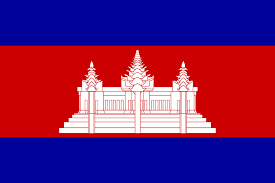
On Wednesday it was announced that the 13-month investigation into the group of five human rights workers known as the ‘Adhoc 5’ had concluded. The 420-day detention of senior officials Ny Sokha, Nay Vanda, Yi Soskan, Li Mony and senior election official Ny Chakrya has been criticized by several international organizations, including but not limited to the United Human Rights Office, Human Rights Watch and Amnesty International. Earlier in the year, the five were in the running for the Martin Ennals award.
On the same day, Cambodian Prime Minister Hun Sen reaffirmed his promise to maintain power at any cost. Sen underscored that “As long as your tongue and your writing insult, I say that Cambodia is still at war,” and that “To protect the peace for millions of people if necessary, 100 or 200 people must be eliminated.”
Meanwhile, several non-violent protests took place over the course of the week. In Kratie, 200 villagers took to the street to protest rubber planation company Doty Saigon-Binh’s attempt to limit their mobility. Ultimately, it was negotiated that villagers could travel freely 24 hours, but the time limit for the transportation of goods would remain limited. Likewise, over 500 garments workers for the company International Fashion Royal staged a walkout in response to the dismissal of Bo Thet, their union rep. According to reports, the company had prevented workers from paying their union over a seven month period. Later on Thursday, the Kampuchea Krom community was forbidden from protesting at the Nation Assembly in response to the continued human rights abuses of the Krum under present-day Vietnamese people.
On Monday, a group of nine activists, journalists and human rights lawyers filed a criminal complaint alleging that the government intentionally infected their phones with software to spy on their activities. The software gives the attacker access to the phone’s files, camera, and microphone. Those potentially targeted by the spying, 88 documented cases altogether, include journalists and activists who have exposed government corruption.
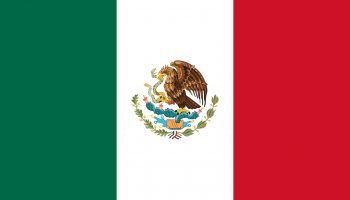
The country is witnessing an important precedent, as Maria de Jesus Patricio Martinez seeks to become the first indigenous woman to run for President in Mexico. Patricio, an indigenous Nahua, is a traditional healer and has been nominated by Mexico’s National Indigenous Congress and the Zapatista National Liberation Army to represent them in next year’s election.
Mexico also hosted the Organization for American States’ (OAS) General Assembly meeting this week, which saw clashes and disagreement over how to handle the political crisis in Venezuela. Venezuela’s foreign minister, Delcy Rodriguez, criticized diplomats for promoting oversight of President Nicolas Maduro’s government and facilitating the interests of imperialist powers. Rodriguez walked out of the summit on Monday.
On June 22 Republican Senators revealed the health care bill, written behind closed doors, in a continued effort to repeal the Affordable Care Act (Obamacare). The bill, which cuts taxes and Medicaid as well as eliminating the insurance mandate, was drafted without any Senate hearings or Democratic amendments. Majority Leader Mitch McConnell is moving for a vote next week, despite uncertainty over whether there will be enough votes for the bill to pass.
The bill, and the secret proceedings around its drafting, have drawn strong opposition from Democrats and civil society. Senate Democrats used parliamentary procedures to tie up the Senate floor on Monday, hoping to draw attention to the secretive procedures of the bill’s drafting. After the bill was revealed, a group of protesters with disabilities held a demonstration at the office of Senator McConnell before being forcibly removed by police.
This week President Trump held a rally with supporters in Iowa, touting victory after Republicans won in a Georgia special Congressional election. Trump has made several recent statements denouncing Robert Mueller’s role as special counsel in the Justice Department’s investigation into Russian interference in the 2016 US Presidential election. He claimed the relationship between Mueller and former FBI director James Comey is “very bothersome.” Mueller served as the director of the FBI from 2001 to 2013 before Comey assumed his duties.
Romania’s parliament gave prime minister Sorin Grindeanu a no-confidence vote on Wednesday, making him and his government step down after only six months in office. The Social Democrat party, which has a majority in parliament, was initially the party to propose the Grindeanu government. However, it withdrew its support for the government last week. Some Social Democrats say they have been unhappy with Grindeanu’s failure to uphold his ambitious governing program, while Grindeanu and opposition members accuse Dragnea, the Social Democrat leader, of changing the government in an attempt to hold power into his hands. Discussions around appointing a new prime minister are to be held next week.
Another important development in Romania is the recent launch of the new “Respect” campaign, meant to promote democracy and human rights. It is now fighting the “Coalition for Family”, an organization that wants to change the country’s constitution in order for the document to specifically mention that families are based on the union between a man and a woman, thus excluding any possibility for recognizing LGBTQ families. The “Coalition for Family” gathered three million signatures for a referendum on the constitution, yet it has faced serious backlash from national and international LGBT groups. The “Respect” platform, supported by almost 100 Romanian organizations, asks politicians not to approve this referendum.
In the northwestern reigion of Idlib, Syrians from the village of Ma’art al-Nu’man have been protesting the actions of Hayat Tahrir a-Sham (HTS), formerly Al-Qaeda’s Syrian branch known as al-Nusra. The Free Syrian Army (FSA) rebels have controlled this small village of just over 80,000 since late 2012, but have seen their authority begun to wane owing to the growing power of the HST as well as to increasing in-fighting amongst the rebels. Posters read such things as “The People Are Stronger Than You” and “You cannot humiliate what Bash Al-Assad couldn’t.”
Meanwhile, American forces recently shot down two planes, the former Syrian, and the latter Iranian. Fearing that the approaching drones might be headed for al-Nufra, the town in which the United States has educated any rebel leaders, the American government claims to have acted in self-defense, but many fret that such “incidents” may lead to a possible war between Iran and the United States as the power vacuum in Syria continues to grow.
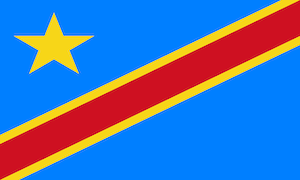
UN investigations continue in the Democratic Republic of Congo. Violence escalated after president Joseph Kabila refused to step down after his term ended. On Thursday, a bomb exploded near a school, where three students were injured while taking their exams.
This week, Zeid Ra’ad al-Hussein, the top United Nations human rights official, spoke about the crisis in the DRC. Al-Hussein linked the government to the Bana Mura militia, which has been accused of mass killings and atrocities. He suspects the government has been arming the militia. The official called for an official investigation, independent from the DRC’s government, yet the Congolese authorities quickly rejected the idea. Furthermore, the Catholic Church in Congo recently confirmed over 3000 killings and the destruction of 20 villages, 10 of them by the Congolese army.
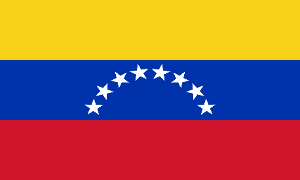
Unrest continues in Venezuela, as president Maduro recently promoted several military men to be part of his cabinet. Among them are general Antonio Benavides, previously sanctioned by the US for human rights abuses, and General Carlos Osorio, who has been accused of trafficking hard-to-find food. The generals will replace some previous members of the cabinet, who will be running for a special assembly to rewrite the country’s constitution. The election for the special constitutional assembly, however, has been heavily criticized by the opposition, who says it favours Maduro and his party. Others oppose the rewriting of the constitution in principle.
As a response to the unrest, the OAS (Organization of American States) has been considering adopting a declaration to condemn Venezuela for its abuses. So far, however, the declaration has not passed, despite being heavily backed by the US and Mexico.
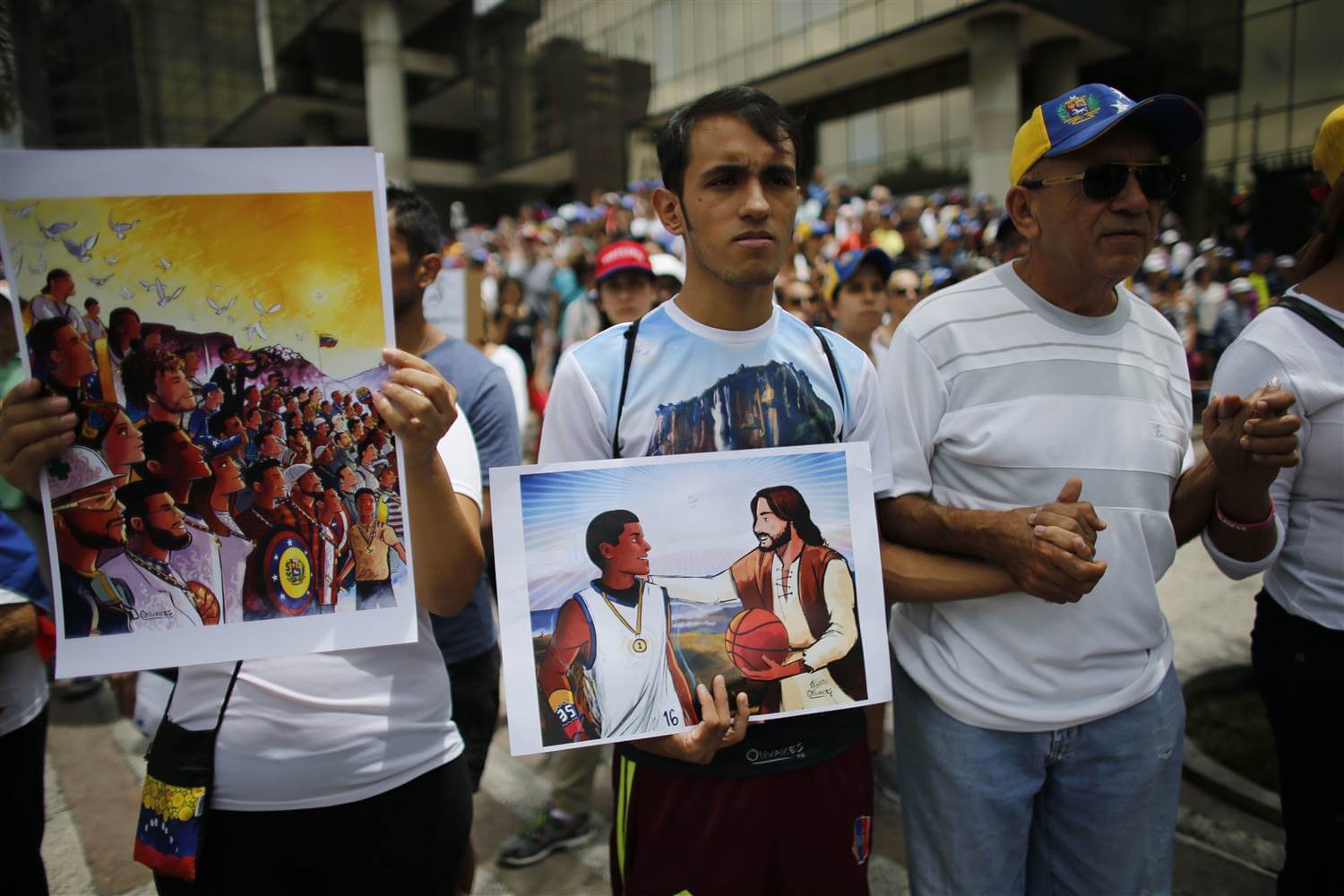
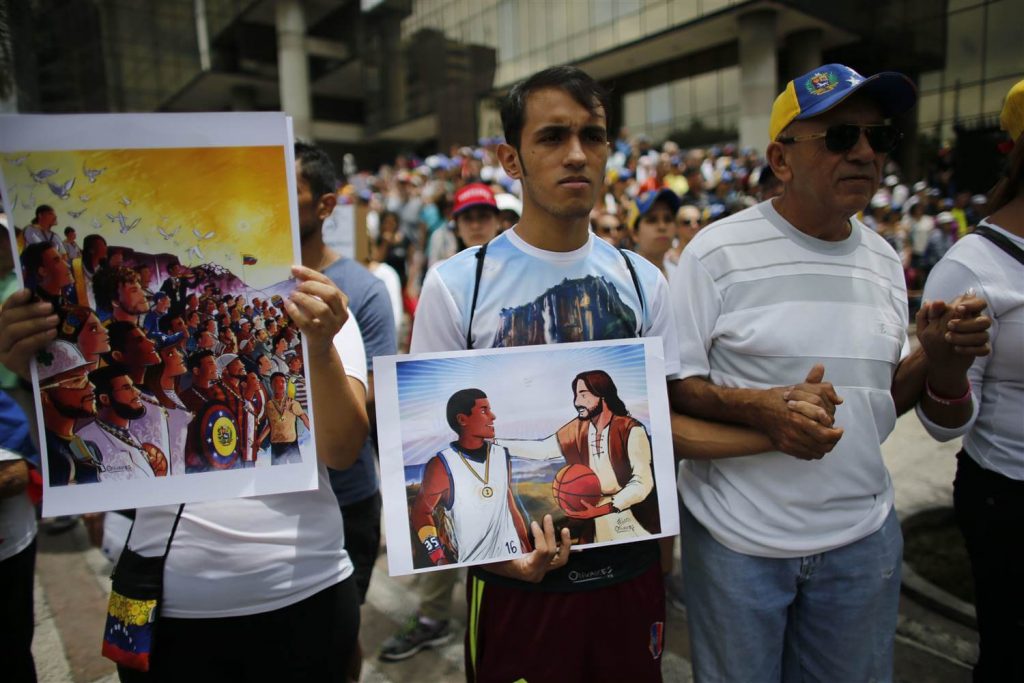
Focusing on the people of Venezuela protesting on the streets, several news sources have featured the works of artist Oscar Olivares, who started making digital paintings depicting the situation in Venezuela. It is said that Olivares, initially inspired by the death of a childhood friend in the protests, has become an “icon” for the protesters.
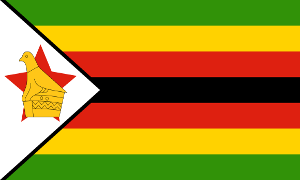
One of Zimbabwe’s principle opposition parties, the National People’s Party (NPP) experienced a significant setback on Wednesday when it was announced that several of its high profile officials had resigned. Bekezela Maduma Fuzwayo, previously the Matabeleland South interim chairperson said that he desired to “concentrate on my studies,” but many party officials paint a different story, pointing towards increased factionalism and tribalism within the party. As a result, it is believed that the NPP’s bargaining power to form a coalition with other opposition parties will be weakened.
In turn, President Mugabe and his party ZANU-PF are reported to have been using death threats and other such heavy-handed tactics as a means of encouraging Zimbabweans to attend his rallies.
Meanwhile, in an act of non-violent resistance, journalists Wisdom Mudzungairi and Everson Mushava have refused to testify in the case against fellow journalist Godfrey Tsenengamu who criticized First Lady Grace Mugabe earlier this year. The journalists pointed to “journalistic privilege and the constitutionally protected freedom of expression and freedom of the media, which protects the confidentiality of journalists’ sources of information.” According to the Zimbabwe Human Rights Association (ZimRights), the case against Tsenengamu represents a clear case of censure.
On an equally positive front, Heal Zimbabwe (HZT) worked alongside Bare High School to organize a Sports for Peace Tournament last Saturday, 17th June. With over 300 people in attendance, organizers hoped encourage their community to uphold peace in the run up to the election in 2018. 201 participants signed an HZT pledge worded to this effect.
On Wednesday, Prime Minister Hun Sen lifted an order exiling Sam Rainsy, the former opposition leader who previously served as the President of the Cambodia National Rescue Party (CNRP). It remains uncertain whether Mr. Rainsy will be imprisoned upon his return; without a royal pardon, the likelihood of arrest appears high in the face of numerous convictions amassed against him for criticizing the government and alleging the state had ordered the assassinations of political analyst Kem Ley.
The local (commune) elections on June 4 led to a narrow victory for Prime Minister Hun Sen’s Cambodian People’s Party, but the process was criticized by Human Rights Watch as neither free or fair due to threats to free speech and imprisonment of political opponents. Nevertheless, the CNRP garnered almost half of the votes, signalling the possibility of strong competition in the 2018 Parliamentary elections. Mr. Rainsy has said he will run for Prime Minister Hun Sen’s position in next year’s elections.
Nine former African presidents and former UN Secretary-General Kofi Annan have warned that the ongoing political crisis in the DRC stemming from President Joseph Kabila’s refusal to step down at the end of his constitutional mandate and the failure to organize an election to replace him puts the country’s future in “grave danger.” A December agreement between Kabila’s ruling coalition and opposition leaders requires that an election be held before the end of the year, however it appears increasingly unlikely that one will take place in the face of significant delays in voter registration and mobilizing financing.
The DRC is also facing a health crisis, as it was reported this week that two outbreaks of vaccine-derived polio, which occurs in areas with low immunization rates and is exacerbated in communities with poor sanitation, have been identified in the country. At least four cases of the disease have been identified, and the World Health Organization has warned that there is a high risk that the virus could spread.
A new report by Amnesty International criticizes treatment of asylum seekers by Mexico and the United States after the Trump administration enacted stricter immigration measures with the Executive Order on Border Security and Immigration Enforcement Improvements on January 25, 2017. The report, based on extensive field research on the US-Mexican border since February 2017, cites the endangerment of asylum seekers trying to cross the Mexican border into the United States.
The report claims that people fleeing violence in El Salvador, Honduras, Guatemala are being turned away or held in overcrowded detention centers without the option to claim asylum, and are often turned back to Mexico, which in turn deports them back to their countries of origin – a violation of international law. Amnesty International’s Americas Director, Erika Guevara-Rosas, stated that the United States and Mexico are “partners in crime” in the push-backs, which Guevara-Rosas deemed a “burgeoning human rights catastrophe.”
Humanitarian agencies and human rights organizations are growing increasingly concerned after a UN panel noted that the intensifying airstrikes by the American-led coalition against Islamic State targets in Syria have killed hundreds of civilians in and around Raqqa, and have displaced 160,000 people. Focusing on American military conduct for the first time since the conflict in Syria began, the panel stated that the intensification of airstrikes in the campaign to retake Raqqa has taken a remarkable civilian toll, and resulted in a “staggering loss of civilian life.” Groups monitoring the conflict’s effect on civilians have voiced their increasing concern over these developments, which was further underscored last week by reports that coalition forces had used munitions containing white phosphorous, which is banned in populated areas under international law.
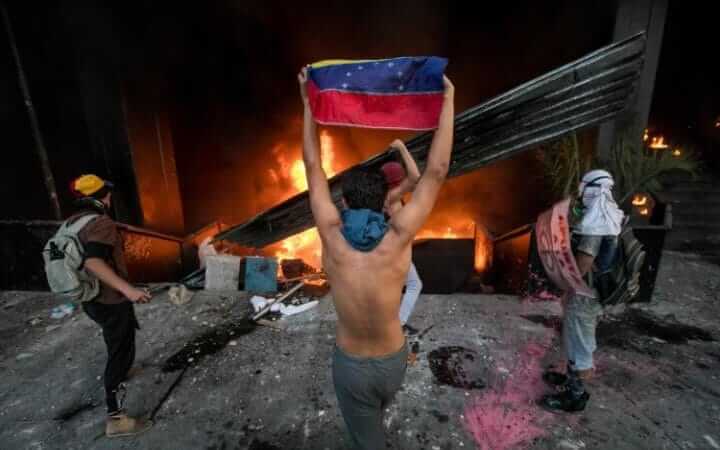
Protesters set fire to the Supreme Court in Venezuela on Monday, continuing three months of unrest throughout Venezuela. The violence broke out after the Supreme Court voted to reject a measure to prevent President Nicolas Maduro from rewriting the country’s constitution by electing a constituent assembly. The legal challenge was brought by Luisa Ortega, a former ally of President Maduro who now opposes the regime; Ms. Ortega has also alleged that 13 judges appointed to the court in 2015 were put there illegally and should be replaced.
Last week, the head of Venezuela’s National Defence Council, Alexis López Ramírez, resigned over President Maduro’s plans to create the constituent assembly, citing disagreement with how the members would be selected and the way it was convened. In the face of triple-digit inflation, as well as dire shortages of food and medicine, protesters demand President Maduro’s resignation and are calling for elections.
The leader of Zimbabwe’s opposition party, Movement for Democratic Change – Tsvangirayi (MDC-T), is launching a challenge 93-year-old President Robert Mugabe in next year’s general election. This will be the fourth time Morgan Tzvangirai has challenged President Mugabe in a presidential election. Mugabe’s Zanu-PF party is campaigning to win over voters, particularly the youth, amid frustration at high unemployment, skyrocketing inflation, and a breakdown in social services.
Meanwhile, Zimbabwe’s Catholic Bishops have made an appeal to President Mugabe and other political leaders to reject violence and coercion in the 2018 general elections, and urged leaders to respect the Constitution of Zimbabwe, which deems that elections should be free and fair.
Officials say that the special counsel overseeing the investigation into Russian interference in the 2016 presidential election has widened the probe to include whether President Trump attempted to obstruct justice. The obstruction of justice investigation into Trump, who previously was not personally under investigation, began days after FBI Director James Comey was fired on May 9. Comey testified last week before the Senate Intelligence Committee that he believed that he was fired “in some way, to change — or the endeavor was to change the way the Russia investigation was being conducted.” Officials have also stated that investigators are also now looking for evidence of possible financial crimes committed by Trump associates.
Also this week, 196 Democratic members of Congress agreed to file a lawsuit against Trump, alleging that he is in violation of the foreign emoluments clause of the Constitution, which restricts the acceptance of gifts and benefits from foreign leaders. The lawsuit, which is one of several that have been recently filed alleging constitutional violations stemming from Trump’s business ties, has so far drawn more congressional plaintiffs than any legal action previously taken against a president, although so far no Republicans have joined. The suit alleges that by retaining interests in his businesses, Trump may be receiving benefits from foreign states without Congressional approval.
Additionally, in a serious incident on Wednesday a lone gunman opened fire on members of the Republican congressional baseball team as they practiced for an annual charity game that takes place between Democratic and Republican members of Congress. Four people were injured, including House majority whip Steve Scalise, who is still in critical condition. Information is still coming out about the gunman,James Hodgkinson, who was killed in the shootout, but he appears to have had a record of domestic violence and was a fervent opponent of President Trump. The incident, although there was a great deal of unity and solidarity between Democrats and Republicans in its immediate aftermath, will likely set off a renewed debate over gun control policies, which tends to be contentious and highly partisan in the US.
On September 17, 2011, Occupy Wall Street took over Zuccotti Park, in the heart of the financial district in Lower Manhattan. Declaring, “We are the 99%,” they captured the attention of the nation. Within a few months, however, the park was cleared and the protesters went home, achieving little, if anything.
In 1998, a similar movement, Otpor, began in Serbia. Yet where Occupy failed, Otpor succeeded marvelously. In just two years they overthrew the reviled Miloševic government. Soon after came the Color Revolutions in Eastern Europe and the Arab Spring in the Middle East.
While Occupy certainly did not lack passion or appeal—indeed its core message about inequality continues to resonate—it was unable to translate that fervor into effective action. Otpor, on the other hand, created a movement of enormous impact. The contrast is sharp and it is no accident. Successful movements do things that failed ones don’t. Clarity of Purpose
For Otpor, there was never any question about what they were setting out to achieve—the nonviolent overthrow of Slobodan Miloševi?—and everything they did was focused on that mission.The group also focused on specific pillars upon which the regime’s power rested —such as the media, bureaucracy, police, and military— to target their efforts.
This clarity of purpose led directly to action. For example, rather than focusing on staging large scale demonstrations, in the early stages, Otpor focused on street theatre and pranks to embarrass the regime. When they were arrested, they made a point to be respectful of the police, but also made sure their lawyers and the press knew about their detention.
By starting slow and building scale, Otpor could show, to their own members and the country at large, that they not only had clear goals, but that they were making progress against them. That led others to want to join them, which in turn led to even greater success and more support, resulting in a positive feedback loop.
Compare that to Occupy, which as Joe Nocera noted in a NY times column, “had plenty of grievances, aimed mainly at the “oppressive” power of corporations,” but “never got beyond their own slogans.” While the group captured attention, nobody, even the protesters themselves, was clear on what was to be done. Before long, everyone lost interest.
Read the whole piece here. By Maria J Stephan and Timothy Snyder, for The Guardian. Photo: Eduardo Munoz Alvarez/Getty Images.
After the spread of democracy at the end of the 20th century, authoritarianism is now rolling back democracy around the globe. In the US, supporters of democracy disarmed themselves by imagining an “end of history” in which nothing but their own ideas were possible. Authoritarians, meanwhile, keep practicing their old tactics and devising new ones.
It is time for those who support democracy to remember what activists from around the world have paid a price to learn: how to win.
Modern authoritarians rely on repression, intimidation, corruption and co-optation to consolidate their power. The dictator’s handbook mastered by Orban in Hungary, Erdogan in Turkey, Maduro in Venezuela, Zuma in South Africa, Duterte in the Philippines and Trump here provides the traditional tactics: attack journalists, blame dissent on foreigners and “paid protestors,” scapegoat minorities and vulnerable groups, weaken checks on power, reward loyalists, use paramilitaries, and generally try to reduce politics to a question of friends and enemies, us and them.
Yet tyrants’ tactics require the consent of large numbers of people. The first lesson, then, is not to obey in advance. If individuals make the basic effort to consider their own sense of values and patriotism rather than subconsciously adjusting to the new reality, aspiring authoritarians have a major problem. Good citizens will then ask: but what should we do? History provides an answer: civil resistance.
Unarmed civilians using petitions, boycotts, strikes, and other nonviolent methods have been able to slow, disrupt and even halt authoritarianism. Civil resistance has been twice as effective as armed struggle. Americans will remember the historical examples of Gandhi and Martin Luther King, and perhaps the peaceful east European revolutionaries of Solidarity in Poland and Otpor in Serbia. Many of us have overlooked the more recent examples of successful civil resistance in Guatemala, South Korea and Romania.
Civil resistance works by separating the authoritarian ruler from pillars of support, including economic elites, security forces, and government workers. It attracts diverse groups in society, whose collective defiance and stubbornness eventually elicits power shifts.
Mass, diverse participation empowers reformers and whistle-blowers and weakens the support base of hardliners. The best gauge of the health of a resistance movement, then, is whether the size and representativeness of active participation are growing.
This website uses cookies to improve your experience. By closing this message, you consent to their use in accordance with our cookie policy, unless you have disabled them. ACCEPTRead More
Manage consent
Privacy Overview
This website uses cookies to improve your experience while you navigate through the website. Out of these, the cookies that are categorized as necessary are stored on your browser as they are essential for the working of basic functionalities of the website. We also use third-party cookies that help us analyze and understand how you use this website. These cookies will be stored in your browser only with your consent. You also have the option to opt-out of these cookies. But opting out of some of these cookies may affect your browsing experience.
Necessary cookies are absolutely essential for the website to function properly. This category only includes cookies that ensures basic functionalities and security features of the website. These cookies do not store any personal information.
Any cookies that may not be particularly necessary for the website to function and is used specifically to collect user personal data via analytics, ads, other embedded contents are termed as non-necessary cookies. It is mandatory to procure user consent prior to running these cookies on your website.