CANVAS Weekly Update – April 22nd, 2022

Dear Friends,

CANVAS is delighted to bring you another issue of our weekly report!

In this issue, we cover the latest updates on Russia’s invasion of Ukraine, planned Earth Day protests, IS attacks in Afghanistan, and a surge of gun-violence in the United States.

Conflict Update:

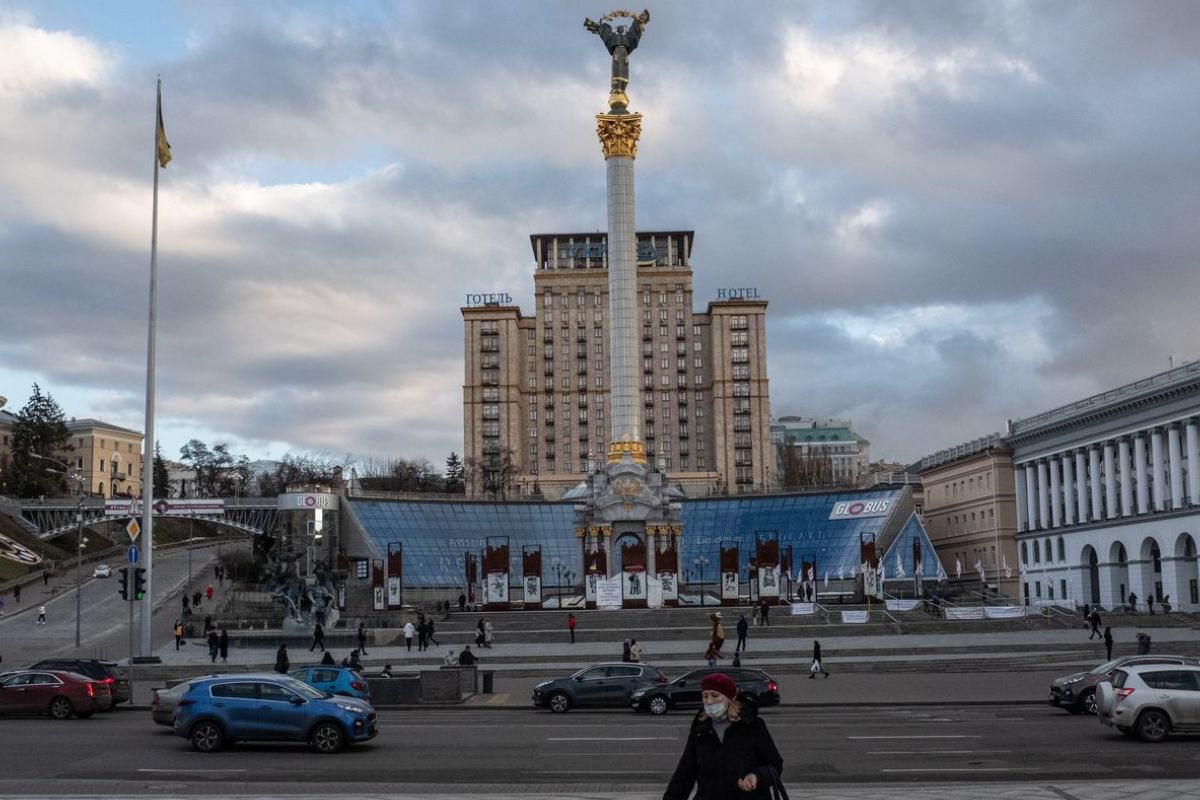
Russian President Vladimir Putin has declared a victory in the Ukrainian city of Mariupol, which he claims Russian forces have “liberated.” However, Putin announced that forces would not be taking the Azovstal steel complex as planned, which some take as a sign that Russian forces have been weakened. Mariupol has seen some of the most intense violence and the worst humanitarian situations of the war, where hundreds of thousands of civilians were trapped and cut off for two months of Russian bombardment. The civilian toll in Mariupol is currently unknown, though Ukraine estimates that the number lies in the tens of thousands. U.N. Secretary-General António Guterres called for a four-day humanitarian pause during the weekend of Orthodox Easter in order to allow civilians to flee and to allow humanitarian aid to be delivered. As of April 20, the OHCHR recorded 5,121 civilian casualties in Ukraine, including 2,224 killed and 2,897 injured. The actual numbers are expected to be significantly higher, as there are delays in reports and corroboration due to continued intense hostilities.

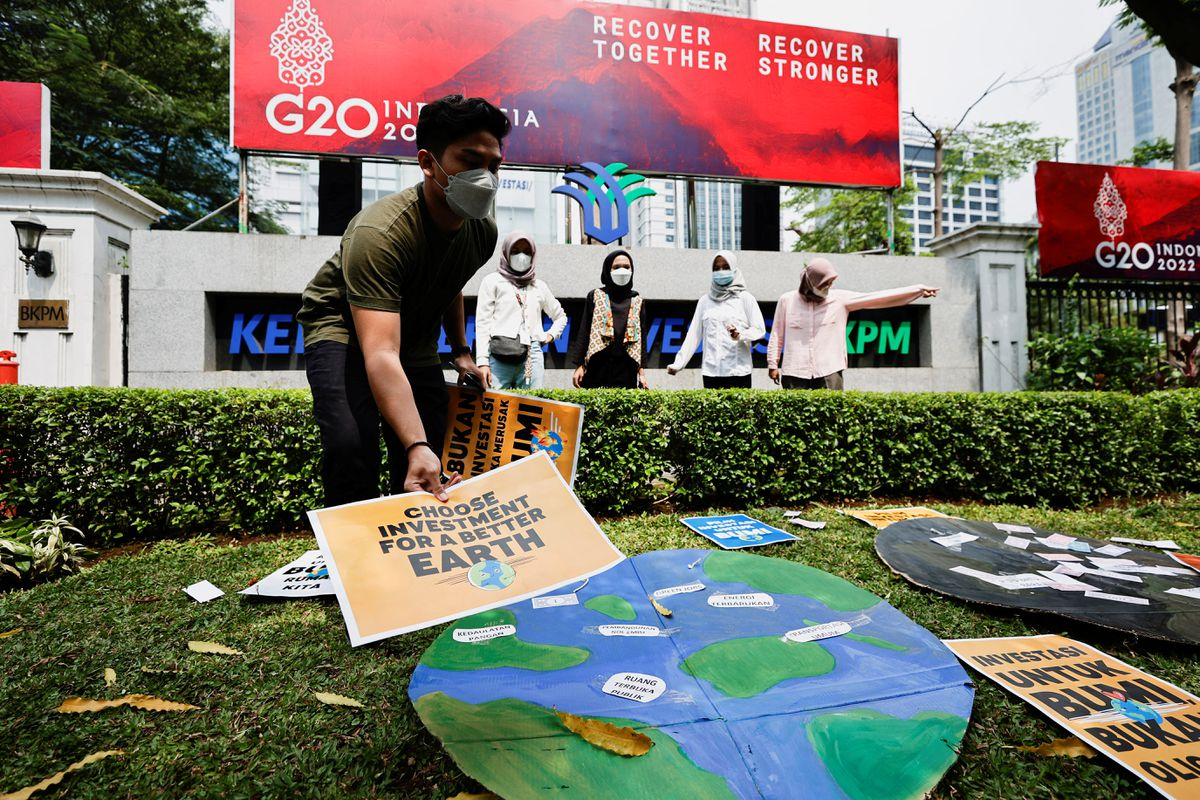
Friday, April 22, 2022 is Earth Day, a day often filled with climate demonstrations as activists raise awareness about the issues facing the planet. Some protests this Friday are planned to focus specifically on the links between climate change and Russia’s invasion of Ukraine. Activists in Berlin, Warsaw, Brussels, and other cities are planning to gather outside German embassies or government buildings to hand out red-stained roubles that will symbolize blood soaking a currency that is both supporting climate change and Russia’s invasion. Some activists will be joining from Lviv in Ukraine.

South Africa’s third-largest political party, the Economic Freedom Fighters (EFF), led peaceful protests along the borders of Eswatini to raise awareness about repression against pro-democracy protests occurring in Eswatini. The largest opposition party in Eswatini, the People’s United Democratic Movement (PUDEMO) joined the EFF in the protests. Eswatini has experienced political unrest since May 2021 when Thabani Nkomonye, a 25-year-old law student, was killed by the kingdom’s police. Activists in Eswatini have since been demonstrating against the rule of King Mswati III and welcomed the show of solidarity from their South African neighbors. A 2021 Amnesty International report stated that, since Nkomonye’s death, 1,000 pro-democracy protesters have been arbitrarily jailed, 80 have been killed, and over 200 others have been hospitalized.

One man died and fourteen more people were injured in Sri Lanka when police fired live bullets at protesters. Tens of thousands of protesters took to the streets as the prices of essential commodities rose sharply and caused shortages in food, medicine, and electricity. The protesters blame the policies of President Gotabaya Rajapaksa and demand his resignation, though he has refused to quit. Authorities have stated that protesters were burning tires and throwing stones and other objects at police, and the Inspector General of Police C.D. Wickramaratne issued a statement claiming that protesters had been about to set fire to a truck containing 30,000 liters of fuel. Protesters and people on social media have denied the claim, pointing to a video of the incident that does not show the truck being threatened.
 

Afghanistan:

The Islamic State has carried out a series of attacks on Thursday that have left the country in a state of fear. While the Taliban claim to have defeated the IS, the group still poses significant security threats to the new leaders. The IS says that these attacks are part of an ongoing global campaign to avenge the deaths of former leaders. The first attack was through a Shia Mosque in Mazar-i-Sharif where at least 31 people were killed and 87 were wounded. The second attack was a blown up vehicle near a police station in Kunduz that killed 4 and injured 18. There are also reports of a Taliban vehicle being hit in the province of Nangarhar, which killed four Taliban members and wounded a fifth. The fourth blast was in Kabul and wounded two children.

These blasts come two days after explosions outside an education center and a high school in Kabul on Tuesday that led to six casualties and wounded over 20 more people, most students. The explosions on Tuesday increased fears among the Shiite population over violence targeted towards them, despite repeated pledges by the Taliban to end bloodshed.
 

Iran:

A group of government officials and leading nonproliferation experts have urged President Biden to complete negotiations with Iran over the nuclear deal, warning that the country is a week or two away from producing enough uranium to power a bomb. In a statement, this group of experts said that if this deal wasn’t reached, it would significantly “increase the danger that Iran would become a threshold nuclear-weapon state.” All sides are expressing pessimism in the deal being reached as neither is willing to give up on what it considers important sticking points. Currently, the biggest remaining issue is over an Iranian demand that the United States lifts the foreign terrorist designation against the Iranian Revolutionary Guard Corps, which the US is unwilling to do. The negotiations haven’t formally been broken off, but they have been suspended for a month.

Iran has said that they will not give up on plans to avenge the US assassination of Quds Force Commander Qasem Soleimani, despite offers from the United States to lift sanctions and provide other concessions in return. Revolutionary Guards Commander Alireza Tangsiri calls these concessions a pure fantasy, saying the US will not provide them and Iran should focus on revenge. There was no response from Washington on these comments.
 

Iraq:

Turkey has launched a new offensive against Kurdish fighters in Northern Iraq. Special forces and commando units backed by aerial vehicles are targeting Kurdistan Workers Party (PKK) hideouts in Iraq, according to defense minister Hulusi Akar. He said this operation started on Sunday after Turkey found out that the PKK was planning a large-scale attack against Turkey. Turkey routinely carries out attacks in this region, with the last one being in 2020. However, these attacks have strained Turkish relations with Iraq, which accuses Turkey of not respecting its territorial integrity.
 

Lebanon:

Over the three year economic crisis plaguing Lebanon, the number of women dying from pregnancy-related complications has nearly tripled. This crisis not only impacts children born in Lebanon but also Syrian refugees that have fled over the border. A third of children were unable to access healthcare and the number of children who die within the first month after birth has increased dramatically within the refugee population, according to UNICEF. Around 40% of doctors and 30% of midwives have left the country, significantly lowering access to healthcare. Lebanon had significant success in lowering maternal deaths in the years preceding the crisis but numbers have risen after 2019.
 

Sudan:

While ex-president Omar al-Bashir is on trial for the coup in 1989, his lawyers are continuing the racist culture Bashir centralized during his “reign.” The trial is being broadcasted live, and Bashir’s defense team began chatting among each other without realizing their microphones were still on. As such, one of them was heard saying “This ‘slave’ with his ugly nose irritates me.” The Arabic word for slave is used as a slur in Sudan to refer to people who are thought to be African, not Arab, or a derogatory term to refer to black people. The lawyer was referring to journalist Lukman Ahmed who has recently stepped down from the directorial position of the state-owned broadcaster. Ahmed, a former BBC correspondent from Darfur, was appointed to the role during the transition period after the ousting of Bashir. After six months staying in the post after the October military coup, he was sacked for failing to “honor” the military head of state. The broadcast reminded the public of one of the slogans used to oust Bashir in the first place: “Oh you arrogant racist, the whole country is Darfur.” Sudan has no law criminalizing racism.

Sulima Ishaq, head of the Combating Violence Against Women Unit under the Ministry of Social Affairs, was interrogated by security services and is accused of “leaking state secrets” to the United Nations (UN). The UN envoy reported to the UN Security Council that he was working with said unit and had uncovered that Sudanese government forces had raped 16 female protestors since the anti-coup protests in December. However, Ishaq says, “the information I gave to the [UN] had already been broadcasted on television channels and media outlets, but because the information was presented to the Security Council and the [coup forces] are afraid of getting sanctioned, they are [targeting] me now.” Ishaq is worried she will go to prison on false charges as experts believe the coup government is making an example out of Ishaq. The government is particularly upset that Ishaq is a civil servant, which gives her allegations more credibility on the international stage. Further, targeting Ishaq, a high profile person, points to the government’s discomfort with scrutiny as the U.S. imposed sanctions on the Central Reserve Police last month after citing excessive force against protestors. Ishaq is upset the UN envoy was not more subtle in his report and should not have mentioned her unit at the Security Council meeting, saying , “I feel that the way [the information] was stated was a little bit insensitive.” The spokesperson for the envoy responded, “the special representative to the secretary-general did not name any individual in the Security Council as a source.” However, Ishaq believes she “will be scapegoated” to remove the envoy from Sudan and will be charged with jeopardizing national security.
 

Uganda:

A government deal signed between the Finance Ministry and Uganda Vinci Coffee Company Ltd gives the company exclusive rights to buy Uganda’s coffee and is seen as unfair to local exporters. Abed Bwanika, a lawmaker, said that the deal prohibits anyone from buying the nation’s harvest until “this company gets the quota they want.” The company also determines the price of the commodity, and is exempt from all taxes. The finance ministry reports Uganda Vinci will create the first final product processing plant in Uganda worth $80 million and is key to government efforts to more than double coffee production by 2030. The ministry also reports “Uganda Vinci will pay for superior quality coffee beans at a premium price, which will be determined transparently and not lower than the price approved by Uganda Coffee Development Authority.” Also, green coffee will continue to be exported according to market forces. Before this agreement, the coffee trade in Uganda was liberalized and farmers received approximately 80% of the export price of the beans, according to the country’s coffee regulator. The ministry did not announce when the agreement will go into effect.
 

Zimbabwe:

On April 15 around 10pm local time, 35 people died after a bus carrying 106 members of a church crashed in a gorge in eastern Zimbabwe. 71 people were injured. According to official figures, road traffic crashes and fatal accidents are rising from an average of 1,836 in 2016 to an average of 2,000 fatalities per year between 2017 and 2019. The World Health Organization estimates the true number is as much as three times higher. In 2017, Zimbabwe reported the nation loses an average of 3% of its gross domestic product every year to road crashes.

 

Bolivia:

On Tuesday, Marco Antonio Aramayo, former director of the Indigenous Fund, died while in preventative prison. Former President Carlos Mesa and Human Rights Watch (HRW) questioned the Bolivian judicial system and attributed the death to the state’s failure to provide Aramayo with proper medical care. Aramayo was put in prison after denouncing the embezzlement of $82.5 million dollars in 2014 and was tried more than 250 times for the same crimes in different parts of Bolivia. HRW senior investigator César Muñoz stated that Aramayo’s death is evidence of “the ravages of the lack of independent justice.”

On Wednesday, the Association of Families of Political Prisoners (Afavim), requested an audience with the Inter-American Commission on Human Rights and will meet with them during their next visit to the country. Members of Afavim, include Carolina Ribera, who is the daughter of former interim president Jeanine Áñez, who is currently on trial.
 

Cuba:

On Monday, the NGO Prisoners Defenders released a report directed to the United Nations Committee on the Rights of the Child. The report documents systemic violations of children’s rights in Cuba, particularly the imprisonment of minors after the July 11 protests and the forced separation of thousands of minors from their parents for a period of 8 years.

On Thursday, American and Cuban officials met in Washington for talks about migration for the first time in four years. The meeting comes at a time when Biden’s administration is grappling with rising numbers of migrants attempting to cross the U.S. border from Mexico, with Cubans making up a growing portion of them.
 

Nicaragua:

On Monday, Daniel Ortega’s regime ordered the closure of 25 NGOs, bringing the number to at least 112 banned NGOs since December of 2018. The closed NGOs worked in different fields, including education, medical services, environmental advocacy, human rights, women’s rights, indigenous population’s rights, and free speech, as well as different universities. According to the government, the NGOs failed to register as foreign actors.

 

The United States:

A surge in gun violence has been plaguing the US in recent weeks, with more than 140 mass shootings occurring this year alone. In Pittsburgh yesterday, two 17-year-olds were killed and several other people were injured after about 90 shots were fired at a large party. Investigators are searching for multiple suspects in the shooting, which occurred at a property that was rented through short-term rental company Airbnb. This weekend also saw two mass shootings in South Carolina, with no fatalities as of yesterday afternoon. In one of the incidents, nine people were shot at an Easter bash at a lounge in Furman. In the other incident, 14 people were injured in a shooting at the Columbiana Centre mall in Columbia on Saturday.
 

China:

China announced the signing of a security agreement with the Solomon Islands. Prime Minister Manasseh Sogavare told parliament the agreement with Beijing was necessary to deal with the Solomon Islands’s “internal security situation.” The Pacific island nation has long struggled with political unrest, most recently in November 2021 when protesters targeted Honiara’s Chinatown and tried to storm the prime minister’s residence. Beijing said the pact complemented existing security cooperation, while Washington said it would destabilize the Pacific Island region. U.S. officials will visit the Solomon Islands this week.
 

Hong Kong:

YouTube has taken down the campaign channel of John Lee, Hong Kong’s only candidate for Chief Executive, citing U.S. sanctions imposed on him. These sanctions were placed over what the U.S. says were the roles of John Lee and other Hong Kong officials in eroding Hong Kong’s territorial freedoms under the National Security Law. In addition, Facebook’s owner, Meta, has said Lee could maintain a demonetized presence on Facebook and Instagram and is not allowed to use any payment services.

Hong Kong court has charged former DJ Tam Tak-chi with seditious verbal crimes and 40 months in jail. Last month he was arrested for “uttering seditious words.” Tam is the first person to be charged with sedition in Hong Kong since 1997. Prosecutors alleged that he used anti-police slogans as well as phrases commonly heard at the 2019 pro-democracy protests. Human Rights Watch says that this trial “exemplifies the dizzying speed at which Hong Kong’s freedoms are being eroded.”
 

Indonesia:

All three branches of Indonesia’s military have put an end to “virginity testing” previously used when recruiting women. The process involved the insertion of two fingers into the vagina in order to test if the woman had previously had sex. The World Health Organization wrote in 2014 that “there is no place for virginity (or ‘two-finger’) testing; it has no scientific validity.” Human Rights Watch urges the Indonesian government to investigate the trauma caused over decades of this policy being in effect and to provide support to those impacted.
 

Myanmar:

Since March, Myanmar’s military junta has stripped 33 critics of their citizenship. Those targeted include diplomats and members of the National Unity Government, which is made up of politicians elected in the November 2020 polls. Notices in state media claim that the citizenship of these individuals was terminated because they committed “acts that could harm the interests of Myanmar,” though many experts, including the deputy director of Human Rights Watch’s Asia division, note that this is the latest effort of the military to use citizenship as a weapon. In 2017, the Rohingya of Myanmar were stripped of their citizenships as well, and this tactic has been used in other countries in the region, including Cambodia and Thailand. The deputy regional director for research at Amnesty International, Emerlynne Gil, said that terminating citizenship in a way that leaves the victims stateless is “inconsistent with international law.”

The New York-based group Physicians for Human Rights has called Myanmar one of the most dangerous places in the world to be a health worker. Since the February 2021 coup, at least 30 doctors have been killed and 140 have been arrested for participating in the nationwide protest movement. 89 doctors remain behind bars. Thousands of doctors refused to work for the junta after the coup and began offering their services for free at underground clinics and private hospitals. Doctors have been targeted by the junta because doctors are among the wealthiest of Myanmar citizens. During arrests, soldiers have seized cash and expensive items and demanded thousands of dollars to not shut down private hospitals. The shortage of doctors has caused an ongoing health crisis as people are unable to seek treatment, leaving children without immunizations and highly increasing the chance of death due to injury or chronic conditions.
 

Thailand:

Crisis Group released a new briefing on Tuesday regarding the peace dialogue between the Thai government and Barisan Revolusi Nasional (BRN), the main insurgency in Thailand’s southernmost provinces. Talks have resumed after two years of COVID-19 precautions, leading to an agreement between the two sides to cease hostilities during the month of Ramadan. The briefing urges the Thai government and BRN to build on this momentum in an effort to end violence that in 2021 saw its first annual rise in casualties since 2012. Since the insurgency reignited in 2004, 7,300 people have been killed and over 13,500 have been wounded.
 

Belarus:

Russian and Belarusian athletes have been banned from participating in the Wimbledon lawn tennis tournament this summer. The All England Lawn Tennis and Croquet Club (AELTC) last set forth such drastic measures in World War II when athletes from Germany and Japan were not allowed to participate. Banning athletes is a step further than most athletic organizations have taken; Belarusian and Russian athletes were being allowed to compete elsewhere, like in the French Open this spring, just not representing their national flag or country. On Wednesday, the chair of AELTC said: “We recognise that this is hard on the individuals affected, and it is with sadness that they will suffer for the actions of the leaders of the Russian regime.”

The Belarusian Interior Ministry was unable to respond to reporters when asked to comment on the arrest of journalist Aksana Kolb. The Committee to Protect Journalists reports that Kolb was detained on April 20th for “preliminary custody” for 10 ten days, and has called on the authorities to release her immediately. There are fears that Kolb is detained in the Akrestsina detention center, which is notorious for its cruel guards. Kolb is the editor of the independent weekly Novy Chas, which was forced to go online last August after it became too dangerous to print the paper. In October, the website was blocked after the Novy Chas office and Kolb’s house were raided and Kolb was questioned and made to sign a nondisclosure agreement. Since then, Novy Chas procured a new Internet domain and began covering Russia’s invasion of Ukraine.

Following the April 11 declaration of Belarusian Radio and Electronic Industry Workers’ Union as an extremist group, by Belarusian authorities, April 18 and 19 saw the arbitrary detention of 16 independent trade union leaders. Four of them are being held in a KGB pre-trial detention center and seven are being held without communication in an unknown location. Amnesty International’s Director for Eastern Europe and Central Asia released the following statement: “…It is high time that the authorities end their crackdown on peaceful dissent. By detaining these trade union leaders, the Belarusian authorities continue their strategy of reducing the nation’s civil society to ashes. The independent trade unions have already been targeted during the state’s brutal crackdown on the protest movement that erupted following the disputed 2020 presidential election. Civic activism and defense of workers’ rights should be welcomed, not criminalized.”
On April 15, the Belarusian authorities announced a ban on trucks registered in the European Union from entering the territory.


Georgia:

The Prime Minister of Georgia emphasized the role of Georgia’s humanitarian aid in Ukraine in a meeting with the U.S. ambassador on Thursday. The PM stated that Georgia stands “firmly” supporting the international community in the conflict in Ukraine and will continue to provide political and practical support. Additionally, he pitched co-sponsoring international resolutions in support of Ukraine as Georgian diplomatic missions are still in Kyiv, Odesa, and Lviv.

Ex-President Saakashvili’s lawyers asked the city court to allow doctors from a local nonprofit to pay systematic visits to the former president in prison to assess his condition and treat him. The Judge denied this request but did order the Director of Special Penitentiary Service to ensure appropriate medical services are provided.
CAVNAS Weekly Update – April 15th, 2022

Dear Friends,

CANVAS is delighted to bring you another issue of our weekly report!

In this issue, we cover the latest updates on Russia’s invasion of Ukraine, the removal of Pakistan’s Prime Minister, and protests in Sri Lanka.

Conflict Update:

As the war in Ukraine has continued, violence against civilians has escalated. As of April 12, the UNHCR was able to confirm 4,450 civilian casualties in Ukraine, including 1,892 killed and 2,558 injured. This is considered to be a substantial underestimate. Russia has been blamed for a missile attack on a Ukrainian train station that killed at least 52 people. On Wednesday, the OSCE released a report documenting evidence that Russia has violated international human rights law.

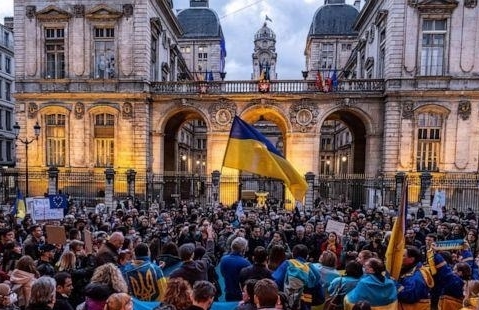
War in Ukraine has also reawakened feelings of solidarity, passion for democracy, and condemnation of populism. In the words of Srdja Popovic, “solidarity with Ukraine makes democracy cool again.”

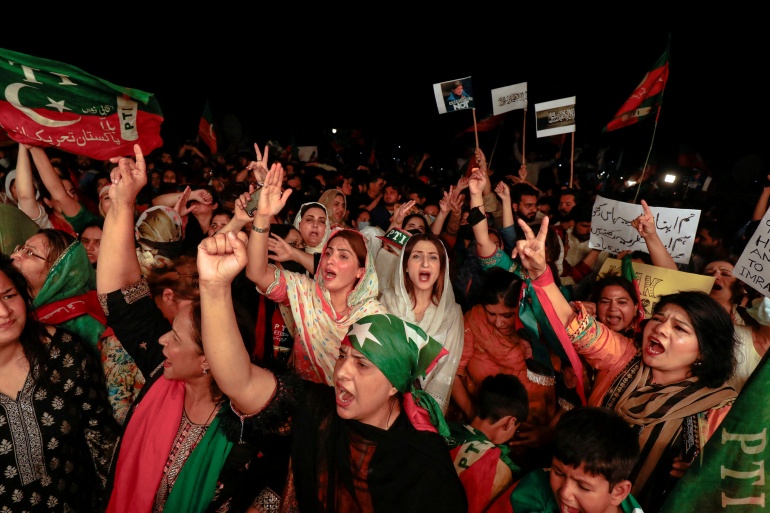
Pakistan’s Prime Minister Imran Khan was removed in a no-confidence vote on Sunday. That night, Khan supporters, mostly youth, took to the streets in Karachi, Islamabad, and other cities to protest the prime minister’s removal. Khan’s removal came after days of the united opposition force trying to depose him. The opposition accuses Khan’s government of economic mismanagement as Pakistan struggled with high inflation and a plummeting Pakistani rupee. Khan’s relations with the powerful Pakistani military had also been tense. On Wednesday night, Khan announced a plan to continue organizing protests until new elections are held.

Tunisians took to the streets on Sunday, joined by members of parliament to protest “a failed dictatorship that is leading the country to an economic disaster,” according to activist Chaima Issa. Tunisia’s political crisis was heightened last month when President Kais Saied dissolved parliament. At Sunday’s protests, people chanted, “the people want to overthrow the coup.” They were met with a heavy presence of anti-riot police.

In Sri Lanka, protesters occupied the entrance and surroundings of President Gotabaya Rajapaksa’s office on Thursday and celebrated their traditional new year with milk rice and oil cakes. Thursday marked the sixth day that Sri Lankans have been camped out to demand the resignation of the president during the country’s worst economic crisis in memory. In recent months Sri Lankans have experienced fuel and food shortages, as well as daily power outages. Several Cabinet members have quit, but President Rajapaksa and his family members continue to hold power.

Extinction Rebellion’s Just Stop Oil activists in the UK have promised that they will not stop blockading oil terminals until they are jailed. The movement has reported that around 400 people have been arrested a total of 900 times. Government leaders have condemned the protests, citing disturbances and “irresponsible scaremongering.” Scientists have expressed support for the demands of a hunger striker calling for a climate change briefing for all MP’s from the government’s chief scientist, Sir Patrick Vallance. On Wednesday, protesters surrounded the buildings that house the UK headquarters of Shell and glued themselves and several XR flyers to the reception desk and to the floor.


Afghanistan:

Iran has summoned Afghanistan’s diplomatic envoy after there were attacks on Iran’s diplomatic missions in Afghanistan. Clips have started circulating on social media allegedly showing Afghan refugees being beaten and harassed by Iranian border guards and mobs. Protestors in Afghanistan attacked the Iranian consulate with rocks and broke security cameras in the building. Protestors were also chanting “death to Iran” outside the consulate until dispersed by the Taliban security forces. Iran’s foreign ministry has dismissed these videos as fake and aimed at hurting ties between the two countries.


Iran:

Hundreds of women working in Iranian cinema have denounced violence against women and called to make perpetrators accountable. In a strongly worded statement, over 200 women working in Iranian cinema condemned sexual violence which they say has become endemic to the country. These women also denounced the financial disparity between men and women and urged the industry to mobilize through bodies like Iranian Alliance of Motion Picture Guilds and create committees that would help women who have faced sexual harassment and violence.

The UN atomic watchdog, the IAEA, has attached new cameras at Iran’s centrifuge workshop in Natanz after a request from Tehran. After sabotage at a workshop in Karaj, which the country blames on Israel, Iran decided to move work to a plant at the Natanz site. However, Iran says that all footage will be held by them and not given to the IAEA until Iran is able to revive its nuclear deal with the West.


Iraq:

According to regional intelligence services and Iraqi militias, Russia is receiving military hardware smuggled from Iraq. Anti-tank missiles, rocket launchers, and RPGs have been dispatched to Russia over the past month. A source in one of the most powerful Shia militias, Hashd al-Shaabi, said that they don’t care where these weapons go as long as they end up in anti-US hands. These smuggled weapons could provide a significant amount of aid on the ground to Russia.


Lebanon:

There have been recent improvements in relations between Lebanon and Saudi Arabia. After critical comments were made by Lebanese politicians last October about the handling of the Saudi led coalition in Yemen, relations between the two countries have been cold. However, recently, Saudi Arabia has returned their ambassadors to Beirut. In addition, Saudi Arabia has said that they will be providing humanitarian assistance for Lebanon which is currently going through a financial crisis. The kingdom once invested billions of dollars in Lebanon but has now banned Lebanese exports all together. Now, they are slowly lifting measures, and developments look positive according to senior officials.

Lebanon’s cabinet approved the demolition of grain silos damaged in the 2020 port blast, based on a report that concluded that the silos would be liable to collapse soon. Families of victims want these silos to stay in place as a memorial until a probe into the explosion can conclude. The Lebanese government says that a separate memorial has been planned.


Sudan:

April 6th marked three years since the fall of dictator al-Bashir. Civilians commemorated the day by taking to the streets in massive numbers to protest the October 2021 military coup. The ongoing protests have received criticism for not compromising with the government however the resistance responds largely the way 22 year old medical student Sajida al-Mubarak did: say “no” to the military: “No to partnership and no to recognition of the army.” She says “We will tell the army that they should go back to their barracks and leave politics to civilians.”


Cuba:

The Cuban government has not been accepting deportations of Cuban nationals from the US for more than 6 months. According to the US Immigration and Customs Enforcement, at least 46,000 Cubans have arrived to the US asking for asylum since October 1st, 2021, numbers similar to the 80s Mariel crisis. The Cuban government has argued that the US is to blame for the migrant surge since they “encourage illegal and irregular” migration, not fulfilling the promise to issue 20,000 annual immigrant visas to Cubans and suspending consular services in Havana since 2017.


The United States:

Pacific Gas and Electric has agreed to pay a $55 million settlement over two massive wildfires in California that were sparked by the company’s faulty utility equipment. The 2019 Kincade Fire burned more than 77,000 acres in Sonoma County and destroyed nearly 400 homes. The 2021 Dixie Fire charred close to a million acres, making it California’s second-largest wildfire in history. That fire burned for more than three months, claimed one life and destroyed more than 1,300 homes. On Tuesday, a man set off smoke grenades and fired a handgun on a crowded New York City subway train, wounding passengers and setting off a panic during the morning rush hour. Overall, 29 people were hospitalized in connection with the shooting with injuries that included gunshot wounds, smoke inhalation or from falling while trying to escape. Frank James was arrested on suspicion of being the gunman and was charged in federal court with violating a law that prohibits terrorist and other violent attacks against a mass transportation system. If convicted, he could spend life in prison.


China:

Anonymous twitter users, using the hashtag #thegreattranslationmovement, are exposing extreme nationalism and pro-Russian feelings in China. Scores of screen-grabbed posts from China’s most popular social media platforms have been translated and shared to twitter, attracting thousands of followers and criticism from China’s state-run media.

On Thursday, Foreign Ministry spokesperson Zhao Lijian stated that China would reject “any pressure or coercion” over its relationship with Russia, in response to a call from U.S. Treasury Secretary Janet Yellen for Beijing to use its “special relationship with Russia” to persuade Moscow to end the war in Ukraine. On Wednesday, Secretary Yellen stated that “the world’s attitude towards China and its willingness to embrace further economic integration may well be affected by China’s reaction to our call for resolute action on Russia.” Zhao also stated “We oppose unfounded accusations and suspicions against China, nor will we accept any pressure or coercion.”


Hong Kong:

John Lee is set to be appointed as Hong Kong’s Chief Executive following a rubber-stamped election next month. Lee is Beijing’s top choice, having spent decades in the police force before joining politics. Under Lee, Hong Kong’s police force became despised in 2019 after protests in Hong Kong led to police using violent tactics against protestors. With Lee’s track record, the backing of China is a clear indication of how Hong Kong will be governed going forward.


Indonesia:

On Monday, Indonesian students took to the streets in South Sulawesi, West Java, and Jakarta to protest rising food and fuel prices, as well as a possible shift in elections that could prolong President Joko Widodo’s term in office. Though President Widodo has denied that there are plans to prolong his second term, many remain unconvinced and accuse him of not taking a stronger stance against the idea. Indonesian police used tear gas and water cannons to disperse protesters, and there are reports that rocks were thrown after nonstudent demonstrators joined the protests.

On Tuesday, Indonesia’s parliament passed a sexual violence bill that has been in the works for a decade. The bill combats sex crimes and provides a legal framework for victims of sex crimes, including marital rape. Women’s rights activists have been advocating for this bill for ten years, but progress has been hampered by some Islamic groups and conservative lawmakers who worried that it would promote promiscuity or wanted it to criminalize extramarital sex and LGBT relationships.


Myanmar:

Myanmar’s military junta carried out air strikes on Sunday against ethnic rebels in Karen state in an effort to take control of the town Lay Kay Kaw near the Thai border. Many of the town’s residents had already fled fighting from areas around the town in December. Lay Kay Kaw has been under the control of the Karen National Union (KNU), which is Myanmar’s oldest ethnic rebel group.

The military junta have been burning villages in the formerly peaceful central heartland of Myanmar in an effort to suppress opposition to the February 2021 coup. Since the start of this year, more than 5,500 civilian buildings have been burned down by troops. Arson by the military has led to large-scale displacements, as well as disrupting sowing and harvesting. Satellite images are strong evidence that the junta is using arson to curb resistance in the central Sagaing region, where there is reportedly armed opposition to the junta.


Thailand:

The house of Angkhana Neelapaijit, a prominent human rights defender, was attacked in Bangkok on Tuesday. A pair of 9-inch-long scissors was thrown through Angkhana’s door by an unidentified assailant. Angkhana felt vulnerable after the Justice Ministry canceled her protection under the witness protection program following the completion of the investigation into her husband’s enforced disappearance. The acting Asia director for Human Rights Watch, Elaine Peasrson, urged the Thai government to undertake a serious investigation and noted that the attack sends “a spine-chilling message to the entire Thai human rights community.”


Belarus:

The U.S. commerce department has identified seven Boeing 737 planes that are violating U.S. export controls. The planes operated by Belarus’ national carrier have reportedly flown into Russia or Belarus which violated the Export Administration Regulations. The export controls stops any company from providing any refueling, maintenance, repair, spare parts, or other services to identified planes. Deputy Commerce Secretary said “by rejecting the international rule of law, Russia and Belarus have made it clear that they do not deserve the benefits of participating in the global economy, and that includes international travel.”

Georgia:

After a meeting with Georgian foreign minister Ilia Darchiashvili, Czechia has publicly expressed support for Georgia’s bid to join the European Union. The foreign minister of Czechia went so far as to say that during his nation’s presidency of the EU they would take steps to “help Georgia.”

CANVAS Weekly Update – April 1st, 2022

Dear Friends,

CANVAS is delighted to bring you another issue of our weekly report!

In this issue, we cover the latest updates on Russia’s invasion of Ukraine, a nationwide strike in India, and Zimbabwean opposition wins majority seats in by-elections.

Conflict Update:

War in Ukraine has become one of the most pressing conflicts of today. There are several actions we can take to support the people of Ukraine and the peaceful resolution of conflict, including learning others personal and cultural values, supporting local initiatives and organizations, and expanding our media bubble.

Tuesday saw the beginning of a new round of peace talks between representatives of Ukraine and Russia. This time, negotiations are taking place in Istanbul and were opened by Turkish President Recep Tayyip Erdogan. On Sunday, Ukrainian President Volodymyr Zelenskyy announced that Ukraine’s neutrality is now on the table, and they are willing to compromise over the status of the eastern Donbas region. Ukrainian forces have reportedly been able to reoccupy territory around Kyiv, causing Russia to reframe its goals in Ukraine amidst low morale and weapons shortages amongst Russian troops. Russia announced that it would be scaling back operations around Kyiv and Chernihiv while peace talks took place, though this statement was met with skepticism from President Zelenskyy and Western leaders, and attacks on Chernihiv reportedly did not ease. As of Tuesday, the OHCHR recorded 3,039 civilian casualties since 24 February 2022, including 1,179 killed and 1,860 injured. The actual numbers are expected to be significantly higher, as hostilities have delayed recording and corroboration in many cities. On Wednesday, UN rights chief Michelle Bachelet announced that there are credible reports indicating that Russian forces have used cluster munitions in populated areas of Ukraine at least 24 times, as well as reporting on other human rights issues currently facing Ukrainians. David Beasley, the executive director of the UN World Food Program, stated that the war in Ukraine will have an impact on food supply “beyond anything we’ve seen since World War II,” especially for countries such as Egypt and Lebanon that normally get over 80% of their grain from Ukraine.

As the Duke and Duchess of Cambridge toured Central America and the Caribbean last week, they were met with protests from locals. Protesters in Jamaica demanded apologies and reparations for slavery, actions that Jamaicans have been seeking for decades. Protests in the Bahamas focused on similar issues, as well as calling for the Duke and Duchess to bring attention to issues facing Bahamian women. Bahamian leaders released a letter, writing “They […] must acknowledge that their diverse economy was built on the backs of our ancestors […] They must pay.” Following the tour, Prince William noted that future relationships between Caribbean countries and the UK are “for the people to decide.”

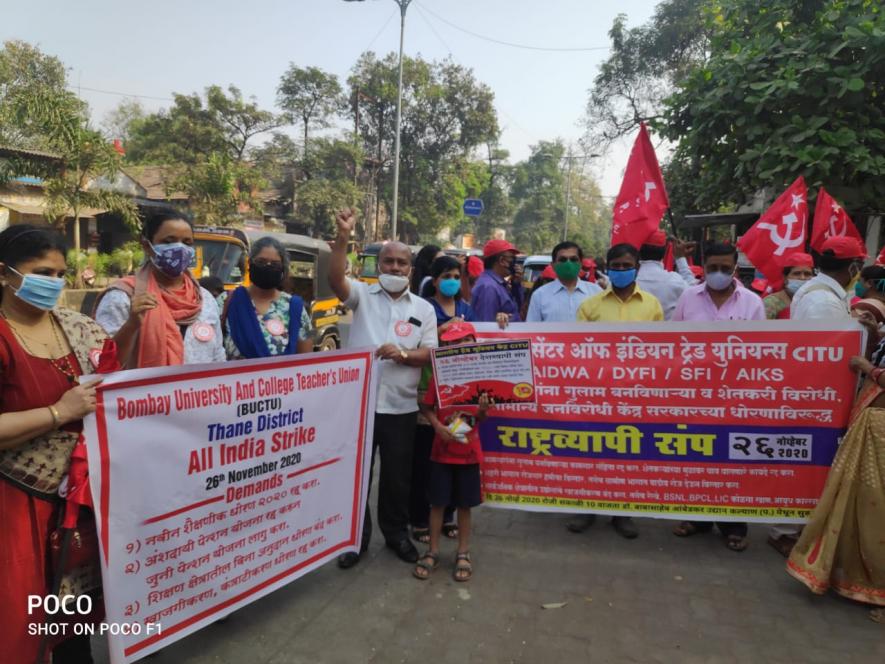
Monday saw the start of a two-day nationwide strike in India. Hundreds of workers chanted anti-government slogans and marched with red labor union flags in New Delhi, protesting economic policies under Prime Minister Narendra Modi’s government. The labor unions demanded universal social security coverage for workers in the unorganized sector, a raise in minimum wage under an employment guarantee program, the repeal of a new law that gives employers more freedom in setting wages and working hours, and a halt in plans to privatize some public-sector banks and the sale of public assets.

Haitian demonstrators burned a plane belonging to an American missionary group in protest against Prime Minister Ariel Henry’s lack of action against gang violence. Police fired tear gas at the protesters when they entered the airport in Les Cayes, but the protesters were able to push the plane onto the tarmac and set it on fire. This demonstration follows peaceful protests around the country, which are all pushing for Prime Minister Henry’s government to do more to combat gang violence and constant kidnappings. At least one person died and five were injured in the confrontation in Les Cayes.


Afghanistan:

Hours after girls’ schools opened for the first time in seven months, the Taliban administration announced that they will be closed until further notice. This means that female students above the sixth grade will not be able to attend school. The Ministry for Education said that schools would be closed until a plan was drawn up that would be in accordance with Islamic law and Afghan culture. One senior official said that more time was needed to decide on a uniform for teenage girls, but they would be allowed back in schools soon. While this order targets secondary and high schools, many primary schools for girls aren’t open either, with many provinces not having girls’ primary schools.
The international community has made education of girls a key demand for any recognition of the Taliban as the official Afghan government. The World Bank has suspended 4 projects worth $600 million USD in the country. The United States has also canceled meetings with Taliban officials in Doha on key economic issues over this decision.

The Taliban have banned BBC television news, in the three main languages of Afghanistan, from being broadcast. More than six million Afghans listen to the BBC’s news each week in the languages of Pashto, Persian, and Uzbek. Since the Taliban takeover in August, many rights groups and journalists have mentioned concerns about freedom of speech in the country. The UN mission in Afghanistan has condemned the removal of the BBC bulletins and the Head of Languages at BBC World Service is calling this removal a “worrying concern”.


Iran:

President Ebrahim Raisi approved Iran’s budget on Tuesday but there was little elaboration by the government. Iran’s top budget official said that this budget was drawn up on the assumption that U.S. sanctions would continue.

U.S. Special Envoy for Iran, Robert Malley, said that he wasn’t confident that a nuclear deal with Iran and the US was imminent after 11 months of talks in Vienna. The failure to restore these accords would risk raising political tensions in the Middle East and raise world oil prices further. Malley said that he “can’t be confident that a deal is imminent” as there have been multiple issues that have been hard to bridge. This assessment comes as Iranian senior advisor, Kamal Kharrazi says that a deal would be coming soon, but depends on the political will of the United States. Kharrazi states that in order for the deal to be revived, the US needs to remove the foreign terrorist organization designation from Iran’s Islamic Revolutionary Corps Guard. Iran also wants guarantees that future U.S. presidents would not withdraw from this agreement.


Iraq:

Iran’s missile strikes into Iraq last week were revealed to have hit the villa of a Kurdish businessman involved in the autonomous Kurdistan’s energy sector. There have been two meetings recently at this villa to discuss shipping Kurdish gas. Iraqi and Turkish officials speaking anonymously said that a major trigger for these strikes was a plan to pump Kurdish gas into Turkey and Europe with the help of Israel. This gas export plan could threaten Iran’s place as a major energy supplier in the region, especially as it’s economy is dealing with US sanctions.

Due to a lack of quorum, Iraqi lawmakers failed to elect a new president for the country. This election pitted incumbent Barham Saleh of the Patriotic Union of Kurdistan, against Rebar Ahmed, a member of the rival Kurdistan Democratic Party. A quorum of two thirds of the house’s 329 members is needed but only 202 members showed up. The first vote on February 7th was boycotted amidst legal troubles with one of the presidential candidates, Hoshyar Zebari. Zebari was previously backed by Shiite cleric , and leader of the largest majority bloc, Moqtada al-Sadr, but Sadr has now thrown his support behind Ahmed. This most recent election was boycotted by Iran-backed groups in a setback to Sadr who has pledged to form a government free of Iranian influence.


Lebanon:

Following the freezing of assets of six major banks last week, Lebanon’s central bank governor Riad Salameh and brother Raja Salameh have been charged with illegal enrichment and money laundering during the economic meltdown last year. Judge Ghada Aoun said that Salameh brothers had created three companies in France in order to buy properties worth millions of dollars. Riad Salameh denied any accusations of wrongdoing and did not show up to his trial on Monday to face questioning. He is also a suspect in an embezzlement case in the European Union that has led to the freezing of 120 million euros of assets. He is suspected of embezzling 330 million euros in France, Germany, Luxembourg, and Monaco, with four other people.

Lebanese military court has charged Christian politician Samir Geagea over clashes in Beirut that led to the deadliest street violence in a decade. Judge Fadi Akiki said that he had charged Geagea based on new evidence relating to the Tayouneh events. These clashes killed seven people, all part of the Shia Muslim group Hezbollah. Geagea has denied the any accusations made against him.


Sudan:

Protests against the military coup in October 2021 continue even as those in power begin to fracture. Another protestor was killed on Thursday bringing the count of civilian deaths in relation to the protests to 93. The day before Russia’s invasion of Ukraine a delegation headed by Mohamad Hamdan Daglo, or Hemeti, was in Moscow under the banner of strengthening economic and security ties. After Hemeti’s trip, al-Burhan went on a trip to the UAE to strengthen “economic and military” relations. Analysts believe that both leaders are vying for international support to prop up their own individual power outside of Sudan. Al-Burhan is also reportedly consolidating military forces in Sudan.


Uganda:

Uganda’s military has killed 309 people in an eight-month-old operation against cattle rustling in a northeast region rich in minerals including gold, limestone and potentially oil, the armed forces said. In 2020, Uganda began conducting a mineral survey and mapping exercise in Karamoja, thought to hold substantial reserves of gold, copper, limestone, oil and other minerals. A recent increase in violence in the region though has posed threats to the exercise, including the killing of a team this month that included a veteran geologist, a student intern, an interpreter and two soldiers.


Zimbabwe:

The delayed parliamentary by-elections finally took place on Saturday and of the 28 seats up for grabs, the Citizens’ Coalition for Change (CCC), the opposition party won 19 seats. The Zimbabwe African National Union-Patriotic Front (ZANU-PF) still holds the majority in the parliament but these elections are seen as a forecast of the presidential elections scheduled for 2023. This win comes despite accusations of ZANU-PF intimidating opposition supporters, the death of a CCC supporter while going to a CCC rally, and the arrests of 37 CCC supporters in February.

On Wednesday, the Agriculture Minister announced that Zimbabwe has begun repossessing unused land from black farmers who benefitted from controversial land reforms two decades ago. Those who own multiple farms, with unused areas will lose land. The land will then be given to farmers on the waiting list from earlier rounds of land reform. The land that is being repossessed from Black people is being allocated to Black people as well, in an effort to continue to redress the effects of British colonialism. An even more pressing issue now that the war in Ukraine is limiting Zimbabwe’s wheat imports, more than half of which comes from Russia. The increase in price of fuel is also worrying as inflation rises rapidly, eroding people’s purchasing power and putting a strain on civil society.


Bolivia:

The UN Human Rights Committee expressed concern over the treatment of human rights activists and journalists in Bolivia in a report. According to the report, activists and journalists were intimidated, victims of excessive and disproportionate use of force, arbitrary detentions, torture, and censorship. Bolivian prisons are at 148% of their capacity and almost 2/3 of the people detained being held in preventive prison.

The trial against Jeanine Anez was suspended again after another failed attempt on Monday. The trial against the former president and six former military chiefs was suspended after a nervous crisis and technological difficulties resulted in the trial being postponed until April 4th.


The United States:

President Joe Biden is considering releasing about 1 million barrels of oil per day from the Strategic Petroleum Reserve to alleviate persistent high gas prices. The US price of a gallon of regular gasoline spiked after Russia invaded Ukraine, hitting a record high of $4.33 earlier this month. The invasion has also snarled global supply chains that were supposed to be recovering from pandemic-related woes.

Florida Gov. Ron DeSantis has signed the controversial piece of state legislation, dubbed the “Don’t Say Gay” bill by critics, that bans certain instruction about sexual orientation and gender identity in the classroom. The new law will go into effect in July, and it is another in a long line of measures to further silence and marginalize LGBTQ individuals. DeSantis has a history of supporting anti-LGBTQ legislation, including an anti-trans sports ban last year.


China:

Australian journalist Cheng Lei was tried behind closed doors on Thursday in Beijing, more than 19 months after she was detained by Chinese authorities. Cheng, who was a leading business news presenter on Chinese state broadcaster CGTN when she was detained in August 2020, was formally arrested a year ago on suspicion of “illegally supplying state secrets overseas“ and could face a sentence of up to life in prison if found guilty.

Solomon Islands has announced it is pushing ahead with a security agreement with China, despite concerns from Australia, New Zealand and the US. The Solomon Islands government said officials from both countries had on Thursday “initialled” elements of the proposed security agreement with China which would be signed at a later date. The deal has contributed to worsening Chinese-Australian relations.


Hong Kong:

Hong Kong eases travel rules in a shift from zero-Covid policy. A ban on flights from nine countries will be lifted and hotel quarantine times will be reduced. Chief Executive Carrie Lam said that circuit breaker flights were no longer necessary as the situation in those nine countries was not worse than in Hong Kong. In addition, Lam also announced that social restrictions on gathering limits, mask wearing, and business and venue operations would slowly lift in three phases. Schools will resume classes from 19th April and plans for a mass testing operation were suspended.


Indonesia:

After a major investor in the project to relocate the country’s capital pulled out, it was announced that the Indonesian government may use crowdfunding to raise funds for the new capital. The head of the Mining Advocacy Network in East Kalimantan, Pradarma Rupang, expressed concern about the possibility, noting that it is unreasonable to expect the public to pay, there will be no compensation for donors, and the crowdfunding effort would likely be dominated by businesses that want to make a profit. The head of an advocacy group for the Paser Balik Indigenous people, Jubain, called the idea ridiculous. He also expressed concerns that the government is planning to build the capital on the ancestral lands of the Paser Balik, noting that the idea of crowdfunding is only one more example of the government not paying attention to the needs of local communities. About 20% of the estimated $32 billion needed for the relocation will come from state coffers, leaving the private sector and other governments to make up the rest.


Myanmar:

During a speech on Armed Forces Day, Myanmar’s junta chief promised to “annihilate” opposition forces, claiming that the military would not negotiate with “the terrorist group.” On the same day, anti-coup protesters carried signs in the streets that read “uproot the fascist military.” The junta also used this opportunity to demonstrate their continued military relationship with Russia as both countries face sanctions and isolation from abroad, including the attendance of Russian Deputy Defence Minister Alexander Fomin and the demonstration of new fighter jets by Russian pilots.

New research published last week by Fortify Rights and the Schell Center for International Human Rights at Yale Law School shows that Myanmar’s military junta and police deliberately killed civilians who opposed the rule of the Tatmadaw in the six months following the February 2021 coup. The report found “reasonable grounds” that the junta had committed crimes against humanity. It describes the military’s use of murder, torture, imprisonment, enforced disappearances, forced population transfer, and persecution of civilians.


Thailand:

Thai policymakers are facing obstacles in striking a balance “between managing risks to economic growth and price stability,” according to the chief economist at Bank of Ayudhya, Somprawin Manprasert. Inflation rose to a record high in February, driven by higher energy prices. Thailand’s economy is largely tourism-dependent and has been significantly impacted by Russia’s invasion of Ukraine. Economic growth has not yet returned to pre-pandemic levels. Thailand’s central bank has decided not to raise interest rates for more than a year in an effort to support the economy struggling to recover from the pandemic, and economists are split in expectations for changes in future rates.


Belarus:

It’s been reported that Belarusian dissidents are going to Ukraine to join the fight against Russia. They say that without a free Ukraine there is no free Belarus and the fate of the two nations are deeply interconnected. The Belarusian government is taking steps against Ukraine in the diplomatic sphere. After having withdrawn all diplomats from Ukraine, Belarus expelled the majority of Ukrainian diplomats on the basis of “unfriendly” actions, accusing Kyiv of “interfering” in state affairs.

CANVAS Weekly Update – March 18th, 2022

Dear Friends,

CANVAS is delighted to bring you another issue of our weekly report!

In this issue, we cover the latest updates on Russia’s invasion of Ukraine, a missile strike in Iraq, and developments in the persecution of human rights advocates.

Conflict Update:

As of Tuesday, 1,834 civilian casualties in Ukraine have been confirmed by the OHCHR, including 691 killed and 1,143 injured, though these numbers are considered to be a significant underestimation. Many Ukrainian areas, including Izium, Mariupol, and Volnovakha are reporting hundreds of civilian casualties in their cities alone. Approximately 3 million people have fled Ukraine, according to the UNHCR. Refugees of color, many of them students, report facing discrimination as they flee Ukraine based on their race. On Thursday, a theatre was bombed in Mariupol, where over 1,000 civilians were reported to have taken shelter. The Ukrainian foreign minister and Mariupol’s city council accused Russia’s attack of amounting to a war crime, though Russia continues to deny that it is targeting civilians. A fourth round of talks took place between Russian and Ukrainian officials this week, where slight progress was made in negotiations. Ukraine’s neutrality is reportedly being discussed, a proposition that was initially refused. On Wednesday, the International Court of Justice ruled that Russia must immediately cease military operations in Ukraine.

Protests continue in Russia in support of Ukraine. On Monday, an employee of Russia’s state TV Channel One interrupted a live news bulletin with a sign reading: “NO WAR. Stop the war. Don’t believe propaganda. They are lying to you here.” The journalist was identified as Marina Ovsyannikova, who later reported being questioned for 14 hours with no sleep for two days and no access to legal help.

Mali plans to suspend French state-funded international news outlets RFI and France24. The ruling military junta has increased restrictions on foreign media in response to what they claim to be false allegations of army abuses. This comes a month after French troops withdrew from Mali for the first time since 2013. Human Rights Watch has accused militants and Malian soldiers of executing civilians in addition to other abuses.

Human Rights Watch reported that 20 opposition political leaders had been convicted in a Cambodian court as a result of an unfair trial with no credible evidence. The trial of these 20 members of the opposition Cambodia National Rescue Party (CNRP) is expected to be only the first of many. Activists and opposition members have been fleeing Cambodia since the ruling-party-controlled Supreme Court dissolved the CNRP in 2017.


Afghanistan:

The UN votes to secure a formal presence in Afghanistan. The vote was 14 in favor, with Russia abstaining. This resolution describes a one-year mandate for the UN political mission in Afghanistan calling it “crucial to peace”. There are several different areas of cooperation in this mandate, from humanitarian, political, and human rights fronts. According to Norwegian UN ambassador Mona Juul, who’s country drafted this resolution, this mandate is crucial for the UN to meet its overarching goal of peace. All UN security council members agree that Afghanistan needs help, the issue was how to bring aid into the country without formally recognizing the Taliban.

Afghanistan’s Ministry of Higher Education has opened the doors of universities again after 7 months, but this is contingent on both universities and students adhering to a strict set of rules that violate freedom of speech. Previously private universities were ordered to separate male and female students and required male professors to teach male students, and have female professors teach female students. This has now been codified into one procedure, and public universities have been ordered to follow these regulations as well. In addition, students are not allowed to speak with media about their universities, use smartphones inside, or share anything on social media.


Iran:

Two British-Iranians, Nazanin Zaghari-Ratcliffe and Anoosheh Ashoori have been released from prison in Iran, and have finally been reunited with their families. This release comes with the settlement of a historic debt Britain has owed to Iran over military equipment. Zaghari-Ratcliffe and Ashoori were held for years in a Tehran prison and used as diplomatic pawns. Britain’s foreign secretary said that the Iranian government had released a third dual British-Iranian citizen, Morad Tahbaz, and that she was working on getting him out of Iran.

Iran has decided to temporarily suspend talks with Saudi Arabia, another regional power, after the largest mass execution in Saudi Arabia’s history. These talks have been ongoing for a year to restore diplomatic ties between both countries. There was no reason given by Iran for the suspension of talks, but it comes right after Saudi Arabia has put 81 people to death, with over 3 dozen being Shiites. Shiites have often complained of being treated as second class citizens in Saudi Arabia. Iran, the largest Shiite Muslim majority country in the world, and Saudi Arabia, a majority Sunni country, severed ties in 2016 after a prominent Shiite cleric was executed.


Iraq:

On Sunday, Iran claimed responsibility for a missile strike in Iraq, near a US consulate site. No Americans were hurt and no US facilities were hit, but one civilian was injured. Iranian state media claims that this strike was revenge against recent Israeli strikes which killed Iranian military personnel in Syria. This strike comes during an Iraqi attempt to form a new government with minimal Iranian influence. This attack drew harsh condemnation from the Iraqi government, calling it a “violation of sovereignty”, and demanded an explanation from Iranian leadership. The United States has also strongly condemned this attack.

On Tuesday, the Iraqi Parliament scheduled a session on March 26th to hold a delayed vote on Iraq’s president. The role of president is one that is mostly ceremonial and constitutionally reserved for the country’s Kurdish minority population. Parliament released a list of 40 candidates for the post. Some of the frontrunners are Barhem Saleh, the incumbent, and Rebar Ahmed, a candidate from the opposition party. This vote has been held up due to a lack of quorum and legal issues, adding to Iraq’s political uncertainty.


Lebanon:

A Lebanese judge has frozen the assets of five top banks and board members while she investigates transactions they’ve taken with Lebanon’s central bank. This probe is investigating possibly illegal transfers of billions of dollars that occurred during Lebanon’s economic meltdown. The asset freeze happened against Bank of Beirut, Bank Audi, SGBL, Blom Bank and Bankmed, and applies to property, vehicles, and company shares. Lebanon’s Banks Association said that this move by judge Ghada Aoun was illegal, and would further destabilize the banking system.

Lebanon’s Prime Minister Najib Mikati said that he will not seek reelection during Lebanon’s May parliamentary election. His statement throws Sunni politics in Lebanon in deeper disarray, two months from a vote seen as important to restabilize the country. This statement comes after former Prime Minister Saad Hariri, also a Sunni Muslim, said that he would withdraw from politics, and urged other members of the Future Movement party to do the same. Right now, there is a “political void” for the Sunni community, and Mikati urged the Lebanese population to vote. He said his move would “provide room for the younger generation.”


Sudan:

This week 4 villages were burned down and 17 people were killed in the Jabal Moon mountain region. This brutality was allegedly carried out by the government-linked militia known as Janajaweed or more formally the Rapid Support Forces. Among those killed by the  militia were three workers with the Human Rights Monitors who had been assessing the human rights situation in the area. All roads to Jabal Moon have been closed due to security concerns but this results in economic and security consequences. People have become internally displaced or are struggling financially. Since November hundreds of people have been killed in the seven attacks by armed forces. Racial tensions have existed since before the 2003 Darfur war between Arab and non-Arab populations in the area; much of the conflict revolves around ethnic tensions and the control of resource rich lands. The latest anti-coup protest on Thursday left 187 wounded. 87 protestors have been killed by security forces since the coup on October 25th. Western nations responded to the coup with more sanctions on the already economically struggling nation. The inflation has almost reached 260%.


Uganda:

Another wave of journalist arrests saw 9 journalists/authors arrested. Seven of them were released but author Norman Tumuhimbise who is set to release a book criticizing the president later this month and a woman journalist Farida Bikobere were charged with “offensive communication” the same charges levied against Kakwenza Rukirabashaija who has now fled to Germany. The pair who was arrested in the most recent wave of arrests are held in remand in a high security prison until 21 March and have allegedly been tortured like their counterparts were.

On March 8th, Muhoozi Kainerugaba, son of the President, announced that he had retired from the military. However, a military spokesman said “the general has not retired from the army, he is still in active service. The army promotions and the commissions board, which is the military body mandated with handling retirement requests, has not received his application.” The tweet concerned many who believe he has been groomed to succeed his father. According to Ugandan law, serving soldiers cannot participate in politics. While Kainerugaba has not stated his interest in running for president, his supporters have already begun campaigns.


Zimbabwe:

The struggle for a living wage for teachers continues in Zimbabwe. On February 8th the government conceded a 20% pay increase among other benefits such as a housing scheme. However, teachers are still demanded a salary equivalent to 540 U.S. dollars. They say it is impossible to pay for their children’s tuition at the rate they are given now. Inflation has increased rapidly in Zimbabwe as wages have stayed stagnant at best and decreased at worst.


Cuba:

Starting on Tuesday, 17 people between the ages of 18 and 49 are being tried for their participation in the July protests and face between 5 and 9 years in prison. According to human rights groups Justicia11J and Cubalex, 1,442 people have been detained for participating in the protests, with at least 756 people still detained.

On Tuesday, a delegation of Mexico’s ruling party Movimiento de Regeneración Nacional (Morena) arrived in Cuba. The delegation is set to meet with Cuban Communist Party members and government officials ahead of the visit of Mexican president Andres Manuel Lopez Obrador.


Nicaragua:

On Monday, the NGO Autonomous Movement of Women released a statement that the 14 women being held as political prisoner in Nicaragua have been subjected to greater abuse than their male counterparts. Violeta Delgado, spokesperson of the Autonomous Movement of Women, stated that some of the women being held prisoners had been isolated for 9 months, had suffered severe health deterioration, and were being held alongside male prisoners as a way of disrespecting their gender status. Delgado also spoke about minors being held prisoner and not being allowed to contact their families, a severe violation of their rights and a threat to their development.


The United States:

On Thursday, President Joe Biden called Russian President Vladimir Putin a “murderous dictator” and a “pure thug”when he spoke at the St Patrick’s Day lunch, among other criticisms from prominent political figure. President Biden also stated that President Putin was waging an “immoral war” against the people of Ukraine. US Secretary of State Antony Blinken said that intentionally targeting civilians is a war crime, after Russian soldiers attacked a theater full of children in Mariupol.


China:

US prosecutors have accused Chinese government agents of trying to spy and intimidate dissidents living in the US, Long Island’s candidate for Congress Yan Xiong, who was involved in the 1989 Tiananmen Square protests, San Francisco lawyer and political activist Arthur Liu, and employees of an unidentified human rights non-governmental organization based in Washington. At a news conference announcing three criminal cases against the Chinese agents, Assistant Attorney General Matthew Olsen, the Justice Department’s top national security official, said “Authoritarian states around the world feel emboldened to reach beyond their borders to intimidate or exact reprisals against individuals who dare to speak out against repression and corruption.”


Hong Kong:

Benedict Rogers, who runs Hong Kong Watch, a human rights charity, has been told that he faces charges of “collusion with foreign forces” if he ever returns to Hong Kong. Rogers said that his group would not be silenced and will “continue to be a voice for the people of Hong Kong”. This is one of the first times that Hong Kong authorities have attempted to apply legislation outside the territory.

Chief Executive Leader Carrie Lam has said that the Hong Kong government is reviewing Covid-19 measures, including flight bans, return to classroom lessons, social distancing rules, and the plans for compulsory testing. Hong Kong has some of the strictest Covid regulations in the world, but financial institutions and people are growing impatient over the stringency. These regulations re triggering an exodus of people with a net outflow of 45,000 people. Lam said that she would provide a comprehensive update as soon as Sunday.


Indonesia:

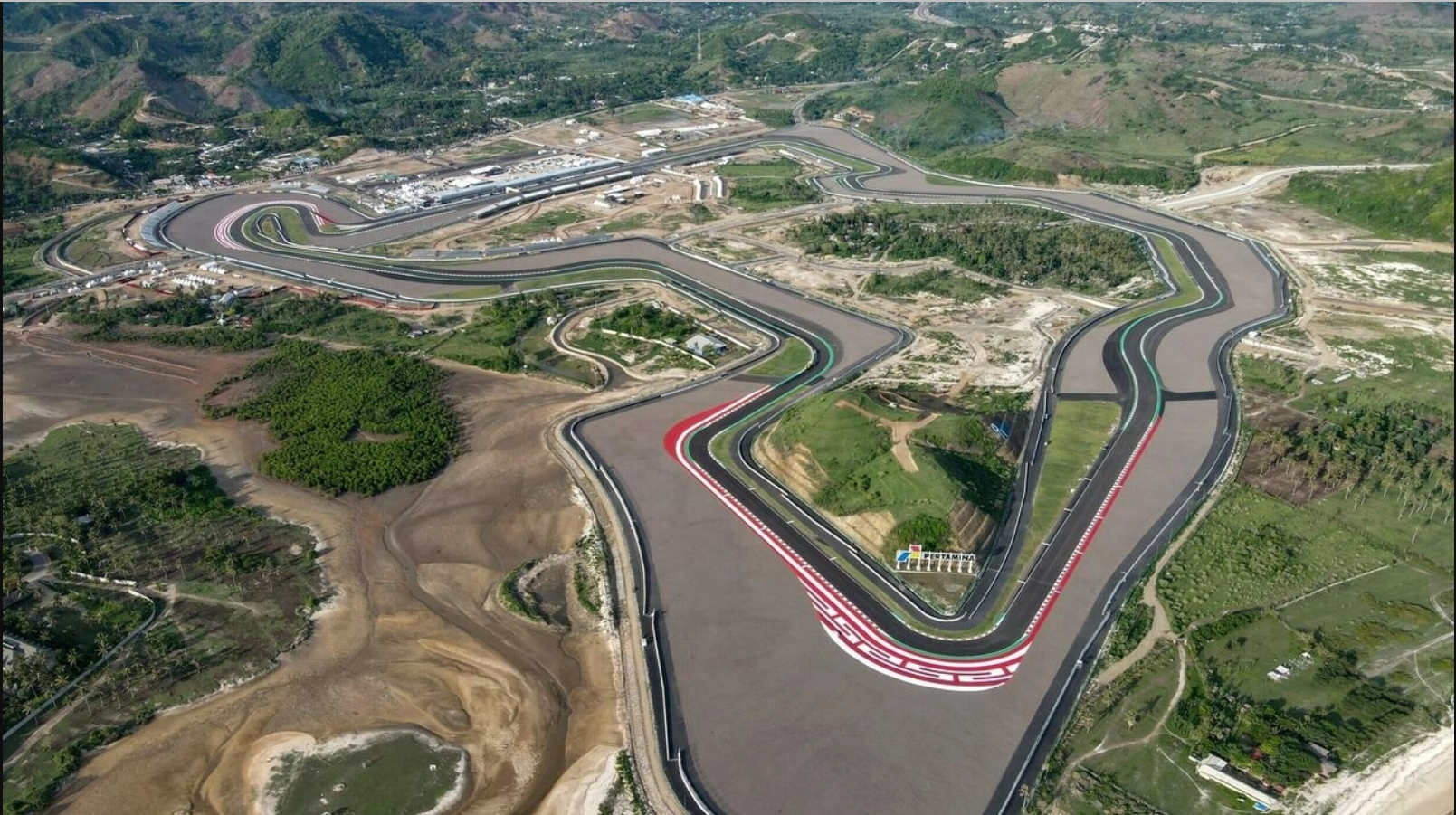
Indonesia will host its first motorcycle grand prix in 25 years on a circuit that has faced criticism from riders and international actors. In February, riders complained that the track surface was dirty and dangerously breaking up, problems which the Mandalika Grand Prix Association said were fixed earlier this month. Environmentalists have also questioned the decision of holding the event on the island of Lombok, which is under threat from natural disasters and still recovering from a 2018 earthquake that killed 500 people. The UN has also expressed concern over practices that took place in the construction of the circuit, which involved “aggressive land grabs, forced evictions of Sasak indigenous peoples and threats against human rights defenders.”


Myanmar:

For the first time since the February 2021 coup, the UN has released a comprehensive human rights report on the actions of the Tatmadaw since they seized power. The report is based on interviews with over 155 victims, witnesses, and advocates, and it finds that Myanmar’s military has shown “a flagrant disregard for human life.” Included are alleged crimes of sexual violence, mistreatment of detainees, and mass killings. The report found reasonable grounds to believe that the Tatmadaw has committed patterns of violence that may amount to crimes against humanity.

On Friday, the Norwegian telecommunications company Telenor was given final approval from Myanmar’s military junta to sell its operations in the country to a local company and a Lebanese investment firm. Telenor has been trying to pull out of Myanmar since the February 2021 coup, but has faced significant obstacles from the junta. Many Telenor employees were barred from leaving the country as negotiations took place. Civil rights groups are now calling for Telenor to delete the personal information of customers before the sale, as the deal could expose 18 million people’s data to the junta. Telenor has maintained that deleting this information would be a violation of local laws and would endanger its employees.


Thailand:

Sanctions on Myanmar and Russia are threatening Thailand’s supply of liquefied natural gas (LNG) as prices rise globally. Thailand imports nearly 75% of its electricity, crude oil, coal, and natural gas, and must now seek alternative suppliers. Thailand’s Energy Minister Supattangapong Punmeechaow told reporters that the government was doing what it could to conserve energy in “these uncertain times,” and have increased the regasification capacity of LNG so that it would be ready six months ahead of schedule.

Thousands of Russian tourists are currently stuck in Thailand as sanctions imposed on Russia have cut off their access to funds and canceled flights. The Thai government has allowed Russian and Ukrainian tourists to extend their visas by 30 days without fee and, and many local businesses are looking for different methods of payment to assist stranded tourists. Many Ukrainian and Russian tourists and expats have held demonstrations outside of the Russian embassy in Bangkok, and one interviewed Russian tourist expressed that she did not want to return to Russia because she is “strongly against this war.”


Belarus:

Belarusian president Lukashenko has been open in his support of Russian President Putin’s invasion of Ukraine. Previously, Lukashenko was trying to shift the EU policy condemning civil and human rights abuses in Belarus by pushing middle eastern refugees into the EU over the border in Poland. It seems that as the invasion in Ukraine drags on Lukashenko has decided to amp up these efforts. There was a camp of over 1000 refugees in Belarus near the border of Poland that were being sheltered there through the cold of the winter. However, only 10 days after the invasion of Ukraine began, armed Belarusian troops came in and started “emptying” the camp by telling people they must leave and choose either Poland or Ukraine. Charities and refugee centers in Poland are overwhelmed with people fleeing Ukraine and are struggling to keep track of refugees who are leaving Belarus among the confusion. Amidst Lukashenko’s support of Russia, the U.S. has issued more sanctions against Lukashenko and his estranged wife Halina.


Georgia:

Georgian President Zourabichvili said that Georgia is standing in solidarity with Ukraine and fully supports and admires the resistance against the Russian invasion, despite not joining sanctions against Russia. She said that Georgia cannot act as a NATO country as part of its territory is occupied by the Russian military and they do not have the protections of the Western alliances such as NATO and the EU. The Georgian people fear that their lands will be invaded next and the government has submitted an application for membership in the EU in hopes that it will be expedited in the face of Russian aggression. The president states that the nation is not trying to appease Russia and pointed out that there are no diplomatic relations with Russia.

CANVAS Weekly Update – March 11th, 2022

Dear Friends,

CANVAS is delighted to bring you another issue of our weekly report!

In this issue, we cover the latest updates on Russia’s invasion of Ukraine, International Women’s Day, and developments in the nuclear deal between Iran and the United States.

Conflict Update:

Last week, representatives of Russia and Ukraine agreed to create humanitarian corridors where fighting would cease to allow for the safe passage of civilians. Despite Russian President Vladimir Putin’s denial that Russian forces are targeting civilians, there have been reports of evacuation routes being attacked, such as the mortar shells that rained down on civilians fleeing from Irpin into Kyiv on Sunday. At least four people died in the attack, including two children. Three people died, including one child, in a Russian strike on a maternity and children’s hospital in the Ukrainian city of Mariupol on Wednesday. According to recent UN numbers, at least 474 civilians have been killed in Ukraine since February 24. On Monday, Russia announced that it would hold fire and open humanitarian corridors in several cities, though many of those corridors will lead evacuees into Russia and Russia’s ally Belarus, a move which Ukraine denounced as “completely immoral.” The invasion has now lasted two weeks. While Russian troops suffer from logistical errors and low morale, Ukrainian troops have shown unexpected force against a significantly larger opponent. Thousands of people around the world have traveled to Ukraine to join the volunteer corp after Ukrainian President Volodymyr Zelenskyy urged foreigners to fight side-by-side with Ukrainian troops against “Russian war criminals.” A meeting between foreign ministers of Russia and Ukraine in Turkey on Thursday resulted in no progress made towards a ceasefire. Many companies around the world have also severed or significantly scaled down business operations in Russia, though President Zelenskyy continues to urge stronger action from NATO countries.

On Sunday, more than 4,300 people were arrested across Russia in protests against Russia’s invasion of Ukraine, bringing the total number of people arrested due to anti-war protests since February 24th up to over 10,000. Footage shows at least one protester being beaten on the ground by police. Human Rights Watch expressed concern over two laws that Russia has enacted, which criminalize independent war reporting and protesting the war, actions which could now result in up to 15 years in prison. The laws impose strict censorship over discussion of any deployment involving Russian armed forces and could be applied retroactively. Since the passage of the laws on March 4th, many foreign media outlets have pulled out of the country and many Russian independent media outlets have decided to delete their previous war-related publications. As protests in Russia persist, it is very possible that people who participate in more than one protest could be prosecuted for criminal offenses.

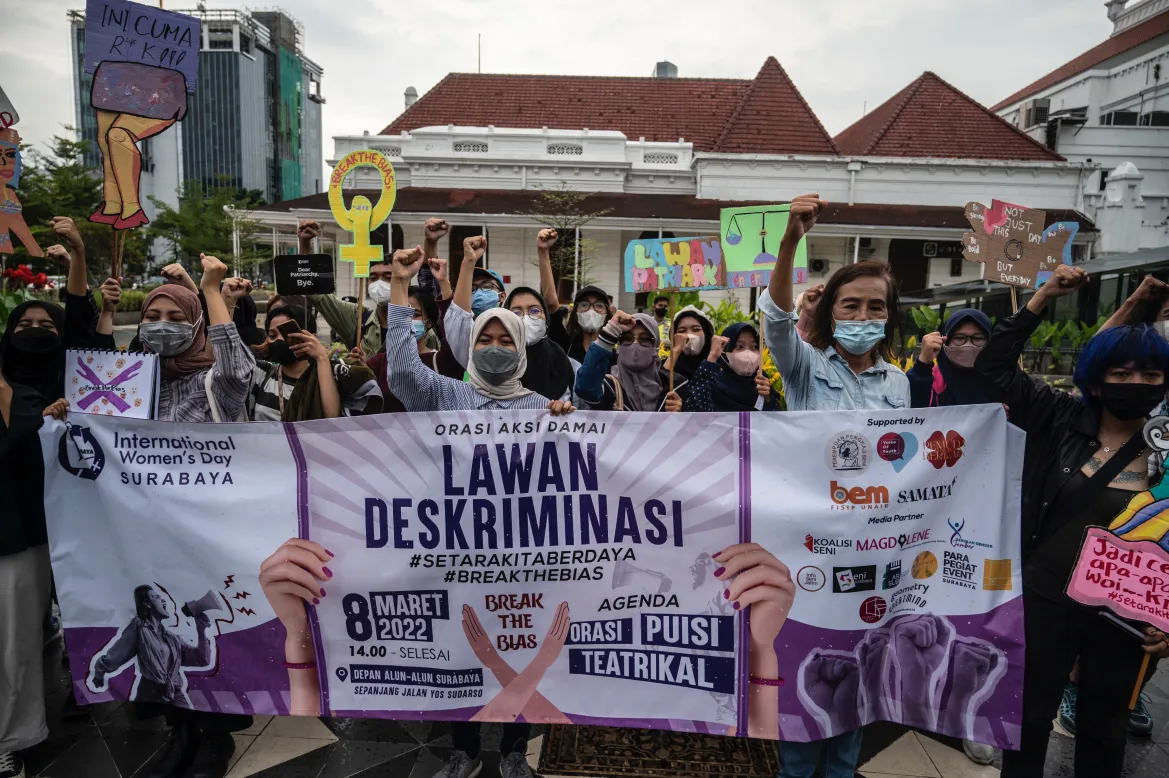
Demonstrations occurred around the world on Tuesday to mark International Women’s Day. Some of the demonstrations, such as the “Women stand with Ukraine” rally in Brussels, focused on support for the people of Ukraine, especially women, children, and other vulnerable groups of refugees. Russian feminists urged women’s rights activists to stand against the war, as it brought out both “the violence of bullets but also sexual violence.” Other demonstrations raised awareness for other gender-related issues, including femicide and other forms of violence.


Afghanistan:

Iran is holding talks with the Taliban to resume construction of a rail project that aims to connect 5 Central Asian states. According to Iranian transit official Abbas Khatibi, Iran is willing to make further investments and both sides want construction to continue. More than half of this project runs through Afghanistan, and there is a missing link of track spanning 657 km in the country. If completed, this rail line will be able to move over a million passengers and six million tonnes of goods a year.

Canadian aid worker named Nadima Noor was arrested at gunpoint last month and has been held without charge. According to Noor’s brother, Dastaan Noor, about a dozen men showed up at her office in Kabul, and arrested Noor and six of her colleagues. Noor is a social media activist and founder of the NGO Dream Voice Act. This arrest comes amid a crackdown on women and activists by the Taliban government. Dastaan says that while in Afghanistan, Noor had always followed laws, and both her NGO and her work were completely legal. A senior Taliban official says he does not know what Noor was charged with, but most Westerners are arrested on suspicion of sedition or human-trafficking. Officials initially said Noor would be released within days, but have since told her family that the investigation is ongoing.


Iran:

On Wednesday, Iran said that an Israeli airstrike in Syria that killed two Iranian Revolutionary Guards officers would be avenged. Four people in total were killed, two being civilians, and six were wounded. The Syrian Observatory for Human Rights said that this was the seventh Israeli strike in Syria this year, and it was targeting a weapons and ammunitions depot near Damascus.

Last minute Russian demands on the nuclear deal between Iran and the US caused chaos on Wednesday. As final issues were being resolved, Russia demanded written guarantees from the United States that Western sanctions targeting Moscow would not impede its trade with Iran. Russian envoy to the talks Mikhail Ulyanov said that in light of new circumstances, Russia has the right to protect itself and its interests, but these demands were not met with a positive reaction. Iran’s chief negotiator returned to Tehran after these demands saying Iran would not let its interests be harmed by “foreign elements.”


Iraq:

Oil prices plunged 17% after OPEC producers, including Iraq, said that they would support increased production, offsetting sanctions on Russia. Iraqi Oil Minister Abdul Jabbar and OPEC Secretary-General Mohammad Barkindo put out a statement on Thursday saying that OPEC+ is keen to achieve a supply and demand balance, and ensure market stability. According to Oil Minister Abdul Jabbar, keeping prices high could prove detrimental in the long run, lowering demand, and encouraging a shift to electric vehicles. He says that at the moment OPEC+ will stick to current supply plans, but said that “if there are real sanctions on Russian oil, OPEC will make the right decision” in the event that there are shortages.

Protests have erupted in Iraq’s south over a rise in food prices due to the war in Ukraine. More than 500 protestors gathered in a square in the city of Nasiriya on Wednesday. Many say that they can barely make ends meet as the price of staples soar. Ukraine has a large share in the global market on wheat and cooking oils. On Tuesday, the Iraqi government announced measures to help confront this rise in prices by giving a monthly allowance to pensioners and civil servants earning less than a set rate.


Lebanon:

The war in Ukraine is causing fears in Lebanon over people not being able to afford food. Many say that most of their salaries are going towards affording food, and sometimes even that is not enough. Around 90% of Lebanon’s wheat and cooking oil imports come from Ukraine and the war has put a stop to shipments. With the ongoing financial crisis, food insecurity has deepened significantly. However, a Ukrainian ship loaded with 11,000 tonnes of wheat arrived in Tripoli recently, increasing Lebanon’s wheat supply to two months. Lebanon is also currently in talks with India to supply Lebanon with wheat during this crisis.

Lebanon’s central bank has asked commercial banks to provide a list of political figures who failed to comply with a circular, ordering them to repatriate funds sent abroad before the country’s 2019 financial crisis. The central bank said other banks must provide their Special Investigation Committee with a list of names by the end of March. Allegations of financial misconduct are high following the financial collapse, and many have called on the government to regulate the banking sector which is full of corruption.


Sudan:

The talks over the dam being built on the Blue Nile are continuing as Western nations are distracted by the invasion of Ukraine, however, instead of all three nations involved coming to the table, the talks have become bilateral. Sudanese acting Irrigation and Water Resources Minister and Ethiopian Ambassador had a meeting in Khartoum without Egyptian representatives present. Ethiopia announced the partial start of power generation from the dam on the main tributary of the Nile River, a move that Egypt and Sudan say is a violation of the Declaration of Principles Agreement signed by the three nations in 2015, which prohibits any of the nations from taking unilateral decisions with regards to the Nile’s water.

Human Rights Watch is calling for the release of two men who have been held since last year for criticizing the government. One of the men, a 69 year old clergyman, Abraham Chol Akech was arrested from his home after telling his congregation that new leadership would be coming to South Sudan. Weeks later 66 year old Professor of Economics Kuel Aguer Kuel was picked up by the secret service after publishing an online memo with other members of the People’s Coalition for Civil Action advocating for government reforms. If convicted, the two men face life imprisonment or the death penalty.

According to the Socialist Doctors Association, 54 people were injured after security forces descended on peaceful demonstrations, meant to coincide with International Women’s Day, in Khartoum. These numbers include troops from the security forces.


Zimbabwe:

Zimbabwe was struggling to hold healthcare systems up before the pandemic, but the increase in deaths due to Covid and a rapidly unfolding economic crisis, have caused mortuaries to become overcrowded and congested. Socioeconomic issues also create delays in bodies being claimed for sometimes up to a year or longer, as some can’t afford to pay for a funeral or others refuse to bury a daughter-in-law because the “bride-price” paid by the husband was not paid for a “dead bride.”


Bolivia:

On Monday, hundreds of women took to the streets carrying pictures of men who have been accused of or found guilty of rape, as well as pictures of judges and prosecutors who have downplayed cases of violence or femicide against women, and pictures of women who have been victimized. Similar protests took place across Latin America, as cases of violence against women and femicides plague the region.


Cuba:

On Tuesday, Cuban President Miguel Díaz-Canel took to twitter to congratulate Cuban women on International Women’s Day. Female activists took to social media to demand justice for the four women who have died as victims of femicide since the beginning of the year, as well as the 34 women who met a similar fate in 2021. Activists criticized the lack of shelters and protocols for victims of domestic violence, and demanded that femicide be included and recognized in Cuba’s penal code. The group Justicia 11J also demanded the release of 20 mothers who were detained and sentenced to up to 20 years in prison for participating in the July protests.


Nicaragua:

In Latin America, International Women’s Day is characterized by widespread protests. However, President Daniel Ortega has banned any protests against his government, preventing feminist groups from protesting for the fourth consecutive year. Activists took to social media to demand the release of 14 women who are being held as political prisoners. Nicaragua is the country with the highest rate of child and teenage pregnancy in Latin America, and one of the few countries that completely bans and criminalizes abortion, even when the mother is at risk of death.


The United States:

On Tuesday, President Joe Biden banned imports of Russian oil, gas, and coal. President Biden stated “If we do not respond to Putin’s assault on global peace and stability today, the cost of freedom and to the American people will be even greater tomorrow” and vowed to do everything possible to minimize price hikes in the US. However, oil prices are rocketing, with US consumers not paying this much for a gallon of gas since 2008.

Vice President Kamala Harris traveled to Poland to reinforce cooperative ties between the two countries after the US rejected Poland’s offer to facilitate fighter jets to Ukraine. Vice President Harris stated “I want to be very clear. The United States and Poland are united in what we have done and are prepared to help Ukraine and the people of Ukraine, full stop,” at a joint news conference with Polish President Andrzej Duda.


China:

On Monday, China’s Foreign Ministry Wang Yi stated that the real goal of the U.S.’s Indo-Pacific strategy was to form Asia’s answer to the North Atlantic Treaty Organization. Wang stated that “The perverse actions run counter to the common aspiration of the region for peace, development, cooperation and win-win outcomes,” and “This would not only push Taiwan into a precarious situation, but will also bring unbearable consequences for the U.S. side.”

On Tuesday, President Xi Jinping met with French President Emmanuel Macron and German Chancellor Olaf Scholz. During the video summit, President Xi criticized sanctions imposed on Russia and called them “harmful to all sides.”

On Monday, the Tech Transparency Project, a nonprofit watchdog group, released a report that linked Amazon Basics production to companies previously linked by journalists and think tank researchers to “labor transfer” programs in China, where minority Uyghurs in Xinjiang are forced to work.


Indonesia:

Over 100 Rohingya refugees from Myanmar reached Indonesia’s Aceh province by boat on Sunday. It was unclear how long the refugees had been at sea, but many of them were in need of medical treatment from their journey. Villagers in Aceh arranged food for the refugees, but did not expect them to stay for very long. Indonesia is seen as a transit country for those seeking asylum in a third country, as Indonesia is not a signatory to the 1951 U.N. Convention on Refugees.On Thursday, Bambang Susantono was appointed head of the National Capital Authority, giving him responsibility over the preparation, development, and administration over the new capital Nusantara. Susantono is currently the vice president for Knowledge Management and Sustainable Development at the Asian Development Bank. The authority head effectively acts as a governor, and is directly appointed by the president for a five-year term with the possibility of reappointment for another five years.


Myanmar:

Myanmar’s military junta has revoked the citizenship of 11 opposition figures, including ministers of the shadow National Unity Government (NUG). The junta applied the military-drafted 1982 Citizenship Law, claiming that the 11 individuals fled Myanmar and harmed the interests of the country.

A new UN study found that violence and insecurity are deteriorating progress of women’s empowerment in Myanmar. The study consists of a survey conducted of 2,200 women in December 2021 and found that, since the pandemic and the February 2021 coup, more women feel unsafe in their neighborhoods and their homes, more women report a fall in household income, and more women face obstacles in access to healthcare.

At least 8 civilians were killed in Sagaing region’s Yinmabin township on Tuesday. Elderly residents were taking shelter in a monastery following military raids in the surrounding region. When shells hit, people inside the monastery were unable to flee, and the dead include a grandmother, a mother and her two small sons, and four other people over 70 years old. This was the tenth day of troop raids in the area, which have caused a total of almost two dozen civilian deaths. This month has reportedly been one of the deadliest in Sagaing region since the February 2021 coup.


Thailand:

Sectors of Thailand’s economy are being highly impacted by western sanctions against Russia in response to Russia’s invasion of Ukraine. Only 1% of Thai exports go to Russia, but there have been significant supply chain disruptions for firms with business in Russia due to the banning of the Russian airline Aeroflot and the crash of the rouble. Many residents of Russia are no longer able to pay for necessities, much less Thai produce such as mangos, durians, and rambutans. Russia has also been one of the largest sources of tourists in Thailand, but many Russians have had to cancel travel plans due to difficulties being able to afford the trip. Thailand’s government has stated that they will do their best to mitigate the impacts, but is struggling from a general lack of funds. Thailand’s inflation in February rose to 5.28%, which is the highest it has been in 13 years.

Thailand’s government is trying to encourage people to have children by providing childcare and fertility centers and using social media influencers to promote the joys of family. The number of births in Thailand has dropped by almost a third since 2013, and last year the number of births was lower than the number of deaths. Thailand, unlike other countries experiencing low birth rates, is not wealthy enough to support a migrant workforce, which raises concern for Thailand’s large manufacturing sector. The main factor cited amongst people who choose not to have children is the expense of raising a child, which is not feasible for a population struggling with rising debt from the pandemic and previous political instability.


Belarus:

Russia has begun using Belarus as a staging ground for airspace missions in the invasion of Ukraine alongside the ground-level convoy of supplies and infantry. This comes as Belarus leader Lukashenko doubles down on his alliance with Russia, telling his defense ministry that Belarusian forces must prevent any attack on Russia “from the rear.” Belarus’s dedication to Russia is historical but is also a result of Putin’s support during a crackdown on protests after the disputed 2020 elections. A report was published on Wednesday by the United Nations which revealed the extent of the crackdown on media, protestors, and even non-governmental organizations. From August 2020 to May 2021 at least 37,000 people were detained arbitrarily. Prisons were also overflowing with 969 people held on purely politically motivated charges at the end of 2021, a number which has grown to 1,084 by March 4th of this year. By October 270, NGO’s had been closed down. By the end of 2021, 32 journalists had been detained, 13 media outlets declared extremist, and 36 lawyers who defended human rights lost their licenses. All this is done, along with further torture of prisoners, with complete impunity with systemic protection of those who commit human rights abuses.


Georgia:

As the invasion of Ukraine continues, Russian journalists are fleeing to Georgia. However, the journalists report that they feel Georgia may not be safe for them either as some of their own are turned away at the border, speculating that their profession dedicated to critiquing the government might influence those decisions.

Georgia is split in its reaction to the Ukrainian invasion. The Georgian Dream Party, which presides over Georgia, stated that pursuing EU membership at this juncture would be counterproductive, but the prime minister signed the formal application for EU membership last Thursday, even as the public protested against his “weak” reaction to Russian aggression. Protestors called for the prime minister’s resignation and concrete steps to help Ukraine. They say they feel ashamed that Zelenskyy recalled Ukraine’s ambassador to Georgia because Georgian officials created “obstacles” for volunteers who try to help Ukraine and for “holding an immoral position regarding sanctions against Russia.” Tbilisi has chosen to not join in sanctioning Russia alongside Western nations and has subsequently been left off the “unfriendly nations” list published by Russia.

CANVAS Weekly Update – March 4th, 2022

Dear Friends,

CANVAS is delighted to bring you another issue of our weekly report!

In this issue, we cover the latest updates on the Russian invasion of Ukraine, political turmoil in the run-up to the Zimbabwe by-elections, and Bolivian government reactions to the recommendations of the Interdisciplinary Group of Independent Experts which criticized the judiciary system and human rights violations under previous presidents.

Conflict Update:

Since Russia invaded Ukraine on February 24, the United Nations estimates that 227 civilians had been killed and 525 injured, though these numbers are likely undercounts due to difficulty corroborating reports. Countries neighboring Ukraine, including Poland, Hungary, Moldova, Romania, and Slovakia, have accepted a total of over one million refugees, a number that the UN expects to reach 4 million in just a few weeks, many of them unaccompanied children. Ukrainian men ages 18 to 60 are prohibited from leaving the country due to conscription. Countries around the world have launched economic sanctions against Russia and banned Russian flights from airspace, and the UN General Assembly voted to adopt a resolution demanding that Russia immediately end military operations in Ukraine. On Monday, meetings on the Belarusian border began between representatives of Russia and Ukraine. On Thursday, officials announced an agreed plan to create humanitarian corridors to assist in the evacuation of civilians. A fire at the Russian-seized Zaporizhzhia nuclear plant following fighting on Thursday raised fears of a nuclear disaster, which Ukraine’s President Zelenskyy said could lead to “the end of Europe.”

Anti-war protests continue around the world, including Russia. More than 6,800 people have been arrested across Russia for participating in demonstrations. Jailed Russian opposition leader Alexey Navalny, who has led some of the biggest protests in Russia against Putin in recent years, urged people in Belarus and Russia to protest regularly against the invasion of Ukraine, writing, “If, to prevent war, we need to fill up the jails and police vans, we will fill up the jails and police vans.”


Afghanistan:

The Taliban say that Afghans with the correct legal documents will soon be able to travel abroad. Thousands of Afghans with links to the US remain in Kabul, and efforts to evacuate them have gotten more difficult over the past few months.

On Tuesday, the World Bank approved the use of more than $1 billion from a frozen Afghanistan trust fund to finance needed aid programs. This plan will disburse this money through UN agencies and international aid groups to provide humanitarian aid to a worsening crisis. According to the World Bank, there will be a “strong focus on ensuring that girls and women participate and benefit from the support.”


Iran:

Iran has said that it will not accept any deadline imposed by Western powers on a nuclear deal, and wants claims by UN watchdog IAEA about Tehran’s nuclear work to be dropped. Iranian Foreign Ministry spokesperson Saeed Khatibzadeh has said that Iran has answered all questions about uranium traces found at old, undeclared sites in Iran, but this is a major sticking point in talks with the US. Iran has made it clear that they want an end to banking and oil, as well as human rights related sanctions, and are ready to commit to a deal if “Western powers show real will”.


Iraq:

Leaked documents show that Swedish telecommunications giant Ericsson allegedly paid bribes to the Islamic State to continue selling its services after they seized large swaths of territory in Iraq. These bribes were allegedly paid to the IS in order for the company’s products to be transported across IS held parts of Iraq. Payments were made through a slush fund run by contractors. Investigations also uncovered allegations that Ericsson was involved n corruption in at least ten other countries.


Lebanon:

The IMF has asked Lebanon to fulfill a set of conditions before negotiating a bailout. IMF officials have agreed on a figure of $70 billion, but there is no plan for how to distribute it, one of the conditions required for negotiations. Other IMF requirements include creating a five-year budget among other fiscal reforms, revamping the banking sector, and auditing the central bank, which has long been shrouded in secrecy. Prime Minister Najib Mikati’s government aims to create an agreement before the May elections, but many believe that political blocs will be reluctant to take action on sensitive topics before elections.

The crisis in Ukraine has created concerns in Lebanon over wheat imports. At the moment, Lebanon currently has enough wheat reserves to last the country one month at the most due to the destruction of grain silos in the August 2020 blast. Lebanon depends heavily on wheat imports to provide subsidized bread to its population and Ukraine made up 60% of their wheat market. At the moment, the government is in talks with other countries, like the US, Canada, and India to provide wheat to Lebanon.


Sudan:

On Sunday, Sudanese groups leading protests against the October military coup released a political charter. The charter includes a two-year transition plan to be carried out under a prime minister appointed by the signatories, ending when a transitional legislature ratifies a constitution. It also includes plans for special human rights courts and options of achieving transitional justice through working with international organizations.

General Mohamed Hamdan Dagalo, also known as Hemedti, deputy head of Sudan’s sovereign council, spoke to the press after his trip to Moscow which began the day before Russia’s invasion of Ukraine. Sudan is in need of economic support after Western assistance has been cut off in the wake of the October military coup in Sudan; the delegation that went to Moscow was mostly economic ministers. In his statement, Hemedti says Sudan should be open to a naval base accord with Russia or other nations provided it poses no threat to national security.


Uganda:

Uganda has taken a loan from China to “modernize” Entebbe Airport; the terms of the agreement are more extreme than the world has seen before. The Ugandan government is required to channel all revenue from the airport into a jointly held account with the lender, according to the contract obtained and published on Monday by AidData. An executive director at AidData says that these terms limit the fiscal autonomy of the Ugandan government as “The lender is asking not just for revenues from the new projects they are funding, but also from the underlying asset-or the airport-that already exists.”  In addition, the government is required to pay back part of the loan from the revenue each year before investing in public services.

Uganda is Africa’s biggest coffee exporter and the International Coffee Organization (ICO) accounts for 98% of the coffee produced and 83% of coffee consumed in the world. Yet, the Ugandan government has pulled out of the ICO over a series of “unreasonable articles” in the new two year agreement. Ugandan coffee farmers are protesting their government’s decision over fears that instead of increasing exports this will decrease exports despite expecting an unusually high volume of harvest this year.


Zimbabwe:

Political unrest and violence has seen an uptick in Zimbabwe in the run up to the by-elections scheduled for March 26th 2022. Human Rights focused NGO Amnesty International, has called for Zimbabwe to investigate violence on political opposition supporters. This comes after on February 26th, Vice President Chiwenga stated that the ruling ZANU-PF party will “crush the [CCC] like lice.” CCC is the Citizens Coalition for change, founded by former leader of the Movement for Democratic change and the man who almost defeated current President Mngagwa in the disputed 2018 elections. The first set of elections since dictator Mugabe was ousted were a beacon of hope for the Zimbabwe people in 2018 when then-candidate Mngagwa and now-leader of the CCC Nelson Chamisa were running for president; however, the hope for free and fair elections collapsed after police and turned on people waiting to hear the election results. On February 26th, the police revoked permission for a CCC rally citing the lack of resources to provide security but when crowds rallied anyway, the police used force including water canons and dogs on the peaceful crowd. The next day, the CCC was holding a rally in Kwekwe at a shopping center when a “machete-wielding” gang started violently preventing people from attending the rally. As a result a 30 year old man was killed and at least 22 others were injured. During the violence, police reportedly did not step in. 16 people were arrested in connection with the violence but only 5 are being held with charges while the 11 others have been released. Mere days after political violence has increased the Embassy of the Netherlands in Zimbabwe has announced funding opportunities for Zimbabwean civil society organizations under the Human Rights Fund. The Dutch Human Rights Fund is meant to support activities in human rights.

As Zimbabwe evacuates citizens, most of which are students, from Ukraine, students struggle to get across the border to where Zimbabwean authorities can help them. Allegations of racism are widespread and drawing much criticism on social media regarding the treatment of Africans who are trying to flee Ukraine. Zimbabwe has evacuated 118 students from Ukraine and are arranging to purchase flight tickets to bring them home.


Bolivia:

César Muñoz, the Human Rights Watch senior researcher for the Americas, said that Bolivian president Luis Arce has not followed any of the recommendations made by the Interdisciplinary Group of Independent Experts (GIEI), criticizing the judiciary system in Bolivia and the impunity for the massacres in Sacaba and Senkata, as well as human rights violations committed during the presidency of both Jeanine Añez and Evo Morales. On Wednesday, the GIEI did their final presentation to the Organization of American States and found severe human right violations had been committed in the last trimester of 2019.


Cuba:

On Thursday, the Biden administration announced a plan to restore some staff at the U.S. embassy in Cuba to restore visa processing that’s largely been downsized since the Trump administration. Reinstating visa processing will likely not face as much partisan rancor as other rapprochement policies would, since the closure largely affected Cuban dissidents.


Nicaragua:

On Tuesday, the Independent Journalists and Communicators of Nicaragua (PCIN) demanded that President Ortega releases journalists Miguel Mendoza, Miguel Mora, Cristiana Chamorro, Jaime Arellano, Samanta Jirón and Juan Lorenzo Hollman, who were detained in the runup to the last November elections and were accused of treason. PCIN also demanded journals stop being shut down and are reinstated and allowed to operate freely. Tuesday was the Day of the Journalist in Nicaragua, and 470 journalists from around the world signed a letter to demand the implementation of urgent measures to guarantee freedom of expression.


The United States:

On Tuesday, President Joe Biden gave his State of the Union speech. During his speech, Biden slammed Russian President Vladimir Putin for starting a “premeditated and unprovoked war” by invading Ukraine, he laid out his domestic agenda to combat higher prices across the US, and highlighted the unity of NATO and the West, as an unprecedented level of cooperation took place to inflict economic sanctions on Russia.


China:

On Monday, China’s Foreign Minister Wang Yi called on the U.S. to take steps to improve ties as tensions simmer over Taiwan. Wang urged Washington to view their relations “in the broader perspective, with a more inclusive attitude, and choose dialogue over confrontation, cooperation over conflict, openness over seclusion, and integration over decoupling.” Wang said that China was willing to work with the United States on a G-7-led global infrastructure plan called Build Back Better World and welcomes Washington in its Belt and Road Initiative, which has been jeopardized by Russia’s invasion.

On Wednesday, Guo Shuqing, China’s head of banking and insurance regulator, said that China opposed unilateral financial sanctions and wouldn’t join Western nations in imposing those sanctions against Russia. Guo stated that China “will continue to maintain normal economic, trade and financial exchanges with relevant parties.”


Hong Kong:

A pro-democracy DJ, Tam Tak-chi was convicted of seditious speech under a British colonial-era law. After massive democracy protests in 2019, the Hong Kong government has been charging activists with sedition. Tam was the first defendant since 1997 who was convicted of sedition and chose to go through a whole trial. As a result, this case sets a precedent for the number of upcoming sedition prosecutions.

Hong Kong records 53,353 Covid cases, and over a hundred deaths, just on Wednesday. According to health experts in the area, cases are expected to keep doubling every 2-3 days, and have not yet peaked. Chief executive Carrie Lam has said that there will be a restriction of movement due to this surge, but there will not be a complete lockdown that would isolate the city. Hospitals are reaching peak capacity and are having trouble admitting new patients and Hong Kong has reached out to mainland China for support.


Indonesia:

Last Friday, an earthquake on the island of Sumatra killed at least 10 people and injured nearly 400, as well as displacing thousands more. Over 400 houses and buildings were reported to be damaged. Tremors were also felt in neighboring Malaysia and Singapore. The earthquake was followed days later by floods in Banten Province, causing at least five deaths. The floods were caused by extreme rainfall and rising water levels of the Batang Nago river.

UN human rights experts expressed concern over the human rights situation in the Indonesian provinces of Papua and West Papua. Approximately 100,000 people have been displaced since the escalation of violence in December 2018, many fleeing to the forests and having to contend with harsh climates and lack of resources. Humanitarian aid to displaced Papuas is reported to have been obstructed by authorities, resulting in severe malnutrition. Violence has ended in the deaths of civilians, many of them children. The experts advocated for urgent action, including allowing for independent monitors and journalists to be allowed access to the region and creating plans for impartial investigations into allegations.


Myanmar:

Several Myanmar celebrities were pardoned and released from Insein Prison in Yangon on Wednesday, according to state-run television. The celebrities were arrested for supporting protest movements against the February 2021 military coup, but have reportedly been released so that they could participate in nation-building through their art. According to the Assistance Association for Political Prisoners, a total of 12,000 people have been arrested since February 2021 and 9,400 remain in detention.

Myanmar’s military junta has been accused of hostage taking a group of civilians, including 80 children, in a clash with rebels in Sagaing Region last weekend. Sagaing has been an epicenter of civilian resistance since the military seized power in February 2021. Strikes and raids were reportedly intended to destroy a training camp for a civilian People’s Defense Force, but a witness said that around 40 junta troops took hostage a group that included around 100 preschoolers and other villagers. The group was released on Monday as soldiers withdrew, and the act was strongly condemned by Myanmar’s shadow National Unity Government.


Thailand:

Despite an omicron surge, Thailand is easing requirements for its quarantine-free entry program beginning March 1. These efforts are meant to decrease obstacles that could prevent people from visiting Thailand for tourism, an industry that could prove significant in helping the country recover from economic contractions in 2020. Russia’s invasion of Ukraine could also discourage travel due to increasing geopolitical tension, further prompting the need for Thailand to take efforts to boost its tourism as 18% of foreign visitors to Thailand in January were Russian.

Last week, the leader of Thailand’s second largest opposition party, the Move Forward Party (MFP), Pita Limjaroenrat, tweeted a call for Russia to immediately retrieve troops from Ukraine. This response contrasts with Thailand’s historically cautious stance on foreign policy matters, launching a discussion on what Thailand’s international presence could look like if Pita, a popular pick among young dissatisfied voters, were to take leadership. Foreign Minister Don Pramudwinai has previously stated that Thailand would not rush to condemn Russia. On Wednesday, after reportedly careful deliberation, Thailand voted in support of the UN resolution to condemn Russia’s aggression against Ukraine.


Belarus:

Mere days after Russia’s invasion into Ukraine, Belarus voted through a referendum to renounce its non-nuclear status with a 78.63% voter turn out and 65.2% of voters voting in favor of the referendum. During the voting, Lukashenko said “If you [the West] transfer nuclear weapons to Poland or Lithuania, to our borders, then I will turn to Putin to return the nuclear weapons that I gave away without any conditions.”  This could bring nuclear weapons back on to Belarusian soil for the first time since the fall of the Soviet Union. The referendum vote also allow the president to stay in power until 2035 and give him lifetime immunity from prosecution once he leaves office. Additionally, the reforms give power to the All-Belarusian People’s Assembly for the next five years.

On Thursday the Asian Infrastructure Investment bank, a China-led development bank, released a statement saying “under these circumstances, and in the best interests of the Bank, Management has decided that all activities relating to Russia and Belarus are on hold and under review.”


Georgia:

Georgia is set to “immediately” submit an application for European Union membership. Irakli Kobakhidze, chairman of the ruling Georgian Dream party, says that EU integration would put Georgia “on a path which will lead our country to a qualitative increase in our population’s wellbeing, security and to deoccupation.” Georgia fears Russian aggression as the invasion of Ukraine continues. Georgia’s move comes after Ukrainian President Volodymyr Zelenskyy urged EU membership for Ukraine and received support through a non-binding resolution by the MEP.

CANVAS Weekly Update – February 25th, 2022

Dear Friends,

CANVAS is delighted to bring you another issue of our weekly report!

In this issue, we cover the latest updates on the Russian invasion of Ukraine, sanctions in Myanmar, and the end of the Beijing Winter Olympics.

Conflict Update:

On Thursday, Russia launched a full-scale invasion of Ukraine, attacks beginning just after Russian President Vladimir Putin announced on television that he had approved a “special military operation.” Ukrainian President Volodymyr Zelensky declared martial law and urged world leaders to impose all possible sanctions on Russia and Putin. Troops are reported to be entering by land, sea, and air. The capital city of Kyiv heard explosions, gunfire, and sirens before dawn, causing panic amongst civilians. On Friday morning, Zelensky accused Russia of targeting civilian areas with rocket attacks, though Russia denies that they are targets. Putin’s announcement came during a meeting of the UN Security Council that was meant to discuss the situation in Ukraine, days after Putin recognized the rebel-held regions of Luhansk and Donetsk as independent and announced that he would be sending “peacekeeping” troops to those regions.

Thousands of people have taken to the streets of Russia to protest the invasion of Ukraine. They were met with a high police presence, and over 1,300 people across the country have reportedly been detained. Many waved Ukrainian flags and chanted messages such as “No to war!”. Police blocked off access to Pushkinskaya Square, and video footage shows police hitting and pushing people. Many Russian public figures also spoke out against the attack, such as the rapper Oxxxymiron, who wrote, “I cannot entertain you when Russian missiles are falling on Ukraine.” Protests have erupted around the world, urging governments to take stronger measures against the invasion.

After the Haitian Prime Minister Ariel Henry announced minimum wage hikes earlier this week, factory workers launched a strike to demand higher wages. On Wednesday, shots were fired from inside a car with police license plates, wounding at least three people. Earlier, police had used trucks to block a main road and fired tear gas on protesters who were throwing rocks. The factory workers have organized a three-day strike amid worsening political and economic conditions.

Antigovernment protests in Wellington, New Zealand have entered their third week, as hundreds of demonstrators gather to oppose New Zealand’s Covid-19 mandate. While the police have previously been cautious in their interactions with protesters, the past few days have seen increased attempts from police to evict some protesters, causing the demonstrators to use more violent tactics. Protesters have reportedly thrown feces at police, tried to drive a car into a large group of officers, and sprayed three officers with a “stinging spray.”

On Thursday, farmers drove tractors through the province of Vojvodina in Serbia, protesting the government’s lack of response to their requests for increased subsidies, the abolishment of excise taxes on fuel, and other demands.


Afghanistan:

The Taliban are creating a “grand army”. Latifullah Hakimi, the official overseeing this process, said that this army will include officials and troops who served the last government. The Taliban had promised a general amnesty for everyone involved with the old regime, but over a hundred people working for the last government have been killed, and many are staying silent to avoid reprisals.A shipment of wheat from India has crossed the border into Pakistan, to Afghanistan. In 2019, Pakistan suspended transit trade from India to Afghanistan over India’s decision to strip Jammu and Kashmir of autonomy. However, in a rare gesture, India’s Foreign Secretary saw off the first 50 trucks of a 50,000 metric tonnes shipment.


Iran:

Iran’s Parliament sets its conditions for Iran’s return to the 2015 nuclear deal. These legislators want a guarantee from the US that they will not renege on the deal, and impose harsh sanctions once again. In addition, these legislators want all sanctions imposed under “false excuses”, which include nuclear, terrorist, and human rights designations removed. Legislators also reminded President Raisi that his administration can only begin to scale back on nuclear advances if the US lifts banking and oil sanctions. Most countries involved in the Vienna talks believe that an agreement is imminent.

A vote on Iran’s “Internet Protection Bill” has been overturned, but proponents are expected to move forward with the legislation. Promoters say that the aim of the bill is to safeguard the population from harmful content on the internet. Opponents believe that it will create significant restrictions on online freedoms in Iran. Originally introduced three years ago, the large public backlash caused the bill to be temporarily shelved. Currently, voting on the bill has been delegated to a specialized committee that would have the power to ratify and experimentally implement legislation. After Tuesday’s committee vote, the sole lawmaker who voted against the bill started a petition to return it to voting in Parliament. So far, 130 out of 290 lawmakers have signed this petition, and more are continuing to sign.


Lebanon:

Lebanon’s Parliament extended a law that lifts banking secrecy regulations in order to audit the country’s central bank. This audit is on a list of reforms that donors are demanding Lebanon complete, before helping them with the financial crisis the country is currently mired in.

Three suicide attacks linked to the IS were foiled by Lebanese security forces on Wednesday. These attacks included rocket-propelled grenades, gun fire, and vests rigged with explosives that would have gone off in Beirut’s suburbs. Two suspects have been arrested, and weapons have been seized.


Sudan:

Blockades have become the common form of protest against the now military government and also “punishment” for Egypt for supporting the coup. Protestors in the North have been blockading the maid highway between Sudan and Egypt for weeks and now more blockades are being strategically planned across the country to limit the resources the military government has access to in Khartoum. Protestors and resistance committees are also seeking to “stop imports and exports through the seaports and roads…rejections of the concentration of services in the capital and the export of Sudan’s natural resources.” The UN has issued a statement urging Sudan to end the violent crackdown on protests and stop firing live ammunition and tear gas canisters directly as protestors.

Sudanese deputy chairman of the transitional Sovereignty Council, Mohamed Hamdan Daglo also known as Hemeti, is continuing with the several diplomatic trips he has taken this year. Daglo is going to Moscow, with Sudan’s finance, energy, agriculture, and mining ministers and the head of the Sudanese chambers of commerce, to discuss “ways to develop and strengthen cooperation between Sudan and Russia.” Prior to 2019 Sudan and Russia had a close relationship but since the fall of the al-Bashir regime Sudan had been removed from the United States intense sanctions and had developed a relationship with them. However, the United States has cut aid to Sudan in the wake of the coup by al-Burhan.


Uganda:

Uganda is planning to impose a fine of 4 million Ugandan shillings or impose a 6 month jail sentence on anyone who refuses to get vaccinated against the Covid-19 virus. Only 16 million vaccines have been administered even though the population of Uganda is 45 million.

Author Rukirabashaija has arrived in Germany seeking medical treatment. The author reports he has been diagnosed with damaged kidneys, bruised ribs and post-traumatic stress disorder. Since the time the author fled Uganda he has been tweeting and even had a twitter spat with the son of the president who is allegedly in charge of his torture. Other authors, journalists, political opposition leaders, and activists have also seen the evidence of the brutal crackdown on dissent by the Ugandan government. Author Stella Nyanzi had the same charge as Rukirabashaija placed on her in 2019; she also fled to Germany earlier this year.


Zimbabwe:

The High Representative has issued a statement representing the European Union, announcing the review results of the “restrictive measures” on Zimbabwe. The High Representative recalled the Council Conclusions of February 2020 and the Declaration by the High Representative on behalf of the EU in February 2021, and after a review of the situation in Zimbabwe, the EU concluded that human rights violations have not decreased since and have in fact increased. The arms embargo and the targeted assets freeze against the company Zimbabwe Defense Industries will stay in place, as will the need to investigate the role of security forces in human rights violations. The High Representative notes that the measures are targeted and limited and do not affect the people of Zimbabwe, its economy, foreign direct investments, or trade.


Bolivia:

On Tuesday, UN Special Rapporteur on the Independence of Judges and Lawyers, Diego Garcia-Sayan, criticized Bolivia’s judicial system, saying “justice is far from the people”. Garcia-Sayan was invited by the government for a weeklong visit to Bolivia. He emphasized the lack of resources, and the effects of the political and social crisis in 2019 as hampering the efforts of the judiciary on the administration of justice. Garcia-Sayan highlighted “impunity in the face of crime” especially as it related to femicide and sexual violence. In addition, he pointed out prison overcrowding and high rates of preventative detention as another severe limitation to justice, and urged the country to intensify efforts to combat these issues.


Cuba:

On Tuesday, Russia’s State Duma ratified protocols that modify Russian-Cuban intergovernmental loan agreements and grants Cuba an extension in payment until 2027. Deputy Finance Minister Timur Maksimov stated that the agreement was part of a multilateral initiative to alleviate the debt burden of less developed countries and comes after both countries have created a stronger relationship.

On Monday, at least 200 cubans protested near Costa Rica’s embassy in Havana after the country announced stronger visa requirements for Cubans passing through on their way to Nicaragua. In November, Nicaragua stopped requiring visas for Cubans entering the country and the demand for flights between the two countries has skyrocketed. Since then, Costa Rica has started requiring a transit visa for Cubans travelling to Nicaragua through their territory.


Nicaragua:

Nicaraguan President Daniel Ortega stated his support for Russia and it’s recognition of regions Donetsk and Luhansk’s independence. Ortega’s statements of supported were also echoed by Venezuela’s Nicolas Maduro.

On Monday, Victor Hugo Tinoco, one of Nicaragua’s political prisoners, was sentenced to 13 years in prison for conspiracy to undermine national integrity. Tinoco, who served as Nicaragua’s ambassador to the United Nations and as deputy foreign affairs minister in 1979, was ordered to serve prison time, while other political prisoners have been ordered home detention after the death of Hugo Torres. The people ordered home detention were former Foreign Affairs Minister Francisco Aguirre Sacasa, former Deputy Foreign Affairs Minister José Pallais, and former ambassador to the United States Arturo Cruz Sequeira.


The United States:

On Thursday, President Biden announced economic sanctions against Russia after President Putin attacked several cities in Ukraine. The economic sanctions target all 10 of Russia’s largest financial institutions, impose export control measures that will more than halve Russia’s high-tech imports, cut off Russia’s largest bank from the US financial system, and freezes any of its assets touching the US financial system.

On Tuesday, the three men who killed Ahmaud Arbery were found guilty on all counts in their hate crime trial. The verdict comes two years after Arbery was killed while being chased and shot by three men while he was out jogging. The three men, Travis McMichael, Gregory McMichael and William Bryan were found  guilty of interference with rights and attempted kidnapping, while already convicted of murder last year.

Washington is preparing for the arrival of the USA Freedom Convoy, a truck convoy that departed Wednesday from Southern California and will participate on a 10 day cross-country protests. The trucker convoy is calling for the immediate lifting of the national emergency declared in response to the pandemic. The convoy was inspired by Canada’s Freedom Convoy. In response, DC requested National Guard presence and security preparations around the US congress.


China:

On Monday, China’s envoy to the United Nations called for all parties to exercise restraint and avoid fueling tensions at a emergency UN Security Council meeting after Russia recognized the independence of the Donetsk and Luhansk regions.

On Sunday, the controversial Beijing Winter Olympics came to an end. Despite China’s efforts to keep the Olympics separate from politics, several scandals took place. On Monday, the Foreign Correspondents’ Club of China stated that “government interference occurred regularly during the Games,” both inside and outside of the venues, and listed a number of claims of intimidation, obstruction, and harassment, despite the International Olympic Committee’s assurances.


Hong Kong:

Due to Hong Kong’s surge in Covid-19 cases, it has invoked emergency powers in order to get help from mainland China. Compulsory testing of the 7.4 million population is due to begin next month as part of the response towards controlling this outbreak.

In response to the spate of new security laws introduced in Hong Kong, Britain opened a new visa program that would allow over 3 million people the opportunity to apply for a five-year visa, and eventually gain citizenship. This program will allow adult children of eligible citizens to apply independent of their parents. According to Britain, this program is meant to fulfill a commitment made to Hong Kong after China broke the terms of the agreement under which Hong Kong was given back to China.


Indonesia:

A recent study published in the Netherlands prompted Dutch Prime Minister Mark Rutte to issue a formal apology for crimes committed by the Dutch against Indonesians after Indonesia declared independence. It has also begun a reexamination within Indonesia of crimes committed by the Indonesian government against Indonesians who were from the ethnic Chinese community or were suspected of being communists or leftists in the 1960s.

Earlier this year, the Indonesian government passed a law that would move the country’s capital from Jakarta to a new city called Nusantara in the jungles of East Kalimantan province. This move has caused concern amongst environmental groups, who argue that the changes made to the landscape and environment of the new city will disrupt indigenous populations of flora and fauna, including the orangutan. Government officials have claimed that steps are being taken to ensure that the forests are being taken care of.


Myanmar:

After a long campaign from human rights groups in Myanmar and around the world, the EU has expanded sanctions on Myanmar to include the state-owned Myanma Oil and Gas Enterprise (MOGE). MOGE is a significant source of funds for the military junta, and around 50% of Myanmar’s foreign currency comes from natural gas revenues. Human rights advocates are welcoming the announcement and are also urging the USA to follow the lead of the EU by imposing their own sanctions.

The UN is urging countries to stop the sale of weapons to the military junta after a new report found that UN Member States China, Russia, and Serbia have been supplying weapons to the junta. These weapons have been used against civilians following the February 2021 coup.

Representatives from Myanmar’s military junta took the place of detained civilian leader Aung San Suu Kyi at the international court of justice, where Myanmar faces claims from the Gambia that the military carried out genocide against the Rohingya population in 2017. The junta argued that the Gambia did not have the legal right to file the case, and Aung San Suu Kyi has previously defended Myanmar’s military against claims of rape, mass murder, and destruction of Rohingya Muslim communities. Rohingya activists note that they have seen a shift in public perception towards minorities since the February 2021 coup, as many of the new protesters have apologized to the Rohingya community and expressed solidarity with their cause.


Thailand:

Representatives of rebels in southern Thailand will meet with representatives of the Thai government next month. Except for virtual meetings in January, this will be the first time the two parties engage in peace talks in two years. Discussions will surround finding an end to the decades-old insurgency.

On Thursday, Thailand reported a new record daily increase of coronavirus infections at 23,557 new cases. The infections have led to 38 new deaths, much lower than when the previous daily record took place in August of 2021. Approximately 69% of people in Thailand are fully vaccinated.


Belarus:

Belarusian troops, despite Lukashenko’s insistence otherwise, have reportedly joined Russian troops in the invasion of UkraineRussian troops invaded Ukraine over the Belarus border after weeks of joint military exercises with Belarus. Ukraine’s central bank has already banned payments to Belarus as well as any operations involving Belarusian currency.

The Venice commission says that the constitutional amendments which will be put to referendum on February 27 in Belarus fail to correct the already existing imbalance of power in Belarus.


Georgia:

The JSC VTB Bank Georgia is a part of the Russian VTB Bank Group. As the invasion of Ukraine by Russia has resulted in sanctions by several countries, the Georgian branch remains solvent and fully protected according to a statement by the National Bank of Georgia. The National Bank of Georgia reiterates that it will “intensively monitor” developments and is ready to “protect the interests of the banks’ depositors using international standards and instruments provided by law.” The sanctions imposed against VTB will limit operations for major Russian banks in various currencies with the restrictions coming into full effect on March 26.

February 25th marks 101 years since Soviet Russia occupied the Georgian capital Tbilisi. In the wake of the Ukrainian invasion the U.S. ambassador to Georgia reiterated the U.S. support to Tbilisi.

CAVNAS Weekly Update – February 18th, 2022

Dear Friends,

CANVAS is delighted to bring you another issue of our weekly report!

In this issue, we cover the latest updates on Ukraine’s border crisis, protests at the Beijing Winter Olympics, and the death of a Nicaraguan political leader.

Conflict Update:

On Tuesday, Russia announced that some of its troops would be withdrawing to base after completing military exercises near Ukraine, though the amount of units and how far they would be going was not specified. On Wednesday, a video was published showing Russian military vehicles being transported out of Crimea, but the US and other NATO countries continue to state skepticism over the claim that Russia is truly withdrawing. In Ukraine, residents played the national anthem, posted on social media, and flew the country’s flag outside schools, hospitals, and shops to mark “Unity Day,” a holiday created by Ukrainian President Volodymyr Zelenskiy to show unity against fears of a Russian invasion. At the same time, a cyber attack, thought to be caused by Russia, overwhelmed defense ministry online networks and two banks. On Thursday, both pro-Russia separatists in eastern Ukraine and Ukrainian government forces accused each other of opening fire along the line of contact in Donbas.

Tunisia’s President Kais Saied published a decree establishing a new provisional Supreme Judiciary Council over which he largely has control. Protesters marched on the streets of the capital Tunis on Sunday, chanting messages such as “Shut down the coup… take your hands off the judiciary” and calling the decree “the completion of the coup.” The decree also forbids the judges from striking, a tactic used just last week as a form of protest against the president’s announcement that the council would be a “thing of the past.”

Canadian Prime Minister Justin Trudeau and his cabinet triggered the Emergencies Act on Monday in response to protests that erupted earlier this month that caused disruptions on the US-Canada border. Demonstrations began in protest of COVID-19 mandates. The Emergencies Act is considered by many to be a last resort action, and it can only be invoked when the federal government has determined that an emergency poses a serious threat to the sovereignty, security, and territorial integrity of Canada and that responding to the threat exceeds the capacity of a province. The government has warned that it will freeze the bank accounts and suspend the vehicle insurance of protesting truckers. Banks are now able to freeze personal accounts of people linked to the protests without a court order. Protesting truckers are reported to have received a total of $8.4 million from 93,000 donations.

On Mexico’s southern border, a dozen undocumented migrants sewed their mouths shut on Tuesday to urge immigration authorities to allow them passage to the United States. For months, thousands of migrants have filled the border city of Tapachula, waiting for papers so that they can continue through the country.


Afghanistan:

President Biden issued an executive order last Friday to consolidate and freeze $7 billion of assets that the Afghan Central Bank kept in New York. These assets have been in the Federal Reserve for years, but when the former government was dissolved and the Taliban took over, there were concerns over what to do with that money because American sanctions make it illegal to engage in financial transactions with them. $3.5 billion of those assets have been set aside as aid for Afghanistan. In September, a group of relatives of 9/11 victims won a lawsuit asking for a share of these bank assets. Biden has said the government won’t object to the court decision, and the remaining $3.5 billion will go towards paying out these lawsuits.

Britain will be co-hosting an international aid conference with the UN to help with Afghanistan’s hunger crisis. The UN has made a plea of $4.4 billion in aid for Afghanistan, and they will be holding a virtual pledging conference in order to do so. This sum is the largest request ever made for a single country. British Foreign Secretary Liz Truss said that the UK is committed to leading the global effort, and wants to bring together the international community in order to provide aid and support to Afghanistan.


Iran:

A draft of the nuclear deal between Iran and the US has laid out mutual steps to bring both countries back into compliance with the 2015 nuclear deal. Most of the wording has been finalized. The main text of the agreement focuses on Iran suspending enriched uranium above 5% purity. In addition, Iranian assets will be unfrozen, and Western prisoners in Iran will be released. After that, the main phase of lifting sanctions would begin. Currently, the main disagreement lies over Iran wanting assurance that the US will not withdraw, and what measures they could take in the event that happens.

Oil prices fell about 2% on Thursday as a nuclear deal approaches closer, and Iran looks forward to a removal of sanctions on oil. Prices would have fallen further if not for the rising tensions between Russian and Ukraine and the possible disruption of energy supplies.


Iraq:

According to a new UN report, Iraq has detained over 1000 children, some as young as 10 years old on national security charges, mostly for suspected links to the Islamic State. Although IS attacks have decreased considerably, the detention of these children has increased. Many of them were arrested on dubious evidence, and were tortured into confessing to involvement with the IS.


Lebanon:

Lebanon’s government approved $18 million (360 billion Lebanese pounds) to hold the May Parliamentary elections. There are concerns that these elections may be stalled by powerful political parties, using Lebanon’s financial crisis as a pretext. Prior elections cost 3 times that amount, but there is a significantly smaller budget available this year. All that is left is for the Council of Ministers to approve the electoral budget for election preparations to begin.


Sudan:

The Sudanese military controlling the government is continuing to “arrest” protestors, often in the middle of the night, and hold them without charge. Protestors are raising their voices against the military coup in October of last year and the resistance committees are now standing in solidarity with farmers whose electricity bills were raised sharply. These protests are now barricading the “Northern Artery” which is the road-route for trade with Egypt. This blockade has resulted in approximately 1500 truck drivers stuck as of late January, unable to return to Egypt. Specifically, the export of camels has been interrupted for about three weeks.


Uganda:

Kakwenza Rukirabashaija, an author who has fled the country after torture by Ugandan Sepcial Forces Command (led by the President’s son), is now in Malawi seeking passage to Germany for treatment. The author plans to return to Uganda after he has received the medical treatment he requires. There has been international condemnation of Uganda’s treatment of Rukirabashaija and other human rights abuses. In the aftermath of last year’s election, thousands of people were reportedly detained and some were taken to unknown areas in unmarked vans by Ugandan security forces. Upon release, some of these detainees have physical evidence of torture on their bodies. The reports of torture continue, and the United States has announced sanctions against Uganda’s military chief.


Zimbabwe:

Zimbabwe teachers are protesting for a better pay and work environment, demanding that their salary is in U.S. dollars. Much of Zimbabwe’s economy runs on the black market, which utilizes U.S. currency. The Zimbabwe President has said that this concession will not be made, as a nation cannot prosper without its own currency. This dispute traces back to October 2018 when Zimbabwe stopped paying its teachers in U.S. dollars and instead started paying in its own currency the Real Time Gross Settlement Dollar, which has continued to lose value due to high inflation. The government has announced that striking teachers have been suspended without pay for three months.

A Zimbabwe journalist freelancing for the New York Times was put on trial after he was accused of “illegally procuring false accreditation” for two other  Times journalists. The trial came to a swift end after only one witness was brought to the stand. A government lawyer said that the case was “on shaky ground” before the trial had even begun and after the witness was called the government was unable to “show a crime was ever committed.” This is a strong move in Zimbabwe as freedom of the press is being challenged with many such cases with little evidence supporting the government’s stance.


Bolivia:

On Thursday, former interim president Jeanine Añez collapsed during a hearing. Añez has been participating in a hunger strike for nine days. After Añez collapsed, the judge postponed the hearing. The president of the Permanent Human Rights Assembly of Bolivia Amparo Carvajal and former president Carlos Mesa attempted to visit Añez but were denied entry.


Cuba:

Russian vice-president Yuri Borisov is in the middle of a Latin American tour to Venezuela, Cuba, and Nicaragua to strengthen ties between Russia and these three Latin-American countries. The tour comes after the Russian Foreign Minister Sergei Lavrov’s statement that Russia wanted to expand the strategic cooperation in all areas of the economic, cultural, educational and military-technical development with these countries.

Anamely Ramos, activist and member of the opposition group San Isidro Movement, was denied boarding to a flight to Cuba from Miami, where she was visiting, since Cuban authorities banned her from reentering the country. “Right now I have no country, nowhere to return to, no residence in any other country in the world, no visa to anywhere and here I am,” said Ramos in an interview. Other member of the opposition group San Isidro Movement have faced persecution. Artist Luis Manuel Otero Alcántara and rapper Maykel Castillo have been in jail since July 11 and there are concerns about their health.


Nicaragua:

On Saturday, Hugo Torres Jimenez, the vice president of the opposition Democratic Renovation Union (Unamos), died while detained. Torres was detained in the run up to last year’s November elections, among other dissidents and opposition figures. Calls for the political prisoners to be released mounted after Torres’ death including statements from Antonia Urrejola, the former president of the Inter-American Commission on Human Rights, and Peter Stano, the European Union’s external affairs spokesman, who called for an independent investigation into Torres’ death and urged for the release of all political prisoners. Other political prisoners started their trials this week, including former possible presidential contenders Juan Sebastian Chamorro, Arturo Cruz, and Felix Maradiaga, as well as the former head of Nicaragua’s business association Jose Adan Aguerri, former deputy foreing minister Jose Pallais, and activists Tamara Davila and Violeta Granera.

On Tuesday, the Nicaraguan Parliament banned six NGOs that advocate for human rights, bringing the total of banned organizations to 93. The organizations banned are the María Elena Cuadra Women’s Movement, PEN International-Nicaragua, which created literacy programs and spoke up about attempts against the freedom of the press, the Nicaraguan Association for Human Rights, the Center for the Promotion of Youth and Children, the Ibero-American Foundation for Cultures, and the Foundation for the Promotion and Development of Women and Children Blanca Arauz (Fundemuni).


The United States:

The United States recalled all its diplomats and staff members from Ukraine, as tensions with Russia continue to escalate. President Biden said that the possibility of a Russian invasion of Ukraine remained very high and stationed 5,000 troops in Poland to reassure NATO allies and possibly evacuate Americans. On the other hand, the Kremlin insists they’ve withdrawn troops and that the US should meet Russia’s demands or they would be “forced to respond, including through the implementation of measures of a military-technical character.”


China:

Olympic officials and the Chinese government warned athletes at the Winter Olympics against staging any protests, saying they could violate Olympic rules as well as Chinese law and be subject to unspecified punishment. Activists have urged athletes to speak out about human rights abuses, and many activists from across the country and abroad have joined together in protestsJournalists have also continued to ask political questions during press conferences, asking whether Taiwan would be allowed to participate in the closing ceremony and whether they could prove their uniforms weren’t made by forced labor.


Hong Kong:

A singer-activist in Hong Kong has been arrested on charges of sedition. Tommy Yuen, a 41 year old singer performed a song last year with the words “Liberate Hong Kong, Revolution of our Time”, which had been found by Hong Kong courts to be a slogan capable of inciting people to violence. Yuen is well known for protesting for democracy in Hong Kong, and is being arrested for suspected sedition and money laundering.

The number of Covid cases in Hong Kong have increased by 60 times in the past month. Hospitals are being overwhelmed and some patients are left lying outside in the cold as beds become scarce. Leader Carrie Lam says that experts from mainland China are being brought in to curb the spread, and the city is planning to perform up to a million tests daily by March. Hong Kong is working with local hotel owners to free up space for people who become infected.


Indonesia:

meeting of the G20 took place in Jakarta on Thursday. Topics include geopolitical risks and the economic fallout of the pandemic. The diverging rates of recovery across different countries are expected to cause challenges is effectively planning an exit strategy from the pandemic.

On Thursday, Dutch Prime Minister Mark Rutte issued a full apology to Indonesia regarding the violence used by the Dutch to maintain control over the former colony after World War II. The apology came after a historical review found that the Dutch had engaged in systemic and excessive violence, including frequent acts of torture that could today be considered war crimes.


Myanmar:

On Saturday, Myanmar’s military junta held a parade in the capital of Naypyitaw to celebrate Myanmar’s Union Day, beginning the day with mobile internet blackouts. They also announced the pardoning of 814 prisoners. The General Strike Committee of Nationalities said that some political prisoners held at Insein prison in Yangon began a hunger strike on the same day.

On Monday, Kirin Holdings, a Japanese beverage company, announced its withdrawal from business in Myanmar and the termination of its joint venture with Myanma Economic Holdings Public Company (MEHPCL), which has been linked to the military. This act comes after a year of disputes between the two companies, as well as a widespread campaign to boycott Myanmar Beer and public pressure from activist groups and human rights organizations.

No representatives of Myanmar’s ruling military junta attended this week’s ASEAN meeting. At the beginning of the month, Cambodia, the bloc’s current chair, announced that only a non-political representative would be allowed to attend due to the country’s failure to implement ASEAN’s Five-Point Consensus peace plan, and Myanmar opted not to participate.


Thailand:

On Thursday, protesters gathered outside Thailand’s Ministry of Interior to call for the end of Amnesty International’s presence in the country. Ultra royalists have accused the NGO of threatening Thailand’s security and interfering with internal affairs. This comes after Amnesty condemned court judgements against protesters who had called for limits on the wealth and influence of the royal family. Thailand has in place restrictions on what can be said about the monarchy, and NGOs have also expressed concern over a proposed law to regulate non-profits.

On Tuesday, Thailand’s cabinet approved a package of incentives to promote a shift to electric vehicles. The incentives are part of a new zero emission vehicle policy and a goal for 30% of Thailand’s total auto production to be electric by 2030. Thailand has demonstrated interest in Lockheed Martin’s F-35 stealth jets, which are the world’s most advanced fighter aircraft and are usually only sold to the closest allies of the US. Tim Cahill, Lokheed Martin’s senior vice president for Global Business, said that the exportation of the jets would be a US government policy decision.


Belarus:

After a meeting with EU leaders in Brussels, Lithuania says that Russia has amassed 45,000 troops in Belarus and this is a direct threat not only to Ukraine but also to Poland and Lithuania. After Belarus and Russian troops visited a nuclear weapons storage site as a part of their exercises, Lukashenko said that Belarus could host nuclear weapons and deploy “super nuclear weapons” to defend their territory if their “rivals and opponents” take “foolish and unreasonable” steps.

Human rights defenders are being threatened and harassed on the Poland-Belarus border. While experts are contacting Polish authorities in this matter it is important to note that the migrant issue is rooted in Belarusian efforts to send a heightened amount of refugees into Poland and the EU.


Georgia:

Georgia’s Defense Minister, Juansher Burchuladze, met with NATO secretary Jens Stoltenberg in Brussels on February 17 to discuss common security challenges. Additionally, this statement is coming as Russia is at a diplomatic standstill with the West over the question of Ukraine potentially joining NATO. Russia is demanding that Ukraine never be allowed into the military alliance as being surrounded by NATO nations is perceived as a threat.

CANVAS Weekly Update – February 11th, 2022

Dear Friends,

CANVAS is delighted to bring you another issue of our weekly report!

In this issue, we cover the latest updates on Ukraine’s border crisis, Uganda and the Democratic Republic of Congo’s ICJ settlement, and Iraq’s parliamentary failure in electing a president.

Conflict Update:

On Monday, French President Emmanuel Macron met with Russian President Vladimir Putin and German Chancellor Olaf Scholz visited US President Joe Biden to discuss diplomatic solutions to the situation around Ukraine, where over 100,000 Russian troops are reported to be near the Ukrainian border. US intelligence estimates that this is 70% of the military personnel and weapons Russia would need to invade Ukraine. On Thursday, British Foreign Secretary Liz Truss held a joint news conference with Russian Foreign Minister Sergei Lavrov in which Lavrov asserted that Moscow favored a diplomatic solution to the crisis, while also accusing Truss of being “dumb and deaf” and being unwilling to understand his points. A meeting of the Normandy Format, which includes representatives from France, Germany, Russia, and Ukraine, also took place on Thursday. Russia has also launched a new round of joint military exercises in Belarus that will run until February 20. Ukraine has begun its own military drills, also set to run until February 20, and will reportedly be receiving shipments of US military aid. Ukraine’s Defence Minister Oleksii Reznikov has also urged the international community to place port restrictions on Russian ships and take other punitive measures against Russia.

Farmers from the Macva district in western Serbia held a protest in Sabac demanding state subsidies for fuel and fertilizer. Farmers from central Serbia and Ub municipality gathered a day earlier, stating they will continue to demand better and fair treatment. Kreni-Promeni activist Savo Manojlovic advises that farmers connect their protests to environmentalist efforts citing a farmer who said that the government should invest in agriculture instead of mining and exploration. Environmental activists camped in front of the Serbia Presidency and organized a breakfast on the morning after on Friday. The activists plan to stay until the government bans the exploration and excavation of lithium and boron permanently.

On Tuesday, hundreds of people gathered in New Zealand’s capital of Wellington to protest vaccine mandates. New Zealand requires that people of certain professions get vaccinated against COVID-19, many of the protesters were also opposing mask mandates in stores and schools and attended the protests maskless. Prime Minister Jacinda Ardern has promised that there will be no more lockdowns and did not meet with the protesters.

On Monday, fifteen climate activists in Germany glued themselves to the asphalt of motorways, blocking the roads and causing traffic jams. Over the past two weeks, 252 protesters have participated in road blockade demonstrations, including 69 that have fused themselves to the asphalt. Last Generation, the activist group, reported that there were 50 people in custody across Germany last Friday. They are protesting the German government’s plan to achieve climate neutrality by the year 2045, arguing that the plan is a violation of international law and a crime against humanity since significant change in climate is expected to take place by 2030.

On Tuesday, thousands of healthcare workers in Turkey went on a one day strike to protest for better pay and better working conditions. Currently, wages for some of these healthcare workers are barely above the national minimum wage. Inflation in Turkey increased to 49% this January, eroding purchasing power and value of savings, leading to this discontent. Other demands included shorter shifts, safety measures against patients and relatives, and for Covid-19 infections to be classified as an occupational hazard. The oppositional party has warned of a brain drain of trained physicians leaving the country.


Afghanistan:

The UN plans to swap millions in aid dollars to Afghan currency to stem humanitarian crises and prevent passing money to already blacklisted Taliban leaders. The goal is to have a Humanitarian Exchange Facility (HEF) set up by February. Prior to the full establishment, the UN will conduct several trial swaps to see if this measure will work. They warn that this is only temporary until Afghanistan’s central bank is able to work on its own and foreign aid reserves are unfrozen. The HEF would allow the UN access to local currency that they would swap out with aid dollars. This would bolster the private sector, and allow for critical imports to enter the country without requiring a flow of funds across the country’s borders.


Iran:

American lawmakers feel pessimistic about the state of the nuclear deal with Iran. As it is, Iran will currently have the ability to produce nuclear weapons in two months, and the US is attempting to strike a deal as soon as possible to prevent this possibility. An agreement looks to be in sight, but significant points of contention still remain. Both sides have much to gain from this agreement, but they both want the other to make the first move. There is a significant lack of trust between the US and Iran, and remains a major issue in these negotiations.


Iraq:

Iraq has finally completed the $52.4 billion in payments to individuals, businesses, and governments due to its 1990 invasion and occupation of Kuwait. This money was taken from a portion, often 3%, of the profit from Iraqi oil sales. Over 2.7 million claims were made but the UN only approved 1.5 million, covering $52.4 billion. The last payment was made in January, and all obligations owed by Iraq have been closed.
Iraq’s Parliament failed to elect a new president on Monday due to boycotts of the parliamentary process. Shia leader Muqtada al-Sadr, who leads the largest parliamentary bloc, encouraged politicians to boycott the vote. Due to Iraq’s Parliament rules, two thirds of the legislature is required to vote, but only 58 people showed up. This boycott comes as the Supreme Court temporarily suspends the nomination of the frontrunner Hoshyar Zebari, who is supported by al-Sadr, due to pending charges of corruption.


Lebanon:

The international community reiterates the need for Lebanon to hold Parliamentary elections in May, on time. These elections are coming as serious economic and political fractures in the country occur. This is the first time since 2019 that elections will be held, after months of the government being deadlocked over the plunging national currency and increasing debt. The Chief of Lebanon’s Hezbollah describes a recent list of Kuwaiti proposals as demands rather than propositions. This comes as Lebanon seeks to repair ties with Gulf Arab nations; the Kuwaiti list was provided as an outline of what could help repair relations, but Hezbollah perceives it as Kuwait dictating Lebanese affairs. Growing Iranian influence is a significant concern for Arab countries, and Hezbollah believes these demands impeded on Lebanese sovereignty.


Sudan:

Khalid Omer Yousif and Wagdi Salih, two prominent leaders who have been critical of the military and previously a part of a taskforce investigating al-Bashir’s regime and those connected to it, have been arrested. The pair held top positions in the civilian government before the military coup in October and were a part of a taskforce seizing property of officials and firing bureaucrats that were connected to the Omar al-Bashir regime.  Approximately 2000 have been detained and released on bail in connections to the protests against the coup. Foreign aid, specifically from the United States is being cut as a consequence for the “arbitrary” detention of journalists and activists in wake of the military coup. Amid the crackdown, a quiet victory comes from social media: Twitter has unblocked Sudanese phone numbers from authentication, opening doors for activists organizing mostly on social media to use the platform.


Uganda:

The long-running dispute about reparations Uganda must pay to the Democratic Republic of Congo for its role in conflicts in the Ituri province has been settled by the International Court of Justice. The judges ruled in the case that had first been brought before it in 1999 that Uganda must pay $325 million in reparations to the Democratic Republic of Congo, in five annual installments of $65 million, starting in September 2022; this is far shorter than the $11 billion the Congo was seeking. The ICJ dismissed claims for broad macroeconomic damage and other broad arguments for which clear links could not be shown. Uganda had previously said the amount the Congo was seeking would economically devastate them and officials maintain that this judgment is unfair just as the 2005 judgment which held Uganda liable for aspects of the conflict in the Ituri province.
As pictures of satirical author, who criticizes the Uganda government specifically the President and his son, Kakwenza Rukirabashaija’s tortured body emergeGeneral Abel Kandiho is appointed Ugandan Head of Police. The United States has black listed Kandiho as a human rights offender, specifically for targeting opposition activists and encouraging and presiding over their torture. Rukirabashaija released images of his scarred back from injuries he sustained in prison where flesh was plucked from his body with pliers, he was made to dance for hours on end and injected with unknown substances. The European Union and the United States have made statements denouncing the treatment of prisoners by Uganda and have taken a special interest in this case, specifically denouncing the torture of an author. A lawyer for Rukirabashaija says the author has fled the country into Rwanda over the land border and will make his way into an unspecified European nation to save his life. The award-winning author has not been heard from otherwise. Only 12.7 million covid vaccines have been administered to Uganda’s 45 million population. The nation is now seeking a law, making vaccination against the virus mandatory as the economy opens up.


Zimbabwe:

Zimbabwe’s economy is in crisis. Rising inflation and low employment prospects have caused Zimbabweans to risk crossing the border illegally into South Africa, a nation which has seen a rising stream of xenophobia specifically towards Zimbabweans. There are both those desperate enough to cross fast-flowing rivers with crocodiles and those with enough cash to bribe security forces along the way. However, both sets of people often get arrested at roadblocks further inside the country. Economic issues are building as the government rate for U.S. dollars and the black-market rate do not match up causing inflation, as citizens prefer to do business in U.S. dollars at an inconsistent rate. The Zimbabwean government has previously condemned these tactics and is now in the process of exploring if the development of a Central Bank Digital Currency is feasible.


Bolivia:

On Thursday, the trial against former interim president Jeanine Anez began virtually due to covid-19 retstrictions. After different interventions and technical failures, the trial was postponed and a new date has not been set. Anez has been held in prison for 11 months in pre-trial detention and could face 12 years in prison if found guilty.

The family of Juan Carlos Flores Bedregal, former leader of the Partido Obrero Revolucionario, and alleged victim of enforced disappearance in 1980, asked the Inter-American Court of Human Rights (IACHR) for a ruling that obliges the State to clarify the facts and identify his whereabouts. The IACHR determined that “the forced disappearance of the victim was motivated by the repression of the exercise of political rights and freedom of association.”


Cuba:

Cuban President Miguel Díaz-Canel Bermúdez met with the president of the Communist Party of Spain, José Luis Centella Gómez, to discuss current regional and international issues. President Díaz-Canel thanked the Spanish communist leader for his support in denouncing the embargo imposed by the US government.


Nicaragua:

Last week, Nicaragua started trials against political prisoners– opposition leaders, rival presidential candidates, businessmen, journalists, and student and peasant leaders that were arrested in the run up to last year’s elections. Manuel Orozco, a Latin America analyst at Inter-American Dialogue, stated “The trials are part of a strategy to maintain power by using repressive and legal force to instill fear.” The political prisoners had little contact with defense lawyers, trials are being held out of public view, only one relative per defendant is allowed to observe, and transcripts of the hearings haven’t been made available. This week former foreign minister Francisco Aguirre Sacasa and journalist Miguel Mendoza were found guilty of conspiracy to undermine national integrity. The Nicaraguan Center for Human Rights criticized journalist Mendoza’s nine-year sentence requested by the Prosecutor’s Office, calling the charges “invented crimes.” A series of political opposition figures have been convicted and sentenced in trials lasting a few hours; the latest is former presidential hopeful and journalist Miguel Mora who is sentences to 13 years in prison for “conspiracy to undermine national integrity.”


The United States:

On Thursday, President Biden urged Americans to leave Ukraine, as thousands of Russian troops have amassed at its borders. President Biden stated that Americans should leave since U.S. troops would not be dispatched to retrieve them should Russia invade. “We’re dealing with one of the largest armies in the world. This is a very different situation, and things could go crazy quickly.”

The Canadian border has become of concern to the United States as Canadian truckers’ blockade border-crossings in protest of a covid vaccine mandate. The United States government is urging the Canadian government to use federal powers to end the blockade and allow normal trade and border-crossing to resume.


China:

With the Winter Olympics officially starting, the Chinese government has cracked down on dissent. Human rights activist Hu Jia is in house arrest imposed by authorities who want him out of public view during the Games. According to Human Rights Watch senior China researcher, Maya Wang said that “The point is to prevent any contact between the activists and, essentially, the outside world, which, during these events, tends to pay more attention to what’s happening in China.”

Tennis champion Peng Shuai has released a statement in a supervised interview saying that she did not make any sexual assault accusations. The International Olympic committee, without mentioning her interview, has raised the possibility of the athlete moving to Europe when the Covid-19 pandemic is over.


Hong Kong:

Due to ongoing threats towards journalists in Hong Kong, the International Federation for Journalists is calling on governments to offer support and pathways for Hong Kong journalists fleeing the city. Due to the National Security Law, over 20 journalists have been arrested or detained since 2020. In addition to that, journalists are reporting intimidation and harassment aimed towards them, as well as the pervading atmosphere of fear. The IFJ argues that these journalists are being persecuted, and asks for aid to help move them overseas to continue work in exile.

Hong Kong courts reject appeal of American lawyer convicted in a police assault case. Lawyer Samuel Bickett got in an altercation in 2019 with a plainclothes police officer, Yu-shu Sang, and was arrested. Bickett asked Yu if he was a police officer while Yu was attempting to stop a man from jumping a turnstile. After Yu responded no, Bickett grabbed his baton from his hand, and Yu ended up on the ground. Bickett was arrested for this, and served four months in jail before being let out on appeal. He lost his appeal on Tuesday, and will be going back to prison to serve the remainder of his sentence. Bickett says he will appeal his sentence again as he believes he has suffered an injustice.


Indonesia:

Clinical trials for a homegrown COVID-19 vaccine have begun in Indonesia. The “Merah Putih” vaccine has suffered delays since 2020, but may be authorized by the middle of 2022. Indonesia’s health minister announced that the vaccine could be donated to other nations as a booster jab or for young children. Vaccination rollout in Indonesia has been relatively slow, as only 48% of the population has received two jabs of the vaccine and only five million people have gotten the booster shot. Authorities hope that this new vaccine, which has been granted a “halal” certification, may help to raise vaccination levels.


Myanmar:

Many parents and family members have taken to cutting ties with opponents to the ruling military junta. Many cite a fear of the military attributing their children’s actions to them and being targeted by the junta. The announcements are posted in state-owned newspapers and first began to appear in large numbers last November after the army announced it would seize the properties of opponents and arrest those providing shelter to protestors. Many homes of the family members of opponents have been raided.

Activists have been pushing for the Norwegian-based telecommunications company Telenor to reverse its decision of selling to M1, a Lebanese investment group. When Telenor first came to Myanmar in 2014, many democracy advocates and human rights activists became customers because they believed their data would be safe due to Norway’s reputation of human rights protections. These same activists are now worried about the security of their metadata, as Telenor has responded to queries by stating that Europe’s GDPR privacy law does not apply to Telenor Myanmar. This poses significant risks to the activists. If the military junta gains access to this metadata, they will be able to identify individuals and connections between people who have opposed the ruling military.


Thailand:

The same pipeline owned by Star Petroleum Refining Public Company (SPRC) that sprang a leak on January 26 leaked again on Thursday, spilling an additional 5,000 liters of oil off of Thailand’s eastern coast. SPRC is working with authorities to contain the spill, which is reportedly unlikely to reach the shoreline.

In November, it was announced that the US government had helped broker a deal to send millions of Johnson & Johnson vaccine doses to Thailand through COVAX’s humanitarian buffer, which facilitates immunizations for people living in humanitarian emergencies. Vaccines were supposed to be delivered to refugees living on the Thai-Myanmar border in December, but are still delayed due to legal and logistical obstacles. Similar difficulties are being faced around the world as global health advocates struggle to settle logistics and gather resources.


Belarus:

Nearly 100,000 Russian troops are amassed on Ukraine’s border in Belarus under the joint military exercises Belarus and Russia are conducting until February 20th. This has been of major concern to the West with many calling it the most dangerous moment in Europe in decades. Russia is demanding that NATO not be expanded and that Ukraine never be accepted into the military alliance. The West says that Russia cannot dictate how diplomacy and alliances are made. Ukraine has now also started military exercises in a show of strength. These exercises by the Ukranian military are set to continue until the February 20th date that is the same date for Russian and Belarusian joint military exercises to end. Ukraine begins these exercises while waiting for support in military supplies from the United States.
Russian and Belarusian military connections are growing further as an agreement between the two nations which envisages the deployment of up to 200 Belarusian military personnel to Syria has been drafted. President Lukashenko of Belarus says that this will only result in army medics sent in, but concerns grow from reporters in Ukraine, since these personnel will be under operational command of Russian forces in Syria.

Other neighbors of the states are concerned as well. Latvia has prepared for a “total” defense in case chaos erupts in the region from the Ukraine crisis. Latvia is especially concerned as the nation blames Belarus for their migrant crisis, citing migrants saying that Belarusian authorities invited them in and then directed them to the borders of Poland, Lithuania, and Latvia, EU or NATO states. The small nation claims this “political mischief” is to exhaust the nations’ resources. Poland has started construction on a border wall through Europe’s last old-growth forest, citing the same reason.

Amid the military controversy, Belarus is also making waves by banning athletes from competing at the Olympics. Specifically, the daughter of a seven-time Olympic cross-country skier: Darya Dolidovich, has had her FIS code deactivated based on a decision by the Belarus Cross-Country Skiing Federation. The FIS code is necessary to compete at any events run by the International Ski Federation (FIS). Both father and daughter of the Dolidovich family have been vocal about their opposition to the current president of Belarus, Alexander Lukashenko. Reuters reports that several Belarusian athletes have been jailed or kicked off national teams for their participation in protests that occurred after the 2020 elections. The tactic has drawn international criticism since the Tokyo Olympics last year.


Georgia:

Former President Saakashvili has used the timing of his trial to recommit to his now-Ukrainian citizenship. At his trial hearing he expressed support verbally and also performed the national anthem of Ukraine as well as using popular slogans for Ukrainian national movements. Saakashvili has long been a foe of the Russian government, especially with the 2008 Russia-Georgian war which resulted in essentially Russian-controlled areas of Georgia (Abkhazia, and South Ossetia). Saakashvili is offering transparent support to Ukraine even as his trial is underway in Georgia and he is coming off of a hunger strike for which doctors say he did not receive proper treatment.

CAVNAS Weekly Update – February 4th, 2022

Dear Friends,

CANVAS is delighted to bring you another issue of our weekly report!

In this issue, we cover the latest updates on Ukraine’s border crisis, protests surrounding China’s Winter Olympics, and diplomatic barriers to Myanmar’s military government.

Conflict Update:

On Monday, a UN Security Council meeting included tense exchanges between the ambassadors for the US and Russia. After the meeting, Ukraine’s ambassador told reporters that no provocations would come from Ukraine. On Tuesday, President Putin publicly addressed the situation for the first time since December. He blamed the US for trying to pull Russia into conflict, and he also stated that he hopes for continued dialogue over the situation. Also on Tuesday, it was announced that Ukraine is seeking a trilateral partnership with Poland and Britain in order to boost security amidst the buildup of Russian troops on its borders. On Wednesday, it was announced that President Biden has approved the deployment of 3,000 US troops to Poland, Germany, and Romania in an effort to bolster NATO countries in Eastern Europe. The Secretary-General of NATO accused Moscow of amassing around 30,000 combat troops and modern weapons in Belarus over recent days. Though Moscow has not stated the number of troops in Belarus, Russia’s Defense Minister has said that the number of soldiers is below the 13,000-troop maximum agreed upon by the OSCE in 2011.

On Tuesday, at least six people were killed in Guinea-Bissau in a failed attempt to overthrow President Umaro Sissoco Embalo. In the past 18 months, three countries in West Africa, including Mali, Guinea, and Burkina Faso, have experienced a military takeover, prompting the Economic Community of West African States (ECOWAS) to say it was following the Guinea-Bissau situation “with great concern.” On Thursday, West African leaders held an emergency summit in Accra to assess the bloc’s actions moving forward in light of the growing number of successful and unsuccessful coups in the region. ECOWAS chairman Nana Akufo-Addo said the 2020 coup in Mali had proved contagious to the entire region, adding that the trend “must be contained.” So far, the bloc has placed sanctions on Mali and Guinea, suspended Burkina Faso from ECOWAS, and is considering imposing sanctions on Burkina Faso.


Afghanistan:

Pakistan’s National Security Advisor Moeed Yusuf visited Kabul on Sunday for talks on how to handle engaging with Afghanistan economically, and how to address the massive ongoing humanitarian crisis. He met with several senior Taliban officials, and both sides said that positive progress is occurring. Both sides agreed to coordinate in order to facilitate travel at Border Crossing Points. They are also talking about initiating barter trade, and the talks have an economic focus to them.

Despite the Taliban announcing general amnesty for people affiliated with the prior government, or US-led coalition forces, the UN has found that this is not the case. There are credible allegations that since the August 15th takeover, over 100 government officials, security forces and others have died as a result of extrajudicial killings. In addition to this, former government members have dealt with “enforced disappearances and other violations impacting the right to life and physical integrity”. The UN is also documenting arrests, murders, and violence against human rights activists carried out by the Taliban.


Iran:

Due to a Covid outbreak among MPs, Iran’s Parliament has suspended sessions temporarily. At least 47 members out of 290 have tested positive so far, prompting it to cancel public sessions this week. Currently 10 lawmakers are hospitalized, and numerous staff have also been infected. Only 65% of the Iranian population is vaccinated so far as Iran is in the grips of a 6th wave of Covid.

Iran has made significant advances in their nuclear program since 2015, making it easier for them to create a nuclear bomb. This leaves the US and allies pushing for a revived deal that will increase the “breakout period” required for Iran to assemble a bomb. There are only a few weeks left before the Vienna talks come to an end and it’s too late to return to the Joint Comprehensive Plan of Action.


Iraq:

Around 60 Turkish aircrafts and drones attacked Kurdish militant training camps and shelters in northern Syria and Iraq. These strikes are part of a larger campaign by Turkey against militant Kurdish groups that Turkey regards as terrorists. The Turkish Defense Ministry justified this attack because their goal was to protect Turkey’s borders from “terrorist attacks”. Iraq condemned this strike as a violation of their sovereignty. About 80 targets were destroyed.


Lebanon:

Sunni leader Saad Al-Hariri’s announcement that he would not be running in the May elections upended the Lebanese political sphere. However, the Iranian-backed political party Hezbollah said on Sunday that it saw no reason to delay elections. Many are concerned that this move by Hariri may be a tactic to delay elections, after his disagreements with Hezbollah over Iranian influences in politics.

Lebanon says that it will not hand over Hazbollah’s weapons in a meeting with other Gulf countries. Former Lebanese Foreign Minister George Kordahi’s criticism of the Riyadh-led military invasion in Yemen led to a suspension of diplomatic ties with Saudi Arabia and allies. Current Foreign Minister is in meetings with Gulf Arab states to mend these ties, but is rejecting implications that Hezbollah will give up any weapons, or end its existence. However, due to Gulf concerns, Lebanon has said that it will not be “a launchpad for activities that violate Arab concerns”.


Sudan:

Crackdowns continue on protestors in Sudan as the resistance committees take center stage and draft a charter setting out demands, and also meet with top international diplomats from around the world. Resistance members have upended their lives, some no longer sleeping at home to avoid arrest, to protest the military coup which took place in October. Some members of committees have even been killed. The total death toll in the protests, by the military, as of January 24 had risen to 79.


Uganda:

Rwanda has reopened its Gatuna border to Uganda after 3 years of closure due to “harassment” of its nationals by Ugandan officials. Currently, “trucks, Rwandan citizens, returning residents, are crossing to Rwanda.” This border closure cost Uganda about $18 million dollars per annum, before the closure Uganda was earning $20 million from exports to Rwanda but in 2020 that number was only $2 million. Rwanda was quick to note that though trade can resume, the diplomatic issues of Rwanda nationals being harrassed and their domestic affairs being meddled with by Uganda have not ended and a solution still needs to be worked towards. This comes as Uganda seeks to increase trade and exports instead of relying on loans.

Uganda is investing in oil. On February 1, a ceremony was held to officially launch the 10 billion dollar Lake Albert development project, which includes the Tilenga and Kingfisher upstream oil projects in Uganda and the construction of the East African Crude Oil Pipeline in Uganda and Tanzania. The project is expected to be completed by 2025. Uganda is also getting a foothold in the energy market, with Egypt handing over a solar power plant to Uganda in increased cooperation efforts between the two nations.


Zimbabwe:

The Federation of Zimbabwe Educators Union announced on Tuesday that its members, including teachers, will not be able to report for duty on Monday February 7 due to eroded salaries. They are demanding that teachers’ salaries be restored to pre-pandemic pre-October 2018 levels which was around 540 USD, ensure that schools can follow proper covid-procedures, and that up to three children of a teacher who is government-employed should have school fees waived. The union further stated that February 7 will be a day of action and there will be an online protest in support of these demands to keep the education system from deteriorating further.


Bolivia:

Bolivia received an extradition request for Bolivia’s former Anti-Drug Chief Maximiliano Davila, stated Bolivia’s Minister of Foreign Relations Rogelio Mayta. The US is accusing Davila of conspiring to import cocaine into the US and conspiring to use and possess machine guns. The US Department of State is offering a reward of up to $5,000,000 for information leading to his conviction.


Cuba:

This week the US Cuban embargo turned 60. Cuban Deputy Foreign Minister Carlos Fernandez de Cossio said, “The United States has a disastrous record in terms of human rights… the United States has no right to give lessons to anyone.” The US has also ramped up criticism of Cuban authorities following the arrest and trials of participants of the anti-government protests last July.


Nicaragua:

The Nicaraguan National Assembly outlawed 14 nonprofit organizations, including five private universities. These organizations were outlawed after a government inquiry concluded that they “did not comply with financial reporting requirements,” an argument frequently used to ban groups that criticize the government. One of the banned universities, the Polytechnical University of Nicaragua, held several anti-government protests in 2018.

On Tuesday, Nicaragua started trials against political prisoners. Some of the prisoners standing trial are journalist and Nicaraguan opposition figure Pedro Joaquin Chamorro, leaders of the opposition group Unamos Ana Margarita Vijil and Dora María Téllez, and young activists Yader Parajón y Jaser Vado.


The United States:

Last week, the US conducted a military operation to kill or capture ISIS leader Abu Ibrahim al-Hashimi al-Qurayshi in Syria. The special forces raid resulted in the death of the terrorist group leader. President Joe Biden stated that “This operation is testament to America’s reach and capability to take out terrorist threats no matter where they try to hide anywhere in the world.” 

US officials claim they have evidence of a Russian plan to make a fake video of a Ukrainian attack using corpses, footage of blown-up buildings, fake Ukrainian military hardware, Turkish-made drones, and actors as a pretext for an invasion. This accusation comes at a time of escalating tensions, with the US formally approving the deployment of 3,000 US troops to Poland, Germany, and Romania.


China:

India joined the US-led diplomatic boycott of the Beijing Winter Olympics after China let soldier Qi Fabao participate in the Olympic torch relay. Qi Fabao, regarded as a hero in China, fought with Indian troops in the Galwan Valley, a border region contested by the two countries. Canada, Australia, and Britain are the other countries participating in the diplomatic boycott.

President Vladimir Putin and President Xi Jinping will be meeting in person before the opening ceremony of the Olympics. This meeting will mark the first in-person meeting President Xi has held in two years, and the meeting is expected to be a public display of geopolitical amity between the two powers. The Chinese and Russian leaders have discussed the situation in Ukraine, and China expressed “understanding and support” for Russia’s position on security regarding Russia’s relationship with the United States and NATO and has joined Russia’s efforts to block action in the United Nations Security Council.


Hong Kong:

Hong Kong’s Secretary for Home Affairs, Caspar Tsui resigned on Monday after attending a party where two people tested positive for Covid. Hong Kong has some of the strictest Covid restrictions in the world, and leader Carrie Lam said Tsui “bought the government into disrepute”. Twelve other government officials were also at the party, but since they only briefly appeared, they were not reprimanded. None of them tested positive and all have issued public apologies.

Christian religious leaders are petitioning Chief Executive of Hong Kong Carrie Lam to drop charges against activists jailed under the National Security Law. Lam is a devout catholic and these religious groups are hoping to encourage her to be more active in asking the Chinese government for amnesties.


Indonesia:

Indonesia will reopen its popular vacation island of Bali to foreign visitors from all countries. This follows similar announcements from other countries in the region, though it also coincides with a rise in Indonesia’s Covid-19 cases this month. While most adults in Indonesia are vaccinated against the pandemic, a new study published in New Mandala shows that there are significant inequalities amongst populations differing in income, education level, age, geography, political affiliation, and social media usage.


Myanmar:

One year after the military coup in Myanmar, the United States, Britain, and Canada have imposed sanctions against Myanmar officials. The sanctions focused on judicial officials involved in the prosecutions against ousted civilian leader Aung San Suu Kyi. Washington also imposed sanctions on a Myanmar army directorate, an alleged arms dealer and his sons, and KT Services & Logistics Company Limited and its CEO.

The first anniversary of the February 1st 2021 coup in Myanmar was marked by demonstrations both by protesters and military supporters. Various city streets fell quiet as activists urged people to close businesses and stay indoors as a silent method of resistance. A man in the central town of Kyaukdataung set himself on fire in protest of unreliable power supplies, and was reported to be in serious condition in the hospital. Pro-junta events included rallies with dancing and photographs of the junta chief Min Aung Hlaing.

The foreign minister appointed by Myanmar’s military junta has been blocked from attending an upcoming meeting of the Association for Southeast Asian Nations (ASEAN). A non-political representative from Myanmar has been invited to attend instead. This comes after the UN Security Council called for an end to violence in Myanmar and the release of political prisoners  including ousted leaders Aung San Suu Kyi and President Win Myint.


Thailand:

Bombers set off at least 13 blasts in a town in southern Thailand overnight, and police killed two suspected insurgents in a separate raid after a 20-hour siege in a nearby province, authorities said on Saturday. As with most attacks in Thailand’s deep south, there was no claim of responsibility. The violence came weeks after the government reopened a dialogue with insurgents from a Malay-Muslim minority in the southern part of the Buddhist-majority country.

On Saturday, Mae Ramphueng Beach in eastern Thailand was declared a disaster area due to an oil leak from an underwater pipeline in the Gulf of Thailand. The leak, which is from a pipeline owned by Star Petroleum Refining Public Company Limited, began last Tuesday and was brought under control by Wednesday. However, the oil has since drifted to more coastal areas. Aircraft have been dropping chemicals to mediate the clearing of the oil, working with 200 navy personnel and 150 people from Star Petroleum. Authorities are trying to prevent the oil from reaching the shore of a small bay on the popular resort island of Koh Samet, as it could cause heavy damage to the shallow water corals that are in the small bay.


Belarus:

As Russian troops continue joint military exercises with the Belarusian military, Estonian Ambassador to the United States suggests that these exercises could be pretext for a large permanent Russian contingent in Belarus. This would significantly disrupt defense calculations in the region and require the neighboring nations to rethink their own military positions. One European diplomat, however, said both Europe and the United States “have underestimated, not to say largely ignored, the strategic and military consequences of the Russian de facto political and military takeover of Belarus, which has been ongoing since 2020 and is now being finalized, with their joint exercise as a highly symbolic crowning event.”  In fact, the Russian Defense Minister Sergei Shoigu reviewed live-fire exercises in person in Belarus on Thursday.While the talks with Russia are not yielding any major results, the United States is reportedly imposing visa restrictions on Belarusians as a result of the Belarusian government’s efforts to “silence dissent,” standing in solidarity with athletes who fear returning to their nation, however, the US failed to mention who the visa restrictions would apply to.


Georgia:

While the military build-up continues in nearby Belarus, increasing tensions between Russia and the West, Russia made a statement saying “In the fundamental interests of European security, it is necessary to formally disavow the decision of the 2008 NATO Bucharest summit that ‘Ukraine and Georgia will become NATO members.” Despite the 2008 agreement, the Georgian government has strayed farther from NATO members’ ideals. Specifically with the leader of the United National Movement being arrested in 2019 and the arrest of former President Mikheil Saakashvili of the UNM after his return to Georgia. The current governing party, the Dream party, has garnered open critique from the western NATO allies.

Besides foreign policy dissonance in the past few years, the past few months have brought major inflation to Georgia. Utility prices have gone up 44.8%, the past month alone saw a 13.9% rise in consumer prices from the same period last year. Former President Saakashvili has pitched a plan online to combat inflation, including generic suggestions such as reducing corruption, but also ideas for infrastructure projects, and divorcing politics from big money.