CANVAS Weekly Update – October 29, 2021

Dear Friends,

CANVAS is delighted to bring you another issue of our weekly report! In this issue, we cover the latest updates on cyberattacks in Papua New Guinea and Iran, a coup attempt in Sudan, ongoing protests in Lebanon, and the increased presence of ISIS groups in Iraq and Afghanistan.

Conflict Update:

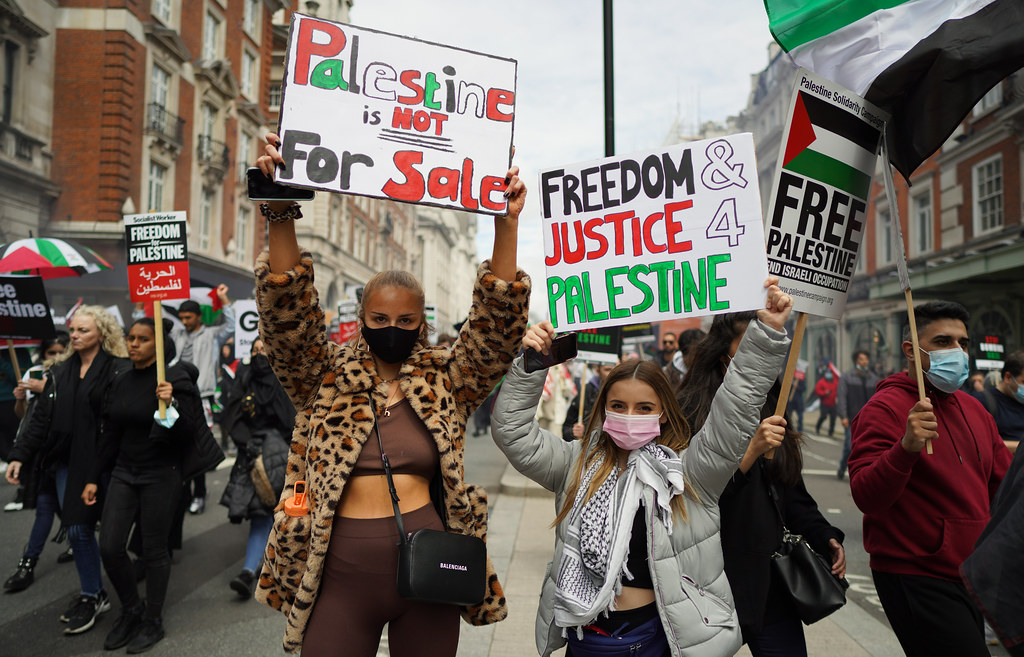
In Papua New Guinea, the government has effectively been held hostage by a cyberattack. The hackers in question are demanding bitcoin payments. The hackers targeted the offices of Finance that handle financial aid from foreign countries, which the small country heavily depends on. The country will not report how much money has been demanded, but it does appear that foreign aid funds have been frozen by the attack. On Thursday, Israel approved the status of 3,000 new settler homes in the occupied West Bank. This action has been condemned by the Palestinian authority, 13 European states that call on Israel to abandon the project, and by the U.S. Increased settlements have slashed the idea o the two-state solution down, with Palestinian human rights activists Issa Amro saying “The purpose of Israeli settlement expansion is to fragment Palestinian land so there wouldn’t be the connection of Palestinian geography.” Many consider such annexation war crimes, in accordance with the Geneva Convention prohibiting the transfer of the protected population and the inability of an occupying power from applying its laws to occupied territory. Also in Palestine, the destruction of the al-Yusufiye cemetery for the purpose of building a themed garden has made headlines as a video of a Palestinian women resisting Israeli forces, clinging to her son’s grave as construction machines operate closeby went viral. The cemetery is in occupied East Jerusalem. Israel justifies this brutal action by claiming that the land was settled by Jews during ancient times. Also, it claims that “no work is being done in the cemetery [instead being] carried out on open public land,” adding that the grave sites affected by the work were illegally placed in the area. Despite multiple attempts to preserve the site, including going to Israeli courts, all measures were rejected in favor of building a allegedly apolitical mythical garden. Israeli researcherAviv Tatarsky has claimed that “The park in question is part of a series of government-funded projects which aim to link settler compounds in the Old City Basin.” This amounts to claiming that these alleged apolitical building projects surrounding the Old City of Jerusalem, were a concerted effort by Israel to form a protective ring of settlements around the Old City.  
 

Lebanon:

This week, the US Treasury imposed sanctions on two Lebanese businessmen and a lawmaker for corruption. The US Treasury accused Lebanese tycoons Jihad al-Arab and Dany Khoury as well as lawmaker Jamil Sayyed of profiting from corruption and cronyism and thus, undermining the rule of law in Lebanon. The Treasury alleged that Khoury and Arab received state contracts worth hundreds of millions of dollars due to their political connections. Additionally, Sayyed was accused of attempting  to “skirt domestic banking policies and regulations” and transfer USD$120 million abroad, according to a Treasury statement. As of now, the US has seized all property the three have under US jurisdiction and forbidden US individuals and businesses from carrying out transactions with the three. According to Reuters, this is “the first time that the United States has imposed sanctions on a close associate [Arab] of Hariri, a pro-Western figure, having previously focused on Iran-backed Hezbollah and its allies.”  Meanwhile, supporters of the  Lebanese Forces party have staged protests against the summoning of party leader Samir Geagea to give testimony on the deadly Beirut clashes. The protestors closed off roads leading to Geagea’s residence in Maarab on Wednesday. Geagera, who was scheduled to give his testimony to Lebanon’s military intelligence on Wednesday morning, did not show up to court. His lawyer, Sam Saliba, maintained that the summons was illegal and that it was part of Iran-backed Hezbollah’s effort to scapegoat Geagea for the Beirut clashes, which was sparked by unidentified gunmen firing into a crowd of Hezbollah and Amal party supporters who were protesting the investigation into last year’s Beirut port explosion. Hezbollah has accused the Lebanese Forces of instigating the clashes, claiming that the Christian party was trying to stir sectarian conflict in Lebanon.  
 

Afghanistan:

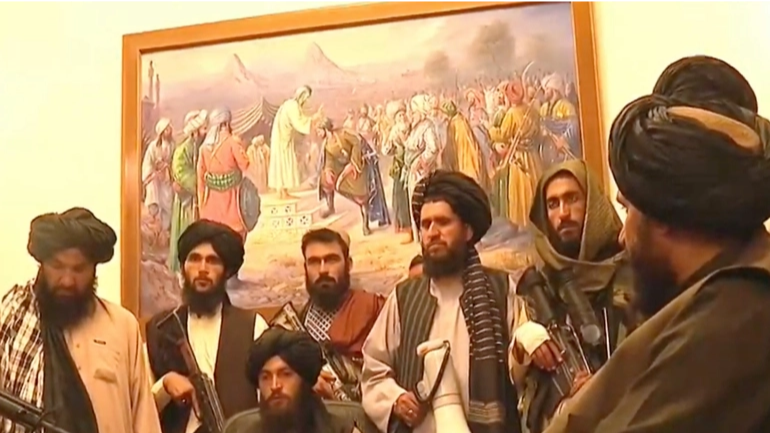
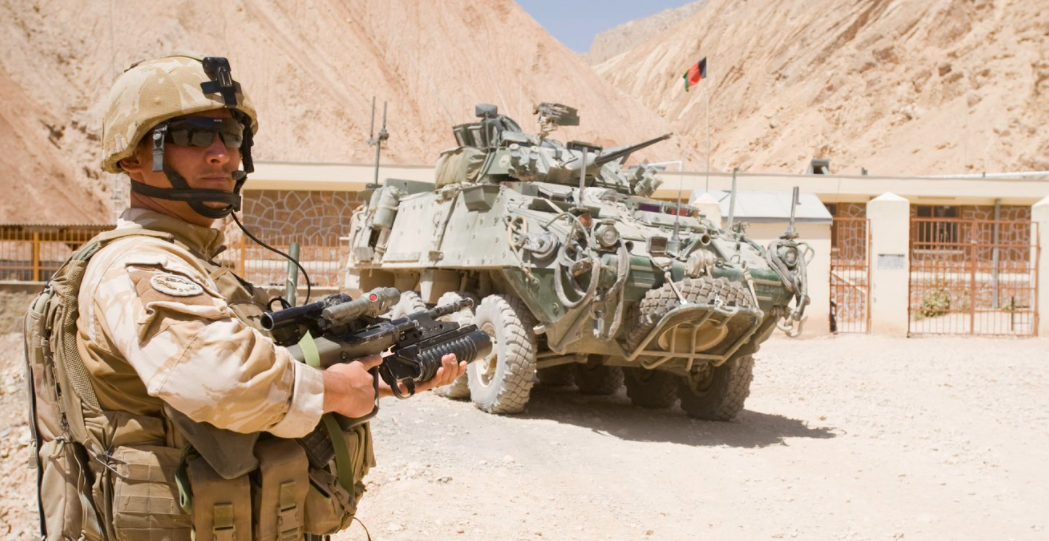
In Afghanistan this week there were increasing reports of attacks from the Islamic State of Khorasan Province, an armed faction related to the larger Islamic State group, on the Shia minority in the region. The group has been bombing and attacking Afghan Shia groups. The group. Recently, the group has taken responsibility for multiple violent attacks on Hazara Shias. One such event was the October 8th suicide bombing at the Kunduz mosque that killed 72 people, and another attack on the Bibi Fatima mosque on the 15th killing 63. The group has released statements threatening to kill Shia in their homes. Other attacks by the group have targeted Hindu and Sikh minorities in the region, as well as journalists, activists, and girls schools. While the Taliban have claimed they would provide additional protection for Shia gathering areas, they too have a brutal history of human rights abuses against the Shia minority during their previous rule. Even though the new guard of the Taliban claim to discard the old practice targeting Shia, there have been reports of detention and abuse of Hazara journalists as well as forced evictions of those in the minority.  The US has increasingly pressured the new Taliban government into working with them to contain such extremist groups in the region. Western media has reported claims of increasing presence of ISIS related groups in the region, stating that the extremist group will be able to launch an attack on the US in the next year. The Taliban is very against cooperating with the Western power due to its previous damaging military presence within the country. However, they are reported to be seeking “normal relations” with the country, which would include the re-opening of the US embassy in Kabul, the removal of economic sanctions, and economic assistance. The significance of this is the billions of dollars of frozen assets in the U.S. Federal reserve and European central banks that were put there by previous President Ghani and now are unreachable to the Taliban.  
 

Myanmar:

Win Htein, a senior aide to Myanmar’s ousted leader Aung San Suu Kyi, was sentenced to 20 years in prison on Friday on charges of high treason, media and one of his family members said. Win Htein, 79, is a stalwart supporter of Suu Kyi and a long-time political prisoner during decades campaigning to end army rule. Suu Kyi, who is also on trial, is charged with a litany of offenses, including breaking coronavirus protocols, illegally possessing two-way radios, accepting bribes of cash and gold, incitement to cause public alarm, and violating the Official Secrets Act. In her first court testimony on Tuesday, she denied a charge of incitement in connection with her party publishing a letter in February calling on international organizations not to cooperate with the ruling military junta. Myanmar’s state media has not reported developments in Suu Kyi’s multiple legal cases, and one of the only sources of public information on her trial – her lawyer, Khin Maung Zaw – received a gagging order from the military authorities earlier this month. The Associated Press has published an article following months of research into the torture tactics done by the Myanmar military, which are described as methodical and systemic, citing interviews with detainees, photographic evidence, sketches, letters, and testimonies from three recently defected military officials. They say that the military, known as the Tatmadaw, and the police, have killed more than 1,200 people since February. The torture often begins on the street or in the detainees’ homes, and some die even before reaching an interrogation center. A former political prisoner says that they are first tortured “for revenge, then for information”.  The military has taken steps to hide evidence of its torture. An aide to the highest-ranking army official in western Myanmar’s Chin state told the AP that soldiers covered up the deaths of two tortured prisoners, forcing a military doctor to falsify their autopsy reports. Read the article for more information on this extensive exposé.  
 

The United States:

Five young climate activists are on a hunger strike outside the White House, to demand government action on climate to match the severity of the crisis. In a letter, the protesters said “We will continue to sit starving outside the White House everyday until you use your power as elected president of the United States to deliver your mandate for bold, and transformative climate action with justice and for jobs” as they continued with their seventh day of hunger strike. Meanwhile, Joe Biden is faced with a major challenge to reassert American credibility regarding UN climate talks as he departed to Europe on Thursday and arrived in Rome on Friday for a G20 summit, further headed to Glasgow with his domestic climate agenda. Climate activists are claiming that Biden’s actions have not matched with his words yet.Major Chinese state-owned telecommunications firms are being barred from operating in the United States over national security concerns amid the rising US-China tensions. The US Federal Communications Commission has ordered China Telecom to discontinue US services within 60 days. The United States is also trying to deepen its relationship with Taiwan; actively working on new areas of cooperation such as in cybersecurity and supply chains to tackle China’s global influence.  
 

Cuba:

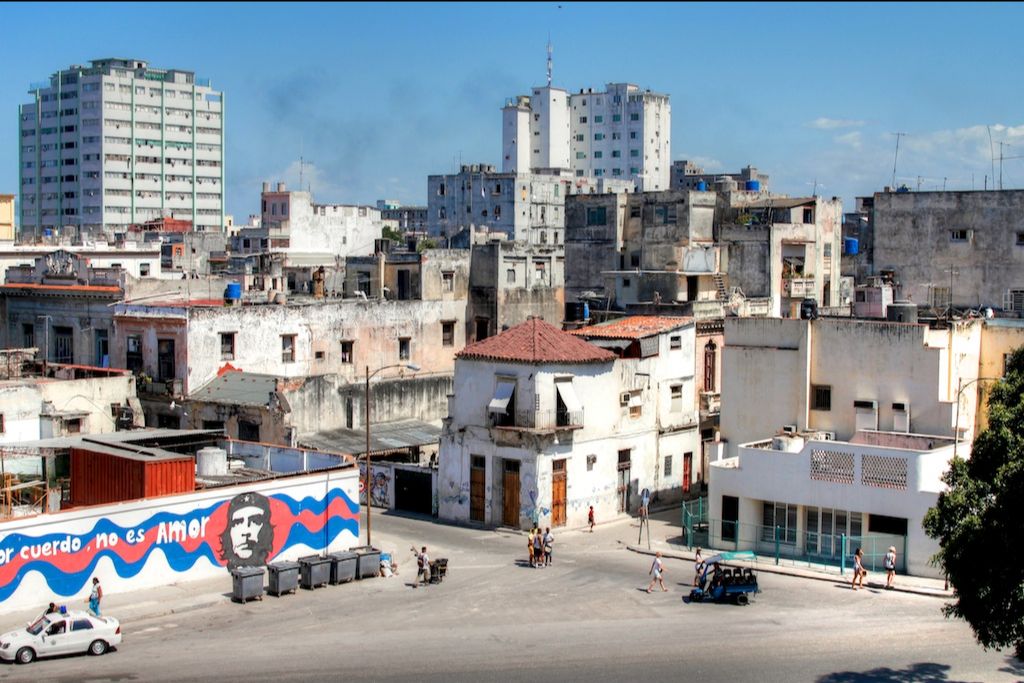
On Thursday, Cuba’s National Assembly approved a raft of laws broadening citizens’ legal rights in efforts to modernize Cuba’s judicial and penal codes. These address legal voids identified by activists, who alleged authorities flaunted due process in the aftermath of protests in July. The new laws promise to increase transparency in the judicial process and protection for those accused of a crime. For example, it provides detainees with a right to an attorney within 24 hours, adhering to international standards than the regulations currently in force. Meanwhile, Cuban authorities have started threatening organizers of a pro-democracy march which is scheduled in November with legal charges. They are also conducting a vast security operation to intimidate ordinary Cubans to generate fear about supporting the upcoming protests. Yunior García, the country’s leading opposition leader, said “we are already living them”, that terrible things are happening already before the protests and vowed that he and others are moving forward with national protests planned for Nov. 15. Workers posing with sticks in their hands, a man proudly displaying a stone, neighbours caught on camera test firing with rifles are some of the photos making rounds online with caption messages against “the mercenaries” and “the provocateurs” ahead of the civic protests.

 

Nicaragua:

The United States is working with other international partners on imposing new sanctions as a response to the election on November 7th as well as reviewing Nicaragua’s participation in the Central America Free Trade Agreement. In a statement, US Secretary of State Antony Blinken said, (the US were) “preparing a sham election devoid of credibility, by silencing and arresting opponents.” Five satellite parties, nicknamed zancudos, of President Daniel Ortega’s will be presented on the ballot on November 7th. These parties will have no intension of disputing the election on only serve as façade of a multiparty electoral system. These five parties will be the only parities present on the ballot as Ortega changed the legal status of all other opposition parties including the Conservative Party (PC), the Democratic Restoration Party (PRD), and Citizens for Liberty (CxL). This is not the first-time satellite parties have been used in Nicaraguan politics. Their role is just to cooperate with the governing party and as a reward will receive reimbursements. On May 4th, President Ortega’s regime changed the electoral guidelines to allow for a reward for satellite parities. He eliminated the requirement of obtaining the minimum of 4% of votes to access reimbursements for campaign expenses. One satellite party is the Constitutional Liberal Party (PLC), the wealthiest satellite party, will run for election under an unlisted candidate. The late leader of the PLC former President Arnoldo Alemán made a pact with the President Ortega that they would share powers of the state. In 2016, the PLC had 15% of votes as Ortega was reelected and received 72.44%.

 

Bolivia:

Bolivia’s Prosecutor’s Office has charged former high-ranking military officials for participating in the alleged November 2019 coup which led to former President Añez’s rise to power. The defendants include Flavio Gustavo Arce, former chief of the general staff, Pastor Mendieta, former commander of the army, Gonzalo Terceros, former commander of the air force, and Palmiro Jarjury, former commander of the navy. The defendants are currently undergoing investigation. Also this week, a number of civil society groups have announced they will go on strike on Monday, November 8, in protest of Law 1386. This strike is a continuation of the ones held on the 21st and 22nd of October. The groups involved include unions in the transportation, medical, agriculture, and other sectors, as well as opposition parties, the Medical College, and the XI Indigenous March. The controversial Law 1386 is argued to be the “mother bill” of bill 218 against the legitimization of illicit profits, the latter of which was withdrawn by the Plurinational Legislative Assembly on October 15. According to the National Committee for the Defense of Democracy (Conade), Law 1386 is essentially “a package of authoritarian economic norms.”
 

Belarus:

On Tuesday the United Nations released an article under its Human Rights section about the condition of women in Belarus which mentions how female political activists are subjected to enforced disappearances, torture, ill-treatment and exile. On October 29th, the US embassy in Belarus said in a statement that authorities informed it of new measures “designed to impede the functioning” of its humanitarian and outreach programs that have benefited thousands of people. Meanwhile, The Ministry of Information also confirmed blocking multiple channels of information including social media such as Telegram, and news channels such as the Deutsche Welle website which is a German news channel, as reported by the Belarusian Journalist Union on Thursday. Belarusian oil refineries have lost $80 million due to European Union sanctions amid the issue of the migrant influx. A makeshift warehouse inside the Polish town of Michalowo’s fire station has become a beacon of light for many migrants. Hundreds of volunteers, doctors, lawyers, and local residents have been working together to help migrants trapped between Belarus and Poland.
 

Georgia:

As Mikheil Saakashvili’s hunger strike in a Georgian prison nears the one-month mark, authorities are unsure of what to do with the defiant ex-president as his health deteriorates. A public tug-of-war has broken out between doctors and government officials over this dilemma as he begins needing hospitalization, and Saakashvili has warned that he is “ready to die” if he is not released. A team of physicians and other medical experts, including Saakashvili’s personal doctor, emerged from an examination on October 19 warning of potentially irreversible damage to his health and urging authorities to relocate him to a fully equipped hospital. Georgia’s justice minister responded by saying a prison infirmary could provide adequate care. According to his lawyers, Saakashvili, who is not eating food but drinking water, has refused to be moved to a prison hospital. Georgia’s ruling party and the opposition on Wednesday staged rival rallies ahead of local elections with the Caucasus country’s primary government critic Mikheil Saakashvili on hunger strike in jail. Second round runoffs on Saturday will see candidates from the majority Georgian Dream party and the opposition United National Movement (UNM) compete for mayoral posts in major cities. Georgian Dream said it had bussed supporters from across the country for its rally on Freedom square in the capital Tbilisi. Prime Minister Irakli Garibashvili urged voters to back Georgian Dream Saturday, calling opposition leader Saakashvili’s UNM an “anti-state and anti-national force”. UNM later held its own campaign rally in the western city of Zugdidi, where a party leader, Ana Tsitlidze, told several thousand supporters they would “prevail in our struggle for a truly democratic, European Georgia.  
 

China:

Beijing has promised to reduce its carbon dioxide emissions and sent a revised climate pledge saying its carbon dioxide emissions would peak before 2030, and that it would aim for “carbon neutrality” – or no net emissions of CO2 – before the year 2060, three days ahead of the COP26 summit in Glasgow. But critics say for a country that produces 27% of global emissions, China would need to demonstrate leadership at a critical moment for the planet. On the other hand, global activists and legislators from around the world have gathered on the fringes of the G20 summit in Rome to protest against the presence of the Chinese foreign minister, Wang Yi, and urge leaders not to let China off the hook over human rights abuses in return for Beijing’s cooperation on the climate crisis. China’s ban on private media has pushed non-partisan and liberal news organisations go out of service in a stride against private investments in media including social media platforms. The “Market Access Negative List 2021” seeks to impose a ban on the funding from private players for newsgathering, broadcasting and distribution. Amid an increase in COVID-19 infections, China has tightened its regulations. Doubling down on Covid-zero strategy,  lockdown is being imposed on the spread of 11 provinces and a new 5,000 room quarantine facility has been built in Guangzhou.  
 

Hong Kong:

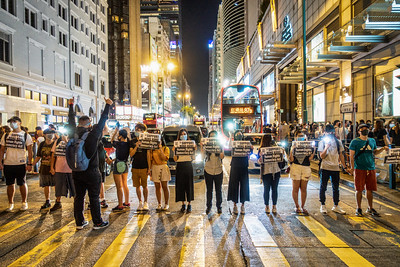
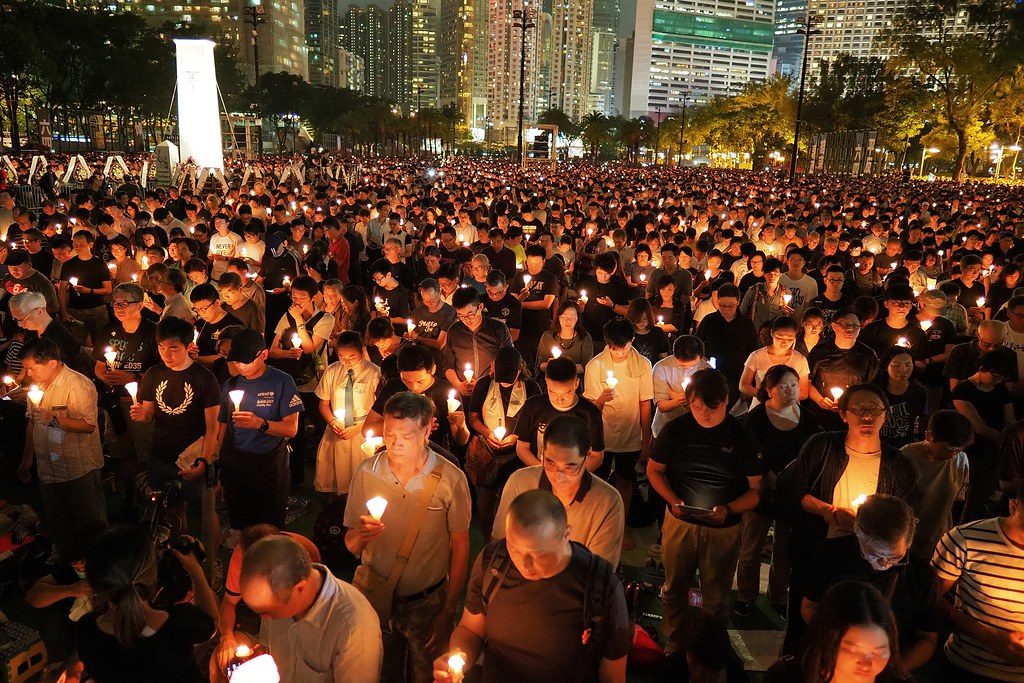
Amnesty International will close its two offices in Hong Kong by the end of the year, the human rights group has announced, with its local chapter ceasing operations on Sunday. Amnesty, which has its head office in London, said it would continue its research, advocacy, and campaigning work from its other offices in the Asia Pacific. Amnesty joins some of Hong Kong’s most prominent civil society groups and trade unions in winding up its operations as a result of the national security law, which was imposed by China in June 2020 to tackle any act deemed subversion, secession, “terrorism” and collusion with foreign forces. Critics say the broadly-worded national security law has been used arbitrarily to restrict the freedom of expression, assembly, and association. Hong Kong’s health minister has rebuked a leading public health expert for criticizing the government’s decision to impose an extra two weeks of quarantine on recovered Covid-19 patients, insisting the tough strategy “has the community’s overall interest at heart”. In a letter to the SCMP on Friday, Sophia Chan Siu-chee said University of Hong Kong epidemiologist Professor Benjamin Cowling was wrong to call the measure “unethical”, as he was going against the government’s zero-Covid goal, which was “in line with the aspirations of our community”. The dispute underscores a growing rift between some experts citing science-based arguments to suggest a “living with the virus” approach and the local government’s increasingly strict measures as it adopts a strategy more in line with mainland China’s zero-infection policy. At stake is Hong Kong’s primary goal to reopen its border with the mainland, which is essential to the city’s economic development.  
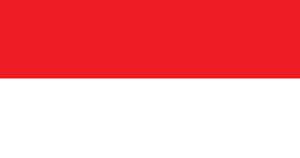
 

Indonesia:

Ahead of the 2024 presidential elections, a number of the Gerindra Party’s regional boards have declared their support for Defense Minister Prabowo Subianto. Subianto, a former military general, has lost two elections to President Joko “Jokowi” Widodo, but remains strong in electability polls. “[Gerindra’s] cadres and campaign team are readying themselves for war in pushing for Prabowo to win the 2024 elections. Whether he will actually run, that’s a matter to be settled later. What’s important now is that the party’s political system is well oiled,” said Adi Prayitno, executive director of Parameter Politik Indonesia. Regardless, Prabowo is expected to face stiff competition from the governor of Central Java Ganjar Pranowo and the governor of Jakarta Anies Baswedan, whose electability ratings–unlike Prabowo’s–are rising. Meanwhile, in Jakarta, the draft Capital City Bill has elicited strong criticism over an article which would give President Jokowi sole control over appointing the capital’s new authorities. The Capital City Bill is part of Jokowi’s US$32.7 billion plan to relocate the capital to East Kalimantan with the aim of a less Java-centered development. However, some have voiced concern over Article 9 and Article 10 of the draft bill, the first of which contains a provision giving Jokowi sole authority to designate the head and deputy head of the new capital, without any election process, and the second giving the new authority full governance of the administrative capital, including the power over national defense, monetary policy, and international affairs.
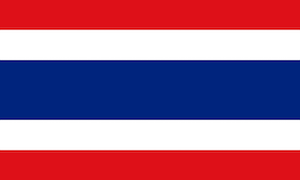
 

Thailand:

After more than a year of anti-government rallies, where protesters’ calls for democracy and the reform of the powerful monarchy appear to have fallen largely on deaf ears, protestors are stepping up the pressure on the administration of Prime Minister Prayuth Chan-ocha. For about three months a new group of protesters who call themselves Thalugas (breaking through the gas/tear gas) have been skirmishing with police and the economic fallout from the COVID-19 pandemic has given their struggle new momentum. The violence has subsided to some degree since July, but every night, young protesters taunt police with middle fingers, screaming insults from their motorcycles. Eventually, tensions escalate into violence as demonstrators aim fireworks at groups of police officers who occupy the area. Police then respond with sweeping and often violent arrests. The young demonstrators have set fire to traffic lights and massive portraits of the Thai King Vajiralongkorn in the city. The protesters target police with slingshots, small explosives called “ping pong bombs”, firebombs, and more. In response, police have unleashed rubber bullets, water cannons, and tear gas on them.  
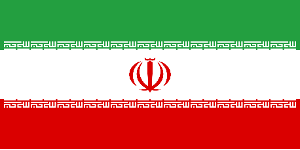
 

Iran:

On Tuesday in Iran, President Raisi claimed that a cyberattack by anti-Iranian forces froze all gas stations in the country, creating perilously long lines to incite fear and disruption. Many Irnians use state-issued cards to purchase subsidized fuel at gas stations, and these cards were unusable during the cyberattack. No group has yet claimed responsibility for the cyberattack, but a cybersecurity official from the state has connected this event and a previous attack that targeted Iran’s rail system in July. The government claims both attacks were orchestrated from abroad. By Wednesday, the government announced that 80% of stations were resuming business normally. While no country specifically has been blamed, the US and Israel are often suspected of such attacks after the 2010 Stuxnet Virus attack infected Iran’s nuclear program, and was attributed to the two nations. When people tried to use their subsidized gas cards, the machine showed the message “cyberattack 64411”. This number is both associated with a hotline through Khamenei’s office that answers questions about Islamic Law, and was used in the previous railway cyberattack. When the media agency ISNA reported on this, it quickly removed the post, claiming to have been hacked. However, many news sites claim that the claim of hacking is commonplace to cover up government censorship of media.
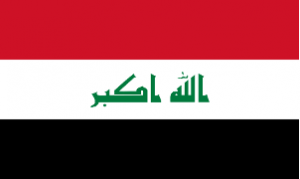
 

Iraq:

After this month’s parliamentary elections were plagued by cries of corruption and miscounting, Iraq is set to soon release official results after a recount. The manual recount began this Wednesday, recounting 234 contested electoral stations. More than 1,300 appeals about the elections were filed by the Shia Cooperation Framework claiming fraud. It is significant that this group, which contains many Shia groups that lost big in this month’s election, have rejected the results. The group blames the electoral commission for ignoring major violations in counting. The majority of the complaints were dismissed on the grounds of a lack of evidence, while the rest of the appeals will be submitted to the Supreme Court. The Sadrist party is the biggest winner of the elections, followed by the Taqadum party led by Sunni Parliament Speaker Mohammed al-Habousi. This Tuesday, an attack on an Eastern Iraqi village, Al-Rashad in Diyala Province, was attributed to the Islamic State group by security sources. A source within the village claims that 11 were killed, and 13 sustained injuries. Other sources claim that the civilians were killed in a small arms fire in the village. Currently, the village is locked down in order to find the perpetrators. It is claimed by the UN that 10,000 IS fighters are still active in Iraq and Syria.  

 

Sudan:

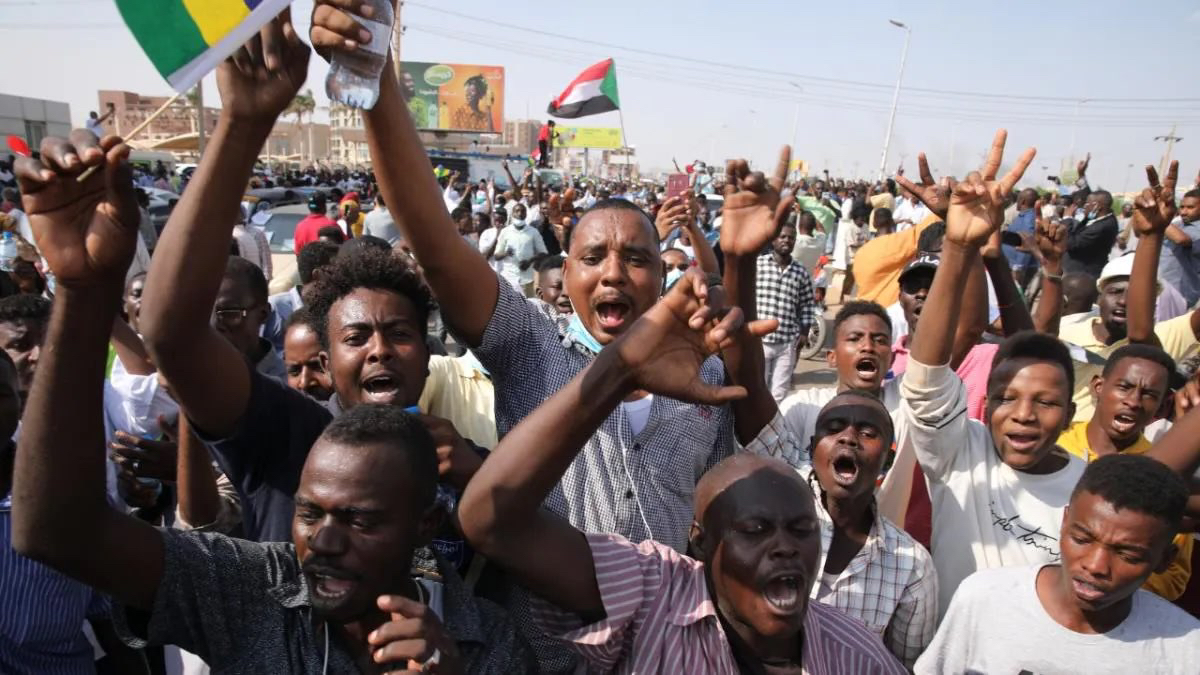
On October 25th, the Sudanese military took over the civilian branch of the government and dissolved the ruling council. The military declared a state of emergency and civilian leaders were subsequently arrested. Among the arrested was Prime Minister Abdalla Hamdok and his wife. According to the military, the PM and his wife were detained on Monday but released to their home on Tuesday. It is unclear if they are allowed to move freely around their residency or if the military is monitoring their movements. General Abdel Fattah Burhan, the leader of the coup, is now the de facto leader. There is mass discontent from the Sudanese people and they have taken to the streets. Protests have been increasingly violent as security forces clash with demonstrators. The latest tragedy was the death of one protester on Thursday after a violent clash between security forces and protesters. Security forces have used aggressive methods to try and suppress protesters. During a peaceful demonstration on Thursday, witnesses report watching security forces fire tear gas and rubber bullets at protesters. The death count since the coup on Monday is now eight people with 170 reported to be injured. All around the capital city of Khartoum roads have been barricaded, cars are burning in the streets and buildings around the city have been damaged. International community response was quick to condemn the military takeover. The World Bank suspended aid, the African Union has suspended Sudan and the United States froze £508 in aid. The UN Security Council called on the military specifically General Burhan to restore the Sovereign Council. The General did not respond directly to the international criticism, instead he fired six Sudanese ambassadors to countries critical of his actions: the United States, China, and France.
 

Uganda:

President Museveni has announced that schools will officially reopen in January 2022. This will be the first time schools have been reopened since shutting down in March 2020 due to COVID-19. Museveni explained that vaccinations will be the key to reopen the whole Ugandan economy. The President in a statement explained his forecast reopening by stating, “By the end of December 2021, 12 million people should have been vaccinated.” Among the people he mentions included health and education workers will need to be vaccinated. The reopening of schools will be significant for many children around the country as many children have fallen behind in their education. Some children have even taken up side jobs working in hard labor industries. In an interview, one 17-year-old student reported working in gold mines in Eastern Uganda making just $2.80 USD. In a report released by FAWE-Uganda, they found shocking statistics showing refugee parents and caregivers were trading school-aged girls for sex in exchange for supplies such as money and food. The surveys were conducted in three refugee settlements and 25 districts around Uganda. Among the settlements surveyed was Alere and Palabek which the conditions for young girls at the camps remains critical. The statistics show that compared to non-refugee population young refugee women have experienced an increase of sexual violence in consequence of their working and living condiditions. At the Alere refugee settlement, 15% of girls were reported to be involved with activities such as bartending. These statistics increased even more as the pandemic enforced lockdown heightened the risk for young girls to be exposed to sexual engagement and abuse. In another refugee settlement the number of girls who reported to be engaged in sexual intercourse increased from 11.5% prior to lockdown to 13.1% during the lockdown.
 

Zimbabwe:

The UN Rapporteur, Alena Douhan, announced on October 28th that the sanctions imposed on Zimbabwe were only exacerbating corruption in the country. Before the announcement protesters marched peacefully outside the US Embassy in the capital city of Harare calling for the country to end sanctions have been in place for two decades. The European Union imposed sanction of late President Robert Mugabe in 2002 for alleged election rigging and human rights abuses. Then in 2003 the United States imposed the same sanctions. President Mnangagwa’s government has been arguing for a long time that if the sanctions were lifted it would significanly help the country recovery economically. Douhan was in Zimbabwe for two weeks and will report all her findings in the full report to the Human Rights Council next year. The Shangaan indigenous group face the threat of massive eviction due to an irrigation place that will run right through their land. The blueprint for the irrigation project will raze 31,975 acres of land with resources such as mopane and baobab trees. If evicted this would leave 12,500 villagers without a home. According to Zimbabwe’s Communal Land Rights Act, communal land is owned by the President of Zimbabwe; he has the power to decide how the land can be used. This allows the President to evict anyone on the land for commercial use and does not require the government to consult people it will affect. The indigenous group has been responsible for conserving the biodiversity in the area. Their methods of sustainable agricultural practices have managed to keep the area healthy and bountiful.

Military Coup in Sudan: What we know

Sudan’s military coup on Monday followed weeks of pro and anti military protesting. Soldiers arrested members of the Sudanese Cabinet, civilian members of the foreign council, government officials, and President Abdalla Hamdok’s media advisor. It’s been reported that the military has arrested staff of the state media. Members of the transitional sovereign council and ministers of the transitional government have also been detained.

Pro-civilian government protestors then took to the streets of the capital in large numbers, an estimated tens of thousands, demanding the return of civilian rule. Protests were met with violent dispersion tactics, including gunfire and beatings. The Sudanese Professionals Association has reported that internet and phone service has been out throughout the country. The group, Netblocks, which reports such disruptions, claimed that the nature of the incident is “consistent with an internet shutdown […] likely to limit the free flow of information online.” Reports also stated that the airport of Khartoum was closed, and international flights have been suspended.

Hamdok has allegedly been detained and taken to an undisclosed location. Abdel Fattah al-Burhan, the military officer who once headed a power-sharing council, addressed the press on Monday to declare a state of emergency and the dissolution of the transitional sovereign council, the Hamdok government, and the anti-corruption task force.

He also announced that a technocratic government would be installed, and elections would be held in July 2023. Burhan claimed that disagreements between political factions caused the military to take over.

The Umma and the Sudanese Congress, two popular political parties, have condemned the coup and the military’s response to the following protests. The Sudanese Professionals Association, who were active in the overthrow of the Bashir government, have called on supporters of democracy to mobilize in the streets, use civil disobedience tactics, and perform a general strike.


How did the coup unfold?

Hamdok’s office director, Adam Hereika, reported that this coup was attempted after an agreement had been reached between Hamdok and Burhan with a U.S. envoy present.

Hereika also points the finger at the military government for raising tension in eastern Sudan before the coup attempt.

The joint civilian and military-led government that took power following the ousting of former leader Omar al-Bashir in 2019 made promises to share power and pave the way for democratic rule in the future, but the clashing interests of the two parties have made cooperation very rocky. There has been another coup attempt occurring just last month, in September 2021.

Government officials claimed that the September coup attempt was orchestrated by Bashir supporters, leading to the arrest of 21 officers and an undisclosed number of soldiers. President Hamdok stated that measures would be taken to target former regime supporters who posed a threat to transition. Since the coup attempt, military leaders demanded the Forces of Freedom and Change coalition, which led anti-Bashir protests and were a substantial part of the transitional government, to be reformed. The military also demanded the replacement of cabinet members.

One major point of contention between the civilian and military sectors of government is whether or not to hand over the Sudanese who are suspected of war crimes during the 2003 Darfur conflict to the International Criminal Court, which the sovereign council has not been able to reach an agreement on. Another disruptive point is the civilian government’s investigation into the murder of pro-democracy supporters in 2019. While the military is against such measures, citizens grew unhappy with the delays in enforcing justice and sharing investigations.

Inflation and devaluation of the currency have caused severe issues for the economy. Citizens are faced with basic goods shortages and high inflation – of which international aid has been helping. Pro-military protestors have adopted slogans such as “down with the hunger government’’, stating that issues of food security and basic good access are the main reasons for supporting a coup by the military government.

These problems are exacerbated by the blockade on the Port of Sudan, which occurred in October of this year, where eastern Sudanese demanded that government take responsibility for prior injustice in the region following Bashir’s loss of power. Protesters demanded the deposing and replacement of President Hamdok, and equivalent revenue sharing by the government for the eastern Sudan region. Reports of such actions included speculations that the Port Blockage was staged or supported by military members of the Transitional Council of Sovereignty, who are still loyal to Bashir. Other speculations stated that the port blockage was staged in support of militant Islamist regimes in favor of a counter-revolution.

After last month’s coup attempt, many rebel groups and political parties allied with the military and staged a sit-in at the Presidential palace calling for the dissolution of the civilian government. In response, Cabinet ministers of the civilian government took part in large protests in Khartoum against military rule. In such protests, supporters of the transitional government counter protested pro-military demonstrations occurring at the same time.


Why did it happen now?

Tensions between the civilian government and the military transitional branch were running high for years. The frustration of the three-year delayed transition to civilian rule and the military’s continued attacks on the civilian branch have been threatening to collapse the power-sharing agreement.

Last month the attempted coup by a group of military officials exacerbated the conflict between the two governing branches. During late September, government officials stated that a group of officers attempted to occupy a state-operated media building. The act was labeled by officials as a failed coup attempt. The Sudanese army claimed that 21 officers, along with an unspecified group of soldiers, were arrested in connection with the coup attempt. A week following the coup attempt, Sudanese civilians chanted pro-democracy slogans and accused the military of delaying transferring power to civilians. They also accused them of postponing the expulsion of remnants of al-Bashir’s regime from state institutions. This includes finally prosecuting security forces who were responsible for the death of dozens of protesters during protests in June 2019.  The civilian branch voiced its support for protesters gathered in the Republican Palace while security forces, encouraged by the military branch, fired tear gas at demonstrators.

In early October, Sudanese security forces enacted a travel ban targeting eleven civilian politicians. This was an effort by the military branch to assert its dominance as this move was seen as repercussions for the civilian government’s “involvement” with the coup attempt. The civilian branch continued to dispute the accusation by the military that they supported a coup attempt. The Forces for Freedom and Change, a civilian umbrella coalition, mobilized protesters to show their support for the pro-civilian government side. This was not the first major protest started by FFC; they were responsible for organizing many demonstrations that led to the removal of President Omar al-Bashir. The central concept of “continuing the revolution,” a reference to the protests that brought down the late President, has been the central unifying cause for activists’ groups. However, during the protests on October 21st, it was evident there were fractures among these groups.

Protesters from the splinter FFC faction, the National Charter Alliance, have been holding a sit-in outside Khartoum’s presidential palace for the past few days. Many members of this group stated that they blame the civilian government for not representing them and ignoring rising poverty and economic deterioration around Sudan. However, members of the FFC claim that the sit-in was not connected to their post-revolutionary movement; instead, they labeled the sit-in as a pro-military protest led by security forces and their allies. With mass discontent on the streets and infighting between both branches invested in the power-sharing agreement, the situation in Sudan was ready to boil over.


Who is in charge?

On October 25th, midday, the military head of Sudan’s Sovereign Council General Abdel Fattah Abdelrahman Burhan declared a state of emergency. The military seized control of the government and state-run media outlets. Army officials were deployed across the capital city of Khartoum to establish control. The Khartoum airport has been shut down and international flights have been suspended. Additionally, the military has severely limited access to the internet and social media platforms.  In his live televised address to the nation, following the coup, General Abdel Fattah Abdelrahman Burhan announced that the Sovereign Council and cabinet had been dissolved effective immediately. He referred to the ongoing disputes between politicians of the Council and incitement to violence as justification for the dissolution. All the members of the Sovereign Council–the temporary body responsible for overseeing Sudan’s democratic transition– and state governors will be relieved from their positions. Armed forces have placed many civilian leaders under arrest including Prime Minister Abdallah Hamdok and the governor of Khartoum Ayman Khalid. News outlets have reported that high-level officials responsible for the outreach for the Sovereign council have also been detained. Sources close to the Prime Minister report there was pressure within the Sovereign Council to support the coup, however, Prime Minister Hambok refused, and he urged people to continue protesting peacefully.


How has the world reacted?

The American special envoy for the Horn of Africa Jeffrey Feltman said that “the US is deeply alarmed at reports of a military take-over of the transitional government,” he added how “this would contravene the Constitutional Declaration and the democratic aspirations of the Sudanese people,” in his statement on Twitter.

Moussa Faki Mahamat, Chairperson of the African Union Commission, called for the “immediate resumption of consultations between civilians and military,” as well as the release “of all arrested political leaders and the necessary strict respect of human rights.”

Arab League Secretary-General Ahmed Aboul Gheit expressed deep concern over the developments in Sudan. The pan-Arab bloc has also urged all sides to adhere to an August 2019 power-sharing deal outlining the transition following the ouster of Omar al-Bashir.

German Foreign Minister Heiko Maas condemned the coup in a statement. He said the attempted overthrow must come to an immediate end while calling on everyone in Sudan responsible for security and order to continue Sudan’s transition to democracy and to respect the will of the people.

Josep Borrell, the EU’s top diplomat, wrote on Twitter “The EU calls on all stakeholders and regional partners to put back on track the transitional process”. He will be attending a meeting of foreign ministers from the EU and the African Union on Tuesday in Kigali, Rwanda.

The United Nations Mission to Sudan has issued a strong statement to protect Sudan’s fragile democratic transition. The mission has a mandate to assist Sudan in its political transition and protection of human rights, hence can play an important role in garnering international support and local management of the situation. In a statement the mission called “the reported detentions of the prime minister, government officials and politicians unacceptable” and has called the security forces of Sudan “to immediately release those who have been unlawfully detained or placed under house arrest” while urging all parties to “exercise utmost restraint.”


Conclusion

The worsening economic situation, factional infighting, and a deep division between the civilian and military have contributed to the current state of the country. After the ousting of al-Bashir, the Sudanese have yet another challenge to endure and overcome. Sudan has a long history of fighting for democracy, dating back to 1964 when the Sudanese brought down the dictator Ibrahim Abboud. Since then, the country has experienced two major revolutions and a number of rebellions. But, history did show us that Sudanese people are resilient and will continue to fight against authoritarianism.


CANVAS Weekly Update – October 22nd, 2021

Dear Friends,

CANVAS is delighted to bring you another issue of our weekly report! In this issue, we cover the protests in Sudan, asylum seekers in Belarus and introduce a new Lebanon section.

Conflict Update:

In Israel, six Palestinian human rights groups have been labeled terrorist organizations, claimed to be affiliated with left-wing militant action by the Palestinian Liberation Front. It is unclear how these groups will be affected by the announcement, and if they will still be able to function or receive funds. In Ethiopia, four airstrikes were carried out in the capital of Tigray. The government claims that the attacks are being leveled against rebel facilities, and that the latest attack was specifically targeting a military training facility of the Tigray People’s Liberation Front (TPLF). The war began in November of 2020 between the government and the TPLF, in which thousands have been killed and two million have fled. More citizens in Tigray have reported having to flee due to the airstrikes this week. Tigrai television has reported that eleven citizens were wounded during the strike. On Thursday, 500 protesters gathered in central Athens to participate in a 24-hour protest. State hospital workers marched to protest staff shortages and compulsory COVID-19 vaccines.  This comes as Greece experiences a spike in COVID-19 infections and widespread vaccine hesitancy. To encourage more people to get vaccinated, the Greek government has introduced incentives and penalties like compulsory vaccines for healthcare workers. Hospital workers unions said that the compulsory vaccinations would require hospitals to suspend unvaccinated health care workers, therefore increasing staff shortages and putting more stress on frontline workers. The Eswatini government told mobile operators to suspend access to social media platforms effective immediately following increased protests against King Mswati III online. Platforms included in the suspension include Facebook and Facebook messenger. Protests against King Mswati III mobilized on the streets this summer, in the months of June and July, which led to authorities using tear gas and water cannons to break up demonstrators. Activists say that the King is reluctant to implement calls for reform and policies which would lead the kingdom towards democracy. Themba Masuku, the Deputy Prime Minister, announced the suspension was put in place to protect the people of Eswatini. 


Lebanon:

On Tuesday, October 20, the judge in charge of Lebanon’s probe into the massive 2019 Beirut port explosion renewed his summonses of two former ministers for questioning. Judge Tarek Bitar’s decision was made despite intense criticism from Hezbollah leader Hassan Nasrallah, who has accused Bitar of being politically biased. Hezbollah’s opposition to the probe escalated last week during a violent protest which left seven dead throughout five hours of fighting between the right-wing Christian Lebanese Forces and Hezbollah and its ally Amal, another Shiite group. 

Nevertheless, analysts claim that the backlash from Hezbollah and other political parties is actually to maintain their legitimacy in the face of accusations of government incompetence and corruption. Last year, independent media and rights groups revealed that the poorly stored fertilizer resulting in the port explosion–which left 215 dead, 6,000 injured, and vast parts of Beirut destroyed–was known to senior government officials, but that they had done nothing about it. Thus, according to Lina Khatib, director of the Middle East and North Africa program at the Chatham House think tank: “The ruling class in Lebanon is in agreement about wanting the port probe to be abandoned and they will use all available means to derail it.” 

Meanwhile, this week, Lebanon’s parliament has voted to hold parliamentary elections on March 27 next year–its first election since the widespread anti-government protests in late 2019. Additionally, MPs also decided against adding a quota for women and six additional seats for the Lebanese diaspora, despite accusations of voter suppression from opposition groups and diaspora organizations. The elections, if they take place, will come amid an economic meltdown: the country is facing what the World Bank has called one of the deepest depressions of modern history, with three-quarters of its population having been propelled into poverty. 


Afghanistan:

To reward Taliban supporters, the group has forcibly evicted Hazara minority members in several provinces. Such evictions have been promptly followed by the redistribution of their land to their supporters. The claims have been leveled by Human Rights Watch, who reported that others evicted included supporters of the previous government. Hundreds of Hazara in southern Helmand and northern Balkh have been evicted by Taliban and militia forces this month, adding to the already great number of those displaced. Such evictions are backed by threats of force and lack of legal process. Taliban officials claim the evictions are supported by court orders, contrary to the family claims of generational ownership. 

There are also claims of organized discrimination and threats against the Sikh minority. Reports of being pressured or forced to convert to Islam are being reported. Reports of attacks against Sikh are not entirely uncommon, as earlier this month, 15 terrorists entered a Sikh temple and tied up guards. This attack occurred in the Kat-e-Parwan district of Kabul. 


Myanmar:

Myanmar’s junta has freed hundreds of political prisoners, according to the state media outlet Global New Light of Myanmar on Tuesday. The paper reported that 647 prisoners had been released from Yangon’s Insein Prison and 80 from a prison in Mandalay. Another 4,320 defendants currently before the courts will also be acquitted, said a notice in the paper. The release follows the junta’s announcement Monday that it would free more than 5,600 people arrested for protesting against the junta since February. The released prisoners would need to sign a document pledging not to commit any acts of violence against the country, the junta added. Since the coup, Myanmar’s security forces have arrested more than 9,000 people, of whom an estimated 7,355 are still in detention, according to the non-profit group Assistance Association for Political Prisoners. Earlier in the week, junta chief General Min Aung Hlaing blasted the Association of Southeast Asian Nations (ASEAN), which said last week it would exclude him from an upcoming meeting of the regional bloc. Instead, a “non-political” figure from Myanmar would be invited to the ASEAN summit next week, the group said.

Counselor of the U.S. State Department, Derek Chollet, has claimed that Singapore has the ability to wield its significant financial leverage over Myanmar’s military rulers to pressure them to return to a path of democracy amid a deteriorating humanitarian and economic crisis. Speaking in a teleconference from Jakarta, he said partnerships with countries in the region were critical to pressuring Myanmar as it risks becoming a “failed state in the heart of Asia”.

Noting U.S. measures to sanction individuals and entities associated with Myanmar’s military rulers who seized power in the February coup, Chollet said Singapore also possessed leverage. “Singapore has a very important role to play and we had a very good discussion with our partners there about the way it has and is going to continue to work together to bring whatever leverage we can over the regime to put Burma back on the course to democracy,” he said. Lately, thousands of Myanmar citizens have fled the country to go to India following increased crackdowns along the border.


The United States:

Dozens of people and human rights activists protested on October 20 calling on the Pakistani government to work to end the continued imprisonment of Pakistani neuroscientist Aafia Siddiqui in the United States. The protest was organized by a coalition of 20 organizations including the Council on American-Islamic Relations (CAIR) and similar protests have been planned in Boston and Washington, DC, in the coming weeks.

After examining tweets from elected officials in seven countries – the UK, US, Canada, France, Germany, Spain and Japan, Twitter has admitted it amplified more tweets from rightwing politicians and news outlets than content from leftwing sources. The research found that in six out of seven countries, apart from Germany, tweets from right-wing politicians received more amplification from the algorithm than those from the left.

Joe Manchin, the leading opposition to Biden’s climate bill, is getting support from the oil, gas, and coal companies. Once passed, the climate legislation bill under Biden would steadily retire the coal industry that once formed the backbone of the West Virginia economy.


Cuba:

Human Rights Watch’s research indicates that the July demonstrations were overwhelmingly peaceful. It mentioned on 19th October that the Cuban government has systematically engaged in arbitrary detention, ill-treatment of detainees, and abuse-ridden criminal prosecutions in response to overwhelmingly peaceful anti-government protests in July 2021. On ​​October 21, the Cuban Attorney General’s Office issued a warning to the people of Havana, Villa Clara, Cienfuegos, Holguín and other provinces that protestors will be faced with serious consequences of demonstrating peacefully on November 15, or any day. After the July protests,  the Biden administration tightened sanctions placed by Trump on Cuba. Despite promises early in Biden’s presidency that limits on remittances would be eased Cube has been left in deep freeze.

Cuba is postponing its annual debt payment to the Paris Club until next year. According to the diplomats from five of the governments involved, the latest sign the Communist-run country is suffering a grave foreign exchange crisis. In 2015, Paris Club forgave $8.5 billion of $11.1 billion in sovereign debt Cuba defaulted on in 1986, plus charges.


Nicaragua:

Government crackdowns within Nicaragua continue to widen ahead of the November 7th elections when incumbent President Daniel Ortega will run for his fourth consecutive term. This week two top executives of Nicaragua’s biggest business association were arrested by police. The president of Superior Council of Private Enterprise Michael Healy and vice president Alvaro Vargas were detained on October 21st. Authorities claim both men are under investigation for suspicion of money and assets laundering along with charges of attempting to overthrow Ortega’s government. Families of the many political, media and civil society leaders detained during the crackdowns have expressed their worries for the treatment of their loved ones. Family members say that detainees are isolated, face daily interrogations and do not receive proper care

Many activist groups are working hard to prevent the election on November 7th. On October 19th, the National Coalition of political and social groups called for an election boycott and a US based organization released a statement demanding the release of all opposition figures in Nicaragua.


Bolivia:

During a press conference on Monday, October 22, the Bolivian interior minister claimed to possess new evidence about the alleged 2020 failed assassination of Bolivian President Luis Arce. According to Eduardo del Castillo, the same Colombian group who killed Haitian President Jovenel Moise in July had conspired to kill Arce. Castillo has emails, audio recordings, immigration data, and hotel stays allegedly proving the conspiracy, some of which he has released to the media. As for the person leading the failed conspiracy, Del Castillo has maintained that Luis Fernando Lopez, the former defense minister under President Anez’s right-wing government, is the culprit. Since the announcement, Del Castillo has sent an extradition request for Lopez, who is currently residing in Brazil. Meanwhile, the Bolivian opposition has contested Del Castillo’s claims, particularly conservative figurehead Luis Fernando Camacho, governor of Santa Cruz, who believes that the government is seeking to portray Arce as a “victim.”


Belarus:

UNHCR, the UN Refugee Agency, is appealing for urgent action to save lives and prevent further suffering at the border areas between Belarus and the European Union (Latvia, Lithuania, Poland) after eight deaths have been reported so far in the border region. They’ve also taken note of several groups of asylum-seekers, refugees and migrants who have been stranded for weeks in increasingly dire conditions. Belarus is also facing diplomatic criticism after it failed to follow the UN Aarhus Convention on access to justice in environmental matters. 

Poland has now doubled the number of soldiers deployed to guard its border with Belarus, meanwhile a Polish lawyer Kamil Syller is appealing to locals living near the border to switch on a green light to signal that they can provide migrants with food and shelter as an action plan to help suffering migrants.

On 20th October police in Minsk raided the office of the independent weekly online newspaper Novy Chas and the home of at least one of its journalists, according to news reports. The Committee to Protect Journalists is urging the Belarusian authorities to stop harassing independent journalists.


Georgia:

U.S. Defense Secretary Lloyd Austin has signed an agreement to continue American support for Georgia’s military for six years amid continuing Russian threats for the county’s security. The current agreement for such support is to expire at the end of the year, but Austin and Georgian Defense Minister Junasher Burchuladze signed the replacement agreement Monday during Austin’s visit to the country. Austin said the U.S. support will help the former Soviet republic on the Black Sea build “effective deterrence and defense”. U.S. support has included participating in military exercises with Georgian forces. Georgia and Russia fought a short war in 2008 that ended with Russia gaining control of two separatist republics that account for about 20% of Georgia’s territory.

The European Parliament will send one more mission to Georgia to observe municipal election run-offs in the country on October 30, EU Ambassador to Georgia Carl Hartzell has announced. Ambassador Hartzell stated that four more MEPs will monitor the second round of local elections in Georgia. The April 19 EU-mediated agreement proposed by European Council President Charles Michel in April resolved the political crisis in Georgia caused by the 2020 parliamentary elections and put forward large-scale electoral and judiciary reforms. The ruling party Georgian Dream in late July decided to withdraw from the agreement due to the refusal of the United National Movement (UNM), the largest opposition party, to sign the document. However, the UNM eventually did so after four months of refusal in early September.


China:

43 Western countries have signed a statement stating their concern about the existence of “re-education camps” and have criticized China at the United Nations over the reported torture and repression of the mostly Muslim Uighurs and other religious and ethnic minorities in Xinjiang on Thursday.

During a review at the World Trade Organization (WTO), which happens once in two years for China, Australia and the USA have criticized china’s trade practices. While Australia said the country’s behavior was “inconsistent” with its WTO commitments, USA accused China of “skewing the playing field” by using “unfair trade practices”.

On Friday the central bank of China said that the risks were “controllable” and lenders should keep credit to the real estate sector “stable and orderly” about the debt crisis at China Evergrande Group. Stability and order will be higher on a very defined political agenda and the Party cannot afford to have anything like Evergrande or inflation go off the rails according to experts. Any economic downturn that leads to social unrest risks weakening Xi Jinping’s grip on power ahead of next month’s plenum and next year’s Party Congress.

The Cyberspace Administration of China (CAC) released a whitelist for social media and mobile apps on Wednesday comprised 1,358 sanctioned online news providers. This list is nearly four times longer than the previous list released in 2016 but experts and media insiders say nothing much will change after.


Hong Kong:

Hong Kong courts have allowed the city’s authorities to use national security powers to deploy tough colonial-era laws in a crackdown against opposition groups, alarming activists and lawyers in the city. Police have launched investigations into acts that took place before the imposition of the law a year ago, despite assurances by Beijing and Hong Kong that the financial hub’s legislation would not be retroactive. These recent probes have left pro-democracy campaigners in the city in fear of the prosecution they could face for acts they believed to be legal at the time. Several groups, including veteran protest organizer Civil Human Rights Front, are under investigation for acts that pre-date the security law, according to statements by senior police and reports in pro-Beijing media.

The Hong Kong mother whose daughter was killed in Taiwan in 2018 on Wednesday lambasted authorities in the Chinese city for letting the man who confessed to the crime walk free, while Hong Kong blamed Taiwan for “political manipulation” in the case. As Hong Kong lacks an extradition agreement with Taiwan, the offender could not be sent to stand trial and was instead prosecuted and sentenced on money-laundering offenses, serving a 29-month prison sentence in Hong Kong, but the case could not proceed because of a lack of cooperation between Hong Kong and Taiwan. The case led Hong Kong authorities to propose an extradition bill in 2019, which would allow Hong Kong to extradite suspects to places with which it does not have extradition agreements including Taiwan and mainland China. But the proposal sparked mass protests and political strife in 2019. The proposed extradition bill was eventually withdrawn, and the CCP clamped down on the protests and silenced opposition in Hong Kong.

The United States, Britain, and the European Union accused the Hong Kong government of stripping the democratic rights of their civilians on Thursday, following further disqualifications of opposition district councilors for allegedly insufficient loyalty to the city. Hong Kong’s home affairs chief announced that 16 district councilors would be ousted from their positions because of invalid oaths, bringing the total number of recently unseated municipal-level politicians to 55.

“These retroactive and targeted disqualifications, based on the Hong Kong authorities’ arbitrary determination that these district councilors’ loyalty oaths are invalid, prevent people in Hong Kong from participating meaningfully in their own governance,” US State Department spokesman Ned Price said. On Wednesday, the US Citizenship and Immigration Services agency unveiled broad eligibility for a “safe haven” program that will allow Hongkongers in the US to remain for 18 months even if their current visas expire. That follows a move by Britain to create a new five-year visa for people from Hong Kong who hold a British National (Overseas) passport, a nationality document granted to some Hongkongers prior to the 1997 handover.


Indonesia:

This week, a video of police violence against protestors in Tangerang regency (in Banten) went viral on social media, intensifying calls for police reform among the general public. The protest, which was carried out by Tangerang students, occurred last week on Wednesday. The students were demonstrating in front of the regent’s office demanding that the government address city pollution, damaged roads, the unfair treatment of COVID-19 volunteers, and other issues. In the video that went viral, a police officer is shown slamming a protester onto the ground, at which point the latter of whom appeared to have a seizure. 

Novel Baswedan, one of the 58 employees fired by the Corruption Eradication Committee (KPK), has started a YouTube channel  which quickly gained more than 8,500 subscribers within two days. Baswedan was fired in September after failing the highly contentious National Insight Test (TWK), which has been criticized by civil society groups as well as the National Human Rights Commission (Komnas HAM) and the Indonesian Ombudsman for unfairly targeting certain investigators. Prior to being fired, Baswedan was the lead investigator in a number of high-profile anti-corruption cases. His status is suspected to be the cause of a famous incident four years ago, when he was victim to an acid attack which left him blind in one eye. In an interview with Tempo.co, Baswedan stated the goal of his channel is to educate the Indonesian people about “anti-corruption, conducting investigations, and integrity,” as well as what the future of anti-corruption in Indonesia could look like. He also added that he was planning to invite to his channel the other fired KPK employees, anti-corruption activists, students, academics, and prominent figures who “have a reputation for honesty, bravery, and consistency.” 


Thailand:

The Harvard Political Review posted a thorough article examining “Why Thailand’s Young People Are Angry”, looking at Thai protest history stemming from university movements up to present-day unrest.

Thailand will let vaccinated visitors from 46 countries forgo COVID-19 quarantine from next month, up from 10 previously announced, Prime Minister Prayuth Chan-Ocha said on Thursday.

The Southeast Asian country is poised to introduce the new quarantine-free travel arrangements on Nov. 1 as it seeks to revive its vital tourism industry. The 46 countries include Britain, the United States, China, Singapore, Germany, and Australia, according to the ministry of foreign affairs. Prayuth said the visitors could skip mandatory quarantine as long as they arrive via air, have been fully vaccinated, and have a document to show they are virus-free. Thailand will stop using the COVID-19 vaccine of China’s Sinovac when its current stock finishes, a senior official said on Monday, having used the shot extensively in combination with Western-developed vaccines. Thailand used over 31.5 million Sinovac doses since February, starting with two doses to frontline workers, high-risk groups, and residents of Phuket, a holiday island that reopened to tourists early in a pilot scheme.


Iran:

For the first time in ten years, Iran’s National Coronavirus Taskforce has authorized the resumption of Friday prayers in Tehran. This comes after Iran has ramped up it’s vaccination program. Since August, an additional 20 million Iranians have been fully vaccinated. Combined with the previous total, it brings the count to 27.6 million vaccinated out of the population of 80 million. 

On Thursday, the country practiced an annual air force drill. This news comes just after reports of a large air defense exercise. During the drill, various drones including attack and surveillance, as well as bombers and jet fighters. They also seemed to be using laser guided missiles and heavy weapons. The demonstration also showcased US plane’s bought before the banning of sales, and Russian fighters. Over 10 bases took part in the ceremony, out of the estimated 12 existing. Such drills reportedly are participated in by the Army and Revolutionary Guard. 


Iraq:

Reports of human rights abuses related to Iraq’s most recent election have been leveled by the Gulf Centre for Human Rights. Included in these claims are reports of harassment of civil society activists. Additionally, potential censorship of journalists and media has been claimed. More worrying are reports of the torture of citizens. The Gulf Centre has amassed 77 claims of human rights violations during the elections in multiple cities and regions. Some election centers were host to attacks on observers, and attempted to intimidate or entrap voters during the election process. 

Specifically in the region of Dyala, voters allegedly were intimidated to vote for a specific candidate. In an undisclosed region before the elections, armed men attacked a citizen who had refused to hang advertising for an election candidate, following other reports of such actions. 

Also reported were attacks of activists and candidates, including armed attacks of Sadir Al-Khafaji, who was a candidate in Karrada. Another report detailed an assassination attempt carried out on a judge. Another such attempt was leveled against Azhar Hatem, prominent activist in Dhi Qar Governorate. 


Sudan:

Thursday, October 21st protesters around Sudan gathered to protest against the authoritarian rule of the military branch of the government. A majority of the protesters were strong supporters of the civilian government, which was promised to receive full power from the military under the current power sharing agreement. At the same time, there were small groups of pro-military supporters who held sit-ins outside the presidential palace in the capital of Khartoum. Both pro-military and pro-civilian government activists voiced their wishes for the protests to remain peaceful. 

The Forces for Freedom and Change (hereinafter:FFC), a civilian umbrella coalition, organized the protests for the pro-civilian government side. This was not the first major protest started by FFC; they were responsible for organizing the demonstrations that led to the removal of the previous president, President Omar al-Bashir. Hajooj Kuka a member of Girifna, an active non-violent resistance movement, stated his reason for participating in the march on Thursday was because, “that the goal of Thursday’s pro-civilian march was not to stop the formation of a more representative government but “to stop the military from taking power”. There is evidence of divisions among activists within the FFC. The sit-in held in Khartoum claimed to be a splintering division of the FFC and they are calling themselves The National Charter Alliance. While soldiers provided protections to protesters at the sit-in many protesters called for the end of the civilian government. Their pro-military sit-in at the palace called for the military to dissolve the civilian government because they blame the power sharing agreement for the deterioration of economic conditions and rising poverty in the country. One protester at the sit-in stated, “I was in the revolution (to overthrow al-Bashir), I was supposed to be represented in this government but I don’t see anything that represents me. A few parties took over the revolution and stole it.” Members of the FFC claim that the sit-ins were not a part of the post-revolutionary movement; instead it was a pro-military protest led by military and security forces and allies.


Uganda:

On Tuesday, October 21st, a group of elderly women clanswomen staged a nude protest in the city of Lira City to protest remarks made by gender minister, Betty Amongi. The demonstrations came after a meeting led by Betty Amongi on Wednesday at Lira University when 118 clan leaders from Lango denounced the administration of the paramount chief of Tekwaro, a Lango cultural institution. The women carried signs with slogans calling on President Museveni to intervene and criticizing Betty Amongi’s leadership.

Many Ugandan writers are using their platform to express their discontent with the current President. Ugandan blogger Fred Lumbuye was released from Turkish authorities on Wednesday after being held in the Kocaeli Foreigners Detention Center in Turkey since the beginning of August. Lumbuye is an opposition supporter based in Turkey.  He was arrested over immigration issues and accusations of inciting violence; including one account of spreading rumors that President Museveni had died in early 2021. Poet Ashaba Annah wrote an erotic poem dedicated to President Museveni on Facebook called “I want to be Museveni’s side chic.” Annah said she wrote the poem as a way to show that the government does not care about the thoughts and concerns of its citizens. She referenced how on October 12th when teachers demanded they receive a pay increase, Museveni insisted that only science teachers should receive higher pay, not teachers instructing the arts and humanities. 


Zimbabwe:

The toll company Zimborders has now implemented a toll on the Beitbridge border post which sits on a popular route for truck drivers. The company was awarded a contract with the Zimbabwean government in an effort to upgrade the country’s border posts. With the new tolls issued, the company predicts it will make around $1 billion USD over the course of 17 years. After the company makes $1 billion it will then be transferred over control of the toll stations to the government. In recent days, Since the toll was implemented, drivers have been in line for 10 days consecutively. Truck driver Simbisai Nyoni was stuck in line and he said, “It’s hell, I tell you. One of us [truckers] was even robbed in the queue last week. We have nowhere to bathe, no toilets. Can you imagine 10 days in a queue stretching more than 10km?”  Right now the tolls can only be paid in cash; Zimborders says they will start rolling out card readers at the end of October. 

On October 22nd,  Director-General Taguma Mahonde of the Zimbabwe National Statistics agency released the dates of the 2022 census. Ahead of the official count they announced they will be running a pilot project November 18 and 27, 2021 to test the new electronic counting system. If successful the 2022 census will be held in April completed paperless; the data will then be released within the six months following the last day of data collection. 

CANVAS Weekly Update – October 15th, 2021

Dear Friends, 

CANVAS is delighted to bring you another issue of our weekly report!

In this issue, we cover the latest updates on conflicts in Lebanon and Palestine, upcoming U.S. strikes, continued censorship of pro-democracy causes in Hong Kong, and protests in Georgia.

Conflict Update:

Seven were killed and dozens injured when gunfire broke out during a protest by Shia Muslim groups against the judge investigating last year’s explosion at the city’s port that killed 219 people in August 2020. Hezbollah had organized the protest and said demonstrators were shot by gunmen on rooftops, blaming a Christian faction, although the group denies the charge. The protest began outside the Palace of Justice, the main court building, with hundreds of people arguing the investigation had become politicized and demanding the removal of Judge Tarek Bitar, who some claimed was biased. The situation escalated when heavy gunfire began in the central Tayouneh-Badaro area. Lebanese Forces leader Samir Geagea condemned the violence and appealed for calm.

In Palestine, IDF troops shot at Palestinians throwing Molotov cocktails at Israeli vehicles in the southern West Bank. One man succumbed to his wounds, and the Israeli soldiers claimed to have found a Hamas flag at the sight of the bombing. Near this sight, the village of Kisan, along with other Palestinian land in the southeast, has been seized by Israel for the purported creation of a nature reserve. The village was told by the IDF that settlement buildings would go up just outside the village, and then their village would be destroyed and the land would be taken care of by the settlers. Reports from the town’s residents have claimed targeted violence by the settlers living nearby, and children receiving frequent injuries from rocks being thrown by settlers. One child is reported to have said “It’s scary walking to school and back as there are always problems,” another woman reports an attack on her son by four settlers who “ tried to stab him in his head,” and adds another report of “Bilal Said, 16, [who was] was run over by a settler car who broke his leg.” The UN Reports that since September 7th, 11 Israeli settler attacks have occurred, and in the whole of 2021, 290 of such attacks occurred that resulted in property damage, and 93 of which resulted in casualties.

Coronavirus Update:

This week, the World Health Organization (WHO) announced the establishment of a new scientific advisory group whose function is to identify the origin of COVID-19 and establish a framework for combating future pandemics. The group–the Scientific Advisory Group for the Origins of Novel Pathogens (SAGO)–will consist of scientists selected from a pool of more than 700 applicants, with the final team including scientists from countries like  the U.S., China, and around two dozen other countries.

Furthermore, the formation of the SAGO occurs amid ongoing Chinese resistance to investigations. After an initial investigation conducted by the WHO, Beijing rejected a second probe in July that examines more closely various hypotheses about the origin of the virus–including that it came from a Chinese laboratory from the city Wuhan. Although this “lab-leak theory” was initially dismissed by the WHO, it has received renewed traction due to Beijing’s secrecy. In response, an editorial co-authored by the director of the WHO, Tedros Adhanom Ghebreyesus, stated: “[all] hypotheses must continue to be examined.” He subsequently called for audits of Wuhan laboratories. Mike Ryan, the WHO’s emergency expert, emphasises that the WHO’s new panel is about science, not politics: “[we aim to] take a step back, create an environment where we can again look at the scientific issues….This is our best chance, and it may be our last chance to understand the origins of the virus.”

In response, China’s ambassador to the UN Chen XU told a news conference that the results of the earlier joint study was “quite clear” and that “it is time to send teams to other places” aside from China. 

In other news, the announcement of interim clinical trial results from an experimental antiviral pill for COVID-19 has spurred worldwide global interest. The drug, molnupiravir, is intended to alleviate the symptoms of those infected with COVID-29.. One significant advantage of the pill is that it could reduce the number of patients who require hospitalization, thus lightening the burden of the pandemic on the healthcare industry. A number of countries–including Singapore, Malaysia, South Korea, and Australia–have allegedly already signed agreements with the American pharmaceutical firm behind molnupiravir, Merck. Nonetheless, the South China Morning Post warns: “the pills are about treating the coronavirus, not preventing it. No matter whether molnupiravir is approved, vaccination will remain the best way of defeating Covid-19.”

This week, the Japanese Education Ministry released a report stating that child suicides in Japan has reached a record high in more than four decades. Since schools closed down last year, 415 children from elementary to high-school age have reportedly taken their own lives–more than 100 cases from the previous year. The recent report echoes concerns by medical health experts who believe that the pandemic has resulted in global unprecedented challenges to mental health. Speaking at a conference in the Royal College of Psychiatrist in June 2021, physician Christ Witty stated that the pandemic head led to higher levels of fear and public anxiety, particularly as national lockdowns put a strain on people’s social support and financial vulnerability. “Something that is different is the chronic nature of this pandemic,” Whitty added. “This has provided a significant challenge to the provision of mental health services.”


Afghanistan:

This week, Taliban officials confirmed reports of receiving US humanitarian aid. Despite this, the U.S. still refuses to recognize the Taliban as the leaders of Afghanistan. All this news came from Qatar, the sight of the first talks between the Taliban and the US since US withdrawal in August. 
They also reportedly discussed the containment of extremist groups and the continued evacuation of US citizens, leading the US to announce plans this week to continue evacuation flights from Afghanistan.
Another issue broached was the inclusion of women in the workplace and in education, coming at the same time as reports of women still being barred from education. The measure was implemented allegedly temporarily. However, after the takeover in August, most secondary schools were able to begin classes in late September, and women have continued to be absent from the classroom. Taliban leadership continue to claim that women will be kept out of education only until a “safe learning environment” is established. 
Taliban leadership have also met with European Union envoys in Doha looking for aid. These talks have resulted in the nation securing 1 billion euros in emergency aid to prevent total economic collapse. Germany also has pledged an additional 600 million, and spoke about plans to evacuate German citizens, but have also refused to recognize Taliban leadership.


Myanmar:

Myanmar’s deposed President testified on Tuesday that the military tried to force him to relinquish power hours before its February 1 coup, warning him he could be seriously harmed if he refused, according to his lawyer. The testimony of Win Myint, his first public comments since he was overthrown, challenges the military’s insistence that no coup took place, and that power had been lawfully transferred to the generals by an acting President. Win Myint was testifying alongside Aung San Suu Kyi, the Nobel peace laureate and de facto government leader before the coup, at their trial on Tuesday on charges including incitement, stemming from letters bearing their names that were sent to embassies urging them not to recognize the junta. Win Myint, who was Myanmar’s head of state, told the court in the capital Naypyidaw that senior military officials approached him on February 1 and told him to resign due to ill health.

An Indian government-controlled arms maker with high-profile U.S. and European shareholders has been supplying Myanmar, even after the country’s military toppled a democratically elected government on February 1st and killed hundreds of civilians in a bid to crush any resistance, a local rights group has said. The group, Justice for Myanmar, said in a report earlier this month that data obtained from global trade tracking service Panjiva shows that India’s Bharat Electronics Ltd. shipped several parts for a “remote-controlled weapons station” to Mega Hill General Trading Co. Ltd., a known broker for Myanmar’s military, in July.


The United States:

More than 100,000 US workers will strike as a wave of industrial action dubbed “Striketober” hits America. On Thursday, 10,000 workers at farm equipment maker John Deere walked out over pay and conditions. This is to be followed by a strike of some 60,000 TV and film crew workers on Monday and 24,000 nurses could also protest. There is a rise in US union activity after decades of decline being seen among workers after labour shortage that has forced them to push up wages for the lowest paid. Congresswoman Alexandria Ocasio Cortez has also shown her support for the action using the hashtag #Striketober which has gone viral.On Monday, Indigenous people of the United States celebrated the Indigenous day with celebrations and protests across the country. During protests, they demanded the Biden administration to do more to combat climate change and ban fossil fuels. “As long as you’re on Native land and stolen land, it’s Indigenous People’s Day,” said Ms. Pavlat, a cultural interpreter at the National Museum of the American Indian in Washington. While, Spanish right-wing politician slammed Biden for recent acknowledgement of the atrocities suffered by Indigenous people of the U.S. by Spanish colonists which the leader of the conservative popular party, Pablo Casado has described as “the most important event in history after the Roman empire”, on the eve of Spain’s 12 October holiday marking Christopher Columbus’s 1492 arrival in the New World. The statement was released after Biden stated the explorer’s arrival had led to “a wave of devastation” for Native Americans and he urged Americans not to “bury these shameful episodes of our past”.

A United States court of appeals reinstated the Texas abortion law that bans most abortions after six weeks after a federal judge blocked its implementation earlier this week. The Biden administration also filed an emergency motion to stop the bill from enforcing after huge protests across the United States.
While the Taliban on Saturday agreed for cooperation with the U.S. to contain the extremist groups in Afghanistan but ruled out the position of the U.S. on containing the Islamic State being established in Afghanistan after U.S. troops withdrawal in August.On Sunday, Approximately 170 Haitian children returned to Port-au-Prince, Haiti in one day with their parents after being expelled from the U.S. and Cuba as reported by UNICEF. Most of them left the U.S. after the August earthquake hit the country.


Cuba:

Cuba had earlier announced it will be conducting annual military exercises on the date of planned human rights protests around the country. Because of this clash of events, the initially planned protests across the country for November 20 was switched and the group Archipelago, consisting of government critics, asked the government for permission. But the government on Tuesday denied government opponents permission to stage what they said would be a peaceful march for civil liberties in the capital Havana and a few other provinces on grounds that it was part of efforts to overthrow the government, according to a letter handed to organizers. “National Defense Day” is being celebrated on the 20th during which citizens practice preparedness for a U.S. invasion. The fallback date of the 15th, however, falls on the same day Cuba plans to reopen tourism after two years of shutdown due to the coronavirus pandemic. Cuban activists however are positive and say the pro-democracy march will go ahead despite the government’s disapproval.

Alejandro Behmaras, the first Secretary of the Permanent Mission of Cuba to the UN, stressed how unilateral coercive measures are violating a wide range of human rights, regardless of their objectives´ nature. He called it a hostile policy and further added that such a policy was deliberately and opportunistically tightened amid the Covid-19 pandemic to unprecedented levels. The US blockade is a massive, flagrant and systematic violation of all Cuban people’s human rights. It breaches the UN Charter and international law, Behmaras said.


Nicaragua:

On Friday, Nicaragua’s Foreign Minister Denis Moncada Colindres spoke at the Anadolu Agency on an official visit to Turkey. Colindres spoke on the similar foreign policy both countries are following. He agreed that Turkey and Nicaragua are in favor of strengthening the principles of international law and their shared criticism of the US and EU aggressive actions towards both nations. During the meeting he also pushed to have a Nicaraguan embassy opened in Turkey.  
Opposition groups met on Thursday October 7th, 2021, to declare their joint rejection of the upcoming election on November 7th, encourage the international community to declare the illegitimacy of the election and call for increased sanctions. There are still divisions among the opposition parties. In an opinion piece one activist wrote, “Of course a total or perfect unity is not going to be achieved. There will be groups that prefer to continue working on their own and there will be other platforms and coalitions that will continue to function. That is fine.” Activists believe that uniting all forces within the opposition will help them be more effective


Bolivia:

On Monday, October 10, Bolivian opposition protested in the streets of the country’s biggest cities, decrying Luis Arce’s government for “political persecution.” They are demanding the release of political prisoners, including former president Jeanine Anex and the mayors of La Paz, Cochabamba, and the governor of Santa Cruz. Protestors are also demanding legislative reform, specifically, the overruling of a law enabling the government to investigate the assets of any citizen without a court order, and force lawyers and journalists to reveal clients’ and correspondents’ (respectively) information. The biggest protests occurred in La Paz, Cochabamba, Santa Cruz, and Tarija, with police reportedly firing teargas at protestors.

A few days later, on October 14, the bill in question was withdrawn by the government. The announcement was made by the minister of the presidency, María Nela Prada, who cited that the reason for the government’s decision was to reduce fear mongering from the opposition, who is allegedly using the bill to spread disinformation and alarm the public. Nonetheless, Prada also admits that the government had inadequately socialized the bill, thus stoking fear, and added that the government always has the Bolivian people’s best interest in mind.


Belarus:

Now Belarusians who subscribe to social media channels deemed “extremist” face up to seven years in prison under new proposals published by the authorities on Wednesday. Noting how social media channels were used to coordinate demonstrations and sharing of footage from the protests during last year’s mass street protests against President Alexander Lukashenko, the government is planning to take yet another decision that hampers people’s freedom of speech. Some of the most well-known Telegram channels were categorised as “extremist” after the protests began. This list includes NEXTA, which has nearly 1 million subscribers and Telegram channel of the TUT.BY news portal with 500,000 subscibers.The saga of EU accusations on Belarus of luring global migrants into other European countries continues. Poland’s government announced on Thursday that it plans to build a new barrier on its border with Belarus. Poland’s foreign ministry has also summoned the Belarusian charge d’affaires for the second time on Thursday after Polish police found yet another body of a migrant near the border with Belarus. Questions about the situation at the frontier and discussions on the humanitarian convoy which Poland wants to be allowed into Belarus were the highlight of this meeting. Now Germany’s federal police department has stated that more than 4,300 people illegally crossed the border from Poland this year, with most of the migrants coming from Iraq, Syria, Yemen and Iran. The number of migrants coming from the “Belarus route” increased from 26 people in January to July this year, to 474 in August, 1,914 in September and 1,934 during the first 11 days of October. All these people arrived in Germany without authorisation

Russia’s foreign minister discussed the Russian media situation in Belarus on Thursday following the arrest of a journalist who worked for a top Russian newspaper and the subsequent shutdown of the news site because of a report about the shootings in the capital of Belarus. The authorities have arrested more than 200 people who posted social media comments about the incident.


Georgia:

Thousands of supporters of former Georgian president Mikheil Saakashvili, jailed after returning to Georgia from exile this month, protested in Tbilisi on the 15th to demand his release as his lawyer called on them to help save the country. The rally attracted the most protesters since pro-Western Saakashvili’s arrest on October 1st for abuse of power and concealing evidence when he was president, charges he says are politically motivated. Saakashvili, president until 2013, led the Rose Revolution in 2003 that ended the presidency of Eduard Shevardnadze. He is a figurehead for some in the opposition, but derided as a clown by detractors in the ruling Georgian Dream party. Protester Misha Mshvildadze said: “This is not justice what’s going on with him, this is a political vendetta.”

Saakashvili has also been on a hunger strike in jail, and allegedly needs treatment in the hospital as his condition is worsening. Georgia’s penitentiary service said in a statement such claims were untrue and Saakashvili’s condition was “satisfactory”. He had declared a hunger strike on October 1st, was arrested after returning to Georgia, having lived abroad for years. Georgia sentenced him in 2018 for abuse of power and concealing evidence when he was president.


China:

Chinese President Xi Jinping slammed the protesters and issued a warning against dissent, saying any attempt to divide China will end in “bodies smashed and bones ground to powder”, the statement was made during the visit to the state of Nepal. Although He didn’t mention any particular region, it was seen as a warning to Hong Kong, where anti-Beijing protests have been ongoing for months as on Sunday the peaceful protest turned into clashes.  In the past few days, 100 academicians in Hong Kong have grouped together to defend the academic freedoms of Hong Kong in response to the threat posed by article 38 of Hong Kong’s new national security law, putting pressure on China.

Xi Jinping on Saturday stated that ‘reunification’ with Taiwan must happen peacefully and did not mention the use of force despite the display of aggression in Taiwan’s air defense zone. In recent months China has increased pressure on independently governed Taiwan. China has revealed that it had foiled “hundreds of espionage attempts” by the island’s agents to sabotage efforts to reunify it with the mainland. Also, Microsoft in its 2021 Digital Defence Report revealed that Chinese hackers are targeting varsities in Hong Kong and Taiwan. Taiwan times revealed that between July 2020 and June 2021, 47% of China’s targets are government entities. These universities in HK and Taiwan act as hubs for Beijing resistance movements against mainland China.

China is set to join the United Nations Human Rights Council with Russia, Saudi Arabia, Cuba and Pakistan. While the Rights campaigners voiced concern over their elections as elected countries must “uphold the highest standards in the promotion and protection of human rights”. Nigel Adams speaking at yesterday’s Westminster Hall debate on China’s policies towards Uighurs stated that the UK government would stick to its policy of refusing to comment on UN elections by secret ballot.


Hong Kong:

A 26-foot-high sculpture commemorating the victims of the 1989 Tiananmen Square massacre is set to be removed from the campus of the University of Hong Kong in what activists see as the latest sign of Beijing’s suppression of freedom in Hong Kong. The university set a deadline of Wednesday for the Hong Kong Alliance in Support of Patriotic Democratic Movements of China, an activist group that was forced to disband last month, to take the memorial down. Representatives of the now-defunct group have asked for more time, due to a typhoon that has battered the territory in recent days, but it’s not clear if the extension would be granted. As of Wednesday evening local time, the memorial appears to remain at the university.

A second mega court aimed at clearing a backlog of cases arising from the anti-government protests in Hong Kong two years ago will accommodate up to 250 people and be available for use in mid-2023. The judiciary on Wednesday said the new space at the District Court building in Wan Chai Tower would help judges process 249 pending criminal trials, many of which were connected with the social unrest and involved a large number of defendants and lawyers.

Hong Kong police to trial new anti-riot weapon for tackling violent disorder. Frontline officers will be equiped with a new anti-riot weapon they say is capable of firing irritant pepper solution at targets with more accuracy than offered by existing hardware while inflicting less harm. The force said some of its officers would be supplied on a three-month trial basis with the pistol-shaped OC launcher, an upgrade designed to deliver a faster and safer response to violent disorder. In the wake of the 2019 social unrest, the force said it needed to obtain alternative weapons that were more effective at minimising the impact on those who were not the intended target.


Indonesia:

Activists are criticising the Indonesian government for pushing ahead with plans for establishing a military reserve (Komcad)–a branch of the military composed of civilian-soldiers. The latest development of which came last week, when President Joko Widodo announced the inauguration of around 3,100 civilians as military reservists. The law to establish a military reserve was passed in 2019 but is currently under judicial review after being contested by a number of activists and civilian groups at the Constitutional Court. These groups include the Commision for Missing Persons and Victims of Violence (Kontras), and the Institute for Policy Research and Advocacy (ELSAM). 
A significant concern over establishing a military reserve comes from Indonesia’s violent past with communism (the civilian security guard or Pam Swakarsa during the  New Order) and current separatist movements (the Free Papua Movement). The 2019 law contains a provision that allows reservists to be mobilized during manmade conflict (terrorism threats, separatism, communismn, terrorism) and natural disasters. Because of this provision, activists are concerned that the military reserves could be used to harm civilians and cause horizontal conflict in communities. 
Also this week, the Indonesian police experienced one of their worst PR crises in recent years when the hashtag #PercumaLaporPolisi (there’s no use going to the police) went viral. The hashtag was started by an alternative media platform called Project Multatuli, who published a story about a mother in East Luwu (in South Sulawesi), who reported her ex-husband to the police for sexually abusing her children but was dismissed due to a “lack of evidence.” The hashtag went viral as users on social media started posting their own police complaints–this comes as no surprise. According to the Indonesian Ombudsman, in 2020 they received 699 complaints about the police, with 12 of them being unresolved high-profile cases. Since #PercumaLaporPolisi went viral, Project Multatuli’s website was taken down by a DDoS cyber attack.


Thailand:

Citizens in Bangkok are outraged because of the government’s poor handling of the highly transmissible Delta COVID-19 variant. Anti-government protesters are taking to the streets, despite the risks of getting infected, becoming injured, or being arrested. Still, activists say that they will continue to protest in favor of the resignation of Thailand’s Prime Minister Prayuth Chan-O-Cha. There are minimal vaccines available for citizens, even those who are most at risk of being infected. Muktita Suhartono and Hannah Beech, who report from Bangkok for the New York Times, said, “This summer’s vaccine rollout, already late, was further hampered by manufacturing delays. A company with no experience making vaccines, whose dominant shareholder is Thailand’s king, was given the contract to produce the AstraZeneca vaccine domestically. The government’s failure to secure adequate imported supplies has made matters worse.”

Thailand commemorated Wednesday the fifth anniversary of the death of King Bhumibol, who was on the throne for 70 years, with religious ceremonies and floral offerings countrywide.
In the early hours of the morning, a dozen Buddhist bonzes prayed for the late monarch at Siriraj hospital in Bangkok, where he died at 3:52 p.m. local time on Oct. 13, 2016 at 88 after a long illness. In the afternoon, thousands were expected to lay flowers in the memory of the king, considered by royalists as the “father of the nation”. Since his death, authorities decreed this day a national holiday. Prime Minister Gen. Prayut Chan-ocha also participated in another commemoration ceremony at the government headquarters, where a huge photo of the king presides over an altar surrounded by white and yellow flowers, colors linked to the monarch.


Iran:

Iran has agreed to participate in further talks about the Nuclear Deal with the EU in Brussels in the coming days. The deal, which has stalled since June, has been picked up by the EU in response to Western powers’ loss in patience, as the deal has been stalled since June. 
Iran’s new President, in his first speech in the UN as a leader, decried U.S. sanctions as a method of war against his nation, stating “Sanctions are the U.S.’ new way of war with the nations of the word.” He also claimed that the continued use of methods such as sanctions during the COVID-19 crisis is tantamount to “crimes against humanity,” as they have made international purchasing of medicine and equipment very difficult. In US President Biden’s speech at the U.N. he stated that the US “remains committed to preventing Iran from gaining a nuclear weapon” The US, and more importantly it’s allies in Gulf Arab states and Israel, don’t want Iran gaining rival military power. 
In response to reports of Israeli military presence in Azerbaijan, Iran and Azerbaijan had a diplomatic crisis. This week, the nations agreed to respect each other’s principles, and mend ties through dialogue.


Iraq:

Elections occurring in Iraq this week had the lowest turnout in years due to citizens’ decreased support for the democratic system brought in post 2003. Only 41% of eligible voters participated in the election last Sunday. Results were released online on Monday, showing that populist Shiite cleric Muqtada al-Sadr’s bloc gained the most parliament seats, gaining control in multiple provinces including Baghdad. The number of seats held by the group has grown from 54 to 70, again showing the citizens of Iraq’s disapproval for western influence, as the head of the party Al-Sadr, is infamous for leading an insurgency against the US forces in the 2003 invasion. He is also known for speaking out against Iranian influence in Iraq.
The Fatah Alliance, headed by paramilitary leader Hadi al-Ameri, and made up of pro-Iranian Shiite groups affiliated with Iranian Popular Mobilization forces and other militias, lost more than half of the seats gained in the 2018 elections, leaving less than 24 seats.Under the law, the bloc which wins the most seats chooses the Prime Minister. Despite Al-Sadr’s gain in power, most blocs held the remaining seats, leaving no clear winner. Other blocs, many of which are pro-Iranian, must work with Al-Sadr, who will have more political power due to the gaining of seats, to pick a PM. However, many of the pro-Iran blocks still hold the coercive power of violence, with the Hashed having over 160,000 armed men
Already, pro-Iran groups have claimed that the elections were manipulated, likely due to their loss in power in parliament. Figureheads of such groups have claimed that they will not accept the results “whatever the cost”, going further to claim that the Hashd al-Shaabi brothers are the victims.


Sudan:

Facebook has announced it will remove multiple accounts, Facebook Groups and pages connected to Sudan’s paramilitary Rapid Support Forces (RSF). In Facebook’s report from the Coordinated Inauthentic Behavior (CIB) it states the exact number of activities in corporation with the group that have been removed are the following: 116 pages, 666 Facebook accounts, 69 groups and 92 accounts. The accounts were removed because they violated the platforms guidelines. The official statement from Facebook said, “…they combine deceptive techniques with the real-world power of a state.” The platform went on to explain that the danger these accounts posed due to their praise of the military and criticism of opposing factors.  
Since the overthrow of Omar Al Bashir in 2019, the government has not been transparent about the country’s issues in the banking and financial sector. The financial advisors finally gave an update stating that to rebuild the economy the country needs to prioritize banking reform.  In a document called the Sudan Banking Sector Reforms and Asset Recovery written by the Sentry’s Senior Advisor Oliver Windridge, he offers recommendations on how Sudan can create democratic and creative economic rebuilding.  
Sudan security forces have enacted a travel ban targeting top civilian government politicians. The politicians who are affected by the ban are primarily the officials overseeing the democratic transition. This ban is considered to be a sign that tensions continue to boil after an attempted coup last month. Military leaders blame the civilian government for encouraging the coup, however the civilian government disputes this accusation


Uganda:

The Kasubi tombs, tombs erected by King Mukaabya Walugembe Muteesa I in 1856, were mysteriously torched by a fire on March 16th, 2010. The tombs hold the remains of four former kings of Buganda a Bantu kingdom. The fire was set just nine years after being declared a UNESCO world heritage site. The restoration of the tombs began this year. The current Katikkiro (prime minister) Charles Peter Mayiga says it will take time to construct because there are compulsory rituals that must be performed. The people of Buganda believe that repairing the tombs is a debt owed to them from the Mayiga administration because eight years ago he had a deadline that the structure would be rebuilt in only a year.  
Twenty-seven Ugandans are stuck in dentation facilities in China following arrests as they were found to have stayed illegally in the country after the expiration of their visas. Ugandan’s Foreign Affairs Ministry has reportedly asked the embassy in Beijing to ensure the release and repatriation of people detained, which some sources reports are students.  
The United Kingdom as issued a report that there is heightened risk of a potential terrorist groups attack in Uganda. The UK has urged their nationals to be vigilant and avoid large gatherings of people. While local police state there is no need to elevate the threat levels, the police spokesman Fred Enanga has confirmed there are sleeper cells of terrorists groups within Uganda. In a statement Enanga said, “despite the emerging sleeper cells our terror alert levels are not elevated yet.” Authorities have reported that efforts to break apart suspected terrorist cells. Ugandan security officials have recently accused the Allied Democratic Forces (ADF) of attempting to carry out an attack. This statement by the UK could severely hamper Ugandan’s tourism, a sector of the economy that has already been suffering due to the pandemic, as at least 35,000 tourists from the UK visit Uganda every year.


Zimbabwe:

This week Zimbabwe welcomed the United Nations Special Rapporteur Dr. Alena Douhan to evaluate the impact of sanctions imposed on Zimbabwe by Western nations. In a statement, spokesperson for the ruling party Zanu PF, Dr. Mike Bimha said, “Zanu PF is fully convinced that the Special Rapporteur will be able to witness and uncover how these sanctions have been causing untold suffering to our people as well as the Government and business.” The report by the Special Rapporteur will be reviewed on October 25th when the Southern African Development Community (SADC) will decide if they want to call for the unconditional removal of economic sanctions which have hindered Zimbabwe’s development.  
In efforts to reduce vaccine hesitancy in rural areas, members of the Christian Apostolic church have decided to start a new campaign. Many church congregants do not trust modern medicine and are skeptical about receiving the COVID-19 vaccine. Followers believed in the religious guidelines to avoid medicines and medical care but to see healing through their faith alone. Yvonne Binda is a vaccine advocate working to build trust with the community and increase vaccination rates. Binda says it’s a hard discussion and many people continue to resist. In the rural town of Seke acknowledged soap and masks as a way to protect against the virus but still believe that faith alone will protect them from the virus

CANVAS Weekly Update – October 8th, 2021

Dear Friends,


CANVAS is delighted to bring you another issue of our weekly report! In this issue, we cover the latest updates on the U.S.-China diplomatic tensions, updates from the conflict in Afghanistan, growing cases of media freedom restrictions in Belarus, and more.


Conflict Update:

In Bosnia and Herzegovina, international attention is brought to the July walkout of Bosnian Serbs from state institutions, as well as the recent threats from Bosnian Serb groups that they intend to separate the Republika Srpska, a Serb-dominated region, from the rest of the country. This pullout would include the defecting of Bosnian Serb soldiers out of the Bosnian army, as well as the creation of a Republika Srpska army. Another measure threatened was noncompliance with the state taxation system. In the Gaza strip, Palestinians protested a deal made between the US and the United Nation’s agency for Palestinian refugees, claiming the deal violated Palestinian rights and sovereignty. Outside of the UN Relief and Works Agency for Palestinian Refugees’ , they protsted guidelines that “cancel[led] the rights of return for refugees.” The money given by the US is conditional on vetting aid receivers to make sure they are not receiving military training, part of a guerilla group, or the Palestinian Liberation Army. Another measure includes monitoring school curriculum in Palestine. Some objections by protesters were that the “UNRWA will act as a security agent for the US,” and that “The UN agency has no right to sign a contract at the expense of refugees’ interests and impose restrictions on their freedom of expression under the pretext of neutrality.” This is made more severe by the fact that this deal was penned without consultation of any Palestinian body. Early this year Colombia, due to controversial tax plans, strikes and protest movements grew commonplace, as well as violent police reactions to them. An estimated 60 protestors are dead as a result. Five years ago, the acting government signed a truce with Marxist Guerilla Front FARC. The following president scrapped this deal. Now, there are reports of 1,900 Colombia rebel groups being given safe harbor in Venezuela. Venezuela’s President Maduro has denied such claims, but in the past has expressed sympathy to the leftist rebel groups and openly welcomed some guerilla group leaders.


Coronavirus Update:

On Thursday, October 7, Pfizer and Biotech announced they officially submitted a request to US authorities for emergency  use of their vaccine for children aged 5-11 years old. The request, which was submitted to the Food and Drug Association (FDA), will be reviewed near the end of October. According to White House Covid response coordinator Jeffrey Zients, if the companies’ request is approved, the new vaccine could be ready as early as November. Zients added: “We are ready. We have the supply.” Meanwhile, policymakers around the world have been debating whether to recommend single or double doses of mRNA vaccines like Pfizer’s. Officials are concerned about a rare side effect of these vaccines: myocarditis, an inflammation of the heart. Although this side effect is rare and only significant after the second dose, several countries like Hong Kong, Norway, and Britain, have chosen to mitigate the risks and recommend a single dose of the Pfizer-BioNTech vaccine for children ages 12 and older. Also on Thursday, October 7, the World Health Organization (WHO) shipped Covid aid supplies to North Korea through the Chinese port city Dalian. The WHO had confirmed its support for North Korea in its latest weekly report for South and East Asia. The report also stated the organization will deliver more shipments to North Korea in the coming weeks for “strategic stockpiling and further dispatch.” North Korea, who has restricted cross-border traffic for the past two years and has not reported a single case of COVID-19, has previously declined its vaccine allotment from the UN-backed COVAX distribution programme. Analysts speculate North Korea is uneasy about international monitoring requirements which accompany vaccine donations.


Afghanistan:

Despite humanitarian aid from the US and China, many Afghans are subject to economic catastrophe. Due to income loss, cash shortages, and rising prices of basic goods, combined with the added stress of potential bank collapses, there is widespread food insecurity and economic issues. The UN has warned that such a collapse would make the already present risk of malnutrition and famine much worse. The World Food Program has released data showing that 90% of Afghan families do not have enough food for daily consumption. Another data set shows 50% claiming that at least once in the last two weeks they have run out of food. The UN is estimating that without substantial change, over 1 million children could possibly face acute malnutrition this year. This economic crisis is a problem caused by the international community’s desire to sanction the Talbian government. The Afghanistan Reconstruction Trust Fund was used to pay civil servants and essential workers salaries. Due to the stoppage in the World Bank administered payments, essential services such as health and education systems are collapsing due to employees not being paid. Banks, both foreign and international, due to large cash-outs and lack of new supplies, don’t have the money to cover withdrawals. This leads Afghans to be unable to access the money they do have. While last week the US Treasury authorized electronic transfers with Afghan banks for humanitarian purposes, this money as well can not be withdrawn as banks lack the currency to do so. The Taliban has no ability to print money, Afghan currency is printed by European companies. Because most of the country’s money comes from export income and donor money, if there is no avenue to withdraw money and obtain new currency, more economic problems will arise. The aid the US plans to provide: $45 million, which will not be paper money. The Taliban have been accused of the killings of 13 ethnic Hazaras by Amnesty International, elevating suspicion that the Taliban plan to target ethnic groups such as the Shia. Eleven of those killed worked for the Afghan National Security Forces. The report claims that nine of the killings were extrajudicial executions that took place after surrender, and the other deaths were caused by shooting at the crowd.


Myanmar:

Southeast Asian countries are discussing not inviting the head of Myanmar’s junta to a summit later this month, due to a lack of progress on an agreed roadmap to restore peace in the strife-torn country, a regional envoy said on Wednesday. The junta’s inaction on a five-point plan it agreed in April with the Association of Southeast Asian Nations (ASEAN) was “tantamount to backtracking”, Erywan Yusof, the bloc’s special envoy to Myanmar, told a news conference. Erywan, the second foreign minister of ASEAN chair Brunei, said the bloc was “deep in discussions” about not inviting the junta to participate in a virtual summit on Oct. 26-28, after the issue was raised by Malaysia and some other member countries. The bloc’s effort to engage with Myanmar’s military has been criticized by supporters of democracy, with a committee of ousted Myanmar lawmakers declaring the junta a terrorist group and saying ASEAN’s engagement would give it legitimacy. Still, excluding a leader from the summit would be a big step for ASEAN, which operates under consensus decision-making principles and prefers engagement, rather than confrontation, with member countries. Malaysia’s foreign minister has suggested his government may be willing to hold talks with Myanmar’s opposition National Unity Government, the latest sign that the nations of ASEAN are beginning to tire of the junta’s stonewalling on a Five-Point Consensus agreed in April. Saifuddin Abdullah made the comment in Parliament yesterday, in response to a question from parliamentarian Wong Chen about whether Myanmar might talk to the NUG if the junta continued to bar ASEAN’s special envoy from talking to “all parties” to the conflict – one of the bloc’s five points of consensus. Saifuddin’s remark is the first time that a Southeast Asian government has suggested dealing with it in an official capacity. Indeed, the 10-nation bloc took some heat from its critics after declining to invite the NUG to its special summit on Myanmar in April and has instead put its faith in engagement with the military administration.


The United States:

The Senate has averted a debt crisis that threatened to plunge the US economy after Democrats and Republicans approved a deal to increase the government’s borrowing limit by $480bn, enough to stop the government from defaulting until 3 December. Although this temporary fix prevented disaster just days before the 18 October deadline, it is unable to resolve larger disputes between the two parties. On Thursday, the US House select committee investigating the Capitol attack has issued new subpoenas to allies of Donald Trump as well as the organization affiliated with the “Stop the Steal” rally that deteriorated into the 6 January insurrection. On Wednesday, District Judge Robert Pitman in Austin blocked the state from enforcing the Texas’ near-total abortion ban while litigation over its legality continues. A day after, at least one provider in the state said it had resumed services on Thursday for patients seeking to terminate pregnancies beyond the law’s limit of about six weeks. CIA is creating a high-level unit aimed at sharpening the agency’s focus on China, which shall cut across all of the agency’s mission areas. Amid tense relations between the U.S. and China, a senior CIA official compared it to the agency’s tight focus on Russia during the Cold War and its concentration on counter-terrorism following the 9/11 attacks. In other news, the U.S. Supreme Court justices questioned why the U.S. government will not let a suspected high-ranking al Qaeda figure held at the American naval base at Guantanamo Bay, Cuba testify about his torture at the hands of the CIA.


Cuba:

Luis Manuel Otero Alcántara, artist whose performances and hunger strikes have inspired a pro-democracy artists’ movement in Cuba, is on a hunger strike again to bring into attention the incarceration of hundreds of protestors from July 11. He is currently imprisoned in Guanajay on the charges of  assault, contempt of the authorities and resisting police. His family and peers have been kept in the dark regarding his condition according to a Facebook post made by his partner Claudia Genlui, who posted on the platform  about his decision to go on hunger strike last week. After this announcement, two other activists – Art historian Carolina Barrero and poet Afrika Reina started a voluntary fast. Tania Bruguera, another prominent activist, used the hashtag #ImmoralBiennial to draw attention to the island’s largest visual arts event. She has urged visitors to boycott the 2021 show and says she leaves the decision of boycott “up to their conscience” for Cuban locals. Earlier Bruguera had negotiated the release of 25 other imprisoned activists in exchange for her leaving the country. The regime has agreed to release some of the detainees, such as Hamlet Lavastida, who was forcibly exiled to Poland with his partner writer Katherine Bisquet, along with other younger protestors. Tania’s sister Deborah Bruguera mentioned that she was escorted to the airport by a dozen agents to ensure she left the country. Cuba plans to conduct annual military exercises on Nov. 18-19, leading up to a day of civilian defence preparedness on Nov. 20. The date is clashing with Nov. 20 demonstrations on human rights around the country called by a Facebook group named Archipelago. This conduct of military exercise just before the protests is with the intention to further militarize the country for 20N said Yunior Garcia, administrator of Archipelago and leader of the planned protests. Archipelago has requested permission for marches in various cities on Nov. 20, to which the government has yet to respond. Meanwhile, Pharmaceutical corporation BioCubaFarma has shared news that Nicaragua has authorised two Cuban-made coronavirus vaccines to be used in the Central American nation.


Nicaragua:

Vice President Rosario Murillo announced on Tuesday that the Nicaragua government would receive seven million doses of the Cuban coronavirus vaccine.  Murillo explained that the vaccines will be used to inoculate children from ages two-through-seventeen.  Information related to COVID-19 deaths is tightly controlled by the government. The government reports that the country has only had 891 COVID-19 related deaths, however civic groups estimate that there have been around 5,551 deaths. It is not clear if Cuba donated or sold the vaccines to Nicaragua. The executive producer and series creator of the popular American teen drama, “Riverdale” made a plea for the release of his father who was detained as a political prisoner. Roberto Aguirre-Sacasa said that his 77-year-old father was the former Nicaraguan foreign minister and has been sitting in Nicaragua’s notorious “Nuevo Chipote” prison. Aguirre-Sacasa said that his father was arrested as him and his wife (Aguirre-Sacasa’s mother) drove to Costa Rica to get on a flight to the United States for hip replacement surgery however they were turned away at the border. On the way back home Aguirre-Sacasa’s father was arrested. Even with the severity of his father’s situation, Aguirre-Sacasa wants to use this opportunity to bring attention to the atrocities committed by President Ortega and his administration. Nicaragua activists working with indigenous community reported that one person was shot dead and three are missing after an attack on indigenous miners on Wednesday. Amaru Ruiz, the director of the Del Río Foundation said that the attack happened on the Nicaragua’s Caribbean coast and suggested it was an attack by settlers invading on indigenous Mayangna land. The protected land has been hit by illegal mining and logging even though it has the status of conserved area. This is one of several attacks that have resulted in the deaths of dozens of Miskito and Mayangna people. Activists report that the President Ortega and his administration have not taken any action to address the issue.


Bolivia:

The Civic Committee for Santa Cruz reiterated that it will proceed with a national strike against the government on October 11. The committee is formed out of different civic representatives, opposition politicians, and activists, including: the National Committee in Defense of Democracy (Conade), the governor of Santa Cruz, the legislators of the Citizen Community (CC) and former president Jeanine Añez’s daughter, Carolina Ribera. Among other demands, the  committee is calling for the government to stop alleged political persecution and human rights violations conducted by the Judicial Branch and Prosecutor’s Office. They also demanded the government free its political prisoners, including former president Jeanine Añez. Additionally, the committee is opposed to the approval of a recent bill for the legitimization of illicit profits.  In response to the announcement, the Ministry of Labor announced on Thursday, October 7 that those who participate in the strike would face economic and administrative sanctions. On why this is the case, according to director general of labor, Arturo Alessandri, absence from work on Monday would constitute an “unjustified absence.”


Belarus:

After the Belarusian security forces shot dead Jewish dissident Andrei Zeltzer last week, hundreds of opponents of the authoritarian regime have been arrested in recent days. Andrei Zeltzer was a 31-year-old programmer who opposed the Lukashenko regime. He was shot during a raid at his home in Minsk Tuesday. Protests come after a state television channel called STV delivered a critique of Zeltzer that echoed antisemitic criticism often applied to Jews in the Soviet Union, to which Belarus belonged. Many of Belarus’s Jews, especially among the younger generations, are displeased by the lack of democratic representation and an independent judiciary in the country. A new criminal probe has been launched against independent news website Tut.by, whereby an unspecified number of Tut.by staff members are suspected of jointly inciting social hatred or discord, the Investigative Committee of Belarus said on October 7. If charged and convicted, the suspects would face up to 12 years in prison. This incident adds to the continuing crackdown on independent media and freedom of speech. Komsomolskaya Pravda, a popular Russian newspaper has shut down its branch in Belarus after one of its local staff was arrested last week in the wake of a shootout that left an opposition supporter and a security officer dead. On Monday, Belarus parliament passed a legislation allowing the country to refuse to take back migrants from the EU. With that Belarus is suspending the 2020 readmission deal with the EU. This could worsen tensions on the borders with Latvia, Lithuania and Poland.  Shots were fired at the Polish troops by Belarusian forces amid migration pressure. Officials stated that no one was hurt and the shots are assumed to be blank ammunition. On Tuesday, Lithuanian MEP Andrius Kubilius, a former prime minister, told the house in Strasbourg that “Lukashenko must be taken to the International Court of Justice.”  His position was supported by German Green MEP Sergey Lagodinsky. Members of the European Parliament are poised to increase their pressure for the international prosecution of Belarusian President Alexander Lukashenko on charges of involvement in mass torture and repressions, this demand is likely to make it into a European Parliament resolution to be voted through the full house this Thursday.


Georgia:

Georgia’s ruling party, the Georgian Dream party, won with a significant lead in a municipal election, winning 46.7% of votes to 30.7% for the United National Movement (UNM). The UNM was founded by former president Mikheil Saakashvili, who was arrested the day before the elections after he had returned from exile to support the opposition. In the capital Tbilisi, incumbent mayor Kakha Kaladze won 45% of the vote, while the chairman of the opposition UNM, Nika Melia, received 34%. As no candidate won more than 50%, the city will hold a second round on Oct. 30. Melia was jailed for three months earlier this year on charges of fomenting violence, which he rejected as politically motivated. His release in May was part of an EU-brokered agreement aimed at resolving Georgia’s political crisis. Saakashvili’s incarceration has sparked international concern and looks set to deepen domestic divides within Georgian society as the country braces for a series of second-round run-off votes in major cities including Tbilisi. The former president remains defiant and has called on supporters to mobilize ahead of coming run-off ballots, while the authorities have rejected calls for his release.


China:

Rights campaigner and journalist Sophia Huang Xueqin and labour activist Wang Jianbing who were said to have disappeared in September are confirmed to be detained by Guangzhou police. However, Guangzhou police refused to disclose what charges high-profile women’s rights campaigner and freelance journalist Sophia Huang Xueqin and labour activist Wang Jianbing were facing, or where they were being held. In their first talks on China for a full year, leaders of the European Union’s 27 member states discussed the need to “rebalance” the bloc’s relationship with Beijing in their first talks on china this year. The talk revolved around issues such as climate change, an investment deal struck in December that “remains de facto frozen”. The Chinese foreign ministry blamed freedom of navigation operations and demanded answers on US nuclear submarine accident in South China Sea amid warnings by analysts regarding Complex underwater terrain and ongoing nuclear submarine arms race. China along with Russia has also asked the UN to check biological warfare strength of US and allies in a joint statement. Regarding Taiwan’s position, US President Joe Biden mentioned to have spoken to Chinese President Xi Jinping after Beijing sent a record number of military aircraft into the self-ruled island’s air defence zone (ADIZ). Officials from Taiwan said ties with China are at their worst in 40 years. President Tsai Ing-wen said that although Taiwan wants to prevent military conflict, it will “spare no effort” to defend itself. Tsai said Taiwan was seeking to strengthen its ties with the United States, Australia, India and Japan – the so-called Quad pact – and Asean nations.


Hong Kong:

Hong Kong is at a new start for development under a national security law imposed last year, leader Carrie Lam said on Wednesday as she unveiled plans for tackling a long-standing housing shortage in the Chinese-ruled city. Authorities in Hong Kong and Beijing have long blamed unaffordable housing in the former British colony for deep-rooted resentment that they say helped fuel anti-government protests in 2019. At the center of plans announced by Lam in her last policy address in this term of office is a Northern Metropolis on the border with the mainland’s technology hub of Shenzhen, covering 300 square kilometers. It will ultimately have some 926,000 homes – more than half to be newly built – for some 2.5 million people. Hong Kong authorities on Thursday said they have made their largest smuggling bust, seizing goods including endangered species worth an estimated $26.9 million. The government said the smuggling ring operated using speedboats and that four trucks were also impounded in the raid. It said a 34-year-old man was arrested in the operation that began in June and more details were set to be released. A statement said the customs department and the marine police small boat division descended on the smugglers who were operating in the city’s New Territories close to mainland China on Sept. 23.


Indonesia:

The recent Pandora Papers leak has exposed two of Indonesia’s coordinating ministersThe papers, which involve more than 117 countries, revealed that the ministers had established offshore shell companies in tax havens through a financial service company called Trident Trust. The ministers in question include coordinating maritime affairs and investment minister Luhut Pandjaitan and coordinating economic affairs minister Airlangga Hartarto. In other news, this week, President Joko Widodo approved a request to grant amnesty to Saiful Mahdi, a lecturer at Syiah Kuala University in Aceh. Mahdi was imprisoned last month for defamation under the notoriously controversial Electronic Information and Transactions (ITE) Law. Mahdi’s release is thanks to the Advocacy Coalition for Saiful Mahdi, which is composed of various non-governmental groups such as: the Darussalam Alliance for  Academic Freedom (ADuKA), Amnesty International Indonesia, Asia Justice and Rights (AJAR), Change.org Indonesia, and the Constitutional and Administrative Law Society (CALS). In a public statement, the Advocacy Coalition has also expressed thanks to coordinating politics, law, and security minister Mahfud MD, who was allegedly key to Mahdi’s amnesty.


Thailand:

Police in Thailand said Thursday they are seeking four suspects in connection with the shooting of a policeman in the head during a violent street protest in Bangkok. The Wednesday night incident, in which the policeman was badly injured, was a major escalation in a series of wild melees that began several months ago between police and militant anti-government protesters demanding the resignation of Prime Minister Prayuth Chan-Ocha. It was the first time a policeman has been shot. The Din Daeng neighborhood has become a battleground. They burn tires and throw fireworks, among other objects, at the police, who respond with tear gas, water cannons, and rubber bullets. Both sides have suffered injuries. The protests are an offshoot of a pro-democracy movement that began in early 2020 against Prayuth’s government, which it says is undemocratic, and the underlying political system, particularly a military-imposed constitution, that it considers unfair. Thailand will increase the visitor tax much higher than previously anticipated beginning in January 2022. Initially, a fee of 300 baht (AU$12.20) per arriving tourist was approved. The idea has been reintroduced, and the amount of money the government intended to charge visitors has been increased to 500 baht (AU$20.32). Based on the 10 million tourists expected to visit Thailand in 2022, the government will earn AU$200 million. Officials stated that the fund would be used to develop and maintain tourism destinations throughout the country however, the tax will effectively drive out backpacker and low economic value tourism, resulting in fewer tourists who spend more money.


Iran:

On Thursday, video evidence broadcast on the Iran News Network showed Iran’s Islamic Revolutionary Guard Corps intercepting U.S. speedboats in the Persian Gulf. The U.S. Navy unit that is responsible for this maritime area denied the event ever took place. It appears that the confrontation was an attempt by Iran to push back against U.S. interference, with the video showing a speed chase, with Iranian forces saying “Let’s get closer and give them a warning.” Tensions between the two nations have been aggravated due to the international pressure of the Iran Nuclear Deal, which remains to be settled. Reports of Iran opposition groups and allies using drones to carry out airstrikes confirmed a statement by Israeli PM Naftali Bennet that claimed Iran has used the drone in attacks against Saudi Arabia and the US, suggesting that Iran planned to rule “the skies of the Middle East with this lethal force.” This report is confirmed only by an exiled opposition group member of The Quds Force of the elite Revolutionary Guards. The source claims that there are eight facilities in Iran to assemble drones, and provided images of such facilities that were unable to be verified. To produce them, Iran has had to smuggle engines and electric components from China, and materials from Turkey and South Korea. The source also claims that there is now a UAV Command unit of the Aerospace force. Other claims include that the country has brought members of pro-Iran militias into the country in order to train them in the use of drones.  particularly in Syria, where Iran is invested in supporting president Assad, there are claims that Iran has used drones to attack Syrian opposition.


Iraq:

For the first time, Iraqi citizens will vote for candidates rather than parties. Reportedly this measure was implemented to gain support for the state in a country where youth-led protesting is becoming more commonplace.The decision to hold this early election, originally scheduled for 2022, is a result of the widespread protests in 2019 that demanded punishment for corruption and poor services. In the upcoming elections taking place this Sunday, candidates will be able to run without a party affiliation. Over 3,200 of those seeking offices claim to be “free of affiliations with the powerful blocs in parliament,” but many claim this move is just for show. Some candidates who claim independent status have had strong partisan ties in the past. Iraq announced plans to increase its production of crude oil by 60% in the next six years. In accordance with such plans, the country is reportedly investing in infrastructure to support such increases in exports. One of these measures is an offshore pipeline. The country has been in talks with oil giant Chevron to create four new “exploration blocks” in southern Iraq, and expects to sign a deal with them.


Sudan:

On October 5th,  Sudan’s General Intelligence Service reported that four suspected members of ISIS were killed in a raid inside a residential building in the capital of Khartoum. The raid happened in the same area where last week five members of the General Intelligence Service were killed after going after a reported “cell linked to the Islamic States group”; additionally, on Sunday eight “foreign elements” were arrested in the same district. Witnesses said that they watched the Intelligence Service and the suspected terrorist group exchange gunfire. In total three soldiers were injured; four suspected members were killed, and four members were arrested. Attacks by terrorist groups in Sudan are rare however, Sudan does have a complicated relationship with terrorism. From 1992-1996, the country was home to former al-Qaeda leader Osama bin Laden. Last December Sudan was removed from the United States’ list of state sponsors of terrorism. The removal came after Sudan promised to normalize relations with Israel. In a statement to the UN on Thursday, the Human Rights Council asked the UN member states should continue to scrutinize the activities in Sudan. The HRC stated that the transitional efforts by the government have started off strong (positive actions include ratifying key international agreements) but the state still needs to be watched by outside observers. The statement pointed to the increasing violence in Darfur, including mass displacement and civilian casualties, the way security forces avoid investigations by refusing to provide evidence, and unlawful killings of protesters. Prime Minister Abdallah Hamdok and other leadership members of ruling coalition were briefed on the dispute between the military and the crisis in eastern Sudan. Ethnic tensions and violence in the East, such as Darfur, have been an issue of concern for the ruling coalition who are looking to expand their base supporters. The Prime Minister wants to include more revolutionary forces including members from the political parties of Justice and Equality Movement and Sudan Liberation Movement-Minni Minnawi. Now the military branch of the government has suspended meetings with the civilian government.


Uganda:

The Telecom firm MTN Uganda IPO is predicted to double what Uganda’s capital market has raised since its inception. Uganda’s Security Exchange stated that it raised $623 million USD since its inception in 1998 and MTN Uganda said that it had already had its approval to list 20% of its shareholding. The Telecom firm MTN Uganda IPO is predicted to double what Uganda’s capital market has raised since its inception. Uganda’s security exchange stated that it raised $623 million USD since its inception in 1998 and MTN Uganda said that it had already had its approval to list 20% of its shareholding. This follows an requisite by the Capital Markets Authority for MTN to sell 20% of its shares with the public; currently, MTN Group owns 96 percent of MTN Uganda. A request by foreign envoys to reopen international schools before the end of the year was rejected by the Education Ministry due to the concerns of COVID-19. Education Minister Janet Museveni justified the decision by saying, “most learners in international schools are day scholars and would easily transmit infections.” This leaves 15 million school students at home since the government shut down schools on the sixth of June. President Yoweri Museveni has allowed religious and social activities, such as weddings and funerals, to resume.


Zimbabwe:

The Reserve Bank of Zimbabwe and the Finance Minister began an investigation into Innscor and other companies accused of using illegal exchange rates. Innscor is a manufacturer of consumer goods and owns many popular fast-food outlets.  On Wednesday a story broke that Innscors leading chains were charging customers up to $200 in local currency for products worth one US dollar. This rate is $115 above the Reserve Bank’s official rate of one US dollar to $85. Attention to the illegal exchange rate was exposed as the story began circulating on social media. A spokesperson for the Reserve Bank made a statement of gratitude to the public for exposing the truth, he said, “Perpetrators shall be brought to book. Thank you, Zimbabwe for exposing the rot.” By the end of the year, Zimbabwe’s annual inflation rate could end at 35-53 percent. This was higher than the 25%-35% the central bank had predicted as the local currency dropped on the black market. The Zimbabwe dollar was weakened on the black market from 130 to one US dollar to 170 for electronic transfers. A majority of the economy of Zimbabwe relies on the black-market rare currency even though the central bank continues to insist that the economy can generate a sufficient amount of cash to meet demand.  Politicians have been closely monitoring the inflation rate to avoid a currency collapse and hyperinflation.

CANVAS Weekly Update – October 1st, 2021

Dear Friends,


CANVAS is delighted to bring you another issue of our weekly report!


In this issue, we cover the latest updates on the Israel-Palestine conflict, the upcoming corruption trial in Myanmar, protests in Sudan for an exclusively civilian government, and more.


Conflict Update:

Israeli forces have killed 3 Palestinians this week in Gaza, Jerusalem, and Burqin. After raiding Burqin to carry out arrests, Israeli forces shot Alaa Nasser Mohammed Zayyoud during a violent confrontation. Reportedly, he was shot four times in close range. During the confrontation, two were injured and two more were arrested. Israa Khuzaima was shot and killed at the Old Town Jerusalem Chain Gate. Before her death, she allegedly tried to stab an officer. After the killings, the Damascus gates were blocked off by Israeli forces. The third death was another shooting at the Gaza-Israeli border gate, where a 40-year-old bird hunter was shot dead. These deaths come after 5 killings in the occupied West Bank on Sunday. During an overnight raid intended to arrest Hamas operatives, five citizens were shot dead in Jenin and Jerusalem. Reportedly, two Israeli soldiers were seriously injured and are now hospitalized. The mother of one of the deceased claims that the Palestinian National Authority are responsible for the raids, citing a recent raid on their home carried out by the group. Rebels in western areas of Cameroon are reported to have killed 15 soldiers and civilians in an ambush last Friday. First, the group used an IED, followed by an anti-tank rocket launcher to stop the convoy of elite rapid intervention forces and civilians. After this, they opened fire on the group. The perpetrators are suspected to be one of the many armed secessionist groups in the nation, the latter of which has been experiencing civil war for years when government forces lethally put down peaceful protests of teachers and lawyers.


Coronavirus Update:

On Tuesday, September 28, Pfizer Inc and BioNTech SE submitted initial phase II/III trial data to the FDA for their COVID-19 vaccine in 5-11 year olds. Although, they have yet to submit an official request for emergency use authorization (EUA) in the U.S.. Pfizer said that the submitted data showed that the two-shot vaccine program generated antibody responses and a safety profile in 5-11-year-olds comparable to that of their study on those aged 16 to 25. To note, the younger participants received a 10-microgram-doses per vaccine, whereas older participants received 30 milligrams per vaccine. With Pfizer’s submission of its trial data, medical news outlet BioWorld observed that competition from other international firms like Moderna Inc., Novavax Inc. and Sanofi SA, will fall further behind. Compared to Pfizer, Moderna, which is conducting a study on elementary-aged children, are expecting results later in the year.  Additionally, French drugmaker Sanofi are shelving plans for their messenger RNA vaccines, citing that it wasn’t worth pursuing due to the wide availability of those vaccines. Meanwhile, several notable countries, including the United States and the United Kingdom, are rolling out booster shots despite pleas from the World Health Organization (WHO) to do otherwise, with the WHO arguing that there is a more pressing need for first doses in poorer countries. Although during the UN’s annual meeting last week, countries pledged to vaccinate 70% of people in countries of all income levels, the British Medical Journal (BMJ) stated that this pledge is, ironically, “a retreat from [a similar] goal set by the UN, WHO, and World Bank to vaccinate 40% of people in low and low-middle income countries by the end of 2021 and 70% by mid-2022. There is now no chance of even approaching the target for 2021.” According to Oxfam president, Abby Maxman, “President Biden and leaders of rich countries should listen to what leaders from developing countries are asking for: the rights and the recipe to make their own vaccine doses.” Maxman is referring to remarks made earlier in the UN summit by leaders from South Africa and India to waive vaccine patent restrictions–something that none of the rich countries’ leaders addressed during the conference, including President Biden. As rich countries are preparing booster shot programmes and buying more high-profile vaccines like Moderna and Pfizer, the South China Morning Post (SCMP) reported that  “poorer countries are turning to lesser-known rivals like Abdala, Soberana 2” and other brands that yet to receive approval from the World Health Organization.


Afghanistan:

New reports this week of media restrictions have emerged in Afghanistan. Human Rights Watch has reported that media outlets are barred from any reports “contrary to Islam”, as well as “distorti[ive] news content”. Other restrictions prohibit reports that are defamatory towards national figures, and negatively affect public opinion. In order to publish, first the media must give the governmental regulatory body a detailed report of the content, and are banned from including content that has not been confirmed by government officials. Since the takeover of Kabul, Human Rights Watch has confirmed the detainment of 32 journalists. The family of independent photojournalist Murteza Samadi has called for his release from custody. He has been held for three weeks after covering a women’s protest in Herat province. The Chief Executive of one of Afghanistan’s biggest lenders, the Islamic Bank of Afghanistan, has claimed that the country’s financial institutions are close to collapse. He has credited this collapse to an increase in huge withdrawals from accounts due to fear of instability, as well as the dysfunction of banks who have halted their full services. The U.S. drone strike which claimed to be targeting the perpetrators of the Kabul airport bombing, now admitted to be entirely erroneous, resulted in killing 9 members of one family. The rest of the family is now attempting to gain resettlement in the U.S., after the family’s connection to US forces were exposed.


Myanmar:

The UN chief is emphasizing the need for an “urgent international response” in Myanmar. “The risk of a large-scale armed conflict requires a collective approach to prevent a multi-dimensional catastrophe in the heart of Southeast Asia and beyond. Grave humanitarian implications, including rapidly deteriorating food security, an increase in mass displacements, and a weakened public health system compounded by a new wave of COVID-19 infections, require a coordinated approach in complementarity with regional actors”, said Mr. Guterres. The Secretary General said it was imperative to restore Myanmar’s constitutional order and uphold the results of the November 2020 election. He suggested neighboring countries could leverage their influence over the military to have it “respect the will of the people and to act in the greater interest of peace and stability in the country and region.” He also called for “immediate humanitarian access and assistance, especially to vulnerable communities”, including some 600,000 Rohingya Muslims still in northern Rakhine state and the more than 700,000 who fled a 2017 military crackdown and are now in camps in neighboring Bangladesh. 
On February 1, 2021, the day the Myanmar military toppled the nation’s democratically elected government in a coup, Aung San Suu Kyi was arrested. First, she was accused of violating the Export and Import Law for the illegal importation and possession of walkie-talkie radios and violating coronavirus protocols under a disaster management law. Then, the charges laid against her became more serious, including inciting public unrest, violations of the Burma Official Secrets Act, and corruption. The military-controlled Anti-Corruption Agency alleges that Suu Kyi had illegally accepted $600,000 (€518,000) in bribes and seven pieces of gold. The corruption trial is scheduled to begin this Friday. If convicted, 76-year-old Suu Kyi faces up to 15 years in prison for this charge alone. If the military’s goal is to weaken Aung San Suu Kyi’s symbolic power and thus the opposition forces, the trial obviously is unlikely to achieve this.


The United States:

Pelosi has delayed voting on a $1 Trillion Infrastructure Bill; the vote was originally set on Thursday. President Biden signed a short-term spending bill, averting a government shutdown. President Biden’s trillion-dollar bipartisan infrastructure plan suffered a significant setback late Thursday night when House Democratic leaders, short of support amid a liberal revolt, put off a planned vote on a crucial piece of their domestic agenda. The administration of United States President Joe Biden is aiming to counter China’s Belt & Road infrastructure expansion into Latin American by sending an official there to scout for projects. Daleep Singh, the U.S. deputy national security adviser for international economics, is traveling to Colombia, Ecuador and Panama to talk with high-level officials, business leaders and civic activists about infrastructure needs, according to anonymous U.S. officials. A widely condemned Trump administration program designed to slash legal immigration to the United States, initially terminated by the Joe Biden administration, has been reinstated by court rulings on a Republican lawsuit. The Migrant Protection Protocols, commonly known as Remain in Mexico, make asylum at the United States border more difficult and dangerous to obtain by forcing migrants initially accepted into the process to return to Mexico to await their next asylum hearing.  So far, Biden has allowed some 13,000 affected immigrants to re-enter the United States to await their hearings, but an estimated 25,000 remain in limbo near the border.  Former President Obama called for comprehensive immigration reform to fix a “dysfunctional” system as the Biden administration grapples with what he called a “heartbreaking” migrant crisis at the southern borderObama’s comments come after more than 14,000 Haitian migrants camped under a bridge in Del Rio, Texas, after a surge in border crossings. After abortion rights groups brought a new challenge to the Supreme Court in an effort to stop the law’s enforcement a federal judge in Texas is set to hold a hearing on a request by the Justice Department to temporarily halt enforcement of an abortion ban while underlying constitutional questions are resolved. The underlying questions raised by the case are still pending in lower courts.


Cuba:

Hamlet Lavastida, a Cuban visual artist whose work touches on state repression and authoritarianism, was released from prison this weekend but forced into exile with his partner, writer Katherine Bisquet. Bisquet is another prominent leader of the island artists’ pro-democracy movement. Lavastida was at times blamed for inciting the July 11 demonstrations. More than 500 Cubans are still under detention in connection with the July 11 anti-government protests. Some are facing harsh sentences that could lock them up for several years. Beaches and pools in the Cuban capital Havana were reopened on Wednesday after being shut for nine months due to the coronavirus pandemic. Authorities stated in a notice that the beaches and pools would be open at half-capacity for now and all virus prevention measures needed to be respected. Measures include wearing a mask except when swimming. Cuba plans to start supplying vaccines to countries including Iran and Venezuela. Iran is already producing the Soberana-2 vaccine. Vietnam, Argentina, and Mexico have said they hope to produce the Cuban vaccines soon, while a number of countries are using other Cuban drugs in their COVID-19 treatment protocols. The phase I clinical trial with the product Gammaglobulin showed encouraging results in terms of safety, reduction of lung lesions, and viral negativization in COVID-19 patients. Cuba’s Foreign Minister Bruno Rodríguez Parrilla expressed disappointment that President Joe Biden has kept in place economic sanctions on Havana imposed by his predecessor. He accused the Biden administration of neglecting the Caribbean and Latin American region but said he was hopeful the U.S. might revisit its policies toward Cuba. Bahamian and Cuban authorities have intercepted hundreds of Haitians at sea seeking to reach the United States. , and will repatriate them to Haiti, they said. The Royal Bahamas Defence Force said that they plan to repatriate them to Haiti. Haiti has been grappling with a deepening humanitarian and political crisis.


Nicaragua:

The United States government plans to pull its defense attaché (a representative of the US defense forces in charge of running the defense force and coordinating action) out of Nicaragua. This comes after comments made by the defense attaché that were complimentary of Nicaragua’s military. The Nicaraguan defense ministry published comments made by US Lt. Colonel Roger Antonio Caravajal Santamaria on September 23rd, in which the Lt. Colonel said, “[Nicaragua’s military is a] large part of the growth and stability of this country.” This statement goes against the U.S. government’s position on the Nicaraguan military, which has thus far been highly critical of incumbent President Daniel Ortega’s government. Especially, after the crackdown on street protesters during April 2018 when the Nicaraguan military left at least 328 protesters dead and around 2,000 people wounded. Last week, state prosecutors ordered the arrest of Nicaraguan award-winning novelist Sergio Ramirez accusing him of inciting hatred and trying to destabilize the country. The 78-year-old won the 2017 Premio Cervantes and has been highly critical of President Ortega’s government. In a statement this week regarding Ortega’s bid to run again, Ramirez said, “He can run a bit longer, but he will fall.” On Saturday, Nicaragua’s Presidential election campaigns begin with all of incumbent President Daniel Ortega’s 37 opposition figures under arrest. Ortega has held power since 2007 and will be seeking a fourth consecutive term. Ortega will be running on the Sandinista National Liberation Front ticket with his wife Rosario Murillo as the Vice President. The elections are still planned to go on even though with international condemnations. On Thursday Canada, Colombia, Ecuador, France, Chile, the DR, UK, and United States issues a joint statement regarding the rigged election. They stated, “declaring to Ortega and Murillo that democracies will reject political repression, human rights abuses, and the dismantling of the electoral system.” Elections will be held on the seventh of November.


Bolivia:

After 37 days and more than 550 kilometers, the Indigenous peoples’ march has arrived in the  Bolivian capital of Santa Cruz from Trinidad. Over 700 marchers, composed of different Indigenous groups, entered the city’s main plaza, the Plaza 24 de Septiembre, where they were welcomed by citizens and political figures such as the archbishop, the governor of Santa  Cruz, and Mayor Jhonny Fernández. The marchers came with a national agenda containing 16 points that they hope to submit to President Luis Arce several hours after entering the city. Their demands center on respect for their lands; if not met, the marchers have declared they will hold a vigil in the capital. Meanwhile, recent protests by coca farmers in the Bolivian highland city of La Paz turned violent, with Reuters reporting, on Wednesday, 29 September, clashes between protestors and the police involving slingshots, tear gas, and the setting of a building on fire. The protest stemmed from disputes among coca growers in the Yungas region over control of the coca market. In turn, two main cliques have formed: one around the government-backed head of coca management body Adepcoca, Arnold Alanes, and the other behind government critic Armit Lluta. According to Armin Lluta, Adepcoca, which is supported by the ruling party and former president Evo Morales, is trying to gain control of the coca trade: “Evo Morales…wants to form a great national confederation of coca leaf producers, he wants to be the leader of the Chapare and the Yungas,” Lluta stated to reporters (Yungas and Chapare are the main coca-growing regions). For its part, the Yunga region produces around 200 million USD of coca per year, according to the U.N. Office on Drugs and Crime.


Belarus:

On September 30, the Belarusian Supreme Court upheld the move proposed by the Justice Ministry to liquidate the Belarusian Helsinki Committee. Earlier, the ministry filed a lawsuit to dissolve the Belarusian Helsinki Committee, one of the country’s oldest independent human rights groups in the country. This move is said to be a part of wider effort by Belarusian authorities to silence all independent or critical voices in the country. The next day, UN High Commissioner for Human Rights has also expressed their shock by “persistent allegations” of “widespread and systematic torture” of protesters in Belarus. The country will hold a referendum on a new constitution in February. President Lukashenko said the new structure would redistribute powers between the main branches of the government and establish a new governing body called the All-Belarus People’s Assembly. Critics say this move could further cement his grip on power after months of mass opposition protests. Continuing their series of steps restricting independent media in the country, on 29 September, the Belarusian Ministry of Information blocked access to another news site called the Komsomolskaya Pravda. Komsomolskaya Pravda is a Belarusian subsidiary of a popular Russian newspaper of the same name. The access to it was restricted several hours after it ran a story about an alleged shootout in an apartment in Minsk, the capital of Belarus, during which two people — an opposition supporter and a KGB officer — were killed. The news outlet published a comment from the opposition supporter’s friend, who described him in a positive light. It is reported that the man who the KGB officers shot dead on Tuesday was an employee of EPAM Systems, a U.S.- based software firm. The U.S. Special Envoy for Belarus will be seeking additional information on whether the victim in the shooting was a U.S. citizen. Police had shot a 31-year-old man and arrested his wife after he resisted law enforcement officers. The European Commission has said it wants to suspend easy access to visas for Belarusian officials. The European Commission wants to suspend an agreement that reduces the average cost of a visa to €35 and brings down waiting times for government officials, parliamentarians and senior judges, though the scheme would still operate for ordinary Belarusians. This comes in after the continuing diplomacy regarding the migrant issue emerging from Belarus. Poland illegally pushed back a group of Afghan asylum seekers who were camped out on its border with Belarus in late August, according to a digital investigation by Amnesty International. The report published on Thursday mentions that many of the 32-strong group, including a 15-year-old girl and four women, were located in Poland on August 18, having crossed into the country from Belarus. This “could constitute evidence of an unlawful pushback”. On September 30, the state of emergency was extended along the border with Belarus until the end of November. The migrant influx to Poland has seen a steep spike, recording some 6,000 attempts to cross the border, 60 times the figure from the entire 2020 in September alone.


Georgia:

The Council of Europe’s Congress of Local and Regional Authorities will observe the October 2nd self-government elections in Georgia at the invitation of the Georgian government. The mission involves 18 congress observers from 15 countries and is chaired by David Eray from Switzerland. The Council of Europe Congress will observe the elections in the country along with the OSCE/ODIHR and the European Parliament. The Congress delegation will meet with the Head of the Central Election Commission (CEC) of Georgia Giorgi Kalandarishvili and the Deputy Minister of Justice and Head of Inter-Agency Task Force for Free and Fair Elections Tornike Cheishvili as part of preparatory meetings. The representatives of the mission will also meet with diplomatic corps, domestic and international NGOs, and media outlets on September 30 and October 1 before the deployment of the mission on the ground. Saakashvili was convicted in absentia in Georgia, and he now faces 6 years in prison which means that according to Georgian law, as soon as he enters the country, he must be arrested and sent to prison. Saakashvili’s announcement of his possible arrival in Georgia on October 2nd added drama and intrigue to the already tense pre-election environment. In a statement posted on Facebook, Saakashvili said that he is not afraid of arrest, is ready to go to jail, and is confident that the Georgian people will protect him. The authorities openly state that Saakashvili will be arrested if he comes to Georgia. Georgian Prime Minister Irakli Garibashvili said that he does not believe in Saakashvili’s return, because he is a “cowardly person” who “has been promising to come for eight years, but never came”.


China:

As the birth rate in China continues to fall, researchers warn that the previous estimates may have underestimated the pace of demographic decline. A new study suggests China’s population could halve within the next 45 years. China’s current population is over 1.4 billion and in 2019 the United Nations projected that China would still have around 1.3 billion people by 2065. While China is steadily giving the matter its attention, it has also introduced a new abortion policy. The policy was included in an expansive government blueprint to further women’s rights over the next decade, covering areas ranging from education to employment, which state-run media boasted would improve gender equality “to a higher level in the new era.” Although China states it’s restricting abortions to promote gender equality, experts are skeptical and it has received a backlash from Chinese women. China’s aggressiveness and coercive nature in the strategic Indo-Pacific region is revealed to have been a frequent topic of discussion among the Quad nations according to the Pentagon. At President Biden’s invitation, India’s Prime Minister Narendra Modi and his counterparts Scott Morrison from Australia and Yoshihide Suga from Japan attended the Quad summit during which they announced a slew of new initiatives to take on common challenges, amidst muscle-flexing by an assertive China in the strategic region. The North Korean Denuclearisation talks, which were stalled in 2019 in Pyongyang, has resumed its missile tests, having received China to back its decision to revise sanctions to revive nuclear talks. China has also stepped up its military and political pressure on Taiwan to accept Chinese sovereignty. In an angry tirade against Taiwan’s foreign minister on Thursday, Beijing’s Taiwan Affairs Office’s Minister was called a “shrilling” fly for his efforts to promote Taiwan internationally, further stating how “all forms of comments on Taiwan independence are but flies ‘humming, with a burst of shrilling and a fit of sobbing’”. In other news, Australia recognized China’s Sinovac Biotech Ltd. COVID-19 shot ahead of plans to open the country to overseas travelers and fee-paying foreign students who have received the vaccinations required to enter the country.


Hong Kong:

Access to an online museum dedicated to the victims of China’s 1989 Tiananmen Square crackdown appeared to be restricted in Hong Kong, with the website then accusing authorities of censorship. The Hong Kong Alliance in Support of Patriotic Democratic Movements of China, the organizers of the annual June 4 vigils for the 1989 victims, announced the opening of the website last month. The website operated independently from the Alliance, it said. Hong Kong users have not been able to access the website from the city since Thursday without using virtual private networks. This follows arrests of group members and pressure for the alliance to disband, as well as the forceful emptying of a physical pro-democracy museum in the city. Hong Kong authorities have repeatedly denied curbing human rights and freedoms, saying law enforcement has been based on evidence and has nothing to do with the background, profession or political beliefs of those arrested. Police in Hong Kong halted a four-person pro-democracy protest on China’s National Day Friday amid an expanding crackdown on free speech and opposition politics. Chanting and carrying a placard calling for the release of Hong Kongers arrested in the crackdown and chanting pro-democracy slogans, the four members of the opposition party League of Social Democrats had attempted to march to the harbor-side Convention Center where the official celebration was being held. Dozens of officers, part of a massive police presence deployed to prevent any disruptions on the day, surrounded them and kept them out of sight and earshot of officials attending a flag-raising ceremony.


Indonesia:

On Monday, 27 September, hundreds of student protestors from the Nationwide Student Executive Board Alliance (BEM SI) demonstrated in front of the Corruption Eradication Committee (KPK) headquarters in Jakarta. The students are joined by members of the Save KPK Movement (GASAK). Together, they drafted a joint letter to the President earlier last week with an ultimatum to march on the streets if the president does not reverse his decision to fire 57 KPK employees earlier this year–their ultimatum, evidently, went unheard. Around 1,200 members of police were deployed to oversee the protest. The 57 KPK employees were fired earlier this year for failing the highly criticised Civic Competency Test (TWK). The exam is part of the 2019 legislative amendments to reform the KPK, which many have accused of curtailing the KPK’s independence and investigation and prosecutorial powers. Notably, among the 57 fired employees include “several senior staff and prominent KPK investigators…[this] raises serious questions about the future of the agency and the very purpose of the exam,” said Danang Widoyoko, Secretary General of Transparency International Indonesia, in an article published by his organization in June. In other news, Indonesia has responded to the recent AUKUS partnership between Australia, United Kingdom, and the United States with what the Jakarta Post describes as its typical “equidistant” approach. The country reiterated “its principled position in regard to the geopolitical rivalry in the region,” and reminded Australia of “its regional obligations to maintain peace and security while also emphasizing the obligation of all parties concerned to respect international law.”


Thailand:

Thailand is rushing to protect Bangkok from floodwaters after inundations in the country’s northern and central provinces killed six people. Soldiers on Tuesday set up barriers and sandbags to protect archaeological ruins and landmarks as well as neighborhoods in the old royal capital Ayutthaya north of Bangkok. The level of the Chao Phraya River is steadily rising amid Tropical Storm Dianmu, which has hit 30 of the country’s 76 provinces. Seasonal monsoon rains may worsen the flooding, which extends to about a third of Thailand, officials said on Monday. Pumping stations have been used to reduce the potential damage. Thailand plans to waive its mandatory quarantine requirement in Bangkok and nine regions from November 1st to vaccinated arrivals, authorities said on Monday, as the country tries to boost its immunization rate and revive its battered tourism sector. The country is keen to welcome back foreign visitors, after nearly 18 months of strict entry policies that contributed to a collapse in tourism, a key sector that drew 40 million visitors in 2019. Authorities will also reduce the quarantine time nationwide for visitors arriving from October 1st, the COVID-19 task force said, halving it to seven days for vaccinated arrivals, and cutting it to 10 days for those not inoculated.


Iran:

In Iran, massive military drills on the border of Azerbaijan have ensued due to the Azerbaijani ties with Israel having been reinforced. Tanks, helicopters, and soldiers have been posted to the border. Reports of drones have also been released. The Iranian minister has said he “does not tolerate the presence and activities of the Zionist regime against its national security and will do whatever necessary in this regard”. Iranian government officials have also spoken out against visits by Israeli officials to neighboring Bahrain. Bahrain, along with the United Arab Emirates, normalized ties with Israel last year. The tensions between the two countries have increased due to a new Azerbaijani policy of a “road tax”. The road tax affects Iranian trucks driving through the Karabakh religion, and has led to the detainment of Iranian lorry drivers.


Iraq:

Iraq, anticipating the October 10th election, has implemented measures to limit travel for the duration of voting. Policies include the closure of airspace, as well as limiting inter-region travel between cities. All border crossings and airspace will be closed. Motorcycles and small cargo vehicles will be banned in cities. The country has large plans to ensure fair elections, including a United Nations team of 130 international experts to oversee the elections. Currently, there have been reports of illegal vote-selling, even with the new biometric voter card measures to prevent such actions. Security forces reported the seizure of such illegal cards. On Thursday, the electoral commission announced a decision to cancel the endorsement of Ashwaq Fahed Aboud al-Ghurairi because of a recent criminal case brought up against her. She is currently being charged for buying votes. The US, through the world bank, has pledged $100 million dollars in order to combat COVID in Iraq. The money has been allocated to ensure vaccines to priority groups, as well as build and support infrastructure to distribute the vaccine. Funds have also been allocated for vaccine promotion in media, as well as medical waste management.


Sudan:

On Thursday, thousands of Sudanese gathered in Sudan’s capital Khartoum demanding a transition to an exclusively civilian government. They further accused the military branch of the government of derailing the transition to democracy. Right now, Sudan’s government is co-run by a military government and a civilian branch after the military ousted Omar al-Bashir in April 2019 after four months of protests. This interim government runs under the premise that the military will transfer its power and authority over to the civilian government. However, more and more conflict is arising around this transfer of power. The tension between military forces and the civilians have heightened after a failed coup attempt within the military last week. The head of the civilian government described the coup attempt as, “an effort to undermine Sudan’s democratic transition.” On Thursday during the protests, Sudanese civilians chanted pro-democracy slogans and accused the military of postponing on transferring power to civilians. They also accused the government of dragging their feet on purging state institutions of reminders of al-Bashir’s regime, specifically about prosecuting security forces who were responsible for the death of dozens of protesters during protests in June 2019.  Demonstrators gathered around the government buildings including Republican Palace which is the home of the Sovereign Council. Security forces fired tear gas at demonstrators in order to disperse the protesters. The Civilian government was supportive of Thursday’s demonstrations.


Uganda:

Many private schools in Uganda may not reopen as staff found new jobs following layoffs during the COVID-19 lockdown. When schools shut for the lockdown, families stopped paying fees and teachers stop receiving income. Forty percent of Uganda’s primary schools and 60 percent of its secondary schools are private institutions run without the help of local authorities. The source of income comes from school fees which run from $100 to $250 USD a month. The government promised it would pay the wages of both state school teachers and private school teachers but that promise has gone unfulfilled. Many teachers have transitioned to new careers and many private school’s properties have been put up for sale. One private school teacher George Wakirwaine, said that after seven years of teaching he cannot afford for his family to live in Kampala. He sent his family to his extended family’s village and his wages now depend on the goodwill of the parents whose children he taught and his side job of fetching water for different homes around the neighborhood. This situation shows the future of private schools in Uganda is unclear. At the African Energy Week in Cape Town South Africa, Uganda’s oil and gas industry will be an important topic of conversation. Back in 2006, oil was discovered in Uganda and it was seen as an opportunity economic opportunity for the country. It was not until the spring of 2020 that deal was struck between French oil company Total and China’s state-owned oil company to develop the drilling spots. Then in 2021 another deal was created to construct the East African Crude Oil Pipeline. The environmental concerns for the pipeline are severe and may prevent the project from getting off the ground. More than 250 NGOS, urged major commercial banks not to fund the East African Crude Oil Pipeline.


Zimbabwe:

On September 28th, Zimbabwe’s central bank placed an order for local banks to freeze the bank accounts of 30 people for two years.  Governor John Mangudya released a list of names of 30 people accused of promoting and facilitating illegal foreign currency trading. The Governor explained how the accused used social media platforms and mobile telecoms services to enable forex trade and money laundering. In the official statement Mangudya instructed the Financial Intelligence Unit,  (to) “identify and freeze any accounts operated by these individuals and, further, to bar them from accessing financial services for a period of two years, with immediate effect.”  Zimbabwe has struggled with foreign exchange shortages and it was only two years, in 2019, that it re-introduced its own domestic currency. The local currency however has been losing it value and trades on the black market. The trade can be up to 100% of its official rate of 86 Zimbabwe dollars to USD. More details emerged about the Chinese Mining Company Heijin and its deal with the Uzumba villagers in the Kaseke, Uzumba district. Heijin has told the villagers that they are evicted from their homes and have no title deeds to the disputed communal land. The mining company plans to pave through 89 households which is approximately 300 hectares in order to mine granite stone.  Chief Nyajina, the traditional leader of the village, said that the Heijin’s representatives were disrespectful and claimed to be “connected to the highest offices on the land.” The villagers asked the Zimbabwe Lawyers for Human Rights (ZLHR) to stop the company from evicting them. After further investigation, ZLHR has found that Heijin has not summitted Environmental Impact Assessment. The government has sent government officials to negotiate a deal between the mine company and the villagers to resolve the ongoing disputes.

CANVAS Weekly Update – September 24th, 2021

Dear Friends,

CANVAS is delighted to bring you another issue of the weekly report! This week covers the rising tensions at the Serbia-Kosovo border, calls for governmental change in Hong Kong, and an alleged coup attempt in Sudan.

Conflict Update:

In Israel, Arab residents are protesting the onslaught of murders within the community. Just this week, three more Arab-Israelis have been killed, including one who was the victim of a shooting during a wedding. The majority of the killings, termed “communal murders” – counting 89 victims in the last year – are a result of gang infighting, family feuds, and violence against women. Earlier this year, there were already protests raised decrying the lack of police attention to Arab-Israeli murders, calling attention to the importance of race in Israel’s policing.

As a result of a new policy in Kosovo of removing Serbian license plates upon entry and replacing them with temporary Kosovo ones, ethinic Serbs have blocked two border crossings in Jarinje and Brnjak to protest for five days. Serbia has also raised combat readiness of border troops in response. Kosovar officials have denied responsibility for the reports of police beatings of three ethnic Serbs in Bernjak/Brnjak. The men claim to have been gathering wood when they were beaten and verbally attacked by Kosovar police. The police claim to have “detained, verified and then released” the three men, of Kosovar nationality, and that the Serbian media coverage is attempting to further heighten tension in the region. In Zubin Potok, Kosovo, a vehicle registration office in a municipal building was set on fire by ethnic Serbs protesting the new vehicle registration policy. In Zvecan, another public building was targeted with grenades that did not explode. It is significant that this new registration policy has been in effect in Serbia for many years, as the country does not recognize Kosovo, it’s former province, as a state, and regards the border crossing as a “temporary administrative boundary”.

In Melbourne, Australia, police arrested over 200 people in an anti-lockdown protest on Friday. The county carries some of the strictest measures on the planet – and has recently become the city to endure the longest lockdown of 253 days. Police exercised questionable measures to prevent protests by “picking off and detaining individual protestors on their way to the” planned large scale protests. This follows the protest Wednesday at the shrine of remembrance that ended with police using tear gas, rubber bullets, and pepper spray to disperse the crowd. Many have questioned the rapid pick up of Australia’s authoritarian enforcement of covid-regulations in the last year, including the use of military police, facial recognition, and tracking. Similarly, on Friday Quebec passed a law to make protesting outside of schools, hospitals, and vaccination sites illegal for the next 30 days.


Coronavirus Update:

On Tuesday, September 21, U.S. producer of vaccine materials Cytiva announced it will invest US$52.5 million in South Korea from 2022 until 2024. The announcement was made at a ceremony in New York, attended by President Moon Jae-in, about partnerships between South Korea and the U.S. Yonha News Agency attributes the investment to South Korea’s biopharmaceutical production capacity–the second-largest in the world. Furthermore, the investment is part of South Korea’s strategy to become a “global vaccine hub,” which includes a US$1.8 billion plan.

The theme of global cooperation in the COVID-19 pandemic was repeated by U.S. President Joe Biden in his speech to the United Nations General Assembly, also on Tuesday. The speech focused on Biden’s detailed vision for a new era of diplomacy in the United States–one that he claimed will move away from an “America First” era of foreign policy. Among other concerns, Biden repeated his commitment to using technological innovation and global cooperation, not war, to address challenges like the Covid-19 pandemic. He added that the US has shipped more than 160 million Covid-19 doses to countries around the world, and put more than $15 billion toward the global Covid response. Biden also announced additional Covid-19 commitments during a US-hosted global Covid-19 summit on Wednesday. 

Speaking remotely from Tehran, newly elected Iranian President Ebrahim Raisi responded to Biden’s speech by slamming U.S. imposed sanctions on Iran as a mechanism of war, especially during the Covid-19 pandemic. Raisi, who was sworn in last month after an election, is described by CNN as “a conservative cleric and former judiciary chief seen as close to Iran’s Supreme Leader Ayatollah Ali Khamenei. In his speech, Raisi stated that “sanctions are the U.S.’ new way of war with the nations of the world,” and that during the Covid-19 pandemic, such sanctions amounted to “crimes against humanity.” To note, although U.S. sanctions allow for humanitarian aid, it has made the international purchases of medicine and equipment much more difficult.

But what is the reality behind global vaccine cooperation? According to a 64-page report released on 22 September by Amnesty International called A Double Dose of Inequality: Pharma companies and the COVID-19 vaccine crisis, big pharma (Pfizer and BioNTech, Moderna, Johnson & Johnson, etc.) is responsible for an unprecedented human rights crisis. The report, which reviewed all six of the big pharma companies’ human rights policy, vaccine pricing structure, intellectual property records, and transparency records, concluded that overall, these companies have failed to meet their human rights responsibility. Additionally, all six companies have yet to take part in international initiatives for sharing knowledge and technology to boost global vaccine supplies. They have also opposed proposals to temporarily lift intellectual property rights to their vaccines.

According to a research article by the BMJ, published by the British Medical Association, an intellectual property waiver for Covid-19 vaccines would significantly advance global equity. “The barrier to adequate vaccine supply today is not lack of vaccine options, nor even theoretical production capacity; the problem is the intellectual property (IP) protection governing production and access to vaccines,” the article writes. The full article goes on to explain how the lack of an IP waiver worsens (among other reasons): 1) A global political economy that allows some countries to purchase more vaccines than they need, 2) Suppliers failing to meet manufacturing targets, 3) The ability to protect against Covid-19 variants, some of which have already shown signs of resistance to current vaccines.  

Afghanistan:

Ahmad Massoud and Amrullah Saleh, heading the anti-Taliban resistance in the Panjshir Valley, have been reported to have fled into Tajikistan on September 6th, in opposition to claims that they were in the Panjshir Valley. They are also reported to have lost US backing, but have gained the support of US politicians in favor of the US return to Afghanistan, such as Sen. Lindsey Graham.

The U.S. has approved two humanitarian licences for aid to Afghanistan in spite of the current sanctions placed against the country. The licenses allow for the U.S., NGO’s, and international organizations such as the UN to participate in humanitarian transactions with the Taliban/Haqqani Network. This comes after unilateral advice, from former aides to the Tajik government, that without aid, many Afghans face death and starvation in the coming winter. Due to the increase in internally displaced peoples living in refugee camps, winter conditions will affect many more people than usual.

The Taliban have appointed an Afghan UN envoy, and requested to conference with global leaders on Tuesday. Currently, they have not been accepted to speak before the General Assembly, which finishes on Monday.

Taliban founder and chief enforcer confirmed Thursday that executions and harsh punishments such as hand amputation will return under the new regime. He cited practices such as hand cutting for thieves as necessary for safety under the new regime. Judges, including female judges, will decide verdicts, but the law will follow the foundations of the Quran.


Myanmar:

Earlier this week, the United Nations High Commissioner for Human Rights warned of the human rights catastrophe under military rule in Myanmar and urged the international community to do more to prevent conflict from worsening that would further affect the country and the region. Following the coup in February earlier this year, Western countries have condemned the junta and imposed targeted sanctions, but critics say a tougher stand must be taken, including an arms embargo. Myanmar has so far failed to deliver on its agreement with the Association of Southeast Asian Nations (ASEAN) to cease violence and start a dialogue towards democracy. More than 230,000 civilians who have been displaced as a result of the junta, and humanitarian aid is needed for more than 3 million Myanmar people who are in need of assistance, and the UNHCHR has warned that the situation is certain to worsen without more outside effort and that the abuses perpetrated since the coup may amount to war crimes and crimes against humanity.
 
Myanmar’s military junta has been reported to be systematically abducting the relatives of people it is seeking to arrest when they are unable to be located, including children as young as 20 weeks old, according to the UN special rapporteur for the country. As of July, the junta had killed at least 75 children ranging in age from 14 months to 17 years old. Only 6% of Myanmar’s 54 million people are vaccinated, and the country’s shadow government is planning to channel much of its revenue from global crowdfunding campaigns towards a mass inoculation campaign. The National Unity Government’s (NUG) finance minister Tin Tun Naing said in a recent interview that the effort would first focus on areas not under the full control of the military, and was expected to cost US$300 million
 

The United States:

President Joe Biden shows the readiness of the U.S. to help deal with significant global perils. In his address at the United Nations General Assembly on Tuesday, Biden expressed how the new america is past wars but he’s willing to stand up with his old allies and called this “an era of relentless diplomacy”. Although the country will be prepared  to defend its  vital national interest, focus on the use of military will take a back seat. Biden also directly acknowledged growing tensions with China to add that this is not a cold war situation and we don’t want to divide the world in two blocks.
 
The search for Gabby Petito, a 22 year old white woman, by five different U.S. agencies turned massive after questions of why don’t missing people of color get the similar kind of attention. This case has highlighted the disparity of police resources and media attention in cases concerning people of color. A report says 710 Indigenous people were reported missing in the state over the past decade. In other news, the thousands of Haitian migrants caught crossing the U.S.-Mexico border have temporarily housed at the facility is located on the same military base where the a prison for foreign terrorism suspects of 9/11 operates. White House on Thursday clarified that it is not sending Haiti migrants at border to Guantanamo.
 
On 23 September, abortion providers in Texas asked the U.S. Supreme Court to intervene on an urgent basis and hear their case before lower courts have finished ruling on the dispute. The Supreme Court, which has a 6-3 conservative majority, imposed a near-total ban on abortion. This law also has a provision where private citizens can sue anyone who assists a woman in getting an abortion past the six-week cutoff, and this has made the it more difficult to directly sue the government for it. As the U.S. Senate gets closer to voting on a measure to suspend the $28.4 trillion debt ceiling and keeping federal agencies operating after Sept. 30, the White House is expected to ask federal agencies to prepare for a possible U.S. government shutdown. This comes after the continuous struggle of health authorities to deal with COVID19 and the fight of Democrats and Republicans over funding.


Cuba:

Nacho Rocha, a native of Spaniard whose family lives in Cuba, is on a hunger strike for the past 26 days demanding the United Nations grant him a meeting, so as to address human rights violations in Cuba. his demands include the U.N. publicly creating a resolution denouncing the humanitarian crisis in Cuba, providing proof of life and subsequent release of all political prisoners in Cuba, and Cuba’s expulsion from the United Nations Human Rights Council. A recent report by the human rights nonprofit Prisoner Defenders alleges that more than 5,000 people were detained and hundreds remain in jail. On the other hand, Miguel Marion Díaz-Canel Bermúdez, the President of Cuba, underlined the importance of multilateralism and the UN in his speech to the high-level General Debate at the General Assembly on Thursday. He also condemned the foreign policy of the United States.
 
Cuban cultural ministry plans to forge ahead with the 14th edition of the Havana Biennial despite having a chance of delay due to the covid19 pandemic. The festival invites the arrival of hundreds of arts professionals and collectors who make the event successful, but this year the artists who participated in the recent protest may not be able to participate.
 
The government finally put into effect the laws on the operation of micro, small and medium-sized enterprises (MSMEs), state and private, as well as those of non-agricultural cooperatives, which were halted four years ago. This can be a hope for many, bringing in a new era for private companies. On 20 September, Vietnam has signed an agreement to import five million doses of Cuban Vaccine Abdala.
 

Nicaragua:

On Monday, 21 August, Nicaraguan police reported that they had detained Sandinista “dissident” Irving Isidro Larios Sánchez, for “conspiracy, inciting foreign interference in internal affairs, adn requesting military action against the [Ortega} government.” Larios is a sociologist and member of the Articulation of Social Movements (AMS): a group composed of different civil society organizations. He also heads the Institute for Research and Social Management (INGES). Larios is the latest of the 37 independent professionals and dissidents systematically arrested by the National Police, which began this operation on May 28. Among the arrested are seven individuals who announced their intention to run for president in the upcoming November 7 elections.
 
With regard to the 37 people arrested, two of them were recently sent to trial on Wednesday, 22 September. Human rights lawyer Maria Oviedo and community leader Pedro Mena were accused by the Prosecutor’s office of allegedly conspiring to undermine national integrity. Their hearing was closed-door. 
 
In a further bid to maintain the Ortega regime, on Monday, 21 September,  the Supreme Electoral Council (CSE) banned large face-to-face events in the run up to the November 7 elections. The official reason for the ban, which prohibits gatherings of more than 200 people for up to an hour, is due to the coronavirus pandemic. Yet, despite their supposed “concern” for the Covid-19 pandemic, the Ortega regime is still going forward with en masse in-person elections. Additionally, glaring discrepancies between government-reported Covid data and that reported by citizen groups further call into question the Ortega regime’s commitment to the pandemic. For example, whereas a network of doctors called the Citizen Observatory in Nicaragua reported 26,252 suspected cases of infection, the government only reported 12,828 infections and does not recognize the data by the Citizen Observatory.
 
In response to the ban on mass campaigns as well as the arrests of potential opponents, activist groups like the aforementioned AMS and families of the 37 people arrested have called for an electoral strike. According to AMS member Julia Diaz to the EFE news agency, the call for an electoral strike is because “mobilizing to the polling stations is playing into the hands of the dictatorship.” She explained that the November 7 elections are a farce, i.e. that it is designed for Ortega to win considering there are: 1) No strong opposition parties due to the recent restrictive Electoral Law and (she implied) recent arrests, and 2) A Sandinista-majority CSE. In sum, Diaz reasons that going to vote (even if not for Ortega) would only increase Ortega’s legitimacy when he eventually— through underhanded methods— wins. 
 

Bolivia:

On Wednesday, 15 September, United States President Biden accused Bolivia and Venezuela of failing to take drug-fighting measures over the past year as specified in an international counternarcotics agreement. Both countries have denied Biden’s accusations. The Bolivian Minister of Internal Affairs, Eduardo de Castillo, stated that Luis Arces’s administration had actually succeeded in eradicating more than 6,000 hectares of coca plants, and shut down a criminal organization. “We are rejecting this report because it was prepared unilaterally,” Castillo said to journalists, adding that the U.S. has not conducted research in Bolivia unlike what multilateral organizations targeting illegal drug trade do.
 
On Friday, 24 September, a violent clash occurred between coca growers and national police during a protest, leaving dozens detained and injured. The protest in question was carried out by coca growers from the Los Yungas and La Paz region to regain control of coca markets under the Departmental Association of Coca Producers (Adepoca). The protest in the Bolivian capital of La Paz, led by Armin Lluta, was an attempt to recover the Adepoca headquarters, which is currently under the control of Arnold Alanes, supported by the government. According to newspaper El Deber, residents in the area have denounced the excessive use of force by the police, who allegedly used tear gas.
 
During the UN General Assembly on 24 September, President Arce proposed to work with multilateral organizations to refinance or relieve foreign debt at a global level. Bolivia, which has been going through an economic crisis, was hit hard by the pandemic as well as its socio-political situation. While addressing debt relief, Arce also leveled criticism at the Organization of American States (OAS) for supporting coups, promoting divisiveness, and generating destabilization. He added that the OAS and its Secretary General Luis Almagro were involved with the 2019 Bolivian crisis.


Belarus:

The UN refugee agency, UNHCR, and migration agency IOM have called for an immediate investigation into the deaths of four people near the border between Poland and Belarus. The agencies expressed their shock and condolence in a joint statementon 21st September. Out of four, two of the victims are identified as Iraqi nationals.  BBC reports that the migrants were illegally deported from the European Union by Polish border troops and died of hypothermia. On Friday 24th, another migrant reportedly died at the Poland-Belarus border. Amid the accusations of Lukashenko using migrants as a weapon, these deaths have shocked many.

Christopher Cavoli, the commanding general of the U.S Army Europe and Africa said on Thursday that the United States and Lithuania would work to preserve the continent’s peace “no matter who positions what, where” after speaking to Lithuanian General about the region’s security. Both the counties are concerned about the recent war games between Belarus and Russia. Lithuania has further limited the electricity imports from Belarus.

According to the report Freedom on the Net 2021, global Internet freedom has declined dramatically in Belarus under the continuous “repressive campaign” by authorities.

Belarusian Deputy Minister of Foreign Affairs with Regional Representative of the United Nations High Commissioner for Refugees (UNHCR) held a discussion about the format of future interactions this week, ahead of the UNHCR’s decision to shut down its dedicated office in the country.


Georgia:

The Council of Europe Office in Georgia is implementing “Get Out the Vote” initiatives and voter education campaigns to encourage more active participation by Georgian citizens in upcoming local elections on the 2nd of October. This campaign is planned to be in cooperation with local NGOs, the International Society for Fair Elections and Democracy (ISFED), Georgian Young Lawyers Association (GYLA), and Public Movement Multinational Georgia (PMMG). The campaign aims to educate and inform Georgian voters about their electoral rights and the most up-to-date electoral regulations and practices. All the activities are implemented within the framework of the Council of Europe Project “Supporting Transparency, Inclusiveness, and Integrity of Electoral Practice and Process in Georgia”.

Over the last few months, Moscow has used the negative “foreign agent” label to describe several independent media outlets and individual journalists, and Navalny’s countywide network has been branded as “extremist.” Students, activists, and artists have received prison time for voicing support for anti-government protests. Georgia has always been seen as a political safehaven for Russian dissidents who are unsafe in Russia, and the new generation of activsts have followed this pattern, with many protestors who have recently been forced out of the country due to safety concerns moving to Georgia. However, some of those in exile have been worried as critics of the ruling Georgian Dream party say it is taking Tbilisi into Moscow’s orbit while damaging democratic institutions. With the upcoming October elections, Georgia is not as stable as it used to be and is going through political instability.

China:

The U.S., U.K. and Australia announced a new security partnership to strengthen stability in the Indo-Pacific region over the concerns of China’s military presence. Through this deal, the U.S. and U.K shall assist Australia in acquiring nuclear-powered submarines, to allow Australia’s navy to help counter Chinese nuclear-powered vessels in the region, hinting how the military balance of power is going to grow more contested now. In other news, China has urged France to boost cooperation after the announcement of the Aukus submarine deal between the U.S., UK and Australia. The Chinese ambassador expressed that this cooperation is in the interest of the whole world and later told the Russian media how this pact between three countries undermines non-proliferation efforts. Vietnam expressed its willingness to share its experience and information with China as China bids to join the Comprehensive and Progressive Agreement for Trans-Pacific Partnership (CPTPP). CPTPP is an open free trade agreement and the members include Canada, Australia, Brunei, Chile, Japan, Malaysia, Mexico, New Zealand, Peru and Singapore apart from Vietnam.
 
Two activists based in the southern Chinese city of Guangzhou have lost all contact with their keens, raising fears that they both might have been detained by the police. China’s well-known women’s rights campaigner Sophia Huang Xueqin and labour activist Wang Jianbing lost contact with their friends since Sunday. Huang is a leading figure in china’s 2018 #MeToo movement. Their friend’s calls to the activists’ families and to the police authorities of the region were unsuccessful.
 
A trial involving 150 children found that China’s single-shot COVID19 vaccine, CanSino, is safe for children if given a lower dose. The study finds it successfully triggered an immune response in children aged six to seventeen, although the extent of protection is yet to be calculated.


Hong Kong:

The UK has warned critics of Hong Kong staying in the country about traveling abroad, due to concerns surrounding the cross-border national security law by China, according to high-profile human rights advocate Bill Browder. Browder is a well-known lobbyist for sanctioning foreign governments that are involved in human rights abuses. Browder said he was contacted by the UK Foreign Office earlier this month after he was named in a Hong Kong court during a foreign collusion case. Browder has been very outspoken on the Hong Kong crackdown and has called for foreign governments to use Magnitsky-style sanctions against affiliated officials. The national security law, introduced in June 2020, broadly outlaws many acts and activities as foreign collusion, secession, subversion, and terrorism. It has been invoked to arrest more than 140 people so far, including pro-democracy figures, student activists, media executives, journalists, and human rights activists. A national security case against 47 Hong Kong democracy activists charged with conspiracy to commit subversion will resume on November 29th. It was ruled that more time was needed for pre-trial legal proceedings to be finalized and the case is then expected to move to the High Court, where longer and more severe sentences are dealt out. Hong Kong laws prohibit the media from publishing the contents of such proceedings. The 47, who include opposition politicians, are among more than 100 people who Hong Kong police have arrested under the national security law imposed by Beijing in 2020. Beijing and the city’s government say the law is necessary to ensure stability, safeguard prosperity and guard against outside interference. The 47 were arrested on charges of participating in an unofficial and independently organized primary vote last year to select candidates for a since-postponed city election, which authorities say was a “vicious plot” to subvert the government. Diplomats and rights groups are closely watching the case amid increasing worry over the independence of Hong Kong’s judicial system, which is seen as the foundation on which its financial reputation was built.
 
A core member of the group behind Hong Kong’s annual Tiananmen Square vigil group has openly objected to calls by two other leaders to disband the alliance following political and social pressure. Chow Hang-tung, the vice-chairwoman of the Hong Kong Alliance in Support of Patriotic Democratic Movements of China, made her objections clear in a Facebook post on Thursday, two days before group members are to vote on disbandment. On Monday, chairman and former vice-chairman of the alliance appealed to members to back the dissolution during an emergency general meeting. Writing from prison, the duo said they believed the best solution for the alliance was to voluntarily dissolve given the current social environment; this motion would require the approval of three-quarters of the voters present. Chow countered by saying the move will mean it loses its voice irreversibly. “I do not see how dissolving the alliance on our own will help us continue promoting our beliefs. Perhaps legal dissolution will ultimately be inevitable, but choosing to disband ourselves will immediately and irreversibly result in the alliance losing its voice and right to speak, and cut off any possibility of continuing to fight in the name of the group”. On Monday Hong Kong police arrested three members of Student Politicism, a pro-democracy student group, accusing them of a “conspiracy to incite subversion” including by helping deliver snacks to prisoners with the aim of recruiting followers.  Hong Kong police have arrested more than 100 people under a national security law imposed by Beijing June 2020. Beijing and the city’s government say the law is necessary to safeguard Hong Kong’s prosperity and guard against outside interference. Police Senior Superintendent told reporters that police arrested the three young dissidents saying they incited hatred of the government and had urged others not to obey the law and subvert state power. The group had set up street booths to spread what he called hateful speech against the government, including urging people not to use a government app aimed at tracking the spread of the coronavirus. Police raided the group’s warehouse and seized large quantities of items on a list of goods prisoners are allowed to receive from outside. The officer suggested the the activists were using the items to win over followers in prison. “Helping prisoners is not a problem but it depends on the intention. If the intention is to help prisoners with the same beliefs and to recruit followers … to continue to violate national security, it is a problem for sure”. The group also used slogans declared illegal under the new national security law and told people to “prepare for the next revolution”.
 

Indonesia:

On Friday, 24 September, vice head of the Indonesian House of Representatitves (DPR) Azis Syamsudin was officially listed as a suspect by the Corruption Eradication Committee (KPK) for the bribery of former KPK investigator Stepanus Robin Pattuju. According to the KPK’s spokesman Ali Fikri, investigations are currently ongoing. Syamsudin, who was formerly a lawyer/ advocate (in Indonesia, all lawyers are given the term advocate), joined the DPR as a member in 2009. He has risen in rank over the years to eventually become vice head of the DPR for the period of 2019-24. Syamsudin’s last reported net value, or LHKPN, in April 2021, was 89.4 billion IDR (more than 6,000,000 USD). In contrast, in 2003, his net worth was listed as 11 billion IDR (more than 770,000 USD).
 
In West Papua, a shootout between the West Papua National Liberation Army (TPNPB) and the Indonesian Armed Forces (TNI) in Kiwirok District, in the mountainous region of Bintang, has left one health worker, a 22-year-old female, and a TNI soldier dead, as well as an unspecified amount injured–although the exact number of casualties is not yet known. The shootout follows a string of incidents beginning on Monday, 21 September, which includes the burnings of several buildings: a public clinic in Kiwirok, the office of Papua Bank, and a district school. It is unclear how the shootout happened, whether it was planned by the KNBP, if the Indonesian Commission of  Human Rights (KOMNAS HAM) will be conducting a fact-finding mission, and if state rhetoric will remain the dominant account of the shootout. 
 
In a statement earlier, on Monday, 21 September, Major General Ignatis Yogo  Triyono of the XVII/Cendrawasih Commando promised protection for all the citizens of Papua. Yogo’s statement was in response to a declaration of war and intent to remove all non-Papuans by the TPNB. “From the beginning, they have  always issued these kinds of threats. What is clear is that the police and army in conflict  regions in Papua have already secured these areas from these separatist terrorists, and we will protect the people,” said Yogo. Nevertheless, Yogo added that up until now, there had been no plans to send in additional troops. But later, after a soldier died during the Kiwirok shootout, the army eventually sent reinforcements in a reversal of their previous stance.
 
Meanwhile, U.N. experts have urged the government for better treatment of imprisoned Papuan Independence Movement spokesperson Victor Fredrik Yeimo, 39. Yeimo is currently imprisoned in Papua’s provincial capital, Jayapura; he was arrested in May 2021 for treason, inciting violence, and social unrest. Yeimo, who suffers from chronic tuberculosis, has been denied medical treatment by prison authorities and thus, is at risk of dying. Several different civil society groups have previously urged the Jayapura judiciary to allow Yeimo access to treatment, but to no result.
 

Thailand:

Thailand’s disease control committee has proposed cutting in half the current two-week hotel isolation requirement for vaccinated arrivals, amid delays in plans to waive quarantine and reopen Bangkok and other tourist destinations starting in October. Thailand is keen to welcome back foreign visitors, after nearly 18 months of strict entry policies caused a collapse in tourism, a key economic sector for the country. Senior health official, Opas Karnkawinpong, also said that this will benefit both business workers and students who have been struggling with required travel for work or study. The proposal will be presented on Monday, proposing that those without vaccination proof would be isolated for 10 days if arriving by air, and 14 days if by land. Less than a quarter of the estimated 72 million people living in Thailand have been fully innoculated. The country is still fighting its worst wave of COVID, which has accounted for about 99% of its 1.5 million cases and 15,884 deaths.
 
According to a study by the Siriraj Institute of Clinical Research, one of Thailand’s main Covid-19 vaccine regimes generates a lower immune response than inoculation combinations that include an mRNA-based dose. Preliminary results showed that a Sinovac vaccine as a first shot, followed by an AstraZeneca shot, which is a pairing widely used in Thailand following successful trials, elicited a weaker immune response than a two-dose regime in which the Pfizer vaccine was administered as the second shot four weeks after an initial jab of either Sinovac or AstraZeneca. Thailand pioneered the Sinovac-then-Astra combo, with the goal of increasing protection against the more contagious delta variant amid a national shortage of vaccine doses.
 
One of Thailand’s most prominent union leaders, president of the State Railway Union of Thailand, Sawit Kaewvarn, is facing three years in prison for his role in organizing a campaign on railway safety. The case was described as the biggest attack on organized labor in the country in decades. Human rights advocates in Thailand say the case involving and threatens to further weaken unions and general workers’ rights in the country. Sawit, who is also head of the State Enterprises Workers’ Relations Confederation, the largest body of trade unions in Thailand, was convicted of omission of duties and sentenced to three years in prison last October. Twelve other national and local union leaders received the same sentence.
 

Iran:

In Iran, prisoner Shahin Naseri was reported dead this week. His fellow inmate, political prisoner Farhad Salmanpour-Zahir has claimed that he was incapable of committing suicide, and many suggest his death comes as a result of his testimony in the 2020 murder trial of Navid Afkari, claiming that his cellmate Afkari had been tortured into confessing to the murder of Hassan Turkan in 2018 during an anti-government protest.
 
Naseri has previously claimed to have been threatened by an investigation judge that his testimony was interfering with the case. Akfair’s lawyer has alleged that Naseri had reached out to him three times in the days before his death asking him for representation. His death is the third such questionable death in Iranian prison of late, with the Human Rights Organization reporting this week that two Kurdish detainees, members of the Kurdish Democratic Party of Iran, were detained and killed in custody by torture methods exercised by the Revolutionary Guards. After long delays, the Iranian government has confirmed that they will resume nuclear talks for the JCPOA deal “very soon”.


Iraq:

On Sunday, US officials released reports confirming they carried out an airstrike on a weapons storage facility in Iraq. Allegedly, they were targeting Iran-backed militias in the region, as well as in Syria. They claimed that the attacks were carried out in retaliation to drone attacks against US personnel in Iraq. Death tolls were not released, but two Iraqi militia members claimed 4 militia members were killed in the airstrikes.

The Popular Mobilization Forces (PMF) have vowed revenge on the US airstrikes, promising to “attack American military facilities with missiles.” Iraqi politicians affiliated with the PMF have said that the US “only understands the language of force”. With 2,500 US military members in Iraq, there have been 40 attacks against the US in the region since the start of the year. With the new tensions added, there are likely to be more.


Sudan:

On Tuesday morning, Sudan’s government claims there was an alleged coup. Government officials and military personnel stated that a group of officers attempted to occupy a state-operated media building. The Sudanese army claim that 21 officers along with an unspecified group of soldiers have been arrested in connection with the coup attempt. Military officials see this coup attempt as a threat for a power grab and have escalated tensions between the two sides. The paramilitary commander Mohamed Hamdan Daglo, known for his nickname Hemeti, stated, “We will not allow a coup to take place. We want real democratic transition through free and fair elections, not like in the past.” This message falls directly in line with the military’s position that they are the ones who will allow for free and fair elections. Hemti and other government officials went on to accuse civilian politicians of encouraging a coup attempt. The military wants to covey the message that the civilian politicians have been too concerned with internal problems and have neglected public welfare. The August 2019 power-sharing agreement that started after the overthrowing of Omar al-Bashir declared that Sudan would be run by a joint military and civilian government. The civilian body, titled the sovereign council, was enacted to oversee a transition to full civilian rule.
 
In midst of the borders conflict with Ethiopia in the Al-Fashaga region, Sudan has accepted a mediation offer from Turkey. Regarding the offer to mediate the President of Turkey, President Recep Tayyip Erdogan said, “We are ready to make any contribution to an amicable resolution of the problem, including mediation.” The conflict in the Al-Fashaga region is an on-going conflict about territory originated back from colonial times. The conflict in Tigray has heightened tensions in this region due to the influx of refugees fleeing from Ethiopia to Sudan. Sudan additionally has asked the U.N. Security Council to drop international sanctions. The conflict in Darfur region prompted the international community to impose sanctions however Sudan needs the support of global community to implement the Juda peace agreement. Reports state the Sudan has accepted to open offices for the U.N. Human Rights Council and at the ICC.
 

Uganda:

An electric fence initiative started by a partnership between the NGO Space for Giants and Uganda Wildlife Authority is one solution to stop crop raids and poaching. Local farmers are relieved by the move as they can relax their heightened security around their property. Since the electribe was erected in 2018, farmers have seen a significant decrease in human-wildlife contact. Even though poachers and crop raiders are deterred by the fence, animals have found ways to maneuver around which means this initiative will need to be updated to adapt to the animals new behavior.

In efforts to increase COVID-19 vaccination rates around Uganda, President Yoweri Museveni said they will dismiss local government and health officials who do not mobilize the population. They describe someone who fails to mobilize as someone who lets vaccines expire or go to waste.  Museveni’s goal is to vaccinate at least half the nation. Additionally, Museveni’s cabinet considered introducing a new law to fine people for violating measures that were created to stop the spread of COVID. For the moment, Uganda has given out at least 1.8 million doses.


Zimbabwe:

Studies from UNICEF show that Zimbabwe is lacking diversity in nutrition for children. In the report, UNICEF finds that between 2010-2020 Zimbabwean 20% of children age six to 23 months received the minimum dietary diversity. As an explanation as for why this is happening the researchers report that seventy-nine percent of women said they could not afford nutritious food for their families. This is resulting in young children consuming high levels of ultra-processed foods and drinks which will have negative long term effects on their health; twenty-nine percent of children in Zimbabwe consume juices with high levels of artificial sweetener. UNICEF has urgently asked the Zimbabwe government, along with the 19 countries that are failing to provide adequate food for children, to increase the availability, accessibility and affordability of nutritious food.
 
Human Rights Watch reports that three year after a deadly cholera outbreak Zimbabwe’s capital Harare still faces a potable water crisis. Officials fear that the crisis could lead to another outbreak of cholera as deadly as the outbreak in 2008 when more than 4,200 residents were killed and 100,000 were infected. The main sources of water in Harare come from shallow wells, taps, and boreholes. These sources of water are often contaminated producing water that is brown and with a distinct odor. The government has not released any widespread information about what water is safe to drink leaving citizens to determine their risk by themselves. Human Rights Watch encouraged Zimbabwean officials at both the national and local level to work together to end Harare’s water problems.
 
The new bill titled the Cyber Security and Data Protection Bill are awaiting the signature of Zimbabwe’s signature to become a law. It has been a decade since the Bill was first proposed and there is hope that it will foster technology-driven business around the country. The Bill includes measures to encourage technological development and lawful use of technology. However there is controversy due to the lack flexibility regarding updating to the Bill as technology advances. As mobile money and electronic transactions are arising as popular forms of banking within Zimbabwe there is no mention of any protection on mobile banking platforms. A majority of Zimbabwean cyber criminals target online mobile banking platforms for fraud yet the legal framework has no provision for mobile money crimes. The Data Protection Bill also lacks provisions covering user data protection over social media. This is concerning because messages sent through social media platforms are a main source of communication in Zimbabwe.

CANVAS Weekly Update – September 17th, 2021

Dear Friends,   CANVAS is delighted to bring you another issue of the weekly report! This week covers the forced digital silencing of those who organized the 2020 Tiananmen Square vigil by Hong Kong authorities, the UN pledging one billion dollars to aid those impacted by the worsening living situation in Afghanistan, the mobilization of 200,000 Russian troops in war-games with Belarus, and the lengthened imprisonment of former Bolivian President Jeanine Áñez.  

Conflict Update:

Following the jailbreak from an Israeli Prison last week, 1,400 Palestinians held in Isreali jails have begun a hunger strike to protest detention conditions, refusing food until Israeli authorities inform them on what they have been charged with and when they are to be released.  On Tuesday, it was reported that three were arrested on suspicion of aiding the escapees, adding to the arrests of many of the escapees’ family members in Jenin. Now, four of the six escapees have been captured.  On Wednesday, in the Ketziot and Ramon Prisons in south Israel Palestinian inmates set fire to their cells in response to new restrictions imposed due to the prison break. Following the “day of Rage” protests held throughout the West Bank in support of the prison escapees, a Palestinian doctor succumbed to injuries inflicted by the IDF. More than 100 are said to be injured.

In Beita, Palestine, continued protests to the illegal settler outpost were ongoing, a “nightly ritual” of the nearby residents with protests continuing for 100 consecutive days. In Jenin refugee camp, a resistance hotbed, the military wings of Fatah, Hamas, and Islamic Jihad announced the formation of a joint operations room, the first time the three movements have joined forces. This is likely in response to both the increased protests and killings in the past months, as well as the near nightly raids and arrests in the refugee camp. It is believed that the two remaining escapees are planning to return to the camp, and when they do, the Israeli army will descend upon it. An Islamic Jihad fighter claims they have arrived in the camp “in preparation for any battle”, and to protect the fugitive prisoners with force.  On Wednesday, Russian plane’s attacked northwestern Syria’s Idlib, injuring a woman and three children. It is believed they were targeting a poultry farm.In India, police clashed with an opposition protest demanding employment for the youth. Many protests were arrested, with protestors jumping over police barricades to continue their march to the government offices in Delhi.   

Coronavirus Update:

On Thursday (16/09), the Philippines’ capital region—home to over 13 million people across 16 cities—exited two weeks of wide-scale lockdowns. Simultaneously, the government began pilot tests of localised lockdowns (termed “general community lockdowns” or GCQs) in order to balance reopening the country’s economy with curbing the spread of the virus. The Philippines is part of a broader trend of Southeast Asian nations like Malaysia, Singapore, Vietnam, and Indonesia, who has decided to start reopening their economies, effectively treating the virus as endemic. With the  said reopening comes a wide range of experiments including, as the South China Morning Post details, “military-delivered food, sequestered workers, micro-lockdowns and vaccinated-only access to restaurants and offices.”

In Europe, former health minister Agnés Buzyn is being investigated for “endangering the lives of others” through her alleged mishandling of the pandemic. In February 2020, Buzyn left her post to run for Paris mayor, with the excuse that Covid was “low risk.” But in June 2020, she acknowledged to the newspaper Le Monde that she “knew a tsunami was approaching.” According to the BBC, Buzyn’s is “one of the world’s first cases of a minister facing legal accountability for their pandemic response.” As part of a global three-phase clinical trial of China’s Sinovac Biotech COVID-19 vaccine, 2,000 children and adolescents aged six months to 17 years will be vaccinated in South Africa, starting 10 September. The pediatric trials will also recruit 12,000 participants from Kenya, the Philippines, Chile, and Malaysia. According to a statement from Sinovac: “The primary objective of the study is to evaluate the efficacy of two doses of the CoronaVac against confirmed symptomatic COVID-19 cases in children and adolescents.” Sinovac is also planning to open a vaccine production facility in South Africa, according to executives from its local partner, Numolux group.

In China, an outbreak of the Delta variant in Putian, Fujian province, continues to grow.  On Tuesday, 14 September, authorities announced that the outbreak is the largest school-linked spread in the country since the start of the pandemic. As of Friday, 17 September, the Chinese Centre for Disease Control and Prevention (CDCP) reported over 200 Covid-19 infections. There has been no reported deaths. Speaking to respiratory medicine expert Leung Chi-chiu, The South China Morning Post reported the outbreak “could be controlled within two 14-week incubation periods, if there are no signs of widespread infections within the next two or three days.” Part of the government’s efforts to contain the spread of the virus includes mass Covid-19 testing, closing tourist attractions, banning large social gatherings, and restricting vehicle movement. For example, the closure of provincial expressways and highways into Putian, as well as the suspension of train services from Xiamen to major cities.  

Afghanistan:

On Monday more than one billion dollars was pledged to Afghanistan on behalf of the UN in response to increasing poverty rates, the closing of public services, and food and water supplies estimated to run out within the month. While on Friday, the IMF suspended its aid agreements and resources with Afghanistan, waiting for approval from the international community in recognizing the new Taliban government.
 
On Tuesday, reports of 20 civilian deaths in the Panjshir Valley confirmed the continued Taliban offensive against the opposition forces who have made the region their stronghold. Although civilians were encouraged by opposition forces to continue daily activities, deaths of civilian shopkeepers have turned the surrounding towns deserted, as locals hide until fighting is over. The same day, hundreds of Kandahar residents living in a government owned residential area protested against a three day evacuation notice given by the Taliban with no reasoning. Taliban forces responded by blocking the road, and there are reports of Taliban impeding journalist’s coverage of the event and beating another journalist. 
Reports of local support for the Taliban in rural Pashtun southern and eastern provinces have cropped up, citing the Taliban takeover and US troop withdrawal for the first period of peace in the region over the last 20 years. Districts such as Baraki Barak were plagued by constant battling between Taliban, Afghan, and American forces, leading to countless deaths and insecurity.
 
Rumors that Mullah Abdul Ghani Baradar, taliban co-founder and deputy prime minister, had died due to his absence were dismissed on Wednesday, when rival factions within the Taliban, one led by Baradar and the other by interior minister Khalil ur-Rahman Haqqanu, are said to have quarrelled within the presidential palace over how power is divided within the cabinet, and whom within the group deserves credit for the whirlwind takeover. Baradar is apparently displeased with the state of the interim government, wanting a heavier focus on diplomacy, while Haqquani, leader of the powerful Haqqani network which is designated by the US as a terror network, believes that fighting is the only way to strengthen the government.  

Myanmar:

Some townships in Myanmar that are openly anti-junta have had authorities shut down access to the internet. This has now occurred in ten townships in five administrative regions that have seen widespread anti-junta protests since the February 1st coup, including Sagaing, Mandalay, Magway, and those in the state of Kachin. Those residents now fear an imminent military offensive in this information lockdown, and all have seemed to acknowledge the heightened risk of rights abuses with cut-off internet. Abuse by the militia, including violence and arrests, has increased since the shadow National Unity Government (NUG) declared war on the junta last week. PDF militias have destroyed dozens of towers operated by military-run telecom Mytel Telecommunications in a bid to decrease company revenue they say the regime will use to buy weapons to wield against the population.
 
Since the February coup by the military in Myanmar, where the Aung San Suu Kyi-led elected government was overthrown, the question of who should hold Myanmar’s seat to the United Nations has hung in the air with no decision being made. A few weeks following the coup, Kyaw Moe Tun, Myanmar’s Ambassador to the U.N., addressed the General Assembly with a public breaking with the junta and a pledge of loyalty to the ousted civilian government. Under a deal brokered by the U.S. and China, the UNGA’s Credentials Committee will defer its decision on Myanmar’s U.N. representation until the end of the General Assembly session in November.  

The United States:

Six moments of silence were held on Saturday to mark the times of the 9/11 attacks. President Joe Biden and other leaders honored the heroes and remembered the tragic deaths that happened 20 years ago.
 
On 16th September, U.S. Democratic lawmakers asked the chiefs of two lobbying groups and four major fossil fuel companies to testify next month on whether the industry led an effort to mislead the public and prevent action to fight climate change in a quest to testify and “advance America’s priorities of pricing carbon, regulating methane and reliably producing American energy.” A month before the international summit on climate change, President Joe Biden urged world leaders to join the United States and European Union in a pledge to cut methane emissions. Biden also held a virtual meeting of the Major Economies Forum (MEF).
 
The COVID-19 pandemic has exacerbated the nation’s obesity epidemic,  Mississippi showing the highest rate of adult obesity in 2020, at 39.7%  according to the Harris Poll report. Since the pandemic began, 42% of adults in the U.S. reported gaining an undesired amount of weight, gaining an average of 29 pounds. A new survey by the Public Religion Research Institute discovers that Americans seem to be increasingly divided into two media worlds with barely any overlapping space. Experts conclude this is “disturbing” to a democracy. The poll finds that those who heavily rely on right-wing media are more likely to believe the win of trump in US elections and less likely to blame him for the insurrection. On the other hand, white supremacist groups, Donald Trump, and conservative media are blamed for the spread of misinformation.  

Cuba:

The European Parliament is set to call on the 27-nation bloc to impose sanctions condemning violence against human rights activists, protesters, dissidents, and opposition leaders in Cuba after a wave of detentions in July following anti-government protests. Cuba finally seeks World Health Organization (WHO) approval of three COVID-19 vaccines on 16 September. Cuba’s Academy of Sciences presented a report questioning the allegation of the US and Canada regarding mysterious attacks on their diplomats while posted on the islandand subsequently developing health problems. The report by the 20-member panel questions whether the variety of reported symptoms could even be referred to as a single syndrome and said that some of the proposed explanations violated basic laws of physics. However, they have acknowledged that they couldn’t examine much of the evidence cited by US researchers regarding Havana Syndrome.
 
A new legal system that can potentially expand the scope of private businesses takes effect on Sept. 20. Cuban authorities had published the Official Gazette at the end of August with about 20 norms that allow and regulate small and medium-sized enterprises (SMEs), this provides a mandatory status as ’limited liability” for companies with more than three and upto 100 workers – they will be allowed all activities except those that the State reserves as strategic – education, health, defense, waste management, and mining, among others. On Wednesday, crypto became legally recognized by the Banco Central de Cuba (BCC) — the country’s central bank, which means that Bitcoin and other cryptocurrencies can now be used for commercial transactions and investments in Cuba with some restrictions.  

Nicaragua:

In August, the opposition party Ciudadanos por la Libertad (CxL) had its legal status removed at the request of the Constitutionalist Liberal Party (CSE), allegedly an ally of the Ortega regime because of its support for the Sandinista Liberation Front part (FSLN). Four months prior, two other political parties, the Democratic Restoration Party (PRD) and the Conservative Party (PC), were also revoked of their legal status. The cancellation of these parties’ legal status comes just in time for the Nicaraguan elections on Sunday, November 7, to elect the President, Vice President, and the deputies of the National Assembly before the Central American Parliament (Parlacen). Currently, 30 prominent political opponents have been arrested, including seven presidential candidates, in addition to a clampdown on media outlets like La Prensa, who was raided by police earlier in August.
 
A joint statement issued by Ecuador and signed by 50 countries demanded the immediate release of all political prisoners in Nicaragua, during the 48th session of the Human Rights Council of the United Nations (UNHRC) on Tuesday, September 14. The statement comes after a report released by the High Commissioner for Human Rights, Michelle Bachelet, to the UNHRC documenting “the arbitrary detention of 36 political opponents,  including seven presidential hopefuls, on May 28 and September 6, and who remained incommunicado until August 31 when visits began to be authorized” (quote provided by The Confidencial). In response, Daniel Ortega insists he was the victim of an attempted coup perpetrated by the opponents he has now arrested, amidst–he insists–supposed “meddling and intervention by the United States of America and the complicit European powers.”  

Bolivia:

Former President Jeanine Áñez will remain in prison for another six months, until February 2022. Although as of Tuesday, 14 September, Áñez has completed the first term of her sentence of six months, a second case has been brought against her, resulting in her continued imprisonment. This second case, according to attorney general Juan Lanchipa, accuses the former president of non-compliance with duties and resolutions contrary to the Constitution. 
 
Also on 14 September, Áñez was sanctioned with three non-consecutive days of suspended visits from relativesfor failing to attend an appeal hearing. The former president asked not to attend due to poor health, but upon reviewing her medical condition, prison authorities concluded that Áñez was “stable.” Áñez’s family and lawyers denounced the sanction, arguing that the authorities did not take into account the mental health of the ex-president, including her polyneuropathy, which inhibits her ability to move.
 
Meanwhile, members of the anti-Morales 21F group plan to hold a citizen congress in defense of former president Áñez. “We are in full planning of the congress, more than 100 people will be arriving in La Paz on Saturday,” informed Guillermo Paz, one of the party’s representatives. Among the group’s aims is to publicise the situation of the former president to international bodies like the European union and file a complaint to the Inter-American Commission of Human Rights (IACHR).  

Belarus:

Russia is mobilizing 200,000 troops in wargames with Belarus, that includes their borders with the North Atlantic Treaty Organization as one of its location. Russia will also be deploying Su-30M fighter jets for joint patrols and the advanced S-400 missile defense systems. Both the leaders have agreed to deepen economic integration in the face of ‘unjustified’ Western sanctions on their economies and they plan to  set up a unified oil and gas market as a means of integrating their energy markets. A document regarding the same shall be signed before December 2023.  They have agreed to 28 integration road maps that covered common approaches to macro-economic policies, including monetary policy, taxes and custom rules.
 
Days after this decision, the International Monetary Fund said it would begin a virtual mission to Belarus as a part of its economic surveillance and monitoring mandate and aims to gather more information about the economic developments in Belarus and its response to the COVID-19 pandemic.
 
The prime ministers of Lithuania and Poland, after their talks concerning the increasing “hybrid attack” from Belarus, said on Friday that tighter security at their borders with Belarus was the best way of easing pressure from migrant inflows there. Meanwhile, the Belarus’ media ban at the borders with Belarus has evoked anger amongst the Polish news outlets. This ban is a part of a state of emergency imposed by Warsaw following an influx of migrants.  

Georgia:

Giorgi Gakharia, Georgia’s ex-prime minister who resigned in February of this year from the Georgian Dream party, has been facing drug abuse accusations in the face of his endeavor to become the Mayor of the capital city Tbilisi. The incumbent mayor, Kakha Kaladze of the ruling Georgian Dream party, challenged Gakharia, his primary opponent, to take a drug test ahead of elections. Gakharia refused to take the test in Georgia and instead opted to fly elsewhere in Europe the next day to take a hair drug test in an unnamed laboratory. Party leader Kobakhidzey claimed that by refusing to take the test in Georgia, “Gakharia effectively admitted to his drug use problem,” he declared on September 16. During the COVID-19 pandemic in 2020, Gakharia reaped the reputational rewards and became the most popular leader Georgian Dream had had in years. In the summer of 2020, he enjoyed 65 percent public approval in summer 2020. According to polls, after he quit the Georgian Dream party and started his own movement, many of the disenchanted Georgian Dream supporters with him, leading people to believe that Gakharia stands a good chance in the mayoral race despite drug allegations.
 
Following Georgia’s refusal of part of an aid package offered by the European Union, The European Parliament has called on the European Union to continue supporting Georgia and continue to promote European reforms and fundamental freedoms in the region. The published document states: ‘the EU’s failure to respond adequately to the various Russian aggressions since the one against Georgia in 2008 prompted Russia to continue aggressive military and political campaigns’. It also noted that ‘the EU needs to exert pressure on the Russian Federation to unconditionally fulfill all the provisions of the EU-mediated ceasefire agreement of 12 August 2008, in particular, the commitment to withdrawing all its military forces from the occupied territories of Georgia’.  

China:

An earthquake of 6 magnitudes 6 shakes China’s Sichuan province, killing 3 and injuring 88 people. More than 76,000 people were successfully evacuated. The world’s leading academicians are investigating research papers containing genetic or facial information on minorities amid allegations of ethical violations in the gathering of the data. Concern about such profiling has led to calls for the retraction of published research papers from China. Which has affected more than 80 Chinese papers including those having DNA profiling of Uygurs and Tibetans where voluntary consent is hard to establish.
 
Beijing lobbies Canberra for help to join CPTPP regional trade pact despite the spat between China and Australia. The Chinese foreign ministry holds that China’s application to join the Comprehensive and Progressive Agreement for Trans-Pacific Partnership (CPTPP) is totally unrelated to a recently formed Indo-Pacific security alliance. Xi Jinping vowed to resist “interference from external forces” as Taiwan welcomed support from major allies after a US-Australia ministerial forum pledged stronger ties with the island and the European parliament called for a bilateral trade deal.
 
Protesters gathered outside the headquarters real estate developer China Evergrande Group were seen taken away by a security personnel on Thursday. About 100 protesters had crowded into the company’s lobby on Monday as well to demand repayment of loans and financial products.  

Hong Kong:

Organizers of Hong Kong’s annual vigil marking the Tiananmen Square crackdown said on Thursday that they had been ordered by national security police to delete their online presence and had complied following intense Chinese internet curbs and probes into activist activity. The organizers, the Hong Kong Alliance, is one of many opposition groups to be targeted by a sweeping national security law that China imposed to dampen dissent following the significant 2019 pro-democracy and anti-extradition law protests. The group’s previously used online platforms, including Facebook, Instagram, Twitter, and YouTube, and their official website, were closed and became inaccessible after 10 pm.
 
Increasing numbers of teachers have been leaving Hong Kong following Beijing’s June 2020 imposition of strict national security law, saying that they feel disillusioned and threatened by the authoritarian turn the city has taken. The Hong Kong Association of Heads of Secondary Schools (HKAHSS) warned the government in July of a likely “brain drain” that would reduce the quality of education in the city, which has about 700,000 pupils. Hong Kong’s Education Bureau said teachers might have quit the profession for professional or personal reasons, and did not address the issue of a brain drain, claiming that the national security law was not affecting the education sector or the quality of teaching.  

Indonesia:

There has finally been a verdict decided from a lawsuit filed in 2019 by Jarkarta residents over the governments negalicancy of the air pollution in the city. President Joko Widodo and other government officials will be held negligent for the poor air quality in Jakarta according to an Indonesian district court. According to US researchers, the air pollution in Jakarta reduced residents’ life expectancy by 5.5 years. The court has stated that President Widodo must improve the national standard of air quality, this includes conducting testing of outdoor air quality tests, and must periodically perform tests of older vehicles in Jakarta. This is a big win for activists in Jakarta however the city still faces greater environmental issues.  Researchers say that the city is sinking at an alarming rate and by 2050 the whole city could be submerged. North Jakarta has sunk 8 feet (2.5 meters) over the past 10 years.
 
After spotting Chinese and U.S. ships, Indonesia’s navy has increased patrols around Natuna islands in the South China Sea. Indonesian Navy fleet commander Arsyad Abdullah commented on the situation saying, “The Navy’s position on the North Natuna Sea is very firm in protecting national interests within the Indonesian jurisdiction in accordance with national law and international law..” Back in early January last year there was a weeks-long standoff in Natuna after a Chinese coast guard ship and fishing boats entered the Natuna Sea. Indonesia mobilized fighter jets and its own fishermen as a response. China does not claim the Natuna Islands but does claim nearby fishing rights around a “nine-dash line”. This claim is disputed by many Southeast Asian countries including Indonesia.  

Thailand:

Many dissidents from Myanmar who managed to free from the militia crackdowns have gone into hiding in Thailand while attempting the process to seek humanitarian protection in third countries. Myanmar’s dissidents have historically fled to Thailand since Myanmar’s former military rule from 1962 to 2011, where the Thailand’s border town of Mae Sot and the northern city of Chiang Mai were destinations for exiled dissidents. Since the military coup in February of this year, thousands of people from Myanmar have sought refuge in Thailand following violence along Myanmar’s southeastern border. However, despite promises made by the country int he past, Thailand has not granted them any formal protections. Myanmar-based media outlet, The Irrawaddy, reported on September 7 that Thai police had been alerted to arrest anyone connected with the opposition National Unity Government (NUG) in Myanmar, and were encouraged to raid places suspected of sheltering NUG members and sympathizers. Many of those exiled are undocumented and living in hiding, fearing arrest and deportation. In addition, applying for protection in a third country is a long and arduous process and many of those in need are currently lacking support from any organisation in Thailand.
 
Thailand has been shaken by the latest wave of COVID-19 infections, pushing cases to almost 1.3 million with more than 13,000 recorded deaths. Just last year, daily cases were few and deaths rare. During this surge, organisations working on the Thai-Myanmar border report thousands of migrants and more than 90,000 refugees facing a lack of access to coronavirus-related healthcare. As factories and places of work close once again, livelihoods are also up in the air. Unlike Thai citizens, migrants do not receive any financial assistance to weather those times when they lose their income. The United Nations refugee agency (UNHCR) says migrants and refugees must be fully included in the government’s new COVID-19 response plan, including treatments for the disease and its vaccine distribution plan. Thai citizens have been able to receive vaccinations and some medical services for free, while migrants are required to pay or cannot access some healthcare services at all.  

Iran:

Iranian dissident Toomaj Salehi, infamous for his career as an opposition rapper, was arrested by Iranian security forces after releasing a song calling out activists and journalists who cover up the regime’s crimes, calling them regime apologists. In his song “Buy a Rot Hole” he encourages such agents to buy rate holes to hide out in, implying retribution will soon follow for their crimes. Twitter has also suspended the rappers account, and hashtags with the rappers name have become the most frequently used persian-language tags on the platform.
 
Iranian intelligence agencies have been accused of the death of Kurdish and human rights activist Yasser Mangouri. Although he was killed in mid-July, just this week his family was informed, prompting the accusation of foul play. His death occurred after being summoned by the Iranian Intelligence Ministry, and subsequently arrested.
 
On Thursday, Iran avoided diplomatic censure of its nuclear program by warning that such action would lead to the suspension of the ongoing negotiations. Iran has received an offer for full membership in the Shanghai Cooperation Organization, giving the country more potential power over neighboring Afghanistan. In the summit talks this week, the members and observing countries spoke of the necessity of battling radicalization, and stopping the spread of the Taliban’s brand of radical Islam.  

Iraq:

The governor of northern Dohuk province claimed on Thursday that the PKK group has prevented the installment of service projects in the villages under their control, which were destroyed during Anfal military operations. Just the day before, it is reported that two members of the anti-terrorism service under the Kurdistan Regional Government were killed by PKK within the province. On Sunday, Iranian officials pressured the Iraqi government to dispel terrorist groups in the Kurdistan region, a thinly-veiled reference to the PKK, and the Kurdistan Democratic Party of Iran. The situation on the border seems to be growing worse, with Islamic Revolutionary Guard commander saying “the current situation is no longer tolerable”.
 
On Sunday, the Erbil International Airport was targeted in a drone attack, in which six explosions occurred in the surrounding area. The airport suffered no damage, and no deaths were reported. 
 
Facing the upcoming election on October 10th, government policies to prevent election and voter fraud and raise voter turnout have been put into place. UN representatives have urged Iraqis to refrain from boycotting elections, due to the mistrust in the 2018 election when less than 20% of eligible voters participated. Iraq is allowing 40,000 foreigners, 30,000 of them Iranian, to attend the Arbaeen pilgrimage later this month, a marked decrease from the 14 million attending in 2019.   

Sudan:

Health concerns are rising in Sudan as the federal Ministry of Health reports rising COVID-19 cases and confirms the reemergence of Rift Valley fever (hereinafter:RVF). RVF primarily affects animals however it can be transmitted to humans. Doctors have found 95 cases of RVF among livestock (68 miscarriages and 27 deaths) and three suspected cases in humans. Health authorities from both the state and federal level are working with the Ministry of Livestock to intervene and form protocol for preventive and curative measures.
 
In a statement on Wednesday, the U.N. Security Council addressed Egypt, Ethiopia and Sudan to resume a discussion over the timeline for the hydropower dam on the Blue Nile in Egypt. The discussions have been led by the African Union in the past and the U.N. hopes that the three countries can make a deal. The statement reads, “(The Security Council calls) upon the three countries to take forward the AU-led negotiation process in a constructive and cooperative manner.” Many diplomats are concerned that this decision will set the precedent that countries have to involve the council for all water disputes. While Ethiopia did not want any involvement with the  Security Council, both Egypt and Sudan asked for the Security Council’s intervention after Ethiopia began filling the reservoir behind the Grand Ethiopian Renaissance Dam (GERD). According to Ethiopia, the dam would be the largest hydroelectric facility and would give support to the country’s on-going energy needs. Sudan and Egypt warn that this project would have devastating effects on the flow of the Nile River. The conflict with GERD (along with Ethiopia’s on-going humanitarian crisis in the Tigray region) have heightened tensions between Sudan and Ethiopia.  

Uganda:

Ugandan opposition leader Bobi Wine stated in an interview with France 24 on Thursday that he was “definitely the elected president of Uganda.” Bobi Wine is the leader of Uganda’s National Unity Platform. Referring to the election in January 2021, he called the current President Yoweri Museveni a mass murder saying that President Museveni should be compared to dictators Robert Mugabe (the late, ousted leader of Zimbabwe) and Omar al-Bashir (former leader of Sudan). Wine was critical of Western countries and the African Union’s tepid response to his accusation of a fraudulent election. During the interview Wine encouraged the Ugandan people to “liberate themselves from the (Museveni’s) dictatorship”. His criticism of the sitting President continued as he explained that Museveni’s decision to welcome Afghan refugees as a move to clean his image and that Museveni’s statement that he would prosected the people responsible for killing protesters following the 2021 Presidential election a farce.
 
On Thursday two members of the Uganda People’s Defence Force were rushed to the hospital after their vehicle was rammed into a moving train.  Eyewitnesses told The Observer that the soldiers were fleeing from boba-boba riders (motorcycles) who were pursuing them. The soldiers remain in critical condition.
 
Wednesday September 13th, Valerian Tuhimbise, the lead lawyer for Buganda Road issued criminal summons to Prince Karim Al-Husayn Sha, the founder of Aga Khan Fund for Economic Development and Ugandan head of DTB John Sitakange for committing financial fraud. The lawsuit states that the men will be charged with making false entries in financial ledgers, electronic fraud and conspiracy to commit a felony. This has been an ongoing legal battle; the civil case has already reached the Supreme court. In May, the Financial Intelligence Authority of Uganda, questioned one of the men accused however they have not pursued any charges.  

Zimbabwe:

BBC investigative news finds that one of Britain’s biggest companies paid a bride to former Zimbabwean leader Robert Mugabe. The documents show the British American Tobacco (hereinafter: BAT) paid between $300,000 and $500,000 USD to Mugabe’s Zanu-PF party in 2013. The documents gathered in the investigation reveal that a private security company called Forensic Security Service (hereinafter: FSS) was instructed to close down three of BAT competitors in Zimbabwe. The company was caught however an anonymous source later revealed that the FSS, who was hired by BAT, was in contact with Zimbabwean officials. The source explained that he was sent to negotiate a deal with government officials and bribed a number of government officials.  This scandal for BAT continues as they were found to have paid bribes in South Africa and using illegal surveillance to gather intel on rivals.
 
On September 16th, 2021 Zimbabwe asked Mozambique and Zambia to help supply electricity as the country experienced a power shortage that led to outages for 12 hours a day. Energy minister Soda Zhemu explained on Wednesday that, “We are in discussions with Mozambique for the recently commissioned power plants to give us an additional 180 megawatts.” The power shortages have hindered power imports including efforts to work on the Kariba South hydropower plant and the coal-fired Hwange plant. A total of 1,276 megawatts is needed however Mozambique and Zambia are currently supplying the country with 170 megawatts.

CANVAS Weekly Update – September 10th, 2021

Dear Friends,


CANVAS is delighted to bring you another issue of the weekly report! This week covers the accusations against Nicaragua’s former Vice President Sergio Ramirez, an update on China’s relations with the new Taliban government, and how a fire has revealed systemic problems in Indonesia’s prisons. Enjoy!


Conflict Update:

The prison break of six Palestinian prisoners from a high-security Israeli prison led to the evacuation of 90 Palestinian prisoners out of the Gilboa facility in order for it to be inspected for other escape tunnels. Among the escapees were Zakariya Zubeidi, former Fatah leader in Jenin, and five Palestinian Islamic jihad members.  One of the escapees was held in administrative detention despite not having any charges leveled against him, which is illegal under international law. As part of the effort to recapture the prisoners, Israel has placed 200 additional checkpoints throughout Israel. The city of Jenin has been surrounded by IDF forces, and identification is being regularly checked. At least seven of the relatives of escapees have been arrested by Israeli forces in Jenin. In solidarity with the escapees and imprisoned Palestinians held in Israeli jail, Palestinians held “day of rage” protests. On Friday in Beita, Occupied West Bank, Palestinians protested against the punitive measures Islamic Jihad members are subject to in Israeli jail. One hundred protesters marched through Evyatar, an illegal Israeli settlement, where drones dropped tear gas and IDF soldiers monitored closely. On Friday, there were reported 30 injuries in Beita, and evidence of an ambulance being hit by IDF forces. On Wednesday, 100 people were injured when the IDF fired guns and tear gas to disperse solidarity rallies in cities all over the West Bank. In Ramallah, IDF forces were shot at but sustained no injuries. Reports of cell burnings and prison riots have been made in the last few days as well, leading Israel to send in the Masada Prison unit, known for its severe violent tactics. Both Hamas and Islamic Jihad group have threatened violent retaliation if the escapees are harmed.


Coronavirus Update:

On Wednesday, September 8, WHO Director-General Tedros Adhanom Ghebreyesus called, once again, for well-supplied countries to hold off on offering booster shots until at least the end of the year “to enable every country to vaccinate at least 40% of its population,” he stated during a news conference in Geneva. Tedros’ moratorium comes at a time when several countries like Denmark, Britain, France, Spain, and Greece have started or are considering administering booster shots to vulnerable groups like the elderly and immunocompromised. However, WHO officials insist that there is unclear scientific justification for boosters, and that, from Tedros: “we do not want to see widespread use of boosters for healthy people who are fully vaccinated.” Tedros added that 80 percent of the 5.5 billion vaccines administered worldwide went to high-income countries.  In response to Tedros’ moratorium, White House press secretary Jen Psaki said the U.S. has donated and shared around 140 million vaccine doses with over 90 countries. “More,” she said, “than all other countries combined.” Tedros’ sentiments appear to be shared by the European Centre for Disease Prevention and Control (ECDPC) who, prior to the press conference, said “there is no urgent need for the administration of booster doses of vaccines to fully vaccinated individuals in the general population.” Although the ECDPC did acknowledge that additional shots should be considered for people with severely weakened immune systems. Meanwhile, in North Macedonia, a fire at a temporary COVID hospital in North Macedonia has left ten dead. According to a statement by Prime Minister Zoran Zaev, the fire broke out on Wednesday evening in Tetovo. Health Minister Venko Filipche said on Twitter that “at the moment, ten people are confirmed to have died, but that number could rise.” According to Tetovo deputy fire chief Saso Trajcevski, speaking to local television: “the fire was huge because the  hospital is modular, there was plastic.” Al Jazeera noted that North Macedonia has a population of about two million, and “its healthcare services are run down,” with COVID-19 cases on the rise since mid-August. Tetovo, with its population of about 50,000, has one of the country’s highest number of coronavirus cases. In other COVID news, the Pan American Health Organization (PAHO) declared in its weekly news briefing on Wednesday, 8 September that the rate of COVID-19 infections in the Americas have nearly doubled compared to the same time last year. PAHO Director Carissa Etienne added that only 28 percent of people in Latin America and the Caribbean have been fully vaccinated due to limited vaccine supplies. Etienne also emphasized the issue of maternal health, stating: “most countries in the region have already reported more cases and deaths among pregnant women this year than in all of 2020″. Meanwhile, in the United States, there has been a 4.9 increase in COVID cases per day, at a seven-day average of more than 153,000 new cases daily.


Afghanistan:

Reportedly, last Saturday in Firozkoh, Taliban fighters executed a female police officer in front of her family. Some claim the woman was also pregnant, however, the Taliban have stated that they had no involvement in the death. On Sunday, the Taliban elaborated on plans for education, stating that segregation based on sex must be enacted, with females being taught by female professors.  On Tuesday in Herat, two demonstrators were killed, and eight injured during an anti-Taliban protest. At the Pakistan embassy in Kabul, protestors called attention to the alleged aid from Islamabad in the recent Taliban assaults on the Panjshir province, which houses the anti-Taliban National Resistance Front (NRF).  On Wednesday, Chinese government officials promised to give 31 million dollars of aid in the form of food supply, vaccine stocks, and medicines to the Taliban government, as a part of the larger covid-19 stockpile reserve for South Asian nations. The same day, dozens of women demonstrated in Kabul, chanting “We want equal rights, we want women in government” in response to the Taliban’s cabinet featuring no women, and the women’s affairs ministry being abolished. In response to the protests, the Taliban sent around 40-50 fighters to follow the protest, where women claim to have been whipped, beaten with electric shock batons, and told to return to their place in the home. While the Taliban have claimed to gain control over the Panjshir valley, the NRF have claimed that they still hold strategic positions in the stronghold. Video evidence of the Taliban capturing positions in Panjshir surfaced, and geolocation backed up the Taliban’s appearance in the Panjshir centre and the provincial capital of the province, with one video depicting armed men on the streets. Another video showed the Taliban flag being raised over the Panjshir Governor’s office. This evidence itself is not proof of a Taliban hold over the entire valley.


Myanmar:

Leader Duwa Lashi La of Myanmar’s shadow government, the National Unity Government (NUG), that was formed by opponents of military rule, called for a nationwide uprising against the junta on Tuesday. New protests and violence has flared between the army and ethnic military groups. The shadow government has said it is launching a “people’s defensive war”, suggesting in a speech that they plan to coordinate armed militias and ethnic forces more intensely in the coming weeks. Declaring a state of emergency, Duwa Lashi La called for a “revolt against the rule of the military terrorists led by Min Aung Hlaing in every corner of the country”. Junta spokesman Zaw Min Tun dismissed the NUG’s call for revolt, saying “it was an attempt to gain international attention and recognition from the United Nations General Assembly later this month and would not succeed”. In his 14-point speech,  Duwa Lashi La said that “military-appointed administrators should immediately leave your positions”, and calling for allies to attack the military. Following this declaration, Southeast Asian and Western countries have urged all different sides of the conflict in Myanmar to resist violence and instead allow in humanitarian aid. Chris Sidoti of the Special Advisory Council for Myanmar, a panel of international experts, said NUG had reached a line in being frustrated by the junta’s brutality and the inaction by the international community. “Violence is the cause of the suffering of the people of Myanmar, it is not the solution,” Sidoti said. “We empathize with the NUG, but we fear for what will happen as a result of this decision.”


The United States:

Kentucky is set to extend the state of emergency bill until January 2022 as the rising Covid-19 cases broke state records two weeks in a row. President Joe Biden on Thursday outlined new approaches to control the COVID-19 pandemic in the United States. Biden plans to focus on six key areas that include requiring all federal employees and government contractors to get vaccinated against COVID-19 and will roll out new guidelines for schools. Secretary of State Antony Blinken and Defense Secretary Lloyd Austin are traveling to the Gulf separately on Sunday to talk about prevention of a resurgence of threats from armed groups in Afghanistan and will also see how the failed war in Afghanistan may be reshaping the United States’ relationships in the Middle East. Blinken thanked Qatar’s emir on Monday for Qatar’s extraordinary support in facilitating the safe transit of US citizens, partners, and other Afghans at risk during the US’s chaotic military pullout from Afghanistan. He will be testifying at least twice in Congress next week as lawmakers examine the U.S. withdrawal from Afghanistan as part of the houses’ aggressive investigations. Statue of Civil War General Robert E. Lee, which was the largest remaining Confederate statue in the United States was taken down after the Virginia Supreme Court decided to remove it last week. On Wednesday 8th September, New Orleans lifted its nightly curfew as the city moved closer to regaining full power 10 days after Hurricane IdaHurricane Ida had slammed into the Louisiana coast with 150 mph winds on Aug. 29, causing a death toll of 26 with the additional 11 deaths all occurring in the city of New Orleans as recorded on Wednesday.


Cuba:

On Monday, Cuba became the first country in the world to vaccinate children from the age of two against Covid-19, three days after it started vaccinating children 12 years and older. The Cuban vaccines Abdala and Soberana have completed clinical trials on minors but are yet to undergo international and scientific peer review. The decision comes after Cuba’s plans of inoculating all its children before reopening schools. Cuban authorities will also reopen the country’s borders starting in mid-November with relaxed COVID-related measures at airports, focused on symptomatic patients and taking the temperature. Cuba is aiming to have vaccinated 90 percent of its population by the beginning of the high season for tourism and its borders will start reopening “gradually” on the fifteenth of November. As of today, only 30 percent of the population has been fully immunized. Cuba has just passed legislation treating “misinformation” and online criticism of the Cuban government as “cyberterrorism” after the widespread anti-government protests gripped the nation. Previously, The Daily Wire had reported how Cuba is using Chinese technology to censor its citizens and this law has put down further restrictions on Freedom of voice.


Nicaragua:

Since 2018, the Ortega-Murillo regime has stripped various non-governmental organizations of their legal status and thus, permission to operate. In the first eight months of 2021, The Confidencial reported that the government has shut down 45 NGOs, targeting medical and women’s organizations in particular, six with links to US and Europe-based organizations like Oxfam. Among the canceled organizations are the Oyanka Association of Jalapa Women against Violence (est. 1993), and the Nicaraguan Network for Democracy and Local Development Federation. According to Amaru Ruiz, coordinator of the latter, in an interview with The Confidencial: “What’s at stake here is the right to receive development aid…Also at stake is the third fundamental pillar of a democratic state, which is civil society.” On why the Ortega-Murillo regime is targeting NGOs, Ruiz replied that “the regime wants to get rid of those who have influence in the outer territories.” The Prosecutor’s office in Nicaragua has issued an arrest and search warrant against former vice president and writer Sergio Ramirez Mercado, for acts that “incite hatred” and for “conspiring” against the nation’s sovereignty. Mercado, who is currently out of the country and has stated he will not return, is also being accused of receiving funds from the Violeta Barrios de Chamorro Foundation, which was accused of money laundering. The funds Mercado received were allegedly supposed to finance the foundation’s “Media Program for Nicaragua” project. And yet, the Prosecutor’s Office claimed that the funds were actually used to “provide financing to people and organizations that sought to destabilize the smooth running of the country’s economic and social developments.” In response, Mercado denied these accusations. In a video he posted on Twitter, he stated: “this is not the first time this [sort of accusation] has happened in my life,” referring to the accusations against him leveled by the Somoza family in 1977, “dictatorship lacks imagination and repeat their lies, their fury, their hatred and their whims.” If convicted, Mercado could face up to 15 years in prison. The Confidencial links Mercado’s arrest as part of a larger trend of persecution by Ortega “against opponents and independent professionals.” They cited that 36 people have been arrested on similar charges Mercado is facing, and 31 out of those people have been convicted.


Bolivia:

According to a statement by the deputy of the Movement for Socialism (MAS) Andres Flores, Bolivia’s national parliament has scheduled President Anez’s trial for Wednesday, 8 September. He added that the Assembly will address four accusations against the former president, which include an unauthorised loan agreement with the IMF, the Senkata and Sacaba Cases, and the expansion of Fundempresa’s operations. Meanwhile, her social media has shown that President Anez’s daughter, Carolina Ribera, has gone to the United States to meet with the leaders of international organizations about the alleged human rights abuses against her mother. Among said leaders, Pagina Siente reported that Ribera is scheduled to meet the director of the Americas Division of Human Rights Watch (HRW), Jose Miguel Vivanco. Also with regard to the Senkata Case, former Police Commander General Rodolfo Montero was arrested by order of the Prosecutor’s Office on Tuesday, 7 September. According to a statement by Colonel Alberto Aguilar, the National Director of the Bolivian Police (FELCC), Montero is being charged for “genocide, homicide, serious, and minor injuries.” According to Los Tiempos, Montero is purportedly also being investigated for the Sacaba Case of November 15, 2019. In other news, as of Tuesday, September 7, the XI Indigenous March has completed its 13th day of walking. The marchers departed with Beni and are planning to arrive at Santa Cruz on September 24. Several outlets report that the marchers are demanding that the government respect their land and–following confrontation from a group of villages–guarantee them their constitutional right to protest. The marchers are led by the President of the Centre of Indigenous Peoples of Beni (CPIB) Abdon Justiniano. News outlets estimate that there are 120-150 marchers, with more to come as they are expected to be joined by the Chiquitanos Indigenous group later in the march. Among the marchers are children and the elderly.  A press release from the Bolivian Health Ministry confirmed that three variants of the novel coronavirus are circulating in Bolivia: the Mu variant (identified in 12% of the population), Gamma P1 (53%), and Lambda/Andean C37 (18%). The press release is allegedly based off of studies by the INLASA (the National Institute of Health Laboratories), which were supposedly confirmed by “important laboratories in Argentina and Germany.” Meanwhile, as of 7 September 2021, the Health Ministry has reported 403 new cases, 762 recovered patients, and 15 deaths, alongside the 33,025 active cases to date.


Belarus:

Following last week’s plea from the Polish government, Poland has imposed a state of emergency on the Belarus border on the grounds of upcoming Russian-led military exercise and an accusation on Belarus of inducing a surge of migrants in Poland. This law affects the movements in close to 200 towns within a 3km strip along the border and bans any large gathering in that space for 30 days. While Belarus strongly denied the allegations of engineering this migrant influx, Polish Prime Minister Mateusz Morawiecki said Poland is dealing with a “Wide-ranging political provocation” and that this is not only a diplomatic conflict. Lithuania has also accused President Lukashenko of encouraging the migrant flow in retaliation for EU sanctions and asked fellow EU countries and the bloc’s border agency Frontex for assistance in building a fence along the border with Belarus. On Wednesday, President Lukashenko Submitted a draft law that might freeze the EU refugee accord which obliges Minsk to take back migrants who entered the EU via Belarus but who violated their conditions of stay, entry, or residence. In other news, two leading opposition activists Maria Kolesnikova and Maxim Znak were charged with lengthy prison terms of 11 years and 10 years respectively.


Georgia:

The refusal of macro-financial assistance from the European Union, in the form of 75 million Euros aimed at aiding the country through the pandemic, by Georgia’s government in late August was explained by a high level of economic growth and desire to avoid foreign debt. The deal had a condition of the implementation of several reforms, as well as the agreement  to hold new national elections if the ruling party obtained fewer than 43% of the votes in the local elections. EU issued a statement stating that the Georgian government was actually not eligible for the rest of the aid package as it had “failed to sufficiently address the condition for this macro-financial assistance, and notably, to increase the independence, accountability, and quality of the judicial system”. Georgia has received acknowledgment and praise for its role in providing critical assistance to the US and the Western partners in the evacuation at Kabul’s airport following the crisis with the Taliban takeover. 20 flights have been conducted from Kabul to Tbilisi with approximately 2,500 people having been evacuated. Georgia’s airspace and territory has been used as a transit route from Afghanistan to Europe. Georgian authorities have claimed that they have provided evacuees with medical aid, and food, and have allowed NATO member states to deploy their military and civilian personnel to the airport in Tbilisi. Members of the EU expressed its gratitude to Georgia. Ambassador of Georgia to the EU, Vakhtang Makharoblishvili, told EURACTIV that it was Georgia’s, “moral obligation to stand by our European and American Allies in those difficult times”.


China:

On Wednesday, Hong Kong police arrested four members of a pro-democracy group that organizes the annual memoriam of the Tiananmen Square crackdown. This arrest received criticism from the British foreign minister Dominic Raab. He took twitter to express how this instance is “another chilling demonstration of how the National Security Law is being used by Beijing to dismantle civil society and stifle political dissent in Hong Kong”. The next day police also raided the premises of the closed June 4th Museum, although the reason for the raid remains unclear. China is showing its interest in maintaining communication with the leaders of the new Taliban government in Afghanistan, and has also pledged 200 million yuan ($31m, £22m) worth of aid including food supplies and coronavirus vaccines. Foreign ministry spokesperson Wang Wenbin commented that China respects the sovereignty, independence and territorial integrity of Afghanistan. On North Korea’s 73rd foundation anniversary President Xi Jinping congratulated leader Kim Jong-un on the vigorous development of the socialist cause and vowed to further develop ties with North Korea. President Xi Jinping is actively moving away from the hands-off approach to reassert the party’s dominance and has created some new rules in shaping the private lives of Chinese citizens. These include rules on after-school classesfan activitiesconsumption of entertainment, and video games. Government has conveyed education officials and elite universities in China to step up ideological education and enforce party discipline on campus.


Hong Kong:

Authorities in Hong Kong raided the Tiananmen massacre museum earlier this week and removed material from the building. This occurred the day after authorities arrested four managers of the museum, who are also members of the Hong Kong Alliance in Support of Patriotic Democratic Movements of China civil society group. Under heavy government scrutiny, Hong Kong’s arts institutions have struggled to survive in recent years. The Tiananmen massacre museum was shut down in June just days after hundreds attended a new exhibition. The police investigation had authorities claiming operation without a license. Three days before the shutdown, the museum had hosted a new exhibition that saw attendance in the hundreds. On September 9th, a dozen Hong Kong pro-democracy activists pleaded guilty Thursday to participating in an unauthorized vigil to mark the anniversary of the Tiananmen Square massacre. The 12 were charged with participating in the unauthorized assembly for last year, with seven of the 12 also charged with inciting others to take part in the assembly. The Office of the Commissioner of the Chinese Foreign Ministry in the Hong Kong Special Administrative Region (HKSAR) expressed on September 9th its opposition to Western politicians’ remarks regarding affairs in Hong Kong, especially following the arrest of “Hong Kong Alliance” members. The remarks have been called “a gross interference in Hong Kong’s and China’s internal affairs”.


Indonesia:

A fire on Wednesday that killed 41 prisoners and injured 80 has highlighted systematic problems in the Indonesian prison system. Authorities investigating the fire found that the fire was started by an electrical short circuit. The fire started in Block C, a cell that primarily houses drug offenders. This block held more than triple the 40 inmates it was built to hold spread across 19 cells. Located in the outskirts of Jakarta, the Tangerang prison was built to hold 900 prisoners; currently the prison has more than 2,000 inmates. Indonesia has struggled with upholding suitable housing for prisoners (various problems include: overcrowding, mass escapes, protest riots, extremism and corruption). According the Indonesia Department of Corrections, since July there were 268,610 inmates in Indonesia’s prison system however the system was only built to accommodate 132,107 people. The government blames drug incarceration for extreme prison overcrowding and therefore has stated that it will change their approach. The head of corrections at the Ministry of Law and Human Rights, Reynhard Silitonga stated that he wants to look at drug offenders as people who need treatment not incarceration. Silitonga stated that over the next five years if the problem is not address the prisons could reach over 400,000 people. Following a meeting between Indonesia foreign and defense ministers and their Australian counterparts, Indonesia’s foreign minister, Retno Marsudi, urged the Taliban to respect the rights of women. She continued on to encourage the Taliban not to make the land become a breeding ground for extremist activities. The meeting was held to bolster security ties between the two countries. Australia and Indonesia continue to maintain good relations. Australia provided 1 million vaccine doses, 1,000 ventilators and 800 oxygen concentrators to the country. It was revealed the ministers agreed to cooperate on measures such as defense, cybertechnology and countering terrorism and extremism.


Thailand:

​​Protests calling for the resignation of Prime Minister Prayuth Chan-ocha over the mishandling of the Covid-19 pandemic have continued in Thailand. The movement has been gaining momentum, especially following the lifting of some lockdown measures earlier this week in Bangkok. The police now regularly deploy rubber bullets, tear gas and water cannons laced with burning chemicals. Protesters have been responding with their own arsenals, including flamethrowers and slingshots. Prominent figures in the opposition say that the urge to confront the police during a pandemic is a sign of widespread desperation. “When the government is authoritarian, they think they can censor the media, they think they can stop the people from protesting,” said Rangsiman Rome, an opposition lawmaker. “But people are still coming out to protest every day, demanding change”. Thailand has made plans to reopen Bangkok and other popular cities to foreign tourists next month, with the aim of rejuvenating the country’s prominent travel industry after over a year of economic distress surrounding the loss of income for the sector. Bangkok, Hua Hin, Pattaya and Chiang Mai will be added to a program in which fully vaccinated and tested visitors who satisfy certain criteria can travel into, said government spokesman Thanakorn Wangboonkongchan. Vaccinations could be an obstacle to an October reopening, however, with only 34% of Bangkok residents fully vaccinated so far, and just 15% of people nationwide given the required two doses.


Iran:

Fears of further US and EU censures and sanctions in Iran surface in the face of the new report by the International Atomic Energy Agency which claimed that the new government under President Raisi has not allowed for UN inspectors to oversee the nuclear program. Raisi has previously warned that any censures from the EU or US would stop him from allowing Iran to return to the nuclear deal talks with the US. Foreign ministry spokesman Saeed Khatibzadeh responded to criticism from Saudi Arabia, Egypt, the UAE, and Bahrain on the lack of transparency of Iranian nuclear methods leading to interventions in other Arab countries by saying that they were accusatory and ultimately, serve Israel. Khatibzadeh has espoused the belief that nuclear achievement is a goal for the Islamic Republic at large in order to protect them from Western and Israeli military.  Part of the Western campaign against Iran has involved the removal of three Iranian applications from the Google Play platform. The Iranian Ministry of Communications spoke out against the “unilateralism of U.S. platforms and the unfair sanctions against the country’s technology and cyberspace”. This practice has been used before in 2017, when Apple removed many Iranian applications due to U.S. sanctions against the state. A report this week from a former Pentagon spokeswomen claimed that following the assassination of Iranian General Qassem Soleimani, former US President Trump coerced the military into minimizing the severe injury toll of the retributive bombing of a U.S. military base in Iraq by the Iranian military.


Iraq:

On Thursday, Iran’s Revolutionary guards utilized drone bombs and heavy artillery to assault Kursdish fighters in Iraq’s northern Kurdistan, part of an ongoing series of attacks involving Iranian military and Iranian Kurdish militant groups who oppose the Iranian government, including the PKK. On Friday, six PKK members were killed in a Turkish airstrike in northern Iraq as a part of Operations Claw-Lightning and Claw-Thunderbolt, a military operation that often crosses the border into northern Iraq to target claimed terrorists. Prior to this attack, on Thursday the Turkish National Intelligence Organization killed three PKK members, claiming they had been planning to attack Turkish security forces. The Turkish Intelligence service did not list the names of the deceased, but claimed they were responsible for PKK activities in Jabal Kara, Qandil Mountain, the PKK stronghold in Iraqi Kurdistan, and YazidiI Sinjar. 


Sudan:

Around three million children under the age of five living in Sudan suffers from acute malnutrition. The Healthy Ministry issued a joint statement with various UN organization stating that the malnutrition rates constitute a “serious public health concern”. This report found many shocking data sets related to children and their health. A studied showed that 36.4 percent of children under-five are stunted (this refers to low height-for age) and 13.6 are wasted (this refers to low weight for height). According to UNICEF, “Stunting rates rise above 30 per cent in 128 out of 188 localities making Sudan one of the 14 countries where 80 per cent of the world’s stunted children live”. As the Health Ministry investigated newborn to five-year old’s, researchers found that only 62 percent of children are exclusively breastfed and only 24 percent receive age-appropriate meals. Due to this report, officials are encouraging COVID-19 isolation centers to provide information about the nutritional needs of children and vaccinate breastfeeding women. On September 8th, Sudan summoned Ethiopia’s ambassador to Khartoum to show him 29 corpses of Ethiopians of the Tigray ethnic group. Tensions have been increasing between Sudan and Ethiopia due to the conflict in northern Tigray region and Ethiopia’s construction of a hydropower dam. Tens of thousands of refugees have fled from Ethiopia to Sudan due to the conflict. On Sunday, Sudanese authorities confiscated a weapons shipment that had arrived by air from Ethiopia. It was confiscated under suspicion the arms would be used as “crimes against the state”


Uganda:

Two Ugandan opposition members of Parliament have been charged with arranging a wave of machete killings in the region of Masaka located in the southern part of Uganda. For two months, gangs have been ruthlessly attacking the area. According to police, they have killed around 30 people in their homes at night; the targets have been mostly elderly people. The MP’s accused are Muhammed Ssegirinya and Allan Sewanyana, both have been indicted on three counts of murder and one at attempted murder. The lawyer’s representing the men stated, “They have denied all charges. This is political persecution by the military regime of (Ugandan President Yoweri) Museveni”. Residents in Masaka have called on their government to take stronger action to stop the gang members. Many elderlies in the region have fled to safer areas like Kampala. Members of the community are calling on the government to, “ensure the protection of the elderly in the countryside, and the people behind the murders must be identified and punished.


Zimbabwe:

In efforts to stop the spread of COVID-19, Zimbabwe’s government now demands civil servants to get the vaccine or resign. Currently, the country has 4.4 million people who have received their first dose of a vaccine but 89% still remains unvaccinated. During an interview on a local radio show, Justice Minister Ziyambi Ziyambi stated, “If you are employed by the government, for the protection of others and those you serve, get vaccinated”. On September 10th, a Provencial magistrate has discarded an appeal by former President Robert Gabriel Mugabe’s children to stop the exhumation and reburial of their father. A group of leaders from Zvimba ordered the exhumation and reburial of the late President at the National Heroes Acre. Mugabe ruled Zimbabwe for 37 years until a coup removed him from power in 2017.  In the decision, Magistrate Ruth Moyo explained that the late ex-Presidents children had no locus standi (the right to bring an action to court) to contest the traditional court’s decision.

CANVAS Weekly Update – September 3rd, 2021

Dear Friends,


CANVAS is pleased to bring you another weekly report! This week covers the American pullout in Afghanistan, violent dispersal of protests in Sudan, continued violence in Gaza, crisis at the border in Belarus, and the global COVID-19 situation.

Conflict Update:

In Saudi Arabia, a drone bomb targeting the airport wounded 8 people, another attack in the kingdom’s war with Yemen. The bombing followed one sustained days earlier in Yemen, where missiles and drones targeted a key military base, killing 30 Saudi-back Yemeni troops. From last week, hundreds of protesters gathered on the Gaza border from Saturday to Thursday, burning tires and flinging explosives, resulting in the injury of Omar Hassan Abu al-Nile, a 12 year old boy. This Saturday, he succumbed to his injuries, and the funeral was attended by hundreds. In response to incendiary devices sent over the border, the IDF carried out an airstrike on a Hamas military compound Saturday night, following the hundreds strong night protest at the border. As a result of the protests, 11 Palestinians were injured, three by live rounds. Seven Palestinian journalists were arrested on Friday covering non-violent protests in Hebron, on charges of being in a ‘closed military zone’, despite IDF laws allowing reporters to enter such aread. In a video of the event, a soldier is shown saying “We’ll arrest all the journalists. Is this what you want?”. On Wednesday hundreds more gathered to mourn the death of Ra’id Jadullah , shot by Israeli soldiers as he returned from working in Israel Tuesday night. The UN has recently urged Israel to bring charges against the six settlers who, two weeks ago, tied a 15 year olf palestinian boy to a tree and continued to assault, cut, and burn him. The IDF and police have not pursued any course of action against the settlers, but have claimed the brutal attack was due to the boy throwing stones at the settlers. 

Coronavirus Update:

South African scientists have detected a new coronavirus variant with multiple mutations but are still researching to establish whether it is more contagious or able to overcome the immunity provided by existing vaccines or antibodies from prior infection. The new variant, known as C.1.2, or the Beta variant, was first detected in May, and according to research, which is yet to be peer-reviewed, has now spread to many provinces in South African and to seven other countries in Africa, Europe, Asia, and Oceania. Currently, Beta is believed to be more infectious than the original Covid-19 strain, and evidence supports that vaccines are less effective against it. This has led some countries to restrict travel to and from South Africa. The Centers for Disease Control and Prevention are warning against the use of the Covid-19 vaccine in ways that aren’t authorized by the federal government in the wake of many Americans getting booster shots. Such uses include giving the vaccine out as a booster shot to people who are not immunocompromised or using it to vaccinate children under the age of 12 for whom the shot is not yet authorized. In mid-August, the CDC reported that more than 1.1 million people had already received unauthorized doses of the vaccine. There is an ongoing debate surrounding the off-label use by healthcare providers of the Pfizer vaccine. Last week, Japanese authorities suspended the use of some batches of the Moderna Covid-19 vaccine containing 1.63 million doses after being notified of an issue with contamination. Following an investigation, Moderna said stainless steel contaminants were found in some vials. The stainless steel contamination probably occurred during production, and while Japan’s Health Ministry said they don’t think the particles pose any significant health risk, two deaths of individuals who received their second dose from the suspended batch are being further investigated. Indonesia and Thailand, which have the largest economies in the South East Asia region, are beginning to ease their Covid-19 restrictions in the wake of economic issues, despite the Delta variant sweeping the region. Vaccination rates are still low in both countries, and epidemiologists are concerned that by lifting restrictions on dine-in restaurants and in-person retail, there will be a huge spike in cases.

Afghanistan:

NATO has reported 20 deaths in the airport and surrounding areas in the past week, not including the attack on the the Kabul airport last Thursday, in which at least 90 Afghans and 13 U.S. service members were killed in a suspected Islamic State suicide bombing. The Wazir Akbar Khan Hospital in Kabul alone has claimed to have received 145 bodies. Immediately after the attack, gunmen shot into the crowd, and another bombing at a hotel just outside the airport injured 18 U.S. service members.

On August 30th, a US official reported up to 5 rockets were fired at the Kabul Airport, claiming the responsibility laid with ISIS-K, who claimed responsibility for the last attack on the airport. 

Following the suicide bombing on Friday, the US carried out a drone strike targeting the islamic State in Kabul, killing two suspected ISIS-K members, and 10 civilians, including 9 members of one family, six of which were children, and a previous US translator.

Between August 14th and August 30th, 116,700 people have been evacuated. It was also reported that in the aftermath of the suicide bombing on Friday, US troops through smoke bombs into crowds to disperse them, injuring civilians. The BBC has reported eyewitness claims that some casualties from the Friday attack were not a result of suicide bombing, but of gun fire in the chaos after, by Turkish or American soldiers. 

On Tuesday, the National Resistance Front(NRF), a resistance group quartered in the Panjshir Valley, clashed with the Taliban in the province, as well as the Parwan and Baghlan provinces. The NRF claims 350 Taliban casualties and 40 prisoners have been captured. This followed another clash on Monday, in which 7-8 Taliban members are claimed to have been killed by the NRF. Unconfirmed reports state the Taliban had blown up an essential bridge connecting to Panjshir. The Taliban have also shut down the internet and essential supply flow in the valley, which has a stockpile to last until winter.

On Wednesday, Taliban members paraded captured military hardware, flying a Black Hawk helicopter over Kandahar in a celebration of the final removal of US troops on August 31st. On Thursday, 50 women and university students demonstrated for the inclusion of women in the new Taliban government, chanting for the right to education, work, and security. This followed the Taliban spokespersons announcement, that despite the supposed right for women to work, there “may or may not” be a place for them in government positions and other leading roles. 

The UN has issued a warning of humanitarian crisis in Afghanistan, claiming food stocks in Afghanistan may run out by the end of the month, and millions of Afghans are in danger of starvation. Essential good prices have dramatically increased as currency has been weakened, and Afghans are unable to withdraw money as banks are closed. This is made worse by the cut off of international aid by the US and World Bank after the Taliban takeover.


Myanmar:

On Thursday the United Kingdom announced new sanctions on Myanmar, targeting a key business associate of the military junta for providing arms and financial support following a coup by the junta earlier this year. The British foreign ministry said it would freeze the assets of conglomerate Htoo Group of Companies and its founder Tay Za, who was the tycoon that was involved in arms deals on behalf of the military junta. Foreign minister Dominic Raab said in a statement: “Along with our partners, the UK will continue to restrict the junta’s access to finance and the supply of arms used to kill innocents, including children, and target those who support the junta’s actions”.

A dozen different regional branches of the People’s Defense Force Militia in Myanmar have formed an alliance to collectively attempt to take on the country’s junta, members said Wednesday. The PDF groups, which are mostly based in the Sagaing region, Chin state, and Mandalay and Magway regions, as well as Kachin and other ethnic states, announced on August 28th that they had allied in their resistance to the military and told RFA’s Myanmar Service they would welcome additional militias to the alliance.
On the 100th day since the arrest of American journalist Danny Fenster by the military junta in Myanmar, his family has appealed for his release following their suspicion that he has contracted Covid-19 in prison. His family said they limited communication with Fenster, who was arrested on May 24 at the international airport in Yangon as he tried to board a plane out of the country.


The United States:

In a 5-4 vote on September 2nd, the United States Supreme Court denied an emergency request by women’s health providers for an injunction on the enforcement of the Texas abortion ban. On a ruling on Wednesday, Texas moved to ban abortions after six weeks of pregnancy. This is the most restriction ban on abortion since the landmark ruling of Roe vs. Wade in 1973. Texas is one of a dozen Republican-led states to ban the procedure once a fetal heartbeat can be detected often at six week.  The six-week cutoff is two weeks after a missed menstrual cycle which is often before a woman realizes she is pregnant. This is a devasting law for abortion rights in the state of Texas. Abortion rights advocates state that the law will be a near-total ban on the abortions in the state, as 85%-90% of abortions are obtained after six weeks of pregnancy.  

Former U.S. Cardinal Theodore McCarrick will be arraigned on September 3rd on charges of molesting a 16-year-old boy in 1974. He will be the highest-ranking U.S. Catholic official to be prosecuted for sexually abusing a minor. McCarrick was expelled by the priesthood in 2019 and found guilty in a Vatican investigation of sexual crimes against minors and adults

The United States Gulf Coast is continuing the long road to recovery after Hurricane Ida plowed through on Sunday. The hurricane made landfall as a category 4 storm with 150 mile-per-hour winds. Louisiana Governor John Bel Edwards stated that Ida was one of the strongest storms to make landfall in modern times. The storm was a test of the $14.5 billion of levee improvements that had been built after Hurricane Katrina in 20005.  In Louisiana, more than 900,000 homes remain without electricity.  Hurricane Ida caused record flooding in the Northeast United States which has killed at least 44 people. Fourteen people died in New York City, including a two-year old boy while eleven people drowned while trapped in their basements. President Biden declared a state of emergency in New Jersey and New York—a decision that will allow for both states to receive federal funding. Climate experts explain how warming sea surface temperature heat the air above the water therefore producing more energy to drive hurricanes and increase rainfall. A record of 3.15 inches of water fell in Central Park in the span of one hour.  In the wake of the storm, President Joe Biden is calling for Congress to work with him on his Build Back Better plan. Part of this imitative includes modernizing infrastructure to withstand extreme weather. President Biden will visit Louisiana on September 3rd to inspect the damage.  


Cuba:

In an effort to circumvent American sanctions, Cuba has pledged to recognize and regulate cryptocurrencies for payments. Due to increased sanctions in the last year, US dollars have been increasingly difficult to use in transactions, leading the island nation to follow in El Salvador’s footsteps to recognize cryptocurrency. 

Last Friday, Hurricane Ida hit Cuba hard with winds of up to 80 miles per hour on its course to the US. Hit hardest was Cuba’s Isle of Youth, where trees were felled and roofs ripped off houses, and Pinar del Rio. In Pinar del Sol, one of the provinces most affected by coronavirus, residents were already struggling with food and medicine shortages, so any damage sustained is made even worse.  Crop losses were reported, but no deaths due to the evacuation facilitated by the Cuban Civil Defense. 

On Tuesday, the U.S. took 13 Cuban migrants into custody who had landed on a Key West beach after sailing from Cuba, all of whom were turned over to ICE. This is following a similar boat of 14 Cuban’s that landed in the keys last Friday. Sadly, a Cuban man was found drifting in the sea Saturday near the landing site, but died after rescue. 


Nicaragua:

Journalist Carlos Chamorro, a critic of President Daniel Ortega, has had charges filed against him on account of money laundering. Chamorro fled to Costa Rica in June following the political persecution of his siblings, journalist Cristiana Chamorro, and politician Joaquin Chamorro, which ended in them being detained by police. The same charges were raised against Cristiana and seven other workers of the Violeta Barrios de Chamorro Foundation, whose mission is gaining access to public information, and different charges leveled at his brother Joaquin.
Judges who under Ortega’s regime have imprisoned opposition leaders, journalists, former diplomats, and student leaders, have been accused by former justice system official Yader Morazan of being complicit in committing criminal offenses with the dictatorship, citing that evidence was gained in ways that violated constitutional guarantees. Morazan also highlighted the fact that there was no legal justification for the secrecy of the hearings, and the fact that they should be thrown out due to the lack of defense lawyers present alone. He has also claimed that judges who aren’t willing to break such laws are being fired at the behest of the Ortega regime. Nicaragua’s legislature has also ordered the closure of 15 more NGO’s, bringing the total number of NGOs whose permits have been revoked in the past month to 45.


Bolivia:

 Last Friday, Bolivian prosecutors announced their plan to put ex-interim president Jeanine Anez on trial for the charges of genocide, serious and minor injury, and injury followed by death. These charges are a result of the 20 people killed during the 2019 protests in Sacaba and Senkata. These charges are a result of the OAS report detailing the multiple massacres ordered by Anez during her presidency. These new charges were added to the initial charges she has been held under since March, for terrorism, sedition, and conspiracy.

The next day, Anez attempted suicide in Miraflores prison, but failed. On September 1st the Mexican Air Force reported that during their 2019 evacuation of former president Evo Morales, the Bolivian armed forces targeted the aircraft with an RPG rocket launcher. The pilot describes having to maneuver to avoid impact. Morales had been granted asylum in Mexico, but upon trying to take off, clearance was denied and the flight was grounded. Surrounded by the Bolivian military, the Pilot got off to speak with the Secretary of Defense, and was beaten by the military for refusing to eject Morales from the plane, and was held at gunpoint shortly thereafter.


Belarus:

This week, the Polish government asked the President to declare a state of emergency at the border  between Poland and Belarus. The number of asylum seekers from Afghanistan and Iraq trapped along the border continues to grow. Human rights advocates are critical of Polish authorities stating that the government’s reluctance to accept the asylum seekers and denying them adequate medical care is inhumane. However Polish officials say Belarusian authorities are to blame. The EU placed strict economic sanctions on Belarus after President Lukashenko claimed victory in a rigged election. Now the EU has accused Lukashenko of, “deliberately encouraging asylum seekers to cross irregularly into Poland and the Baltic states as a form of “hybrid warfare”’ 

Russia plans to deliver a large supply of military equipment to Belarus this month. The Russians are set to deliver equipment including, aircraft, helicopters, and air defense systems.  Analysts believe this delivery is a sign of Moscow’s steadfast support for Lukashenko’s government. Belarus is a strategic ally for Russia acting as a security buffer between the EU and NATO military alliance. The close allyship is concerning for many Belarusians who fear that Lukashenko may trade sovereignty in order to gain more political backing from the Kremlin. This comes as President Lukashenko and Russian President Vladamir Putin announce a joint military exercise later this month. When speaking with news outlets about the planned military exercise, Lukashenko said “If we see during the exercise that we need something else, then we will buy it from the Russian Federation and commission it
 

Georgia:

The Georgian government has decided to turn down a 75-million-euro loan from the European Union following an EU threat to cut financial assistance in response to Tbilisi’s failure to implement reforms. A 150-million-euro loan was offered to Georgia last year in attempt to help the country mitigate the impact of the COVID-19 pandemic. 75 million Euros had already been disbursed, and the other half had been conditioned on Georgia meeting certain political obligations, especially judicial reforms to reduce political influence over the court system. Prime Minister Irakli Garibashvili announced the government’s refusal of the loan on August 31, and government officials have justified the move by a desire to reduce foreign debt, avoid “political insinuations”, and that the economic growth the country has been experiencing has obviated the need for the loan.

The European Union said, that while it respects the Georgian Government’s decision not to ask for the disbursement of 75 million Euro loan, it notes that “Georgia failed to sufficiently address the condition for this macro-financial assistance and notably, to increase independence, accountability and the quality of the judicial system”. Experts have said that the refusal of the authorities to accept EU assistance creates the appropriate prerequisites for a decrease in investment and an economic downturn and the threat of an economic recession on the horizon. However, some say to not make rash conclusions, because, since April, the country’s economic growth exceeded 20%, but it has seen an economic decline.

Following last year’s disputed presidential elections in Belarus, a Georgian-Belarusian security cooperation agreement has come into effect and Critics fear that the treaty would allow authorities in Minsk to target political dissidents and critics of the Belarusian government residing in Georgia. The aftermath of the disputed 2020 election in Belarus caused some Belarussians to flee to Georgia, and those émigrés are now concerned with the new cooperation agreement between Georgia’s State Security Service and the State Security Committee of Belarus. The agreement, which has entered into force this month, will enable the two countries are to regularly exchange information, including personal data, to cooperate in the fight against “terrorism”, “corruption”, and other crimes including those committed “against the constitutional order, sovereignty and territorial integrity”.


China:

Chinese President Xi Jinping has been enforcing a crackdown on the tutoring industry, where most of its companies prepare students to study overseas, in an attempt to help create a more equal society by leveling the educational playing field. Backlash is already evident, and there have been eight protests involving workers in the nation’s education sector so far in August, as concern surrounds wages for employees, especially of smaller companies. There is pressure on the All-China Federation of Trade Unions to help the educators get their pay and promote their rights.

Taliban spokesman, Zabihullah Mujahid, has said that the group will begin to rely mainly on financing from China to support their economy. He said, “China is our most important partner and represents a fundamental and extraordinary opportunity for us because it is ready to invest and rebuild our country”. They are looking to put copper mines back into operation with the money from China, as well as access some global markets through China.

An Italian company that makes military-grade drones for NATO has had six of its managers reported to prosecutors after the financial crimes police completed an investigation into the sudden takeover of the country. Tax police said the takeover of the unnamed company broke arms laws and that while a firm based in Hong Kong had bought a majority stake in the drone company at 90 times its value, the real buyer was two state-owned companies in China.

President Xi Jinping has announced the country’s plan to create a new stock exchange in Beijing with the aim of helping to fund smaller companies’ pursuit of new technologies. “We will continue to support the innovation and development of small and medium-sized enterprises and deepen reforms of the new third board by creating the Beijing Stock Exchange,” Xi told the 2021 China International Fair for Trade in Services in Beijing. This will be the mainland’s third after Shanghai and Shenzhen.


Hong Kong:

Seven pro-democracy activists and former legislators in Hong Kong have been sentenced to jail, with sentences ranging from 11 to 16 months for their role in an unauthorized assembly at the height of anti-government protests in 2019. They had pleaded guilty to charges, including organizing and inciting others to take part in the illegal assembly in October 2019, where thousands of people protested on the streets against the tightening control of the Chinese government. 

The national security law imposed in Hong Kong in June 2020 has caused an estimate of 100,000 residents to have relocated overseas. This outflow of residents could prove to be a serious problem for the city, in a sort of “brain drain” that could impact the economy. Hong Kong’s strict quarantine program has the government is facing growing pressure from business lobby groups to open borders or risk losing executives and investment. The decision to increase mandatory hotel quarantine to three weeks for most arrivals has caused significant backlash from banks, hedge funds, and traders who say it is damaging the cultivation of new investment into the asset management market and risks setting off a brain drain.


Indonesia:

On September 2nd, President Joko Widodo’s COVID-19 vaccine certificate was leaked online through an app called PeduliLindungi and shared all over social media. The leak raises concerns over the government’s commitment to data security. The app displays private biodata, vaccination dates, and types of administration. This hack follows as the government is investigating a breach earlier in the week where 1.3 million users’ vaccine information was exposed.  

Eighteen years after his arrest in Thailand the former leader of Indonesia’s Jemaah Islamiyah and current Guantanamo detainee, Encep Nurjamen will face trial on account of war crimes. Nurjamen was arrested in connection to a series of terror attacks that took place in Indonesia in the early 2000s. He will face charges of war crimes including murder, terrorism and conspiracy. Alongside two Malaysian accomplices, Nurjamen (also known as Hambali and Riduan bin Isomudin) was involved with attacks on the JW Marriott Hotel in Jakarata and the 2002 bombings at nightclubs in Bali. Around 213 people were killed and more than 350 were injured during the attacks. Nurjamen was involved with a series of foiled plots and held close ties to Osama bin Laden the former leader of al-Qaeda. After his arrest, he was held in a secret detention camp run by the CIA and was allegedly subjected to torture. The abuse is alleged to have continued with Nurjamen was transferred to Guantanamo Bay Detention Center in 2006 where he has been held since without a trial.  


Thailand:

Thousands of protesters have continued to gather in the streets of Bangkok to call for the resignation of Prime Minister Prayuth Chan-Ocha, and the protestors have said that the pressure will continue until he leaves office. One of the biggest protests this year was the September 2nd demonstration at the Asoke intersection in central Bangkok. Earlier that day, police had warned that protests were banned due to Covid-19 restrictions. Demonstrators blame Prayuth for the handling of the pandemic, particularly his failure to secure timely and adequate supplies of vaccines resulting in a poor inoculation effort.

The killing of a suspect in a drug case was caught on a security camera in the Thai central province of Nakhon Sawan on August 5th. The footage was leaked online, outraging the public and creating discourse over the issue of police brutality in Thailand. The Cross-Cultural Foundation, a Thai rights group, has documented and published at least 20 deaths of individuals in custody in Thailand since 2007 and nearly 300 complaints of torture since 2014 in southern Thailand, where there is a decades-long conflict between separatists and the Thai security force. While the torture complaints involve violence against civilians by the military, the CCF says that abuse was probably much higher when factoring in the Thai police’s anti-drug campaign.

On Thursday, Thailand’s health ministry said that its COVID-19 vaccine experiment of firstly injecting a British-developed AstraZeneca Covid-19 vaccine dose and following up with China’s Sinovac one was safe and successfully boosted immunity among its first 1.5 million recipients. In July, Thailand became the first country in the world to mix a Chinese vaccine and a Western-developed vaccine as cases and deaths in the country surged and the government struggled with vaccine supplies and had to find solutions, including intradermal injections.


Iran:

Iran’s President Raisi has reportedly shut down ideas of resumed talks surrounding the Iran Nuclear Deal, which was instituted in 2015 and abandoned in 2018. Former President Hassan Rouhani has had a legal complaint filed against him by the Iranian parliament as a result of not properly fulfilling his duties while in office. Many in the Parliament had run on the promise to punish Rouhani for his part in depreciating the currency, and heightened unemployment and inflation. Rouhani’s charges are focused mainly on the state’s influence on capital and forex markets. 

On Wednesday, a man was jailed for burning a statue of general Revolutionary Guard Quassem Soleimani, infamous for his assassination by American drone strike in Baghdad at the beginning of 2020. The assassination sparked many protests by Iranians calling for US exit from the region, and he is considered a national hero and martyr. 

Prosecutors have raised criminal charges against six guards at the Evin Prison in Tehran on Tuesday after footage depicting prisoner abuse was leaked last week. The facility is known to hold political prisoners, importantly ones with western ties for iran to use in international negotiations for bargaining. The video, leaked by a hacking group, had been compiled over the course of multiple years, showing clear abuse, prisoners attempting self-harm, and terrible living conditions.


Iraq:

On Tuesday, Iraqi government officials approved a draft law for compulsory military service, which hasn’t existed in the region for 18 years. It has allegedly been approved in order to promote ethnic mixing, and dissuade youth from joining military groups like the Popular Mobilization Forces(PMF) and other secular militia groups.

Turkey, who has recently been engaged in a series of airstrikes against YBS and PKK members, has been reified by Iraqi minister, who announced that their attacks against the PKK are justified, despite the outcry of infringed sovereignty following the 28 airstrikes in Kurdistan from Turkey just last week. The US has also called on the PKK and PMF to to withdraw from the Sinjar region on Monday, and claimed that the groups have so far been cooperating.

Shia leader Moqtada al-Sadr has reversed his pledge to abstain from the election, calling on his supporters to take part in Iraq’s October general election. Sadr, one of the most powerful politicians in Iraq, claimed the move came after a confidential group of Iraqi political leaders sent out a charter reform to combat corruption.


Sudan:

On Tuesday August 31st, two unarmed university students were killed after government security forces used live ammunition to disperse a demonstration in front of the former United Nations African Union Mission in Darfur building. Central Darfur continues to reopen however the University of Zalingei, where the two students attended, has been closed until further notice. The University gave students 48 notice to vacate; this decision has left many students without housing forcing them to sleep in the streets. Activist and resistance committees organized a demonstration in downtown Khartoum to protest the violence used against the students. The Public Prosecution in Khartoum formed a committee to investigate the incident

The African Centre for Justice and Peace Studies (hereinafter: ACJPS) made a statement–with the utmost urgency—claiming the Sudanese government needs to take the appropriate measures to improve the conditions in detention centers because of the spread of COVID-19. ACJPS reported that the Sudanese detention centers are overcrowded, lack professional health care, and poorly ventilated. Experts claim the poor state of these detention centers create a stressful which can make COVID-19 even more dangerous for prisoners. COVID-19 vaccines have been administered to 829,682 people, none of whom are detainees. Shareef Omar Badr, the leader of Omar Al Bashir’s National Congress party, died from COVID in prison.  


Uganda:

On September 2nd Uganda Security Forces arrested Lawrence Muganga, the Vice-Chancellor of Victoria University, on suspicion of espionage. A military spokeswomen responded to the event stating he was arrested for connection with espionage and illegal stay. A video on social media was taken of Vice-Chancellor forced into a van by gunman; the van, referred to as a “drone”, is commonly associated with abductions of government opponents. Followers on social media are suggesting Muganga was taken because of his close ties with Uganda’s regional rival Rwanda. Muganga is Uganda’s most notable Banyarwanda, an ethnic Rwandan living in Uganda, and lead advocate for the community. Last year he began a movement to rename the ethnic Rwandan community Abavandimwe. In the movements campaign, Muganga stated that Banyarwandas are often marginalized by Ugandan government such as issues with citizenry and denial of public services such as ID cards.  

Kenya has scheduled a cut of 79% of sugar and 35% liquid gas cylinders exports from Uganda rekindling trade disputes. As a landlocked country, these cuts will severely limit Uganda’s exports. Ugandan Agriculture Minister Frank Tumwebaze expressed his irritation with Kenya’s Agriculture Minister Peter Munya over the decision on Twitter tweeting, “we need a honest conversation about these restrictions from your side”.  Due to this cut, there are now threats of retaliation by Ugandan officials.  

Chief Information Minister, Dr. Chris Baryomunsi, appeared on a popular morning talk show to inform the public about the plans to reopen schools.  Newspapers and other media had been reporting the government would reopen schools within two weeks, however Baryomunsi announced this timeline is incorrect. Last year, reopening schools was followed by a large spike of new COVID-19 infections. To avoid a spike this year, Baryonmunsi stressed the importance of ensuring clear safety measures are followed in schools and adults receive their COVID-19 vaccinations.  


Zimbabwe:

Zimbabwe authorities have begun easing COVID-19 restrictions for sports and artistic events and foreign travel requirements. Cinemas, art galleries and fitness centers will now be allowed to reopen at half their normal capacity. Full access to these facilities and other activities sectors, however, will be limited to people who are fully vaccinated. Workers unions in Zimbabwe are critical of the move stating that requiring clients and workers to be fully vaccinated is discriminatory. Authorities are also relaxing requirements for travelers enter the country. Travelers will no longer be subject to compulsory quarantine this includes people visiting from countries with high rates of the Delta variant. Even though Zimbabwe has one of the highest vaccination rates in Africa only 16% of the targeted number of people have been fully vaccinated. According to the World Bank, since the first lockdowns in March 2020 around a million more people to fallen into extreme poverty.  

Under the Zimbabwe Peace Project, researchers have found that children and grandchildren of victims of the Gukurahuni massacre have been deprived of their right to access birth registration. Gukurahundi massacres occurred between 1983 and 1987, when Zimbabwe National Army (hereinafter:ZNA) carried out attacks on Ndebele civilians in the Midland provinces; the ZNA detained and sent many Ndebele people to re-education camps or executed them. More than 20,000 people were killed. The national government has guaranteed victims they will be allowed to register for free and under protection however many victims are disincentivized by fear of discrimination and violence.  

The Zimbabwe government has renewed a contract with sugar can field operators Tongaat Hullet for another 20 years. Adding to their previous contacts, the company, who owns more than 65,000 hectares, now have a 99-year lease with the government. The latest contract increases funding for Project Kilimanjaro which is a sugar cane development project operated by Tongaat Hullett, the government and local banks. This project allows Tongaat Hullet to clear land in order to develop more sugar cane fields. The company has promised the government to work collaboratively with food security initiatives and increase job opportunities to locals.