CANVAS Weekly Update – January 29, 2021

Dear friends,

CANVAS is pleased to bring you another weekly report! This week covers Sudan’s conflict on the Ethiopian border, protests in Thailand, vaccine distribution in Bolivia, and US-Iraqi joint military strikes.

Conflict Update:

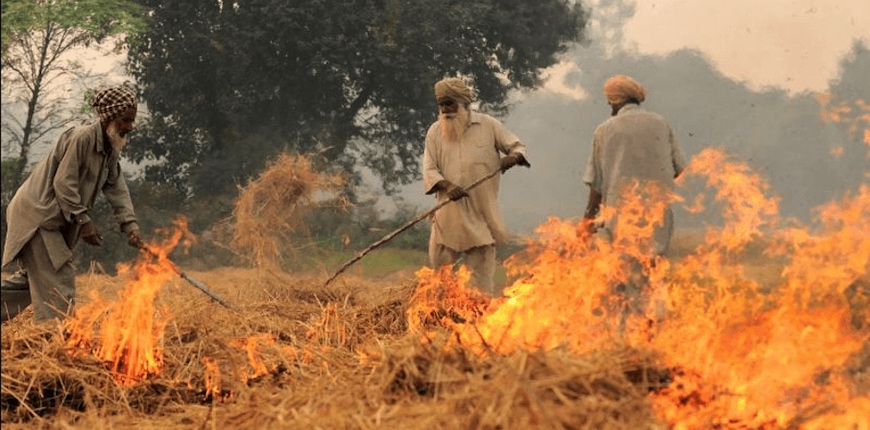
Across Israel on Sunday police clashed with ultra-Orthodox Jews who violated the coronavirus lockdown by opening up schools and religious seminaries. Also on Sunday, Brazilians took the streets to call for the impeachment of President Jair Bolsonaro over his handling of the coronavirus. On Monday, more violent anti-lockdown protests erupted in the Netherlands, resulting in more than a hundred arrests. In Poland, there were protests on Wednesday after the government announced that a near-total ban on abortion had gone into effect. In Greece, peaceful demonstrations were held in the two biggest cities on Thursday against proposed education reforms, defying a weeklong ban on protests due to the coronavirus. On the disputed border between India and China, it was reported that troops clashed and were injured on both sides. India’s army said there had been a “minor” incident that had been “resolved.” Also in India, a protest over farm reforms turned violent and over 200 people were detained.

Coronavirus Update:

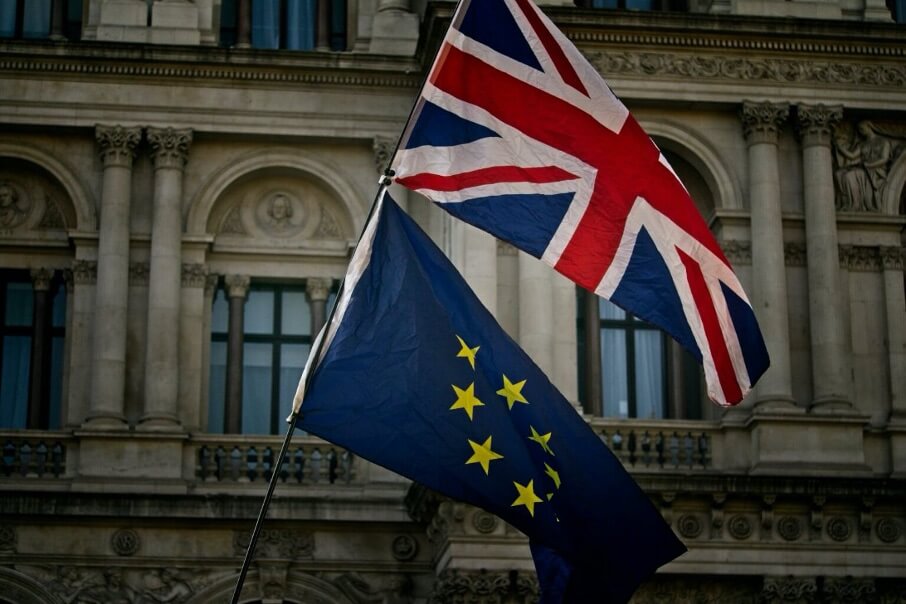
Amid a gap in vaccine access between low and high-income countries, Pfizer has announced that it will sell 40 million doses of its Covid-19 vaccine to Covax, the initiative organizing the purchase of vaccines for 92 lower-income countries. In the EU, vaccine rollout has been slow due to vaccine shortages. As a result, the EU is considering blocking the export of millions of doses of the coronavirus vaccine to Britain. One of the reasons for the shortage is that AstraZeneca says it is only able to deliver 25% of the 100 million doses that were promised by March, which has caused public tensions between the company and the EU. In Vietnam, local transmission was reported for the first time in two months.
 

The United States:

President Joe Biden has continued to sign executive actions including, eliminating the use of private prisons, lifting the Muslim ban on immigration, and initiating regulatory actions to combat climate change. Biden and his administration plan to continue making steps towards curbing the coronavirus pandemic, climate change, economic change, health care action (especially with the Affordable Care Act), and immigration. The House Walked Donald Trump’s impeachment bill to the Senate on Monday evening and the official trial will begin on February 9th. In other news, Wall Street is under immense pressure as the Dow Jones Industrial Average fell over 2%. The online trader forum Robin Hood is also under pressure from the public and lawmakers, such as Rep, Alexandria Ocasio-Cortez, and Sen. Ted Cruz, as they curb trading.
 

China:

Lai Xiaomin, the former head of Chinese state-owned asset management company China Huarong Asset Management Company, was executed this week on bribery charges, an unusually severe penalty for a corruption case. Mr. Xiaomin was one among thousands of officials caught up in a long-running anti-graft campaign championed by Chinese President Xi Jinping.  In other news, Indian and Chinese soldiers clashed along the disputed Himalayan border this week. Details surrounding the skirmish remain scant, but reports indicate injuries on both sides. Since this summer, both China and India have sought to ease tensions, but an estimated 100,000 troops remain on opposite sides of the border.
Hong Kong:

The Chinese government announced this week that it would no longer recognize the British National Overseas (BNO) passport as a valid travel document or form of identification. The move came just hours after the United Kingdom announced that it would begin taking applications for BNO visas, which could permit an estimated 5.4 million Hong Kong citizens to be eligible to live and work in the United Kingdom for five years and then apply for citizenship. The United Kingdom claims that Beijing’s imposition of new, restrictive national security measures in Hong Kong breaches the terms of the 1997 agreement which saw Hong Kong switch from British to Chinese control.
 

Zimbabwe:

Prominent journalist and government critic Hopewell Chin’ono, who was accused of publishing falsehoods on Twitter, was granted bail this week. One of the bail conditions being required by the court is that Chin’ono stop using his Twitter account to “incite the holding of mass demonstrations.” Also in Zimbabwe, there has been controversy over remarks made by Nick Mangwana, a spokesman for the government. He suggested that the recent deaths of four cabinet members due to COVID-19 were carried out by “political activists hiding behind medical qualifications,” who he deemed “medical assassins.” Mangwana has since apologized for his comments, but the conspiracy theory continues to spread.  
Cuba:

Amid the Covid-19 uptick in the country, the new South African variant has been detected in Cuba. This comes as the country announces its high hopes for their Sovereign II vaccine as it enters the second round of human trials. In other news, tensions continue to grow between the government and the art community. A group of young Cuban artists gathered in from of the ministry on Wednesday but were pushed away by a large crowd. They said they were violently removed at the crowd was led by the minister himself. The crowd was forced onto a bus and taken to a police station but was later released. It is clear that despite agreeing to negotiations, the government has no intention of making a deal with the artists right now.  
Iraq:

A joint U.S.-Iraqi military strike killed the top ISIS leader in Iraq, Abu Yasir al-Issawi, during an air-and-ground operation in the northern Iraqi city of Kirkuk. The strike, which killed ten ISIS fighters in all, came less than a week after ISIS carried out its worst attack on civilians in Iraq in years, a double suicide bombing in Baghdad which killed 32. In other news, a senior Catholic cleric announced this week that Pope Francis would meet top Shia religious leader Grand Ayatollah Ali al-Sistani during the first ever papal visit to Iraq in March 2021. Louis Sako, the patriarch of Iraq’s Chaldean Catholic Church, said that he hoped Pope Francis and Grand Ayatollah al-Sistani would sign the document on “human fraternity for world peace,” an interreligious text condemning “extremism” which Pope Francis signed with the leading Sunni scholar Sheikh Ahmed al-Tayeb in 2019.
Georgia:

The 10 opposition parties in Georgia are asking the ruling party, Georgia Dream (GD), to continue negotiations mediated by foreign ambassadors. The opposition parties are calling for repeat elections, the release of ‘political prisoners’ and for reform of the electoral system and election administration. The talks were stalled after the chairperson of GD announced legislation designed to suspend state funding to the opposition. Only four of 60 opposition MP’s are currently in parliament and 51 MP’s have requested that parliament suspend their MP status. In other news, there have been protests in Tbilisi over the government’s decision to extend the COVID-19 restrictions through March.
Iran:

Since Monday, January 25, 2021, Iran-based Signal users have reported that the messaging service has been shut down. Signal has been a preferred messaging platform by many citizens due to its encrypted communication compared to other counterparts. Last January 14, Signal was ordered to be removed from Iran’s mobile app store. This is not the first time Signal was targeted by Iranian authorities. Given that there are no official grounds to block the application, the messaging service was quietly unblocked in 2017. Today, the two remaining applications that are free to use by Iranians are Instagram and WhatsApp. Activists fear that the Iranian government may have access to their communications given that there has not been a ban for those platforms.
 

Indonesia:

Hundreds of Rohingya at a refugee camp in Aceh are believed to have been trafficked, according to local officials. Local authorities and the UN have not been able to identify the whereabouts of over 200 refugees. Since the refugees arrived in Indonesia, they have been advised to not leave the camp due to the dangers in fleeing. Human rights groups are putting the blame on the Indonesian government for reducing the security at the refugee camp. The director of Amnesty International’s Indonesia office, Usman Hamid, said that the move to reduce security is still a breach of its obligations to protect the refugees even if they are not a signatory to the international convention of refugees.
Thailand:

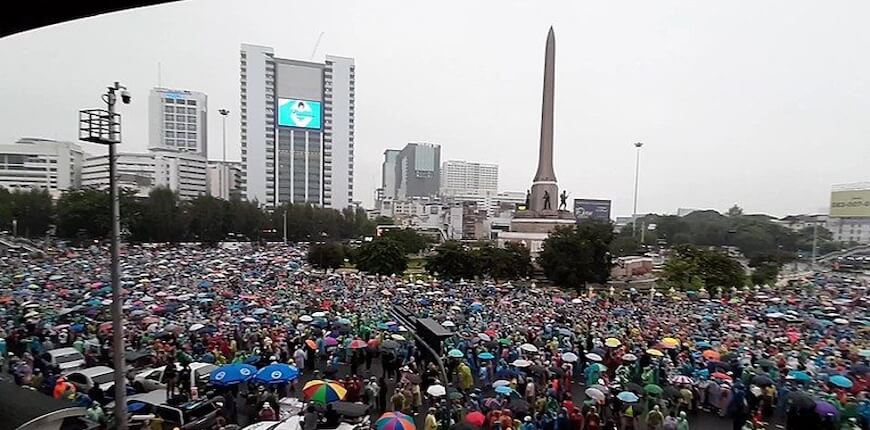
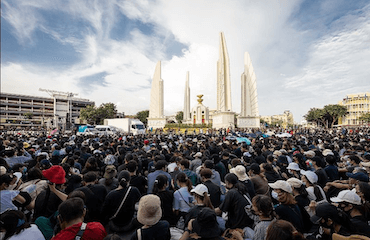
Pro-democracy protests continue in Thailand despite the coronavirus pandemic. While larger rallies have been rare, protestors have been utilizing guerilla-like protest tactics and smaller-scale events to call changes for Thailand’s lese majeste law. As the political tensions in Thailand rise, scholars believe that the pro-democracy movement will only continue to be stronger from here.


Nicaragua:

Two weeks ago, Nicaragua’s private television, Channel 12, was warned that its assets will be auctioned off for a tax relief of US$1.4 million dollars. When anti-government protests heightened in 2018, the channel was one of the media outlets that documented the turn of events. There are implications if the channel were to close, according to Tony Lopez, the legal representative of the channel, especially since that Channel 12 is one of the few critical media that openly denounce harassment and persecution.
Belarus:

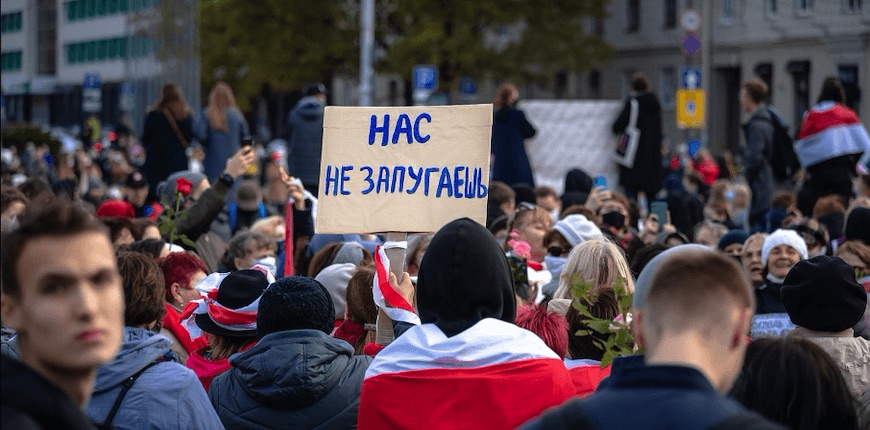
Belarusian opposition leader Sviatlana Tsikhanouskaya called upon the European Union and the United States this week to be “braver and stronger” in their response to helping end the disputed rule of Belarusian President Alexander Lukashenko. Tsikhanouskaya, speaking at an online event with multiple European Union foreign ministers, exhorted the E.U. to speed up approval of a fourth package of sanctions targeting Lukashenko supporters. In other news, lawyers for opposition figure Viktar Babaryka announced this week that the corruption case against Mr. Babaryka would be heard directly by Belarus’s Supreme Court, a move which takes away any chance of lawyers appealing the verdict. Babaryka, a former banker, was once seen as a potential challenger to Alexander Lukashenko before being jailed on corruption charges.
Sudan:

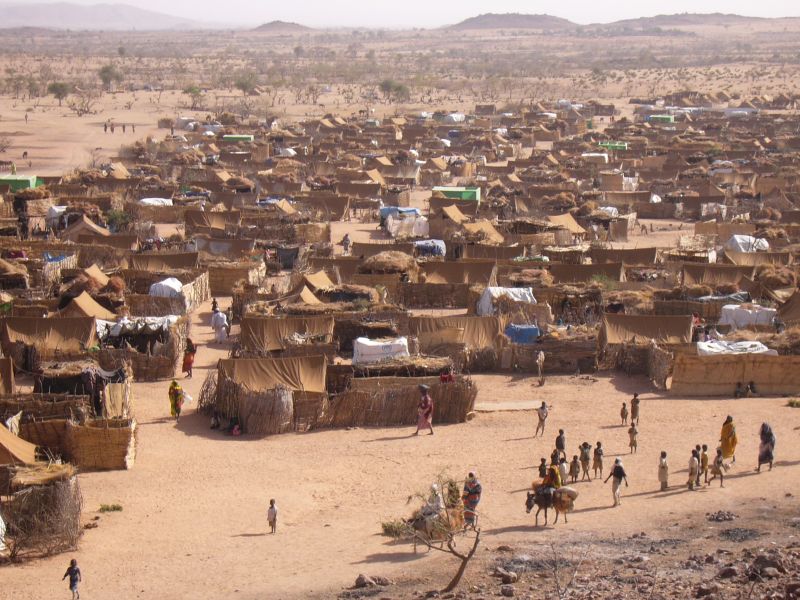
Tension on the Sudan Ethiopia border has continued to increase this week. Ethiopia believes that the conflict was started by an unnamed third party and urges Sudan to work with them to peacefully end the conflict. However, Sudan has recently announced their claim to territories that have been under Ethiopian control for the last 25 years. Sudan has stated that it will not cede any of the recaptured territories and urges its citizens to join in the fight of protecting its borders. The death toll in the Darfur region continues to increase as leaders from the UN and other nations urge the Sudanese government to gain control and bring an end to the conflict. In other news, the Israeli intelligence minister has visited Sudan to discuss maintaining their agreement to normalize ties. This was agreed upon last year in an agreement with the United States when Sudan was taken off its terrorist watch list.
Bolivia:

On January 29th, the first 10 health professionals in Bolivia were vaccinated against Covid-19 with the Sputnik V immunization. This occurred in the department of Santa Cruz, as they are the most affected by the pandemic, with the presence of President Luis Arce. They have received 4,400 doses of the vaccine. The delivery of these vaccines into Bolivia has made people hopeful for the future and the fight against Covid-19. In other news, the Supreme Electoral Tribunal has enabled 698 radio, television, and digital and print media platforms to broadcast propaganda for the subnational elections in March. There are more than 7.1 million people authorized to vote in these subnational elections on March 7th.
CANVAS Weekly Update – January 22nd, 2021

Dear friends,

CANVAS is pleased to bring you another weekly report! This week covers the indictment of 12 Hong Kong protesters, internet crackdowns in Thailand, escalating protests in Kurdistan, and EU sanctions on Belarus.

Conflict Update:

In Uganda, President Yoweri Museveni has won a sixth term, despite election controversies. Opposition leader Bobi Wine remains under house arrest with authorities citing his presence in public a threat to public safety. As of Tuesday, there is an indefinite ban on social media, which has been restricted in the country since elections took place last week. In Ethiopia, there have been reports of extreme sexual violence in the Tigray region, which has been embroiled in a civil war since November. Information is limited because phone networks are down and the government has barred reporters from entering the region. On Wednesday, a reporter in the region was shot. Aid agencies estimate that between 2 and 4.5 million people are in need of assistance but the government has stalled the delivery of 450 tons of supplies. In Russia, prominent opposition leader Aleksei Navalny was arrested on Sunday upon his return to the country. In the wake of his arrest, the team led by Navalny has published a video detailing an investigation into one of Putin’s residences which claims the estate has a value of over $1 billion USD. The Kremlin has denied the report. Navalny’s allies have planned demonstrations in 65 cities on Saturday, which prosecutors have warned against, calling them “illegal,” and prosecutors are demanding a ban on sites where protests are being organized. As of Friday, Russian authorities have detained five of Navalny’s aides.

Coronavirus Update:

The world has surpassed 2 million Covid-19 deaths, with the highest number of deaths in the US and Brazil. In Brazil, where two new variants have been detected, vaccinations have begun, although rollout is expected to be slow. Concerns over “vaccine hoarding” continue as it is revealed that 39 million doses have been distributed across 49 wealthier countries, compared to just 25 doses distributed across Guinea, the only low-income country to have received vaccines. In other news, new studies have raised concerns that some variants of COVID-19 may make vaccines less effective.

The United States:

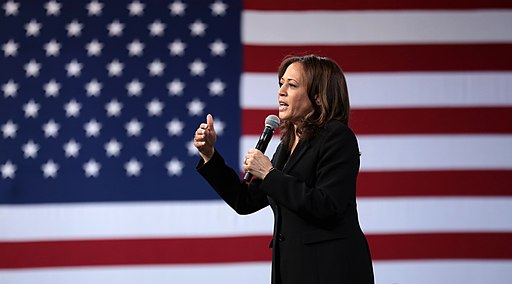
Joe Biden and Kamala Harris have been sworn in as the 46th President of the United States and 49th Vice President of the United States, respectively. This came just hours after the United States reached 400,000 Covid-19 deaths as the virus claims more lives than any other condition. Kamala Harris is breaking history by becoming the first woman vice president, the first South Asian vice president, and the first Black woman vice president that the United States has seen. In his first 100 days in office, Biden plans to help curb the Covid-19 pandemic, provide economic relief to Americans, and combat the joint challenge of climate change and racial justice. On his first day in office the President signed multiple executive orders, many of which reversed Donald Trump’s previous orders. The list of executive orders includes, mandating masks to be worn on federal property, the boosting of federal support for underserved communities, a revision of regulations and policies in federal agencies that prohibit sex discimination to include sexual orientation and identity, and the rejoining of the Paris Climate Agreement, among many other actions. These actions are just the beginning of the changes that Biden and his administration will be making over the next 100 days and the rest of his term.  

China:

A day before Joe Biden was sworn in as the next U.S. President, the U.S. State Department officially accused the Chinese government of committing genocide against the Uighurs and other minority groups in Xinjiang. In other news, China imposed sanctions on 28 former Trump Administration officials, including former Secretary of State Mike Pompeo. A statement released just minutes after President Biden took office in the United States, China’s foreign ministry released a statement which described China’s decision to impose sanctions on those “who have seriously violated China’s sovereignty and who have been mainly responsible for U.S. moves on China-related issues.” Sanctions bar these individuals from entering Mainland China, Hong Kong, or Macau, as well as prohibiting them from doing any business with Chinese companies.  

Hong Kong:

Hong Kong is placing tens of thousands of residents in the Jordan and Sham Shui Po districts in a lock down to contain the spread of a new Covid-19 outbreak in the Chinese city-state. These are the first lock down measures that Hong Kong has taken since the beginning of the Covid-19 Pandemic last year. In other news, pro-China lawmakers are pushing for surveillance cameras to be installed in classrooms to monitor teachers’ speech. After last year’s mass resignation of opposition politicians, pro-Beijing lawmakers now dominate Hong Kong’s Legislative Council. Two independent members of the chamber voted no on the surveillance measures.  

Zimbabwe:

Foreign minister Sibusiso Busi Moyo and Transport Minister Joel Biggie Matiza have died from COVID-19, now four top ranking Zimbabwe officials have died from the virus. In other news, the clergy have stated they wish to have Personal Protective Equipment as they perform their national duties.  

Iraq:

Two suicide bombings at a market in the Iraqi capital of Baghdad killed at least 32 and injured at least 110 this week. ISIS claimed responsibility for the attack. This was the first ISIS suicide bombing in Baghdad since 2017, and many blast walls and check points have been removed since ISIS was dislodged from the country by Iraqi forces and the U.S.-led coalition. In other news, Turkish President Recep Tayyip Erdogan announced that Turkey may conduct a joint counter-terrorism operation with Iraq against the Kurdistan Workers’ Party (PKK) in Sinjar. The PKK gained a foothold in Sinjar in 2014 claiming that they were there to protect the local Yazidi community from ISIS attacks. Turkey has labled the PKK a terrorist organization.

Georgia:

Russian occupation forces have detained three Georgians in Tbilisi-controlled territory. The State Security office has deemed the act an “purposeful provocation.”  In other news, Anatoly Bibilov, the leader of the de facto state South Ossetia, also known as the Tkhivali region, has appointed Erik Pukhaev to the position of state advisor to the “president.” Pukhaev resigned from the position of “prime minister” in August of 2020 over the controversial death of an inmate and the ensuing protests.  

Iran:

Mohammad Javad Zarif, Iran’s top diplomat, has welcomed Qatar’s call on engaging in a dialogue between Gulf states and the Islamic Republic. He emphasized the need for them to collaborate in forming a stronger region, free from global or regional hegemony. Qatar and Iran appear to be hopeful in restoring the balance in their region and ensuring peace and stability for their citizens.  

Indonesia:

Last Friday, January 15, 2021, a 6.2-magnitude earthquake struck the island of Sulawesi in Indonesia. As of January 19, 2021, 84 people were found dead, hundreds are injured, dozens are still missing, and over 19,000 people are left homeless. Rescue efforts continued as the toll rose, and doctors had no choice but to create makeshift centers to treat injured patients. Survivors of the earthquake are currently seeking refuge in the hills but are running short of food, water, and other necessities. Authorities are also busy separating the camp into high and low-risk groups to prevent a COVID-19 outbreak.  

Thailand:

Pro-democracy protesters spent their Friday outside the Commerce Ministry to demand the Thai government to focus on the second wave of COVID-19. Protestors demanded the government to cut down military spending to aid victims of the pandemic. One of the concerns they raised was the redistribution of the budget to import vaccines and equally distribute to stabilize the economy. The group also called on the government to reduce utility bills for at least three months to prevent citizens from falling into debt. There was no response from the government as of today. In other news, a 63-year-old former civil servant, Anchan, has been jailed for 43 years for criticizing the royal family under Thailand’s lèse-majesté law. The law has been noted as one of the strictest in the world, which forbids any insult to the monarchy. Anchan said that she merely shared audio files and did not comment on any of the content. She pleaded guilty, which cut her initial 87-year sentence in half.  

Cuba:

Havana has gone back into lockdown as the island is seeing a rise in cases. There have been record breaking numbers in cases, over 1,500 in a week, and multiple deaths. Sporting events, cultural events, and schools have all been closed again after the country was open for 2 months since they decided to open their borders again mid-November. That decision was made to attract tourists, a vital part of their economy, but the numbers of Covid-19 cases have only been on the rise. In other news, Cuban officials are hopeful that with Biden becoming the new President of The United States, more Obama-era policies will come into place, as will the reopening of the US Embassy in Havana.  

Nicaragua:

On Monday, January 18, 2021, Nicaragua’s congress gave its final approval to President Daniel Ortega’s proposal to permit life imprisonment. Opposition legislators expressed their concerns on the dangers in the application of the law as a means to punish any Nicaraguan citizen. While the opposition voted against the proposal, the ruling government still garnered enough support from congress and three million signatures from their supporters.  

Belarus:

A 35-year-old man lit himself on fire outside the government headquarters in the Belarusian capital of Minsk this week. The reasons behind the man’s actions were not immediately clear. Belarus has been engulfed in unrest since an election last year which the opposition says was rigged in favor of incumbent President Alexander Lukashenko. In other news, a Belarusian court in Minsk upheld an extension of the pretrial detention of opposition leader Maryya Kalesnikava, who was arrested in September 2020. Kalesnikava faces national security-related charges after she urged people to protest the disputed election results.  

Sudan:

A State of Emergency and curfew have been placed on Sudan’s Darfur region after violence broke out. Just weeks after UN and African Union peacekeepers left the area after over 13 years based on a withdrawal plan that had been signed by multiple rebel groups and the transitional government, violence occurred again. The western city of El Geneina and a nearby refugee camp for internally displaced people were the center of the attacks. Over 80 people were killed and many more were wounded, over 50,000 people were displaced from the camp and surrounding villages. The situation in the region is currently extremely delicate and the new curfew has made the work of many doctors difficult, causing many hospitals to struggle and more deaths.  

Bolivia:

Since last week, many of the municipalities with the highest number of coronavirus cases have doubled. The government is encouraging the population in the municipalities from high risk to low risk to continue with the containment and distancing measures in place. In other news, the Supreme Electoral Tribunal (TSE) has declared the validity of last year’s elections and has invited and encouraged the political parties to respect Covid-19 precautions, engage in honest debate, and accept the results as well. When it is signed, the document will also call for the continuation of virtual events when discussing the government plan and other major topics.

Foreign minister Sibusiso Busi Moyo and Transport Minister Joel Biggie Matiza have died from COVID-19, now four top ranking Zimbabwe officials have died from the virus. In other news, the clergy have stated they wish to have Personal Protective Equipment as they perform their national duties.  

Iraq:

Two suicide bombings at a market in the Iraqi capital of Baghdad killed at least 32 and injured at least 110 this week. ISIS claimed responsibility for the attack. This was the first ISIS suicide bombing in Baghdad since 2017, and many blast walls and check points have been removed since ISIS was dislodged from the country by Iraqi forces and the U.S.-led coalition. In other news, Turkish President Recep Tayyip Erdogan announced that Turkey may conduct a joint counter-terrorism operation with Iraq against the Kurdistan Workers’ Party (PKK) in Sinjar. The PKK gained a foothold in Sinjar in 2014 claiming that they were there to protect the local Yazidi community from ISIS attacks. Turkey has labled the PKK a terrorist organization.

Georgia:

Russian occupation forces have detained three Georgians in Tbilisi-controlled territory. The State Security office has deemed the act an “purposeful provocation.”  In other news, Anatoly Bibilov, the leader of the de facto state South Ossetia, also known as the Tkhivali region, has appointed Erik Pukhaev to the position of state advisor to the “president.” Pukhaev resigned from the position of “prime minister” in August of 2020 over the controversial death of an inmate and the ensuing protests.  

Iran:

Mohammad Javad Zarif, Iran’s top diplomat, has welcomed Qatar’s call on engaging in a dialogue between Gulf states and the Islamic Republic. He emphasized the need for them to collaborate in forming a stronger region, free from global or regional hegemony. Qatar and Iran appear to be hopeful in restoring the balance in their region and ensuring peace and stability for their citizens.  

Indonesia:

Last Friday, January 15, 2021, a 6.2-magnitude earthquake struck the island of Sulawesi in Indonesia. As of January 19, 2021, 84 people were found dead, hundreds are injured, dozens are still missing, and over 19,000 people are left homeless. Rescue efforts continued as the toll rose, and doctors had no choice but to create makeshift centers to treat injured patients. Survivors of the earthquake are currently seeking refuge in the hills but are running short of food, water, and other necessities. Authorities are also busy separating the camp into high and low-risk groups to prevent a COVID-19 outbreak.  

Thailand:

Pro-democracy protesters spent their Friday outside the Commerce Ministry to demand the Thai government to focus on the second wave of COVID-19. Protestors demanded the government to cut down military spending to aid victims of the pandemic. One of the concerns they raised was the redistribution of the budget to import vaccines and equally distribute to stabilize the economy. The group also called on the government to reduce utility bills for at least three months to prevent citizens from falling into debt. There was no response from the government as of today. In other news, a 63-year-old former civil servant, Anchan, has been jailed for 43 years for criticizing the royal family under Thailand’s lèse-majesté law. The law has been noted as one of the strictest in the world, which forbids any insult to the monarchy. Anchan said that she merely shared audio files and did not comment on any of the content. She pleaded guilty, which cut her initial 87-year sentence in half.  

Cuba:

Havana has gone back into lockdown as the island is seeing a rise in cases. There have been record breaking numbers in cases, over 1,500 in a week, and multiple deaths. Sporting events, cultural events, and schools have all been closed again after the country was open for 2 months since they decided to open their borders again mid-November. That decision was made to attract tourists, a vital part of their economy, but the numbers of Covid-19 cases have only been on the rise. In other news, Cuban officials are hopeful that with Biden becoming the new President of The United States, more Obama-era policies will come into place, as will the reopening of the US Embassy in Havana.  

Nicaragua:

On Monday, January 18, 2021, Nicaragua’s congress gave its final approval to President Daniel Ortega’s proposal to permit life imprisonment. Opposition legislators expressed their concerns on the dangers in the application of the law as a means to punish any Nicaraguan citizen. While the opposition voted against the proposal, the ruling government still garnered enough support from congress and three million signatures from their supporters.  

Belarus:

A 35-year-old man lit himself on fire outside the government headquarters in the Belarusian capital of Minsk this week. The reasons behind the man’s actions were not immediately clear. Belarus has been engulfed in unrest since an election last year which the opposition says was rigged in favor of incumbent President Alexander Lukashenko. In other news, a Belarusian court in Minsk upheld an extension of the pretrial detention of opposition leader Maryya Kalesnikava, who was arrested in September 2020. Kalesnikava faces national security-related charges after she urged people to protest the disputed election results.  

Sudan:

A State of Emergency and curfew have been placed on Sudan’s Darfur region after violence broke out. Just weeks after UN and African Union peacekeepers left the area after over 13 years based on a withdrawal plan that had been signed by multiple rebel groups and the transitional government, violence occurred again. The western city of El Geneina and a nearby refugee camp for internally displaced people were the center of the attacks. Over 80 people were killed and many more were wounded, over 50,000 people were displaced from the camp and surrounding villages. The situation in the region is currently extremely delicate and the new curfew has made the work of many doctors difficult, causing many hospitals to struggle and more deaths.  

Bolivia:

Since last week, many of the municipalities with the highest number of coronavirus cases have doubled. The government is encouraging the population in the municipalities from high risk to low risk to continue with the containment and distancing measures in place. In other news, the Supreme Electoral Tribunal (TSE) has declared the validity of last year’s elections and has invited and encouraged the political parties to respect Covid-19 precautions, engage in honest debate, and accept the results as well. When it is signed, the document will also call for the continuation of virtual events when discussing the government plan and other major topics.

CANVAS Weekly Update – January 15th, 2021

Dear friends,

CANVAS is pleased to bring you another weekly report! This week covers elections in Uganda, the storming of the U.S. Capitol, arrests in Zimbabwe, and tensions on the Sudanese – Ethiopian border.

Conflict Update:

In Brussels, protests over the death of a young Black man who died in police custody turned violent and 116 people were arrested, including 30 minors. According to police, demonstrators set fires, damaged police vehicles, threw projectiles, smashed a window and door to a police station and injured several officers. Four people remain in custody and two of them are minors. In Uganda, elections took place on 14th January despite the UN secretary general’s concern regarding reports of violence and tension in parts of the country preceding the election. The government ordered internet service providers to block access to social media two days ahead of the election, which opposition leader Bobi Wine alleges is part of a campaign of mass fraud. Wine also made claims on 15th January that his residence is “under siege” by the military. Reporters attempting to visit Wine’s home for a press conference were turned back by security forces. Journalists have also been forcibly removed from the national election tally center and according to Wine, the majority of his polling agents across the country were prevented by police from observing the election despite the fact that under Ugandan law, every candidate is granted representation at polling locations. North Korea has unveiled a new type of submarine-launched ballistic missile. The weapons capabilities remain unclear due to a lack of testing. Coronavirus Update: There is growing concern over three new variants of COVID-19. One mutation believed to have originated in South Africa has been deemed more contagious. It has spread to over 20 countries. Another variant, discovered in the United Kingdom, also considered to be more contagious, has sent the country into a lockdown. The UK variant is believed to have spread to 50 countries as of Friday. The last variant of concern has been discovered in Brazil, where it has been linked to a rapid increase in cases. There are reports of severe oxygen shortages in the country. Vaccine rollout has been slow in many of the 50 countries in the process of distribution. It is difficult to determine whether infrastructure or supply limitations are at fault. There are serious concerns that lower income countries have not received the vaccine due to a prioritization of higher income countries.


The United States:

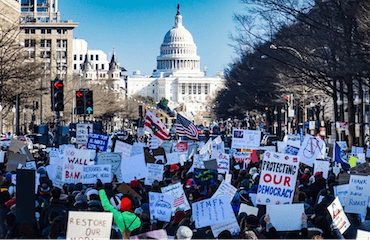
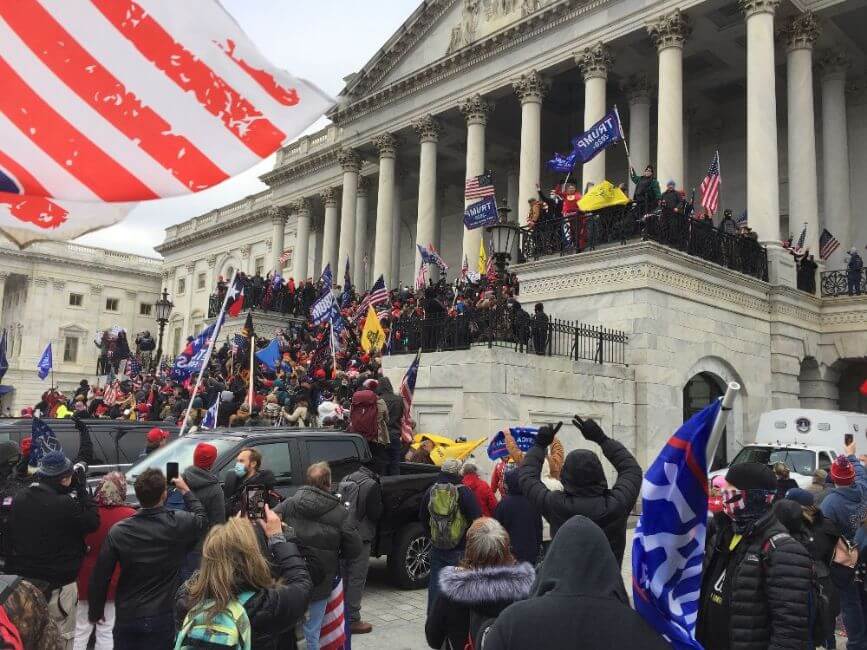
On January 6th the Electoral College was counting the vote to approve President Elect Biden as the 46th President of the United States was taking place in a joint session of Congress. Supporters of President Trump were gathered in Washington to support his claim that the election had been taken from him. The “Save America” rally was going on as President Trump encouraged the group to travel to the Capitol to continue protesting the election. In the middle of the joint session, the rioters traveled to and stormed the capitol building, supporting Trump’s wishes. The only known group of the riots is, The Proud Boys, who come from multiple different states, but it is evident that they were all white supremacists. This event caused multiple deaths, including of a police officer, and destruction to the Capitol building. Both chambers of congress were evacuated until capitol Police and The National Guard were able to gain back control. The House then impeached Trump this week with the support of some.


China:

Two members of a World Health Organization (W.H.O.) team were denied entry into China last week after testing positive for coronavirus antibodies in Singapore. China has repeatedly delayed giving its approval to the W.H.O to begin investigating the origins of the Covid-19 Pandemic in Wuhan; Beijing has demanded that Chinese scientists oversee crucial parts of the inquiry and has also limited the W.H.O.’s access to research and data. In other news, the Trump Administration added Chinese smartphone maker Xiaomi to a blacklist of alleged Chinese military companies; Xiaomi was the world’s third largest smartphone manufacturer in the third quarter of 2020.


Hong Kong:

Lu Siwei, a Chinese lawyer who represented one of the twelve Hong Kong activists who attempted to flee to Taiwan last year, had his license revoked by the Sichuan Provincial Justice Department this week. Ren Quanniu, another lawyer representing the activists, was notified by the Zhenzhou office of the Henan Justice Department that he, too, could lose his license for posting comments online that had “a negative impact on security.” In other news, the Chinese government informed Hong Kong’s 180,000 civil servants that they must sign a document pledging their loyalty to Hong Kong’s constitution and government within four weeks.


Zimbabwe:

Zimbabwean journalist and government critic Hopewell Chin’ono has been arrested for the third time in five months. His most recent charge is for “communicating falsehoods,” after he tweeted that police beat an infant to death while enforcing COVIfD-19 lockdowns. Police deny this claim. Before his most recent arrest, Chin’ono was out on bail on two charges. In addition to Chin’ono, the deputy national chairperson of the main opposition party, the Movement for Democratic Change Alliance (MDCA), Job Sikhala, and MDCAs spokeswoman, Fadzayi Mahere, have been arrested under the same charge. Sikhala is also charged with inciting Zimbabweans to revolt against President Mnangagwa’s administration. Chin’ono claims the latest charge falls under an “unconstitutional” law and lawyers have supported his claim after determining that the criminal code cited by prosecutors was struck down by the Supreme Court in 2014 for being “unfair.” Those who support Chin’ono claim that he is being targeted for exposing government corruption. The ruling party are accusing him of being out to tarnish Mnangagwa’s image. As of Wednesday, Chin’ono has been denied bail. In other news, MDCA has rejected claims that they received funding from South African president Cyril Ramaphosa. There is growing belief in Zanu PF that Ramaphosa has been secretly funding the leader of MDCA, Nelson Chamisa. The MDCA says the claims are an effort to “derail the people’s movement.” Chamisa has accused the administration of President Mnangagwa of systematically dismantling the MDCA’s operations by denying it access to political funding, recalling it’s councillors and MP’s from office as well as through use of the courts.


Iraq:

The United States announced sanctions against Falih al-Fayyadh, the leader of Iraq’s Hashd al-Shaabi paramilitary force, accusing him of committing multiple human rights violations during anti-corruption protests in late 2019. The U.S. Treasury Department said in a statement that al-Fayyadh was part of a “crisis cell” supported by Iran’s Islamic Revolutionary Guard Corps, designated as a terrorist organization by the United States. Further, an Iraqi court issued an arrest warrant for American President Donald Trump over a drone strike which killed Abu Mahdi al-Muhandis, a top paramilitary commander who was killed in the same airstrike that killed Iranian general Qasem Soleimani last year.


Iran:

The Iranian Navy recently inducted their largest military vessel during a two-day maritime missile drill in the Sea of Oman. The ship called I.R.I.N.S Makran, is said to be able to carry up to five helicopters and also joined a fleet with another ship that can fire missiles. Admiral Hamzeh Ali Kaviani, the spokesman for the drill, said that the drill will allow them to evaluate their ability to respond to potential threats in a timely manner. He notes that this two-day drill will help them address their weaknesses and boost their strengths. With heightened tensions between the US and Iran, Iran’s continued development of missiles and nuclear weapons continue to draw sharp reactions from not only the US but also the European Union. In other news, the country has formally prohibited imports of the COVID-19 vaccine from the United States and the United Kingdom. Instead, the government is trying to secure 16.8 M doses of the vaccines developed by COVAX, which operates under the World Health Organization. Another initiative they have taken is launching human trials last December of the Iran Barekat.


Indonesia:

Sriwijaya Air Boeing 737-500 crashed into the sea shortly after taking off on January 9, 2021 from Jakarta. The plane had 62 people on board, 50 of them were passengers and 12 were crew members. After search and rescue efforts, there were no survivors found in the crash. Human remains and plane debris were located to the north of Jakarta, such as passengers’ clothing and body parts, as well as the engine turbine. Currently, the search crew is in the process of retrieving one of the two block boxes that would be able to provide crucial information on the air accident. Black boxes are recorders that store general flight and cockpit data. Investigations are taking place to retrieve data on the flight data. Experts on the ground have noted that this stage of investigations could take up to a year.


Thailand:

Nineteen Rohingya persons and a Thai woman were arrested on Sunday, January 10 for illegal entry to Thailand. The Thai woman arrested was accused of housing the Rohingya persons in Bangkok’s Don Mueang district. An immigration found that the group was smuggled into the country and was initially bound for Malaysia. Police believe this may be part of a bigger smuggling incident, and are currently conducting investigations. In other news, tensions continue to grow on Thailand’s pro-democracy protests. Two weeks ago, more than 50 people were injured in a protest near the parliament. Authorities continue to hold Section 112 on protestors, which states that royal defamation may lead up to 15 years in prison. Demonstrators continue to remain firm on their stances on calling for Prime Minister Prayut Chan-O-Cha to step down and constitutional changes for monarchy reform.


Nicaragua:

On December 21, 2020, The Nicaraguan Congress passed a law that prohibits “traitors” from running for or holding public office. The law broadly defines “traitors”, one of which being people who “damage the supreme interests of the nation”. This means that under the law, anyone who is deemed by the government to be leading or financing a coup, altering constitutional order, promoting or inciting terrorist acts, to name a few, is a traitor. This is punishable by up to 15 years of prison, and the said traitor may not run for public office. With the Nicaraguan election nearing soon in November 2021, human rights scholars and organizations such as the Human Rights Watch have been quick to condemn this legislation that threatens the country’s free and fair elections.


Belarus:

Belarusian president Alexander Lukashenko said that a new constitution for the country will be drafted by the end of 2021, which the government has lauded as a solution to the political crisis that has gripped the country since Lukashenko claimed victory in elections last August, the results of which were rejected by the opposition. In other news, Russian deputy Prime Minister Alexander Novak said last week that the export of Belarusian petroleum products via Russia may begin in 2021. Russia and Belarus have been discussing the export agreement since Lithuania imposed sanctions on Belarus last September.


Sudan:

Tensions between Sudan and its East African neighbor, Ethiopia, continue over border disputes. The Ethiopian foriegn ministry said Sudan armed forces pushed into their territory and Sudan continues to condemn the aggression by Ethiopia’s militias in the east. Multiple deaths have occured from this conflict that has been intensifying since last year. The US Treasury Secretary has announced that the US would aid Sudan with a $1.2bn loan to aid in clearing its loans to the World Bank. This comes just weeks after the US removed Sudan from its list of state sponsors of terrorism. The negotiations between Ethiopia, Egypt, and Sudan over the dispute of a dam on the River Nile have been halted again. The construction of the dam was completed in July of last year in the west of Ethiopia. Egypt is concerned that the dam will gravely affect its water supply and Ethiopia and Sudan have given statements that continue to blame the other.


Georgia:

Four members of the Georgian Parliament, who were previously members of the Alliance of Patriots party, have launched the European Socialists party (ES). The ES will be the first opposition party of the 10th convocation of the Gerogian Parliament because the remaining opposition parties are boycotting the legislature over claims of a “rigged election.” In other news, the chairmen of the Georgian Dream party (GD), Bidzina Ivanishvilli, has left the party for a second time. Ivanishvilli has cited age as the reason for his departure but those in opposition to the GD have suggested that his departure is an effort to avoid blame for the current situation regarding COVID-19 and the economy. Others claim his departure is only symbolic and that he will continue to exert his power privately.


Bolivia:

The Bolivian city of Sucre was hit by a sudden flash flood on January 5th. The flood lasted for about half an hour as some of the streets became rapidly flowing rivers. Police say that the floods killed at least 4 people, the most affected being around the city’s largest farmers market. Multiple vehicles were swept away and numerous merchants lost all of their goods. The residents are saying that the city should have done more to maintain its drain systems during the rainy season, as many of the drains were covered in garbage and debris. Russia has announced that they will be supplying Bolivia, among other nations, with the Sputnik V vaccine. This comes as hospitals in the country begin to overflow as COVID-19 surges in the nation as they are unequipped to handle the crisis.


Cuba:

The United States President, Donald Trump, and Secretary of State, Mike Pompeo, have added Cuba to the US terrorist watch list. The decision was made just 11 days before Trump was set to leave office and was readded because they have repeatedly provided support for acts of terrorism, including harboring Colombian rebel leaders and U.S. fugitives. The placement on this list will require a formal review which could take months, halting president-elect Biden’s efforts to build better relations between the two nations. In other news, the San Isidro protesters are continuing their efforts and receiving widespread support and attention through social media. The dialogue between the protestors and the government has continued to be silent.

CANVAS Weekly Update – December 18, 2020

Dear friends,

CANVAS is pleased to bring you another weekly report! This week covers the indictment of 12 Hong Kong protesters, internet crackdowns in Thailand, escalating protests in Kurdistan, and EU sanctions on Belarus. 

Conflict Update

Two weeks ahead of the official transition period ending, Brexit negotiations between Britain and the EU fail to make a breakthrough. South Korea introduces a ban on flying leaflets to North Korea, despite criticism that the government is prioritising close ties over freedom.

Coronavirus [UPDATE]


The United States has begun to distribute the first doses of the newly-approved Pfizer-BioNTech COVID-19 vaccine to healthcare workers across the country. The Moderna COVID-19 vaccine could be available for emergency use authorization as early as this weekend in the country, according to Dr. Anthony Fauci. The first cases of community transmission were recorded in Sydney, Australia this week since December 3rd, authorities sending a public health alert. Local authorities responded by canceling visits to elderly care homes and encouraging increased testing. Brazil announced a coronavirus vaccination rollout plan set to start in early 2021. 

  
The United States
 
The House of Representatives has yet again passed a stopgap 2-day spending bill to avert a government shutdown. On Sunday night the government must vote on a proposed $900 billion Covid relief package. Meanwhile, the Texas lawsuit filed with the Supreme Court seeking to overturn the election results has been rejected, including by the judges selected by Trump. In other news, the Department of Homeland Security announced findings that extensive Russian hacking campaigns are targeting the government and private companies.

 Hong Kong


A Shenzhen court indicted all but two of the twelve Hong Kongers who were arrested months ago for attempting an illegal sea crossing to Taiwan. These twelve citizens were the subject of the #Save12HKYouth campaign which gained widespread support after reports that they were “denied access to lawyers and abused while in Chinese custody.” Further opposition figures have been targeted by the legal system this week: Adam Ma was denied bail again while facing charges of secession for multiple counts of chanting independence slogans, and the Bank of China closed the account of one of the twelve Hong Kongers being held in Shenzhen for “administrative reasons.”

Belarus


The EU Commission approved a 24 million euro assistance package for Belarusian “civil society and independent media, students…youth professionals…small and medium-sized enterprises…[and] health capacities to respond to the COVID-19 pandemic.” Around the same time, the EU also implemented new sanctions on Belarusians involved in the ongoing crackdown on protesters, which continues to result in hundreds of civilian arrests every week. Meanwhile, the government continues to target human rights watchdogs: the courts added another two months to the pretrial detention of a coordinator for the Vyasna Human Rights Center, and police summoned the chairman of the Belarusian Journalists’ Association for questioning about “causing damage to national security.”

 Cuba

The US President-elect, Joe Biden, is set to begin normalizing US-Cuban relations by lifting certain sanctions imposed by the Trump administration, such as travel restriction and remittances. However, sanctions relating to Cuban Human Rights abuses are set to remain. In other news, dialogue between the San Isidro protesters and the government have fallen through, however, the unprecedented protest staged a few weeks ago continues to have its impact through its size and cross-cleavage support. The Cuban Catholic Church has waded in to call for dialogue while the protesters’ presence is stirring debate in the US surrounding the efficacy of sanctions. 

Zimbabwe
 

On Saturday, the police arrested 35 members of the opposition MDC Alliance Youth which assembled to launch their 1 million programmes. The Secretary-General of the alliance claims the mass arrests are in aid of the ruling political party, the police claim they arrested the youths for an unsanctioned gathering. Meanwhile, reports claim authorities are evicting families amidst the ongoing health and economic crises, and a UN World Food Program is requesting $204 to assist as food insecurity impacts 4 million Zimbabweans.

Indonesia


 Indonesian police have announced the capture of a senior member of the al-Qaeda militant group Jemaah Islamiah on Thursday. The detainee, Zulkarnaen, is one of the alleged masterminds of a series of bombings in Bali in 2002 which are known to have killed more than 202 people. In other news, the country has pledged free COVID-19 vaccines to its citizens, the president first in line to receive the vaccine. Unrelatedly, the country has lifted a ban on the use of seine and trawl nets, which marine conservationists have blamed for coral reef damage and overfishing. Critics of the new policy claim it will only benefit large-scale fisheries and contribute to depleting fish stocks in Indonesian waters.

China

The use of Uighur forced labour hits headlines as the European Union condemns the government’s use of arbitrary detainment. Meanwhile, software by Alibaba reportedly included facial recognition AI which had an algorithm identifying Uighurs., the company has since removed any ethnic tags. In other news, the US has blacklisted a series of Chinese companies while the US Navy sets out to be ‘more assertive’ against China.

Thailand 

This week, the Diplomat reported on a recent Thai crackdown on the use of the internet as an organizing tool. An important instrument in organizing under repressive governments, activists in Thailand have turned to the internet in the face of severe COVID-19 restrictions that limit activism. In other news, Thailand has relaxed travel restrictions for tourists from 56 countries in order to help stimulate the economy.
 

Iraq

Protests driven by economic frustration in the Sulaymaniyah province of Iraqi Kurdistan continue to escalate. Security forces fired tear gas on protesters while the government blocked internet access and prevented journalists from reporting on the demonstrations. Meanwhile in Baghdad, prominent activist Salah al-Iraqi was shot and died before making it to the hospital. The killers of this major figure in the 2019 anti-government protest movement remain unknown.

Iran

Iranian and world leaders met virtually this week to discuss the Joint Comprehensive Plan of Action (JCPoA) also known as the Iran Nuclear Deal. US President-Elect Joe Biden has expressed interest in rejoining the deal, following the country’s leaving in 2018 by current president Donald Trump. Iranian President Rouhani claimed the country would return to compliance with the JCPoA within an hour of the United States returning to the deal, given the US lifts the crippling sanctions on the country. However, relations between the two countries remain fraught, as Iran came under fire on Monday for the death of an ex- FBI agent in 2007.

Nicaragua


Prominent US political figures, including Senator Rubio, have come forward with an open letter responding to the Ortegas regime recent codification of press censorship. The letter criticises political harassment, restrictions on free speech and civil society, specifically calling for respect of independent media. In other news, a new report by the Arias Foundation for Peace and Human Progress has claimed 31% of Nicaraguan exiles in Costa Rica are accompanied by children in need of psychological support.

Sudan

After months of talks, Sudan was officially removed from the U.S. list of state sponsors of terrorism on Monday. Soon after, the World Bank and International Monetary Fund announced that the completion of this key step meant that the two organizations were ready to provide long-awaited financial assistance to Sudan. The country continues to face an influx of refugees from neighboring Ethiopia, prompting Prime Minister Abdalla to visit Ethiopia to discuss the conflict in Tigray and offer to “broker a ceasefire.” The latter offer was rejected. Days later, Abdalla confirmed that an unspecified number of Sudanese soldiers were killed by Ethiopian forces while conducting a security patrol near the border.

Bolivia

Bolivia has approved the first same-sex civil union following a two year battle. While the Bolivian constitution does not recognize same-sex marriages, the couple successfully managed to argue that the denial of a marriage license was a violation of international human rights standards. LGBTQA+ activists hope that this case will be the first in a series of steps to overhaul the country’s marriage laws. At a MAS political event this week, it has been reported on Twitter that a chair was thrown at the head of former president Evo Morales. The party has blamed right-wing instigators for the aggression.

CANVAS Weekly Update – December 5, 2020

Dear friends,

CANVAS is pleased to bring you another weekly report! This week covers ongoing protests in India, biological testing of soldiers in China, pressure on the Belarusian regime, and much more.

Conflict [UPDATE]


Ethiopian authorities claimed it had killed or captured rebel leaders in a mountainous region of the country bordering Eritrea, however the local rebel leaders in Tigray have countered that people are currently protesting against occupying soldiers that are looting civilian neighborhoods. The country has recently allowed humanitarian and aid workers access into the region, which many view as long-prevented and much-needed.
Mine workers in Peru from the Doe Run metallurgical plant have joined a group of striking farmworkers blocking major highways across the country in order to place pressure onto the country’s interim president, Francisco Sagasti.


In an effort to protest Indian Prime Minister Narenda Modi’s proposal to overhaul the state-run system in which many farms do business, many farmers have set their fields on fire. Knowing the implications for the air quality of cities like Delhi, these farmers burn their farms out of fear that produce prices will drop and corporations will take over their farms.
This week, Catholic-majority Argentina lit up with protests against a government-backed bill that would legalize abortion. This is the ninth abortion legalization bill to be introduced to the Argentine Parliament.

Coronavirus [UPDATE]


The global coronavirus death count lays around 1.5 million as the global case count has climbed to 64.91 million.
This week, the Wall Street Journal reported pharmaceutical company Pfizer was only able to roll out 50 million doses of a coronavirus vaccine, half the total number of doses they had projected to distribute by the end of the year. This caused its shares to drop nearly 2% by the end of the trading session last week.
Italy has imposed some of the strictest holiday rules in Europe, banning travel around the country in order to mitigate the spread of the coronavirus.

Cuba


The San Isidro Movement launched protests in Havana to demand the release of a jailed group member and rapper Denis Solís. The group of artists, intellectuals and journalists are critical of the communist’s encroachment of civil liberties, in particular freedom of expression. Following a statement by 300 artists and the risky protests staged in front of the Ministry of Culture, the artists secured a meeting with Fernando Rojas, the vice minister of culture. However, since then, authorities dispersed the protesters base in Old Havana, in which 6 protesters were on hunger strike, and state media is defaming the movement as US-backed imperialism. The movement is gaining support and is drawing international attention.

The United States

The House of Representatives passed a bill to decriminalise marijuana, which is considered a milestone for social justice movements. Trump and Giuliani continue their campaign to delegitimize the US election. However, Barr announced that the Justice Department uncovered no significant voter fraud and it has been revealed that Guiliani is seeking a presidential pardon. Meanwhile, Biden is preparing for office by urging action on the economy and Covid-19. The November employment report reveals 3.9 million people in long-term unemployment and the slump is disproportionately affected people of colour. Congress is divided over the stimulus packages, however, a bi-partisan group has detailed a $908 billion plan to move forward.

China


US Spy Chief, John Ratcliffe, is claiming that China has conducted biological testing in the People’s Liberation Army in an effort to genetically enhance its soldiers. Furthermore, he accused China of economic espionage and claimed China poses the largest global threat to freedom, to which the Chinese retorted that the US is entrenched with a Cold-War mindset. Meanwhile, Sino-Australian relations continue to deteriorate after a fabricated photo was tweeted depicting an Australian soldier threatening a child; this has drawn international criticism and calls for renewed dialogue between the spatting states. In other news, 23 people were trapped in a coal mine in Chongqing, due to an accident involving carbon monoxide. Finally, President Xi Jinping made remarks regarding China’s improved rates of absolute poverty, while outlining more work ahead.

Hong Kong

Prominent pro-democracy activist Joshua Wong was sentenced to 13 months in prison for violating the national security law by “organising and inciting others to join a 15-hour siege of police headquarters” last year. His fellow activists Agnes Chow Ting and Ivan Lam Long-ying were sentenced to 10 and 7 months in jail, respectively, on similar charges. The next day, pro-democracy media mogul Jimmy Lai was arrested on fraud charges. He has been denied bail and will be detained until his hearing in April after the court determined he would be a “flight risk.”

Indonesia

The intensity of Indonesia’s coronavirus outbreak has come to light following the death of a senior doctor and his wife on Wednesday due to the inability to find a ventilator to treat their severe COVID infections. This death has “raised alarm bells” in Indonesia, representing the intense overcrowding in Indonesian hospitals. This week, the Indonesian city of Medan was flooded due to torrential rain, forcing the evacuation of thousands of people and left over 2,700 homes flooded.

Zimbabwe

Flooding has hampered rescue efforts to save the 10-40 illegal miners trapped in the Ran Gold Mine in Bindura. The miner’s explosives hit a support pillar causing the shaft to collapse; so far only 6 have been rescued, 1 body has been retrieved, and the remaining are feared dead, trapped under water and rubble. Zimbabwe’s economy is in crisis; with high inflation and unemployment rates, exacerbated by Covid-19 lockdowns, Zimbabweans are increasingly turning to the dangerous trade of illegal gold mining. In other news, hundreds are stuck at border posts due to a lack of sufficient Covid-19 test certificates and other documentation, following the reopening of borders. At the Beitbridge border post, 622 people were refused entry in a single day, consequently, many families and traders are struggling to get home.

Flooding has hampered rescue efforts to save the 10-40 illegal miners trapped in the Ran Gold Mine in Bindura. The miner’s explosives hit a support pillar causing the shaft to collapse; so far only 6 have been rescued, 1 body has been retrieved, and the remaining are feared dead, trapped under water and rubble. Zimbabwe’s economy is in crisis; with high inflation and unemployment rates, exacerbated by Covid-19 lockdowns, Zimbabweans are increasingly turning to the dangerous trade of illegal gold mining. In other news, hundreds are stuck at border posts due to a lack of sufficient Covid-19 test certificates and other documentation, following the reopening of borders. At the Beitbridge border post, 622 people were refused entry in a single day, consequently, many families and traders are struggling to get home.

Belarus

The contested regime of President Lukashenko faced new sources of pressure from abroad this week. On Wednesday, Russian President Putin urged Lukashenko and the opposition to hold talks intended to resolve the current unrest. Soon after, the UN convened to review an independent report created by 16 OCSE countries that contained calls to “cancel the results of the elections of August 9…release political prisoners, ensure the safety of journalists, and refrain from limiting access to [the] internet.” The Belarusian opposition has simultaneously launched a lobbying effort to convince state prosecutors across Europe to investigate allegations that Belarus’ security forces have tortured detainees. In line with this, opposition leader Svetlana Tikhanovskaya announced this week that the movement planned to compile a “book of crimes” committed by the police during the past several months of protests.

Iraq

The U.S. recalled more than half of its diplomats from its embassy in Baghdad this week as tensions between the superpower and Iran rise. Unrest within Iraq itself continues. To the north, hundreds of government employees protested yet another delay in wages that were due to them two months ago. In Baghdad, similar numbers of university graduates have demonstrated against the lack of employment opportunities for their demographic. In the southern city of Nasriyah, thousands participated in the funeral march of a protester who died in clashes earlier in the week. Eight people have been killed in Nasriyah, along with several dozen injured, since the unrest began.

Thailand


Five people are facing charges of violating the Thai lese majeste law, including human rights lawyers and protest leaders. They are expected to report to the police by December 7th. Protest leaders see this as a sign: the monarchy is unwilling to listen to the people and feels seriously threatened by the ongoing anti-government pro-democracy movement. In other news, Thai king Maha Vajiralongkorn issued thousands of pardons this week in honor of his father’s birthday on Saturday. Among those being pardoned are political opponents, including those from the red-shirt protests of 2006.

Iran


Iranians took to the social media site Twitter this week in an outpouring of support for Vahid and Habib Afkari, recently arrested brothers of a professional Iranian wrestler that was hanged last year for speaking out against the government. Vahid and Habib were imprisoned for their involvement in demonstrations protesting against the regime in 2018. This week, Iran has rejected President-Elect Joe Biden’s terms for reconstituting a nuclear deal between the two countries. Iran’s foreign minister, Javas Zarif, has said that the US must strictly comply with their end of the 2015 nuclear programme before Iran would consider having talks with the global power. This comes amid a breach in treaty between Iran and multiple world powers that dictates the country should only have access to first-generation IR-1 centrifuges. Iran has told the International Atomic Energy Agency, a UN watchdog organization, that it has installed three advanced IR-2m machines in an underground bomb-resistant location in Natanz.

Nicaragua

A two-year report published by the Inter-American Commission for Human Rights (IACHR) details the human rights abuses against political protesters following April 2018. The testimonies of 266 people report arbitrary detention, dire prison conditions and (sexual) violence against political prisoners. The abuse was carried out by the National Police, however, parapolice and armed civilian groups also engaged in excessive violence. Meanwhile, Nicaragua continues to suffer the aftermath of Hurricanes Eta and Iota. The damages are set to contract the economy by 6%, and as an agriculture-dependent state, the risk of future extreme weather looms.

CANVAS Weekly Update – November 27, 2020

Dear friends,

CANVAS is pleased to bring you another weekly report! This week covers ongoing protests in Belarus, illegal gold mining in Zimbabwe, the arrest of government officials in Indonesia, and more.

Conflict Update:


In Ethiopia, the government is launching a military operation in the Tigray region where the TPLF party vows to keep fighting. The humanitarian impact could be massive as the regional capital Mekelle is home to 500,000 people. Furthermore, at least 54 civilians were massacred in the Oromia region by the Oromo Liberation Army (OLA).
In Taiwan, protests have erupted over the government’s decision to overturn a ban on US pork imports which contains ractopamine, a drug banned in the EU and in China.

Coronavirus Update:


In increasingly harsh coronavirus measures, North Korea has executed an official for violating coronavirus rules, according to South Korean officials. The country has also completely locked down capital Pyongyang and some industries to further prevent the spread of the virus. In other news, NPR reported in an interview that the soon-to-be released COVID-19 vaccine by Pfizer will not be available for children, as very few were involved in clinical trials, the youngest enrolled being 12 years of age. However, prospects are hopeful: scientists predict that the vaccine may be more efficient in children when studied in a pediatric population. This week, the online media platform YouTube has suspended the One America News Network – an organization that is openly supportive of US President Donald Trump – for sharing misinformation about COVID-19 and a new possible “cure”. This comes among a bid for YouTube to clean the platform of misinformation, as it has also banned alt-right group QAnon from using the site. Finally, G-20 leaders discussed coronavirus supply distribution in a two-day virtual conference. This comes in an effort to not prevent less economically developed countries from proceeding quickly with coronavirus recovery measures.

The United States

Donald Trump voices for the first time that he will leave office if the electoral college declares Joe Biden the winner. However, Trump and his allies continue with their unsubstantiated claims of electoral fraud. Biden is picking his cabinet in preparation for taking office; the nominations are diverse and have extensive experience, however, commentators are criticising their backgrounds in ivy league colleges and the Obama administration. Internationalism is set to improve under Biden with a renewed emphasis on positive relationships with allies and value-based world leadership.

China


Chinese-Australian relations continue to deteriorate following Australia’s support for a probe into Coronavirus. China has imposed a 212% tax on Australian wine imports, the latest of a string of import restrictions on Australian goods. Australia, along with Washington and Japan, has concerns over China’s military construction in the disputed South China Seas. Malaysia claims Chinese vessels are ‘harassing’ their drilling rig as the two face off in the area over hydrocarbon exploration. Chinese-Indian relations flared after satellite images revealed that China was building along a disputed border shared with Bhutan and India. Meanwhile, Pope Francis has criticised China for its treatment of Muslim Uyghur’s.

Hong Kong

Hong Kong is currently facing its fourth wave of COVID-19 infections, which has resulted in the closure of bars & nightclubs as well as the delay of the long-awaited travel bubble with Singapore. Leading pro-democracy figure Joshua Wong and two other activists pleaded guilty to “unauthorized assembly charges” and will be sentenced next week. In the meantime, Wong is being kept in solitary confinement at a medical center where the lights are on “24 hours a day” after doctors claimed to see a shadow on an X-ray of his stomach. Wong has not been allowed to see the X-ray. Finally, the city’s Secretary for the Civil Service has stated that city officials who refuse to sign a loyalty pledge to the government will face negative consequences for promotions.

Indonesia

Indonesian Maritime and Fisheries minister Edhy Prabowo arrested on Wednesday in the Soekarno-Hatta International Airport upon returning from a working visit to the United States. The country’s anti-corruption agency released a statement regarding suspicions of Prabowo taking bribes in relation to lobster larvae export permits and using the money to shop for luxury goods in the United States. He was arrested alongside five other government officials and businesspeople for taking bribes in exchange for permits.

Zimbabwe

The disused Bindura gold mine has collapsed, trapping approximately 30 illegal miners who are now feared dead. Research has revealed that $1.5 billion worth of gold is illegally smuggled out of Zimbabwe annually. The government’s centralised gold buying scheme forces miners to sell to the central bank which underpays producers and causes delays. In other news, Marfume, the mayor of Harare, Zimbabwe’s capital, has been arrested for alleged corruption and abuse of office in 2010. Opposition groups claim that his arrest is politically motivated.

Belarus

Lukashenko announced on state television that he would step down following the adoption of a new constitution, however, the implications and sincerity of this announcement remain unclear. On Friday, thousands of Belarusians attended the funeral of Roman Bondarenko, an anti-government protester who died after being beaten by security forces last week. Last Sunday, thousands of demonstrated in Minsk for the 15th consecutive week in a “March Against Fascism”. More broadly, the government continues to punish those who oppose President Lukashenko’s regime: thousands of homes in the Novaya Borovaya district, an opposition stronghold, have lost heating and water while at least 16 journalists have been beaten, arrested, and jailed for reporting on the ongoing movement. Meanwhile, seven non-EU members, such as North Macedonia and Ukraine, have joined the EU in sanctioning Belarus.

Iraq

Iraq has drawn criticism from two international human rights watchdogs this week. First, Amnesty International reported that following the closure of displacement camps that sheltered hundreds of thousands of people, displaced people with “perceived ties” to the Islamic State have been “subjected to arbitrary detention, enforced disappearances, and unfair trials” while also being denied “civil documentation essential for employment, education, access to state benefits, and free movement.” Second, Human Rights Watch condemned a cybercrime bill being considered in the legislature that “includes vague provisions that will allow Iraqi authorities to harshly punish expression they decide constitutes a threat to governmental, social, or religious interests.”

Thailand


Thailand saw the revival of the country’s lese majeste, or royal insult law, this week. In its first use since 2018, police officials summoned seven leaders of the ongoing anti-government demonstrations for speaking out against the royal family. These summons came directly before another planned rally, which the location was changed in order to avoid clashes with the police and counter-protestors. The rubber duck, now symbolic of the Thai protests for shielding demonstrators from water cannons, has inspired solidarity memes online. Unrelatedly, Thai authorities admitted to a failed seizure of what they believed was nearly $1 billion in ketamine but was actually 11.5 tonnes of a food additive.

Iran


Leading Iranian nuclear scientist Mohsen Fakhrizadeh was assassinated near Tehran on Friday, according to authorities. Fakhrizadeh was rumored to have piloted Iran’s covert atomic bomb program in 2003, although Iran denies any claims trying to weaponize nuclear energy. State media has stated that Fakhrizadeh was killed by terrorists, although no group or state has claimed responsibility for the attack. Australian professor Kylie Moore-Gilbert was recently released from her two-year detention in Iran in a trade-off with Iranian prisoners detained abroad.

Nicaragua

Nicaragua continues to suffer the aftermath of Hurricane Iota, a category four storm, which hit last week, and Hurricane Eta which hit a week prior. The storms have caused at least $743 million worth of destruction, with 44,000 homes destroyed; the additional damage from Iota is yet to be calculated. The Inter-American Development Bank has pledged $1.7 billion in aid for the millions impacted across Central America. Costa Rica is offering safe passage for Nicaraguans seeking refuge or asylum, and with the assistance of the EU and the UN, is aiming to improve protections for the thousands migrating.

Sudan

The UN says it expects up to 200,000 refugees from Ethiopia to flee to Sudan over the next half-year if fighting continues in Tigray; 40,000 have already crossed into Sudan as of this week. This refugee crisis comes as Sudan is already battling a new stage of the COVID-19 pandemic: the country is considering new lockdowns due to this month’s spike in cases that has left many dead, including several doctors and a former prime minister. Separately, the governing alliance announced that the formation of the country’s transitional parliament has been postponed until the end of 2020. They say this delay will enable them to account for the needs of the Sudan Revolutionary Front with whom the government signed a peace agreement with in October.

Bolivia


This week, the Inter-American Commission on Human Rights (IACHR) began an investigation into the deaths protestors in Bolivia last year following the ejection of former president Evo Morales from office. This investigation will examine individual deaths and the deaths as a whole and investigate the human rights abuses perpetuated by the interim government. Unrelatedly, President Luis Arce announced that the multimedia platform teleSUR would be allowed to air content in the country after being prohibited from airing by the interim government of Jeanine Anez.

CANVAS Weekly Update – November 21, 2020

Dear friends,

CANVAS is pleased to bring you another weekly report! This week covers promising COVID-19 vaccines, an intensifying refugee crisis in Sudan, the end of a lengthy teachers’ strike in Zimbabwe, and more.

Conflict Update

37 people were killed in the riots in Uganda after the arrest of the opposition leader Bobi Wine. Wine was released on bail, after he was arrested on Wednesday for allegedly violating coronavirus measures.
German police broke up demonstrations in Berlin against opponents of the restrictive Covid 19 measures. Police used water cannons on protesters after they ignored calls to wear masks and keep a safe distance from each other.

Coronavirus [UPDATE]

The World Health Organization has recommended that the COVID-19 medication remdesivir not be used to treat hospitalized coronavirus patients of any severity due to emerging evidence from a study that demonstrates it has little to no effect on the wellness of the patient. Bioceutical company Pfizer and its German partner BioNTech have sought emergency authorization for a coronavirus vaccine in the US. American bioceutical company Regeneron has also applied for emergency use authorization for its antibody treatment for the coronavirus. Meanwhile, Brazil surpassed 6 million coronavirus cases on Friday, becoming the third country to hit this milestone following the United States and India.

The United States

The aftermath of the 2020 Presidential Election continues to play out. Joe Biden was confirmed the winner in Georgia after a recount, while Donald Trump continues to dispute the election results by claiming voter fraud and rigging. Trump is focusing his election fraud claims on Michigan, attempting to rally certification board members to overturn endorsements of Biden. Meanwhile, concerns are mounting about Trump’s potential drastic actions during his last weeks in office with important implications for foreign policy, especially with regards to China, Afghanistan, Iran and Israel. Meanwhile, a coalition of climate activists has protested Biden’s decision to appoint people with connections to the oil industry to his staff.

Hong Kong

A Beijing representative said that the mainland Chinese government is “considering changes” to Hong Kong’s Basic Law, a document that has long acted as the city’s mini-constitution and guaranteed certain liberties to all residents. Another official made it clear on Tuesday that Beijing wants to reform Hong Kong’s judicial system. The local government continues to crack down on dissent: this week, a high-ranking official rejected a protest application from journalist groups seeking to rally against the recent arrest of a journalist covering last year’s controversial Yuen Long incident. Police are also set to investigate students who chanted “separatist slogans” at the Chinese University of Hong Kong, as such slogans have been criminalized under the National Security Law.

Belarus

Anti-government protester Roman Bondarenko died last Thursday after spending several days in a hospital following a severe beating by the police. In response, protesters have begun chanting his last words at demonstrations around the country: “I’m going out.” Belarusian authorities have also ordered banks to freeze the assets of Andrei Leonchik, who has raised millions of dollars to help protesters pay fines and medical bills, on the pretense that the funds were going to be used to “topple the government.” In other news, the Belarusian Journalist Association won the Media Freedom Award earlier this week for its “ongoing commitment to journalistic ethics…and its perseverance and self-sacrifice in the face of increased targeted crackdowns on media in Belarus.”

Zimbabwe

A teachers’ strike that started back in September has come to an end now that the Zimbabwe Teachers’ Association (ZIMTA) has accepted a 41% pay rise. ZIMTA claims they are already engaging with their 2021 strategies to improve conditions and salaries for their 40,000 members. In other news, there have been reports of illegal miners being murdered on Chinese-owned mines. The Zimbabwe Republic Police (ZRP) is investigating but little details have been uncovered so far. Meanwhile, government critic Hopewell Chin’ono continues to be detained after his bail was denied.

Indonesia

Indonesia’s candidate vaccine, CoronaVac, was announced to not be distributed by January. This serves as a blow to the country’s president Joko Widodo, who planned to fast-track the final trials of the vaccine and mass distribute it by December. Indonesian police discovered soda bottles stuffed with smuggled parrots on a ship docked in the country’s eastern region of Papua. The animals found were black-capped lories, a protected species native to New Guinea.

China

On Sunday, sixteen countries — China included — signed the Regional Comprehensive Economic Partnership (RCEP) to form the world’s largest trading bloc. The agreement includes approximately a third of the world’s population and GDP and aims to eliminate tariffs and implement new regulations. Major economies, such as India and the US, are not party to the agreement. In other news, Chinese-Australian relations have soured over accusations of Coronavirus mismanagement, continued fallout from the evacuation of two Australian journalists back in September, and new defense pacts between Australia and Japan.

Thailand

Pro-democracy protests still march through Thailand despite increased political repression sanctioned by the government. However, the movement has adopted a new and unlikely mascot: inflatable yellow rubber ducks. When facing police violence at a protest on Tuesday, protestors utilized a collection of inflatable yellow ducks that was brought to the demonstration as a joke as armor against water cannons and tear gas. This interaction was captured and shared on social media, becoming a new symbol for the movement nearly overnight. In other news, the Royal Thai police headquarters in Bangkok was splattered with paint by angered protestors.

Iraq

A pro-Iranian militia launched a series of seven rockets targeted at the U.S. Embassy in Baghdad this week. Though the embassy was not directly hit, the attack injured five civilians and killed a child. Just two days earlier, a U.S. official ordered another 500 American troops to be withdrawn from Iraq by January 15 of next year. Separately, a financial alliance was formed among the G-7, World Bank, European Bank for Reconstruction and Development, and parts of the Iraqi government this week to assist the country with its financial crisis. This comes as the Office of the High Commission for Human Rights announced that 40 percent of people in the Basra governorate are living below the poverty line, marking an all-time high.

Iran

The United States has yet again imposed more sanctions on Iran. On Wednesday, US President Donald Trump imposed broad sanctions on the country, targeting a foundation controlled by Ayatollah Khamenei. This action is one of many in the White House’s bid to place “maximum pressure” on the country, coming only two months before Trump is scheduled to hand power over to President-elect Joe Biden. Additionally, Iran’s Revolutionary Guard launched a warship on Thursday, with photographs showing it carries an array of missiles and smaller ships. Experts speculate this release is a response to US navy patrols in the region near Bahrain.

Nicaragua

Hurricane Iota brought yet more devastation to Nicaragua while the country was still in shock from Hurricane Eta, which ravaged Central America just days earlier. Iota is thought to be the strongest hurricane to ever hit Nicaragua; its destruction has left many residents without electricity. 60,000 people were evacuated as a result of the storm, and at least three children have died. Meteorologists are claiming this year’s unprecedented hurricane season was caused by climate change, an idea that Joe Biden has also emphasised. International aid and regional banks have provided assistance; however, accessing funds is a slow and difficult process.

Sudan

Conflict in the neighboring country of Ethiopia continues to fuel a refugee crisis in Sudan. The United Nations estimates that about 25k Ethiopians have sought refuge in Sudan in recent weeks, with many crossing the river on the border by boat or by foot. Meanwhile, leaders from the Sudan Revolutionary Front returned to Khartoum this week, signifying that they “have become part of the transitional government” following a peace deal signed in early October. The government also announced this week that Russia will proceed with building a military base near Port Sudan. The base will accommodate approximately 300 military personnel and enable Russia to more easily conduct operations in the Indian Ocean.

Bolivia


The fire departments of Chiquitania and Santa Cruz in Bolivia have declared states of emergency as active forest fires have consumed nearly a million hectares in the past few months. A deadly Ebola-like virus called Chapare is having a second outbreak in Bolivia. The lethal virus was originally identified in 2004 but caused its first outbreak in 2019. It is likely a pygmy rice rat-borne illness, and can cause a hemorrhagic fever if allowed to progress. Though the virus is unlikely to spread outside the outbreak site, it is untreatable and doctors caution those in Bolivia to be cautious when handling unwashed rice or rats.

CANVAS Weekly Update – November 14, 2020

Dear friends,

CANVAS is pleased to bring you another weekly report! This week covers police brutality in Thailand, closures of displacement camps in Iraq, sanctions on Iran, protests in Sudan, as well as other news!

Conflict Update


This week, a link between a recent mass shooting in a Nice church in France has been tied to the beheading of a schoolteacher two weeks prior.
Russian troops have been deployed to the Nagorno-Karabakh region following a peace deal with Armenia and Azerbaijan, which have been mired in conflict since July 2020.
Post-election violence following the win of controversial president Alassane Ouattara in the Ivory Coast between ethnic groups has come to a lull after a month of fighting.
Indian and Pakistani troops exchanged fire along the Line of Control, with both officers of both countries accused of firing at civilians.

Coronavirus [UPDATE]


This week in the United States, the state of California hit 1 million total COVID-19 cases, placing it with the second highest number of infections of any state in the country, just after Texas. In recent weeks, Iran’s coronavirus infection rate has skyrocketed, bringing the country to a death count of 40,000. Italy has measured more than 40,000 coronavirus infections and 550 deaths in 24 hours. A new study has shown that ethnic minorities in both the US and UK have a greater risk of infection than white people. This may be due to the higher employment rates of ethnic minorities as essential workers and lower socioeconomic status.

The United States

Lawyers for the presidential campaign of incumbent Donald Trump have dropped a lawsuit in Arizona, in which the president made claims of voter fraud. This comes after a projected loss to Democrat Joe Biden, who has won the state. Pundits believe Trump may face prosecution once he leaves office, as he is currently under a pending grand jury investigation by a district attorney in New York into his businesses and taxes. The US Constitution states that a sitting president may not be subpoenaed, however once the president leaves office the subpoena, if granted, will allow him to be charged in state courts.

Lawyers for the presidential campaign of incumbent Donald Trump have dropped a lawsuit in Arizona, in which the president made claims of voter fraud. This comes after a projected loss to Democrat Joe Biden, who has won the state. Pundits believe Trump may face prosecution once he leaves office, as he is currently under a pending grand jury investigation by a district attorney in New York into his businesses and taxes. The US Constitution states that a sitting president may not be subpoenaed, however once the president leaves office the subpoena, if granted, will allow him to be charged in state courts.

China

US president Donald Trump signed an executive order this week that dictates no American should invest in Chinese military firms. The White House claims that these military firms are owned by the Chinese government. This caused shares to drop for multiple companies on the New York Stock Exchange, such as China Telecom. The automaker company Volkswagon has defended its decision to keep an operating car manufacturing plant in Xinjiang, amid allegations that Uighur Muslims are being detained and forced to work in factories or labor camps. The company claims they have no ties to this practice and control their hiring process; however, critics state the company has a moral obligation to not be tied to such practices given their history in the Nazi party and their historic use of forced labor.

Hong Kong

The central Chinese government removed four opposition lawmakers from the Hong Kong Legislative Council on Wednesday, dealing a devastating blow to political freedom in the city. The U.S. was quick to condemn the action as a “flagrantly violation” of “its commitments to Hong Kong,” and the E.U. voted unanimously in favor of a resolution calling for the “immediate reinstatement of the Legislative Council members” on Thursday. 15 of the remaining opposition members of the LegCo have responded by resigning en masse, leading many to fear that democracy in the city is all but over. China has rebuked the walkout as an “open challenge to its authority.”

Zimbabwe

Since the beginning of the academic year, Zimbabwean teachers have been on strike over their low pay and insufficient school safety measures in the wake of COVID-19. This week, the government voted to double teachers salaries to about US$180 per month in an effort to bring educators back to schools; teachers’ unions rejected the salary increase, arguing that the new figure was still far below the poverty line (~US$540 per month) and thus did not meet their demands. Separately, prominent government critic Hopewell Chin’ono has been denied bail while facing charges of obstruction of justice. Chin’ono claims that the charges are false and he is “being persecuted for exposing corruption in [the] government.”

Indonesia

Indonesian officials will meet with high-level executives of the U.S. automaker Tesla next week in order to become the world’s largest producer of electric batteries. This meeting is supposedly a part of the country’s new omnibus bill, which faces criticism for the removal of worker and environmental protections. Additionally, the president has stated the country will begin a mass COVID-19 vaccination effort later this year after final trails of the vaccine have been run. Politicians in Indonesia are deliberating a ban on alcohol. An alcohol-prohibition bill was first introduced in 2015, and though it was not passed the possibility has prompted protests from tourist destinations, producers and some community leaders.

Thailand

In a demonstration on Sunday, pro-democracy protestors trying to deliver letters of their grievances to the Thai monarch were blasted with water cannons by police forces. No one suffered serious injuries, however the protest was largely nonviolent and did not warrant the use of police force. Earlier this year, an American tourist posted a negative review of a Thai hotel on the website TripAdvisor and was arrested in September for defamation, prompting TripAdvisor to put a warning on the page of the hotel.

Iraq

International bodies such as the Norwegian Refugee Council have criticized the Iraqi government’s decision to continue closures of displacement camps in seven provinces on short notice, despite the coming winter and COVID-19 pandemic. The government expects that the estimated 100k people who will be left homeless by these closures will “return to their areas of origin.” At the same time, the government has been dealing with a wave of protests across the country. Hundreds of civil servants have taken to the streets in multiple cities to express anger over their salaries being delayed, while others have protested outside of the U.S. Embassy in Baghdad to demand the immediate withdrawal of U.S. troops from the country. In Basra, Iraqi forces opened fire on protesters, wounding 40 and killing the first protester since May.

Iran

The International Atomic Energy Agency, a UN watchdog on the possession of global powers of nuclear energy, has stated that Iran has an enriched uranium stockpile of nearly twelve times the amount permitted underneath the 2015 nuclear arms programme. The organization will continue to monitor the country for any other dangers or infractions. In other news, the United States has imposed more sanctions on six companies and four people for supplying good to military organizations in Iran.

Nicaragua

Nicaragua is still reeling from the devastation of Hurricane Eta, which left hundreds of residents homeless. Spain’s Agency for International Development Cooperation has committed to sending 150k euros of humanitarian aid to the battered country. Meanwhile, Nicaragua’s parliament voted Tuesday to approve a much-criticized amendment to the constitution that allows perpetrators of hate crimes to receive life sentences in prison. Since “crimes motivated by hate against the government” fall under this categorization, human rights groups have criticized the amendment, arguing that it will be weaponized against opponents of President Ortega’s regime.

Sudan

Protests popped up across Sudan this past weekend. Workers in Port Sudan went on a three-day strike as others protested and held vigils to express their dismay at increased electricity prices in the Red Sea state; residents of Kordofan demonstrated against a fuel shortage that has led to a “transportation crisis;” and Ethiopians in Khartoum protested a decision by the UNHCR office to change their status from “refugees” to “asylum seekers.” The biggest news of the week, though, is the flood of Ethiopian refugees into Sudan. According to the UN, an estimated 11,000 Ethiopians have fled to Sudan following a deadly military campaign by the Ethiopian government in the Tigray region. As a result, Sudan has partially closed its border with the embattled country.

Bolivia
Luis Arce, the president-elect of Bolivia was inaugurated on Sunday in a ceremony at a pre-Incan site of Tiwanaku. Some speculate he may face This week, former Bolivian president and Movement Towards Socialism Party (MAS) leader Evo Morales returned to the country, from which he was exiled after a military coup ousted him from office in 2019. Morales was residing in Argentina.

Belarus

Amnesty International has reported that over 1,000 peaceful protesters were detained in a single day across Belarus last weekend. International tensions continue to run high: the U.K. government reported that Belarus had expelled two of their diplomats for “legitimately observing protests” and decided to expel two Belarusian diplomats in response. Separately, Belarus’ Astravyets nuclear power plant halted operation within a day of opening after several transformers exploded. The incident worsened pre-existing safety concerns voiced by the neighboring country of Lithuania, whose capital is just 25 miles (40 km) away from the Astravyets plant.

CANVAS Weekly Update – November 7, 2020

Dear friends,

CANVAS is pleased to bring you another weekly report! This report covers the state of the U.S. presidential election, new scandals in Zimbabwe, and natural disasters in Nicaragua and Indonesia.

Coronavirus [UPDATE]


London researchers have discovered that certain antibodies created by the human body whilst fighting the common cold may target the COVID-19 virus and offer some protection against the strain. Over the past week, both Italy and France have hit new daily coronavirus infection highs of 37,809 and 60,486, respectively. On Friday, northern Denmark went into another lockdown as the transmission of a mutated strain of the coronavirus between minks and humans is being investigated. This has led to a nationwide order to kill millions of the animals. Additionally, the president of Portugal has declared a COVID-19 state of emergency that will go into effect next week, strongly recommending that people stay home in order to help lift some of the pressure on the country’s overwhelmed healthcare system. Aspirin is being tested as a treatment for the coronavirus in a UK-based study. The International Monetary Fund has approved a 370 million USD coronavirus aid loan for Afghanistan, which is already struggling from violent conflict.

Conflict Update


Over 50,000 Bangladeshis protested and demanded a boycott on French goods this week after President Emmanuel Macron defended criticism of Islam as an exercise of freedom of speech.

Fears of a civil war in Ethiopia have grown following a crisis of legitimacy resulting from September’s elections and a military offensive in Tigray.

Four were killed and 24 were wounded in Vienna on Monday when a 20-year-old man opened fire on a popular nightlife district. The Islamic State claimed responsibility for the attack, and the shooter was killed by the police.

Bolivia

On Thursday, conservative opposition leaders called a two-day strike, claiming election fraud in last month’s elections despite the validation of the election results by multiple intergovernmental organizations, such as the Organization of American States. Luis Arce, the victor of October’s election, will be sworn in on Sunday despite the tensions. Following the Movement Towards Socialism Party’s return to the presidency last month, former president Evo Morales of Bolivia will return from his exile in Argentina next week.

United States of America

Amidst a slow ballot count, allegations of voter fraud and the fear of a non-peaceful transfer of power, the United States has maintained an air of tension following the country’s election day on November 3rd between current president Donald Trump and challenger Joe Biden. Biden has effectively been declared the winner. Trump has attempted to pursue multiple lawsuits that, if successful, could change the outcome of the election; however, these efforts appear to be fruitless as there has not been any legitimate evidence of voter fraud.

Indonesia

Without much fanfare, Indonesian president Joko Widodo signed a divisive omnibus bill into law on Monday night, disregarding the mass protests demanding the revocation of the bill taking place in the country throughout the past few weeks. Activists worry the bill will have a negative impact on the working class and the environment, as it has stripped regulations that previously protected related issues. Indonesian authorities have begun to evacuate residents near Mount Merapi, an active volcano that the Yogyakarta’s Volcanology and Geological Hazard Mitigation Center warns may erupt soon. During its last eruption, over 350 people were killed and nearly 20,000 people living in the area were evacuated.

Thailand

In a continuation of anti-monarchy protests that have persisted in the country since this summer, thousands of Thai protestors marched towards the German embassy in Bangkok, demanding the German government investigate the king’s multiple stays in Germany in recent months. Protestors have also begun to adopt celestial imagery during demonstrations, challenging symbolism that has traditionally been reserved for the monarchy.

Belarus

As nationwide protests and strikes continue in Belarus, the contested regime faces more and more international scrutiny: the EU is “expected to approve” new sanctions on members of President Lukashenko’s government this week, and Belarus’ human rights record drew massive criticism at their Universal Periodic Review at the Human Rights Council. At the same time, Lukashenko closed many of his nation’s land borders, acting on a threat he had been making for weeks. The most notable protest of this past week was a demonstration involving over 200 disabled Belarusians. Several of them were detained during their march in Minsk.

Sudan

The U.S. Secretary of State announced this week that he had begun to officially push the United Nations to end sanctions that it placed on Sudan back in 2005 following the Darfur conflict. Despite this, President Trump renewed a 23-year-old “state of emergency” declaration on Sudan, saying that the country continues “to pose an unusual and extraordinary threat to the national security and foreign policy of the U.S.” Meanwhile, three-way talks among Egypt, Ethiopia and Sudan over the contested Grand Ethiopia Renaissance Dam ended on Wednesday without any new progress.

Iraq

Iraq’s president and parliament passed a law allowing for early elections in 2021 under new rules intended to increase competitiveness, such as the division of each province into multiple electoral districts. This came days after the country’s security forces used bulldozers to clear out Baghdad’s Tahrir Square, a key landmark in the year-long anti-government protest movement where demonstrators were still staging a sit-in. In other news, one of Prime Minister Mustafa Al-Kadhimi’s advisers was arrested this week on corruption charges.

Hong Kong

Residents of Hong Kong can now anonymously submit photo, audio, and video files to a new police hotline that aims to gather information on violations of the national security law. A Human Rights Watch researcher has criticized the service, claiming that people could abuse the hotline by reporting “people who they dislike or are in a different political camp.” Meanwhile, the judicial system continues to hand down punishments for those who act against the current government. Pro-democracy activist Chan King-hei will go to jail for two years after doxxing three police officers as part of what the judge called a “deterrent sentence.” Around the same time, reporter Bao Choy Yuk-ling was arrested on charges related to a TV program she co-produced about last year’s controversial Yuen Long incident, drawing outrage from multiple journalism groups.

Zimbabwe

Prominent journalist Hopewell Chin’ono has been arrested once again for violating the conditions of his bail. When he was released back in September, the court ordered him to stop using his Twitter account; in response, he created a new account on the platform where he writes about corruption and other critiques of the government. Separately, there have been new developments in last week’s gold-smuggling scandal: the mining official caught with 14 gold bars claimed she “picked up the wrong handbag,” and her colleague claims that President Mnangagwa’s wife and son are major players in the smuggling ring.

Nicaragua

On Tuesday night, Nicaragua was devastated by Category 4 storm Hurricane Eta. At least three people have died as a result of the hurricane that caused mudslides, flooded rivers, and ripped homes apart. Over 10,000 have been huddled in close quarters in storm shelters, despite the risk that it poses for COVID-19 transmission in a country already struggling with the pandemic. In the wake of this destruction, Nicaraguans have pleaded with the international community for humanitarian aid.

China

The only major economy to grow in the historic year, Chinese president Xi Jinping announced the country is expected to import nearly $22 trillion worth of goods over the next ten years, advocating for free trade. On Tuesday, Nepali opposition leaders accused China of seizing territory on the border of the two countries in the Himalayan mountains, a claim that both the Nepali and Chinese governments have denied. An Indian military commander has commented on tension in the Himalayas on the Indian-Chinese border, voicing concerns a months-long standoff could become a larger conflict in the near future.

Iran

The foreign ministers of Iran and Cuba met in Havana this week in order to show solidarity with each other in the face of American sanctions against both countries. The Iranian foreign minister traveled Havana after a visit in Venezuela, another country also currently facing American sanctions. Grand Ayatollah Khamenei of Iran mocked the U.S. elections in a tweet earlier this week, calling it a “spectacle” and saying the elections show the true nature of American democracy.

CANVAS Weekly Update – November 1, 2020

Dear friends,

CANVAS is pleased to bring you another weekly report! This report covers police brutality protests in the United States and Iraq, a contested election in Tanzania, a new Nicaraguan cyber crimes law, sanctions on Iran, and much more!

Conflict Update


Over 100,000 people flooded the streets in Budapest on Friday, protesting the Hungarian government’s efforts to undermine academic freedom for students of the University of Theatre and Film Arts, calling it an “attack on culture.”


A top court in Poland ruled in a decision that is not subject to appeal to ban all abortions, prompting widespread women-led protests across the country despite a spike in coronavirus infection rates.
Somewhat violent anti-coronavirus restriction protests broke out across Italy on Monday following the national government’s order to close restaurants, bars and gyms, as well as the implementation of a curfew by some local governments. Both protestors and police exhibited violence towards each other.


Anti-lockdown protests also took place in London, United Kingdom following the government’s decision to strengthen social gathering restrictions, leading to 18 arrests.


Amid accusations of “shameless vote-rigging” by the ruling party’s opposition, 11 Tanzanian members of the opposition were shot and killed by police after trying to prevent soldiers from depositing pre-filled ballots before the polls opened in order to sway the upcoming election.

Coronavirus [UPDATE]


Friday, NBC reported that coronavirus antibodies may provide protection against reinfections, though they may wane over time. The prime minister of Belgium announced a national lockdown which may be the country’s “last chance” to keep the country’s overrun healthcare system from collapsing. European countries have been documenting new daily records each week, showing no sign the pandemic will slow down on the continent. The United States surpassed nine million known coronavirus cases this week, recording a new daily average of 89,000 infections, as well.

Bolivia

On Tuesday, a Bolivian the Plurinational Legislative Assembly approved a report penned by Movement Towards Socialism (MAS) party members that recommended ex-interim president Jeanine Áñez and her advisors face consequences for their involvement in the massacres of Senkata, Sacaba and Yapacani peoples of Bolivia, including a judgement for involvement in genocide. Áñez has declared herself to be innocent, but stated that she will remain in Bolivia for an investigation she hopes will be “impartial.” Unrelatedly, a regional news source reported on Friday that formerly ousted president Evo Morales will resume leadership of the Six Federations for the Tropic of Cochabamba, a powerful union for coca growers.

United States of America

Tensions are high leading up to the U.S. general election on November 3rd. On Monday, 27-year old Walter Wallace Jr. was murdered by two cops in Philadelphia during a wellness call regarding Wallace’s ongoing psychological episode. In the following days, protesters and police officers clashed in another instance of national outcry over police brutality. The demonstrations grew increasingly violent, with police officers aggressively targeting protestors, firing tear gas and striking them with batons. In many local elections, police brutality and police reform have become the centerpiece of campaigns, however the unprecedented number of mail-in ballots and concerns surrounding whether they will be counted remains at the forefront of election concerns.

Indonesia

As protests against Indonesia’s unpopular omnibus law continue, local news sources have reported that intruders have disrupted the peaceful protests and damaged a dozen traffic cameras. Unrelatedly, inmates have tested positive for coronavirus at a prison in Pekanbaru, a major economic hub located on the country’s Sumatra island. With one death thus far, concerns of prison overcrowding leading to quick coronavirus transmission have been voiced by authorities within the corrective facility and international media.

Thailand

Protests calling for reform of the Thai monarchy that started mid-June continue to rage on despite Prime Minister Prayuth refusing to step down, citing loyalty to the Thai king. Prayuth has faced criticism for his engineering of last year’s elections to keep himself in power. Other members of parliament have also called upon him to step down, adding to the mounting local and international pressure for democratic reform. There have been increasing instances of royalist counter-protestors showing up at demonstrations and raising tensions. Analysts have voiced concerns about the protests, calling upon activists to keep a watchful eye on Thailand lest the protests turn violent and lead to a military coup.

Belarus

Nationwide strikes began this week after President Lukashenko refused to resign by the Sunday deadline given to him by opposition leader Svetlana Tikhanovskaya. Since the beginning of the strikes, police have detained doctors, forcing them to postpone life-saving operations for their patients, who participated in the protests and Lukashenko threatened to conscript student participants. Dozens of student protesters have already been expelled from their universities for the same reason. General hostility towards protesters continues: police fired stun grenades into crowds on Sunday, detained over 500 demonstrators nationwide that same day, and even violently raided homes that protesters took shelter in after receiving orders to do so from Lukashenko.

Sudan

Sudan’s foreign ministry announced on Sunday that the country will discuss cooperation agreements on trade and migration with Israel in the weeks to come. The announcement has been met with opposition from Iran, who says Sudan was held “ransom” by the U.S., and high-level Sudanese officials who say that such normalization should not take place until the formation of a transitional parliament. Normalization has also led some 6,000 Sudanese asylum seekers in Israel to fear deportation back to their home country. On a more positive note, a representative of the International Monetary Forum said that Sudan’s removal from the U.S. list of state sponsors of terror “eliminated one of the hurdles to possible…debt relief,” an encouraging sign for the country in a time of economic crisis.

Iraq

On October 25, thousands of Iraqis hit the streets of Baghdad, Najaf, Nasiriyah, and Basra, renewing a movement against government corruption and emphasizing earlier demands for the prosecution of those who killed protesters during the past year. The protests first began just over a year ago, but were temporarily halted due to COVID-19 concerns. Police and protesters exchanged blows in this new round of demonstrations: as the police employed tear gas and stun grenades, protesters hurled molotov cocktails, burned tires, and threw rocks. Dozens of civilians were injured in the process. In other news, Kurdistan authorities announced this week that they had foiled a PKK-led attack on diplomats in the city of Erbil.

Hong Kong

Lasting unrest in Hong Kong has taken a toll on its citizens’ feelings of security: the city, which previously ranked 5th in the world on Gallup’s Global Law and Order Index, tumbled to 82nd place in 2020. Official figures show that an increasing number of Hong Kongers are seeking asylum, especially in Canada and Australia; this week, four activists attempted to seek asylum at the U.S. Consulate but were rejected within hours. One of the activists, 19-year-old Tony Chung, was arrested on charges of secession soon after. Meanwhile, calls for the Chinese government to release twelve Hong Kongers who have been detained ever since attempting to flee to Taiwan are intensifying around the world. Opposition lawmaker Helena Wong Pik-wan hung up banners saying #save12HKyouths, a hashtag echoed by prominent activists such as Greta Thunberg.

Zimbabwe

China, the Zimbabwe Human Rights Commission, and the African Union have all urged the international community to halt sanctions on Zimbabwe after the country’s anti-sanction campaign this week. The series of events ended with an all-night online “extravaganza” with Zimbabwe’s top musical talent that drew just 14 viewers. Separately, the government has amended the Criminal Law Act to criminalize “unauthorized communications with foreign governments,” “protesting during international events or visits,” and making “unsubstantiated claims of torture or abduction” in a move that experts say takes aim at opposition activists and charities. The ruling party drew additional fire this week when a relative of President Mnangagwa was arrested after attempting to smuggle 14 gold bars past airport security prior to boarding her flight to Dubai.

Nicaragua

Nicaragua’s legislature has approved the Special Cyber Crimes Law, which includes provisions for imprisoning anyone who “promote[s] or distribute false[s] or misleading information that causes alarm, terror, or unease in the public,” “incites hatred or violence,” or “puts at risk economic stability, public health, national sovereignty or law and order.” Many fear that this law will be disproportionately applied to members of President Ortega’s political opposition, which is why the European Union and United States expressly disavowed the law after its proposition.

China

On Thursday, China unveiled a new 5-year economic plan, emphasizing quality growth over speed in order to become a self-reliant “technological powerhouse.” This plan aims to encourage domestic demand and slowly open up the economy throughout the duration of the plan. It is expected that President Xi Jinping’s pledge of making the country carbon neutral by 2060 will heavily shape how the country carries out the five year plan. China has announced its plans to impose sanctions upon Raytheon, Lockheed Martin and Boeing following the U.S. approved a nearly $ 2 billion arms sale to Taiwan last week.

Iran

On Thursday, United States announced it would place sanctions upon 11 firms and individuals for their alleged participation in the sale and purchase of Iranian petrochemical products. Additionally, the country announced it had seized missiles and oil from Iran on route to Yemen. UN atomic power watchdog International Atomic Energy Agency has confirmed that Iran is in the process of building an underground centrifuge assembly plant after the country’s previous one exploded. Following the hit of a new coronavirus infection number, Grand Ayatollah Khamenei has called for stricter rules for those who flout public health rules.