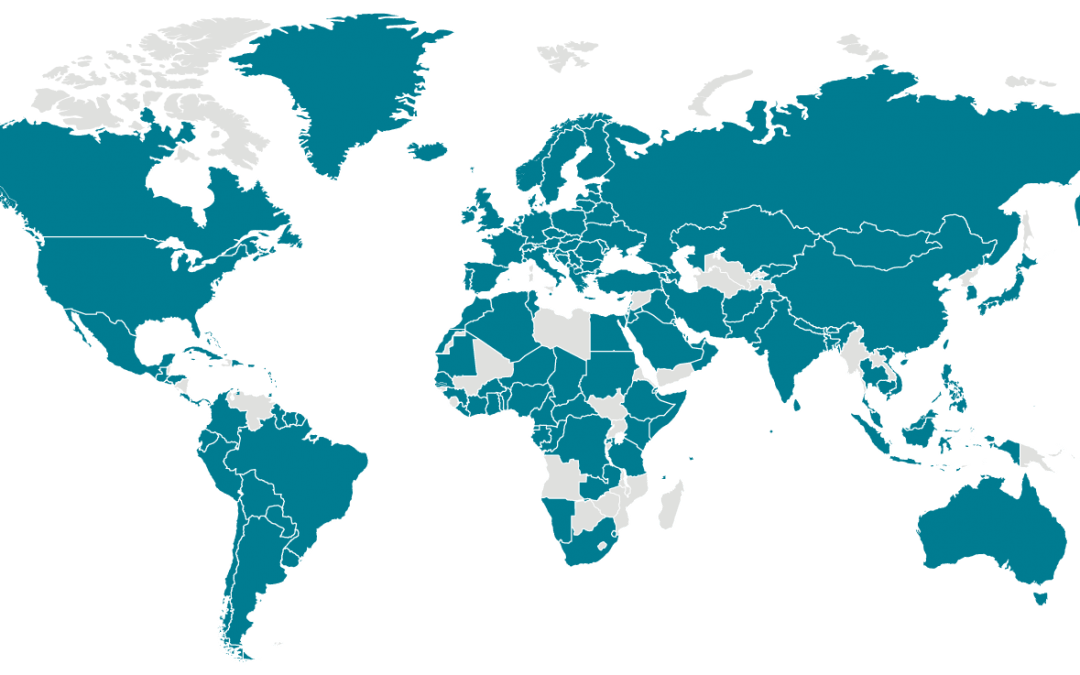
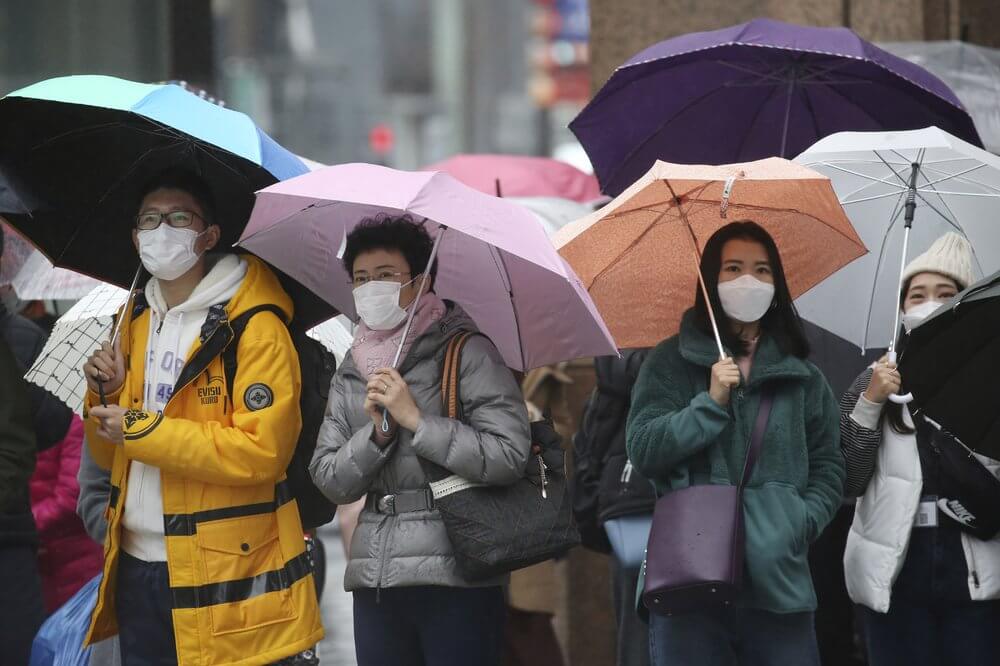
The Numbers: Over the past three months, there are have been 265,873 confirmed cases of the coronavirus around the world and 11,181 deaths. At the current moment, 164,089 people are infected, and 7,793 people are in critical condition. Since the pandemic originated, 90,603 people have recovered.
Border Closures: Countries around the world are closing their borders and implementing curfews in an attempt to slow the spread of COVID-19. The United States has closed its border with Canada. It has also enacted a travel ban that prevents foreign travelers from entering the country if they have recently visited countries that have been particularly affected by the pandemic. The European Union has also closed its borders to non-citizens for 30 days. Even the Schengenscheme is temporarily suspended as some EU-member states imposed some restrictions among themselves.
Economy: The stock market has continued to take serious hits, and the looming threat of a recession has sent Americans into a frenzy. Lebanon, a country that was already struggling financially before the virus, is still experiencing massive debt; its economy is “tanking.” Venezuela is facing the same problems. The IMF denied Venezuela’s $5 billion loan request, as it does not recognize Maduro as a legitimate president.
Vaccines: Three countries are currently testing vaccines on both human and animal subjects. The tests are being administered in the United States, China, and Europe. Results have yet to be reported.
New Discovery: The second dog to test positive for the coronavirus was reported on Thursday in Hong Kong. According to the Agriculture, Fisheries, and Conservation Department, “there’s no evidence that pets can transmit the virus to humans.” Humans can, however, pass the virus to animals. Medical professionals are planning to run tests on quarantined dogs and cats in the near future.
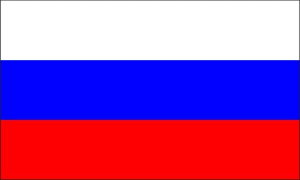
Russia
The European Union has accused Russian media of “pushing fake news online in English, Spanish, Italian, German, and French” and “using contradictory, confusing, and malicious reports to make it harder for the EU to communicate its response to the pandemic.” The EU has discovered 80 cases of disinformation; the Kremlin has denied all allegations.
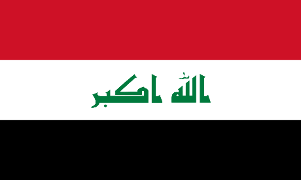
Iraq
President Barham Salih has appointed former mayor of Najaf Adnan al-Zurfi as Iraq’s new Prime Minister-designate. Salih appointed al-Zurfi “without the consultation of the political parties in Parliament.” Al-Zurfi has 30 days to appoint cabinet members that will then be put to a vote of confidence in parliament.
China
For the first time since the pandemic began, China has “reported no domestic #COVID19 cases yesterday.” China has taken drastic measures to slow the spread of the virus, but the World Health Organization has been left to wonder why China took so long to address the pathogen. Nevertheless, China has been able to flatten the curve, and as more countries enact the same policies as China, we can expect the number of cases to decrease over time.
Lebanon
Despite the fact that a military judge overturned the release of Lebanese-American Amer Fakhoury, he will return to the United States. Fakhoury was going to trial for allegedly “kidnapping, torturing, and detaining Lebanese citizens as well as ‘killing and attempting to kill others.’” He was a warden at Khiam Prison during Israel’s occupation of Lebanon. The prison is said to have been a “center for torture.”
Iran
The United States has implemented new sanctions on Iran after the bombings of American military bases have worsened. Iranians believe the sanctions have come at an extremely inappropriate time, as they are battling the spread of COVID-19. More than 17,000 are infected, and around 1,100 have died.
Syria
In an attempt to regain the Idlib province and the M-4 Highway, the Syrian Arab Army has sent reinforcements to the area this week. The army will continue to reinforce the front lines in order to resume their offensive attack against the jihadist rebels. On Wednesday, pro-Assad forces blocked the M-4 Highway in order to “prevent the joint Turkish-Russian military patrol from being conducted.” The joint patrol started on March 15th when Turkey and Russia agreed to a ceasefire.
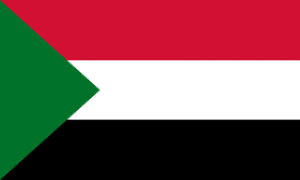
Sudan
Sudan has disbanded Islamist groups that were “formed to confiscate church properties” in order to protect Christians from religious prosecution. Sudan is currently ranked seventh in the world for Christian prosecution. The transitional government “finalized a constitutional declaration last year that no longer refers to Islam as the primary source of law in the country,” and it also repealed a law that allowed police to detain people for “violating religious-based moral teachings.” Sudan is now on the U.S. State Department’s “Special Watch List” instead of the list of “Countries of Particular Concern.”
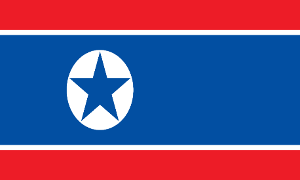
North Korea
North Korea has yet to report any cases of COVID-19, but the pandemic has pushed Kim Jong Un to call upon his country to “hastily build a ‘modern general hospital’ to ‘better protect the precious health and safety’ of North Koreans. The construction of the hospital is one of the country’s top priorities and is set to be finished by October.
Chile
Chilean anti-government protesters are being forced to postpone their demonstrations due to the government declaring a “90-day catastrophe.” President Sebastian Pinera has yet to specify what exact policies the government will enact, but citizens can most likely expect to be quarantined until the number of cases starts to decrease.
United States
13 American journalists have been expelled from China. The expulsion comes weeks after China accused the United States of enacting “‘unreasonable oppression’ of Chinese journalists” residing in America.
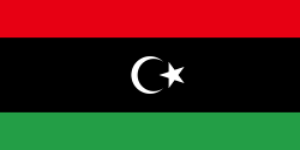
Libya
Despite the current arms embargo implemented by the United Nations in 2011, jet oil shipments from the United Arab Emirates have been received in Eastern Libya. The United Nations is aware of the shipments and has yet to respond.
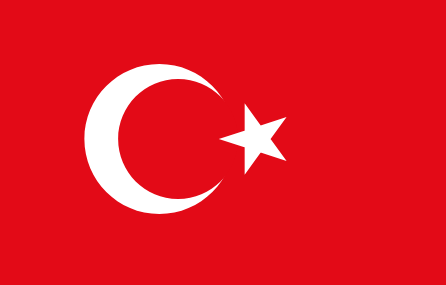
Turkey
Two of President Recep Tayyip Erdogan’s former allies have founded two new political parties in hopes of creating a more democratic nation. However, “they are likely to face formidable challenges.”
Myanmar
Myanmar military jets attacked four Christian villages in Chin State last weekend, killing 21 people and leaving many injured. As a result of the attacks, 2,000 people have fled the region. Hospitals are experiencing a shortage of medical supplies and are currently asking for support to treat the victims.
Other News:
Israel: Israel swore in their new parliament Monday after the last national elections failed to give Prime Minister Benjamin Netanyahu enough seats to form a government. His rival Benny Gantz was chosen to form a governing coalition instead. Experts are worried that this will be a tough task, as the parties that Gantz will have to bring together have little in common besides their dislike for Netanyahu.
Saudi Arabia: Saudi Arabia’s National Anti-Corruption Commission arrested 298 government officials, including military and security personnel, on charges of bribery and exploiting public office. Some experts are worried that this will be a repeat of 2017 when Crown Prince Mohammed bin Salman arrested many of his political opponents under the guise of cracking down on corruption.
Brazil: Brazilians are protesting against far-right President Bolsanaro’s handling of the COVID-19 crisis.
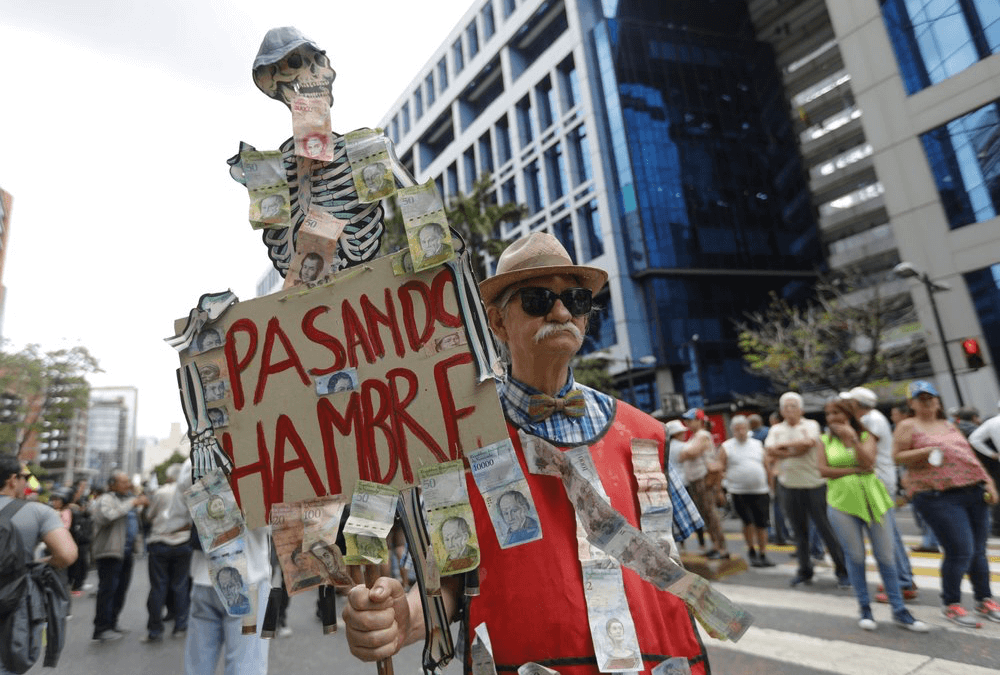
Juan Guaidó called for a new round of protests, the first since returning home from his international tour earlier this year, but a disappointing result left the movement unsure of how to move forward. Only a small amount of people turned out in support, and the march was broken up quickly by police with tear gas. Opposition protests drew millions a few years ago, but now it is surprising to even see 1,000. Protesters are growing weary with no sign the government is changing course, and an increasingly harsh police force is making it dangerous.
Russia
The Russian Parliament approved an amendment to their national constitution that would reset Vladamir Putin’s term count, allowing him to stay in power for another 12 years after his current term ends in 2024. The revised constitution will go to a nationwide vote next month. The amended document includes a ban on same-sex marriage and adds “a belief in God” to a list of Russia’s traditional values.
Iraq
After a week of deadly violence, Iraq’s foreign minister summoned ambassadors from the United States and Great Britain for an emergency meeting. Overnight airstrikes against the Iran-backed Kataib Hezbollah killed five, which were in response to a previous attack on US and British soldiers. The violence comes less than a week after security forces used tear gas against protesters in Baghdad, injuring 16 demonstrators.
Iran
Satellite images of the city of Qom show mass graves being dug, confirming that the COVID-19 outbreak in the country is much more serious than the government is letting on. The minister of health has already been accused of lying about the seriousness of the virus, and many are worried that Iran is ill-equipped to deal with it.
Government leaders asked the International Monetary Fund for a $5 billion loan, the first time the country has turned to the IMF since its 1979 revolution. Even before the outbreak began, Iran’s economy had taken a hit from slipping oil prices and international sanctions.
Syria
Last week’s ceasefire for the region of Idlib seems to be holding steady as Turkish and Russian officials hammered out more details of the agreement this week. Turkish President Erdogan said that he would be willing to take strong military action against even the smallest violation of the agreement.
However, the peace was not felt over the entire country — a car bomb killed at least four people in northeast Syria Thursday. Turkish officials blamed Kurdish militants for the attack.
China
As China slowly recovers from the COVID-19 outbreak, experts are looking at this crisis from a new angle: the high human rights cost. Amnesty International condemned the country for its lack of regard for its citizens’ rights, while Chinese officials defend their actions, saying that these unprecedented circumstances dictated a strong response. China developed facial recognition software and apps to identify masked people and decide whether or not they should be allowed into public spaces. Critical online postings about the government’s response to the virus have been censored, and individual whistleblowers and activists have been threatened.
The United States
Per their agreement with the Taliban, US troops have begun to leave Afghanistan, their goal being to reduce to 8,600 over the next 4 months. However, the deal is being overshadowed by an unfolding political crisis. Both incumbent President Ashraf Ghani and his rival Abdullah Abdullah were sworn in as leader of the country after the American envoy to the country could not broker a deal between the two.
Hong Kong
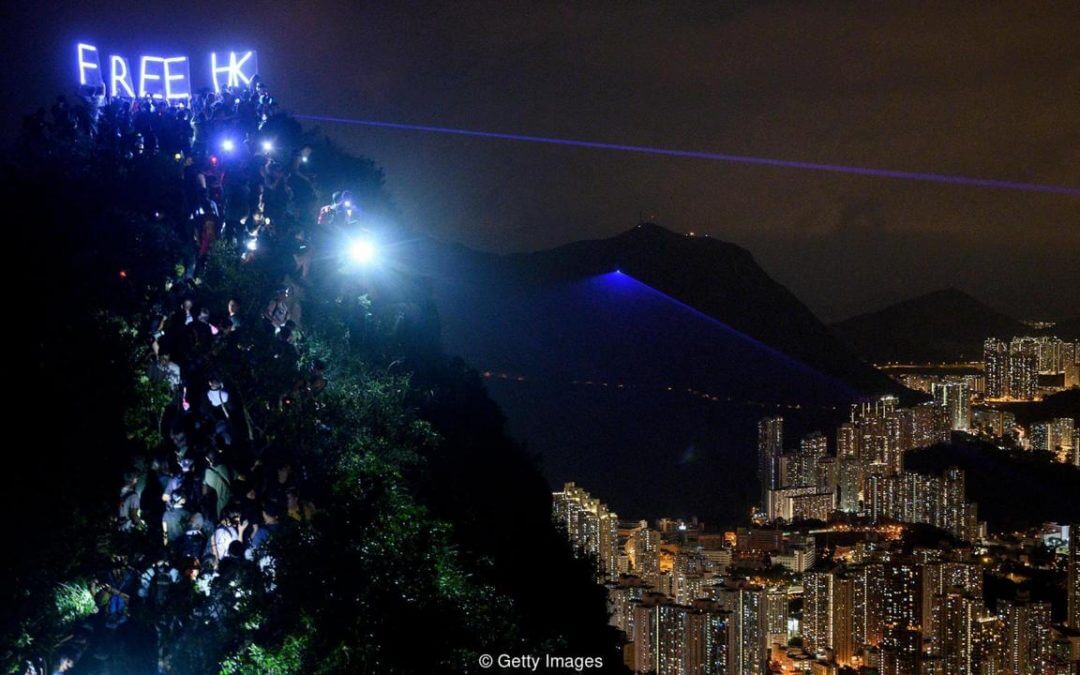
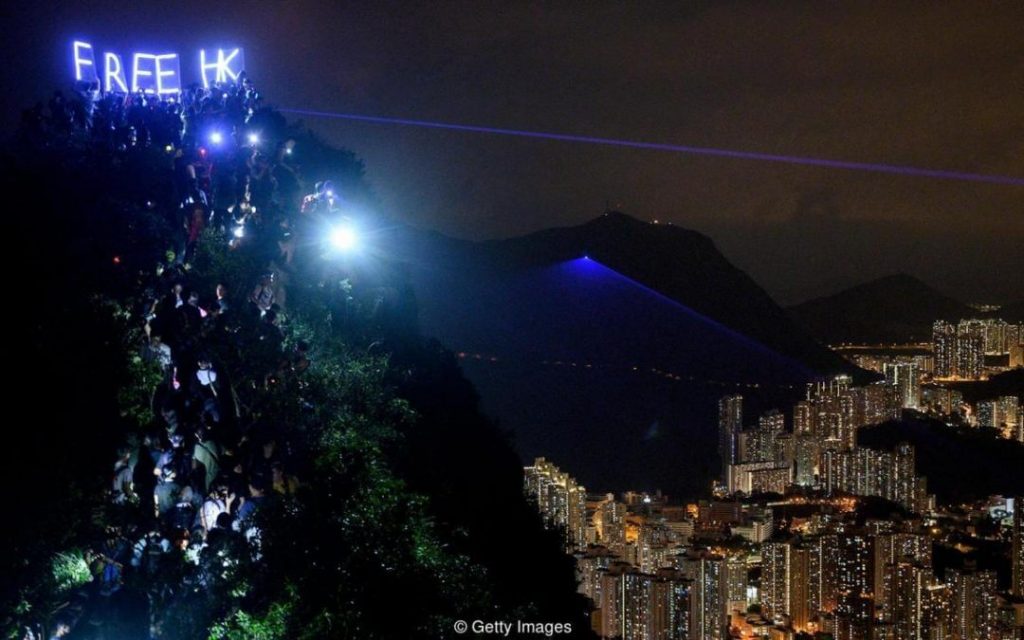
Anti-government protesters assembled for a memorial dedicated to a Hong Kong University of Science and Technology Student who died last November. Police deemed the assembly illegal and detained several people. Violence broke out and police knocked over a Cable TV reporter with shields. A bipartisan committee in the United Kingdom’s Parliament has launched an investigation into potential human rights abuses committed by the Hong Kong police force.
Libya
The Government of National Accord (GNA) bombed Haftar’s depot of ammunition on Sunday in response to Haftar’s army relentlessly attacking civilians. After the bombing of the ammunition depot, Haftar’s forces shelled the capital, killing two civilians and injuring four more. Haftar agreed to sign a ceasefire during a meeting with Macron on Monday. The leader of LNA underlined that he would withdraw in case the ceasefire would be violated by the UN-backed GNA. Libya has been receiving more than 100 deliveries of military supplies by planes since January that will only worsen its civil war. The United Nations has struggled to uphold its embargo, resulting in the importation of 5,000 metric tons of cargo per flight.
Lebanon
Lebanon’s already poor economy is set for a major decline after the country failed to pay its massive foreign debt. They are trying to restructure their crumbling reserves, but experts are worried that many financial institutions will fail at the expense of the public. Parliament is working on legislation to legalize cannabis cultivation, a move that has the potential to bring billions of dollars of revenue into the country.
Nicaragua
At the funeral of revolutionary priest and poet Ernesto Cardenal, attackers “chased, attacked, and robbed” journalists that were covering the event. The assailants reportedly shouted slogans in support of President Daniel Ortega and wore the colors of the ruling Sandinista party. This comes after the United Nations’ High Commissioner for Refugees released a new report that states that over 100,000 people, many of them journalists, have fled Nicaragua in the past two years since the country broke out in violence.
Zimbabwe
A new law in Zimbabwe could result in the imprisonment of parents who fail to send their children to school. In an attempt to lower the country’s dropout rate, the government has made education compulsory until 16. The law also bans schools from sending home children who cannot afford an education – 60% of families report facing an economic barrier to providing education. Opponents of the law are frustrated that this does address the root of the problem: providing free, high-quality education for all students.
Myanmar
Parliament has rejected reforms meant to update the undemocratic 2008 Constitution. Tuesday was the “first day of voting on a slew of amendments to the military-drafted charter.” The National League for Democracy (NLD) has proposed amendments to decrease military power in the government, but the proposal must receive more than 75% of votes in Parliament.
After a long week of violence, the presidents of Turkey and Russia came together Thursday, announcing an immediate cease-fire in the Syrian region of Idlib. The deal freezes the conflict lines where there are, not requiring the Syrian government to give back the land that they have won in recent months. The skies were clear Friday, but with no specified way to enforce the truce, whether Assad’s forces will respect the ceasefire is still unclear.
The Syrian government’s efforts to take back the last rebel stronghold escalated into a barrage of airstrikes during the past weeks, drawing in Russia and Turkey to protect their allies. Some residents of Idlib have reacted positively to Turkey’s military operations, hoping that they can relieve the Syrian people of their suffering, while others are worried about the high humanitarian cost of the invasion.
Turkey
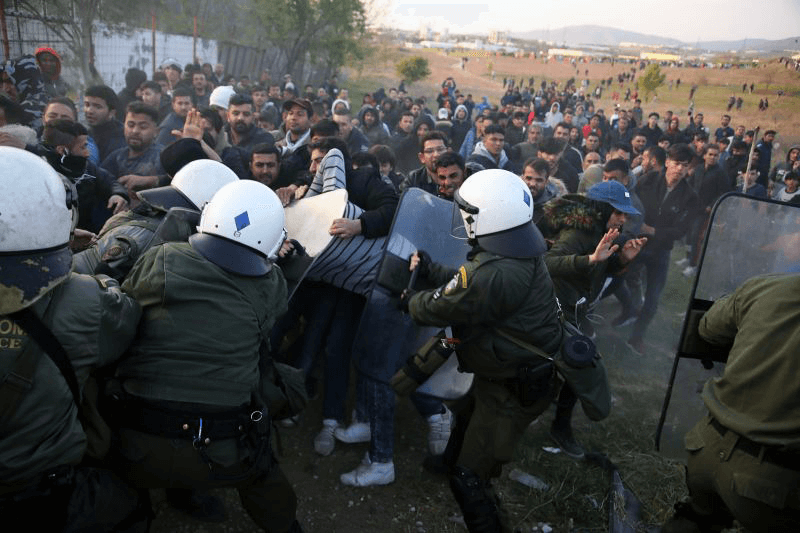
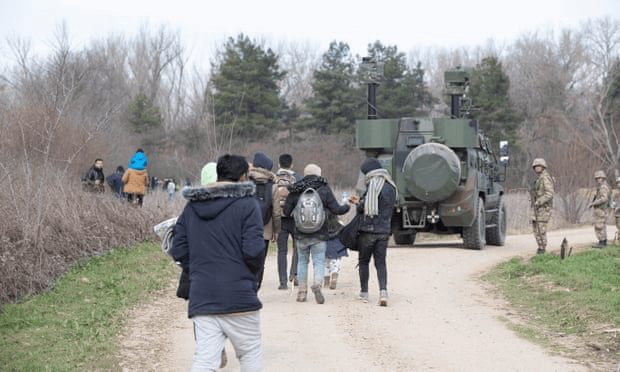
As thousands of migrants stream across the Turkish-Greek border, they have faced violence from border police instead of the smooth crossing that President Erdogan promised. Greek riot police have used tear gas and water cannons to keep refugees from entering their country that they insist is still closed. EU member nations are worried that this new spat will revive the debates surrounding immigration that rocked the continent five years ago. The group pledged €700m in aid to Greece, calling the country “Europe’s shield.”
The United States
Representatives from the US and the Taliban signed a deal aimed at ending the war in Afghanistan. The agreement, coming after months of negotiations, sets up a way for American and NATO troops to gradually leave the country over the next 14 months in return for a “permanent and comprehensive ceasefire.” The deal also sets up intra-Afghan negotiations on the future of the country. Despite its passing, the deal has not had any impact on the current violence. On Monday, the Taliban resumed its normal military action against Afghan forces, prompting the US to launch an airstrike to defend its allies.
Sudan
A new report has found that Sudan security forces “systematically planned and coordinated” the attacks on protesters last June that have become known as the Khartoum massacre. Sudanese authorities are being accused of purposefully arming police officers and targeting medical facilities in the month before the protest that left 241 dead. This contradicts the government’s previous statement that the attack was the work of rogue military personnel acting spontaneously.
China
As the number of people affected by the new coronavirus nears 100.000, all parts of the world and sectors of the economy are feeling the effects. Mainland China is now no longer the main focus of the outbreak, with countries such as South Korea, Iran, and Italy seeing surges in cases. Still, China is struggling to rebound. Canceled exams are making it hard for university students to study abroad and sporting events are having to be played to empty stadiums.
Lebanon
Because of the ongoing economic crisis, experts are unsure if Lebanon is properly equipped to handle the spread of COVID-19. The country must pay more than $1.2 billion worth of Eurobonds on March 9th. However, a new report showed that the majority of Members of Parliament oppose making the payment, even if it will result in default. The cabinet is set to meet on Saturday to make the final decision on repayment.
Iran
A UN-sponsored report revealed that Iran has tripled its stockpile of enriched uranium since November, directly violating the 2015 nuclear deal. The Joint Comprehensive Plan of Action capped its stockpile at just over 200 kilograms of uranium, but the country currently has over 1,000kg, enough to make a nuclear weapon. Iran has been slowly violating various parts of the deal ever since the US pulled out of the agreement two years ago, likely in an attempt to have the global community reconsider its sanctions.
North Korea
North Korea’s military ?launched two short-range missiles? Monday, completing its first weapons test since last November. Much of the international community has condemned the attack, including members of the Security Council, for violating denuclearization treaties. The test also served as a rare public appearance for Kim Jong-un as he locked down the country in light of the coronavirus. There have still been no confirmed cases of the virus in China’s neighbor, but experts are still debating the likelihood of that being true.
Iraq
Prime Minister candidate Mohammid Allawi has officially withdrawn from the upcoming election after Parliament rejected his cabinet once again. His withdrawal has “deepened a political crisis in the oil producer, where mass protests and deadlock between lawmakers are delaying the country’s recovery from years of war.”
Protestors took to the streets on Thursday to block intersections and roads “to denounce the mechanism of choosing a candidate to form the next government.” The demonstrators were demanding that their needs be met, which includes” expediting the nomination of an independent candidate to form the next government.”
Venezuela
Maduro supporters brandished weapons at a march led by Juan Guiadó on Saturday, the latest spat between the two men who both think that they are the rightful leader of Venezuela. A 16-year-old demonstrator was injured.
Yemen
Houthi rebels took control of Hazm on Sunday “in a major blow to the internationally recognized government and the Saudi-led coalition that backs it.” As the rebels gain more ground, they are imposing draconian rules to police women; they are controlling where women can go and what they can wear. They have also started to carry around scissors to ensure that men’s haircuts are appropriate.
Russia
President Vladimir has proposed an anti-gay marriage amendment in the new constitution. The amendments will be voted on publicly. The drafting of a new constitution is being looked at “as a move by Mr. Putin to keep a hold on power after his presidential term ends in 2024.”
Also: A new UN report has directly accused the Russian government of committing war crimes in Syria.
Hong Kong
On Wednesday, Hong Kong’s High Court ruled that banning same-sex couples from public housing in the city is unlawful. Originally, the Housing Authority refused to house same-sex couples “because there is already insufficient accommodation for low-income Hong Kong residents, and that LGBT people could still apply for housing as individuals.”
Zimbabwe
After the International Monetary Fund failed to renew its loans to Zimbabwe, President Mnangagwa made a passionate plea for support from international donors to save his country. After visiting last week, the IMF expressed concern, calling the country’s current policies “off-track.” They join the World Bank and African Development Bank in cutting off Zimbabwe’s aid. The country is not only facing $8 billion in foreign debts but also rising poverty and starvation levels.
Nicaragua
On Thursday, the United States enacted “sanctions on the Nicaraguan National Police over accusations of human rights abuse.” The sanctions keep Americans from carrying out any business with the police and they also freeze all US assets the police hold.
Bolivia
Former President Evo Morales has expressed his confidence that his party will win the upcoming May elections. However, he is also fearful of a coup or fraud following the election. Morales will not be running in May, but he has endorsed his former economy minister, Luis Arce Catacora.
Other News:
Chile:
Santiago saw the worst night of anti-government protests on Monday as protesters clashed with the police. The police reported that they arrested 283 civilians. Since October, more than 30 protesters have been killed and some 180 minors have been held in preventive detention by the police.
Israel:
After the country’s third elections in the past year, Prime Minister Benjamin Netanyahu beat out his opponent Gantz but fell three seats short of the majority he needed to form a new government. He faces bribery and corruption trial next week but remains popular among supporters. The Arab Joint List won 15 seats reaching a historical record.
33 Turkish soldiers were killed in an airstrike Friday, further escalating tensions between Turkey and the Russia-Assad alliance. In response, citizens gathered outside the Russian consulate in Istanbul, chanting “murderer Putin!” The attack was just one in a long week of violence, coming a day after Turkish-backed rebels re-captured Saraqib in Idlib, a strategic town and crossroad of highways M4 and M5.
The ongoing violence is becoming increasingly geopolitical as well. Turkey’s NATO membership is causing other member nations to hold emergency talks over intervention. The Turkish government also announced that they would no longer stop the passage of refugees from Turkey to the European Union. An estimated 3.6 million Syrians live in Turkey and had previously been banned from crossing the border into Greece and Bulgaria.
India
This week, India experienced some of its worst sectarian violence in years as mobs of Hindus and Muslims clashed over President Modi’s controversial citizenship bill.
At the same time that US President Trump visited the country, at least 38 people were killed and nearly 200 were wounded. On paper, the Citizenship Amendment Act gives citizenship to non-Muslim immigrants to India, but it has been widely seen as a way to discriminate against the country’s Muslim minority. President Modi, a nationalist, called for peace, but his police were criticized for both failing to stop the violence and for using tear gas, pellets, and smoke grenades.
Lebanon
The protests that came to define this fall and winter in Lebanon have died down in recent weeks, but many are worried that if the worsening economy is not fixed soon, tensions may flare up again.
Faith in the Lebanese currency is dwindling, and many citizens are resorting to bitcoin to move money in and out of the country. The country also owes billions to foreign nations in Eurobonds, foreign-currency deposits and certificates of deposit. The World Bank has warned of an “implosion.” Lebanon’s infant government is trying to piece together an emergency economic plan but is struggling to gain international support. France has voiced its support, but many former allies are refusing to provide aid until the country addresses underlying corruption.
China
As it fights the coronavirus, the Chinese government is desperately trying to promote its own image, but this time around many citizens are seeing the propaganda for what it is. The state-run media is promoting stories of heroic doctors and cured patients, deleting videos of residents being arrested and dragged from their homes to be quarantined.
But the propaganda is not working this time around. People online are sharing their stories of struggle that contradict the party’s official message. Public outrage skyrocketed after people learned of a slain doctor who tried to warn the public. This response is helping to slowly chip away at China’s robust propaganda machine.
Iran
After weeks of battling political instability and tensions with other foreign powers, Iran has a new enemy: COVID-19. The new virus has spread rapidly throughout the country, even infecting a number of officials trying to fight it. The officially announced numbers as of Friday were 388 cases and 34 deaths, although those totals could be higher. Friday prayer services were canceled and many schools and universities remain closed.
Venezuela
A new report from the United Nations World Food Programme found that one-third of Venezuelans are unable to meet minimum nutritional requirements. As the country’s economic crisis continues to worsen, hyperinflation has rendered salaries worthless, meaning that many families simply cannot put enough nutritious food on the table. People have felt the impact of food insecurity, with 74% of families reducing the variety and quality of food they eat and 60% cutting portion sizes.
Iraq
The Iraqi Parliament failed to form a new government, voting down a cabinet proposed by Prime Minister Mohammed Allawi. The country has been dealing with a massive protest movement that broke out in October and ousted the last PM. Opposition leaders, echoing the protesters’ anti-ruling elite sentiment, oppose Allawi. If Parliament is unable to approve a cabinet, Iraq’s Constitution says that President Barham Salih will need to appoint a new Prime Minister.
Nicaragua
Opposition forces clashed with police this week amid protests calling for the release of 61 political prisoners. The country’s administration has outlawed all types of public demonstrations, protests, and marches since September 2018. The protests coincide with opponents of President Ortega from seven different parties signing an agreement to form a national coalition against the long-time leader.
Russia
Claims of Russian interference in American elections have once again risen to the surface. David Porter, a member of the FBI’s Foreign Influence Task Force, has stated that Russia has been “conducting brazen operations aimed at spreading disinformation, exploiting lines of division in society and sowing doubt about the integrity of U.S. elections and the ability of its leaders to govern effectively.” Porter strongly believes that Russia simply wants to watch the United States “tear [itself] apart.”
Hong Kong
Anti-Beijing publisher Jimmy Lai and two other pro-democracy activists were arrested for illegal assembly Friday. Lai, who leads the media company Next Digital, has been a major donor to Hong Kong’s ongoing protests.
While protests have been relatively quiet in recent months, public anger is still high as Beijing seems to be tightening its grip on the city. Citizens are also angry over the newly announced 2020 budget, which is set to give HK$25.8 billion (~three billion Euros) to the city’s police force.
Bolivia
A new report coming out of the United States found “no evidence of fraud” in last October’s elections. Incumbent President Evo Morales won the election, but the Organization of American States accused the government of manipulating the results, causing Morales to step down. The report from the Massachusetts Institute of Technology’s Election Data and Science Lab found that the results were “very likely legitimate.” Whether Bolivians believe this new evidence could play a role when they select a new president in May.
Palestine
On Sunday, a video circulated showing an Israeli bulldozer scooping up and moving the body of a killed Gazan. Israel accused the man, Mohammed Ali al-Naim, 27, a member of the Palestinian Islamic Jihad (PIJ), of trying to place a bomb near the fence. In response, PIJ launched about 30 rockets as a response to the murder of the Gazan. On Sunday night, Israel responded to the 30 rockets by bombing the Gaza Strip and Damascus. Israel has displaced more troops and armored cars near the separation fence as an effect of the rising tension.
Zimbabwe
The ongoing drought has resulted in more than half of the population living in fear of the looming threat of food shortages. According to the World Food Program, Zimbabwe needs “$103 million to meet urgent food assistance.” Citizens are being denied service at distribution centers.” Heavy rain has been slowly spreading through the nation, but “7.7 million people will require aid until the next harvest.”
United States
The White House sent a funding bill to Congress, offering $2.5 billion to help address the coronavirus outbreak. The US Budget Office says that the money will be used on vaccines, treatments, and protective equipment. Democrats say that these funds are not enough, and they have also expressed concern over taking funds away from other projects like the one dedicated to fighting Ebola.
Other News:
Greece:
Residents on the islands of Lesbos and Chios have been on strike for the past two days, protesting against plans for new migrant camps. The eastern islands of Greece have been a major landing spot for refugees seeking entrance into the European Union.
South Sudan:
President Salva Kiir swore in opposition leader Riek Machar as vice president, renewing a coalition that they have tried once before and ultimately abandoned. If the coalition is finally successful, the civil war that has raged on for six years may finally come to an end. The deal was announced hours after the UN released a report accusing both sides of starving civilians during their struggle for power.
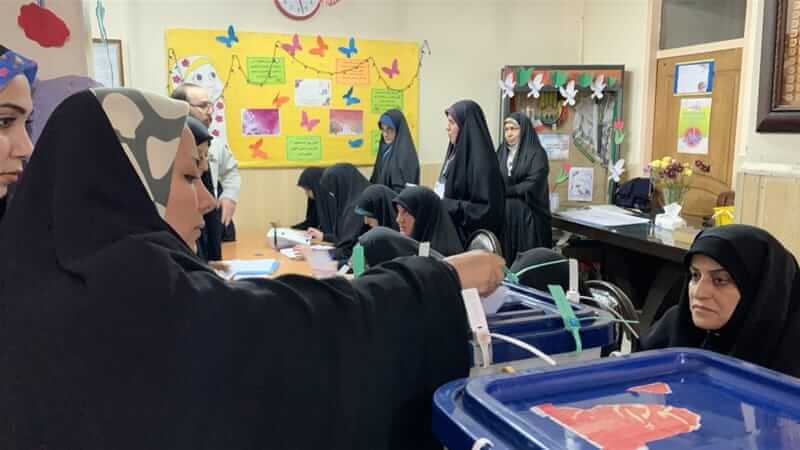
Iran Iranians head to the polls today to elect a new parliament, but recent tensions in the country will test what the citizens think of its leaders. Many citizens of Iran have little to no confidence in their leaders. Little has improved since the last elections four years ago, and recent embarrassments on the national scale does not help.
However, Iran’s religious government leaders hold a tight grip on who can run; disqualifying more than 7,000 candidates in favor of those loyal to the Supreme Leader. Hardline loyalists are thus expected to dominate the elections. It is likely that voter turnout will be low, despite Khamenei’s tweet that said that voting will “display our unity against the enemies.
China As the number of COVID-19 cases passes 75,000, new sectors of the population are put at risk. Health care employees make up 4% of confirmed cases, with one hospital director passing away Tuesday morning. The widespread ramifications are being felt in new ways. One estimate has the virus costing the airline industry almost $30 billion. Similar declines are being felt in the automobile industry.
Also: A new report shows exactly how and why the Chinese government has placed thousands of Uighur Muslims into detention camps. A whistleblower leaked a database that has confirmed that people are placed into camps strictly based on “their religion and their family ties,” contradicting the Chinese government’s claim that these camps are meant to curb political violence and have no relation to religion.
Germany Nine people were killed in two shootings on Wednesday night. The far-right gunman targeted neighborhoods that have a large immigrant population, leading the police to believe that the motive is related to xenophobia. The gunman was found dead in his apartment with his mother on Thursday morning. This is another example of the dissemination of xenophobia throughout the country. Just last week, German authorities arrested 12 members of a far-right terrorist organization.
Syria As pro-Assad forces continue to barrage the province of Idlib, domestic flights between Damascus and Aleppo have resumed. A symbolic flight carrying Syrian officials was completed Wednesday, demonstrating that Assad’s government has the upper hand in the region.
A Proxy War: On Thursday, Russia bombed Turkish troops in Idlib, which in turn targeted pro-Assad forces. This is the lowest point of the agreement between Russia and Turkey. Merkel and Macron are said to be ready to meet Putin and Erdogan to defuse tensions in the area.
Palestine Despite having reached an agreement last week, tensions are continuing to rise between Israel and the Gaza Strip. Because of Hamas’ inability to prevent the launching of balloons and rockets from the Gaza Strip, Israel has decided to renege on its promise of easing restrictions.
Trade between Palestine and Israel has returned to normal on Thursday after months of tensions and boycotts. The trade conflict started after the Palestinian Prime Minister announced the nation would no longer import beef from Israel. Israeli and Palestinian ranchers and farmers were negatively impacted by the ban.
An 8-year old Palestinian Jerusalemite lost an eye after Israeli police shot him “with a rubber-coated steel bullet.” Police stated that they were controlling a riot, but surveillance footage has shown that there were no signs of a riot breaking out. Eyewitnesses said that the attack was “unprovoked” and “deliberate.”
Lebanon The International Monetary Fund began talks this week on how to help Lebanon out of its worst economic crisis in 50 years. Having met with newly appointed Prime Minister Hassan Diab, the delegation is working to tackle the slow economic growth, the high unemployment rates, and the widespread corruption that sparked months of ongoing protests.
Lebanon’s current debt of $87 billion is 150% more than the country’s GDP. Many financial experts are worried that they might default on their $1.2 billion Eurobond debt that is due March 9th.
Libya The Libyan National Army bombed Tripoli’s main port Wednesday. Renegade commander Khalifa Haftar and his LNA have wanted to gain control of the port for years; they have tried to a Turkish vessel carrying weapons.
At the UN: Peace negotiations in Geneva were temporarily halted after the bombing but resumed on Friday. Diplomats remain divided on the prospect of peace in the country. Many agree that “there can be no peace under the bombing,” while most diplomats are worried that if a peace deal is not reached soon, the violence will only continue.
On the Ground: A rare look inside the country by The New York Times revealed a worsening humanitarian crisis. “Everyone is afraid, even afraid of their fellow citizens,” one Benghazi resident said. Residents complain of corruption by local militia leaders, as well as unexplained bombings, abductions and detentions without trial.
Venezuela The United States levied new sanctions against Rosneft, a major Russian oil company directly tied to the Maduro administration. Venezuela uses Rosenef for about 70 percent of its oil exports, which the US Treasury Secretary denounced as “looting of Venezuela’s oil assets.” The impacts of these sanctions are unknown, whether this will weaken Maduro’s stronghold or plunge the country into further crisis.
Long Reads: Venezuela’s ongoing struggles are leaving millions without a means to support themselves. Some are fleeing to Colombia, putting stress on a country ill-equipped to handle the sudden influx, while others are putting their children under the care of friends and family members.
North Korea On Tuesday, North Korean refugees “launched a political party in South Korea… aiming to give a voice to the 33,500 defectors living in the South and oppose conciliation with Pyongyang.” The new South-North Unification Party is seeking to make amends between North and South Korea and will likely seek formal representation in April’s parliamentary elections. A former North Korean diplomat has already announced that he is running for a National Assembly seat but as a member of the established opposition party.
Bolivia Bolivia’s electoral tribunal has officially disqualified former President Evo Morales from running for Senate. Chairman Salvador Romero said that he did not meet the requirements for candidacy by not being a permanent resident of Bolivia. Morales was exiled to Argentina following his presidency, and he has yet to return to his home country. Morales responded via Twitter, calling the decision “a blow to democracy.”
Sudan Peace talks between rebel groups and the Sudanese government failed to wrap up by the agreed-upon date of February 15th, so the groups decided to extend the talks for another three weeks. The peace negotiations have been taking place since October, and the groups have “agreed on a cease-fire, humanitarian access, land issues and the resettlement of those displaced by the conflicts.”
Russia Human Rights Violations: Anastasia Shevchenko, a political activist, has been living under house arrest for over a year. She has been “accused of links to a pro-democracy group Open Russia UK, which has been banned from Russia as ‘undesirable’ and a ‘threat to state security.’” If she is found guilty, Shevchenko could spend six years in prison.
Peaceful protester Konstantin Kotov has been behind bars for more than six months. He has been charged with having connections with peaceful protests in Moscow last summer “over the exclusion of opposition candidates from the city and council elections.”
Iraq The United Nations Assistance Mission for Iraq recently released a study concerning education in Iraq and how children in ISIL-controlled areas are unable to attend school. They are unable to “move freely in and out of the camps.” The ISIL-induced crisis in Iraq has resulted in the displacement of 1.4 million people; 658,000 are children. Only half of those children have access to education.
Coronavirus: Iraq has closed its border with Iran after two Iranians died from the coronavirus on Wednesday. Iraq will continue to import goods from Iran and Iraqi citizens returning from Iran will be allowed to enter the country.
Yemen Airstrikes: A United Nations report confirmed that more than 32 Yemenis were killed in a Saudi airstrike. The airstrike is a direct defiance of international humanitarian law. The United States backed the airstrike and has provided Saudi Arabia with weapons priced at hundreds of billions of dollars.
Airstrikes that occurred on Saturday injured 18 children and claimed the lives of 19 more. Houthi rebels have stated that “Saudi-led Arab coalition aircraft targeted Al-Jawf’s Al-Masloub district with several raids, killing 35 civilians and wounding others.” The United Nations has since denounced the attack
Other: Houthi rebels have blocked half of the aid delivery systems that were implemented by the United Nations, directly affecting more than two million people. The population is on the brink of starvation. In the past, the Houthis have attempted to convince the United Nations to give them 2% of the aid budget. Last week the Houthis withdrew this demand..
Hong Kong HSBC announced its plans to cut 35,000 jobs over the next three years following its coronavirus-instituted economic slump. The UK-based bank with strong ties to Hong Kong saw a 33% decrease in profits in 2019, prompting the largest restructuring and simplification in the bank’s history. The bank gains most of its profit from the Asian region, so until stability is reached, profits will continue to shrink.
United States The Trump administration announced that the country’s five largest newspapers will be treated as Chinese operatives rather than objective sources. The day after this announcement was made, China announced that it will expel three journalists who are affiliated with the Wall Street Journal as media relations between the two nations continue to sour. The Chinese Foreign Ministry said it was revoking their press credentials over a Wall Street Journal opinion piece titled “China is the Real Sick Man of Asia.”
Mexico Mexico City was rocked with protests this week following the murder of a seven-year-old girl. After the body of Fatima Cecilia Aldrighetti was found over the weekend, protesters took to the streets to speak out against the waves of violence against women. On Wednesday, Mayor Claudia Sheinbaum announced that police arrested several suspects. Despite the fact that President López Obrador has brushed the protests to the side, Mexico’s legislature has proposed toughening the prison sentences for inmates convicted of femicide.
Myanmar The humanitarian crisis in Myanmar is worsening; the government has implemented “severe humanitarian restrictions and a sweeping internet blackout.” Tens of thousands of people have been displaced as the conflict between the military and civilian armies grows more intense. Last week, more than 17 students were injured after the shelling of a school. The military has been accused of war crimes, but information regarding these crimes is limited as an effect of the internet blackout in nine townships.
Zimbabwe On Monday, the European Union renewed its arms embargo on Zimbabwe and instituted a targeted asset freeze against Zimbabwe Defence Industries. The EU Council said that its decision is a response to “the yet to be investigated alleged role of the armed and security forces in human rights abuses.” Zimbabwe has said that the sanctions have heavily stifled its economic growth, especially because they have been in place since 2002.
Other News:
Ukraine: Violence in Eastern Ukraine has led to the death of a Ukrainian soldier and the injuring of several others. Russian-backed separatists and Ukrainians are assigning the blame to one another. This is some of the worst violence Ukraine has seen since the Paris summit in December.
Turkey: A few hours after being acquitted for his alleged role in the 2013 Gezi Park protests, Osman Kavala, Turkish businessman, prominent philanthropist, and human rights activist was detained by the police on charges of his alleged links with a failed coup d’etat in 2016.
This week, we are highlighting stories of femicide, female genital mutilation, and sexual abuse across five different nations. Due to the nature of these stories, reader discretion is advised
Mexico The execution of a young female artist is the most recent example of the ongoing war on women in Mexico. Isabel Cabanillas was riding her bike home from a bar when she was shot twice, sparking protests throughout the country. Cabanillas belonged to the feminist group Hijas de su Maquilera Madre. Many of the group’s participants were the first women in their families to attend university, and this “new generation is a new kind of target.” Murals of the artist and feminist art installations have appeared around Cabanillas’s town following her untimely death.
Egypt There has been renewed outcry against female genital mutilation (FGM) after a botched operation left a 12-year-old girl dead. The doctor who performed the surgery and the parents of the young girl were arrested last week. A doctor-led movement has taken to the streets, protesting the procedure that has been illegal since 2008, but is still widely practiced. Effects of FGM include both mental and physical health issues like “chronic infections, menstrual problems, infertility, [and] pregnancy and childbirth complications.” Egyptian conservatives have defended FGM, stating that “it is a religious thing” and that doctors “only listen to what the West is saying.”
Zimbabwe In a recent poll, more than 57% of women in Zimbabwe revealed that they have been forced to perform sexual favors for employment or business offers. Women have been subject to this quid-pro-quo for years; one woman stated that “even police officers require some form of payment to help you.” The rise in sextortion is a result of the increased corruption in the nation. The secretive nature of these occurrences result in a lack of prosecution and reports.
Afghanistan Human Rights Watch published a report on how perpetrators of sexual assault in Afghanistan are rarely prosecuted. Victims seeking justice are refused recognition. Cases of assault in the athletic world are surfacing, but “Afghan authorities have failed to arrest senior officials of the Afghan Football Federation” and are guilty of “participating in a cover-up of the abuse.” Aghan authorities have provided no legal support to the woman and boys affected and have threatened to punish activists.
Iraq This week, SEED, a “local NGO whose core mission is to empower and protect women,” co-sponsored an exhibit calling attention to gender-based violence. Candles were lit at the exhibit to pay respect to the victims of abuse and violence, which runs rampant in the Kurdistan region. In 2019, approximately 120 women lost their lives from gender-based violence. However, only 13 of those deaths were “honor killings,” a major decrease from “previous years, [where] 60-70 women would be killed due to honor.” Sadly, none of the cases made it to court.
China
The World Health Organization (WHO) has given the coronavirus an official name: COVID-19. WHO leaders worked to find a name that “did not refer to a geographical location, an animal, an individual or group of people, and which is also pronounceable and related to the disease.” Experts cannot agree on whether we have surpassed the worst of the virus. China’s top medical expert says that they expect the outbreak to end by April, but global medical professionals are worried that this prediction is too optimistic.
The Latest: China experienced the largest single-day increase in the number of new cases Thursday, with 254 new deaths and 15,152 cases. The sudden spike was the result of a new method of diagnosis that allows doctors to report it on the spot instead of waiting for official lab results to return.
Censorship: Two citizen journalists in Wuhan have disappeared after covering COVID-19. Fang Bin and Chen Qiushi both shared videos on Twitter and Youtube, showing the bleak conditions in a country known for intense media censorship. Neither man can be found, with activists being unsure if they have been taken by the police or put into forced medical quarantine.
Lebanon
Newly appointed Foreign Minister Nassif Hitti has warned that “his country faces becoming a failed state if the population doesn’t accept painful structural economic reforms.” Dr. Hitti responded to anti-government protesters, the newly formed technocratic government is rooting out corruption in an attempt to save the country from its ongoing economic crisis.
Hundreds of people are losing their jobs and losing affordable access to health care. There have been “critical shortages of medicine. Hospitals have stopped performing nonessential surgeries and closed entire wings for lack of patients.” Doctors are opening clinics to provide “free medical care for anti-government protesters injured by security police.”
Public Response: On Tuesday, protesters gathered in an attempt to block the roads leading to the capital so that politicians would not be able to reach Parliament and participate in a vote of confidence regarding the new government. Security forces used tear gas against the protesters, resulting in around 24 injuries. A Lebanese lawmaker was also injured after protesters damaged his car and beat him. Still, the government won the confidence vote.
North Korea
Internet usage in North Korea has increased by around 300%. Doing so has caused major concern in the United States over cybercrimes, such as exploiting data or stealing money from international banks. North Korea has “improved its ability to both steal and ‘mine’ cryptocurrencies, hide its footprints in gaining technology for its nuclear program and cyber operations, and use the internet for day-to-day control of its government.”
Other News: Despite the sanctions placed by the United Nations, North Korea has continued to amplify its nuclear programs as well as illegally export 370 million dollars worth of coal to China. Russia and China have argued that the UN sanctions have harmed North Korea, resulting in the currently suspended nuclear discussions between Pyongyang and Washington. Despite these concerns, France, Britain, and the United States do not believe that this is the opportune time to lift any sanctions.
Libya
The United Nations adopted a resolution for the support of ceasefire in Libya, demanding the warring parties commit to “a lasting ceasefire” according to terms agreed by military representatives from both sides at recent talks in Geneva.
Human Rights Watch: The Italian Foreign Minister met with Libya’s Prime Minister and Interior Minister to discuss some changes to the 2017 memorandum on migrants that was automatically renewed on February 2nd. The changes requested by the Italian government concern the formation of the Libyan Coast Guard and the external supervision of the refugee detention centers. The position of the Italian government has been highly criticized by Human Rights Watch: “The Italian government should suspend all support to the Libyan Coast Guard until Libya commits to a clear plan to fully respect migrants’ safety and rights”.
Other News: On Monday, six Libyan families filed lawsuits in the Federal Court of District of Columbia against Khalida Haftar and the United Arab Emirates government for war crimes. The families have asked that they paid one billion dollars in damages; their “relatives were murdered, injured or faced attempting killings.” Filing the lawsuit in the American capital “will bring to light the serious human rights abuses, extrajudicial killings, and torture which the defendants have engaged in with absolute impunity and without fear of accountability.”
Sudan
Sudan has been trying to be removed from the United States’ list of State Sponsors of Terrorism (SST) to get much-needed investment into the country. Their transitional government has taken many steps this week to curry favor with the international community.
The Latest: Leaders agreed to hand over Omar al-Bashir to the International Criminal Court to face charges of genocide and war crimes. Al-Bashir served as the President of Sudan from 1989 until he was ousted in 2019. His charges surround the War in Darfur that broke out in 2003 and has led to the deaths of 300,000. Prime Minister Abdalla Hamdok has also stated that Sudan will be terminating all relations with Hamas and Hezbollah.
Background: Sudan has been on the list since 1993, and there are a number of economic sanctions that come along with being on the list. United Nations chief Antonio Guterres announced that Sudan must be removed from the list and instead given financial support to “save the nation’s fragile and democratic transition from a plunging economy.”
Syria
After eight years of fighting, Syrian President Bashar Assad’s forces regained control over one of the most important pieces of territory: the Damascus-Aleppo highway, or the M5. Once an economic artery for the nation, control over this motorway has largely been seen as the key to winning the conflict. Syrian troops have slowly sought to regain control over it since rebels took it in 2012; this week they gained control of the last section.
Even More Violence: This week saw incredible amounts of violence as both sides sought control over the precious motorway. Turkey started to shell Assad militias in Idlib, rebel forces shot down a Syrian government helicopter, Syrian Defence Forces killed nine Turkish-backed rebels, and a Russian airstrike near Turkish outposts killed and wounded civilians in Aleppo.
Humanitarian Crisis: Over 140,000 Syrians have been displaced in the last three days alone, bringing the total of those uprooted from their homes to over 800,000, the United Nations said Thursday.
Further Reading: The Syrian Network for Human Rights has confirmed that there are still open cases regarding 8,143 missing ISIS detainees, including many activists. While the terrorist organization was supposedly subject to a territorial defeat, the whereabouts and the conditions of the detainees remain unknown.
Palestine
At the UN: President Mahmoud Abbas presented a rejection of Trump’s Israel-Palestine deal to the UN Security Council. The rebuttal claimed that the plan “breaches international law and the internationally-endorsed terms of reference for … [a] lasting solution to the Israeli-Palestinian conflict.” The divided Security Council forced the draft to be withdrawn, but not without lively debate and constant disagreements.
International Relations: On Thursday night, Hamas and Israel reached a ceasefire agreement. Hamas ensured that no more balloons or rockets will be launched at Israel, whereas Israel will lift some sanctions in the Gaza Strip.
Iran
In a recent interview, Mohsen Rezaei, a former leader of the Revolutionary Guards and current secretary of the Expediency Council, stated that “Iran is just looking for an excuse to attack Israel and ‘raze Tel Aviv to the ground.’” Raezaei is accusing Israel of being involved in the killing of Qassem Soleimani. He also stated that Iran has access to extremely specific information regarding American troops, where they stay, where they get their supplies, how many American ships currently deployed, and who individual troops considered friends. He credited the bombing of the Ayn Al-Assad base to the collection of specific information. The attack on the American base has resulted in at least 100 injured troops, despite President Trump’s initial statement, where he said that no one was injured.
Venezuela
The conflict between Juan Guiadó and Nicolás Maduro worsened this week as Guiadó returned to Venezuela after seeking international support. Guaidó broke a travel ban by going to Colombia, Europe, Canada, and the US; in many of these countries, he is considered the rightful president of Venezuela.
At the airport, he was met by both protesters and supporters, with many pro-Maduro forces yelling “fascist!” and throwing liquids at him. In response, Maduro made a public appearance and called upon the public to “not get distracted by stupidities, by dummies, [and] by traitors to the homeland.” Maduro has threatened Guiadó before, but he has never been detained.
Meanwhile: Venezuela is experiencing the seventh year of a “crushing depression” and has seen a recent spike in their infant mortality rate, all of which Maduro has denied. He has, however, given foreign firms near-total autonomy over the Venezuelan oil industry. Russian and Chinese oil companies are set to take over an oil industry that has deteriorated significantly as a result of “American sanctions, [and] years of gross mismanagement and corruption.”
Iraq
Tensions between security forces and protesters have continued to worsen. On Monday, crowds gathered near al-Ain University, resulting in the murder of one anti-government protester. In Nasiriyah, southern-Iraq, police fired live bullets and tear gas canisters at the protesters on Wednesday. The demonstrations have taken place over the last five months; at least 500 protesters have been killed by security forces.
Hong Kong
Regina Ip Lau Suk-yee, a member of the Executive and Legislative Council of Hong Kong, has said that the government needs to draft new emergency laws because of the spreading coronavirus. This decision may lead to more violations of human rights. Her decision came after thousands of Hongkongers were seen queuing overnight for masks. Basic supplies like food, toilet paper, and disinfectant are scarce; markets are quickly running out these necessities amidst the panic fueled by the spread of the coronavirus. Supermarkets have been forced to implement a “rationing policy limited customers to two items of the products in short supply.”
The Latest: Beijing has replaced Zhang Xiaoming with Xia Baolong as the director of the Hong Kong and Macau Affairs Office. Baolong is known for the demolition of thousands of Christian churches in 2014. He is also close to China’s President Xi Jinping. By placing Baolong as head of China’s office in Hong Kong, Beijing is further demonstrating its intention to assert more power over Hong Kong.
Yemen
Renowned Al Qaeda in the Arabian Peninsula (AQAP) affiliate Qassim al-Rimi has been killed by United States’ forces. An audio recording of al-Rimi has recently surfaced. In it, he stated that he gave orders to a Saudi military officer to attack a United States military base in Florida this past December; the shooting killed three sailors and injured eight others. Having lost a key leader, the group “has been weakened, [but] intelligence and counterterrorism officials warn that the organization remains dangerous.”
The Saudi-led coalition is facing a courts martial against the Yemen strike aircrews, the first case of its kind. Its military personnel is suspected of violating the International Humanitarian Law in 22 cases since the beginning of the conflict, including the targeting of a school, a wedding ceremony, and a civil bus.
Developing News: UN experts have said that the Saudi-led coalition may be responsible for war crimes, including murder, torture, rape, enlisting children under the age of 15 and direct attacks against civilians.
Nicaragua
The Nicaraguan government has finally released newsprint and ink to the country’s best-known daily newspaper, La Prensa. The paper, which has a history of being critical of the Ortega regime, claimed that their supplies were purposely held up in customs as retaliation for their protest coverage. The authorities released the supplies without any explanation or comment, but the newspaper is celebrating. “The newsprint has been liberated!” read the headline on Saturday’s front page.
Other News: Parliament approved four new state-run companies to run the country’s oil and gas industries just two months after the US Treasury Department put extreme regulations on the last corporation, accusing President Daniel Ortega of using it for his own financial benefit. The new company was approved without debate by the Parliament currently controlled by Ortega’s Sandinista party. Opposition leaders are interpreting this move as a way to maneuver around old sanctions and are sure that the new companies will also serve Ortega’s self-interests.
Russia
Human Rights Violations: Russian Court jailed seven anarchists for six to eighteen years on charges of plotting a “terror attack” during the 2018 FIFA World Cup. Human rights organizations accused the government of having made up their accusations, as well as having extracted confessions with the use of torture. Every member of the accused party has denied this conviction.
Russian Court convicted Maxim Vernikov for involvement in an “undesirable” organization. Verinkov was involved in the activities of the Open Russia Civil Movement and the court sentenced him to 300 hours of mandatory labor. Three more activists who are connected with this organization have been prosecuted with similar charges. The Council of Europe’s European Commission for Democracy Through Law (the Venice Commission) accused Russia of violating fundamental human rights through this “undesirable” organization law.
United States
The United States has announced its intention to withdraw troops from 15 bases in Iraq. France, Germany, and Australia are following suit. On Thursday, the Senate voted to “limit President Donald Trump’s authority to launch military operations against Iran.” The vote passed 55-45 as a result of the increased fear of the possibility of starting another war in the Middle East. Trump is expected to veto the bill.
Deportations: Concerns have risen after a report surfaced that the Trump administration is working on a plan to deport thousands of Hmong who fled Laos during the Vietnam war. US Secretary of State Mike Pompeo met with the Lao People’s Democratic Republic and revealed that the administration was negotiating to allow for the deportation of Laos-born people back to their birth country.
Other News: President Trump and his administration have proposed massive budget cuts that would result in halving its funds to the World Health Organization. Lawmakers have deeply criticized the proposed cuts, calling them reckless, especially when the spreading of the coronavirus has shown no signs of slowing down.
Bolivia
Heavy rains have caused massive floods and mudslides in northern and western Bolivia that have left eight dead. Sudden downpours overflowed rivers in La Paz, Santa Cruz, Potosi, Beni, Cochabamba, and Tarija. An estimated 50 homes have been leveled by ensuing mudslides. Residents have complained that emergency services did not respond to their calls for help.
Other news:
Germany: Annegret Kramp-Karrenbauer, Angela Merkel’s would-be successor, decided to withdraw from the leadership of CDU. The decision to step down laid bare the current fragmentation of the conservative party and projected some uncertainty for the future of Germany.
Brazil: A new virus has broken out in Brazil that scientists have never seen before. The new virus, Yaravirus, was discovered in a lagoon. There have yet to be any diagnoses, but scientists have said that “it would be necessary to isolate new viruses similar to Yaravirus to improve [their] analysis and try to define [its] origin.” Thus far, the virus poses no major threat to humans.
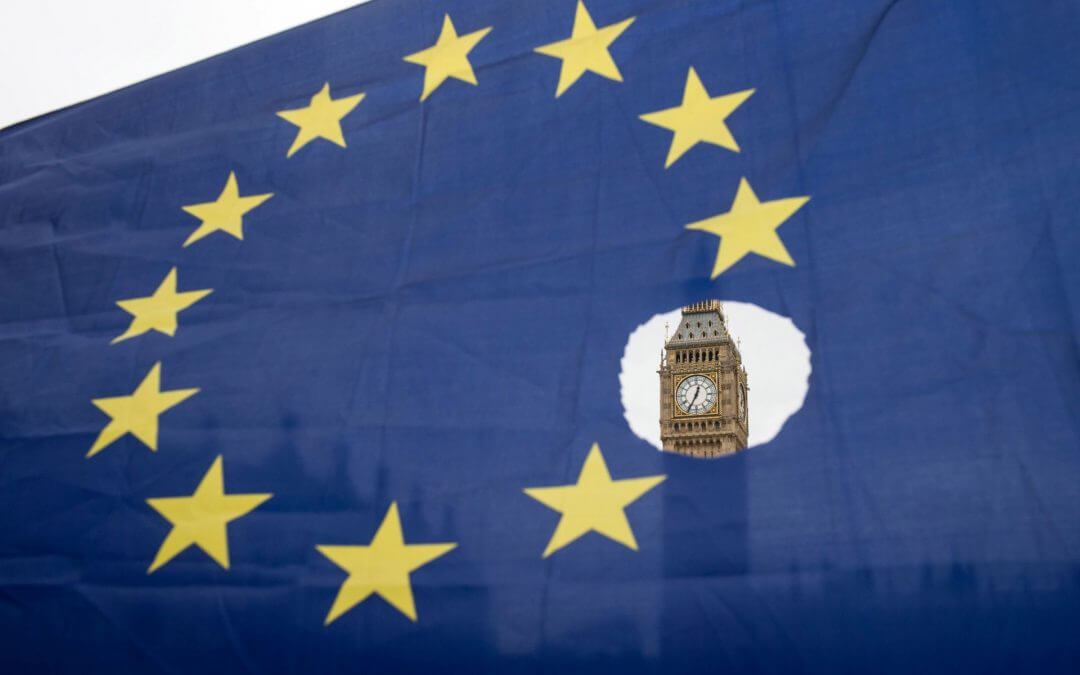
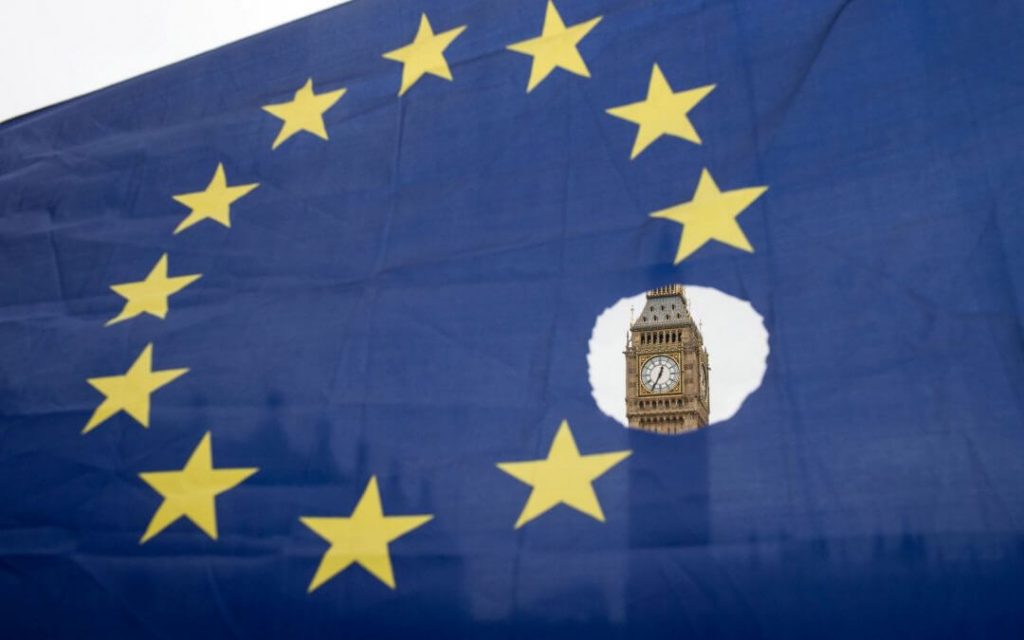
MEPs in Brussels ratified the United Kingdoms’ official withdrawal agreement from the European Union with 621 votes in favor and 49 against.
What comes next: The UK now has to navigate tough trade agreements with the EU, turning the two former partners into rivals. Foreign ministers have also visited Australia and Japan to strike other trade deals.
Can They Do It: Boris Johnson has promised to finish these negotiations by the end of the year, but many experts say that this is much too optimistic. It seems that the first clash will occur overfishing policies, as the UK has refused so far to ensure members of the EU free access to its waters.
Related: Scottish Prime Minister Nicola Sturgeon has renewed its calls for Scottish independence but has ruled out a second referendum for now.
China
As the count of coronavirus cases climbs to over 30,000, the entire world is feeling the effects. China’s economy is experiencing a massive slump, the worst since 2015. Their stock market reopened on Monday after being closed for the Lunar New Year.
China tried to jumpstart the economy with a decision to half additional tariffs on 1,717 products imported from the United States. This economic policy will be enacted on February 14th; it is worth $75 billion of goods. On Thursday, the market responded positively to the Chinese attempt to boost financial confidence.
A Publicity Nightmare: China has accused the United States of causing panic and fear over the coronavirus. Chinese Foreign Ministry spokeswoman Hua Chunying said that the US was wrong for pulling its nationals out of the country and restricting travel. She said that they should have instead provided meaningful aid to keep the virus at bay.
Syria
Violence continues to wreak havoc in the Syrian region of Idlib, the opposition’s only remaining stronghold. An exchange of fire between Syrian and Turkish forces killed eight Turkish troops, thirteen Syrian troops, and nine civilians.
Turkey said that they notified local forces of their positions and that their envoy was there to prevent conflict between the Syrian and Russian-backed troops. But this brought Assad and its allies to a crossroad: either attack Turkey’s troops or let them advance into their territory.
Analysis: This will likely heighten tensions between Turkey and Russia. Despite backing opposite forces in this conflict, Russia and Turkey remained close allies with many common interests. The two nations even agreed to de-escalate violence in the province in 2017. However, the area has recently been subject to extreme levels of violence.
Implications: On Monday, the United Nations announced that half a million people have been displaced since December 1st due to the hostilities, around 80% of them are women and children.
Bolivia
Monday was the deadline for politicians to register their candidacy for the upcoming legislative and presidential elections.
Surprisingly, former President Evo Morales is running for a seat in parliament. Morales, who has been living in exile in Argentina, is banned from running for President but wants to be a legislator. However, a warrant has already been issued for his arrest in Bolivia.
Who’s Running: Bolivia’s interim President Jeanine Áñez has already expressed her candidacy to stay in office, despite her original promise to only remain in power until a new president is elected. Morales named former economy minister Luis Arce as the presidential candidate for his Movement for Socialism party. Centrist former president Carlos Mesa, who Morales beat in 2019, is also running. MAS leads recent opinion polls with 26% support.
Iraq
President Barham Salih appointed a new Prime Minister: former parliament member and Minister of Communications Mohammed Tawfiq Allawi.
The former Prime Minister stepped down last November, leaving the nation without a Prime Minister until this week. In his acceptance speech, Allawi acknowledged the anti-government protesters, stating that their sacrifice and bravery are going to help change the country. However, demonstrators have deemed him “Iran’s choice,” and they have continued to protest.
Eritrea
Leaders from Eritrea, Somalia, and Ethiopia recently met to discuss “revamping economies for the respective nations.”
In their trilateral talks, the three nations agreed to join forces against terrorism, especially in Somalia where the al-Shabaab group still wields a considerable amount of power. Other topics that were discussed include cracking down on human trafficking, modernizing infrastructure, and mobilizing natural resources.
Background: These Horn of Africa nations have been plagued with conflict and tense relations for a long time, but in recent years they have shown signs of increased cooperation. Ethiopian Prime Minister Abiy Ahmed won the Nobel Peace Prize last year for brokering peace with Eritrea, but he still faces backlash over his internal human rights record.
Sudan
There are no signs of protests slowing down any time soon; tens of thousands of people are continuing to participate in marches.
Demonstrators are “urging the government to form a Parliament and to appoint civilian governors.” Civilians are expressing mixed feelings towards these protests. People who support the movement believe that “the transitional period to form the government structures has dragged.” The opposition vehemently believes that the transition should not be pressured, as the current government is heavily supported because of their removal of the former president.
Related: The head of Sudan’s Sovereign Council has been working to improve his diplomatic image around the world. He met with Israeli Prime Minister Benjamin Netanyahu this week and set to visit the United States later this year.
Iran
A leaked audio recording shows that Iran knew immediately that it shot down a Ukraine passenger jet last month. The conversation between an Iranian pilot and an air traffic control tower in Tehran contradicts the government’s denial of the incident. The recording was played on a Ukrainian news channel Sunday night, with Ukrainian President Zalinsky saying that it “proves that the Iranian side knew from the start that our plane had been hit by a missile.”
Response: The Iranian government accused Ukraine of leaking confidential evidence into the investigation; they consequently stated that they will no longer be cooperating with Ukraine.
Lebanon
Two civilians involved in the anti-government protests face trial this week for “resisting security forces.” One defendant, Hassan Yassine, had marks on his body as a result of the physical abuse he received in prison. The other activist, Nour Chahine, was denied access to a lawyer and was barred from contacting his family.
Response: Human Rights Watch has stated that “military courts have no business trying civilians.” They are asking Lebanon to pass laws that remove civilians from the jurisdiction of the military court.
The Latest: The worsening Lebanese economy is causing a massive brain drain. Young adults and well-educated adults are filling out immigration forms in search of a more promising life in a country that can provide them with the opportunities they need to succeed in their respective fields.
Palestine
The Arab League has completely rejected US President Donald Trump’s plan for peace in the Middle East, saying that the plan will ultimately result in anything but peace.
The regional group of states in the Middle East said that it does not “meet the minimum rights and aspirations of Palestinian people,” and that they would not be cooperating with the enforcement of the plan. An emergency session was requested by Palestinian President Mahmoud Abbas, who responded to the plan with “a thousand no’s.”
In Contrast: Oman and Saudi Arabia representatives were present at the presentation of the plan, saying how they “appreciated efforts from Trump’s administration in the Middle East.” Their positive political, military, and economic relations with Israel played a major role in their acceptance of the plan.
Venezuela
President Nicolás Maduro has been making small strides towards economic liberalization in an attempt to prevent Venezuela from the looming threat of an economic disaster. The socialist leader has reportedly been letting businesses operate more freely.
The reality: This has only benefited a select few; most residents continue to face massive inflation and poverty. This is a possible indication of the beginning of a shift towards a Chinese-like model of authoritarian capitalism; it can also be interpreted as an attempt by Maduro to gain support from business leaders.
Related: Opposition leader Juan Guaidó attended US President Trump’s annual State of the Union address this past Tuesday. Trump referred to him as “the true and legitimate president of Venezuela.” Guaidó received a bipartisan ovation. This was only one stop of Guaidó’s international tour meant to build support for him as the legitimate leader of Venezuela; he already has the support of nearly 60 countries.
Hong Kong
After experiencing a 1.2% decrease in its economy in 2019, Hong Kong’s economic status is expected to deteriorate even more due to the spread of the coronavirus. Financial Secretary Pauk Chan has stated that the coronavirus “will greatly increase the risk of continued economic contraction this year.” Schools, shops, parks, and attractions are currently closed, and the nation experienced its first fatality on Tuesday.
Government response: As of midnight this Friday, Hong Kong’s new quarantine policy will be enacted. The policy requires all citizens “returning from the mainland … [face] a mandatory 14-day quarantine.” Anyone who breaks quarantine is subject to a maximum fine of HK$25,000 and up to six months in prison.
Nicaragua
Despite protests quieting down, President Daniel Ortega is still facing large amounts of internal pressure and public calls for his removal. Bianca Jagger, a Nicaraguan social and human rights advocate, called Ortega a “murderous dictator” in a recent interview. She called upon those who led the Sandinista revolution that brought him into power now to turn against him.
Similarly, Nicaragua’s best known former political prisoner, Amaya Coppens, has called upon international organizations to investigate Ortega’s abuses. Ortega has managed to stay in power throughout the protests, but only time will tell if he can hold on for much longer.
North Korea
North Korea has closed its borders with China and Russia to protect itself from the coronavirus, further isolating itself from the rest of the world.
The infamously sealed country has suspended all flights, trains, and cars from entering the country. Outsiders are worried that this will further worsen the country’s limited economy and sever the remaining economic ties that have kept the nation afloat. Without raw materials and processed goods from China, North Korea will have no new medical supplies, clothing, or flour until the ban is lifted.
Yemen
Eighteen months of negotiations with Saudi Arabia finally resulted in the first flight to depart from Yemen in three years. On Monday, the United Nations flew seven extremely ill Yemenis from the nation’s rebel-controlled capital to Jordan. The patients are in dire need of kidney transplants or cancer treatment. The flight has “offered a glimmer of hope for faltering diplomatic efforts to broker an end to a grinding five-year war that pushed much of the country to the brink of starvation.”
The United Nations strongly criticized Houti’s authority for preventing humanitarian aid to be delivered to people in need in the North of the country. Houti’s authority has not replied to the critics so far.
Related: On Wednesday, the Information Minister of Yemen tweeted that eight civilians (four women and four children) died during the ballistic attack over the populated district of Rawda in Ma’rib.
Zimbabwe
Zimbabwean opposition lawmaker Job Sikhala has gone to trial to face charges of trying to overthrow the government. He entered his plea on Monday, saying that he was not guilty. The prosecutors accused Sikhala of trying to “subvert the government ‘through unconstitutional means.’” Human rights organizations have labeled the accusations as harassment.
Russia
Russia’s Federal Antimonopoly Service (FAS) is pressuring popular technology companies to pre-install Russian apps and software onto smartphones and other personal devices that are meant to instill “traditional Russian spiritual and moral values.”
In a country already plagued with gratuitous censorship, the new law outlaws selling technology that does not have the pre-installed software. Russia is now requesting that Apple, Microsoft, and Google not only install the software but also give customers the ability to delete non-Russian built-in apps.
Libya
The United Nations envoy to Libya Ghassan Salamé has said high-ranking officials from both sides of the conflict have agreed on the need for a “permanent and lasting” ceasefire. Salamé also condemned ongoing violations of an arms embargo by both sides. Despite these talks of a ceasefire, military commander Khalifa Hatar received a large supply of weapons from the United Arab Emirates on Monday. Salamé hopes that those who are participating in the arms trade “understand that there is already more than 20 million pieces of ordnance in the country, and that is enough.”
Other news:
United States: The impeachment trial of President Donald Trump concluded on its 13th day after the Senate voted to acquit Trump of charges of abusing his office and obstructing Congress’s investigations.
Ghana: Ghanaians struggling with mental health and substance abuse do not have access to any form of therapy, counseling, or medications. Instead, those patients are being chained to trees for years at a time. Only “2% of the 2.75 million Ghanaians suffering from mental disorders are receiving care at medical facilities,” according to the World Health Organization. Until Ghanaians receive proper medical treatment for these disorders, “the only thing on offer is the chain.”
Mexico: Two environmental activists have been found dead in separate incidents that are likely linked to the cartel. Homero Gómez González was found at the bottom of a well January 28th, and Raúl Hernández was found severely beaten February 2nd. Both men were involved with activist efforts to protect monarch butterflies in northern Mexico, which included anti-logging initiatives that have been upset by the nearby cartels.
El Salvador: The United States’ frequent deportations have resulted in the murder, torture, sexual assault, and abuse of more than 200 El Salvadoran immigrants seeking asylum upon their return to El Salvador. Many immigrants have fled in an attempt to “escape forcible gang recruitment,” but have faced even more violence when they arrive. The United Nations have finally begun to monitor what happens to El Salvadorans who return home after being deported from the US; so far, they have written a 117-page report.
China has been at the center of global concern surrounding a viral new disease. A spike in pneumonia cases in the Wuhan province has been traced back to a new strand of coronavirus. There are 9,923 confirmed cases in 24 countries. China’s death toll currently stands at 213.
The World Health Organization declared a global emergency on Thursday due to its rapid spread to other nations. The head of the WHO said that he is worried countries with weaker healthcare systems are most at risk. The virus is taking a major toll on tourism in Southeast Asia, causing economies to plummet at an alarming rate.
The Chinese government has faced backlash over how long it look to realize and communicate the gravity of the situation. People became aware of a new mysterious sickness at the beginning of January but still traveled for the new year holiday without realizing how contagious it was. China only admitted that it could be transmitted from person to person weeks after it first was discovered. Some critics also say that the death toll is actually much higher than the Chinese government is reporting.
There has also been a spike in racism towards people of Asian descent; a French news agency, Le Courrier Picard, published an article titled “Alerte Jeune,” which translates to “Yellow Alert.” French Asians have expressed their complaints online, using the hashtag #JeNeSuisPasUnVirus, which means “I am not a virus.” Le Courrier Picard has since released a public apology, stating that “it had not meant to use ‘some of the worst Asian stereotypes.’”
Nicaragua
Nicaraguan reporter Wilih Narvaez was physically assaulted by police while he was attempting to cover an impromptu riot against Daniel Ortega. Narvaez filed a complaint to a police chief, but he was ultimately ignored. The Nicaraguan Center for Human Rights “condemned the attack and demanded that the Ortega government respect free speech, as well as the physical and psychological integrity of journalists.” Ortega and the police have yet to release a statement.
The Nicaraguan government “wants to perpetuate itself in power through repression,” and it has certainly done so in regards to its treatment of journalists. Nicaraguan journalists have experienced murder threats, censorship, and assault. Due to increased violence against journalists and reporters, “at least 90 journalists have had to leave Nicaragua.” There have also been at least 1,080 violations of individual freedoms.
A Nicaraguan nature reserve was the site of a massacre that left six indigenous people dead and many more injured. Deep in the Amazon rainforest, the Bosawás Biosphere Reserve has been a subject of contention between environmental activists and settlers looking for a profit. 80 armed attackers stormed the community of indigenous Mayagna people, killing indeterminately. Reports are being released stating that ten or more Mayagna have been taken hostage. This represents just one battle in a growing conflict over economic extractions, as more people are pushing into the jungle for fertile land, timber, and gold. The government has yet to release a statement.
Yemen
The United Nations’ special envoy for Yemen, Martin Griffiths, has asked for the immediate de-escalation of violent conflict. The continuous fighting between Houthi rebels and a Saudi-UAE-led military coalition is the most intense conflict area has seen in three years. Hundreds of people have been killed or injured this week alone. Griffiths has stated that talks of peace will not take place until the violence stops.
The Houthis keep gaining ground and show no sign of slowing down any time soon. President Abed Rabbo Mansour Hadi has expressed the need to “upgrade military institutions to the highest level of training, armament and vigilance” in order to keep the Houthi rebels at bay.
Myanmar
International human rights activists are celebrating Bangladesh’s announcement that all Rohingya refugees living in camps will be given access to a basic education. Currently, only one-third of refugees have been able to receive any kind of education. The new pilot program, a collaboration between UNICEF and the Bangladeshi government, will be available for boys and girls aged 14 and younger; they will be taught both the Myanmar school curriculum as well as technical skills.
Bangladesh has been the primary recipient of Rohingyas fleeing persecution in Myanmar. An estimated 750,000 refugees now call camps around Myanmar home, forming the world’s largest refugee camp. Education for Rohingya refugees has become a major priority for activists who are worried that neglecting these young people will result in a “lost generation.”
Zimbabwe
In an ongoing back-and-forth between civil servants and the government, Zimbabwe’s public-sector workers agreed to a 140% wage increase in return for canceling their upcoming strike. Still, the lowest-paid workers only take home around 130 Euros a month, leaving much to be desired in the cash-strapped country. This comes in the wake of Zimbabwe’s doctors returning to work last week after they received salary increases. Amid political turmoil, the Zimbabwean economy is characterized by high unemployment, runaway inflation, and shortages of basic commodities.
Iraq
In response to the ongoing protests against American troops being stationed in Iraq, Shia leader Muqtada al-Sadr announced that he would no longer be supporting the protesters. Still, anti-government protests have continued their sit-ins around Baghdad, with police crackdowns turning even more brutal. Two protesters have been killed – one in Baghdad and one in Nasiriyah. More than 500 anti-government protesters have been killed since October.
Protesters’ anger towards the United States resulted in attacks on the US Embassy on Sunday evening. Three rockets hit the Embassy, causing only minor injuries. This is the third attack the compound has witnessed in this month alone. While the United States is calling upon Iraq to better protect the embassy, it is unlikely that the attacks will stop anytime soon. Prime minister Abdul Madhi, who resigned in November, has “told armed groups to stop these kinds of attacks on the US embassy, but to no avail.”
Syria
Even though the Idlib province is considered a de-escalation zone, President Assad’s regime and his Russian allies broke the ceasefire agreement, bombing areas within the province. Russian warplanes killed at least 10 people, and bombs even targeted a hospital.
After months of bombing, the Syrian army re-occupied Maarat al-Numan in the Idlib province on January 29th, after rebels withdrew from Maarat al-Numan. This caused a new exodus of tens of thousands of civilians towards Turkey’s border, as Idlib contains millions of Syrian refugees. The United Nations and other aid agencies have repeatedly warned that fighting in Idlib risks a major humanitarian catastrophe.
Libya
Violent conflict erupted on January 26th, ending the ceasefire that was established earlier this month. Military commander Khalifa Haftar’s forces occupied the town of Abu Grein, which was originally under the control of the UN-recognised Government of National Accord (GNA). At least three people were killed and more than two dozen were wounded.
Government forces are preventing Haftar from moving forward; they are inching towards regaining the areas that are currently under the control of Haftar’s army.
Lebanon
On Monday, Lebanon’s parliament passed its 2020 budget, upsetting both protesters and opposition leaders. “The proposed budget in its current form is completely detached from reality,” Nafez Zouk, an economist at Oxford Economics, told Al Jazeera. Lebanon is currently experiencing one of its worst financial crises; its currency is weakening, its business is declining, and banks are having to come up with limitations. The country owes a $1.2 billion Eurobond payment this March, only adding to its already gratuitous debt. The new budget claims that the Lebanese economy is growing and holds steady inflation rates. This disconnect between the country’s new government and the reality Lebanese citizens are facing is one of the chief complaints of protesters.
Bolivia
Bolivia’s interim President Jeanine Áñez has announced that she is running for President. Bolivians will head to the polls in May to elect a new government, as the results of the last election in October resulted in weeks of protests. In that election, President Evo Morales won and was going to serve for a fourth consecutive term, but after reports of corruption surfaced, violence broke out and Morales was forced to resign. Áñez has been in charge ever since he resigned in 2019.
Áñez’s decision has sparked controversy throughout Bolivia. The former conservative senator had previously stated that she was not going to run for office, promising to stay in power only until a new President was elected. On Monday, she asked all of her ministers to resign just hours after her Communication Minister stepped down in response to her decision to run.
Sudan
General Mohamed Hamdan Dagalo, the deputy chief of Sudan’s Sovereign Council, and Malik Agar, the head of one of the two factions of Sudan People’s Liberation Movement-North (SPLM-N), have signed a peace agreement. The leader of the second fraction, SPLM-N Abdelaziz al-Hilu, has said nothing. This deal is supposed to bring an end to the war that has claimed the lives of thousands.
Sudanese families have organized a demonstration in front of the United Arab Emirates Embassy to protest against an Emirati company. The company is accused of sending recruits to fight in Yemen and Libya instead of hiring them for security posts in the UAE, as was described in their contracts. The company has denied all allegations.
Eritrea
Leaders from Eritrea, Somalia, and Ethiopia recently met to discuss “revamping economies for the respective nations.” These Horn of Africa nations have been plagued with conflict and tense relations for a long time, but in recent years they have shown signs of increased cooperation. Ethiopian Prime Minister Abiy Ahmed won the Nobel Peace Prize last year for brokering peace with Eritrea, but he still faces backlash over his internal human rights record.
In their trilateral talks, the three nations agreed to join forces against terrorism, especially in Somalia where the al-Shabaab group still wields a considerable amount of power. Other topics that were discussed include cracking down on human trafficking, modernizing infrastructure, and mobilizing natural resources. The achievement of these goals will have a lasting impact on the region, as both Somalia and Ethiopia have major elections in 2020.
Hong Kong
Pro-democracy legislators, activists, and a medical union have called for closing the border, but Chief Executive Carrie Lam dismissed the idea, deeming it impractical. Despite her comments, Hong Kong has announced its plans to close its borders in response to the spreading of the virus.
Tensions caused by the spread of the virus resulted in a group of protesters setting the lobby of a newly constructed residential building on fire on January 25th. The building was supposed to serve as a quarantine facility. On January 27th, another group of protesters launched a Molotov cocktail into a general hospital. Approximately 20 people were evacuated, but no one was injured.
Iran
On Tuesday, the Iranian Parliament called for a debate regarding their withdrawal from the Non-Proliferation Treaty, the top international agreement regulating the spread of nuclear weapons that was signed in 1968. This move is believed to be a threat to the global community.
After the United States pulled out of the deal in 2018, its future has been tenuous. Nations of the European Union condemned Iran earlier this year for violating the terms of agreement. The next step would be reimposing UN sanctions, which would only further cripple the United States’ economy. Iranian Foreign Minister Mohammad Javad Zarif said that if the EU were to impose sanctions, they would in-turn pull out of the NPT.
Venezuela
Juan Guaido met with Canadian Prime Minister Justin Trudeau on Monday, breaking the travel bans Maduro has placed into effect. Guiado is looking to gain international support for the removal of Maduro from office. Canada has placed sanctions against Maduro and is one of six nations that have referred Maduro to the International Criminal Court.
In order to keep his power over the country, Maduro is seeking help from the free market. He has given the economy a “freer hand” in his desperation to keep the economy afloat as it suffers from sanctions placed by the United States. The Venezuelan economy has “contracted by 60% during Mr. Maduro’s tenure and is widely predicted to shrink another 10% this year.” However, business professionals are now saying that the economy may rebound because of new freedoms.
Russia
In an attempt to expand its influence in Africa, Russia has deployed nearly 200 mercenaries to Mozambique to fight against an Islamic State offshoot. Their long term goal is most likely to settle a permanent military base there, which would be Russia’s first base in Africa. In the past year, Russia has slowly been strengthening its influence on the region by facilitating arms sales and security trainings.
Russia also recently sent military forces to Libya in hopes of swinging the civil war in favor of the Libyan National Army. International interference in Africa has been controversial for quite a while, but there has been a massive increase in foreign fighters inhabiting the continent. Many world leaders are now trying to figure out what kind of presence is appropriate to maintain in Africa.
The United States
President Donald Trump unveiled a sweeping new plan for relations between Israel and Palestine. The two-state plan would create a disjointed Palestine state surrounded by Israel, who would be granted territory that it has wanted for years. Announcing the plan alongside Israeli Prime Minister Benjamin Netanyahu and no Palestinian representatives, Trump called the plan a “win-win.” In response, Palestinian President Mahmoud Abbas dismissed the plan, calling it a “conspiracy.” Thousands of protesters gathered in the Gaza Strip Tuesday, while Israel strengthened its military presence in the West Bank.
In a unanimous decision, the International Court of Justice has ordered Myanmar to “prevent all genocidal acts against Rohingya Muslims.” Following years of international scrutiny and protests against Myanmar’s treatment of its Muslim population, the ICJ finally stepped in. The government is now responsible for following Act Two of the Genocide Convention, preventing the military from carrying out genocide, reporting back to the ICJ in four months, and continuing to report to the ICJ every six months.
The Office of the President has released a summary confirming that war crimes have indeed been committed along with “serious human rights violations.” However, the government still denies any genocidal intent or crimes against humanity. The Office of the President has not fully addressed the full scale of the crimes committed against the Rohingya, dismissing claims of sexual violence and rape.
Zimbabwe
Students at Njube High School in Bulawayo staged a protest Monday over deteriorating education conditions. Nearly 200 students marched through the streets with the rallying cry “education is ours.” Zimbabwe’s quality of education has been declining in light of their economic crisis, with teacher pay being so low that they have resorted to going on strike. The main teacher who helped stage the protest has been forced to flee the country after learning he was wanted by state security agents.
Additionally, opposition leader Nelson Chamisa called on supporters to ready themselves for more protests in a rally this week. The worsening economic crisis has only been exacerbated further by the worst drought the country has seen in 40 years. “The constitution allows (us) to demonstrate when we feel it’s necessary. So this is going to be a year of demonstrations and action,” Chamisa said.
Yemen
Yemen experienced the bloodiest attack since the start of its conflict five years ago this past Saturday. Ballistic missiles struck a mosque at the al-Estiqbal military camp in Ma’rib where soldiers were assembled for evening prayers. The death toll is currently at 116 and expected to rise. The government announced the Houthi rebel movement is to blame, but no group has claimed responsibility for the attack yet. Fighting between rebel and government groups has escalated in the days following the attack, which is sure to complicate the country’s steps towards peace.
The civil war, which has been raging on since 2014, has become one of the regions deadliest conflicts. The United Nations special envoy to Yemen condemned the attacks, saying that “such actions can derail this progress [towards de-escalation]. The negotiation tables are more effective than battlefields in resolving the conflict.”
Iran
Abdolhossein Mojaddami, a local paramilitary security force commander, was gunned down by two masked men on Wednesday. Mojaddami was an associate of the recently assassinated Soleimani. The motive behind the killing remains unclear.
In the growing aftermath of the United States’ targeted killing of Iranian General Qasem Soleimani, tensions between the two countries are at an all-time high. Following Iran’s confirmation that it shot down the Ukranian commercial airliner by mistake, the country’s administration is experiencing a wave of protests. These protests mark the most serious challenge that the Supreme Leader has faced in decades.
In response to the protests, Supreme Leader Ayatollah Ali Khamenei defended the military in a rare public appearance. Leading Friday prayers, he called for national unity while criticizing the US government and its involvement in the region.
Lebanon
What began as peaceful protests in Beirut months ago have escalated into violence in recent days. More than 540 protesters have been injured in these clashes with police. The protesters’ original complaints against tax hikes have turned into calls for revolution against the ruling class.
In response, Lebanon’s leaders formed a new government on Wednesday with Hassan Diab as their new Prime Minister. He stated that the new government “represents the aspirations of the demonstrators who have been mobilized nationwide for more than three months.” This is the first established government Lebanon has seen since the resignation of the last Prime Minister in October.
Despite Diab’s promising remarks, protesters have yet to be satisfied. A reporter for Al Jazeera has stated that the people “have lost faith in the ruling authorities. They believe they should give up power.” Citizens are skeptical of the new government and are desperate for change and a solution to their economic plight.
Iraq
Hundreds of thousands of protesters took to the streets of Baghdad on Friday, calling for US troops to end their occupation of the country. Iraq has seen renewed protests and clashes with police forces ever since the US-backed airstrike killed General Qassem Soleimani in neighboring Iran. While the government has stated that they do not want to be caught in the middle of this feud, the death toll of these protests has spiked.
Many Iraqis see the US occupation as a breach of their own sovereignty, as there are still roughly 5,000 US troops stationed in Iraq. Their parliament voted recently to expel the troops from their country, but US military leaders have not agreed to these demands.
Hong Kong
Hong Kong’s protesters are showing no signs of slowing down in the new year; thousands have taken to the streets to continue demanding for democracy.
A number of foreign dignitaries and diplomats have sent an open letter to Chief Executive Carrie Lam, calling for her to address the problem and respond to the six months of protests. That same day, China’s President Xi Jinping stated that Beijing would “resolutely safeguard the prosperity and stability” of Hong Kong.
Days later, China fired Wang Zhimin, the country’s top liaison in charge of relations between China and Hong Kong.
Cambodia
Two provincial military officers have been connected to an incident involving the torturing of a villager who was in their custody. Colonel Sar Bunsoeung and First Lieutenant Chhoy Rathana have stated that they “neglected to protect five villagers involved in a land dispute.” The Cambodian Human Rights Committee has released statements concerning the case, saying that it “will be a warning to powerful government officials and authorities not to violate the law.”
One of the civilians in custody passed away during his time with the two military officers. Following the civilian’s death, Prime Minister Hun Sen created a special committee to look further into the case. Should the officers be found guilty, they could serve two to five years in prison.
Sudan
Sudan had entered into a new period of political instability following recent clashes between loyalists and military forces. On January 14th, a shooting took place in Khartoum, causing the airport to close. The rebellion was led by ex-elite troops who had pledged their loyalty to Bashir. Two soldiers were killed and four were injured. This is the most extreme case of unrest since Bashir was overthrown in April of 2019. The airport has since reopened.
Ever since Sudanese leader Omar al-Bashir was placed into a social reform facility this past December for corruption, protesters have taken to the streets in hopes of creating a new form of government. School girls are singing songs of protests and staging gatherings of their own. These types of protests would not have been allowed under Bashir, as they would have been met with “tear gas and batons, perhaps worse.” In this new era, protesters no longer fear the police, a feat that was once impossible under Bashir’s rule.
Thailand
The Future Forward Party, still in its nascent stages, avoided disbandment on January 21st, despite having more than 25 legal cases being presented against it. The FFP and its leaders have been found not guilty of attempting to overthrow the current regime.
Despite being less than a year old, the FFP amassed 17% of the votes in the 2019 elections. A recent December poll shows that the party’s leader, Thanathorn Juangroongruangkit, is more popular than the current Prime Minister, with Thanathorn receiving 31% of votes and the incumbent receiving 24% of the votes. The FFP wants to lessen the military’s role in government in hopes of creating a more democratic Thailand.
Venezuela
The political crisis in Venezuela is still at a stalemate as Nicolás Madura and Juan Guaidó continue to argue over who is the legitimate president. Madura, who has been in power for two decades, was re-elected in 2018, but many civilians believe the election to be rigged in his favor. A year after Juan Guaidó, chairman of Venezuela’s opposition-controlled national assembly, declared himself president, he is no closer to removing Madura from office.
Guaidó has received aid and support from much of the international community. US Secretary of State Mike Pompeo met with Guaidó in Colombia to pledge the US’s continued support to the man who they see as the legitimate leader of the country. This violates a travel ban put in place by the country’s pro-Madura Supreme Court.
Vietnam
The human rights situation in Vietnam has deteriorated exponentially since 2019. Last year, more than 30 activists were imprisoned for exercising their freedom of expression, association, and religion. Officials continue to place activists and bloggers under house arrest; these activists are also subject to physical assault. Activists are not allowed to leave the country, infringing on their individual liberties.
The EU and Vietnam have been drawing a trade agreement that will supposedly “abolish 99% of customs duties, eliminate bureaucratic hurdles, and ensure easier market access for both European and Vietnamese companies.” The EU-Vietnam Free-Trade Agreement, should it go through, is projected to bring approximately $16.6 billion USD worth of exports into the EU by 2035.
Eritrea
In 2018, Eritrea and Ethiopia agreed to a peace deal, but there has yet to be any visible domestic progress. 12% of the population has fled the “Red Sea nation,” and Eritreans closely trail Syria in the number of refugee applicants seeking asylum in Europe. Many people are seeking asylum due to a national law that forces all Eritrean students, regardless of gender, to complete at least 18 months of military training. People who complete the training have reported many instances of human rights abuses and sexual violence.
Syria
The ongoing Syrian Civil War shows no sign of slowing down. On the ground, up to 40 Syrian soldiers have been killed in the north-west region of the country. Idlib is the last stronghold help by anti-Assad forces, and that region has seen an incredible amount of violence in recent weeks. According to a United Nations report, almost 350,000 civilians, 80% of them women and children, have been displaced by the fighting since hostilities escalated at the start of December.
Nicaragua
Nicaragua’s two main opposition groups will form a coalition going into their 2021 elections in hopes of defeating President Daniel Ortega. The two groups – the Civic Alliance for Justice and Democracy and Blue and White National Unity – invite any groups and/or individuals that oppose the president to join their coalition, hoping that the recent unrest in the country will spur anti-government momentum.
US Secretary of State Mike Pompeo visited the country this week, where he called upon President Ortega to stop silencing his political opponents in the troubled Central American country. A small group of Nicaraguans demonstrated outside the presidential palace in San José, where Pompeo had talks with Costa Rican President Carlos Alvarado.
Bolivia
Since the resignation of President Evo Morales in November, Bolivian has been plagued with instability, but now it looks like peace might win out. After Morales was found guilty of trying to rig elections, both his supporters and opponents led protests throughout the country. However, Bolivia has been able to edge away from violence because of the work of politicians Jeanin Áñez and Eva Copa. Together, they have rallied their parties together to plan new elections. Ms. Copa has stated that “the priority in those moments was to pacify the country and stop the violence.” In a surprising turn of events, protesters are refraining from taking to the streets, as the real battle will be at the polls.
North Korea
Kim Jong Un has appointed a new foreign minister, Ri Son Gwon. Gwon is a senior military officer with very little diplomatic experience. He replaces Ri Yong Ho, a diplomat who has many years worth of negotiation experience with Washington. The recent appointment is quite worrisome, as Kim Jong Un is continuing to strengthen the role of the North Korean military on a domestic and global scale, filling his cabinet positions based on party loyalty rather than merit.
Philippines
One of the most active volcanoes in the Philippines erupted last week. The United Nations estimated that over half a million people were put at risk, both from the immediate eruption and subsequent earthquakes.
This Friday, the volcano released thick clouds of smoke, confirming scientists’ speculations that more vicious eruptions are going to take place in the near future. The volcanology agency has reported that the next eruption could take place within the next several days or even within the next several hours.
Russia
In a dramatic reshuffling of Russia’s leadership, Prime Minister Dmitri Medvedev stepped down from his role just hours after President Vladamir Putin announced changes that would shift power away from the presidency. The constitutional amendments proposed by Putin would help him maintain some political control after he meets his term limit in 2024.
While Putin’s future role in Russia is unknown, he has ruled the country in various roles since 2000, bypassing the 2-term limit of the Presidency by switching in and out of various roles ever eight years. The two offices that his new proposals will give more power to – the State Council and the Prime Minister’s office – are two likely places that Putin might head next. Mikhail Mishustin has been named as the next Prime Minister; he has served as Director of the Federal Tax Service for the past 10 years.
Libya
Leaders from the EU, Turkey, and Russia met alongside both parties in the Libyan civil war recently in Berlin. The foreign backers agreed to provide no further military support, honoring the UN arms embargo. The two warring parties, General Khalifa Haftar’s Libyan National Army and UN-backed Government of National Accord, were both in attendance, but refused to meet with each other or agree on the ceasefire themselves. Experts agree that until these parties agree to a ceasefire, the conflict will not dissolve, but this is a small step to limiting the proxy war that has continued since 2011.
Malaysia will proceed with criminal charges against Goldman Sachs due to the losses caused by Goldman Sachs in the 1Malaysia Development Berhad scandal. The losses amount to US$7.5bil (RM31.19bil) from Goldman Sachs alone, which is disputed by a Bloomberg report that speculates Goldman Sachs will ultimately pay less than US$2bil. Malaysian Prime Minister Tun Dr Mahathir Mohamad recently told Reuters in an interview that Malaysia would prefer to avoid going to court, but only if a reasonable offer could be agreed upon.
On Tuesday, Prime Minister Mohamad announced that he would hand over power to anointed successor Anwar Ibrahim in spite of new sexual assault allegations against him. The world’s oldest Prime Minister at 94 years old, Mohamad told Reuters that he would not hand over before a summit of Asia-Pacific Economic Cooperation (APEC) countries that Malaysia will host in November of 2020. Ibrahim, 72, has been jailed twice on separate counts of sodomy and for corruption.
North Korea
This week, US-North Korean relations have further deteriorated as North Korean Deputy Foreign Minister Ri Thae Song threatened the United States. The minister confirmed the possibility of North Korea resuming long-range missile tests, as well as shared how “it is entirely up to the US what Christmas gift it will select”. North Korea insists that if the US does not change its position on nuclear negotiations the North will retaliate. So far, the US has not capitulated and maintains its position on nuclear negotiations.
Hong Kong
On Wednesday, a probe composed of foreign experts that was delegated to objectively investigate police brutality in Hong Kong abruptly quit, citing failure to agree on a formal process with the Independent Police Complaints Council (IPCC). The commission, which serves as a police watchdog, lacks the powers necessary “to meet the standards citizens of Hong Kong would likely require” in a society that “values freedom and rights”, according to the experts. The decision by the foreign panel to quit is likely to heighten protesters’ demands for an independent probe, and increase public distrust of government institutions.
Libya
This week, an Al Jazeera correspondent interviewed Libyan families who had been displaced by the eight-month-long conflict between Tripoli’s Government of National Accord and Haftar’s Lybian National Army. The family that the correspondent interviewed is just one of 130,000 others who had been displaced during the conflict. The interviewees spoke of the housing crisis in Tripoli and the harsh living conditions they had been forced into. Many families are demanding that the Tripoli government provide them with compensation for their lost homes. The government has yet to meet their demands.
Sudan
A methane surge has been detected in South Sudan by researchers from Edinburgh University, UK. According to their studies, a big jump in emissions coming from the wetlands of South Sudan could be responsible for at least part of the recent growth in methane (CH4) levels in the atmosphere. A potent greenhouse gas, Methane is increasing its concentration in the atmosphere and thereby exacerbating the climate crisis.
This week, the U.S. placed sanctions on 5 South Sudanese nationals for their alleged roles in the abduction and execution of two prominent critics of President Salva Kiir’s government nearly three years ago. The South Sudanese government has consistently denied responsibility for the disappearance of human rights lawyer Dong Samuel Luak and Aggrey Idri, a member of the Sudan People’s Liberation Movement in Opposition (SPLM-IO). However, a U.N. panel of experts said it verified evidence strongly, which informed the U.S. treasury’s decision.
Iran
This week, the Iranian President Hassan Rouhani announced the government’s $39bn budget plan aimed to combat harsh US sanctions; he coined the budget plan a “budget of resistance”. In May of last year, the US imposed strict sanctions on Iranian oil, which led to economic turmoil with inflation of over 40%. In turn, the economic downfall caused months of deadly protests throughout Iran as protesters challenged the rise in fuel costs. Rouhani shared the budget would “announce to the world that despite sanctions we will manage the country, especially in terms of oil.” He aims for his budget to aid Iran in overcoming economic difficulties and ease public unrest.
Iraq
Two powerful Iraqi tribes from the South of Iraq have decided to fill the government and security vacuum left by the past two months of violence and unrest. According to tribal leader Oday Sharshaab al Badour, people in the south of Iraq have completely “lost trust in the government”. Seeing as parliament members from the southern Iraqi province have resigned and local councils have dissolved, the local leaders see no choice but to assume leadership. The leaders have formed a joint statement demanding the resignation of parliament and early elections. In the statement, the leaders wrote: “We stand with the demonstrators and their legitimate demands. We denounce anyone from security forces who had a hand in the bloodshed”. Though security forces have recently claimed a new, calmer state, demonstrators interviewed across the country are still sharing reports of violence and clashes.
Lebanon
This week, former Lebanese Prime Minister Saad Hariri, who resigned recently to appease protesters, asked for international help to finance the country’s imports. Currently, Lebanon is facing its “worst economic crisis in decades”. This economic crisis is what triggered the now two-month-long protests throughout the nation, in which protesters called for the complete overthrow and restructure of government. However, it has been made clear that international aid will come with its own list of demands. International support seems to be tied to the new restructured government that is expected to take shape.
Zimbabwe
This week, the World Food Programme has pledged to double the number of people it will provide emergency food to in Zimbabwe. According to a United Nations study, nearly half of the country’s 14 million population are suffering from severe hunger. Amid a call for increased funding to its donors, WFP Executive Director David Beasley said in an emailed statement “We’re deep into a vicious cycle of sky-rocketing malnutrition that’s hitting women and children hardest and will be tough to break . . . with poor rains forecast yet again in the run-up to the main harvest in April, the scale of hunger in the country is going to get worse before it gets better”.
Nicaragua
A Nicaraguan judge has ruled that 16 opposition activists will be tried for weapon charges. The opposition activists were arrested when delivering water to protesters participating in a hunger strike. Police claimed to have found weapons at the site of the hunger strike and accused the individuals who brought water to the protesters of “illegally transporting arms”. The activists deny the accusations and maintain they solely brought water to the hunger strikers. The Nicaraguan Human Rights Center has criticized the judge’s ruling, calling the process “tainted”.
Bolivia
This week, the Inter-American Commission on Human Rights (IACHR) called for an investigation into human rights abuses committed in Bolivia after the controversial October election. Weeks after the election and Evo Morales’ resignation in early November, violent clashes between police and protestors have prompted international concern. In its initial report, published on Tuesday, the IACHR said it had found “strong indications of human rights violations, with profound repercussions for the life of Bolivian society”. Bolivia’s interim government, led by Jeanine Anez, has disputed the report, stating that “The Ministry of the Presidency considers that this is an unfair report that has not evaluated everything that happened during the events in November”. According to the report, 36 people have been killed in the post-election violence.
This website uses cookies to improve your experience. By closing this message, you consent to their use in accordance with our cookie policy, unless you have disabled them. ACCEPTRead More
Manage consent
Privacy Overview
This website uses cookies to improve your experience while you navigate through the website. Out of these, the cookies that are categorized as necessary are stored on your browser as they are essential for the working of basic functionalities of the website. We also use third-party cookies that help us analyze and understand how you use this website. These cookies will be stored in your browser only with your consent. You also have the option to opt-out of these cookies. But opting out of some of these cookies may affect your browsing experience.
Necessary cookies are absolutely essential for the website to function properly. This category only includes cookies that ensures basic functionalities and security features of the website. These cookies do not store any personal information.
Any cookies that may not be particularly necessary for the website to function and is used specifically to collect user personal data via analytics, ads, other embedded contents are termed as non-necessary cookies. It is mandatory to procure user consent prior to running these cookies on your website.