Weekly Report: 17 November, 2017

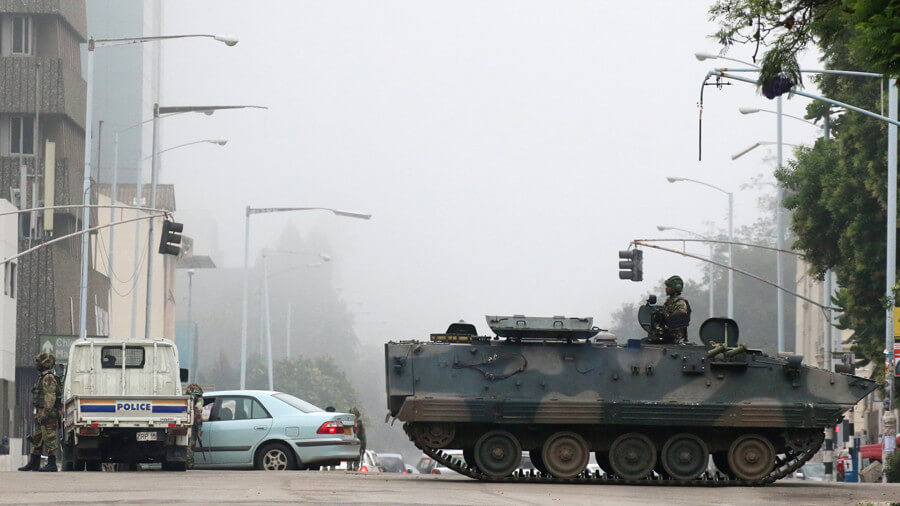
Photo: Ruling Party tensions reached a peak this week in Zimbabwe, when the military forced Robert Mugabe off the stage after 37 years in power – Photograph: Philimon Bulawayo_Reuters
Zimbabwe

Martha O’ Donavan, the American woman who’s arrest CANVAS reported on last week, has been granted bail last Friday. O’ Donavan’s, who is charged with subversion over allegedly insulting President Robert Mugabe on Twitter, her bail was set on $1,000. According to the Washington Post, she did not speak to reporters as she emerged from a prison in the capital, Harare, and left in a U.S. Embassy vehicle. As are the conditions attached to her bail, O’Donovan had to hand over her passport to the Zimbabwean authorities, and has to report to the Criminal Investigation Department (CID) on Monday and Friday. On Tuesday, Human Rights Watch releases a small report on the most recent clamp down on media in Zimbabwe, calling on the government to create an independent body to impartially investigate police abuses against journalists.

Also late last week, AfricanArguments.org release an opinion-piece by Blessing Miles Tendi, on the role the British authorities might have played in the lay-off of former vice-President Emmerson Mnangagwa. “With Mnangagwa’s dismissal,” Tendi argues, “the UK’s alleged strategy [to support Mnangagwa as Zimbabwe’s next president] has not only clearly failed, but its perceived backing for Mnangagwa prompted outrage among many Zimbabweans, further weakening the UK’s image in the country. Moreover, its support for Mnangagwa may have even contributed to his downfall.” Tendi moves on to argue that, besides the fact that UK-meddling in the presidential succession process is a known stick used by Mugabe, the UK should have recognized that associating itself with Mnangagwa would provoke heated domestic opposition because the controversial Mnangagwa has a long history of human rights abuses and violence.

Early this week, Reuters covered a piece by MacDonald Dzirutwe, relating to the building economic crisis in Zimbabwe. According to Dzirutwe, the cryptocurrency bitcoin is becoming a rare protection from the onset of hyperinflation and financial implosion for Zimbabweans. As Zimbabweans are desperately looking into anything they think might retain value, “some are turning to bitcoin out of desperation as their bank deposits lose value almost by the day, while others are using the online currency for housekeeping such as funding family members studying abroad,” the article claims. Bitcoin’s attraction to Zimbabweans also lies in the difficulty of making foreign payments due to government capping or halting transactions which make more money leave the country. For those in Zimbabwe who still have assets, that is.

Then on Tuesday and Wednesday, the army takes over Zimbabwe. Read all about the developments in the last few days on our website!

1. Al Jazeera
2. Human Rights Watch
3. African Arguments.org

  1. Reuters

Cambodia

One day ahead of the court hearing, Human Rights Watch brought out a statement on the upcoming ruling of Cambodia’s highest court on opposition party CNRP. On November 16, the Supreme Court will rule on a case brought at the behest of Prime Minister Hun Sen in October to dissolve the CNRP. The Cambodian government has accused that opposition party of trying to stage a “color revolution” – a reference to popular uprisings around the globe – but has provided no evidence of illegality in its court filings. Human Rights Watch stated that “Cambodia’s Supreme Court should resist government pressure to rule on dissolving the country’s main opposition party,” and added that “Cambodia’s international donors and supporters should state clearly that dissolution of the Cambodian National Rescue Party (CNRP) will delegitimize national elections scheduled for 2018.” In the meantime, the opposition itself has seemed to have given up hope for the court-case. As the judge who heads the Supreme Court, Dith Munty, is a member of the permanent committee of the ruling Cambodia People’s Party (CPP), Mu Sochua, a deputy of Kem Sokha claimed that “there is no chance whatsoever for CNRP to escape dissolution.”

Meanwhile, on that same Wednesday, former opposition leader Sam Rainsy, who fled to France in 2015 to escape a jail term for defamation, announced he was returning to the CNRP-party. He left that same party in February over fears his membership would lead to it being banned. Rainsy is now running his political operations from Paris. “I’d like to announce that I, Sam Rainsy, became a member of the Cambodia National Rescue Party again from now onwards, whether it is dissolved or not,” he wrote on his official Facebook page. In an interview with Euronews this week, the opposition politicians claimed that he was in no hurry to return to his home country. “He [Hun Sen] would not hesitate to kill me or to kill any other leader of the CNRP…this is a different game. This time, we need a comprehensive solution to the crisis.” The components of such a solution, Rainsy stated, include the release of all political prisoners, an end to an atmosphere of political intimidation, and the re-opening of shuttered media. Although Rainsy acknowledges that this approach will “take time to achieve”, he claims it is the only way to ensure long-term results.

On Thursday, the inevitable happens, as Cambodia’s Supreme Court ordered the main opposition party to be dissolved. Dealing a crushing blow to democratic aspirations in the increasingly oppressive Southeast Asian state, the decision clears the way for the nation’s authoritarian leader to remain in power for years to come. Prime Minister Hun Sen also stated that 118 opposition party members would be banned from politics for the next five years, and the verdict could not be appealed. On that same day, The United States demands that Cambodia reverses its ban on the country’s main opposition, and warns that the dissolution of the party would strip 2018 elections of legitimacy. Reuters reports that Cambodia now faces US and EU sanctions.

1. Human Rights Watch

  1. Euronews
  2. AP News

Myanmar

Early this week, Human rights groups poured scorn on a Myanmar military investigation into alleged atrocities against Rohingya Muslims, branding it a “whitewash” and calling for U.N. and independent investigators to be allowed into the country. The reactions came after military sources posted the findings of an internal investigation on the Facebook page of its commander in chief, Senior General Min Aung Hlaing, on Monday. The report said “it had found no instances where its soldiers had shot and killed Rohingya villagers, raped women or tortured prisoners. It denied that security forces had torched Rohingya villages or used excessive force,” according to Reuters.

On Monday, Bob Geldof announced that he would returns his Freedom of the city of Dublin honor in protest over Aung San Suu Kyi, who also holds the award. In a statement, the Live Aid founder and musician blasted the Burmese Nobel peace laureate, who has faced widespread criticism over her country’s treatment of its Rohingya Muslim minority. Geldof, originally from Dublin, said: “Her association with our city shames us all and we should have no truck with it, even by default. We honored her, now she appalls and shames us. I do not wish to be associated in any way with an individual currently engaged in the mass ethnic cleansing of the Rohingya people of north-west Burma.” On Saturday fellow Irish musicians U2 also criticized Burma’s civilian leader, urging her to fight harder against serious violence inflicted by the nation’s own security forces.

On the same day Human Rights Watch calls on the Burmese government to withdraw the protest ban for Yangon, U.S. Secretary of State Rex Tillerson visited Myanmar for talks with the country’s leaders. Tillerson was expected to hold talks about the situation in northern Rakhine state, meeting with leader Aung San Suu Kyi and Myanmar’s powerful military chief, Min Aung Hlaing, who is in charge of operations in Rakhine. U.S. lawmakers and activists are urging Tillerson to sanction Myanmar’s military if it doesn’t stop what a top United Nations official has called “a textbook example of ethnic cleansing” against the Rohingya Muslim minority. More skeptical opinion makers see the visit as to show Trump administration takes human rights seriously.

1. Reuters

  1. BBC
  2. Politico

Venezuela

Late last week, VOA News reports that The United States and Italy have organized an informal U.N. Security Council meeting on Venezuela. The meeting is aimed at preventing the crisis in that country from turning into a security threat, in the face of a crumbling Venezuelan economy. U.S. Ambassador Nikki Haley will chair the informal meeting, which will include addresses from U.N. human rights chief Zeid Ra’ad al Hussein and Organization of American States Secretary-General Luis Almagro. Haley is urging the U.N. Security Council to turn its attention to the situation in Venezuela, which has until now maintained that regional organizations were best suited to address the crisis. Permanent council members Russia and China boycotted the talks.

As the meeting happened on Monday, Human Rights Watch called on the UN Security Council to put strong, multilateral pressure, on the country, without which the human rights and humanitarian crisis will only get worse. According to HRW, the council should focus on the regime’s descent into authoritarian rule, the widespread brutal force to react on protests, a humanitarian crisis evolving out of the political crisis, and the impact emigration has on neighboring countries.

Before the first round of debt-restructuring talks took place starting from Monday, Venezuela claims to have reached an agreement to refinance and restructure the debt with Russia. As that deal was finalized on Wednesday, Venezuela’s other main creditor and ally China has chosen not to go along with the offer of debt relief. The Chinese foreign ministry on Wednesday expressed confidence that Caracas could “properly handle” its debt crisis, adding that financial cooperation was “proceeding normally”.

1. VOA News
2. Human Rights Watch
3. The Guardian
Spain

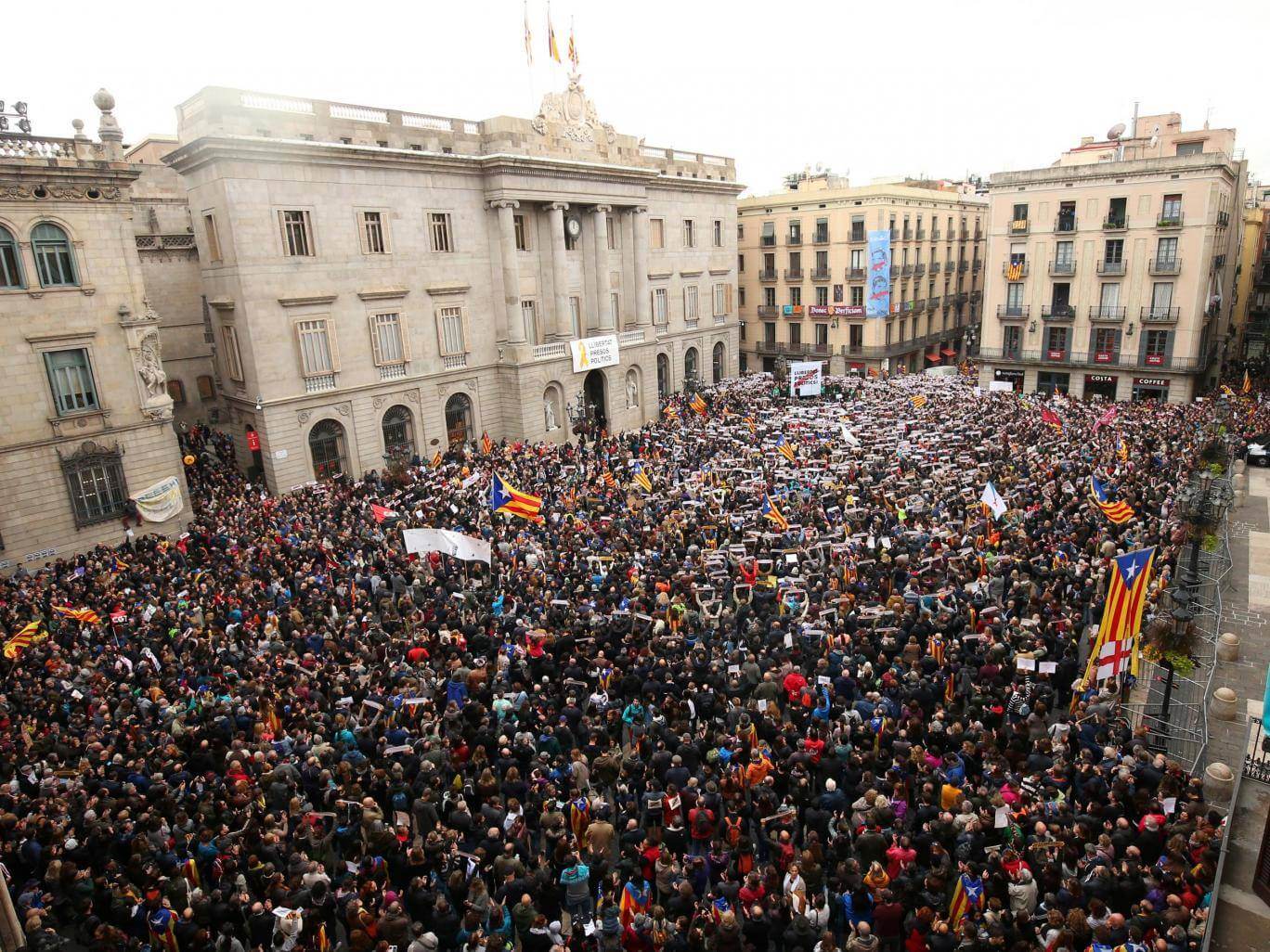
Spain remains deeply divided over the independence question of its Catalonian region. The Spanish prime minister Rajoy on Tuesday ruled out negotiating the future status of Catalonia with its ousted leaders. If up to him, “all of those who deceived Catalonia should be barred from public life”, Mr Rajoy stated in his first interview after imposing direct rule over Catalonia, adding that “in political terms they are off limits”. These remarks are a smack in the face of Catalan President Puigdemont. In an interview published on Monday by Belgian newspaper Le Soir, Mr Puigdemont had said that he believed agreement with the Spanish government was possible on something short of full independence for Catalonia.

Then, early this week Madrid announced that it believes Russian-based groups used online social media to heavily promote Catalonia’s independence referendum last month in an attempt to destabilize Spain. Although Catalonia’s separatist leaders have denied that Russian interference helped them in the vote, Spain’s defense and foreign ministers said they had evidence that state and private-sector Russian groups, as well as groups in Venezuela, used Twitter, Facebook and other Internet sites to massively publicize the separatist cause and swing public opinion behind it in the run-up to the referendum. According to CNN, however, the Spanish government could not “say with certainty” if the Russian government was behind it, Defense Minister Maria Dolores de Cospedal claimed.

1. Telegraph

  1. Reuters

Syria

Early this week, close to 60 people are reported to have been killed in air strikes on a rebel-held town in northern Syria. Atareb is located in an area of Aleppo province that is part of a so called “de-escalation zone”, established earlier this year by Russia and Iran – which support the Syrian government – and Turkey, which backs the rebels. The zones are credited for creating a decline in violence, but intermittent clashes have continued while humanitarian access is minimal. It is not clear whether the strike was carried out by Syrian government warplanes or those of its ally Russia.

Then on Tuesday, a Foreign Ministry statement, carried by state-run media, said that US troops in Syria supporting the international coalition to defeat ISIS have no right to be there. “The presence of the US forces or any foreign military presence in Syria without the consent of the Syrian government constitutes an act of aggression and an attack on the sovereignty of the Syrian Arab Republic,” Syria’s state-run news agency quoted an unnamed source in the Foreign Ministry. The comments came a day after U.S. Secretary of Defense Jim Mattis said “we are not going to just walk away right now” before the U.N-backed political process yields results. The US-led coalition has cited UN Security Council Resolution 2254 to justify its presence in Syria, which calls for “member states to prevent and suppress terrorist acts” specifically committed by ISIS, al-Nusra, al-Qaeda, among others. Kurdish officials also stated that they want the U.S. troops to remain in the country to help prevent clashes with pro-government forces, which are also battling IS.

On Thursday, the United Nations Security Council is due to vote on rival U.S. and Russian bids to renew an international inquiry into chemical weapons attacks in Syria. Washington and Moscow have put forward a draft resolution on renewing the mandate of the Joint Investigative Mechanism (JIM), tasked with identifying perpetrators of Syria’s toxic gas attacks. According to Reuter, “diplomats say there is little support among the 15-member council for the Russian draft, which Russian U.N. Ambassador Vassily Nebenzia has said aims to correct “systemic errors” of the inquiry.” Late on Thursday, Russia vetoed a US-sponsored resolution that would have extended its mandate. “For the tenth time on Syria, and the fourth time on chemical weapons, Russia has actively obstructed the international community’s ability to identify the perpetrators of chemical weapons attacks,” Nikki Haley, US ambassador to the UN, said after the vote. After Russia lost a procedural vote at the Security Council on Thursday and was ordered to put its resolution up for a vote before the US proposal, it withdrew its own resolution.

1. BBC

  1. Newsweek
  2. Reuters

The United States of America

Despite the fact that the ongoing situation between the United States and North-Korea proceeds to scare many on this planet, the battle of words between the Trump-administration and Kim Jong-un also develops into something which looks like a fight between two six-year old’s. Late last week, after President Trump claimed North Korea’s leader insulted him by calling him an ‘old lunatic’, he hit back with a tweet saying: “Why would Kim Jong-un insult me by calling me ‘old,’ when I would NEVER call him ‘short and fat?’” As Trump has been working hard to rally global pressure against North Korea’s nuclear weapons program on his most recent Asia-trip, one could wonder if the laughtivism is part of his tactic, demonizing North Korea, and keeping it apart from the international community.

On the weekend, right before Trump’s last stop on his Asia-tour, various groups staged a series of protests against the scheduled visit of US President Donald Trump in the Philippines. At least 1,500 protesters gathered on Monday at the beginning of the ASEAN Summit activities. According to the protests groups, their biggest concern is “US encroachment on the sovereignty of nations in Asia through war and one-sided economic relations.” The activists are also protesting against the plan of the US government to fund the administration’s campaign against illegal drugs. The Philippines will be Trump’s last stop on a marathon tour that has taken him to Japan, South Korea, China as well as Vietnam.

1. South China Morning Post

  1. Straits Times

Democratic Republic Congo

Late last week, the UN Human Rights Committee told the DRC to get their human rights record in order. The U.N. watchdog gave Democratic Republic of Congo a year to report on actions it has taken to hold free and fair elections and clean up its rights record. Congo should come back with an explanation by November 2018, rather than after the regular four years between reviews. The Kabila-regime has scheduled elections for December 2018. Where the main opposition parties have rejected the date, other institutions seem to accept that the elections will be delayed more than two full years. The African Union has said the new electoral timetable must be “scrupulously respected” and US Ambassador to the United Nations Nikki Haley stated that citizens are “hungry for democracy and new leadership”.

The streets stayed empty in Kinshasa on Wednesday. Where several civil-movements have called for protests in the last week, on Wednesday the streets stayed calm, after these same movements organized a mass stay-away (une journée ville-morte). The protest was organized by one of the biggest social movements in Congo, named Lutte pour le Changement (#LUCHA), to refuse the election-calendar which was published by CENI last week, and to demand Joseph Kabila to step aside. The call was supported by the biggest opposition fractions. The tactics of a stay-away was also chosen after police forces announced they would hit hard on all gatherings of more than five people around Congo.

1. EWN

  1. Actualite.cd (article in French)

Poland

The far right seems on the rise in Poland, as 60,000 people marched through Warsaw on Saturday (Poland’s Independence Day), seeing demonstrators tout white supremacist, anti-Semitic and Islamophobic messages. The most disturbing fact, however, might not be a banner which said, “pray for Islamic holocaust” and carried signs with slogans like “white Europe of brotherly nations”, while others chanted “pure Poland, white Poland” and “refugees get out!” Most disturbing, however, must have been the fact that, although the country’s government condemned racist and xenophobic ideas, it called the event “a great celebration of Poles, differing in their views, but united around the common values of freedom and loyalty to an independent homeland”. According to New York Times, “the more salient point was the ministry’s defense of the demonstration as an outpouring of patriotism. The only people arrested were some pro-democracy counter-protesters.”

A wholly different protest in Poland late last week, as police had detained 22 people “for disturbing the peace” at the headquarters of Poland’s forest management agency. The activists were calling for the withdrawal of heavy machinery from the Bialowieza forest. For this area, the only remaining primeval forest in Europe, the EU’s high court issued an injunction forbidding the country from continued logging, but Poland’s government has ignored the order, and continued to allow logging. That move unprecedented move, as the first case that an EU member state has ignored such an injunction. According to Deutsche Welle, “many believe the move to open up logging in the Bialowieza forest is a show of strength by the nationalistic Law and Justice (PiS) government, intent on showing the EU, which has accused the government of undermining democracy in the last two years, that it has the power to do what it wishes with its own land.”

1. New York Times

  1. Deutsche Welle

Other News

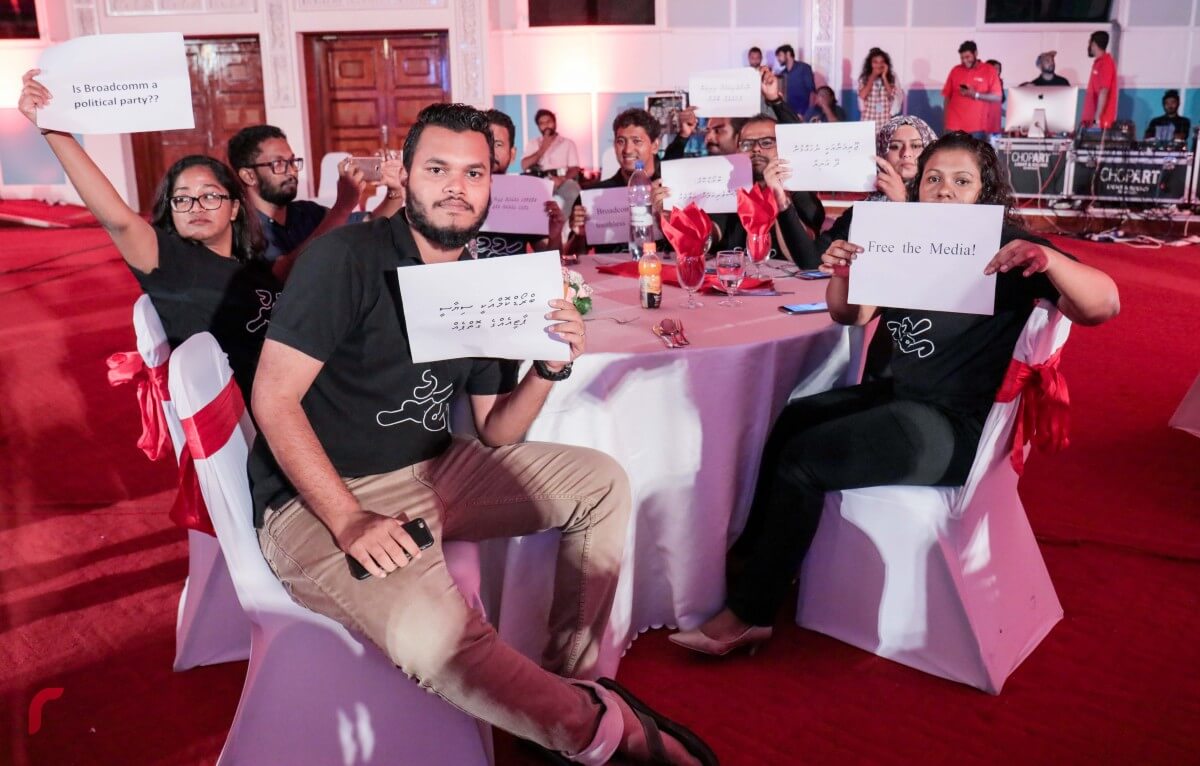
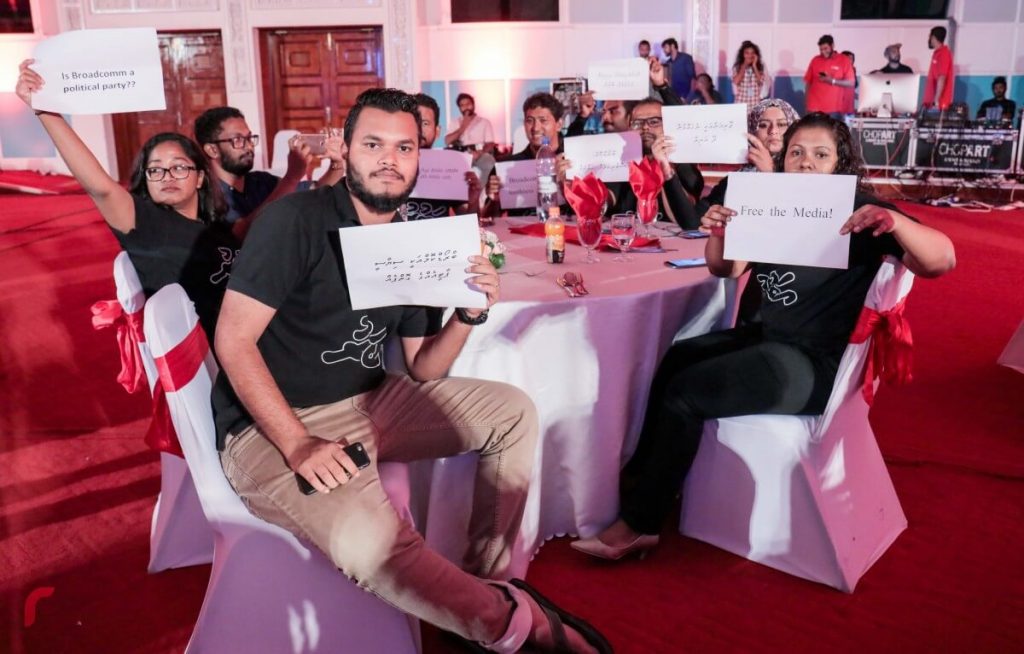
The Maldives – On Thursday, the Maldivian Civil Court accepted a case filed by RaajjeTV, over the MVR 500,000 imposed on the station by the Maldives Broadcasting Commission (MBC). One of the most important sources of independent news in the Maldives was fined MVR 500,000 on 8 October this year, for allegedly broadcasting content that “threatens national security”. The station has been fined thrice this year, under the controversial defamation law introduced in August 2016. The first fine, MVR 200,000, was imposed in March, while a second fine of MVR 1 million was imposed the same day it paid the first fine. All three cases have been appealed at the Civil Court – Raajje

Kenya – On Tuesday to Kenya’s Supreme Court reviewed petitions challenging President Uhuru Kenyatta’s victory in last month’s presidential election, in what may be the last chance for legal scrutiny of the vote – Reuters

Hong Kong – The Court of Appeal granted several activists, who were jailed for between eight and 13 months over their involvement in the protests outside the Legislative Council, to proceed to the Court of Final Appeal for permission to appeal. Their 2014 protests were aimed at then-Finance Committee chair Ng Leung-sing forcing a vote on a HK$340 million funding plan for a controversial northeast New Territories development plan – Hong Kong Free Press

CANVAS’ Daily News

Also read what we featured in our daily news section this week:

Animal rights protest in London – what to learn from animal rights activism

Peace Science Digest focuses on Nonviolent Resistance
Weekly Report: 10 November, 2017

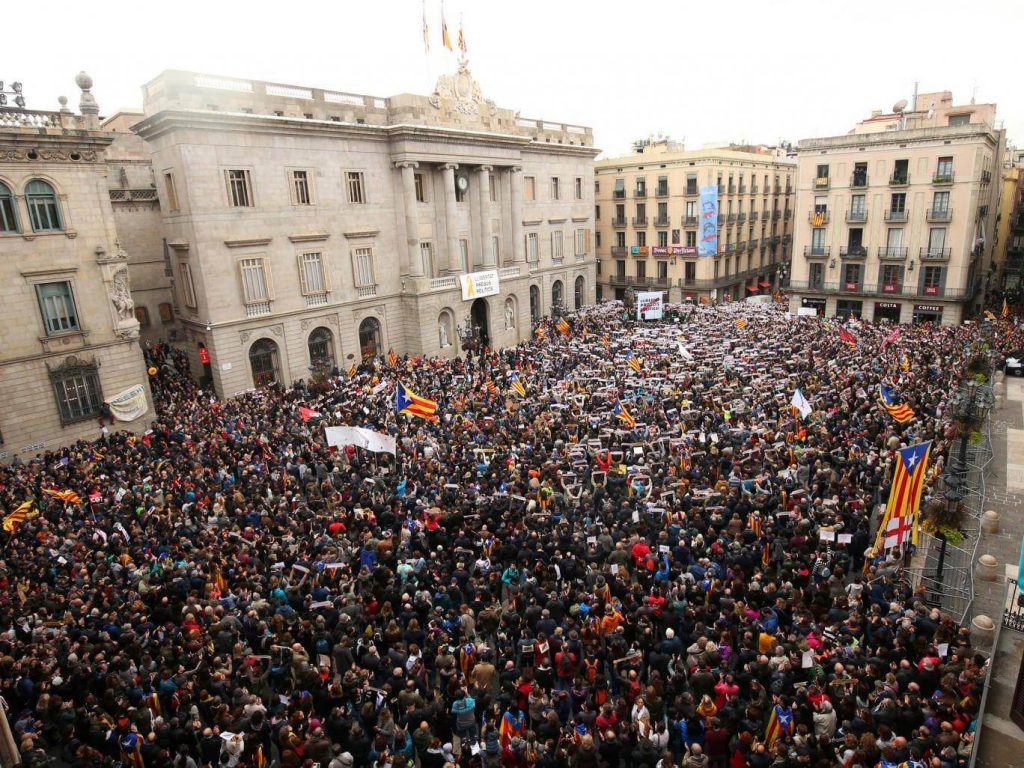
Protesters rally at St James’s Square in Barcelona (Credit: Reuters / via The Independent UK)

Zimbabwe

Last week Friday, US citizen Martha O’Donovan was arrested during a raid at her house in Harare at dawn. O’Donovan who works for Magamba TV is accused of allegedly insulting President Mugabe in a shared tweet, and her arrest is the first after last month’s creation of the Ministry of Cyber Security which focuses on crimes on social media and the Internet in general. If convicted, Martha O’Donovan could face up to 20 years in prison as she is not only charged with insulting the president, but with “’subverting a constitutional government […] [which] is directly related to her role with Magamba TV […] [and it] is what we expected all along, that it was not really about the retweet’”, but a “fishing expedition to get information about her work at Magamba TV”, Doug Coltart, a human rights lawyer in Harare, told Al Jazeera. Among others, Amnesty International condemned the arrest, stating the charges to “confirm fears that this new portfolio will simply be used to punish anyone speaking out against the authorities on social media platforms”. Following the arrest, Zimbabwean officials did not react immediately to requests for comments on the case, reported Al Jazeera.

On Monday, President Robert Mugabe fired his longtime ally and vice president Emmerson Mnangagwa, accusing him of “’disloyalty, disrespect, deceitfulness and unreliability,’ according to a press statement”, reported CNN. This move is expectedly clearing the way for Mugabe’s wife Grace, leader of the party’s so-called Generation-40 which had opposed Mnangagwa, to take over the vice presidency and eventually succeed Robert Mugabe’s rule. In order for the latter to happen, however, an amendment to the party’s constitution will have to be made to allow a woman to take the vice presidency – expected to take place within the next month. Nevertheless, Minister for Defense Sydney Sekeramayi could represent a competitor for the vice presidency as well. A Southern Africa analyst said that “[Sekeramayi’s] elevation to the VP post would be a strategic move to curb perceptions of a Mugabe dynasty.” This followed President Mugabe having already signaled a deepening divide within Zanu-PF at a rally on Saturday. Meanwhile, Grace Mugabe had “accused Mnangagwa of attempting to ‘carry out a coup’” and said she is ready to become her husband’s successor, wrote Zimbabwe Election earlier on Monday.

A close ally reported, Mnangagwa then fled Zimbabwe and is expected to arrive in South Africa late this week, stating he had “fled from ‘assassins’”, wrote The Guardian. However, in a statement Mnangagwa announced he would come back to lead Zimbabwe. Robert Mugabe is said to be facing unprecedented political challenge and Grace Mugabe is “far from a popular person”. Sections within Zanu-PF, Zimbabwe’s security establishment and much of the international community would have preferred Mnangagwa as a candidate, though he is despised by other parts within Zimbabwe.

Al Jazeera

CNN

zimbabweelection.com

The Guardian

Venezuela

On Wednesday, the Constituent Assembly passed a wide-reaching law also known as the “anti-hate law”, as it prohibits Venezuelans to spread messages instigating violence or hate through television, radio and social media, instead obligating public and private media “’to broadcast messages aimed at promoting peace, tolerance, equality and respect’”, reported the Associated Press. The law has been criticized for “crack[ing] down on dissent by criminalizing peaceful protests” and for further limiting free speech. The legislation also addresses political parties promoting “‘fascism, intolerance or national hate’” which cannot register with the National Electoral Council, seemingly targeting opposition parties. Opposition leader Maria Corina Machado has, however, stated that this will not intimidate the opposition, “’[w]e are not afraid of them.’”

Freddy Guevara, Venezuelan opposition politician, has been seeking refuge in the Chilean embassy since Saturday, as Venezuela’s Constituent Assembly had been investigating against him for the suspected involvement in anti-government protests and the Venezuelan Supreme Court ordered him to be stripped of his immunity and prosecuted. As of Tuesday he had not yet applied for asylum, but the Chilean Foreign Minister had stated on Monday that Chile would be willing to grant political asylum. Guevara, who is the vice president of the opposition-dominated National Assembly which had been replaced earlier this year by the Constituent Assembly introduced by Nicolas Maduro. Other Venezuelans have sought protection from Chile as well.

Last week, President Maduro invited bondholders to attend a meeting to address possible debt restructuring for Venezuela in Caracas on November 13. However, some investors have voiced concern about holding the meeting there and are now calling for a more “neutral and safer”, reported Reuters. Besides, they criticized the decision to put Vice President Tareck El Aissami who is accused of drug trafficking, in charge of the proposed meeting. Another main actor within the negotiations would be economy minister and financial head of the state oil company PDVSA, Simon Zerpa, who is alleged of corruption. Both El Aissami and Zerpa are on US sanctions and on the Specially Designated National list which could make a possible negotiation for US bondholders illegal. Meanwhile, Venezuela is further struggling with its debt situation and a possible default, as important PDVSA payments are still missing when they had been due last Friday, reported the Financial Times. Some bondholders were expecting the money to arrive soon, speculating about a delay’s possible reasons as there had not been an official statement about such. Others pointed out, Venezuela had clearly missed the deadline anyhow. At the same time, the Russian Finance Minister announced on Wednesday that Russia agreed to the restructuring of about $3 billion of loans. Though a small amount in comparison to the total debt, this could help Venezuela with other payments, wrote the NY Times.

Associated Press

Reuters

Financial Times

Deutsche Welle

The United States of America

On Sunday, another deadly mass shooting in Sutherland Springs, a small community in Texas, shocked the United States when a gunman entered a church with a semi-automatic weapon. 26 people were killed and 20 others wounded (10 of them in critical condition as of Tuesday) by the perpetrator who was reported to have been found dead in his car after a short chase. This devastating event followed only after about a month of the Las Vegas shooting, the deadliest in US history. While on an official trip in Asia, President Trump voiced his compassion with the victims and their families. It became known that the Pentagon “had failed to furnish information about the gunman’s criminal record from his U.S. Air Force service to a national database that should have prevented him from legally purchasing the firearms he bought”, wrote Reuters. The incident then sparked renewed discussion about gun violence in the US. Whereas Donald Trump had stated a mental health problem, not gun laws to have been the problem in this case, others have called for tighter regulation. CNN reported on gun violence being a more complicated issue than just ‘mental illness’, referring to Jeffrey Swanson, a professor of psychiatry and behavioral sciences at Duke University who said “’[a] history of violent behavior…a far better predictor of future violence than mental illness’” and “[c]alling gun violence a mental health issue is to scapegoat and stigmatize people with mental illness”. Relating to various studies conducted, a column in the NY Times reported on a correlation between gun ownership and lose gun regulation, and mass shootings.

Another topic constantly present in the media, was President Trump’s visit to several Asian countries, starting with Japan, going to South Korea, China and later Vietnam. The two major topics for his trip have been US trading relations in the region, as well as dealing with the current North Korean crisis. In this context, Foreign Minister “Tillerson pointed out that Trump, in a speech in Seoul, had ‘invited the North Koreans to come the table,’ in line with the Chinese desire for a negotiated solution” though Trump was also prepared for a “’military response’ if he deemed the threat serious enough”, wrote Reuters on Thursday. In South Korea, protesters called for peace ahead of the US President’s visit to their country. There, a canceled visit to the Demilitarized Zone (DMZ) between South and North Korea had caught the media’s attention. The South China Morning Post had speculated on Monday, that President Trump “may appear so focused on North Korea that he shows little affinity for the broader range of issues in the region, from South China Sea tensions to regional counterterrorism. This could fuel concerns in some countries that agendas are not aligned and that the administration cares little for them.” A conclusion on such a question can probably only be answered after Trump has finished his trip with his last stop in Vietnam, where the US President might also meet Russian President Vladimir Putin. Ahead of this visit, Vietnamese President Rodrigo Duterte had warned Trump of addressing the country’s human rights issues.

Reuters (Sutherland Shooting)

Reuters (Trump in China)

Reuters (Trump in Japan)

CNN (Trump in South Korea)

South China Morning Post

Democratic Republic Congo

While aid organization Caritas continued to highlight the ongoing humanitarian crisis in Kasai, DRC’s electoral commission announced the long-awaited presidential elections to take place on December 23, 2018, after it had been repeatedly delayed. Official results are then scheduled to be announced on January 9, 2019, followed by the inauguration of the new President on January 13. Incumbent President Kabila has ruled the country since 2001 and was supposed to step down after his second term had ended in December 2016. Kabila however refused to do so, triggering protests during which dozens of people were killed. Reuters wrote that “[w]ith no imminent election in sight, a political crisis has set in that is fueling increasing militia violence and lawlessness in Congo’s east and center.” The opposition has claimed Kabila is using the delays to remove term limits preventing him from running for election again, following examples of presidents in Rwanda and Congo Republic. “He denies that, but has not categorically said he will step aside”, while claiming delays are due to complicated registration conditions, reported Reuters. In reaction to the late announcement of election-day, the opposition accused the electoral commission to work in favor of Kabila and three large opposition parties “presented a united front to reject plans for elections in December 2018”, stated Bloomberg. They urge President Kabila to step down by the end of 2017 and hold new presidential elections no later than mid-2018.

Reuters

Bloomberg

Syria

Last weekend, Turkish President Erdogan’s spokesman announced that the Russian-sponsored Syrian peace congress would be postponed, originally scheduled for November 18. Though an official new date has not been announced, Russian Foreign Minister Sergei Lavrov stated on Tuesday he hopes for them to take place in the near future and for the UN to support holding the congress.

Meanwhile, the Syrian army declared victory over ISIS as their last stronghold was captured in Albu Kamal, though some fighting continues in the desert area close to the town. Reports said that during the fight in Albu Kamal, many had surrendered or fled. The fate of ISIS’ last commander Abu Bakr Al-Baghdadi, however, remains unknown. Moreover, a new phase of guerilla warfare is somehow expected, considering experience in the past and ongoing tensions within Syria and Iraq, as well as the region as a whole, involving Saudi Arabia, Iran and Hezbollah. Reuters also referred to Western security chiefs stating that ISIS’ loss of territory “does not mean an end to the ‘lone-wolf’ attacks with guns, knives or trucks plowing into civilians that its supporters have mounted around the world.”

The Associated Press reported via The Washington Post that in the meantime, the United States and Russia are nearing an agreement on the resolving of the Syrian civil war, said to focus on “’deconfliction’ between the U.S. and Russian militaries, reducing violence […] and reinvigorating U.N.-led peace talks.” With ISIS defeat, both countries “are losing their common enemy in Syria and will remain in a proxy battle” in which both support different actors within Syria, increasing the need for closer communication. The two countries “have been at odds for years over” Assad’s involvement in the future of Syria. An illustration of the divide between Russia and other Western countries this week, was a clash during a Security Council meeting about a report accusing Syria of a chemical weapon attack.

Reuters (Russian-sponsored peace congress)

Reuters (ISIS defeat)

The Washington Post

TIME

Myanmar

In a unanimous statement made on Monday, the UN Security Council strongly condemned the violence forcing thousands of Rohingya to flee from Myanmar to Bangladesh. It expressed “grave concern” on reported human rights abuses, called on the government to “ensure no further excessive use of military force in Rakhine State, to restore civilian administration and apply the rule of law”, and urged both the governments in Myanmar and Bangladesh to work together to “allow the voluntary return of all refugees in conditions of safety and dignity to their homes in Myanmar”. The Guardian wrote that the Council further “said the government must address the root causes of the crisis by allowing ‘equal access to full citizenship.’” The newspaper further reported that the statement included most demands which had been part of a draft resolution presented last month by Britain and France, while China had opposed some of its details. According to diplomats, before China agreed to the statement, “language on citizenship rights was watered down, along with a demand that Myanmar allow a UN himan rights mission into the country”, wrote the Guardian. In the statement, the Security Council calls on Myanmar for cooperation with the UN and encourages UN Secretary-General Antonio Guterres to appoint a special advisor on the crisis. The statement caused criticism from both, the Myanmar side for exerting “’undue political pressure on Myanmar’”, warning of sanctions possibly exacerbating religious tensions, as Myanmar’s ambassador Hau Do Suan stated, as well as from rights groups which accused the Council for not doing enough by not including the threat of sanctions.

After a land rights activist died of his injuries being beaten in the context of claiming back land, activists are calling for a thorough investigation, beside a general urge to address rising territorial disputes and land rights in Myanmar. A majority of the population lives in rural areas, depending on agriculture for their living. On Friday, a court in Myanmar sentenced a Singaporean and a Malaysian journalist, along with their local driver and interpreter, to two months in prison, after an arrest last month for flying a drone over the parliament.

The Guardian

The Washington Post

Reuters

Poland

On Monday night, several hundred of people walked silently in Warsaw in memory of Piotr Szczesny, a man who died at the end of October after setting himself on fire in front of the Palace of Culture, a landmark in Warsaw, in protest of the current government’s policies. The Polish government has been led by the right-wing Law and Justice party (PiS) for two years and has been, among other things, criticized of jeopardizing the freedom of the media and judicial independence (also see our last Weekly Report featuring Poland). Reuters reported that Piotr Szcezsny had scattered leaflets around himself stating he loves freedom above all and that was the reason for committing the act of self-immolation, hoping his death would shake the conscience of people.  A protester on Monday told Reuters, he “was full of respect” for Szczesny and that he was worried about the political situation in his country. He said “Many people live in the conviction that politics doesn’t concern them. Politics is us, we ordinary people create politics.” Project Syndicate wrote in more detail about what Szczesny addressed in his letter, and further presents some of the mixed reactions to his drastic action. It concludes that “[a]fter an act of despair such as what Poland witnessed this month, the first priority should be to mourn the victim. The second should be to channel the despair that many are feeling in ways that nurture hope.”

Further underlining its current nationalist stance, Poland announced planning to ban Ukrainians with “anti-Polish views” at the end of last week, though little is known about the details of the policy. Polish Foreign Minister Waszczykowski said this measure followed disrespect exhibited at a Polish cemetery in Lviv which had been part of Poland before World War Two. Waszczykowski also said that while Poland is sympathetic of Ukraine’s struggles with Russia, “historical issues” should not be pushed aside. Poland itself is currently home to 1.5 to 2 million Ukrainians.

Foreign Affairs published an in-depth article assessing the reasons for continuing popularity of PiS within Poland despite international criticism, stating an effective combination of social conservatism and nationalism with welfarism to be the crucial factor. “Poland’s ruling party has responded to two of the major issues of contemporary European politics—identity and inequality” and “has cleverly positioned itself as an anti-establishment party representing the Polish people against corrupt liberal elites”, as well as against Western Europe, making use of a current unpopularity of Western social models. Another aspect mentioned in the article is the weak, divided and unsure state of the current opposition.

Reuter (silent march in Warsaw)

politicalcritique.org

Reuters (ban of anti-Polish“ views)

Foreign Affairs

Spain

This week, road and rail service blockages and other demonstrations by pro-independence groups, were disrupting life in Barcelona also affecting universities and schools, though the call for a general strike was left unheard. On Wednesday, the Spanish Constitutional Court officially annulled the unilateral declaration of independence by the Catalan parliament, as had been widely expected after an earlier suspension by the court. However, according to a BBC interview, Foreign Minister Alfonso Dastis stated that the Spanish government will, in recognition of the recent developments in Catalonia, consider changing the constitution to allow legal, nationwide independence referendums in the future. The issue will be addressed by a special committee in the Spanish parliament, the Foreign Minister said, highlighting it was clear that if such referendums would be allowed, only when the whole Spanish population participated. European Commission President Jean-Claude Juncker urged Europe this week, to stand up against separatism when Catalan independence has deeply divided Spain.

After ousted Catalan president Carles Puigdemont and four ex-Catalan ministers had fled to Brussels, later turning themselves in to Belgian authorities on Spanish arrest warrants, a judge saw no reason to keep them detained and released them quickly on condition they would stay in Belgium and attend court sessions within two weeks. The Catalan politicians had fled Spain and did not show up for questioning in Madrid last week, stating “they wanted to make their voices heard in the heart of the European Union […] maintaining they could not get fair trials”, wrote the Chicago Tribune.

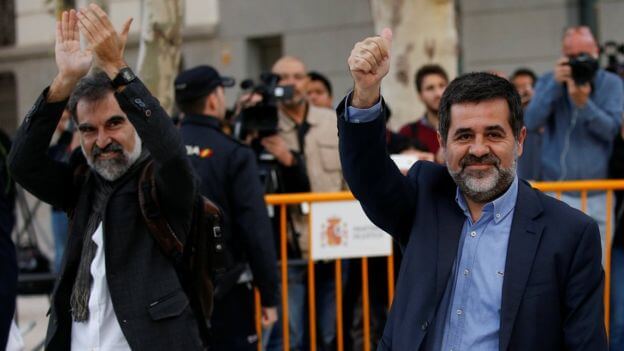
The speaker of the Catalan parliament Carme Forcadell and four other Catalan government members had appeared at Spain’s Supreme Court and were eventually granted bail after they had testified for their role in the context of the referendum and declaration of independence in Catalonia. Along others, they are facing “charges of rebellion, sedition and misuse of public funds”, wrote The Guardian. This ruling might have relieved Puigdemont and others who had fled. Nevertheless, eight other former Catalan ministers along with leaders of the two main pro-independence groups are already in custody, waiting for investigations by Spain’s highest criminal court, the Audiencia Nacional, following a rejection of an appeal for their release by the high court.

BBC

Chicago Tribune

The Guardian

Cambodia

After Cambodia has been tightening its grip on the opposition ahead of next year’s crucial vote and the government asked the Supreme Court to dissolve the main opposition Cambodia National Rescue Party (CNRP), Prime Minister Hun Sen called on people to ‘bet’ on the dissolution of the CNRP, saying “’it’s a 1 against 100 odds’” and “’it’s all open for betting’”, wrote Reuters. The news outlet also reported on attempts of showing local populations the benefits of grassroots democracy, such as by local council leader Sin Rozeth who had profited from the US funded National Democratic Institute (NDI). However, as the government is cracking down on opposition activities on all levels and only a small percentage of people who should have registered to vote by November 9 had done so, the “shaky democracy” of Cambodia is at stake.

Reuters (Hun Sen comment)

Reuters (grassroots democracy)

The Maldives

Reports have stated that Indian and US representatives held talks addressing the current political situation in the Maldives, also touching upon the issue of extremism. Raajje wrote that key points on the agendas had been political detainees, former President Mohamed Nasheed, the trials of a Maldivian MP, as well as events in the Parliament, such as a military siege in Parliament premises. Meanwhile, on a press conference on Tuesday, Maldivian Member of Parliament Riyaz Rasheed “has accused Sri Lanka of assisting alleged opposition efforts to overthrow the Maldivian government”, wrote DaillyMirror Sri Lanka. He said to be concerned about Sri Lanka allowing Maldivian politicians in exile to plot attempts of ousting President Abdulla Yameen, reported DailyMirror referring to the Maldives Independent.

Raajje

DailyMirror.lk

Yemen

The Saudi Arabia-led coalition forces decided to temporarily close all Yemeni air, sea and land ports, following an intercepted missile which had been fired towards Riyadh by the Iran-allied Houthi militia on Saturday. Human Rights Watch stated that the attack can likely be classified as a war crime. While it had been announced that aid workers and humanitarian supplies would still be able to pass the blockage, the Red Cross reported it had not been able to deliver some of its supplies. This could threaten the Yemeni population even further, confronting what UN official Jens Laerke called “the world’s worst humanitarian crisis at the moment”, according to BBC. Yemen is facing a cholera epidemic and the UN says millions of Yemenis are on the brink of famine. “The United Nations and international aid organizations have repeatedly criticized the coalition for blocking aid access, especially to the rebel-held north.”

Reuters

Human Rights Watch

BBC

Other News

Saudi Arabia

Another headline present in the News this week, was the start of an anti-corruption campaign at the weekend against Saudi Arabia’s political and business elite, including the arrest of 11 princes. This move seems to be part of Prince Mohammed bin Salman’s campaign of reform and substantial political, societal and economic change in Saudi Arabia, but also a measure to further tighten his grip on power, as reported in these Reuters and The Guardian articles. Meanwhile, Human Rights Watch raised concerns about the legal process and a lack of presented evidence for the detentions, and further referred to “a wave of other recent arrests, including of clerics, human rights activists, and intellectuals” in their article.

Paradise Papers

Another topic which repeatedly headlined international news were the “Paradise Papers”, the world’s second biggest data leak, including 13.4 million documents which were investigated by 96 media companies worldwide. They mostly reveal offshore investment activities and information surrounding ‘tax havens’. The Guardian assembled some of the key findings.

CANVAS’ Daily News

Also read what we featured in our daily news section this week:

Bonn Protests at COP23 – How do mass-protests cause change?

South-Koreans are protesting against Donald Trump ‘War Mongering’ – and in support of it

Evacuate Manus now! – Australian activists stage multiple protests over conditions in Refugee-detention center

Weekly Report: 3 November, 2017

Do you want to receive our Weekly Reports in your e-mail? You can subscribe to our Weekly Briefing via THIS LINK 

Spain

After the Catalan parliament meets and unilaterally declares independence on Friday, Spain’s senate approves new powers for the Madrid government to impose direct rule on Catalonia that same day. As pro-separatist movements protests dominated the news for weeks, police said at least 300,000 people had turned out in Barcelona, Catalonia’s largest city, for a pro-unity rally on Sunday. Catalonia’s main opposition party said the region’s “silenced majority” was now speaking, according to BBC.

Then, early this week, ousted Catalan leader Carles Puigdemont left Spain and travelled to Brussels, as he is facing sedition charges from the Spanish government after Catalonia declared independence. According to the Independent, “the move comes after Belgium’s asylum and migration affairs minister Theo Francken said the former president could seek asylum in the country.” Saillant détail is that Francken hails from the Flemish nationalist party New Flemish Alliance, which has close ties to the Catalan separatist movement, while the party advocates an independent Flanders and wants it to secede from Belgium. Late on Tuesday, Puigdemont declared he is not seeking assylum in Belgium, but simply working from the countries capital until “a fair judicial process was guaranteed.”

Early on Friday, the crisis in Spain dramatically deepened and extended across the Continent after eight Catalan ministers were jailed by a court in Madrid and a European arrest warrant was issued to extradite the region’s disputed president Carles Puigdemont from Belgium on charges of rebellion and sedition. According to the Guardian, it is understandable “that there is a more than reasonable doubt about the fairness of the highly politicized Spanish courts. The charges launched today are eminently political, and have the objective – as openly stated by various PP party officials – to severely punish and make examples of the leaders of Catalonia’s political and civil society self-determination movement.” Thousands of people took to the streets in Catalan cities to protest the jailing of the politicians, which follows the detention of two other separatist leaders last month on grounds of sedition.

BBC News

The Independent

The Guardian

The United States of America

On Tuesday, New York was hit by the deadliest terrorist attack since 9/11. A 29-year-old man drove a truck into a Manhattan crowd, killing eight and wounding almost a dozen. The man accused of these despicable deeds is an Uzbekistan national who lived in New Jersey and drove for Uber. President Trump reacted on Twitter, claiming that “law enforcement is following this closely.” As the attacks come at a time when the President is pushing for his US travel-ban harder than ever, popular media will not let the attacks unused to prove Donald Trump’s right on the issue.

On Wednesday, the President himself starts phrasing the terrorist attack by the lines of his political stakes. In a tweet, Trump says: “The terrorist came into our country through what is called the “Diversity Visa Lottery Program,” a Chuck Schumer beauty,” referring to the Democratic Senator who introduced the program. Where it was “too early” to talk about weapon-legislation reform after the mass-shooting in Las Vegas last month, Trump has no troubles immediately asking Congress for action after this tragedy. “The United States will be immediately implementing much tougher Extreme Vetting Procedures. The safety of our citizens comes first,” says another one of his tweets.

The Guardian

The Economic Times

Venezuela

On Monday, Amnesty International published their latest report on the illegal practice of home-raids as a repressive tactics by the Venezuelan authorities. According to AI, “a vicious campaign of illegal home raids on citizens suspected of dissent” has taken place over the last months, as the report focusses on the period between April and July of this year. Those targeted told Amnesty and local human rights organizations that “security forces and armed men, believed to be members of government-sponsored illegal armed groups, would violently force their way into their homes without judicial orders or any explanation of why there were there.”

On Thursday, TheConversation.com releases a strong piece on the contradictions that characterize the current position of the opposition-coalition in Venezuela. International support has been unprecedented after Maduro’s increasingly authoritarian actions, as a reaction to six months of daily street-protests by the opposition. Back at home, however, things look much more grim, as the opposition coalition has been a fractious and delicate alliance. Moreover, the decision to compete in instead of boycott the October 15 gubernatorial polls under the current circumstances turned out to be a costly misstep. The group is now fighting over whether to boycott December’s municipal elections.

Meanwhile, Venezuela’s economic crisis is worsening. Late on Thursday, President Nicolas Maduro said in a televised speech that Venezuela and its state oil company, PDVSA, will seek to restructure their debt payments. After the oil company made a $1.1 billion payment on Thursday, Maduro said that “after this payment, starting today, I decree a refinancing and a restructuring of the external debt.” Meanwhile, Maduro and others in his government have tried to pin the blame on President Trump for Venezuela’s debt problems after Trump slapped stiff financial sanctions on the country in August. If Maduro’s government can’t reach a new agreement with bondholders over the debts it will end up defaulting, which, according to CNN “would trigger a potentially ugly series of events.”

Amnesty International – full report
The Conversation

CNN

Democratic Republic Congo

Late last week, after her visit to the country, U.S. envoy Nikki Haley said the Democratic Republic of Congo must hold long-delayed elections next year or it won’t receive international help with the vote. After a meeting Friday with the country’s electoral commission, Haley spoke to reporters in the Congolese capital, Kinshasa, stating that the DRC needs “free and fair elections to happen in 2018 at the latest, and not the end of 2018 — we need to have them sooner,” calling on President Joseph Kabila to announce elections will take place next year. “The U.S. will not support anything in 2019. The international community will not support anything in 2019,” Haley stated.

Early this week, UN World Food Program head David Beasly stated that a looming humanitarian catastrophe could see 250,000 children starve within months in the Kasai region. The region, which is the size of Germany, has historically suffered from malnutrition, but this was further exacerbated in 2016 by inter-ethnic violence resulting in large-scale killing and the mass destruction of villages and crops. “3.2 million people are at severe risk as we speak. Hundreds of thousands of children are on the brink of starvation. So we need to ramp up. We’re there, we’re ready to go, we need the donors to step in now. If they don’t, not only are people going to die, children are going to die and you’re going to have long term chaos that’s going to cost a lot more,” said Beasly.

AfricaNews.com

World Food Programme

Zimbabwe

Early last weekend, police arrested aspiring Mt Pleasant (Harare) independent MP candidate Fadzai Mahere at a soccer tournament she had organized as part of her campaign activities in the constituency. According to The Standard, “social media was abuzz with opposition activists and other people condemning the arrest,” as it was seen as another episode in Zanu PF “stifling the electoral space as a way of pushing out other players.” Mahere, who has been involved in last year’s #ThisFlag-movement, is known as a fervent ZANU-PF criticaster.

After the re-shuffle of ministerial positions, and the origination of a new ministry responsible for Cyber Security, Threat Detection and Mitigation, online surveillance remains a hot topic in Zimbabwe. On Monday, Daily News claims that media platform Facebook has assured its Zimbabwean network users that it will not share their private communication on the platform with the Mugabe-government when there would be such a request. Zimbabwe’s government has been uneasy about social media after several online movements i.a. pastor Evan Mawararire’s #ThisFlag movement, were able to make waves last year. Early last week, BBC reflected on several implications the new ministry will or might have.

On Wednesday, Robert Mugabe raised some eyebrows, by claiming he is in favor of resuming executions in the country in response to rising murder rates.  At the burial of a veteran of Zimbabwe’s independence struggle in Harare, the 93-year-old Zimbabwean President stated that “if you hear people are being executed, know Mugabe’s thinking has prevailed.” Human rights groups including Amnesty International have often called on Zimbabwe, which has 92 inmates on death row, to permanently abolish capital punishment.

The Standard

BBC News

The Guardian

Syria

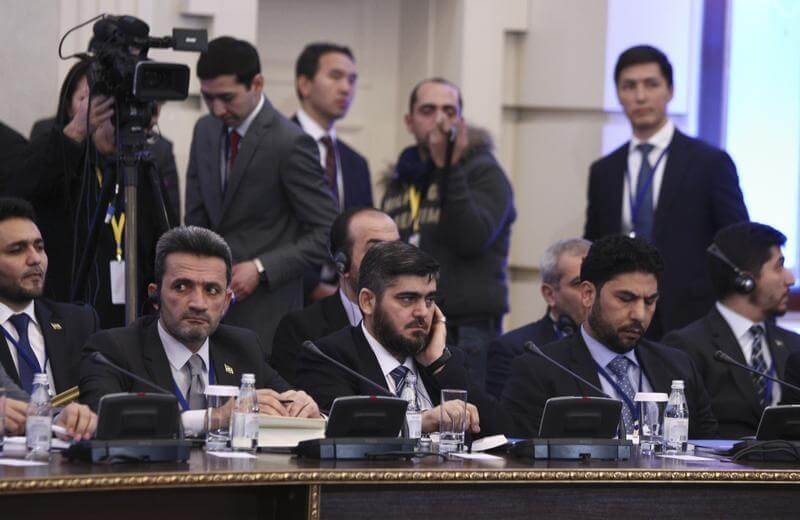
On Monday, new talks on the Syrian situation kicked off in Kazakhstan. The Syrian government and several armed opposition groups are meeting in Astana for talks aimed at implementing a lasting ceasefire agreement. According to Al Jazeera, “the latest round of Astana-talks is aimed at establishing four so-called “de-escalation zones” in mainly opposition-held areas of the country, with Russia, Turkey and Iran acting as guarantors.” The top-level meeting is expected to call for a six-month ceasefire and the establishment of several no-fly zones. The October 30-31 meeting has also discussed the release of hostages, prisoners, delivery of food and aid to besieged areas, the transfer of dead bodies and the search for missing persons.

On Wednesday, other peacemaking efforts hit their first complications, as a new, Russian-sponsored initiative to reach a political settlement was rejected by the Syrian opposition. Officials in the anti-Assad opposition rejected the congress scheduled for November 18th to take place in Sochi. Instead, they insisted that any peace talks be held under U.N. sponsorship in Geneva. In their turn, Turkey protested against the invitation of the Syrian Kurdish side to the talks. “Ankara, which views the dominant Syrian Kurdish groups as a national security threat, said it was unacceptable that the Kurdish YPG militia had been invited,” according to Reuters.

Al Jazeera

Reuters

Cambodia

On Tuesday, Cambodia’s top-court rejected an appeal to free opposition leader Kem Sokha. According to Reuters, the court argued that “his release could be a public risk as the threat of dissolution looms over his opposition Cambodia National Rescue Party (CNRP).” In two weeks time, he Supreme Court is due to rule on the dissolvement of the CNRP, after the government last month filed a lawsuit asking to do so on grounds it was involved in a plot to topple the government.

On that same day, a European Parliament delegation warned Cambodia, as the country could face EU action over aid and vital trade preferences if the human rights situation worsened further. “A serious deterioration of the human rights situation might have implications for development assistance programs and trade preferences,” said the delegation’s chairman Werner Langen. In a reaction to these allegations, undersecretary of state at Cambodia’s Interior Ministry, Huy Vannak, said the European Parliament should keep trade and politics separate.

Reuters

Reuters

The Maldives

The European Union will be dispatching a team of their researchers and surveyors to Maldives this week, in order to identify the political condition of the country. The team will also assess the upcoming presidential elections of 2018, basing their research mainly on interviews with MP’s from both the ruling party and the opposition. The visit be the first from an EU delegation since the European Parliament adopted the Resolution No.RC-B8-0549/2017 on the Maldives on 5 October this year, harshly judging the political- and civil rights situation in the country.

The Apolitical

Myanmar

On Sunday, a big pro-army rally was hosted in Myanmar’s Yangon. According to the South China Morning Post, “Military songs rang out across downtown Yangon […] as tens of thousands rallied in defense of Myanmar’s army.” Their article goes on to pin-point an interesting contradiction, with that same army as the main subject. Where the international community has widely judged and condemned the army’s “clearance operations” against Rohingya Muslims, support for the army has surged inside Myanmar.  An unlikely turnaround, for an institution once feared and hated after 50 years of repressive rule.

After weeks of intense global pressure and UN accusations of ethnic cleansing, Myanmar vowed to take back Rohingya who meet “verification” standards. However, the criteria remain vague, and on Wednesday, Myanmar government spokesman Zaw Htay pointed the finger at Bangladesh for allegedly delaying the repatriation. “The Myanmar government already declared we are ready to receive [the refugees] at any time … but the Bangladeshi government is still considering the agreement between the two countries,” Htay stated.

On Thursday, the United States State Department announced that Secretary of State Rex Tillerson would visit Myanmar later this month. Tillerson will visit the country’s capital, Naypyidaw, where he will meet with senior leaders and officials on actions to address the humanitarian crisis in Rakhine State and push for an end to the violence. According to CNN, Tillerson has been increasingly vocal in condemning attacks on Myanmar’s minority Rohingya Muslims. “What’s most important to us is that the world can’t just stand idly by and be witness to the atrocities that are being reported in the area,” Tillerson said at a Washington, DC, think tank earlier this month.

South Chinese Morning Post

Reuters

CNN

Poland

According to United Nations Special Rapporteur Diego Garcia-Sayan, the Polish independence of the judiciary and rule of law are threatened. Garcia-Sayan visited Poland last week and the UN-envoy commented on the government’s planned reforms to Poland’s judiciary, Poland’s Constitutional Tribunal as the “first victim” of sweeping changes under the conservative Law and Justice (PiS) government, and the president’s proposed changes the Supreme Court and the National Council of the Judiciary. Despite the fact that Poland’s Foreign Minister Witold Waszczykowski denied the allegations, Garcia-Sayan urged Poland’s political establishment to open up negotiations on proposals to reform the country’s courts to avoid further damage to the country’s judicial system.

The allegations come at a time when the international pressure on Poland increases. Early last week, Human Rights Watch published a new report on the “Eroding Checks and Balances” in the Eastern-European country. According to HRW, the Rule of Law and Human Rights are under attack in Poland. The report provides analysis of the PiS government’s legislative and policy measures that impact human rights and the rule of law in several areas.

On Sunday, the man who set himself on fire ten days earlier and has been identified as Piotr S, died from his injuries. Before setting himself on fire outside of the Palace of Culture and Science in Warsaw, Piotr S distributed leaflets accusing the right-wing government of “breaking the rules of democracy, damaging Poland’s reputation, destroying the country’s judicial system, and limiting civil rights by discriminating against minorities, immigrants, women, Muslims, and the LGBT community,” according to Buzzfeed.

Reuters

Human Rights Watch

Project Syndicate.org

Other News

Iraq – On Sunday, Massoud Barzani, the region’s president since 2005, and the man who led an independence push for the Kurdish region of Iraq for more than a decade, announced that he would quit as president. Barzani’s departure comes after weeks of humiliating battlefield defeats for Kurdish fighters against overpowering Iraqi forces. The Kurds also lost their main economic assets – New York Times 

Hong Kong – While on Tuesday the Asian Football Confederation has warned the Hong Kong Football Association over the conduct of fans who booed the Chinese national anthem last month, Hong Kong democracy activist Avery Ng was sentenced to three weeks in prison for throwing a sandwich towards the city’s then-leader which hit a police officer. 

Kenya – After HRW’s mid-October report on severe violations by security forces in the electoral period of August 2017, Amnesty International published a similar report this week. While Uhuru Kenyatta was proclaimed as the winner of the latest round of election in Kenya, a whole nation was nervous this week to see what main opponent Raila Odinga’s reaction to his fourth defeat would be.

Tanzania – After a speech on October 29 in Dar es Salaam, Tanzanian opposition-Alliance for Change and Transparency Zitto Kabwe’s was arrested on Tuesday. Kabwe’s speech covered issues including “the quality of life of Tanzanians, the state of the economy and how to defeat the ruling party,” ATC Spokesman Abdallah Khamis said. Tanzanian President John Magufuli has cracked down on opposition to his administration since he came to power in November 2015. Kabwe was released later this week and charged with an act of ‘cybercrime’.  

Weekly Report: 27 October, 2017

Photo: Rights activists gathered in Turkey before the trial of other activists (REUTERS/Osman Orsal)

Zimbabwe

After Zimbabwean President Mugabe’s appointment as a WHO goodwill ambassador for non-communicable diseases last week had caused national and international criticism, the organization’s director Tedros Adhanom Ghebreyesus revoked the decision on Sunday. Reactions included surprise and disappointment, as critics stated that in contrary to Tedros’ statement on Zimbabwe prioritizing the issue of health in its policies, the country has faced a highly deteriorating health system. News24 also reported on Zimbabwe’s severe health situation and reactions after the WHO’s decision(s). The media outlet further wrote that Zimbabwe’s government declared Mugabe did not have notice of the appointment and would have declined anyway.
At the same time, there have been reports about ongoing intimidation and violence, especially by Zanu PF supporters against those in favor of the MDC, during the Biomentric Voter Registration (BVR) that started earlier this month. The NGO Election Resource Center (ERC) called on the Zimbabwe Electoral Commission (ZEC) to take actions against those parties and supporters hampering the process of registration in preparation for peaceful, free and fair election, wrote allAfrica on Wednesday.
Late last week, MDC leader Morgan Tsvangirai had taken further steps to form his alliance with five other opposition parties, announcing Welshman Ncube to be the new spokesperson. The alliance also established numerous natioal alliance committees, to create joint efforts especially for voter education and registration mobilization. Meanwhile, all Africa reported on MDC opposition spokesman Obert Gutu voicing his doubts about the ZEC’s capabilities and pointed out the likelihood of next year’s elections being rigged in favor of the ruling party. Gutu “suggested it was therefore important that the nation consider pushing forward the election until the voters’ roll is ready and other proposed electoral reforms have been addressed”, besides pointing towards current ill-preparedness of the opposition.

https://www.theguardian.com/world/2017/oct/22/robert-mugabe-removed-as-who-goodwill-ambassador-after-outcry
https://www.news24.com/Africa/Zimbabwe/zimbabwes-grim-hospital-wards-fuel-outrage-toward-who-20171025
https://allafrica.com/stories/201710260125.html
https://allafrica.com/stories/201710250219.html

Democratic Republic Congo

The UN recognized the Kasai, South Kivu and Tanganyika regions as Level 3 (L3) emergency territory, highlighting the graveness of the current humanitarian crisis. The only three other countries labeled L3 are Syria, Irak and Yemen. The Norwegian Refugee Council hopes that the labeling of L3 will attract much-needed financial support for the underfunded crisis, “having the highest increase of newly displaced in the world in the last year”.
Meanwhile, one of DRC’s key opposition parties, the Union for the Congolese Nation (UNC), announced on Monday to withdraw Pierre Kangudia Mbayi from the transitional government. Kangudia is currently serving as minister of state supervising budget. News24 writes that the UNC had stated it decided to pull out Kangudia “after “an evaluation of the level of implementation of the agreement’”, while lamenting the delay and non-organization of elections as well.
On Wednesday, Union for Democracy and Social Progress (UDPS) opposition supporters were released, after they had been dispersed with teargas and arrested on Sunday and Monday during a visit by opposition leader Felix Tshisekedi in Lubumbashi. “The releases followed diplomatic pressure in the form of a joint statement from EU officials and UN diplomats” from the US, Switzerland and Canada, wrote New Vision.

https://www.nrc.no/news/2017/october/un-level-3-emergency-declared-in-dr-congo-highlights-scale-of-crisis/
https://www.news24.com/Africa/News/key-opposition-figure-quits-drc-coalition-government-20171025
https://www.newvision.co.ug/new_vision/video/1464408/drc-releases-detained-opposition-supporters

Venezuela

On Thursday, the EU Parliament announced the democratic opposition and political prisoners in Venezuela to be this year’s winners of the EU Sakharov Prize, which had been created in 1988 to honor defendants of human rights and fundamental freedoms. Through this decision the European Parliament “wanted to reward the courage of students and politicians fighting for freedom in the face of a repressive government”, reported the Independent.
The media has also been addressing concerns about a possible Venezuelan default, considering two due repayments of bonds this and next week, without having ‘grace periods’ for its payments. While the Financial Time reported of a Venezuelan Think Tank hinting at the country being able to pay, other experts have pointed out that a possible Venezuelan default could entail an even worse economic situation than already now. While sanctions had been imposed by the US, “Venezuelans continue to look to Russia for help”.
In the meantime, Human Rights Watch called on “international pressure to restore democracy” to continue after “Questionable elections in Venezuela” on October 15.

https://www.independent.co.uk/news/world/americas/sakharov-prize-eu-venezuela-opposition-political-prisoners-students-a8020746.html
https://www.ft.com/content/b1f9373e-b987-11e7-8c12-5661783e5589
https://www.hrw.org/news/2017/10/23/questionable-elections-venezuela

Myanmar

On Tuesday, Myanmar and Bangladesh signed an agreement for repatriating Rohingya who had come to Bangladesh back to Myanmar. So far, no details on the exact proceedings are known, and hundreds had protested in Rakhine, urging the Myanmar government not to repatriate the Rohingya. The US signaled on Monday that it was considering further action against Myanmar, following their treatment of the Muslim minority. There have been numerous reports about what the Rohyngia have been facing during this humanitarian crisis and especially women and girls have suffered. Médécins sans Frontiers accounted that more than half the girls treated after sexual assaults are under 18. Speaking to the Guardian, a leading Red Cross official warned the international community to take the situation seriously and that it was failing in its response so far. The South China Morning Post also reported on a large numbers of Rohingya women prostituted in overcrowded Bangladeshi refugee camps.

https://www.reuters.com/article/us-myanmar-rohingya/myanmar-bangladesh-agree-to-cooperate-on-rohingya-refugee-repatriation-idUSKBN1CT29C
https://www.theguardian.com/world/2017/oct/26/world-failing-myanmars-rohingya-muslims-top-red-cross-official-says

Syria

As a new round of Syrian peace talks have been scheduled for November 28th, a UN investigation found that Assad’s forces are responsible for a deadly sarin gas attack in Khan Sheikhun in April this year. New talks in Geneva are said to focus “on drafting a new constitution and holding UN-supervised elections in a country devastated by several overlapping bloody civil conflicts”, wrote the Guardian. US Secretary of State, Rex Tillerson, has stated that the United States do not see a role for Bashar al-Assad, or rather the whole Assad family, for the future of Syria. Russian UN ambassador Vassily Nebenzia, on the other hand, stated that “we should not pre-empt any future for anybody”.
While the US-backed coalition efforts against the Islamic State (ISIS) have captured Syria’s largest oil-field which had been in the hands of ISIS forces since 2014, a rising number of civilian deaths caused during coalition operations become also known. Moreover, reports have pointed out the devastating humanitarian situation in eastern Ghouta near Damascus, currently being blocked by the Syrian regime. As the regime has tightened its siege, basic supplies were not able to reach the region, leading to lack of food and medicine, causing a large number of infant death and general malnutrition.

https://www.theguardian.com/world/2017/oct/26/syria-gas-attack-bashar-al-assad-un-tillerson

The United States of America

This week, traditional and social media continued addressing the #MeToo campaign which reached the European Parliament on Wednesday, as a session in Strasbourg was addressing sexual harassment and assaults. Another topic which of interest in the US, was lawmakers deciding over the passing of a bill addressing child marriage in Florida, which is among the states with the highest child marriage rate in the US. A HRW article stated that for now, “Afghanistan has a tougher law on child marriage than Florida”, but also said that if passed, the new law would make Florida the first state to ban any marriage under 18. The first step was taken on Tuesday, when a Senate committee unanimously approved a bill. What caught attention on the federal level, were rising tensions within the Republican Party about Donald Trump, as two senators accused Trump of “debasing U.S. politics and the country’s standing abroad.” Via Twitter, Trump had been criticizing the two Republicans as well.
Causing new criticism, the US is now left as one of the only two countries, beside Syria, not having joined or signaled to join the Paris Climate Accord (anew), after Nicaragua had announced it would do so a few days ago. In June this year, President Trump declared the US would withdraw from the accord as it was, according to him, “excessively onerous and hampered American business”, wrote the New York Times. Nevertheless, US officials will be travelling to Germany next month for United Nations climate change discussions, “effectively putting them in the position of negotiating a deal they have said they are leaving.”

https://apnews.com/63488138c5e544cf9a92dd2b0c9f9170/Woman-who-married-at-11-seeks-to-change-Florida-marriage-law
https://uk.reuters.com/article/uk-usa-trump-republicans/two-republican-senators-blast-trump-as-party-feud-deepens-idUKKBN1CU0L0

Cambodia

On Wednesday, Cambodia‘s Prime Minister Hun Sen pardoned a senator from the main opposition party CNRP from a seven-year jail sentence. The senator had been sentenced after a Facebook post last year. While the opposition welcomed this pardon, Hun Sen did not ease his stance on the CNRP, which he reiterated would be dissolved and those officials who defected to his party could stay in office.
The Economist published an article about foreign textile companies lobbying for Cambodia’s government to loosen its tightening labor laws. The government had been introducing stricter regulations throughout the last year, especially affecting the heavily unionized textile industry – Cambodia’s biggest. Activistst have stated that the foreign companies should acquire the sewing mills and make them into subsidiaries if really wanting to help on a greater scale. Regarding the struggle for land rights in the country, Reuters reported on Buddhist monks who are highly regarded within Cambodian society, taking a leading role in this issue.

https://www.reuters.com/article/us-cambodia-politics/cambodian-opposition-member-pardoned-at-pms-request-idUSKBN1CU17M
https://www.economist.com/news/business/21730633-textile-workers-find-unlikely-ally-against-state-repression-cambodian-government

Spain

Yesterday, Catalan leader Carles Puigdemont had been expected to call for new regional elections “to break the deadlock between Madrid and separatists”, wrote Reuters. However, Puigdemont did not, arguing that the government had not given sufficient guarantees to hold an election and eventually left further steps to the Catalan Parliament. Meanwhile, the Spanish Senate will decide on Friday on approving the government’s take-over of Catalonia’s institutions and provide them with the power to remover the Catalan president. Not only did Puigdemont’s move sharpen the political crisis which could possibly turn into direct confrontation, but it also further drove apart a divided Catalan independence movement.

https://www.reuters.com/article/us-spain-politics-catalonia/catalonias-leader-rules-out-snap-election-crisis-deepens-idUSKBN1CV2B9

The Maldives

The Committee to Protect Journalists (CPJ) reported on ongoing injustices against RaajjeTV station which had faced various fines under the  Maldives’ controversial defamation act introduced last year. “Criminal defamation laws are often used as tool to jail journalists and silence dissent, particularly by authoritarian governments”, stated CPJ. Meanwhile, RaajjeTV asked for a review of two dimissed cases which they had filed earlier this month regarding a 2013 arson attack and a fine imposed by the Maldives Broadcasting board.

https://www.raajje.mv/en/news/20173
https://raajje.mv/en/news/20218

Other News

Kenya – Following confrontations between the police and protesters, part of Thursday’s re-run elections in Kenya were postponed until Saturday. Though most of the voting happened peacefully, at least three people had been killed yesterday. The contested elections with incumbent Kenyatta’s main opponent Odinga boycotting the vote, happened after the Supreme Court had been unable to hear a case that could have postponed the elections on Wednesday. – https://www.nytimes.com/2017/10/26/world/africa/kenya-elections-police.html

Poland – This week, a Human Rights Watch report drew new attention to Poland and how the ruling party has used its parliamentary majority to curb various human rights and the rule of law. In an article, a HRW researcher called on the EU to sanction Poland more harshly and trigger Article 7 (1) of the EU treaty which could result in the suspension of a member’s rights to vote on the Council. – https://www.hrw.org/news/2017/10/24/poland-dismantling-rights-protection

Hong Kong – Two Hong Kong activists who had been jailed in August for their involvement in the 2014 ‘umbrella movement’, were released on bail at the beginning of the week. On Thursday, a lower Court of Appeal rejected their appeals to jail terms, but they had already filed a separate case directly at the Court of Final Appeal scheduled to hear their case on November 7th. – https://www.scmp.com/news/hong-kong/law-crime/article/2117122/hong-kong-court-rejects-appeal-bids-two-jailed-occupy

Turkey – This week, international attention focused on court trials being held in Turkey. Eleven human rights activists, one Swede, one German and nine Turks, had been detained and remained in prison for several months, causing widespread European criticism. Charges against them included having connections to “terrorist organizations” such as the Gulen group and Kurdish separatist factions. As the trial continues, two activists had been released on bail prior to the trial and eight of them were released from prison in Istanbul this Wednesday, while one remained in prison in Izmir.
https://www.reuters.com/article/us-turkey-security-rights/turkish-court-releases-eight-rights-activists-on-bail-in-terrorism-trial-idUSKBN1CU0BM
https://www.aljazeera.com/news/2017/10/amnesty-turkey-chair-taner-kilic-remanded-custody-171026142521574.html

Vietnam – This week, a Vietnamese student was convicted “for propaganda against the state” criticizing the government online, and now faces six years of prison plus four years of probation, reported Reuters. Citizens have been facing tight media censorship and intolerance of criticism by the government. Human Rights Watch also called on Vietnam to release the student and drop all charges against him, while a Vietnamese lawyer stated the proof being vague. – https://www.reuters.com/article/us-vietnam-dissident/vietnam-jails-student-activist-six-years-for-propaganda-against-the-state-idUSKBN1CU11D

Iraq – On Wednesday, Kurdish authorities offered to put a hold on the independence referendum’s result and proposed an immediate ceasefire to start dialogue with the Iraqi federal government. However, an Iraqi military spokesman suggested the military offensive would continue. The Iraqi Prime Minister had called on the Kurds to cancel the referendum’s outcome for good as a pre-condition for talks. – https://www.reuters.com/article/us-mideast-crisis-iraq-kurds-referendum/kurds-offer-to-suspend-independence-drive-seek-talks-with-baghdad-idUSKBN1CT37M

China – At the end of China’s quinquennial Communist Party Congress, President Xi Jinping further consolidated his power, the party elevated him “to the same exalted status as the nation’s founder, Mao Zedong” and there was no introduction of a younger member as a potential predecessor in the reshuffled Politburo Standing Committee, as had been an unwritten convention in past years. Some have speculated that this could indicate Xi Jinping’s aspirations to continue dominance after the next five-year term, or to further assess possible successors. – https://www.nytimes.com/2017/10/24/world/asia/xi-jinping-china.html

Weekly Report: 20 October, 2017

Photo: Jordi Sànchez (Catalan National Assembl) and Jordi Cuixart (independence group Omnium leader) were arrested and faced a judge in Madrid on Monday, in an investigation for alleged sedition. The arrests of the both ‘Jordis’ is the first imprisonment of senior secessionist figures since Catalonia’s 1 October independence referendum. Photograph: Reuters (via bbc.com)

Also this week we are proud to inform you that executive director of CANVAS Srdja Popovic has been elected rector of St Andrews, one of the oldest English-speaking schools of our world. Read what the BBC wrote about the election here.

Cambodia

On Monday, Cambodia’s parliament voted to make it part of party-law that if a political party is dissolved, seats in parliament should be re-distributed. The vote happened after the government filed a lawsuit earlier this month to dissolve main opposition party Cambodia National Rescue Party (CNRP), part of an escalating political crisis. Monday’s parliamentary vote on the new amendments was supported by all 67 parliamentarians present from Hun Sen’s ruling Cambodian People’s Party (CPP), while the CNRP boycotted the morning session. According to Reuters, under the new laws, “if a political party abandons its seats, is delisted, is disbanded or dissolved, a list of candidates or members of parliament of that party are no longer valid and beneficial.” The vote comes at a time when around half the opposition members of Cambodia’s parliament have allegedly left the country in fear of Prime Minister Hun Sen’s repressive regime, as we reported earlier this month.

On Thursday, the South Chinese Morning Post publishes an interesting column dealing with particular historical explanations behind Hun Sen’s current crackdown against opposition forces ahead of next year’s election. “To understand, we must go back 47 years,” Jonathan Power writes. When the North Vietnamese invaded Cambodia in 1979, they installed ex-Khmer Rouge dissidents as the country’s leaders. One of them being current Prime Minister Hun Sen. As a counter-action, the US, who had then only recently lost the Vietnam war, started backing the Khmer Rouge. The frustration of over a decade of US-backed killing by the Khmer Rouge has contributed to Hun Sen cling to power, Power concludes. “The long period when the US and Europeans supported the Khmer Rouge embittered Hun Sen and most Cambodians. It helped build his popularity.”

https://www.reuters.com/article/us-cambodia-politics/cambodias-parliament-votes-for-party-law-changes-as-opposition-future-in-limbo-idUSKBN1CL0CB?feedType=RSS&feedName=worldNews&utm_source=Twitter&utm_medium=Social&utm_campaign=Feed%3A+Reuters%2FworldNews+%28Reuters+World+News%29
https://www.scmp.com/comment/insight-opinion/article/2115900/two-million-reasons-why-cambodias-prime-minister-fears-us?utm_content=buffer18f5e&utm_medium=social&utm_source=twitter.com&utm_campaign=buffer

Zimbabwe

Late on Friday last week, Robert Mugabe’s ruling ZANU-PF has called for an extra-ordinary congress in December. Where the next congress was only scheduled for 2019 (the gathering takes place every four years) an early congress is necessary to deal with internal divisions threatening to destroy the party, ahead of next year’s general elections. “Team Lacoste” is led by one of Mugabe’s deputies, Vice-President Emmerson Mnangagwa. The other camp, made up of young Turks calling themselves “Generation 40”, is backing First Lady Grace Mugabe to block Mnangagwa’s presidential ambitions. According to an anonymous source who spoke to news platform News24, “a meeting of the Politburo took note of the infighting within the party and it was suggested by members of the G40 that we turn our annual conference into an extra-ordinary congress that would address the problems that we have.”

Late this week, former Vice-President Joyce Mujuru’s National People’s Party (NPP) were to launch a separate opposition-alliance ahead of the 2018 general elections. Mujuru’s NPP would team up with smaller opposition parties Zapu, People’s Democratic Party (PDP), and Democratic Assembly for Restoration and Empowerment (Dare). The alliance would counter the MDC Alliance led by MDC-T leader Morgan Tsvangirai. “The main reason we refused to get into bed with MDC Alliance is because we said we want a neutral name. We are, therefore, not going to be forming an alliance that bears our name. Those who have proposed that name are just mere dreamers,” NPP spokesperson Jeffreyson Chitandosaid told NewsDay. A split opposition vote could frustrate the opposition’s effort to counter the 2018 ZANU-PF campaign.

https://www.news24.com/Africa/Zimbabwe/zanu-pf-calls-for-extra-ordinary-congress-20171013
https://www.newsday.co.zw/2017/10/mujuru-launch-alliance/

The Maldives

Where the DRC secured a seat at the United Nations Human Rights Council early this week,  the Maldivian mission to the United Nations had announced in July that it would withdraw its candidacy from the vote. The withdrawal was partly guided by  allegations of harboring human trafficking cells and being used as a hub for large-scale money laundering. Maldives is also under considerable fire for restrictions to the freedom of expression in the country, caused by recent laws, such as the re-criminalization of defamation in 2016.

Reacting on the UNHRC’s electoral process, former president and opposition leader Mohamed Nasheed has now insinuated that Maldives would never have been able to secure a seat on the United Nations Human Rights Council anyway. Nasheed insinuated on his official Twitter account on Tuesday that the nation is an ‘international outcast’ under President Yameen, where he also said to have recognized why Maldives withdrew its candidacy only months before the election.

Also, this week, the Human Rights Commission of the Maldives (HRCM) has begun investigating the death of Abdul Rasheed, a local activist who passed away on October 10th, while serving a jail sentence. Rasheed was serving a jail term for assault during the ‘May Day’ protest, a mass opposition rally held following the conviction of former president Mohamed Nasheed.

https://raajje.mv/en/news/19728
https://raajje.mv/en/news/19631

Spain

As regional President Puigdemont called for new negotiations with his federal counterpart early this week, Spain signals a hardening line over the Catalonian independence issue. Although Puigdemont failed to respond to Madrid’s ultimatum to clarify whether he had declared unilateral independence in a speech last week, he instead made a “sincere and honest” offer of dialogue over the next two months. In reply, Rajoy said Puigdemont’s stance had brought Madrid closer to triggering article 155 of the constitution, under which it can impose direct rule on any of the country’s 17 autonomous communities if they break the law.

In the meantime, the Spanish high court ordered the heads of the Catalan National Assembly and independence group Omnium to be held without bail, pending an investigation for alleged sedition, in the first imprisonment of senior secessionist figures since Catalonia’s 1 October independence referendum. Both Jordi Sànchez and Jordi Cuixart allegedly played central roles in orchestrating pro-independence protests that last month trapped national police inside a Barcelona building and destroyed their vehicles. Puigdemont regretted the arrests, stating that “sadly, [Spain] has political prisoners again.”

https://catalannews.com/politics/item/puigdemont-calls-rajoy-for-a-two-month-negotiation-period
https://www.theguardian.com/world/2017/oct/17/madrid-jails-catalan-separatist-leaders-jordi-cuixart-and-jordi-sanchez-pending-investigation

Venezuela

Early on Monday, a socialist win in regional elections caused allegations of irregularities and a new risk of rekindling unrest. Despite devastating food shortages and salary-destroying inflation in Venezuela, President Nicolas Maduro’s candidates took 17 out of 23 governorships, versus six for the opposition, in Sunday’s poll with turnout of more than 61 percent. “The results are difficult to believe, obviously, given pre-electoral polling that gave the opposition in the range of 15 to 18 governorships, with normal turnout (around 55 percent or above),” political scientist John Polga-Hecimovich told Al Jazeera. As a reaction, opposition leaders decried irregularities and called for street protests on Monday. They also demanded a full audit, but did not immediately offer any evidence of fraud.

On Tuesday, reactions on the election-results could not be any more diverse. Although most opposition leaders claimed the elections to be rigged by the Maduro-state apparatus, some opposition figures acknowledged failures in their counter-campaign. The abstention by their supporters, disillusioned by the failure of street protests to dislodge Maduro earlier this year, was a big factor, opposition figures told Reuters. The United States accounted for the strongest foreign reaction, as Washington slammed Maduro’s “authoritarian dictatorship,” while other major nations from France to Colombia also expressed concern about the adherence to democratic process in Venezuela. “With the opposition coalition’s dozens of parties arguing over whether there was fraud, what went wrong, and where to go next, it will need to regroup and map strategy quickly heading into the 2018 presidential campaign,” according to Reuters.

https://www.reuters.com/article/us-venezuela-election/venezuela-vote-dispute-risks-rekindling-unrest-sanctions-idUSKBN1CK06A?feedType=RSS&feedName=worldNews&utm_source=Twitter&utm_medium=Social&utm_campaign=Feed%3A+Reuters%2FworldNews+%28Reuters+World+News%29
https://www.reuters.com/article/us-venezuela-politics/venezuelas-maduro-defends-disputed-vote-opposition-divided-idUSKBN1CM2JG

Syria

This week, after four months of Western backed fighting, Syrian forces re-established themselves in Raqqa, ISIS’ self-proclaimed capital. The battle has damaged almost every building in the Syrian city. Although the ISIS-forces have fled Raqqa, the battle continuous to take lives, as hundreds of mines and explosives litter the streets. Now that the extremists are being rolled back, other disputes are coming to the fore. According to Australian ABC-news, “in Raqqa, it is not clear how long local Arabs will continue to cooperate with the Syrian Kurds who dominate the Syrian Democratic Forces, or whether the Syrian Government will continue to tolerate the SDF, negotiate or fight to regain control of the large swathe of Syria now under its control.”

On Tuesday, in-depth Syria platform Syria Deeply writes about the changing role women are playing in the country, focussing on Syrian politics. “The conflict in Syria has shifted traditional roles within communities. More women are starting to play roles in politics at all levels,” according to Federica Marsi, “but their overall influence remains minimal, leaving Syria’s destiny in the hands of men.” Although the feminist movement in Rojava, the Kurdish-controlled Democratic Federation of Northern Syria, might not be comparable to the situation in other Syrian territories, groups of non-Kurdish women also reportedly created similar female popular assemblies and battalions in villages liberated from the so-called Islamic State (ISIS), including in Manbij and Raqqa. Also, beyond the country’s borders, Syrian women in the opposition are taking new steps to increase their representation. Mariam Jalabi, a member of the Women’s Advisory Committee at the U.N. and director of the National Coalition of Syrian Revolution and Opposition Forces’ Representative Office, told Syria Deeply about a forthcoming “women’s political movement for Syria” that is set to launch its mission for effective female political representation in mid-October and present at the U.N. later this year.

https://www.abc.net.au/news/2017-10-18/syria-war-islamic-state-raqqa-free-devastated-and-empty/9060570
https://www.newsdeeply.com/syria/articles/2017/10/17/amid-war-women-are-starting-to-make-a-mark-on-syrian-politics

Democratic Republic Congo

On Monday, the Democratic Republic of Congo was elected to the UN Human Rights Council, serving on the 47-member council from January 2018 until the end of 2020.  Despite opposition from the United States, “Kinshasa now finds itself in the rare position of sitting on the Geneva-based council while the body investigates allegations of killings, torture, rape and the use of child soldiers in the Kasai region of the DR Congo,” according to New Vision. Human Rights Watch called the election of the DR Congo “a slap in the face to the many victims of the Congolese government’s grave abuses across the country.

https://www.newvision.co.ug/new_vision/news/1463784/dr-congo-wins-seat-rights-council

Myanmar

Early on Tuesday, Human Rights Watch published a series of newly released satellite images, which are said to reveal that at least 288 villages were partially or totally destroyed by fire in northern Rakhine State in Burma since August 25 of this year. “The destruction encompassed tens of thousands of structures, primarily homes inhabited by ethnic Rohingya Muslims,” according to HRW.  The publication claims that at least 66 villages were burned after September 5, when security force operations supposedly ended, according to a September 18 speech by State Counselor Aung San Suu Kyi.

https://www.hrw.org/news/2017/10/17/burma-new-satellite-images-confirm-mass-destruction

The United States of America

Late on Sunday, the New York Times reports on the newest developments in the NFL-protests. Instigator and main protagonist of the recent protest movement against racial injustice Colin Kaepernick, has filed a grievance against the N.F.L., accusing all 32 teams of colluding to keep him from playing in the league. When the protests led to condemnation by US President Trump and other high-ranking figures, team-owners were quick to restrict the protests, which fueled a national conversation on the propriety of protesting during the national anthem. According to the NY-Times, “Kaepernick’s inability to find a team, and the broader debate over the anthem protests, will now become a legal tug of war that could potentially amplify the dispute for months.” In the meantime, other sports teams, also outside of the US, join NFL-players in solidarity.

Since that same New York Times published an investigative report detailing decades of sexual harassment allegations against the Hollywood producer Harvey Weinstein (early October), social media has provided a galvanizing platform for women to discuss their experiences. Building on this case, and the impact it had on American society and societies all around the world, women worldwide were posting messages on social media under the hashtag #MeToo, early this week, to show how commonplace sexual assault and harassment actually are. The hashtag refers to the fact that they, too, have been victims of such misconduct.

Finally, this week the third travel-ban which was proclaimed by the Trump-administration late September came across new restrictions from a federal court. The new travel restrictions, which were supposed to come into force on Wednesday, were overruled by Derrick Watson, a judge in Hawai. Where earlier counterarguments focused on the question if the travel ban targeted Muslims in an inordinate way, this time the argument challenged if Trumps new restrictions would actually be a solution to the supposed problem (national security). The policy “lacks sufficient findings that the entry of more than 150 million nationals from six specified countries would be ‘detrimental to the interests of the United States,’” Watson wrote.

https://www.theguardian.com/us-news/2017/oct/17/trump-travel-ban-blocked-hawaii-judge

Other News

Hong Kong – After China countered the Hong Kong national anthem protests with fierce new regulations, the Hong Kong government now considers adopting similar legislation – https://www.scmp.com/news/hong-kong/politics/article/2115503/after-china-makes-insulting-national-anthem-illegal-hong?utm_content=bufferdcaa7&utm_medium=social&utm_source=twitter.com&utm_campaign=buffer

Iraq – While bickering continues in the Iraqi Kurdish region early this week, Reuters on Wednesday writes about the risky Kurdhish trade-gamble for a region that is heavily dependent on food imports and oil exports, via a pipeline that passes through Turkey – https://www.reuters.com/article/us-mideast-crisis-iraq-kurds-economy/defiant-kurds-shrug-off-risk-of-trade-war-after-independence-vote-idUSKBN1CN0QS?feedType=RSS&feedName=worldNews&utm_source=Twitter&utm_medium=Social&utm_campaign=Feed%3A+Reuters%2FworldNews+%28Reuters+World+News%29

Kenia – As Kenia heads towards the scheduled October 26 rerun of the 2017 presidential election, Human Rights Watch releases a report on violations by security forces in the electoral period of August 2017. Meanwhile, Kenyatta’s competitor Raila Odinga pulled back from the rerun, and here is why – https://www.hrw.org/news/2017/10/15/kenya-police-killed-beat-post-election-protesters

Malta – In Malta, investigative journalist Daphne Caruana Galizia was killed using a car-bomb on Monday, as a sudden plot twist in the islands’ unfolding governmental corruption saga – https://www.scmp.com/news/world/europe/article/2115644/malta-car-bomb-kills-star-investigative-journalist-who-reported?utm_content=buffer9af12&utm_medium=social&utm_source=twitter.com&utm_campaign=buffer

Argentina – Ahead of congressional elections on Sunday, Major political parties in Argentina have suspended their election campaigning after the discovery of a body thought to be that of a missing activist. According to BBC, “Mr Maldonado’s disappearance caused a national outcry and has since become highly politicised.” – https://www.bbc.com/news/world-latin-america-41674565

Ukraine – Thousands of protesters clashed with the police on Tuesday, before setting up more than 50 tents in central Kiev, demanding the creation of an anti-corruption court, the lifting of lawmakers’ immunity from prosecution and a fairer electoral law – https://www.kyivpost.com/ukraine-politics/protesters-set-first-large-tent-camp-since-euromaidan-revolution.html

Weekly Report: 13 October, 2017

Photo: On a Media Award Ceremony, RaajjeTV staff staged a silent protest against the Maldives Media Council Photograph: RaajjeTV

The Maldives

In a statement, UN Special Rapporteur Diego García-Sayán, part of the Special Procedures of the Human Rights Council, has condemned the indefinite suspension of 54 lawyers in the Maldives after The International Commission of Jurists had already done so two weeks ago (see Weekly Report: 29 September). Among other things, the Special Rapporteur expressed his concerns about the independence of the legal profession and access to justice in the Maldives, and called on the authorities to establish an independent bar association overseeing lawyers’ affairs in the country.

As the second hearing of the suspects charged with the murder of popular blogger and human rights defender Yameen Rasheed was held behind closed doors, some have called for public hearings of the case in the future. The Asian Tribune and other organizations such as the Asian Forum for Human Rights and Democracy (FORUM-ASIA) or the Maldivian Democracy Network (MDN) called on the Criminal Court of the Maldives to do so in order “to respect the Constitution […] [and] the interest of Yammen, his family and justice in the Maldives. Yameen had received several death threats which were ignored by the police and was stabbed to death in April this year. Besides criticizing prevailing issues in the Maldives such as pervasive injustice and human rights abuses, the blogger was a leading advocate of justice for his friend and journalist Ahmad Rilwan Adulla who had disappeared in 2014.

On Wednesday, Moosa Rasheed of Avas Online dedicated his award of “Most Promising Journalist Of The Year”, awarded by the Maldives Media Council (MCC), to the missing journalist. At the awards ceremony, RaajjeTV also staged a silent protest, criticizing the unfairness and bias of the Commission in panalizing the TV station. RaajjeTV was fined by the Commission, penalizing a statement made in July during a live program, which allegedly encouraged to overthrow the government and negatively impacted national security, among other things.

https://www.ohchr.org/EN/NewsEvents/Pages/DisplayNews.aspx?NewsID=22211&LangID=E
https://www.asiantribune.com/node/91076
https://avas.mv/en/39599
https://raajje.mv/en/news/19418

Cambodia

After the ruling Cambodian government has started dissolving the main opposition party, UN Special Rapporteur on the human rights situation in Cambodia now warns about Cambodia’s rapidly deteriorating civil and political rights. According to a statement, current developments have “deeply worrying implications for forthcoming elections and the future of democracy in the country.”

The South China Morning Post referred to Cambodia as “Asia’s newest one-party state” and reported Mu Sochua, one of Cambodia’s top opposition leaders, had fled to Morocco. She is one of three vice-presidents of the opposition party and was one of the remaining senior leaders still left free in Cambodia. She had been involved in opposition politics since the mid 1990s, but did not feel safe in the country anymore.

https://www.unog.ch/80256EDD006B9C2E/%28httpNewsByYear_en%29/40BA8DAC40D9F4EAC12581B70032D58D
https://www.scmp.com/week-asia/politics/article/2113968/welcome-asias-newest-one-party-state

Myanmar

After thousands of Rohingya were leaving Myanmar on Wednesday and Thursday last week, army chief, Senior General Min Aung Hlaing stated that the Rohingya ‘were not native’ to Myanmar. According to him, they were rather left in only by the colonialists and they were originally Bengali. In his accounts, the general – most powerful person in Bugghist-majority Myanmar – claims that Rohingya insurgents’ attacks had triggered the situation. According to the UN human rights office, the military has been violently forcing out Rohingya to Bangladesh in recent weeks, and the “U.N. High Commissioner for Human Rights Zeid Ra‘ad al-Hussein has described the government operations as ‘a textbook example of ethnic cleansing’”. U.N. political affairs chief Jeffrey Feltman is scheduled to visit the country today. In the meantime, the EU is reportedly considering sanctions and cutting ties with the country if the situation does not improve. EU ambassadors have approved an agreement calling for the violence to end.

https://www.reuters.com/article/us-myanmar-rohingya/myanmar-army-chief-says-rohingya-muslims-not-natives-numbers-fleeing-exaggerated-idUSKBN1CH0I6
https://www.independent.co.uk/news/world/asia/eu-burma-cut-ties-rohingya-muslims-crisis-ethnic-cleansing-myanmar-rakhine-state-a7997161.html

Democratic Republic Congo

Bloomberg reported on Wednesday that the electoral commission of the DRC has announced that presidential elections are not to be held before April 2019, after they were already due to be held last year. President Joseph Kabila therein undermines the pact of him to step down in 2017, made with the political opposition. According to a senior opposition member “[t]he holding of elections has become a political tool of Mr. Kabila to distract the people,” and The Rassemblement opposition coalition “will ‘no longer recognize him as head of state’ after Dec. 31”.

On Tuesday, a Statement by the UN Security Council condemned the attacks by the Allied Democratic Forces (ADF) on 09 October in the North Kivu Province on a base of the United Nations Organization Stabilization Mission in the DRC (MONUSCO). The attack had led to the death of two Tanzanian peacekeepers and 18 further peacekeepers injured. Besides the attacks on MONUSCO, presumed ADF forces have ambushed a group of motorbiker, reportedly killing 20 civilians earlier on Sunday. On Thursday, News24 further reported on Rwandan rebels from the Democratic Forces for the Liberation of Rwanda (FDLR) killing 7 people including civilians and a police officer in the same province. At the same time, the International Committee of the Red Cross highlighted the urgent need for humanitarian assistance in the Kasai region.
Seven international and Congolese human rights organizations urged the United States and the European Union to increase targeted sanctions on President Joseph Kabila’s family and financial associates who benefit from unlawful activity, reported Human Rights Watch on Tuesday.

https://www.bloomberg.com/news/articles/2017-10-11/congo-elections-won-t-be-held-before-april-2019-commission-says
https://www.un.org/press/en/2017/sc13022.doc.htm
https://www.cnbcafrica.com/apo/2017/10/10/monusco-repels-deadly-attack-by-suspected-adf-in-mamundioma-reinforcements-deployed-to-secure-the-location/
https://www.news24.com/Africa/News/hutu-militia-kills-seven-in-eastern-drc-attack-20171012
https://www.icrcnewsroom.org/open.asp?ID=1570&title=Violence_in_DR_Congo_s_Kasai__Humanitarian_assistance_urgently_needed&mID=426qg9g.a44356057f0460129.36
https://www.hrw.org/news/2017/10/10/dr-congo-us-eu-should-expand-targeted-sanctions

Venezuela

Upcoming Sunday, Venezuelans will participate in state elections to vote for governors. The opposition already claims that the government is using tactics of manipulation, confusion and fear. According to recent polls, Maduro is deeply unpopular, but support for the opposition has also gone down. Whatever Sunday’s elections’ outcome will be, governors are expected to be subordinated to the government-controlled assembly, leaving little risk when allowing clean votes, “while gaining much from the optics” – possibly hoping to defuse international pressure and appease domestic opposition. While demand for travel documents is at a record high, many Venezuelans have been waiting for their passports to be renewed since new ones cannot be issued due to a lack of material, and have not been able to travel in the meantime. President Maduro has now signed an emergency decree to extent those passports’ validity. At the same time, Colombian authorities have already stated that the number of foreigners coming in to Cucuta has more than doubled this summer, though it does not reflect dual nationals returning or those crossing without passing official checkpoints. More Venezuelans than ever have decided to leave the country, many using the Simon Bolivar International Bridge towards Colombia.

https://www.washingtonpost.com/world/the_americas/is-venezuela-a-dictatorship-a-key-election-will-offer-clues/2017/10/11/d4301382-ad01-11e7-9b93-b97043e57a22_story.html?utm_term=.3329e56e668d
https://www.bloomberg.com/news/features/2017-10-12/thousands-are-fleeing-venezuela-by-two-lane-border-bridge
https://www.dailymail.co.uk/news/article-4972088/Venezuela-runs-paper-ink-print-new-passports.html#ixzz4vKXqPBLR

Spain

While calls for Catalan independence continue, others have made statements against independence the independence of Catalonia as happened on Sunday during a march organized by the Catalan Civil Society, when people were waving Spanish, Catalan and EU flags together. On Thursday, many Spaniards also crowded the streets and displayed flags in Madrid and Barcelona to demonstrate Spanish unity on a National Holiday. However, Sunday as well as Thursday were marked by extremism and violent escalation. Tension remains high between the central government and Catalonia after Catalan government chief Puigdemont signed a symbolic declaration of independence on Tuesday, citing the results of the referendum from 01 October which had been declared illegal by Madrid. Prime Minister Rajoy has now given Puigdemont eight days to drop his push for independence. If the latter does not do so, Rajoy could use Article 155 of the constitution and impose rule from Madrid. As the Article has never been used before, uncertainty remains about what that could mean in practice.

https://catalannews.com/politics/item/hundreds-of-thousands-march-in-barcelona-against-catalan-independence
https://www.reuters.com/article/us-spain-politics-catalonia/spaniards-use-national-holiday-to-show-unity-amid-catalan-crisis-idUSKBN1CH1BH
https://www.independent.co.uk/news/world/europe/catalonia-barcelona-fight-demonstrations-spain-national-day-independence-unity-clash-a7997191.html

Syria

The Islamic State (IS) has seen its territories decline throughout the last year, now falling back on territories in the Euphrates valley southeast of Deir al-Zor, writes Reuters. While the US-backed Syrian Defense Forces (SDF) have been preparing for “a final showdown with Islamic State”, the UN estimates up to 8,000 civilians to still be trapped in Raqqa. The Raqqa Civic Council has attempted to negotiate to release of civilians facing fear that the latter may be used as human shields. Raqqa is one of the IS’ last strongholds and has served as their de-facto Syrian capital since 2014. Reportedly, there has been a number of IS fighters surrendering in recent weeks. However, the SDF had already been predicted ahead of a major push in June, which has proven overly optimistic with militants holding out months until now.

On Thursday, IS suicide attackers staged a triple car bomb attack in Abu Fas, northeast Syria, killing at least 50 people among which were refugees fleeing the fighting in Deir-al Zor. On Wednesday, suicide bombers had detonated near the Damascus police headquarters, killing two people and leaving six wounded. Reuter reports of aid agencies warnings’ “the the fighting in eastern Syria is the worst in the country this year and that air strikes have caused hundreds of civilian casualties.”

https://www.reuters.com/article/us-mideast-crisis-syria-raqqa/fighters-on-raqqa-front-line-brace-for-final-showdown-with-islamic-state-idUSKBN1CE1M5
https://www.dw.com/en/syria-civilians-trapped-in-raqqa-as-islamic-state-makes-last-stand/a-40915379
https://uk.reuters.com/article/uk-mideast-crisis-syria-attack/islamic-state-attacks-kill-at-least-50-in-east-syria-kurdish-red-crescent-idUKKBN1CH2RE

The United States of America

The US announced its withdrawal from the United Nations Scientific and Cultural Organization (UNESCO), accusing the body of an ‘anti-Israel bias’. Heather Nauert, US state department spokesperson, announced on Thursday that the US would replace its representation there with an ‘observer mission’. Israel has also declared to prepare a withdrawal from UNESCO alongside the US. Among other reactions, Irina Bokova, the Director-General of the organization, lamented the US decision and stated that at times when “conflicts continue to tear apart societies across the world, it is deeply regrettable for the United States to withdraw from the United Nations agency promoting education for peace and protecting culture under attack,” she said.

https://www.usatoday.com/story/tech/science/2017/10/12/california-fires-map-how-deadly-wildfires-spreading/759038001/
https://www.aljazeera.com/news/2017/10/withdraws-unesco-171012133838151.html

Zimbabwe

Early this week, President Mugabe announced a Cabinet reshuffle where he dropped three ministers and reassigned ten others. The reconfiguration of Cabinet posts should be viewed in the light of ZANU-PF’s internal battle over Mugabe’s succession. President Mugabe “clipped under-fire Vice-President Mnangagwa’s wings” by taking away the Justice Ministry from him as well as demoting several of his affiliates. The post was re-administered to Happyton Bonyongwe, director-general of the Central Intelligence Organisation, which is still under strong hold of the President.

The Cabinet reshuffle included the creation of a new ‘Cyber-Ministry’, which pro-democracy groups and social media users fear will be used to suppress free speech following comments by Mugabe’s spokesperson. The new Ministry will “will help us in nailing those who do mischief using cyber space,” George Charamba told reporters at State House on Tuesday. The Presidential spokesperson also mentioned the fact that Mugabe learned a lot from Zimbabwe’s Eastern allies in this matter, such as China, Russia and Korea, as these countries “have done exceedingly well in terms of ensuring some kind of order and lawfulness in that area.”

Also this week, Zimbabwean activist and National Vendors Union leader Sten Zvorwadza was arrested for describing the ancient President of the country, Robert Mugabe as a dead man walking. Zvorwadza made the remark about the 93-year-old leader while he was commenting on the recent disturbance between authorities and vendors. Armed Zimbabwean police have arrested several vendors resisting moves by the government to remove them from the streets following an order by President Robert Mugabe to get rid of people selling various wares in public.

https://www.newsday.co.zw/2017/10/mugabe-shock-cabinet-reshuffle/
https://www.news24.com/Africa/Zimbabwe/well-nail-those-who-do-mischief-mugabe-on-social-media-abuse-20171011
https://www.pmnewsnigeria.com/2017/10/12/zimbabwe-activist-arrested-saying-mugabe-walking-dead/

Iraq

 On Thursday, The Iraqi government stated that it would not hold talks with the Kurdish autonomous region on reopening its airports and providing dollars for its banks, unless the Kurds commit to “Iraq’s unity”. The flight-ban was imposed immediately after the September 25th referendum, in which a landslide majority voted in favor of independence. Among other measures to isolate the Kurdish region, Baghdad stopped selling dollars to four Kurdish-owned banks and called for a halt to its independent crude oil sales. Although the Kurdish representatives have called for negotiations many times since the independence-vote, Baghdad sticks to their position that the Kurds must disavow the referendum result as a pre-condition for any talks. In coordination with the Bagdad-regime, Turkey this week committed to gradually closing border gates with northern Iraq in response to the independence referendum in Iraq’s Kurdish region.

Reacting to the rising tension in the region, the two main roads connecting Erbil and Dohuk to Mosul were cut off on Thursday with sand embankments as a precautionary measure after Kurdish forces detected an increase in deployments and movements of Iraqi forces near the front line with the Peshmerga. According to Al Jazeera, the move came after Kurdish authorities on Wednesday claimed they feared Iraqi government forces and allied paramilitary units were preparing to launch an assault on the autonomous northern region.

https://www.reuters.com/article/us-mideast-crisis-kurds-referendum-iraq/iraq-refuses-talks-with-kurds-unless-they-commit-to-unity-idUSKBN1CH0N6?feedType=RSS&feedName=worldNews&utm_source=Twitter&utm_medium=Social&utm_campaign=Feed%3A+Reuters%2FworldNews+%28Reuters+World+News%29
https://www.reuters.com/article/us-mideast-crisis-iraq-turkey-iran/turkey-to-close-border-gates-with-northern-iraq-in-coordination-with-baghdad-tehran-erdogan-spox-idUSKBN1CH13Z
https://www.aljazeera.com/news/2017/10/kurd-fighters-iraq-briefly-block-roads-mosul-171012091357819.html

Other News

Bolivia: Thousands of protestors marched in several cities throughout Bolivia to make a statement against President Evo Morales newest attempt to clear the way to run for a fourth term in 2019. – https://www.reuters.com/article/us-bolivia-politics-protests/bolivians-protest-morales-new-bid-to-extend-term-limits-idUSKBN1CG0BR?utm_source=34553&utm_medium=partner
Morocco: Last Sunday, hundreds of people from all over Morocco protested in Casablanca and continued the wave of demonstrations which have been happening throughout the year. Protestors came out in support of jailed activists and in general solidarity with the Rif region, where protests had started last year. – https://www.alaraby.co.uk/english/news/2017/10/9/casablanca-protests-in-solidarity-with-jailed-rif-activists

Weekly Report: 6 October

Photo:  Efforts to bring those responsible for atrocities in Syria before European courts are starting to bear fruit. While various authorities in Europe have opened investigations of serious international crimes committed in Syria, Sweden and Germany are the first two countries that have prosecuted and convicted people for these crimes. Photograph: Human Rights Watch

Syria

In a report released on Wednesday, Human Rights Watch said that efforts to bring those responsible for atrocities in Syria before European courts are starting to bear fruit, notably in Sweden and Germany. In the 66-page report, the countries efforts to investigate and prosecute people implicated in war crimes, crimes against humanity, and genocide in Syria are outlined. The report emphasizes that Syrian refugees consistently stressed to Human Rights Watch the importance of bringing to justice those responsible for atrocities committed in Syria. 

On this same Wednesday, ISIS claims responsibility for bombing in Damascus on which happened two days before. Killing 17 people in the central and famous al-Midan neighborhood of the city, the attack was the first of its kind in the capital since July this year. Midan is a predominantly Sunni Muslim area that witnessed some of the biggest peaceful protests against President Bashar al-Assad at the start of the civil war. 

https://www.hrw.org/news/2017/10/03/syria-first-atrocities-trials-held-europe   
https://www.bbc.com/news/world-middle-east-41470746  

Democratic Republic Congo

On Tuesday, Al Jazeera covers the UNHCR reporting of Congolese refugees fleeing towards Zambia. More than 3,000 people have fled to that country from DRC in the past month to escape escalating violence, according to the United Nations. UNHCR stated that unrest in parts of southeastern Congo since 30 August has driven these numbers into northern Zambia – the largest influx of its kind in the past five years. People “are escaping inter-ethnic clashes, as well as fighting between Congolese security forces and militia groups”, Andrej Mahecic, UNHCR spokesman, told reporters in Geneva. 

In the meantime, opposition leaders in the Democratic Republic of the Congo (DRC) have mobilized for a new effort to oust President Joseph Kabila, calling for civil disobedience by citizens. The Guardian reports on these new efforts under the banner of ‘Go Kabila Go’. Protests, however, have proven to not be without a risk. “The government shut down protests in December. Its message is simple: if you demonstrate, we will shoot you. And it has done that in the past … Fayulu [Martin Fayulu, an opposition member of parliament] is a brave man, but when was he last able to get more than 500 people on to the streets? The opposition has not put a ding in the Congolese government,” said Jason Stearns, director of the Congo Research Group at New York University. 

https://www.aljazeera.com/news/2017/10/dr-congo-violence-drives-thousands-zambia-171003112552623.html  
https://www.theguardian.com/world/2017/oct/02/go-kabila-go-new-effort-to-oust-drc-president-despite-fear-of-violence  
https://www.newsday.co.zw/2017/10/politics-labelling-zimbabwes-tribal-problem/  

Zimbabwe

Late on Friday last week, Zimbabwean police fired teargas to break up protests in Harare. Led by the anti-government social movement #Tajamuka, demonstrators demanded the resignation of central bank chief John Mangudya, over severe cash shortages. Zimbabwe’s economic crisis is visibly worsening since early this year, as rising prices fuel opposition to President Robert Mugabe’s regime. 

Towards the 2018 elections in Zimbabwe, the battle for succession of Robert Mugabe is heating up. On Wednesday, one of Zimbabwe’s vice presidents accused the other of “using lies” over an allegation of poisoning, fueling political tensions within ZANU-PF. Emerson Mnangagwa, 75, was flown to South Africa for emergency treatment after falling ill at the ZANU-PF party rally in the southern town of Gwanda on August 12. The Vice-President claimed he had been given poisoned ice cream in an attempt to kill him. After Mugabe later said that Mnangagwa was not poisoned, Vice-President Phelekezela Mphoko   of making a “calculated” challenge to the president’s account of the incident. “There appears to be an agenda to undermine the authority of President Mugabe and to destabilize the country by using lies,” Mphoko said in a statement. “This must stop.” 

Meanwhile, the ‘tribal’- discussion fired up in Zimbabwe again this week. The tribal divide between Shona and Ndebele within the country came to a head when MDC-T deputy president, Thokozani Khupe strongly opposed the formation of MDC Alliance, arguing some of the coalition parties do not bring anything to the table. Khupe was then accused of being a tribalist. When Tendai Biti fell out with his colleagues in the People’s Democratic Party later that week, he also accused his secretary general, Gorden Moyo and everyone supporting him, of tribalism. NewsDay reporter Nqaba Matshazi wrote an interesting article about how “labelling someone a tribalist could be meant to deflect from substantial issues, […] and is quite a lazy way to avoid political debate.” 

https://www.news24.com/Africa/Zimbabwe/zimbabwe-police-fire-teargas-to-disperse-protests-20170929-2  
https://www.bbc.co.uk/news/world-africa-41497822  
https://www.newsday.co.zw/2017/10/politics-labelling-zimbabwes-tribal-problem/  

Cambodia

On the weekend, the South China Morning Post reports on the Cambodian government cracking down on dissenting voices. Around half the opposition members of Cambodia’s parliament have allegedly left the country in fear of Prime Minister Hun Sen’s repressive regime, a deputy party leader said. After the arrest of opposition leader Kem Sokha early September, the government has said there could be more arrests linked to the alleged plot, which the opposition has dismissed as a ploy to ensure Hun Sen keeps his more than three-decade hold on power in next year’s general election. Where the ruling party accuses the United States to be behind a plot to democratically remove the prime minister in next year’s elections, the opposition says it is evidence of an election strategy, not a coup plot. 

On Wednesday, Human Rights Watch released a statement in which it calls on UN Rights bodies to ensure pre-election reporting on Cambodia. Summing up the main human- and civil rights violations, HRW concludes that “the Cambodian government’s actions amount to a comprehensive campaign of intimidation, violence, and misuse of legal mechanisms in the lead-up to next year’s national election. In view of this campaign, pre-election reporting, followed by Council discussion, should be a red line in the resolution currently under consideration,” according to the statement.  

https://www.scmp.com/news/asia/southeast-asia/article/2113500/im-taking-my-chances-few-cambodian-opposition-lawmakers?utm_content=bufferc5346&utm_medium=social&utm_source=twitter.com&utm_campaign=buffer  
https://www.hrw.org/news/2017/10/04/un-rights-body-ensure-pre-election-reporting-cambodia 

The United States of America

This week, the United States news was completely dominated by the Las Vegas shooting. After a man opened fire at a crowd, killing 59 people and injuring several hundred others, the bitter debate about gun rights is moved back to the center of Washington politics. Despite the fact that support for stricter gun laws spikes after mass-shootings, that shift in public opinion largely fades over time. “Gun owners are too powerful of an interest group and anybody who crosses them will pay a steep political price,” according to Andy Sullivan for Reuters. Jimmy Kimmel on Monday delivered an emotional monologue after the mass shooting, imploring Congress to act. Kimmel focused on the contrast between the aggressive US response to terror-threats, and the countries in-action concerning gun violence, which has a far larger death-tole.  

https://www.reuters.tv/v/ag8/2017/10/04/gop-shelves-gun-bill-after-vegas-massacre-dems-push-for-more

Venezuela

On Monday, Human Rights Watch Senior Researcher Tamara Taraciuk Broner puts out a small summary on the attention the profound human rights and humanitarian crisis in Venezuela got at the UN Human Rights Council session that ended last week. Although member states, including from Latin America, spoke up clearly and forcefully about the countries increasingly brutal crackdown on dissent, “the challenge now is to keep up the multilateral pressure on the Venezuelan government,” according to Taraciuk Broner.  

The Atlantic featured a great long read on Wednesday, addressing a central question in the countries deteriorating situation. “Given Maduro’s deep unpopularity and the widespread chaos, hunger, violence, and scarcity of basic goods under his rule, an obvious question arises: After three years of determined, ceaseless efforts, why has the opposition failed to unseat him?” About the importance of image, small victories, and how high-profile failure has generated a pessimism among the public about the oppositions’ chances for success. 

On Thursday, the Washington Post features a story on the Venezuelan government’s anti-crime campaign. A new report, by the local news site RunRun.es in partnership with a Colombian-based journalism nonprofit called Connectas, alleges that instead of pacifying the country, the operation has left more than 500 people dead. Very worrying, then, is that the report concludes that the operations led to the installation of pro-government armed groups in slums, replacing organized-crime groups with violent pro-government gangs known as “colectivos”. The report relied on official figures, media reports from around Venezuela, and interviews with people in five states to document the impact of the anti-crime program, known as Operation for the Liberation and Protection of the People, or OLP.

https://www.hrw.org/news/2017/10/02/un-human-rights-council-confronts-venezuela  
https://www.theatlantic.com/international/archive/2017/10/venezuela-lopez-tintori-maduro/541752/  
https://www.washingtonpost.com/news/worldviews/wp/2017/10/05/report-more-than-500-people-were-killed-in-two-years-in-venezuelan-government-anti-crime-campaign/?utm_term=.927833934d20  

Spain

With 90 percent in favor of independence on a turnout of 42 percent at the independence-referendum on Sunday, the Catalans gave of a strong statement to their federal government in Madrid. After the vote on Sunday, separatist parties and unions urged Catalans to stop working and join a general strike on Wednesday, to put pressure on Spanish national authorities to take note of their referendum vote in favor of independence. After an earlier pledge to engage parliament on a unilateral declaration of independence within 48 hours of the vote, Catalan leader Carles Puigdemont has meanwhile pulled back, saying he wants the European Union to help mediate what he calls “a new understanding” with the Spanish state. Puigdemont called on Europe to step in to make sure fundamental rights were fully respected but for now Brussels is maintaining a determined silence. 

Spain’s constitutional crisis deepened Wednesday after the nation’s king lashed out at Catalan’s secessionist leaders in a TV address. King Felipe’s rare TV speech was unexpectedly hard; he accused pro-independence leaders of “unacceptable disloyalty” and made no mention of the nearly 900 people injured in clashes with Spain’s national security forces. Instead, the king blamed the referendum’s organizers for the strife. Catalan President Puigdemont vowed to declare independence within days; late this week or early next week, his government will act to split from Spain. According to CNN, declaring independence would be a huge gamble for Puigdemont. While there was broad support for holding the referendum, support for independence is not overwhelming in Catalonia.  

https://uk.reuters.com/article/uk-spain-politics-catalonia/catalan-leader-calls-for-international-mediation-in-madrid-stand-off-idUKKCN1C70LY  
https://edition.cnn.com/2017/10/04/europe/catalonia-independence-puigdemont-king-felipe/index.html?sr=twCNN100417catalonia-independence-puigdemont-king-felipe0459PMVODtop  

Myanmar

On Thursday, the Guardian publishes a worrying article about the role of the UN in the run up to the current Rohingya-crisis in Myanmar. Based on information provided by inside-sources, Guardian claims that the highest UN-authorities commissioned and then “suppressed” a report that criticized its strategy in Myanmar and warned it was ill-prepared to deal with the impending Rohingya-crisis. The report, which was released in May this year, accurately predicted a “serious deterioration” in the six months following its submission and urged the UN to undertake “serious contingency planning”. However, sources within the UN and humanitarian community claimed the recommendations were ignored and the report was suppressed. The BBC also wrote about the UN failing the Rohingya last week.  

Some days earlier on Tuesday, Reuters reports on the skepticism among the Muslim minority, on the chances of ever going home. The Rohingya in Bangladesh are skeptical about their chances of ever going back to Myanmar, even though the government there has given an assurance it would accept people verified as refugees. At the root of the problem is the refusal by Buddhist-majority Myanmar to grant citizenship to members of a Muslim minority seen by a mostly unsympathetic, if not hostile, society as interlopers from Bangladesh, according to Reuters.  

https://www.theguardian.com/global-development/2017/oct/05/rohingya-crisis-un-suppressed-report-predicting-its-shortcomings-in-myanmar  
https://www.reuters.com/article/us-myanmar-rohingya/rohingya-refugees-doubt-myanmars-assurances-on-going-home-idUSKCN1C80NH?feedType=RSS&feedName=worldNews&utm_source=Twitter&utm_medium=Social&utm_campaign=Feed%3A+Reuters%2FworldNews+%28Reuters+World+News%29  

The Maldives

In the second half of this week, The Maldives have announced to suspend all trade activities and relations with Myanmar, said the Maldivian government. The Maldivian effort is part of an outcry by mainly Muslim countries in Asia, representing a growing chorus of criticism aimed at Myanmar and its civilian leader Aung San Suu Kyi over the plight of the Rohingya Muslim minority. Resolutions were passed today in provincial assemblies of Pakistan condemning the brutal killing of Rohingya Muslims in Rakhine State. 

On Friday, the news platform TRT-World published an article on the current aggravating situation in the Maldives. Basing their information on interviews with several activists opposing the regime, the article sketches a good macro-level understanding of the current circumstances. The spread of Salafism through new found partner Saudi Arabia and the developing relationship with China make the short analysis into a good introductory read. 

https://www.pakistantoday.com.pk/2017/09/05/rohingya-crisis-maldives-ceases-trade-with-myanmar/  
https://www.trtworld.com/asia/has-tourism-eclipsed-human-rights-in-the-maldives–11076  

Other News

Hong Kong – Popular protest continues in Hong Kong on Sunday, as thousands of protesters call for justice secretary’s resignation in aftermath of prominent activists being sent to jail. Organisers claimed 40,000 people took part. They had projected a turnout of 20,000. Police put the figure at 4,300. – https://www.scmp.com/news/hong-kong/politics/article/2113583/national-day-protest-hong-kong-draws-40000-streets?utm_content=buffereda52&utm_medium=social&utm_source=twitter.com&utm_campaign=buffer  

Uganda – On Wednesday, Reuters reports on attacks that were committed against MP’s who opposed the scrapping of the presidential age limit and thereby extending President Yoweri Museveni’s more than 31 years in power – https://www.reuters.com/article/us-uganda-politics/grenades-thrown-at-homes-of-ugandan-mps-opposed-to-extending-presidents-rule-idUSKCN1C81LM?feedType=RSS&feedName=worldNews&utm_source=Twitter&utm_medium=Social&utm_campaign=Feed%3A+Reuters%2FworldNews+%28Reuters+World+News%29  

West Papua – The UN decolonization-committee, responsible for monitoring the progress of former colonies towards independence, will not accept a petition signed by 1.8 million West Papuans calling for independence. On Tuesday, the exiled West Papuan leader Benny Wenda presented the petition, but the committee claims that West Papua’s cause is outside the it’s mandate – https://www.scmp.com/news/asia/southeast-asia/article/2113504/united-nations-refuses-accept-west-papua-independence?utm_content=buffer900f2&utm_medium=social&utm_source=twitter.com&utm_campaign=buffer  

Weekly Report: September 29, 2017

Photo:  Late last week, Trump called on NFL owners to dismiss players who choose to kneel in protest during the national anthem. Famous basketball-players like Michael Jordan, LeBron James and Stephen Curry are now face to face with the President. Photograph: NBC News

The Maldives

On Wednesday, The International Commission of Jurists, or ICJ, has called on the Maldives to revoke the suspension of 54 lawyers, adding that the mass suspension is incompatible with international law and standards. An open letter, signed by the Commission’s secretary general Sam Zarifi, condemned the suspension, emphasizing that it must be revoked unconditionally. It further called on the Supreme Court and the Department of Judicial Administration (DJA) to revoke the suspension “and ensure any disciplinary proceedings against lawyers comply with the Maldives’ obligations under international standards”. 

On Wednesday, hundreds of police and soldiers descended on the island of Villingili in Gaafu Alif atoll ahead of a visit from President Abdulla Yameen, cracking down on opposition protesters by removing banners and placards. Around 300 security officers, some armed, were sent to Villingili two days prior to Yameen’s arrival. Members of the ruling party were allegedly “intervened and blocked the opposition” from protesting. 

https://raajje.mv/en/news/18489

Myanmar

On Tuesday, Human Rights Watch claimed that Myanmar is committing crimes against humanity in its campaign against Muslim insurgents in Rakhine state, and it called for the U.N. Security Council to impose sanctions and an arms embargo. Human Rights Watch said its research, supported by analysis of satellite imagery, had found crimes of deportation and forced population transfers, murder and attempted murder, rape and other sexual assault and persecution.  

The United Nations says a planned visit to Myanmar’s Rakhine state, which has seen a mass exodus of Rohingya Muslims, has been cancelled by the authorities. The visit would have been the first by UN officials to the area since violence broke out on 25 August. UN spokesman Stephane Dujarric said on Wednesday, before the cancellation, that chiefs of UN agencies were due to take part in the trip, which he hoped would be “a first step towards much freer and wider access to the area”. 

https://www.hrw.org/news/2017/09/25/burma-military-commits-crimes-against-humanity
https://www.bbc.com/news/world-asia-41426480

Cambodia

Cambodia’s main opposition party on Monday put up banners around the country calling for the release of its detained leader Kem Sokha in a challenge to the government of Prime Minister Hun Sen, which has accused him of treason.  

On Tuesday, U.N. official responsible for monitoring human rights in Cambodia said the countries government must do more to protect democratic freedoms in the run-up to national elections scheduled for next year. In a report submitted to the U.N. Human Rights Council, special rapporteur Rhona Smith proved violent rhetoric and threats directed by prime minister Hun Sen against the opposition Cambodian National Rescue Party (CNRP) and its supporters, along with the jailing on questionable charges of opposition figures. 

https://uk.reuters.com/article/uk-cambodia-politics/cambodias-opposition-puts-out-banners-calling-for-leaders-release-idUKKCN1C00AQ?utm_campaign=trueAnthem:+Trending+Content&utm_content=59c8a97404d30149ae0f1194&utm_medium=trueAnthem&utm_source=twitter  
https://www.rfa.org/english/news/cambodia/protect-09272017160044.html  

The United States of America

On Sunday, new travel-bans were imposed by the Trump-administration. Contrary to the former ban, the one that will go into effect on October 18 will have no end date! Activists claim that adding North Korea and Venezuela to the list is a simple way of the Trump administration to get around the accusations of the ban being directed against Muslims in particular.  Iran, Libya, Syria, Yemen and Somalia were left on the list of affected countries in a new proclamation issued by the president. Restrictions on citizens from Sudan were lifted. 

Another hot news item in the U.S. this week was Donald Trump’s reaction to the peaceful activism by sports figures, kneeling during the national anthem in protest of racial inequality and injustice. Late last week, Trump called on NFL owners to dismiss players who choose to kneel in protest during the national anthem. Famous basketball-players like Michael Jordan, LeBron James and Stephen Curry are now face to face with the President.  

 https://www.reuters.com/article/us-usa-immigration-trump-proclamation/trump-slaps-travel-restrictions-on-north-korea-venezuela-in-sweeping-new-ban-idUSKCN1BZ13Y  
https://edition.cnn.com/2017/09/25/politics/michael-jordan-nfl-protest/index.html?sr=twCNN092517michael-jordan-nfl-protest0728PMVODtop  

Venezuela

On Tuesday, Venezuela’s political opposition said it wouldn’t send representatives to the next round of scheduled talks with government officials. The accuse the country’s president, Nicolas Maduro, of failing to follow through on human rights commitments and electoral guarantees. They also accused the president of failing to nominate an independent third observer to facilitate any eventual negotiations. The opposition refuses to back away from their demand that elections will be held at the end 2018 at the latest. It also insists that hundreds of political prisoners will be released.  

Where Nicolas Maduro called Donald Trump “the new Hitler” last week, Venezuela’s top diplomat on Monday accused Donald Trump of acting like “the world’s emperor”, batting back the US president’s biting rebukes of Venezuela on the global stage of the UN General Assembly. “As if he were the world’s emperor, the president of the United States, Donald Trump, used this podium built for peace to announce wars, total destruction of member states” and “coercive measures, threatening and judging as if he had absolute, dictatorial powers over the sovereign member states of our organization”, Foreign Minister Jorge Arreaza said. The Trump-administration slapped sweeping economic sanctions on Venezuela last month, and the president said he wouldn’t rule out military action against the country. 

https://www.dw.com/en/venezuela-opposition-backs-out-of-prospective-negotiations-with-government/a-40700072  
https://www.scmp.com/news/world/united-states-canada/article/2112943/trump-acting-worlds-emperor-venezuela-tells-un?utm_content=bufferc401d&utm_medium=social&utm_source=twitter.com&utm_campaign=buffer

Syria

On Monday, a Human Rights Watch-report came out on two aerial attacks near Raqqa, Syria in March. The bombings killed at least 84 civilians, including 30 children, and raised concerns that US-led coalition forces fighting the extremist armed group Islamic State (also known as ISIS) did not take adequate precautions to minimize civilian casualties.  

On Tuesday, the Syrian government declared it is open to negotiations with Kurds over their demand for autonomy within Syria’s borders. The foreign minister Moualem reiterated his government’s rejection of the Iraqi Kurdi referendum, saying Damascus supported Iraqi unity, but he noted that Syria’s Kurds “want a form of autonomy within the borders of the Syrian Arab Republic”. 

On Wednesday, www.wired.com releases a long-read on Bassel Khartabil, a Palestinian-Syrian who fought for freedom in Syria using the Free Internet, which cost him his life in October 2015. People like Khartabil were convinced that by documenting and broadcasting what was happening, using their real names, other countries would intervene. “We thought if we only reported what was happening to international news, and the UN saw, we thought it would end. Then we saw that the whole world is a liar, and humanity is a lie.” Read more about this hero of the Syrian revolution via the link below.  

https://www.hrw.org/news/2017/09/25/syria-coalition-airstrikes-killed-dozens-near-raqqa  
https://www.aljazeera.com/news/2017/09/syria-granting-kurds-greater-autonomy-170926121821968.html  
https://www.wired.com/story/how-one-syrian-fought-to-the-death-for-a-free-internet/  

Zimbabwe

On Sunday, Pastor Evan Mawarire was arrested at HIS Generation Church in Milton Park Harare, where he ministers. The police arrived and picked up the activist directly after the morning-service. Mawarire, who is making waves in Zimbabwe since he founded the #ThisFlag-movement in April 2016, was taken to Harare Central police station and first charged with inciting violence, then with attempting to subvert a constitutionally elected government. The direct cause according to the authorities was a live video Mawarire did the day before, on the worsening economic situation in the country. After two days in custody, Mawarire was released on Tuesday after the court decided that he was not brought before the court within the legal 48-hour term.  

On Wednesday, Finance Minister Patrick Chinamasa stated that the government will tighten control over use of social media. In the light of the latest developments in the Mawarire-case, authorities blame social media for fueling shortages of basic commodities and bank notes in the country. By making ‘false’ claims over social media, the minister claimed, ‘faceless saboteurs’ caused panic in the country. Government maintained the position that the Zimbabwean economy is in a sound state. 

Meanwhile, the infighting within the ruling party ZANU-PF continues. Vice-President Emmerson Mnangagwa has given Higher and Tertiary Education minister Jonathan Moyo a seven-day ultimatum to retract allegations that the veteran politician forced a prominent broadcaster to jump from the second floor of a Harare building, leaving him paralyzed for life. However, a defiant Moyo yesterday said he was ready to meet the VP in court, signaling what could be the beginning of a bruising legal battle between the two Zanu PF politicians who are at loggerheads over Mugabe’s succession. 

Finally, The Standard reports on similar struggles in main opposition party MDC-T over the succession of its leader Morgan Tsvangirai. University of Zimbabwe political science lecturer Eldred Masunungure said the Zanu PF culture of one centre of power appeared to also be MDC-T’s biggest challenge. MDC-T is facing the same predicament as Zanu PF in dealing with the replacement of its ailing leader, the leading political analyst has said. 

https://www.voazimbabwe.com/a/zimbabwe-pastor-evan-mawarire-economy-worsens/4042224.html  
https://source.co.zw/2017/09/panicked-zim-govt-threatens-to-clamp-down-on-social-media-says-economy-in-sound-shape/  
https://www.thestandard.co.zw/2017/09/25/mnangagwa-moyo-bombshell-vp-wants-3m-minister/ 
https://www.thestandard.co.zw/2017/09/24/tsvangirai-succession-poser-mdc-t/  

Democratic Republic Congo

On Tuesday, 45 Congolese and international human rights organizations called on the national authorities to immediately and unconditionally release nine Congolese human rights and pro-democracy activists wrongfully detained for their participation in peaceful activities. “The Congolese authorities have thrown activists in jail for joining peaceful protests calling for elections and for Congo’s constitution to be respected. The government should release them immediately and ensure that all Congolese have the right to peacefully demonstrate and express their political views,” said Ida Sawyer, Central Africa director at Human Rights Watch. In addition to human rights defenders and pro-democracy activists, the government has targeted political opposition leaders and supporters, journalists, and people suspected of having links to the political opposition. Many have been held for weeks or months in secret detention, without charge and without access to families or lawyers.  

Meanwhile, the cholera-epidemic that broke out early September has not seen its end yet. On Tuesday, MSF reports that Since the cholera epidemic in the Democratic Republic of Congo (DRC) was declared on 9 September, they have treated over 17,000 people. The organization warns that, now the rainy season is coming, the virus spreads even faster and can lead to a critical situation. 

https://www.hrw.org/news/2017/09/26/dr-congo-free-rights-activists  
https://www.msf.org/en/article/democratic-republic-congo-msf-treats-17000-people-one-largest-national-cholera-outbreaks  

Iraq

On Monday, the voting began in northern Iraq in an independence referendum organized by Kurdish authorities. Turnout among 5.2 million eligible voters was 78 percent, the Kurdish Rudaw TV station said, and vote-counting had started. The national regime in Baghdad, as well as Turkey and Iran, do not agree with the referendum, openly threatening its organizers. More internationally there was the fear that the vote may ignite yet more regional conflict. Final results were announced within 72 hours. As expected, the Kurds overwhelmingly voted in favor of independence from Iraq.  

https://www.afp.com/en/news/23/iraqi-kurds-face-growing-isolation-after-independence-referendum

Uganda – Protests over the planned amendment of the Constitution to lift the presidential age-limit spread over the country of Uganda this week. – https://mg.co.za/article/2017-09-26-ugandan-police-shut-down-protests-over-presidential-age-limit-bill/  

South Africa  – On Wednesday, thousands of South Africans will march against corruption under President Jacob Zuma’s rule, in protests led by unions which have backed a rival to the president’s faction as the next leader of the ANC. – https://www.aljazeera.com/news/2017/09/thousands-march-corruption-south-africa-170927092332199.html  

Poland – On Monday, the European Commission called for Poland to seek European legal advice on two draft judicial reform laws put forward by President Andrzej Duda, to check that they comply with European democratic standards. – https://www.reuters.com/article/us-poland-judiciary-eu/eu-calls-for-legal-commission-to-vet-new-polish-judicial-reform-laws-idUSKCN1C0205?il=0  

Rwanda – Early on Friday, Human Rights Watch reports on Rwandan authorities arresting, forcibly disappearening, and threatened political opponents since the August 2017 presidential elections. Those targeted include a would-be independent presidential candidate, Diane Rwigara, and her family members and supporters, and several leaders and members of the Forces démocratiques unifiées (FDU)-Inkingi opposition party – https://www.hrw.org/news/2017/09/28/rwanda-post-election-political-crackdown  

Weekly Report: September 22, 2017

Photo: Opposition Leader Morgan Tsvangirai denies alligations of a secret deal with Zanu PF’s embattled Vice President, Emmerson Mnangagwa, to form a coalition government outside of elections. Photograph: www.zimbabwesituation.com

Zimbabwe

Earlier this month, opposition Movement for Democratic Change (MDC) said it had no plans to join factions of the ruling ZANU-PF party to form a national unity coalition after the eventual death of 93-year-old President Robert Mugabe. A Reuters investigation revealed that Vice-President Emmerson Mnangagwa, favourite to succeed Mugabe, has been looking to build a broad coalition that would kickstart the economy by reintegrating thousands of white farmers booted off their land in the early 2000s. However, the MDC said it would never consider joining an administration that was not the product of an election. “While stability is important, President Tsvangirai and the MDC have always placed a far higher premium on legitimacy and democracy,” a statement said.

In the meantime, the Zimbabwe Electoral Commission (ZEC) finally rolled out their long expacted Biometric Voter Registration system, to compile a new voter’s role. The commission plans to register more than 7 million Zimbabweans by January. These plans, however, are met with scorn, as it has only a quarter of the registrations kits needed available at the moment. Zimbabweans are sceptical and see the BVR-technology as a new way for the ruling party to rig the 2018 elections.

Finally, this week there was an upsurge of indignation about several members of the Mugabe family and their spending behaviour. For Zimbabwe, the 72nd United Nations General Assembly has been characterized by controversies over the expenditure of President Robert Mugabe’s sons in Harare and New York. In a country in which the economic crisis is worsening still, Grace Mugabe’s son Russell Gorereza welcomed two new luxury cars to his fleet of vehicles last Friday, receiving a lot of criticism online. President Mugabe himself took along a 70-member delegation, including his wife Grace Mugabe, to participate in the UNGA, where his son Bellarmine Chatunga was spotted shopping in the city with a bodyguard carrying his shopping bags.

  1. https://www.zimbabwesituation.com/news/tsvangirai-not-in-any-deal-with-mnangagwa/ and https://www.reuters.com/investigates/special-report/zimbabwe-mugabe-farming/
  2. https://www.aljazeera.com/news/2017/09/zimbabwe-rolls-biometric-technology-register-voters-170914202755040.html
  3. https://www.africanews.com/2017/09/20/mugabe-family-on-spending-spree-as-dad-naps-at-un-general-assembly/

Democratic Republic Congo

On Monday, the New York based Congo Research Group (CRG) released a report on the killing of hundreds of people around Beni, in north-eastern DRC, between 2014-2016. The report claims that Congolese army commanders orchestrated the wave of massacres, as they vied for influence with anti-government insurgents in north-eastern DRC. The report is the first of its kind to offer a definite theory of the perpetrators’ motives, of these violent incidents that have “largely been shrouded in mystery.” The report also reflects on the role of the UN Peacekeeping mission in the specific area.

On Wednesday, i.a. AlJazeera reports on an incident in South-Kivu, where Congolese security forces opened fire on a group of protesting Burundian refugees. “At least 39 people – including a 10-year-old girl – were killed and 94 others wounded.” After the arrest of four Burundian refugees, allegedly holding ‘weapons’, Burundian refugees and asylum seekers living in the area left their camps and went to the office of the National Intelligence Agency to protest the detainment of the four men. The Congolese government claims that the army was attacked by armed persons and not refugees.

In this same week, President Joseph Kabila, has travelled to the restive Kasai region to attend a forum for peace. The eastern Kasai region has been home to armed clashes over the last year. Militia and state forces have engaged in running battles that have led to deaths and displaced thousands. The main opposition have criticized the forum describing it as a mini rally for the ruling party.

  1. https://congoresearchgroup.org/new-crg-investigative-report-mass-killings-in-beni-territory/
  2. https://www.aljazeera.com/news/2017/09/39-burundian-refugees-shot-dead-congo-170918125254140.html
  3. https://www.africanews.com/2017/09/19/kabila-joins-peace-campaign-in-drc-s-restive-kasai-region/

The United States of America

While anti-Trump protests did not take off full speed yet earlier this week at the UN General Assembly, the President’s speech caused for the main headlines in the beginning of the past week. While running for office, Trump had labelled the UN weak and incompetent. In his first speech at the UNGA, Trump literally put America first, also encouraging other nations to use their national sovereignty “to do more to ensure the prosperity and security of their own countries.”

Earlier this week, violent clashes erupted between police and protesters after a memorial vigil for a Georgia Tech student, who was killed by campus officers late last week. The Georgia Tech shooting happened as police across the United States are facing protests and scrutiny over the use of deadly force.

  1. https://www.dawn.com/news/1358719
  2. https://www.reuters.com/article/us-usa-georgia-police/police-protesters-clash-after-vigil-for-slain-georgia-tech-student-idUSKCN1BU2E2

Venezuela

Donald Trump at the UNGA called the collapsing situation in Venezuela “completely unacceptable”. Adding to the escalating relationship with the regime of President Maduro, Trump warned that the United States was considering what further actions it can take. “We cannot stand by and watch,” he said.

At the same time, China strengthens its ties with the Southern-American nation. On Tuesday, on the side-lines of a U.N. meeting, Chinese foreign Minister Wang told Venezuelan Foreign Affairs Minister Jorge Arreaza that China’s strategic partnership with Venezuala will not change. China adheres the principle of non-interference in the internal affairs of other countries. Venezuela’s government and people should have the ability to resolve problems via talks within a legal framework and protect national stability, according to the Chinese Foreign Minister.

In Venezuela itself, opposition parties blamed President Nicolas Maduro’s government for the death of a sick activist in detention, saying he was framed and then denied medical help. Carlos Garcia, a local legislator in western Apure state, suffered a stroke in August after being arrested in late 2016 during protests. Venezuela’s opposition parties accuse the Maduro-regime of being dictatorial and maintaining hundreds of political prisoners on trumped-up charges.

  1. https://www.reuters.com/article/us-un-assembly-trump/if-threatened-u-s-will-totally-destroy-north-korea-trump-vows-idUSKCN1BU0B3
  2. https://theduran.com/china-comes-out-in-strong-show-of-support-for-venezuela/
  3. https://www.reuters.com/article/us-venezuela-politics/venezuela-opposition-blames-maduro-for-detained-activists-death-idUSKCN1BT2HY

Syria

On Tuesday, militants assault government targets in Hama-province, complicating cease-fire talks. Militants linked to al-Qaeda (Hayat Tahrir al-Sham) started a large-scale offensive against government targets in western Syria, state media and opposition activists said. The violence could potentially impede international efforts to quell fighting in that part of the country. Iran, Russia and Turkey are in a month-long process of establishing “de-escalation zones” in four regions of Syria, including parts of Hama and Idlib, which hosts a growing number of displaced civilians, according to Washington Post.

A renewed attempt for peace in Syria did not seem to be at the top of the list in the first days of the UNGA in New York, as newly installed French President Macron tried to set up an international contact-group on Syria, to revive stalled peace talks in Geneva. Trump’s anti-Iran stance, however, has partly complicated those efforts.

Also at the UNGA, The United States, Britain and other countries opposed to Syrian President Bashar al-Assad claimed they will not support the reconstruction of the country until there is a political transition that moves away from Assad. This stance of the “Friends of Syria” group opposes the stance of Iran and Russia, who support an ‘Assad-inclusive’ solution for the Syrian crisis.

  1. https://www.washingtonpost.com/world/jihadist-fighters-assault-government-targets-in-western-syria-complicating-cease-fire-talks/2017/09/19/20b44976-3c00-42ba-afb5-9e54744e7e4c_story.html?utm_term=.49f574c9ed88
  1. https://www.reuters.com/article/us-un-assembly-france-macron/frances-macron-seeks-to-play-mediation-role-between-iran-u-s-idUSKCN1BU2HW
  2. https://www.reuters.com/article/us-un-assembly-syria/anti-assad-nations-say-no-to-syria-reconstruction-until-political-process-on-track-idUSKCN1BT1WP

Spain

In Spain, the battle between the federal government in Madrid and Catalonia’s regional government over the independence referendum continues. Catalonia’s regional authorities plan to hold a vote on independence on October 1, despite Spain’s Constitutional Court having ruled the ballot illegal as it would defy the nation’s constitutional decree declaring Spain indivisible. This week, Madrid added to the escalation of the conflict by seizing more than a million pro-referendum posters and pamphlets in Catalonia, after ordering a criminal investigation into the 712 Catalan mayors who have agreed to help stage the referendum on September 14. State police arrested several Catalonian officials on Wednesday, in an unprecedented raid of regional government offices. The Catalonian authorities claim that this behaviour from Madrid intimidates both local mayors as well as media, according to Al Jazeera. Following Wednesday’s raids by the Guardia Civil, tens of thousands of protesters gathered outside the regional government offices in central Barcelona as well as in several Catalan cities, waving the red-and-yellow Catalan flag and chanting “Occupying forces out” and “Where is Europe?”. On Thursday, several hundred people gathered in front of the High Court of Justice of Catalonia to demand the release of the dozen officials arrested.

  1. https://www.aljazeera.com/news/2017/09/spanish-police-confiscate-catalan-referendum-material-170918080656349.html
  2. https://www.reuters.com/article/us-spain-politics-catalonia/spanish-crackdown-has-undermined-catalan-independence-bid-regional-leader-says-idUSKCN1BW1O1?feedType=RSS&feedName=worldNews&utm_source=Twitter&utm_medium=Social&utm_campaign=Feed%3A+Reuters%2FworldNews+%28Reuters+World+News%29

The Maldives

Early this week, an interesting piece from the hand of Omkar Khandekar on Indian news-platform Scroll appeared, on the increasing politicisation of the judiciary under President Yameen. At the end of August, a 14-point petition endorsed by 56 lawyers outlining concerns about the deteriorating state of the judiciary in the country, was presented to the Supreme Court. “Predictably, the petition wasn’t accepted. But more shockingly, on September 10, the Department of Judicial Administration – controlled by the Supreme Court – suspended all signatories, which together reportedly make up a third of all practicing lawyers in the Maldives, over charges of contempt and for gathering in a manner that “obstructs the independence of justice system”, without explaining how, Khandekar writes. The lawyers’ effort was part of a larger plan: to kick-start a series of awareness workshops, TV appearances and mount pressure on the judiciary to initiate reforms, through the civil society and diplomatic channels, starting with a photo-op outside the Supreme Court. Read the full article by Khandekar via the link below.

  1. https://scroll.in/article/850879/the-maldives-judiciary-thwarted-another-attempt-at-reform-by-suspending-a-third-of-its-lawyers

Myanmar

The ongoing prosecution of Rohingya in Myanmar was one of the top-priorities at the United Nations General Assembly this week. On Wednesday, U.S. Vice President Mike Pence accused the Myanmar military of responding to militant attacks “with terrible savagery, burning villages, driving the Rohingya from their homes.” Pence called the crisis a threat to the world and said U.S. President Donald Trump wanted the U.N. Security Council to take “strong and swift action” to the violence.

Bangladesh’s prime minister Sheikh Hasina accused Myanmar of ethnic cleansing of its Rohingya people and urged the country to allow the return of the refugees. Bangladesh is now sheltering over 800,000 Rohingya, of whom 430,000 had arrived in the past three weeks. The PM urgently called on the UN to create safe zones in in Myanmar’s Rakhine state. In the meantime, Aung San Suu Kyi’s first public speech on the Rohingya-crisis has been receive with lots of scepticism worldwide. The human-rights icon and Nobel laureate, now the de facto leader of Myanmar’s civilian government, did not condemn the atrocities so far. Now, Instead of reaching out to the Rohingya, she questioned the international outcry itself. Her government, she said, was “concerned” about reports of villages burning in Rakhine, but had to weigh “allegations and counterallegations” before taking action. According to Kenneth Roth, executive director of Human Rights Watch, her speech “tried to sugarcoat ethnic cleansing.”

  1. https://www.reuters.com/article/us-un-assembly-myanmar/myanmar-says-security-forces-told-to-avoid-collateral-damage-in-rakhine-idUSKCN1BW02H
  1. https://www.aljazeera.com/news/2017/09/hasina-seeks-return-rohingya-refugees-myanmar-170922053435567.html
  2. https://time.com/4951180/myanmars-shame-aung-san-suu-kyi/

Cambodia

Late this week, AlJazeera reports on the regressing media freedom in Cambodia. Nearly a dozen stations have had licenses suspended without notice, ahead of 2018 election. Especially Cambodia’s poorest and most remote populations remain heavily reliant on radio for independent news, also now television is almost entirely dominated by parties affiliates to the government. Other organisations are also under pressure, Al Jazeera reports. The Cambodia Daily – the country’s highly regarded, longest-running English daily newspaper – shut its doors on September 4 after being ordered to pay a $6.3m tax bill that many believe to be politically motivated. Last week, Mother Nature, a prominent environmental group, suspended its operations citing ongoing harassment.

  1. https://www.aljazeera.com/news/2017/09/cambodia-switching-independent-radio-stations-170922010517451.html

Weekly report: August 4th, 2017

Photo: Anti-government lawmakers shout ‘fraud’ during a session of Venezuela’s National Assembly in Caracas Wednesday. Photograph: Ariana Cubillos/AP.

The Democratic Republic of Congo

A series of marches took place across the DRC to demand that President Joseph Kabila leaves office and organizes elections by the end of the year. They were organized by pro-democracy group Lucha, and backed by opposition politicians. The Congolese authorities, which banned opposition demonstrations last September, arrested several protesters. Amnesty International reported that more than 100 people had been arrested, while the UN condemned the ‘arbitrary arrests’.

A UN report based on interviews with almost 100 victims says that more than 250 people, including 62 children, have been killed in attacks in the DRC’s Kasai region that are “taking on an increasing and disturbing ethnic dimension”. It also reported that the DRC government might be complicit in the massacres.

As measles sweeps across the DRC, more than one million children have been vaccinated against the disease in a nine-month campaign by Médecins Sans Frontières, led in different regions across the country.

https://reliefweb.int/report/democratic-republic-congo/democratic-republic-congo-over-one-million-children-vaccinatedhttps://www.independent.co.uk/news/world/africa/congo-massacres-ethnic-conflict-250-people-killed-m-united-nations-crimes-humanity-civil-war-a7876266.htmlhttps://www.aljazeera.com/news/2017/08/drc-police-arrest-100-anti-kabila-protests-170801082747288.html

The Maldives 

Fears over the events taking place in the Maldives have only continued to escalate since July 24th, on which day the Maldivian military blockaded parliament and expelled Members of Parliament from the building in order to protect a successful impeachment vote against a close ally of the president. Now, the government is planning to follow through with the execution of three men “in the next few days.” Amnesty International reports that the executions are also a way for the government to divert attention away from its other troubles. In response to the mounting threat, the British Foreign office has updated its travel advice for those traveling to the area, urging tourists to avoid any large gatherings.

https://www.amnesty.org/en/latest/news/2017/08/maldives-halt-executions-now/https://www.telegraph.co.uk/travel/destinations/indian-ocean/articles/maldives-q-and-a-what-is-the-advice-for-travellers/

Poland

US-based foundation Human Rights First published a troubling new report on the ruling party’s assail on Poland’s journalists, activists and NGO workers. Using state controlled media, the PiS has launched a smear-campaign on organizations whose advocacy focuses on the rule of law and human rights, insinuating their funding was only the result of “corruption” and would soon be eliminated. While independent groups are facing cuts and declines in public support due to malicious propaganda, the government is actively surrounding itself with organizations which share its conservative worldview – and largely focus on promoting Catholic family values, the rights of Christian refugees and nationalist Poles. In July, it even announced plans to create a new entity which would centralize EU and state funding for NGO’s, a move local activists fear would deal the final blow to Poland’s fragile civil society.

https://www.humanrightsfirst.org/sites/default/files/Poland-Report-August-2017.pdf

Venezuela

After a suspect election, the Venezuelan government announced it will go ahead with the creation of its “Constitutional Assembly”, a new, 545-member body tasked with re-writing the constitution, an objective many observers equate with effectively destroying all outlets for dissent. Members of the opposition, which has gained majority in the National Assembly for the first time in years, have already announced they will continue holding plenary sessions, irrespective of the restrictions the CA will likely impose on their political activities.
A day after the results came out, the software company contracted to set up and support the country’s electronic voting system, announced that the government had reported a false turnout rate, inflating the figure by more than 1 million votes. Amidst mounting concerns for the near-irreversible erosion of democracy in Venezuela and growing evidence of fraud, other state actors have already denounced the elections as illegitimate. The US State Department will respond by placing Nicolas Maduro on its sanctions list, while the EU signaled it would undertake similar measures in the case of further assaults on democracy by the Venezuelan government.

https://www.theguardian.com/world/2017/aug/02/venezuela-voting-fraud-corruption-allegations-protestshttps://www.nytimes.com/2017/08/02/world/americas/venezuela-election-turnout.html?rref=collection%2Fsectioncollection%2Famericas&action=click&contentCollection=americas&region=stream&module=stream_unit&version=latest&contentPlacement=7&pgtype=sectionfronthttps://www.nytimes.com/2017/08/03/world/americas/venezuela-constituent-assembly-members-maduro.html?rref=collection%2Fsectioncollection%2Famericas&action=click&contentCollection=americas&region=stream&module=stream_unit&version=latest&contentPlacement=2&pgtype=sectionfront

Zimbabwe

On Thursday, Zimbabwean soldiers reportedly clashed with police in the capital Harare. Armed with sjamboks, logs and sticks, soldiers are reported to have chased the police down Robert Mugabe road. Zimbabwean police have come under increasing fire in the last year for using unconventional methods of dealing with the public causing uproar amongst many. Although the reasoning behind the attack remains unclear, some believe that the soldiers were retaliating after the police had placed spikes under the tires of military vehicles. However, others fear that this may be a sign of the factional fights taking place within the Zanu-PF. With President Mugabe’s health in decline, there has been increased fighting over who might take over in the event of his death. Indeed, last week President Mugabe made accusations against the military, suggesting that they were plotting a coup against him. Some speculate that Mugabe is fearful the military may choose to support one of its own generals in a bid for the presidency instead of President Mugabe’s Wife Grace should he die.

In other news, there has been reports uncertainty in the country as many worry about how the Trump administration may cut some or all foreign aid to Zimbabwe in the coming year. Currently, the country receives $150 million from the United States to help fight food insecurity and the effects of climate change.

https://www.news24.com/Africa/Zimbabwe/zimbabwean-soldiers-police-clash-in-capital-harare-20170803https://www.news24.com/Africa/Zimbabwe/mugabe-accuses-military-of-plotting-a-coup-tells-them-stop-interfing-in-politics-20170729

Syria

This week, Bassel Khartabil Safadi, an internet entrepreneur and an enthusiastic participant in the 2011 uprising in Syria, was confirmed dead by an undisclosed source in Damascus. He was detained in March 2012 after his participation in the  Syrian uprising and was later executed by the government in October 2015. Amnesty International has reported thousands of such secret executions of political prisoners at the prison of Sednaya outside Damascus.

Meanwhile, in a letter to UN’s special envoy Staffan de Mistura, 160 Syrian civil society groups complain that peace talks are failing due to external interference. They urge the UN to focus more on the political transition and to give less time and space to external players with their own agenda, such as Turkey, Russia, Iran and the Gulf States. The letter is understood to be specially aimed at Russian interference.

Furthermore, a ceasefire between Syrian forces and rebels north of Homs has been agreed and will come into effect on Thursday, announces Russia’s defence ministry. It would be the third “de-escalation zone” put in place after talks between powers backing and opposing the Syrian government.

https://www.bbc.com/news/world-middle-east-40812382https://www.washingtonpost.com/world/middle_east/one-of-syrias-best-known-democracy-activists-has-been-executed/2017/08/02/483f4ca0-778a-11e7-8c17-533c52b2f014_story.html?utm_term=.552335d62b31https://www.theguardian.com/world/2017/aug/03/syrian-groups-complain-other-countries-hijacking-un-peace-talks

The United States of America 

On Wednesday, President Trump supported a new bill in the Senate that would aim to slash illegal immigration levels by half in the next decade. Modified since its initial version in February, the bill would seek to create a ‘merit-based’ immigration system, favoring those with skills over those with family connections. The bill would reduce the yearly award of permanent legal residence (or green-cards) to 500,000 from the original figure of over 1 million. Moreover, the bill would work on a point based system, similar to systems already in place in Australia and Canada, looking at factors such as English ability, education levels and job skills. The bill is titled the Reforming American Immigration for Strong Employment act (RAISE).

It was also revealed Tuesday that the Trump administration will now begin investigating the use of Affirmative Action policies in college admissions procedures. It is believe that the investigation by the Justice department will specifically target those policies that give typically disadvantaged groups such as African-Americans and Latinos a slight edge over other applicants from more privileged backgrounds who may have higher test scores.

In other news, Special Counsel Robert Mueller has been continuing to pursue the Russia probe and is now using a Washington D.C. based grand jury to further investigate claims. Mueller has likewise begun issuing a series of subpoenas and it is even reported that Mueller’s investigation has extended beyond 2016 election and may potentially even be looking at the entirety of Trump’s financial and business history. Matters have only become more troubling for President Trump as it was recently revealed that Trump deliberately dictated his son to release a misleading statement about his meeting with a Russian lawyer earlier last year.

It was also reported last Friday that Trump appeared to be encouraging police to treat suspects with more brutality as he spoke to law enforcement officers in Suffolk county, New York.

Finally, the last week has seen a serious reshuffling of White House staff as Trump swore in retired four star Marine general John F. Kelly as his new Chief of Staff, a move that was immediately followed by the dismissal of Anthony Scarmucci, the former White House Communications Director who had only held the job for a grand total of 10 days.

https://www.washingtonpost.com/news/post-politics/wp/2017/08/02/trump-gop-senators-to-introduce-bill-to-slash-legal-immigration-levels/?utm_term=.b730a94c65c3https://www.nytimes.com/2017/08/01/us/politics/trump-affirmative-action-universities.htmlhttps://www.theatlantic.com/politics/archive/2017/08/mueller-grand-jury/535875/https://www.washingtonpost.com/politics/trump-dictated-sons-misleading-statement-on-meeting-with-russian-lawyer/2017/07/31/04c94f96-73ae-11e7-8f39-eeb7d3a2d304_story.html?utm_term=.eb10a644dbc9https://www.nytimes.com/2017/07/31/us/politics/trump-white-house-obamacare-health.htmlhttps://apnews.com/64169ad2576b4fc98ae8febc3554155d/Trump-appears-to-advocate-rough-police-treatment-of-suspects