CANVAS Weekly Update – February 11th, 2022

Dear Friends,

CANVAS is delighted to bring you another issue of our weekly report!

In this issue, we cover the latest updates on Ukraine’s border crisis, Uganda and the Democratic Republic of Congo’s ICJ settlement, and Iraq’s parliamentary failure in electing a president.

Conflict Update:

On Monday, French President Emmanuel Macron met with Russian President Vladimir Putin and German Chancellor Olaf Scholz visited US President Joe Biden to discuss diplomatic solutions to the situation around Ukraine, where over 100,000 Russian troops are reported to be near the Ukrainian border. US intelligence estimates that this is 70% of the military personnel and weapons Russia would need to invade Ukraine. On Thursday, British Foreign Secretary Liz Truss held a joint news conference with Russian Foreign Minister Sergei Lavrov in which Lavrov asserted that Moscow favored a diplomatic solution to the crisis, while also accusing Truss of being “dumb and deaf” and being unwilling to understand his points. A meeting of the Normandy Format, which includes representatives from France, Germany, Russia, and Ukraine, also took place on Thursday. Russia has also launched a new round of joint military exercises in Belarus that will run until February 20. Ukraine has begun its own military drills, also set to run until February 20, and will reportedly be receiving shipments of US military aid. Ukraine’s Defence Minister Oleksii Reznikov has also urged the international community to place port restrictions on Russian ships and take other punitive measures against Russia.

Farmers from the Macva district in western Serbia held a protest in Sabac demanding state subsidies for fuel and fertilizer. Farmers from central Serbia and Ub municipality gathered a day earlier, stating they will continue to demand better and fair treatment. Kreni-Promeni activist Savo Manojlovic advises that farmers connect their protests to environmentalist efforts citing a farmer who said that the government should invest in agriculture instead of mining and exploration. Environmental activists camped in front of the Serbia Presidency and organized a breakfast on the morning after on Friday. The activists plan to stay until the government bans the exploration and excavation of lithium and boron permanently.

On Tuesday, hundreds of people gathered in New Zealand’s capital of Wellington to protest vaccine mandates. New Zealand requires that people of certain professions get vaccinated against COVID-19, many of the protesters were also opposing mask mandates in stores and schools and attended the protests maskless. Prime Minister Jacinda Ardern has promised that there will be no more lockdowns and did not meet with the protesters.

On Monday, fifteen climate activists in Germany glued themselves to the asphalt of motorways, blocking the roads and causing traffic jams. Over the past two weeks, 252 protesters have participated in road blockade demonstrations, including 69 that have fused themselves to the asphalt. Last Generation, the activist group, reported that there were 50 people in custody across Germany last Friday. They are protesting the German government’s plan to achieve climate neutrality by the year 2045, arguing that the plan is a violation of international law and a crime against humanity since significant change in climate is expected to take place by 2030.

On Tuesday, thousands of healthcare workers in Turkey went on a one day strike to protest for better pay and better working conditions. Currently, wages for some of these healthcare workers are barely above the national minimum wage. Inflation in Turkey increased to 49% this January, eroding purchasing power and value of savings, leading to this discontent. Other demands included shorter shifts, safety measures against patients and relatives, and for Covid-19 infections to be classified as an occupational hazard. The oppositional party has warned of a brain drain of trained physicians leaving the country.
 

Afghanistan:

The UN plans to swap millions in aid dollars to Afghan currency to stem humanitarian crises and prevent passing money to already blacklisted Taliban leaders. The goal is to have a Humanitarian Exchange Facility (HEF) set up by February. Prior to the full establishment, the UN will conduct several trial swaps to see if this measure will work. They warn that this is only temporary until Afghanistan’s central bank is able to work on its own and foreign aid reserves are unfrozen. The HEF would allow the UN access to local currency that they would swap out with aid dollars. This would bolster the private sector, and allow for critical imports to enter the country without requiring a flow of funds across the country’s borders.
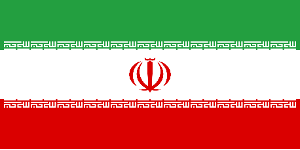
 

Iran:

American lawmakers feel pessimistic about the state of the nuclear deal with Iran. As it is, Iran will currently have the ability to produce nuclear weapons in two months, and the US is attempting to strike a deal as soon as possible to prevent this possibility. An agreement looks to be in sight, but significant points of contention still remain. Both sides have much to gain from this agreement, but they both want the other to make the first move. There is a significant lack of trust between the US and Iran, and remains a major issue in these negotiations.
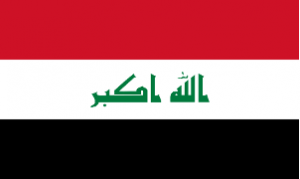
 

Iraq:

Iraq has finally completed the $52.4 billion in payments to individuals, businesses, and governments due to its 1990 invasion and occupation of Kuwait. This money was taken from a portion, often 3%, of the profit from Iraqi oil sales. Over 2.7 million claims were made but the UN only approved 1.5 million, covering $52.4 billion. The last payment was made in January, and all obligations owed by Iraq have been closed.
Iraq’s Parliament failed to elect a new president on Monday due to boycotts of the parliamentary process. Shia leader Muqtada al-Sadr, who leads the largest parliamentary bloc, encouraged politicians to boycott the vote. Due to Iraq’s Parliament rules, two thirds of the legislature is required to vote, but only 58 people showed up. This boycott comes as the Supreme Court temporarily suspends the nomination of the frontrunner Hoshyar Zebari, who is supported by al-Sadr, due to pending charges of corruption.
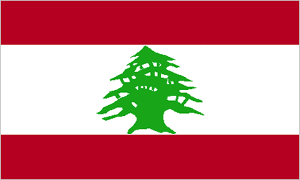
 

Lebanon:

The international community reiterates the need for Lebanon to hold Parliamentary elections in May, on time. These elections are coming as serious economic and political fractures in the country occur. This is the first time since 2019 that elections will be held, after months of the government being deadlocked over the plunging national currency and increasing debt. The Chief of Lebanon’s Hezbollah describes a recent list of Kuwaiti proposals as demands rather than propositions. This comes as Lebanon seeks to repair ties with Gulf Arab nations; the Kuwaiti list was provided as an outline of what could help repair relations, but Hezbollah perceives it as Kuwait dictating Lebanese affairs. Growing Iranian influence is a significant concern for Arab countries, and Hezbollah believes these demands impeded on Lebanese sovereignty.
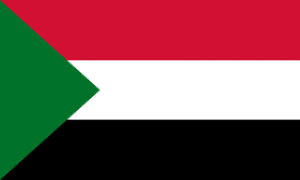
 

Sudan:

Khalid Omer Yousif and Wagdi Salih, two prominent leaders who have been critical of the military and previously a part of a taskforce investigating al-Bashir’s regime and those connected to it, have been arrested. The pair held top positions in the civilian government before the military coup in October and were a part of a taskforce seizing property of officials and firing bureaucrats that were connected to the Omar al-Bashir regime.  Approximately 2000 have been detained and released on bail in connections to the protests against the coup. Foreign aid, specifically from the United States is being cut as a consequence for the “arbitrary” detention of journalists and activists in wake of the military coup. Amid the crackdown, a quiet victory comes from social media: Twitter has unblocked Sudanese phone numbers from authentication, opening doors for activists organizing mostly on social media to use the platform.
 

Uganda:

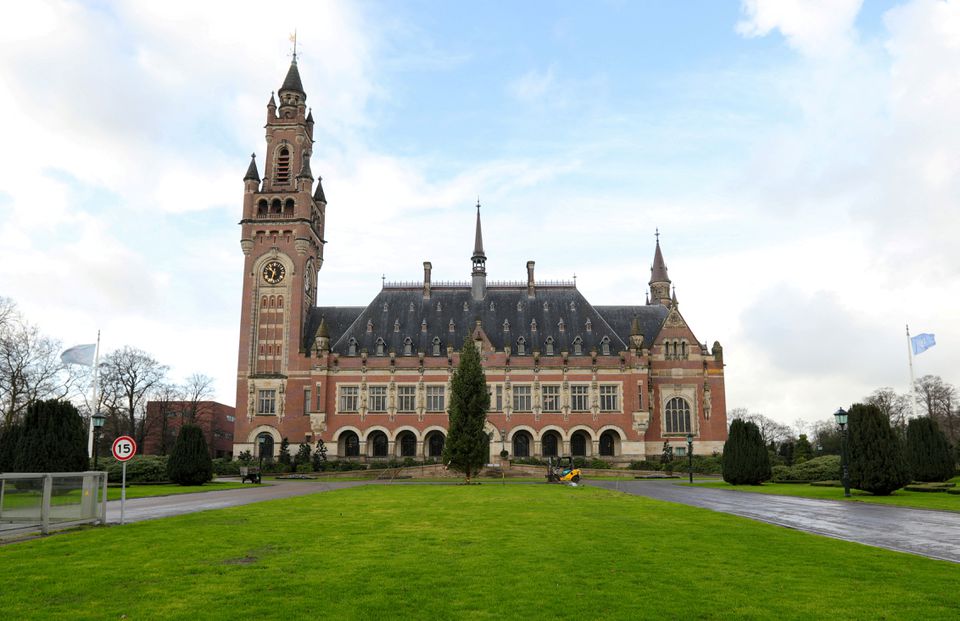
The long-running dispute about reparations Uganda must pay to the Democratic Republic of Congo for its role in conflicts in the Ituri province has been settled by the International Court of Justice. The judges ruled in the case that had first been brought before it in 1999 that Uganda must pay $325 million in reparations to the Democratic Republic of Congo, in five annual installments of $65 million, starting in September 2022; this is far shorter than the $11 billion the Congo was seeking. The ICJ dismissed claims for broad macroeconomic damage and other broad arguments for which clear links could not be shown. Uganda had previously said the amount the Congo was seeking would economically devastate them and officials maintain that this judgment is unfair just as the 2005 judgment which held Uganda liable for aspects of the conflict in the Ituri province.
As pictures of satirical author, who criticizes the Uganda government specifically the President and his son, Kakwenza Rukirabashaija’s tortured body emergeGeneral Abel Kandiho is appointed Ugandan Head of Police. The United States has black listed Kandiho as a human rights offender, specifically for targeting opposition activists and encouraging and presiding over their torture. Rukirabashaija released images of his scarred back from injuries he sustained in prison where flesh was plucked from his body with pliers, he was made to dance for hours on end and injected with unknown substances. The European Union and the United States have made statements denouncing the treatment of prisoners by Uganda and have taken a special interest in this case, specifically denouncing the torture of an author. A lawyer for Rukirabashaija says the author has fled the country into Rwanda over the land border and will make his way into an unspecified European nation to save his life. The award-winning author has not been heard from otherwise. Only 12.7 million covid vaccines have been administered to Uganda’s 45 million population. The nation is now seeking a law, making vaccination against the virus mandatory as the economy opens up.
 

Zimbabwe:

Zimbabwe’s economy is in crisis. Rising inflation and low employment prospects have caused Zimbabweans to risk crossing the border illegally into South Africa, a nation which has seen a rising stream of xenophobia specifically towards Zimbabweans. There are both those desperate enough to cross fast-flowing rivers with crocodiles and those with enough cash to bribe security forces along the way. However, both sets of people often get arrested at roadblocks further inside the country. Economic issues are building as the government rate for U.S. dollars and the black-market rate do not match up causing inflation, as citizens prefer to do business in U.S. dollars at an inconsistent rate. The Zimbabwean government has previously condemned these tactics and is now in the process of exploring if the development of a Central Bank Digital Currency is feasible.
 

Bolivia:

On Thursday, the trial against former interim president Jeanine Anez began virtually due to covid-19 retstrictions. After different interventions and technical failures, the trial was postponed and a new date has not been set. Anez has been held in prison for 11 months in pre-trial detention and could face 12 years in prison if found guilty.

The family of Juan Carlos Flores Bedregal, former leader of the Partido Obrero Revolucionario, and alleged victim of enforced disappearance in 1980, asked the Inter-American Court of Human Rights (IACHR) for a ruling that obliges the State to clarify the facts and identify his whereabouts. The IACHR determined that “the forced disappearance of the victim was motivated by the repression of the exercise of political rights and freedom of association.”
 

Cuba:

Cuban President Miguel Díaz-Canel Bermúdez met with the president of the Communist Party of Spain, José Luis Centella Gómez, to discuss current regional and international issues. President Díaz-Canel thanked the Spanish communist leader for his support in denouncing the embargo imposed by the US government.
 

Nicaragua:

Last week, Nicaragua started trials against political prisoners– opposition leaders, rival presidential candidates, businessmen, journalists, and student and peasant leaders that were arrested in the run up to last year’s elections. Manuel Orozco, a Latin America analyst at Inter-American Dialogue, stated “The trials are part of a strategy to maintain power by using repressive and legal force to instill fear.” The political prisoners had little contact with defense lawyers, trials are being held out of public view, only one relative per defendant is allowed to observe, and transcripts of the hearings haven’t been made available. This week former foreign minister Francisco Aguirre Sacasa and journalist Miguel Mendoza were found guilty of conspiracy to undermine national integrity. The Nicaraguan Center for Human Rights criticized journalist Mendoza’s nine-year sentence requested by the Prosecutor’s Office, calling the charges “invented crimes.” A series of political opposition figures have been convicted and sentenced in trials lasting a few hours; the latest is former presidential hopeful and journalist Miguel Mora who is sentences to 13 years in prison for “conspiracy to undermine national integrity.”

 

The United States:

On Thursday, President Biden urged Americans to leave Ukraine, as thousands of Russian troops have amassed at its borders. President Biden stated that Americans should leave since U.S. troops would not be dispatched to retrieve them should Russia invade. “We’re dealing with one of the largest armies in the world. This is a very different situation, and things could go crazy quickly.”

The Canadian border has become of concern to the United States as Canadian truckers’ blockade border-crossings in protest of a covid vaccine mandate. The United States government is urging the Canadian government to use federal powers to end the blockade and allow normal trade and border-crossing to resume.
 

China:

With the Winter Olympics officially starting, the Chinese government has cracked down on dissent. Human rights activist Hu Jia is in house arrest imposed by authorities who want him out of public view during the Games. According to Human Rights Watch senior China researcher, Maya Wang said that “The point is to prevent any contact between the activists and, essentially, the outside world, which, during these events, tends to pay more attention to what’s happening in China.”

Tennis champion Peng Shuai has released a statement in a supervised interview saying that she did not make any sexual assault accusations. The International Olympic committee, without mentioning her interview, has raised the possibility of the athlete moving to Europe when the Covid-19 pandemic is over.
 

Hong Kong:

Due to ongoing threats towards journalists in Hong Kong, the International Federation for Journalists is calling on governments to offer support and pathways for Hong Kong journalists fleeing the city. Due to the National Security Law, over 20 journalists have been arrested or detained since 2020. In addition to that, journalists are reporting intimidation and harassment aimed towards them, as well as the pervading atmosphere of fear. The IFJ argues that these journalists are being persecuted, and asks for aid to help move them overseas to continue work in exile.

Hong Kong courts reject appeal of American lawyer convicted in a police assault case. Lawyer Samuel Bickett got in an altercation in 2019 with a plainclothes police officer, Yu-shu Sang, and was arrested. Bickett asked Yu if he was a police officer while Yu was attempting to stop a man from jumping a turnstile. After Yu responded no, Bickett grabbed his baton from his hand, and Yu ended up on the ground. Bickett was arrested for this, and served four months in jail before being let out on appeal. He lost his appeal on Tuesday, and will be going back to prison to serve the remainder of his sentence. Bickett says he will appeal his sentence again as he believes he has suffered an injustice.
 

Indonesia:

Clinical trials for a homegrown COVID-19 vaccine have begun in Indonesia. The “Merah Putih” vaccine has suffered delays since 2020, but may be authorized by the middle of 2022. Indonesia’s health minister announced that the vaccine could be donated to other nations as a booster jab or for young children. Vaccination rollout in Indonesia has been relatively slow, as only 48% of the population has received two jabs of the vaccine and only five million people have gotten the booster shot. Authorities hope that this new vaccine, which has been granted a “halal” certification, may help to raise vaccination levels.
 

Myanmar:

Many parents and family members have taken to cutting ties with opponents to the ruling military junta. Many cite a fear of the military attributing their children’s actions to them and being targeted by the junta. The announcements are posted in state-owned newspapers and first began to appear in large numbers last November after the army announced it would seize the properties of opponents and arrest those providing shelter to protestors. Many homes of the family members of opponents have been raided.

Activists have been pushing for the Norwegian-based telecommunications company Telenor to reverse its decision of selling to M1, a Lebanese investment group. When Telenor first came to Myanmar in 2014, many democracy advocates and human rights activists became customers because they believed their data would be safe due to Norway’s reputation of human rights protections. These same activists are now worried about the security of their metadata, as Telenor has responded to queries by stating that Europe’s GDPR privacy law does not apply to Telenor Myanmar. This poses significant risks to the activists. If the military junta gains access to this metadata, they will be able to identify individuals and connections between people who have opposed the ruling military.
 

Thailand:

The same pipeline owned by Star Petroleum Refining Public Company (SPRC) that sprang a leak on January 26 leaked again on Thursday, spilling an additional 5,000 liters of oil off of Thailand’s eastern coast. SPRC is working with authorities to contain the spill, which is reportedly unlikely to reach the shoreline.

In November, it was announced that the US government had helped broker a deal to send millions of Johnson & Johnson vaccine doses to Thailand through COVAX’s humanitarian buffer, which facilitates immunizations for people living in humanitarian emergencies. Vaccines were supposed to be delivered to refugees living on the Thai-Myanmar border in December, but are still delayed due to legal and logistical obstacles. Similar difficulties are being faced around the world as global health advocates struggle to settle logistics and gather resources.
 

Belarus:

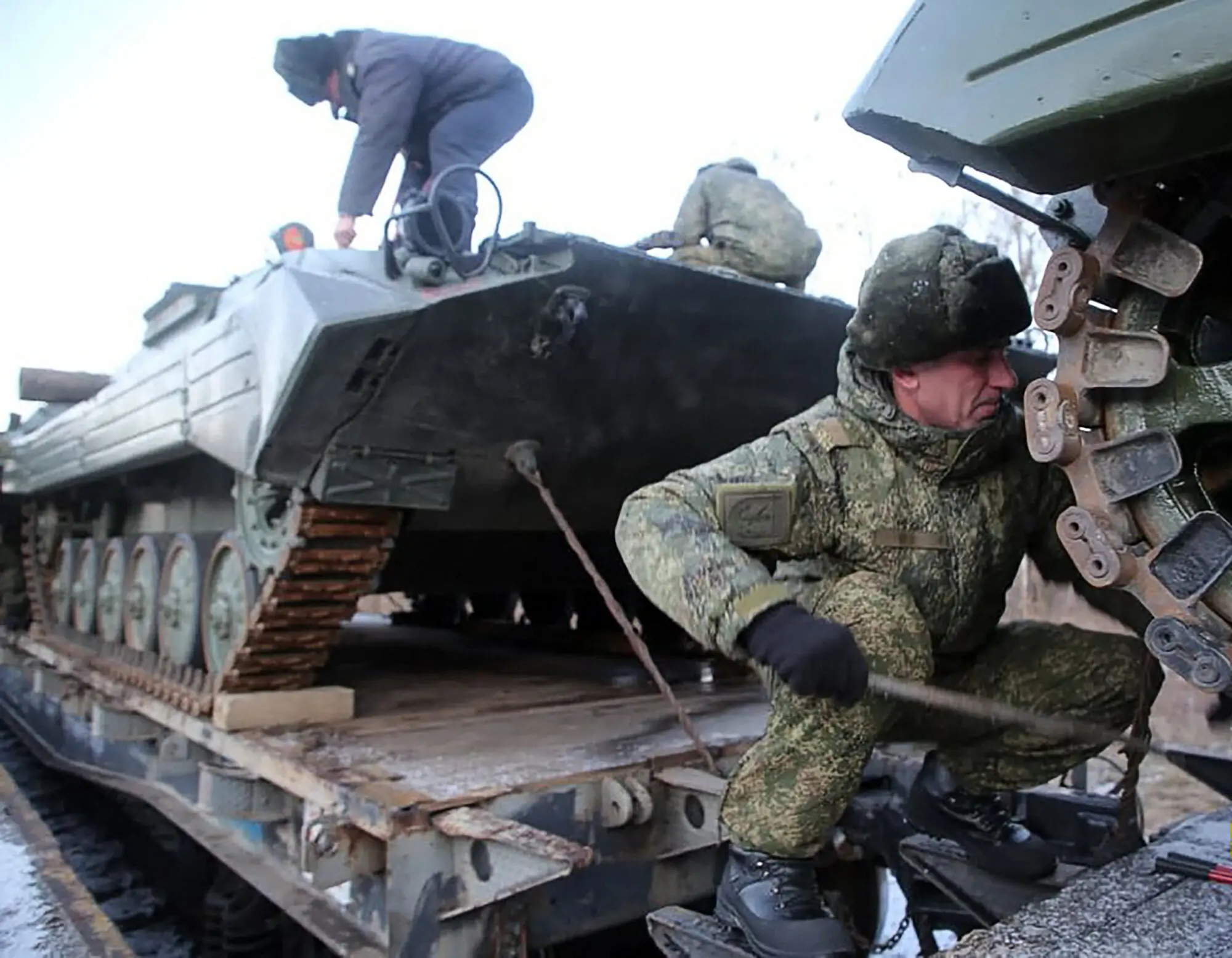
Nearly 100,000 Russian troops are amassed on Ukraine’s border in Belarus under the joint military exercises Belarus and Russia are conducting until February 20th. This has been of major concern to the West with many calling it the most dangerous moment in Europe in decades. Russia is demanding that NATO not be expanded and that Ukraine never be accepted into the military alliance. The West says that Russia cannot dictate how diplomacy and alliances are made. Ukraine has now also started military exercises in a show of strength. These exercises by the Ukranian military are set to continue until the February 20th date that is the same date for Russian and Belarusian joint military exercises to end. Ukraine begins these exercises while waiting for support in military supplies from the United States.
Russian and Belarusian military connections are growing further as an agreement between the two nations which envisages the deployment of up to 200 Belarusian military personnel to Syria has been drafted. President Lukashenko of Belarus says that this will only result in army medics sent in, but concerns grow from reporters in Ukraine, since these personnel will be under operational command of Russian forces in Syria.

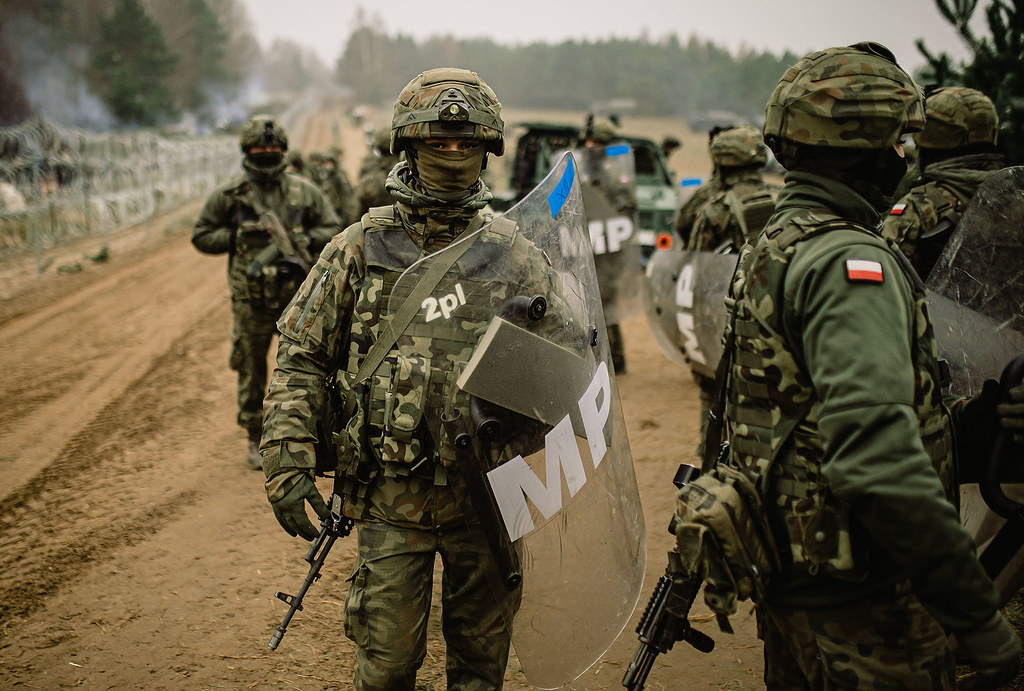
Other neighbors of the states are concerned as well. Latvia has prepared for a “total” defense in case chaos erupts in the region from the Ukraine crisis. Latvia is especially concerned as the nation blames Belarus for their migrant crisis, citing migrants saying that Belarusian authorities invited them in and then directed them to the borders of Poland, Lithuania, and Latvia, EU or NATO states. The small nation claims this “political mischief” is to exhaust the nations’ resources. Poland has started construction on a border wall through Europe’s last old-growth forest, citing the same reason.

Amid the military controversy, Belarus is also making waves by banning athletes from competing at the Olympics. Specifically, the daughter of a seven-time Olympic cross-country skier: Darya Dolidovich, has had her FIS code deactivated based on a decision by the Belarus Cross-Country Skiing Federation. The FIS code is necessary to compete at any events run by the International Ski Federation (FIS). Both father and daughter of the Dolidovich family have been vocal about their opposition to the current president of Belarus, Alexander Lukashenko. Reuters reports that several Belarusian athletes have been jailed or kicked off national teams for their participation in protests that occurred after the 2020 elections. The tactic has drawn international criticism since the Tokyo Olympics last year.
 

Georgia:

Former President Saakashvili has used the timing of his trial to recommit to his now-Ukrainian citizenship. At his trial hearing he expressed support verbally and also performed the national anthem of Ukraine as well as using popular slogans for Ukrainian national movements. Saakashvili has long been a foe of the Russian government, especially with the 2008 Russia-Georgian war which resulted in essentially Russian-controlled areas of Georgia (Abkhazia, and South Ossetia). Saakashvili is offering transparent support to Ukraine even as his trial is underway in Georgia and he is coming off of a hunger strike for which doctors say he did not receive proper treatment.
CAVNAS Weekly Update – February 4th, 2022

Dear Friends,

CANVAS is delighted to bring you another issue of our weekly report!

In this issue, we cover the latest updates on Ukraine’s border crisis, protests surrounding China’s Winter Olympics, and diplomatic barriers to Myanmar’s military government.

Conflict Update:

On Monday, a UN Security Council meeting included tense exchanges between the ambassadors for the US and Russia. After the meeting, Ukraine’s ambassador told reporters that no provocations would come from Ukraine. On Tuesday, President Putin publicly addressed the situation for the first time since December. He blamed the US for trying to pull Russia into conflict, and he also stated that he hopes for continued dialogue over the situation. Also on Tuesday, it was announced that Ukraine is seeking a trilateral partnership with Poland and Britain in order to boost security amidst the buildup of Russian troops on its borders. On Wednesday, it was announced that President Biden has approved the deployment of 3,000 US troops to Poland, Germany, and Romania in an effort to bolster NATO countries in Eastern Europe. The Secretary-General of NATO accused Moscow of amassing around 30,000 combat troops and modern weapons in Belarus over recent days. Though Moscow has not stated the number of troops in Belarus, Russia’s Defense Minister has said that the number of soldiers is below the 13,000-troop maximum agreed upon by the OSCE in 2011.

On Tuesday, at least six people were killed in Guinea-Bissau in a failed attempt to overthrow President Umaro Sissoco Embalo. In the past 18 months, three countries in West Africa, including Mali, Guinea, and Burkina Faso, have experienced a military takeover, prompting the Economic Community of West African States (ECOWAS) to say it was following the Guinea-Bissau situation “with great concern.” On Thursday, West African leaders held an emergency summit in Accra to assess the bloc’s actions moving forward in light of the growing number of successful and unsuccessful coups in the region. ECOWAS chairman Nana Akufo-Addo said the 2020 coup in Mali had proved contagious to the entire region, adding that the trend “must be contained.” So far, the bloc has placed sanctions on Mali and Guinea, suspended Burkina Faso from ECOWAS, and is considering imposing sanctions on Burkina Faso.


Afghanistan:

Pakistan’s National Security Advisor Moeed Yusuf visited Kabul on Sunday for talks on how to handle engaging with Afghanistan economically, and how to address the massive ongoing humanitarian crisis. He met with several senior Taliban officials, and both sides said that positive progress is occurring. Both sides agreed to coordinate in order to facilitate travel at Border Crossing Points. They are also talking about initiating barter trade, and the talks have an economic focus to them.

Despite the Taliban announcing general amnesty for people affiliated with the prior government, or US-led coalition forces, the UN has found that this is not the case. There are credible allegations that since the August 15th takeover, over 100 government officials, security forces and others have died as a result of extrajudicial killings. In addition to this, former government members have dealt with “enforced disappearances and other violations impacting the right to life and physical integrity”. The UN is also documenting arrests, murders, and violence against human rights activists carried out by the Taliban.


Iran:

Due to a Covid outbreak among MPs, Iran’s Parliament has suspended sessions temporarily. At least 47 members out of 290 have tested positive so far, prompting it to cancel public sessions this week. Currently 10 lawmakers are hospitalized, and numerous staff have also been infected. Only 65% of the Iranian population is vaccinated so far as Iran is in the grips of a 6th wave of Covid.

Iran has made significant advances in their nuclear program since 2015, making it easier for them to create a nuclear bomb. This leaves the US and allies pushing for a revived deal that will increase the “breakout period” required for Iran to assemble a bomb. There are only a few weeks left before the Vienna talks come to an end and it’s too late to return to the Joint Comprehensive Plan of Action.


Iraq:

Around 60 Turkish aircrafts and drones attacked Kurdish militant training camps and shelters in northern Syria and Iraq. These strikes are part of a larger campaign by Turkey against militant Kurdish groups that Turkey regards as terrorists. The Turkish Defense Ministry justified this attack because their goal was to protect Turkey’s borders from “terrorist attacks”. Iraq condemned this strike as a violation of their sovereignty. About 80 targets were destroyed.


Lebanon:

Sunni leader Saad Al-Hariri’s announcement that he would not be running in the May elections upended the Lebanese political sphere. However, the Iranian-backed political party Hezbollah said on Sunday that it saw no reason to delay elections. Many are concerned that this move by Hariri may be a tactic to delay elections, after his disagreements with Hezbollah over Iranian influences in politics.

Lebanon says that it will not hand over Hazbollah’s weapons in a meeting with other Gulf countries. Former Lebanese Foreign Minister George Kordahi’s criticism of the Riyadh-led military invasion in Yemen led to a suspension of diplomatic ties with Saudi Arabia and allies. Current Foreign Minister is in meetings with Gulf Arab states to mend these ties, but is rejecting implications that Hezbollah will give up any weapons, or end its existence. However, due to Gulf concerns, Lebanon has said that it will not be “a launchpad for activities that violate Arab concerns”.


Sudan:

Crackdowns continue on protestors in Sudan as the resistance committees take center stage and draft a charter setting out demands, and also meet with top international diplomats from around the world. Resistance members have upended their lives, some no longer sleeping at home to avoid arrest, to protest the military coup which took place in October. Some members of committees have even been killed. The total death toll in the protests, by the military, as of January 24 had risen to 79.


Uganda:

Rwanda has reopened its Gatuna border to Uganda after 3 years of closure due to “harassment” of its nationals by Ugandan officials. Currently, “trucks, Rwandan citizens, returning residents, are crossing to Rwanda.” This border closure cost Uganda about $18 million dollars per annum, before the closure Uganda was earning $20 million from exports to Rwanda but in 2020 that number was only $2 million. Rwanda was quick to note that though trade can resume, the diplomatic issues of Rwanda nationals being harrassed and their domestic affairs being meddled with by Uganda have not ended and a solution still needs to be worked towards. This comes as Uganda seeks to increase trade and exports instead of relying on loans.

Uganda is investing in oil. On February 1, a ceremony was held to officially launch the 10 billion dollar Lake Albert development project, which includes the Tilenga and Kingfisher upstream oil projects in Uganda and the construction of the East African Crude Oil Pipeline in Uganda and Tanzania. The project is expected to be completed by 2025. Uganda is also getting a foothold in the energy market, with Egypt handing over a solar power plant to Uganda in increased cooperation efforts between the two nations.


Zimbabwe:

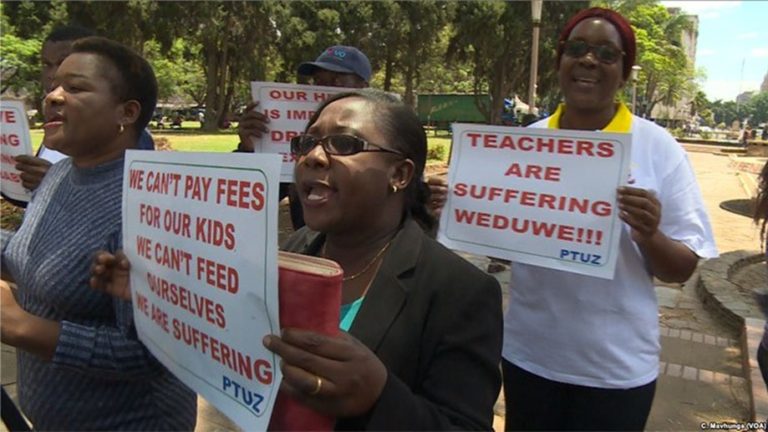
The Federation of Zimbabwe Educators Union announced on Tuesday that its members, including teachers, will not be able to report for duty on Monday February 7 due to eroded salaries. They are demanding that teachers’ salaries be restored to pre-pandemic pre-October 2018 levels which was around 540 USD, ensure that schools can follow proper covid-procedures, and that up to three children of a teacher who is government-employed should have school fees waived. The union further stated that February 7 will be a day of action and there will be an online protest in support of these demands to keep the education system from deteriorating further.


Bolivia:

Bolivia received an extradition request for Bolivia’s former Anti-Drug Chief Maximiliano Davila, stated Bolivia’s Minister of Foreign Relations Rogelio Mayta. The US is accusing Davila of conspiring to import cocaine into the US and conspiring to use and possess machine guns. The US Department of State is offering a reward of up to $5,000,000 for information leading to his conviction.


Cuba:

This week the US Cuban embargo turned 60. Cuban Deputy Foreign Minister Carlos Fernandez de Cossio said, “The United States has a disastrous record in terms of human rights… the United States has no right to give lessons to anyone.” The US has also ramped up criticism of Cuban authorities following the arrest and trials of participants of the anti-government protests last July.


Nicaragua:

The Nicaraguan National Assembly outlawed 14 nonprofit organizations, including five private universities. These organizations were outlawed after a government inquiry concluded that they “did not comply with financial reporting requirements,” an argument frequently used to ban groups that criticize the government. One of the banned universities, the Polytechnical University of Nicaragua, held several anti-government protests in 2018.

On Tuesday, Nicaragua started trials against political prisoners. Some of the prisoners standing trial are journalist and Nicaraguan opposition figure Pedro Joaquin Chamorro, leaders of the opposition group Unamos Ana Margarita Vijil and Dora María Téllez, and young activists Yader Parajón y Jaser Vado.


The United States:

Last week, the US conducted a military operation to kill or capture ISIS leader Abu Ibrahim al-Hashimi al-Qurayshi in Syria. The special forces raid resulted in the death of the terrorist group leader. President Joe Biden stated that “This operation is testament to America’s reach and capability to take out terrorist threats no matter where they try to hide anywhere in the world.” 

US officials claim they have evidence of a Russian plan to make a fake video of a Ukrainian attack using corpses, footage of blown-up buildings, fake Ukrainian military hardware, Turkish-made drones, and actors as a pretext for an invasion. This accusation comes at a time of escalating tensions, with the US formally approving the deployment of 3,000 US troops to Poland, Germany, and Romania.


China:

India joined the US-led diplomatic boycott of the Beijing Winter Olympics after China let soldier Qi Fabao participate in the Olympic torch relay. Qi Fabao, regarded as a hero in China, fought with Indian troops in the Galwan Valley, a border region contested by the two countries. Canada, Australia, and Britain are the other countries participating in the diplomatic boycott.

President Vladimir Putin and President Xi Jinping will be meeting in person before the opening ceremony of the Olympics. This meeting will mark the first in-person meeting President Xi has held in two years, and the meeting is expected to be a public display of geopolitical amity between the two powers. The Chinese and Russian leaders have discussed the situation in Ukraine, and China expressed “understanding and support” for Russia’s position on security regarding Russia’s relationship with the United States and NATO and has joined Russia’s efforts to block action in the United Nations Security Council.


Hong Kong:

Hong Kong’s Secretary for Home Affairs, Caspar Tsui resigned on Monday after attending a party where two people tested positive for Covid. Hong Kong has some of the strictest Covid restrictions in the world, and leader Carrie Lam said Tsui “bought the government into disrepute”. Twelve other government officials were also at the party, but since they only briefly appeared, they were not reprimanded. None of them tested positive and all have issued public apologies.

Christian religious leaders are petitioning Chief Executive of Hong Kong Carrie Lam to drop charges against activists jailed under the National Security Law. Lam is a devout catholic and these religious groups are hoping to encourage her to be more active in asking the Chinese government for amnesties.


Indonesia:

Indonesia will reopen its popular vacation island of Bali to foreign visitors from all countries. This follows similar announcements from other countries in the region, though it also coincides with a rise in Indonesia’s Covid-19 cases this month. While most adults in Indonesia are vaccinated against the pandemic, a new study published in New Mandala shows that there are significant inequalities amongst populations differing in income, education level, age, geography, political affiliation, and social media usage.


Myanmar:

One year after the military coup in Myanmar, the United States, Britain, and Canada have imposed sanctions against Myanmar officials. The sanctions focused on judicial officials involved in the prosecutions against ousted civilian leader Aung San Suu Kyi. Washington also imposed sanctions on a Myanmar army directorate, an alleged arms dealer and his sons, and KT Services & Logistics Company Limited and its CEO.

The first anniversary of the February 1st 2021 coup in Myanmar was marked by demonstrations both by protesters and military supporters. Various city streets fell quiet as activists urged people to close businesses and stay indoors as a silent method of resistance. A man in the central town of Kyaukdataung set himself on fire in protest of unreliable power supplies, and was reported to be in serious condition in the hospital. Pro-junta events included rallies with dancing and photographs of the junta chief Min Aung Hlaing.

The foreign minister appointed by Myanmar’s military junta has been blocked from attending an upcoming meeting of the Association for Southeast Asian Nations (ASEAN). A non-political representative from Myanmar has been invited to attend instead. This comes after the UN Security Council called for an end to violence in Myanmar and the release of political prisoners  including ousted leaders Aung San Suu Kyi and President Win Myint.


Thailand:

Bombers set off at least 13 blasts in a town in southern Thailand overnight, and police killed two suspected insurgents in a separate raid after a 20-hour siege in a nearby province, authorities said on Saturday. As with most attacks in Thailand’s deep south, there was no claim of responsibility. The violence came weeks after the government reopened a dialogue with insurgents from a Malay-Muslim minority in the southern part of the Buddhist-majority country.

On Saturday, Mae Ramphueng Beach in eastern Thailand was declared a disaster area due to an oil leak from an underwater pipeline in the Gulf of Thailand. The leak, which is from a pipeline owned by Star Petroleum Refining Public Company Limited, began last Tuesday and was brought under control by Wednesday. However, the oil has since drifted to more coastal areas. Aircraft have been dropping chemicals to mediate the clearing of the oil, working with 200 navy personnel and 150 people from Star Petroleum. Authorities are trying to prevent the oil from reaching the shore of a small bay on the popular resort island of Koh Samet, as it could cause heavy damage to the shallow water corals that are in the small bay.


Belarus:

As Russian troops continue joint military exercises with the Belarusian military, Estonian Ambassador to the United States suggests that these exercises could be pretext for a large permanent Russian contingent in Belarus. This would significantly disrupt defense calculations in the region and require the neighboring nations to rethink their own military positions. One European diplomat, however, said both Europe and the United States “have underestimated, not to say largely ignored, the strategic and military consequences of the Russian de facto political and military takeover of Belarus, which has been ongoing since 2020 and is now being finalized, with their joint exercise as a highly symbolic crowning event.”  In fact, the Russian Defense Minister Sergei Shoigu reviewed live-fire exercises in person in Belarus on Thursday.While the talks with Russia are not yielding any major results, the United States is reportedly imposing visa restrictions on Belarusians as a result of the Belarusian government’s efforts to “silence dissent,” standing in solidarity with athletes who fear returning to their nation, however, the US failed to mention who the visa restrictions would apply to.


Georgia:

While the military build-up continues in nearby Belarus, increasing tensions between Russia and the West, Russia made a statement saying “In the fundamental interests of European security, it is necessary to formally disavow the decision of the 2008 NATO Bucharest summit that ‘Ukraine and Georgia will become NATO members.” Despite the 2008 agreement, the Georgian government has strayed farther from NATO members’ ideals. Specifically with the leader of the United National Movement being arrested in 2019 and the arrest of former President Mikheil Saakashvili of the UNM after his return to Georgia. The current governing party, the Dream party, has garnered open critique from the western NATO allies.

Besides foreign policy dissonance in the past few years, the past few months have brought major inflation to Georgia. Utility prices have gone up 44.8%, the past month alone saw a 13.9% rise in consumer prices from the same period last year. Former President Saakashvili has pitched a plan online to combat inflation, including generic suggestions such as reducing corruption, but also ideas for infrastructure projects, and divorcing politics from big money.

CANVAS Weekly Update – January 28th, 2022

Dear Friends,

CANVAS is delighted to bring you another issue of our weekly report!

In this issue, we cover the latest updates on Ukraine’s border crisis, protests surrounding China’s Winter Olympics, and Hong Kong’s National Security Law.

Conflict Update:

Although Russian President Vladimir Putin has repeatedly denied his plans to invade Ukraine, Russian troops have continued to build up on Ukraine’s borders. Though both the United States and the EU have stressed the importance of a diplomatic resolution, the US has placed 8,500 troops on “high alert.” If activated, these troops would be part of a NATO response force. Russia, blaming the US for escalating the situation, responded on Tuesday with military drills both near and far from Ukraine. On Wednesday, both the US and NATO made formal written responses to Russia’s demands. While they reportedly refused many of Russia’s demands, both responses are said to propose a diplomatic path forward. Separately, officials from Ukraine, Russia, Germany, and France participated in talks in Paris, which ended in an agreement to uphold the 2014 ceasefire between Russia and Ukraine.

On Monday, the military seized control of Burkina Faso. The military suspended the constitution and ousted President Roch Marc Christian Kaboré. President Kaboré has led Burkina Faso since 2015. President Kaboré’s whereabouts are currently unknown, but a spokesperson for the military junta said that authorities are being held in a secure location and that no violence occurred in their arrest. One soldier also told the Associated Press that Kaboré had submitted his resignation. Captain Sidsore Kaber Ouedraogo promised that the new leaders would schedule new elections at a time “acceptable to everyone.”


Afghanistan:

On Wednesday, United Nations Secretary-General Antonio Guterres said that Afghanistan is “hanging by a thread” and called for countries to do whatever necessary to provide humanitarian aid. Guterres also pushed for a suspension on conditions that would constrict lifesaving aid operations, as many social and aid systems in Afghanistan are on the edge of collapse, and millions are suffering from extreme hunger. The UN is currently working with the World Bank to transfer money to help provide nutrition and aid to the Afghan population. As winter approaches, the crisis will continue to get worse. The World Food Program has set up stations in Afghanistan to provide food aid, but many that still need help aren’t getting it.

Afghanistan met with diplomats, namely EU representatives, the US, Britain, France, Italy, and Norway, for the first time since the Taliban takeover last year. Ahead of the talks, western diplomats met with Afghan human rights activists to discuss their demands and assessment of the on the ground situation. The Taliban have been criticized for establishing an all-male, all Taliban cabinet. Most of the international community has urged them to open the government up to women, and other religious and ethnic minorities.


Iran:

The Biden Administration has put out a statement that Iran and the US are close to a return of the 2015 nuclear agreement. Progress in Vienna has been slow, but both parties want to strike a deal on a nuclear agreement for different reasons. The US is concerned that Iran’s dallying allows them to get to a point where it’s feasible for them to make a nuclear bomb and it is necessary to reach an agreement soon. Iran wants sanctions relief from the US. They deny that they are trying to create nuclear weapons, and instead are using uranium for civilian use. Iran also believes that US demands beyond the original deal are unconducive to the Vienna talks, and they will not be speaking to them directly as it is unnecessary.

Iran has regained the right to vote in the UN General Assembly after their dues were paid by South Korea, using frozen Iranian funds. US sanctions have made it difficult for Iran to pay their dues, and any release of frozen funds requires US approval. Around $7 billion have been frozen in just South Korea due to US sanctions, and it took active cooperation with the UN Secretariat and the US Treasury in order to pay the UN dues.


Iraq:

Iraqi Parliament Speaker Mohammed al-Halbusi’s reelection was upheld by the Supreme Court. Hours after, his residence was targeted by rockets in what seems to be the latest in a string of attacks by Iran linked armed factions. Halbusi has repeatedly been threatened by people close to Iran-linked factions, but at the time of the attack, he was reported to not have been in the area. As the head of the party with the largest number of Sunni votes, Halbusi was targeted by enraged Shiite factions, unhappy with the lack of government representation. Halbusi’s election as Parliament Speaker will allow Iraq to continue with the formation of the new government after elections last October.

ISIS fighters remain active across parts of Iraq and Syria and have started stepping up hit-and-run attacks against anyone against them. Iraq’s security forces have been hunting IS cells across a vast territory. At a string of bases last Friday, IS fighters struck, killing 11 soldiers. This is the first time that these fighters have attacked directly, preferring to IEDs and use snipers instead. This comes among a larger pattern of ISIS trying to reorganize troops and activity in Iraq. It is estimated that 10,000 ISIS fighters remain active in this region, sticking to mostly desert hideouts. Iraq has recently lost support of a US-led international anti-jihadist coalition, making it more difficult to counter ISIS attacks.


Lebanon:

Lebanon signed deals on Wednesday with Syria and Jordan to purchase electricity, bringing Lebanon up to 250 megawatts (2 hours of energy) a day. The World Bank will be financing these deals, and negotiations over that should conclude in two months. The national grid has not been able to supply much energy since 1990, and Lebanon has taken to subsidizing fuel oil. These subsidies have been a large driver of Lebanon’s massive national debt, and increasing the amount of energy the country gets should help reduce it. Lebanon will also be receiving natural oil and fuel for power plants through Egypt and Iraq.

Saad Hariri, one of Lebanon’s former Prime Ministers and a prominent politician, announced on Monday that he was leaving his political career. Hariri was the head of the Future Movement, the most prominent party standing against the increasing power of Iran backed militants, and he called on his party not to run in upcoming parliamentary elections either. Hariri was the top representative of the country’s population of Sunni Muslims. With his departure, there is a power vacuum and it is unclear who will be able to replace him.


Sudan:

Anti-coup protests continue in Khartoum and other cities as Sudanese security forces killed three more protestors this week. Protests, organized by neighborhood committees, are continuing as their headquarters are raided and protestors exposed to the risk of being killed or wounded. The brutal military has fired tear gas and bullets at anti-coup protestors.  Sudenese women’s rights campaigner Amira Osman was taken by 15 masked men, wearing civilian clothes, at a nighttime raid at her home. Osman was previously notable in protesting the government of former President Omar al-Bashir, and creating waves by violating dress code laws in 2002 and 2013. The United Nations Integrated Transition Assistance Mission In Sudan, took to twitter to condemn Suden’s pattern of violence against women’s rights acitvists which severely reduces women’s participation in politics.


Uganda:

Kakwenza Rukirabashaija was released on Wednesday, after being taken away by unknown security personnel before his lawyers were able to successfully serve release papers to the prison he was in. His lawyer says he was “dumped by gunmen” outside his home. The 33 year old award-wining author of The Greedy Barbarian is awaiting trial for the communication offenses which were a series of tweets about President Yoweri Museveni and his army general son. The charge sheet reads Rukirabashaija “wilfully and repeatedly used his twitter handle…to disturb the peace of his Excellency the president of Uganda General Yoweri Kaguta Museveni with no purpose of legitimate communication. He spent 14 days in official custody before he was charged and had no communication with anyone during that time. He was then missing for 2 days after he received bail.

The New Humanitarian reports violent cattle-stealing rustlers have returned to Karamoja, leading to a renewed military effort of disarming the public, in the poorest area of the country. There has been an influx of weapons from Kenya as Ugandan cattle farmers share a grazing field with the neighboring nation. These weapons resulted in a slow build of a few stolen cattle to hundreds of people killed from December 2020 to July 2021 in efforts to steal all the cattle a village has. The government and military have increased presence in the area, listening to concerns and launching a third disarmament campaign. The last two campaigns are called successful and occurred after the Idi Amin regime fell in 1979, though locals are traumatized and fearful of another campaign. The villagers would much rather the military protect them from raiders directly rather than confront villagers, especially since there are reports that raiders include military personnel and the military in the area may be benefiting from the raids. Additionally, there are reports that some villages may have been deserted both from fear of the raiders and the Ugandan military.

Uganda is seeking to decrease borrowing and increase exports, specifically in the Dairy sector. The nation has invested in 14 private dairy companies to reduce the market power the state-owned dairy had. The nation now produces 2.81 billions of liters of milk while it only consumes 800 million liters. They used to export milk to Kenya who has since restricted the practice in violation of free trade agreements, Uganda claims.


Zimbabwe:

Many Zimbabweans live and work in South Africa due to the Zimbabwean Exception Permit. However, due to a rise in Xenophobia as the economy slows, the Zimbabwe embassy has received multiple reports of their citizens in South Africa being told to leave by a certain date or face eviction. Zimbabwe, and other African nations, have previously condemned South Africa over the treatment of migrants. Zimbabwean migrants have been told to stay vigilant and law-abiding in response.

There is a widening gap between the national currency’s official and black market rates. Officially the Zimbabwe dollar is 112.80 to 1 U.S. Dollar, however, on the black market it is 200 to 1. Business leaders say the gap is due to a lack of supply of foreign currency, yet the government claims it’s due to businesses accepting U.S. dollars for payment at the black market rate. The Reserve Bank of Zimbabwe is hesitant to close this gap and match the black market rate fearing that it will only encourage further inflation. National leaders are calling on businesses to converse with the government so that convergence can take place at a realistic rate.


Bolivia:

Former Anti-Drug Chief Maximiliano Davila was arrested for illicit enrichment and links to drug cartels. Davila, who served as Chief of Bolivia’s Special Anti-Drug Trafficking Force during President Evo Morales, was arrested trying to flee to Argentina. Davila is the second Anti-Drug Chief to be detained for links to cartels and sets a concerning trend.


Cuba:

Berta Soler, leader of the Ladies in White movement, was arrested by police on January 23. The Ladies in White movement is primarily made up of mothers, wives, and sisters of political prisoners in Cuba and stage peaceful protests where they dress in white and carry white flowers as they march. Plainclothes police arrested Soler and three other women. Barbara Farrat, one of the other women, is the mother of Johnatan Farrat, a 17-year-old that faces criminal charges for his participation in the July 11 demonstrations.


Nicaragua:

President Daniel Ortega, recently reelected, has hundreds of political prisoners being accused of treason. On January 25, Berta Valle, wife of presidential candidate and human rights activist Felix Maradiaga, spoke about the conditions her husband is being held in. Valle states that Maradiaga has lost 50 pounds, is being held in a cell with no light, is not allowed to speak, is refused medical attention, and suffers from mental health issues like memory loss and cognitive damage. Valle believes Ortega is keeping the political prisoners as bargain chips to ease sanctions.


The United States:

Supreme Court Justice Stephen G. Breyer, the senior member of the liberal wing, will retire. It is expected that President Joe Biden will nominate a black woman to Breyer’s seat. Potential candidates are U.S. Court of Appeals for the District of Columbia Circuit Justice Ketanji Brown Jackson, California Supreme Court Justice Leondra Kruger, and U.S. District Court for the District of South Carolina Justice J. Michelle Childs.

As U.S.-Russia tensions increased over Ukraine, the U.S. has threatened to halt the opening of a key pipeline that would send Russian gas to Western Europe. While the U.S. is not responsible for the project, they have stated that they will work with Germany to halt it, and Germany stated that “nothing was off the table” if Russia invaded Ukraine.


China:

China is demanding the US “stop interfering” in the Beijing Winter Olympics, which will start next month. The US and its allies are implementing a diplomatic boycott and will not send dignitaries to the Games in a protest over China’s detention and genocide of more than 1 million Uyghur Muslims in the Xinjiang region.

The European Union launched action against China at the World Trade’s governing body for discriminatory practices against Lithuania. Tensions between Lithuania and China have escalated after Lithuania broke with diplomatic custom and agreed that the Taiwanese office in Vilnius would be named Taiwan instead of Chinese Taipei. Since then, China expelled the Lithuanian ambassador from Beijing and withdrew its own ambassador.


Hong Kong:

Hong Kong has made it significantly harder for defendants to seek bail before trial, leaving some imprisoned for over a year. In 2020, after mass democracy protests, China put into place the National Security Law to curb said protests, and any pro-democracy advocates in Hong Kong. Bail conditions have also become stricter and has led to a shift in culture that views defendants as guilty before their trials. Some legal scholars believe that the practice of denying bail “may encourage arbitrary arrests just to ensure that the accused would be incarcerated for a lengthy period of time before trial”.

Hong Kong’s strict Covid-19 laws risk driving many foreign firms and workers out of the country. Hong Kong’s strict Covid regulations have done well in keeping the virus under control during 2021, but with a surge in the Omicron variant, strict laws and lockdowns have contributed to a “brain drain”. As an international business hub, Hong Kong’s economy relies on international businesses and travelers. With a lack of transit, and flight restrictions, many foreigners are choosing to leave instead. The European Chamber of Commerce has made several recommendations to the government, including shortening quarantine times to placate the international business community.


Indonesia:

Indonesia recently made a deal with Singapore to resume quarantine-free travel between the two countries. The arrangement is open to visitors who are fully-vaccinated and insured traveling by sea between Singapore and the Indonesian islands of Batam and Bintan. The resumption of quarantine-free travel is expected to boost tourism and other parts of the economy. In 2020, income for food and accommodation businesses on the two islands was cut by 41%. Indonesia is also in talks with Japan and India to initiate a similar travel arrangement.

This arrangement is part of a set of three bilateral agreements reached by Singapore Prime Minister Lee Hsien Loong and Indonesian President Joko Widodo at the Singapore-Indonesia Leaders’ Retreat in Bintan. The other two agreements involve the realignment of the boundary between their flight information regions and provisions for the extradition of fugitives. For the agreements to take effect, a domestic ratification process will need to take place in both countries.


Myanmar:

An article from Human Rights Watch urged the UN Security Council to initiate concrete action in response to atrocities in Myanmars, citing both the 2017 campaign against the Rohingya and the 2021 coup. Though the Security Council has issued many statements about the events in Myanmar, HRW argues that the Security Council should ignore the threat of a Chinese and Russian veto and move forward with a resolution to suspend arms transfers to Myanmar.

A spokesperson for Myanmar’s military government told Nikkei that the regime did not plan to dissolve ousted civilian leader Aung San Suu Kyi’s National League for Democracy (NLD) until the 2023 August elections. According to Major General Zaw Min Tun, this decision is in line with recommendations from several countries, including China. Many NLD leaders have already been detained, and the Union Election Commission is currently undergoing investigations into all political parties.


Thailand:

Thailand’s narcotics board announced that cannabis would be removed from its drugs list, allowing cannabis to be grown from home. In order to grow cannabis, people will have to notify their local governments and acquire further licensing if they intend to use it for commercial purposes. Later this week, the health ministry will present a separate draft bill that specifies the legal use and production of cannabis under the new rule, including guidelines for recreational use. The food and drug regulator chief said that there would be random inspections to ensure that homegrown cannabis was not being misused, further noting that it should be used for medical purposes. Police and lawyers have expressed that the legal status of recreational marijuana in Thailand remains in a gray area with this new rule, which seems to be the latest measure in establishing cannabis production as a major industry. Thailand is the first country in Asia to approve the de facto decriminalization of marijuana.


Belarus:

Poland has started building a wall through the forest that the Belarus-Poland border runs through. This is a result of increased migration concerns. Belarus has been accused of encouraging refugees from countries like Syria and Afghanistan to come to Belarus and promising them safe passage into the European Union. There are many who are disappointed by the building of this wall and say that the Bialowieza forest world heritage site is endangered by these actions and instead the money going into building the wall and militarizing the area should focus on providing humanitarian aid and passages of safe asylum seeking.

Belarus says that Russian troops will leave Belarus once the training exercises, which has seen the Russian military move into Ukraine’s neighbor’s territory, end. The world is on edge watching the Russian military move into Belarus as the “Allied Resolve” drills are due to continue until February 20. While the United States and the European Union have condemned Russian military movements, China is encouraging “all parties” to stay calm and Foreign Minister Wang Yi told the U.S. secretary of state that “reasonable security concerns should be taken seriously and resolved.” Germany, unlike other NATO allies, has said that it would not provide weapons to Ukraine but that a field hospital and necessary training would be provided by Germany. Other non-NATO countries such as Finland are also increasing militarization in anticipation of conflict.


Georgia:

On January 23, Georgian protesters gathered at the Ukrainian Embassy in solidarity with Ukraine as Russian militarizes the border. Ukranians and Belarusians (nations opposing each other at the moment) based in Georgia were also at the protests. Georgians are sympathetic to the Ukrainian position as approximately 20% of Georgian territory is in regions controlled by Russia. However, the Georgian government is not making a strong stand against Russia. In the past Georgia and Ukraine have been close allies, however there are recent tensions, specifically in the case of former Georgian President Mikheil Saakashvili who is now a Ukrainian citizen and in prison in Georgia. Georgia is also fearful of Russian retaliation as the memory of the 2008 war is recent.

CAVNAS Weekly Update – January 21st, 2022

Dear Friends,

CANVAS is delighted to bring you another issue of our weekly report!

In this issue, we cover the latest updates on the earthquake in Afghanistan, protests surrounding China’s Winter Olympics, and Indonesia’s new capital city.

Conflict Update:

A recent statement from UN Secretary-General António Guterres celebrated the “demonstrable effort to make peace” in Ethiopia. However, in a call to former Nigerian president Olusegun Obasanjo, Guterres also noted the extreme challenges still being faced, especially humanitarian. The World Food Program reported that aid and food operations are about to “grind to a halt” in northern Ethiopia due to ongoing violence and lack of funds.

Air raids were launched by the Saudi-led coalition in the Yemeni capital Sanaa on Tuesday, following an attack in Abu Dhabi by Houthi rebels. At least twelve people were killed in Sanaa. This comes after weeks of increased activity of Houthi rebels in the United Arab Emirates. On Monday, three people were killed in Abu Dhabi by a fuel tank blast claimed by Houthi rebels. This was the first deadly assault on U.A.E. soil by the rebels that the U.A.E. has acknowledged, though the U.A.E. has been part of the Saudi-led coalition backing the Yemeni government against the Houthis since 2015. Earlier this month, Houthi fighters seized a U.A.E.-flagged ship, claiming the cargo to be weaponry and holding the crew hostage. The U.A.E. has also backed Yemeni militias in a recent offensive against Houthi fighters in Marib, the area where most of the worst fighting in the past year has occurred.
Following the Saudi-led coalition’s attack in Sanaa, the UN expressed concern at the “continuing escalation of the conflict,” and warned that the level of violence may soon surpass what was witnessed in December.


Afghanistan:

On Monday, a 5.6 magnitude earthquake rocked Western Afghanistan, killing over 27 people, and destroying hundreds of homes. The Mujahideen, Taliban fighters, have been able to reach some of the affected areas, but the region is incredibly mountainous and the number of casualties might go up as few people are able to get the necessary help they need. At the moment, the main hospital in the area has received five injured patients from the quake, but the expect the numbers to rise as more people are unearthed from the rubble. Rescue teams have been sent to the affected areas.

Since the Taliban took power last August, most girls in Afghanistan have not been allowed back to schools after the 7th grade. The last time the Taliban were in power, 20 years ago, they had banned women from all education, work, and public life. There are concerns from the international community that the same could happen now. The Taliban Minister of Culture and Information, Zabihullah Mujahid has said that they are looking to open classes for all girls and women after the start of the Afghan New Year on March 21st. Mujahid said that girls and boys must be completely segregated, not just in different classes, but in different buildings. The biggest obstacle so far has been finding enough buildings in order to enforce this segregation. So far, edicts on education have varied by province, but Mujahid said that they “are not against education”. It remains to be seen whether this will happen or not.


Iran:

China, Russia, and Iran will be holding joint naval drills on Friday. These drills will be held north of the Indian Ocean, and is the third joint drill between these countries. Iranian President Ebrahim Raisi wants to deepen ties with China and Russia, and this naval drill will be among many steps in doing so. Tehran joined the Shanghai Cooperation Organization, an Asian security body led by China and Russia in September. In addition, there have been meetings organized between heads of states throughout the past year.

The US, and European allies believe there are only a few weeks left for current nuclear talks with Iran to be revived. After former President Donald Trump pulled out of the 2015 nuclear agreement with Iran in 2018, talks have begun starting December 2021 to revive the deal. So far, “modest progress has been made” but core issues remain to be resolved and both sides believe that a decision needs to be made soon.  Iran refuses to meet with the US so other countries must currently act as a go between. A French source at the most current talks believes that this trend will not be sustainable, and the month of February will be decisive to seeing how talks will play out.


Iraq:

Iraq’s 2021 October election was marked with significant disagreements between factions over election results. The first Parliamentary session last week was chaotic, with neither bloc coming to a consensus over who should be voted in as Prime Minister. Last Friday, a hand grenade caused an explosion at the headquarters of the Iraqi Parliament Speaker, Mohammed Halbousi. 2 people were wounded, and a similar event happened a few hours later at the headquarters of another politician. No group has claimed responsibility for this incident.

The Iraqi government has organized ten flights from Belarus to Baghdad in order to repatriate its citizens. Currently, 4,000 Iraqis who were stuck at the borders of Belarus have made it back to Iraq. According to Foreign Ministry Spokesman Ahmed al-Sahaf, some Iraqis are still stuck in Belarus, but Iraq and Lithuania want to cooperate in order to bring those stuck at the borders back to Iraq. Since last summer, many Iraqis have been attempting to enter Belarus as migrants, and the EU has accused Belarus of luring migrants to the border as revenge against sanctions.


Lebanon:

Lebanese groups Hezbollah and Amal are ending a three-month boycott of cabinet sessions, allowing ministers to meet. Lebanon is currently facing one of the worst financial crises in the world with the currency having dropped over 90% since 2019. The cabinet has not been able to meet since Hezbollah and Amal were boycotting them due to disagreements over how to handle the 2020 Beirut port explosion, further spiraling the country into a financial crisis. Now that the government will be able to meet after a three-month gap, ministers hope to approve a 2022 budget and discuss an economic recovery.

Jordan is signing a deal with Lebanon and Syria to help provide Lebanon with electricity under a US backed plan. This deal will hopefully help ease power shortages that Lebanon is currently facing and bolster their power output, which is very weak at the moment. This plan will also include providing gas supplies to Lebanon via an Arab pipeline established 20 years ago.


Sudan:

The death toll in Sudan has risen to 72 with more than 2000 wounded in protests since the October 2021 military coup. Thousands have taken to the streets again to protest the violence against protestors; roads in Sudan’s capital were even barricaded. The United States has announced no more economic aid to Sudan until violence against the protestors is ended and considers taking steps against “those holding up efforts to resolve Sudan’s political crisis.” Sudanese judges, in response, have condemned violence against anti-coup protestors; saying “military leaders have “violated agreements and covenants since the October 25 coup, as they have carried out the most heinous violations against defenseless protesters.”


Uganda:

A fuel shortage in Uganda saw prices shooting up from 4000 Ugandan shillings to 12,000 per liter, while hundreds of trucks are stuck at tailbacks at the border with Kenya. The Energy Minister Ruth Nankabirwa said that the trucks are delayed due to a faulty scanner that is used by custom officials to check vehicles in addition to Covid-19 issues. Nankabirwa has also called on fuel suppliers to stop “cheating” and says that though Uganda is a liberalized economy the amount the price was raised is not supply-demand economics and is just plain cheating.

According to France 24, Lira has handed down an order which went into effect immediately which bars women from sitting in the front cabin of trucks, even if they are the wives of the drivers. It is supposedly due to the amount of accidents that coincide with women in the front seat, who create a “distraction” by wearing skirts.


Zimbabwe:

The ANC 110th anniversary saw speeches that called for promoting democracy in the SADC. A main cause for concern for listeners was South Africa has canceled the Zimbabwean Exemption Permit which had allowed for citizens of Zimbabwe to freely work and live in South Africa without other visas. Zimbabwe’s economy is weak and with more citizens returning it is struggling to provide for its people.

President Emmerson Mnangagwa fired the State Security minister Owen Mudha Ncube who has previously been cited by the United States for Human Rights Abuses. He was in charge of the Central Intelligence Organization and was fired for inappropriate conduct “for a minister of government.”


Bolivia:

Developers in Bolivia, Argentina, Chile, and Peru are evaluating the creation of an association of lithium-producing countries after Chile elected left-wing Gabriel Boric as president. Bolivia has the largest lithium reserves globally with 21 million tons, followed by Argentina and Chile, and the organization could control the lithium market.

Former Bolivian President Evo Morales called for a second “democratic and cultural revolution” and proposed an amendment to the Bolivian constitution. Morales, who many believe is still running the country, also said that “It is a constitutional responsibility to change, to improve the cabinet of the President of the State,” after eight cabinet members were accused of responding to him instead of President Luis Arce.


Cuba:

Spanish news agency EFE, which has been covering Cuba since 1975, announced that they may be forced out of Cuba. The Cuban government has revoked the press credentials for three editors, a camera operator and a photographer, and have denied visas to different EFE members, after the news outlet covered protests in the country. EFE is responsible for nearly 50% of all news published about Cuba in Latin America and its absence would place a big threat to freedom.

The US government has allowed Icelandair to create a new route that connects Havana with Miami, Orlando, and Houston, despite ongoing sanctions that prevent US citizens from traveling for tourism.


Nicaragua:

On Tuesday, President Daniel Ortega thanked Russian President Vladimir Putin for his support and Russia’s solidarity with the people of Nicaragua after he called to congratulate him on his reelection. During the call, Russia reaffirmed its “unwavering support to the efforts of the Nicaraguan government to ensure the national sovereignty and its readiness to further support the social and economic development of the republic.”

On November 22, Nicaragua’s government announced that Cubans would no longer need a visa to travel into the country. However, few had benefited since flights between the two countries did not resume until January 12. Experts worry that Nicaragua’s immigration policies could stimulate a mass exodus of Cubans trying to reach the US, similar to the 1980 Marial crisis.


The United States:

To mark his first year in office, President Joe Biden held a press conference on January 19. During the conference, President Biden talked about the Build Back Better economic package, which had been delayed this past month, the voting rights bill blocked by the Republican party later that day, inflation, and the pandemic. President Biden also spoke about the Russia-Ukraine conflict and said that he expects Russian President Vladimir Putin to invade Ukraine, and warned him that he would pay a “dear price” in lives lost and potentially being removed from the world banking system. On January 20, the administration announced that it approved four NATO members to send weapons to Ukraine.


China:

China’s Winter Olympics organizing committee warned foreign athletes that they might face punishment for speech that violates Chinese law, spotlighting censorship in the country. In China, activists and dissenters are sentenced to prison for staging protests and posting on social media. Organizations like Human Rights Watch recommended that athletes be careful and avoid talking about China’s human rights records for their safety after Chinese authorities arrested prominent human rights activists Yang Maodong and Xie Yang.

NGO Safeguard Defenders released a report that details methods used by China to force fugitives to return from other countries through “Operation Sky Net.” Methods include threatening family members, intimidation, and kidnapping.


Hong Kong:

A Hong Kong democracy activist named Edward Leung has been released from prison. He was jailed in 2018 on charges of rioting and assaulting police. Advocating for independence from China is now a crime that carries a sentence of lifetime imprisonment. Leung was arrested before the 2020 law went into effect, but he was a staunch advocate for Hong Kong “localism” which advocates for independence from China and the promotion of a Hong Kong rather than Chinese identity.

With a surge in Omicron cases, Hong Kong is following China’s approach to Covid-19 control. They’ve closed their borders and imposed strict social restrictions on people in the region. For a city dependent on visitors, and with Chinese New Year coming up, citizens are frustrated at the measures imposed on them as authorities try to contain the spread. So far, 50 locally transmitted cases have been found, after three months without any. Hong Kong is also significantly behind in the rates of vaccination compared to other developed cities, with only three quarters of the population having had their first dose.


Indonesia:

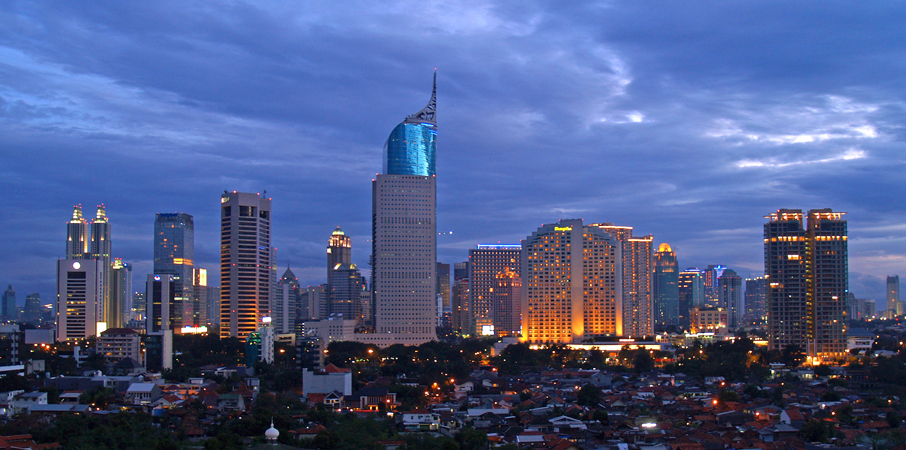
Indonesia has named its new capital Nusantara, citing environmental concerns surrounding the city of Jakarta. On Tuesday, the parliament approved the bill to relocate the capital, though Jakarta will officially remain the capital until a presidential decree is issued at a currently unspecified time. Nusantara—a Javanese name for the archipelago—is in the Kalimantan Province of Borneo, an area at the center of Indonesia that is covered with jungle and less prone to natural disaster. The government has stated that it envisions the new capital as a “super hub” to promote sustainable growth, and support pharmaceutical, health, and technology sectors. The project is estimated to take a decade, and will cost a total of $32.5 billion. Critics, including environmentalists, question the lack of public consultation as well as the possible environmental degradation that may come from the destruction of forests, as well as the coal mining and palm oil industries.


Myanmar:

Since Myanmar’s coup in February 2021, many citizens have taken to leaving their jobs and refusing to pay their electricity bills as an act of civil disobedience. While this tactic is not expected to end the regime, it does seem to be putting a strain on the ruling military, as residents report that soldiers are now acting as debt collectors and are increasingly using force to get payment. In September, the shadow opposition government estimated that people’s refusal to pay their electricity bill had cost the regime $1 billion. The coup and the prevalence of Covid-19 have both had a profound impact on Myanmar’s economy. A report from the World Bank found that Myanmar’s economy was expected to contract by 18% in the 2021 Fiscal Year, and a United Nations survey in December of 2021 predicted that Myanmar’s urban poverty rates would triple by early 2022.

Divisions among ASEAN have arisen surrounding the bloc’s peace plan for Myanmar and what Singapore’s Prime Minister Lee Hsien Loong called no “significant progress” in the Five-Point Consensus. Leaders disagree on whether to include Myanmar’s military junta in talks, while violence in Myanmar continues to escalate. A U.N. envoy called on Thailand’s support in assisting displaced people in Myanmar, and pushing for the implementation of ASEAN’s five-point peace plan.


Thailand:

After Cambodian Prime Minister Hun Sen, the new chair of ASEAN, visited the military ruler of Myanmar at the beginning of January, tensions among ASEAN members have slowed progress in the peace plan for Myanmar. A U.N. envoy has called on Thailand to help push the peace plan forward and provide support to refugees from Myanmar. Thailand has longstanding ties with Myanmar’s military, as well as being the destination of thousands of Myanmar civilians fleeing across the border. 1,300 Myanmar civilians are reported to be in Thai shelters. Though Thailand’s Prime Minister Prayuth has said that Thailand has a “humanitarian area” where refugees are being cared for and returned on a voluntary basis, international organizations have reported that they are not being given access to these areas.

Starting on February 1, Thailand will resume its “Test & Go” quarantine waiver for people who are vaccinated. Vaccinated visitors will be required to get a Covid-19 test upon arrival, and then again five days later, while having their whereabouts tracked by authorities. This is part of a larger plan within Thailand to restore tourism. The number of visitors last year was only 0.5% of pre-pandemic figures.


Belarus:

A Ryanair flight last year was forced to land in Belarus due to a “bomb threat” from the Palestinian militant group Hamas, according to the Belarusian government. The UN International Civil Aviation Organization’s report, released on January 17, says otherwise. The UN agency has found that the threat was deliberately false. As a result of the flight’s diversion, Belarusian dissident journalist Raman Pratasevich and his Russian girlfriend were arrested. The pair, currently under house arrest, are facing charges relating to civil disturbances after the disputed presidential election of August 2020. There are also many Belarusian athletes living abroad because of fear of prosecution due to their political views and the opinions they shared in the aftermath of the protests in August 2020; some say they would like to return but not under a “Russian puppet government”

Russian troops have arrived in Belarus for joint military exercises. Regional experts argue that the troops are a “stress test” for Russian military capacity and a tactic to further Russian demands with or without an attack on Ukraine. Belarus has said the first phase of drills, which is running until February 9th, rehearses “deploying troops, defending military facilities, and assessing troops’ air defense capabilities.” The second phase running from February 10th to 20th, will “go over” “destroying illegal armed formations, and the enemy’s sabotage and reconnaissance groups.” The Russian defense ministry has said “the goal of the exercise is to fine-tune the tasks of suppressing and repelling external aggression during a defensive operation, countering terrorism and protecting the interests of the Union State.” Russia is calling these “Allied Resolve” drills, practicing them on the western border of Belarus by the Polish and Lithuanian borders. This is of particular concern to the NATO member Lithuania; the minister Arvydas Anusauskas taking to Facebook to call the Russian troops in Belarus a direct threat to Lithuania.


Georgia:

The medical council for former president Mikheil Saakashvili says that he is not receiving the care he needs. The medical council invited by the Georgian Public Defender Nino Lomjaria says that he is still suffering from PTSD and depression and is not receiving the psychological care he requires and is still in need of physiological care following his hunger strike. Ruling party MP and Vice Parliament Speaker Gia Volski seems to imply that Saakashvili’s mental state is simply a product of being in prison and says that a prison is not a place people feel at ease, adding “Thousands of people were tortured and humiliated in the prison set up by Mikheil Saakashvili.” The Ukrainian foreign ministry has previously told the Georgian government that Saakashvili, now a Ukrainian citizen, was not fit enough to transfer back to prison. The United Nations has also urged the Georgian government to ensure the safety of the prisoner.

CANVAS Weekly Update – January 14th, 2022

Dear Friends,

CANVAS is delighted to bring you another issue of our weekly report!

In this issue, we cover the latest updates on the aftermath of Sudan’s October coup, the civil war in Tigray, US-Iran nuclear talks, and more.

Conflict Update:

Ongoing air strikes in Ethiopia’s Tigray have caused the deaths of dozens of civilians, including the deaths of 56 people and the injury of 30 in an air raid on a camp for Internally Displaced People (IDPs) in Dedebit. While the government has previously denied such targeting of civilians, aid workers and members of the Tigrayan People’s Liberation Front (TPLF) cite this as only the most recent example of human rights abuses by Prime Minister Abiy Ahmed. The targeted camps offer shelter to IDPs who have escaped conflict in Western Tigray, and include large populations of children and elderly women. On Friday (1/7), the government released several opposition leaders from prison along with a call from Abiy for the beginning of a national dialogue. U.N. Secretary-General Antonio Guterres welcomed the release of prisoners, and noted the opportunity for improvement of humanitarian access. Amidst continued airstrikes, fighting, and the near collapse of hospitals, no humanitarian aid has entered Tigray since December 15.

Since 2021, thousands of migrants have attempted to cross the border from Belarus to Poland in order to reach the EU. Many of the migrants travel to Minsk, Belarus from Middle Eastern countries such as Afghanistan, Iraq, and Syria. They are then encouraged by the Belarusian authorities to cross the border into Poland, some even reporting being provided with wire cutters or prevented from returning to Belarusian cities. Poland has limited journalists and human rights groups from entering the border region. This week, the humanitarian organization Médecins sans frontières (MSF) withdrew from their work on the Belarus-Poland border. The MSF emergency coordinator for Poland and Lithuania, Frauke Ossig, cited the inability to reach migrants in Poland, and called the current situation “inhumane and unacceptable.” MSF reports that at least 21 people have died since 2021 due to extreme weather conditions, and that volunteers have been “vilified and intimidated,” and have had their property destroyed.


Afghanistan:

On Tuesday, the United Nations made a $5 billion appeal to help Afghanistan and neighboring countries avoid a looming catastrophe. 23 million people – over half the country’s population, are facing acute levels of starvation. This appeal wants to use $4.4 billion to distribute food, help farmers plant crops, and get necessary health services to areas that need them. Another $623 million will go towards helping the 6 million Afghans who have fled the borders of Afghanistan. Afghanistan is currently facing one of the world’s largest humanitarian crises, and the UN hopes that this aid will allow them to “create a space of dialogue with the Taliban” and create a more secure and stable situation. Most people’s household incomes have been slashed over the past few months, with sanctions, and suspension of aid funds causing a collapse of the already fragile economic system. Many workers have either become unemployed or have not been paid for months. In rural areas, where people depend on agriculture to make a living, they’re struggling to afford food. Growing restrictions on women mean that they are also unable to help support their families, leaving households dependent on outside aid.


Iran:

Recently a British-Iranian Council worker who had been sentenced to prison for 10 years was freed. Aras Amiri, an arts program officer in London, was arrested in 2019 on charges of espionage. After sanctions were piled onto the country by former President Donald Trump, rights groups are accusing Iran of using arrests of dual-nation citizens as a form of reprisal. Amiri was arrested on a personal trip to visit family, and she flew out of Tehran on Monday. In addition to Amiri, a British-Iranian worker named Nazanin Zaghari-Ratcliffe was sentenced on international spying charges, also in 2019. After she was released this year, she was sentenced to another year on new propaganda charges. A U.N. panel has criticized what it calls an emerging pattern involving the arbitrary deprivation of liberty of dual nationals” in Iran.

Iran and the US are progressing in talks about reviving the 2015 nuclear deal. In 2018, former President Donald Trump withdrew from the deal and imposed harsh sanctions on Iran to pressure them into a deal reaching beyond the nuclear program. Outstanding differences in the current deal are diminishing and both sides are slowly coming to a consensus on it. The Biden Administration needs a foreign policy success after their exit from Afghanistan and Iran is keen to gain sanctions relief. However, as talks are progressing, both sides have escalated in threats. Iran has places largely symbolic sanctions on 51 Americans, and the US has warned severe consequences if any of them are attacked.


Iraq:

The first session of Iraq’s new Parliament was marked with disarray after a general election where results have been heavily contested. According to Iraq’s constitution, the largest bloc has the right to choose the Prime Minister, but the leader of this bloc, Moqtada al-Sadr will have to manage tensions with rival blocs groups that are contesting the election results and want a hand in the government formation process. During the meeting, the Shia Coordination Framework, a bloc of factions that object to the election results, claimed that they were the largest parliamentary bloc rather than al-Sadr’s group. Right now, the disagreement is between Shia groups. Pro-Iranian factions like the Shia Coordination Framework contend that they lost two-thirds of their seats due to voter fraud. Al-Sadr’s faction has partnered with Kurdish and Sunni groups to create a majority government that they would dominate as a larger faction. The incumbent speaker Mohamed al-Halbousi has been reelected as the parliamentary speaker, and Parliament has 30 days to choose a President who will then, in turn, choose a Prime Minister nominated by the largest bloc.

According to Iraq’s Integrity Commission, 98 arrest warrants were issued for government officials in October. Nearly 18 years after dictator Saddam Hussein was toppled, corruption still remains endemic in Iraq. Nearly $150 billion was smuggled abroad from corrupt deals in 2019, but Prime Minister Mustafa Al Kadhimi’s efforts to fight corruption are beginning to work. Ministers and other government officials are starting to be fined and arrested for taking financial bribes and making deals. Kadhimi’s focus on rooting out corruption has made him a popular figure, and he is highly favored to be voted in for another term.


Lebanon:

Lebanon’s currency has lost over 15% of its value since the beginning of the year. It has dropped over 90% in value from 2019, creating a crisis that has plunged many people into poverty and created vast public frustration. A new cabinet appointed in September has not met for three months amid a dispute over the 2020 Beirut port explosion. On Thursday, a general strike by labor and transportation unions blocked the main roads in the capital, and all throughout the country to protest the failure of politicians to address the economic crisis. President Michel Aoun has been trying to get the multiple factions of the government to meet, but opponents want to wait until after May’s parliamentary election.

On Tuesday, France’s foreign minister said they would join with the United Arab Emirates to create a joint fund to support the Lebanese people. After a diplomatic row late last year between Lebanon and the UAE, this fund is a first step to them re-engaging. France has led diplomatic efforts internationally to help resolve Lebanon’s economic crisis, but so far have not been able to convince politicians to do much in terms of concrete reforms. So far there are no details on how the Franco-Saudi fund would work or how much is being pledged.


Sudan:

Sudan saw a protester and an officer killed with dozens others injured on Thursday as protests against the October military coup continue in the streets of Khartoum and elsewhere in Sudan. In the aftermath, security forces have increased even more with added security on foot, in vehicles, using tear gas and water canons. Protesters reiterated that they have been and will continue to be peaceful and have not carried knives or weapons. Despite this, since the protests began, 60 people have been killed and hundreds injured. The United Nations is pushing for the military to cease their harsh crackdown on protests and hold accountable the responsible parties for those killed in the past protests and enforce laws protecting healthcare workers. Healthcare workers and facilities are being attacked, which is dangerous as an intimidation tactic but also for public health as Covid-19 cases rise. Security forces have attacked a teaching hospital in Khartoum 3 times, and the Swedish Ambassador calls the situation a blatant violation of basic human rights. Additionally, the UN started conversations with separate factions in Sudan to bridge the gap between the military authorities and the pro-democracy movement in the streets. While the military is willing to come to the table, pro-democracy groups including The Sudanese Professionals Association and the Forces for Freedom and Change reject “any partnership” with the military which plans to only hand over power to an elected government. Elections are planned for July 2023.


Uganda:

Kakwenza Rukirabashaija, 33, winner of the PEN Pinter Prize for an international writer of courage, who has been detained since the 28th of December was formally charged with two counts of “offensive communication” with the aim to “disturb the peace” of President Yoweri Museveni and his son. Rukirabashaija, who has been detained twice before, was transported to a maximum security prison, from where he has since been “secretly remanded,” for criticizing Museveni as an election thief and his son as “intellectually bankrupt.” After international pressure to produce Rukirabashaija in court, witnesses say he looks sick and frail; there is suspicion that the army unit that protects the First Family had been holding him. Rukirabashaija’s next court appearance is due in one week on January 21.

Uganda and the Democratic Republic of Congo have continued their offensive against the ADF and captured 34 rebels and neutralized 4 camps. However, 31 other captives were freed.

Uganda opens its schools after 83 weeks, the world’s longest Covid-19 related shutdown. However, officials expect that a third of the students will not be returning. Many students have taken on jobs to support their family through the pandemic while others, particularly in rural and lower-income areas have gotten married and/or pregnant. The Ministry of Education acknowledges this problem, as UNICEF has pointed it out as well, but says that it is not nearly as widespread as other officials believe.


Zimbabwe:

A New York Times freelance reporter is on trial in Zimbabwe for breaking immigration law by obtaining fake documents for two other New York Times reporters. President Emmerson Mnangagwa has had a tumultuous relationship with non-state media and cracking down on freelancer Jeffery Moyo is being seen as an example of Mnangagwa’s authoritarian governing. Another reporter, Hopewell Chin’ono, who has been critical of the government has been arrested three times.


Bolivia:

On Tuesday, it was announced that Bolivia’s Vice President David Choquehuanca and six members of the cabinet tested positive for Covid-19. Bolivia’s government reported there was a 77% increase in Coronavirus cases. Bolivia declared a national health emergency, introducing new safety measures and increasing staff and resources to treat those who are sick.

Formal accusations were brought against Bolivia’s former Minister of Government Arturo Murillo and former Minister of Defense Luis Fernando Lopez, among others, for bribery and money laundering after selling tear gas at inflated prices to the government of former interim President Jeanine Anez, who is awaiting trial. The prosecution asked for the maximum penalty, 10 years in prison.


Cuba:

At least 57 protestors arrested in Cuba’s July 11 peaceful protests are scheduled to go on trial this week, according to relatives, and may face up to 30 years in prison. According to the Cubalex rights group, 1,355 protestors were detained during the protests, including minors who were questioned without the presence of adults or lawyers. Cuba started prosecuting protestors and has handed sentences of 20 years for filming a protest and 15 years for sedition. UNICEF has not issued a statement on the minors being detained and questioned without adult supervision, which violates the Convention on the Rights of the Child. The Cuban government has not released official information, and the information available comes from NGOs Prisoners Defenders and Cubalex that have compiled data from arrests and families. The July demonstrations protested food shortages, rising prices, economic hardships, and a change in government. The United States imposed travel bans on eight Cuban officials, claiming they were complicit in the detention and repression of peaceful protesters.

Cuban officials spoke against ongoing U.S. military presence in Cuba’s Guantanamo Bay on the 20th anniversary of the opening of the detainment facility.


Nicaragua:

This Monday, Daniel Ortega was sworn in for his fourth consecutive term as President of Nicaragua and second with his wife Rosario Murillo as vice-president. Ortega, former leader of the Sandinista Revolution that overthrew dictator Anastasio Somoza DeBayle, is now criticized for leaving revolutionary ideals behind and becoming a dictator. In November, Ortega’s government was accused of electoral fraud, incarcerating political opponents, banning large campaign events, and passing “treason” laws.

Prior to the inauguration, the United States and the European Union accused Ortega and Murillo of human rights abuses and undermined democracy, and imposed new sanctions on Nicaraguan officials, including Defense Minister Rosa Adelina Barahona De Rivas and Military Chief of Staff Bayardo Ramon Rodriguez Ruiz.


The United States:

On Thursday, Stewart Rhodes, the leader and founder of the far-right Oath Keepers militia, was arrested and charged with seditious conspiracy for his participation in the January 6 Capitol riot. The Oath Keepers claim to defend the US Constitution and claim the federal government is working to destroy Americans’ liberties. The indictment alleges that Rhodes, along with his group, conspired to oppose by force the execution of the laws governing the transfer of presidential power. The charge carries a maximum sentence of 20 years in prison. The Department of Justice also indicted Eduard Vallejo, who stayed at a hotel with the quick reaction force, awaiting to bring weapons into DC.

On Monday, the United States and Russia held negotiations in Geneva over Ukraine. The Deputy Foreign Minister Sergei A. Ryabkov insisted that Ukraine should never become a NATO member, while his American counterpart, Deputy Secretary of State Wendy Sherman, stated that they couldn’t close NATO’s open-door policy. While both sides emerged with slight optimism, the future of Ukraine is still unclear. Talks continued on Wednesday, with Russia’s Deputy Foreign Minister stating that they couldn’t exclude dispatching military infrastructure to Venezuela or Cuba if tensions with Washington continue to rise.


China:

On Thursday, MI5, Britain’s domestic security agency, the United Kingdom’s domestic counterintelligence and security agency, circulated an alert to MPs about a Chinese lawyer who was trying to interfere on behalf of Beijing in the UK Parliament. The lawyer, Christine Ching Kui Lee, received an award from former Prime Minister Theresa May and has donated £584,177 to the office of Labour MP. This comes as tensions between the two countries increased after the UK revoked the license of China Global Television Networkgranted visas to Hong Kong residents after the introduction of China’s national security law that stifled political dissent, and banned Chinese telecommunications company Huawei from providing equipment for Britain’s 5G network.

China has accelerated settlement building, erecting 200 structures and creating roads along Bhutan’s disputed border, according to satellite images. Bhutan and China have been negotiating for almost four decades to settle their 477 km border. China’s building acceleration is designed to force Buthan to yield to Chinese demands over the border dispute, with the latest negotiations taking place in April 2021. When asked to comment on the construction, China’s foreign ministry stated that “It is within China’s sovereignty to carry out normal construction activities on its own territory.”

China has locked down three cities after some residents tested positive for Covid-19. Citizens in Anyaang, Xi’an, and Yuzhou have been locked down, raising the number of confined people to 20 million. This comes as part of China’s zero Covid strategy. While other nations have eased regulations, China continues to tighten them as they prepare for the Winter Games.


Hong Kong:

Three leaders of a pro-democracy student group will spend another month in custody after their case was adjourned on Thursday. The extension is allegedly so that the defence will have more time to go over the documents presented by the prosecution. The group’s, Student Politicism’s, leaders were arrested in September last year under the Beijing-imposed security law. Initially, four students were arrested, but one was later released on bail. The group allegedly took part in the 12-day police siege of the Polytechnic University in 2019. The documents from the prosecution include WhatsApp messages, CCTV videos, and screenshots. Combined with the said members of Student Politicism, more than 1,300 people have been arrested in connection with the PolyU siege.

This week, leader Carrie Lam also announced that Hong Kong will draw its own national security law in accordance with Article 23 of the country’s constitution. Lam made the announcement during the first session of a new legislature which excluded any political opposition. Although Lam did not elaborate on what the new law will include, Article 23 lists treason, secession, sedition, subversion, and theft of state secrets as threats against national security.


Indonesia:

This Wednesday, Indonesia began its Covid-19 booster program. While the elderly and people unable to pay are being offered free shots, everyone else will be expected to pay for their booster. Many have pointed to the ineffectiveness of this approach, as less than 50% of Indonesians are fully vaccinated. Deep discrepancies have been documented between the vaccination rates of different areas of the country. Aside from the difficulties of encouraging people to take the vaccine, experts also note that the necessary vaccines may be difficult for Indonesia, a middle-income country, to source. Health Minister Budi Gunadi Sadikin told the media that Indonesia currently has half the necessary vaccines for its population, and that the booster shots will be administered in half doses that align with studies confirming the efficacy of the dosage.


Myanmar:

On Monday, January 10, ousted civilian leader Daw Aung San Suu Kyi was sentenced to four years in prison. In addition to the two years she received at her December 5 conviction, she is set to serve a total of six years in prison. Her most recent charges are based on the importation of walkie-talkies, the violation of telecommunications law, and the violation of Covid protocol. These charges stem from episodes taking place in 2020, or just days after the February 2021 coup. Amnesty International noted that the charges are evidence of the military’s desperation for a “witch-hunt” to “intimidate anyone who challenges them.” Human Rights Watch denounced the charges as “politically motivated.” Aung San Suu Kyi reportedly faces seven more charges, which could lead to 89 years of imprisonment if she is found guilty of all of them. Other members of the opposition, such as ousted President U Win Myint, and Daw Cherry Htet, the former bodyguard of Aung San Suu Kyi, are also facing convictions. These developments come amidst continued efforts of the military to suppress resistance movements and pro-democracy protests. The Assistance Association for Political Prisoners reports that at least 1,477 civilians have been killed by soldiers and police since the February 2021 coup, and 8,500 have been detained.

In what is reported to be one of the largest massacres of the Tatmadaw, the Myanmar military, soldiers of the Tatmadaw are accused of killing and burning the bodies of at least 35 fleeing villagers on December 24th. The dead include unarmed civilians, at least one child, and two volunteers for the aid organization Save the Children. In what Myanmar’s shadow government calls a “Christmas massacre,” soldiers trapped civilians fleeing a village near a military-controlled area of Kayah State in cars and tractors, claiming that the vehicles did not stop for inspection and were transporting terrorists. The unity government claims that the troops were conducting a “clearance operation,” a term widely associated with ethnic cleansing.


Thailand:

According to the International Committee of the Red Cross, there are 8,000 Myanmar refugees living in temporary shelters in Thailand. Although the Thai government has reported that the refugees are being taken care of, conditions in the refugee camps have prompted many refugees to return to the Myanmar side of the border. The UNHCR has supplied materials to support the humanitarian response, but has not been granted access to the sites. The deputy Asia director of Human Rights watch has urged Thailand to do more to help refugees displaced from Myanmar.

At the end of 2021, over 40 Thai and international civil society organizations wrote a joint open letter to Thailand’s Cabinet urging the withdrawal of the proposed Operation of Not-for-Profit Organizations Act. Amnesty International stresses that the language of the draft law is too broad, to the point that it could “significantly impact the day-to-day operations of civil society.”


Belarus:

Belarus authorities have cracked down on free civil society, in 2021, targeting independent journalists, activists, rights defenders and lawyers. This follows the widespread protests in the spring and summer of 2020. There was widespread harassment, intrusive searches, arbitrary detentions, and even beatings of not only human rights defenders but their families and journalists as well. Over 100 cases of arbitrary detention of journalists were recorded in 2021, and at least 32 attorneys representing jailed political opposition leaders and peaceful protesters had their licenses arbitrarily revoked. Athletes are also being targeted, the latest being two cross-country skiers who had their sports identification numbers (FIS, International Ski Federation) deactivated preventing them from participating in not only national training sessions but also qualifying events for the upcoming Winter Olympics.

Belarus’s state-owned potash producer, Belaruskali, lost transport contract with Lithuanian state railway. On Wednesday, Lithuania, a vocal supporter of human rights and a close ally of the United States, terminated the 2018 agreement on the grounds that it threatens national security. Belarus has been hit by sanctions from both the European Union and the United States; potash was not included in the original sanctions against Minsk by the EU but was included in the August 2021 United States sanctions. However, non-state-owned railway companies in Lithuania are looking into the Belarus potash transport business. Potash is a vital fertilizer ingredient and the sanctions are increasing costs in the global farming market which is already struggling to tackle global food cost inflation. This will likely only get worse as Yara, a Norwegian fertilizer-maker, which normally purchases 10-15% of Belaruskali’s supply, winds down purchases.


Georgia:

Georgia’s ex-President Saakashvili underwent treatment in December following his hunger strike in prison. He was transferred back to prison following treatment in the early morning of December 30th, 2021. Saakashvili’s lawyers say he was not yet healed and moved back to prison prematurely without them being informed. His lawyers were able to visit him that day; however, riot police and water canons were deployed outside the prison were a small number of his supporters gathered. Saakashvili is currently serving a six year sentence for abusing his power during his presidency.


CANVAS Weekly Update – December 17th, 2021

Dear Friends,

CANVAS is delighted to bring you another issue of our weekly report!

In this issue, we cover the latest updates on US-China relations, anti-coup protests in Myanmar, updates on the civil war in Ethiopia, and more.

Conflict Update:

In Ethiopia, while the civil war rages on, investigations have shown that the Amhara security forces committed multiple human rights violations. These include mass detentions, killings, and forced expulsions of Tigrayans in the Western Tigray region. Tigrayan Ethiopians have faced life-threatening torture and starvation at the government’s hands. The United Nations announced that 1.2 million have been displaced since the conflict began in Tigray in November of 2020. Between the 25th of November and the 1st of December this year, 10,000 Tigrayans were displaced. One witness paints a horrifying picture of the displacements, where “Tigrayans […] were taken to a school […] they separated the old from the young, took their money and other possessions. Older people, parents were loaded on big trucks east. They let them go with nothing, while the young remained behind.” Eyewitnesses have also reported 20 trucks of people being sent away in late November of this year.

In the area surrounding Lake Chad in Cameroon, droughts have caused severe water loss. The UN reports that the surface of the lake has reduced by 95%. Apparently, this water loss has caused conflicts between farmers and herders over how to use the scarce resources. One eyewitness reported that his property has been burnt down during a farmer-herder clash. Water scarcity in the Far northern Cameroon has been worsening. Reportedly, the Mousgoum community dug a reservoir to water farms and fish, but Arab herders wanted it destroyed, and called it a livestock deathtrap. Fighting has ensued, and seems to be continuing currently.

Afghanistan:

On Tuesday during the Riydh summit, Gulf Arab countries made an agreement to encourage international aid to Afghanistan and help improve their economy. In response to the ongoing economic crisis and spreading famine in Afghanistan, Saudi Arabia has sent two aircraft carrying humanitarian aid. The shipments contained 65 tonnes of equipment and aid materials. A Saudi spokesman announced that they plan to send four more aid planes to deliver 197 tonnes of humanitarian aid in total to Afghanistan. This will be coupled with 200 aid trucks being sent in from Pakistan.

Following news from last week which barred the Taliban from representing Afghanistan in the United Nations Council, Afghanistan’s ambassador to the UN has resigned. Ghulam Isaaczai was put in power by President Ghani, who lost power to the Taliban in August. Isaaczai has been quoted to say that “there [was] no government in Afghanistan for him to represent at the UN.”


Iran:

Iran has reported that good progress is being made in the recent Nuclear talks. Western powers have warned that time is running out. The Israeli government has been pressuring the white house to be more aggressive towards Iranian nuclear capabilities. Naftali Bennett, leader of Israel, has launched a series of public speeches and statements to disparage Iran and highlight the fear of Iranian normalization among world powers. Bennett has sent envoys to Washington, including the defense minister and a Mossad intelligence chief, and discussed the matter directly with President Biden. Israel has a vested interest in the capping of Iran’s nuclear powers, and suggests that the 2015 deal was too light, and that nuclear capabilities should be dismantled.

Reportedly, they also want to target Iranian missile capability and support for proxy groups. Israeli diplomacy has been accompanied by the IDF chief’s announcement of “accelerating” plans to target Iran’s nuclear program, threatening operations that “haven’t been seen in the past.” The Israeli air force is also resuming practices for a strike on Iran’s nuclear program, and new attack methods have been drawn up. Funding for a significant portion of a concrete border wall has also been secured. In response, Iranian news Tehran Times published a map of Israel covered with markers stating “Just One Wrong Move!” The article also stated that “An intensification of the Israeli military threats against Iran seems to suggest that the Zionist regime has forgotten that Iran is more than capable of hitting them from anywhere.”


Iraq:

In Iraq, the central government and autonomous Kurdish zone have forged a security partnership to combat the Islamic State presence in the region. Although the central government announced that the Islamic State had been defeated in the region in 2017, the power vacuum between the Kurdish autonomous zone and the government left wide swaths of land disputed, with no presence of the Kurds or government forces. These provinces have been much more privy to IS attacks in recent weeks, targeting largely Kurdish residents. In December alone, three IS attacks occurred in one village in the disputed territory alone. Without any government or police presence, a town of 65 families is now reported by civilians to only have 12, with citizens leaving to avoid violence. In order to police against IS, the central government and the Kurdish autonomous peshmerga soldiers will set up joint coordination centers around these zones. Before this, Peshmerga and Iraqi soldiers were wary of entering the area even if IS attacks occured due to the nature of the disputed zone. Now, six joint-coordination zones will be established throughout the country.

With climate conditions worsening, it is estimated that half of the Iraqi families living in drought-affected areas are in need of food assistance. Many have lost crops and livestock to drought and disease. In the seven governorates polled, the average monthly income has dropped below the survival threshold in six of them. In another climate catastrophe, flash floods in northern Iraq have been reported to have killed at least eight people. The floods were strongest in Erbil, the capital of the autonomous Kurdistan region. Although such floods are common, rarely is there such a high death toll.


Lebanon:

Three Palestinians were shot dead in a Palestinian camp in Lebanon. The shooting took place in the Burj al-Shemali camp, during a funeral for a member of Hamas, who was killed by an explosion— allegedly, caused by a short-circuit— in another Palestinian camp in the Lebanese port city of Tyre. A statement issued by Hamas claims that the shooting was carried out by the Palestinian Authority, with whom Hamas maintains a rivalry since 2007, after a civil war in the Gaza Strip. Meanwhile, the Palestinian ambassador to Lebanon, Ashrag Dabour, has rejected Hamas’ allegations. According to Dabour, investigations by the Lebanese authorities have yet to pinpoint a suspect.

The Lebanese Interior Minister has ordered the deportation of members of the Bahraini opposition group Al-Wefaq. Al-Wefaq, a Shia group, has been outlawed in Bahrain since 2016, with the Bahraini Justice Ministry accusing it of undermining the state, spreading sectarianism, and having connections with “terrorist activites.” The decision to deport Al-Wefaq came after the group hosted a news conference which was decried by Bahrain, who then accused Lebanon of hosting “hostile units” and “sponsoring terrorism.” Al-Wefaq’s deportation comes amidst Lebanon’s ongoing diplomatic dispute with Saudi Arabia and its allies: Bahrain, Kuwait, and the UAE.


Sudan:

The Sudanese army has been mobilized to sit along the border with Ethiopia. It was on December 1st the military told news sources that they took control of an Ethiopian settlement in the al-Fashaga area. This area is a disputed territory between Sudan and Ethiopia. Lieutenant General Abdel-Fattah al-Burhan told reporters, (that Sudan) “would not cede an inch of territory to Ethiopia”.

Human Rights Watch has made a statement about their concern regarding the increase of violence in the Darfur region. An increase of attacks aimed specifically at civilians has been steadily increasing since mid-November. Human Rights Watch believes this shows why the UN needs to increase its scrutiny in the region.

The weekend, starting December 17th will be the third anniversary of the protests that removed dictator Omar al-Bashir. A protest planned for December 19th organized by neighborhood resistance committees, the main source of activism in the streets, will be one of the biggest protests yet. Since the initial protests following the military coup, activists have remained committed to voicing their discontent. Across the country, people have been insisting the reinstatement of the civilian lead government with no power-sharing agreement with the military.


Uganda:

Ugandan political opposition leader Bobi Wine is under house arrest. Ahead of a planned campaign rally, Wine took to Twitter to share that police and military officers had surrounded his home in Magere, a city north of the capital Kampala.  He said, “The military has increased deployment around my home. No one is allowed to leave or enter.” The location of Wine’s planned campaign was located close to the district where current President Museveni is planning to hold a rally. Last January, Wine was runner up to Museveni in a tight election where the vote was held during an internet blackout. Uganda continues to have troops operating in the DRC. Starting this month, both countries launched a joint operation to target the ADF. The ADF is a branch of ISIS operating in the Eastern territories of the DRC and the border with Uganda. At least 1,700 Uganda soldiers have crossed into the DRC. Uganda’s Defense Ministry said that the soldiers will remain there as long as they are needed to defeat the ADF. 


Zimbabwe:

Zimbabwe will introduce a new $50 USD tax on imported smartphones. Finance Minister Mthuli Ncube says that the tax will serve as an enforcement mechanism. Minister Ncube has previously slapped taxes on products such as energy drinks and dairy imports. The rationale behind the move is to broaden government revenues. Critics of the enforcement state that this tax will slow down technological development in Zimbabwe. Mobile internet has been the driving force to boosting Zimbabwe’s internet and has been especially helpful during the pandemic. Important sectors like banking and education were able to stabilize and not fully collapse during the pandemic due to internet banking. Many students are voicing this dissatisfaction with the new law since it will affect how many students choose to communicate. One student took to Twitter to write, “Zimbabwe just added another hindrance to access the internet on top of expensive data and poor network coverage.” Now with the new implementation state-owned mobile company NetOne has been designated as collection agents for the new tax.


Bolivia:

The Potosi Civic Committee (Comcipo) held a large demonstration this Friday to protest the imprisonment of former civic leader Marco Pumari. The main demonstration, led by Comcipo leader Roxana Graz, took place in the Villa Imperial de Potosi. Protestors’ demands include an end to political persecution, the renewal of judicial, fiscal, and electoral authorities, and a new Electoral Register. Senior government members like former president Carlos Mesa and the governor of Santa Cruz Luis Fernando Camacho have denounced the protests, complaining that they were prevented from attending meetings in Potosi because protestors had blockaded the Sucre-Potosi highway in Betanzos.


Cuba:

A letter was signed by 114 Democratic House members on Thursday urging President Joe Biden to lift restrictions that make it more difficult to send remittances and goods to Cuba, including food and medicine.

In an incident, Cuban Journalist  Mabel Páez was attacked on Tuesday, to what she believes to be a deliberate assault in retaliation for reporting on protests against Cuba’s communist government. She explains the attack as brief but violent, showing cuts and bruising to her face, arms and body after the attack by two masked men, who broke into her home Tuesday.


Nicaragua:

Taiwan has given Nicaragua until December 23rd to withdraw their diplomats from their embassy. Nicaragua announced it would be ending its relationship with Taiwan on December 9th and instead following China’s, “One China” policy. Based on the theory of reciprocity the Taiwanese Ministry of Foreign Affairs ordered the Nicaraguan embassy that they needed to leave the country. Beijing welcomed the news that Nicaragua would be cutting its ties with Taiwan. Nicaragua’s relationship with Taiwan goes back to their collective push to resist communism during the Cold War. Taiwan was a major trade partner with Nicaragua but now Nicaragua will open its market to collaborate with China. As an effort to show their budding diplomatic friendship, Beijing delivered one million COVID vaccines to Nicaragua. Nicaraguan media captured images of Air China landing and subsequently delivering 200,000 doses of the Sinopharm vaccine.


The United States:

On Friday, more than 240 pro-migrant organizations urged President Joe Biden to terminate two border policies that block or reduce access to asylum in the United States, called the policies “illegal” saying how they violate U.S. law and international treaty obligations. Biden had promised to roll back the hardline immigration legacy of his Republican predecessor former President Donald Trump.

On Wednesday, the United States Congress approved a $777.7bn defence budget in an 89-10 vote in the Senate, a five percent increase from last year. progressive legislators and advocacy groups are questioning the budget’s enormous price tag and its relation to the US-China tensions. The Biden administration also insured trade sanctions on several Chinese companies and institutions, citing national security and China’s oppression of its largely Muslim Uighur minority population. on Thursday the US Commerce Department said that it was blacklisting a number of Chinese technology companies, accusing the government in Beijing of advancing high-tech surveillance on the Uighurs.


China:

Yet another incident shows how China’s #MeToo victims face abuse. A former employee of Alibaba said the Human resources and upper management wouldn’t deal with her accusation of sexual assault and so she went public with her plight. Now she’s facing online harassment, was fired from the company, accusations of lying from the wives of the two men she accused and a defamation lawsuit from a Alibaba vice president who was forced to resign.

The United States imposed sweeping human rights-related sanctions on Friday against Chinese individuals and entities, adding individuals and entities tied to Myanmar, North Korea and Bangladesh. China in response has warned the United States it would “strike back” to any “reckless” actions, urging Washington to withdraw its recent passing of sanctions targeting people and entities tied to human rights abuses committed by Beijing.


Hong Kong:

Authorities in Hong Kong on Thursday charged two people for inciting others to cast blank votes in an election that critics call unfair, given that only candidates approved by a Beijing-backed committee may stand. The city’s Independent Commission Against Corruption charged the pair under the Elections Corrupt and Illegal Conduct Ordinance in Hong Kong’s recently amended electoral law. “[The law] stipulates that ‘activity in public’ includes any form of communication to the public and the distribution or dissemination of any matter to the public,” the ICAC said in a statement. Arrest warrants are also out for the arrest of former pro-democracy district councillor Yau Man-chun and former opposition lawmaker Ted Hui, both of whom have fled the city, also for inciting others to boycott Sunday’s elections to the Legislative Council.

Eight Hong Kong pro-democracy activists have now officially been sentenced to up to 14 months in prison for organizing, taking part in, and inciting participation in a banned vigil last year commemorating the victims of China’s 1989 Tiananmen Square crackdown.


Indonesia:

This week, the Coalition of Students Against Corruption (Kampak) held a demonstration in front of the Indonesian Constitutional Court. They demanded an investigation into the construction of an airport in North Sumatra and the revitalization of a harbor in Riau. The coordinator of the protest, Putra Nainggolan, stated that the projects were not being carried out according to the law. For example, the owner of the company hired for the airport project had been imprisoned for corruption at the end of 2017, and the company outsourced for the harbor project is possibly on a black list.

Victims of the Mount Semeru eruption earlier this month are currently seeking relocation. Rescuers are still searching for casualties of the eruption, which left 34 dead and dozens injured. Current conditions around the mountain are highly dangerous due to the polluted air and recent smaller eruptions. Yet, many locals are going back to their homes to salvage their belongings and livestock. According to the National Research and Innovation Agency, about 2,400 hectares of land was damaged by the eruption, and 2,000 houses were destroyed. There are currently 6,000 evacuees who are seeking shelter in village halls, schools, and other venues.


Myanmar:

It’s been reported that at least 5 people were killed and many others wounded after Myanmar security forces rammed a car into an anti-coup protest in Yangon, witnesses and local media reported. The protest last Sunday was one of at least three held in Yangon, Myanmar’s biggest city, and similar rallies were reported in other parts of the country. They come a day ahead of an expected verdict in the first of several criminal cases against the country’s civilian leader Aung San Suu Kyi, who was detained during the coup. Photos and videos circulating on social media appeared to show a military vehicle that accelerated down the street, crashing through the protesters and sending people scattering.

The United Nations in Myanmar has condemned the incident, issuing a statement slamming the “attack on a number of unarmed civilians in Kyimyindaing Township, Yangon, in which a vehicle belonging to security forces rammed into protesters who were then fired upon with live ammunition leading to deaths and injuries to numerous people.” The US Embassy also reacted, saying it was “horrified by reports that security forces opened fire against, ran over, and killed several peaceful protesters this morning in Yangon. We support the right of the people of Burma to protest peacefully”.


Thailand:

The Human Rights Watch and the Thai Transgender Alliance have released a report detailing how transgender people in Thailand have no route to legal recognition of their gender identity, making them vulnerable to various forms of discrimination. The 60-page report, “‘People Can’t Be Fit Into Boxes’: Thailand’s Need for Legal Gender Recognition,” found that the absence of legal gender recognition, coupled with insufficient legal protections and pervasive social stigma, limits transgender people’s access to vital services, and exposes them to daily indignities like lack of access to education, health care, and employment.

Chana Rak Thin group protesters, who had been camping near the Government House in a 10-day protest against the Chana industrial park project in Songkhla, have ended their protest after Prime Minister Prayut Chan-o-cha’s government agreed to halt the project and conduct a strategic environment assessment (SEA). Prime Minister’s Office Minister Anucha Nakasai said Gen Prayut had appointed Deputy Prime Minister Supattanapong Punmeechaow to head the committee inspecting the project and ordered agencies to conduct the SEA study transparently and with the participation of academics, experts, and local people.


Belarus:

A Belarusian opposition leader Sergei Tikhanovsky who rallied mass protests against disputed leader Alexander Lukashenko has been jailed for 18 years. Tikhanovsky had planned to challenge Mr Lukashenko in the 2020 presidential election but was detained before the vote. Now he is convicted of organising riots among other charges following a trial. His wife, Svetlana Tikhanovskaya, questioned the validity of the court, the trial is being condemned as a sham.

The EBU called for all journalists detained in Belarus, which includes three journalists who work for Belsat, the Belarusian station owned by Polish broadcaster TVP, to be released. According to the Belarusian Association of Journalists, 31 journalists are currently in prison or police detention in Belarus. Many are being subjected to excessive pre-trial detentions on charges they strongly deny. Others have received long jail sentences.


Georgia:

Former Georgian President Mikheil Saakashvili needs specialist treatment abroad, a doctor said last Sunday, following the former leader’s 50-day hunger strike in prison, Russian TASS news agency reported. Saakashvili agreed to end the hunger strike on Nov. 20, finishing a powerful political protest against his imprisonment. “He now mostly needs a special rehabilitation, which we call neurorehabilitation and psycho-neurorehabilitation, which we could not find in Georgia”. Georgia’s human rights commissioner in November said Saakashvili needed to be moved to intensive care to avoid the risk of heart failure, internal bleeding, and a coma.

CANVAS Weekly Update – December 10th, 2021

Dear Friends,

CANVAS is delighted to bring you another issue of our weekly report!

In this issue, we cover the latest updates on Russia-Ukraine relations, the ongoing civil war in Ethiopia, and the border crisis between Belarus and Poland.

Conflict Update:

Thousands of demonstrators blocked major roads across Serbia, accusing the government of setting the stage for illegal land appropriations and ignoring environmental concerns. Activists celebrated as, later, Serbia’s government withdrew the controversial Expropriation Law form the Parliamentary procedure. The government also suggested that Parliament should review the Law on Referendum— meeting protestors’ second demand.

Tensions continue to run high between Russia and Ukraine, as 100,000 Russian troops remain stationed at the border. Conflict in eastern Ukraine has continued since the 2014 Russian annexation of Crimea, resulting in fighting between the Ukrainian government and pro-Russian separatists. This week, Putin referenced the conflict in Eastern Ukraine, which has killed over 13,000 since its start, as “looking like genocide.” His remarks fuelled further suspicion of war between Ukraine and Russia. The top Russian military member has warned that any Ukrainian provocation in the eastern region of Donbas, where such conflict has taken place since the annexation of Crimea, will “be suppressed” by Russian forces. While the chief of Russian General Staff has denied any plans of attacking Ukraine, he also points to the massive buildup of the Ukrainian military on the border. The US has also announced that it will act as a middleman between Ukraine and Russia in order to de-escalate the conflict. President Biden has also threatened that harsh economic measures will be taken if Russia does invade. However, Russia has continuously stated that any NATO interference in Ukraine, or other post-soviet nations such as Georgia, would increase tensions.

In the ongoing civil war in Ethiopia, Ethiopian troops have retaken the famed city of Lalibela from the Tigrayan rebels. The rebels took the city, a tourist destination and UNESCO heritage site, in August. The government has also announced it is confident that it will soon retake the city of Dessie. Dessie was taken by the rebels just last month. The government has also retaken Shewa Robit. The government has also accused Twitter of targeting anti-rebel accounts, and China has spoken against foreign intervention in the region, accusing the US and Europe of pressuring the government over reports of human rights abuses during the war.

Human Rights Watch has also reported that Tigrayan rebel forces have executed dozens of civilians in the Amhara region. In the city of Chenna, residents reported that 26 summary executions occurred before the troops’ withdrawal. In Kobo, there are reports of 23 executions. It is alleged that executions might have occurred in retaliation for residents’ attacks against the forces.


Afghanistan:

In Afghanistan, the Taliban has allegedly aided in the forced eviction of more than 1,000 people in Northern Afghanistan. The targets of these evictions have largely been ethnic Uzbek and Turkmen. The evicted accused Pashtun of seizing their homes and land, largely in the province of Jowzan, with the aid of the Taliban. As a result, the Taliban have seized over 2,000 acres of land. The evicted has stated that: “If we raised our voices, we would be killed.” The Taliban spokesman Bilal Karimi has denied any such evictions have taken place.

This is coupled with earlier reports of forced evictions of Hazara Shia communities, and those affiliated with the former government. It is reported that the evictions have in part occurred in order to distribute land to Taliban supporters. In October, at least 400 families were given eviction orders to leave their homes and crops to the Taliban. At least 2,800 Hazara were victims of such evictions.


Iran:

Iran has announced new covid guidelines to restrict the unvaccinated from certain public spaces. Schooling, travel, and entertainment activities will require a Covid smart pass, which gives proof of vaccination. Other measures include fines for those unvaccinated or infected who attempt to enter high-risk cities. This is coupled with fines for the infected who leave their homes.

The US has alleged that Iran is increasing the presence of combat forces in the western territory in an attempt to attack Israel. The US has announced that they, as well as Israel, are preparing for attempts. This is occurring at the same time as nuclear negotiations between Iran and the US are appearing to break down. The US, as a result, has announced they are discussing strengthening ties with Israel.

US sources alleged that Iran, during the nuclear talks in Vienna, has walked back all compromises made and asked for more from the US. While Iran claims its nuclear ambitions are peaceful, the US, which supports Israel, has a vested interest in the destruction of such nuclear forces, despite Israel being widely suspected to hold nuclear weapons of its own. Israel has continuously threatened war with Iran if diplomatic measures do not prevent the nation from gaining nuclear power.


Iraq:

In Iraq, the US has officially ended its combat operations. The US has continued such operations on and off since the 2003 invasion as part of the “war on terror”. Troops were pulled out once, in 2011, and redeployed in 2014. However, Iraqi officials announced that U.S. and coalition forces will remain in the country to provide support. The U.S. Press Secretary has announced that 2,500 troops will remain, the entirety of the troops present before the “pull-out”. The responsibility for combatting Islamic State groups within the country has shifted to Iraqi and coalition forces. Coalition forces number 1,000. The US will continue to assist, advise, and train Iraqi forces.

In Northern Iraq, Turkey has retaliated against the PKK once again. The PKK killed three Turkish soldiers this Wednesday. The PKK group is outlawed within Iraq. In response to the attack, Turkish soldiers launched an airstrike, hitting multiple PKK posts to target six PKK fighters. Such airstrikes against the PKK have been common since April, and the conflict between Kurds in Northern Iraq and the Turkish state has continued since 1984. Earlier this year, in October, Turkey announced an extension of its military operations in Syria and Iraq for two more years.


Lebanon:

A US journalist was released by Lebanese authorities after pressure from two international human rights groups. Nada Homsi, a journalist for the National Public Radio, was arrested in Beirut last month. According to Homsi, her arrest is part of the government’s ongoing intimidation campaign against foreign journalists, who have been reporting on the widespread corruption among Lebanon’s political class, amidst the country’s deteriorating economic situation. According to Human Rights Watch and Amnesty International, Homsi was arrested without a judicial order after authorities raided her apartment. During the raid, which was allegedly sparked when Homsi raised the Palestinian flag in her home, police confiscated Homsi’s electronics and some documents, and also arrested her partner, a Palestinian national.

Also this week, the Labor Minister declared a new law that will allow Palestinians born in Lebanon to take jobs in sectors they were banned from for decades. These sectors include pharmacology, public transport, engineering, law— any professions that require syndicate membership (official registration with the Ministry of Interior). The news has been welcomed by many, including the Alliance of Palestinian Forces and the Lebanese Dialogue Committee. The latter of which issued the statement: “this decree would herald amendments to discriminatory laws and ensure greater employment for Palestinian refugees in Lebanon, guaranteeing them a decent and dignified life.” However, others have highlighted a number of flaws with the decree. Independent media platform Megaphone pointed out that the decree could be rescinded by the next labour minister, due to it being a ministerial decision, i.e., based on the authority of the minister itself. The decree also denies employment for one Palestinian in each institution for every three Lebanese.


Bolivia:

UN special rapporteurs have accused the Bolivian government of the unauthorized use of mercury, resulting in the poisoning of indigenous communities. Over the last few years, mercury has been used more and more often in mining activities around the Kaka River. As a result, the Leco indiigenous people—  who live in the area and rely on the river for water, with some even working in mining cooperatives to sustain themselves—are being poisoned. Effects include brain damage, blindness, and pregnancy complications, among other effects on the body. Although the risks of mercury are clear, and Bolivia is a signatory of the Minamata Convention in 2013 prohibiting the contaminant’s use and commercialization, no public policy is in place to control the importation, commercialization, and use of mercury, in addition to illegal mercury trafficking through the region.


Cuba:

Over 300 prominent figures from the art world, including world-renowned figures such as Meryl Streep, Orhan Pamuk, Elena Poniatowska, Jules Feiffer, Chimamanda Ngozi Adichie, and Khaled Hosseini, as well as notable Cuban artists said today in a statement co-signed by PEN International, the Artists at Risk Connection of PEN America, and Human Rights Watch that the Cuban government should immediately stop its abuses against Cuban artists. The statement demands the Cuban government should respect freedom of expression, release arbitrarily detained artists, drop abusive criminal charges, and allow those in exile to return to their country, the arts figures and human rights groups said.
President Miguel Díaz-Canel will speak via videoconference at the meeting of the Supreme Eurasian Economic Council, the supreme body of the Eurasian Economic Union (EEU), on Friday. Cuba received its status as an Observer State before the Union in December 2020 and since then it has participated in four sessions of the Council. Cuban Foreign Affairs Minister Bruno Rodriguez said The US “summit for democracy” and its exclusive guest list belies the country’s strength, illustrates America’s weakness and its inability to endure critiques of its foreign policy at the UN.


Nicaragua:

Nicaragua has cut ties with Taiwan and now aligns itself with Beijing. The Foreign Ministry  announced it would be breaking diplomatic ties leaving the democratic island with only 14 formal diplomatic allies.  In a statement made on Thursday, Nicaragua cited Beijing’s “One China” policy and said, “The People’s Republic of China is the only legitimate government that represents all of China and Taiwan is an inalienable part of the Chinese territory.” Nicaragua is one of the three countries in Central America that is participating with the Belt and Road Initiative. China was quick to accept their move. Zhang Jun, China’s permanent representative to the United Nations tweeted that he welcomed Nicaragua’s decision. Taiwan, in response, announced it would be breaking off relations with Nicaragua. Nicaragua and Taiwan have been allies since the Cold War as both countries were united by anti-communists sentiment.
Ortega is well known for detaining his political opponents however there is one group of critics who have remained relatively safe from this oppression; Nicaragua’s bishops are part of a specific group in the country who have spoken out against Ortega’s government. Only one of Nicaragua’s 13 Catholic bishops cast a vote in the November election. The rest of the bishops stayed home and participated in the nationwide boycott.


The United States:

The United States announced new restrictions on Cambodia on December 8, which includes the Commerce Department’s new trade restrictions on military and dual-use items and the State Department’s arms embargo, citing the “growing influence” of the Chinese military, as well as corruption and human rights abuses. The US State Department on Friday also called for democracies to “expand engagement with Taiwan”.  In other news, the Biden administration is holding talks among federal agencies about the security of Americans’ data, and the departments of Commerce and Homeland Security and the Office of the Director of National Intelligence “have submitted an initial set of analyses and recommendations” to the house.

State District Court Judge David Peeples ruled on Thursday that a law prohibiting abortions after about six weeks violated the state’s constitution because it allows private citizens to sue abortion providers. Texas Right to Life, an anti-abortion group that backed the law, immediately filed an appeal against Thursday’s ruling.

On Thursday, the New York City Council passed a bill that if signed into law would enable hundreds of thousands of non-citizen immigrants who are in the country legally to vote in municipal elections, becoming the largest city to do so.


China:

Sir Geoffrey Nice QC, the head of the Uyghur Tribunal and prominent human rights lawyer, said the Chinese government has targeted the Muslim Uighur population with forced birth control and sterilization policies in order to reduce the group’s population. The UK-based Tribunal has ruled that the Chinese government has committed genocide, crimes against humanity, and torture against Uighurs and other minorities in its western region of Xinjiang. In other news, Nicaragua decided to cut diplomatic ties with Taiwan in favour of China, The decision was greatly praised by China. Nicaragua’s foreign ministry said it “recognises that there is only one single China” after breaking away from its long-standing relationship with Taiwan.

China has told multinationals to sever ties with Lithuania or face being shut out of the Chinese market dragging companies into a dispute between Lithuania and Beijing. Beijing has also accused Australia, Britain, and the US of using Games ‘for political manipulation’ amid diplomatic boycotts and said these nations will pay a price for their “mistaken acts” in deciding not to send government delegations to the Winter Olympics in Beijing in February.


Hong Kong:

Three prominent figures in Hong Kong’s pro-democracy movement have been found guilty for their involvement in the territory’s annual vigil to mark the Tiananmen square crackdown that left thousands of people dead. Media tycoon Jimmy Lai and activist Chow Hang-tung were convicted of inciting others to take part in the city’s annual Tiananmen vigil on June 4, 2020, while the other two were convicted of “unauthorized” assembly. Rights group Amnesty International said the convictions were an “egregious attack on the rights to freedom of expression and assembly”.

A young Hong Kong democracy activist has been sentenced to three and a half years behind bars after pleading guilty to secession under the city’s sweeping national security law. Tony Chung, 20, is now the youngest person to be convicted under the law. Earlier this month, he pleaded guilty to one count of secession and one count of money laundering but declared he had “nothing to be ashamed of”.

A Hong Kong government proposal to change the legal aid system could violate the constitutionally guaranteed right of people to choose legal representation in the event that they cannot afford a lawyer, according to the city’s Bar Association. In October, the government proposed changes that would see defendants no longer able to choose a lawyer unless under “exceptional circumstances”, in addition to other amendments.


Indonesia:

The Indonesian government has announced plans to reopen its embassy in Kabul, Afghanistan soon. This announcement comes after Indonesia closed its embassy and evacuated its diplomats days before the Taliban takeover last August. According to Ahmadullah Wasiq, the Taliban’s deputy spokesman, the Indonesian government has also decided to resume diplomatic activities in Kabul. Apart from Indonesia, other countries like Japan, Germany, and Italy, are expected to reopen their embassies too. However, all the countries reopening their embassies have maintained that the move does not equal to recognizing the Taliban government.

Also this week, an Indonesian woman’s death has fuelled calls for tougher laws against sexual violence and police reform. The woman, Novia Widyasari, was raped and forced to undergo an abortion by her policeman boyfriend, Randy Bagus Sasongko, a member of the Pasuruan police. She was then found dead next to her father’s grave in Mojokerto, East Java. Police reported that she had died of suicide by potassium poisoning. Widyasari’s death went viral on Indonesian Twitter with the hashtag #SAVENOVIAWIDYASARI, sparking increased calls from women’s rights activists for a sexual violence eradication bill.


Myanmar:

Myanmar soldiers have been accused of rounding up 11 people in a village in a central area of the strife-torn country, before shooting them and setting fire to their bodies, according to residents in the area and media reports. The charred remains were found in a village in Sagaing, an area that has seen fierce fighting between security forces and militia set up by opponents of military rule since the coup, said residents, who said some of the victims were still alive when burned. Video footage purporting to show the burned bodies was circulated on social media and images were published by some media, including the Myanmar Now news portal.

Myanmar’s military government accused senior United Nations officials on Thursday of interference and making judgments based on “distorted news”, days after a storm of international criticism over the jailing of deposed leader Aung San Suu Kyi. U.N. human rights chief Michelle Bachelet was among several officials who denounced the conviction on Monday of Suu Kyi, Myanmar’s elected leader who was ousted in a Feb. 1 coup. “It is not appropriate to make a one-sided judgment against the decision of the court which falls within the domestic jurisdiction of a sovereign country. Such acts constitute interference in the judiciary process and internal affairs of Myanmar,” the junta’s foreign ministry said in a statement. Suu Kyi, 76, was sentenced to four years, commuted to two, for incitement and COVID-19 violations, the first among nearly a dozen cases against her. She denies all the charges.


Thailand:

U.S. President Joe Biden has been accused of showing a belittling diplomatic attitude toward Thailand, by not inviting the country to the Summit for Democracy. The two-day virtual summit has over 100 countries, territories and regions in attendance, including ASEAN members like the Philippines, Indonesia, and Malaysia. It is widely understood as a forum to encourage invitees to ally more closely with the U.S. than with China. During a lower house session on Nov. 25, Suthin Klangsaeng from the opposition Pheu Thai Party raised a concern regarding Thailand’s absence from the summit. Don Pramudwinai, a deputy prime minister and foreign minister, dismissed Suthin. The summit,” he said, “is nothing more than pure politics being played by some countries against one another.

In response to Thailand’s Constitutional Court ruling against same-sex marriage in November, a petition for marriage equality has begun circulating, amassing over 275,000 signatures so far. The ruling dealt a crushing blow to the LGBT+ community in Thailand, with people worried that this is a significant step back for human rights, and that preconceived biases will become more oppressive and even violent. Activists have expressed their concerns that the wording of the verdict could be twisted in the future to prevent further advances in LGBT+ rights, or even to strip existing rights.


Belarus:

According to the Ministry of Defence, Britain will be sending 140 military engineers to Poland this month to provide support at its border with Belarus, and the deployment of the engineers was expected to last until April. Britain already has personnel in Poland, amid tensions at the EU’s border with Belarus. The Lithuanian parliament decided this week to extend the state emergency at the border with Belarus and migrants’ camps set up there until January 15. Meanwhile, another migrant death was recorded on the Belarus border this week as reported by Poland. Polish soldiers found a body of a migrant in a forest near Olchowka in the Narewka commune on Tuesday.

The Minsk City Court on December 9 found 20-year-old Artsyom Bayarski, an award-winning university student, guilty of creating an extremist entity and of organizing activities that violated social order. After pronouncing the verdict, Judge Alena Shylko sentenced the former chemistry student to five years in prison.


Georgia:

A European Union summit on December 15th will confirm support for Georgia, Moldova, and Ukraine in their bid to move closer to the bloc, and further from Russia’s sphere, but according to a draft final statement, they make no promise of future EU membership. In July, the trio signed a joint declaration to work together to integrate into the bloc.

A 9th-grade history-of-Georgia textbook came into focus in national news after a photo of one of the pages of the book was posted online, featuring Bidzina Ivanishvili, the founder of the Georgian Dream party. In the textbook, Ivanishvili was referred to as a “philanthropist and patron of arts”. Considering that Georgia is highly politically polarized, the mention of an informal ruler in a history book sparked heated debate in the media. In addition, critical readers have found other controversial entries in the textbook, which relate to the most important events in the modern history of Georgia – the August 2008 war and the Rose Revolution. Many believe that the material presented in the textbook is quite pro-Russian. The opposition Droa movement organised a protest, demanding the removal of the textbooks from the school curriculum.


Sudan:

He accused diplomatic missions of inciting a revolt against the Sudanese security forces.  Protests by pro-democracy demonstrators continue to take place in the capital. Different watchdog groups and eyewitnesses report watching security forces use violence against protesters. Security officials have fired live ammunition and tear gas; a total of forty-forty protesters have been killed since the coup. “ We are all watching the political scene and unfortunately see that a number of diplomatic envoys are circulating amongst citizens and are clearly trying to incite the people to turn against the armed forces…”Abdel Fattah al-Burhan, Sudan’s top general who led the October coup, announced that foreign interference in what he described as the country’s internal affairs will be met with hostility. In his speech al-Burhan warned,

Around 138 people have been for the past few weeks in Sudan’s western state of Darfur. Attacks in the Kreinik on Wednesday and Thursday resulted in the death of 88 people and increased violence near the Jebel Moon mountains caused the death of 25 people. A local NGO reported that rival groups caused different separate clashes to erupt.


Uganda:

Uganda has now confirmed its first cases of the Omicron COVID-19 variant. The virus was first detected in seven travelers who arrived from Southern Africa at the Entebbe International airport. All travelers are in isolation and are experiencing mild symptoms. The fear of the new variant has had a positive impact on vaccination rates; now previously vaccine hesitant Ugandans have expressed interest in getting a vaccine. Now around 7.6 million doses of the vaccine have been administered in Uganda since they began distribution in 2021.

Ugandan Climate activist Vanessa Nakate expressed her disappointment with the COP26 summit in an interview this week. In Uganda, the 25-year-old activist has risen to fame quickly due to her passion for environmentalism. In the past she was successful for organizing a protest about the damage climate change will have on Africa. In the interview she talked about her disappointment and spoke her plans for the year. She said, “We (young environmental activists) expected the leaders to rise up for the people, to rise up for the planet.”


Zimbabwe:

The Omicron variant of COVID-19 has spread in Zimbabwe. In the past week the country is reporting record rates of positive test results. Numbers have been increasing due to a concerted effort by the government to increase testing. Now around 1-out-3 COVID tests are positive for the new strain. Health experts all point to the face that this rate means that the pathogen has strong transmission levels within Zimbabwe. On Tuesday, the country hit a new record of 4,031 new infections which was well above the last record of 3,110 in July. The acting chief executive office at one hospital told news outlets that, “We (the people of Zimbabwe) are at the stage of mass infections and rising hospitalization, which is an ominous sign”.

CANVAS Weekly Update – December 3rd, 2021

Dear Friends,

CANVAS is delighted to bring you another issue of our weekly report!

In this issue, we cover the latest updates on the Poland-Belarus migrant crisis, the ongoing Iran nuclear deal, and the continued political turmoil in Sudan.

Conflict Update:

Women’s rights activists in Poland used red paint to symbolize blood as they protested Tuesday against a government plan to register every pregnancy in a national database and as parliament prepares to debate a new proposal to further restrict abortion. The activists fear the database will allow Poland’s right-wing authorities to track whether pregnancies end in a birth and a create a possible tool for prosecutions. The health minister denied that recently, saying there is “no pregnancy register,” and the government was just making a routine shift from paper to digital files.

As well as being in occupied territory, this mosque was the site of a brutal attack in 1994, in which an Israeli settler, Baruch Goldstein, opened fire on Palestinians with a machine gun, killing 29 and wounding 100. This move was likely to bolster right-wing support for the continued expansion of the Kiryat Arba settlement in occupied Hebron. The settlers of Kiryat Arba have erected a shrine to the mass murderer, Baruch Goldstein, soldifiying the designation of occupied Hebron as one of the most volatile settler communities. Several buses full of left-wing Israelis, against settlements and occupation, attempted to protest the ceremony in Hebron and were stopped by the Israeli army. The group said “We came to say no to apartheid, no to fascism, no to violating Palestinian human rights in our name.” Residents of the old city of Hebron report instances of settlers throwing urine and acid from their windows onto Palestinians in the street, after a mesh net was installed to prevent rubbish and bottles being thrown at them. The UN mideast envoy has warned that without quick intervention, Israel and Palestine are soon likely to be plagued by violence – confirmed by the Palestinian Authority, which warned that the “presidential endorsement of the occupation could ignite tensions.

The Ukrainian government has announced that Russia has built up nearly 115,000 troops on their shared border in recent weeks. Ukrainian officials believe that Russia is attempting to either gain control over the annexed Crimean territory. The President also reported that the nation’s richest oligarch was being dragged into an alleged coup attempt to overthrow the government. The Kremlin has stated that the speculation is hysteria pumped up to help the Ukrainian president’s approval ratings. However, Putin has strongly warned against Nato countries giving weapons or soldiers to the Ukraine, claiming they would be crossing a “red line.” If NATO countries did such things, Putin stated he would potentially deploy Russian missiles in Europe.

Afghanistan:

In Afghanistan this week, the Taliban government put forth a decree banning the forced marriage of women. Many allege that this move was made in order to fulfill the requirements the international community deem necessary to recognize the Taliban government, and continue to provide aid. Others point to evidence that the practice is unacceptable or forbidden in Islam. Previously, in 2020, the Yakawlang district banned the practice for this reason. The decree has also stated that widows will be allowed to freely choose to remarry 17 weeks after the death of the husband, in order to combat the practice of forced marriage to a family member of the deceased husband. Afghan courts have been ordered by the decree to treat women fairly, and allow widows to seek inheritance as next of kin.

This Thursday, the United Nations postponed deciding who would represent Afghanistan in the world body. The Taliban have criticized this decision, stating “This decision is not based on legal rules and justice because they have deprived the people of Afghanistan of their legitimate right.” Both the Taliban and Myanmar’s military junta have not been allowed to represent their countries in the United Nations. Such lack of representation has made receiving much needed humanitarian assistance nearly impossible.

The UN estimates 23 million Afghans suffer from acute hunger. 8.7 million live in near famine conditions. Children’s hospitals are plagued with malnourished children, and maternity wards filled with starving women often lose babies days after birth due to malnourishment. The takeover, drought, and economic troubles have resulted in major displacement within Afghanistan, worsening hunger and living conditions.


Iran:

Iranian forces have engaged in fighting with Taliban soldiers on the shared border of Iran and Afghanistan. There are reportedly no casualties, and the event has been described as a “misunderstanding.” Videos released on Wednesday show the mobilization of Taliban troops, and Iranian forces firing artillery shells responding to Taliban gunfire. An Iranian news source has placed the battle in the village of Shaghalak. Reportedly, on the eastern border of Iran, there are walled areas before the end of Iranian soil in order to prevent smuggling. When Iranian farmers passed fences, they remained in Iran, but Taliban forces believed them to have crossed into Afghanistan, and opened fire. Iranian and Taliban authorities were in contact over the event and declared it a mistake.

Iran has resumed nuclear talks this week, and the chief negotiator has said that the third draft proposal submitted “cannot be rejected.” The third proposal is “mainly of the verification process and the guarantees Iran is requesting from the world powers in order to revive the nuclear deal.” The country has currently submitted two proposals, concerning the lifting of sanctions and “Iran’s nuclear actions” and is waiting for their approval in order to submit the third. The chief negotiator has also called on the US to remove all nuclear-related sanctions on the country, citing that the proposals are based on the 2015 JCPOA nuclear agreement. However, the Iranian Foreign Minister is quoted saying “we are not optimistic about the will and the intention of the United States and the three European Parties to the deal.” Similarly, the US Secretary of State is quoted saying “recent moves, recent rhetoric [of Iran during the nuclear talks], don’t give us a lot of cause for optimism.”

Even further muddling the nuclear talks goal of decreasing sanctions, on Thursday US senators announced legislation to impose sanctions on Iranian intelligence groups for the alleged kidnapping attempt of Iranian journalist Masih Alinejad, who is based in the US. The attempt was supposedly planned for US soil, and senators have said the legislation is necessary to hold Iran accountable and prevent kidnapping attempts on US soil through imposing mandatory sanctions on the assailants, and their banks.


Iraq:

In the Diyala province of Northern Iraq, Islamic State (known as ISIS/L or Daesh) fighters instigated an attack on a village that killed three civilians and seven Iraqi Kurdish peshmerga fighters. Reportedly, the Kurdistan armed forces responded to the jihadist attack and were killed by an explosive device hidden by the IS fighters. The Islamic State group reportedly attacked several houses in the region before the Kurdish forces arrived. The president of the Kurdistan Regional government (KRG) has stated that there needs to be “more efficient cooperation” between the Iraqi army and the Peshmerga. Because the Diyala province lies between the semi-autonomous Kurdistan region and the federal government of Iraq, who lack proper communication and coordination, a security vacuum in the region has arisen that is continuously exploited by the Islamic State, who previously held land in Iraq.  Western Military officials claim that 10,000 Islamic State fighters are still active in Iraq and Syria.

After many losers of the October parliament election claimed it was rigged and demanded recounts, Iraq’s independent election commission announced on Tuesday that the previous vote count was correct. After recounting, the Shia bloc led by Muqtada al-Sadr was confirmed as the winner, holding 73/329 seats in parliament. The Fatah alliance, affiliated with Iran-backed Popular Mobilization Forces, were the loudest to call fraud after winning only 17 seats.

Lebanon:

The leader of the Christian Lebanese Forces (LF) has accused Hezbollah and its allies of postponing next year’s parliamentary elections. According to Samir Geagea, the leader of LF and a friend of Saudi Arabia, Hezbollah and its ally, President Michel Aoun’s Free Patriotic Movement (FPM), are delaying the elections out of fear that they would lose their parliamentary majority: the LF is widely expected to make gains in the upcoming elections. Geagea is referring to Aoun’s refusal earlier this month to hold elections on March 27, as Aoun thought the date was too early. Additionally, the Constitutional Council in Beirut received a request by a political alliance affiliated with Aoun, the Strong Lebanon bloc, to push back the elections to 8 May. The bloc is headed by Gebran Bassil, who also leads Aoun’s FPM.

In response, on November 30, Lebanese activists staged a sit-in outside of the Constitutional Council, with the aim of getting the council to reject Strong Lebanon’s request. The activists, who are from the “Revolutionary Platform of Mount Lebanon,” also presented a petition with 15,000 signatures to Constitutional Council judge Tannous Mechleb. However, even if the council refuses to push back the elections, President Aoun’s refusal to sign off on a March date hints at a possible clash between the parliament and the presidency.


Bolivia:

Also this week, Bolivia’s Attorney General Office announced that it will seek a ten-year prison sentence for former president, Jeanine Añez Chávez. Lupe Zabala, the prosecutor in charge, has charged Anez with crimes of breach of duties and resolutions contrary to the Bolivian Constitution and the laws in the framework of the Golpe de Estado II case. The Public Prosecutor’s office has also claimed that they have at least 70 pieces of evidence proving that Anez’s conduct fell in line with these charges. Anez is currently being held preventively in a prison in La Paz.


Cuba:

Greece has become a European port of call for refugees from Africa and Asia. In recent months, authorities have found large numbers of Cubans seeking shelter in Greece citing a crumbling economy and repression as reasons for leaving Cuba.

On Tuesday, US Secretary of State Anthony Blinken announced that the US Department of State will restrict nine Cuban officials’ visas that include members from the Ministries of the Interior and the Revolutionary Armed Forces. The Cuban officials allegedly targeted activists and journalists through government-sponsored mobs, detaining peaceful protestors and revoking journalists’ credentials and are accused of attempting “to silence the voices of the Cuban people through repression and unjust detentions”.


Nicaragua:

After a long eight-month investigation, environmentalists have found Nicaragua is losing forests faster than any other country in the world. In a new report, investigators found that deep corruption with Nicaragua’s forestry ministry has added to the destruction of the biodiversity in Nicaragua’s ecosystem. Cristopher Mendoza the head researcher talked to different indigenous groups to gather their point of view over the state of environmental destruction. A group of Miskito residents described the encroachment by outsiders on indigenous land and the culture of impunity within Ortega’s government. For the past year, environmentalists have been targeted by Ortega’s government as seen by an increased number of environmental activists. According to Mendoza, almost all independent reporting on the environment in Nicaragua takes place outside of country but he is hopeful one day journalists will be able to safely return.  He said, “All the Nicaraguan journalists I know have their backpacks ready to return.”


The United States:

On Thursday, President Joe Biden laid out his strategy to fight the Omicron and Delta coronavirus variants which includes free and insurer-funded at-home COVID-19 testing where insurers to reimburse their 150 million customers for the cost of over-the-counter, at-home COVID-19 tests, and 50 million tests available free through rural clinics and health centers for the uninsured according to administration officials. The United States also plans to require inbound international passengers to be tested for COVID-19 within one day of departure, regardless of vaccination status. Measures also include making sure nearly 100 million eligible Americans received their booster shot or do so as soon as possible.
On Friday, a bill to fund the US government through mid-February gained the support of enough members of the Senate to win passage and prevent a partial shutdown of federal agencies at the end of this week. Two Georgia election workers, Wandrea “Shaye” Moss and Ruby Freeman, targeted by former U.S. President Donald Trump in a vote-rigging conspiracy theory have sued a far-right website The Gateway Pundit that trumpeted the false story, alleging it incited months of death threats and harassment against them. In other news, the U.S. Department of Justice is investigating sexual harassment claims made against former New York Governor Andrew Cuomo.


China:

The Chinese province of Henan is building a surveillance system with face-scanning technology that can detect journalists and other “people of concern”  (including foreign students and migrant women) and classify them into a “traffic-light” system – green, amber and red where journalists in the “red” category would be “dealt with accordingly”.

A newly published cache of documents include speeches, which analysts say, prove top government leaders including President Xi Jinping called for measures that led to mass internment, forced labour and the state’s crackdown on Uyghur Muslims. These new reports were passed to the Uyghur Tribunal (an independent people’s tribunal in the UK) in September, they have not previously been published in full before the tribunal asked three academics who specialize in the field to authenticate the documents.

Facebook owner Meta Platforms uncovered more than 500 accounts linked to an online disinformation network primarily based in China. These accounts targeted English-speaking audiences in the United States and Britain and Chinese-speaking audiences in Taiwan, Hong Kong and Tibet and have been removed by the platform. Didi Global, the Chinese ride-hailing giant, has announced plans to take its shares off the New York Stock Exchange (NYSE) and move its listing to Hong Kong after coming under intense pressure since its US debut in July. Within days of the initial public offering (IPO) Beijing announced a crackdown on technology companies listing overseas.


Hong Kong:

A man was jailed for seven months on Thursday for inciting others to harm police officers during the 2019 demonstrations in Hong Kong. District Judge Clement Lee Hing-nin said online platforms made it convenient to disseminate information but also increased the risk of spreading fake news and hate speech. The design of such platforms, which often funneled information to users that confirmed beliefs they already held, also limited people’s access to diverse viewpoints, further polarizing groups with different stances, he continued. “Though most people are rational, there are radicals who would make use of social media to conduct unlawful or inciteful acts,” Lee said. “Therefore, social media users should reflect.”

With the COVID-19 pandemic leaving hundreds of Hong Kongers homeless, NGO ImpactHK has launched a fundraising campaign on crowdfunding platform SparkRaise with a target of reaching HK$1 million by December 24. Each week ImpactHK serves 3,000 meals at 11 locations, supporting 475 street sleepers. These services are crucial, says founder Jeff Rotmeyer, but it is jobs that get people off the streets.

Hong Kong has banned non-residents from entering the city from four African countries and plans to expand that to travelers who have been to Australia, Canada, Israel, and six European countries in the past 21 days due to fears over Omicron. The World Health Organization (WHO) said on Monday the Omicron coronavirus variant carried a very high risk of infection surges, and countries around the world have tightened travel restrictions.


Indonesia:

In an unexpected win, Indonesian labor unions’ protests against The Omnibus Law, which corrodes workers’ rights, have been trounced by the Mahkamah Konstitusi (MK) Constitutional Court. The ruling threatens the government’s hopes to make the republic a safe place for venture capital. President Joko Widodo is scrambling to reassure that the court’s unappealable decision doesn’t impact international lenders’ investments in Indonesia. The Omnibus Law, named because it puts many laws in the same carriage, passed last year through the Dewan Perwakilan Rakyat (People’s Representative Council, DPR) in eight months, making no stops to pick up workers and greenies waving placards and fists on kerbsides across the nation. A series of demonstrations against the law shook the country throughout 2020.

On Thursday, December 2, thousands of people across the world raised the Morning Star flag–banned by Indonesian authorities–in solidarity with the West Papuans. Supporters hailed from a range of locations, including: Tāmaki Makaura (Auckland), Aotearoa (New Zealand), Paris (France), Te Whanganui-a-Tara (Wellington), Jayapura, etc. The event commemorates the day 60 years ago, on 1 December 1961, when the Morning Star was raised for the first time by West Papuans struggling for independence. One of the flag-raising events in Wellington took the form of a virtual online ceremony hosted by Victoria University Pacific studies lecturer Dr Elmani Case, together with Peace Movement Aotearoa and Youngsolwara Pōneke. Among the flag-raisers were also two Green MPs–Teanau Tuiono and Eugenie Sage.


Myanmar:

A U.N. committee on Wednesday deferred a decision on who will represent Afghanistan and Myanmar at the United Nations, said the panel’s chair, meaning the Afghan Taliban and Myanmar junta will not be allowed into the world body for now. Rival claims were made for the seats of both countries with the Taliban and Myanmar’s junta pitted against ambassadors appointed by the governments they ousted this year. U.N. acceptance of the Taliban or Myanmar’s junta would be a step toward the international recognition sought by both. Several diplomats had told Reuters that the committee was likely to defer its decisions on the representation of Afghanistan and Myanmar on the understanding that the current ambassadors for both countries remain in those seats.

The killing of at least 65 protesters on March 14 in Yangon, Myanmar, was planned and premeditated, a rights watchdog has found. Human Rights Watch (HRW) on Thursday released a report accusing security forces of deliberately encircling and using lethal force against crowds calling for the reinstatement of Aung San Suu Kyi’s democratically-elected government. “Soldiers and police armed with military assault rifles fired on trapped protesters and on those trying to assist the wounded, killing at least 65 protesters and bystanders” in Yangon’s working-class neighborhood of Hlaing Tharyar, HRW found. Findings were based on interviews with six witnesses and analyses of 13 videos and 31 photographs of the violence posted on social media. Footage reviewed by HRW includes a TikTok video posted by a police officer in which security officials discuss the weapons they would use. One of them is heard saying: “I will show no mercy for these people.”


Thailand:

Thailand is investigating whether Amnesty International has broken any laws, its prime minister said on Friday, after ultra-royalists called for the human rights group to be expelled for its support of activists facing prosecution. An ultra-royalist group sent a letter to the government on Thursday saying Amnesty’s campaigns to bring an end to criminal charges against protesters calling for reforms of the monarchy had undermined national security. Asked about the royalists’ request at a news conference, Prime Minister Prayuth Chan-ocha, said: “We are checking whether there are any violations to the law and this involves the police and the interior ministry.”

“If there are wrongdoings, then it (Amnesty’s license) will be revoked,” he added.

Amnesty said in a statement that it has been in Thailand for several decades and will continue to work on preventing, monitoring, and holding states, corporations, and others accountable for human rights abuses under international law. “We will continue to do this independently and impartially on the basis of facts,” said Amnesty, which is among several human rights groups that have been vocal about the Thai government’s prosecution of political activists.


Belarus:

The estimated number of migrants and refugees stranded at the Belarus-Poland border goes up to 2,000 migrants. Considering the worsening winter weather, which is leading to rising deaths due to hypothermia among asylum seekers, the International Organization for Migration (IOMscaled up aids noting safety concerns. Iraq’s Foreign Ministry said on November 26, it has already brought home nearly a thousand migrants and is sending more planes to repatriate about 800 more migrants stranded on the Belarus-Poland border.

The United States, United Kingdom, European Union and Canada have imposed sanctions on Belarus in a joint statement on Thursday. “We remain committed to supporting the democratic aspirations of the people of Belarus and stand together to impose costs on the regime – and those who support it – for its efforts to silence the voices of independent civil society, media and all Belarusians seeking to speak the truth about what is happening in their country,” the statement said.

On November 30, Poland’s president signed into law legislation giving the power to the interior minister, who can then limit access to the border zone after consulting with the head of the Border Guard. However, journalists and NGOs may be able to enter at the discretion of local Border Guard heads.


Georgia:

Following his highly publicized hunger strike in a detention center and hospitalization, ex-President Mikheil Saakashvili has been in court this week, on trial on charges of abuse of office, which he has denounced as politically motivated. Georgian police have arrested dozens of opposition supporters who rallied outside the court and blockaded streets in support of Saakashvili, who were waving Georgian and European Union flags and chanting his name.

The European Council has adopted a set of decisions establishing four assistance measures under the European Peace Facility (EPF) in support of Georgia and several other countries. This assistance measure will help strengthen the capacities of the Georgian Defence Forces, including their ability to provide their services to civilians in crises or emergency situations. In particular, it will provide non-lethal medical and engineering equipment and civilian-type mobility assets. This measure is worth €12.75 million over a period of 36 months.


Sudan:

Prime Minister Abdalla Hamdok said that he will quit his position if the political agreement he signed with the military last week is not implemented or fails to receive backing from political factions. On Wednesday, the PM issued a decree to replace the caretaker deputy ministers that were installed by the military however the decision did not include the finance, federal rule and information ministries. Opponents are still not satisfied with the agreement. Activists say that post-coup agreement favors the military by leaving the army chief in charge of the Sovereign Council. The Sovereign Council was responsible for passing control to the complete civilian control. They say that During the latest protests on Tuesday, thousands of people gathered in the city of Khartoum to protest. People held signs with slogans like, “No partnership, no negotiation, no compromise.” More protests are planned for the month of December on key dates such as the start of the 2018 protests against Bashir. The Central Committee of Sudanese Doctors said on Wednesday that 98 people were injured from tear gas and stun grenades during the protests. The doctors said that the tear gas was especially potent with many cases of choking. Police report that 44 people have been arrested for being associated with the protests.

According to the Senior General Mohamed Hamdan Dagalo, the United States and Europe will face an increase of refugees if they do not support the military-led government. Dagalo said that he wanted to send a message to Western countries that they should put aside their suspicions and regard General Burhan and himself as a source of stability in the country.


Uganda:

Hundreds of Ugandan soldiers in armored vehicles crossed the border into the eastern Democratic Republic of Congo (DRC) on Wednesday, witnesses said, as part of a joint operation with Kinshasa. Congo has said special forces from both countries are being deployed to secure bases used by the Islamist-affiliated Allied Democratic Forces (ADF) militia. The Ugandan military started its deployments into Congo on Tuesday, having already launched air and artillery strikes against ADF targets from Ugandan territory.

The ADF, an extremist group that operates as a branch of ISIS, has been blamed for the attacks in the Ugandan capital of Kampala last week. The ADF has a long history of opposing current Ugandan President Yoweri Museveni. The DRC has approved Uganda’s offer to investigate and track down ADF affiliates. Working with Congolese troops the military is targeting the areas of North and South Kivu. Journalists in the region state that the Ugandan military has been stepping up its efforts by deploying more men and more ammunition. An aid worker on the border stated that, “This morning, the UPDF (Ugandan armed forces) has been reinforcing its troops with men, ammunition and military trucks”.The heavy mobilization came two days after a Congolese news outlet reported that President Felix Tshisekedi gave Uganda the green light to pursue the ADF on DRC land. Only two days later on Tuesday, the army bombarded the territory with artillery and air raids. Not everyone in the DRC approves of the decision but the ADF is deeply feared in the eastern territories of the country. One civilian told journalists that, “(the)ADF is a vicious organization that killed thousands of people in eastern DRC, after it was properly pushed out of Uganda.”


Zimbabwe:

Due to the spread of the Omicron variant of COVID-19, Zimbabwe announced that travelers arriving in the country will have a nine-hour curfew and a compulsory 14-day quarantine. Zimbabwe will be the first country to implement such restrictions. Many Zimbabweans living abroad are concerned about the new rules as they plan to travel back to the country for the upcoming holidays. In a televised address on Tuesday, President Mnangagwa said that the government is monitoring the situation and will enhance its COVID-19 measures to protect the country. Health care officials are applauding the President’s decision. Dr. Norman Matara, the head of the Zimbabwe Association for Doctors for Human Rights said that the government has been proactive in keeping the new variant from crossing the border. With the announcement of the new variant, Zimbabweans vaccination numbers are increasing. Over 3.7 million Zimbabweans have received their first dose and 2.7 million are fully vaccinated. Many nations have suspended flights to Southern African countries which the World Health Organization has been quick to criticize.

CANVAS Weekly Update – November 26th, 2021

Dear Friends,

CANVAS is delighted to bring you another issue of our weekly report!

In this issue, we cover the latest updates on the crisis in Ethiopia, the release of deposed Sudanese Prime Minister Hamdok, and the conviction of the three men in Ahmaud Arbery’s case.

Conflict Update:

In Ethiopia, continued violent conflict has left 7 million in need of humanitarian assistance in the northern region alone, with 400,000 people in Tigray in famine conditions. The UN official has reported that all parties to the conflict – the Ethiopian National Defense Force, Eritrean Defence Force, Amhara Special Forces, the Tigrayan forces – have violated international human rights, humanitarian and refugee law. The UN also reported that war crimes and crimes against humanity have been committed.

Just his week in Ethiopia a nationwide state of emergency was declared. Capital residents were told to be prepared to take up arms in defense of residential areas. An estimated 2 million have fled their homes since the Prime Minister launched a military offensive against the Tigray People’s Liberation Front(TPLF). Thousands have been killed. The TPLF has threatened advancement towards the capital city, Addis Ababa. As a result, tens of thousands rallied in Addis Ababa this week in favor of the Prime Minister.

In the Solomon Islands, violent protests have been brutally put down by police forces, using tear gas and rubber bullets against protestors. The protesters have been alleged to have burned down a parliament building, a police station, and a store in the capital city of Honiara. Other reports include instances of looting. The police station was burnt down while officers were still inside. However, no reports of casualties are found. As a result, a lockdown was enforced from 7pm on Wednesday to 7am on Friday.


Lebanon:

Russia’s foreign minister said on Monday that Moscow sent the Lebanese government satellite images from the day of the Beirut port blast. Foreign Minister Sergei Lavrov announced this news when he met with his Lebanese counterpart Abdallah Bou Habib. Lavrov hopes that the pictures, which were taken by the country’s space agency Roscosmos, will help Lebanon determine the cause of the blast. In their meeting, he also discussed the possibility of Russian companies participating in the reconstruction of parts of Beirut that were destroyed in the 2020 blast, which had killed more than 215 people.

Also this week, elections held on 21 November to select new members of the Beirut Bar Association saw all nine seats secured by candidates from traditional parties. The council will be led by lawyer Nader Gaspard, who is reportedly backed by influential political blocs like the Free Patriotic Movement (FPM), the Future Movement, and the Amal Movement. The elections are regarded as an indicator of nationwide sentiment with regards to the direction parliamentary and by-elections may take.

Meanwhile, ahead of the parliamentary elections, over 240,000 Lebanese living abroad registered to vote. The numbers were announced by the Lebanese Foreign Ministry, and are reportedly double the number of expats who have signed up to vote compared to 2018.


Afghanistan:

More news this week detailing the ongoing economic crisis resulting from the cutoff of international assistance in Afghanistan points to worsening conditions for many citizens. International assistance prior to Taliban rule made up 43% of Afghanistan’s GDP, and 74% of its public expenditure. As banks shut down, and access to currency is limited, the UN has confirmed that 55% of the population is under threat of food insecurity.  In the UK, the labour party has urged the government to re-enable cashflow into Afghanistan through urging partner countries to amend sanctions regimes, and rehabilitating failing banking services to provide humanitarian assistance.

The United States declared three leaders of the Islamic State offshoot ISIS-K group as “global terrorists” this week. The group, responsible for the infamous Kabul Airport attack, is now designated by the state department as the most dangerous group operating in Afghanistan. The group is rumored to be operating in Jalalabad, a region in the eastern Nangarhar province.

This week, in the Taliban’s fight against the group, 1,300 additional fighters were deployed to the Nangarhar province in order to “increase the tempo of operations.” Reportedly, there is an increase in Taliban night raids on the ISIS-K members. Taliban fights and residents of the area reported that many of those arrested have disappeared or turned up dead. One Taliban fighter estimated that 7-10 suspected ISIS-K members are arrested in the region each week, and nearly 6 are killed. The increased military presence has led to the circulation of Islamic state recruitment propaganda, urging residents to resist the Taliban. According to United Nations assessments, since the initial Taliban takeover, the group has strengthened and expanded operations to each province in Afghanistan.


Myanmar:

Since Myanmar’s military staged a coup against Aung San Suu Kyi’s elected government on February 1, triggering mass unrest, the formerly restive far-western state of Rakhine has remained relatively peaceful. But recent skirmishes have raised concern that an informal ceasefire agreed in the long-troubled area in November last year is starting to break down, even as armed rebellion surges in other parts of the country. While fighting was reported on multiple days in the second week of November, Arakan Army (AA) Spokesperson Khaing Thu Kha only admitted that the rebel group was involved in one two-hour clash on November 9, after the regime’s troops “intentionally” entered an AA-controlled area. “There was a brief clash to defend the territory,” Khaing Thu Kha said, adding that the situation had calmed and that the military did not seem to want to continue its advance.

Myanmar’s ruling military threatened on Friday to arrest citizens who invest in bonds offered by a shadow government, warning of lengthy prison sentences for their involvement in what it called “terrorist” financing. The National Unity Government (NUG), an alliance of pro-democracy groups, ethnic minority armies and remnants of the civilian government overthrown by the military, said this week it had raised $9.5 million in the first 24 hours of its bonds sale.

On Monday it was announced that Myanmar Brewery, a joint venture between military-owned Myanma Economic Holdings Limited and Japan’s Kirin Holdings, had filed for dissolution under Section 298(f) of the Myanmar Companies Law to the Yangon Western District Court on November 19. This was a huge success for the Myanmar resistance movement. Myanmar Brewing was one of the most popular beer companies in Myanmar which sold brands including Kirin Ichiban, Andaman Gold, and Black Shield Stout. All together Myanmar Brewing held 80 per cent of the market share. However after the February 1st military coup, the profits from the company dropped by almost 50 per cent in 2021. This was a direct result of the Myanmar people’s boycott of military-linked products in efforts to cut off funding for the regime.


The United States:

On Wednesday, three white men were convicted of the murder of Ahmaud Arbery for chasing and shooting as the Black man ran through their neighborhood. The Georgia jury rejected self-defense claim in a trial that once again probed America’s divisive issues of race and guns. In other news, officials are pushing back Indigenous activists’ plea to change Squaw Valley’s name. Originally meaning women, the word “squaw” has become a misogynistic and racist term used to disparage Indigenous women. Squaw Valley the central California town of about 3,500 people, dates back to the 19th century, and is one of nearly 100 places in California to use the controversial term in its name.

The Biden administration is still seeking an agreement with Mexico to restart a Trump-era program obliging asylum seekers to await U.S. court hearings in Mexico. Two Mexican officials said on Wednesday that before coming at a common ground for agreement, certain conditions must first be met and that the agreement was unlikely to be reached this week. The United States also began deporting a record number of Nicaraguan migrants who crossed the border to escape a crackdown against dissent by President Daniel Ortega.


Cuba:

According to U.S. immigration statistics, Cubans migrating to the U.S.-Mexico border hit the highest level in a decade between October 2020 and May 2021. Cuba’s state-run TV reported on illegal migration from Cuba, particularly through Mexico, saying “to date 1,255 undocumented Cubans have been returned in 60 bilateral operations.” Of those, 856 were deported from the United States, 214 from Mexico, 184 from the Bahamas and one from the Cayman Islands. Cuba blamed the United States for the uptick in illegal migration, saying the country’s policies, including the Cold War-era embargo, encourage Cubans to risk their lives to leave the island.

With a growth forecast of 2%  in 2021, versus an 11% contraction in 2020, Cuba is facing its worst crisis since the 1990s. According to the Cuban Ministry of Economy, the government is facing a decline in its main sources of income: remittances, tourism, and the export of medical professionals, reducing its hard currency earnings over the past two years by around 40% and shrinking the economy thirteen percent.

Yunior Garcia, a leading Cuban pro-democracy activist, told reporters in Spain on Thursday he and his wife had fled Cuba a day earlier following pressure from authorities and government supporters, promising to return back. On a similar record, “that day, Cuba became a gigantic jail”, and those who managed to break through the repressive barriers “were arrested,” stated Havana reporter Abraham Jimenez after the citizens organized on social media to go out and protest.

Nicaragua:

The former ambassador to the Organization of American States, Edgard Parrales has been detained. The OAS is a forum for regional diplomacy which supports human rights and democracy in the Western Hemisphere. According to his wife, Carmen Dolores Códova, Parrales was detained by two men dressed in civilian clothing and showed no signs of badges of arrests warrants. This arrests happened three days after President Ortega announced his intentions to withdraw from the OAS which Parrales later commented on the move calling it “nonsensical”. OAS was very critical of the election on November 7th. The organization accused the government of acts of repression and rigging the election and criticized the jailing of Ortega’s political opponent. In OAS, Twenty five countries in the Americas voted in favor of the resolution to condemn the elections while only seven abstained and Nicaragua was the only country voting to reject the resolution. 

Ortega government also announced that they would drop visa requirements from travelers from Cuba. In a posted on their website on Monday the Minster said, (the decision to drop the requirements) with the purpose of promoting commerce, tourism and humanitarian family relations.” The Interior Ministry hopes that this will increase the amount of tourists traveling Nicaragua and offer an alternative route to travelers hopping to reach the United States. 

Bolivia:

An army colonel received six months in prison for helping transfer tea gas from Ecuador to Bolivia on November 2019, during the interim presidency of Jeanine Anez. Army Colonel Hector P.O. was assistant to former Defense Minister Fernando Lopez. According to a police investigation, under orders from Lopez, the colonel traveled with a police officer to Ecuador to bring the tear gas, which processed as a ‘loan’ by Lopex and the former Minister of Government Arturo Murillo to confront anti-government protests. In 2019, former Ecuadorian President Lenin Moreno ‘lennt’ 8,449 units of non-lethal weapons to the Anex administration. This was confirmed by Ecuador’s National Police, who justified the loan as part of their ‘international cooperation.’

Belarus:

Human Rights Watch released yet another article on Wednesday to draw attention to the violence at the Belarus-Poland border.  The 26-page report shared by HRW, “‘Die Here or Go to Poland’: Belarus’ and Poland’s Shared Responsibility for Border Abuses,” documents serious abuses on both sides of the border. People trapped on the Belarus border with Poland said that they had been pushed back, sometimes violently, by Polish border guards to Belarus despite pleading for asylum. On the Belarusian side, accounts of violence, inhuman and degrading treatment and coercion by Belarusian border guards were commonplace. Poland’s border guard said Belarusian forces were still ferrying migrants to the frontier. “I think that the things that unfold before our eyes, these dramatic events, may only be a prelude to something much worse,” said Polish Prime Minister Mateusz Morawiecki. Poland has threatened Belarus with further economic sanctions and the closure of its border to all freight and rail traffic, as thousands of migrants continue to try to cross the frontier. Harsh winters are causing great misery to migrants stuck at borders. Ukraine, with the fear of migrants crossing its border, launched an operation on Wednesday to strengthen its frontier, including military drills for anti-tank and airborne units.

In other news, Belarus’s banned the country’s oldest newspaper Nasha Niva on the grounds of it being “extremist” on the 115th anniversary of its establishment, yet another war on independent press and freedom of speech.

Georgia:

Former President of Georgia Mikheil Saakashvili, who has been on a hunger strike, said that he was taken hostage by the conclusion on the initiative of the leader of the ruling party of the country Bidzin Ivanishvili. Thus, the politician was deprived of the opportunity to involve the Georgian people in a decisive struggle against the Russian regime. The politician stated this in an address to the Georgian people, published on his Facebook in four languages ​​- Georgian, English, Ukrainian and Russian. He expressed his deep gratitude to his compatriots and everyone who is involved in his salvation. According to him, this was facilitated by the “unanimity of the opposition and civil society in upholding the country’s western orientation”. “Putin, with the hands of Ivanishvili, is doing everything for my physical elimination, I am sure of this”, Saakashvili said. He expressed confidence that Ivanishvili’s court will not be able to achieve justice. He called for an impartial and independent trial, as he is not afraid to appear before him.


China:

According to the Russian Defense Ministry, Defense Minister Sergei Shoigu and his Chinese counterpart Wei Fenghe expressed a shared interest in stepping up strategic military exercises and joint patrols by Russia and China pointing to increasingly frequent US strategic bomber flights near both countries’ borders. On Tuesday, Russia’s defense chief signed a roadmap for closer military ties with China. China’s foreign ministry said in a statement on Sunday that Lithuania had ignored China’s “solemn stance” and the basic norms of international relations in allowing Taiwan to set up its representative office, further officially downgrading its diplomatic ties with the country. China’s defence ministry also very firmly said that there is “no room for compromise” with the United States when it comes to Taiwan when asked about US-Chinese relations at a press conference on Thursday.

Detained journalist Zhang Zhan, who was arrested in May 2020 after posting dozens of videos to YouTube about the pandemic situation in Wuhan, is reportedly on the “hanging by a thread” amid a hunger strike, as international pressure mounts on the Chinese government to release her.


Hong Kong:

The Hong Kong government said on Thursday that it had detected two cases of a new variant identified in South Africa, which scientists have warned shows a “big jump in evolution” and could limit the effectiveness of vaccines. The infections were detected in a man who had returned to Hong Kong from South Africa this month, and later in another man staying across the hall in the same quarantine hotel. (Hong Kong requires almost all overseas arrivals to quarantine in hotels for two to three weeks.) The virus’s genetic sequence was identical in both men, suggesting airborne transmission, according to the city’s Center for Health Protection. Both men were vaccinated. Further sequencing by the University of Hong Kong confirmed that the viruses belonged to the new variant from South Africa, officials said, though they acknowledged that information about the variant’s public health impact was “lacking at the moment.” Some Hong Kong experts have questioned the length and efficacy of Hong Kong’s quarantines, noting that officials have recorded several cases of residents in quarantine hotels apparently infecting people who were staying in other rooms.


Indonesia:

In response to a lower minimum wage  raise compared to previous years, thousands of union workers across Java are conducting ongoing protests. Among the protestors are, reportedly, workers from 1,000 factories in 24 provinces and 100 regencies/cities. The Nationwide Confederation of Workers’ Unions (KSPSI) are protesting three specific issues. First, the 2022 minimum wage raise, a 1.09 percent increase, which is lower compared to previous years. Second, the KSPSI are asking for the Internal Affairs Minister Tito Karnavian to revise or revoke the institution of the new minimum wage. Lastly, the workers’ protests coincide with the Constitutional Court of Indonesia (MUI)’s judicial review of the controversial 2021 Omnibus Law. “We hope that the constitutional court can act as fairly as possible,” said Andi Gani, president of the KSPSI.

Also this week, Indonesia’s counterterrorism task force, Densus 88, received significant backlash after arresting three suspected terrorists, one of whom is a former member of the Jemaah Islamiya (JI) Farid Okbah. JI, which functioned as a terrorist group until 2007, is currently regarded as a non-governmental organization, providing aid to Muslim communities. However, recent investigations by Densus 88 revealed that from 2013 to 2018, JI trained thousands of members in high-skilled militancy like weapons handling and explosives making. In response to Okbah’s arrest, Densus 88 are being accused of using intimidation tactics on Okbah’s family members, as well as other allegations of misconduct. There was even calls on WhatsApp to declare jihad on Densus 88 and burn down police stations.The perpetrator was immediately caught by the police, but was released soon afterwards.

Thailand:

Thai activists who have called for reform of the monarchy are among at least 17 people in Thailand who say they have been warned by Apple that they have been targeted by “state-sponsored” attackers. Warnings were sent to the prominent activists Panusaya Sithijirawattanakul and Arnon Nampa, according to Panusaya’s sister May and the administrator of Arnon’s Facebook page. Panusaya and Arnon are in pre-trial detention after leading demonstrations calling for the power of the monarchy to be curbed. Dechathorn Bamrungmuang, a rapper known as Hockhacker with the group Rap Against Dictatorship, said on Facebook he had also received an alert from Apple, and posted a screengrab of the message. The group’s music has taken aim at the monarchy and the military-backed government, and Dechathorn faces charges of sedition. The message posted by Dechathorn said: “Apple believes you are being targeted by state-sponsored attackers … These attackers are likely targeting you individually because of who you are or what you do. If your device is compromised by a state-sponsored attacker, they may be able to remotely access your sensitive data, communications, or even the camera and microphone. While it’s possible this is a false alarm, please take this warning seriously.” Less high-profile activists who have worked behind the scenes to support pro-democracy protests have reported receiving similar warnings, as have academics.


Iran:

One of the most extreme drops in birth rates around the world has occurred in Iraq, with an 8% decrease in just one year. In order to combat the birth-drop, a new law has been implemented. The law has denied women access to reproductive care in order to “rejuvinat[e] the population and support [the] family.” The law will make sterilization illegal, and prohibit the free distribution of contraceptives through the public health system, with the exception of life threatening pregnancies. Many international organizations have criticized the law for undermining women’s rights, and the health of the population. The law also includes increased employment benefits for pregnant and breastfeeding women. The law will further limit already restricted legal abortion, which previously could only occur in the first four months of pregnancy, only if three doctors agree that it is life threatening, or the fetus has severe physical or mental disabilities. Once the law is signed, it will be in place for 7 years.

In the city of Isfahan, 500 demonstrators gathered to demand drought aid from the government. The group was largely made up of farmers. Video shows police and demonstrators fighting in the dry riverbed of the Zayandeh Rud river. There are reports of similar protests occurring nearby in the city. Security forces were brought in to break up the demonstrators, using tear gas.

Iraq:

In Belarus, several thousand Iraqi Kurds fled seeking entry into the EU, and instead faced dangerous winter conditions, and political posturing, leaving them stranded on the border. In order to remedy the situation, Iraq has sent multiple repatriation plane’s to return those who voluntarily want to return. On Friday, 431 migrants will board a flight to Baghdad, with another 430 joining on Saturday. This number is only an addition to the 1,000 migrants that already returned to Iraq.

Iraq is still facing dire water shortages, with the increasing possibility for worse conditions in the future. Only this October, Iraq’s water minister, Mahdi Rashid Al-Hamdani, met with Turkish officials and announced that “The Turks promised to increase the water quota that will flow into the Euphrates River to Iraq.” In 2009, Iraq and Turkey signed their most recent water supply agreements, but the conditions stated have not been met. Turkey blames such low water supply on the mismanagement of water systems in Iraq. However, Turkey has continued the construction of the “Great Anatolia Project” Which entails the construction of 22 dams and 19 hydroelectric power plants. Such a project will severely restrict water flow from the rivers Tigris and Euphrates into Iraq and Syria. Iran has also halted the opening of dams which would increase water flow into Iraq due to its own drought problems, further worsening the crisis in the region.

Sudan:

On Sunday, General Abdel Fattah-al Burhan signed a new power sharing agreement with the deposed Prime Minster, PM Abdalla Hamdok and subsequently released him from house arrest. This is one of the biggest concessions made by the military since the coup. The new agreement is a 14-point that was signed in the Presidential palace in Khartoum on Sunday. 

In response to the deal, many in the international community saw it as a positive step forward for the country. However activists from the pro-democracy movement are unhappy about Hamdok’s willingness to agree to a deal with the military. They believe the ousted civilian leader allowed himself to serve as a olive branch for a continued military rule and a disgrace to the pro-democracy movement. Mohamed Hamden Dagalo, more commonly known by his nickname Hemeti announced on Friday 26 November that Prime Minister Hamdok was aware of the military takeover and was “completely agreeable” to it. Many Sudanese have been skeptical if Hamdok was in face aware that the coup was going to happen bringing into question Hamdok’s legitimacy as a leader. 

This power sharing agreement signed by Hamdok and the military has fallen short of what many protesters have been demanding for since the coup which is a proper transition to civilian rule. On Thursday thousands of Sudanese protested in the streets of Khartoum and neighboring cities. Protesters banged on drums, held signs and peacefully marched through the streets. One protesters stated, “we are still abiding by peaceful protests, but it is known that security forces have turned oppressive. Peace has been out weapon and hopefully it will bring us to our goals.” Security forces fired tear gas and rubber bullets to try and suppress demonstrators.

Uganda:

Authorities from Uganda’s Coffee Development Authority (UCDA) have threatened the International Coffee Organization (ICO) stating they will pull out of the organization. Officials announced they believe that Uganda has been cheated by the ICO. Uganda produces around 8 million bags of coffee per year and is ranked as the third best coffee around the world by a group of independent coffee specialists. This announcement was made by the chair of Uganda’s Coffee Development Authority, Dr. Charles Mugoya, following President Museveni’s approval of the National Coffee Act. The act give the UCDA the power to oversee and regular the price of Ugandan coffee. According to Dr. Mugoya, Uganda would not lose much by pulling out of the ICO. He said in an announcement on Thursday, “ICO only monitors the trends of coffee around the world, then the member countries use the information for their own benefit. Even if we pull out, we do not lose out.”

In 2015, Uganda parliament approved a $325 million loan from Exim Bank in China to expand the Entebbe airport. This launched the countries ambitious 20-year-civil aviation plan which would enable the country to handle 150,000 operations a year making Kampala a regional hub. This week officials reviewing the loan agreement have spotted some red flags. Altogether authorities found 13 clauses which were cause for concern; one of the clauses of the loan agreement gives Exim Bank the authority to withdraw funds form Uganda Civil Aviation Authority. This has raised lots of concern within the Uganda Civil Aviation Authority at how poorly the deal was negotiated. Finance Minister Kasaija commented stating that in case of loan default, “the government would set in and intervene”. Other government officials say that this should be no clause for alarm but the Civil Aviation Authority is very cautious.

Zimbabwe:

Zimbabwe Finance Minister Mthuli Ncube announced on Thursday that the government will be targeting small budget deficits with a sharp drop in inflation in the next coming years. Zimbabwe has been struggling with its currency and experienced low investor confidence under the leadership of late President Robert Mugabe. To build back stronger investor confidence within the country the Minister announced they would target a 5.5.% growth and 1.5% GDP budget deficit in 2022. 

On Thursday, South African Cabinet announced that they would not extend Zimbabwean Exemption Permits. Current holders will have a 12-month grace period to apply for other permits to stay in South Africa. This is worrying too many current permit holders as they are unsure if they will be able to quality for other permits allowing theme to stay in the country.  Presently, there are around 182,000 Zimbabwean permit holders. This makes many Zimbabweans worried about travel for the upcoming Christmas season. Banks have been refusing to grant permit holders loans and some employers have not renewed holders contracts due to their uncertain status. 

CANVAS Weekly Update – November 19th, 2021

Dear Friends,


CANVAS is delighted to bring you another issue of our weekly report!


In this issue, we cover the latest updates on the Poland-Belarus migrant crisis, student boycotts in Myanmar, and conflict in the South China Sea.


Conflict Update:

In Palestine, Israeli forces killed a Palestinian man in the city of Tubas in the West Bank. Palestinian news have reported that the incident took place after a confrontation broke out between residents and soldiers during an Israeli raid. During the raid, at least two men were arrested, and eight men detained from other areas in the occupied territory. This comes amongst a stark increase in settler attacks in occupied regions and the ongoing plans for the construction of 3,000 new settler homes on occupied Palestinian land. One family of olive farmers claim to have been attacked three times in less than ten days while working on their own land, picking olives. During the first attack, Israelis from the nearby settlement came and stole harvesting equipment, and $1,600 worth of olives. When the Israeli police were notified, they ignored the complaint, but confirmed that the settlers committed the theft. When the family again returned to another tract of land near the settlement with 50 olive trees, they discovered the harvest had already been picked by settlers. The family was soon kicked out by Israeli forces, despite the land being designated as “area B” by the Oslo Accords, meaning it is administered both to Israel and Palestines authority, and cannot contain any Israeli settlements. This example is one of many in the recent report detailing settler attacks damaging over 1,600 trees, and frequent instances of harvest theft. Anti-settlement activist Bashar Qaryouti has claimed that the Isreali Civil Administration has issued new plans that would confiscate more land in the region, preventing dozens of Palestinian families from reaching their lands. The plan is estimated to compromise thousands of dunams of land. He also stated “What we’ve faced this year has been the most dangerous wave of attacks in years.” In the second half of October alone, in the villages of southern Nablus 95 settler attacks have been recorded. Such harvest theft and destruction of property are perpetrated by settlers who are often accompanied with army escorts. Reportedly, dozens of families have been expelled from their lands by settlers, despite them holding the accurate permanents to be on the land. In the entirety of the last year, over 9,300 olive trees belonging to Palestinian farmers were famaged, cut, or uprooted by Israeli settlers.


Lebanon:

This week, Luxembourg judicial authorities opened a criminal investigation into Lebanese Central Bank (LCB)  Governor Riad Salameh. Salameh is currently under investigation by at least two other European Union countries: Switzerland and France. The Swiss inquiry was launched this January over alleged “aggravated money laundering” at the LCB involving USD$300 million. The French inquiry was launched in late May, also on money laundering allegations. Over the past two years, Salameh has received increasing criticism over Lebanon’s severe economic crisis. According to a United Nations Special Report on extreme poverty and human rights, Lebanon’s banking practices have been unsustainable at best, with many likening said practices to a Ponzi scheme. Furthermore: “[n]ot only has the banking sector been blamed for plunging the country into an economic and financial crisis…but it has also been accused of obstructing government efforts to mount a credible financial reform blueprint”, states an Al Jazeera article.


Afghanistan:

The UN special representative to Afghanistan Debra Lyons, has urged foreign nations to provide financial support to Afghanistan, claiming it is “on the brink of catastrophe.” Lyons estimates that 60% of the population of 38 million are facing a hunger crisis which will likely worsen over the winter. She targets the main cause of this upcoming crisis as the financial sanctions placed on the Taliban. Lyons has stated that the UN would attempt to avoid any aid money falling into the hands of the Taliban. Since the august takeover, the country’s GDP has contracted by 40%. The IMF blocked the release of 450 million dollars to Afghanistan after the collapse, and the 9 billion dollars of reserves owned by the country have largely been frozen as they are held in US banks.  Lyon claims that the simple unfreezing of such money would open the doors for humanitarian aid to continue unfettered. China and Russia have joined Lyons in such calls, but the US have made no comments on such matters, instead criticizing the Taliban for ignoring calls from the UN security council. The US however, is still the largest humanitarian donor to Afghanistan – providing 474 million dollars in aid in 2021. The Taliban has still not been recognized by any nation or the UN, and the countries UN seat continues to be held by a representative of the previous government. While a new mechanism for the payment of health workers salaries has been successfully erected, workers in other key sectors like education have often failed to have been paid. Lyons claims that the “paralysis of the banking sector will push more of the financial system into unaccountable and unregulated informal money exchanges, [which] can only help facilitate terrorism, trafficking and further drug smuggling.” Lyons has also reported that the Talbian have been unsuccessful in stopping the growth of the ISIL group. ISIL is now claimed to be present in each province, and to have been increasingly active. UN estimates state that ISIL attacks have increased from 60 in 2020 to 334 in 2021.


Myanmar:

Since the military announced the reopening of schools on November 1 following a nationwide closure in July due to COVID-19, many students have boycotted their attendance, both to protest against the generals who seized power in a coup on February 1 but also out of fear they could be subject to an attack. Many parents have refused to send their children to school as they see it as an act of supporting the military, believing that boycotting schools is a powerful way of protesting against the military while fighting to return to the civilian government that was elected in November 2020. Following the November 1 reopening, the perceived support for the leadership from teachers who have not participated in the boycott has made them targets for extreme, non-military groups, with some getting targeted and killed. A Chinese envoy has lobbied Southeast Asian nations to let Myanmar’s military ruler attend the ASEAN summit being hosted by China’s president on November 22 but has met stiff opposition, diplomatic sources said on Thursday. Myanmar’s standing as a member of ASEAN has been thrown into the spotlight following the February coup. Several ASEAN members, dismayed by the return of crisis and the suppression of democracy in Myanmar, have sought to press its generals by excluding them from ASEAN meetings. In an unprecedented decision last month, ASEAN leaders blocked Myanmar’s military chief, Senior General Min Aung Hlaing, from an ASEAN summit after he failed to honor pledges to allow an ASEAN envoy to meet lawmakers overthrown in the coup. Instead, ASEAN leaders said a non-political figure from Myanmar should be asked to attend. In the end, Myanmar was not represented. Several of the countries wanted Min Aung Hlaing to be banned from the meeting. Yet, Myanmar’s junta chief could still make an appearance at the summit.


The United States:

On Thursday, White House said its social spending package, known as the “Build Back Better” Act, would reduce the deficit by $112 billion over the next decade according to a new analysis. But the vote on U.S. President Joe Biden’s $1.75 trillion social spending bill has been delayed until Friday which was originally scheduled for Thursday in the House of Representatives. This comes after Republican House Minority Leader Kevin McCarthy gave an hours-long, circuitous speech that cataloged a list of Republican grievances, some related to the bill and some not. “I’ve had enough. America has had enough,” McCarthy said in his speech. According to new data from US Customs and Border Protection, agents apprehended people from more than 160 countries and a record high +1.7 million migrants were detained along its border with Mexico in the past 12 months. On Thursday the Biden administration unveiled charges and sanctions against six Iranian individuals and one entity “for attempting to influence the 2020 U.S. presidential election.” In a three and a half hours meeting of President Biden and Chinese President Xi Jinping on November 15, global economic issues, tensions over Taiwan, strategic nuclear controls and talk about their positions in the resumption of negotiations with Iran on reviving the 2015 nuclear deal were some of the important points discussed.


Cuba:

As the government had earlier vowed not to allow the November 15 protests, Cuban authorities acted in advance to ban the demonstrations planned for Monday. They ran a media campaign arguing it was a US attempt at regime change and placed protest leaders under house arrest. People were scared too much to protest, Havana saw a heavy police presence, activists who dared to go out were driven away in police cars, videos of arrests flooded Facebook. United States Secretary of State Antony Blinken condemned the Cuban government’s move calling them “intimidation tactics” and said, “We call on the Cuban government to respect Cubans’ rights, by allowing them to peacefully assemble … and by keeping Internet and telecommunication lines open”. According to the Havana-based independent human rights organization Cubalex, Cuban police arrested 11 people, while 50 others were “besieged” inside their homes to forestall any public gathering. among the arrested on Monday were Cuban citizen Agustin Figueroa Galindo, who often writes for the opposition blog “Primavera Digital en Cuba,” and Berta Soler Fernández, leader of “Damas de Blanco,” an organization that advocates for the release of political prisoners on the island. Edel Pérez, 35, a television actor arrested in the July protests, was prevented from leaving his house by two plain-clothed state security agents. Activist Saily Gonzalez Velazquez said in a video broadcast live on Facebook that government supporters were blocking her house to prevent her from attending the protests. Cuban activist, journalist and Washington Post columnist Abraham Jimenez Enoa also tweeted saying he was “under siege by plainclothes police and agents.” Cuban protest leader Yunior Garcia sparked concerns among activists over his safety due to his silence on social media, putting end to uncertainty over his whereabouts Garcia said he has landed at Madrid’s Barajas airport on Wednesday afternoon.


Nicaragua:

On November 16th, the President of the United States, Joe Biden banned President Ortega and his wife Vice President Rosario Murillo from entering the United States. The ban was announced after Ortega rigged the election in favor of his own party. Before the November 7th election, around 40 opposition figures–including student activists, business leaders and seven presidential candidates– were detained. In the official White House Presidential Action, Biden wrote, “The Ortega government’s undemocratic, authoritarian actions have crippled the electoral process and stripped away the right of Nicaraguan citizens to choose their leaders in free and fair elections.” The United Kingdom and Canada announced new sanctions against prominent leaders in the Sandinista party. The sanctions by the United Kingdom impose travel bans and asset freezes for eight high-ranking Nicaraguan politicians, including the President and Vice President, on account of undermining Nicaragua’s democratic principles and institutions. In a statement the Minister for Europe and Americas, Wendy Morton, stated, “The Ortega regime is denying the Nicaraguan people their fundamental human rights. The recent Presidential election was rigged and opposition politicians and peaceful protestors have consistently been imprisoned for political purposes.”


Bolivia:

After days of protest, on 16 November, the Bolivian government repealed Law 1386 against money laundering and the “financing of terrorism.” However, some opponents of the law, who have called it “anti-democratic” and “anti-constitutional,” are continuing to strike. The continuing of strikes comes despite the signs of some sectors beginning to lift “measures of pressure” against the government and an announcement of the end of the strike by Romulo Calvo, the president of the Pro-Santa Cruz Civic Committee, on the evening of 16 November. Those who continue to strike–like the Potosinian Civic Committee’s Roxana Gras and the Confederation of Guilds in Bolivia’s Francisco Figueroa–are demanding that the repeal of Law 1386 be made official through the Bolivian government’s Official Gazette. The Official Gazette is a periodical of recent public and legal notices. This week, a guest list released by the White House showed that Bolivia had been excluded by the United States from an upcoming democracy summit scheduled for December 9 and 10. The United States has also excluded eight other Latin American countries, in particular, those who endorsed the recently disputed elections in Nicaragua. Bolivia, through its Ministry to Foreign Affairs, had applauded the electoral process in Nicaragua, despite evidence that president Daniel Ortega had imprisoned his opponents.


Belarus:

According to state-run media and officials, Belarus has moved migrants and refugees away from the main camps into a heated warehouse not far from the border, emptying out a makeshift camp at the Polish border. The migrants have been taken most likely to the transport-logistics centre which is not far from the Bruzgi border crossing. It is reported that people attempting to cross the polish border were forced back with teargas and water cannon, and the place was cleared of people on Thursday morning. G7 foreign ministers accused Belarus of putting lives at risk over its treatment of migrants. Meanwhile, the first repatriation flight had departed Belarus on Thursday with 431 Iraqi immigrants on board. The European Commission placed new sanctions on Monday that would target “individuals and entities organizing or contributing to activities by the Lukashenko regime that facilitate illegal crossing of the E.U.’s external borders.” The European Commission and Germany also rejected a proposal by Belarus that said European Union countries take in thousands of the refugees and asylum seekers currently in its territory. On Thursday, the crisis claimed its 13th victim after the Polish Centre for International Aid reported that a one-year-old Syrian child had died after his family attempted the perilous journey through Belarus into the EU.


Georgia:

The European Court of Human Rights has ordered Georgia to ensure the safety of its jailed former President Mikheil Saakashvili as concerns mount for his health after almost seven weeks on a hunger strike. Georgia must take steps “to inform the Court about the applicant’s current state of health, to ensure his safety in prison, and to provide him with appropriate medical care for the post-hunger-strike recovery period,” the ECHR said on Tuesday in response to a complaint brought by Saakashvili about his conditions. It said doctors have confirmed he is taking only liquids and vitamins and that he has lost 10 percent of his body mass. The former president’s son, Eduard Saakashvili, has said that his father’s life was under threat and appealed for his transfer to a civilian hospital. Last week, Saakashvili was forcibly moved to a prison hospital that supporters say fails to meet his medical needs. Georgia, Moldova, and Serbia have officially joined the EU Digital COVID Certificate on November 15, after the three countries met all the requirements to become part of the system used for travel in Europe.


China:

Beijing continues to stake its controversial claim on the disputed waters of  South China Sea, as many as 300 vessels composed of purpose-built militia vessels and commercial fishing fleets from China’s maritime militia can be seen patrolling the Spratly Islands in the at any one time according to new research from the Centre for Strategic and International Studies in the United States. The South China Sea is also claimed by the Philippines, Malaysia, Vietnam, Brunei, and Taiwan. Three ships from the Chinese coastguard blocked and fired water cannons on two Philippines supply boats within the country’s exclusive economic zone (EEZ) in the disputed South China Sea, to this move Philippines Foreign Minister Teodoro Locsin said China must  “back off”. In other news, China has constructed a second enclave or cluster of at least 60 buildings approximately 6 kilometres within India in the region between the Line of Actual Control (LAC) and the International Boundary, which was confirmed by Pentagon. This enclave did not exist in 2019 according to the satellite images. Taiwan has opened a de facto embassy in Lithuania in a diplomatic breakthrough, to which China responded angrily, calling the move as “egregious” and threatened unspecified consequences. After the highly-anticipated talks between Chinese leader Xi Jinping and US President Joe Biden, both countries have agreed to ease travel and visa restrictions on each others’ journalists.


Hong Kong:

Twenty people were found guilty on Saturday of taking part in a 2019 Hong Kong riot. Prosecutors had accused all 23 defendants of taking part in a riot between Western Street and Queen Street in the city’s Sheung Wan neighborhood on July 28 of that year. Protesters marched towards Beijing’s liaison office in Hong Kong and used a variety of objects to block the area outside Western Police Station. After postponing the verdict to take the top court’s ruling into account, District Court Judge Johnny Chan Jong-herng found 20 defendants guilty with a “participatory intent”. Some burst into tears upon hearing the verdict, which could result in jail sentences of up to seven years. The judge adjourned mitigation arguments to December 4. The protest in Sheung Wan began as an authorized assembly and later escalated into a riot later that evening, the judge said, with protesters hurling objects at officers, passing bricks among themselves, and kicking canisters of tear gas back towards police lines. Those found guilty had various degrees of involvement, Chan ruled, with some only standing among the demonstrators during the stand-off with police. Only one of the 154 would-be candidates for Hong Kong’s legislature has been disqualified by a government-led panel, a new vetting mechanism designed to screen election hopefuls for national security risks as part of Beijing’s overhaul of the city’s electoral system. Registered nurse Lau Tsz-chun, vying for a seat in the medical and health service sector, was the only hopeful who had his candidacy invalidated, according to Chief Secretary John Lee Ka-chiu, who said it was due to Lau being a government employee. Announcing the results of the process on Friday, Lee, who chairs the Candidate Eligibility Review Committee, said the mix of candidates from different classes and backgrounds proved the election had achieved balanced representation. About a dozen centrist or moderate aspirants have signed up for the December 19 poll, which is being boycotted by the city’s traditional opposition parties, who have said new hurdles in the nomination process were designed to stifle dissent. The vetting committee was established as part of a radical overhaul of Hong Kong elections approved in March aimed at screening out candidates deemed “unpatriotic” or a threat to national security.


Indonesia:

Indonesia’s long-awaited cybersecurity bill is facing renewed calls for its speedy passage. Originally proposed in 2014, one of the key aims of the bill is to provide guidelines for personal data protection amid the surge of personal data leaks in recent years. For example, the data breach of the government-owned national health insurance (JKN) in late May, which saw the personal data of over 279 million Indonesia put on sale in an online hacking forum. Now, the bill is part of the 33 priority legislation in the 2021 House National Legislation Program (Prolegnas) and, according to House Deputy Speaker Sufmi Dasco Ahmad, the bill is expected to pass within the current legislative period. Besides which, among the government, there is disagreement about a provision in the bill establishing a data protection agency. Whereas the Communications and Information Ministry wants the agency to come under its jurisdiction, other lawmakers have pushed for the agency to become an independent body that reports directly to the president.


Thailand:

Thailand’s Constitutional Court has rejected a plea for marriage equality. The court ruled Wednesday that Section 1448 of the nation’s Civil and Commercial Code, which defines marriage as a union between a man and a woman, does not violate the Thai constitution. The ruling, which had been postponed several times, came in response to a lawsuit by the Foundation for Sexual Orientation and Gender Identity Rights and Justice on behalf of a female couple who sought to have their marriage recognized by Bangkok civil authorities and were turned down. The court did, however, write that Thai legislators “should draft laws that guarantee the rights for gender diverse people”. Thailand’s Parliament has debated a civil unions bill in recent years, with some opposition coming from the LGBTQ+ community because civil unions fall short of equal marriage rights. Member of Parliament Tunyawaj Kamolwongwat has introduced a marriage equality bill. LGBTQ+ activists were outraged by the court’s ruling. LGBTQ+ rights group Free Gender Thailand and other organizations are planning a protest for November 28. A key court ruling in Thailand has raised concern that activists could face charges of treason after nearly 18 months of anti-government protests that have also called for a new constitution and royal reform. Thailand’s constitutional court made the ruling in a case brought against three protest leaders who are facing charges under strict royal defamation laws. A panel of judges ruled on Wednesday that the activists’ calls for reform were more than just rhetorical blasphemy. The court said their speeches aimed “to overthrow the constitutional monarchy” with Judge Wiroon Sangtian saying that any reform of royal laws would “bring the monarchy to an unrespected status and could bring disobedience among the people.” The ruling follows months of demonstrations that began in July 2020, with protesters calling not only for the government to step down but for the reform of the country’s powerful and wealthy monarchy. The unprecedented demands have increased public debate around the palace, shattering a longstanding taboo about openly criticizing the royal institution.


Iran:

Claims this week from various agencies in the US and Uk state that Iran is responsible for ongoing ransomware campaigns. They allege the country has been sponsoring hackers to target US infrastructure, likely in response to recent cyberattacks in Iran targeting subsidized oil cards. The FBI and UK and Australian cyber security centers claimed that such government sponsored hackers have been “actively targeting a broad range of victims across multiple US critical infrastructure sectors, including the transportation sector and the healthcare and public health sector”. They claim hackers have been exploiting existing bugs within a security service Fortinet, and a flaw in the Microsoft email software to use such ransomware and steal data. The statement also included that a successful hacking attempt was made at a US municipal government, and a US childrens hospital, but information regarding ransoms were not included. Microsoft has also released a statement concluded that Iranian actors have been “increasingly utilising ransomware to either collect funds or disrupt their targets.” They also included that six Iranian threat groups using such tactics. Some tactics used were fishing scams, and catfishing attempts. The US has been reported to have floated an interim Nuclear deal with Iran in order to buy more time for negotiations. While the idea has not yet come to fruition, President Biden has repeatedly claimed that the Iran Deal established in 2015 will be restored. Currently, nuclear talks are set to resume on November 29th.


Iraq:

In Iraq this week, water crises have had extreme effects on agricultural output. In wheat alone, a deficit of two million tons has been found this year. Water scarcity coupled with negligent funds to repair have reduced the country’s agricultural plan by 50%. One town, Diyaa, has had it’s agriculture scaled down by 90%, signaling a fast approaching migration from the area once reliant on it’s crops. Iran-backed militias in the region are being blamed for the attempted assasination on Prime Minister Mustafa al-Kadhimi. However, some sources suggest that the assination attempt and revolutionary prospects of some Iran-supporters after the loss of power in government following the vote have splintered the once unified pro-Iran groups in the region. The Country of Iran itself condemned the attack, even sending the elite Quds force to Baghdad to help resolve escalating tensions between Iraq and the pro-Iran militias. Some point to this action as proof that the attack was at least not carried out with full permission by the Iranian state. Both countries hold a strong Shia minority, and reports have claimed that Iranian militias within the state acted as lone wolves. This escalated the Iranian worry of losing power over militias in the region.


Sudan:

The deadliest day for protests in Sudan following the coup happened this Wednesday. The cities of Bahri, Omdurman and the capital city of Khartoum have been the biggest anti-coup protests have been gathering. There have been a diverse demographic of protesters as citizens young and old, female and male gather on the streets. On Wednesday, security forces shot and killed 15 civilian protesters during demonstrations. The official number of people was confirmed by Sudan Doctors Committee, an independent group of medical professionals. Sudan Doctors Committee reports that since the coup on October 25 at least 39 people have been killed and hundreds have been wounded. Security forces have been cracking down violently on protests. Eyewitness report watching police tear down makeshift barricades, arrested participants, and fired tear gas at protesters. Despite the violent confrontations between police and demonstrators, people continue to stay on the streets to show their discontent for the military regime by protesters returning to rebuild broken barricades. Even with an almost complete shutdown of internet services demonstrators were able to mobilize on the streets on Wednesday.  A majority of the resistance stems from neighborhood resistance committees coordinating with each other despite the lack on internet service. Many of the resistance groups have now stated they will amp up their pressure on the streets. In response to when the reports of civilian deaths, police report they have only recorded one civilian death and deny the use of live ammunition against civilians. During a news conference on Thursday, Chief of Police Lieutenant General Khalid Mahdi Ibrahim, in response to a question about civilian causalities, said police were protecting citizens and they only used tear gas to contain violence. He also accused demonstrators of attacking security forces saying that one officer has been killed and 80 have been injured.


Uganda:

ISIS has claimed responsibility for the three suicide bombers in the capital city of Uganda. Authorities have stated that 36 people have been hospitalized and five civilians have been killed as a result.  The attacks took place in front of parliament and near a police station around thirty minutes from each other. Parliament was canceled and the police cordoned off the building to detect any further suspicious activity and to understand what happened. On Tuesday, President Museveni stated that three attackers died as they detonated cars packed with explosives. Seven people affiliated with the attack were killed while resisting arrest and 81 suspects have been detained. Among the five people accused of having ties to the extremist group responsible for Tuesday’s suicide bombing in the capital was a Muslim cleric. The cleric Muhammad Kirevu was killed as forces raided his home outside Kampala. Another cleric is the subject of a fugitive hunt as he has been accused by authorities of radicalizing young men to join the underground terrorist cells to carry out attacks. Security officers say that the attacks were reminiscent of attacks by the African ISIS affiliate group the ADF.Security officers are under much public scrutiny that they have the situation under control as many suspects have been killed during raids. Human rights groups are concerned that innocent people may become victims. Human Rights Watch has documented that Ugandan security forces have used torture and held suspected members of ADF for extended periods of time. Activists say that terrorism has been seen to capture the attention of political opponents, civic actors and refugees to radicalize people in support of non-state actors.


Zimbabwe:

As Zimbabwe struggles with inflation, the country’s central bank appears to undermine its own currency. In 2019, Finance Minister Mthuli Ncube reintroduced the local currency of the Zimbabwe dollar. He said that it was important to break the bond that U.S currency had over the economy, but as neighboring countries economies collapsed Zimbabwe’s industry became uncompetitive and the economy collapsed. It seems that the government is worried about a potential economic collapse as Ncube announced that government workers will receive annual bonuses in U.S. dollars for the first time since 2018. Zimbabwe risks a ban by its participation in FIFA after its own football association (ZIFA) was suspended the country’s Sports and Recreation Commission (SRC). FIFA, football’s world governing body disapproves of the government’s interference and may enforce a ban on the association as it has done with other countries in the past. A chair for the SRC stated that due many incidents demonstrating ZIFA’ incompetence acting on the contrary of national interest this is why the ban was enforced. SRC gave examples as allegations of fraud within ZIFA and sexual harassment of a female referees by technical staff of ZIFA.