Weekly Report: 15 March 2019

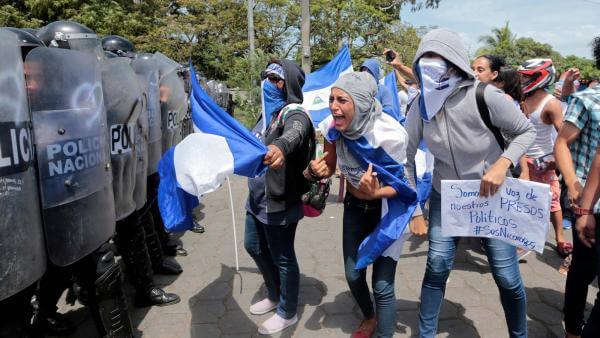
A demonstrator shouts slogans during a protest against Nicaraguan President Daniel Ortega’s government in Managua, Nicaragua on 23 September 2018. Reuters/Oswaldo Rivas
Cuba

The work to ease tensions between the United States and Cuba first initiated during Barack Obama’s presidency has now reversed, with tensions now rising higher between the two countries. While experts say Cuba was eager to salvage the relationship, that has changed in Trump’s era of increased threats and sanctions against the island country. With tensions rising, Cuban state television channels have begun to air footage every night last week showing tanks rolling out and soldiers taking position. The airing of these images dubbed as “training for The War of the Whole People” is likely in response to the threat of a US invasion in Venezuela, which could potentially spill over in Cuba.
Bolivia

In a visit to Athens this week, Bolivian president Evo Morales voiced his continued support of Venezuela’s Maduro, and encouraged Western powers to stop meddling. Morales also said that history has proven Western intervention never bodes well, and encouraged the countries to rather support a dialogue within the country.
Nicaragua

This week showed both hope and disappointment in Nicaragua, amidst negotiations held between The Civil Alliance, made up mostly of students, entrepreneurs, and activists, and Daniel Ortega’s government. The negotiations were introduced to resolve the year-long struggle, but upon The Civil Alliance’s demands that Ortega release all political prisoners, Ortega’s government refused, and the opposition walked out.

        Ortega’s government released a statement on Monday saying they were prepared to continue peace talks, to which The Civil Alliance responded by saying they would, “return to the negotiating table only when the government of Nicaragua provides the country with convincing signs they want to find solutions to the crisis”. The Nicaraguan government and the Civil Alliance agreed on March 13 to resume peace talks, as the government agreed to release protesters that have been previously detained.
North Korea

In North Korea’s parliamentary election this week, Kim Jong Un did not appear on the ballot – the first time a leader has not been nominated for parliament in North Korea’s history. Regardless, Kim will still hold the same amount of power. These elections are mainly conducted as a way for North Korea to seem more democratic to the west, though there is only ever one state-appointed nominee from the Workers Party to vote for. By not putting Kim on the ballot, analysts think the country may be trying to be perceived as a “normal state” by the rest of the world.
Myanmar

Following a visit to Myanmar, UN Special Rapporteur on Myanmar, Yanghee Lee, presented her report to the Human Rights Council in Geneva, highlighting areas of significant concern, and questioning whether the Bay of Bengal was “truly habitable”. She noted that across the country there continues to be human rights abuses committed against the Rohingya population that fled from the Rakhine State in 2017. She also stated that there was, “nothing to indicate that conditions have improved for the Rohingya who remain in Myanmar”.
United States

The United States has removed the last 14 remaining diplomats from the US Embassy in Venezuela. Secretary of State Mike Pompeo tweeted that the diplomats were removed because of their presence becoming a “constraint on US policy. However, Maduro claims that the diplomats were told to leave by his regime, saying that they were “a threat to the country’s peace and stability.”  Despite their removal, the United States remains actively involved in Venezuela’s conflict, and is still committed to backing Juan Guaido.
Cambodia

        A drug raid of a nightclub resulted in the arrest of Kith Theang, a business tycoon who is the owner of the Phnom Penh nightclub. Police found 50kg of methamphetamines, and eventually arrested over three hundred people in connection to the case.
Mexico

Nineteen asylum seekers have disappeared in Mexico after they were pulled from a bus heading toward the US border by a group of armed men. While no information is currently known on their whereabouts, a search is being conducted by state and federal police, as well as a number of prosecutors.

Mexico has rejected the United States’ “Remain in Mexico” policy which calls for the return of asylum seekers to Mexico while they wait for their immigration court hearings. When the plan was initially announced in December, Mexico agreed to hold the migrants for humanitarian reasons, but only temporarily. Many immigrant rights groups have fought the policy, saying that it forces refugees to wait in Mexican border cities that are sometimes just as dangerous as the countries they are escaping. While US immigration officials say only 240 migrants have been returned across the border, this number is soon expected to increase.
Zimbabwe

A doctors’ strike in Zimbabwe has now entered its second day, as health workers claim that patients are dying due to a lack of medical supplies. One doctor said that the hospital has no more cancer drugs left, so patients are being given diagnoses, then sent away to die. The dozens of doctors striking have written an open letter to President Mnangagwa stating that the supplies they do have likely won’t last until the end of the month. Because of the lack of resources, simple diseases and procedures are now resulting in sometimes deadly complications, with no hope for more supplies in sight.
Laos

The UN Office on Drugs and Crime (UNODC) has published a report naming Myanmar, Thailand, and Laos as being at the heart of both methamphetamine production and trafficking in East and Southeast Asia. The 90-page report highlights areas of significant concern, as well as individualized profiles of all three countries, called the “Golden Triangle”. There have been notable surges in methamphetamine confiscations in just two years between 2016 and 2018.

Democratic Republic of the Congo

President Tshisekedi signed a decree on Wednesday that he would free around 700 political prisoners who were jailed under Joseph Kabila’s regime. The release of these political prisoners was one promise he had made to complete within his first 100 days in office. Tshisekedi also announce that he would work to improve the conditions for a return of those who fled the country for political reasons. He also urged political exiles  currently residing in neighboring Republic of the Congo to return home.
Colombia

The power outage in Venezuela continues, forcing many to seek refuge within Colombia, including relatives of Maduro. His relatives request to cross the border into Colombia for a week was denied, the mitigation directing saying, “While the people of Venezuela die in hospitals because of lack of electricity, we’re not going to allow those close to the Maduro regime to vacation in Colombia, evading the reality of a people in agony”.

        This week, Colombians marched in favor of a peace deal made with the FARC. Demonstrators say that President Ivan Duque is hindering the process of achieving peace.
Venezuela

A nationwide power failure affected most of Venezuela this week, leaving 19 out of 23 states without power for as long as a week. While power has now been completely restored, the failure created disruptions for many businesses and schools, and created chaos in many hospitals. Opposition groups have said that as a result of the failures, 26 people are dead, including 6 babies. While the power has been restored, some cities still face intermittent shortages, as well as the risk of lootings and unsafe drinking water. Venezuelans in the northern states even reported black water coming out of their faucets, though officials say this is related to human error and not the power outages.

President Maduro has blamed the United States for the outages, saying that it was a “demonic plot” to force him from power with an “electromagnetic attack.” He also accused opposition leader Juan Guaido of sabotaging the national power grid, and has asked the country’s supreme court to investigate this claim. However, analysts and engineers have disagreed, saying that the outage is a result of years of underinvestment, mismanagement, and neglect by Maduro’s regime.

Malaysia

Malaysia has rejected Vietnam’s plea to free Doan Thi Huong, a Vietnamese woman accused of poisoning Kim Jong Nam. Kim Jong Nam, the North Korean leader’s half-brother, was murdered in 2017. This request comes only one day following Malaysia’s release of an Indonesian woman accused of the same charge. The Vietnamese Foreign Minister Pham Binh Minh asked Malaysia to, “ensure a fair trial for Huong and set her free”. Vietnam’s justice minister has also been in contact with Malaysia’s Attorney General attempting to secure her release.
Philippines

A water shortage in the capital region of the Philippines is worsening. The shortage has now affected over 6 million people, with a spokesman from Manila Water Co. Inc., saying that these people will have their water cut anywhere from 6 hours to 21 hours per day until the reservoirs refill in the rainy season of May and June. Initially, the shortage affected dozens of villages, but now, have spread to large cities including the capital, Manila. With so many questions on why these shortages are happening, and for such long periods of time, the supplier company will face an upcoming senate probe on March 19.

President Duterte announced on Thursday that 46 government officials, including three congressmen, are involved with illegal drugs. While the president does not have solid proof that the allegations are true, he said that he trusts the government agencies that provided him with the information. This is the latest in Duterte’s war against illegal drugs, which has caught the attention of many international human rights groups with thousands of drug killings taking place.  
Thailand

As Thailand’s March 24th election approaches, the introduction of a cyber-security bill hinders the hopeful anticipation of democratic change. The Cyber Security Bill was passed February 28, and may give the current military government the power to seize data and electronic equipment without proper legal authority. Katherine Gerson, a Thailand researcher at Amnesty International, stated, “This law’s aim is simple: to put the internet in a cage”.
Vietnam

Six activists in Vietnam are headed to prison, facing long sentences of 8-15 years for their peaceful protests last year. A high court is scheduled to hear their appeals early next week in Ho Chi Minh City. The activists were initially arrested for participating in a pro-democracy group, as well as participating in public rallies, and expressing views on social media. Human Rights Watch has condemned the arrests, in addition to the other 142 people who have been convicted on similar charges since June of last year.

Other News

Algeria – For several weeks, Algerians have protested current President Abdelaziz Bouteflika’s extension to his already 20-year rule. While Bouteflika announced he would not be seeking reelection, he also delayed the election date. Algerians responded with protest, and even jokingly took to social media stating that they would have to change the slogan from “No to a fifth term” to “No to an extended fourth term”, and calls for another Friday demonstration were made. (Al Jazeera)

New Zealand – A terrorist attack took place at two mosques in Christchurch, New Zealand on Friday, with 49 people currently reported dead. According to police, four people were taken into custody, with one man already being charged with murder. In light of the attacks, New Zealand’s relatively relaxed gun laws are likely to face increased scrutiny.  (CNN)

Weekly Report: 11 March, 2019

[et_pb_section][et_pb_row][et_pb_column type=”4_4″][et_pb_image admin_label=”Image” src=”https://canvasopedia.org/wp-content/uploads/2019/03/philippines.jpg” show_in_lightbox=”off” url_new_window=”off” animation=”left” sticky=”off” align=”left” force_fullwidth=”off” always_center_on_mobile=”on” use_border_color=”off” border_color=”#ffffff” border_style=”solid” /][et_pb_text admin_label=”Text” background_layout=”light” text_orientation=”left” use_border_color=”off” border_color=”#ffffff” border_style=”solid”]

“Lumad” teachers and students join other women’s groups in Mendiola to mark International Women’s Day on Friday. The lumad women paid tribute to their women leaders, teachers and human rights defenders, and protested the attacks against indigenous communities. Source: Earvin Perias

[/et_pb_text][et_pb_text admin_label=”Text” background_layout=”light” text_orientation=”left” use_border_color=”off” border_color=”#ffffff” border_style=”solid”]

Cuba

Cuba has joined ten other nations in mentioning climate change in a new constitution through the inclusion of new amendments. The decision was approved by voters in late February, and comes alongside Cuba’s announcement of long-term plans to introduce policies that will tackle global warming.

[/et_pb_text][et_pb_text admin_label=”Text” background_layout=”light” text_orientation=”left” use_border_color=”off” border_color=”#ffffff” border_style=”solid”]

Gabon

Gabon’s president Ali Bongo has returned to Morocco once again to continue receiving treatment for the stroke he suffered late last year. Bongo was only in the country for a short 2-day visit to address Gabonese officials. This is only the second time he has visited Gabon since the attempted coup that took place in early January. As Bongo continues to receive treatment in Morocco, officials have also had to shut down reports of his using a clone, or body-double for state visits. Rumors swirled after his visit last week that it was not actually Bongo visiting, though the government has been working to prove this is not the case.

[/et_pb_text][et_pb_text admin_label=”Text” background_layout=”light” text_orientation=”left” use_border_color=”off” border_color=”#ffffff” border_style=”solid”]

Bolivia

Bolivia’s Unified Health System (SUS) was launched on March 1, and will cover around 70% of the Bolivian population with free healthcare. The World Health Organization (WHO) has called the system “extraordinary”, and have released statistics showing that Bolivia is one of the first Latin American countries to be active in their fight to reduce extreme poverty. Authorities estimate that SUS will cover around 5 million Bolivians who lacked coverage before the introduction of SUS.

[/et_pb_text][et_pb_text admin_label=”Text” background_layout=”light” text_orientation=”left” use_border_color=”off” border_color=”#ffffff” border_style=”solid”]

Nicaragua

President Daniel Ortega promised this week that Nicaragua would free all imprisoned anti-government protesters. The announcement came on Sunday, when the government also said that electoral reforms would be implemented and talks will continue with the opposition. Before the most recent round of talks began this month, 100 political prisoners were released in February. Opposition parties are now calling for the release of over 700 people jailed by the Sandinista government, though it is not clear whether Ortega will actually release all of them, or just some. The opposition party, Civic Alliance, said that they will not hold any more talks with Ortega’s regime until he makes good on his promise to release the prisoners.

[/et_pb_text][et_pb_text admin_label=”Text” background_layout=”light” text_orientation=”left” use_border_color=”off” border_color=”#ffffff” border_style=”solid”]

North Korea

Elections for the Supreme People’s Assembly were held on March 10, marking a mandatory voting day for all North Koreans over the age of seventeen. The provided ballot does not have options for candidates, thus making results for the most part unanimous. North Korea analyst Fyodor Tertitsky has stated that while it is possible to cross out a candidate on the ballot, it could result in suspicion and danger at the hands of the secret police.

Just under two weeks after the denuclearization summit held in Vietnam, John Bolton, top national security advisor, has stated that President Donald Trump would be “pretty disappointed” if North Korea launched a missile test. While Bolton did not confirm any reports that North Korea was making moves, he did state that the United States will be maintaining a close watch on North Korea.

[/et_pb_text][et_pb_text admin_label=”Text” background_layout=”light” text_orientation=”left” use_border_color=”off” border_color=”#ffffff” border_style=”solid”]

Myanmar

Nine police were killed in Myanmar on Saturday by a group of Rakhine rebels. The attack happened when a group of about 60 rebels invaded a police post in Yoe Ta Yoke village. This is only the latest in a series of attacks that have been taking place in the troubled region since 2017. As a result, over 730,000 people have been forced to flee the country, with most settling into refugee camps across the border in Bangladesh. With no end in sight to the ongoing Rohingya crisis, Bangladesh announced at the beginning of the month that they would no longer be able to accept refugees coming from the Rakhine region.

[/et_pb_text][et_pb_text admin_label=”Text” background_layout=”light” text_orientation=”left” use_border_color=”off” border_color=”#ffffff” border_style=”solid”]

United States

United States involvement with the political crisis in Venezuela continues to deepen as the United States pressures India to stop purchasing Venezuelan oil. India the second-largest consumer of Venezuelan oil, meaning any potential sanctions could be a significant blow to Maduro. Washington’s top envoy for Venezuela stated, “We say you should not be helping this regime, you should be on the side of the Venezuelan people”.

The US government has addressed allegations that they separated migrant parents from their children amid federal lawsuits. Most of the migrants were coming from Honduras, Guatemala, and El Salvador, and US officials have admitted to deporting over 470 parents without their children. A federal lawsuit has been filed by the ACLU.

[/et_pb_text][et_pb_text admin_label=”Text” background_layout=”light” text_orientation=”left” use_border_color=”off” border_color=”#ffffff” border_style=”solid”]

Cambodia

Six activists from the opposition party, Cambodian National Rescue Party, had to flee the country this week, fearing they may be in danger of political persecution by Cambodia’s ruling party. They are now seeking refugee status, and will join the other 75 members of CNRP who have fled the country as a result of Prime Minister Hun Sen’s attack on the opposition group. The group of six activists had been charged with incitement in December and were awaiting trial later in March, but felt the trial would not be executed fairly, citing their decision to flee.

[/et_pb_text][et_pb_text admin_label=”Text” background_layout=”light” text_orientation=”left” use_border_color=”off” border_color=”#ffffff” border_style=”solid”]

Mexico

This week a group of armed men opened fire in a nightclub in Mexico’s Guanajuato state. The attack resulted in 15 deaths and 7 wounded, and comes amidst militarized efforts to address extreme violence in relation to powerful drug cartels. Previously in the week, President Andres Manuel Lopez Obrador launched an offensive to capture Jose Antonio Yepez, a gang leader also known as “El Marro” in another effort to address organized crime in the country.  

[/et_pb_text][et_pb_text admin_label=”Text” background_layout=”light” text_orientation=”left” use_border_color=”off” border_color=”#ffffff” border_style=”solid”]

Zimbabwe

US President Donald Trump has extended sanctions imposed on Zimbabwe for a year, despite calls from South African President Cyril Ramaphosa and other African leaders to lift sanctions to give Zimbabwe’s economy time to recover from the current crisis. The US government believes that the current policies in Zimbabwe pose a threat to American foreign policy, and have stated that there will not be any significant changes made to the sanctions unless Mnangagwa addresses restrictions of the media and violent responses to protests.

[/et_pb_text][et_pb_text admin_label=”Text” background_layout=”light” text_orientation=”left” use_border_color=”off” border_color=”#ffffff” border_style=”solid”]

The Democratic Republic of the Congo

An Ebola treatment center was attacked in the DRC this week, resulting in the death of a policeman and a wounded health worker. The attack came on the same day that Tedros Adhanom Ghebreyesus, director-general of the World Health Organization (WHO), was scheduled to visit the health center. The ongoing attacks continue to threaten any progressions made towards treating the virus, as it is both difficult to contain and easily spread.

[/et_pb_text][et_pb_text admin_label=”Text” background_layout=”light” text_orientation=”left” use_border_color=”off” border_color=”#ffffff” border_style=”solid”]

Colombia

Colombia announced on Saturday that Venezuelans will be allowed to enter the country using expired passports. This decision comes as a result of the dire economic situation in Venezuela, where many people are not able to renew their passports, and therefore also cannot apply for visas. Passport renewals in Venezuela have become almost impossible because of the high cost of materials and production. The head of Colombia’s migration agency said in the statement that because of these limitations, Venezuelans will now be allowed to enter Colombia with passports up to two years past their expiration date.

[/et_pb_text][et_pb_text admin_label=”Text” background_layout=”light” text_orientation=”left” use_border_color=”off” border_color=”#ffffff” border_style=”solid”]

Venezuela

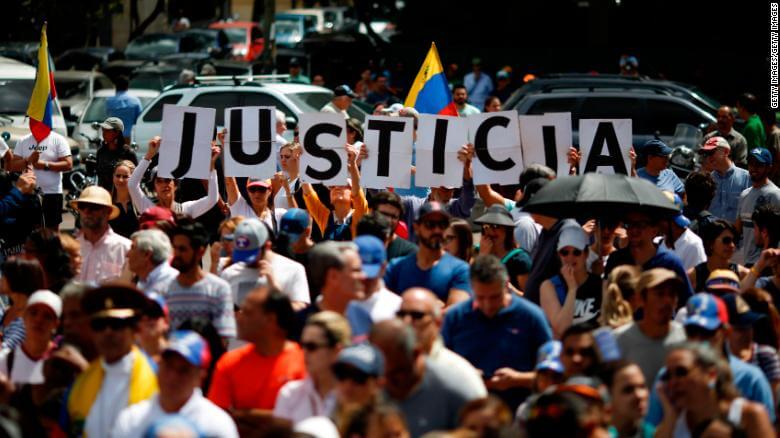
This week, demonstrators gathered in the capital city Caracas in response to opposition leader Juan Guaido. Guaido addressed the crowd, stating, “We are going to come, all of Venezuela to Caracas, because we need all of them united”. Police were present at the march, and there were moments Guaido supporters and policeman clashed on the streets, resulting in the use of pepper spray by police.

The demonstration comes just days after a massive power outage, reportedly caused by problems from a hydroelectric plant. Nicolas Maduro blamed the power outages on “sabotage”, while Guaido used the power cut to politically energize Venezuelans to protest, “against the usurping, corrupt, and incompetent regime that has put our country in the dark”.

[/et_pb_text][et_pb_text admin_label=”Text” background_layout=”light” text_orientation=”left” use_border_color=”off” border_color=”#ffffff” border_style=”solid”]

Malaysia

Malaysia’s Minister of Religious Affairs has called out the presence of LGBTQ groups at a Women’s Day march in Kuala Lumpur on Saturday. He said that the groups were showing a “misuse of democratic space”, and continued to say that LGBTQ acts are illegal in Malaysia. While the group who organized the march said that the attacks against the LGBTQ community bordered on incitement, hatred, and violence, they also said that their presence took attention away from their key demands of banning child marriage, an equal minimum wage, and ending gender-based violence. Civil rights groups say that this is one of many recent incidents showing the hostility toward LGBTQ people in Malaysia.

[/et_pb_text][et_pb_text admin_label=”Text” background_layout=”light” text_orientation=”left” use_border_color=”off” border_color=”#ffffff” border_style=”solid”]

Philippines

Thousands of women gathered in the capital city of Manila on Friday, International Women’s Day, to protest President Rodrigo Duterte’s recent misogynistic comments. Duterte has reportedly made jokes about sexual assault and rape, resulting in an exhibition displaying clothes of survivors amidst the protests. Since the beginning of Duterte’s presidency, there has been a 153% increase in sexual assaults of women in the Philippines. Protesters chanted against Duterte while there were around 4,000 police officers monitoring the scene.

[/et_pb_text][et_pb_text admin_label=”Text” background_layout=”light” text_orientation=”left” use_border_color=”off” border_color=”#ffffff” border_style=”solid”]

Thailand

The political party that tried to nominate a Thai Princess for prime minister has been ordered to dissolve immediately, and its leaders have been banned from participating in politics for 10 years. Thailand’s Constitutional Court ruled last week that by nominating a member of the royal family, the group Thai Raksa Chart had violated the country’s constitution. By banning the party from the election set to take place later this month, the chances of a pro-military coalition taking control of the parliament are now much stronger.

[/et_pb_text][et_pb_text admin_label=”Text” background_layout=”light” text_orientation=”left” use_border_color=”off” border_color=”#ffffff” border_style=”solid”]

Vietnam

Tran Duc Anh Son, a Vietnamese academic and deputy head of the Danang Institute for Socio-Economic Development, has been expelled from the ruling Communist Party following accusations that he posted comments on Facebook critiquing the government. Son was commenting on the South China Sea issue, and the Vietnamese government stated that he was, “writing Facebook posts that were untrue and went against the party’s views and state policies and laws”.

[/et_pb_text][/et_pb_column][/et_pb_row][et_pb_row][et_pb_column type=”1_2″][et_pb_text admin_label=”Text” background_layout=”light” text_orientation=”left” use_border_color=”off” border_color=”#ffffff” border_style=”solid”]

Other News:

Sudan – President Omar al-Bashir ordered the release of women protesters that were detained during protest, symbolically ordered Friday, March 8, on International Women’s Day. The exact number of women detained has not been released, but activists have estimated around 150 women in detention. (Al Jazeera)

Algeria – Algeria’s President Abdelaziz Bouteflika’s announcement to stand for re-election next month following a 20-year rule ignited protests as demonstrators gathered on Sunday, chanting “Bouteflika, there will be no fifth term”. University teachers and students have gone on strike, many of whom were largely involved in the protests. During a protest on Friday, police fired tear gas on a largely peaceful protest, resulting in around 195 people detained by security forces. (BBC)  

[/et_pb_text][/et_pb_column][et_pb_column type=”1_2″][et_pb_image admin_label=”Image” src=”https://canvasopedia.org/wp-content/uploads/2018/11/logo_CANVAS-1.jpg” show_in_lightbox=”off” url_new_window=”off” animation=”left” sticky=”off” align=”left” force_fullwidth=”off” always_center_on_mobile=”on” use_border_color=”off” border_color=”#ffffff” border_style=”solid” /][/et_pb_column][/et_pb_row][/et_pb_section]

Weekly Report: 1 March, 2019

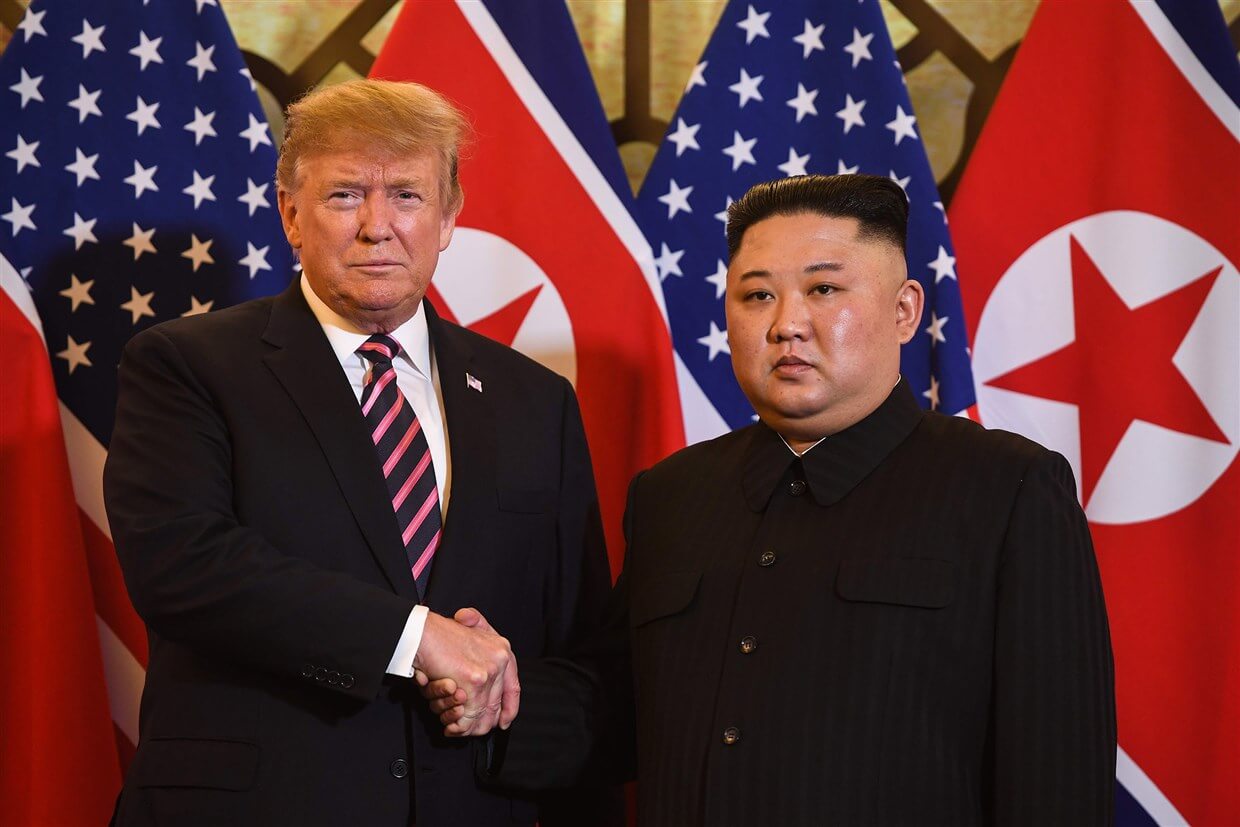
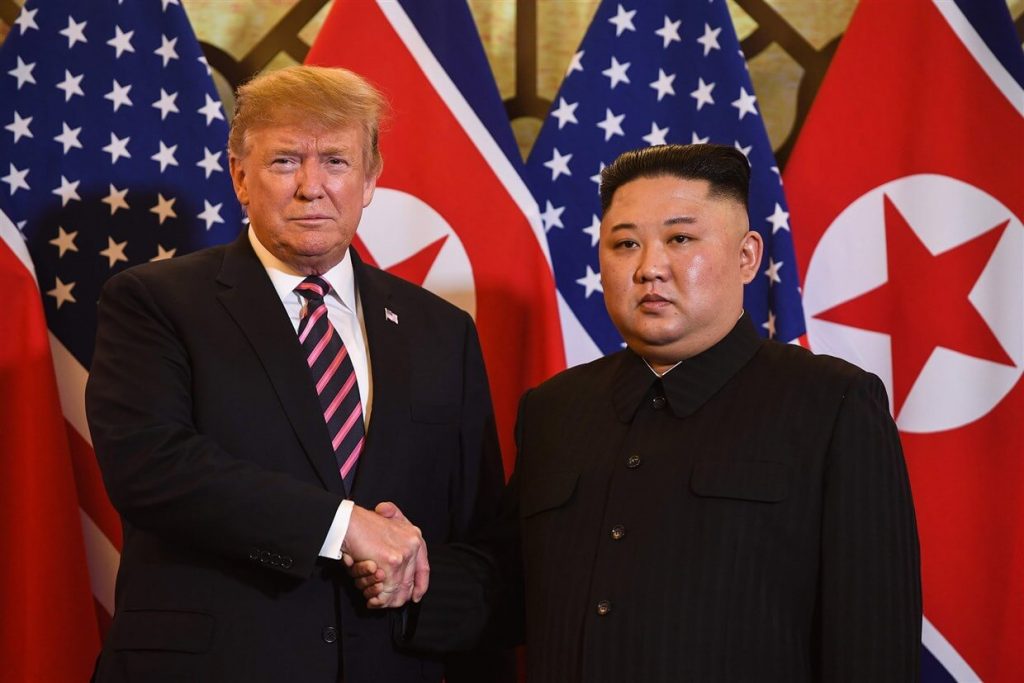
President Donald Trump shakes hands with North Korea’s leader Kim Jong Un before a meeting at the Sofitel Legend Metropole hotel in Hanoi, Vietnam on Feb. 27, 2019. Saul Loeb / AFP – Getty Images Source: NBC

Cuba

Cubans voted on Sunday to update the country’s constitution while preserving the socialist system of government. Results showed that 87 percent of voters approved the referendum, which updated some of the language on electoral, financial, and criminal laws. While 4.15 percent of ballots weren’t counted because of mistakes, still 9 percent of voters opposed the new constitution – a high number for a country where opposition parties are illegal. Most opposition came from Evangelical Christians who fear the new constitution could eventually allow for the legalization of gay marriage. There was also some opposition from younger Cubans who fear the new wording is still too conservative and will not allow growth for future generations.

Gabon

Gabonese President Ali Bongo has returned to Gabon on Sunday following his month-long stay in Saudi Arabia for treatment of a health condition. This week he was immediately back to work, overseeing a cabinet meeting and meeting heads of the Constitutional Court and National Assembly and his chief of staff. His prolonged absence left many in Gabon feeling unsettled as the state of his health was not released.  

Bolivia

Bolivia declared a national emergency this week because of natural disasters caused by heavy rains over the past few weeks. On Wednesday, the country’s Minister of Defense announced that 5200 families have been affected and 59 homes have been destroyed in the 61 affected municipalities. By declaring a national emergency, the country will be able to allocate around 7 million dollars  to activating national resources. The Bolivian State Housing Agency also reported an allocation of about 10 million dollars earlier this month to replace houses destroyed by the floods.

Nicaragua

The past six months under Nicaraguan President Daniel Ortega has been cause for significant concern for human rights organizations, especially with hundreds of arrests of political opponents and activists. Michelle Bachelet, UN Human Rights Chief, has recently expressed alarm at increased suppression and political instability.

Ortega announced last week negotiations to take place “to consolidate peace”.  Nicaraguans are hopeful that the talks will inspire a resolution to the ongoing political crisis. Prior to scheduled talks with the opposition, Nicaragua released dozens of prisoners arrested during protests and demonstrations against the President Daniel Ortega and his government. The releases were announced by the Permanent Human Rights Commission (CPDH), but there are no further details about the releases made. The crackdown by the end of October resulted in 325 deaths, and over 750 arrests.

North Korea

The Trump-Kim summit took place on Wednesday and Thursday this week. After months of anticipation, the summit has ended in no-deal – much different from Trump’s goal of North Korea’s denuclearization. In interviews after the failed talks, Trump said that North Korea wanted the U.S. to lift sanctions in their entirety, which was not possible. Despite the fact that no agreement was signed, Kim did say that he “wouldn’t be here right now” if he wasn’t willing to denuclearize. Trump also said that Kim promised to not continue nuclear and rocket testing. Kim Jong Un will remain in Vietnam for an official state visti beginning on Friday, while Trump has already left for the United States.

Myanmar

This week, the United Nations is addressing accusations that they have ignored signs of escalating tension and ethnic violence in Myanmar and are launching an inquiry into its conduct over the past decade. State Counsellor Aung San Suu Ki has advised global investors to focus their investments on the Rakhine State, a region characterized by mistreatment of Rohingya people, claiming that the world needed to stop focusing on the “negative aspects” of the area. Since 2017, around 750,000 Rohingya have fled the Rakhine State due to reports of torture at the hands of Myanmar police.

Speaking to the United Nations Security Council on Thursday, Bangladesh Foreign Security Shahidul Haque stated, “I regret to inform the council that Bangladesh would no longer be in a position to accommodate more people from Myanmar,” addressing the recent increase of over 700,000 Rohingya crossing the border into Bangladesh in the past 18 months.

On Wednesday, February 27 thousands rallied in Myanmar’s commercial capital of Yangon to support a constitutional reform. The reform would promote changes to the charter regarding the army’s role in politics, and comes at a time where there is ongoing tension between the ruling party and the military. Protesters and democracy activists shouted chants like, “take a rest, military dictatorship”.

United States

The Trump-Kim summit endedon Thursday in Vietnam with no deal signed between the two countries. While Trump had hopes of North Korea agreeing to denuclearize, Kim ultimately would not agree unless the U.S. lifted all sanctions against North Korea. Trump still described the talks as productive, but said he had not committed or made plans for any third summit.

The House of Representatives has voted to overrule Trump’s declaration of a national emergency on the United States’ southern border. By declaring a national emergency, Trump is able to override Congress’ refusal to provide funding for his border wall and build it with military funding instead. Democrats say that this declaration is unconstitutional, and thirteen republicans sided with them in the recent House vote. Now the vote to overturn Trump’s declaration will head to the republican-majority senate, though some conservatives are expected to vote with democrats. If the senate approves overturning the national emergency declaration, Trump will likely veto and the case will most likely end up in the Supreme Court’s hands.

Cambodia

As human rights violations continue to be unaddressed, U.S. lawmakers has asked the Trump Administration to review preferential trade terms with Cambodia through a legislation introduced on Wednesday. The Cambodia Trade Act (CTA) would ultimately decide whether the privileges should be “withdrawn, suspended, or limited”.  Cambodia currently exports around $180 million of goods to the United States per year.

Cambodia experienced the same punishment from the European Union a few weeks ago, where the legislation could see Cambodia’s preferential access suspended.

Mexico

Mexico’s president announced on Tuesday that he will not take sides regarding the crisis in Venezuela, despite U.S. Vice President Mike Pence’s calls for Mexico to recognize Juan Guido as the rightful president of Venezuela. President Lopez Obrador told reporters that he does not want to get involved, but urged both sides in Venezuela to seek a peaceful solution. He also voiced his beliefs that the disputes over humanitarian aid should be resolved by the United Nations.

Teachers from Oaxaca are in Mexico City staging a 72 hour campout to protest the General Professional Teaching Service Law. The teachers are also calling for the concept of multicultural education instead of bicultural education in order to better represent the many indigenous groups across Mexico. Despite the absence of 800 teachers in the protests, 90% of classes in Oaxaca resumed as normal.

Maldives

On Monday, February 25, opposition lawmakers submitted a motion of no-confidence against Defense Minister Mariya Ahmed Didi, following her comments made to an Indian newspaper where she said, “If the Indians really wanted to occupy Maldives, they never had the intention, I’m sure, but if they do, I don’t know how we can stop it. You see, your airforce, your navy, your infantry, literally there is nothing we can do… this is just being practical.” Opposition supporters almost immediately retaliated, and promised to summon the Defense Minister for questioning. There has recently been increased anti-India sentiments among opposition supporters.

Zimbabwe

With Zimbabwe’s financial crisis worsening every day, the country has introduced what they hope will be a solution – a new currency. The RTGS dollar rolled out this week will ideally bring together debit card, mobile payments, and bond notes to have the same value. The country has also given up on the previous notion that the bond notes rolled out in 2016 have the same value as the US dollar. This time, they are saying that “the value of the RTGS dollar against the US dollar will be set by the market.” The new currency was initially sold to banks at a rate of 2.5 RTGS to 1 U.S. dollar. By allowing the value to fluctuate, the black market will ideally be eliminated.

Botswana officially gave Zimbabwe a loan of $600 million on Thursday, when an agreement was signed between the two countries. The agreement, which was signed in Harare, allocates $500 million of the loan for the diamond industry, with the other $100 million going to helping private companies who have been hurt by Zimbabwe’s currency shortage.

The Democratic Republic of the Congo

Seven months have passed since the DRC’s ebola crisis began, and over 500 people have died, with the virus still not under control. As the epidemic rages on, people are growing less trusting of health agencies and doctors. As a result, two ebola clinics have been set on fire by arsonists this week, with the most recent attack happening on Wednesday. The clinic which was attacked on Sunday was forced to close down as a result of damage from the fire. Health workers already struggle to find proper facilities and equipment for fighting the virus, and these recent attacks have created huge setbacks.

The United States announced last week that officials involved in the DRC’s recent election misconduct will be denied visas. This ban on visas will affect 5 senior Congolese officials in addition to their immediate family members. The state department also stated that they would impose visa restrictions on a number of other officials who were involved in human rights abuses during the election.

Colombia

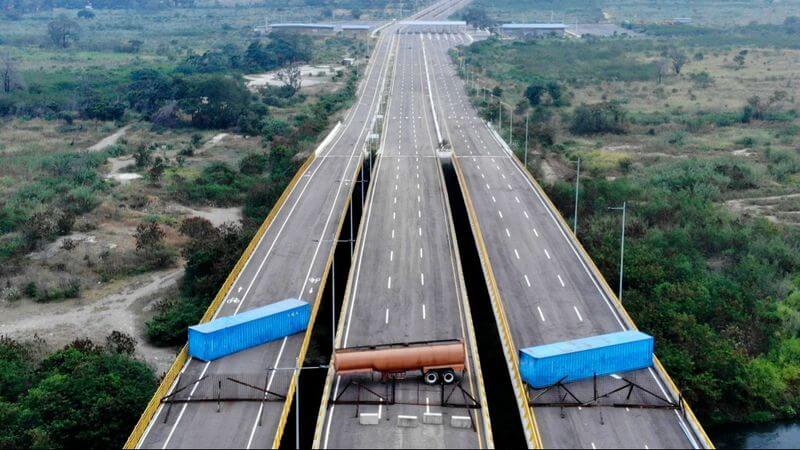
Violent encounters along the Venezuelan border with Colombia began on Friday, February 22, resulting in 285 injuries and 37 hospitalized on the Colombian side of the border, as stated by Colombia’s foreign minister. The clashes came as a result of armed government forces attempting to block shipments of aid from entering Venezuela. United States Vice President Mike Pence traveled to Colombia for an emergency meeting with regional leaders, as well as meet with Juan Guaido in an attempt to resolve the worsening crisis.

Colombian President Ivan Duque has responded by closing two international bridges, stating Colombia needed 72 hours to assess the damage and clear as much as they could. Colombia attempted to reopen their side of the border on Wednesday, February 27, but Venezuela kept their side closed. Regional director of Colombia’s Civil Defense, Miguel Perez, spent Wednesday traveling across the bridges attempting to find someone in Venezuela that he could negotiate with.

Venezuela

Violence broke out this weekend at the Venezuelan/Colombian border when protesters clashed with forces loyal to Maduro over the blocked aid. At least 4 people died and over 300 were injured as a result of military firing tear gas and rubber bullets into a crowd of protestors. U.S. Vice President Pence, who was in Colombia early this week to meet with opposition leader Guaido, denounced the attacks and said the the United States would impose additional sanctions against Venezuela.

Following his meeting with U.S. Vice President Pence and other world leaders from the Lima Group this weekend, opposition leader Guaido has announced that he will begin exercising his duties as president upon his return to Venezuela. In a video posted to his twitter, Guaido made the announcement and asked for continued support from his base. Despite his strong statements, Guaido does fear that he may be arrested upon returning to Venezuela. Regardless, he remains confident that even his arrest would not stop the movement, and may even strengthen the opposition to Maduro’s regime.

Malaysia

In June 2018, Malaysia announced their 40,000 Chin refugees would have to return to their home countries by 2020 as they would no longer be considered as refugees. The UN High commissioner for Refugees (UNHCR) began phasing out their protection of Chin refugees by August, stating that the Chin State was safe enough to return to. Many of the Chin refugees fled from Myanmar, where they faced ongoing harassment and persecution.

Philippines

A group of international law enforcement agencies met on Wednesday to celebrate the inauguration of the first Philippine Internet Crimes Against Children Center. The Center will feature a collective of law enforcement from the Philippines, Australia, and the U.K. working to combat the online exploitation of children across the Philippines. While the Center will remain focused on the Philippines for now, they eventually hope to expand their reach to all of Southeast Asia.

Thailand

Thanathorn Juangroongruangkit, one of Thailand’s rising political stars, is under public eye as police want to prosecute him under the Computer Crime Act for criticizing the military government on a Facebook video. He has actively encouraged young people to vote for the upcoming elections to be held on March 24, and has vowed to end Thailand’s military “dictatorship”. Prosecutors have stated that they will decide on the indictment two days after the elections.

Vietnam

Vietnam was in the spotlight this week as it was the site of United States President Donald Trump and North Korean leader Kim Jong-un’s second summit meeting, taking place February 27-28. There was no agreement made between the leaders. While Trump left Vietnam on Thursday, Kim is set to stay in Vietnam through Saturday.    

India and Pakistan – Tensions between India and Pakistan in the Kashmir region have escalated immensely over the past weeks, reaching their highest point in decades. On February 14, a suicide car bombing was executed by a Pakistani group, JeM, in the Indian-controlled region of Kashmir and killed 42 people. This week, India fired back by launching air raids on an area occupied by a JeM training base. In the cross-fire, at least eight Pakistani civilians were killed. Today, an Indian pilot who was shot down and has been detained by Pakistani forces since Wednesday is expected to be released. Many hope that the release of this pilot could be the goodwill gesture that will de-escalate the ever-growing tensions. (CNN, Al Jazeera)

Sudan – Sudanese President Omar al-Bashir announced a state of emergency on Friday, February 22 following ongoing demonstrations across the country. This week, Bashir issued four new emergency laws forbidding protests while imposing new economic restrictions. Mohamed Awad, a legal expert and activist, stated, “In the current situation, there is no legal need for imposing the emergency. The solution is 100 percent political. Peaceful transfer of power is the solution”. Recently announced measures state that acts such as sharing new that authorities believe could “put the country in danger” on social media could result in a prison sentence. Protests were ongoing on Wednesday at the Ahfad University for Women in Omdurman and at a hospital in Khartoum’s Bahri section following the release of the news. (VOA)  

Palestine – Palestinian protests along the Gaza border last year resulted in 189 deaths between March 30 and December 31 of 2018. UN human rights experts have launched a commission of inquiry to investigate whether Israeli soldiers committed war crimes. The UN Human Rights Council stated that over 6,000 demonstrators were shot by military snipers over the course of nine months. The protests, called “the Great March of Return” are in support of Palestinian refugees returning to what is now Israel. The Israeli government believed that terrorists used the protests to cross into Israeli territory, thus initiating Israeli soldiers ordered along the border fence. The commission states that shooting a civilian that is not directly participating in hostilities constitutes a war crime.  (BBC)

Weekly Report: 22 February, 2019

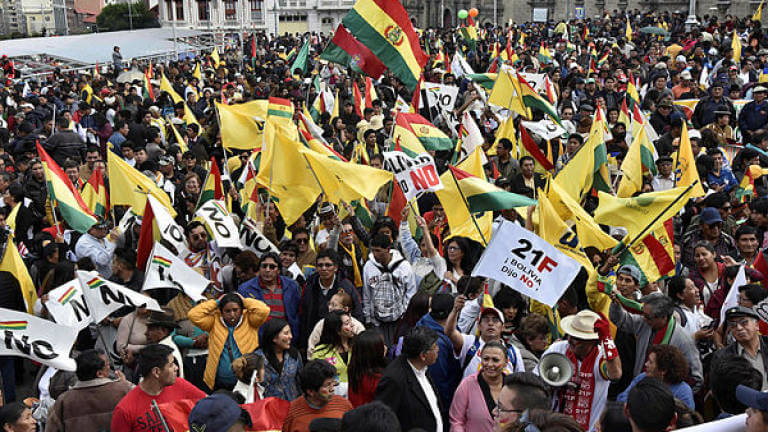
Opposition parties and civil society organizations hold a demonstration in San Francisco square to protest the candidacy of President Evo Morales in the October elections — AFP

Cuba

Cuba has denied recent allegations suggesting that they have military forces present in Venezuela after accusations from US President Trump and his administration. Cuban Foreign Minister Bruno Rodriguez demanded the United States provide proof, while calling the political situation in Venezuela “a failed imperialist coup…fabricated in Washington”. While the United States has been clear with its support of Guaido, Cuba is a supporter of Maduro.

Gabon

Gabon’s president Ali Bongo is expected to have a 6 month recovery period after suffering from a stroke last fall. President Bongo has been spending his recovery period in Morocco, though he did briefly return to Gabon for a swearing-in ceremony in January. He is expected to return again next week for a few days to oversee a cabinet meeting, but the date of his permanent return is still unknown.

Bolivia

There have been nationwide protests in response to current President Evo Morales running for a fourth term in office. Demonstrators took to the streets on Thursday, a day marking the third anniversary of Morales’ defeat in a bid that would secure public support to remove term limits. Several of Bolivia’s major cities were hosts to the protests, including La Paz, Sucre, Santa Crus, and Potosi. Elections in Bolivia will be held in October of 2019.

Nicaragua

A Nicaraguan farmer has been sentenced to 216 years in prison after leading protests last year against President Daniel Ortega. This sentencing goes directly against the country’s constitution which states that “no Nicaraguan can spend more than 30 years in prison”. Medardo Mairena was convicted in December on charges of terrorism, organized crime, and murder, which he denied. His sentencing comes just days after business leaders met with Ortega’s regime to demand the release of more than 600 political prisoners in the country.

President Daniel Ortega announced on Thursday that he will resume a dialogue next week with opposition leaders. Angel Rocha, who will be representing university students in the dialogue, says their principle goal is to demand Ortega release the people considered political prisoners. Other goals of the dialogue include pushing for more transparent elections and electoral reforms, as well as finding justice for those who lost their lives in government protests over the last year.

North Korea

With the denuclearization summit quickly approaching, North Korea’s Chief of Staff, Kim Chang-son was seen in Vietnam a week before the meeting. US President Donald Trump has been advised to significantly lower his expectations going into the summit, especially following a UN report that North Korea is hiding and selling nuclear weapons.

The UN is attempting to improve civil aviation in North Korea, specifically focusing on Pyongyang opening airspace to accommodate foreign flights. The United States has repeatedly blocked this effort due to their desire to “pool all the leverages and incentives” for the denuclearization summit. Washington has stated they want concrete commitments from North Korea during their discussions, and maintaining pressure on the country is the key to achieving this.

Ahead of the denuclearization summit, a memo by Pyongyang’s mission to the world body stated the country’s concern that they are facing a national food shortage. The memo blames the significant shortages on high temperatures, drought, floods, and sanctions enacted by the United Nations. Within the memo, the government asks for the aid of international organizations, although the World Food Programme (WPF) has yet to respond to the memo. While they are currently in the process of gathering information on food security in the country, United Nations spokesman Stephane Durjarric stated that the UN estimates that almost half of the population of North Korea is in need of food and around 41% are undernourished.

Myanmar

Myanmar picked a panel this week to discuss and potentially make reforms to the country’s constitution. The current constitution was scripted by the military in 2008 and gives themselves control of all security ministries and also automatically gives them a quarter of all parliamentary seats. Ultimately, these clauses give the military veto power over any constitutional changes. The National League for Democracy Party is hoping to change that and redistribute the power.

United States

This week President Trump declared a national emergency to fund the infamous wall along the border with Mexico. A coalition of sixteen US states responded and are suing Trump over the emergency declaration, initially filed in California. Protests erupted in other parts of the country following the announcement, including Washington DC where protesters shouted, “Trump is the national emergency!”. Following Colorado’s announcement that they would join the lawsuit, a crowd of over 100 gathered at the state capitol in Denver and cheered with approval. The ACLU has announced that they too intend to sue Trump over the issue.

Cambodia

The Financial Action Task Force has announced that they will place Cambodia on a watchlist because of the high possibility of money laundering taking place. The report also points out the high levels of corruption in the justice system and that no money-laundering case has ever been prosecuted in Cambodia. This announcement could potentially affect the amount of trade flows and investments coming in and out of the country. The report also comes at an inopportune time for the country, as the EU is about to take away preferential trade treatment because of human rights abuses.

Mexico

Samir Flores Soberanes, and environmental and human rights activist in Mexico was killed this week ahead of a referendum on a controversial thermal-electric plant and pipeline that he had proposed. His violent and sudden death marks another murder as the string of killed activists and journalists continues to grow. Mexican President Lopez Obrador had previously promised to address the issue, but significant changes have yet to be made.

Mexico has closed a temporary migrant shelter near the United States, which held around 1,600 Central Americans that have been restricted in the shelter for two weeks.

A Federal Prison on the Islas Marias is closing down to become a cultural center. Mexican President Lopez Obrador has stated that he wished to promote “more schools and fewer prisons”. There are currently 600 prisoners, 200 of which will be released come the closing of the prison, and the rest are set to be transferred to other prisons on the Mexican mainland.

Maldives

Maldives ex-president Abdulla Yameen has been arrested for his charges of money laundering. A state lawyer said that Yameen had tried to influence and bribe witnesses prior to going on trial. The court then ruled that Yameen be taken into custody and detained for the rest of his trial. Preliminary hearings for his case will begin this week.

The Maldives Anti-Corruption Commission has also suspended two government ministers over their transactions with a company involved in a $90 million corruption scandal. This is the same probe that accused former president Yameen of his corruption charges.

Zimbabwe

Bakers in Zimbabwe received news on Wednesday that the country could run out of bread within 8 days unless they are able to import more wheat. Flour stocks in the country have dwindled after the government failed to pay for imported wheat. The dwindling flour stocks comes as a result of the country’s severe shortage of US dollars, and the resulting $80 million in debt for past
wheat imports.

EU foreign ministers decided against imposing sanctions on Zimbabwe this week as a statement to Zimbabwean President Emmerson Mnangagwa. The EU council imposed sanctions 19 years ago against Robert Mugabe, and they stated that they will continue to uphold these sanctions.

Laos

This week many of the people whose homes were affected by July’s dam collapse will return to their newly-repaired homes. These are some of the first people to return to their homes after over 6 months. For those whose homes were completely destroyed, a solution has yet to come, as the government still hasn’t finished building permanent housing solutions. Until the new housing is built, thousands of families will continue to live in shelters.

Democratic Republic of the Congo

Police in the DRC have been accused of extrajudicial killings by Human Rights Watch. The report released this week claims that the Congolese police killed at least 27 people in a crackdown on gangs that took place last year. In order to compile the report nearly 80 people were interviewed, including witnesses, security officials, and victims’ family members. Police in the country have denied the allegations and recently sworn in President Tshisekedi’s spokesman declined to comment on the case.

Eight people have died after a series of shootings in Goma, eastern DRC. The attacks took place Saturday night when unidentified gunmen shot down random passers-by in the town. Public anger toward authorities in the community has resulted, with questions on why authorities were so slow to respond.

Colombia

US aid intending to reach Venezuela has arrived in Cucuta, the Colombian border city, but many are not clear if and how it can be distributed within the country. Cucuta has become an internationally prominent city as it is the destination of foreign aid heading towards Venezuela. Maduro continues to reject all foreign aid, even stating that he will send it back to Colombia while quoting Colombian poverty statistics.

Venezuelan opposition Guaido has stated his plans for delivery of aid from Colombia and Brazil, even calling for caravans of volunteers to carry the aid during a speech. This puts volunteers in a dangerous position as the military is loyal to Maduro and under instructions not to allow aid to cross into the country.

Nicolas Maduro has announced his intentions to close Venezuela’s border with Brazil amidst ongoing foreign aid delivery tensions. He threatened closure of Venezuela’s border with Colombia, stating, “I don’t want to make such a decision, but I am considering it – an absolute closure of the border with Colombia”.

Venezuela

President Trump addressed a crowd of supporters this week, condemning socialism and saying that Maduro supporters “will lose everything.” Trump also said that the Venezuelan military should not intervene with U.S. aid or involve violence. President Maduro also announced on Thursday night that he will close the Venezuelan border with Brazil indefinitely and is considering shutting the border with Colombia, both in order to keep out opposition aid. While shipments of U.S. aid are still blocked at the border, a shipment of Russian aid is expected to arrive on Saturday, and likely will be accepted by Maduro.

British businessman, Richard Branson, has announced that he will host a benefit concert in Cucuta, Colombia that will raise money for food and medical supplies in Venezuela. Branson, who is a supporter of Guaido, has been criticized for his for his decision to host the concert, with Pink Floyd co-founder Roger Waters saying “it is a US-backed effort to tarnish the socialist government.” In response, Venezuela’s president Maduro announced his plans to host a rival concert on the same night, just across the border in Venezuela.

In addition to the current political crisis in Venezuela, the school system in the country is also collapsing due to economic crisis. Teachers are striking and have taken to the streets to protest a lack of funding for the school system and demand a livable wage. Because of nationwide food shortages, children often rely heavily on their school meal, but even this has been cut because of budget constraints and poor management of facilities in schools. With the food shortages, children in classes are starving and teachers are even passing out from lack of food. Caritas Venezuela has said that malnutrition has soared over the past 3 years in Venezuela, and it is children under 5 who are most vulnerable.

Malaysia

It was announced this week by the Malaysia Defense Minister Mohamad Sabu that the previous Barisan Nasional (BN) relocated four army bases to move military voters so they could gather political support in other areas. This was done amidst protests from the army top brass, and was called an abuse of power by the minister. The Ministry of Defense lost the equivalent of $122 million in the land swapping, and stated that the deals were made without proper planning or developers.


Philippines

Government plans to dam the Kaliwa river in the northern Philippines is being fiercely opposed by tribal leaders and people who live in the area, for a number of reasons. For more spiritual reasons, the river holds a sacred value, as people from tribes in the area have been praying there for centuries. More practically, building the 70m tall dam would not only displace the people living along the river, but also the many endangered species that call the area home. The dam is being built to ideally combat a future water crisis which would affect drinking water and agriculture, and is being partially funded by China.

Philippine journalist and CEO of Rappler Maria Ressa has been freed on bail just one day after her arrest for “cyber-libel.” This arrest is the result of a seven-year old report on controversial ties between a businessman and a former judge that was published four months before the country passed the new libel law.

Thailand

Concern over Thailand’s military control over politics continues as police announce intentions to prosecute the leader of a new political party for posting a video on Facebook last year in which he was spreading “false information” about the military government. This news comes nearly a month before Thailand’s upcoming elections on March 24.

Other News:

India – The Supreme Court in India has ordered that over a million families living on forest land will soon have to leave. The families living in this area make up just a small percentage of the 100 million tribespeople living in India. A law passed in 2006 states that tribal families living on the land for three generations the right to continue living and working on forest land. Now, the Supreme Court has ordered that all families living on the land must file a claim and pass a 3 step verification process requiring 13 kinds of proof. 1.8 million of these families have successfully filed the claim, but still 1 million will be forced out. (BBC)

Sudan – Ongoing reports by the U.N.’s Commission on Human Rights in South Sudan outlines widespread human rights violations being committed against civilians and children as the unrest worsens, many of which may constitute war crimes. The Commission continues to collect evidence of abuses with the intention of future prosecution. Commission member Andrew Clapham spoke in Geneva on Wednesday, stating, “We think that that through accountability and reconciliation there’s the possibility for the South Sudanese to deal with the past and secure their future stability and prosperity”. (NPR)  

Nigeria – Elections in Nigeria are set to take place this Saturday, February 23, delayed from the previous election date of February 16. The delay was troublesome for many Nigerians who had significant distances to travel simply to vote. Nigeria’s main parties, All Peoples Congress (APC) and People’s Democratic Party (PDP), both accused the other of interfering in elections in their denouncing of the delay. For this election, the electoral commission promised ballot papers and election staff in place across the country. (BBC)

Weekly Report: 14 February, 2019


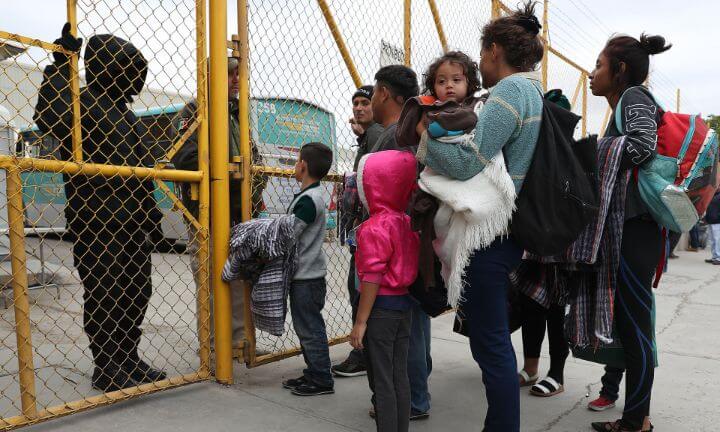
Migrants from Honduras, arrive at a migrant hostel hoping to be taken in as they wait to apply for asylum in to the United States in Piedras Negras, Mexico.

Cuba

As Cuba nears the February 24th date of a final referendum to make changes to their constitution, the state has begun to crackdown on protesters who are arguing for a NO vote. On Monday, 20 members of the opposition group ‘Cuban Patriotic Union’ were detained. In the following days, a number of other activists had their homes raided and also faced arrests. The new constitution will change some government structures but keep the Communist Party as supreme.

Prince Charles is set to visit Cuba this spring, a first for any member of British royalty. Florida senator Rick Scott argues that the prince should visit Florida instead, saying that a visit to Cuba would “condone the Castro regime’s brutality”.

Gabon

President Ali Bongo Ondimba has been attempting to restore people’s confidence in the government of Gabon. This comes soon after the coup attempt on January 7. Bongo has reportedly strengthened his control on the government, and previously requested and received$350 million from the United States government.

Bolivia

Bolivian President Evo Morales has slammed Juan Guaidó’s remarks about welcoming a US military intervention in Venezuela. After the US and EU-backed interim president Guaido stated that he would not rule out US intervention to remove Maduro from power, Morales tweeted that Bolivia rejects Guaido’s statements.He has also tweeted that the economic blockade threatened by the US will “threaten the human rights of the Venezuelan people”.

Nicaragua

Nicaragua has experienced political and social unrest since April 2018, when Nicaraguan President Daniel Ortega unleashed a violent crackdown on his opponents. Since this point, there have been at least 325 deaths, 550 arrests, and countless injuries related to the violence that erupted. Many living within Nicaragua are forced to make the extreme decisions of whether to stay in the country or figure out a way to leave, specifically business owners who are struggling with plummeting sales.

Economists in Nicaragua worry that a new and upcoming social security overhaul that wouldraise payroll taxes and cut pensions would cause a similar if not worse revolt than that of 2018.Mario Arana, who was the previous head of the Treasury and former President of Nicaragua’s Central Bank, stated, “This measure is absolutely much more drastic since it’s not gradual but instead immediate, and it will affect the nearly 800,000 insured in the country”. This package was approved in January and took effect in the beginning of February.

North Korea

With the upcoming Trump-Kim summit set to take place at the end of the month in Vietnam, both the US and North Korea are preparing for talks centered around denuclearization. However, one topic will likely not be discussed – human rights. Before the last summit, Trump promised to discuss human rights conditions within the country, but later said that the issue was barely discussed. With a clear focus on denuclearization this time around, it seems that human rights will once again be largely ignored. While the goal of the summit remains to be denuclearization, US national security officials have stated that North Korea has done little to work toward this, and that a nuclear declaration from the country will likely be incomplete.

Myanmar

This week, Myanmar saw action taken to demand justice for human rights violations committed against minority groups. Rohingya activists, alongside Rohingya refugees, international legal experts, and human rights activists, gathered in Colombia University in New York to hold discussions on seeking retribution for Myanmar’s treatment of the Rohingya ethnic group.

Myanmar is also being criticized by Amnesty International following reports that the military ispreventing civilians from getting food and humanitarian help. The United Nations reported that around 5,200 people have been actively forced from their homes for reasons related to the ongoing conflict.

On Tuesday, February 12th, around 3,000 demonstrators gathered at the capital of the state of Kayah, symbolically at the Loikaw Statue. Since its unveiling, 54 have been charged withdefamation and incitement, and unlawful assembly. Khun Thomas, a demonstrator at the site,said, “We are not objecting to the general’s statue itself – we are demanding to implement his promises first”. Myanmar police responded to the protest with the use of rubber bullets, tear gas, and water cannons.

United States

A former US air force officer has been accused of spying for Iran. Monica Witt joined the Air Force in December 1997, and worked as a Persian-Farsi language specialist, and later a Special Agent. During her years with the Air Force, Ms. Witt was been privy to classified information that prosecutors now say she disclosed to Iranian officials. Ms. Witt reportedly had an “ideological” turn in the summer of 2013, after she had converted to Islam and was not respected by the US military for her decision to do so. It was then that she tried to defect to Iran through their embassy in Kabul.

Mexican drug lord, Joaquín Guzmán Loera, also known as El Chapo, stood trial this week in New York for his charges of drug trafficking, being found guilty for all 10 counts. After already escaping from two prisons in Mexico, the United States will likely house El Chapo in the highest security prison in the country, in southern Colorado.

Cambodia

47 Malaysians were detained in Cambodia this week, and many of the detainees are believed to be innocent by the Foreign Ministry, and instead involved unknowingly in a job scam. Minister Datuk Saifuddin Abdullah of Malaysia has said, “we have sought the help and cooperation of the Cambodian government to assist in the release of these innocent Malaysians as soon as possible”.

This week the European Union reminded Cambodia that the “clock is ticking” in terms ofreleasing trade privileges due to ongoing human rights concerns. The EU officially began the process of imposing sanctions, and these sanctions could be detrimental to Cambodia’s economy as the EU is Cambodia’s largest trade export. The current process undertaken by the EU will be ongoing for six months as the EU monitors the situation in Cambodia, and then a final decision will be made about permanent withdraw of trade preferences.

Mexico

As caravans of migrants continue to flow toward the United States, it is the Mexican towns on the border facing the biggest effects. While NGOs and churches in these towns are working to provide food and shelter to these large groups of migrants, community members remain suspicious and officials are feeling overwhelmed. In the town of Piedras Negas, only 15 asylum requests are handled per day, forcing 1700 migrants to stay in the makeshift shelter of an abandoned factory until their requests are processed – which could take 5-7 months. Those staying in the shelter say that conditions are good, but authorities’ fears continue to increase over an ever-growing number of refugees and a potential closure of the US border.

Maldives

Former Maldives President Abdullah Yameen was charged with money laundering, allegedly receiving one million dollars stolen from the state. He will face a sentence of up to 15 years, despite his denial of any misconduct. The Maldives government is now seeking international help to attempt to recover the millions of dollars that were lost during Yameen’s presidency.

Zimbabwe

The Trump administration issued a statement this week warning Zimbabwe’s President Emmerson Mnangagwa to not use excessive force on the country’s citizens. As protests have been breaking out over the past few weeks, the army and police have responded violently, killing at least 17 and injuring 600 more. The Zimbabwe government has stated that they will not remove military force from the streets until the protests have been stopped.

Teachers unions have suspended their national strike, returning to work on Monday after meeting with the country’s Education Minister. Teachers warn though, that if the government does not meet their demands, they will go on strike again.

Democratic Republic of the Congo

The Democratic Republic of Congo continues to see the effects of the recent Ebola outbreak, that has taken 502 lives, while 271 have been effectively cured. While a vaccination program is ongoing, and has helped prevent deaths, there are now active allegations against health workers for using the vaccine in exchange for sexual favors, specifically targeting vulnerable locations resulting in further gender-based violence. The Ministry of Health stated that participants in focus groups had, “expressed concerns about women and girls being offered Ebola-related services in exchange for sexual favours”.

Martin Fayulu, the runner-up for the DRC presidential election in 2018, has called for a rematch. Fayulu has met with the UN Secretary General Antonio Guterres and EU Foreign Relations Chief, Federica Mogherini regarding the potential rematch. Fayulu believes that the results had beenfabricated, and suggested setting up an African Union special committee upon receiving results.

Colombia

Colombia’s migration office has “cancelled over 300 daily entrance passes for Venezuelan politicians and their families who support President Nicolas Maduro” The head of Colombia’s migration agency issued a statement saying that it’s not fair for supporters of the dictatorship to freely enter the country and enjoy the benefits while 800,000 migrants have had to flee Venezuela for Colombia because of hunger and supply shortages.

Venezuela

The US is seeking a United Nations Security Council resolution that will call on Venezuela toconduct fair presidential elections with international observers present. Donald Trump’s Latin Advisor claimed this week that “there is not a single scenario” in which Nicolas Maduro and his “cronies” would retain and hold power in Venezuela. Russia continues to support Maduro, thus refusing to support a US-led campaign.

Guaido revealed on Monday, February 11th that he and his team had delivered the first shipmentof international humanitarian aid, although he did not state how he was able to deliver the aid or where it had come from. He did state the aid that was delivered was small in scale due to the Maduro’s blocking of the border last week.

This week Maduro threatened Juan Guaido, stating, “This person, who believes that politics is a game and he can violate the constitution and the law, sooner or later will have to answer before the courts”. This comes alongside news of Venezuela’s opposition-controlled Congress naming a new board of directors for the oil firm PDVSA in an effort to remove the oil revenue from Maduro’s control.

Malaysia

The trial for former Malaysian Prime Minister has been postponed with no new date set. Najib Razak is on trial for nearly 40 counts of corruption, stemming from the 1MDB deal launched in 2009 as a “multibillion dollar investment by a Saudi oil firm” which was supposed to be used to create jobs within Malaysia. Suspicions emerged when Najib’s family was suddenly seen flaunting huge amounts of wealth, and an investigation found “hundreds of millions of dollars” placed in Najib’s bank account in 2013.

Philippines

Maria Ressa, Philippine journalist arrested Wednesday, February 15 on charges of “cyber-libel”was freed on bail following international condemnation. Maria Ressa is recognized in her field as being named Time Magazine Person of the Year in 2018, having a career with CNN, and eventually becoming co-founder of Rappler, one of the most hard-hitting investigatory news outlets based in the Philippines. Activists were almost immediately vocal in their discouraging of treatment of Ressa, including former US Secretary of State Madeleine Albright who called Ressa’s arrest “outrageous”. Amnesty International had previously called out President Rodrigo Duterte’s government for “relentlessly intimidating and harassing” journalists.

Thailand

Thailand’s Princess has been disqualified from running for Prime Minister. Princess Ubolratana Rajakanya announced just last week that she would run as the Thai Save the Nation party’s candidate for prime minister, but was shut down after her brother, King Maha Vajiralongkorn, said that her running would be “inappropriate.” Soon after the king made his announcement, the Election Commission announced that “monarchy must remain above politics” and that the princess would be officially disqualified from running.


Other news:

Iran – Following the wave of protests that occurred in Iran in 2018, there remain unanswered questions regarding the deaths of nine protesters who died under “suspicious circumstances”, and a lack of acknowledgment for protesters that were killed in the streets while protesting. The Worldwide Threat Assessment for 2019 was released on January 29, where the US Director of National Intelligence stated, “we assess that Tehran is prepared to take more aggressive security measures in response to renewed unrest”. (CNN)


Nigeria – With the upcoming February 16 presidential and legislative elections, many have fears of significant violence erupting following the elections. On Sunday, February 10, five members of the All Progressive Congress (APC) were shot and killed, leading authorities to believe it to be a targeted attack by the opposition. This week, two electoral offices were burned down, sparking suspicion and general concern. Nigerian elections have resulted in violence in the past, instilling fear that Saturday will be “no different from previous polls”. (Al Jazeera)


Spain – Eight leaders from the Catalonia separatist movement are set to go to trial next week in Madrid, where they could face up to 25 years in prison. Also in Madrid, 45,000 people have taken to the streets to protest Prime Minister Pedro Sanchez’s plan to have talks with secessionists. Conservatives in the country say that the offering of these talks is grounds for treason, while separatists rejected the offer, saying they want a new independence vote. (BBC)

Weekly Report: 8 February, 2019

Venezuelan soldiers erected blockades on the Tienditas Bridge at a border crossing between Colombia and Venezuela. (Edinson Estupinan / AFP/Getty Images)

Cuba

Cuba is now in the middle of the ongoing tensions between Colombia’s ELN rebel group and the Colombian government, as leaders from the rebel group have said that they will not leave Cubawithout confirmation from Colombian President Ivan Duque Marquez that he will adhere to conditions agreed to by the previous president of Colombia. The conditions set by Marquez’s predecessor agree to: “guarantee guerrilla commanders safe return to Colombia or Venezuela within 15 days of peace talks, and to bar military offensives for 72 hours”. President Marquez has asked Cuba to extradite those representing the group. Cuba has been the previous site of peace talks between the group and the Colombian government, and have openly stated that while they denounce the car bombings confirmed to be caused by the rebel group, they will still follow the protocol of the conditions as it has been previously established.


Gabon

An anti-government activist has been released after being held 17 months for creating videos deemed hostile to President Ali Bongo. Herve Mombo Kinga was initially charged with spreading propaganda and insulting the president, and faced 8 years in prison. Mombo Kinga was released on Tuesday after the judge threw out the case.


Bolivia

A devastating mudslide in Bolivia has caused significant damage, resulting in at least 14 people killed and around 50 injured. The mudslide comes amidst economic concern, as Brazil and Argentina, Bolivia’s biggest natural gas export customers, have announced that they plan to boost their own economies by becoming their own outputs and work to further access the global market. As the 2019 presidential elections approach, Bolivia remains in a debt thatsteadily increased during Evo Morales’s presidency.


Nicaragua

The wave of oppression launched by Daniel Ortega’s regime in Nicaragua continues to restrict freedoms and force the regime’s opponents to flee. The crackdown began soon after a huge number of protests in April calling for Ortega’s resignation. Since the crackdown began, 324 people have been killed and thousands more have either been arrested or forced to flee the country. One of the greatest targets has been the media, with many journalists being arrested, and opposition media sources being shut down. Despite sanctions from the U.S., Ortega says he will not step down. As long as he stays in power, tens of thousands of Nicaraguans will continue to flee to nearby Costa Rica.


North Korea

A confirmed second summit meeting between North Korea and the United States is set to take place February 27th and 28th in Vietnam. President Trump has said that “the meeting is set” and that he sees a “good chance” of reaching a deal with North Korean leader Kim Jong-un. Last week, Trump even praised North Korea on their “tremendous progress” in denuclearization negotiations.

Despite Trump’s praise and optimism, a report was recently released showing that North Korea is attempting to hide and protect its weapons. The report was submitted to the UN Security Council sanctions committee on Friday, February 1. In this report submitted to the UN Security Council, sanctions monitors stated that, “The North Korean nuclear and missile program remains intact and shows no change in North Korea’s behavior”.


Myanmar

Bangladesh’s Foreign Ministry has begun to protest the number of Rakhine Buddhist and tribal groups that are fleeing from the violence in Myanmar. Bangladesh has already taken in over 1,000,000 Rohingya Muslim refugees, and are struggling to keep up with new refugees trying to escape violence between the military and insurgent groups. Bangladesh has reached out to Myanmar’s government, asking them to take “effective and urgent steps” to stop the violence. The protest comes shortly after Angelina Jolie addressed a group of Rohingya refugees in Bangladesh, calling for improved conditions and a commitment to ending the violence.


United States

President Donald Trump delivered his much-anticipated State of the Union Address on Tuesday, February 5, touching on both his infamous wall and upcoming meeting with North Korean leader Kim Jong-un in late February. Trump confirmed that he plans to send another 3,750 troops to the southern border with Mexico, and again mentioned his desire for building a wall by stating: “In the past, most of the people in this room voted for a wall – but the proper wall never got built. I’ll get it built”. In this State of the Union Address, he confirmed his second meeting with Kim Jong-un, while adding, “If I had not been elected President of the United States, we would right now, in my opinion, be in a major war with North Korea”.

Protestors gathered at the Executive Mansion in Richmond, Virginia on Monday, February 4th to challenge Governor Ralph Northam’s position of power after racist photos of him were released. The photos date back to his medical school career, showing two people, one dressed in a Ku Klux Klan mask and robe, and another in blackface. Northam announced that he was still going to continue serving the remainder of his term, which would be until 2022. Around 100 protesterswere present in Richmond, carrying signs both calling for Northam’s resignation and advocating for him to step down.


Cambodia

A new report shows that 17 survivors of recent acid attacks in Cambodia did not receive free government treatment – a right they are supposedly entitled to. Legislation introduced in 2012 was meant to stop the crime by holding attackers responsible and providing the necessary recovery aid for free. While the number of attacks has gone down since the legislation was introduced, acid is still readily available for purchase on the streets, and many attacks still go unreported. Additionally, doctors interviewed had no idea that acid attack survivors should be treated free of charge.

Sam Rainsy, an opposition leader and acting president of the Cambodian National Rescue Party currently living in exile, has said that his return to Cambodia this year is “imminent”. He hopes that his return to the country will encourage Cambodians to rise up against the current prime minister, Hun Sen. In response, the General Immigration Department has ordered his immediate arrest, should he return to the country.


Mexico

This week the massive border strikes in Mexican border city Matamoros are potentially coming to a close. The uproar began in mid-January, following President Andres Manuel Lopez Obrador’s announcement of his plans to double the minimum wage in Mexico’s border zones, responding to shockingly low wages as some laborers make less than $1 an hour. The President was supposedly unaware that some union contracts at the plants are indexed to minimum wage increases. At this point in the mass strike, 44 of the 48 factories have compromised with 20%pay increases.

President Donald Trump announced his plan to send 3,750 troops to the southern border with Mexico during his State of the Union Address given on Wednesday, February 5. The soldiers jobs while at the border will be to be help border-patrol agents, install miles of razor wire, and continue surveillance work in the area.

A small Arizona town that borders Mexico has called the recently installed wall of razor wire along the border fence inhuman, fueled further with information that US troops installed more wire this past weekend. The city council is scheduled to vote on a proclamation condemning the wire. Mayor of the small town of Nogales, Arturo Garino said, “That wire is lethal, and I really don’t know what they’re thinking by putting it all the way down to the ground”.


Maldives

Former Maldives president Yameen Abdul Gayoom, and a former Cabinet minister have been charged with money laundering. The case comes from a “shady deal” to develop certain islands for tourism, and a mysterious 1 million dollars in Yameen’s account. The president was elected out of office last year, and the Maldives’ new president has vowed to investigate corruption charges surrounding Yameen’s presidency.


Zimbabwe

This week, President Emmerson Mnangagwa of Zimbabwe has blamed the violently escalating protests on western countries and “rogue NGOs”. Mnangagwa specifically mentioned the United States, stating: “the west does not care about human rights…I’m (certain that) the US is more worried about their interests in the region than anything else. They would accept a dictator as long as they are pliable and do their bidding”. Violence has continued since mid-January, and at this point in the protests there are at least 12 deaths of citizens and several cases of beatings, torture, and arrests being monitored by the Human Rights Watch.

The Zimbabwe Teachers Union and the Progressive Teachers Union of Zimbabwe (PTUZ) planned to strike earlier this week, demanding a raise in wages amidst the economic crisis that sparked the previous protests. Despite their anger and desire for immediate change, thereremained a poor turnout as many were fearful of response from security forces; video footage of police response to protestors last month was alarming and clearly deterring to many. Some children were reportedly sent home on Tuesday morning, while others attended school but werenot taught lessons due to the strike.

In the midst of chaos, Mnangagwa invited opposition candidates from the 2018 elections to further discuss the post-election dialogue, perhaps in a final effort to bring some calm and cooperation to Zimbabwe.


Laos

Victims of July’s dam collapse in southern Laos are still suffering from the effects of this disaster. Those who lost their homes were forced to move into temporary housing, and still haven’t been relocated 6 months later. Though better than the tents they initially were sent to, the houses they are in now are overpacked and unsanitary, causing many cases of dengue fever and malnutrition. Compensation for those who lost family members has been disbursed, but thecompensation for those who lost their homes has yet to be approved by the government.


Vietnam

Vietnam is the official host country of the second summit meeting for denuclearization talks between United States President Trump and North Korean leader Kim Jong-un, set to take place February 27 and February 28. Vietnam is a prime location, clearly well thought out as it offers some advantage to both countries. For Kim Jong-un, Vietnam is relatively close to North Korea, and certainly a shorter travel distance than potential other options for location. For the United States, the choice of Vietnam is symbolic, telling of the history of the previously warring United States and Vietnam that today are able to have positive relations since the end of the war.


Democratic Republic of the Congo

Recently elected president Tshisekedi has begun to face some of the first challenges of his presidency, including a number of strikes, as well as calls for “peaceful resistance” coming from his rival candidate Martin Fayulu. The stikes began last week, coming from a variety of sectors, including firefighters, maritime transport workers, and private sector employees. Most of the workers are suffering from many months of back-pay and are taking the opportunity of new leadership to demand changes.


Colombia

Colombia has been opening their borders to millions of people, so many that numbers are beingcompared by the United Nations to the movement of migrants across the Mediterranean in 2015. Colombia has specifically opened its borders to Venezuelan migrants; the UN has estimated that around 5,000 Venezuelans have been leaving their country each day as the economic crisis worsens. Along the border, aid workers and volunteers have noted the sudden and somewhat recent rise of Venezuelan migrants in the area. “I’ve never seen a government trying this hard to register people and leave the borders open”, said deputy director for the International Rescue Committee, Trisha Bury.

The United States is attempting to send aid to Venezuela as the crisis steadily worsens; United States trucks with aid, food, and medicine is headed for Cucuta, a border city between Colombia and Venezuela. US-supported leader Juan Guaido has been attempting to receive humanitarian aid, but opposition leader Nicolas Maduro has been clear about his rejection of any help from the United States.


Venezuela

Tensions continue to rise both within Venezuela and worldwide as more and more countries begin to weigh in and take sides regarding the presidential crisis. As of February 4th, most EU member states, including the U.K., France, Germany, and Spain have joined the United States in backing opposition leader Juan Guaidó as interim president. On February 5th, eleven of the fourteen members of the Lima Group, which includes Canada and Latin American countries, also announced their support for Guaidó. The support for Guaidó coming from outside countries has angered Maduro, who said when asked about the possibility of war that it “depends on the level of madness and aggressiveness of the northern empire and its Western allies”. Many fear that this statement means that Maduro could be warning of a civil war within the country, also stating that President Trump could “repeat a Vietnam in Latin America” by sending military intervention. The EU remains that they will recognize Guaidó as interim president until Maduro calls for a new election.

The people of Venezuela have also become vocal in their calls for a new election, taking to the streets to protest Maduro’s presidency. On February 2nd, tens of thousands of protesters gathered, hoping to give Maduro the final push to step down, though their efforts were unsuccessful. Maduro remains insistent that he will hold his position, and also remains unwilling to accept any foreign aid. Years of food and medicine shortages and hyperinflation have led to the current crisis, forcing thousands of Venezuelans to flee across the Colombian border every day. Many countries, including Canada and Germany, have pledged to send almost 50 million dollars in aid, but most efforts have been blocked by Maduro. On February 8th, two US trucks carrying food and medicine supplies were stopped at the border by a blockade. While Guaidó has called on the country’s armed forces to let the aid in, the military remains loyal to Maduró, who fears that the aid could be a cover for an invasion to oust him.


Malaysia

The recent clearing of Ipoh’s Kledang Hill is causing concern in Malaysia, as the reasons for clearing and stripping of the hill remain completely unknown. There has been a loss of hundreds of trees at this point in the clearing process, despite the hill being a part of Kledang-Saiong Forest Reserve, making it part of a protected and preserved region. Field officer Sahabat Alam Malaysia Meor Razak Meor Abdul Rahman has stated that the “lack of information about the project invited suspicions that the clearing activity was illegal”.


Philippines

An award-winning journalist, Maria Ressa, has been arrested on tax evasion charges, but now faces libel charges for an allegedly defamatory article published in 2012. The charges carry up to 12 years of jail time. The charges have been criticized by both Reporters Without Borders and Amnesty International, who have called them absurd and demanded an end to her harassment.

The Philippines has declared a measles outbreak following 1,813 measles cases and 26 deaths from the disease as of January 26th, which is a 74% increase since 2018. There is now concern for the 2.4 million children who have not been vaccinated. While the country has tried to encourage vaccinations, many parents fear that there may be complications related to a dengue vaccine. As a result, vaccination rates have dropped to 60% in 2017, well below the target goal of 95%.


Thailand

Thailand’s Princess Ubolratana Rajakanya has announced that she will run for Prime Minister with the Thai Raksa Chart Party. The move comes as a surprise to many, as the Thai royal family has not been involved in politics for years, and the era of absolute monarchy ended 86 years ago. If she were to win the position, she and her brother, who is set to be coronated as king in May, would hold two major power positions in the country. Many hope that if the princess is elected as prime minister, she will bring democracy and development back to the country, and force the junta rule to finally end.


Other news:

Sudan – There have been ongoing protests in Sudan, actively threatening the 30-year rule of President Omar al-Bashir, who has previously been accused of war crimes. Protests initially began in December of 2018 when the government tripled the price of bread. Teachers, lawyers, doctors, and pharmacists were all involved in the protests taking place in Khartoum, the capital city of Sudan. Bashir delivered a speech following the ongoing protests, promising growth and action to be taken within the country, saying, “The youth, for whom we have built universities, have to be ready to continue with the mission of building a new Sudan”. The Human Rights Watch has reported that at least 51 people have been killed in protest-related violence. (Al Jazeera)

Weekly Report: 1 February, 2019


Demonstrators hold banner that reads “Justice” during a rally of the opposition with the self-proclaimed interim president Guaido in Caracas, January 25, 2018. Marco Bello


Cuba

As the Cuban government makes the decision to push for legalization of gay marriage, Evangelical churches and their members have made their lack of support clear, causing concern that the reform will be rejected. The legalization of gay marriage will appear sometime this month in a state-proposed constitutional reform in a nationwide referendum. Pastors have been encouraging widespread “no” votes.


This vocal rejection of gay marriage is not new from the Cuban evangelical churches; in December of 2018 as the conversation began in favor of changing the language for the description of marriage to the union of “two people”, protests broke out from members of evangelical churches.


Gabon

Gabon’s president, Ali Bongo, returned to the country on January 15th, about one week after a failed coup attempt. The visit was short-lived, as the president returned to Morocco for further treatment just one day after his arrival. Bongo has been president since 2009, but after suffering a stroke in October, doubts of his ability to lead became evident. The coup attempt was executed by a group of soldiers seizing control, but was shut down quickly by those loyal to the president.

Bolivia

Bolivian president, Evo Morales, has secured the position as official candidate of his Movement for Socialism party after winning the primary election this week. This means that Morales will be able to run for a fourth presidential term, a move rejected by 51.3 percent of voters in a referendum in 2016, but approved by the Bolivian Supreme Court in December.

Nicaragua

There has been an ongoing closure of human rights organizations both local and internationally based in Nicaragua, prompting investigations of Nicaraguan President Daniel Ortega’s government, questioning its oppressive and potentially harsh nature. Alvaro Leiva, secretary of the Nicaraguan Association for Human Rights (ANPDH) has called this a “crisis of repression”,stating that Ortega’s government is repressing fundamental rights.

The staff of the ANPDH previously received a number of threats, forcing the closure of their offices in Central America for safety reasons.  The UN High Commissioner for Human Rights and two members of the Inter-American Commission on Human Rights have also been forced out by Ortega, signaling significant and further concern.

This week, the European parliament openly denounced Nicaragua’s tactics, calling the situation a “democratic crisis”.

North Korea

US Intelligence has released a report stating that North Korea is unlikely to give up their nuclear weapons. In June of 2018, President Trump met with Kim Jong-un to agree upon a path todenuclearization, but this report shows that little has been done to actually remove nuclear threats from either country.

Myanmar

Myanmar has experienced a resurgence of violence between security forces and the Arakan Army, resulting in a total of 26 deaths total from both sides. Myanmar officially classified the Arakan Army as a terrorist organization on January 18.


The Rakhine state founded the Arakan Army in 2009 with a primary goal of self-governance. The increasingly tense relations between the Arakan Army and the security forces continues to negatively affect the ongoing goal of achieving peace in the region.


United States

On January 26th, President Trump announced that he would back a deal to temporarily end the 35 day government shutdown, providing funding for federal agencies until February 15th. Despite making a concession on temporarily reopening the government, Mr. Trump still insists that the border wall will still be built.


Cambodia

Cambodia has been under the public eye since the release of the EU threat, warning the country that they would impose significant sanctions and remove trading preferences if the country did not actively address and investigate a number of human rights concerns occurring within the country.


Sam Rainsy, a member of the opposition Cambodia National Rescue Party (CNRP) is involved in similar negative relations with Cambodia, as the country has renewed calls for Rainsy’s arrest under charges of defamation. Rainsy will reportedly return to Cambodia by March of 2019, despite threats of his arrest.


Mexico

A pipeline explosion in central Mexico last week has now killed 114 people, with another 33 people still hospitalized. The explosion was caused by oil thieves illegally tapping into the pipeline, creating a gasoline spill, which quickly caught fire.


Teacher protests in the western state of Michoacan have blocked railways for over two weeks, creating growing fears of a food shortage in the area. Because of the block, trains have not been able to deliver important staples such as corn flour and wheat flour since January 14. As many as 252 trains carrying 2.1 million tons of goods have been unable to operate during this time.


Maldives

There is significant concern over threat to personal freedoms in the Maldives after news of a young woman in Narifuri, an island north of the Maldives, was sentenced to death by stoning on charges of adultery on January 7, 2019. Despite the Maldives Supreme Court overturning the ruling within a day, many continued to take to social media to debate the religious undertone existing behind the ruling. Ibrahim Ismail, a chairman of Mandhu College in the Maldives,challenged posts from Islamic clerics, arguing the young woman’s sentence was defensible. The tense debate over social media eventually escalated to open threats being made towards Ismail from Islamist groups, and signs of an assailant breaking the glass of his office window.


This news is somewhat shocking, as it was reported that there have been notable human rights improvements in the Maldives since the election of Ibrahim Mohamed Solih in 2018.


Zimbabwe

Women in Zimbabwe gathered on Wednesday to protest the recent allegations of sexual violence by military forces in the country. Police have claimed that there was only one report of rape, though many women’s rights groups have argued otherwise. These allegations, along with the deaths of at least 12 people and ransacking of people’s homes are all part of the government’s violent response to a 3-day shutdown caused by protests regarding rising fuel prices a few weeks ago.


Over the past few weeks, living costs have more than doubled, and the salaries people are receiving aren’t even enough to afford the transport to and from work. Zimbabweans fear that the government crackdown could lead them back to levels of suppression last seen during the era of President Mugabe, who was ousted in November 2017.


Laos

Shortly after the news of three Thai political activists being reported missing had reached human rights organizations,  two bodies were found along the Mekong River prompting concern in late December. On January 22, 2019, it was reported that the bodies matched the DNA to two of the political activists that had previously been reported missing. The Human Rights Watch has urged the Lao government to further investigate the disappearance of the activists.


Vietnam

Five former top public security officers have been sentenced to jail for “abusing position and power while performing duties”. Three have also been charged with disclosing state secrets, facing a sentence of 11 to 12 years.


Democratic Republic of the Congo

The Democratic Republic of the Congo is feeling hopeful with the newly elected president, Felix Tshisekedi. In January 2019, Tshisekedi gave a speech stating that the DRC will not be a country of “division, hate, or tribalism”. The nation post-Kabila is one that exists with deep distrust in the government, perhaps one of Tshisekedi’s most difficult jobs to perform relatively quickly in his new leadership position.

Tshisekedi has already inspired monumental change within the country; this week around 50 rebel recruiters from the Kasai region, out of respect and recognition for Tshisekedi as their new president, made the decision to surrender; authorities estimated nearly 1700 militia fighters in the region.


Columbia

Since Maduro’s inauguration in Venezuela, the number of people crossing into Columbia to escape food shortages and hyperinflation has dramatically increased. Human rights groups on the border hope that this influx of migrants will draw enough attention to bring necessary support for aid groups. The IRC showed a 21 percent increase in migration to Columbia between late 2018 and January 2019, with over 1000 people per day crossing the border in January.


Venezuela

Early this week, Nicolas Maduro of Venezuela accused Guaido of “violating the constitution and laws”, and alleged that the United States was staging a coup to remove him from a power position. Both actions prompted officials from the UK, Spain, Germany, and France to intervene on Saturday, January 26, threatening Maduro to hold elections within 8 days of their message, or they would be forced to recognize Guaido as the presidential power.

The escalating tensions in Venezuela reached the United Nations, as the UN Human Rights chief, Michelle Bachelet’s office released reports stating that “security forces and pro-government armed groups have shot at least 20 people during protests taking place on Tuesday and Wednesday”.

On Tuesday, January 29, Venezuela’s attorney general announced Guaido was under investigation, and would be both banned from the country and subject to frozen bank accounts. The United States has been active in support for Guaido; John Bolton, the US National Security Advisor, tweeted: “Let me reiterate – there will be serious consequences for those who attempt to subvert democracy and harm Guaido”.  Guaido’s team has made it clear that their future plans are nonviolent; a Guaido-appointed diplomat, Carlos Vecchio, has been meeting with USofficials in the hopes of beginning the process of a legitimate election.

While the United States has been a strong supporter of Guaido, the most notable nations supporting Maduro include Russia, China, Cuba, and Turkey.


Malaysia

Malaysia crowned their 16th king, Sultan Abdullah, on Thursday – about a month after the former king, Sultan Muhammad V suddenly stepped down. Sultan Muhammad V had only held the position for 2 years, and the palace gave no reason for his resignation.

Malaysia has been stripped of hosting the world para swimming championships after their decision to ban Israeli athletes from competing. Malaysia stated that they stand with their decision, on the ‘ground of humanity and compassion for the Palestinian plight.”


Philippines

At least 21 people have been killed in a double bombing on a Catholic church on Jolo Island. The attack, executed during Sunday mass, has been claimed by the Islamic State. The attack comes just a week after a successful vote for the majority Muslim region to be ruled autonomously – part of a peace deal between the national government and the rebel group ‘Moro Islamic Liberation Front.’ While overall the vote passed in an overwhelming victory, Jolo Island voted not to pass the deal.


Other news:

Brazil – 65 people are dead and 300 more are missing following the collapse of a dam in southeastern Brazil. The dam burst on January 25th, and residents in the surrounding area had little to no warning. Search and rescue efforts were hampered and 3000 people were forced to evacuate on January 27th when fear of another dam collapsing became evident. On Monday, 2 engineers and 3 employees of the mining company Vale SA were arrested as a result of the disaster.

Weekly Report: 7 December, 2018

One of Colombia’s top wanted drug lords, named “Puntilla” was killed by authorities this week. (Colombia Reports)


Syria

According to a human rights group, a U.S. citizen who was held captive by Assad’s government for three years was killed. Layla Shwekani was born in Damascus and spent her childhood there, but then moved to the United States. Layla was known as a humanitarian activist. She returned to Syria in 2015, and then was detained in 2016. Soon after, she was reported dead.


Bolivia

Presented before the Inter-American Commission on Human Rights in Washington, Óscar Ortiz, the leader of the Democratic Social Movement requested “urgent treatment” for the February 21st referendum. The appeal is against the enabling of Evo Morales to run for presidential candidacy in the upcoming elections in Bolivia. Along with the appeal, the Democratic Social Movement began holding a signing throughout the country, on a national level, in order to disable Evo Morales from running for president.

Three separate mobilizations of people are making their way towards La Paz. The three groups began in Beni, Konani, and Chulumani. Their goal is to demand that the electoral tribunal not qualify Evo Morales. Once they arrive in La Paz, they intend to hold a peaceful vigil in front of the TSE. Further, they are not ruling out a hunger strike. The mobilization of people intends to hold their strike until the TSE listens to their demands.

Nicaragua

This week, several civil society organizations will stand before the Inter-American Commission on Human Rights (CIDH) and speak of the repressions which continue to unfold through Nicaragua due to the actions of Daniel Ortega’s regime. The objective of the hearing was to update information on the human rights crisis. Civil society groups made a strong demand that the IACHR halt all repressions, and document the crisis through on-site visits. In all, they hope to continue support from IACHR.


North Korea

Although talks between the United States and North Korea have confirmed a disarmament of nuclear weapons within North Korea, new satellite images deem these talks false. New images of an expanding missile base, capable of deploying weapons able to reach the United States have come into a new light. The base is located next to the border of China, and the location leads experts to believe that it is in this specific place because it would reduce the likelihood of a preemptive strike from the United States.


Myanmar

While the United States has continued to label the mass killing of the Rohingya people in Myanmar an “ethnic cleansing” rather than a “genocide,” this week a US-Hired Law Firm inched its way into labeling the horrific events as a Genocide. Thus far, the American government has been criticized for their lack of recognition towards the atrocities of the Rohingya people. In September, a 20-page report based on this law firms investigation found that “recent violence in northern Rakhine State was extreme, large-scale, widespread, and seemingly geared toward both terrorizing the population and driving out the Rohingya residents.” After the report, more pressure was put on the Trump Administration to label the massacre as a Genocide, rather than ethnic cleansing.


USA

After former U.S. Ambassador of the UN, Nikki Haley resigned just months ago, president Trump has nominated a new candidate named Heather Nauert. Nauert is the State Department spokesperson and previously worked as an anchor for Fox News. Among many of her roles as an ambassador, she will be responsible for maintaining international support for economic sanctions against North Korea and continue Trump’s support for Israel.  


This week, President Trump has threatened a partial shut-down of the government if Congress does not give him money to build a wall between the US-Mexico border. Although, as of Thursday, US Congress approved a 2-week stopgap spending bill to avert a government shut down. Before the bill expires, Congress is expected to consider a $450 billion bill to fund several agencies including the Department of Agriculture, State Department, and the Department of Homeland Security. Trump has also demanded $5 million for his plan to build the wall.


Cambodia

Cambodia’s supreme court began to hear an appeal against the conviction made in 2017 about a defamation case involving CNRP leader Sam Rainsy. Rainsy is now living in exile outside of Cambodia. Although, some are calling this a move to divide the opposition. Accordingly, ruling-party lawsuits against CNPR have blocked the development of democracy within Cambodia. It all causes great concern for civil society groups, citizens, and human rights groups.


Mexico

There are indications this week that Mexico will push for tariffs on steel and aluminum against the United States. The foreign affairs undersecretary for North America believes that the tariffs imposed by Mexico on June 1st were not strong enough, and further regrets the decision to sign the new North American free trade pact, now known as the United States-Mexico-Canada Agreement. He believes that tariffs should be “like-for-like,” in other words, something symmetrical.


The Maldives

On Sunday, the President launched a campaign to ban single-use plastics. Accordingly, more than 280,000 plastic bags are used daily in the capital alone, and it is at a “worrying” level in President Solih’s terms. Although the Maldivian economy is dependent on natural resources, the increase of dumping garbage into the sea has proven to do the most damage to life in the sea. Solih hopes that his initiative will spark others to reduce single-use plastic.


Zimbabwe

According to the Zimbabwe Energy Regulatory Authority, the country is “running out of fuel.” Apparently, Zimbabwe has exhausted a $60 million worth of fuel which was only imported last week. This is equivalent to about 100 million liters of fuel, which is suspected to be gone within 2.5 weeks time.


Laos

In a meeting held in Vientiane this week, the governments of Laos and Cambodia discussed further efforts to de-escalate tensions in a disputed border area. During the meeting, the two agreed on prohibitions on a variety of activities in the area, but have a view of a future resolution. The two countries continue to maintain bilateral talks and cooperation.


Vietnam

The state media in Vietnam announced a new way to crack down on corruption. There is now a telephone hotline number where people can report accusations of police corruption. In order for reports to be deemed liable, callers must declare their full name, telephone number, and substantiated information. The hotline had previously been used to report traffic police only, but it is now used for any type of police corruption.


The Democratic Republic of the Congo

Amid clashes between The Democratic Republic of Congo’s army and rebels, 18 people were killed. This recent violent outbreak is only 3 weeks before elections, which will replace president Joseph Kabila. The clash took place in South Kivu, an area known for ethnic tensions. The rebels are loyal to a former general named Yakutumba, which is an armed group in the region against Kabila and an ally of the National Liberation Front.


Colombia

One of Colombia’s most prominent drug lords called “Puntilla” was killed by authorities this week. He was formally Colombia’s most wanted drug lord and had overseen drug trafficking routes to Venezuela and Brazil. Police have been trying to arrest him ever since his controversial prison release back in 2016 when a judge released him after lacking evidence to prosecute Puntilla.


After the peace talks in 2016, fires responsible for deforestation jumped sixfold, labeled an”unforeseen cost” in Colombia. Formally Guerilla-controlled areas now see an absence of all control by both government and FARC, and in those areas, there is a 600% increase in fires. Because there is a lack of control and protection in the vulnerable areas, the burning of forests shot up. Now, more than 40 soccer fields worth of land is lost every single day in Colombia.


Venezuela

In light of the sanctions imposed on Venezuela by the United States, President Erdogan from Turkey fired back at the US claiming “political problems cannot be resolved by punishing an entire nation.” This year, Turkey has become the largest importer of non-monetary gold from Venezuela, and Erdogan continues to strengthen trade ties between the two countries.

According to Reuters, Venezuela intends to import over 300,000 barrels per day of refined products in an attempt to ease fuel shortages plaguing the country. Although it is the country with the worlds largest crude reserves, they have yet to fulfill the demands locally and with customers like China and Russia.


Malaysia

December 10th marks the International Human Rights Day. Although Malaysia intends to hold a rally, there are reports of a security threat for the event this year. Without giving too much detail, the Royal Malaysia Police informed the prime minister’s office that the threat could even border on national security. The rally has been postponed, although some parties are continuing to follow through with their plan and intend to do so peacefully.


Other News

Palestine — After going on a hunger strike, a Palestinian social justice activist was tortured and punished. (Amnesty International)

China —China and North Korea held talks on Friday after a lack of progress from the international community to halt North Korea’s nuclear weapons program. (Fox News)

Yemen — After two years, the Houthi’s and the Yemeni government are holding peace talks in Sweden. (NPR)

Weekly Report: 23 November 2018

An estimated 1.7 million people died during the Khmer Rouge Regime in Cambodia. This week, deputy PM announced there will be no more persecutions. (The Guardian)

Syria

On Saturday, at least 40 people were killed in a US-led airstrike in an area along the border of Iraq. While the strike was against the Islamic State, civilians were killed by the coalition. The coalition spokesperson denied allegations of civilian killing, although Syrian medics and media outlets have said otherwise.

Between November 28-29th, Russia, Turkey, and Iran are going to hold a meeting to discuss talks about Syria. The meeting will take place in Kazakhstan and members from the Syrian government along with delegates from the Syrian rebels are supposed to attend.

On Tuesday, the Trump administration developed new sanctions which will harm both Syria and Iran. The Trump administration is under the impression that an Iranian company posing as a pharmaceutical and medical business is having money funneled out of Iran’s central bank, and into a state-owned Russian bank account. Furthermore, it is believed that the money is being used to aid Syria in paying for Russian oil. Another accusation is that President Assad facilitated “hundreds of millions of U.S. dollars” towards Hezbollah and Hamas. Now, new sanctions will be imposed on both Syria and Iran due to Iran’s continuous support of the Assad regime and funding towards “terrorist organizations.”

Bolivia

As stated in the memorandum of understanding between Bolivia and Paraguay, Bolivia is working on creating a technical team to form the gas pipeline project. The Bolivian proposal will be presented before the established 90-day deadline. Bolivian natural gas is accordingly the most competitive in the region, given imports from other countries is far more expensive.

Throughout the government of Carlos Mesa, Eduardo Rodríguez Veltzé, and Evo Morales, many laws and decrees were issued in financing and constructing the two highways which are under investigation in the Lava Jato case. While many of the laws were established prior to Morales’ presidency, all of the construction and payments were made during his time in office. Although, the most recent report to investigate several officials is claimed to be biased. There are four individuals on the list of people who participated in the construction of the highways, who are not being investigated.

It has been reported that in the past six months alone, $1,500 million worth of products illegally entered into the Bolivian border from Peru and Chile. The government of Bolivia declared that they plan to build 25 new border posts until 2019. Since November 15th, the government has sent 8,000 militants to the border and so far have destroyed 12 smuggling routes. In October of this year, 118 illegal routes were discovered and had previously been used to smuggle contraband across the border. The first installation of a border post will be on the 28th of November along the border of Chile.

This week, a scandal broke out about people being registered as militants for specific political organizations when they never registered at all. This is believed to be at the hands of the TSE, who are now being accused of electoral crimes of falsified document use, computer manipulation, and alteration of the Electoral Roll. The TSE is in charge of keeping data about citizens accurate, and by having individuals falsely registered, they are breaking the penal code in Articles 198, 199, and 203.

Nicaragua

In a statement on Friday, the president of the Inter-American Commission of Human Rights (IACHR) expressed great concern about human rights abuses of political prisoners in Nicaragua. Margarette May Macaulay, the president, refers to the unsanitary conditions of the prisons, along with the negligent medical care. Further, Macaulay believes that prison officers are imposing “maximum security regimes without objective criteria.”

In an effort to protest against the government of Nicaragua, Nicaraguan diaspora who are in the United States is calling for a strike between December 1st-15th. The rules of the strike are to avoid sending money to Nicaragua between those days. The diaspora is doing this through peaceful means of resistance.

At the Ibero-American summit which took place last Friday, the crisis occurring in Nicaragua failed to make it to the table for discussions. Only the president of Costa Rica, Carlos Alvarado made an explicit report about it. Ortega was originally supposed to attend the summit held in Guatemala but decided to cancel last minute.

The ex-political secretary of the FSLN at the Central Bank, Ligia Gómez, confessed about the realities of working for the government. Gómez testified that the government of Daniel Ortega had planned out the repressions of civic protesters since April 18th. While the past seven months of repression and human rights violations are incredibly evident, the confirmation through confessions from an ex-official is incredibly validating for the public. This recent admittance was seen as “tremendous,” according to the legal advisor from the Nicaraguan Center for Human Rights (Cenidh).

Since November 2nd, the political symbol Alex Vanegas has been locked up in jail. According to 100 Noticias, he is being illegally detained and psychologically tortured by the Sandinista police. Accordingly, today an appeal was made to release him. Although, this is Alex’s 6th time being illegally detained.

North Korea

Although there are talks on the way for North Korea to end its nuclear program, the newly tested “ultramodern tactical weapon” which is unidentified, shows a desire to both upgrade weapons and reassure its military. The observation of the weapon last week is further complicating the already stalled talks with the United States concerning nuclear weapons. Officials believe that the new, unidentified “steel wall” of a weapon is Kim’s idea of transitioning from the traditional military; nearly 1.3 million people strong, to high-tech weapons.

A report came out this week that in early November, a retired North Korean Official was arrested for speaking out against Kim Jong Un. The arrest took place once the official was made aware that he was under investigation, and attempted to flee the country. The official had accordingly disapproved of a new construction plan and felt that Kim did not care about “the lives of the people.” He spoke of this to a close friend, who then reported it to authorities.

On Tuesday, North Korea blew up ten DMZ guard posts at its southern border. Officials believe that North Korea did this to meet their November 30th deadline. Meanwhile, South Korea is also in the process of taking down ten of its own concrete guard posts. After meeting in September, the leaders of both nations agreed upon demilitarizing their joint security area.

Myanmar

On Sunday, four people were injured in a Rohingya Camp after a police raid and shooting. This came after the Myanmar police were informed of two men in the camp attempting to smuggle individuals out by boat just a few days prior. Nearly 20 officers entered the camp and detained the two men. According to Reuters, some civilians began to throw rocks and get violent with the police, and the officers began shooting at civilians in return. While nobody was killed, two people are in critical conditions.

In September, two Reuters reporters in Myanmar were found guilty of breaking the country’s “Official Secrets Act.” Their arrest and charge for being jailed for seven years have raised questions about Myanmar’s ability progress towards democracy. While Myanmar leader Aung San Suu Kyi stated that their jailing had nothing to do with being reporters, but rather for their lack of ability to handle “official secrets,” there is evidence of this case being a police set up and further lacks proof of the crime. Given the lack of evidence of their crime, Myanmar’s court has now allowed an appeal to proceed.

USA

While President Trump is attempting to restrict asylum seekers from crossing into the United States along the Southern Border, there are two legal challenges. It is believed that the Trump administration’s proclamation is violating federal law because it bypasses the law which states that it is necessary to have at least 30 days notice of a change in government regulation. Furthermore, the language limits asylum seekers to official ports of entry. Under the current law, asylum seekers may already be in the United States if they wish to apply for Asylum, even if they entered the country illegally. Further, as of Monday, a federal judge blocked Trump’s asylum ban temporarily.

The Environmental Protection Agency (EPA) is aiming to reset its decade-old proposal on biofuel by November of 2019. The reset in policy is likely to cause friction between two large industries in the United States: corn growing and oil companies. While corn growers want the highest possible targets in order to activate investment, oil companies want the opposite because of high costs. Current policy requires refineries to blend in increasing amounts of corn-based biofuels into U.S. gasoline, which costs oil companies “a fortune.” Further, partly due to high costs, production has fallen. Given slow production, the new policies will aim to create goals which are more realistic and manageable.

Cambodia

Last week, the UN tribunal convicted the last two living leaders of the Khmer Rouge genocide for crimes against humanity and war crimes. Although, Cambodia continues to reiterate its end to continuing the tribunal. The 1970s genocide killed nearly 1.7 million people. While two leading men were convicted, there are still four other people who are being prosecuted. Their prosecutions have continued to be stalled. The tribunal is a mix of Cambodian officials, and international prosecutors and judges. Without the aid of the Cambodian members of the tribunal, the convictions cannot take place.

Mexico

On Sunday, civilians in the Tijuana district of Mexico began to protest against the thousands of Central American migrants who appear to be lingering around their border city. The group of protesters began to chant the Mexican national anthem and waved flags, urging the Central American migrants to go back home. The migrants may have to stay in the Tijuana area for months as they wait to claim asylum into the United States. The Tijuana mayor labeled the mass amount of people an “avalanche” which could end up staying for at least six months.

The incoming president, Andrés Manuel López Obrador, who will officially take office on December 1st of this year, has come up with a new plan to eradicate the increasing crime rate in Mexico. This week, lawmakers from Obrador’s party proposed a new bill which would combine forces of both civilian and military police to create a national guard, under one military command in order to prevent crime within Mexico. The incoming president faces criticism of his plan, given he is coming into office as the murder rate in Mexico is at an all-time high, and as the police forces continue to be plagued with corruption. Critics are afraid that Obrador will have similar short-term thinking to his predecessors.

The Maldives

On Saturday, Ibrahim Mohamed Solih was sworn in and officially declared as the seventh president of the Maldives. In his inaugural speech, Solih reiterated that he intends to bring peace again to the country by implementing judicial reform, seeking the truth behind unsolved murder cases, and rehabilitating fundamental rights and freedoms. Furthermore, Solih seeks to maintain good relations with international actors, specifically India, and reshape foreign policy to focus more on human right, climate change, and democracy. Thousands of civilians attended his ceremony at the national stadium in Malé.

While Solih generally maintains support in the public spotlight, there are a few criticisms of his newly appointed coalition cabinet. Among the new cabinet are a variety of members from the four coalitions. On social media, some disapproved out of fear of under qualifications, allegations of corruption, and potential conflicts of interest. The administration is also the largest seen in Maldivian history.

Just days after Solih became president, there are plans for the Maldives to pull out of the Maldives-China free trade agreement. In a commentary, ex-president  Mohamed Nasheed believes that the pact is incredibly one-sided and that the Maldivian parliament will not approve the necessary law for the trade deal to come into action. China has yet to respond to this commentary.

Zimbabwe

Reported by the Zimbabwe Association of Doctors for Human Rights (ZADHR), doctors in Zimbabwe allegedly were forced to describe bullet wounds as stab wounds. Doctors say that state agents forced them to false diagnose in order to cover up the violence carried out by authorities and security services during the violence which took place after elections this year. There were several cases of injuries and death due to gunshot wounds but went reported as stabbings. Military personnel has denied allegations of killings on August 1st after the elections.

Laos

This week marks the 50 year anniversary of the United States dropping its biggest bombing campaign on Laos in history. 50 years ago, more than 20 million tonnes of bombs were dropped on the small country. To this day, citizens in the country are still facing struggles given the leftover explosives that have not been deactivated yet. Nearly 80 million unexploded bombs are still hurting and killing innocent men, women, and children. Now, Laos is hoping for as many resources necessary to deactivate the remaining explosives.

Vietnam

This week, Vietnam and India have agreed to increase trade and relations between the two countries. In a press conference, expansions in trade, defense, and security are among the areas which India and Vietnam discussed further cooperation. The plan is to reach $15 billion by the end of 2020 in their bilateral trade volume; surpassing their $12.8 billion from last year.

Furthermore, Russia and Vietnam also plan to step up bilateral trade ties by 2020. By 2020, they wish to triple trade from their previous $3.55 billion to $10 billion. Mainly, cooperation will be emphasized on the oil and gas industries. Effect trade is made possible since the 2016 singing of the Eurasian Economic Union trade deal.

On Thursday, Vietnamese officials began to protest a move of China to build a new platform, likely to be used for military purposes, in the South China Sea. Accordingly, the new platform is in violation of Vietnam’s sovereignty. This is just the most recent of numerous actions taken by China regarding the South China Sea to infringe on national sovereignty. In a meeting, China’s foreign ministry spokesperson denied the building of the infrastructure is a violation of International law or Vietnam’s sovereignty.

The Democratic Republic of the Congo

Over the weekend, there was a deadly attack in Beni, the epicenter of the Ebola outbreak. Clashes broke out just meters away from the local emergency center. In total, seven Malawian and one Tanzanian peacekeeper were killed. Both the United Nations and the World Health Organization resumed work. Further, in the latest Ebola report, there are 166 confirmed deaths, and 47 probably deaths due to the disease.

Colombia

President Duque claims that the top ELN leader, Gabino, is in Cuba. Duque believes that the supreme leader traveled from Venezuela to Cuba, even though he has an international arrest warrant, issued by Interpol. Accordingly, many ELN members are in Cuba with permission from the government in order to negotiate peace talks with Duque, although the president continues to fail in negotiating with the group. Anonymous sources stated that Gabino traveled to Cuba for medical treatment, but this is neither confirmed or denied. Duque is certain that Gabino is on the island, and wants to know why.

On Monday, violence unfolded in the Bogota refugee camp, home to Venezuelans. The tent camp, El Camino, set up directly for Venezuelan refugees who have fled their home country due to the economic and political crisis, is facing food shortages. Because of the lack of food, people in the camp began to violently react and riot against one another. Authorities in the camp denied the accusations of inhuman conditions and humanitarian shortfalls and insisted that the city of Bogota maintains open doors for those affected by Venezuela’s crisis.

A new decree to stop the number of assassinations of political leaders in Colombia has been put in place by president Duque. Since the president took office, killings of social leaders have increased severely. Since the peace signing with FARC, 416 leaders have been assassinated. The imposed decree states that the government will provide protection for all human rights defenders with a Plan of Timely Action (PTA) designed to find warning signs before a killing. The specific groups who are being targeted include anti-corruption campaigners, representatives of coca-growing communities, rights defenders, among others.

Venezuela

In a surprising move, the Trump administration is considering pushing Venezuela on their list of state sponsors of terrorism. This list is intended for governments who repeatedly are questioned on their provision for supporting acts of international terrorism. The U.S. list so far only includes Iran, North Korea, Sudan, and Syria. Lawmaker Marco Rubio has specifically pushed for this action, citing Venezuela’s ties with Hezbollah in Lebanon and FARC in Colombia. Venezuela has long been accused of state-sponsored terrorism, but the threats have been downplayed because there is a lack of concrete evidence. While this action is up in the air, the United States has yet to make a final decision on the matter.

Malaysia

Investigations recently opened up about a submarine deal which took place 16 years, when the former prime minister, Najib Razak was in a position of power. Since losing elections in May of this year, Najib has continued to face many allegations of corruption. While he pleads not guilty to all of them, investigators with the Malaysian Anti-Corruption Commission (MACC) are currently inspecting the possibilities of scandal during a 2002 sale of Scorpene-class submarines by a company based in France. While there is not enough evidence at this point in the investigation to convict Najib of any crimes, it is certainly on the radar of MACC.

In its newest attempt to get to the bottom of degree fraud, Malaysia has developed a blockchain certificate verification system. Fake degrees have become an ever-present dilemma facing Malaysia, for obtaining a false degree not only damaged the reputation of Malaysian universities but also poses a threat to students who rightfully obtained a university degree. The NEM blockchain possesses unique qualities regarding the ability to accurately trace falsehoods.

Other News

The Philippines — As the government continues to tighten their grip on media freedoms, artists are fighting back through their work. (Al Jazeera)

Saudi Arabia — After their neighboring country, Germany decided to halt arms sales to Saudi, Finland, and Denmark decided to do the same. (Washington Post)

Palestine — Martin Griffiths, the UN special envoy for Yemen, is expected to arrive in the country in order to push towards peace between the Houthis and the Yemeni government. (Al Jazeera)

China —Civil rights activist, Huang Wenxun, has been re-detained after being released from a three-year prison sentence. Accordingly, he was arrested for celebrating the October 10th, the founding of the 1911 Republic of China. (RFA)

Yemen — Due to international requests for a ceasefire between the Saudi-UAE alliance and the Houthis in Hodeidah, the coalition is finally coming to a halt. This is after weeks of fighting between the two groups. (Al Jazeera)

Weekly Report: 16 November 2018

Disarmed bombs left from American activities in Laos during the Vietnam War. (Halo Trust)

Syria

In the area of Deir al-Zor, the US-backed Syrian Democratic Forces resumed fighting against the Islamic State. This comes after a   suspension in warfare. Presumably, Deir al-Zor is the last “foothold” of IS near the Iraqi border.

A report which came out this week claims that beginning in February, the global chemical weapons watchdog group will begin to hold accountable those responsible for chemical weapons used during the Syrian war. The task was given to the watchdog group, given the number of attacks in the most recent years by both the Syrian forces and rebel groups. Attacks have previously used both chlorine and sarin. The team will begin analyzing attacks which began as early as 2014.

Bolivia

Last Friday, a bricklayer shouted “Bolivia said no! Respect the referendum!” at president Morales. For this, the man was imprisoned and put on trial. After hearing of this case, presidential candidate Mesa took to Twitter to declare his solidarity and support for the man. Mesa sees his imprisonment as a direct abuse of the government. While the Bolivian government is claiming that the man also tried to throw an unknown object at president Morales, there is no evidence of the event. There was no reported aggression.

This week, the Social Democratic Movement, led by Ruben Costas and the National Unity party, led by Samuel Medina, agreed upon an alliance in the upcoming presidential elections. The new alliance is also open to agreements with other parties, for they believe that uniting citizen platforms will create a strong movement in opposing Evo Morales. This alliance was official just one day before the deadline to create political alliances expired.

In the Lava Jato case, the MAS has decided to have the Office of the Prosecutor to investigate Mesa, along with seven other former officials who may have been involved with the case during Mesa’s presidency. The Lava Jato case is specific to the construction of the Roboré-Arroyo Concepción highway while Mesa was the president of Bolivia. The investigation will seek to find evidence of Mesa’s involvement in the Lava Jato case; the largest foreign bribery case in history.

On December 5th, the Inter-American Commission on Human Rights (IACHR) has set a hearing to discuss whether or not re-election is a human right. This comes after the Human Rights and Observatory Foundation (FODHJ) requested further investigation of the matter.

Nicaragua

Over the weekend, the Minister of Foreign Affairs of Spain, Josep Borrell, called the events occurring in Nicaragua a “bloody repression.” The Minister spoke of using sanctions against the Nicaraguan government and claimed that the international community has not done enough to put pressure on Daniel Ortega. Borrell would like to put sanctions “on the table.”

The latest reports indicate that since the repressions of Ortega’s government, the death toll has risen to 535 people. Furthermore, according to ANPDH, an estimated 4,354 people have been injured and are unable to access medical care. 1,302 citizens have been kidnapped by paramilitary groups, and 472 of them freed. Conflict between the government, pro-government citizens and opposition groups still continues.

On Wednesday, the Secretary-General of the Organization of American States (OAS) met with representatives from the National Blue and White Unity (UNAB) and Nicaraguan diaspora in the United States. Almagro discussed the crisis occurring in Nicaragua and the many violations of human rights. Furthermore, Almagro spoke of the urgency to release the nearly 400 political prisoners.

North Korea

The Editorial Board of the Washington Post has written a scathing op-ed regarding the Trump Administration’s handling of the North Korea situation, particularly as not much has changed in the volatile situation many residing in the DPRK face – the regime’s crushing prison camps and weapons programs have remained intact, with the only major difference being a lack of military tests. Since the summit, Trump has “swooned” over letters written by Kim Jong-Un, North Korea’s infamous despot, and claimed that the United States is in ‘no rush’ to deal with the North Korean nuclear program. Most concerningly, the human rights situation in North Korea has remained alarmingly stagnant, and many international actors have not paid any attention to it at all.

On Monday, new satellite images have identified over a dozen undeclared missile operating bases, something that indicates that Pyongyang has indeed decided to continue moving forward with its ballistic missile and weaponry programs amid stalls during its talks with the United States. These images were first reported on by the New York Times and later were analyzed by Beyond Parallel, the Korean Peninsula program at the Center for Strategic and International Studies. The images have been identified as belonging to thirteen out of a projected twenty hidden test sites. On Tuesday, United States Vice President Mike Pence met with Japanese Prime Minister Shinzo Abe; both leaders reaffirmed the need to maintain sanctions on the DPRK in order to achieve denuclearization.

According to Washington-based cybersecurity firm CrowdStrike, North Korea’s hacking program constitutes “the most innovative threat-actors in cyberspace,” despite the fact that the DPRK’s program lacks much of the “technical sophistication” of actors such as Russia or China. On Friday, according to North Korea’s official news media, the state has tested a new “ultramodern tactical weapon.” The state media has yet to identify the weapon and it is uncertain exactly what it is, although South Korean sources claim that the North Koreans have tested multiple rocket weapons this month. Also on Friday, the North Korean government announced that it would deport an American citizen detained one month ago for illegal entering the country to the United States.

Myanmar

Despite consistent condemnations from the United Nations and dozens of human rights groups, Myanmar and Bangladesh are moving forward with the beginnings of their repatriation plan to return Rohingya Muslims to the very place that they initially fled this Thursday. Michelle Bachelet, the United Nations High Commissioner for Human Rights, announced on Tuesday that forcing the first batch of approximately 2,200 Rohingya living in Bangladesh to return to the “ground zero” of ethnic cleansing against them would be a “clear violation” of core international legal principles. United Nations officials have also claimed that they were not involved adequately throughout the process. Rohingya refugees themselves have also spoken out about their lack of involvement in the processes, many of whom have shared that they are afraid to return to Myanmar. On Thursday, people protested when they were told that buses had been organized, and it is unclear if any have been forced to leave so far.

As a result of this ongoing Rohingya crisis, Amnesty International has withdrawn its most prestigious human rights award (the Ambassador of Conscience Award) from Myanmar leader Aung San Suu Kyi, only the latest of a number of international honors and recognitions to be stripped from the leader in response to the genocide against Rohingya

USA

What began as a small campfire on last Thursday in Paradise, California, ended as the worst wildfire that California has ever seen. The fire was officially put out on Tuesday evening. Latest reports indicate that 63 people have been confirmed dead, and the toll is expected to increase. Furthermore, the fire started in a town home to 27,000 people, and 7,000 structures have been wiped out. Now, most citizens are without homes and businesses. 95% of the town is gone. This is the deadliest wildfire that California has endured.

According to a think tank group, the Brookings Institute, the Trump Administration has the highest number of turn-over in their staff. As of Tuesday, it is possible that president Trump may fire three more officials including the cabinet Chief of Staff John Kelly, Homeland Security Secretary Kirstjen Nielsen, and Interior Secretary Ryan Zinke.

Cambodia

According to the anti-trafficking authority of Cambodia, fifteen people have been arrested for alleged illegal surrogacy in Cambodia – a violation that can result in charges of human trafficking and lead to approximately 20 years in prison. In Cambodia, commercial surrogacy is seen as “buying or selling children” according to the National Committee of Combating Trafficking; the status of the children born as a result of this practice is unknown, as it is uncertain whether the intended parents will be permitted to claim and raise the children.

On Friday morning, over four decades after a fifth of Cambodia’s population perished under the rule of the Khmer Rouge, an international tribunal ruled for the first time that the Khmer Rouge committed genocide against the Muslim Cham minority and ethnic Vietnamese. Additionally, two of the oldest surviving members of the regime – Nuon Chea and Khieu Samphan – were found guilty of genocide and various crimes against humanity.

Mexico

During the New York trial of drug lord “El Chapo” Guzmán, the current and former president of Mexico were accused by El Chapo of taking bribes from the Sinaloa Cartel. President Nieto denies any claims to being involved with the largest drug cartel in Mexico. Further, El Chapo believes he is being made a scapegoat, stating that the true leader of the cartel, Ismael “El Mayo” Zambada is walking freely in Mexico.

The Maldives

This week, the United Nations reported on a number of family planning youth advocates in the Maldives who are responding to a troubling lack of family planning education and reproductive health. In the Maldives, sex out of wedlock is criminalized, and citizens cannot access family planning services until after they have been married. Only one organization provides sexual and reproductive health education to young people the Society for Health Education, supported by the United Nations Population Fund.

On Wednesday, a controversial anti-defamation law was repealed by the Maldives’ Parliament; the 2016 law had served to re-criminalize defamation and had been used to fine and jail journalists and individuals found guilty of slander alike. This is the first of many campaign promises by president-elect Ibrahim Mohamed Solih, despite the fact that he has yet to formally take office. On the same day, an outspoken whistleblower who had formerly worked with the judicial watchdog agency returned to the Maldives after living abroad for several years and was promptly arrested for “mocking Islam and leaving the principles of Islam,” and also for her own safety, according to the police. This arrest was legal under the 1994 religious unity law, which criminalizes “attempting to disrupt the religious unity of Maldivians or talking in a manner that creates religious conflict among people,” in addition to “criticism of Islam in a public medium” under various sections of the penal code, citing posts that she made on social media perceived to be critical of Islam.

Zimbabwe

Inflation is the highest that it has been in Zimbabwe since its period of rapid hyperinflation ten years ago, leading economic experts to say that Zimbabwe’s economy is currently “teetering on the edge.” This month, inflation rates have soared to 21%, as opposed to the previously cited regional threshold of 7% – and compared to last month’s inflation rate of 5.4%. It is thought that this soaring rate of inflation has been exacerbated at least in part by the implementation of a tax imposed by Finance Minister Ncube on October 1st.

This week, two Zimbabwean generals testified that government troops were not responsible for the killings of six civilians during post-election violence on August 1st, claiming that the shooters instead must have been related to Zimbabwe’s opposition activists, which a military official described as “militant.” These interviews took place as a part of the government-led commission to determine the source of the shootings.

Laos

According to a piece by Radio Free Asia, it is highly likely that more disasters akin to the Lao dam disaster in July will occur if the region does not do more to hold project-funders and international development partners accountable and ensure that the environment is capable of supporting such large-scale projects. There are plans for 11 more large-scale dams, either proposed or already under construction, on the Mekong River in Laos and Cambodia – and about 140 dams on Mekong tributaries in Laos.

Amid the escalation of the trade war between the United States and China, China has pledged to set up a free-trade zone on its border between Thailand and Laos, offering special privileges to traders from the Mekong countries in what is likely an attempt to build regional supremacy amid its global economic uncertainty. It is also highly likely that this is only the first of a series of measures that will seek to bring Chinese economic ties closer to ASEAN. A report released on Friday revealed that it will be 200 years before Laos is cleared of unexploded American bombs from the time of the Vietnam War, with a remaining 80 million bombs to be dug up and defused.

Vietnam

On Monday, Vietnam became the seventh country to ratify the new Trans-Pacific trade pact (the Comprehensive and Progressive Agreement for Trans-Pacific Partnership, or CPTPP). It is believed that this will help Vietnam to modernize its labor laws and industrial relations system, and also help to grow its garment-focused export industry. The CPTPP has been signed formerly by Australia, Canada, Japan, Mexico, New Zealand, and Singapore. The four remaining states that are expected to ratify the pact are Brunei, Chile, Malaysia, and Peru.

Vietnamese activists fear that the government’s continued support of an anti-dissent law that could regulate anti-government speech on the internet could be used to completely curb activist activity even further than it is already being stifled.  This law will come into effect on January 1st and will give relevant companies such as Google and Facebook, one year to bring their company policies into compliance with the draconian new law.

The Democratic Republic of the Congo

According to the World Health Organization (WHO), the Ebola outbreak is expected to last another six months in the DRC. Thus far, Ebola has claimed at least 200 lives in the latest outbreak, and while predicting a timeframe of ending the epidemic is a difficult matter, officials believe there cannot be a final declaration of its end until mid-2019.

After leaders from a variety of opposition groups met in Geneva to discuss and choose one leader to oppose Joseph Kabila in the December 23rd elections, Martin Fayulu was chosen as the candidate. An agreement was signed upon on Sunday, marking a rare moment in the Congo, given the political distress which has been occurring in the country due to president Kabila’s unwanted ruling since 2001. Although, a mass of citizen protests began because of the choice. Further, two of the opposition leaders who met in Geneva pulled out of the contract because the reaction from the public was angry and unsupportive of the decision. There are doubts that the December 23rd election will show a peaceful transition of power.

Colombia

During a student-led protest across Colombia after talks with president Duque stalled, violence unfolded after groups of masked people began to attack the police. Due to this, the police began to violently attack students. While students intended to march peacefully, the feared riot police, ESMAD deployed tear gas and stun grenades. It appears as though the masked people who uninvitedly joined the march and escalated the chaos with the police. Students are now fearful that president Duque will see the acts of violence, he will pull out of talks completely.

On early Saturday morning, a group of ELN soldiers attacked buses and trucks in the César area of Colombia. In the event, the ELN forced passengers off of the buses and the vehicles were set on fire. This recent violent event came just one week after an ELN guerrilla group killed four Venezuelan soldiers. Five people were wounded in the most recent attack.

After walking 300 miles from the Choco area of Colombia to the capital of Bogota, 500 internally displaced civilians were turned away from entering the capital. The indigenous communities had walked to Bogota in order to flee the violence undergone between FARC members, ELN guerrillas, and the AGC paramilitaries. Authorities have continued at failing to maintain control of Choco. Once the band of 500 people arrived in the capital, they did not receive food, water or shelter. Instead, they were stopped by authorities.

Venezuela

The oil-rich Venezuela continues to have shortages in food, medicine and other basic goods for people across the country. In the latest report, it seems that Venezuela’s inflation rate is approaching 150,000%. It is expected to continue to spiral out of control. The new “Sovereign Bolivar” instituted by President Maduro just a few months ago persistently fails.

According to a Reuters report, Chinese telecom giant ZTE helped Venezuela develop a social credit system, similar to the one in China. The new development, called the “fatherland card” is intended to hold information about the user, and the data is then put into a government database. This way, the government can keep track of medical records, presence on social media, membership of a political party, and more. Venezuelans are concerned that this system can be used to further tighten social control. The card was implemented last year, and president Maduro offered cash prizes and cheaper fuel as an attempt to get people to sign up for the service. Accordingly, nearly half of the population has the card.

Malaysia

On Monday, Malaysia has decided to abolish the death penalty for 32 offenses according to a Minister in the Prime Minister’s Department, who claims that a cabinet memorandum is already being circulated to the relevant ministries. On Wednesday, Malaysian Prime Minister Mahathir expressed appreciation and thanks towards Singapore for its role in aiding Malaysia to recover some of the funds lost as a result of the 1MDB scandal. Malaysian prosecutors have also announced that they will bring additional charges against the wife of the former premier Najib Razak in relation to this scandal. She has already pleaded not guilty to earlier charges.

This week, Malaysia claimed that amendments to curb child marriages will be reviewed in the middle of 2019 after widespread international backlash at a series of child marriages through the Islamic court system in rural Malaysia. On Thursday, the wife of former prime minister Najib Razak was officially charged with corruption accused of soliciting and receiving an approximate $45.12 million USD in bribes.

Other News

Russia — The Russian Duma has approved a bill which will soften punishment for first-time hate crime offenders this week.  (Radio Free Europe)

Hungary — The former prime minister of Macedonia, now a fugitive after being sentenced to jail time for corruption, has reportedly sought asylum in Budapest claiming “persecution” by a “leftwing government” . (The Guardian)

Poland — On Sunday, Poland held a nationwide march to mark their anniversary of independence. While it was a peaceful march, far-right groups were among the 200,000 participants amidst a controversial decision to allow them in. (BBC)

The Philippines — Prominent Philippine journalist and government critic Maria Ressa, founding member of news site Rappler, has been charged with tax evasion in a move that Ressa and other advocates claim are acts of intimidation by the government. (TIME)

Saudi Arabia — The Attorney General of Saudi Arabia is pursuing giving the death penalty to at least five people who were involved in the Jamal Khashoggi murder. (Al Jazeera)

Palestine — In a targeted rade to kill a Hamas leader, Israeli soldiers killed seven Palestinians in the Gaza Strip this week. Further, one Israeli soldier died. (Al Jazeera)

China — An American congressional panel focusing on Chinese policy has released a report urging policymakers to take a harder approach to an increasingly authoritarian China. (Radio Free Asia)

Yemen — Due to international requests for a ceasefire between the Saudi-UAE alliance and the Houthis in Hodeidah, the coalition is finally coming to a halt. This is after weeks of fighting between the two groups. (Al Jazeera)