Weekly Report: 9 November 2018

[et_pb_section][et_pb_row][et_pb_column type=”4_4″][et_pb_image admin_label=”Image” src=”https://canvasopedia.org/wp-content/uploads/2018/11/rohingya_1541728262.jpg” show_in_lightbox=”off” url_new_window=”off” animation=”left” sticky=”off” align=”left” force_fullwidth=”off” always_center_on_mobile=”on” use_border_color=”off” border_color=”#ffffff” border_style=”solid” /][et_pb_text admin_label=”Text” background_layout=”light” text_orientation=”left” use_border_color=”off” border_color=”#ffffff” border_style=”solid”]

A boat of Rohingya refugees fleeing the threat of repatriation, seeking better fortune in Malaysia. (Reuters)

[/et_pb_text][et_pb_text admin_label=”Text” background_layout=”light” text_orientation=”left” use_border_color=”off” border_color=”#ffffff” border_style=”solid”]

Syria

A UN convoy which was supposed to reach the Rukban desert camp last week has finally arrived. There are near 50,000 stranded Syrian refugees in the camp, 80% being women and children. The area is controlled by Syria’s army and is nearby a U.S backed rebel-base. After joined efforts between the UN and the Syrian Arab Red Crescent on Saturday, 78 trucks containing food, medical supplies, and hygiene kits arrived.

On Thursday, 19 people who have been held hostage by IS since a July 25th attack, have finally been freed. On July 25th of this year, 30 people were kidnapped by IS when they raided the Sweida province. That same day, the militant group killed 216 people in the region. Of the 30 people kidnapped, 19 were released. Syrian troops liberated the 19 women and children, and in exchange, IS received a monetary payment and women related to IS militants who were being held hostage by the Syrian army.

[/et_pb_text][et_pb_text admin_label=”Text” background_layout=”light” text_orientation=”left” use_border_color=”off” border_color=”#ffffff” border_style=”solid”]

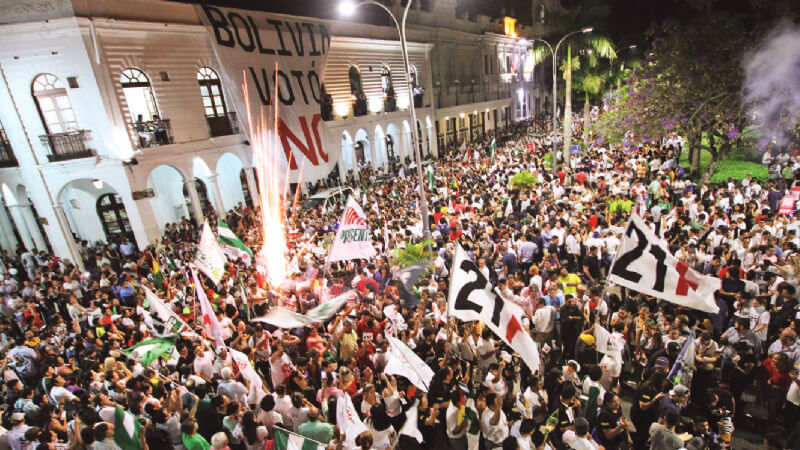
Bolivia

On December 6th of this year, eight departments of the country will hold a strike in solidarity against Evo Morales. Although, the president of the Association of Municipalities of Santa Cruz (Amdecruz) admitted that the mayors of his municipality will not be taking part in the strikeJorge Tuto Quiroga, the former president between 2001-2002 strongly warned the TSE that if they try to illegally enable Evo Morales and vice president Linera in the 2019 elections, they will face trials and jail time. Quiroga stated that the members of the TSE cannot simply ignore the Political Constitution of the State.

On Wednesday, officials from Bolivia and Paraguay met to discuss building a bi-national pipeline, the installation of gas networks, selling LPG to Paraguay, and exploration into hydrocarbons. At the meeting, they signed a memorandum which established an open negotiation between the two countries for further developments.  

[/et_pb_text][et_pb_text admin_label=”Text” background_layout=”light” text_orientation=”left” use_border_color=”off” border_color=”#ffffff” border_style=”solid”]

Nicaragua

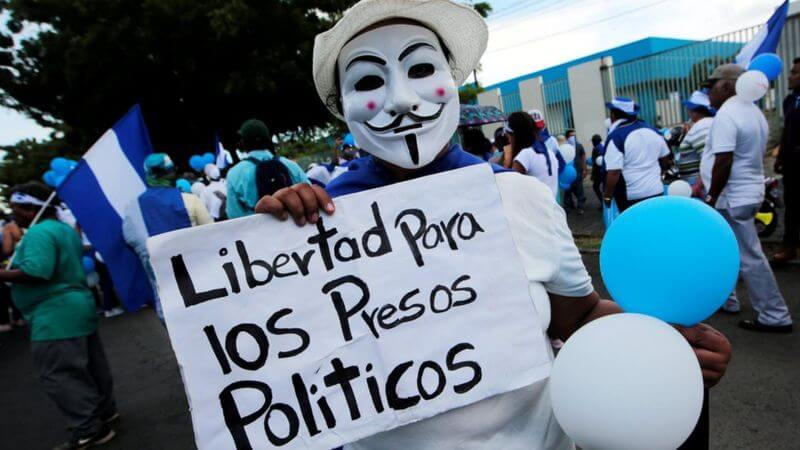
On Friday, November 2nd, seventeen people were arrested by the Sandinista police. The reason for the arrest is considered “ridiculous” given, those arrested were imprisoned for using the colors of blue and white during a visit to a gravesite in order to honor their loved ones. The Nicaraguan Center for Human Rights (Cenidh) reported more than 100 officers inside and around the gravesite.

While civic resistance continues to remain strong against Ortega and the Sandinista government, the United States is helping to make economic and diplomatic means difficult for the Nicaraguan government. This month, the United States imposed a law called “Global Magnitsky” which would punish Ortega by removing visas and financial restrictions of members of Ortega’s government who have helped to commit crimes and violate human rights. This will likely put pressure on Ortega to hold an early election or force him to negotiate for an internationally supervised election.

While Daniel Ortega has only registered 273 political prisoners, the Blue and White National Unity claims that there are a total of 552 people imprisoned. Ortega’s government continues to deny allegations of the number of prisoners and their poor treatment. The government is treating the prisoners as “terrorist and coup prisoners”.

Between November 9-11th, a meeting will be held in Washington to discuss the ongoing crisis in Nicaragua. Members from civil society organizations, the Nicaraguan Association for Human Rights, the Nicaraguan Foundation for Economic and Social Development, among others, will attend. The meeting will be led by the Nicaraguan Freedom Coalition and will pose as a platform to unite different groups in the country to discuss the crisis. The goal is to not only bring international awareness to Ortega’s government but also to return democracy to Nicaragua by adopting a resolution.

Beginning Thursday, any Nicaraguan with a refugee application card who is currently residing in Costa Rica may apply for a work permit. According to the Inter-American Commission on Human Rights (IACHR), between January and September of this year, more than 52,000 Nicaraguans who have entered Costa Rica have remained in their territory and at least 40,000 of them have articulated a need for protection from Costa Rica.

[/et_pb_text][et_pb_text admin_label=”Text” background_layout=”light” text_orientation=”left” use_border_color=”off” border_color=”#ffffff” border_style=”solid”]

North Korea

A report released by Human Rights Watch this week revealed that sexual abuse against women is widespread, especially abuse enacted by officials. According to this report, which was compiled from individual testimonies from over sixty North Korean defectors, sexual abuse and assault are so common that many women believe it is a part of everyday life.

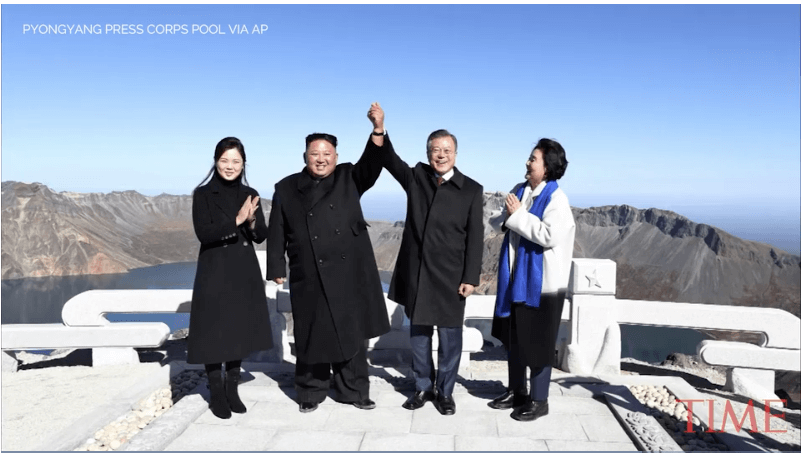
During a visit by Cuba’s president, North Korean leader Kim Jong-Un’s official portrait was unveiled next to a portrait of Cuba’s president. The unveiling of this portrait is significant – it signifies that Kim is being seen as a leader in his own right instead of simply a successor to his father. Kim’s reputation as such has improved domestically throughout 2018, thanks in part due to a large number of high-profile diplomatic meetings, including the Singapore Summit with US president Donald Trump.  

The long-awaited talks between the DPRK and the United States have been called off by the North Korean side this week. According to the United States State Department and South Korean foreign ministry, the meetings were called off due to scheduling issues and nothing more. However, the calling off of these talks has come at a time when the DPRK and the United States are coming to a head over the future of sanctions against the DPRK and nuclear weapons on the Korean peninsula.

[/et_pb_text][et_pb_text admin_label=”Text” background_layout=”light” text_orientation=”left” use_border_color=”off” border_color=”#ffffff” border_style=”solid”]

Myanmar

The European Union threatened over the weekend to impose trade sanctions on Myanmar that could have a devastating effect on the country’s domestic clothing industry as well as various others over a lack of accountability on the part of Myanmar’s government with respect to the genocide against the Rohingya. Meanwhile, the United Nations has urged Bangladesh and Myanmar to drop their “rushed” plans to repatriate the Rohingya to Myanmar. stating that Rohingya refugees still face a “high risk of persecution” if they return.

This Monday, the lawyers of the two Reuters journalists jailed for reporting on the military violence against the Rohingya filed an appeal, claiming that the original ruling of the court was incorrect. The two reporters were sentenced to seven years in prison for breaching Myanmar’s official secrets act, accused of possessing secret documents. In their appeal, the lawyers stated that the court “ignored compelling evidence of a police set-up” in addition to violations of due process and an inadequate job on the part of the prosecution.

On Wednesday, a report commissioned by Facebook found that Facebook platforms were definitively used to incite violence in Myanmar, specifically in aiding organized groups to conduct attacks on the country’s Muslim population. Facebook has stated: “We agree that we can and should do more.” In Myanmar, Facebook is so ubiquitous that it is considered to be essentially the internet.

[/et_pb_text][et_pb_text admin_label=”Text” background_layout=”light” text_orientation=”left” use_border_color=”off” border_color=”#ffffff” border_style=”solid”]

USA

On Sunday, Mike Pompeo, the U.S Secretary of State, agreed to hold accountable all people involved in the killing of Jamal Khashoggi. At the same time, Pompeo would like to maintain strategic relations between the United States and Saudi Arabia. Thus far, 16 visas from individuals involved have been revoked.

Tuesday concluded the United States most expensive and consequential midterm election. While Democrats claimed the House of Representatives, the Republicans claimed the Senate vote. These results show to confirm the divided country. There were highly contested votings in Indiana, Missouri, North Dakota, and Texas, all of which won with a Republican majority. Furthermore, this election showed a record number of women representatives in the House.

On Wednesday, Attorney General Jeff Sessions resigned from working for the White House after president Trump’s request. Sessions had been in charge of the Russian interference investigation during the 2016 presidential campaign. While Session’s removal has been foreseen for some time now, some officials were shocked at his forced resignation. The Attorney General will be replaced by Matthew G. Whitaker, Session’s chief of staff.

[/et_pb_text][et_pb_text admin_label=”Text” background_layout=”light” text_orientation=”left” use_border_color=”off” border_color=”#ffffff” border_style=”solid”]

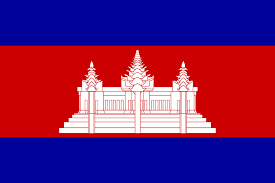
Cambodia

This week, a report released by Freedom House claimed that internet freedom in Cambodia is slipping after Cambodia has continued a series of crackdowns on online dissidents. In addition, media freedom has declined in that independent media institutions have been stifled and shut down, including Radio Free Asia Cambodia and the Cambodia Daily newspaper, and the relationship between the government and journalists has worsened. Cambodia’s score for media freedom has been slipping continuously for the past few years.

Thanks to threats from the European Union, Cambodian Prime Minister Hun Sen has begun to relax pressure on local labor union leaders. The European Union is continuing to review Cambodia’s duty-free export access, which is only available to developing countries. As a result, business leaders that benefit from Cambodian labor, including representatives from countries such as Adidas, New Balance, and others, have come to meet with Cambodian government ministers in an attempt to defuse the situation.

This week, a United Nations expert released a report claiming that in order to improve human rights in Cambodia, the government must allow for inclusive institutions, transparency, and access to justice – all principles directly in accordance with Sustainable Development Goal 16. Particularly concerning to the United Nations is the lack of speedy trials in Cambodia, in addition to issues such as transparency regarding land rights for Cambodian citizens.

[/et_pb_text][et_pb_text admin_label=”Text” background_layout=”light” text_orientation=”left” use_border_color=”off” border_color=”#ffffff” border_style=”solid”]

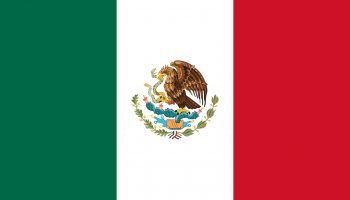
Mexico

Two busloads of Central Americans fleeing towards the United States border, totaling nearly 80 people, have gone missing this week. The National Human Rights Commision states that the missing people were kidnapped and turned over to criminal groups in Mexico. This occurred while the migrants traveled through Puebla on last Saturday. Neither federal or state authorities have responded to the reported incident. Accordingly, criminal groups have long kidnapped Central American migrants in order to force men into labor work and women into prostitution.  

[/et_pb_text][et_pb_text admin_label=”Text” background_layout=”light” text_orientation=”left” use_border_color=”off” border_color=”#ffffff” border_style=”solid”]

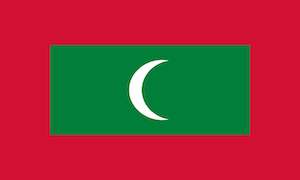
The Maldives

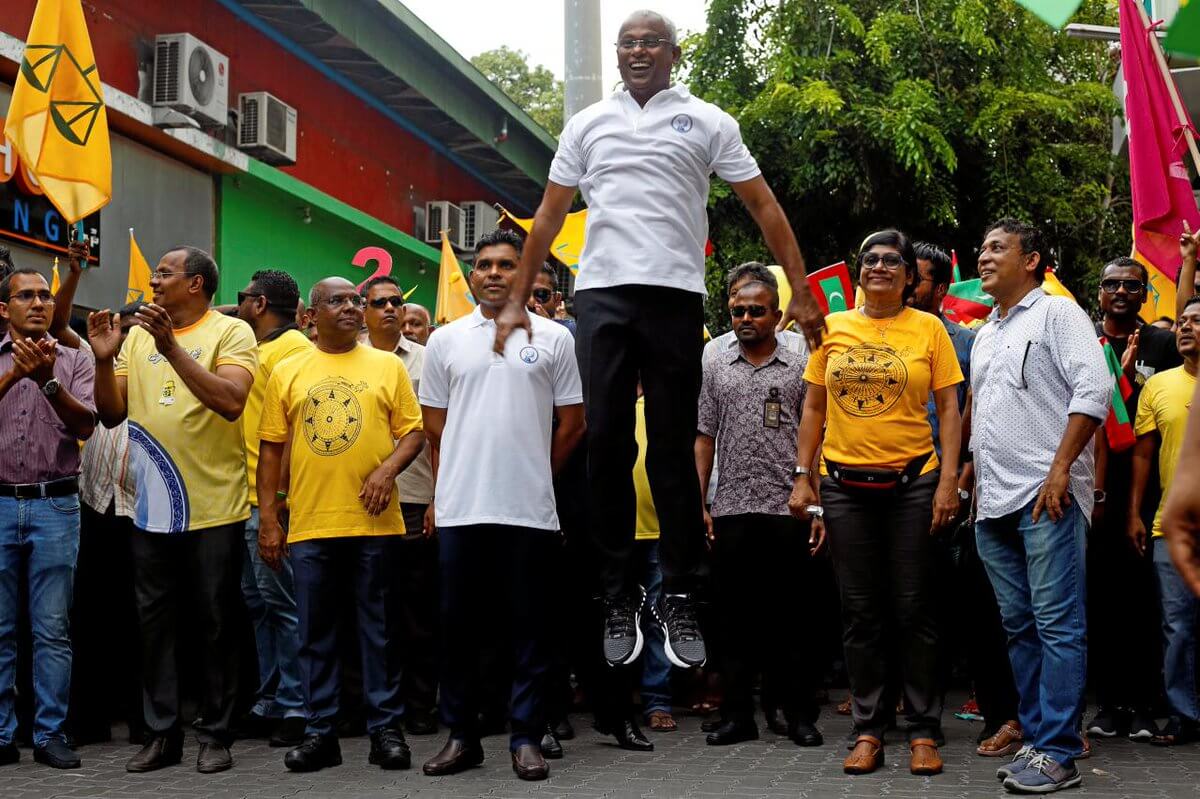
Indian Prime Minister Narendra Modi is set to visit the Maldives, the only country in South Asia which he has yet to visit, next week. Although the visit has yet to be officially announced, Modi’s staff has already arrived in the Maldives to help plan for the occasion. It is expected that Modi will use this occasion to revive a closer relationship between India and the Maldives, particularly as the previous administration stopped many large infrastructure projects that were jointly underway with Indian contractors. Thanks to Indian support, the Maldives also became the latest member of the Indian Ocean Rim Association, something that would not have been possible under the previous administration.

Dr. Mohamed Asim, the foreign minister of the Maldives, has been accused of sexual harassment in the workplace by at least four junior staffers. According to sources from within the minister’s bureau, at least one of the accusations would qualify as sexual assault. However, the ministry’s permanent secretary has claimed to not have any official complaints submitted until this Thursday. Impunity for perpetrators is currently a huge problem in the Maldives in the case of sexual assault investigations.

[/et_pb_text][et_pb_text admin_label=”Text” background_layout=”light” text_orientation=”left” use_border_color=”off” border_color=”#ffffff” border_style=”solid”]

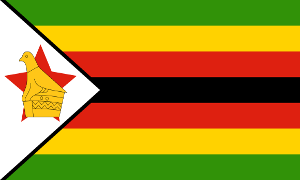
Zimbabwe

According to several news sources, petrol supplies have returned to normal at most service stations in major Zimbabwean cities, signaling that the worst of the previous financial crisis is over. The price has also begun to recede for fuel in both Harare and Bulawayo. Despite this, officials are still concerned that the economic crisis will return. It appears to have been spurred on by major economic reforms announced last month, which incentivized Zimbabweans to attempt to spend as much of their money as they possibly could before cash or goods could disappear – not helped by the memory of the 2008 economic crisis. It remains to be seen whether the situation will be ameliorated for good by the end of the month when Financial Minister Ncube announces the national budget.

This week, two former ministers under Robert Mugabe’s reign appeared in court to face corruption charges: former information, communication, and technology minister Supa Mandiwanzira, and former local government, youth, and environment minister. Both were formerly fairly significant in the ruling ZANU-PF party. On Wednesday, 47 people died in a major traffic accident along the Harare-Mutare highway, which Zimbabwean police have characterized as a collision between two buses caused by “speed or reckless driving.”

[/et_pb_text][et_pb_text admin_label=”Text” background_layout=”light” text_orientation=”left” use_border_color=”off” border_color=”#ffffff” border_style=”solid”]

Laos

Analysts are predicting that Laos’s dependence on Chinese loans to build their extensive dam projects will lead to Laos falling “even deeper” into China’s infamous debt trap. It is estimated that Laos has received about $11 billion in development financing from China so far, second only to Pakistan in Asia. Laos, currently one of the poorest countries in Southeast Asia, has already been warned last year by the International Monetary Fund that it runs a huge risk of “external debt distress.”

[/et_pb_text][et_pb_text admin_label=”Text” background_layout=”light” text_orientation=”left” use_border_color=”off” border_color=”#ffffff” border_style=”solid”]

Vietnam

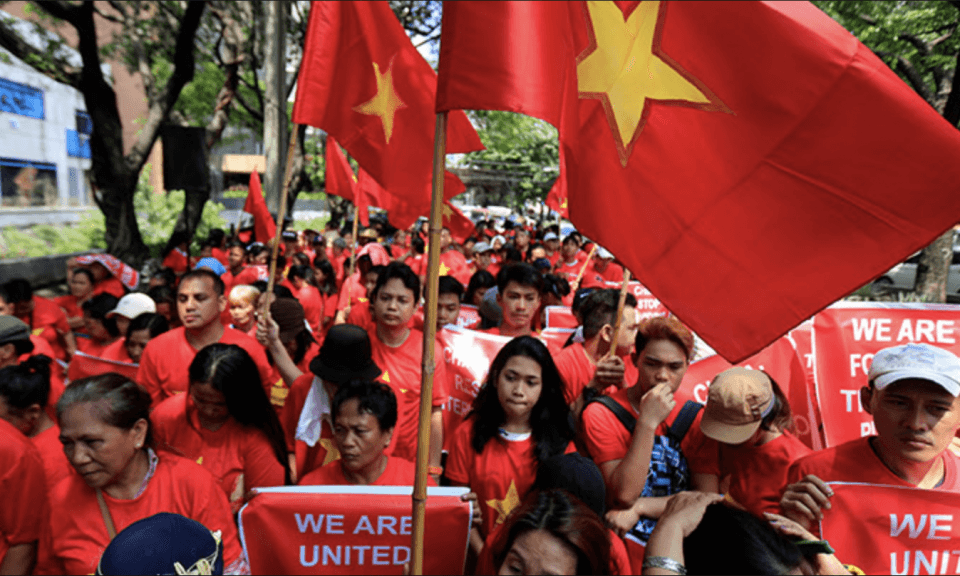
Vietnam has claimed that due to “toxic information” on platforms such as Facebook and Google, it wants at least half of its domestic social media users to use domestic social networks by 2020. Vietnam’s information ministry has been drafting a code of conduct for the internet. As the Vietnamese government normally exercises strict controls over domestic media and what is allowed in the country, it is thought by many that this is actually a way of silencing dissidents – who are generally only able to openly critique the government through their online activities.

[/et_pb_text][et_pb_text admin_label=”Text” background_layout=”light” text_orientation=”left” use_border_color=”off” border_color=”#ffffff” border_style=”solid”]

The Democratic Republic of the Congo

According to a recent human rights report, brutal torture and sexual assault have been used by authorities in the DRC against political dissidents as a way to silence them. Members of political opposition groups or social justice campaigns have fallen victim to rape and torture for simply taking part in protests or by wearing political shirts. This report comes after interviewing 74 people, both women, and men. According to the report, all of them women and two-thirds of the men had been raped, while others were subject to electric shocks and beatings.

Different leaders from opposition groups for the upcoming elections have agreed to go to Geneva in order to select a joint candidate. The leaders left on Thursday for the three-day summit. There are high expectations, therefore all of the leaders believe it is best to act together to choose one leader. The DRC elections are to take place on December 23rd, and the outcome is crucial for the future of the Congo.

[/et_pb_text][et_pb_text admin_label=”Text” background_layout=”light” text_orientation=”left” use_border_color=”off” border_color=”#ffffff” border_style=”solid”]

Colombia

According to the United Nations, an estimated 350 people have fled the northeast region of Colombia, while another 400 people are caught in the “crossfire” of warfare between militant groups ELN and EPL. Last week, president Duque declared that he sent 5,000 troops to the region in order to protect civilians and create peace, even though civilians from the region fiercely opposed the president’s decision. Militarizing the region, Catatumbo has only proven to develop more harm than good in the past. Locals from Catatumbo believe that the military is corrupt and unorganized, and they have yet to help in the most recent situation concerning people being caught in the crossfire of militant groups.

Last week, Venezuelan soldiers entered through the Colombian border. This is the latest in a series of border crossings. On Wednesday, Colombia sent a letter of protest to Venezuela. Duque sees the repeated crossings as a violation of sovereignty. Venezuela did not immediately respond to the letter.

[/et_pb_text][et_pb_text admin_label=”Text” background_layout=”light” text_orientation=”left” use_border_color=”off” border_color=”#ffffff” border_style=”solid”]

Venezuela

Due to the imposed US financial sanctions on Venezuela’s gold, Venezuela’s hard currency has dwindled. Because of this, Maduro is pursuing bringing back nearly $550 million of gold from the Bank of England, held in Britain. Venezuela is fearful of being caught up in international sanctions. Given the country is in its fifth year of recession, losing this gold could cause even further damage to the country’s economy.

The European Union has extended sanctions on Venezuela until November of 2019. In 2017, the EU imposed an arms embargo and further added a variety of Venezuelan officials to the sanctions list. The most recent decree is because of Maduro’s human rights violations and undermining of democracy. The EU’s sanctions came less than one week after the United States imposed sanctions on the oil-rich country. The goal is to add more pressure on Maduro and his government.

[/et_pb_text][et_pb_text admin_label=”Text” background_layout=”light” text_orientation=”left” use_border_color=”off” border_color=”#ffffff” border_style=”solid”]

Malaysia

This week, the Malaysian delegation at the third Universal Periodic Review by the United Nations Human Rights Council in Geneva reaffirmed the new Malaysian government’s commitment to working towards ratifying all UN human rights treaties that have yet to be ratified by the Malaysian government. The Malaysian government also indicated that it would be placing a moratorium on all executions until the death penalty is abolished, attempting to signify its new commitment to human rights. Activists and civil rights groups also used the stage provided by the Universal Periodic Review to express disappointment and outrage to the government’s response to accusations of female genital mutilation in the country. The Malaysian government claims that people practice “female circumcision,” and insists that the practice is independent of what is characterized as FGM.

Dozens of Rohingya Muslims and Bangladeshis boarded a boat attempting to reach the southern coast of Malaysia and were apprehended by Malaysian authorities. This has occurred mere weeks after Myanmar and Bangladeshi officials announced a repatriation plan set to begin in mid-November, despite protests from groups such as the United Nations that such repatriation efforts are premature. The Malaysian Prime Minister, Mahathir Mohamad, warned Malaysians to not “abuse” the freedom of speech, expression, and media given by the government. Specifically, he condemned uses of these basic freedoms to cause trouble on matters relating to race and religion.

[/et_pb_text][/et_pb_column][/et_pb_row][et_pb_row][et_pb_column type=”2_3″][et_pb_text admin_label=”Text” background_layout=”light” text_orientation=”left” use_border_color=”off” border_color=”#ffffff” border_style=”solid”]

Other News

Russia —  This week, the United States blocked a Russian attempt to ease sanctions against the DPRK under the premise of affording humanitarian aid to the impoverished nation. (Radio Free Europe)

Hungary — Although the Hungarian investigation of an alleged corruption scheme involving the Prime Minister’s son-in-law has been dropped, the European Union announced that it would continue pursuing the case. (Politico EU)

Poland— After elections were concluded on Sunday, Poland showed a deeply divided nation between its more liberal cities and conservative countryside. (New York Times)

The Philippines — Former Philippine first lady Imelda Marcos has been found guilty of graft this Friday, a rare conviction among a variety of corruption cases that have been brought up in recent Philippine politics. (TIME)

Pakistan — Asia Bibi, the women who was held on death row for the past eight years, was freed of her sentence. Her freedom sparked riots in Pakistan. (BBC)

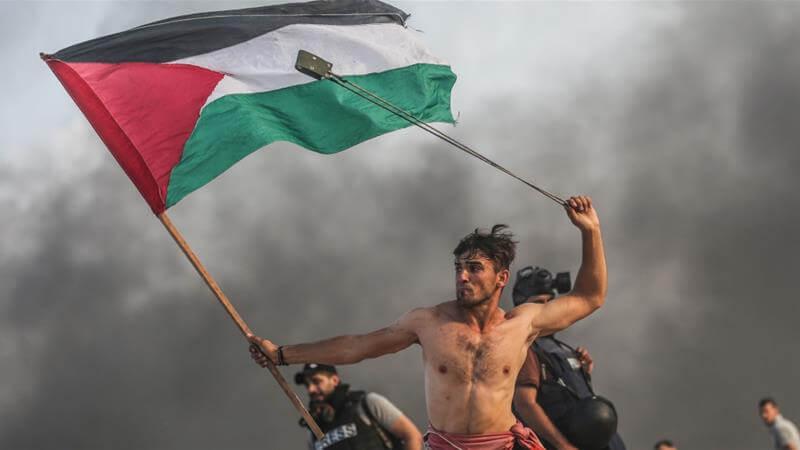
Palestine — During a protest, a young Palestinian man famous for his symbolism of Palestinian resistance through a picture of him which greatly compares to the French Revolution painting, Liberty Leading the People, was injured by Israeli Soldiers. (Al Jazeera)

China — As many as 500 children of detained Uighur Muslims have been placed in what is being called a “closed school” in Kashi Prefecture, where they are not allowed to have any kind of contact with the outside. It is thought that these are the children of those who have been placed in “re-education camps.” (Radio Free Asia)

Yemen — The Yemeni port city of Hodeidah is facing the worst violence that it has seen in months. This is due to the US-backed Saudi coalition of fighters in a war with the Iranian-backed Houthis. It is estimated that nearly 100 civilians died this week. (CNN)

[/et_pb_text][/et_pb_column][et_pb_column type=”1_3″][et_pb_image admin_label=”Image” src=”https://canvasopedia.org/wp-content/uploads/2017/11/logo_CANVAS-1.jpg” show_in_lightbox=”off” url_new_window=”off” animation=”left” sticky=”off” align=”left” force_fullwidth=”off” always_center_on_mobile=”on” use_border_color=”off” border_color=”#ffffff” border_style=”solid” /][/et_pb_column][/et_pb_row][/et_pb_section]
Weekly Report: 2 November 2018

A protest against Israel’s blockade of Gaza. (Mustafa Hassona/Anadolu)

Syria

A clash between US-backed Syrian fighters and Islamic State Militants left at least 40 Syrian fighters dead. Further, Islamic State recaptured land which was taken from them earlier this month along the border of Iraq. The Syrian Democratic Force (SDF) has been working to capture the last pocket of land being controlled by IS since September. This area is also home to thousands of civilians who are being held in the crossfire.

On Saturday, leaders from Russia, Turkey, Germany, and France met in Istanbul to discuss various issues facing Syria. While there was not a major breakthrough in talks, the four-way summit addressed the necessity of an eventual peace plan. With Russia backing Assad’s Regime, and Turkey backing rebel groups in opposition of Assad, the meeting made for an interesting dialogue. The leaders also discussed the refugee crisis, the Idlib demilitarization zone, and constitutional reform.

The Rukban Camp on the border of Syria and Jordan, home to more than 50,000 stranded civilians, has yet to receive aid since last January. This week, a convoy carrying aid was supposed to make its way to the camp but has been suspended due to security reasons. The camp is home to 80% women and children, all of whom are in desperate need of food, water, and medical attention. While people living in the Rukbar Camp need help, aid workers on their way were in danger.

Bolivia

This week, Maria Eugenia Choque was elected as the new president of the Supreme Electoral Tribunal (TSE). Further, Antonio Costas Sitic will become the new vice president. These new positions came after the previous president and vice president resigned. Their management will continue for the next two years and obtain duties in both the primary and general elections in 2019.

On December 6th, civic leaders from eight separate departments in Bolivia are calling on a strike against Evo Morales. They are calling on a national strike against the referendum results from February 21st, 2016 when President Morales was put into office, even though he lost the majority of votes. The strike is intended to prevent the TSE from granting Evo Morales access to candidacy for the 2019 election cycle.

Nicaragua

This week, Ortega’s government is trying to completely censor the media outlet, 100% Noticias. The Nicaraguan Institute of Telecommunications and Postal Services (Telcor) was ordered to replace the news agency with a separate one. Telcor announced that 100% Noticias is an illegal company. Accordingly, the government does not have any legal basis for their claim.

At the end of Mass at a cathedral in Managua this weekend, members of the church held a peaceful protest in which they carried crosses with the names of victims of the socio-political crackdown since April 16th. There were a total of 528 names written, given this is the number of people who have died because of the Sandinista government.

Last Friday, 70 hooded men entered the prison where political prisoners were being held. The prison called La Esperanza is a women’s prison where political prisoners were being held. The men who entered physically beat the prisoners. This week, members of the Inter-American Commission on Human Rights (CIDH) tried to gain access into La Esperanza in order to verify the physical and mental health of those beaten, but they were denied entry. Prison authorities did not let them in.

North Korea

The United States chief envoy for North Korea said on Monday that he was “certain” that the cooperation of Washington and Seoul could help to secure full nuclear disarmament on the Korean peninsula. However, he did not claim to be on a specific timeline and has yet to set a concrete meeting with his North Korean counterpart.

Skeptics have been watching South Korean President Moon Jae-in’s relationship with North Korean premier Kim Jong-Un, especially as Moon attempts to shift Kim Jong-un’s public image from one of a war-mongering dictator to someone who is a “young and candid strategist.” This has exacerbated a clear tension between American and South Korean foreign policy – it has been a foregone conclusion among American policymakers for quite some time that the DPRK cannot be trusted to keep promises, even if the proper concessions are made. On Wednesday, the DPRK and South Korea agreed to hold sports talks this week to strengthen exchange; these talks will even include discussions of joint participation in the upcoming 2020 Olympics and a potential 2032 joint Olympic bid.

A Human Rights Watch report released this week has revealed that rape and sexual assault perpetrated by North Korean officials is so widespread that it is considered to be part of ordinary life. According to those interviewed, sexual assault has been so normalized that many defectors did not think it was unusual, and that women have little choice but to comply once an official decides to set his sights on her.

This Thursday, Kim Jong-un publicly latched out at the sanctions regime against the sanctions continued to be enforced against the DPRK by the United States under Trump, claiming that the sanctions place the DPRK in a very difficult situation as it attempts to transform itself into a “tourist destination.”

Myanmar

Workers have been striking from a Chinese-owned garment factory as part of an effort to reinstate colleagues who had previously been fired for their connections with a trade union. In the city of Yangon, about 100 protesters demanded an audience with Chief Minster Phyo Min Thein, seeking to discuss their grievances with the minister. Earlier this month, dozens of workers from the same factory were injured after assailants attacked a crowd that had been gathered outside of the factory – an incident that the government claimed was started by the workers themselves.  

Less than a week after United Nations investigators warned that the genocide against the Rohingya is still ongoing, Myanmar and Bangladesh have come to an agreement to start returning Rohingya refugees to Myanmar in mid-November. However, many Rohingya fear to return to Myanmar – especially since they are still not guaranteed rights such as citizenship, access to healthcare, and the freedom of movement. United Nations officials have condemned this deal and attempt at repatriation.

Additionally, there is evidence that Myanmar officials are in fact seeking to eliminate evidence that the Rohingya population even lived in certain areas of the Rakhine state: the government has been enacting large-scale construction projects in depopulated areas, with local government administrators claiming that these new comes would soon be occupied by “Rakhine, Chin, Bamar, and Hindu people from other parts of the country.” Meanwhile, some of the five ethnic armed groups that have yet to sign Myanmar’s nationwide ceasefire will attend talks with the Union Peace Dialogue Joint Committee, according to a report released on Tuesday.

USA

Over the weekend, a man named Robert Bowers entered a Synagogue in Pittsburgh, Pennsylvania and carried out a mass shooting. Bowers killed a total of eleven people, while others were injured. After authorities arrested the man, he claimed he just wanted “to kill Jews.” This shooting is the deadliest attack against Jewish people in the United States to date. There will be a court hearing this week to determine Robert Bowers jail time.

Due to the large mobilization of Central American migrants making their way to the United States border, Homeland Security and the Pentagon have decided to send 5,200 troops, military helicopters, and razor wire to the Mexican border. While some officials see the mass of people as a security threat, others, like the policy counsel for the ACLU’s Border Rights Center in El Paso state that, “Sending active military forces to our southern border is not only a huge waste of taxpayer money but an unnecessary course of action that will further terrorize and militarize our border communities.” Furthermore, the caravan of people is nearly 900 miles away, so it does not appear to be an immediate threat.

Cambodia

Although Kem Sokha, the leader of the banned opposition party (the Cambodian National Rescue Party), was released from prison to house arrest on September 10th, he is being barred from speaking to United Nations officials. Specifically, Rhona Smith – the UN Special Rapporteur on Human Rights in Cambodia – has been refused permission to speak with him about his detainment and various other issues, although she will be allowed to speak with various government officials and representatives from human rights groups during her visit this week. Meanwhile, Cambodia’s king has moved around 60 court officials, judges, and prosecutors to various posts around the country in a move welcomed by NGOs as a potential method to reduce judicial corruption.

Australia’s refugee resettlement deal with Cambodia has expired and is no longer considered to be an option according to Australian officials this week. According to rights advocates, the deal (which involved the Australian government paying Cambodia to resettle its refugees, who are usually confined to an offshore processing center on the small island of Nauru. Meanwhile, Cambodia-based rights group Licadho released a report on Thursday detailing the overcrowding issue in Cambodian prisons, with a focus on what they are calling “needless mass detention.”

Mexico

As migrants coming from Guatemala crossed the border into Mexico through the Suchiate River, one man died in clashing. Mexican authorities were deployed to the border. Accordingly, the police were not armed, yet one man was killed with a rubber bullet to the head. The deployment of authorities to the border is to stop the flow of migrants coming from Central America, given they are coming through Mexico in an illegal way.

The Maldives

Amnesty International released a briefing on October 30th that detailed the ordeal of Lahiru Madhushanka, a Sri Lankan driver who was accused of planning to assassinate then-President Abdulla Yameen in 2015. Madhushanka was reportedly denied a fair trial and repeatedly beaten by police in what may amount to torture. He was also denied access to legal representation and forced into prolonged solitary confinement. Amnesty International has urged that as the Maldives transitions into a new presidency, it must pay more attention to strengthening its human rights record.

Another area that Solih may wish to focus as he assumes the presidency next month is the potential for the Maldives to escape what is known as China’s debt-trap, in which Beijing repeatedly finances a variety of “questionable” infrastructure projects across countries and makes repeated purchases of land. It is hoped by some analysts that the Maldives will shake Chinese influence and return to the sphere of India, despite the fact that China holds over 80% of the Maldives’ sovereign debt. The relative cost of Beijing’s infrastructure project to any other agent of infrastructure development in the region means that it is, however, going to be incredibly difficult for the Maldives to completely depart from Chinese influence as it seeks to maintain investing in regional infrastructure.

Former Maldives president Mohamed Nasheed returned from a two-year-long exile on Thursday, only two days after the Supreme Court withdrew a warrant for his arrest. Nasheed was welcomed at the Male airport by president-elect Ibrahim Mohamed Solih and hundreds of reporters. It is unknown what role, if any, Nasheed will play in Solih’s new government.

Zimbabwe

A man detained for insulting the president while testifying before the commission probing the fatal shooting of six civilians during post-election protests this summer has been freed on bail this Monday. The man, Wisdom Mkwananzi, was detained after he accused Mnangagwa of leading a 1980s government crackdown during which human rights groups claim approximately 20,000 suspected government opponents are killed. According to a spokesperson from Zimbabwe Lawyers for Human Rights, he was charged with “undermining the authority of the president, assaulting police officers during his arrest, and lying under oath.”

Over the weekend, the opposition Movement for Democratic Change held a rally at which it installed candidate Nelson Chamisa as the “president of Zimbabwe.” Chamisa lit a ‘democracy flame’ that was meant to resemble Zimbabwe’s Independence Flame in an attempt to draw attention to what MDC believes were the rightful results of the election. ZANU PF, the ruling party, has claimed that these actions “border on treason.” Chamisa and the MDC have continually refused to recognize the results of August’s elections as legitimate.

On Monday, President Emmerson Mnangagwa met with Zimbabwe’s business community and attempted to reassure them that he is working to stabilize the economy, despite signs that the country may be returning to a massive economic crisis, the likes of which haven’t been seen since the massive crisis ten years earlier. Mnangagwa also said that Zimbabwe would continue operating under its multi-currency system, although the bills have been increasingly difficult to come by as of late. By the end of the week, Mnangagwa announced the discovery of potential oil and gas deposits in the north of the country.

Laos

A report uncovered by Radio Free Asia has revealed that the government was ill-equipped to handle July’s dam break, which killed over forty people and has left countless others missing; this report reveals a high level of redundancy  between local and higher-up levels of the government, as well as general confusion over when to start evacuations. This account reveals that the government may have even known about the need for evacuation up to a day before the breaking of the dam, even though evacuations were not begun until two and a half hours before the dam actually burst.

Vietnam

Though the recent appointment of Communist Party chief Nguyen Phu Trong has been seen by some as his rise to the top as a dictatorial strongman (as he is the first person to be both Party chief and president), some analysts believe that instead of showing his strength, this development is reflecting the Vietnamese government’s overall weakness. Although there has not yet been any substantial actions taken by the government to show otherwise, it is speculated that Trong was only nominated to be president because there were no other viable candidates that fit the requirements.

Vietnam has this week rolled out a series of measures aimed at controlling “false information” in its latest effort to combat ‘fake news,’ although many critics believe that these measures are in actuality meant to punish and control those who dissent against government policy. Vietnam has also been attempting to enact tougher measures on companies such as Google and Facebook to ensure that they hand over information on people who post what the government deems to be “false information,” and also remove such information when it is discovered.

The Democratic Republic of the Congo

As of Monday, there are 120 confirmed cases of Ebola in Beni, the epicenter of the outbreak. Of those cases, 30 of the people are children under the age of 10 years old, and 27 of them have died. According to Reuters, the children may have contracted Ebola after being treated for unrelated cases of Malaria in a clinic run by traditional healers. Furthermore, in the provinces of North Kivu and Ituri, 168 individuals are confirmed dead and another 98 have been affected. The high numbers are in part due to the heightened conflict causing complications in administering help from health officials.

Colombia

This week, President Duque plans to send 5,000 troops to a northeastern region of Colombia. This came after citizens of the area begged the president to do the opposite. Duque’s deployment came after visiting the area of Ocaña because it is overrun by guerrilla groups and is home to Colombia’s second largest Coca growing region. According to locals, sending troops into the area only inflicts more violence and does not resolve any issues.

After Brazil elected the far-right president-elect, Bolsonaro, president Duque both congratulated Brazil and went as far as to suggest an alliance against Venezuelan president Maduro. Reports came out that Duque would willingly use military intervention against Socialist president Maduro if Jair Bolsonaro joined in.

Venezuela

On Tuesday, an official from the Treasury Department of the United States warned that Venezuela could pose a huge threat to its regions stability. The official stated that neighboring countries like Brazil, Colombia, and Argentina due to Venezuela’s migrant and economic crisis’. Further, the Venezuelan president has been accused of contaminating water supplied at gold mining sites. The top official believes that Venezuela’s neighbors and their allies (including the United States) are under threat.

Malaysia

A luxury ocean-liner that had been previously been at the heart of the longstanding 1MDB scandal has gone on sale on Monday in an effort by Malaysian government officials to recover some of the billions of dollars that have gone missing from the state fund under the previous presidency. Reportedly, Malaysian financier Jho Low bought the yacht with money diverted from the 1MDB fund. So far, he has not been apprehended by investigators.

Malaysia has suspended seven police officers after discovering that about US$1.9 million has gone missing following a police search of a condo in Kuala Lumpur. This investigation was conducted by the police narcotics unit. About 20 other people have been detained in relation to the case. A little over half of the money has been recovered so far, and the police are attempting to locate the rest. On Thursday, the United States Department of Justice has announced charges against a fugitive Malaysian financier and two former Goldman Sachs bankers for money laundering in connection to the 1MDB fund.

Palestine

On Monday, three young Palestinian boys were killed by bombings coming from the Israeli Defence Force. The boys were aged 13-14 and the killing took place in the southeastern Gaza Strip.

This week, the Palestine Liberation Organization (PLO) was given permission to suspend recognition of Israel until Israeli recognizes Palestine. Further, they were given permission to stop security coordination with Israel. Economic agreements have been suspended, and the validity of the Oslo Accords have been revoked.

Other News

Russia —  Despite American threats to withdraw from the Intermediate-Range Forces treaty, NATO has urged Russia to hold true to the arrangement despite the renewed tensions between Russia and the United States. (Radio Free Europe)

Hungary — A Hungarian journalist who has filmed tripping and kicking migrants at the border in 2015 has been cleared by courts, despite their acknowledgment that her actions were “morally incorrect and illicit.” (BBC)

Poland— The recent rule created to forcibly replace a majority of Polish judges into retirement is now being contested. (Radio Poland)

The Philippines — Philippine President Rodrigo Duterte has sacked most top officials in the customs bureau after they failed to intercept over a ton of methamphetamines, replacing them with individuals from other agencies. (Al Jazeera)

Pakistan — On Wednesday, Asia Bibi, the women who were originally put on death row eight years ago after defiling the name of the Prophet Mohammed, overturned her conviction. (CNN)

China — A researcher based in Canada has claimed that China must now justify the existence of its many re-education camps for Uighur Muslims after compiling a list of these 59 camps, and has claimed that the Chinese government has been deleting information about these camps since he began his investigations. (Radio Free Asia)

Iran — This week, Denmark accused Iran of planning an assassination of an Iranian activist on Danish soil. (BBC)

Yemen — As a part of a new Saudi-EAU-led coalition, more than 10,000 troops will be sent to Hodeidah in order to fight the Houthis. (Al Jazeera)

Weekly Report: 26 October 2018

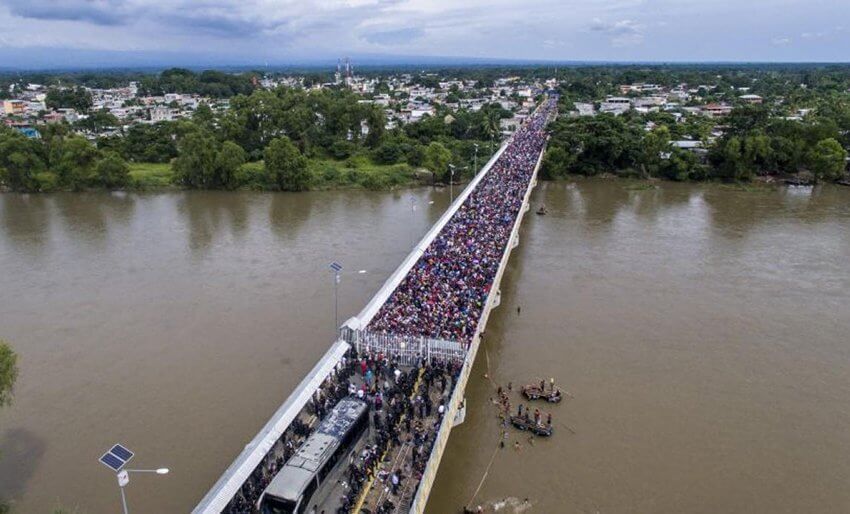
A caravan of migrants at the bridge at the Guatemala border, with hopes of reaching the US. (Mexico News Daily)

Syria

A mosque being used as a base for Islamic State was targeted and struck this weekend. Behind the strike was the United States-led coalition. In the air strike, 22 jihadists were killed near the Iraqi border, one of the last Islamic State territories. Furthermore, according to The Syrian Observatory for Human Rights, a separate airstrike carried out by the U.S. led coalition on last Thursday and Friday killed 41 people. This includes 10 children who may have been related to Islamic State fighters. On Saturday, Syria’s foreign ministry declared that the killings are considered a crime. They claim that the United States was relentless in their actions and has called on the United Nations to punish them.

After being held captive for three years, Japanese journalist Jumpei Yasuda is released. Yasuda was being held hostage by the Nusra Front, an Al-Qaeda affiliated group located in Syria. The Japanese government was notified this past Tuesday about Yasuda’s reappearance and had been sent to an immigration facility in Turkey, directly next to the border of Syria.

Bolivia

This Sunday, results of the voting intentions for the upcoming 2019 elections came out. In the results, Carlos Mesa headed the MAS by two points. Given, the opposition wishes to band together for the second round of votes in order to unite together against the MAS and claim victory. While news agency pagina siete reported the voting results, officials from the MAS are in disbelief of the outcome.

According to a survey published by pagina siete, 25% of people in Bolivia blame Evo Morales for the failure at the Hague. Further, Víctor Borda, MAS deputy stated that he believed the ruling influenced the mood of people in Bolivia against President Morales. While Morales took most of the blame according to the survey, 17% blamed it on the Bolivian legal team, 3% on Carlos Mesa, 2% on Héctor Arce and 1% on Eduardo Rodríguez Velzté.

On Monday, the president of the Supreme Electoral Tribunal (TSE), Katia Uriona, resigned after being head since 2015.  Opposition leaders running for the 2019 elections are afraid that her resignation puts the MAS in control of the TSE. According to a leader from Democratic Unity, Uriona’s resignation risks “the full room…left with five members of majority masista.” While members of the ruling party, such as David Ramos believe that the members of the TSE will remain impartial.

After Morales’ government proposed a “law against lying” the Inter-American Press Association (IAPA) is demanding its withdrawal from implementation. The SIP believes that the law takes away the right for freedom of speech, and is further incompatible with international standards of Human Rights. The Inter-American Commission for Human Rights (CIDH) declares that any form of censorship, direct or indirect, cannot be a law. The IAPA indicates that in this year alone, 30 journalists have been killed within Bolivia. Journalists are not only facing severe censorship but also a violent backlash from the government.

The Plurinational Electoral Body (EPO) officially stated that political parties planning to run in the 2019 elections had until midnight on Wednesday of this week to present their participation. This means that militants of their respected organization must present “militant books” with corresponding legal personality admitting their abilities to run for elections. In total there are nine political parties which obtained legal personality, and twelve others which are still in the process of gaining legality. After midnight, it was calculated that the MAS has the highest number of militants registered with a total of 1,080,000. Meanwhile, the Left Revolutionary Front (FRI) which backs Carlos Mesa had 90,000 registrations.

Nicaragua

This week, the director of 100% Noticias received an award called the Freedom of the Press award, presented by the SIP. The director, Miguel Mora, gave a speech stating, “I thank God for granting me the honor of presenting the brave men and women of the independent press of my beloved blue and white homeland.” Further, he highlighted the past six months of Nicaragua, calling the situation a “state massacre.”

At a meeting in Washington this week, the Organization of American States (OAS) Secretary General, Luis Almagro spoke of the violation of human rights occurring in Nicaragua. He further states that the violations carried out by Ortega’s government are “totally incompatible with democracy.” Almagro cautioned that if the Nicaraguan Government continues with its repression, the recourse of Article 20 of the Inter-American Democratic Charter will unfold. This article is specific to allowing the general secretary, or any member state to request the assembly of the permanent council to implement “diplomatic efforts” to alter a constitution which affects the democratic order within a country.

This week, the Nicaraguan Center for Human Rights (Cenidh) declared that there are at least 40 political prisoners in need of medical treatment, but are not receiving it. Some prisoners suffer from chronic illness and authorities are refusing to give them medical attention. A representative of political prisoners has urged the judiciary to take prisoners to medical facilities in order to receive treatment, but they have yet to get a response.

A marathon runner by the name of Alex Vanegas continues to be a peaceful activist, protesting against the imprisonment of political activists and standing up against the Sandinista police. Vanegas used to show his support by running through the streets wearing blue and white, but due to a recent violent attack against him by Sandinista authorities, he can only walk. Recently, the marathon runner shared a video explaining what he previously faced as a political prisoner. Vanegas had spent four hours under interrogation and questioning, and further threatening of being jailed if he continues to protest against the government. This is the most recent detainments of four which he has faced.

As of early October, heavy rains have been severely affecting Nicaragua. This week reports estimate 21 deaths due to the rain. Between October 15th-22nd, 17 people died. On Tuesday the government established a “red alert” in a total of 15 regions of Nicaragua. The rest of the 7 departments which make up Nicaragua are in yellow alert, which warns civilians to act in case of a serious disaster.

This week, Donald Trump’s secretary advisor, John Bolton is to travel to Moscow to discuss Russia’s involvement in Nicaragua. Bolton does not believe that progress between the United States and Russia can continue if Russia works with Nicaragua’s regime. Bolton included Nicaragua, Venezuela, and Cuba as three countries which Russia supports, and are antagonists to the United States. 

North Korea

The respective governments of North and South Korea have agreed to remove both guns and guard posts from Panmunjom, the only town that exists within the Demilitarized Zone between the North and South – where meetings between the two Koreas are usually held. This zone, governed by the UN, will have firearms and military posts withdrawn from it by October 25th, and the United Nations will help facilitate the process and aid both Northern and Southern troops in these changes.  

The DPRK’s state media has begun to step up its criticism of US involvement in inter-Korean affairs, particularly criticizing the fact that the United States continues to use economic sanctions against the North Korean government. In addition, the contents of this media make it clear that the DPRK is attempting to project a strong message towards Washington, and may even be threatening to stop some of its progress (such as an end-of-war declaration) if sanctions do not let up.

Despite the trend of warming ties between the DPRK and South Korea, the United Nations independent investigator on North Korean human rights has warned that the human rights situation in the DPRK has not changed at all, claiming that more must be done on the topic of human rights. Although the South Korean foreign minister, Kang Kyung-wha, has stated that now is not the time to raise “these issues,” the rapporteur has called such an approach “worrying,” especially as there has been no reference to human rights during any of the diplomatic meetings that the North has been involved in thus far.

This week, the FBI claimed that Singaporean man Tan Wee Beng has been laundering money for North Korea through two companies with which he has ties – Wee Tiong (S) Pte Ltd. and WT Marine Pte Ltd. Although the US issued a federal arrest warrant at the end of August, the Department of Justice only issued an arrest warrant this week. Tan, 41, told BBC reporters that he only found out about the claims through the internet, and was reportedly shocked at his alleged involvement.

Myanmar

On Tuesday, Australia’s government revealed that it would impose sanctions against five Myanmar military officers who have been accused of overseeing widespread violence against Myanmar’s Rohingya Muslim population. It is believed that the five who have been targeted by these sanctions, Aung Kyaw Zaw, Maung Maung Soe, Aung Aung, Than Oo, and Khin Maung Soe, are thought to have stepped down from their posts once it was indicated that they played pivotal roles in the mass killings. In addition, Australia has stepped down from its previous role in the training of Myanmar’s military, sending a loud and clear message of disapproval of the government’s actions.

In recent interviews with CNN reporters, Rohingya refugees within the Rakhine state for internally-displaced people have called their conditions akin to those of an “open-air prison.” Many of these people were told that they would be displaced for only a few weeks when violence broke out in 2012, but have been there for upward of six years. There is no opportunity for jobs or homes for these people in camps, and a widespread lack of trust in the government.

According to Marzuki Darusman, the chair of the United Nations fact-finding mission on Myanmar, has released a statement stating that the genocide against the Rohingya is still ongoing. Analysts with Al Jazeera believe that in spite of this conclusion and the current pressure on the UN Security Council to somehow intervene, it is incredibly unlikely that it would make it that far – especially as China and Russia would likely use their veto power to protect Myanmar from any Security Council action. Furthermore, the UN special investigator on human rights in Myanmar has described the situations as an “apartheid situation.”

Three journalists arrested for reporting on government corruption have been released on bail this Friday, although the reporters claim that they have done nothing wrong. The maximum sentence for incitement, which is what they have been arrested under, is two years. They are facing charges under the government’s colonial-era penal code. The Myanmar Press Council has been pushing for the dismissal of this case and claims that they cannot settle any kind of dispute with negotiations until they will talk to the government.

USA

After claiming that Russia has defied the terms of the arms treaty between Russia and the United States, President Trump has withdrawn from the Intermediate-Range Nuclear Forces Treaty. After stating the official plans for withdrawal, Trump declared that “we’re not going to let them [Russia] violate a nuclear agreement and go out and do weapons and we’re not allowed to.”

On Monday, LGBT activists took to the streets in order to defy the recent push to take away rights for transgender people. The Trump Administration is proposing allowing Health and Human Services define gender as biological and an immutable condition determined by genitalia at birth. The new definition could be submitted by the end of the year. Furthermore, it would abolish federal protection and recognition for transgender people.

This week, a series of pipe bombs were sent out through mail to a variety of prominent Democrats, the CNN headquarters, former President Obama and the Clintons. A total of five pipe bombs have been discovered. Officials are unclear as to who has sent them and some reports say that a few of the bombs were hand delivered. None of the packages reached their intended targets, thanks to security forces. The CIA sees this situation as a large threat and is continuing to investigate the matter.

Cambodia

A Cambodian-American political activist formerly jailed in Cambodia from 2015 until this past August has stated that he wishes to continue fighting for democracy and fair elections in Cambodia and may even return to his home country in the future. This man, Meach Sovannara, brought his family to America in 2003 after receiving death threats due to his work as a journalist with Radio Free Asia, where he covered government corruption and rule-of-law violations. Meach was held in the notorious Prey Sar prison, although he claims that he was treated rather well and visited often by members of NGOs, likely due to his American citizenship.

This week marked the anniversary of the Paris Peace Accord, which ended the war between Cambodia and Vietnam 27 years ago and was lauded as a development pushing Cambodia on a course towards democracy. Unfortunately, due to the state of the Cambodian government currently, the anniversary was met with very little celebration and fanfare among the previously involved parties as Cambodia has been suffering from a long democratic backslide over the past few years.

Despite the perceived closeness between Chinese and Cambodian officials, anti-Chinese sentiment has been rising among Cambodian citizens due to the increase of Chinese nationals living and working in Cambodia on Chinese construction projects. Hun Sen claimed that the influx of Chinese nationals was necessary due to the level of work needed by Chinese projects. However, those in affected provinces have claimed that the Chinese nationals living in Cambodia have caused land prices to rise, something that is negatively impacting the livelihoods of locals.

Mexico

Demanding entrance into Mexico, a caravan of nearly 4,000 Central American migrants are camped outside the border between Guatemala and Mexico. The large crowd of people is a mix of men, women, and children. There has been a standoff between Mexican authorities and those trying to cross the border. The caravan eventually plans to cross into the United States. Cries from the migrant crowd said, “we’re not criminals, we’re international workers!” While metal barriers and police with pepper spray continue to hold off the rush of people crossing the border, some have managed to use rubber rafts or get past police in small, manageable groups in order to continue on their journey north.

The Maldives

The top court of the Maldives has unanimously rejected outgoing President Abdulla Yameen’s bid to annul the results of the presidential election this September, claiming that no claims of fraud were substantiated and that there was “no constitutional basis…to order a new poll.” Yameen, who lost the vote by a margin of 16 percent to his opposition, filed a complaint against the results after initially appearing to accept them. Thankfully, it appears Yameen’s desperate attempt to cling to power ends here.

The High Court also freed an opposition leader on Monday, setting aside his lower court conviction for bribery – which he conveniently was sentenced to after he joined forces with the opposition. This man, Qasim Ibrahim, is only one of many who have been jailed by Yameen’s administration after a series of politically motivated trials, and it is hoped that this will be a sign of good things to come as Mohamed Nasheed prepares to take the presidency this November. After a long hiatus, the Maldivian parliament will reconvene this Sunday to decide the start date of the next presidential term.

Zimbabwe

The ongoing economic crisis in Zimbabwe has led to what has been described as an “acute shortage” of medical drugs, and an increasing amount of Zimbabweans have turned to the black market in order to fulfill their healthcare needs. For some with chronic medical needs, the prices of necessary drugs soared. Furthermore, the government has neglected to import enough antibiotics in recent months – as, according to the government, these drugs are not a priority. However, this neglects the fact that many Zimbabweans with chronic respiratory illnesses disproportionately rely on cough medicines to control their symptoms – and that many of those affected by conditions that require short-term antibiotics are vulnerable, such as children.

Opposition leader Nelson Chamisa says that in order to resolve the current economic crisis, it is necessary that Zimbabwe create a transitional authority, claiming that his party is “ready to discuss” the issues with current President Emmerson Mnangagwa – though Chamisa stressed that he would still refuse to recognize Mnangagwa’s presidency as legitimate.

Laos

Repercussions from the collapse of the Xe-Pian Xe-Namnoy saddle dam in Southern Laos this July are still being felt by Lao citizens; many of the other dam projects within the Southeast Asian country have come under scrutiny by both Lao citizens and international actors. Many of these dams – funded and supported by important agents of development such as the World Bank – have displaced a huge number of people and even destroyed livelihoods due to the creation of reservoirs, which has flooded wide swaths of farmland, forests, and otherwise crippling important industries to Lao citizens.  The consequences are mainly felt by the masses, as the dams do not generate income for them while forcing them to uproot and destroying their industries. The affected civilians are also the most disadvantaged due to the repressive nature of the Lao government and little infrastructure for civil society that would allow them to advocate against these large construction projects. A panel of water experts that met this week claimed that specifically the World Bank’s promotion of these dams – referred to as a “hydro-power myth” by some – has been a massive failure in terms of obtaining sustainability.

Vietnam

This Tuesday, Communist Party General Secretary Nguyen Phu Trong was confirmed as Vietnam’s new President, giving him unparalleled control and solidifying him as a strongman despite the original structure of the Vietnamese government having been meant to diffuse power among four distinct individuals. Trong is known for his close ties with Chinese leaders, as well as his large anti-corruption campaigns – although it is thought that he has little actual governing experience. It is thought that his double role as president and party head will allow him to take an unprecedented amount of power, especially when it comes to trade and foreign relations with an eye towards China and the United States.

The Democratic Republic of the Congo

The harassment and arresting of journalists continue to be an issue in the DRC with the most recent abduction of five journalists. After publishing articles about “misappropriation of rations” for the police in AfricaNews, Octave Mukendi, Bruce Landu, Roddy Bosakwa, Dan Luyila, and Laurent Omba were taken. Reporters Without Borders, a media watchdog, called for the release of the five journalists. Reportedly, they were soon released after 12 hours.

In the midst of the most recent Ebola outbreak, Congolese rebels have kidnapped 12 children and killed 15 civilians. The attack appeared to be in the epicenter of the Ebola outbreak, making it extremely difficult for aid workers to continue with their job in stopping the spread of the disease.

Over the weekend, reports came out about eleven political prisoners who were released. The prisoners backed opposition presidential candidate Jean-Marie Michel Mokoko during elections, two years ago. According to local civil rights groups, dozens of political prisoners have been jailed. While advocacy groups for human rights continue to defend political prisoners, the current president of the Congo, Denis Sassou Nguesso faces criticism and pressure to improve human rights within the DRC.

Colombia

Up until 2016, most landmines and explosives were placed throughout Colombia by ELN and FARC groups. After the peace treaty was signed between the Colombian Government and FARC, Colombian authorities and international organizations have been working together in order to remove them. Although, Red Cross reports that this year, 106 people, mostly civilians have fallen victim to landmines. There is a target to rid the country of the explosives by 2021, but some regions are still plagued. The 106 people affected by the devices is a large spike in comparison to last years, 56 victims.

On Monday, Pope Francis and President Duque met to discuss the issues facing Colombia today. While Duque did not speak much about the conversation between the two, the Vatican stated that the Pope underlined the importance of collaboration and dialogue between the church and the state. Further, the Pope gave input in the peace process between the government and FARC, given Pope Francis is a large supporter of proceeding with peaceful means.

Venezuela

Amidst Venezuela’s plunging economy, Coca-Cola Femsa is getting ready to lay off about 2,000 employees. There are a total of 4,800 current employees at the site in Venezuela. Given the country’s recession since 2015, consumer demands have increasingly gone down. Furthermore, because Venezuela is inconsistent with meeting demands of import basic goods such as sugar, large plants like Coca-Cola have needed to halt production.

President Maduro has been “looting” Venezuela of its gold, according to the U.S. Treasury’s assistant secretary for terrorist financing. Reports came out this week that Maduro is illegally exporting Venezuelan gold to Turkey in the attempt to save his country amidst its economic collapse. In recent months, the Venezuelan government has shipped more than 21 metric tons of gold without legal approval. This comes after the United States sanctioning on gold exports.

Malaysia

According to Malaysia’s opposition leader, Ahmad Zahid Hamidi, the recent earthquake and subsequent tsunami that struck neighboring state Indonesia was “punishment from Allah” for the activities of LGBT people. Ahmad Zahid is only the latest in a series of Malaysian politicians making increasingly homophobic statements, including the current Prime Minister Mahathir Mohamad. Currently, Ahmad Zahid has been arrested for corruption and is facing jail time. On Friday, Malaysia’s Prime Minister rejected the very concept of LGBT marriage during a state visit to Thailand on Thursday, claiming that the “institution of the family has…been disregarded in the West.”

Palestine

In a statement on Wednesday, China’s commerce ministry confirmed the signing of a free trade agreement with Palestine. The memorandum of understanding (MOU) is an agreement between Palestine and China stating that both sides will “step up” negotiations.

This week, Human Rights Watch (HRW) condemned the government of Palestine for carrying out human rights abuses. HRW reports that Palestinian authorities in the West Bank and Hamas in Gaza have systematically tortured and imprisoned people. In response to these accusations, Palestinian Authorities said: “The state of Palestine has signed all international laws and conventions that ban human rights abuses and torture and is committed to enforc[ing] them.” They further claim that Human Rights Watch is biased.

Other News

Russia —  After Trump announced his decision to pull out of the 1987 Intermediate-Range Nuclear Forces Treaty, Russian President Putin warned that this action could lead to a new “arms race” between the two countries. (Radio Free Europe)

Hungary — A planned Holocaust museum set to open in Budapest has continued to come under fire for erasing the role of Hungarian perpetrators in violence against Hungarian Jews, portraying Hungarians only as “rescuers” in what scholars from the World Holocaust Remembrance Center call a “grave falsification of history.” (Channel News Asia)

Poland— On Thursday, the outcome of last weekend’s local elections came out. Accordingly, Poland’s ruling Law and Justice party (PiS) has taken the lead within regional parliament but did not win mayoral contests in Poland’s largest cities. (Politico)

The Philippines — Despite widespread international criticism, Philippine President Rodrigo Duterte has finally faced his first serious drop in popularity ratings as a result of the worsening Philippine economy. (The Guardian)

Pakistan — For the first time in history, Pakistan plans to send their first human into space. This will take place in 2022 with the help of China. (Times of India)

China — China has claimed that it will defend its ‘territory’ in the South China Sea and Taiwan ‘at any price’ – despite Taiwan’s self-governance and the territories in the South China Sea being widely disputed. (Al Jazeera)

Iran — Iran has been called on by Human Rights Watch to immediately discharge eight environmental activists. Accordingly, the activists have been detained since January. Reports say that at least four of them could face the death penalty. (Radio Free Europe)

Yemen — After a Saudi-led attack on Yemen at a vegetable market, 21 people have been confirmed dead. (Al Jazeera)

Weekly Report 19 October 2018

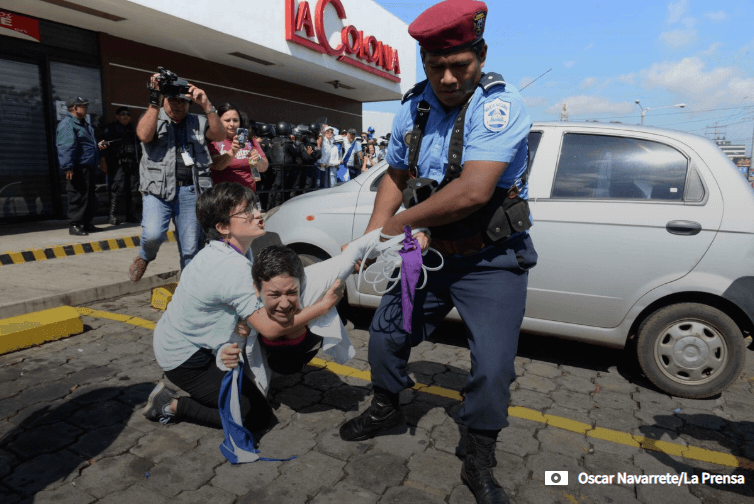
Nicaraguan police beat demonstrators in Managua. (Oscar Navarrete, La Prensa)

Syria

With just one day to spare, the previously known militant group ‘Nasra Front’ (now known as Tahrir al-Sham), has agreed to abide by the deal of the Turkey-Russia buffer zone. The deal was to fully demilitarize any militant groups in the zone by Monday, October 15th. In a statement, the group said: “We value the efforts of all those striving – at home and abroad – to protect the liberated area and prevent its invasion and the perpetration of massacres in it.” While the group does not intend to give up their arms, nor end their jihad, they intend to remain peaceful, yet weary with Turkey and Russia.

As of Sunday, after three years of being closed, the Naseeb crossing between Jordan and Syria has reopened on Monday, October 15th. The crossing will not be open to ‘normal’ traffic yet, reports say. This is an important step for neighboring counties of Lebanon, the Gulf, and Turkey, seeing as this route provides multi-billion dollar trades. Also on Sunday, foreign ministers from Iraq and Syria discussed the possibility of reopening the border between their countries. Currently, their border is only open for government or military use. The dialogue between Assad and his neighbors is a step forward for Assad, given his government has been isolated since the Syrian war broke out in 2011.

With the United States increased focus on Iran, officials are concerned that this could draw the U.S. military closer to open conflict within Syria. While the Trump Administration has previously made drawing Iranian forces out of Syria one aspect of its four-point plan in Syria, it is becoming more evident that the Trump Administration plan is changing. The new plan would put an emphasis on squeezing Iran financially by withholding construction aid from where both Iranian and Russian forces are held. Further, the United States would impose sanctions on Iranian and Russian companies present in Syria. The administration will soon submit a new strategy to, which will more accurately reflect President Trump’s priorities.

Bolivia

Both The Social Democratic Movement (MDS) and SOL.bo plan to hold an alliance with the former president, Carlos Mesa. This comes just months before the 2019 elections. Their goal in unity is to end corruption in Bolivia and bring an end to the authoritarian government.

In the tropics of Cochabamba, the MAS has banned other political parties from registering militants. Further, the MAS has threatened to expel organizations which do not support Evo Morales. This prohibits political parties from opening registration tables, who are not the MAS. The leader of the political group, Leftist Revolutionary Front (FRI) strongly opposed this ban in a statement, claiming that this is “intolerance, the result of 12 years of absolute and hegemonic control of the MAS.”

Despite a 2009 approved constitution allowing indigenous groups of Bolivia to gain autonomous territory, only three of the twenty Autonomous Territorial Entities (ETAs) have obtained self-governance. Accordingly, there are a series of obstacles in the way of indigenous groups having access to their rights. Most of the said obstacles are due to national regulations imposed by the Supreme Electoral Tribunal, along with other platforms through the central state. Groups that wish to become autonomous must pass 11 requirements.

This week, the National Committee for the Defense of Democracy (CONADE) announced that they will soon call to action their five resolutions of the council which took place on October 10th, just last week. Among the issues they intend to demand, one of them is a call for the resignation of candidacy for president Morales and his vice president, Álvaro García Linera in the upcoming 2019 elections. An official document stating CONADE’s demands will be sent to the Supreme Electoral Tribunal (TSE).

Nicaragua

On Sunday, the news agency, 100% Noticias, was attacked by Sandinista supporters. Accordingly, the attackers were together on a bus and threw stones at the news agency’s building. Since the protests against Ortega’s government began, 100% Noticias has repeatedly been the victim of an attack, given they are a news agency which reports the truth of what is happening in Nicaragua.

This weekend, demonstrators against Ortega’s government held a peaceful march in Managua, led by the National Blue and White Unit. At the demonstration, Sandinista police used stun bombs and beat several people. Further, they illegally arrested 38 individuals. On Saturday, Sandinista police announced that they would not allow marches if they did not have proper authorization. This is the latest example of police brutality and repression seen in Nicaragua. After finding out about the illegal arrests and police brutality, the executive secretary of the Inter-American Commission of Human Rights described the event as, “unacceptable repressive and authoritarian attitudes at this moment.”

On Sunday, human right defender, Haydee Castillo was arrested in the airport on her way out of Nicaragua. Castillo was traveling with the president of the Center for Justice and Human Rights of the Atlantic Coast of Nicaragua when immigration authorities detained her and brought her in for questioning. She was soon handed over to the Sandinista police. Castillo was then released on Monday, October 15th.

A number of individuals exiled to neighboring Costa Rica gathered to give a press conference, admitting to what they had previously experienced in Nicaragua. The group included President Ortega’s stepdaughter, the retired major of the Nicaraguan army, a defender of human rights in the LGBT community, and more. Upon speaking, Ortega’s stepdaughter denounced the president, claiming he intends “to eliminate any different or critical thinking that takes away the legitimacy that this government has already lost.” Further, others reiterated that the international community needs to step in and help to seek a peaceful solution for Nicaragua.

Nils Melzer, head of the United Nations Special Rapporteur on torture, has submitted a request to visit Nicaragua. Melzer would like to visit Nicaragua to discuss the reported allegations of torture of political prisoners by the Sandinista authorities. He has yet to hear a response, and further, admits that it is a likely difficult response to obtain. There are currently at least 300 political prisoners, some of which have been tortured in order to obtain confessions.

This Thursday marked six months of nonviolent struggle for the Blue and White Party of Nicaragua. The Blue and White party has now launched a series of forms of protest, which they invite all Nicaraguans to join in on. The strategies are as followed: wear white on every 18th of the month, wear black on every 19th of the month, every Monday wear red lipstick, a “blackout” (stop using power) every day between 8-9 pm, stopping the usage of DNP oil, stopping consumption when convened, and to “activate” the streets in demand for freedom.

North Korea

On Tuesday, South Korea, the DPRK, and the United Nations Command jointly consulted regarding the disarming of the Joint Security Area (JSA) in the inter-Korean border area. This is following up on an earlier decision made at the Pyongyang summit between the two leaders in September. The first step in disarming the JSA, de-mining, began on the first of October and is estimated to last around 20 days. Meanwhile, South Korea and the DPRK have agreed to break ground in late November or early December to eventually connect railways across the border between the two Koreas as part of a modernization effort.

North Korean Vice Premier Ri Ryong Nam has been invited to attend a forum on inter-Korean cooperation in Seoul, alongside business leaders from important South Korean companies such as Samsung and Hyundai. Although Ri’s attendance has yet to be confirmed, it is highly likely that he will be in attendance according to an anonymous source from the South Korean Ministry of Economics. In another move by North Korea to broaden its diplomatic horizons, Kim Jong Un has invited Pope Francis to visit North Korea, in a move supported by South Korean President Moon Jae-in. However, North Korea is incredibly repressive when it comes to religious practices, and there are precious few venues in the country where citizens can freely practice religion without fear of persecution.

Myanmar

After revelations last month that Myanmar’s military utilized social media sites such as Facebook to stir anti-Rohingya sentiment prior to the beginning of the Rohingya genocide in the Rakhine state, Facebook reported on Monday that it removed 13 distinct pages and 10 accounts for “engaging in coordinated inauthentic behavior” including the distribution of propaganda. This has continued on from Facebook’s initial investigation, which removed 52 pages and 18 accounts, including some directly linked to military personnel, in August. The Facebook posts used talked about Islam as a “global threat to Buddhism”  and shared fake stories about crimes committed by Muslims – and some of them were even linked to celebrity pages. The social media campaign appears to have been active for at least the past 5 years.

The United States, alongside 8 other Security Council members, has requested that the UNSC receive briefings on the United Nations Fact Finding Mission in Myanmar. Myanmar’s ambassador has gone on record saying that his government strongly objects to this request, and it is expected that China will object as well – although it cannot use its veto on the vote, seeing as adding an item to the agenda is a procedural matter. Meanwhile, on Wednesday, three detained journalists appeared in a Yangon regional court fighting allegations that the stories that they had published were false. The story itself detailed alleged fund mismanagement by the Yangon regional government.

United States Senate Majority Leader Mitch McConnell claimed that it would not be helpful to continue “piling on” accusations towards Myanmar civilian leader Aung San Suu Kyi, claiming that such accusations are undermining the “best hope” that is to be had for democracy in the southeast Asian country.

USA

This weekend, both coasts of the United States saw clashes between far-left group Antifa and far-right group Proud Boys. Both of these activist groups condone political violence. In both New York and Portland, Oregon. Videos went viral of both groups beating each other. Among the weapons used, police stated they saw hard-knuckle gloves, batons, knives, and clubs.

Officials this week have estimated that more than 200 undocumented children separated from their families, are still in US custody. Nearly 175 of those children had parents removed from the United States. Of these, only 18 of them are in the process of being reunited with their families.

On Thursday, President Trump threatened to order the military to fully close the US-Mexico border if the flow of migrants does not stop soon. President Trump tweeted, “Hopefully Mexico will stop this onslaught at their Northern Border. All Democrats fault for weak laws!” This lash of a tweet came after hearing word of 4,000 people from Honduras making their way to the border with the intentions of crossing into the United States.

Cambodia

A recent report by Al Jazeera revealed that Cambodia’s brick-making agency, which is being used to support the rapid growth of many of its urban centers, relies upon the debt slavery of Cambodian families in order to exist – despite the fact that slavery is illegal under both domestic and international law. According to the International Labor Organization, debt bondage often goes hand in hand with climate change, as many poor farmers often have no other option to take once their crops fail. Cambodia also lacks a social security system and farmers receive no support from the government.

According to a leaked phone call, a ruling party official stated that Cambodian workers who take part in protests against Hun Sen from abroad should be identified and beaten – or made to suffer “traffic accidents.” This official, identified as the spokesperson for the Labor Ministry, made these remarks after recent protests from Cambodian migrant workers living in Tokyo. Civil society organizations have already begun to report that these remarks have frightened migrant workers abroad, who believe that they may be targeted by the government.

Cambodian civil society groups have banded together to create a joint petition, sent to the European Union, to advocate that the European Union not sign an agreement with Vietnam regarding the international trade in timber. Cambodian groups are against this due to Vietnamese support of the illegal mining industry in Cambodian territory. A report by the UK-based Environmental Investigation Agency claimed that around 300,000 cubic meters of timber – including species of lumber that are endangered – were smuggled out of protected areas in Cambodia to Vietnam. However, Cambodia is also facing trade issues of its own – Cambodian Prime Minister Hun Sen arrived in Brussels on Wednesday to attempt to persuade top European Union officials to forgo previously threatened sanctions against Cambodia due to actions by Hun Sen’s regime, which rendered the summer’s general elections unfair according to most of the Western world.

On Thursday, the Inter-Parliamentary Union’s Committee on the Human Rights of Parliamentarians universally condemned the treatment of Cambodian lawmakers, particularly opposition lawmakers as part of the CNRP. The IPU, However, Cambodia’s ruling party summarily dismissed what the IPU described as “brutality” on the part of the Cambodian authorities.

Mexico

The extradition of César Duarte, former Chihuahua governor, is being delayed. Duarte faces criminal charges in corruption and illicit enrichment. He fled to the United States in March of last year and is now believed to be residing in Texas. The delay in extraditing the former governor is being labeled as an act of corruption, according to former chief of the Special Prosecutor for Electoral Crimes, Santiago Nieto.

A report came out this week that Duarte, former Chihuahua governor is not the only official guilt of a crime. Accordingly, state and municipal governments in Veracruz are accused of embezzling upwards of 33 billion pesos over the course of 10 years from 2007-2017. Of the 212 municipalities, mayors of 153 of them are being accused of illegally diverting resources in 2017.

This past Saturday, the border between the United States and Mexico was opened up for the sixth time to allow families to reunite for some time. Nearly 3,000 people gathered at the border in the “Hugs, Not Walls” event. More than 200 families were able to see each other for a short period of time, all thanks to the Border Network for Human Rights cooperation with U.S. border control.

The incoming president has adopted a new security strategy of dividing Mexico into 265 regions. Accordingly, the plan is to deploy between 300-600 members of the army, navy, and federal police to each region, all depending on their crime rate and the number of people in the region. Soon to be president López Obrador says this plan will be implemented as soon as he takes office. Furthermore, 70% of the goal of the security plan is to bring peace to the country through preventative action, meaning combating root causes of violence through stimulating economic growth, creating jobs and providing more education. The other 30% of the strategy is considered coercive, referring to the deployment of federal security forces. After hearing the proposed plan, a top security analyst both questioned and critiqued the plan, pointing out that the number of deployments per region does not add up.

The Maldives

Over the weekend, the currently ruling Progressive Party of the Maldives has denied offering bribes in exchange for false testimony to back President Abdulla Yameen’s challenge of his defeat in the election. Furthermore, on Tuesday, the Maldivian Supreme Court refused to call secret witnesses in President Abdulla Yameen’s petition to annul the results of the September 23 election, despite the president’s lawyers attempting to do so. The bench ruled that these witnesses were inadmissible; Chief Justice Dr Ahmed Abdulla Didi announced that a judgment would be heard at the next hearing, although a date has yet to be confirmed. Yameen has been seeking a Supreme Court order for new polls, although he initially conceded mere hours after the election had finished.

On Thursday, the High Court overturned former president Maumoon Abdul Gayoom’s conviction of “obstruction of justice,” which would have resulted in a sentence of 19 months in prison. In part, the High Court judge made this decision, as Gayoom was denied proper representation during crucial parts of the trial. He was released on bail a week after the September elections.

Zimbabwe

Despite claims that the economic situation in Zimbabwe is worsening as black market fuel sales increase and goods continue to be incredibly difficult to find, Zimbabwe’s government claimed that things are improving, and the worst of the country’s economic struggles are now over. However, prices are continuing to rise, and there continue to be mass shortages of goods on the ground – with some economists claiming that the current crisis is only exacerbated by a widespread lack of trust in the government among Zimbabwean citizens.

Because of this widespread economic crisis, the Zimbabwean black market has risen in importance to become a vital part of Zimbabwe’s economic structure. According to black market sellers interviewed by Al Jazeera, there is very little that the government can actually do to enforce legal transactions in the case of fuel, as there is simply no other way to obtain fuel for average Zimbabweans. Much of the blame for the crisis has fallen upon the Zimbabwean president, Emmerson Mnangagwa, who is urging the populace to be patient – as these things cannot be fixed in such a short period of time. However, anger against Mnangagwa appears to be widespread, even as he attempts to tackle other issues.  Recently, he posted a picture of himself getting vaccinated against cholera on Twitter, urging people in high-density areas of Zimbabwe to do the same to protect against the current cholera crisis in Zimbabwe’s capital; however, citizens responded angrily on Twitter, claiming that Mnangagwa should instead be focusing on the economy.

Laos

Although the Laotian government has been promoting Chinese tourism and will continue to do so over the coming year in a bid to improve the economy, Radio Free Asia’s Lao Service has spoken to many that believe that instead of improving the economy of Laos, it is highly likely that much of the money to be brought in by the joint 2019 Visit Year campaign will serve to benefit Chinese hotels and tour groups, without any benefit actually coming to Lao citizens.

Despite taking part in a profit-sharing arrangement with a Vietnamese rubber company, Lao villagers are now receiving no financial compensation for the land that they had leased, with the company claiming that the land actually belongs to the state. The seizure of land for development or agricultural use by foreign companies has been an increasingly large problem in many authoritarian Southeast Asian states, and this is only the latest example in this trend.

Vietnam

United States Defense Chief James Mattis headed to Vietnam starting on Tuesday in what is suspected to be an attempt to counteract the effects of Chinese influence on Vietnamese policy. Over the past year, the United States has pushed harder to cultivate a strong military relationship with Vietnam, with a United States Navy aircraft carrier making a port call at Da Nang. Mattis will be visiting Ho Chi Minh City, which is rarely on the itinerary for Americans visiting Vietnam. Furthermore, the trip initially included a visit to Beijing, which was canceled due to rising tensions between the United States and China.

Following a surprise release from prison on Wednesday, prominent Vietnamese activist and blogger Nguyen Ngoc Nhu Quynh (who uses the pen name “Mother Mushroom”) arrived in the United States, where she requested to leave to in the event of her release for the sake of her family. However, she also says that she will not stop raising awareness and protesting until there are human rights in Vietnam, and she has advocated that the American government do the same. Although her release is a positive step forward, Vietnam does not appear to have let up in its punishment of critics in any way, and it continues to oppress and imprison other activists, journalists, and members of civil society.

The Democratic Republic of the Congo

After three years of being held in prison, opposition leader Paulin Makaya has been denied leaving Brazzaville. Makaya has tried to travel twice since released and has been stopped both times. Accordingly, Makaya had been jailed after organizing a demonstration against the constitutional referendum which allowed the president to pursue another term in May of 2016. Makaya was released from prison as of September 17th of this year.  

According to Reuters, Congolese migrants residing in neighboring Angola and who have been involved in diamond mining, have been subject to a brutal crackdown carried out by police. In the past few weeks, Angola has launched an operation to crackdown on the thousands of people searching for diamonds and other stones in the northeast of the country. In a report with 20 Congolese migrants, Reuters was told that the migrants had been subject to violence, looting and forced displacement by security forces in Angola.

In the latest UNICEF report on malnourished children in the DRC, it was estimated that at least two million children are in fact acutely malnourished and are facing the risk of death. This continues to be an issue looming over the DRC, and humanitarian budget cuts to the region have made it even more difficult for aid workers to help.

On Monday, a US official reported that people from the United States Center for Disease Control and Prevention, who are in the DRC in order to help control the Ebola outbreak, have been taken out of the more high-risk areas. Due to the recent spike in violence, it was felt that the safety of this personnel was at risk and they were unable to properly do their job.

Colombia

After half a million students and teachers took the streets to demand more funding for Colombia’s education system, President Duque has offered concessions. Accordingly, the countries education system needs $1 billion to cover basic operations costs. Further, students and professors say that universities are in need of an extra $4.9 billion for maintenance of infrastructure. The marches help were the first since the newly elected Duque. After the demands, President Duque admitted that Colombia’s education system is in fact suffering, and has vowed to give $164 million. Although, opposition reject the concession, as they are demanding $325 million.

This week, Colombia’s former army commander agreed to tell the truth about the war crimes which took place under his command. General Montoya had previously resisted the accusations but has now decided to come forward. During the US-funded “Plan Colombia” implemented in 2000, Montoya was held responsible for the execution of thousands of civilians. The general may face 40 years in prison for his crimes against humanity.

With surprise, Colombia’s House of Representatives has voted to hold off 2019 elections and instead push it to 2022 when national elections are held. The amendment seeks to end the separation of elections. While the amendment was approved by 24 of the 32 members of the senatorial first commision, other officials believe that the proposed amendment is purposely trying to reduce regional autonomy by holding regional and national elections at the same time.

Venezuela

After spending four years in prison, a Venezuelan activist named Lorent Saleh was released from prison and immediately sent to Spain. In a statement, Saleh said, “What I ask is that we all think about the fact that in Venezuela there are innocent people behind bars, people that have been kidnapped and who deserve to cross the same bridge that I have.” Back in 2014, Saleh was arrested after a video surfaced of him speaking out against Venezuela. The arrest was highly condemned by human rights groups. Saleh’s sudden release came just days after a political prisoner suspiciously died and further, is seen as a way to ease political tensions.

According to the International Monetary Fund (IMF), Venezuela’s annual inflation rate could reach an all-time high at the end of 2018. The suspected inflation is suspected to hit 1.37 million percent. This has increased dramatically since January’s inflation rate of 13,000 percent, to July’s rate at 1,000,000 percent, to now.

Malaysia

After six hours of questioning over the alleged abuse of power that took place while he was in office, former Prime Minister Najib Razak was seen leaving the headquarters of the Malaysian Anti-Corruption Commission on Tuesday. It is suspected that this new round of questioning might be a result of a new investigation taking place, linked to the heavily-scrutinized state fund 1Malaysia Development Berhad (1MDB). Najib was last summoned to the MACC on September 19th, when he was held overnight and forced to appear in court in the morning. So far, it is unknown exactly what new allegations may have emerged to cause this new round of questioning.

Ahmad Zahid Hamidi, the former deputy prime minister, appeared in court this Friday to face charges of 45 separate counts of corruption. He is only the most recent in a string of senior Malaysian politicians to be charged with suspected corruption since May’s general elections. Some of Zahid’s charges relate to the misuse of charitable funds and questionable payments, although he has so far denied all wrongdoing. Following his arrest, Zahid spent the night in custody, had to pay a bail of 2 million ringgit (approximately $481,000 USD), and was forced to surrender his passport.

Palestine

This week, Israeli prime minister Benjamin Netanyahu has threatened to cut off all fuel deliveries to the Gaza strip. This threat came after a move by Hamas on Friday to employ tactics, including sending balloons attached to explosive devices over the border to Israel. Further, on Friday, Israeli forces killed seven protesters along the fence during the ongoing Great March of Return protest. If Netanyahu cuts off fuel shipments, the Gaza Strip will lack electricity completely, seeing as Israel is the only supplier of the resources. Accordingly, fuel deliveries will only continue if there is a complete ceasefire to violence.

Reports came out this week that the unemployment rate for college graduates in occupied Palestine is 55% for men, and 72% for women. Accordingly, college graduates are finding it harder to obtain a job than their peers who do not have any degree in higher education. the Palestinian minister of education is worried about young Palestinians’ future opportunities.

In response to a rocket launched from Gaza into the Israeli territory of Beersheba, Israel fired back with jets, striking 20 targets in the Gaza strip. One Palestinian was killed, and eight others were injured. Among the injured were six children.

Other News

Russia —  21 died at a shooting taking place at a technical school in Crimea, a region which was illegally annexed from Ukraine. (Radio Free Europe)

Hungary — In another move condemned by the United Nations as “cruel and incompatible with international human rights law,” Hungarian officials have passed a constitutional amendment that bans people from sleeping on the streets, which came into effect this Monday. (Washington Post)

Poland— At Poland’s Equality March, promoting the rights of the LGBT community, counter-protesters pelted marchers with firecrackers, rocks, and bottles. Several dozen counter-protesters were then arrested. (Radio Poland)

The Philippines — Shortly after formalizing his bid for Camarines Sur Governor, House Majority leader Rolando Andaya Jr. survived what is suspected to be an assassination attempt. (CNN Philippines)

Pakistan — Militants within Pakistan abducted 11 Iranian guards, sparking a coordination of search efforts. (Washington Post)

Tibet — Chinese workers in Qinghai province, on the border of Tibet’s autonomous region, attacked a group of Tibetans who were protesting their intrusion into local grazing areas – even dragging one man a short distance with a truck. (Radio Free Asia)

China — A regional official in west Xinjiang defended the mass internment of Chinese Muslims in the province, claiming that authorities were preventing “terrorism” through these centers, which supposedly are providing “vocational education.” (Al Jazeera)

Iran — On Tuesday, the United States imposed sanctions on a band of businesses which provide financial support for military forces in Iran, which supposedly train and deploy child soldiers. (Al Jazeera)

Yemen — This week, President Hadi fired his prime minister, Ahmed Bin Dagher. The prime minister was blamed for Yemen’s poor economic crisis. (Al Jazeera)

Bhutan — Two opposition parties received the most votes during last months national elections, and this Thursday, voters cast their ballot for the National Assembly. (NHK World)

Weekly Report: 12 October 2018

Supports of the 21F referendum gathered in Santa Cruz, Bolivia (paginasiete)

Syria

In 2015, there was a closure of a vital trade route named the Nassib crossing. The route is along the border between Jordan and Syria and previously played a crucial role in transporting goods between Turkey, the Gulf and Lebanon. As of this week, Assad has claimed that there have been talks between Syria and Jordan to reopen the Nassib, but Jordan states that more talks need to be held between the two countries before any final decision can be made. If it reopens, neighboring countries such as Lebanon would then have access to millions of dollars worth of exports and imports. While this may be a positive step for neighboring countries, some diplomats and officials say that the reopening would help Damascus show that the Syrian war is coming to an end, and thus give President Assad a major win.

This week, there were talks between Russia and Syria about potentially reconstructing gas transportation infrastructure, underground gas storage facilities, oil and gas production, along with oil refineries in Syria. According to the RIA news agency, Syria must first come up with the sufficient funds necessary to undergo these projects.

After Russia and Turkey made a deal last month to create a buffer zone and demilitarize rebels in Idlib, reports say it is complete. This means that heavy weapons such as rockets, mortars and missiles have been removed as of Monday. Further, transit traffic will be restored on the M4 and M5 highways by the end of 2018.

Bolivia

This week, former president, Carlos Mesa, who is running for president in the 2019 elections, wrote a letter to the Financial Investigation Unit (UIF) to lift its banking secrecy. In the letter, he asked to make public any and all information of his personal banking statements including current accounts, savings accounts, credit cards, loans, etc. Mesas’ goal is to make his banking transparent for the public. He posted the letter to his online blog for the public to see.

After last week’s ruling at the ICJ in favor of Chile, President Morales stated that he will not only send a letter to the United Nations, but also to President Piñera of Chile. His intentions are to continue dialogue with Chile.

On October 23rd, Juan Lanchipa will be officially sworn in as the new Attorney General. There was an unanimous vote among the MAS, with 116 votes, to choose Lanchipa who was also former director of the Strategic Directorate of Maritime Demands.

On October 10th, other known as The Day of Democracy, mobilizations of people took to the streets to either proclaim their support for Evo Morales or  of the 21F referendum. In the morning, the MAS and its supporters packed the Plaza San Francisco, and in the afternoon, opposition groups and their followers did the exact same thing.

Nicaragua

Even though there is a state of emergency throughout Nicaragua due to heavy rainfall, Sandinista police continued kidnapping people this week. On Sunday, at least six people were kidnapped, including one minor. Most of the people are from the area of Altagracia.

This week, a report came out stating that amongst the 30 articles of the Universal Declaration of Human Rights, the government of Nicaragua has violated at least 18 of them. Most of the violations have to do with political and civil rights of citizens. Specifically, articles about the right to life, private property, security, freedom of thought, freedom of assembly, presumption of innocence, among many others, have been violated by Daniel Ortega. The situation in Nicaragua will soon be under review by the United Nations in an a Universal Periodic Review, which takes place every four years.

A former journalist for the Sandinista media has come forward this week about the realities of working for the government outlet. The journalist, Mikel Espinoza, has been covering the news since April 18th, when the Nicaraguan crisis began. Although he questioned the Sandinista government from the beginning, he stuck with it. He has now finally come forward after reporting on the murder of a 6 member family who died on June 16th. Accordingly, he knew that the Sandinista police were behind the murder, but he could not write about it. Mikel is now residing in Costa Rica for safety measures.

Medardo Mairena and Pedro Mena were arrested on July 12th of this year after being charged by the Sandinista police of terrorism, organized crime, kidnapping, etc. Among these crimes, the two were also accused of killing four police officers. This week, for the second time, the trails against the two leaders of the Antichannel Movement were rescheduled for unknown reasons. Accordingly, the prisoners are being treated unfairly by authorities. In a letter to his parents, one of the prisoners wrote that cells are closed, there is no right to lighting, and there is unhealthy, bad food.

This week, Costa Rica granted political asylum to Álvaro Leiva, a Nicaraguan human rights defender. This is the first request for political asylum since the beginning of the Nicaraguan crisis.

North Korea

United States Secretary of State Mike Pompeo visited Seoul on Sunday and Monday, spending two days there in order to brief the South Korean president on his trip to Pyongyang, which had taken place on October 7th. According to Pompeo, the discussions were “productive.” North Korea is soon expected to continue reaching out as part of its foreign relations program, with South Korean President Moon Jae-in stating that he expects not only a second US-DPRK summit, but also a summit between Kim Jong-Un and Chinese Premier Xi Jinping. Additionally, it is possible that a Russia-DPRK summit may take place for the first time since the previous North Korean administration.

Russian officials have reported that an unprecedented amount of DPRK fishing vessels have been found off of the Russian coast not only to take shelter in the instance of storms, but also to steal fish and fishing supplies. Meanwhile, South Korean Foreign Minister Kang Kyung-hwa stated this Wednesday that her ministry is “reviewing” alongside other political entities the lifting of its standalone sanctions against the DPRK, known as the “May 24th measures.”

On October 9th, US President Donald Trump stated that the second summit held between the United States and DPRK would be held after American midterm elections this November. Although not much is known in the way of details about this summit, Trump claims that several locations to host the summit are being considered.

Myanmar

This Wednesday, Japanese Prime Minister Shinzo Abe held a joint press conference with Myanmar Prime Minister Aung San Suu Kyi that Japan would support efforts by Myanmar to accommodate Rohingya refugees’ potential return, and urged Myanmar to fall in line with an independent investigation. During her appearance in Tokyo, she promised an accurate investigation by the appointed “independent” investigation, commissioned by the government. However, concerns have been raised that said fact-finding committee is biased, with one panelist claiming that “there will be no finger pointing.”

Myanmar’s largest non-state army, the Wa Army, is urging other ethnic armed groups to become signatories to the Myanmar peace accord, asking that they be included in a meeting next week with Aung San Suu Kyi. The event, which will take on October 15th in central Myanmar, will be the first time that many of these armies have met with Aung San Suu Kyi after years of violent conflict, although some non-signatory groups see the meeting as a propaganda tactic as opposed to a genuine attempt to facilitate peace in the country.

Myanmar police detained three journalists this Wednesday on charges related to showing disrespect to the Yangon regional government. The three journalists, Kyaw Zaw Linn, Nayee Min, and Phyo Wai were sent to Insein Prison. This is only the latest in the recent trend of arrests against journalists who are critical of the government in Myanmar.

USA

Over the weekend, Brett Kavanaugh was officially confirmed into the Supreme Court. Over the past few weeks, Kavanaugh was accused of sexual assault by multiple women, including Christine Blasey Ford. The confirmation into the Supreme Court has caused a national uproar.

Nikki Haley, the US Ambassador to the United Nations, admitted her resignation for the end of this year. The move came fairly abruptly, and Haley admits that she is not sure what she will do next. Now questions raise around who will be her replacement. The Trump Administration will pick a new candidate in the coming few weeks.

On Monday, the Trump Administration announced that they will continue ahead with their plan to promote the use of ethanol. This comes just weeks before the midterm elections, and is a move that may gain support from Republicans in the Midwest. At the same time, it is a move holds a lot of opposition from independent oil refineries. According to a Trump administration official, increasing the supply of biofuels gives the consumers a choice. Others argue that the use of ethanol may cause harm to vehicle engines.  

As of last week, the Washington Post journalist, Jamal Khashoggi has been missing after visiting a Saudi consulate in Istanbul. Although it is not certain, many officials believe that Khashoggi was killed in the consulate, although Saudi has denied the accusation. This week, the Senate of Foreign Relations Committee claim that Saudi Arabia “have a lot of explaining to do.” On Wednesday, top officials from the committee wrote to President Trump, triggering a law that would require the president to consider sanctioning anyone responsible for Khashoggi’s disappearance or possible death. Rand Paul went a step further and called on the U.S to block arms sales to Saudi Arabia. After Trump heard about this, he stated that he is reluctant to cut off arms deals, as it would be detrimental to the United States economy. Further, President Trump says that he wants to know exactly what happened before coming to a final move.

Cambodia

Despite clear threats of increased trade pressure from the European Union, Cambodian Prime Minister Hun Sen has remained defiant of the European Union’s wishes of Cambodia to respect the human rights of Cambodians. Over the weekend, the European Union announced that it would commence a six-month review of Cambodia’s duty-free access to the European Union, meaning that various Cambodian exports may be able to face tariffs. Hun Sen chose to focus on the need to preserve Cambodian sovereignty in the face of such threats from abroad, despite the fact that such tariffs would impact Cambodia’s exports to the EU – which were worth over 5 billion euros last year.

During an interview with Japanese media, Hun Sen has publically suggested that his eldest son, Hun Manet, could be a “possible future leader” of Cambodia. Hun Manet is currently the Commander of the Royal Cambodian Army, having been appointed last month. The international community has been criticizing the Cambodian government’s actions over the past year as it has suffered a massive democratic backslide.

Mexico

On Tuesday, Pemex announced that they found reserves with up to 180 million barrels of oil in the Gulf of Mexico. Since oil production has been low for years, this is expected to boost production. This is one of the world’s top discoveries within the past 15 years, says the energy secretary.

This week, a tunnel stretching between Mexico and California was found. Officials discovered this official tunnel, which also has a rail system inside. While the tunnel does not appear to have an exit in the United States yet, it was likely built to transport drugs. This tunnel is the first to be discovered in fiscal year 2019. While no arrests have been made yet, the tunnel is still under investigation.

Reports came out this week that because of the Trump administrations “zero tolerance” crackdown, which has created a nation-wide outrage due to its ability to keep minors in detention centers, adoption of said children is allowed. Accordingly, there are a few holes in the system which allow state court judges to give custody of migrant children to American families. Officials are worried that children recently taken from their families may

The Maldives

After a probe, the Housing Commission has been reauthorized to resume a public housing project that was previously halted under suspicion of corruption. However, there still appears to be disconnect between the housing ministry and federal government – as the federal government stated that it is now authorized to announce criteria, while the housing ministry has allowed residents to begin applications. The social housing scheme will randomly select bidders who meet all of the requirements.

After criticizing the Supreme Court via a tweet, prominent lawyer Husnu Suood was suspended and barred from representing any clients in Maldivian court or tribunal for the next four months. Meanwhile, former President Mohamed Nasheed will return to the Maldives as a “free man,” despite the fact that he is currently living abroad as a fugitive after having been sentenced to prison for thirteen years by the former party in control.

Despite previous assertions that it would agree to the change of government based upon September 23rd’s elections, the Progressive Party of the Maldives under current president Abdulla Yameen officially challenged the election results in the Supreme Court of the Maldives on Tuesday afternoon. Currently, it is unknown under what legal grounds this challenge has come.

Zimbabwe

Over the weekend, a Zimbabwe court ordered the government to pay approximately $150,000 USD to a rights activist, Jestina Mukoko, who was abducted and tortured a decade ago over accusations of plotting to overthrow then-president Robert Mugabe. Mukoko is the director of the Zimbabwe Peace Project. The High Court has ordered that the total payment must be made on or before the end of the month, according to the Zimbabwe Lawyers for Human Rights.

Zimbabwe is now dealing with a massive economic crisis as the past two weeks have brought acute shortages of fuel, drugs, and food, as well as a spike in prices. This represents one of the first major challenges of Emmerson Mnangagwa’s presidency. Mnangagwa claims that this is one of the growing “pains” of liberalizing Zimbabwe’s economy. The Zimbabwe Congress of Trade Unions (ZCTU), however, disagrees with many of the decisions that Zimbabwe’s new economic minister has taken and planned a series of demonstrations, which were to take place this Thursday. The police publicly stated that it would halt any demonstrations held in Harare, ostensibly due to the cholera outbreak. Hours before the planned protests, Zimbabwean police arrested dozens of trade union members, including ZCTU President Peter Mutasa. Outside of Harare, activists were also detained in three major towns.

Laos

Laos is expediting its construction of a high-speed railway link with China in hopes that the historic project will be completed and operational over the next two years. The project will connect the Chinese border in Luang Namtha, a northern province, to the Laotian capital Vientiane, and hopefully provide Laos with a method through which to benefit from regional trade.

Vietnam

Vietnam has continued to pursue the prosecution of those who speak out against the government with a new cybersecurity law that would require firms such as Facebook, Google, and others to set up local offices and store data locally – and would require even email and various other social media companies to set up these offices in Vietnam. Furthermore, the companies would also be required to store user data such as financial records, peoples’ ethnicities, and political views.

The Democratic Republic of the Congo

Other known as “miracle doctor,” Denis Mukwege from the Congo has won a Nobel Peace Prize. The 63 year old is a Congolese gynecologist and has spent his career using reconstructive surgery to repair the horrific damage done to women who have been raped or mutilated by men. He opened up the Panzi Hospital, and has since treated hundreds of thousands of patients. The hospital now cares for more than 3,500 women per year. Mukwege sometimes performs as many as 10 surgeries per day.

As of Monday, Ebola has sickened at least 188 people and killed 118 people in the Democratic Republic of Congo, according to the World Health Organization (WHO). Further, 51 people have survived the disease. Director general of the WHO gave a statement last week that the government of the Congo is doing a great job at handling the outbreak. There are 200 people on the ground within four separate hubs and 52 people have since been administered experimental drugs.

Colombia

This week, UNHCR came out with a report stating that they will intensify aid to the Venezuelans who have crossed the border into Colombia. UNHCR’s Filippo Grandi visited Colombia this week to assess the needs of Colombia. After his visit, Grandi stated that the international community needs to do more in protecting the crisis, given the country is facing a deteriorating situation.

This week, extradited paramilitary chief Salvatore Mancuso, the highest ranking AUC commander, says that he supports the ongoing peace process with FARC. This opposes President Duque and further accuses state officials of trying to derail the investigations of war crimes. In a statement, Mancuso asked the United Nations, Organization of American States and Inspector General’s Office to investigate this issue.On Tuesday, the police said they have increased security measures because of the ELN’s alleged plans to attack in the north of Colombia. This is the last standing rebel group in Colombia. Accordingly, intelligence agencies have interrupted a message coming from the top of ELN’s command to its guerillas to carry out a series of attacks against police in the Magdalena region.

Venezuela

On Monday, one of the people accused of being involved in the attempt of assassination of President Maduro, mysteriously died this week. Fernando Albán, the 56 year old man ‘suspiciously’ fell out of a window. Top Bolivian intelligence say that the death was a suicide, but critics have accused Maduro’s regime of killing the man. Seeing as Fernando was under heavy security and surveillance, his lawyer is calling the suspected death by suicide a total falsehood. Apparently, it would have been totally impossible for Fernando to go anywhere unaccompanied. Albán is only one of many people who authorities have arrested in connection with Maduro’s attack.

Malaysia

Malaysia’s cabinet announced two major legal reforms this Wednesday. The first of these was to abolish the death penalty, a move that has been lauded by foreign diplomats and international human rights groups alike. It is believed that the proposed bill on abolishing capital punishment will be discussed this Monday when Parliament convenes, and Law Minister Liew Vui Keong has called for a halt on all executions, as the bill is most likely going to be passed. Furthermore, the Malaysian cabinet has also ordered the suspension of the colonial-era Sedition Act this Thursday. The Sedition Act was a colonial-era law frequently used to crush dissent, and the hope is that the law will be passed by the end of the year. It is hoped that the legislation to repeal the Sedition Act will also be put before Parliament this Monday.

Palestine

The mayor of Jerusalem stated this week that he intends to remove the United Nations agency for Palestinian refugees (UNRWA) from the city. His intentions are to “end the lie of the Palestinian refugee problem.” This would mean that schools, sports centers and clinics, among other programs run by UNRWA would be handed over to Israeli authorities. Accordingly, the United States cut to the agency is what prompted Jerusalem to do this.

Other News

Russia — A top corruption investigator was shot dead in the Moscow region on October 10th as she was leaving her apartment; reportedly, the investigator had previously received threats due to her involvement in investigating economic crimes and corruption cases. (Radio Free Europe)

Hungary — American lawmakers have raised concerns after the US State Department withdrew a planned $700,000 dollar grant to Hungarian independent media. (Politico.eu)

Poland— This week, President Duda appointed 27 new Supreme Court judges. This move came even after the European Union did not want him to do so. (BBC)

The Philippines — Although it was suspected that Philippine President Rodrigo Duterte  was suffering from cancer, officials this Tuesday confirmed that this is not the case, claiming that his condition is “not serious.”(Al Jazeera)

Pakistan —  The Pakistani government has formally began the process of a $12 billion bailout from the International Monetary Fund. (New York Times)

China — China has officially created legal precedent for its current practices of holding Uighur Muslims in ‘reeducation camps,’ despite allegations that it has locked up around a million people. (BBC)

Iran — Since the Trump administration pulled out of the Iran Nuclear Deal last month, Iran is facing an economic crisis. This week, Iran’s supreme leader, Khamenei, has urged officials to find solutions. (Reuters)

Yemen — On Thursday, Saudi Arabia was called on by a United Nations human rights watchdog to completely stop its airstrikes in Yemen, which have caused numerous civilian deaths, including child casualties. (Reuters)

Weekly Report: 5 October 2018


Protesters in Vietnam waving flags. (Asia Times via Facebook)


Syria

After a terrorist attack left 25 people dead in Iran on September 22nd of this year, Tehran launched 6 missiles in Syria at Islamic State militants. Iran has accused U.S.-backed Gulf Arab states on causing the attack in Iran last month and thus decided to target “takfiri terrorists,” which are backed by Washington. The Guards of the Islamic Republic (Iran’s most powerful military) stated that “Our iron fist [missiles] is prepared to deliver a decisive and crushing response to any wickedness and mischief of the enemies,” making it clear that Iran is willing to fire back after any attack from enemies.

It is not recent news that the administration plans to keep troops in Syria until they have ‘defeated’ ISIS, but just recently, it seems there is another motive for the U.S. to stay in the war-torn country. This week, James Jeffrey, the representative for Syria at the State Department mentioned that there will be a continued military mission in Syria until Iranian forces are out of the country. It is believed that Assad’s government is backed by at least 10,000 fighters who follow orders from Iran’s Revolutionary Guard Corps. They are believed to be the ‘backbone’ of Assad’s accomplishment in gaining back territory from rebels. Further, it is unlikely that Iran will stop aiding the Assad government any time in the near future, meaning that U.S. troops are likely to be in Syria for an extended period of time.

Although Syria’s government has claimed that it is now ready to accept refugees’ return, the United Nations have urged people to be more cautious. The United Nations resident humanitarian coordinator and various other officials, however, have explicitly stated that they will not urge refugees to return – specifically because there is still a lot to be done before the country can be considered truly safe. Additionally, the Turkish President Erdogan stated that Turkish troops will not leave Syria until general elections are held.


Bolivia

Monday, October 1st marks a day of frustration for Bolivia. At the International Court of Justice in the Hague, it was decided that Chile is not obligated to give Bolivia sovereign access to the Pacific Ocean. The final verdict came after a vote of 12 to 3, in favor of Chile. While the court came to a final vote, they declared that this does not necessarily prevent the two countries from continuing dialogue to address the maritime dispute. Further, only a few minutes after the court came to a final vote, President Piñera of Chile stated that President Morales gave the people of Bolivia a sense of “false expectations.” Piñera also mentioned that Chile is happy to continue dialogue with Bolivia, but only if Morales does not try to reclaim the sea by using other instances of justice.

After the ICJ ruling, citizens across Bolivia took to social media, including Twitter and Facebook to explain their frustrations with the ruling. The people of Bolivia had many reactions. Most people urged the country to overcome the ruling, while others wrote about looking for creative and newer solutions to gaining access to the sea. While not everybody put the blame on President Morales, others have criticized him of lying and confusing Bolivians by creating a false hope.

In a statement about the ICJ ruling in favor of Chile, President Morales mentioned, “I am going to assume all the responsibility to defend Bolivia because of the sea.” After coming back from the Hague, Morales immediately met with his cabinet, armed forces and members of social movements in order to discuss the ruling. Morales believes that the ruling was unfair, specifically stating that the ICJ failed to recognize that Bolivia was “born” with a seacoast and the Treaty of 1904 between Chile and Bolivia lacks a resolution of the maritime enclosure. Morales letter to the UN is meant to justify how the ruling on October 1st showed the United Nations lack of guaranteeing peace to all nations.


Nicaragua

Despite United Nations indications that the Sandinista government has carried out multiple human rights violations against citizens of Nicaragua, the Vice Minister of Foreign Affairs of Nicaragua has firmly denied these accusations. In an interview, the Vice Minister mentioned that Ortega’s government has initiated a “process to reinstate the peace” after the “attempted coup” against the government.

This week, the Sandinista police declared that the “blue and white” protests carried out against Ortega’s government are illegal. The police are now allowed to arrest any person in the marches. the UN spoke out against this, given it is a violation of the right to peacefully assemble. An Austrian-American reporter who had been covering these protests for outlets including the Guardian and the Washington Post has been deported from Nicaragua due to his coverage after Nicaraguan officials claimed he was spreading false information.

On Monday, the blue and white movement gathered to march in New Guinea in protest of Ortega’s government arresting political activists. The march demanded that political prisoners should be released. There weren’t any incidents of police brutality. Between September 30th-October 5th, the repressions and socio-political issues in Nicaragua will be discussed at the 169th annual session of the Inter-American Commission of Human Rights (IACHR). The session takes place in Boulder, Colorado and Félix Maradiaga, director of IEEPP will be addressing the issues occurring in Nicaragua.


North Korea

South Korea and the Democratic People’s Republic of Korea launched a joint landmine removal effort in border areas in order to work towards implementing the inter-Korea military agreement, particularly in the Joint Security Area (JSA) of the DMZ. The removal will last for twenty days, after which the two sides will launch consultations alongside the UN Command as to how to operate troops in the JSA after the disarmament.

Over the weekend, the North Korean foreign minister, Ri Yong Ho, told the United Nations General Assembly that North Korea will not consider denuclearizing until the United States “secures [their] sufficient trust.” Ri also characterized the regime as having taken several goodwill steps of its own, such as stopping nuclear and intercontinental ballistic missile tests and dismantling the Punggye-ri nuclear test site. It is uncertain exactly what measures the DPRK is hoping that the United States will take in order to obtain this trust.

The United States announced this week that  Mike Pompeo will be meeting with Kim Jong Un in Pyongyang this coming Sunday to plan a second summit between the United States and the DPRK. Pompeo also backed away from his previous timeline, which had claimed that the country would give up nuclear weapons by January 2021, instead stating that the denuclearization process will have to take place more slowly.

According to U.S. security firm FireEye, a North Korean hacking group known as APT38 is allegedly responsible for the theft of over $100 million USD, something that falls in line with past accusations of the DPRK using hacking to raise government funds. It is suspected that the DPRK is responsible for the 2017 WannaCry attacks and was certainly responsible for the 2014 hacking of Sony Pictures.


Myanmar

Singapore’s foreign minister, Vivian Balakrishnan, urged Myanmar to begin the repatriation of Rohingya refugees from Bangladesh as per the agreement signed last November, pledging that ASEAN stands “ready to help” – but that Myanmar must facilitate this process and take the first steps. A major focal point of discussion was also on the humanitarian impacts of the crisis, which Balakrishnan called “unacceptable.” Alongside Balakrishnan, various other foreign ministers urged that Myanmar give a full mandate to an inquiry commission to hold those responsible for violence accountable, calling the situation a “man-made humanitarian disaster.”

On Tuesday, Canada chose to revoke Aung San Suu Kyi’s honorary Canadian citizenship, citing her complicity in the atrocities committed against Myanmar’s Rohingya people. She is the first person to have her honorary Canadian citizenship revoked, having repeatedly denied the atrocities that have taken place despite her position as a Nobel Peace Prize recipient for her fight for democracy in Myanmar.

On Thursday, India was criticized for deporting seven Rohingya Muslims to Myanmar, despite allegations that doing so will put them at risk. The seven men deported have been detained for immigration violations since 2012. The UN Special Rapporteur on racism, Tendayi Achiume, said that India risked breaching its international legal obligation by returning these men to possible harm – specifically calling it a “flagrant denial of their right to protection.”


USA

This week, the United States reached a trade deal on NAFTA with both Mexico and now Canada. This is a big win for President Trump, given reaching a deal was one of his campaign promises. The new deal will be called the U.S-Mexico-Canada Agreement. The new briefed outline of the deal includes, “changes in language governing dairy imports, dispute resolution between countries, limits on online shopping that can be done tax-free, and limits on the U.S. threat of auto tariffs.”

This upcoming Sunday, Mike Pompeo is going to Pyongyang to meet with Kim Jong Un in an effort to breath new life into nuclear talks between the United States and North Korea. Pompeo is accordingly slowly easing his way into getting North Korea to denuclearize. On Sunday, Pompeo will also discuss the second summit to be held between Kim Jong Un and Donald Trump.

After Christine Blasey Ford held a hearing last week which included her admitting personal details about Brett Kavanaugh’s sexual assault, she is demanding that the FBI should further investigate her with an interview. Kavanaugh now has several sexual assault allegations against him, and while the FBI has investigated the matter, specifically with Ford, they have yet to interview her. By the end of the week, the Bureau will come to a final conclusion on Kavanaugh’s case. The final report will only be available to senators, not the public.

After about a year of ongoing strikes and harsh criticism from the public about unfair wages and unhealthy work conditions, Amazon has increased their minimum wage to $15 per hour. This will affect 250,000 Amazon employees along with 100,000 season Amazon employees who work during the holiday season. Bezos, the current wealthiest person in the world, has undergone a lot of public criticism, including from Senator Bernie Sanders who last month, introduced a bill called the “stop BEZOS Act” which would require Amazon along with other large companies similar to Amazon to cover costs of public housing, food stamps, along with other federal assistance received by employees. Now that Bezos has stepped forward in his efforts of making a difference in the lives of his employees, there will hopefully be a ripple effect among other large companies, such as Walmart, to follow along.


Cambodia

At the United Nations meetings this weekend, Cambodian Prime Minister Hun Sen warned against questioning the legitimacy of his reelection after a top United Nations official doubted whether the polls could be considered democratic. Despite assertions that any accusations of undemocratic conduct are against “the will of the Cambodian people,” Hun Sen’s presence at the UN building caused massive protests outside of the General Assembly, specifically denouncing the conduct of the Cambodian leader.

On Monday, Cambodia’s Supreme Court rejected the defamation conviction of Ny Chakrya, the deputy secretary-general of the National Electoral Commission, citing a lack of evidence and ordering the Appeal Court in Cambodia to hold a retrial. This conviction was previously upheld in 2016 by the Appeal Court. Local human rights groups applauded the rejection on the part of the Supreme Court; however, the Supreme Court also ruled that state security forces were not responsible for provoking violence against activists during a controversial 2013 protest, despite claims that the police were “violently and intentionally attacked” by security forces from those such as Am Sam Ath, the head of investigations for one Cambodian human rights group.

Under a grant from the United Nations Democracy Fund, the Cambodian Development Resource Institute has worked to empower women’s groups to work for climate change advocacy in four separate provinces throughout the country. The groups have been analyzing climate change risks in their communities and working to enhance their community resilience against natural disasters such as floods, landslides, and droughts. Meanwhile, on Friday, the Cambodian government jailed a seventy-year-old barber for his violation of a new law against defaming the royal family. The man has been sentenced to a year in prison; he is the first to have been sentenced under this new law, which was adopted unanimously by parliament in February.


Mexico

After Canada agreed to take part in the NAFTA trade deal, President Nieto of Mexico calls the deal a “win-win-win.” The deal was finalized this past Sunday after 13 months of negotiations between the three neighbors.

The new president-elect has proposed a six-year project that would entail moving some government agencies and large companies outside of the capital, Mexico City, and relocating them to smaller areas of the country. The plan includes moving up to 31 agencies in the hopes that workers and their families will follow their jobs, relocate, and thus spread out the population. Currently, 18% of Mexico’s population is in Mexico City–a startlingly large number. If the new president’s plan works, potentially 2.7 million people would leave the main city. Although, some reports say it is unlikely that everybody would just up and move from their home. Although the influx of new agencies would cause a bit of buffer and disruption due to the necessary infrastructure and allocation of resources necessary to move entire companies, most cities would, in fact, benefit from this plan in the long run. A report shows that the entire project is likely to cost up to 140 billion pesos, a demography researcher in Mexico admits that it is a necessary step to overcoming overpopulation, a shrinking water supply, and pollution, among other factors.


The Maldives

Although the incumbent president of the Maldives, Abdulla Yameen, conceded defeat last week, he has now openly questioned the election results and urged supporters to protest nationwide against alleged “vote rigging.” Simultaneously, Yameen came under fire for an Al Jazeera report that dropped this Tuesday, which alleged that $1.5 million was deposited in his private bank account as donations for his reelection campaign. The presidential spokesman, Ibrahim Muaz Ali, claimed that all of the money was regularly deposited and that allegations of corruption are unfounded.

The Maldivian Supreme Court is set to rule this week on the issue of twelve lawmakers who defected last year to hand the opposition a majority who are deemed to have lost their seats. They are said to have lost their seats as a result of an anti-defection legislation which came into place on July 13th of last year, despite the fact that they were expelled from the party prior to the ruling.

On Tuesday, former Maldivian strongman Maumoon Abdul Gayoom met with the president-elect and urged Yameen to accept the results of the election. He stated that “for the safety and security of the people,” Yameen must accept the results and “say goodbye with a smiling face.”


Zimbabwe

Despite the ruling of the Zimbabwe Constitutional Court to dismiss opposition leader Nelson Chamisa’s claims of election fraud, Chamisa has continued to claim that he won the elections – and said to an audience at his party’s headquarters on Tuesday that he would not be waiting until 2023 general elections to challenge current president Mnangagwa again. However, a Zanu PF spokesperson said that the ruling party would not lose any sleep over threats to remove the current president from power, claiming that these threats are not credible and that the state has protections against such “lawlessness.” However, churches united under the Zimbabwe Council of Churches have taken the lead in attempting to facilitate talks between President Mnangagwa and Chamisa to defuse the tension and facilitate dialogue.

As part of a plan to stabilize the economy, Zimbabwe’s cabinet agreed to cut some government jobs to reduce the public-sector wage bill. This is only one feature of what Finance Minister Mthuli Ncube calls the “Transitional Stabilization Programme,” which will seek to eradicate corruption, strengthen Zimbabwe’s balance of payments, simplify the administration of taxes, and strengthen fiscal responsibility.


Laos

This week, Al Jazeera released an in-depth piece about the state of freedom of speech in Laos, which has been effectively strangled by the government’s policing of both journalism and social media efforts. Influential Facebook users, known in Laos pejoratively as “net idols,” have faced retribution for their posts – and two of the topics that are most dangerous for posters are democracy and human rights. The crackdown has increased since the floods last July left many dead and almost 100 missing with little information from the government, which forced Laotians to turn to Facebook in order to obtain information about their loved ones. NGO and aid workers have also been afraid to make public statements about the Laotian government since the disappearance of an aid worker 6 years ago.


Vietnam

Only a week after the death of former Vietnamese President Tran Dai Quang, the former head of the Vietnamese Communist Party, Do Muoi, has died at the age of 101 after fighting serious illness. Muoi formerly was arrested by the French colonial government but escaped and fought for independence as a member of the Communist party. It is unknown when Muoi’s state funeral will take place.

The Vietnamese government has continued to crack down on pro-democracy activists and activist groups with the aim of severing connections between growing political groups and organizations that may present a challenge to the dominance of the ruling Communist Party. Members of groups such as the Brotherhood for Democracy have been given increasingly harsher sentences, especially as the activist community has been increasingly galvanized by the potential creation of special economic zones, which would give foreign powers like China an undue economic advantage.


The Democratic Republic of the Congo

In a rally held by opposition leaders in the capital of Kinshasa, thousands of peaceful supporters showed up to hear what the leaders needed to say. Congo’s opposition warned the people of the Congo that they are fearful of a rigged vote in the upcoming election on December 23rd. The current president, Joseph Kabila is meant to step down after 17 years of power. At the rally this past weekend, opposition leaders cautioned citizens of the new electronic voting system, which they believe can be easily rigged. while authorities argue that the system will do the opposite for its ability to cut costs, reduce fraud and advance counting of votes, supporters of the opposition leaders were in full support of what the opposition had to say.

The newest statistics about the Ebola outbreak in the DRC have confirmed 150 total cases, and 150 deaths so far. The World Health Organization (WHO) said that the likelihood of the outbreak spreading to neighboring countries is “very high.” Further, the WHO’s emergency response chief said that there are not any plans to remove health workers from the DRC, and that there seem to be several obstacles in the way of stopping the Ebola outbreak.


Colombia

Due to the large influx of Venezuelan migrants flowing into Colombia, there are reports of an informal camp inside the capital of Bogota where hundreds of Venezuelans have situated themselves. The camp is called El Bosque and home to many families and individual Venezuelans looking to eat, sleep, and figure out next steps. Unfortunately, as of this week, reports say that police have plans to barricade the site and evict people living there. While local authorities are trying to move children and pregnant women to shelters, the rest of the residents must fend for themselves.

According to a report by Reuters, if the crisis in Venezuela continues to worsen, there could be as many as 4 million Venezuelan migrants living in Colombia by 2021. Further, it is estimated that this influx of people would cost near $9 billion and .5 percent of Colombia’s gross domestic product in healthcare, education and infrastructure spending. While this is a prediction of the “worst” possible outcome, it is an estimation that Colombia is deeply considering and paying attention to.


Venezuela

After this months more than 3,000 percent increase to Venezuela’s minimum wage–which is claimed to not be enough to cover needs–PDVSA oil workers began to protest. Accordingly, the new minimum wage law disregards agreements on previous pay scales and union agreements. On Friday, dozens of oil workers protested outside of Petropiar, demanding fair wages. Because of the protests, workflow and procedures have come to a halt.


Malaysia

Rosmah Mansor, the wife of former Malaysian Prime Minister Najib Razak, has been arrested by members of the Malaysian Anti-Corruption Agency on Thursday. She has been charged with 17 counts of money laundering and tax evasion; this is similar to her husband, who faces multiple counts of money laundering, breach of trust, corruption, and the abuse of power. Rosmah pleaded not guilty. Some of her belongings, however, have been linked back to her husband’s corruption at the very least. The United States Department of Justice discovered in its inquiry, released last year, that Rosmah’s $23 million pink diamond (set in one of her necklaces) was paid for with funds stolen from 1MDB.

A Syrian asylum seeker, who has been stuck in transit in an airport in Kuala Lumpur since March has been forcibly removed by immigration services and is reportedly in questioning. The asylum seeker, 36-year-old Hassan al-Kontar, has been moving from country to country since 2016 in hopes of seeking asylum, with no success. He has also applied for asylum in Canada, but the process can take up to two years, and the United Nations refugee agency has yet to offer “real solutions.”

A United Nations human rights expert urged Malaysia to ban child marriage immediately, weighing in on a controversy that has raged since reports of a 44-year-old Malaysian man marrying an 11-year-old Thai girl came out in July. Prime Minister Mahathir Mohamad has promised to raise the legal age of marriage to 18 since his ascension to the presidency in May. However, he has faced quite a bit of backlash from Islamic courts and officials, as they have technical jurisdiction over marriages between Muslim individuals – and are currently able to approve marriages between those younger than 16, the current marriageable age in Malaysia.


Palestine

On Monday, the order for Israel to complete a demolition in an occupied Palestinian neighborhood in the West Bank came into effect. Of the people living in the Khan-Al-Ahmar region, some 180 of them are being forcibly evicted and transferred. The Palestinians and Bedouins in the area were given a warning, but are choosing to stay and confront the Israeli troops who will eventually come and knock down the infrastructure. Some from the international community strongly oppose this, including countries like the UK, Germany, France, Italy, and Spain given this demolition will further threaten the continuation of a two-state solution. Further, the UN has called on Israel on numerous occasions to stop the plan, stating that it is a “breach of international law.”


Other News

Russia — This week, a top Russian diplomat warned that the United States is “on a dangerous path” by accusing Russian military intelligence of hacking Western institutions. (Radio Free Europe)

Hungary — Alongside Poland, Hungarian officials have taken the European Union to court over an EU directive that proposes tightening labor laws for workers sent abroad from less wealthy states. (Politico.eu)

Poland— A new movie involving the corruption of priests hit the theatres in Poland this week, causing outrage in conservative politicians within the country. (Reuters)

The Philippines — Philippine President Rodrigo Duterte has revealed that he is awaiting the results of tests for cancer, staying that he does not “know where [he is]” now physically. (Time)

Pakistan —  Weeks after the United States cut off $300 million in military aid, Pakistan is urging the country to restore relations and continue military aid. (Radio Free Europe)

Tibet The U.S. Congress has passed a bill saying that it will deny U.S. entry to Chinese officials who prohibit American citizens from entering Tibet after lobbying from Tibetan-Americans and Tibet supporters. (Radio Free Asia)

China Photos posted by a Canadian law student show a rapid expansion of a re-education camp in western Xinjiang, where 8 million Uighur Muslims are detained. (Business Insider)

Iran This week, the United States has terminated the 1955 treaty with Iran. This came directly after the United Nations urged the Trump administration to calm sanctions against Iran. (Al Jazeera)

Yemen This week, southern separatists, backed by the UAE, called for an uprising against the Yemeni government. While the separatist movement has demonstrated months of violent protest in the port city of Aden, they are continuing to uprise because of their suffering. (Al Jazeera)


Weekly Report: 28 September 2018

Newly elected Maldivian president Ibrahim Mohamed Solih celebrates with a victory jump. (@abretis on Twitter)

Syria

This week, reports have come out about a British man named Anwar Miah, who has allegedly been living in Syria for the past four years. Miah is currently detained in a prison in Northern Syria and is being guarded by US special forces. Western Intelligence suspects that he is a member of Daesh. After questioning, Miah admitted that he is a doctor and has been working in general hospitals within Daesh territory and treating the public since his arrival four years ago.

On Monday, Russia made the decision to supply Syria with a modern S-300 system which is an advanced air defense missile. This measure from Putin came after last week’s accident, where the Israeli Army shot down a Russian plane. The Kremlin claim that giving the S-300 is “not directed at any third country,” but rather a safety effort. The US National Security Advisor considers this move as a major mistake and escalation.

Bolivia

On Sunday, President Morales traveled to the United States to take part in the 73rd annual UN General Assembly in New York. Morales and the foreign minister traveled together and stopped in Venezuela on the way. Morales will be involved in several bilateral meetings with countries along with multilateral organizations. At Morales’ meeting with the Secretary General of the OAS, Luis Almagro on Monday, Almagro only spoke highly of the President, claiming that Evo has “political stability and social stability.” Morales seemed to present a good image of himself.

There are a total of nine political parties which have obtained legal status to run in the 2019 general elections. The Supreme Electoral Tribunal has registered: MAS, MNR, FRI, PDC, UCS, UN, Democrats, FPV and PAN-BOL. There are eighteen other political parties which plan to run, but their legal status is still processing.

Evo Morales gave a speech before the international community this week at the UN assembly asking the United Nations for “recognition” of the ruling of the ICJ. He claimed that the dispute is centuries old and that the ruling from the ICJ helps to bring the two countries together after this ongoing dispute. Further, Morales implied that he hopes the controversy is resolved through “peaceful means.”

Nicaragua

On Sunday, there was another political march demanding the release of political prisoners. At the “We are the voice of political prisoners” march, at least 10 people were arrested. Further, one person was killed and five others were injured after Sandinista rioters disrupted the march with bullets. After hearing about the incident, the UN High Commissioner for Human Rights showed great concern about the attack.

While the 73rd annual UN Assembly took place on Wednesday, September 26th, Ortega was not there. His name no longer appears on the list of advisors for the assembly. Ortega originally sought to appear at the meeting and speak to the international community, specifically Donald Trump, about the crisis in Nicaragua, but his wishes will not be granted. The US ambassador for the OAS mentioned that President Trump has nothing to talk about with Ortega, so long as he is violating human rights in Nicaragua.

The latest report from the Nicaraguan Association for Human Rights (ANPDH) concludes that 512 people have died between April 19th and September 23rd. Further, at least 4,062 people have been injured, and 1,428 people have been kidnapped by police. All of this is because of Ortega’s repression.

On Wednesday, the Bill of Human Rights, which merged Human Rights and the Anti Corruption law of Nicaragua with the Nicaraguan Investment Conditionality, was approved by the Committee of Foreign Relations at the US Senate. The new law allows the punishment of officials who have been accused of human rights violations. Further, it incorporates a forceful veto of loans coming from the United States which Nicaragua could use in international financial organizations. Accordingly, the law is just one step away from becoming official.  

North Korea

At the United Nations on Monday, American President Trump expressed hopes that another meeting with North Korean leader Kim Jong Un will occur in the near future. This statement comes after Trump met with South Korean President Moon Jae-in, who delivered a personal message from Kim to Trump. Trump has often stated that he hopes the second summit between North Korea and Kim Jong-Un will take place on American soil – something that could create unprecedented logistical errors if it is to come to pass.

At the United Nations General Assembly this Wednesday, Japanese prime minister Shinzo Abe said that he is open to meeting with Kim Jong Un, reportedly calling for a fresh start between the two nations. The DPRK and Japan have had incredibly rocky relations in the past, with the DPRK having abducted several Japanese nationals and, most recently, shot rockets over Hokkaido, the northernmost island. Despite this, Japan has also been known to donate aid to North Korea. Also on Wednesday, US Secretary of State Mike Pompeo met with the foreign minister of the DPRK and planned for Pompeo to visit North Korea in October with the aim of facilitating another summit between Donald Trump and Kim Jong Un.

Once again, China and Russia have moved to oppose the United States during a UN Security Council meeting, arguing that as a result of the positive developments with the DPRK over the past few months, sanctions on North Korea should be relaxed. Although the United Kingdom supported a more moderate stance, believing that no sanctions should be relaxed until more concrete proof of denuclearization and cooperation comes to pass. China is often considered instrumental in continuing the enforcement of sanctions against the DPRK, meaning that this stance has the potential to greatly impact sanctions – regardless of the US’s disapproval.

Myanmar

Over the weekend, Canada has unequivocally declared the crimes against Rohingya Muslims by the Myanmar military to be a genocide. This declaration represents an important step, according to many human rights organizations worldwide. Myanmar continues to deny any widespread abuses, and the chief of Myanmar’s army went as far as to say that the United Nations has no right to interfere in the sovereignty of his country, including the enacting of any measures suggested in the 444-page long United Nations probe report.

On Monday, the United States followed Canada’s example and accused the Myanmar government of “well-planned and coordinated” atrocities, but stopped just short of describing the crackdown as either genocide or crimes against humanity. This report was simply posted on the State Department’s website and not well-publicized, unlike the United Nations report released earlier last month that accused Myanmar’s military of acting with “genocidal intent.” The United States also pledged on Monday to contribute an additional $185 million in humanitarian aid to both Myanmar and Bangladesh to help displaced Rohingya Muslims. Later this week, American lawmakers urged Pompeo and the American government to declare the events in Myanmar a genocide.

Bangladesh’s Prime Minister Sheikh Hasina claimed that Myanmar is delaying efforts to return Rohingya refugees across the border to Myanmar, suggesting that her patience with the situation is growing rather thin. Myanmar’s government refused to answer these accusations and has recently ceased answering media questions with the exception of those taking place at a biweekly press conference. The refugee crisis has become a particularly pressing issue for Bangladesh, especially as elections are coming up this December.

On Thursday, the United Nations Human Rights Council voted to create a body to prepare evidence of human rights abuses in Myanmar – including the genocide of Rohingya Muslims – for future prosecution. This was predicated by a joint resolution brought by the European Union and Organization of Islamic Cooperation. The only votes against the creation of this body came from China, the Philippines, and Burundi; there were 7 abstentions, and the rest of the 47-member council voted positively.

USA

As of Sunday, a second woman has come forward about her a sexual assault allegation against Brett Kavanaugh. Accordingly, Kavanaugh exposed himself to a former classmate, Deborah Ramirez. Once again, Kavanaugh has denied this conviction and claims that the accusation is a “smear, plain and simple” during an interview. Republicans have agreed to delay Kavanaugh’s confirmation into the Supreme Court until the first allegation from Ford (first accuser of sexual assault) is concluded. This new case may extend the confirmation even further.

After Trump administered $200 billion worth of tariffs on China, which went into effect on Monday, China retaliated with imposing taxes on 5,207 US imports worth nearly $60 billion. Products like liquefied natural gases, coffee, and various edible oils will have a 10 percent levy. Further, we will see a 5 percent tax on frozen vegetables, cocoa powder, and chemical products. President Trump is determined to win the trade war and insists on further tariffs if China retaliates further.

At the United Nations General Assembly this week, President Trump gave a speech that reflected his ‘America first’ attitude. The president claimed that the United States’ economy is the best it ever has been and there are currently more jobs than ever before, all thanks to him. In the midst of his declamation, ambassadors and the international community at the summit reacted with laughter.

Cambodia

The case against Australian filmmaker James Ricketson for espionage in Cambodia has finally drawn to a conclusion after it has been agreed that Ricketson will be deported to Australia after being issued a royal pardon last Friday. Ricketson was previously sentenced to six years in a Cambodian prison, despite little evidence that his filmmaking in Cambodia involved actions that actually constituted espionage. Reportedly, Ricketson is going to seek to return to Cambodia in the near future.

Human Rights Watch called upon Cambodian authorities to rescind the convictions of five Cambodian human rights defenders, which it described as “politically motivated.” All five of the convicted individuals were nominated s finalists for the Martin Ennals Award for Human Rights defenders and were convicted of “bribery of a witness” after a one-day trial in early September.  On Thursday, a United Nations official decried the human rights situation in Cambodia, claiming that the government has created a “climate of fear” in the run-up to the July elections with crackdowns on dissenters and the shuttering of various media outlets.

Mexico

Heavy rains from last week in the Sinaloa, Sonora, and Chihuahua areas have since moved into western Michoacán. Rivers and reservoirs within the area overflooded on Monday, causing vehicles to be swept away in the streets. Further, at least 20 homes have been completed flooded. The influx of water has caused five deaths and nine missing persons.

After suspicion that they are working with drug gangs, the Acapulco police force is under investigation. The entire police force has been detained and stripped of their firearms, bullet vests and radios. In the meantime, state police and the military will take control of the city. Reportedly, local police are ‘easy targets’ for drug cartels to infiltrate due to their low salary and lack of training. Further, there have been past reports of gangs offering police money to obey gang leaders.

This week, the president pledged to investigate a four-year-old case of 43 disappeared students. In 2014, a group of students was arrested by corrupt police officials and allegedly handed over to a local organized crime group. Since then, there have been a number of protests to bring awareness to the issue. The new president stated that his government does not fear the truth and will continue with investigations and further punish the people involved in the disappearances.

The Maldives

Over the weekend, the Maldives elections resulted in a surprise victory for the opposition candidate Ibrahim Mohamed Solih in elections with over 90% voter turnout, a result that has been lauded by the European Union and the United States, as well as many other foreign governments. Amnesty International stated on Tuesday that the new Maldives government must use this as an opportunity to differentiate itself from its “repressive past” and build a better future for the Maldives as a whole. Former president Abdulla Yameen, who presided over human rights abuses and widespread corruption, conceded defeat to Solih peacefully, hopefully signaling a positive trend for the future of the Maldives. It’s highly likely that the opposition victory of the Maldivian government was the result of country-wide outrage over mass allegations of corruption and human rights abuses.

Although the ruling party took pains to claim that the election suffered from “irregularities,” Maldives security forces pledged to uphold the results of the presidential election. Although Yameen conceded earlier this week, opposition politicians and organizations such as Transparency Maldives are concerned that the allegations of election “irregularities” mean that Yameen and his party plan to fight the results of the vote through Maldivian courts.

Zimbabwe

Despite recent pledges by financial officers in Zimbabwe’s new government to turn the economy around, a deepening economic crisis has been expedited by food shortages and Harare’s rapidly worsening cholera outbreak. The United Nations has said that more than a million people in Zimbabwe need food aid; prices are also rapidly increasing. Mthuli Ncube, the new finance minister, has been working to ameliorate the situation, but little improvement has yet to be seen. Although the rate of infection has gone down in recent days, the cholera outbreak’s death toll has risen to at least 45 people.

In an attempt to placate the angered opposition party, the Movement for Democratic Change, Zimbabwean President Emmerson Mnangagwa announced on Tuesday that the constitution would be amended to recognize an “official opposition.” This move comes after MDC leader Nelson Chamisa, who has continually claimed that he is the rightful leader of the Zimbabwe elections, lost his petition to challenge the election in the Constitutional Court.

During President Emmerson Mnangagwa’s first address to the United Nations as the president of Zimbabwe, he pledged to focus on improving Zimbabwe’s economy and focusing on Agenda 2030, through which Zimbabwe hopes to become a middle-income country by 2030. Mnangagwa reiterated his commitment to democracy, called for UN Security Council reform, and also condemned sanctions targeted against politicians in Zimbabwe – calling them “illegal.”

Laos

A statement from prominent environmental NGO Save the Mekong claimed that a significant portion of the impact assessment for the Pak Lay Dam, a controversial project, was plagiarized from the 2015 assessment for the Pak Beng dam. If this claim is true, it shows an alarming lack of government willingness to hold itself (and its projects) accountable for the potential impacts that they may have on civilian life.

Vietnam

An activist in southern Vietnam has been sentenced to 27 months in prison for posting anti-government messages on Facebook, yet another development in the recent trends of Vietnamese suppression of any kind of dissent. As of April this year, at least 97 activists were in jail under similar charges.

After the death of President Tran Dai Quang last week, Vietnam’s first female president has been appointed. The new President, Dang Thi Ngoc Thinh, was previously the vice president under Quang. She will be acting president until the National Assembly chooses a permanent replacement, something that cannot occur until the one-month Parliament session opens on October 22nd.

The Vietnamese government jailed 15 people this Wednesday over their role in explosive protests this past June over a proposed investment law. The people involved were jailed for up to four and a half years for the crime of “causing public disorder.” These protests, over the proposed special economic zones that would give undue advantages to potential investor countries such as China, became violent in the southern Binh Thuan provinces, where demonstrators were accused of destroying government roads and attacking riot police.

The Democratic Republic of the Congo

At the United Nations General Assembly in New York, President Joseph Kabila stressed two important things to the international community. His first telling was related to the future elections to be held on December 23rd. He stated that the elections are “irreversible” and any interference from foreign governments will be denounced. While he did not specify any particular nation, Kabila made himself very clear that intrusive interference from outsiders is not welcome in the DRC’s domestic policies. Further, Kabila also called for an effective withdrawal of UN peacekeepers throughout the Democratic Republic of Congo.

Rebels from the Ugandan group, Allied Defense Forces (ADF) staged an attack in the city of Beni this past Sunday. At least 18 people have been killed, while 8 others have been injured. The people who died include mostly civilians along with a few government soldiers. Beni has been under siege by the ADF since 1995, and with the newest Ebola outbreak, foreign humanitarian aid workers are stationed in the area. Humanitarian workers in the area had to pause operations to fight the Ebola outbreak, but continued after two days of suspension because Ebola is spreading closer to the border of Uganda.

Colombia

On Sunday, President Duque called on the international community to help aid him in creating an emergency fund for the Venezuelan crisis. Since the start of the Venezuelan migration crisis, many people have fled into neighboring countries including Colombia. Duque announced that Colombia has received more than one million displaced Venezuelans in the past 18 months, but Colombia lacks the funds and resources to properly help them. Further, the president asked for a “temporary protection status” for neighboring countries who are overwhelmed by the influx of people entering their countries. At the UN General Assembly this week, the international community agreed to help Duque in his efforts to prevent a further humanitarian crisis.

On Monday, Duque called on the ELN to completely end all illegal activity, to which the ELN responded and rejected the president’s demands. The previous president spent years negotiating peace talks with the ELN, and they suggest that the agreements made with Santos are respected. Duque has continuously stated that the new government will not hold talks with the rebel group if they continue to use violence. Meanwhile, the ELN insists that Duque is violating past peace agreements. The international community fears that if negotiations between the two parties do not continue, there could be a reactivation of war and citizens in ELN territory will particularly be in grave danger.

Venezuela

On Tuesday, Trump imposed further sanctioning onto Venezuela. Several of Maduro’s top allies, including his wife, and six inner-circle members became the target. This included a block on a $20 million private jet which belongs to one of Maduro’s “top men.” Washington’s efforts are to stop Maduro as he continues to travel down the rabbit hole of economic inflation and nationwide corruption. In an interview after the sanctioning was put in place, Maduro stated, “Thank you, Donald Trump, for surrounding me with dignity.” While the US continues to sanction the Venezuelan president, they also intend to aid neighboring countries with $48 million in order to confront the growing humanitarian crisis which is destabilizing the area.

Not only are Venezuela’s top officials being sanctioned, but five South American countries along with Canada have asked the ICJ to place Venezuela under investigation. On Wednesday, Canada, Argentina, Colombia, Chile, Peru, and Paraguay submitted their request to investigate crimes against humanity that have taken place throughout Venezuela’s corrupt government since 2014.

In early August of this year, president Maduro was attacked by a drone. This week, the president claims that he has evidence that his neighbors Chile, Colombia, and Mexico were behind the attempted assassination. Maduro held up his evidence through a video of a man who publicly announced that he was involved with the attack and had help from the Chilean, Colombian and Mexican embassies. All three countries have strongly denied these accusations. Further, Maduro does not have evidence of the embassies’ alleged role in the event. Government critics believe that Maduro is using this baseless accusation as a way to distract from the ongoing crisis in Venezuela.

Malaysia

Malaysian Prime Minister Mahathir Mohamad has returned to the United Nations for the first time since his last term of Prime Minister 15 years ago.  Mahathir will speak on Friday and is expected to continue an emphasis on ASEAN policy, as well as reviving past policies such as an emphasis on Africa.

Malaysia is currently in talks to become the first state in Asia to legalize medical marijuana, particularly as the spotlight has recently been on a man sentenced to death for possessing, processing, and distributing medical marijuana oil. The recent sentencing has brought many of the harsh drug laws in Malaysia into question, and even Prime Minister Mahathir Mohamad has said that the verdict, as well as the law that led to it, should be reviewed. \

For the first time in history, the Malaysian opposition parties (including the formerly-in-power UMNO) have coalesced to form a “shadow cabinet,” a parallel group of opposition officials meant to provide critique and alternative solutions to that of the primary government. Past opposition members of parliament have scoffed at the idea, although many former members of the previous government under Najib Razak now hold positions in the shadow cabinet.

Cuba

The new president of Cuba made his way to the UN Assembly in New York this week. At the meeting, Miguel Díaz-Canel made no mention of the recent attacks on US Embassy members at the Havana office. Instead, President Díaz-Canel focused on arguments that Cuba’s previous presidents have spoken of; mostly denouncing the world’s superpowers, specifically the United States.

Other News:

Russia — The Pussy Riot activist, Pyotr Verzilov, publicly stated that he believes that he was poisoned by Russian secret services in retaliation for his role in investigating the deaths of three Russian journalists in the Central African Republic. (Radio Free Europe)

Hungary — After yet another independent media channel was taken over by pro-Orban oligarchs, observers are growing increasingly concerned regarding the continuation of press freedom in Hungary. (Reuters)

Poland— One day after the EU moved to sue Warsaw, the United States praised Poland for its independence. (Radio Free Europe)

The Philippines — A Philippine opposition senator who is an outspoken critic of Rodrigo Duterte has been arrested on charges of rebellion. (Al Jazeera)

Pakistan —  After a well-respected journalist gave an interview showing a critical opinion of Pakistan’s powerful military, there is a warrant out for his arrest. (BBC)

Tibet: After launching protests this month against Chinese rule in Tibet, three Tibetan monks are being held in detention in China’s Sichuan province. (Radio Free Asia)

China: Amnesty International called on China this week to end its systematic repression of Uighur Muslims, many of whom have been detained in what China is calling “re-education camps,”  where prisoners are reportedly being forced to reject Islamic practices. (Al Jazeera)

Iran — Last Saturday, an attack on a military parade left 25 people dead. This week, thousands of Iranians flooded the streets of Ahvaz to mourn the victims of the attack. (Al Jazeera)

Palestine — After the United States cut humanitarian aid to the UN agency, more than 130,000 Palestinian children and refugees went on strike. (Al Jazeera)

Yemen — Since the outbreak of war in Yemen, the country seems to be hanging on its last thread due to continuous human rights abuses, malnutrition, Cholera, food insecurity, and an economic crisis. (Al Jazeera)

Weekly Report: 21 September 2018

Presidents Moon and Kim hold hands on Mount Paektu, believed by North Koreans to be a sacred site. 

Syria

On Sunday, Syria held its first election since the war broke out in 2011. Because Sunday is a typical working day for the average Syrian, voting hours were extended for another five hours. Only people in government-controlled areas are able to vote, and further, refugees and displaced Syrians are not allowed to cast a vote. For example, a person originally from Aleppo who is now living in Damascus cannot vote as a citizen of Damascus, they must go back to Aleppo if they want to cast a vote. As if this is not challenging enough, some believe that voting will not change anything. A researcher from the London School of Economics conveyed that the Syrian government is using this election for further propaganda. This way it appears as though the country is on its way towards recovery when really the elected officials are typically appointed, not elected.

In an attempt to stop the bombardment of Israeli missile attacks in Syria, the Syrian regime unintentionally shot down a Russian aircraft. The aircraft carried 15 Russian servicemen, who all died in the attack. The Russian Ministry of Defense sees this act as irresponsible of Israel and claims the act was entirely their fault.

On Monday, Russian and Turkish Presidents, Putin and Erdogan reached an agreement to make Idlib a buffer zone. The two presidents will demilitarize the region by October 15th and plan to withdraw all heavy weaponry and “radical fighters.” The goal of the buffer zone is to prevent the impending humanitarian disaster. Further, both Turkey and Russia will carry out patrols in the demilitarized zone.

Bolivia

This week, activists who have been defending the 21F continue in their hunger strike. Their objective for the Supreme Electoral Tribunal to hold true to the law and disempower Evo Morales as a candidate for the 2019 elections. The protests are held in front of the electoral body in Abaroa square. The members of the organization are from Todos Unidos and the Civic Committee of Cochabamba. One person involved states, “I prefer to die of hunger than to live in a dictatorship, I ask you to join for the love of democracy.”

This week, the TSE denied legal status to SOL.bo. Although the political group was denied entry into the 2019 election, they stated that they will use any legal means necessary to gain access back into the election. The head of SOL.bo, Luis Revilla called on citizens to march with him in a protest.

On Thursday, José Alberto Gonzales was elected as the Ambassador of Bolivia to the OAS. In his first speech, he made no mention of the speech given earlier this week by Almagro, who is the head of the OAS and outrightly criticizes the Nicaraguan and Venezuelan regimes. Gonzales backs both of these regimes. In his speech, Gonzales proposed that there should be a working team to begin reconstruction of the OAS in order to best serve the people of the 34 member country coalition.

Nicaragua

On Sunday, protests across the nation continued to unfold. Thousands of people marched through the capital and demanded that President Ortega step down from office. During the labeled “Rescuing the Homeland” march, entire families entered the streets, waving their flags and shouting anti-Ortega slogans.

The United States is in the midst of coming up with a plan to sanction Nicaragua. The plan would bring together the Nicaraguan Investment Conditionality Act (Nica) and the Law for Human Rights and the Fight Against Corruption in Nicaragua. By combining these two laws, there will be calamitous effects on Ortega’s dictatorship for its ability to appropriate individual sanctions which include blocking capital and the revocation of visas. Further, there would be limited access to attention from multilateral financial organizations. A draft for this combined law will be announced in the following weeks.

A trip to Geneva, Switzerland was originally scheduled from September 14th but has been postponed until further notice. The Nicaraguan Association for Human Rights (ANPDH) was supposed to meet with the UN High Commissioner for Human Rights to discuss the ongoing human rights violations taking place in Nicaragua. The trip was canceled due to lacking financial means.

Peaceful protesters from several cities across Nicaragua including,  Managua, Nagarote, Jalapa, Bluefields, Condega, Chichigalpa, Ocotal and Mozonte are using balloons as a form of protest. People are blowing up blue and white balloons, marking them with a variety of anti-Ortega phrases, and covering the streets with them.

North Korea

After the Pyongyang summit this Wednesday between South Korean President Moon Jae-in and the DPRK’s Kim Jong Un, the two leaders have announced that they have signed an agreement. Reportedly, the discussions of the two lead to an agreement in which the North Korean leader agreed to shut down one of the North’s main missile testing and launch sites. Although some details are unclear at this point, the declaration definitely allows for independent inspectors to look at the site. According to Kim, the site will only be dismantled if the United States takes reciprocal measures that have yet to be unspecified. In addition, the two countries have announced that they are seeking to co-host the 2032 Summer Olympics.

On the final day of the summit between Moon and Kim, the two rival leaders visited Mount Paektu, a site which is considered sacred by the North Korean regime. The two took a picture together with the volcano and its crater in the background. Moon and Kim have been making strides towards reducing military tensions on the border, such as establishing buffer zones around their borders to prevent potential clashes, withdraw 11 guard posts from the Demilitarized Zone by December, and establish a no-fly zone about the border between the two Koreas.

Myanmar

Over 80 American lawmakers have urged the current administration to step up efforts to gain the release of the two Reuters journalists who have been jailed in Myanmar over their reporting on the Rohingya crisis. The two journalists were sentenced to seven years of imprisonment for “possessing state secrets.” On Sunday, at least 100 demonstrators – including high school students – gathered in Myanmar’s largest city to demonstrate against the imprisonment of the reporters, holding signs with messages such as “revealing the truth is not a crime.”

On Tuesday, the chief prosecutor of the International Criminal Court announced the beginning of its preliminary investigation into the expulsion of Rohingya Muslims from Myanmar to Bangladesh. This announcement comes only a day after Monday’s accusation by United Nations investigators of committing atrocities against the Rohingya and other ethnic minorities, which the UN investigators believe calls for top Myanmar generals to be charged with genocide. Also on Tuesday, the United  Nations Human Rights Council released a 400-page report detailing the findings of the Independent International Fact-Finding Mission on Myanmar.

In Myanmar’s Shan state, members of Myanmar’s United Wa State Army (UWSA), an ethnic armed group comprising the military wing of the ruling party of the self-declared Wa state (which has not been recognized by the government), has been targeting Christian clergy members and destroying churches in its self-proclaimed autonomous areas. The Myanmar government is attempting to come to an agreement with the UWSA and other armed groups to end seven decades of civil war.

USA

On Tuesday, the Trump administration decided to cap the already small number of refugees allowed into the United States. The new limit is at 30,000 people, which is a significant decrease from the previous 45,000 allowed into the country. The announcement came in a brief statement by Secretary of State, Mike Pompeo. This is the lowest ceiling to come in decades.

Brett Kavanaugh, a Supreme Court nominee who has received tremendous backlash from Democrats in the past few weeks, has now been accused of sexual assault. Next Monday, September 24th, Kavanaugh and his accuser will appear before a Senate hearing to discuss the alleged assault. Although Kavanaugh has denied the sexual assault, if the hearing proves his guilt, his future as a member of the Supreme Court will be at stake.

The Trump Administration has ordered the justice department to bring transparency to Russia-related materials. In a statement, President Trump ordered the justice department to declassify and publicize materials from the supposed Russian interference in the 2016 election. Further, there is an order to publicize text messages between high-level officials in the FBI and the Justice Department. Thousands of pages of material have been handed over, although the department has made it clear that there is a line they are not willing to cross.

The US-China trade war continues as the Trump Administration imposed $200 billion more in Chinese goods. This is Trump’s biggest move yet, and retaliation is expected to unfold. Beginning September 24th, American importers will have to pay another 10 percent tariff for the affected items. This will eventually climb to 25 percent by the end of the year.

Cambodia

According to top Southeast Asia analysts, Cambodia will be unable to regain its standing in the international community unless it reverses its current policy agenda and allows for more opposition voices to be heard within Cambodia’s democratic institutions. The analysts also supported measures for Cambodia such as reducing governmental corruption but stressed the necessity of regaining electoral accountability for future elections. Specifically, scholars cited the Paris Peace Agreement, through which many parties signed on to hold Cambodia accountable in the case of democratic backslides.

Mexico

This week, local residents outside of the Guadalajara area began complaining of a foul stench in their neighborhood. After investigations, there appeared to be a refrigerated trailer containing near 150 corpses. Accordingly, the dead bodies were to be examined and investigated at a later date due to local laws in Mexico stating that a body may not be cremated until there is a full investigation on it. Because local mortuaries were full, a refrigerated trailer seemed to be the next liable option. The top forensic official was fired after the discovery for his lack of ability to be responsible for the bodies.

The Maldives

A recent investigation has uncovered new details about Maldivian government corruptions; this report was published on Tuesday and has discovered that at least 50 of the nation’s tropical island leases were obtained illegally – and at prices that were hugely discounted. It is believed that President Abdulla Yameen, who is hoping to be re-elected this coming Sunday, helped to clear at least 24 of these leases for tourism companies – and was involved personally in at least one of these deals.

According to a recent report by the World Health Organization, the Maldives health insurance scheme must be reviewed urgently.  The report on the health insurance scheme, called Aasandha, found that there was a high level of dependency on overseas medication and confirmation of medical test, despite some successes in increasing life expectancy, improving child and maternal health, and the control of communicable diseases. However, the rate of noncommunicable diseases has skyrocketed, accounting for approximately 80% of all deaths in the past year.

Zimbabwe

During the first state of the nation address of President  Emmerson Mnangagwa’s term since the elections, opposition politicians walked out, continuing to cite the claim that Mnangagwa was not legitimately elected. As a cholera outbreak continues to spread throughout Harare, President Mnangagwa has vowed to give financial assistance to the Harare City Council and advocated that the corporate world also pledge to fund to help cease the outbreak. So far, the outbreak has affected more than 3,000 people and killed 32 people over the past three weeks. A United Nations spokesperson in Zimbabwe said this Tuesday that a UN emergency response fund may be activated if the outbreak continues to spread to other parts of the country.

A week after being chosen as Zimbabwe’s new finance minister, Mthuli Ncube is working to stabilize Zimbabwe’s economy, hoping to be the driver of President Mnangagwa’s plan for Zimbabwe to become a middle-income country by 2030. According to Ncube, the plan to make Vision 2030 achievable will be revealed within the next couple of months. Zimbabwe is also hoping to make a bid to international financial institutions for additional engagement at the next IMF and World Bank meetings, which will take place in Bali, Indonesia.

According to Amnesty International, Zimbabwe authorities have to further support the Commission of Inquiry into the post-election killings in order for the families of victims to have “any hope of obtaining truth, justice, and reparations.” Amnesty International has also called upon the government to provide guarantees that witnesses testifying before the Commission are protected, especially as the political climate in Zimbabwe is known to be repressive.

Laos

Sports games that were previously scheduled to take place in northeastern Laos during November have been postponed due to concerns about corruption in the awarding of construction contracts in the lead up to the event. Laos, which ranked 135 out of 180 countries on corruption in Transparency International’s 2017 list, has faced many challenges with combating corruption in the past couple of years, with the most notable instance being that of similar corruption during the awarding of construction contracts for the 10th National Sports Games in 2014.

After the collapse of a dam built by a South Korean firm left 36 Lao citizens dead, 98 missing, and over 6,000 displaced the Korean Ministry of Trade, Industry, and Energy has agreed to fund and attempt to develop an entirely energy self-sufficient town in central-eastern Laos. The consulting firm awarded the contract, Kumho E&G, has created a solar-powered microgrid for a village in Myanmar in the past.

Vietnam

This Tuesday, a court in the northern Vietnamese province of Bac Ninh sentenced Do Cong Duong, a land rights activist and citizen journalist, to 48 months in prison for the crime of “disturbing public order.” Duong is only the latest in a rash of rights activists to have been jailed for the regime, with Radio Free Asia counting at least 28 rights activists and bloggers who have been put on trial, convicted, and sentenced to long prison terms in the first months of 2018.

Additionally, a retired teacher who used Facebook as a venue to post writing critical of the Vietnamese government was sentenced to a 14-year prison term for “trying to overthrow the state.” Dao Quang Thuc, the teacher, called for better protections for Vietnam’s environment and against perceived Chinese encroachment into Vietnamese territories in the South China Sea. According to Thuc’s lawyer, all but two witnesses were not allowed to testify and there was “no presumption of innocence.”

Vietnamese President Tran Dai Quang died on Friday morning after a protracted period of illness. As Vietnam has no paramount leader and is instead ruled jointly by the president, leader of the Communist party, and Prime Minister. Tran Dai Quang was elected in 2016 and had had a reputation for being tough, no-nonsense, and preferring to stay out of the public eye.

The Democratic Republic of the Congo

On Monday, politician Jean-Pierre Bemba was fined 300,000 euros and sentenced 1 year in prison. Bemba was on a trial before the International Criminal Court in the Hague. He was convicted of witness tampering and has been banned from running in the presidential election in December. Although he was sentenced to 1 year in prison, Bemba will not have to serve it given his previous time in prison.

After a riverboat capsized in the DRC, at least 27 people have been confirmed dead. The boat carried 60 people. There was a mix of students and merchants and the boat was overloaded with a variety of merchandise. The roof of the boat caved in, causing the boat to submerge.

Colombia

The ELN has made peace talks between the Colombian government and their organization worse after they kidnapped a 15-year-old girl hostage. While the kidnapping supposedly took place on September 7th, it was not confirmed until this past Saturday. The ELN believed that the girl in hostage is an “army informant.” President Duque sees the kidnapping as insulting to children in Colombia and that the act is cowardice. The UN reminded the guerrilla group that kidnapping breaks the international humanitarian law.

President Duque received backlash and criticism after appointing his close friend to the role of Superintendent of Industry and Commerce. Duque received over 80 applications for the position but decided to designate the seat to Andres Barreto. The president has previously experienced judgment for filling jobs out of friendship rather than merit, so this recent job placement has added fuel to the fire.

After the former president left the country’s commission (which monitors the peace process with FARC) without government representation, current president Duque has reactivated it. The tripartite commission previously consisted of the United Nations, FARC, and Representatives of the State, and now there will be new members including Interior Minister Nancy Patricia Gutierrez, Peace Commissioner Miguel Ceballos, and post-conflict advisor Emilio Jose Gutierrez. There are hopes to “renew momentum” to the peace process amid the ongoing violence taking place in former FARC territories.

According to a new UN statistic, Cocaine production in Colombia hit an all-time high in 2017. Accordingly, production rose 31%. The UN is concerned that this amount of production could harm peace processes.

Venezuela

In a recent press conference held in Cucuta, Colombia, the OAS Secretary General gave a speech where he denounced the president of Venezuela, Nicolas Maduro for the recent migration crisis. The Secretary-General went as far as to say that he is not ruling out a military intervention, which is a statement that US president Donald Trump threatened just last year. Almagro spent three days in Cucuta which borders Venezuela. According to the UN, more than 2.3 million Venezuelans have left their country in the past few years, and many of them have traveled into Colombia.

After the OAS chief gave his speech claiming that military intervention is a possible option against Venezuelan dictator, President Maduro, the Lima group who established themselves in 2017 and work to apply international pressure on Venezuela, disagreed. Of the 14 governments part of the Lima group, 11 of them firmly disagreed with a military intervention. They believe that there are more peaceful means to an end of Maduro’s dictatorship.

After Maduro’s recent visit to China this past weekend to discuss oil exports, it was concluded that Venezuela will increase exports to 1 million barrels per day. China has agreed to invest another $5 billion into Venezuela. There are hopes from China’s end that this will help to boost production.

Malaysia

Fresh pressure has been put on Myanmar by the United Nations and international community regarding the scourge of child marriage this Wednesday after a 15-year-old Malaysian girl was allowed to be married to a 44-year-old man in July after being given the permission of the Islamic courts. This is only the most recent case of such incidents this year that has made headlines, with the last being the marriage of an 11-year-old Thai girl to a 41-year-old Malaysian man in June. The Malaysia representative of UNICEF urged the government to “bring legislative change to ban the practice,” although she also acknowledged that this is difficult, as Islamic courts have sole jurisdiction over marriage between Muslims.

In the latest update in the 1MDB scandal, former Prime Minister Najib Razak has been charged with 25 additional corruption charges linked to the scandal. The new charges, which include four counts of abuse of power and 21 counts of money laundering, have come after Najib’s detainment by Malaysia’s anti-corruption agency this Wednesday. He pleaded not guilty to all charges after they were read out in court. This newest development brings the total number of charges against Najib to 32.

Cuba

In his first interview since taking presidency back in April, Miguel Diaz-Canel openly supports LGBTQ rights. He supports to change the constitution to include marriage between same-sex couples, stating that he’ll “defend there being no kind of discrimination.” Cuba is currently in the process of drafting a new constitution, and the president hopes that the people of Cuba will respect the change.

The Maldives

A recent investigation has uncovered new details about Maldivian government corruptions; this report was published on Tuesday and has discovered that at least 50 of the nation’s tropical island leases were obtained illegally – and at prices that were hugely discounted. It is believed that President Abdulla Yameen, who is hoping to be re-elected this coming Sunday, helped to clear at least 24 of these leases for tourism companies – and was involved personally in at least one of these deals.

According to a recent report by the World Health Organization, the Maldives health insurance scheme must be reviewed urgently.  The report on the health insurance scheme, called Aasandha, found that there was a high level of dependency on overseas medication and confirmation of medical test, despite some successes in increasing life expectancy, improving child and maternal health, and the control of communicable diseases. However, the rate of noncommunicable diseases has skyrocketed, accounting for approximately 80% of all deaths in the past year.

Other News:

Russia — A judge in Chechnya has ordered that Oyub Titiyev, a Chechen human rights activist, must have a closed-door court – something that Titiyev’s lawyer claims violates his rights under the Convention for the Protection of Human Rights and Fundamental Freedoms. (Radio Free Europe)

Hungary — A Hungarian court has upheld the terrorism conviction of a Syrian refugee who threw stones at Hungarian police, despite rights groups calling it an “abuse of terrorism laws.” (Al Jazeera)

Poland— After Polish President Andrzej Duda has made several requests for the US to have a permanent military base in Poland; reportedly, the US is finally considering the offer. (Radio Free Europe)

The Philippines — As many as 800,000 people have been negatively affected by Typhoon Mangkhut, with 74 dead and countless missing in the northeastern provinces of the country. (Asia Times

Thailand — With elections coming up next year, Thai officials have begun to relax rules against participation in political parties.  (Channel News Asia)

Pakistan — Only two months into his 10 year jail sentence, former Prime Minister Nawaz Sharif was released from prison. (BBC)

Weekly Report: 14 September 2018

Protesters call for political prisoners to be released. (Reuters)

Syria

On Friday, Russia and Iran declined coming to a truce about Idlib, even though there are international fears of a humanitarian disaster in the region. Further, the following Saturday, the Syrian Observatory for Human Rights reported that government helicopters released 19 barrel bombs and Russian warplanes carried out 68 strikes. In just 2 strikes, four civilians were killed in Southern Idlib.  

This weekend, the Russian government accused the United States of dropping white phosphorus bombs on the Syrian region of Deir al-Zor. Further, the alleged air strikes hit a major refuge of ISIS. The United States has firmly denied these accusations, claiming that their military units in that area are not equipped with white phosphorus.

Antonio Guterres, the United Nations Secretary-General, addressed Russia, Iran, and Turkey to avoid a full-scale battle for the sake of avoiding a potential humanitarian disaster. Guterres stated on Tuesday, “I understand that the present situation in Idlib is not sustainable and the presence of terrorist groups cannot be tolerated. But fighting terrorism does not absolve warring parties of their core obligations under international law,” making it very clear that there needs to be a different solution to targeting terrorist groups.

While Assad and the Russian Government claim to only be targeting rebel militant groups in their offenses, civilians are in fact at great risk in Idlib. Since the attacks in the region began last week, more than 30,000 civilians have fled the area with the only option of heading towards villages along the Turkish border.

Beginning Monday, the Syrian Democratic Forces, a militant group backed by the U.S launched an attack on the supposed ‘last pocket’ of ISIS fighters. US military suggests that ISIS has lost 98% of their land since their peak point of power. This last mission takes place in the Hajin area.

Bolivia

This week, opposition party leaders were informed that they may not form alliances after the internal primary elections in October 2019, only beforehand. There must be a request for alliance up to 75 days before the primaries. While this is a set back for opposition leaders, they may still have political agreements prior to the primaries which can be practiced after the elections in 2019.

This week, five candidates who were originally disqualified for running for the Attorney General position were reinstated. Those who may run again are: Juan Lanchipa, William Alave, Jorge Pérez Valenzuela, Silvano Arancibia Colque and Luciano Negrete.

As tensions continue to rise between Chile and Bolivia over their maritime dispute concerning sovereign access to the Pacific Ocean, it has been confirmed that an official verdict will be given on October 1st at 9:00 AM (Bolivian time) from the ICJ. There are three potential outcomes: Chile is obligated to negotiate with Bolivia and grants them full sovereignty, Chile is not obligated to negotiate with Bolivia, or the two countries fail to negotiate and are then suggested to continue resolving their differences in a friendly manner.

Nicaragua

On Friday, opposition leaders carried out a 24-hour strike across the country. Business owners of restaurants, stores, and banks closed down after being called upon my opposition leaders in the Civic Alliance. The purpose of the strike was to demand that student activists be released after being charged with terrorism earlier last week. While most small shops and businesses were closed in the main city, the closeby city of Boaco only had 7% of their businesses open.

On Sunday, the families of activists led a march through the capital city of Managua. According to human rights groups, at least 135 people are still in prison after being wrongly convicted of terrorism and have been illegally arrested. During the march, the organizers had to quickly change their routes due to pro-government supporters gathered at their starting point. Clashes between pro-government civilians and oppositionists of Ortega’s government continue to unfold, leaving hundreds of people dead.

On Wednesday, a Magnitude 5.3 Earthquake hit the western part of Nicaragua. While there is not any damage reported yet, major cities like Leon, Chinandega, and Managua felt the quake.

North Korea

This week, the DPRK celebrated the 70th anniversary of its founding through a military parade this past Sunday, in addition to its infamous Mass Games – a rigorously choreographed spectacle that often brings patriotism to the forefront through its gymnastic and artistic displays.  In a break from the trends of past Mass Games and military parades, anti-Americanism and the DPRK’s nuclear capabilities were not showcased, with the parade instead focusing on the state’s goals with reference to economics, science, and inter-Korean relations.

Despite the lack of vitriolic rhetoric between the United States and DPRK currently, there is steady evidence that the DPRK is continuing to make nuclear weapons – something that has American policymakers concerned that the United States needs to take a more aggressive stance towards Pyongyang. Instead of de-escalating the North Korean nuclear program in the wake of the Singapore Summit with US president Donald Trump, Kim Jong Un has instead opted to focus government resources on better concealment of nuclear infrastructure. According to American intelligence assets, the DPRK could produce five to eight new nuclear weapons in 2018 alone, despite claims that Trump made stating that North Korea is “no longer…a threat.”

Although the United States has at least made efforts to continue undercutting the North Korean economy in order to put pressure on the Kim regime, China continues to steadily ease its restrictions on the DPRK, something that effectively cancels out measures put in place by other countries, as China is the DPRK’s closest ally and trading partner. Resultantly, gasoline prices have been steadily dropping, and the DPRK also appears to be defying UN sanctions from December 2017 that limited its fishing rights to specific waters. On Thursday morning, officials from the DPRK and South Korea met for working-level talks to discuss ways to ease military tension between the two Koreas. These talks are set to last the weekend.

Myanmar

The continued investigation into the role of Facebook posts into the Rohingya genocide in Myanmar has revealed that Facebook definitively had a “determining role” in creating anger against the Rohingya minority. The investigation, conducted by Reuters, Facebook, and other investigative bodies concluded that people who may be affiliated with the military would post content that is dehumanizing, comparing Rohingya to dogs and pigs and using racial slurs against Muslims. Facebook has admitted that it was “too slow to prevent misinformation and hate in Myanmar” and has pledged to keep an eye out in the future. This case is only one example of the way that technology can be misused to facilitate mass human rights violations.

On Tuesday, the United Nations human rights office called on Myanmar to end “a political campaign against independent journalism” after the latest in a series of cases through which the Myanmar government has routinely worked to suppress instances of independent journalism, most recently resulting in the jailing of two Reuters journalists last week for a period of seven years due to their reporting on the Rohingya genocide. In a 14 page report, the United Nations urged the Myanmar government to drop cases against reporters who were only carrying out their professional duties. Michelle Bachelet, the United Nations High Commissioner for Human Rights, said that the government actions reported on made it clear that Myanmar’s future as a democratic state is in jeopardy.

In response to the above criticism, Myanmar government leader Aung San Suu Kyi stated that the jailing of the Reuters reporters had nothing to do with freedom of expression, claiming that the journalists can feel free to appeal their convictions, but that it has nothing to do with the greater human rights situation in the region.

USA

This week, a major hurricane has been brewing off of the coast of North Carolina. Hurricane Florence is supposed to have a full impact on early Friday, and officials are warning more than 1 million people to flee the region. According to CNN, the storm may last for days, unleashing life-threatening amounts of rainfall and winds. The effects of the hurricane will be felt as far away as Virginia, Tennessee, Georgia and Kentucky, given it is a category 4 storm.

On Monday, the Trump administration closed the Palestine Liberation Organization (PLO) office in D.C. While some U.S. officials see this as a move to force Palestine to come closer to peace negotiations with Israel, others see this step as causing extra tensions. Further, it may create greater distance in the relationship between Palestine and the U.S. A Palestinian official stated after the fact that, “We reiterate that the rights of the Palestinian people are not for sale, that we will not succumb to US threats and bullying…” which certainly echoes their distaste for the Trump administration’s move.

While there is not a set date or time, the United States invited China to further discuss trade talks this week. Before the Trump administration administers $200 billion worth of more tariffs on Chinese goods, they have decided that having proper communication will be in both parties best interest. There are hopes that this talk will conclude the ongoing dispute between the worlds two biggest economies.

Thursday, the Trump administration has done a large reversal on the well known, internationally condemned, family separation measure at the U.S-Mexico border. Accordingly, families separated from their children will, in fact, get a second chance at claiming asylum in the United States. Further, some parents who have already been deported may even get that second chance. The agreement must first be approved by federal judges. While this is a positive moment for separated families, it is only bringing circumstances back to what they would have been, had the government never separated parents and children in the first place.

Cambodia

After many critiques from foreign governments and international bodies alike, the Cambodian government has chosen to release former opposition leader Kem Sokha on bail this Monday. However, he will still be under investigation for treason – and may be convicted for up to thirty years in prison. Sokha is required to stay within a block radius of his home, cannot meet with foreigners or political leaders, and cannot host any rallies or political activities. Although it is clear that the release of Sokha in the first place was the result of international pressure, few international actors are satisfied with this development in the state of Cambodian democracy.

In order to create more administrative efficiency, the Cambodian government has announced that it will be creating two new provinces to better reflect geography and demographics of administrative management, something that the Minister of the Interior has claimed is vital to “local development.” The last time a new province was created in such a manner, it was in a province that was dominated by a then-opposition party, and some analysts believe instead that the move is to create more posts for officials who are loyal to the government.

On Wednesday, Human Rights Watch launched a new webpage called Political Prisoners Cambodia, which profiles 30 current and past political prisoners in Cambodia in an attempt to call attention to the unlawful detention of those who are considered dissidents to the ruling party. Although some political prisoners have been released at the time of the website’s creation, they are still facing other pending charges that may allow the government to imprison them for various amounts of time or pay exorbitant funds. Insulting government officials is illegal under Cambodia’s Criminal Code, and since 2017, the government has passed various new laws that have restricted the rights to freedom of expression and association.

Mexico

This week, authorities announced that they have found a mass grave site with more than 160 human skulls. This report comes after a report from last year when more than 250 human skulls were found in the city of Veracruz. This recent investigation will not release the whereabouts of the gravesite, but officials say that they also found more than 100 ID cards, meaning some of the victims will be identified.

A US $600 million construction project to install 100 wind turbines in Oaxaca has come to a halt this week. The 300-Megawatt project has been put on hold after local organizations called the federal government claiming that the wind farm is on the lands of indigenous people.

One year after the 8.2 magnitude earthquake which devastated Oaxaca, 50,000 people have yet to receive financial compensation which was originally promised to them. The mayor called on the federal government to supply more money so that families can rebuild their homes and finally receive the aid that they deserve.

As December is slowly approaching, meaning the swearing in of the newly elected president Andrés Manuel López Obrador, lawmakers from the new party presented a new bill concerning the salaries of government officials. The new bill will lower the salaries of politicians and public sector workers. The new plan would also cut remuneration by 28%. While the law will not take pesos directly from one’s base salary, it takes away medical and life insurance along with contributions to individuals savings funds. This means that all government officials will use the public social security system for all of their benefits rather than relying on private insurance benefits. After these measures, the legislation aims to produce 409 million pesos within the final 4 months of 2018.

The Maldives

With general elections coming up in a matter of weeks, the Maldives police have warned that people may be planning dangerous acts on election day to call attention to the fact that Maldivian elections are neither “free nor fair.” The police have specifically warned against arson and other, unspecified criminal activities. However, during past political events, it has been known that the police actually incited violence during protests – and the joint opposition claims that the police are simply attempting to create fear amongst voters as the general elections draw closer.

Maldivian President Abdulla Yameen has continued to make development a cornerstone of his campaign, despite the previously reported evidence that many of the infrastructure projects that he takes credit for cannot actually be accredited to the actions of his regime. Local governments have accused Yameen of “abusing state resources” for his own campaign and attempting to buy votes with promises of infrastructure improvements on specific islands. The executive director of Transparency Maldives, Mariyam Shiuna, stated that “the Maldives has a history of vote buying, but this time we have seen an alarming trend of these types of incentives being offered.”

The Maldives election body has also made it clear that any foreign journalists wishing to attend must apply for a visa prior to entry, which includes a lengthy background check and the necessity of a Maldivian sponsor. Despite critics calling out these “restrictive, the government denies blocking entry to foreign journalists. These measures were implemented in the wake of an Al Jazeera expose in 2016 which uncovered the widespread scandal.

Zimbabwe

This week, Zimbabwe’s opposition party (The Movement for Democratic Change, or MDC) will hold a mock inauguration for its leader Nelson Chamisa in an attempt to call attention to its claims of election fraud, which was rejected by the constitutional court last week. MDC spokesperson Nkuleleko Sibanda told the Agence France Press that Chamisa “will be recognized as the legitimate president of Zimbabwe,” and has been denied his proper victory by “cheating.”

Zimbabwean police claim that they are being left out of ongoing investigations into a bombing that took place at a majority-party rally last June, which left two people dead and several others injured. Although the police reportedly have no knowledge of who the culprit is, the president has claimed that the suspects behind the bombing incident are now known. The police spokesperson, Charity Charamba, has claimed herself that the police are being left in the dark.

Public assembly has been banned in Zimbabwe’s capital, Harare, as part of ongoing efforts to contain a cholera outbreak that has killed 21 people so far. The government has declared this outbreak a state of emergency in Harare, and health officials have identified more than 3,000 suspected cases of cholera, which is spread through contaminated water. Although it can kill within hours if left untreated, it is considered to be “easily treatable” by the World Health Organization. The last outbreak in Zimbabwe, nearly a decade ago, killed a total of 4,000 people.

Laos

The Laos government has decided to continue its strategy of becoming a major producer of hydropower despite the results of a deadly dam collapse last month which killed dozens and displaced innumerable Lao citizens. Although the government has claimed that the death toll from this most recent disaster was at 35, it is suspected by locals that the toll might be much higher. The government claims that all future projects will be subjected to an increased level of scrutiny. One of the Korean firms involved in the project has pledged to help with investigating the cause of the dam break and will be donating $10 million USD in relief aid.

Vietnam

On Monday, five policemen were charged with the death of a detainee in southern Vietnam last year. Human Rights Watch has stated that police brutality is systematic in Vietnam, with this case being one of many that have never come to trial – even members of the Vietnamese government have admitted that at least 226 suspects and inmates have died in government custody between October 2010 and September 2014. Five police officers were last convicted in 2014 of the murder of a criminal suspect and were given sentences ranging from one and a half to five years.

Though Hanoi is hosting the World Economic Forum this week, not all observers are welcome. Leaders from Amnesty International and the International Federation for Human Rights were barred from entry for the meeting, with personnel from both groups being accused of threatening the national security of Vietnam. Although Vietnam is increasingly trying to boost its reputation among the international community, it has increasingly been placing restrictions on free speech over the past year.

The Democratic Republic of the Congo

As of this week, the World Health Organization has confirmed 90 deaths and 130 other infections due to the most recent Ebola outbreak. For the first time in the DRC’s history, the outbreak has spread to active conflict zones, making it far more difficult for response teams to keep Ebola from spreading even further.

Colombia

NBC News came out with an article this week discussing the battles of deforestation in Colombia. Since 2016 when civil conflicts came to an end and FARC signed a peace deal with the Colombian government, their jungle bases were disarmed and demobilized. Since, 984,888 acres of forest have been lost, which is nearly 40 soccer fields worth of forest daily. Further, species which thrive in these regions are threatened of going extinct. While deforestation is growing at a rapid rate, scientists and researchers see a chance to restore the forests by 2020 in a plan to reforest just under 50 million acres of land.  

In a recent report from the United Nations Office for the Coordination of Humanitarian Affairs (OCHA), forced displacement in Colombia has gone up by 112% in the first half of 2018. Violence between illegal groups and the military along with violence against civilians has severely diminished human movement. While the peace agreement between FARC and the Colombian government in 2016 promoted a sense of peace in the country, the upsurge of regional powers and armed illegal groups has unveiled Colombia’s weak state. Seemingly, the state has failed to take full control of previous FARC controlled territories, allowing others to take control and therefore limiting civilian mobilization and allowing violence to unfold.

On Saturday, a former FARC leader by the name of David, who formed his own dissident group named the United Pacific Guerillas (GUP), was killed. Before his death, David was wanted for a variety of crimes including homicide, kidnapping, drug trafficking, and forced displacement. He has control over a major port city and cocaine hub. While control over this region has been a struggle between former FARC groups and Colombia’s state, the port may be taken over by a separate dissident group ‘Guacho,’ which is a rival of GUP.

Venezuela

After violence unfolded in the Brazilian city of Boa Vista against fleeing Venezuelans, hundreds are returning back to Venezuela out of fear. Many migrants have been living without proper sanitation necessities or water in the city. After a fight between a migrant and a group of Brazilian men, the Venezuelan man was beaten to death by the group. Because of the recent outbreak of violence and hostility, migrants are afraid.

Reports this week have suggested that various officials within the Trump administration have met with rebellious members of the Venezuelan military. The discussions have been about a coup to remove the current president of Venezuela, Maduro. When interviewed by the Time, American officials stated that they never agreed to help overthrow Maduro, and the White House has yet to confirm or deny this report. When the Venezuelan government found out about the secret meetings, they labeled them “unacceptable” and “unjustifiable,” claiming that Venezuelan democracy is being threatened by U.S. interference.

While Venezuela is continuously struggling under a hyperinflationary economy, the country recently agreed to give over at least 7 oil fields to small, inexperienced companies. Maduro stated that the new plan is a joint service agreement with PDVSA and the small companies. While details about their agreement are currently unknown, the main point of the deal includes PDVSA putting these small companies in charge of oil fields for six years in order to promote oil production. For it to work, $430 million in investment is necessary. Further, five of the firms are in fact Venezuelan, but it appears that they have little experience operating oil fields. In Reuters report, they called this plan between PDVSA and the 7 companies ‘disguised privatization.’Between Thursday to Saturday of this week, President Maduro will make a visit to China upon invitation from their ally, President Xi Jinping. Maduro plans to exchange future plans about economic agreements and hopes that China will “disburse fresh loans.”

Malaysia

In the most recent development of former Malaysian Prime Minister Najib Razak’s 1MDB scandal, the lawyer representing Razak has been charged with money laundering and false income tax declaration in relation to the previous scandal. Allegedly, Muhammad Shafee Abdullah – the lawyer in question – received the equivalent of $2.3 million USD from Najib during the scandal. The government is more than halfway done with the investigation and is attempting to recoup at least half of the funds lost to Najib’s alleged corruption.

Cuba

Although there are not any official reports or ‘pointed fingers’ on the alleged sonic attacks of U.S. officials in the Embassy in Havana, Russia has become the most recent suspect. Investigators of the brain-damage-causing incidents have intercepted communication which apparently reveals Russian responsibility for the attacks. If this investigation is confirmed, the Trump administration would likely take actions against Cuba and Russia.

Other News:

Russia — An activist with the Russian group, Pussy Riot, has reportedly been poisoned. Staff at the Moscow hospital say that he is under intensive care. (BBC)

Hungary — European Union legislators have overwhelmingly voted to launch punitive action against the Hungarian government for ignoring democratic rules and growing authoritarianism, which has been particularly pronounced in regards to refugee policy. (Al Jazeera)

Poland — After European Parliament voted to sanction Hungary for neglecting Democracy norms, Poland stated that they will block any sanctions imposed by the EU. (Reuters)

The Philippines — 10 million people are reportedly in the path of “super typhoon” Mangkhut, set to make land in the Northeast of the Philippines on Saturday. (New York Times)

Thailand — The deadline for the first Thai elections to be held since the military takeover in 2014 has been set for May 2019 by the current government. (Al Jazeera)

Pakistan — This week, the new government of Pakistan removed one member of the countries EAC after a right-winged religious group forced the government to do so. The reason for his removal is because of his Ahmadi faith. (The Diplomat).

Weekly Report: 7 September 2018

In Malaysia, two women cover their faces following their caning for the ‘crime’ of homosexual activity. (AFP)

Syria

The Syrian Observatory for Human Rights reported on Monday that an airstrike near a US base killed 8 pro-regime fighters. The fighters include four Syrians, one Iranian National, and three other non-Syrian casualties. There is no confirmation on who led the attack.

Under a new decree established by the Assad Government, Syrian students must finish their degree in a time allotted by the government. This means that students must finish their bachelor’s degree within 3 years, and a student cannot stay in a university past the age of 25. Further, students who have put off their degree and who have not finished courses in the appointed amount of time must be deployed in the army. Because of the new decree, there have been protests from students who wish to retain the right to postpone their military service. By law, every Syrian male must serve in the army when he turns 18, but the service only lasted between 18 months and two years prior to the Syrian war. Once the war began, there was not an end date for service, and some men have been serving for 7 years.

On Tuesday, Israeli air strikes were carried out against Iranian forces in Syria. Over the past year and a half, the Israeli Defense Force has struck more than 200 targets with the end goal of finding Iranian weapons convoys in Syria.

According to the Syrian Observatory for Human Rights, Russian and Syrian warplanes struck a region right outside of the northwestern part of Idlib. The attack killed 13 civilians and no rebel fighters. This came just days before Iran, Russia, and Turkey were to hold talks about the potential humanitarian disaster to occur in Idlib if the Assad regime strikes the region. The Trump administration has strongly warned that if Assad carries out a chemical weapon attack on Idlib, Washington will interfere militarily. While there is evidence of the preparation of chemical weapons, the final outcome of the future attack lays in the fate of a meeting on Friday between Assad’s allies and the rebels’ ally.

Bolivia

This weekend, collectives in opposition of Morales 2016 re-election held an eight-hour debate in order to call for a power alternative in the upcoming elections. The debate concluded with the group calling for a nationwide march as to reject Morales in the 2019 general elections. On October 25th, they will march in unity. Further, there is a call to march on October 10th to reject the Law on Political Organizations. In mobilization, they seek to have respect for the Political Constitution of the State. This was all sparked due to the MAS persistence to nominate Evo Morales again in 2019. While Morales blames the Supreme Electoral Tribunal (TSE) for the change of elections, the TSE deny being in charge of the change from 2024 elections to 2019 elections.

In response to Evo Morales’s statement, alluding that the National Association of the Press (ANP) should justify their reasoning for rejecting the bill against lying, the ANP claims that freedom of expression, press, and opinion are human rights. They claim that their crucial and elementary rights to think and express would be restricted if the bill were to pass. In the coming weeks, the Hague will make a final decision on the maritime demands between Chile and Bolivia. This week, tensions rose between the two countries after Morales accused La Moneda of canceling a meeting with the Border Committee which was supposed to be held on the 5th and 6th of this month. La Moneda stated that he stopped the meeting because he did not see it as a productive use of time.

Nicaragua

As protests continue to unfold throughout Nicaragua, Ortega’s government claims that life has begun to normalize. While President Ortega and his Vice President are making a case of a normalized society again, interviews with locals from CNN tell a different story. Reportedly, many locals still feel fearful and avoid leaving their homes at night. Further, protesters are still being treated poorly by the police. In only four months, at least 322 people have been killed due to the violent protests. 21 of the deaths have been police officers, and 23 were teenagers or children.

This Tuesday, U.S. Ambassador Nikki Haley seeks to impose sanctions on Nicaragua due to the recent crackdown on citizens and political opponents from Ortega’s government. Haley argued before the UN Security Council that the body should involve itself in the crisis before there is further economic, security, and humanitarian disaster. So far, the governments of Russia, Bolivia, and China have blocked the Trump administration’s move.

North Korea

This Tuesday, South Korean President Moon Jae-in and United States President Donald Trump confirmed their plans to discuss the Democratic People’s Republic of Korea during this month’s UN General Assembly meeting. As Moon and Trump have had vastly different reactions to the DPRK since the shift in both presidencies over 2016 and 2017, with Moon taking a more conciliatory stance and Trump taking an overwhelmingly more hostile one. It remains to be seen if the two leaders will be able to compromise strategically on their viewpoints towards North Korea.

South Korean and North Korean leadership have agreed to hold a summit on September 18th through 20th in Pyongyang, where both sides will discuss measures towards denuclearization in addition to other issues affecting the Korean peninsula. They will be reviewing the implementation of the Panmunjom Declaration and discussing its practicality, as well as methods of ensuring “joint prosperity on the Korean Peninsula,” according to South Korean official Chung Eui-yong, who lead a day-trip to Pyongyang to hold discussions regarding the summit on Wednesday.

Myanmar

The wives of two Reuters journalists, previously sentenced to prison for their role in reporting on the Rohingya genocide, appealed on Wednesday for the release of their husbands.  The two men were sentenced this past Monday to seven years of hard labor for breaking the Official Secrets Act. The women appealed directly to Aung San Suu Kyi, the Myanmar head of state, a Nobel laureate who has been lauded for her role as a human rights figure in the past. The journalists’ lawyer has stated that they are planning an appeal within the next sixty days.

In a statement to Radio Free Asia, several armed groups along with government peace commission will be meeting in southwest China to discuss potential ends to the decades of civil war that have been plaguing Malaysia. Despite these attempts, there are still ongoing ethnic clashes in the Shan and Kachin states, which has led to delays in scheduling meetings for comprehensive peace talks.

USA

As midterm elections are coming up on November 6th, President Trump accused Attorney General Jeff Sessions, along with the justice department of jeopardizing the chances of two Republican representatives. The justice department accused one of inside trading and the other of campaign violations. These accusations are seen as damaging, given there is a wrestle for control over the House of Representatives between Democrats and Republicans.

This week, the Trump administration proposed a new law which would allow US authorities to keep immigrant children detained for longer than the current 20-day limit. This comes after Trump implemented a “zero-tolerance policy” when prosecuting anybody crossing the border into the United States. Since then, more than 2,900 children have been separated from their families. The new regulations would stop the Flores settlement, enacted in 1997 which limits the amount of time that minors can be detained.

Cambodia

This Wednesday, Cambodia held its first parliamentary session since its July’s virtually uncontested general elections last month. Thanks to the dissolution of the major opposition party, the major Cambodian People’s Party holds all of the 125 parliamentary seats that were up for election in July. Representatives of democratically elected states such as Australia, the European Union, and the United States refused to attend, something that the deputy president of the forcibly dissolved CNRP opposition party Mu Sochua referred to as “significant and alarming.”

The daughter of James Ricketson, an Australian filmmaker sentenced to six years in jail for espionage in a trial that was internationally decried for showing no actual evidence of his crimes, has created a petition to call upon the Australian government to advocate for his release. Roxanne Holmes, Ricketson’s adopted daughter, is reportedly concerned for her father’s health – he is almost 70 years old and is sharing a small cell with over a hundred other people. According to Holmes, the new foreign affairs minister of Australia Marise Payne has yet to make up her mind about the handling of the case. It is expected that Ricketson’s lawyer will be lodging an appeal over the next thirty days before his window is up.

Youk Chhang, the executive director of the Documentation Center of Cambodia (DC-Cam)  – the country’s only genocide research center – spoke with Time Magazine this week after receiving the Ramon Magsaysay award, known as Asia’s “Nobel Prize,” for his work “preserving the memory” of genocide last Friday. Chhang discussed the challenges of running DC-Cam his dreams of creating an affiliated institute to further education about genocide and his desire to seek justice, even in a country where discourse is often focused on reconciliation.

Mexico

On Tuesday, the former president of Mexico, Vicente Fox, pressed Canada to join Mexico in the new NAFTA deal with the United States. In his statement, he spoke of the two countries working together in order to confront President Trump.

On the 50th anniversary of the massacre of students during a pro-democracy movement, students at Mexico’s largest university went on strike for a separate reason. On Wednesday, two students were seriously injured after marching to end violence on campus from groups of “thugs” who are often registered on campus but do not attend classes. Further, the Monday before the march, protesters from a university-affiliated high school who were campaigning for free speech were attacked.

The Maldives

On Monday, Cambodia’s main opposition party, the Maldivian Democratic Party, released a report alleging that a company owned by a former Maldives National Defense Force (MNDF) was conducting illegal fuel sales to the North Korean regime, which is currently under a series of US-led sanctions. In this dossier, the MDP also released a report that had been leaked by the MNDF, which connected the oil smuggling as high up as Maldivian President Yameen.

After the Maldivian President Abdulla Yameen claimed last month that every island making up the archipelago nation has a development project, a Maldives Independent investigation found that out of 107 island councils contacted, various projects were host to a variety of problems – including 20 projects that were discovered to be completely nonexistent. Other projects have had work stop on them entirely, and over half of the projects that did exist are currently experiencing massive delays. It was discovered that Yameen’s government is also taking responsibility for projects that were completed before he entered office, in many cases by the island’s local council.

Early on Wednesday morning, the MDP meeting hall was burnt down in a suspected arson attack barely a week after it was first built. A council member told a local media outlet that gasoline appears to have been thrown at the building from the outside, although these reports have been unconfirmed as of yet by the police investigation. This is only the latest in a series of vandalism of campaign halls and offices belonging to the opposition over the past few weeks.

Zimbabwe

This Wednesday, Zimbabwe’s new parliament was sworn in after the controversial July elections. The Zanu-PF ruling party won 145 out of 210 seats in the lower house national assembly, which is more than the two-thirds majority amount required to amend the constitution. The Movement for Democratic Change (MDC), Zimbabwe’s main opposition party, took 63 seats, and just 2 seats went to independents. This comes as Zimbabwe is in the midst of a worsening economic crisis with rising unemployment and prices for basic goods.

Despite the fact that many fuel stations in Zimbabwe were found to be completely without fuel on Thursday, Zimbabwe’s reserve bank governor claimed that there is  “no fuel crisis” in Zimbabwe. The government increased fuel funds this last May to prevent another shortage, the latest of which has driven black market prices up exponentially. The increasing crisis appears to be another symptom of the current state of a faltering economy, spelling economic uncertainty for the beginning of the new presidential term. On Wednesday, it was also reported by groups such as the Grain Millers’ Association of Zimbabwe that Zimbabwe is facing an impending grain crisis, with its stock having fallen to less than a month’s supply of the usual standard of three months’ worth of grain, which analysts fear may be a beginning sign of an incoming food crisis.

Laos

Despite flooding as a result of poor dam construction last month, many of the hydroelectric dam projects in Laos have continued, particularly as hydropower has become Laos’ major national industry. Unfortunately, the construction of the dams has left many fishing villages without a sustainable source of income, as the construction of various dam projects has been notably causing the fish stock to dwindle since 2016. Laotian NGOs, such as Mekong Watch, have also warned that the hydroelectric dams are negatively impacting the flora and fauna of Laos, citing examples such as the Irrawaddy dolphin, which is endangered.

Vietnam

Due to large demonstrations, the Vietnamese government’s plans to open one of three special economic zones have been stalled until 2019. Protests against the special economic zones (SEZs) have been widespread since early June, and over 1,000 people have been arrested in cities such as Hanoi and Ho Chi Minh city. The public is concerned that the SEZs represent growing Chinese influence in Vietnam; although the  SEZs do not deliberately favor Chinese investment, foreign direct investment from China has been quite widespread in recent years, and Chinese buyers have already begun to buy property and begin Chinatowns in several areas of Vietnam.

The Democratic Republic of the Congo

This week, the government has a plan to end the ban on industrial logging concessions. The allowance of industrial logging would risk the safety of the world’s second largest rainforest which is the size of France.

Near the epicenter of the most recent outbreak of Ebola, two U.N. peacekeepers were wounded after being attacked in a rebel ambush. The U.N. faces challenges in containing the outbreak of Ebola, but since the disease has spread to rebel-held areas, they are finding it difficult to keep the situation under control. It is reported that 81 people have died from Ebola since July, and another 40 have been infected. 19 of these cases come from the area of Beni which is an active conflict zone and is also a border of Uganda.

Colombia

After two more social leaders were reported murdered this week, the death toll of Colombian activists and leaders has reached 158 people. The most recent victims were Oliver Herrera Camacho and Alirio Antonio Arenas Gómez, who were both presidents of their local action boards. Because murders against social leaders are continuing, the Patriotic Union Party has requested an emergency meeting with President Duque in order to confront the issue at hand.

After nearly one month of being held hostage by the National Liberation Army which follows a Marxist ideology, three soldiers have been released. The rebel group is supposedly keeping 6 other members of the security force, along with 10 civilians. Duque stated that in order to continue dialogue with the rebel group about suspending military activity in the region of Choco, as requested by ELN, they must release 19 hostages.

Venezuela

This week, President Maduro stated that he intends to increase oil prices by October. Even with the crisis in Venezuela, fuel prices are incredibly low at $1 for 400,000 gallons of fuel. This allows for an advantageous smuggling trade. Maduro says that in the meantime, he will implement a new payment system at state borders which uses state-backed identification cards when crossing into border states. This is intended to limit the smuggling. The increase in fuel prices will be the first time in 20 years that Venezuela will substantially hike prices.

ConocoPhillips, a U.S. oil producer is still waiting for Venezuela to pay the $2 billion settlement which was reached last month. CEO of Conoco, Ryan Lance suspects that Venezuela will follow through with the payment, given they have 2 further arbitration decisions with the country. This deal comes from Conoco’s deal last month to suspend legal attachments, which in turn cut Venezuela’s oil exports.

According to Business Insider, the new cryptocurrency, which President Maduro recently created has shown to be nearly worthless. The currency is supposedly backed by Venezuelan oil reserves in the Atapirire area, yet the region seems to be lacking any effort in developing said oil. There is also very little to show for a flourishing Petro trade. This evidence shows that Maduros plan to save Venezuela’s economy is failing.

Malaysia

On Monday, the two Malaysian women accused and convicted of “sexual relations between women” were caned at the Shariah High Court, despite widespread outcry from various international human rights groups – such as Amnesty International and Human Rights Watch. Within Malaysia, opinions were split – some groups claimed that under Shariah law, caning does not constitute a particularly severe punishment; the Malaysian Bar, on the other hand, claimed that caning is a “harsh and barbaric” practice. Charles Santiago, a governing-coalition lawmaker, called the punishment “outrageous,” and stated that Malaysians “need to stop targeting the LGBT community.” He would go on to call upon the Malaysian government to repeal all forms of institutional discrimination against LGBT people.

In a stark contrast to the actions of the previous regime, Malaysian Prime Minister Mahathir Mohamad has pushed back against Chinese influences and investment within Malaysia. Mahathir has been notably critical of the infrastructure projects of his predecessor, Najib Razak, who is currently awaiting trial for his involvement in the 1MDB scandal. Mahathir is reportedly considering Chinese infrastructure investments worth close to forty billion USD over the fear that these deals, conducted under Najib’s leadership, are also suspect. Mahathir is now seen as someone who is turning to the West and Japan for potential allies, something that is a stark turnabout from his first stint as Prime Minister from 1981-2003.

After a series of talks between Singapore and Malaysia, the plan to build a high-speed rail link has been delayed by two years after Prime Minister Mahathir threatened to scrap the railway completely earlier in May. It has been confirmed that Malaysia will not pay any compensation to Singapore, but instead that the two states have amicably agreed to postpone the project.

Cuba

There has been an ongoing investigation into the 26 Americans working at the U.S. Embassy in Havana. It has now been medically confirmed that each American has symptoms consistent with mild traumatic brain injury. Symptoms include cognitive difficulties such as memory loss or lack of concentration, headaches, tinnitus, and trouble sleeping. While there is not a definite answer in the cause of these symptoms, but researchers and scientists are arguing that it may be from microwave radiation. Because of the health risks, there has been a decrease in employment at the U.S. Embassy in Havana.

Other News:

Brazil — This Friday, the frontrunner for Brazil’s presidential election, Jair Bolsonaro, was stabbed during a campaign rally in Juiz de Fora. (BBC)

The Philippines — Families of eight of the victims of President Duterte’s war on drugs have filed a complaint with the International Criminal Court accusing the government of crimes against humanity and murder. (Al Jazeera)

Thailand — Thai officials arrested 12 Facebook users for sharing information related to the alleged rape of a British tourist last June. (Human Rights Watch)

Pakistan — On Wednesday, U.S. secretary of state, Mike Pompeo visited Pakistan with a goal to “reset” relations with the former ally. (Times of India)

India — This week, India’s supreme court decriminalized gay sex. The 160-year-old ban was finally lifted; a huge upturn for the LGBTQ community. (The Guardian)