CANVAS Weekly Update – June 18th, 2021

Dear Friends,

CANVAS is pleased to bring you another weekly report! This week covers new Israeli airstrikes against Gaza, a United Nations General Assembly resolution on Myanmar, and a meeting between U.S. President Joe Biden and Russian President Vladimir Putin.   

Conflict Update:

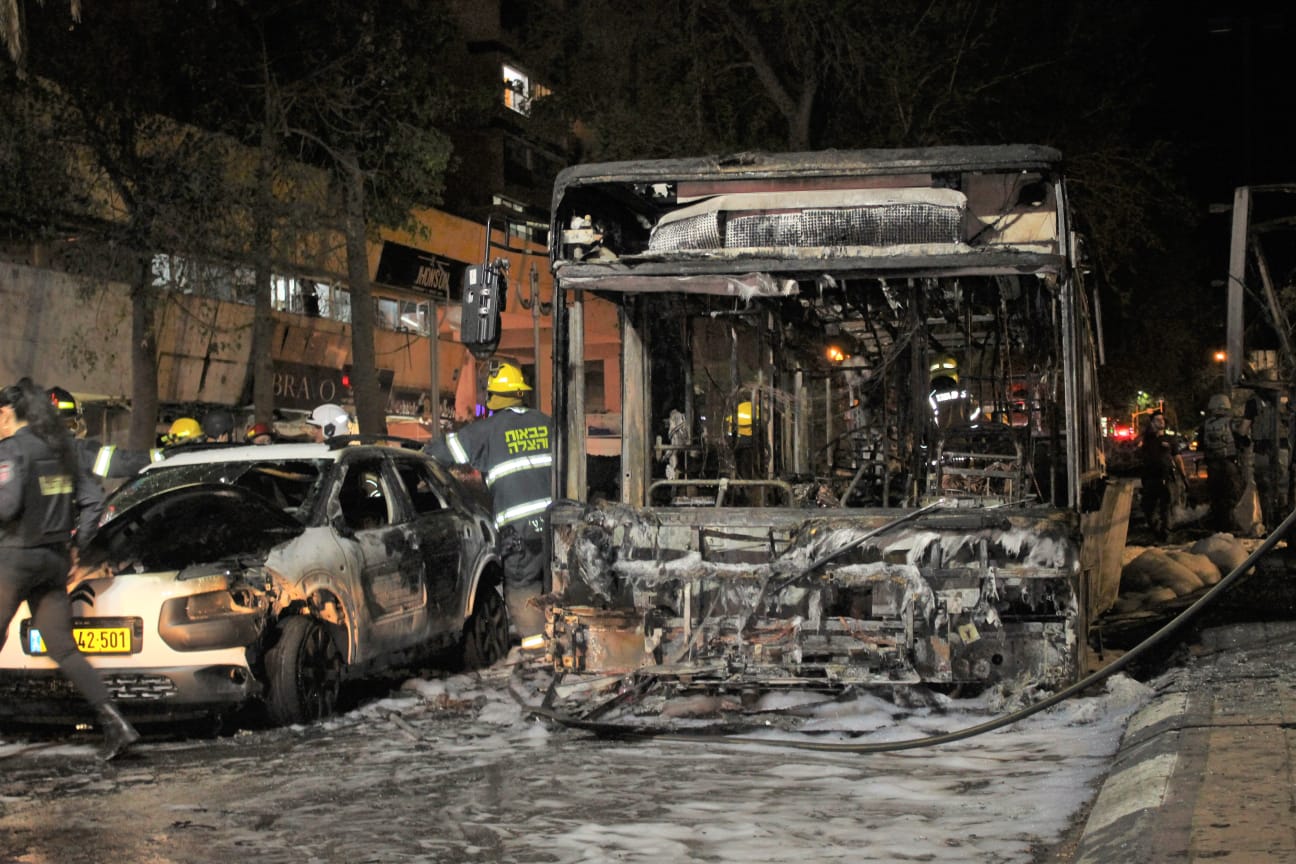
Israel launched air strikes against Gaza this week, just days after long-time prime minister Benjamin Netanyahu was ousted from his post and a new coalition government took power. The air strikes targeted facilities used by Hamas for meetings to plan attacks against Israel, the Israeli military said. The move came after Hamas-linked Palestinians launched incendiary balloons from Gaza which ignited at least twenty fires in southern Israel.  
 
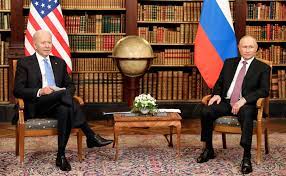
U.S. President Joe Biden and Russian President Vladimir Putin met in Geneva this week for talks on issues ranging from cyber-warfare and election-meddling to nuclear weapons. Both the Americans and the Russians have conceded that relations between the two powers are at their lowest point since the end of the Cold War. Instead of a total reset of Russian-American relations, aides to Mr. Biden have said that the U.S. leader is seeking to move towards a more predictable relationship and will attempt to rein in Russia’s disruptive behavior in the international arena.  
 
A surge in violent attacks between gangs in Haiti’s capital, Port-au-Prince, has forced nearly 8,500 women and children to flee their homes in the past two weeks, according to United Nations officials. The violence has left several people dead or injured as rival gangs battle to exert their control over populous neighborhoods such as Martissant, Cité Soleil, and Bel Air. Hundreds of homes and small businesses have been burned.  
 
The United States Department of Defence is considering a proposal that would send Special Forces trainers back to Somalia to help local forces combat al-Shabaab, a terrorist group with ties to al-Qaeda. The move would be an almost complete reversal of former U.S. President Donald Trump’s abrupt near-total withdrawal from the country in January. The Biden administration put new restrictions on drone strikes in place after entering the White House on January 20, resulting in a five-month period of almost no strikes in Somalia, which has allowed Islamist militants to operate without intervention.    


Coronavirus Update:

After getting off to a slow start, China’s vaccination program is moving ahead at full steam, with plans to vaccinate more than 40% of the country’s population of 1.4 billion by the end of June. China has already administered an estimated 945 million shots, more than a third of the global total, and is on track to pass one billion shots administered in the coming days. Although many citizens were initially hesitant to get vaccinated, citing concerns about side effects and the fact that China has suffered milder outbreaks than other parts of the world, rising case numbers of the Delta variant, along with incentives, have pushed more people to get the jab. 
 
Boris Johnson, the British Prime Minister, scrapped plans to lift all of England’s remaining coronavirus restrictions, which was due to occur on June 21. Mr. Johnson delayed the re-opening day, which has been called “Freedom Day” in British tabloids, for four weeks after the country experienced a spike in cases caused by the Delta variant, which may cause more serious disease than other variants.  
 
The European Union recommended on Friday that member states lift the ban on non-essential travel for visitors from the United States, a move welcomed by southern European states whose economies rely on the summer travel season. However, the resolution is non-binding, leaving it up to the member states to decide what, if any, restrictions they will impose on their own. Despite the E.U. recommendations, the United States remains closed to European travelers following a travel ban imposed by former President Donald Trump and extended by Joe Biden in January.  
 
Even as Europe begins to re-open, Portugese authorities ordered a weekend lockdown of Lisbon, Portugal’s capital and largest city, in an attempt to blunt a new outbreak in the capital region which authorities say is largely being driven by the Delta variant first detected in India. The country recorded its highest number of new cases since March this week, jumping by more than 1,300 within 24 hours.  
 
Fiji, an archipelago nation in the south Pacific, asked Australia this week to deploy medical teams to the Fijian capital, Suva, as the nation grapples with one of the region’s fastest growing Covid-19 outbreaks. After months of near-zero community transmission, the nation of 900,000 people currently has more than 1,000 active cases, largely driven by the Delta variant.    
 

Myanmar:

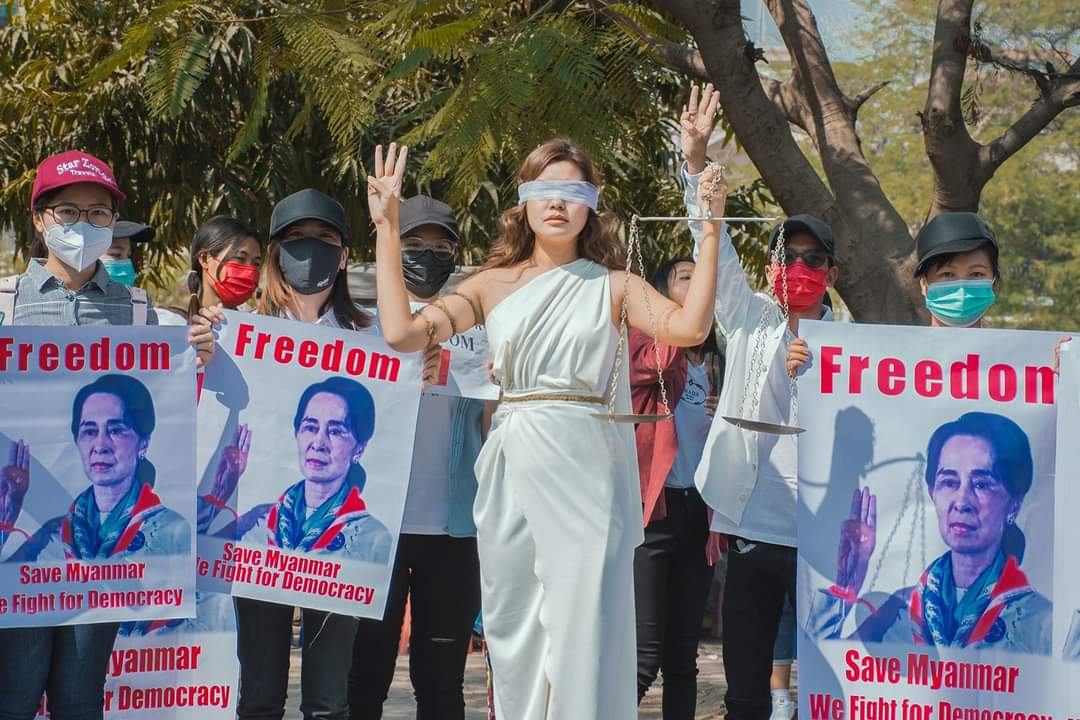
The trial of Aung San Suu Kyi, Myanmar’s deposed democratic leader, began in a closed courtroom in the capital Naypyidaw on Monday. There were no journalists present at the hearing and there was a strong police presence outside and inside the court. Aung San Suu Kyi faces a wide array of charges, three of which were addressed on Monday, including allegations that she violated a natural disaster management law related to the ongoing Covid-19 Pandemic and a communications and imports law by illegally possessing walkie-talkies. If convicted, Aung San Suu Kyi could be barred from running in future elections.  
 
Danny Fenster, an American journalist who was arrested by Myanmar authorities last month, also appeared in a special court this week. Frontier Myanmar, the current affairs magazine where Fenster is a managing editor, released a statement which said that Fenster faces a charge of incitement, which can carry a three-year prison sentence. This charge has been used frequently by the junta against journalists and dissidents. Frontier Myanmar said it did not know the reason for the charge. On Tuesday, a spokesperson for the U.S. State Department said that U.S. consular officials have been barred from communicating with Fenster by the junta, a violation of the Vienna Conventions on Consular Relations. 
 
The United Nations General Assembly on Friday voted to condemn Myanmar’s military coup and called for an arms embargo in the country, demonstrating global opposition to the military takeover. Supporters of the resolution had hoped to pass the measure unanimously by consensus, but Belarus called for a vote. The measure was approved with 119 countries voting “yes,” Belarus voting “no,” and 36 countries abstaining. 
 
Security forces in Myanmar this week set fire to Kin Ma, a village with about 800 inhabitants in central Myanmar, killing at least two elderly people who were unable to flee their burning home. State TV said the blaze was caused by “terrorists” and that media which reported otherwise were “deliberately plotting to discredit the military.” According to villagers, about 30 homes out of an estimated 200 remain standing. Speaking on the condition of anonymity, villagers said security forces set the fires after confronting opponents of the coup. 
 
The Karen National Union, the political wing of the Karen National Defence Organization, said in a letter dated June 16 that the group would investigate allegations that its forces abducted 47 people last month and killed 25 of them. The group, which has been fighting the Myanmar military in the country’s east, said that it “follows the Geneva Convention which doesn’t accept killing civilians during armed fighting.” 

 

The United States

On Wednesday, American President Joe Biden concluded his whirlwind European tour with a summit with Russian President Vladimir Putin in Geneva, Switzerland. In remarks following the meeting, both Biden and Putin cast the meeting in a positive light and emphasized their desire for a constructive relationship. The two heads of state failed to find common ground on pressing issues such as cyberattacks and human rights abuses, however. America’s European allies painted a bleak picture for future relations between Russia and the west. For Josep Borrell Fontelles, Foreign Policy Chief of the European Union, cooperation remains “a distant prospect.” The meeting between the U.S. and Russia came after the Group of Seven leaders gathered in Cornwall, England on Sunday to discuss issues including coronavirus pandemic, climate change and China. While President Biden sought to reassure allies that the U.S. remains a reliable diplomatic partner despite the turmoil of the Trump presidency, many nations question whether the American commitment to liberal democracy can outlast future elections

Although the coronavirus has slowed its sweep through the United States with the help of vaccinations, the effects of the pandemic remain devastating. This week the U.S. recorded over 600,000 COVID-19 linked fatalities since the beginning of the pandemic, a death toll rivaling that of the bloody American Civil War. States continue to lift pandemic restrictions even as medical experts warn that danger remains. The highly transmissible Delta variant of the coronavirus which currently dominates new cases in the U.K. is increasing in the U.S. However, public health professionals emphasize that vaccinations will protect Americans against the worst effects of the virus. On Monday, the company Novavax announced that its vaccine trial showed 90.4% overall efficacy and 100% efficacy against severe disease, on par with the vaccines from Pfizer and Moderna. Despite the widespread availability of vaccines, vaccine hesitancy remains prevalent among certain demographic groupsin the U.S., namely Republicans, middle-aged Americans, and Americans without a college degree.
 

Cuba:

This week, Cuba reported 1,481 new coronavirus cases, the second largest figure since the start of the pandemic. Over two million Cubans have been inoculated thus far from a population of around 11 million. Nonetheless, as the Caribbean nation prepares itself to launch its government-sponsored vaccine, they are faced with a shocking shortage: syringes. As a result of the U.S. de facto embargo on the island, Cuba is having a tough time accessing the international market of syringes and other essential medical supplies.

 

Nicaragua:

The wave of arbitrary arrests of political opponents to Ortega’s regime continues as the country enters the final stretch for its November presidential elections. In the last two weeks, over 16 dissidents -including guerrilleros Sandinistas Dora María Téllez and Hugo Torres- have been put into temporary prison over allegations of “jeopardizing national sovereignty.” Pressure for their immediate release comes from multiple fronts. On Monday, the Nicaragua Center for Human Rights (Cenidh) condemned the “brutal escalation of repression and persecution against social and political leaders,” claiming that “Ortega’s regime intends to stay in power at all costs, even if that entails infringing upon the liberties of Nicaraguans themselves.” 

Furthermore, the Organization of American States passed a resolution Tuesday with 26/34 votes in favor expressing its “deep concern” over transparency in the upcoming elections and the alleged violation of human rights in the country. 18 MCs in the United States have also proposed a bill initiative to revise and suspend the participation of Nicaragua in the DR-CAFTA (Dominican Republic-Central America Free Trade Agreement) should Ortega’s regime not rectify its course of action immediately. If the initiative were to be approved, Nicaraguan exports to the US -which have increased by 70% since the country entered the treaty in 2006 under Bolaños’s administration- would be promptly barred – a hard blow for the Central American country’s economy.

In other news, Nicaraguan former president Enrique Bolaños Geyer passed away Monday at the age of 93. The Nicaraguan government declared a three-day official mourning for the loss of Bolaños as dictated by institutional protocol.  
 

Bolivia:

Rampant political tension keeps escalating in the Plurinational State of Bolivia as Luis Arce’s administration continues to take legal action against former acting president Jeanine Áñez and Ecuadorian former president Lenín Moreno for the sale of tear gas by the latter to the former in November 2019 to tackle civilian protests following the overthrow of Evo Morales. Iván Lima, the country’s Minister of Justice, made the announcement Wednesday that the Bolivian government intended to prosecute them over “crimes against humanity,” though he did not specify whether they would turn to the Inter-American Court of Human Rights or the International Court of Justice. Moreover, Bolivian ex-president Carlos Mesa refused to testify in court Thursday morning over the so-called “Coup d’état” case, which inquired into the responsibilities behind the series of events that led to the resignation of former president Evo Morales. On her side, Áñez reiterated that a coup “never took place” in the Andean nation and that she was “in her full right” to claim the presidency in November 2019, calling for her “immediate release.” Áñez has been under house arrest since March this year.

In other news, Bolivia reported Thursday 417.195 total coronavirus cases in the country. In an attempt to palliate the dire situation that the Andean nation is undergoing, Arce’s administration has decided to ease the acquisition and importation of vaccines, delegating the powers to close deals with sovereign states and big pharma to subnational governments as well as reducing bureaucracy.


Belarus:

On Monday, the opposition journalist Roman Protasevich appeared for a news conference alongside Belarusian generals. The 26-year old blogger and activist was detained last month along with his girlfriend, Sofia Sapega, after his Ryanair flight from Athens to Vilnius was forced to land in Minsk, Belarus in an incident that has been described as “air piracy.” Protasevich has remained in the custody of the Belarusian authorities. During the conference, Protasevich assured the public of his physical health, admitted to inflicting damage onto his country and praised President Alexander Lukashenko. Those familiar with the situation believe that Protasevich’s public appearance was almost certainly tightly scripted and choreographed by the Belarusian authorities. Several BBC reporters and foreign diplomats walked out of the media briefing in protest, believing that Protasevich had appeared against his will. 

The European Union has instituted an additional round of sanctions targeting seven individuals involved in Belarus’ aviation sector. More severe sanctions are likely to follow, potentially targeting bond sales and the oil industry with the aim of weakening Lukashenko’s regime. Lukashenko has governed Belarus since 1994. After claiming victory in a disputed presidential election in August 2020, the Belarusian President brutally suppressed dissent and caused opposition candidate Sviatlana Tsikhanouskaya to flee the country. The forced landing of the Ryanair flight and Protasevich’s detention have further solidified Belarus’ status as a pariah among European nationsand pushed President Lukashenko further into the orbit of Russia’s Vladimir Putin.


Georgia:

On Tuesday, the 100th Incident Prevention and Response Mechanism (IPRM) was held in Ergneti, a village near the boundary line between Georgia and the Russian-occupied Tskhinvali Region/South Ossetia. Since 2009, the IPRM has provided a forum for engagement between stakeholders, through which security and humanitarian concerns of the conflict-affected populations are addressed. Participants in Tuesday’s discussions stressed the importance of continued participation in the open dialogue and called for a resolution of detention cases along the border. On Thursday, Georgian citizen Lasha Khetereli, who was illegally detained a year ago for crossing the boundary, was released.  
 
In a communiqué following the Brussels NATO summit, leaders of the 30 member states reiterated support for Georgia to become a member of the Alliance through the Membership Action Plan. Leaders also called on Russia to withdraw forces from the occupied territories, and to “cease the human rights violations, arbitrary detentions, and harassments of Georgian citizens.”  
 
In other news, despite calls from the EU, the US embassies, and Georgia’s opposition, the Georgian High Council of Justice (HCJ), an independent body, selected nine candidates for the Supreme Court. While members of the HCJ state that failure to elect the new members would lead to the collapse of the judicial system, opposition members claim that approval of the judges will violate the April 19th EU-mediated agreement requiring extensive judicial reforms. The candidates will need the support of the majority of parliament in order to be approved.   
 

China:

On Saturday, Philippines Independence Day, around 1,000 protesters gathered outside the Chinese consulate in Manila. As part of the Duterte Wakasan Movement, people were protesting China’s increasing presence and overlapping claims to parts of the South China Sea, known as the West Philippine Sea. Chants, signs, and decorated cars filled the area. Groups such as Pamalakaya, the national federation of small fisherfolk, and figures such as former Supreme Court Justice Antonio Carpio were present. The rally was one of the largest Independence Day demonstrations in recent history and the first major protest since the beginning of the pandemic.  
 
Alongside this, China was also subject to criticism from the G-7 summit that occurred over the weekend. Citing the human rights abuses against minorities in the Xinjiang region and pro-democracy activists in Hong Kong, US President Joe Biden called on Beijing to “act more responsibly.A spokesman of the Chinese embassy in the United Kingdom responded on Monday, accusing the summit leaders of political manipulation and interference in China’s internal affairs.  
 
In other news, the concept “Tang Ping” translated into “lying flat” has been gaining traction among the younger Chinese population. Frustrated with the growing wealth gap and pressure to succeed with limited resources, some millennials and GenZ have begun expressing their burnout over social media. Tang Ping has been circulating the internet to encourage others to be content with attainable achievements and dedicating time for themselves.
   

Hong Kong:

On Thursday morning around 500 police raided the newsroom of Apple Daily and arrested five executives. Accused of colluding with foreign forces and encouraging sanctions against Hong Kong and China; Editor in Chief Ryan Law, Chief Executive Officer Cheung Kimhung, Chief Operating Chow Tat Kuen, Deputy Chief Editor Chan Puiman and Chief Executive Editor Cheung Chi-Wai were arrested. Hong Kong’s Security Chief John Lee told reporters that Apple Daily “used journalism as a tool to endanger national security,” and encouraged all reporters to shun the five arrested. Lee also warned that any alignment with the pro-democracy newspaper and arrested executives could lead to a heavy price, including life in prison.

Following this, people in Hong Kong bought all 500,000 copies the Apple Daily printed the next morning to show solidarity and distribute it to others in the neighborhood. Dozens were left at local coffee shops and businesses. Many took to social media, posting pictures on Instagram with the hashtag #SupportAppleDaily In other news, five men who participated in a mob attack on Hong Kong protestors two years ago were found guilty on Friday. The ambush took place in the Yuen Long train station where dozens of men dressed in white began attacking protestors and reporters. The attack sparked outrage due to the police’s failure to respond quickly and efficiently. All five offenders will be sentenced on July 22, one day after the second anniversary of the attack.   

 

Indonesia:

This week the World Bank approved $1.3 billion in loans to aid Indonesia’s COVID-19 response and support economic policy reforms. The sum will be divided into $500 million for expanding coronavirus vaccination, testing and care, and $800 million for reforms such as improved food access and renewable energy investments. This relief effort comes as the pandemic dramatically worsens in Indonesia. The country recorded 12,624 new infections on Thursday and has been one of the hardest hit in Southeast Asia. Indonesia’s capital city of Jakarta, the Kudus region in Java province, and the town of Bangkalan have especially suffered from this recent surge. Among those getting sick are healthcare workers, many of whom have been vaccinated with China’s Sinovac vaccine. These infections raise concern about the efficacy of the Sinovac vaccine against the highly contagious Delta variant which is circulating in Indonesia. However, some public health experts attribute the surge in cases to a failure of policy rather than a new variant. Many Indonesians ignored the country’s travel ban last month to gather at the end of Ramadan for Eid-al-Fitr, likely contributing to the spread of the virus in recent weeks. 
 

Thailand:

After signing an executive decree that approved a 500 billion baht (USD 16 billion) loan last week, Prime Minister Prayut Chan-o-cha became the subject of criticism. On Monday morning, Chan-o-cha spoke directly to senate leaders, justifying the decision for economic recovery. In addition to this, Chan-o-cha mentioned his intention to see out his four-year term, despite constant calls for his resignation. Thailand’s handling of the Coronavirus pandemic was cited as a large complaint.

Even now, with last week’s mass vaccination campaign beginning and 3.1 million doses administered, Thai citizens are still wary of the government’s ability to distribute vaccines. With the nearing launch of the “Sandbox” program, Phuket has been racing to vaccinate at least 70% of the island’s population, opening up slots for expatriates and foreign workers regardless of permit status. While the Phuket Office of the Public Relations Department released a report saying that they have reached their sought goal, concerns over the accuracy of the percentage figures have risen.     
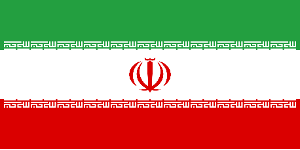
Iran:

Friday, Iranians headed to the polls to vote in the presidential election. Of the four remaining candidates, three are considered hardliners, and the winner will replace the relatively moderate incumbent Hassan Rouhani. The frontrunner, practically uncontested, is the ultra-conservative judiciary chief Ebrahim Raisi. While he presents himself as the candidate most capable of solving Iran’s economic issues and fighting corruption, Raisi has a “brutal record on human rights,” having played a role in the execution of up to 5,000 political prisoners in the 1980s. If Raisi is elected, the hardliners will look to tighten restrictions on social activities, the press, and social media, as well as reigning in freedoms and jobs for women. A hardline presidency, “in the vision of the Supreme Leader, Ayatollah Ali Khamenei,” will also likely keep tensions high with the West.  
  
Although the elections come at a time of widespread discontent over economic hardships, voter turnout is expected to be low; many Iranians consider the elections to be a power grab by the hardliners, and don’t have trust in the electoral process. Of the almost 600 registrants for candidacy, including 40 women, only seven men were approved by the Guardian Council, the hardline unelected supervisory body that evaluates candidates’ qualifications. Activists, dismayed by the heavily-engineered nature of the election, are calling for a boycott; polls predict that voter turnout could be less than 50% for the first time since the 1979 Islamic Revolution. As voter turnout is important for the perceived legitimacy of the Iranian government, this may pose a problem for leaders.  
 
In other news, U.S. President Biden’s administration is looking to finalize a deal with Iran to revitalize the 2015 nuclear agreement. A U.S. official believes a deal can be reached within weeks, and hopes that an agreement is finalized before the new Iranian president is inaugurated in August. Iran’s deputy foreign minister and lead negotiator believes that the sides were closer “than at any other time” to reaching an agreement, but that the fundamental differences that remain must first be resolved.     
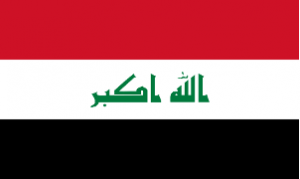
 

Iraq:

The U.S. House of Representatives voted on Thursday to repeal the United States’ 2002 declaration of war against Iraq. The repeal, if passed by the Senate, will end the 2002 Authorization for Use of Military Force, which was issued to expand presidential exertion of military force in the region. For 20 years, presidents have used the authorization to back a variety of U.S. strikes; last year, former President Donald Trump used the law to justify the killing of Iranian General Qassem Soleimani outside the Baghdad airport. The Biden administration said that the repeal “would likely have minimal impact on current military operations,” and is working to ensure that the authorizations are replaced with a “narrow and specific framework.” 
 
In a panel hosted by British think tank Chatham House on Thursday, experts highlighted how Iraq’s corruption crisis, which stems back to Saddam Hussein’s rule, is now “systemic, politically sanctioned and backed by the threat of violence by Iran-backed groups.” Government employees at all levels of the Iraqi state engage in systematic corruption, and are sustained by the Popular Mobilization Forces’ (PMF) violent suppression of opposition. Iraq is ranked in the bottom 20 countries in the world in Transparency International’s Corruption Perceptions Index.     

Sudan:

This week, United Nations humanitarian officials were allowed to enter five regions in Sudan that have been off limits for ten years. These areas in South Kordofan and Blue Nile, controlled by Sudan People’s Liberation Movement North, were reportedly in dire need of humanitarian aid after being cut off for a decade due to conflict between SPLM-N and the Government of Sudan. Meanwhile, peace negotiations between the Sudan transitional government and SPLM-N were paused indefinitely by the South Sudanese mediators, citing that the two groups have come to a standstill on several issues. Despite the disagreements, the rebel group and the government were reportedly able to agree on 3/4 of the issues in the peace-talk framework, including some significantly contentious issues.  
 
South Kordofan has declared a state of emergency due to continued violent clashes between the El Hawazma tribe and the Kenana Arifab tribe. The governor, who hasn’t confirmed how many have died in the violence, has made repeated pleas to the involved parties to stop the violence before other tribes get involved. Citizens in South Kordofan protested earlier in the year against the violence and lack of police action. 
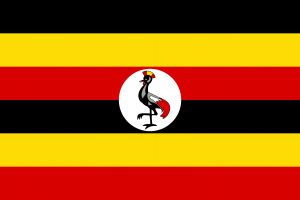
   

Uganda:

Uganda continues to struggle under the strain of rising Covid-19 cases. On Monday the WHO representative to Uganda confirmed that vaccines, oxygen, and ICU rooms had run out across the country.  In a tragic illustration of these shortages, on Thursday thirty people died at Uganda’s largest Covid treatment facility due to oxygen failure. Reports show that Uganda has the capabilities to produce only half of the oxygen needed for all their covid patients. In response, authorities are expected to import oxygen from Kenya, and have shared plans to build a fifth oxygen plant which should be operational by the end of the week. It was also revealed this week that private hospitals have begun charging Shs2m to Shs5m per day for covid patients. Given that the per capita income of most Ugandans is Shs2.5m, these costs are unmanageable for most Ugandans who must either stop treatment or leave the bill for their family to pay. Dr. Jane Ruth Aceng, Uganda’s Health Minister, asserted that private hospitals should apologize for these exorbitant costs, labeling the hike in prices as “unacceptable” and exploitative. Thankfully, vaccine supplies were replenished on Thursday with the arrival of 175,200 AstraZeneca vaccines.  
 
In other news, eighteen supporters of opposition leader Bobi Wine (originally named Robert Kyagulanyi) were granted bail this week after being held for six months. The eighteen were part of a group of thirty-five originally arrested for violating Covid gathering restrictions, but they were ultimately charged in military courts for weapons offenses. Rights activists and opposition officials claim that hundreds of opposition supporters were arrested by security forces after Museveni was pronounced the winner of the 2021 election in January. The lawyer of the eighteen accused claims the charges and six months of jail time were “simply punishment for supporting the opposition.” Museveni, Africa’s fourth-longest serving ruler, has denied all allegations of election fraud and opposition suppression. 
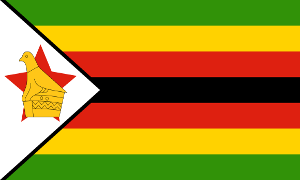
   

Zimbabwe:

Zimbabwe courts released freelance New York Times reporter Jeffrey Moyo on bail this week, following widespread backlash against his arrest. Moyo was arrested in May for allegedly violating immigration regulations to bring two other New York Times reporters into Zimbabwe. Although Moyo asserted he followed all the legal avenues to attain the required papers, the courts claimed the press credentials were improper and expelled the other journalists.  During his 21-day jail period, Moyo was labeled by the courts as a national security threat, repeatedly denied bail, and forbidden from seeing his family. This week, however, a government lawyer asserted that the courts have no strong case against Moyo. The Committee to Protect Journalists praised Moyo’s release and continues to assert the charges should be dropped completely.    Tensions continue to run high between the ruling party, Zanu-PF, and the main opposition party, MDC Alliance. On Sunday President Mnangagwa labeled MDC-Alliance as a terrorist group that is “anti-people” and “pro-violence.” Later in the week, MDC Alliance accused the Zimbabwe Elections Committee of reporting false information after they declared zero new voter registration in the Bulawayo province, an area where MDC claims they have enacted successful voter registration campaigns. Despite these clashes, the two parties both took time this week to mourn the death of respected and established traditional leader, Chief Dendera of Mashonaland West. Chief Dendera was considered a beacon of rationality and non-partisanship in such a politically polarized environment.    In other news, President Mnangagwa’s launch of the National Disability Policy this week has received praise from the disabled community. The NDP promises increased accessibility for disabled citizens, both targeting physical barriers and societal barriers such as access to welfare, education, and employment. The policy is the latest update to the “outdated” Disabled Person’s Act of 1992. 
           

CAVNAS Weekly Update – June 11th, 2021

Dear Friends,


CANVAS is pleased to bring you another weekly report! This week covers the escalating violence in Myanmar, new E.U. sanctions targeting Belarus, and multiple rocket attacks in Iraq.


Conflict Update:

Famine has afflicted at least 350,000 people in the Tigray region of northern Ethiopia, a starvation crisis more serious than anywhere else in the world currently, according to the United Nations and international aid groups. The organizations had warned for weeks that conflict in the region could lead to a disastrous situation in the most populous country in the Horn of Africa. Mark Lowcock, the top humanitarian emergency official at the United Nations, told a meeting of aid officials and diplomats that the crisis in Ethiopia was the worst in any country since the 2011 famine in Somalia and warned that “this is going to get a lot worse.” At least 160 people were killed in an attack on the village of Solhan in Burkina Faso last week. No group, including Jama’at Nasr al-Islam wal Muslimin (JNIM) and Islamic State in the Greater Sahara (ISGS), has claimed responsibility for the massacre. The violence brings the total number of people killed by armed groups in Burkina Faso since the beginning of 2021 to more than 500. The International Criminal Tribunal for the Former Yugoslavia upheld a 2017 verdict which convicted Ratko Mladić, a Bosnian Serb and former general of crimes including genocide, crimes against humanity, and war crimes. His life sentence in prison was also upheld. Mladić was convicted in 2017 on a wide array of charges which included attacking and murdering civilians during a 43-month siege of Sarajevo and directing the genocidal executions of 8,000 men and boys at Srebrenica. The United States is considering carrying out airstrikes to support Afgan security forces if Kabul or another major city is in danger of falling to the Taliban, according to senior officials. U.S. President Joe Biden had previously suggested that American air support would end after U.S. troops left the country, but military officials are actively discussing how they might respond if the American withdrawal produces consequences with serious ramifications for U.S. national security. Officials say a potential fall of Kabul, home to allied embassies and American citizens, is the crisis most likely to lead to military intervention after American troops leave the country.


Coronavirus Update:

The Italian government announced this week that it would stop administering the AstraZeneca-produced Covid-19 vaccine to people under the age of 60, claiming that a drop in the country’s level of infections meant the risks of distributing the vaccine to younger people no longer outweighed the risk of rare and severe blood clots that have affected some people who have received the shot. Francesco Paolo Figliuolo, an army general in charge of Italy’s vaccination campaign, said that young people who had already received one dose of the AstraZeneca vaccine will get a different shot for their booster dose. The U.S. Food and Drug Administration (F.D.A.) this week told Johnson & Johnson that about 60 million doses of its Covid-19 vaccine produced at a factory in Baltimore, Maryland cannot be used because of potential contamination. The FDA plans to allow about 10 million doses to be distributed in the United States or sent to other countries, but with a warning that regulators cannot guarantee that Emergent BioSolutions, the company which operates the Baltimore plant, followed good manufacturing practices. The loss puts a serious dent in U.S. President Joe Biden’s plan to distribute vaccines to countries which are still battling high rates of infection. The leaders of some of the world’s wealthiest countries are expected to pledge one billion doses of Covid-19 vaccines to poor and middle-income countries at the G7 Summit as part of a campaign to “vaccinate the world” by the end of 2022. The International Monetary Fund estimates that it will cost about $50 billion to help the developing world bring an end to the pandemic. In Indonesia, several McDonald’s outlets were forced to close after a special “BTS Meal,” named for the popular Korean boy band, drew crowds of delivery drivers which violated coronavirus restrictions, according to police. On Wednesday, the first day the limited edition meal was available, crowds of motorcycle delivery drivers showed up at outlets across the country, overwhelming restaurants unprepared to deal with the turnout. In the Indonesian capital, Jakarta, police said they had temporarily closed 32 McDonald’s restaurants “because they were found to have violated health protocols.


Myanmar:

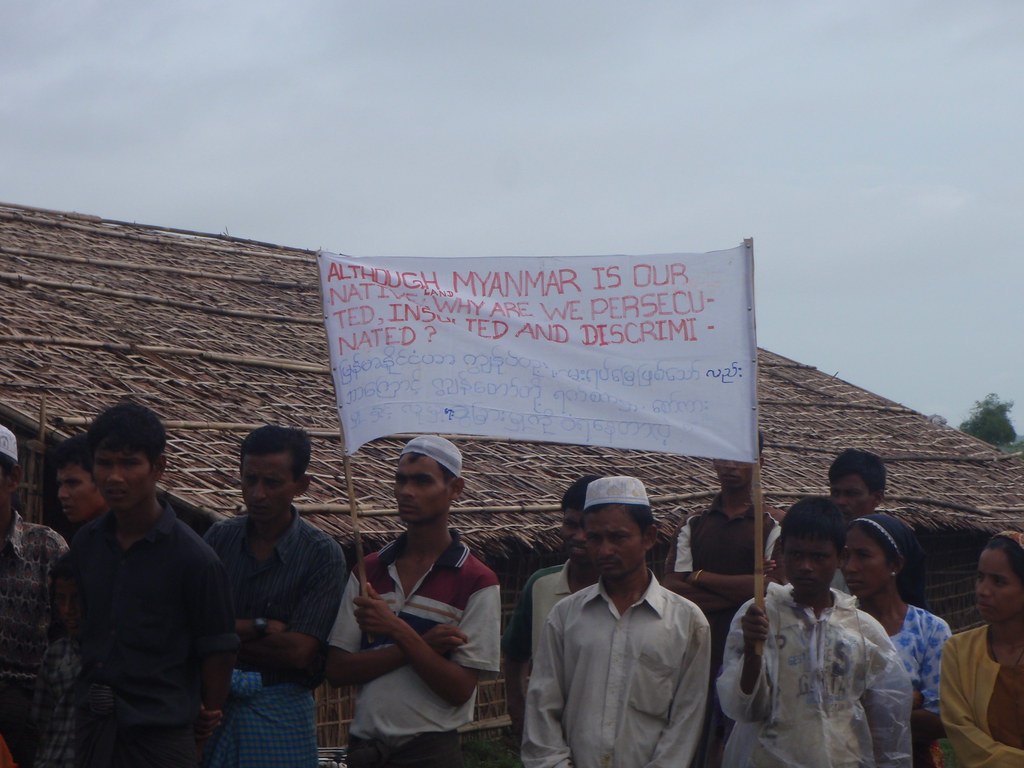
The United Nations Human Rights chief, Michelle Bachelet, warned this week that violence is intensifying across Myanmar and accused the military junta for being “solely responsible” for a “human rights catastrophe.” In a statement published Friday, Bachelet said multiple reports indicated that violence in the country was continuing to escalate, including in Kayah, Chin, and Kachin states. The violence has been particularly intense in areas with significant ethnic and religious minorities. “In just over four months, Myanmar has gone from being a fragile democracy to a human rights catastrophe,” Bachelet said. In its statement, the United Nations human rights office added that more than 108,000 people have fled their homes in Kayah state, in Myanmar’s east, over the past three weeks and have taken shelter in forest areas with little access to food, water, or medical care. The United Nations office also cited credible reports that security forces have shelled civilian homes and churches and blocked access to humanitarian aid. This comes as the trial of Aung San Suu Kyi, Myanmar’s ousted civilian leader, is set to begin on Monday. She faces a wide range of allegations, including violating Covid-19 restrictions during last year’s elections, inciting public unrest, breaking a telecommunications law and import law by possessing walkie-talkies, and breaking the official secrets act. This week, further charges against Aung San Suu Kyi were announced on state media, which reported that she has been accused of accepting $600,000 cash and 11.4kg of gold, in bribes, and misusing her authority to rent land. Ahead of her trial, her lawyers have only been permitted to meet with her during three 30-minute sessions. As thousands of civilians flee violence and cross the border into India, Indian officials worry that the region could become a staging ground for pro-democracy activists and contribute to instability in the region. Approximately 16,000 people from Myanmar are sheltering in India’s Mizoram, Manipur, and Nagaland states, with the number expected to rise in coming months. Senior government sources in India also worry that the flow of people from Myanmar to India could provide additional energy to nearly two dozen insurgent groups which operate along the two countries’ borders.


The United States:

This week both President Joe Biden and Vice President Kamala Harris engaged in diplomatic efforts abroad. President Biden is in Europe this week for the upcoming G7 summit meeting beginning Friday, June 11th. Days leading up to this, Biden has been heavily stressing the importance of restoring a long-standing alliance with European countries for the future. To further commit to international diplomacy, the US pledged to pay for 500 million COVID-19 vaccine doses to distribute worldwide. Through Covax, an international vaccine sharing initiative, the US hopes to distribute 200 million doses by the end of the year. VP Harris completed her first trip abroad this year, traveling to Mexico and Guatemala. When asked about Biden’s migration policy, Harris bluntly said, “Do not come,” as she described tightening border control. The passing comment sparked criticism from immigration advocates across the country. The issue of immigration has been highly politicized in the US, with its most recent controversy in Texas. On Thursday, Governor Greg Abbott of Texas announced that the state would build a border wall with Mexico, stating that they will not ‘sit idly by.’ While such a wall would most likely face legal challenges, there have been no further details listed by the governor. In other news, a 127-page joint report was released on Tuesday, confirming that federal intelligence agencies failed to adequately warn law enforcement about the planned Jan 6th Capital riot. The report lays out problems with the Special Capital Police Unit and 20 recommendations. However, the report fails to look at the cause of the attack.


Cuba:

On Thursday, the Cuban government “energetically” rejected the “spurious and interventionist” resolution passed earlier that day by the European Parliament, which lamented the lack of advances in democracy and human rights in the Caribbean island after four years of sustained dialogue with the EU. Bruno Rodríguez, the country’s Foreign Affairs Minister, together with the Cuban Commission of International Relations, denounced that the EP had been held hostage by a small group of far-right MEPs “obsessed with destroying the Cuban Revolution, with proven ties to radical Miami-based organizations funded by the US government.” The aforementioned resolution criticizes “the clear lack of commitment and willpower” by Cuban authorities to “reform the current system” and asks for the liberation of the +80 arbitrarily detained human rights activists of the Movimiento San Isidro (MSI), a cohort of anti-Castro independent artists and intellectuals. Moreover, the monthly report by the Cuban Institute for Freedom of Press and Expression (ICLEP in Spanish) revealed 109 aggressions towards independent journalists in the island, 91% of which correspond to arbitrary arrests. Dire times for freedom of press in the Caribbean nation.Regarding the Cuban economy, the country’s government and the Paris Club agreed to an extension for Cuba to service its USD$ 8.500 million dollars debt, with both parties committing to a readjustment of the 2015 agreement terms. The Caribbean nation appealed to the US embargo and coronavirus pandemic as impediments for payment in asking for renegotiation, an appeal that was surprisingly welcomed by its Western creditors. Besides, Cuba’s Central Bank (BCC) announced Thursday the temporary suspension of cash dollar deposits in the island. Such a decision comes motivated by “the current obstacles imposed by the American blockade, which prevent the national banking system from depositing the cash dollar surplus the island has abroad.”


Nicaragua:

Nicaragua is currently in the spotlight of the international community following the recent wave of incarcerations of political opponents (the most recent being Cristina Chamorro, Arturo Cruz, Félix Maradiaga, and Juan Sebastián Chamorro) to Ortega’s regime. They have all been accused of interfering with the country’s independence, integrity, and sovereignty by “inciting foreign military interventions and organizing destabilizing terrorist acts funded by anti-Nicaragua international powers.” Additionally, Cristina Chamorro has been charged with “abusive management, ideological falsity, and money and asset laundering” through Chamorro’s foundation, la Fundación Violeta Barrios de Chamorro. The ongoing situation of statewide corruption, political persecution, and authoritarian ruling has not gone unnoticed. On Wednesday June 10, United Nations Secretary-General Antonio Guterres made a public announcement stating his concern over the situation in Nicaragua, calling for a countrywide agreement on measures to ensure transparency in the upcoming general elections this November. Both the Interamerican Commission for Human Rights and the Office for Central America of the UN Human Rights High Commissioner have “categorically condemned” the authoritarian turn of the Nicaraguan government, calling for the immediate release of the political prisoners. Luis Almagro, Secretary-General of the Organization of American States (OAS) urged its member states Wednesday to “suspend Nicaraguan participation in the organism according to article 21 of the Interamerican Democratic Charter,” which would enable extraordinary measures to vote the Central American nation out of the supranational organization. The United States have already taken action in this matter, as the Department of Treasury has imposed economic sanctions on Ortega’s cabinet and family members.


Bolivia:

A fight broke out at the Bolivian Legislative Assembly during Tuesday’s interpellation round to the Ministry of the Interior, Eduardo del Castillo, as he addressed the arrest of Jeanine Áñez, the country’s former acting president, over charges of “terrorism, sedition, and conspiracy.” Opposition Senator Henry Montero and Socialist MP Antonio Colque physically assaulted each other at the center of the hemicycle, unchaining a turmoil that forced the adjournment of the session. The fight ended with Mr. Montero being escorted out of the room and drafting an official apology hours later for such a shameful spectacle. Said escalation of violence comes as no surprise – it is just a manifestation of the palpable political tension in the country as a result of Luis Arce’s administration persecution of Áñez’s cabinet members. Furthermore, Bolivia’s government announced Thursday the commence of an investigative process concerning the alleged delivery of war arms from the Ecuadorian government to Áñez’s administration in 2020 for a total sum of USD$ 5.6 million. In other news, Bolivia surpassed Thursday the 400.000 coronavirus cases threshold. The country is currently facing its third wave as vaccine rollouts are in a lull. Government says it is expecting to receive a new Sputnik V badge this weekend and a million Sinopharm doses by the 23rd of this month. So far, around 1.5 million Bolivian citizens have received the first dose and roughly half a million have been fully inoculated.


Belarus:

The European Union is set to propose a new round of sanctions targeting more than 70 individuals and organizations, according to a person familiar with the matter. The E.U. has already sanctioned seven Belarusian entities and 88 individuals, including President Alexander Lukashenko, and banned Belarusian aircraft from European airports and airspace. The newly announced sanctions include judges and prosecutors who have been involved in sentencing protesters, as well as lawmakers, government and law enforcement officials, and business executives. The escalation of European Union sanctions came after Belarus forced a Ryanair flight from Greece to Lithuania to land in Minsk, where dissident Roman Pratasevich was removed from the flight and detained, along with his girlfriend, Sofia Sapega. Meanwhile, opposition leader Sviatlana Tsikhanouskaya has called on the West to implement even tougher sanctions, saying they are the only way to damage Lukashenko’s regime. In an interview with Current Time, a Russian-language channel, Tsikhanouskaya said the only way to bring an end to the political turmoil in Belarus would be through a “national dialogue between civil society and the regime.” She also said that while Russia, which has backed the Lukashenko regime, could play a “constructive role” as a mediator, any solution must be left for Belarusians to decide.


Georgia:

The Latvian Foreign Minister arrived in Georgia’s capital on Monday, meeting separately with the ruling and opposition parties and visiting the Russian-occupied Tskhinvali Region/South Ossetia on Tuesday. He announced the Latvian government’s pledge to donate 15,000 Covid-19 vaccines to Georgia, and re-iterated Latvia’s belief in Georgia’s sovereignty. Georgia also received authorization from the World Bank for USD 34.5 million for vaccine rollout, supporting Georgia’s plan to vaccinate 60% of its adult population by 2022. Meanwhile, following nearly seven months of protests, PM Irakli Garibashvili announced on Wednesday his plans to halt construction of the Namakhvani Hydropower Plant (HPP) in the Rioni Valley and reexamine the contract with the investor. Those who oppose the HPP cite environmental impacts and seismic activity as their main concerns. After a seven-month boycott, United National Movement-led Strength in Unity bloc members re-entered parliament this Tuesday. The UNM party chair, Nika Melia, was unable to give his prepared statement due to the session being cut short by the ruling party, the Georgia Dream (GD) party. In response, UNM members released a statement claiming these events further demonstrate former PM Bidzina Ivanishvili’s control over the GD party, with one lawmaker calling the GD parliamentarians “captives” of Ivanishvili. Members of the GD party continue to see the UNM, the major opposition party, as having a “destructive agenda,” pointing to UNM’s unwillingness to sign the EU-brokered April 19 accord. This week Ivanishvili broke his silence after declaring a break from politics to speak on Giorgi Gakharia’s resignation as prime minister in February. Ivanishvili called Gakharia’s resignation “incomprehensible” and declared him a traitor to the Georgia Dream party.


China:

While China is still defending the construction of Fudan University in Budapest, the Hungarian government has responded to ongoing protests. On Sunday, an aide to Viktor Orban said the university was still in the planning stage and the final decision would fall on citizens “via a referendum.” In other news, on Thursday, Amnesty International published a report that accused Chinese authorities of creating a “dystopian hellscape on a staggering scale.” The report called on the United Nations to investigate the conditions of Uighurs, Kazakhs, and other Muslim communities. Despite heightening international pressure to address the human rights abuses, China has shifted its attention to other matters. On Wednesday, China arrested 1,100 suspects related to cryptocurrency money laundering. As part of their large-scale anti-corruption campaign, regional governments are continuing to combat cryptocurrency mining platforms. On the same day, China’s parliament passed a law in secret to counter sanctions imposed by the US and EU. Signaling a step further into tense relations between China and western powers, the newest law prohibits companies and individuals from complying with foreign government sanctions that target China.


Hong Kong:

Hong Kong’s government announced this week that it would begin blocking the dissemination of movies that are deemed to undermine national security, in accordance with the new national security law introduced in the Chinese-controlled city-state last summer. While films in mainland China are regularly censored, the move could spell disaster for Hong Kong’s large film industry, which has produced international stars such as Jackie Chan and Tony Leung. The new guidelines apply to both films produced in Hong Kong and foreign films. In addition, the new rules, which were introduced on Friday, require that censors considering a film for distribution not only be on the lookout for violent, sexual, or vulgar content, but also for how the film portrays acts “which may amount to an offense endangering national security.” In other news, former lawmakers Cyd Ho and Yeung Sum pled guilty this week to charges related to last year’s banned Tiananmen Massacre vigil. They are already serving jail sentences for another two counts of unauthorized and unlawful assembly. Pro-democracy activists Lee Cheuk-yan, Chow Hang-tung, Richard Tsoi, media tycoon Jimmy Lai, and former lawmakers Leung Kwok-hung and Albert Ho, among others, also appeared in court on Friday. Eight of the activists plan to plead not guilty to the charges, while ten others, including Jimmy Lai, have yet to decide their plea. While vaccination rates in Hong Kong have been lagging far behind those in other developed countries, the number of individuals receiving their first Covid-19 vaccination each day has more than doubled, with almost 22% of residents having now received at least one dose of a Covid-19 vaccine. The accelerating rate of vaccination is likely due to generous incentives offered by the government, which include gold bars worth more than $130,000 and a $1.4 million apartment, and a new outbreak in neighboring Guangzhou.


Indonesia:

Indonesia has suffered one of the worst COVID-19 outbreaks in Southeast Asia with 1.87 million infections and 51,990 deaths. On Wednesday, Indonesia reported 7,725 new infections, the highest daily number since February 26th. With concerns over another spike in cases, President Joao Widodo spoke about his hopes for recovery on the same day. Joao said that Indonesia is aiming for vaccination rates to reach one million shots a day by July. Following this, authorities have opened up vaccines for anyone over the age of 18 in Jakarta. In other news, a recently published investigation by IndonesiaLeaks and the Koran Tempo uncovered Firli Bahuri’s role in encouraging the use of a KPK civic knowledge test. The test has sparked controversy with questions described as discriminatory against certain ethnic groups and religious beliefs. Chairman of the Corruption Eradication Commission (KPK), Bahuri allegedly demanded that the agency’s employees take the test to become civil servants.  Deciding to retain only 24 of the 75 employees who failed the test for further “civic training,” the KPK did not provide adequate detail about the selection process. Bahuri has not responded to these allegations.


Thailand:

On Wednesday police arrested a group of Burmese migrants and a guide from Myanmar at a rubber plantation in Songkhla’s Hat Yai district. With jobs already set up, the migrants were on their way to Malaysia when discovered and detained. Border patrol in Thailand has been steadily tightening over COVID-19 transmission concerns, leading to the arrest of more than 40 Burmese migrants. With rising infection rates and the country’s third wave, Thailand’s parliament passed a bill on Thursday to borrow an additional 500 billion baht (USD 16 billion) to deal with the latest outbreak. With an expected three million foreign tourists arriving at the start of July, Thailand launched its mass vaccination campaign on Monday, aiming to administer six million doses this month. Alongside this, Thailand has signed contracts this week for 20 million shots of the Pfizer BioNTech vaccine and five million doses of Johnson and Johnson. In other news, on Thursday an investigative panel of the National Anti Corruption Commission (NACC) absolved Thailand’s former prime minister Yingluck Shinawatra from any malfeasance charges. According to the panel, there was not enough substantial evidence showing Shinawatra and her 33 cabinet members approved a 1.9 billion baht (USD 61.1 million) payment for victims of political protests during 2005-2010. The panels’ findings will be submitted to the NACC for consideration in 1-2 weeks.


Iran:

Yossi Cohen, outgoing head of the Mossad, the Israeli spy agency, revealed Friday key details about the theft of Iran’s nuclear archive in 2018 in an interview. He also hinted at the Israeli in the destruction of Iran’s nuclear facility at Natanz, and the assassination of nuclear scientist Mohsen Fakhrizadeh. These declarations come amidst talks to revive the Iranian nuclear deal, significantly altering the international rhetoric. Moreover, the head of the International Atomic Energy Agency (IAEA), Rafael Grossi, declared Wednesday afternoon the Agency’s “deep concern” over Iran’s lack of explanation of the presence of uranium particles at three undeclared sites. If the country fails to provide prompt satisfactory explanations to the international community, hopes that it rejoins the Joint Comprehensive Plan of Action, (JCPOA) a 2015 nuclear deal Iran signed with the P5+1 (China, France, Russia, the United Kingdom, the United States, and Germany), may banish. In other news, Iran is getting ready for the country’s presidential elections on June 18. The Iranian Supreme leader, Ayatollah Ali Khamenei, views the election as an opportunity to realize his vision for the “Islamic future” of the Nation. The Guardian Council, consisting of six Islamic jurists appointed by the Ayatollah and six lawyers nominated by the judiciary’s head and selected by parliament, have carefully crafted the candidate’s pool by vetoing certain ones from running to produce electoral results that are “acceptable” to the Supreme Leader in decades to come – meaning 5 out of the 7 approved candidates are Shi’ite hardliners. Khamenei not only wants to revive the spirit of the 1979 revolution, but also to build a strong Islamic regime that will outlive him.


Iraq:

Multiple rockets targeted two Iraqi military bases hosting U.S.-coalition troops and foreign contractors this week, but no one was injured in the attacks. Iraq’s joint operations command said one attack on a military base next to Baghdad’s airport was carried out by three drones carrying explosives; one of the UAVs was shot down in the attack. Three rockets also struck Balad airbase north of Baghdad on Wednesday, without causing any casualties. No group has claimed responsibility for the attacks, but the United States usually blames Iran-backed armed groups for targeting American forces and interests in Iraq. In other news, Iraq released Qasim Mahmoud Muslih, head of the Popular Mobilisation Forces in Anbar province, from prison on Wednesday. The commander of the Iran-aligned armed group was arrested in May on terrorism-related charges but released after authories found insufficent evidence against him. His release without prosecution is a major blow to Iraqi Prime Minister Mustafa al-Kahdimi’s attempts to reign in the power of Iran-backed militias and political parties operating within Iraq. In other news, Turkey killed Hasan Adir, a senior Kurdistan Workers Party official, in an airstrike near Iraq’s Makhmour refugee camp on Friday. The attack was the second Turkish airstrike in less than a week that targeted Makhmour refugee camp, which is located 100 miles within Iraqi territory and has been a shelter for thousands of Turkish Kurds since the 1990s. U.S. ambassador to the United Nations Linda Thomas-Greenfield, in a visit to Ankara last week, warned Turkish officials that any attack targeting Makhmour refugee camp would be a violation of international law.


Sudan:

The Juba Agreement on Peace in Sudan garnered a lot of attention this week, as many of the rebel signatories criticized the Sudanese government for its lack of implementation since the agreement was signed eight months ago. Most of these critiques revolve around the government’s failure to implement security arrangements, leading to calls for a singular unified armed force to keep the peace, as multiple armed forces have proven unsustainable. This suggestion was rejected by the leader of Sudan’s Rapid Support Forces (RSF). At a ceremony on Tuesday the Intergovernmental Authority on Development (IGAD) and “Troika Countries” (US, UK, and Norway) endorsed the Juba Peace Agreement by signing it as “witnesses and guarantors.” The Troika also emphasized in a statement that the Sudanese Government should stick with the stated timeline and implement the agreement as soon as possible. Sudanese citizens protested the raise in fuel prices on Thursday, with some burning tires in the capital. The nearly doubled fuel prices came after the Sudanese Government removed all subsidies for imported fuel. The Finance Ministry released a statement saying that the new prices align with import costs. In other news, 36 were killed and many more wounded after a skirmish between Taisha and Fallata tribesmen took place in South Darfur last weekend. South Darfur Wali (governor) Mousa Mahdi reports that the two tribes were successfully separated by joint forces in the area.


Zimbabwe:

This week, the Zimbabwe government rejected a donation of three million Johnson & Johnson vaccines despite continued widespread Covid-19 vaccine shortages. Zimbabwe justified this decision by claiming it doesn’t have the correct storage available for the J&J vaccines, but this was debunked by Dr. Norman Matara from the Zimbabwe Association for Doctors for Human Rights who explained that J&J is stored at the same temperature as the other vaccines Zimbabwe currently stores. Therefore, political commentator Rejoice Ngwenya attributed this rejection to struggling relations between Zimbabwe and Britain. The extra Johnson & Johnson shots would have significantly helped slow the spread of Covid-19 in Zimbabwe, especially given that they are a single-shot vaccine. In other news, individuals and small groups linked to the newly re-introduced National Youth Service (NYS) sparked concern by reportedly intimidating locals of Bindura, threatening them to “Join Zanu-PF before it’s too late.” This is one example of a general rise in politically motivated violence from the Zanu-PF, the majority party, recorded by the Zimbabwe Peace Projects (ZPP). The ZPP has since expressed concern for the democratic sanctity of the 2023 elections.

CANVAS Weekly Update – June 4, 2021

Dear friends, 

CANVAS is pleased to bring you another weekly report! This week covers the suspension of Mali’s membership in the African Union, Iran’s suspension of UN General Assembly voting rights, and the protest against the construction of a Chinese university in Budapest.  

Conflict Update:

Mali’s membership in the African Union was suspended this week and has been threatened with sanctions after the country suffered its second coup d’état in nine months. The African Union called on the military to “urgently and unconditionally return to the barracks, and to refrain from further interference in the political processes in Mali.” The move follows a similar suspension from ECOWAS which came last Sunday. Colonel Assimi Goaita overthrew Mali’s civilian government last August, but agreed to appoint civilians as interim president and prime minister. The current coup came after soldiers detained these civilian leaders last week. 
 
Fires sank Iran’s largest warship and damaged an oil refinery outside Tehran hours apart on Wednesday, seemingly unconnected events which raised suspicions that Islamic Republic had again been targeted by Israeli saboteurs. The blaze on the naval vessel, the Kharg, broke out as the ship was engaged in training exercises in the Gulf of Oman. Fire crews battled the flames for twenty hours before the ship sank near the city of Jask. There were no casualties. A few hours later, a fire ravaged a large state-owned petrochemical refinery south of the capital. 
 
Sri Lanka faces an environmental disaster after a Singapore-flagged cargo vessel caught fire and partially sank in the country’s waters. The ship was carrying 350 tonnes of bunker fuel, along with plastic pellets, nitric acid, epoxy resins, ethanol, caustic soda, and polyethylene, among other hazardous substances. The government has banned fishing along 50 miles of the country’s western coastline.  
 
Malaysia this week accused China of violating its airspace after 16 Chinese military aircraft came within 60 kilometers of the Malaysian state of Sarawak, located on the island of Borneo. Malaysia scrambled fighter jets from the Labuan Air Base to carry out “visual identification.” Malaysian Foreign Minister Hishammuddin Hussein said the planes had entered Malaysia’s maritime zone and that a complaint would be lodged with Beijing. The Chinese embassy in Kuala Lumpur downplayed the incident, saying Chinese military aircraft had “the freedom of overflight in the relevant airspace.” 

Coronavirus Update

 Efforts to combat the Covid-19 Pandemic in the world’s lower income countries gained a $2.4 billion windfall on Wednesday after the leaders of wealthier countries, foundations, and private companies pledged to donate funds to the COVAX initiative, as well as through bilateral agreements. Belgium, Denmark, Japan, Spain, and Sweden announced plans to share a total of 54 million doses from their domestic supplies to countries in need. To date, only 0.4% of all Covid-19 vaccine doses have been administered in low-income countries, according to the World Health Organization. 
 
The American Centers for Disease Control and Prevention (C.D.C.) published a study this week which reveals that the number of hospitalizations related to Covid-19 among adolescents in the United States was about three times greater than hospitalizations linked to influenza in the previous three flu seasons. Children have a much lower risk overall of both becoming infected by the virus and dying from it compared to adults, but their chances of infection and severe illness are thought to increase with age.  
 
The World Health Organization (W.H.O.) warned on Thursday that a sharp rise in coronavirus cases in many parts of Africa could amount to a third wave for the continent. The W.H.O. said test positivity rates in 14 African countries rose over the past week, with eight nations reporting a surge of over 30% in new cases. Meanwhile, the Democratic Republic of Congo announced that 32 of its MPs had died of Covid-19, fueling speculation that there is a massive undercounting of cases and deaths there. The W.H.O. attributed the increase in cases to lax attitudes towards preventive measures, such as mask wearing and social distancing, as well as increased travel in southern Africa in time with the arrival of the winter season. Only about 31 million out of a continental population of 1.3 billion have received at least one dose of a Covid-19 vaccine.  
 
Bulgaria, the Czech Republic, Denmark, Germany, Greece, Croatia, and Poland made a digital Covid-19 certificate system available to their citizens this week in a bid to ease travel across the European Union. The document, known as a digital green certificate, became available in these countries ahead of schedule and is expected to be rolled out across the rest of the European Union by July 1. The certificate records whether an individual has been fully vaccinated against the coronavirus, recovered from the virus, or has tested negative within a 72 hour window. 


Myanmar:

Talks between diplomats from the Association of Southeast Asian Nations (A.S.E.A.N.) and the junta government in Myanmar are set to begin this week as Myanmar enters its fifth month of unrest since the military coup on February 1. Erywan Pehin Yusof, Brunei’s second minister for foreign affairs and A.S.E.A.N. Secretary-General Lim Jock Hoi arrived in the capital Naypyidaw on Thursday and met with Min Aung Hlaing Friday morning. However, many analysts say A.S.E.A.N. diplomacy is dead on arrival because the group operates on the basis of non-interference in each others’ affairs and only acts on consensus. Meanwhile, Myanmar’s National Unity Government (N.U.G.) announced this week that it would abolish a 1982 citizenship law which denies citizenship to the country’s Rohingya minority and has urged the ethnic group to join them in the fight against the junta government. Tom Andrews, the United Nations special rapporteur on the situation of human rights in Myanmar, said the announcement was “an important and notable step forwards.”

Last Saturday, the National Unity Government signed an agreement with the rebel Chin National Front, which represents the mainly Christian Chin minority in Myanmar’s west, to “demolish the dictatorship and implement a federal democratic system,” in Myanmar, the N.U.G. said in a statement. This comes as the junta military continues its assault on western Myanmar, specifically the town of Mindat, with artillery, automatic guns, rocket-propelled grenades, and air support. Thousands of civilians have fled to the surrounding jungle where they lack access to food, water, and medical supplies. At the same time, an outbreak of Covid-19 in western Myanmar is continuing to grow, with fears that the virus variant first detected in neighboring India is beginning to spread in Myanmar. Testing for the novel coronavirus collapsed after the military coup in February, with the country now only completing about 1,400 tests a day, compared to an average of 17,000 per day in the week before the coup.


The United States

Facebook recently announced that former President Donald Trump will remain banned from both Facebook and Instagram for at least two years. It was implemented last January 7th, which would mean it will last until at least January 7, 2023. In a blog post, the VP of Global Affairs, Nick Clegg, said that during this time, Facebook will be consulting experts and evaluating external factors, “ including instances of violence, restrictions on peaceful assembly and other markers of civil unrest”. This ban will prevent Trump from using Facebook and Instagram to post anything until after the upcoming 2022 midterm elections. Clegg stated that should a serious risk to public safety be determined after two years, the restriction then will be extended until the risk has been mitigated. 

In other news, as Pride Month begins, individuals and groups have started organizing to commemorate this month-long protest. Most events will still take place virtually, however, there are now a number of in-person events planned to happen. Boston Pride will be hosting a series of virtual events throughout the month, including the annual raising of the rainbow pride flag and the Quincy Pride event. While the usual Pride Parade will not be held in-person in LA, they will be hosting an in-person event at the Dodgers game and then at the Hollywood Forever Cemetery. Other cities hosting events include San Francisco, Chicago, and Seattle.


On June 2, 2021, Beijing-based human rights lawyer Tang Jitian was blocked from boarding a flight to Japan. The border control authorities at the Fuzhou airport imposed an exit ban on the activist with the reason that his travel “may endanger national security”. Tang Jitian is a human rights lawyer who was worked on a plethora of cases, from land rights, freedom of religion, freedom of expression, to freedom of association. In 2010, his license to practice law was revoked, but he continued his human rights work to help others. When he tried to enter Hong Kong to seek medical treatment in 2017, the border control authorities stopped him for the same reason they used last week. Tang Jitian was about to board a flight to Japan to visit his daughter who has fell ill with tuberculosis and has been hospitalized in an intensive care unit. He has sought to lift the ban but authorities failed to give him a definitive answer on his questions and concerns. 

In other news, protests against the plans to build a Chinese university in Budapest continue. The mayor of the Hungarian capital recently announced that four streets will be renamed in protest, including “Free Hong Kong Road” and “Dalai Lama Street”. The Budapest campus of Fudan University is expected to be finished by 2024. This has been met with a lot of criticism, given the alleged human rights abuses committed by China. The streets aim to focus on just that to commemorate the Hong Kong democracy movement. The other streets will be renamed “Uyghur Martyrs’ Road” and “Bishop Xie Shiguang Road”. All new street names reference the alleged human rights abuses such as the Muslim ethnic group that has been the victim of genocide in Xinjiang and the persecuted Catholic priest.


Hong Kong:

Hong Kong police arrested one of the remaining activists not already in jail, shut down Victoria Park to the public, and deployed 7,000 police officers around the city on Friday in a bid to prevent residents from marking the anniversary of the 1989 killing of pro-democracy protesters in Beijing’s Tiananmen Square. Authorities in Hong Kong are attempting to put an end to the annual vigil, which often attracts thousands of people, for good. Police cited the ongoing Covid-19 Pandemic as the reason for this year’s cancellation, even though the city has not recorded a local coronavirus case in more than two weeks and other large gatherings have been permitted. Police warned that anyone who attempted to attend the vigil could face five years in prison. Early Friday, police arrested Chow Hang Tung, the vice chairwoman of the Hong Kong Alliance which organizes the annual commemoration. 

Meanwhile, vaccination rates in mainland China have continued to accelerate while Hong Kong struggles to inoculate its population against the novel coronavirus. This, however, is not due to a lack of available doses. Hong Kong has acquired enough doses to fully vaccinate its population of about 7.5 million, and residents have the option of receiving either the Pfizer BioNTech or Sinovac jabs at no cost. However, as of Thursday, only 19% of the city’s population had received at least one dose of either vaccine and only 14% had been fully vaccinated. The government and private companies have offered incentives such as new apartments, paid leave, and free flights to those who choose to get the shot, but to little avail so far. Nonetheless, a recent survey of 1,200 people by the Chinese University of Hong Kong found that of those who have not yet been vaccinated, only about 25% planned on getting vaccinated within the next six months.


Zimbabwe:

Hundreds of people protested Wednesday in the capital, Harare, over a shortage of Covid-19 vaccines as the country waits for more doses from China to arrive. The government has stated that it plans to vaccinate at least 60% of the population by the end of the year, but has struggled to acquire the necessary shots. On Tuesday, junior health minister Dr. John Mangwiro told state-controlled media that the government would redistribute Covid-19 vaccines from areas with lower demand to areas where uptake of the vaccine has been high, such as in Harare and Bulawayo, in order to avert shortages. Dr. Mangwiro added that Zimbabwe still had more than 400,000 doses from the 1.7 million it acquired from Russia, China, and India since February. Zimbabwe has so far avoided vaccines produced in Western countries, instead opting for doses produced by Sinopharm, Sinovac, and Covaxin

In other news, the prices of goods in Zimbabwe are once again rapidly increasing after authorities last week forced businesses to stop quoting prices in U.S. dollars in a bid to encourage use of the country’s faltering currency. Despite the re-introduction of the Zimbabwe dollar in 2019, most businesses have continued to use U.S. dollars instead, with customers having an option to pay using local money at rates higher than the official exchange rate. The government issued new rules on Friday which make it mandatory for businesses to quote prices in the local currency, with payment in dollars offered at the official exchange rate. As a result, the price of nearly all goods has increased, threatening to increase the inflation rate, which fell to 162% in May after hitting a high of 838% last July. The Confederation of Zimbabwe Industries called for an immediate halt to the new regulations, which include jail time and fines for businesses which do not comply.


Cuba:

Luis Manuel Otero Alcantara, the Cuban artist who was admitted to the hospital after his hunger strike, has been released. Luis Manuel is the leader of the San Isidro protest movement and was on a hunger strike in April-early May in order to protest authorities seizing his artwork. His group works to push for greater freedom of expression in artists and intellectuals. In other news, the Cuban rapper who criticized the communist regime, Maykel Osorbo, has been jailed over two weeks. The government is now receiving criticism about this decision from the US embassy among others. This is due to the fact that they feel it is an “ill fated attempt to silence free thought and debate”.


Iraq:

It has been more than a week since the arrest of paramilitary leader Qasim Muslih after being accused of crimes under Iraq’s anti-terrorism law and of being involved in the killings of activists, including Ihab al-Wazni, whose murder sparked violent protests. When the news of Muslih’s arrest broke on May 26, many experts believed that he would be released within hours as members of the Popular Mobilization Forces (P.M.F.) paraded around Baghdad’s Green Zone in a show of force. According to the Iraqi Prime Minister’s office, Muslih remains in the custody of Iraq’s Joint Operations Command and is under investigation. However, Muslih’s whereabouts remain unknown and local media last week cited security officials who said that he had already walked free. This is the first time that Iraqi Prime Minister Mustafa al-Kadhimi had moved to arrest such a prominent figure within the P.M.F. and one with ties to Kataib Hezbollah, a Shia militia group backed by Iran which is also a part of the P.M.F. Al-Kadhimi has claimed that he will not run in upcoming elections in October, but many political observers and opponents in the country see the arrest of Qasim Muslih as a political move designed to improve al-Kadhimi’s standing with the protest movement. 

In other news, Turkish President Tayyip Erdogan warned Iraq this week that Turkey would “clean up” the Makhour camp, a refugee camp which Turkey believes is harboring Kurdish militants. Turkish forces have increased their assault on bases of the outlawed Kurdish Workers’ Party (P.K.K.) in northern Iraq over the last year, but have thus far narrowed their firepower on a strip of territory up to thirty kilometers inside Iraq. An attack on the Makhour refugee camp, 180 kilometers inside Iraq, would represent a significant escalation in Turkey’s incursions into Iraq to combat the P.K.K., with whom Turkey has battled since the organization’s formation in 1984.


Georgia:

This week, the second opposition parliamentary faction was established. The group is formed as a part of the EU brokered April 19 agreement and chaired by Khatuna Samnidze of the Republican Party. It has been said that fulfilling the entirety of the agreement will allow the lawmakers to work more efficiently and effectively together. The ongoing hunger strike of the Shukruti village residents outside of the US embassy building has made the US Embassy work towards a meeting with the residents. The US Embassy is hopeful that a conversation can allow them to hear more of the concerns of the people, which include mining activities. The US hopes they can have a “connecting” role in the dispute rather than any direct role. 


Iran:

On Thursday, Iran expressed its “strong dismay” on the United Nations’ decision to suspend their voting rights at the General Assembly. The voting rights have been suspended due to the country’s failure to pay its dues as “ “fundamentally flawed, entirely unacceptable and completely unjustified”. The country has raised their concern that the money it owes the UN is a result of the sanctions imposed by the United States during Trump’s administration. Iran’s Foreign Minister Mohammad Javad Zarif sent a letter to the UN chief Antonio Guterres on Thursday. He noted that Iran rejected the suspension of its voting privileges given that its incapacity to contribute financially has been “entirely beyond its control”. 


Indonesia:

On Friday, a boat with dozens of Rohingya passengers landed on an island off the Aceh coast. After their 113-day voyage, the group, with mostly women and children, got off the boat and came ashore. While the UNHCR has confirmed the landing, they have not released further details. One of the residents who saw the boat early morning said that they have been stranded as one of the boat engines was broken. 

In other news, Indonesians have expressed their solidarity and support on social media to amplify the voices of Palestinians. Several have used social media to condemn the bombing of Gaza and the violence committed by Israeli forces among Muslims. Indonesia’s support for Palestine goes all the way back to the era of founding President Sukarno, which has encouraged citizens to support Palestinian independence. 


Thailand:

A pro-PM Prayut public relations campaign was recently launched by the Prime Minister Operations Center in hopes of minimizing criticism towards the monarchy. The campaign is called “Uncle Tu, 7 years. So, what’s wrong?”.  The plan was to showcase how Thailand has changed for the better under his seven years of leadership. Among the accomplishments they have noted include the expansion of electric rail services and development of regional airports. This has drawn a lot of criticism from opposition, especially given the fact he has chosen to retain the power for the past seven years. 
 
In other news, the Center for Economic Situation Administration has approved the Phuket Sandbox Plan. This would require tourists to stay for a minimum of two weeks before travelling to other parts of Thailand. International travellers must also be vaccinated for at least two weeks prior to entering the country. This is one of the initiatives that aims to bring back tourism in Thailand while taking into account Covid-19 safety standards. 


Nicaragua:

The opposition presidential candidate Cristiana Chamorro was placed under house arrest this week and will likely be disqualified from running for political office after police raided her home Wednesday. According to a statement from the Nicaraguan Public Ministry, Ms. Chamorro has been charged with money laundering and mismanagement of the Violeta Barrios Foundation, a non-profit which she chairs. Ms. Chamorro has denied the charges. A journalist and the daughter of former president Violeta Barrios, Chamorro was likely the only opposition candidate to challenge long-time incumbent Daniel Ortega, who is seeking a fourth term in elections this November. On Wednesday, U.S. Secretary of State Antony Blinken condemned the arrest of Ms. Chamorro, saying that “arbitrarily banning” her from running “reflects Ortega’s fear of free and fair elections.” In the wake of Ms. Chamorro’s arrest, a group representing Nicaraguan political prisoners and the mothers of those killed protesting against Daniel Ortega’s government called for a national strike. 


Belarus:

Roman Protasevich, the Belarusian journalist who was arrested last week after his Ryanair flight to Lithuania was forcibly diverted to Minsk, appeared in an interview on Belarusian state TV this week. In his appearance on TV on Thursday, his third since being detained, Mr. Protasevich praised Belarusian President Alexander Lukashenko and admitted to attempting to overthrow the government. Mr. Protasevich said in the interview that he was speaking to the media by choice, but human rights and opposition campaigners say that it is likely that he has been tortured. During the interview, Mr. Protasevich was asked about the possibility of him being extradited to the Donbas region in eastern Ukraine, which is occupied by Russian-backed separatists who have opened a criminal case against him over his alleged participation in hostilities there.  
 
Simultaneously, Alexander Lukashenko has continued his crackdown on the Belarusian populace. On Monday, Belarus’s border security agency banned most citizens from leaving the country, including many foreign residency permit holders. Only those with permanent residency in foreign countries, not temporary, are now allowed to leave the country, according to the State Border Committee. The Committee blamed the measures on the ongoing Covid-19 Pandemic. The new travel restrictions also apply to citizens of foreign countries in Belarus; they will only be allowed to leave after a 10-day self-isolation period. The move is likely designed to make it more difficult for skilled workers, such as doctors and I.T. experts, to flee the country


Sudan:

Negotiations regarding the Russian naval base deal have begun according to General Mohammed Othman al-Hussein, Sudan’s military chief. The deal was first discussed over 30 years ago under Sudan’s leadership of Omar al-Bashir and it allows a Russian base in Sudan with 300 soldiers. Violence in Darfur is worse than last year and continues to displace people from their homes. It is reported that 5 times as many people have been displaced so far this year compared to all of 2020. Militanmen have been storming villages and burning homes, leaving many with nowhere to live. Hundreds have also been killed in the violence. 


Bolivia:

Eduardo Del Castillo, a Bolivian Government Minister, has announced that the Bolivian government has hired an American law firm to monitor the hearing of former Minister Arturo Murillo. The firm remains unnamed but they will be attending the June 7th court date for the trail of money laundering and the purchase of tear gas. Subpoenas have been issued for four ministers in the Anez government. The Minister of Justice has summoned them to discuss the teargas case against the former president. The start of the winter holidays in Bolivia have also been moved up in order to prevent the spread of Covid-19. 


Uganda:

Katumba Wamala, Uganda’s minister of works and transport, was wounded and his daughter and driver killed on Tuesday in a drive-by shooting outside the capital, Kampala. Four attackers riding on two motorcycles with the license plates concealed followed Wamala’s vehicle for about four kilometers before opening fire shortly before 9:00 AM on Tuesday, according to a police statement. The identity of the killers and the motivation for the attack is unknown. Yoweri Musevini, Uganda’s President, slammed the attack in a tweet on Tuesday, calling the killers “pigs who do not value life.” The shooting this week was the latest in a series of attacks that have targeted high-profile individuals in Uganda’s capital over the past few years. In June 2018, Ibrahim Abiriga, a leading politician from Musevini’s National Resistance Movement Party, was killed under similar circumstances, as was police spokesman Andrew Kaweesi in March 2017.  
 
In other news, Uganda recorded the most Covid-19 cases in a single day since the beginning of the Pandemic on Tuesday, with the Ugandan Ministry of Health reporting 1,083 new cases. Uganda is in the midst of a new wave of the coronavirus pandemic, recording 5,163 cases in the last week. Nearly seven out of every ten cases have been recorded in the capital, Kampala. Last week, President Yoweri Musevini urged citizens in northern Uganda to avoid traveling to Kampala and Wakiso districts, where case numbers continue to accelerate. Meanwhile, a survey conducted by the Uganda Bureau of Statistics found that the Covid-19 Pandemic has forced at least 300,000 Ugandans into poverty. The survey showed that the number of poor Ugandans increased from 8 million to 8.3 million during the 2019-2020 financial year. 


We hope you have a great week.

If you enjoyed our content, please share and tell your friends to subscribe!

CANVAS Weekly Update – May 28th, 2021

Dear Friends,

CANVAS is pleased to bring you another weekly report! This week covers the arrest of activist Roman Protasevich in Belarus, the first anniversary of George Floyd’s murder in the United States, and the ongoing impact of the coup on Myanmar’s economy.

Conflict Update:

After the cease fire between Israel and Hamas, both sides claimed their own victory in the conflict that began 11 days prior. The cease fire began at 2am on Friday May 21st, but clashes broke out in occupied East Jerusalem at al-Aqsa mosque. The clash tested the truce but ultimately did not lead to any breaks in the agreed ceasefire. Israel has opened a temporary crossing into Gaza which will allow food, fuel, and medicine into the territory. The people of Gaza have also begun to go outside for the first time in a fortnight and not fear their lives. The destruction in the area is huge though, with dozens of buildings lying in ruins. This week, the United Nations top human rights body has voted to launch an investigation into the tactics and possible war crimes and abuses that were committed by Israel. It has been a month since the beginning of the protests that have agitated Colombia. The negotiations between the government and demonstrators have made little to no progress and demands from the protesters are continuing to grow. Protests are occurring daily and disruptions have been evident across the country. On Friday, there was another major national strike which then resulted in the death of four people in Cali. Ivan Duque, the Colombian President, has said that he will be sending the military to the city in order to “restore order”. The leader of Mali’s military coup, Colonel Assimi Goita, has been named by the constitutional court as the country’s transitional president. He had already declared himself as the interim president after seizing power in the coup, the second in the last nine months. The two men who had been given the task of bringing the country back to civilian rule were detained by soldiers on Monday and Goita said the men had failed in their duties. They have since resigned from their posts and been released. The court has said that Colonel Goita is expected to take on the responsibilities and lead the transitional process. People of the Deomcratic Republic of Congo are fleeing the city of Goma this week as there are fears of a second volcanic eruption of Mount Nyiragongo. The first eruption occurred five days ago and the lava destroyed homes stopping just short of the international airport. There has been a mass movement of people out of the city once again as scientists cannot rule out a second eruption. 31 people were killed last Saturday and 17 villages were destroyed by this very active volcano. The President of France, Emmanuel Macron, visited the Rwandan capital of Kigali this week. Macron visited in order to declare a new chapter in the countries relations, nearly three decades after Rwanda’s devistating genocide. The visit is a part of the long process of reconciliation between France and Rwanda and there is a shared understanding of the genocide that led to the deaths of 800,000 ethnic Tutsis and France’s role in the genocide. The Rana Plaza disaster in 2013 that killed more than 1,100 workers in Bangladesh led to the Accord on Fire and Building safety. The document was signed by major European retailers, such as H&M and Primark, and labor unions and Bangladeshi factory owners. It led to the inspections of factories as well as safety training and factory improvements, helping the conditions of the garment workers. However, the accord is set to expire and brands are disagreeing in negotiations for a replacement deal. The deal is a critical part in protecting people who work in the garment factories in places such as Bangladesh and a failure to come up with a new deal puts their safety at risk.

Coronavirus Update:

The number of COVID-19 deaths officially recorded by countries are likely two or three times lower than they should be, according to the WHO. India recorded a world record of 4,529 deaths in a single day on Wednesday. Since then, the number of deaths and cases has declined slightly as the number of daily recoveries in the country surpasses the tally of daily cases for the seventh day in a row. The country has stopped the exportation of vaccines until October which could undermine Africa’s vaccination efforts. China has said that it will provide vaccines to nearly 40 African countries for reduced prices or by donation. The United States will also donate a significant number of vaccines this week, which will be distributed through the COVAX initiative. The head of the WTO warned this week that waiving intellectual property rights for vaccines will not be sufficient for decreasing the vaccine disparity between rich and poor countries.  


Myanmar:

As violence and civil unrest continues in Myanmar, the country’s economy is in free fall. After Myanmar’s military overthrew the civilian government earlier this year, General Min Aung Hlaing, the commander of the armed forces and now ruler of Myanmar, tried to reassure the public that the coup d’etat would be good for the economy. This has proven to be untrue by nearly every metric. Some experts now believe that Myanmar’s economy could shrink by 20% by the end of 2021. Internet restrictions have made it much more difficult for e-commerce companies to make a profit; Norwegian mobile operator Telenor has written off the full value of its business in the country, at a cost of $782 million USD. Because 90% of investors in Myanmar come from Asian nations, there were some experts who predicted the military coup would have little impact on investors’ prospects for sending more money towards Myanmar; some of the country’s largest investors, such as Thailand, China, and Vietnam are not democracies themselves. However, several large firms are cutting ties with conglomerates with ties to the Myanmar army; Kirin, a Japanese brewer, has said that if it cannot find a partner to buy Myanma Economic Holdings Limited’s stake in its joint venture in the country, Kirin will consider leaving the country. In other news, lengthy prison sentences were handed down to nearly thirty people who set fire to Chinese-owned factories in March, causing around $37 million USD in damage. Pro-democracy groups have alleged on Twitter that the army carried out the factory attacks to justify a crackdown in which dozens of prisoners died. Nineteen of the twenty-eight people convicted are still on the run.


The United States:

On May 25, 2021, the United States marked the first anniversary of George Floyd’s murder. Hundreds of protestors gathered and walked over the Brooklyn Bridge, closing off the Brooklyn bound side of the bridge, while a smaller group gathered for a vigil near the White House in DC. President Biden had originally set the deadline for signing the police reform legislation last Tuesday, on the very anniversary of Floyd’s death. While Biden has continuously issued statements pledging his support of the legislation, nothing has been signed as of today. White House press secretary Jen Psaki said, “We have been respecting the space needed for negotiators to have these discussions.” This stalled promise has led Floyd’s sister to boycott their scheduled meeting with Biden last Tuesday. Activists continue to push for stronger police reform and remain hopeful of the cultural shift towards racial justice.


China:

A software engineer has reported to the BBC that they have installed camera systems that have been tested on Uyghurs in Xinjiang. Xinjiang is home to around 12 million Uyghurs, majority of which are muslim. Human rights groups have claimed that this area is also home to the highly controversial re-education centers, also known as the high security detention camps. The software engineer has stated that the Chinese government has been using Uyghurs as test subjects for various experiments just like how a rat would be use in laboratories. The new camera systems in question use AI and facial recognition that is trained to detect and analyze changes in facial expressions and skin pores. Sophie Richardson, the China director of Human Rights Watch, said that “ It’s not just that people are being reduced to a pie chart, it’s people who are in highly coercive circumstances, under enormous pressure, being understandably nervous and that’s taken as an indication of guilt, and I think, that’s deeply problematic.” Another individual has spoken to the BBC, Darren Byler from the University of Colorado said that Uyghurs are routinely asked to provide DNA samples, undergo digital scans, and download government phone apps for surveillance. It is estimated that China is home to half the world’s surveillance cameras. From taxis uploading data to the government to cameras in cafes connected to authorities, AI is slowly being built into the foundations of the urban environment.


Hong Kong:

Hong Kong’s legislature this week passed a new bill that would further amend the city’s election laws, this time further reducing the role of the public in influencing Hong Kong’s future. The Legislative Council, now dominated by pro-Beijing lawmakers after the mass resignation of opposition politicians in protest last year, voted to empower the city’s national security department to check the backgrounds of potential political candidates and to establish a new committee to ensure candidates are “patriotic.” The new bill also increases the number of seats in the Legislative Council from 70 to 90, but the number of directly elected representatives will fall from 35 to 20. In other news, ten pro-democracy activists, including media mogul Jimmy Lai, were sentenced to prison terms ranging from 14 to 18 months on Friday, the latest effort in a push by the pro-Beijing government to stifle dissent in the city. All ten pleaded guilty to organizing a 2019 protest which had been banned by the police on October 1, China’s National Day. Others sentenced on Friday included labor leader Lee Cheuk-yan and activist Leung Kwok-hung. Meanwhile, authorities in Hong Kong sent letters to Jimmy Lai’s bankers, HSBC Holdings Plc and Citigroup Inc., threatening them with as much as seven years in prison if they dealt with any of his accounts in the city.  


Zimbabwe:

Zimbabwe’s Chief Justice, Luke Malaba, has recently been asked to step down and a human rights lawyer has filed a court application this week asking him to be jailed. This comes after he returned to work this week after the justice minister and attorney general appealed the ruling. In other news, a traditional chief has ordered that former president Robert Mugabe be exhumed and reburied. Mugabe was buried in his home instead of a national cemetery due to his wishes, as he feared his political rivals would use his remains for rituals if he was buried at the national cemetery. This new ruling shows that even though he has been gone for two years, Mugabe still has an important place in the minds of Zimbabweans. Authorities have arrested a local reporter, Jeffrey Moyo, who has been a freelance journalist for The New York Times. He is based in Harare and is currently being held on charges of violating the country’s immigration laws; he denies any wrongdoing. His arrest has come amid a crackdown on press freedom in the country and his lawyers efforts to secure his release have been unsuccessful so far.  


Cuba:

Cuban has begun their mass vaccine rollout of their homegrown Covid-19 vaccines. The small island may be starting later than other nations, but its healthcare officials are predicting that a majority of the island will be vaccinated by the end of summer. This is a great development for the country, as they have been severely impacted by the economic hardships that came with the Covid-19 pandemic. There is also hope by many that the vaccine will be able to successfully defend against the highly infectious Brazilian variant of covid. The Cuban vaccines are yet to fully finish their trails and become approved, but the health minister has said that the intervention and rollout of the vaccine has more benefits than risks.  


Iraq:

Iraqi government forces arrested senior militia commander Qasim Muslih under the country’s anti-terrorism law this week. Two security officials with direct knowledge of the arrest Wednesday said Muslih was arrested for involvement in several attacks, including recent assaults on Ain al-Assad airbase and the killings of two Iraqi activists who were shot in the Shiite holy city of Karbala. One of Iraq’s main Iran-backed militias, the Hezbollah Brigades, called the arrest a kidnapping and said it would not be tolerated. Within hours of Muslih’s arrest, militants surrounded Baghdad’s heavily guarded Green Zone, where the United States embassy and multiple Iraqi government offices are located, and took over one of the entrances. On the main highway from Baghdad to Anbar province, the Iraqi army briefly blocked all traffic to the capital in an effort to prevent reinforcements from arriving to support the militants. The militants in the Green Zone withdrew after Mr. Muslih was reportedly handed over by the Iraqi government to the Popular Mobilization Forces, the militia umbrella group known as P.M.F. In other news, the return of dozens of Iraqi families with suspected ties to ISIS from the Kurdish-run Al-Hol refugee camp in northeast Syria to Mosul has sparked fear among residents that the city would return to ISIS control. About 300 people from approximately 90 families left the camp this week under escort by the Iraqi army; it was the first repatriation of Iraqi families from the camp, which is home to more than 60,000 people, including the relatives of former ISIS fighters.  


Georgia:

This week the Georgian parliament endorsed three new MPS, Gela Samkharauli and Khatuna Kvitsiani of the Georgian Dream and Aleksandre Rakviashvili of Girchi. In July of 202, a gender quota was introduced to the election legislation which mandates that a female MP be replaced by another woman. This is why Khatuna Kvitsiani replaced Mariam Kvrivishvili, who just became the Deputy Minister of Economy. As Georgia celebrated its independence this week, they had visitors from various European countries. The Ukrainian Defense Minister, Andrii Taran, visited Tbilisi May 25-27, attending Independence Day celebrations and meetings with the Prime Minister. They discussed their continued support of one another and the security and stability of the two nations which will ensure peace in the region as well as the continued necessity of deepening bilateral relations, especially in the Black Sea. Georgia also welcomed the Polish President, Andrzej Duda, to Tbilisi May 26-27. He met with his Georgian counterpart as well as the Prime Minister and Parliament speaker. In meetings with Salome Zurabishvili, Georgian President, they discussed Georgia’s Russian-occupied territories, the situation on the ground in response to gender solidarity, and the Georgian President appealed for Duda’s support at the upcoming NATO Summit.


Iran:

The European Union has called on Iran to review the case of Narges Mohammadi, a prominent female human rights activist who was sentenced to 30 months in prison and 80 lashes. Her charges stem from her participation in protests against the killing of protesters during Iran’s 2019 unrest. A spokesperson has urged the country to look into her case and take into account international human rights laws and her deteriorating health condition. In other news, Iran’s presidential election campaigns have officially begun and candidates have started laying out their economic reform plans. The candidates’ plans range from granting a cash subsidy of 450,000 tomans ro 40 million Iranians monthly, a young couples allowance, wealth distribution, to developing a “social economy”.  


Indonesia:

Investigation continues for the alleged BPJS data breach, raising concerns on Indonesia’s data protection measures. An account on radforums.com named Kotz has claimed that they have the personal data of 279 million Indonesians, from full names, ID card numbers, email addresses, phone numbers, to salary details. The information of both alive and deceased allegedly belongs to national health insurance (JKN) policyholders managed by the Health Care and Social Security Agency (BPJS Kesehatan).  


Thailand:

Last May 22, 2021 marked the 7th anniversary of the coup in which the National Council for peace and order took control of Thailand. It was seven years ago when the then chief of the Thai Army, Gen. Prayut Chan-o-cha rose to power. While many had hoped that the coup would bring transparency to the Thai government, many have felt disillusioned by the government thus far. One of the biggest criticisms is on the reigning power of the Royal Family, which has led to laws that have undermined the right to free speech. Opposition protests continue to be powerful, emphasizing the democratic liberties that have been lost in the coup. More recently, the government has been criticized for its Covid-19 policies as infections continue to be at a staggering number. Just this Saturday, the public health department has announced 4,803 new infections in the past 24 hours. In other news, the proposed amendment to the Official Information Act has been met with broad opposition for its potential to harm government transparency. The proposed amendment gives exception to disclosure of information considered to have the potential to harm the monarchy, military affairs and national security. One of the organizations opposing this is the Move Forward Party, which calls this amendment a step backwards for the country. According to other critics, this act may create further barriers for people who request information as it allows for a broad interpretation of the law.


Nicaragua:

Many people across the country have been living without access to water throughout the Covid-19 crisis. The NGO, Water For People, has launched a campaign to bring water to the municipalities of San Rafael del Norte and La Concordia, which they call “With Agua Das”. This program will bring hope to those in the rural areas of the country who face a lack of access to basic drinking water, the objective being to fundraise for bringing drinking water to these families. In other news, the Ortega Murillo regime has celebrated the triumph of Bashar Al-Assad in Syria who has been elected the president of Syria for a fourth time. They have sent their congratulations to Al-Assad.  


Belarus:

A Belarusian fighter jet intercepted a commercial Ryanair flight from Athens to Vilnius this week, forcing the plane to land in the Belarusian capital, Minsk, where prominent journalist and activist Roman Protasevich was arrested, along with his girlfriend. The plane was over Belarus when Belarusian air traffic control notified the pilots “of a potential security threat on board.” Belarus says it diverted the plane because of a suspected bomb on board, but the proof provided by Belarusian authorities of a real threat to the airliner has not been strong. The government published an email it said it had received from Hamas, the militant group that rules the Gaza Strip, warning of a bomb aboard the aircraft, but Hamas has denied any involvement. The Belarusian government has also said they received a warning from Switzerland about a bomb on board the plane, but Switzerland has said it had no knowledge of such a threat and was never in communication with Belarusian authorities. The European Union and the United States have called Belarus’s actions a brazen case of interference with civilian aviation. Later in the week, on Thursday, foreign ministers of the Group of Seven industrialized nations and the European Union’s foreign policy chief called the diversion “a serious attack on the rules governing civil aviation,” and called on the United Nations International Civil Aviation Organization (I.C.A.O.) to investigate the incident. I.C.A.O Council President Salvatore Sciacchitanto said the event “posed serious and apparent threats to the legal framework” governing civil aviation. In response, the European Union has urged airlines to avoid Belarusian airspace. The E.U. has also already applied a ban on Belarusian carriers flying into the European Union. However, at least two European airlines have been refused permission to fly to Moscow by Russian authorities after requesting to fly an alternative route which bypassed Belarus.  


Sudan:

Sudan and Egypt have begun their joint military drills this past week after reports that Ethiopia has or will be beginning a second filling of the controversial GERD dam. The filling of the dam has been long debated, however negotiations about it have been at a standstill for a few weeks now. Egyptian ground, naval, and air forces have arrived at Sudans Khartoum Air Base and the trainings are expected to run through the weekend. This is a continued effort by the two countries, who previously carried training exercises in April, and they hope the training will better prepare the two countries for flooding or events that may follow the filling of the dam.  


Bolivia:

Bolivia’s former president, Jeanine Anez, Minister of the Interior, Arturo Murillo, has been arrested in Miami. Murillo has been charged with corruption and money laundering along with his chief of staff and three US businessmen. The US justice department says that the Bolivian officials took bribes from the businessmen, they could face up to 20 years in prison if they are convicted. The bribes were paid by a US company and the businessmen to secure Bolivian government contracts, taking place between November 2019 and April 2020.


Uganda:

Uganda has seen a sharp rise in the number of Covid-19 cases, with the East African country now reporting more than 1,000 new cases each day. Diana Atwine, Uganda’s permanent Secretary of the Ministry of Health, said Wednesday that President Yoweri Museveni ordered the formation of a temporary national task force to handle the resurgence of cases. According to the Ministry of Health, this second wave of Covid-19 infections have affected young people much more than during the first wave. The Ministry of Health also reported that most new cases are in the capital, Kampala, and that isolation facilities and intensive care units were also beginning to fill up. Uganda received nearly 100,000 doses of the AstraZeneca vaccine in March through the COVAX initiative, but more doses, which were expected to arrive this month, have been delayed due to the Covid-19 outbreak in India. In other news, a Ugandan court this week heard a case brought by citizens against the federal government which alleges that the government failed to uphold its human rights obligations to protect threatened communities from the effects of climate change. Forty-eight survivors of a deadly landslide assert that the Ugandan government violated their “rights to life, property, and the right to a clean and healthy environment,” in its failure to act on the known landslide risk.

CANVAS Weekly Update – May 21, 2021

Dear friends, 

CANVAS is pleased to bring you another weekly report! This week covers the ongoing conflict between Palestine and Israel, continued violence in Myanmar, and Iranian frustration with Iraqi militant groups. 

Conflict Update:

Israel and Hamas, the militant group in control of Gaza, agreed to a ceasefire that went into effect at 2 a.m. on Friday. Israel required that Hamas end demonstrations on the border and stop both the digging of attack tunnels and the firing of rockets at Israeli cities. Hamas required that Israel stop using aerial bombs. Since May 10th, rockets deployed by Hamas have killed 12 people while Israel has killed over 230 people in Gaza.

Cyclone Tauktae, which was labeled ‘extremely severe’ has affected more than half of India and severely impacted all states on the country’s west coast. Authorities had to work to ensure that the 400 COVID-19 hospitals and 41 oxygen plants in the region would not be affected by the storm, which left hundreds of thousands without power.  The death toll currently stands at 104

Spanish troops were deployed to the North African Spanish enclave of Ceuta after 8,000 people crossed the border from Morocco and caused a humanitarian emergency. 

Girls in search of an education are fleeing Taliban-controlled areas of Afghanistan after 6,000 students were removed from school

Thousands of police officers called for increased protections during a protest in France. The officers say the danger of their work has increased due to the country’s failure to address underlying social problems 

Coronavirus Update:

The number of COVID-19 deaths officially recorded by countries are likely two or three times lower than they should be, according to the WHO

India recorded a world record of 4,529 deaths in a single day on Wednesday. Since then, the number of deaths and cases has declined slightly as the number of daily recoveries in the country surpasses the tally of daily cases for the seventh day in a row. The country has stopped the exportation of vaccines until October which could undermine Africa’s vaccination efforts
China has said that it will provide vaccines to nearly 40 African countries for reduced prices or by donation. The United States will also donate a significant number of vaccines this week, which will be distributed through the COVAX initiative. 

The head of the WTO warned this week that waiving intellectual property rights for vaccines will not be sufficient for decreasing the vaccine disparity between rich and poor countries.


Myanmar:

As the situation in Myanmar continues to deteriorate, the country’s junta-appointed election commission announced this week that it would dissolve Aung San Suu Kyi’s National League for Democracy Party (NLD) because of what it said was fraud in last November’s election. News outlet Myanmar Now said the decision was made during a meeting with political parties that was boycotted by many, including the NLD. Meanwhile, the Myanmar military, known as the Tatmadaw, has caused thousands of people to flee into the countryside as they continue their assault of ethnic rebel groups which are now one of the main forces fighting against the junta. After locals in the rural town of Mindat targetted soldiers, killing more than a dozen, the Tatmadaw seized the town after firing artillery at lightly armed civilians and cutting off the supply of food and water. Most of the town’s 12,000 residents fled into the surrounding hills where they are forced to forrage for food and sleep in make shift shelters, fearing arrest if they return to towns to purchase necessities.

United Nations Special Rappateur Tom Andrews commended the United States’s decision to target Myanmar’s military leaders, known as the Special Administrative Council (SAC) and sixteen individuals with sanctions, and urged all countries to pursue a similar course of action after at least 800 civilians have been killed by the junta. 

The crisis in Myanmar has the potential to deepen further if the country is hit by a severe outbreak of Covid-19, according to doctors in the country. Many health experts believe the virus is circulating at a low level in the country, but near non-existent Covid-19 testing infrastructure makes it impossible to get an accurate gauge on the progress of the virus in Myanmar. Last year, more than 3,000 people died from Covid-19 in Myanmar, but there are concerns that a third wave could be far deadlier because, since the military coup earlier this year, many hospitals are not operating due to a strike by doctors and other healthcare workers. The rapid spread of highly contagious variants in neighboring India, Thailand, and Laos could prove disastrous if the virus takes hold of Myanmar.


The United States:

The U.S. state of Texas continues to try to shift the nation’s social policies to the hard right. In what has been one of the most conservative legislative sessions in over a decade, Texas’s State Legislature has been flooded with bills that would play down references to slavery and anti-Mexican discrimination that are foundational in the state’s history. One bill that recently passed the Texas House would prohibit course credit for political activism or lobbying, which could include students would volunteer for civil rights organizations, and another would prohibit exhibits at San Antonio’s Alamo site from explaining that many of the main figures in Texas’s independence movement were slaveholders. Meanwhile, Texas Governor Greg Abbot this week signed one of the country’s most restrictive abortion laws; the legislation bans abortion after six weeks of pregnancy, by which time few women know they are pregnant.  
 
Texas’s radical steps to eliminate abortion rights comes as the United States Supreme Court agreed to hear a case that would challenge the precedent set in Roe v. Wade, a Supreme Court case decided in 1970 which ruled that the U.S. Constitution protected pregnant women’s liberty to choose to have an abortion without excessive government restriction. The Court’s conservative supermajority, forged by three conservative appointments to the Court by former President Donald Trump, has abortion rights advocates ringing alarm bells across the country that women’s right to an abortion could be threatened. The new case, Dobbs v. Jackson Women’s Health Organization, concerns a law enacted in Mississippi in 2018 that banned abortions after 15 weeks of pregnancy. The Court won’t make its decision until next summer, but if the Court decides to do away with the constitutional framework for abortion rights, it is likely that more than 20 states would outlaw abortion. 


China this week continued to flex its vaccine diplomacy program by delivering 500,000 Chinese-produced Covid-19 vaccine doses to El Salvador. Salvadoran President Nayib Bukele, who has not been shy about levering El Salvador’s growing ties with China in order to seek concessions from the United States, touted the vaccine delivery in several posts on social media. To date, China has delivered more than two million Covid-19 vaccine doses to El Salvador, while the United States, El Salvador’s traditional ally and largest trading partner, has not delivered a single dose. China has found fertile ground for its vaccine diplomacy in Latin America, the region hit hardest by the virus, with eight countries among the ten with the highest death rate per capita from Covid-19. 
 
Across the Atlantic, the European Parliament this week blocked a landmark commercial agreement with China that, among other things, would allow European companies to own a majority stake in their Chinese subsidiaries, rather than being forced to operate through joint ventures with Chinese companies that left European businesses vulnerable to losing valuable trade secrets. The European Parliament cited the “totalitarian threat” from Beijing because of its human rights record and its sanctions against Europeans who have been critical of China’s human rights violations in Hong Kong and Xinjiang.  
 
Meanwhile, the diplomatic row between China and Australia deepened over China’s detention of an Australian writer and businessman over allegations of spying. The trial of the businessman, Yang Hengjun, is set to begin next Thursday, over two years after he was detained in 2019. “Despite repeated requests by Australian officials, Chinese authorities have not provided any explanation or evidence for the charges facing Dr. Yang,” Marise Payne, the Australian Foreign Minister, said in a statement. Mr. Yang is one of four high-profile detainees in China whose treatment has worsened tensions between China and the West. Human rights experts have accused Beijing of using the detainees as pawns in diplomatic disputes. 


Hong Kong:

Hong Kong’s government closed its Economic, Trade, and Cultural Office (HKECTO) in Taiwan on Friday, accusing the island’s government of having “grossly interfered” in the semi-autonomous Chinese city’s internal affairs through its support for pro-democracy activists. In a statement, the government of Hong Kong said that the actions of Taiwan had “severely damaged Hong Kong-Taiwan relations, gradually jeopardizing the operating environment for the HKECTO in Taiwan.” The Hong Kong government specifically pointed to the Taiwan-based “Hong Kong Aid Project” and the “Taiwan-Hong Kong Office for Exchanges and Services,” saying the two groups had given aid to “violent protesters and people who tried to shatter Hong Kong’s prosperity and stability.”  
 
According to a government proposal announced this week, cryptocurrency exchanges operating in Hong Kong must be licensed by the city’s markets regulator and will only be allowed to provide services to professional investors. Some of the world’s largest cryptocurrency exchanges operate in Hong Kong and local financial technology groups have voiced concerns that the move could drive the exchanges out of Hong Kong.  
 
In other news, Pope Francis named a new bishop of Hong Kong on Monday, a long-delayed appointment that comes as tensions have risen in the city after the passage of last year’s new national security law. Stephen Chow, head of Hong Kong’s Jesuit order, will replace Cardinal John Tong, who has filled the position in a caretaker capacity since the previous bishop died in 2019. Chow is seen as a moderate figure who would please pro-democracy figures while not alienating Beijing. 


Zimbabwe:

Music veteran Zexie Manatsa was honored this week for his contributions to the music community. The talent search show, Starbright, honored him for his service to the community, saying that this was an effort to show appreciation to those who contributed before they die. In other news, the Zimbabwean judiciary has been accused by the Zimbabwe justice minister of overreach in order to destabilize the country. This came after they ruled that the president’s extension of the chief justice’s term 5 years ago was illegal. The Zimbabwe government has since lodged an appeal against the high court, challenging the ruling against the chief justice. One of the main worries is that the judiciary was used by foriegn forces in an effort to destabilize the country. Legal experts are divided on whether the decision is unconstitutional and the government had begun to wind down on their accusations, saying they respect the independence of the judiciary.  


Cuba:

The Cuban Family Code is set to be amended this summer as an effort to make rights given in the constitution more clear after the events of this past year. The legal change will educate and sensitize the Cuban population to avoid different biases and discrimination. The focus of the amendment is going to be on rights for those of the LGBTQ+ community in Cuba, granting them the same rights as any other citizen. 

The Cuban government has threatened to prosecute travelers to Cuba and Cuban-Americans who speak out against the Cuban government and regime. This is in an effort for them to stop any “unprecedented” opposition in Cuba. If anyone who was born in Cuba returns to the island, no matter their US citizenship status, after speaking out against the regime will be prosecuted and jailed. 


Iraq:

Iranian officials are becoming increasingly frustrated by the growing disloyalty of militia groups in Iraq. General Haider al-Afghani, the Iranian Revolutionary Guard’s officer in charge of Iraqi armed groups, quit his role last week in protest as Iranian-backed factions in Iraq refuse to obey Iranian commands. Kateb Hezbollah and Asaib Ahl al-Haq, the most powerful Shiite militias in Iraq, are at the forefront of the rebellion, according to commanders of Iran-backed groups. The January 2020 assassination of top Iranian general Qassem Soleimani in Baghdad loosened Iran’s grasp on groups in Iraq, and ongoing negotiations between Tehnran and Washington in Vienna over Iran’s compliance with the Joint Comprehensive Plan of Action have left militia groups worried that Tehran could abandon them in exchange for sanctions relief. 

In response, Iran has begun to shift its focus in Iraq away from large militia organizations and towards smaller elite and fiercely loyal groups that have been trained in drone warfare, surveillance, and online propaganda. The new covert groups report directly to Iran’s Quds Force, the arm of the Revolutionary Guards that controls militia groups abroad. According to Iraqi security forces, militia commanders, and Western sources, these groups have already been responsible for a series of increasingly sophisticated attacks against the U.S. and its allies in Iraq. 


Georgia:

Several people were injured during a violent two-day conflict between ethnic Azerbaijanis and ethnic Georgians in Georgia’s Dmanisi municipality. 15 law enforcement officers were mobilized to end the conflict but failed to do so as the opposing sides broke the police chain, armed with batons and rocks. The locals eventually ended the conflict with a handshake. The Embassy of Azerbaijan issues a warning about the ethnic and political portrayal of the incident, stating that it should “only be evaluated at the relevant institutions, and the perpetrators should be punished according to Georgian laws.” In other news, CSO’s in Georgia are concerned that the upcoming election of judges to the High Court of Justice goes against the April 19th agreement that was created to end Georgia’s political crisis because it will occur before judicial reform takes place. If the elections go forward, the opposition is worried that the ruling party, Georgia Dream, will increase its influence within the judiciary. Also in Georgia, one of European Georgia’s MPs has quit the party after the majority of EG decided that it will continue boycotting parliament 

Iran:

Last week, Iran’s Foreign Minister Mohammad Javad Zarif made a late-night appearance on the mobile app, Clubhouse, making headlines as he discussed a variety of issues from Iran’s 25-year cooperation accord with China to his bedtime routine. Journalists, civilians, and other government officials watched his stream, totalling the maximum number of participants allowed, which was 8,000. Civilians appear to be split on their feelings towards the mobile application and its implications on Iran’s press freedom and democracy, given that most social media applications are blocked in the country. On the one hand, Iranians have been using the platform to openly discuss a variety of topics such as music, technology, and even politics. On the other hand, others have expressed their concerns on the potential for the government to create processes that would automatically identify and monitor users. 


Indonesia:

Indonesia has voted against a United Nations General Assembly resolution on the responsibility to protect (R2P). This resolution was introduced by Croatia and will officially put R2P on the annual UNGA agenda. This will also then require the UN Secretary General to hold annual reports on the subject. In a vote on Tuesday, May 18, the resolution received 115 affirmative votes from member states and 28 abstains. Indonesia was among the 15 countries to vote “no”. While this decision has led countries to question Indonesia’s commitment to the prevention of genocide, war crimes, ethnic cleansing, and other human rights abuses, the Foreign Ministry director general for multilateral affairs said that Indonesia did not oppose R2P as a concept. Febrain Ruddyard noted that the country contended partly because all UN member states had agreed to the R2P at the 2005 World Summit and that the UNGA should first resolve the unanswered questions on its implementation.  


Thailand:

On Friday, May 14, 2021, the representatives of Thai Prime Minister Prayut Chan-o-cha filed a police complaint against Thai singer Suthipong Tadpitakkul. Suthipong has been a vocal critic of the government, he has expressed his views on the government’s lack of response to COVID-19 as well as the strict lèse majesté law. The complaint filed by the Prime Minister’s lawyer alleges that Suthipong shared a Facebook post regarding the government’s vaccine procurement plan. While the original post shared by Suthipong is no longer up, the singer has not deleted his post and the comments he has published. Among the comments included: “It is a vaccine of the boss”, and “It is a COVID-19 vaccine monopoly.” His wording of his comments then led the lawyers to file a complaint with the lèse majesté law. In a subsequent post, Suthipong dismissed the complaint filed against him. 


Nicaragua:

Nicaragua’s crackdown on opposition groups has accelerated ahead of presidential elections scheduled for November 2021. Police this week raided the offices of two prominent opposition figures, Cristiana Chamorro and her brother Carlos Fernando Chamorro, both of whom are the children of former president Violetta Chamorro. Police accused Cristiana Chamorro of laundering money through the Violeta Barrios de Chamorro Foundation, a nongovernmental freedom of information organization, of which she was the director until she stepped down in January. The foundation closed its doors in February after refusing to register as a foreign agent because of organization’s international funding.  
 
Cristiana Chamorro has publicly announced her intention to run against long-time president Daniel Ortega, who is vying for a fourth consecutive term. The country’s Interior Ministry says it has launched an investigation into irregularities in the Violeta Barrios de Chamorro Foundation; the allegations of money laundering could bar Chamorro from running from office. Nicaragua’s Supreme Electoral Council also canceled the legal status of the Democratic Restoration Party this week, which was expected to be the party used as an opposition coalition against Ortega in November. 


Belarus:

Belarusian authorities raided the offices of Tut.by and blocked internet users’ access to the webpage, arguably Belarus’s most popular online news site. Officials say the site violated media laws by publishing content on behalf of BYSOL, a foundation that helps victims of political repression but is not registered with the Belarusian state. Authorities also accused Tut.by of tax evasion and began a criminal investigation into the news site’s top staff members, many of whom face charges that could put them behind bars for up to seven years. Eleven Tut.by staff members and two people from affiliated organizations were detained following the raids, according to the Belarusian Association of Journalists. Katerina Borisevich, a Tut.by reporter, was released from prison on Wednesday after being sentenced to six months in prison in March after she reported on the death of a peaceful protester, Roman Bondarenko, in November 2020. The Belarusian Association of Journalists also reported on Friday that Artym Mayorau, a journalist who reported on the police raid at the Tut.by office, was detained by the police and has been sentenced to 15 days in prison on charges of “petty hooliganism.”

In another concerning development, Belarusian President Alexander Lukashenko signed into law this week legislation that would allow security forces and police to shoot at demonstrators. The law will free law enforcement officers from responsibility for damages inflicted on protesters by physical attack, firearms, combatant, and special equipment if in such cases the actions are deemed “legal.” Additionally, police gain the power to ban taking recordings of the dispersal of unlawful gatherings, search the personal belongings and vehicles of individuals, and obtain citizens’ personal data without a warrant. 


Sudan:

Sudan has announced several measures this week that will help combat the spread of covid-19 throughout the country. The restrictions include the banning of social gatherings, events, and parties, reducing the number of people allowed in the workplace, and hosting sporting events without any spectators. There will also be a suspension of studies in schools and universities for a month. The number of cases in Sudan is expected to rise to 100,000 in the next month and these efforts will hopefully keep the number from getting to that point. Fines are also going to be imposed on those who fail to adhere to the proper restrictions.  


Bolivia:

Bolivia and Mexico’s foreign ministers have made it formal this week that the visa required for travel between the two countries is no longer required. This is an effort to normalize ties between the two countries, visitors are able to stay in the other country for 180 days, and both countries hope to continue building their relationship.  
Bolivia’s covid-19 vaccine rollout has come to a stop after misinformation about the vaccine has been spread. Vaccination centers have been left half-empty as fake news spread by anti-vaccination groups has caused people to not want the vaccine out of fear of what might be inside. Health care workers are having to throw out or go into the street to find people to vaccinate with their leftover doses, they are hoping that the government will start a better vaccination campaign. 


Uganda:

 
Leaders in Kampala and Kinshasa stepped up the two countries’ collaboration in the fight against militia groups in eastern Congo this week, with Uganda saying Monday it had made a deal with the neighboring Democratic Republic of the Congo (DRC) to share intelligence and coordinate a new push to combat Islamist rebels in the region. The move comes a week after Congolese officials said the two countries would open an operations center in eastern Congo to fight the rebels, known as the Allied Democratic Forces (ADF). Rwandan President Paul Kagame said that his country would also cooperate with the DRC to fight rebels in the country’s east. The ADF, declared a terrorist organization by the United States, claims links to ISIS, but the United Nations has played down the strength and nature of ISIS in the Congo. 
 
In other news, Uganda is struggling to vaccinate the estimated 1.5 million refugees and asylum seekers currently residing there as the country is facing a new resurgence of Covid-19 infections. Many are wary of receiving the shot because of potential side effects they may experience in the days after the vaccination, and many more because of conspiracy theories that the vaccine will make men impotent or women infertile. Meanwhile, Uganda’s Ministry of Health warned this week that the country’s isolation facilities and intensive care units are beginning to fill up due to a resurgence in Covid-19 infections. Ruth Aceng, the Health minister, warned that many Ugandans no longer want to adhere to the Covid-19 standard operating procedures, such as wearing masks and practicing social distancing. 


We hope you have a great week.

If you enjoyed our content, please share and tell your friends to subscribe!


CANVAS Weekly Update – May 14th, 2021

Dear Friends,

CANVAS is pleased to bring you another weekly report! This week covers the conflict between Palestine and Israel, continued violence in Myanmar, and the loosening of Covid-19 restrictions in the United States.

Conflict Update:

Israel launched an intense air and ground attack on the Gaza Strip early Friday, the single largest operation in the newest iteration of the conflict which began this week. The recent rapid escalation of aggression by Israel comes after a raid by Israeli police at the al-Aqsa Mosque in East Jerusalem left hundreds of Palestinians wounded. Hamas militants in Gaza retaliated by firing a barrage of rockets at Jerusalem, drawing Israeli airstrikes in return. The confrontation over the eviction of Palestinians from the Sheikh Jarrah neighborhood in Jerusalem has erupted into the largest conflict between Palestine and Israel since the 2014 Gaza War. At least 122 in Gaza and eight in Israel have been killed since the conflict began on Monday. 42% of those killed by Israeli airstrikes in Gaza have been women and children. Hamas, the group which governs the Gaza Strip, is supported by Iran and it appears that Hamas has taken cues from Tehran’s Houthi clients in Yemen in this most recent conflict. While threats and missile attacks by Hamas in other recent conflicts have been largely symbolic in nature, this time Hamas has targeted Israel’s Iron Dome facilities, which are designed to shoot down rockets from Gaza, along with Israeli air bases in southern Israel. Israel has massed troops along its border with the Gaza Strip and called up 9,000 reservists A shooting at a school in the Rusian city of Kazan this week killed seven students and two school employees. Witnesses and officials blamed a teenager for the rare mass shooting in the country. Within hours, Russian President Vladimir Putin said he had ordered Russia’s already strict firearm laws to be tightened further. While China has been searching for ways to boost its birth rate after decades of the One Child Policy wreaked havoc on the country’s demographic pyramid, China has ordered women in the mostly Muslim region of Xinjiang to be fitted with contraceptive devices. While Chinese authorities have said that the birth control procedures are voluntary, data depicts a coercive attempt to curb the region’s population’s reproductive rights by the Communist Party. Over the last decade, the Communist Party, with Xi Jinping at its head, has aggressively repressed Uyghurs and other Central Asian minorities in Xinjiang, putting hundreds of thousands into internment camps and prisons. In the United Kingdom, the Scottish National Party’s bid for an independent Scotland faltered this week after the party failed to win an outright majority in elections to the Scottish Parliament. Together with the seats held by the Green Party, who are also pro-independence, there is a majority for a referendum in Parliament, but public polling has swung against holding another vote.

Coronavirus Update:

In a report published Tuesday, the World Health Organization (W.H.O.) said that a Covid-19 variant spreading rapidly in India might be more contagious than other forms of the coronavirus. The W.H.O. emphasized that it is unclear whether or not the B.1.617 variant has contributed to India’s Covid-19 nightmare because, like many other countries, India is only sequencing a small fraction of positive samples. The Organization speculated that the B.1.1.7 variant, first identified in the United Kingdom and now dominant in the United States, could be driving the global increase in cases. Dozens of bodies of suspected Covid-19 patients have washed up on the banks of the Ganges River in northern India as the coronavirus spreads from India’s metropolises to rural areas. Ashok Kumar, a local official, said that about forty dead bodies washed up in Buxar district near the border between Bihar and Uttar Pradesh, two of India’s poorest states. Some media reports said the corpses could number one hundred or more. As a new wave of infections continues to pummel Nepal, India’s neighbor to the north, relief groups are asking mountain climbers to donate used oxygen canisters so that they can be refilled for Covid-19 patients. The virus has even found its way to Mount Everest base camp, where approximately 1,500 climbers and porters have gathered for the annual climbing season. Nepal has not confirmed the number of positive cases at the base camp, but mountaineers have reported helicopters evacuating people with Covid-19 symptoms off the mountain.  


Myanmar:

One hundred days after the coup d’état, Myanmar’s military government only maintains the pretense of control in the country. Although streets in major cities are kept clear of mass protests by the threat of lethal force on the part of the police and military apparatus, discontent continues to simmer. The widespread opposition to military rule has brought together people of classes, ages, and, most importantly, different religious and ethnic backgrounds. Reports indicate that the Myanmar military used artillery to shell civilian militias in the northwest town of Mindat in Chin state on Thursday and Friday after the ruling junta declared martial law there in an attempt to quell the rebellion there. The military junta said martial law was imposed after “armed terrorists” attacked a police station and a bank. The newly-formed Chinland Defense Forces on Friday said it was behind the fighting in Mindat. It ambushed a convoy of military reinforcements Friday, according to one fighter and a local legislator. An anonymous lawmaker said the Chin forces numbered between 400 and 500 with 30-40 assault rifles along with traditional hunting rifles. In other news, a cash shortage in the country is quickly turning into an economic crisis after the banking system was hit by the Covid-19 pandemic, the military coup d’état, and striking bank workers. Myanmar’s central bank, now run by a junta appointee, has not returned some of the reserves it holds for private banks, without giving any reason, leaving banks short of cash. The banks themselves have only opened intermittently since the coup, citing staff strikes in protest of the military take over and internet outages that make online transfers difficult and international transactions nearly impossible. The Burmese kyat has lost approximately 20% of its value since the coup. Experts say the cash crisis is the most immediate sign of much deeper economic problems facing Myanmar, with one financial research firm forecasting that Myanmar’s gross domestic product could shrink by 20% in 2021. An analysis published by the United Nations World Food Program found that millions could go hungry in the coming months.


The United States:

The US is celebrating a turning point in the pandemic as the CDC announced relaxation in advice for those who are fully vaccinated, and President Biden hails it as a “great day for America”.  In other Covid-19 news, the Republican Governor for Florida, Gov. DeSantis, has announced that Floridians who were charged for violating Covid-19 restrictions will be pardoned as “they’ve been treated poorly”; in the interview with Fox News, DeSantis claimed the mask mandate was an “overreach”. Updates for ongoing stories include: Following Chauvin’s conviction last month for the murder of George Floyd, the trials of 3 other ex-police officers, charged with aiding and abetting murder and manslaughter, have been postponed due to alleged media leaks. Arizona is continuing its audit of the 2020 elections which has been criticised for its partisan and conspiracy theorist influences. A Washington Post journalist revealed that Marjorie Taylor Greene, the Republican representative for Georgia, harrassed the office of Alexandria Ocasio-Cortez (AOC), the Democratic representative for New York, on Wednesday. The taunts included calling AOC a baby and crazy eyes and repeatedly mispronouncing her name.  


China:

Debris from a Chinese rocket re-entered Earth’s atmosphere over the Indian Ocean this week, Chinese officials say, narrowly missing the Maldives. The China Manned Space Engineering Office said the Long March-5B rocket made the re-entry at 10:24am Beijing time on Sunday. Most of the components of the rocket’s wreckage were burned off and destroyed during re-entry, easing global anxieties that pieces would fall on densely populated areas. The rocket was sent into orbit to carry a core component of China’s new space station, the Tianhe module, on April 29. While there was only a minuscule change of the debris hitting a populated area, the episode has raised the issue of responsible space behavior and drew the criticism of National Aeronautics and Space Administration (N.A.S.A.) leader Bill Nelson, who said “It is clear that China is failing to meet responsible standards regarding their space debris.” China will look to the skies again this coming week as the country’s space agency will attempt to land a Chinese spacecraft on the surface of Mars, a feat that has only been accomplished by the Soviet Union and the United States. Having been in orbit around the planet since February, the Chinese craft, named Tianwen-1, is expected to send a landing vehicle to the Martian surface possibly as soon as Saturday. In other news, one person died and more than sixty were injured after a series of tornadoes struck the Chinese cities of Wuhan and Suzhou on Friday. The winds also damaged electrical facilities and toppled several factory buildings in Shengze town, according to the Suzhou city fire brigade.
 

Hong Kong:

This week, Hong Kong’s national security police have frozen almost HK$500 million (US$ 64.3 million) in assets belonging to media tycoon Jimmy Lai, the first use of such powers granted under Hong Kong’s new national security law. The freeze includes all of Lai’s shares in company Next Digital, which publishes the tabloid Apple Daily. Other assets targeted included the local bank accounts of three other companies owned by Mr. Lai. Lai was sentenced to 14 months in prison for taking part in unauthorized assemblies during pro-democracy protests in 2019. In a bid to bring the Covid-19 Pandemic in Hong Kong to an end, the city’s Covid-19 vaccination teams will begin administering the shots to employees at their own workplaces next week. The Civil Service Bureau, which is in charge of Hong Kong’s Covid-19 vaccination program, said the outreach service would be offered to different sectors and businesses as a convenient way for people to receive the vaccine. The move comes as health authorities tighten the quarantine requirement for travellers arriving from Taiwan, imposing a 14 day quarantine at an approved hotel instead of travellers being allowed to isolate themselves at home. In other news, rising Covid-19 cases in Singapore could derail hopes for a Singapore-Hong Kong travel bubble. The bubble, originally set to open on May 26, has a “high chance” of being postponed, a Hong Kong official said Friday. This would be the second time the plan to allow trips between the two cities has been called off. Singapore’s health ministry reported 24 locally transmitted Covid-19 cases on Thursday, the highest number since mid-September 2020.  


Zimbabwe:

The government has proposed a Patriotic Bill, meaning, “conniving with hostile foreign governments and nationals to inflict harm on the country and its citizens will be criminalised”; the proponents of the bill claim it will not stifle criticism within Zimbabwe. Moreover, the Justice, Legal and Parliamentary Affairs permanent secretary promises “stiff penaltlies” for offences. Activists are concerned the Patriotic Bill, supported by the ZANU-PF, the majority party, will be used to repress the population and inhibit civil rights, especially in light of the dozens of arrests of journalists and activists in the past years. In other news, following the recent Constitutional Amendments which centralised power in Zimbabwe, President Emmerson Mnangagwa extended the tenure of Chief Justice Luke Malaba by 5 years. According to the opposition, this decision, which wasn’t subject to public interviews, was a “violation of the country’s charter”.  


Cuba:

The leader of the San Isidro movement, Luis Manuel Otero Alcantara, went on hunger strike in order to protest the government’s seizure of his art. After a week on strike, he was hospitalized but officials say that he was now in stable condition. Nations, such as the US, are fearful for him and his condition as well as the lack of response by the Cuban government. The activists are demanding free speech and greater liberties, many are concerned about the actual state of his health after he went 8 days on strike. This public unrest and protesting is a continuation of protests from the fall and in previous years as young artists and activists hope to gain more creative freedoms.  


Iraq:

Iraq is facing a wave of assassinations and assassination attempts targeting activists and journalists who make up the remnants of a protest movement which has demanded the dissolution of Iraq’s U.S.-created political system and the usually Iran-aligned groups which have propped it up. After mass street protests last year were crushed with deadly force, activists seeking to run in elections along with prominent members of the movement have been picked off one by one by assassins. Early Sunday, one of Iraq’s best known activists, Ehab al-Wazni, was shot by gunmen on a motorbike in front of his home in Karbala. Within hours of al-Wazni’s killing, hundreds of demonstrators attempted to storm the Iranian consulate there and lit fire to a guard room in the complex. The attacks, officials and human rights monitors say, underscore the reach of Iraq’s militia network. Known as the Popular Mobilization Forces (PMF), Iraq’s militia network has a presence throughout the country and includes groups linked to Iran and loyalists of Shiite cleric Moqtada al-Sadr. In other news, the remaining F-16 fighter jets in Iraq’s fleet are expected to be grounded after U.S. weapons manufacturer Lockheed Martin said it was withdrawing its maintenance teams from Balad air base because of security concerns. The departure of Lockheed Martin underscores the failure of Iraq’s government to rein in the militias, who are the likely culprits behind the continued attacks on U.S. interests in the country. The grounding of the F-16s has cast further doubt on Iraq’s ability to fight ISIS militants without substantial American support, at a time when the government is facing pressure to negotiate a withdrawal of all U.S. forces.  


Georgia:

Nika Melia, the chair of the United National Movement (UNM) opposition party, was released from jail on Monday after the EU posted his bail. His release from pretrial detention is a step towards the complete fulfillment of the EU-brokered April 19th agreement that was designed to end Georgia’s political crisis.  Many members of the UNM have declined to sign the agreement, which EU and U.S. leaders hope will change after Melia’s release. The sole UNM signatory of the deal, Salome Samadashvili, left the party this week. In other news, the World Bank has approved 85 million Euros of support for Georgian businesses impacted by the pandemic.


Iran:

According to a senior U.S. State Department official, the United States and Iran could each come back into compliance with the 2015 nuclear deal within weeks. Significant hurdles remain, but the comments were an optimistic signal from the Biden administration that an American return to the deal could be within reach. The senior official described the likelihood of an agreement before Iranians go to the polls in June as both possible and doable. He did not rule out that the agreement could come in the round of talks that began in Vienna on Friday. Still, the two sides remain at odds over to what extent each needed to comply with the details of the original 2015 agreement, namely the removal of American sanctions in exchange for Tehran scaling back its nuclear program. While prospects in Vienna seem rosy, tensions between Washington and Tehran in the Persian Gulf escalated this week after U.S. Coast Guard ships fired warning shots at 13 Iranian speedboats which came too close in the Strait of Hormuz. Iran’s Revolutionary Guard rejected the U.S. Navy’s claim that the fast-approaching Iranian speedboats sparked the tense encounter. The potential revival of the 2015 nuclear deal with the United States and other countries comes at the same time as Iran is seeking a detente with its regional archrival, Saudi Arabia. Iraqi officials familiar with the ongoing talks between Iran and Saudi Arabia in Baghdad say that Iran has asked Saudi Arabia to help sell its oil and circumvent U.S. sanctions in exchange for limiting Houthi attacks on the Kingdom’s oil facilities. Sources say the war in Yemen remains the most discussed topic in talks. In other news, Iran’s former hard-line President Mahmoud Ahmadinejad registered this week to again run for Iran’s highest civilian office. While serving two terms in office between 2005 and 2013, Ahmadinejad became a caricature of Western perceptions of the Islamic Republic’s worst attributes, such as questioning the Holocaust, insiting Iran had no gay or lesbian citizens, and hinting that Iran could build a nuclear weapon if it chose to do so.
 

Indonesia:

Indonesian security forces this week killed a separatist commander in a shootout in the easternmost province of Papua, police said, amid a crackdown after the killing of a senior intelligence official. The commander, Lesman Waker, was killed near one of his group’s hideouts in the resource-rich province which has been roiled by separatist demands for decades. Police accuse members of Waker’s group of the April killing of intelligence agency officer Brigadier General Putu Dani, who headed operations in the region. In Sulawesi province, hundreds of Christians attended a mass funeral to mourn four people killed by militants linked to ISIS. Indoesian police say that five militants attacked coffee farmers during harvest on Tuesday and killed four of them in Kalemago village in Poso regency. A spokesperson for the Central Sulawesi Regional Police said “these five people, one of whom is recognized by the witness, are in the Wanted List [for their membership] in the East Indonesian Mujahedeen.” Also known as Mujahedeen Indonesia Timur (M.I.T.), the group has been active in mountainous Poso district since 2010; the United Nations, Indonesia, and the United States label the group a terrorist organization. In other news, a study of Indonesian healthcare workers found that China’s Sinovac Biotech vaccine performed well in protecting workers from Covid-19. Indonesia tracked 25,374 healthcare workers in the capital city of Jakarta for 28 days after they received their second dose of the Sinovac vaccine and found that the shot protected 100% of them from death and 96% from hospitalization as soon as seven days after, Health Minister Budi Gunadi Sadikin said in an interview Tuesday.


Thailand:

Thailand reported its largest one-day rise in Covid-19 infections on Thursday, with more than half coming from two prisons in the capital, Bangkok, where prominent democracy activists are being detained. The country is currently battling a third wave of the virus that has forced the government to impose restrictions on movement, mask mandates, and close public spaces. On Thursday, Thailand reported more than 4,800 infections, including approximately 2,800 cases at two Bangkok prisons. The alarm was first raised when an activist at the forefront of Thailand’s democracy movement announced she had tested positive for Covid-19 five days after being released on bail from a Bangkok jail. Prime Minister Prayuth Chan-ocha promised this week to vaccinate Thailand’s entire population, insisting “herd immunity” through inoculation was the only way through the pandemic. However, Thai health authorities say that just 640,000 people out of a population of nearly 70 million have been fully vaccinated. Authorities are insisting on an October re-opening date to vaccinated tourists, but the new wave has cast that into doubt. In other news, Thai police detained three senior reporters who had fled into the country from Myanmar during a random police search in Chiang Mai on Sunday. The three journalists, who work for the independent Myanmar news agency Democratic Voice of Burma (D.V.B.), “face certain arrest and prosecution” if they are deported, journalist groups say. As well as being charged for illegally entering the country, Thailand Police Captain Duangrit Wannarit, who filed the charges, said the “prosecutor will consider if they have also breached the communicable disease act.”  


Nicaragua:

Luis Almagro, the Secretary General of the Organization of American States (O.A.S.), said Wednesday that Nicaragua is heading for “the worst possible election” due to the lack of guarantees to hold a free, fair, and transparent process. It is likely that elections in November of this year will deliver another victory to Nicaragua’s long-time president Daniel Ortega and his Sandinista Party in his quest for a fourth term in office after the country’s two main opposition groups, Citizens for Freedom and the National Coalition, failed to make a Wednesday deadline imposed by Nicaragua’s Supreme Electoral Council to register political alliances. Political analysts say there is a chance that one of the opposition parties could collapse between November’s elections and endorse the other, but a lack of united opposition gives Ortega the best chance at victory. In recent years, Ortega has continued to consolidate his control and have forced protest leaders into exile or hiding. Ortega called 2018 protests an attempted coup with international backing. In October 2020, the Organization of American States approved a resolution demanding electoral reforms in Nicaragua, but Secretary General Luis Almagro has conceded that “none of this has happened.” Instead, changes enacted by the National Assembly and Supreme Electoral Council “clearly give the official party an absolute advantage in controlling election administration and justice, eliminating the necessary guarantees and minimal institutional credibility for the development of a free and fair electoral process in November 2021,” the O.A.S. said last week.  


Belarus:

Even though large public protests against the Lukashenko regime have largely subsided, Belarus has continued its crackdown on any form of dissent. This week, the Belarus Supreme Court found 29-year-old Captain Dzyanis Urad guilty of high treason after he was accused of leaking a government document about the use of troops to crackdown on peaceful protests; he was sentenced to 18 years in prison. Urad was arrested in March after he reportedly sent a photo of a letter from the Interior Ministry to the Defense Ministry requesting troops to a Telegram channel in Poland. His trial was held behind closed doors. One day prior to the sentencing of Captain Urad, Belarus officially accused opposition leader Maria Kolesnikova of conspiring to overthrow the government, fostering movements to threaten national security, and leading a violent extremist group. Kolesnikova could face up to 12 years in prison. Kolesnikova decided to run in the 2020 Belarusian presidential election after the arrest of Victor Babariko, the presidential candidate for whom she was working. In other news, the European Union is preparing to levy a fourth round of sanctions against senior officials in Belarus in response to last year’s contested presidential election and could target as many as fifty people, according to E.U. diplomats. Along with the United States, United Kingdom, and Canada, the European Union has already imposed asset freezes and travel bans on almost 90 officials, including President Alexander Lukashenko, following an August election which opponents and the West say was rigged.  


Sudan:

Protestors took to the streets this week in Sudan outside the army headquarters to demand justice for violence that took place two years ago. At least two people have been killed among the dozens who have been wounded in these peaceful protests. The Prime Minister was reportedly “shocked” over the killings, saying that this type of violence should not be used in a peaceful protest. In other news, it is reported that the violence that has taken place between Palestinians and Israelis this week may put a halt on any possible deals to be made between Sudan and Israel. The beginning of these possible talks began when former US president, Donald Trump, was in office and was a part of negotiations that he started between Israel and many other Middle Eastern countries.  


Bolivia:

As Covid-19 continues to spread in Bolivia, the mayor of La Paz has recommended a curfew in order to stop the spread. From 20.00hr to 5.00hr all activities will be stopped so that everyone can make a conscious effort to stop the spread. The recommendation also calls for the halting of activities from 15.00hr to 5.00hr on weekend days. The decision will be made after the mayor meets with the Municipal Emergency Operations Committee. In other news, the Minister of Foreign Affairs asked this week at a forum in La Paz with 15 other nations for more countries to consider signing on to the campaign for the release of Covid-19 vaccination patents. This comes as many countries struggle, alongside Bolivia, to acquire and pay for enough vaccinations to vaccinate their populations when larger countries, like the US are already vaccinating most of their eligible persons.

CANVAS Weekly Update – May 7th, 2021

Dear Friends,

CANVAS is pleased to bring you another weekly report! This week covers protests in Colombia, constitutional amendments in Zimbabwe, a controversial amnesty bill in Georgia and detainee updates from Thailand.

Conflict Update:

Police stations in Bogota, Colombia were attacked this week and roads were blocked as protests over tax reforms turned violent. Since the protests started, 80 people have gone missing, at least 24 people have died and more than 800 have been injured. The president announced he would withdraw the proposed tax bill but the protests have continued as demonstrators call for an end to excessive force by law enforcement and improvements to pensions as well as to the health and education systems. Two gunboats were sent by the UK to the British island of Jersey, a few miles off the French coast on Wednesday after French fishermen protested post-Brexit fishing rights rules at the island’s capital. France deployed its own naval ships on Thursday in response. The situation was resolved shortly after. According to authorities from Tajikistan 19 people were killed and 87 were injured this week during a skirmish on the border with Kyrgyzstan. The conflict began after a camera was supposedly installed at a water-intake station in Krygyz territory by a group of Tajiks. 18 tonnes of debris from a Chinese rocket used to launch the first part of China’s new space station are expected to fall back to Earth this weekend. It will be one of the largest items to have an uncontrolled re-entry into the atmosphere in decades.

Coronavirus Update:

The United States announced its commitment to a patent waiver on Covid-19 vaccines on Wednesday, which the head of the WHO has called a “monumental moment in the battle to end the deadly pandemic.” Australia faced backlash this week after the government announced that any nationals flying home from India could be subject to fines or jail time but they have since reversed the controversial restrictions. The ban was announced as India hit 1.57 million cases of COVID-19 this week and reported a world record of 414,188 cases in one day. India is responsible for 46% of the cases reported globally and one in four deaths. The country’s oxygen shortage led to the deaths of 36 people across two hospitals. To cope with the deadly surge, India has made $6.7bn in cheap loans available for vaccine makers, hospitals and health firms. Neighboring Nepal has requested 1.6million AstraZeneca vaccines following a surge in cases. In other vaccine news, the AstraZeneca jab was reintroduced to Malaysia’s vaccine drive this week after it was removed due to safety concerns and Denmark became the first country to entirely exclude the Johnson and Johnson vaccine from it’s vaccine initiative. In Serbia, the first ‘cash-for-jabs scheme’ was initiated; each citizen who receives the vaccine before the end of May will receive payment.


Myanmar:

Three months after the coup d’état which extinguished Myanmar’s experiment with democracy, the sense of foreboding which has permeated Burmese society for the greater part of 60 years under military rule has returned. Sources indicated that nearly 800 civilians, including children, have been killed by security forces since the putsch. As the death toll among protesters has continued to grow, activists in Yangon and other cities in Myanmar have shifted their tactics in an effort to reduce the chance of a deadly response from authorities. In a five-minute protest in Yangon on Thursday, about 70 marchers chanted slogans in support of the civil disobedience movement that opposes February’s coup which ousted the elected government; the activists promptly scattered into the downtown crowds. Protests also took place in other cities, including Mandalay, the country’s second biggest city, where Buddhist monks marched, and Dawei in the southeast, where the demonstrators included engineers, teachers, university students, and members of LGBT groups. Protestors in Dawei tore up and set fire to textbooks as they called for a boycott of schools, which are set to reopen soon after a long shutdown due to the coronavirus pandemic. On Wednesday, the anti-military shadow government formed by elected lawmakers who were barred from taking office by the military announced a plan to unify local groups into a national “People’s Defence Force” which would serve as a precursor to a “Federal Union Army” of democratic forces including ethnic minorities. The National Unity Government has the backing of several major ethnic minority groups who for decades have been seeking greater autonomy and who maintain their own guerilla forces. On Friday, guerilla soldiers from the Karen ethnic minority burned down a government military outpost after capturing it without a fight when its garrison fled, a senior Karen officer said. Also on Friday, Myanmar’s military junta said it would not agree to a visit by a Southeast Asian envoy until it could establish stability in the country. Leaders of countries in the Association of Southeast Asian Nations (ASEAN) reached consensus on five points at a summit on the Myanmar crisis last month, but the junta said it would only consider suggestions made at the summit if they were helpful to its visions for the country, according to a spokesperson for the military council. In other news, the World Health Organization (W.H.O.) indicated that attacks on healthcare in Myanmar are jeopardizing the country’s Covid-19 response. According to the U.N. Country Team in Myanmar (U.N.C.T.), there have been at least 158 reported attacks on medical personnel and facilities in Myanmar, with more than 139 doctors arrested and charged since the military coup in February, endangering not only vital health services but also the Covid-19 response. According to the W.H.O., the 158 attacks resulted in at least eleven deaths and 51 injuries. According to the U.N.C.T., those detained include highly specialized health personnel whose expertise cannot easily be replaced, which will significantly impact both the quality and the quantity of health services available in Myanmar.


Uganda:

This week, Uganda’s parliament passed a Sexual Offences Bill which the government says will prevent sexual violence and protect victims. The wide-ranging bill establishes a national sex offenders registry and legislates against an array of crimes, from workplace harassment to child marriages. However, a clause recognising that women can withdraw consent before or during a sexual act was removed from the final version of the bill, with MPs failing to agree on a definition of consent. Another clause criminalising marital rape was dropped in February. The bill also represents another attack on the rights of LGBTQ+ people and sex workers in Uganda. The bill punishes any “sexual act between persons of the same gender,” as well as anal sex between people of any gender, with up to ten years in prison. The law even provides that if Ugandans perform these sexual acts outside of Uganda, they can still be prosecuted in the country. Ugandan feminists and human rights activists advocated for a provision in the bill that would decriminalise sex work, but parliament rejected their recommendations and maintained prison sentences for sex workers, clients, and brothel owners. In other news, Dominic Ongwen, a former Ugandan child soldier who was kidnapped by the Lord’s Resistance Army (LRA) when he was nine-years-old, was sentenced to 25 years in prison by the International Criminal Court (ICC) for crimes including murder, rape, and torture. Ongwen is the first former Ugandan child soldier to be convicted and sentenced by the ICC. The crimes relate to attacks on four camps for internally displaced persons in Uganda in 2004. He was also found guilty of sexual slavery, forced marriage, and the rape of seven women who were abducted and placed into his household. Despite the severity of the crimes, judges sentencing Ongwen said they decided not to give the maximum life sentence because he was abducted as a child on his way to school in the late 1980s and groomed by rebels who killed his parents.


The United States:

This week, April’s job report from the US Labor Department showed slower growth than predicted, with only a 266,000 increase of non-farm payroll jobs. With Covid-19 restrictions easing and the stimulus checks, estimates were higher, however, the trend is still positive. President Biden believes this strengthens the need for his proposed ‘American Jobs Plan’, an infrastructure bill worth $2.3 trillion, and the American Families Plan worth $1.8 trillion. In Arizona, a review of the 2020 election results, backed by Republican state senators, has been criticised by a top election official for its lack of safeguarding procedures. Moreover, the review is using unqualified people to find bamboo traces “seemingly trying to prove a conspiracy theory that the election was tainted by fake votes from Asia”. In Texas, the House of Representatives voted to support a bill restricting voter rights, including, “giving party-affiliated poll watchers greater access to voting sites”. In Florida, Republican Governor DeSantis signed the bill “SB 90” into law, which curbs voter rights; the media was barred from the event, except Fox News.


China:

This week, a report claimed that China emits more greenhouse gases annually than all other developed nations combined. The Rhodium group annual estimates are for 2019; China is estimated to be responsible for 27% of global emissions, and the US contributes 11.% making them the top two emitting states. President Xi Jinping has previously committed to becoming carbon neutral by 2060 as the US and China increasingly compete over climate policy. In other news, the European Union has unveiled plans to protect certain sectors from Chinese competition amidst “growing distrust after Western sanctions over rights abuses and Chinese retaliation”.


Hong Kong:

Pro-democracy activist Joshua Wong was sentenced to an additional ten months in prison this week for taking part in an unauthorized assembly last year to commemorate the 1989 crackdown on pro-democracy demonstrators in Beijing’s Tiananmen Square. During Thursday’s sentencing, District Court judge Stanley Chan said that Wong, as a prominent activist, did not play a passive role in the vigil, which was attended by thousands, and required a penalty with sufficient deterrent effect. Mr. Wong is currently serving a thirteen-and-a-half month sentence for organizing an unauthorized protest in 2019. He was also among 47 activists charged under Hong Kong’s new national security law for participating in unofficial primary elections last July to select candidates for legislative elections. U.S. Secretary of State Antony Blinken called for the release of Joshua Wong, along with Lester Shum, Tiffany Yuen, and Janelle Leung, who were sentenced alongside Mr. Wong on Thursday. “The United States stands with the people of Hong Kong and rejects the sentencing of activists for attending a Tiananmen commemoration,” Blinken wrote on Twitter. In other news, authorities in Hong Kong announced this week that residents who have been fully vaccinated can spend a shorter time in quarantine if they have been exposed to a Covid-19 patient, after thousands were forced to isolate themselves in tiny quarantine quarters for up to twenty-one days. The new rule is part of the city’s strategy to encourage more residents to get vaccinated against the coronavirus. Only about 14% of Hong Kong’s 7.5 million people have had at least one dose of a Covid-19 vaccine.


Zimbabwe:

This week, lawmakers approved the decision to amend the constitution which would allow the President to appoint the judges for the Constitutional, Supreme and High Courts; President Emmerson Mnangagwa’s signature is all the prevents the move from becoming law.  In response, rights groups, including the Zimbabwe Peace Project, organized the #ResistDictatorshipConstitution rally, which was online to avoid Covid-19 restrictions regarding public gatherings. The protest attracted many government critics claiming the ruling ZANU-PF are amending the constitutions to control the judiciary and attack democracy. In other news, Joana Mamombe, Cecilia Chimbiri and Netsai Marova, all youth opposition activists with the MDC Alliance, have filed a bid with the High Court to stop their trial proceedings. They are accused of faking their own abduction last year and blaming security officials and they are charged with publishing falsehoods. The bid hopes to stop the trial and prevent magistrates Makwande and Reza from being involved in the trial on the grounds that they are taking it personally.


Cuba:

Cuban health authorities have conducted examinations of various healthcare centers across the country, detecting institutional failures when caring for people with coronavirus. The different areas of failures include, delays in the arrival of patients, sending high-risk patients to low-risk centers, delay in the detection of symptoms of aggravation as well as others. The look into the work of these centers comes from the order of the new President of the Republic, Miguel Diaz-Canel Bermudez. The fatality rate reached 0.73% in April and officials have said that the indiscipline and violations were in large part due to the low perception of risk to much of the population as well as a failure to identify close contacts of confirmed cases. This thorough review will hopefully allow for Cubans to look at their experiences and no longer continue to make the same mistakes.


Iraq:

In remarks made during an interview with the Beirut Institute think-tank, Iraqi President Barham Salih said that Iraq has hosted more than one round of talks between Iran and Saudi Arabia. He gave no additional details. Hosting the talks is seen as a significant step for Baghdad, which has consistently sought to play the role of a regional mediator. Salih’s confirmation of the talks comes after Saudi and Iranian officials have softened their language and said they are ready for reconciliation. The two countries severed diplomatic relations in 2016 and are currently engaged in multiple proxy conflicts, including in Yemen. Meanwhile, a senior Kurdish official has said there are growing indications that ISIS is trying to make a comeback after an uptick in attacks in Iraq. At least nineteen members of Iraqi and Iraqi Kurdish security forces have been killed in recent days across the country, according to military statements, prompting calls from Iraq’s president to remain vigilant to the threat of a resurgent Islamic State. This came as militants attacked two oil wells at an oilfield close to the northern Iraqi city of Kirkuk, killing at least one policeman and setting off fires, the oil ministry said. Industry sources said the attack had not affected production. In other news, Iraqi health officials say that the Shiite cleric Moktada al-Sadr’s decision to get vaccinated last week has persuaded thousands of others to follow his example. Iraq received its first vaccine shipment in March, but many Iraqis have avoided receiving the vaccine amid widespread and unproven rumors that it could cause birth defects or sterility. Only about one percent of the country’s population of 40 million have been vaccinated. Mr. Sadr, who commands millions of followers, was shown on video at a vaccination clinic in the city of Najaf.


Georgia:

The ruling party, Georgia Dream, sparked controversy this week over its registration of a bill written to fulfil the amnesty clause in the April 19 agreement. The bill will grant amnesty to all participants of the June 2019 riots, including law enforcement officers and officials responsible for dispersing protestors. The bill has been heavily criticized for granting amnesty for the abuse of power by law enforcement and “unknown, unexplored acts, including possible crimes by [civil] servants.” Civil Society Organizations have argued that the bill also supports the idea that “state institutions represent a political side” and that granting amnesty to “possible wrongdoers” will amplify the political crisis. There has also been criticism over the clause that allows those entitled to clemency to refuse it because the opposition argues that it targets the imprisoned chair of the opposition, Nika Melia, who is opposed to being freed by the bill if it includes amnesty for law enforcement.


Iran:

Iran’s top negotiator Abbas Araqchi has said that while the US has expressed their readiness to lift the sanctions, the deal has yet to be negotiated as it is inadequate on the end of Iran. He states that discussions will continue until all demands have been negotiated. The US has been weighing on unfreezing $1B in Iranian funds which could be used for humanitarian relief. It is still unclear whether the fund release would occur unilaterally, but funds would certainly not be provided in cash. The US plans to allocate it to the Swiss Humanitarian Trade Agreement to allow humanitarian aid to be sent to Iran without violation of US sanctions.


Indonesia:

The state-owned company Kimia Farma is now facing a potential collective lawsuit launched on behalf of almost 9,000 passengers at the airport in Medan. Employees of the pharmaceutical company have been arrested for allegedly washing and reselling used nasal swab test kits. According to the police, the scam has been going on since last December, and massive complaints from passengers receiving false positive test results urged the police to go undercover as a passenger. In other news, the 2021 Edelman Trust Barometer shows that public trust in the government dipped 5 percentage points in 2020 due to the handling of the pandemic.


Thailand:

Supporters of the pro-democracy movement gathered last Sunday, May 2, 2021, after bail requests for the detained activists were denied for the ninth time. One of the activists who had their bail application rejected was Parit Chiwarak “Penguin”, who has been on a hunger strike for almost 50 days. Penguin has been recently transferred to the Ramathibodi Hospital due to his condition. The supporters marched from Victory Monument to Bangkok’s Criminal Court where they gathered to protest. They used the symbolic 3-fingered salute to show their dissatisfaction with the government and solidarity with the detained activists. In other news, the Thai Court has cleared Deputy Agriculture Minister and Thammanat Prompow to hold office despite the drug trafficking charges in Australia from 1993. This ruling has caused backlash from the opposition, as Teeratchai Panthumas from the Move Forward Party noted that this was unconstitutional. Pichai Naripthaphan, Pheu Thai’s deputy leader, also notes that allowing a person who has been sentenced to drug-related offences is “disgraceful” and shows the “low level of standard in the current government and the country”.


Nicaragua:

This week the National Assembly approved electoral reforms including, restricting international observers, preventing foreign funding of political parties, and banning those identified as activists in the 2018 protests against incumbent President Ortega from partaking in the election. Moreover, the parliament elected mostly Sandinistas as magistrates of the Supreme Electoral Council to oversee the November elections. Presidential pre-candidate Juan Sebastián Chamorro is advocating for the opposition to turn out to the elections en masse to prove electoral fraud, meanwhile,  the U.S. has called on Nicaragua to “make the electoral system more credible“.


Belarus:

Sviatlana Tsikhanouskaya, Belarus’s exiled opposition leader, called on the United States this week to impose more sanctions on the country in order to isolate President Alexander Lukashenko. “I urge you, the elected representatives of American people, to continue acting decisively. We call on the U.S. to engage in international mediation jointly with European partners,” Tsikhanouskaya said in a virtual appearance at a congressional hearing. The Belarusian government, however, has remained steadfast in its unwillingness to work with international partners to resolve the ongoing political crisis. In response to a G7 communique calling for new presidential elections in the country and the release of those the G7 deems unfairly detained, the Belarusian Foreign Minister called the statement “a set of hackneyed cliches.” In response to a criminal complaint filed by lawyers on behalf of ten Belarusian claimants in a German court on Thursday which alleged that their clients were vicitims of crimes against humanity, including torture, Lukashenko said that the “heirs of fascism” were in no position to judge him.


Sudan:

In the fight to find a legally binding agreement to the disputed Grand Ethiopian Renaissance Dam, the Egyptian Foreign Minister and Minister of Water Resources and Irrigation held talks with the US Special Envoy for the Horn of Africa. The talks were to discuss developments of the GERD and Egypts position on the Dam. In other news, the Sudanese Culture and Information Minister met with the Saudi commerce minister and acting media minister this week. The two countries have strong sides with one another, regularly holding meetings together, this one discussed ways to enhance cooperation when it comes to the media.


Bolivia:

Doctors in Bolivia have begun a 24-hour strike, stopping work until the government meets their demands and engages in a dialogue. The Health Minister has announced discounts for those who do not work. Some of the demands from the doctors include the annulment of the Sanitary Emergency Law which regulates the prices of clinics and medicines and allows professionals from abroad to work during Covid-19, they also want to discuss cooperation to strengthen the fight against coronavirus. If the government does not listen to the demands of the doctors this week, they plan to strike again next Friday. This week, businessmen spoke to the Bolivian Congress about the economic situation in the country and ways that the crisis could be fixed. After discussing a plan to “rescue” employment, the businessmen asked for Covid-19 vaccinations to be given to the businessmen in order to begin more dialogue situations.

CANVAS Weekly Update – April 30th, 2021

Dear Friends,

CANVAS is pleased to bring you another weekly report! This week covers protests in Russia, opposition arrests in Zimbabwe, a new immigration bill in Hong Kong and political negotiation in Georgia.

Conflict Update:

Amid protests in support of Aleksei Navalny, Russia’s main opposition leader, 40 regional offices owned by his team are going to be disbanded as prosecutors attempt to brand his movement an extremist organization. All public activity by Navaly’s organizations has been stopped by the orders of a Moscow court, including calls for protest. Somalia’s president was supposed to have stepped down in February but instead attempted to extend his time in the position by two years. Fighting broke out in the capital this week in response to the president’s attempt to formally extend his term and he has since promised to reverse the legislation. In Palestine, parliamentary elections originally scheduled for May 22nd have been delayed indefinitely. In the Persian Gulf, a year of maritime peace came to an end as American ships have been ‘harassed’ twice by Iraian military vessels within the past month. In Baghdad, 80 people were killed when an oxygen tank exploded in a hospital for COVID-19 patients.

Coronavirus Update:

Global COVID-19 infections have been increasing for nine consecutive weeks while the number of deaths have increased for six consecutive weeks. In Germany, the most recent infection numbers have defied ‘worst-case predictions’ while Brazil’s death toll became the second highest in the world, as it passed 400,000 this week. India’s death toll increased to over 200,000 this week as the country grapples with nearly 400,000 infections per day and an estimated 18 million cases nationwide. Several states in India ran out of vaccines a day before the inoculation campaign was set to expand to include everyone over the age of 18. In Delhi, crematoriums have had to build makeshift funeral pyres due to a shortage of space and wood. The WHO, United Nations and over 40 foreign governments have been deploying resources like field hospitals, ventilators, oxygen, vaccines and laboratory supplies to India this week to help the country fight the recent surge. The Indian variant of COVID-19 has been detected in countries around the world, sparking fears that they could face a similar resurgence of cases.


Myanmar:

According to a new report from the United Nations, almost half of Myanmar’s population could be forced into poverty by the end of 2021 as the country teeters on the verge of economic collapse caused by the double shock of a military coup and the Covid-19 pandemic. Rising food costs, significant losses of income and wages, the breakdown of basic services such as banking and healthcare, and an inadequate safety net is likely to push millions of already vulnerable people below the poverty line of $1.10 USD per day, with women and children hit especially hard. Analysis from the United Nations Development Program (UNDP), published Thursday, warned that if the security and economic situation does not stabilize soon, up to 25 million people, or 48% of Myanmar’s population, could be living in poverty by 2022. That level of impoverishment has not been seen in Myanmar since 2005, according to the UNDP. According to the report, by the end of 2020, 83% of Myanmar’s households reported that their incomes had been, on average, cut almost in half because of the Covid-19 pandemic. The February 1 military take over further exacerbated Myanmar’s economic situation, with the UNDP estimated that the coup d’état caused a 12% increase in poverty in the country. Further, clashes between Myanmar’s security forces and regional armed groups have resulted in fresh deplacements of civilians in several parts of the country, as well as forcing many to seek refuge outside its borders. As fighting intensifies between the Myanmar Army and Karen insurgents in southeastern Myanmar, thousands of ethnic Karen villagers are poised to cross into Thailand. Karen rebels and the Myanmar army have clashed near the Thai border in the most intense fighting in the area in 25 years, leading to villagers on both sides of the border being forced from their homes. The Karen Peace Support Network says thousands of villagers are taking shelter on the Myanmar side of the Salween river and they will flee to Thailand if the violence escalates furter. Thailand’s foreign ministry spokesperson said that 2,267 civilians had crossed into Thailand from Myanmar as of Friday. The United Nations Office for the Coordination of Humanitarian Affairs said some 40,000 people have been displaced by the conflict in eastern Myanmar, while another 11,000 have been displaced by fighting in the north and 5,800 in the northeast.


The United States:

This week marks President Biden’s first 100 days in office and first address to Congress. In the address, Biden praised the historic success of the positions of Vice President and House speaker being filled by women. Moreover, Biden discussed raising the minimum wage to $15 an hour, equal pay, the death of George Floyd, law enforcement and racism, and the pandemic; the tone of the address was of unity and moving forward. Meanwhile, Florida has successfully pushed new legislation which restricts voter access. Similar to the bills passed in Georgia and Michigan by Republican lawmakers, the restrictions impact mail-in voting and distributing water in waiting lines. These voter suppression bills are a challenge to democracy and disproportionately impact minorities. Finally, in Elizabeth City, 5 activists have been arrested at a peaceful protest demanding the footage of the police fatally shooting Andrew Brown Jr. It is reported that the media were also threatened with arrests.
 

China:

This week, Ding, a Chinese worker reported forced labour in dire conditions, exacerbated by the Covid-19 pandemic. Ding describes sickness outbreaks in dorms controlled and blocked by guards; he escaped by bending. Researchers suggest that the famous Belt and Road Initiative is reliant on forced labour, and many have fallen victim to human trafficking, passport denial, and deception into illegal work hours. Li Qiang, the director of China Labor Watch, claims most interview research demonstrates breaches in international law. In other news, national security is receiving heightened attention in China which claims espionage is playing an increasingly dangerous role. New regulations targeting foreign spies were announced this week which places responsibility on institutions, such as Universities and enterprises, to train and vet against espionage.
 

Hong Kong:

Hong Kong’s legislature this week passed a controversial, new immigration bill which could give Chinese authorities unlimited power to prevent residents and others from entering or leaving the city. The Chinese government in Beijing routinely imposes similar travel restrictions on dissidents and foreign citizens, including those facing civil cases, on the Chinese mainland. The Hong Kong government has dismissed the concerns of activists and rights groups, saying the legislation, which will come into effect August 1, merely aims to screen illegal immigrants at source amid a backlog of asylum applications and does not affect constitutional rights of free movement. Under the new regulations, Hong Kong’s immigration director will have the power to stop people from entering or leaving the city, without a court order, including banning airlines from carrying certain passengers. In other news, Hong Kong democracy activist Joshua Wong, along with three others, plead guilty of participating in an illegal assembly on June 4th of last year which commemorated the anniversary of the 1989 crackdown on protesters in and around Beijing’s Tiananmen Square. Last year was the first time the vigil had been banned, with police citing coronavirus restrictions on mass gatherings. Flouting the ban, tens of thousands of people lit candles across the city in what was largely a peaceful event last June. Commemorations of the Tiananmen Square crackdown are illegal in mainland China, but Hong Kong has traditionally held the world’s largest vigil each year.
 

Zimbabwe:

This week, a prominent MDC Alliance youth leader, Obey Sithole, has been arrested on criminal nuisance charges, meanwhile the trial of 2 other opposition youth leaders has commenced in Harare Magistrate’s Court. Opposition groups claim the charges are bogus and part of a wider crackdown by the ruling ZANU-PF; Sithole’s charges come after he led a demonstration calling for the resignation of the Justice Minister. However, the communicating false information charges against journalist and government critic Hopewell Chin’ono were finally dismissed by the High Court this week. He remains on bail for 2 other charges, but insists he is innocent and victim to government persecution. In other news, the Institute for Young Women’s Development (IYWD), a Zimbabwean feminist organisation, hosted an event to encourage womens participation in local governance and advocating for transparency to combat declining services and to scrutinise budget choices.


Cuba:

Cuban activists are sneaking past their regime’s strict censorship on media by using Twitter’s new live audio feature. Young people are staying up late to tune into a new chatroom “This Week in Cuba” where a live audio chat room discusses different events that have occurred that week. The activists and social media influencers are able to maneuver around the strict rules since Twitter is not banned. People would receive punishment for any tweets that are remotely anti-regime or government, but the quick moving and casual nature of the live audio rooms removes this threat. In other news, the island has officially exceeded 100,000 coronavirus cases this past week. Officials are attributing this to new strands as well as people’s lack of risk perception, reminding Cubans that Covid-19 is still rampant and something to think about.


Iraq:

The death toll from a massive fire at a Baghdad hospital for coronavirus patients has risen to at least 82. Flames swept through the intensive care unit of the Ibn al-Khatib Hospital, which exclusively attends to Covid-19 patients with severe symptoms, last weekend. Officials say the blaze, which also injured 110 people, was set off by an exploding oxygen cylinder. The day after the fire, Iraq’s Prime Minister, Mustafa al-Kadhimi, said widespread negligence on the part of health officials was to blame for the inferno. Following a special cabinet meeting to discuss the tragedy, the government suspended several key officials, including the health minister and the governor of Baghdad province. Other officials, including the hospital director, were dismissed from their posts. Mid-week, Turkish warplanes continued to strike suspected Kurdish militant targets in northern Iraq, while commando troops conducted a search and sweep operation, according to the Turkish defence ministry. Turkey’s military launched a new ground and air offensive against militants of the banned Kurdish Workers’ Party (PKK), which maintains bases in northern Iraq and have used the territory for attacks against Turkey. This week’s offensive marks the first Turkish incursion into the region since February of this year, when thirteen Turkish citizens, who had been abducted by Kurdish insurgents, were found dead in a cave complex in an apparently botched operation to rescue them. The PKK has described the latest incursion as a “genocidal attack” and called on “world democracies” to take a stand against Turkey. In other news, Iraq announced plans to import natural gas from Syria, according to the state-run Iraqi News agency and citing Iraqi oil minister Ihsan Abdul Jabbar. “There is an imminent agreement to import Syrian gas into Iraq,” Abdul Jabbar said Thursday, without providing additional details.


Georgia:

The 12 opposition MP’s who were signatories of the April 19th agreement designed to end Georgia’s political crisis entered Parliament this week, triggering President Zurabishvili’s pardoning of ‘political prisoner’ Giorgi Rurua. The detained chairperson of the main opposition party, whose release mechanism was not included in the agreement, announced this week that he will accept the EU-proposed bail solution if the 12 opposition MPs do not agree to the upcoming amnesty bill. The proposed bill will pardon all people facing charges relating to the events of June 20th and 21st of 2019, including officials responsible for dispersing protests and police officers. Also regarding the April 19th agreement, Speaker Archil Talakvadze resigned due his involvement in the document, stating that Kakhaber Kuchava would be able to lead the parliament “from a more neutral position.” In other news, amendments adopted to the Code of Administrative Offenses have been criticized by civil society organizations and the opposition, who claim that the changes suppress the right to protest and freedom of speech. Watchdogs in Georgia have argued that the new amendments will “tighten the ‘repressive aspect’ of the code” and “will have a detrimental effect on human rights” because they will allow the police to use oppressive measures with arbitrary justification.


Uganda:

Uganda has suspended flights from India beginning May 1 until further notice after detecting the Covid-19 variant first detected in South Asia. “All travelers who may have been in India or traveled through India in the last 14 days regardless of route taken shall not be allowed into Uganda,” the Ministry of Health said on Twitter. So far, Uganda has experienced only a relatively minor outbreak of Covid-19. However, the arrival of the new variant from India has reignited fears that the country could face a resurgence of cases just as the outbreak has waned, according to a senior health official. In other news, Uganda says it has introduced a 12% tax on internet data, potentially hiking prices for online access in the country where consumers are already paying some of the world’s highest internet costs. According to digital advocacy group World Wide Web Foundation, data costs in African countries are already high relative to other regions, a fact blamed for slow internet penetration and limited use even for those who are connected. The levy is among an array of other new taxes the government is introducing in the financial year due to start in July to help boost revenues and pay a ballooning public debt. Many Ugandans have criticized the move, saying it will further impede access to the internet at a time when the Covid-19 pandemic has made online services even more crucial for sections of the economy, such as education. In a further bid to stabilize the country’s finances, Uganda announced this week that it may approach its major creditors, including China and the World Bank, to negotiate a possible suspension of loan repayments amid a growing default risk after the country’s debt load skyrocketed to 35% in a single year. The large credit lines absorbed from the World Bank, the International Monetary Fund (IMF), and other lenders in 2020 to meet funding pressures triggered by the economic crisis induced by Covid-19 have vastly swelled an already fast-rising debt pile or the country that had long worried some observers, including the Ugandan central bank and the IMF. Uganda’s total public debt grew to $18 billion USD by December 2020, a 35% increase from a year earlier. External creditors hold two thirds of the country’s debt, data from Uganda’s finance ministry shows.


Iran:

Nazanin Zaghari-Ratcliffe, a British-Iranian national has been handed another year in prison after being found guilty of “propaganda”. Zaghari-Ratcliffe had already served her five-year prison sentence, with four years in Tehran before being released into house arrest last March 2020. According to her lawyer, her charges are related to supposed propaganda against the Islamic Republic, specifically her alleged participation in a protest in front of the Iranian Embassy in London in 2009. They are set to appeal the sentence within 21 days, as stipulated under Iranian law. Moreover, UK Foreign Secretary Dominic Raab has expressed his concerns, calling the court ruling “inhumane and wholly unjustified”, and continued to call on Iran to release her immediately so she can return to her family in the UK.


Indonesia:

This week, the Chief Security Minister announced that Papuan seperatist were formally designated terrorists, after an intelligence officer was fatally shot by rebels. Activists claim the legal declaration could mean “long detentions without charge” and remain adamant that their seperatist claims are legitimate. In other news, several unidentified individuals damaged journalist Victor Mambor’s car last week in Jayapura. Press associations and human rights have weighed in on the incident, condemning the vandalization and intimidation of Papuan journalists. It is presumed that the attack may be in response to the work he had published in the local newspaper Jubi. Finally, a crew of 53 have been declared dead after a wreckage was found after a submarine went missing.


Thailand:

The opposition has been deeply concerned over Thailand’s Prime Minister’s new COVID powers as immigration, health and procurement, areas of cyber security and defense controls were handed over to Prime Minister Prayut Chan-o-cha. One of the concerns is that the range of powers have not been given an end date, worrying the opposition given Thailand’s history of former generals staying in charge for an extended period of time. Moreover, tensions only continue to build with the drafted law concerning NGOs and activism groups. Human rights organizations such as Amnesty International have voiced out their concerns as the law gives the government overreaching power which may restrict activities and funding, as well as investigate groups with little to no oversight and harsh punishments. Another concern is the vague language of the law then leaves the government with broad enforcement. Moreover, activist groups continue to pressure legislators to halt this bill from being passed.


Nicaragua:

After a year in detention on charges of obstructing official duties and kidnapping officer Noel Reyes, 5 political prisoners were released this week and returned home to Ometepe; Celia Cruz, a transgender activists among the 5, claim the charges are fabricated and she is innocent. Approximately 120 political prisoners still remain behind bars currently. In other news, following a memorial mass for Álvaro Gómez who was murdered during the protests 3 years ago, the Nicaraguan Church has spoken out against the Ortega regime. Father Edwin Román condemned the police presence and the violence towards media representatives. Finally, media representatives condemn the “siege” and “war” on free media and journalism, which is crucial now with the election in November.


Belarus:

In an interview this week with Euronews, Belarusian foreign minister Vladimir Makei defended the actions of police during the crackdown on anti-Lukashenko protesters last year after a disputed presidential election. Makei conceded that security forces may have “sometimes acted in an excessive way,” but asserted that there “was an adequate reaction to all the non-peaceful violent protests that took place.” Makei claimed that the protest movement represented an attempted coup d’état, thereby justifying the actions of law enforcement. Further, Makei alleged that Belarus has “stabilized” and denied that the arrests of protesters were politically motivated. In the face of tightening U.S. sanctions targeting Belarus, Russian oil exporters may suspend supplies to Belarus’s Naftan refinery. Last week, Washington revoked authorization for certain U.S. with nine sanctioned Belarusian state-owned enterprises, including Naftan and its owner Belneftekhim. While not directly affected by the move, Russian companies are concerned they could be penalized if they continue dealing with Belarusian businesses. According to sources, Russia’s Rosneft and Surgutneftegaz do not plan to supply oil to Naftan in May. Naftan is one of two Belarusian oil refineries and is capable of producing 200,000 barrels per day. In other news, the Belarusian Defense Ministry says it has identified two air intrusions from Poland this month. Officials say a Polish Mi-24 helicopter was spotted by Air Force and Air Defense radars in the vicinity of Kozlovichi at 2:00am local time on April 29. In connection with the incident, Poland’s military attache was summoned to the Belarusian Defence Ministry Friday.


Sudan:

Sudan claims that Ethiopia denied their invitation to continue the discussion over the fate of the GERD which runs on the Blue Nile River. Despite there being agreements in over 90% of issues in previous talks, the progress for the remaining decisions is now doubtful. Ethiopia has denied the interference of the EU, US, and UN in the talks, many believe that the solution will be for the three countries to engage in conversation with the African Union again in a matter of weeks, while hoping that no impulse decisions are made. In other news, this week Sudan has changed their restrictions surrounding currency as they are now allowing commercial banks more flexibility when it comes to selling dollars. This will allow for an easier flow in foreign currency around Sudan but there has not yet been many changes to restrictions on goods.


Bolivia:

This week, President Arce and other COB leaders have agreed to the raising of the national minimum wage in Bolivia. There will be an increase from .65% to 2.0% which is less than the 5% that many workers hoped for but was denied by employers due to the current economic crisis. Dina Chuquimia has been appointed by President Luis Arce as the new titular member of the Supreme Electoral Tribunal (TSE), a position that opened up when the former president and member resigned. The TSE is called the guardian of sovereignty, justice and democracy and Chuquimia has promised to uphold the honor that has been given in this position.

CANVAS Weekly Update – April 23rd, 2021

Dear Friends,

CANVAS is pleased to bring you another weekly report! This week covers attacks on press freedom in Hong Kong, changes to electoral rules in Zimbabwe, US sanctions for Myanmar and an agreement to end Georgia’s political crisis.


Conflict Update:

After winning a sixth term, President Idreiss Deby of Chad was killed on Monday during a clash between government soldiers and a rebel group that has been training in Libya. Despite the constitution dictating that the president of the national assembly or the vice president are next in line for the presidency, Deby will be succeeded by his son, Mahamat Idriss Déby, who will lead a transitional military council for 18 months until new elections are held. On Thursday, two days after President Zelensky of Ukraine warned of the possibility of war, Russian troops were ordered to pull back from the Ukrainian border by May 1st.  The day before, dozens of protest leaders were arrested across 20 cities in Russia for holding rallies protesting the treatment of opposition leader Alexsei Navalny. Thousands of Russian attended the protests despite heavy police presence. Navalny has been moved to a hospital for treatment as he approaches the third week of his hunger strike. The day of the protests, President Putin delivered an annual state-of-the-nation address where he warned of a powerful response if the West crossed “what he called a ‘red line.’” In Jordan, 16 of the officials accused of aiding the former crown prince in “fomenting unrest” were released. Two officials remain in detention.


Coronavirus Update:

5.2 million COVID-19 cases were recorded this week, the highest weekly count to date, as the number of infections approach their highest rates since the beginning of the pandemic. India recorded 314,835 cases in one day, a new world record. Oxygen shortages have become a concern in the country: some hospitals in New Delhi are waiting for supplies from neighboring states after their oxygen ran out and at least 22 people have died in the state of Maharashtra due to the shortage. Pfizer has committed a non-profit distribution campaign of its vaccines in India. In other vaccine news, the COVAX initiative successfully began vaccination campaigns in SyriaYemen and the Democratic Republic of Congo this week, amid reports that the initiative has only delivered one in five of the number of doses initially it estimated would arrive by May due to supply shortages, export bans and ‘hoarding.’ Also in vaccine news, the European Medicines Agency determined that the benefits of the one-shot Johnson & Johnson vaccine outweighs the risk of blood clots. There have been 8 cases of blood clots and one death after the administration of 7 million doses.


Myanmar:

A meeting between the leaders of Southeast Asian countries this weekend at an ASEAN summit in the Indonesian capital of Jakarta will feature at least some discussion of the ongoing violence in Myanmar. There is significant international pressure on the leaders, the meeting of whom will include Burmese coup leader General Min Aung Hlaing, to resolve the escalating violence. However, the invitation of General Min Aung Hlaing has sparked outrage among Burmese activists and human rights groups who feel his presence at the meeting lends legitimacy to the military government. Thinzar Shunlei Yi, a Burmese activist, said Min Aung Hlaing’s attendance at the summit would “signal not just to people in Myanmar but also in other countries in Southeast Asia that the ASEAN institution is immoral.” Others have called for the National Unity Government, which considers itself the legitimate government of Myanmar after being formed by ousted lawmakers and opponents of the coup on April 16, to be invited to the special summit. Dr. Sasa, the spokesperson for the National Unity Government, wrote in an open letter to ASEAN that the new government was “fully prepared” to participate in the summit and warned engagement with Myanmar’s military should only occur if the junta stops the killing of civilians and other abuses. On Thursday, the National Unity Government sent a letter to INTERPOL calling for the arrest of General Min Aung Hlaing ahead of his reported planned trip to the summit. In response to the escalating violence, the United States has imposed a fresh round of sanctions on Myanmar, this time targeting two state-owned businesses with connections to the armed forces. The U.S. Treasury Department identified Myanmar Timber Enterprise and Myanmar Pearl Enterprise, representing the country’s timber and pearl industries, as sources of funding for the military and its leadership. The sanctions bar the companies from doing business in the United States or with American companies, and their assets were frozen. The imposition of these sanctions comes as Chevron, the second-largest oil and gas producer in the United States, continues to lobby the Joe Biden Administration to avoid imposing sanctions on Myanmar Oil and Gas Enterprise, with which Chevron has a long-standing relationship. Chevron says sanctions could endanger the long-term viability of the Yadana gas field, which has been operated in part by Chevron since the 1990s. The Yadana gas field is one of the military’s largest sources of revenue, bankrolling up to 70% of its operations in years past, according to analysts. This year, Myanmar Oil and Gas Enterprise is expected to collect at least $536 million worth of revenue, according to EarthRights International. Additionally, Chevron and its partners in the Yadana project pay taxes to the Burmese government to be able to operate in the country, at least $120 million in 2018.


The United States:

This week marked several important developments in the US regarding racism and police violence. Derek Chauvin, the ex-police officer who killed George Floyd last year, has been found guilty of all charges, including unintentional second-degree murder. The long awaited verdict was met with cheers from the peaceful protest outside the court. Just two days after the conviction, mourners met at the funeral of Daunte Wright, who was shot by a police officer during a traffic stop last week. Family members of high profile fatalities such as Breonna Taylor and Emmett Till attended as protesters have demonstrated in Brooklyn Center all week. Ma’Khia Bryant, a 16 year old black girl was shot by a police officer in Columbus, sparking yet more grief and outrage. In other news, a hate crime bill was passed by the Senate, in response to an increase in anti-Asian hate incidents since the beginning of the Covid-19 pandemic. The bill received 94-1 votes in support, as Republican Josh Hawley was the only Senator to oppose the bill. Finally, Biden aims to prioritise “work, not wealth,” with the administration’s upcoming economic agenda which is expected to raise taxes high for the wealthiest Americans earning over $400,000,000 a year.


China:

This week, members of UK parliament voted to declare that China is perpetrating genocide against the Uyghur minority. The vote carries no actions or policies, although further sanctions are in discussion. The move sends a clear signal to the world; the decision was welcomed by the chair of the US Senate foreign relations committee, Bob Menendez. Meanwhile CNN reports that 3 parents that appealed publicly to be reunited with their children have been arrested on charges of terrorism. In other news, Sino-US relations are being challenged by claims of hacking. According to cybersecurity firm Mandiant. Pulse Secure has been compromised by hacks targeting government, business and infrastructure. However, both China and the US have pledged commitment to cooperating on tackling the climate crisis.


Hong Kong:

Beijing’s assault on the freedom of the press continued in Hong Kong this week as Choy Yuk-ling, a producer for public broadcaster RTHK, was found guilty of making false statements to obtain public records for a report that was critical of police. She was ordered to pay a fine of 6,000 Hong Kong dollars, or about $775 USD. The Hong Kong court found that Ms. Choy broke the law when she used a publicly-available database of license plate records to investigate a July 2019 mob attack at a train station in Hong Kong that left 45 people injured. Press freedom groups in both East Asia and around the world have denounced Ms. Choy’s arrest and described it as part of a campaign of harassment. In other news, a domestic worker who recently arrived in Hong Kong from the Philippines has been confirmed as carrying a mutation of the COVID-19 virus, making her the third local case of the more infectious variant in the city. The woman had completed quarantine at a hotel in Sai Ying Pun where two people staying in an adjacent room were confirmed as carrying the N501Y mutation, raising fears that the virus had spread on the hotel floor, according to Hong Kong health officials. Hong Kong authorities also revealed that they had suspended the right of Chinese testing firm BGI to operate mobile screening stations after the firm was found to have wrongly labelled at least 27 people as preliminary-positive earlier this week. 78 close contacts of these individuals will be released from quarantine once the cases were confirmed to be virus-free. In a further effort to stem the spread of COVID-19 to Hong Kong from high-risk areas, Hong Kong has suspended flights from India, Pakistan, and the Philippines for two weeks. These three countries were labelled as “extremely high risk” after there had been multiple imported cases carrying new, more infectious variants of the virus into Hong Kong in the past 14 days.


Zimbabwe:

This week, the Parliament voted in favour of removing a clause which subjects vice Presidential candidates to public election, meaning they will now be appointed by the President. Moreover, judges will now no longer require a public interview, and be appointed by the President and a judicial committee. The decision to remove the rules from the 2013 constitution was pushed by the ruling ZANU-PF party which utilised its two thirds majority in Parliament. The opposition claim the move is dangerous as it centralises power in the executive, President Mnangagwa. In other news, shortly after the African forest elephant was deemed endangered, it has been revealed that hunting rights will be sold for approximately 500 elephants in Zimbabwe. It is claimed that declining tourism income has led to the decision. The Zimbabwean advocacy group Center for Natural Resource Governance has strongly condemned the decision.


Cuba:

After Raul Castro announced the end of his term and therefore the end of the Castro regime in Cuba last week, everyone wondered who would take his place. On Monday, the Communist Party hierarchy selected Cuban President Miguel Diaz-Canel to the position of First Secretary. He is a “pencil-pushing” bureaucrat and his vast experience and knowledge of the dysfunctional bureaucracy will prove to be beneficial for him in his new role. In other news, Cuba recorded a record number of Coronavirus cases on Thursday at 1,207. Cuba has been facing a new wave of infections on the island, but as some of their homegrown Covid-19 vaccines reach their final trials, many are hopeful for a turn around soon.


Iraq:

Marine General Frank McKenzie, the commander of U.S. Central Command, told reporters this week that the United States has no plans to begin a withdrawal of the last 2,500 U.S. troops stationed in Iraq. Gen. McKenzie said Operation Inherent Resolve’s efforts against ISIS are not finished; though the physical ISIS caliphate has been defeated, an estimated 10,000 fighters remain active in Iraq and Syria. At the same time, Shi’a militia groups funded by Iran continue to operate in Iraq and occasionally attack coalition bases. When asked about the U.S. end goal in Iraq, General McKenzie pointed to the recent strategic dialogue between the Iraqi and U.S. governments in April, adding that it’s likely the NATO mission in the country will expand and outpace the U.S. role in Iraq. Another rocket attack this week in Iraq targeted an area of Baghdad International Airport that houses U.S. forces. Iraqi military officials said at least three rockets were fired near the airport on Thursday, injuring one Iraqi soldier. U.S. officials blamed Iran-backed militias for the attack, but no group has claimed responsibility. The attack was the twenty-third such action against American interests in Iraq–including troops, the U.S. embassy in Baghdad, and Iraqi supply convoys to foreign forces–since American President Joe Biden took office in January of this year. In other news, a prank TV show has sparked outrage in Iraq after featuring fake ISIS fighters who kidnap celebrities, strap fake suicide-bombs to their chests, and threaten the celebrities with execution. The program, called “Tanb Raslan,” invited celebrities to visit displaced Iraqi families who had supposedly fled from ISIS. As participants arrived at the house where they thought they would meet a family, they were ambushed by actors dressed as jihadist fighters who immediately threatened to kill them. The show was reportedly under written by the state-sponsored Hashd Al-Shaabi paramilitary, whose fighters helped to expel ISIS from Iraqi cities.


Georgia:

On April 19th, the ruling party and representatives of the opposition signed an agreement written by EU mediators that is thought to be the key to ending Georgia’s months long political crisis. The agreement includes pardons for the 19-21 June 2019 protests, the repeat of parliamentary elections in 2022 if the ruling parties earns less than 43% of the votes in this year’s municipal election, as well as judicial and electoral reforms. Only one MP from the leading opposition party, the UNM, has signed the agreement. The remaining UNM MPs, along with the European Georgia MPs, have not signed the document, citing disagreements about the  mechanisms for a “timely release” of detained chairperson Nika Melia and Giorgia Rurua, a shareholder of pro-opposition Mtavari Arkhi TV. The Georgian President, Salome Zurabishvili, announced that she will pardon Rurua if the opposition signs the proposal and enters parliament on April 27th.


Uganda:

According to an investigation by The Guardian, hundreds of ordinary people suspected of supporting opposition politicians have been snatched off the streets by security forces in the worst wave of repression seen in the country in decades. Many have suffered systematic torture, detention in harsh conditions in often secret prisons, and the denial of access to lawyers or relatives. Some victims appear to have done no more than vote for political parties which sought to remove Ugandan President Yoweri Museveni from power. Some detainees have had their joints or genitals beaten with wires, been burned with cigarettes, or had fingernails torn out. At least one person has been confirmed as having died while in custody, but it is likely that the death toll is much higher. Many of those abducted have suffered significant and potentially long-lasting physical and psychological trauma. A Ugandan government spokesperson this week challenged the implementation of visa restrictions by the United States which target Ugandan government officials, saying that the U.S. did not have credible evidence against government officials; he characterized the U.S. accusations as generalized, collective guilt, and collective punishment. In other news, Uganda has told the International Court of Justice (ICJ) that the billions of dollars in reparations sought by the Democratic Republic of Congo for the former’s role in the conflict in the latter’s Ituri province could ruin its economy. The D.R.C.’s “claims are dangerously disproportionate,” Uganda’s Attorney General, William Byaruhanga, told the U.N. court this week, adding that granting them would have “staggering economic consequences.” On Monday, lawyers for the Democratic Republic of Congo told the ICJ that they were seeking $4.3 billion in reparations payments for the alleged victims of Uganda’s involvement in the 1998-2003 conflict in mineral-rich Ituri province. They also claimed a further $2.8 billion for damages to wildlife, $5.7 billion for macroeconomic damages, and over $700 million for the loss of natural resources, bringing the total reparation demands to over $13 billion.


Iran:

The annual global review of death penalty released by Amnesty International for 2020 shows that while the challenges brought about by COVID-19 has contributed to a decline in global executions, eighteen countries continued executing last year. The report shows that “Iran came in as the second-highest global executioner with more than 246 executions carried out between january and December 2020.” One of the executed journalists was Ruhollah Zam, who was once-exiled due to his work that helped inspire the nationwide economic protests in 2017. It estimates that at least 30 executions were linked to drug-related offences.


Indonesia:

Amnesty International released their annual global review of death penalty that shows death sentences have been on the rise in Indonesia, mostly for drug offenders. While there was a 36% decline in death sentences worldwide, Indonesia has seen a 46% increase in 2020. With 117 death sentences meted, 85% of which were drug-related and the rest was related to murder. Given the pandemic, trials have been moved to online which only slows down the due process. The organization has attributed the heightened punishment on drug-related offences to the Jokowi administration. Not long after he took office in 2014, he immediately called for death penalty for drug dealers and rejected pleas from convicted drug traffickers. This aggressive stance has led Indonesia to execute 18 death-row inmates from 2015-2016, which drew condemnation from the international community. While execution has been on hold given the global community’s reaction, death sentences continue to be given to offenders.


Thailand:

The bail application for activist, Parit Chiawarak “Penguin”, submitted by his mother with a bond of 200,000 baht has been rejected by The Criminal Court in Bangkok. Parit is being charged with multiple offences, including lèse majesté charges from last November’s anti-government protest at Bangkok’s Democracy Monument. The Human Rights Watch continues to call on Thailand to release activists who are detained for  lèse majesté charges. The organization has been firmly stating that this violates the activists’ rights to freedom of expression and assembly. Concerns only continue to grow from local and international organizations, one of which being the International Commission of Jurists. The group has outlined the threats posed by the COVID-19-inspired laws when it comes to free media. The ICJ asserts that there are loopholes that may allow abuse of human rights, especially with extreme punishments for violations. Moreover, ICJ argues that countries such as Cambodia, Vietnam, and Thailand have already been abusing current laws to restrict information and dissent as a means to combat supposed misinformation.


Nicaragua:

UN This week, Juan Sebastián Chamorro, registered his pre-candidacy for the Nicaraguan Presidential elections in November this year. Juan Chamorro, who is an economist and nephew-in-law of the former President, registered under the Citizens’ Alliance, an opposition coalition. As former executive chair to the Citizens’ Alliance, he used his pre-candidacy speech to rally opposition unity to bring down Ortega. In other news, a mass was planned by the Mothers of April Association (AMA) to commemorate the anti-government demonstrators murdered 3 years ago during the protests, in particular, protester Franco Valdivia. However, police forces shut down the event and arrested the president of AMA (she is also the victims sister) and 3 others. The arrested individuals were released the same day, however, the police intervention has drawn criticism, especially from the Inter-American Commission on Human Rights (IACHR).


Belarus:

Belarusian President Alexander Lukashenko met with Russian President Vladimir Putin in Moscow this week as Lukashenko seeks continued support from Russia amid ongoing protests triggered by last year’s widely-disputed presidential election. No major announcements were made after the talks, but both Putin and Lukashenko praised the progress being made toward unifying the two countries. According to Kremlin spokesperson Dmitry Peskov, Putin and Lukashenko did not discuss merging the two countries into a single state during the talks. Ahead of the meeting, Lukashenko stoked concerns that he could make concessions to Russia in exchange for Putin’s continued support, saying he was on the verge of making one of the most important decisions of his 26 years in power. Lukashenko’s comments prompted opposition fears that he might agree to let Russia establish a military base in Belarus, or to abandon the national currency in favor of the ruble. In other news, U.S. Ambassador to Belarus Julie Fisher met with opposition leader Sviatlana Tsikhanouskaya this week in Lithuania in a show of support before the Lukashenko-Putin meeting. “It is important that the international community speak up and speak out about what’s happening, that we pay close attention, and that we call for the immediate release of all political prisoners in Belarus,” Fisher said after the meeting with Tsikhanouskaya in Vilnius. The meeting between Amb. Fisher and Tsikhanouskaya came as the United States re-imposed sanctions on nine state-owned companies in Belarus for human rights violations by the Lukashenko regime. The move by the U.S. Treasury Department primarily forestalled potential future sales of U.S. crude oil to the country. The U.S. Department of State cited government suppression of political protests following the fraudulent re-election of Alexander Lukashenko as justification for the sanctions.


Sudan:

Experts are calling into question the implication for Sudan’s decision to call the US, EU, and the UN to mediate the ongoing conversations surrounding the GERD. There could be implications surrounding the desire for there to be more western influence, the lack of desire for there to be Middle Eastern influence, as the Arab League were turned down in there offer to mediate, or it could just be the Sudanese desiring to turn the attention away from their border conflict. The ongoing state of the Dam and relations between Sudan, Ethiopia, and Egypt will be closely monitored. In a continuing effort by Sudan to normalize their ties with the Israeli State, Sudan abolished a decades long law boycotting Israel. The bill came into place back in 1958 and had forbidden economic and diplomatic ties with Israel. After the fall of Omar al-Bashir in 2019, Sudan is on a path to becoming more diplomatic, and this is one of the efforts they are making to continue on that path. The Parliament approved the bill that appealed this law as well as confirmed their endorsement for the establishment of a state of Palestine as a two state Arab-Israeli conflict decision.


Bolivia:

There have been calls from around Bolivia this week for the left-wing MAS party to renew after their many defeats in the regional elections. The party of former president, Evo Morales, only won 3 areas, in the first round, and many blame this on the lack of solid leadership for the party. Many left the party under Morales due to a “macho culture” that they felt, they joined other parties or ran independently and were able to win in their elections. The Bolivian president shared on Thursday the commitment that Bolivia has to protecting the earth and fighting against climate change. On Earth Day, the president committed to two different decrees, “the first to protect the wild fauna that lives in Bolivia and (in the) other decree we eliminated the abuse of the de facto government that introduced (…) without blushing the entire chain of transgenics to our country” of various crops, said the president. In other news, the justice has authorized the entry of a private doctor to care for former president Jeanine Áñez. The doctor will be able to enter Miraflores women’s prison in order to make sure that her current health doesn’t continue to deteriorate.

CAVNAS Weekly Update – April 16th

Dear Friends,

CANVAS is pleased to bring you another weekly report! This week covers the U.S. withdrawl of troops from Afghanistan, the continued violence in Myanmar, and Cuba’s leader Castro stepping down. 

Conflict Update:

Russia has been increasing its military presence on the border of Ukraine and in occupied Crimea in recent weeks. The Kremlin’s actions have prompted the leaders of Ukraine, Germany, France and the United States to release a statement demanding a withdrawal to de-escalate the situation

The recent riots in Northern Ireland prompted the UK Brexit minister and his Brussels counterpart to release statements this week confirming their progress on a plan for making checks and controls on goods crossing the Irish Sea from Great Britain. 

President Biden of the United States announced that the withdrawal of troops from Afghanistan would occur later than the original May 1 deadline negotiated last year. That announcement prompted the Taliban to issue a warning which has escalated fears about potential violence if foreign forces are withdrawn. Biden’s announcement also led the Taliban to cancel its attendance of the peace conference scheduled to take place in Turkey. The conference was supposed to promote talks between the Afghan government and the militants.

Coronavirus Update:

COVID-19 cases rose for a seventh consecutive week while deaths have increased for four weeks. In India, the number of daily infections hit a new high every day for 8 days while their vaccination campaign has slowed. In Vietnam, an acceleration of vaccine rollout is needed as the expiry date of the first batch of vaccines approaches. 16,000 expired AstraZeneca vaccines were destroyed in Malawi this week.

US federal health officials called for a suspension of the use of the Johnson and Johnson vaccine over blood clot concerns. Sweden and South Africa were among the countries to follow the US’s lead, while the European Medicines Agency announced that it will review the vaccine

The WHO announced that of 780 million vaccines distributed globally, low-income countries have received 0.2 percent while rich countries have received 87 percent. That disparity may increase as it was revealed this week that annual booster shots could become necessary. If that is true, rich countries could continue to pursue vaccine contracts while poorer countries are left to rely on the COVAX initiative.


Myanmar:

The committee representing Myanmar’s dismissed parliament has announced the formation of a new “unity government” which includes removed lawmakers, members of ethnic groups, and figures in the anti-coup protest movement, saying their aim is to root out military rule. The inclusion of members of ethnic minority groups underlines the unity of purpose between the pro-democracy movement and autonomy-seeking minority communities, which have battled the central government for decades. The announcement was made by Dr Sasa, who has been designated as the unity government’s representative to the United Nations. The announcement also stated that Win Myint would serve as President and Aung San Suu Kyi as State Counsellor.The news came in the midst of a “silent strike” in Yangon which left Myanmar’s old capital looking like a ghost town during the usually festive Buddhist New Year holiday, traditionally known as Thingyan. 

Sasa told reporters the objective of the unity government was to end violence, restore democracy, and build a “federal democratic union.” Unity government leaders have said they plan to form a federal army and were in talks with ethnic minority forces. 

A massacre by government forces and police in the city of Bago highlights the severity of the violence gripping Myanmar. According to the Assistance Association for Political Prisoners, a group based in Myanmar, at least 82 people were killed in the city that day, with the actual death toll likely being higher. Protesters say security forces used heavy weaponry such as rocket-propelled grenades (RPGs), assault rifles, and hand grenades while activists only carry gas masks, helmets, and air guns. The violence has caused tens of thousands of people to flee the town, located in central Myanmar. Some residents have reported that security forces were demanding payments of 120,000 kyats ($84 USD) before releasing the bodies of the dead to their families. 

The United Nations high commissioner for human rights, Michelle Bachelet, warned this week that Myanmar is heading toward a “full blown conflict” with “clear echoes” of Syria in 2011, unless the international community steps in to halt the violence. “There [in Syria] too, we saw peaceful protests met with unnecessary and clearly disproportionate force.” As well as thousands who have been detained, Bachelet said there are reports that 23 people have been sentenced to death following secret trials, “including four protesters and 19 others who were accused of political and criminal offenses”.


The United States:

This week has brought yet more controversial shootings to the news headlines. In Indianapolis, a mass shooting took place in a FedEx facility killing at least 8 people; the gunman, whose motive is unclear, took his own life. According to CNN, this is the 45th mass shooting in the US since the Atlanta shooting just last month. In other news, police violence against people of colour remains in the headlines as activists stage protests. In Chicago, footage of 13 year old Adam Toledo being shot by a police officer was released, causing outrage as both his hands were in the air. Moreover, the trial of Derek Chauvin is still ongoing. Finally, Republican legislators in Florida have passed an “anti-riot” bill which establishes new felonies for individuals involved in any ‘violent’ protest, violence includes, destroying historical images, paintings and structures. Many argue the bill is an attack on civil rights groups and the Black Lives Matter movement.


China:

This week, China reported an 18.3% growth in the first quarter, it’s most impressive growth on record despite the Covid-19 pandemic. The growth is largely from retail sales and industrial production. This economic record may have significant impact on liberties, as the central bank (PBOC) has published a report advising a removal of the controversial 1-child policy. The bank states that “China should fully liberalize and encourage childbirth” to achieve the financial goals of 2035, as China suffers from a persistent drop in birth rates.


Hong Kong:

A court in the Chinese-ruled city this week sentenced five leading pro-democracy activists, including media tycoon Jimmy Lai, to up to 18 months in prison for organizing and participating in a march during 2019 anti-government protests. A total of nine individuals were sentenced to serve time in prison, but four of them, including 82-year-old lawyer and former lawmaker Martin Lee, had their sentences suspended due to their age and prior accomplishments. Jimmy Lai, the 73-year-old founder of the Apple Daily, a tabloid newspaper that frequently criticizes Beijing, faces another six charges in addition to the two announced Friday. Two of those charges, imposed under the new National Security Law, can carry a maximum penalty of life imprisonment. 

Hong Kong marked its inaugural National Security Education Day this week, a celebration of the new National Security Law imposed on the city by Beijing last summer. In a speech Thursday, Hong Kong police commissioner Chris Tang accused foreign entities of having tried to “plant anti-China ideas in Hong Kong people’s hearts for their own political gains” and “use social issues to ignite Hong Kong locals’ hatred for the government.” Schools across the city were mandated to hold events including singing the Chinese national anthem and raising flags. 

In other news, the European Union dropped its plans to take new measures against China for Beijing’s forced electoral reform in Hong Kong. The E.U. had planned to issue a statement on Hong Kong at next week’s Foreign Affairs Council, but the text was withdrawn from the agenda of a planning meeting Friday, indicating that the bloc lacked the unanimous support required to issue a statement. It has been reported that Hungary, whose government is staunchly pro-China, opposed the measures, which included the suspension of extradition treaties between ten European Union member states and China.


Zimbabwe:

This week, Amnesty International published a report on a statelessness crisis in which they claim “Zimbabwe’s discriminatory and arbitrary nationality laws have left generations of migrant workers and their families marginalized” and without access to citizenship. It is estimated 300,000 are vulnerable to statelessness according to the UNHCR. In other news, President Emmerson has threatened action against “sharks in the financial sector”, although it is unclear what course of action will be taken by the government, or who the targets are. Finally, Grace Mugabe, the wife of the former President, is in the center of a court case; following the Zimbabwe Anti-Corruption Commission (ZACC), the validity of her PhD degree is being called into question, although the court is being told it is legitimate.


Cuba:

Long-term Cuban Communist Party leader, Raul Castro, has stepped down as the leader of Cuba. Him doing so ends the Castro rule on the island for the first time since 1959 when his brother took control of Cuba. He has yet to announce who he will support as his successor, but he has previously indicated that he would support 60-year-old Miguel Díaz-Canel who would push for economic openings without changing the Cuban one party system. This transition is coming at an interesting time for Cuba as many are fearful of what is to come for the small island. Having a younger leader will be beneficial as the younger generations will hopefully be more supportive of government actions, but the older generations have said how they will always see Castro as their leader. The economy in Cuba is struggling massively after both the Coronavirus pandemic and Trump’s sanctions have impacted tourism and remittances, many have grown fearful of the internet and change. Hopefully though, a new leadership in the country will bring fresh new ideas and reinstall faith in the government for many. 


Iraq:

Violence flared in Iraq this week, connected to both regional rivalries and domestic strife. U.S. and Iraqi officials said that a drone carrying explosives attacked a U.S. air base in northern Iraq on Wednesday. No casualties were reported in the attack. No one immediately claimed responsibility for the drone attack. The violence follows months of tensions between the United States and Iran, whose allied militias in Iraq have launched a series of attacks on U.S. installations in the country. An attack on the same location in February 2021 killed a contractor working for coalition forces. A separate rocket attack on a Turkish military base in northern Iraq the same day killed a Turkish soldier, according to Turkey’s Defence Ministry. Officials say the attacks are likely retaliation for a recent attack on Iran’s Natanz nuclear facility, widely believed to have been carried out by Israel. 

Also last week, at least four people were killed and seventeen injured in a car bomb attack in the Sadr City neighborhood of the Iraq capital, Baghdad. The car was parked at a busy second-hand equipment market in the mainly Shia district, police said. There was no immediate claim of responsibility for the attack. This was the second major bombing to hit Baghdad in 2021, after twin suicide attacks claimed by Islamic State fighters killed at least 32 in January.


Georgia:

Demonstrations against the construction of the Namakhvani Hydro Power Plant (HPP) by the Turkish company ENKA in the Rioni Gorge have been going on for 170 days. This week, six people were arrested for violence at one of the rallies and an iron wall was erected by Georgian police to prevent the movement of demonstratiors to the village of Namakhvani. Organizers of the protests presented their demands to a government representative on Thursday. They are requesting the removal of the iron wall, the suspension of preparatory works for the construction of the HPP and they want to be able to put up new tents, as the police removed theirs on April 11th “because of possible threats of flooding.” Also in Georgia, on Friday, the agreement proposed by the EU mediator was signed by the ruling party, Georgia Dream. The agreement offers judicial and electoral reform  in addition to amnesty for suspects of the June 2019 protests, including the current head of the UNM opposition party, Nika Melia who was denied bail on Tuesday.


Iran:

Nuclear talks with Iran and the United States continue as diplomats from other countries shuffle back and forth between two sides. Talks between the two main countries have been indirect, given the contrasting demands of the two sides. Aniseh Bassiri Tabrizi, an Iran scholar at Britain’s Royal United Services Institute said that there are signs of hope and development as groups started to look into the specifics of the deal. For instance, on Iran’s end, they must “revert to enriching uranium to no more than 3.67% purity, halt using advantaged centrifuges, and drastically reduce how much uranium it enriches”.


Indonesia:

Last Monday, April 12, Indonesian Muslims began celebrating the holy month of Ramadan. For the second year in a row, they are celebrating this month with restrictions due to the COVID-19 pandemic. While places of worship are now open in some areas, there is a policy on limited attendance that enforces a 50% maximum capacity. The Jakarta administration, district officials, and residents made it a point to disinfect the mosques to make way for the religious celebration without a huge spike in cases. In other news, two Indonesian hackers have been arrested who have been involved in a scam in the United States. According to authorities, text messages were sent to 20 million Americans which directed them to a falsified US government website. Victims gave out personal information such as their social security numbers and addresses, under the assumption that they would be able to claim the false $2000 assistance program for the unemployed. The East Java Police Chief Inspector said that the loss is up to $60 million and the pair could face up to nine years in prison under Indonesia’s electronic information law.


Thailand:

A new NGO bill called The Draft Act on the Operations of Not-for-Profit Organizations written by the Office of the Council of State have critics arguing that it targets anti-government activists. This bill has been up for debate since March and could be passed into law soon. Human rights groups have raised their concerns, one of which being the vague definition of what qualifies as an NGO. This is one of the provisions that leads human rights groups to believe the broad language of the bill could be used to regulate activists as they could potentially be classified as NGOs. A cabinet review is set to take place later this month, and groups continue to question its contents.


Nicaragua:

In a press conference this week, Cristiana Chamorro, the daughter of former-President Chamorro and Presidential aspirant, claimed that the Nicaraguan elections due to be held in November this year, have “de facto” been cancelled. Chamorro asserts that President Ortega’s Electoral Law reforms mean that without observers and with inhibited candidates, the outcome is in Ortga’s control. In other news, journalist Kalua Salazar has reported that her house, with her 2year old daughter home, is subject to police harassment, with riot police surrounding it, patrols on her street, and threats of insults and brandishing weapons. Salazar works for the radio station La Costeñisima and has previously been found guilty in court for slander; she believes the harassment aims to stop her criticism of police inaction towards local crime.


Belarus:

Reports indicate that Belarus is increasing its military presence on its southern border with Ukraine. On April 1, photos appeared on social media of BTR-80 armored vehicles, military trucks, and other Belarusian hardware traveling south approximately 60 kilometers from the border. Russia and Belarus have scheduled a record number of military exercises this year, culminating with the Zapad-21, which is set to take place in September 2021. The exercises have resulted in a constant rotation of military forces between Russia and Belarus, effectively establishing a de facto permanent Russian military presence in the country. 

Poland has deployed its own troops to its eastern border with Belarus as Belarusian leader Alexander Lukashenko continues his crackdown on the ethnic Polish minority in the country. Belarusian Poles have faced increasing repression after actively supporting the Belarusian opposition movement, threatening to pull the Polish government, already deeply opposed to the Lukashenko regime, closer to the conflict. 

In other news, Belarusian president Alexander Lukashenko and Russian leader Vladimir Putin are set to meet in Moscow next week. Belarusian state news agency BelTa quoted Lukashenko as telling visiting Russian Prime Minister Mikhail Mishustin that he would meet with Putin to discuss “certain problems.” Russia has pressured Belarus in recent years to take steps towards integration in order to complete a 20-year-old agreement to form a union state, only to be rebuffed by Lukashenko’s defense of Belarus’s sovereignty.


Sudan:

Last Monday, the Sudanese leader visited West Darfur after extreme tribal violence that occurred earlier in the year. At least 144 people were killed in attacks which has made the democratic transition in the country more difficult. The head of the ruling sovereign party has met with leaders from both sides as he vowed to make “decisive decisions” about the fate of the region. There needs to be a fostering of security and stability in the region, which he hopes to achieve. After more violence on the 3rd of April, there has been a state of emergency in the region and more troops have been sent in an effort to slow and stop the violence. In other news, Sudan has denied that it would be sending a delegation to Israel. The trip would come after the two countries had brokered peace deals for more peaceful ties, that had been encouraged by former US President, Donald Trump, last year. The issue is very divisive in Sudan and despite sources saying a trip would take place next week, they are not ready for that step.


Bolivia:

Bolivia is set to receive 200,000 Sputnik V vaccines next week to help in their fight against Covid-19. The vaccines are coming from Russia in the middle of a “global shortage” of the drug. This is going to be part of the 2 million doses that have been promised to but have been delayed in getting to Bolivia. The doses will help vaccinate 2% of the vulnerable population and will allow the country to continue with their vaccination plan. As he realized that attempts to remove him from power may continue, President Luis Arce has encouraged workers to defend the intercultural democracy in their nation. He has affirmed that the workers union is essential to their nation and there is a historical responsibility to protect them.


Uganda:

The United States this week imposed visa restrictions on “those believed to be responsible for, or complicit in, undermining the democratic process in Uganda,” including during the election in January and the campaign period. American Secretary of State Antony Blinken said in a statement that the Ugandan government’s actions “represent a continued downward trajectory for the country’s democracy and respect for human rights.” The statement did not say who would be affected by the new restrictions. There was no immediate reaction from the Ugandan government. Uganda has accused the United States of trying to “subvert” the election after the U.S. Ambassador, Natalie E Brown, attempted to visit opposition leader Bobi Wine. 

In other news, American rap artist and singer Akon is drawing criticism from rights activists over his meetings with Ugandan President Yoweri Museveni as he pursues the development of a futuristic city in the country. U.S.-based groups Human Rights Foundation and Vanguard Africa said that Akon is helping to rehabilitate Uganda’s long-time leader’s reputation after an election earlier this year that was marred by violence, an internet shutdown, and accusations of vote rigging. Ugandan activists say Akon’s meetings with Museveni hurt pro-democracy efforts in the country and that the square mile of land being donated to Akon should instead be awarded to local investors desperate for such an opportunity.