CANVAS Weekly Update – September 10th, 2021

Dear Friends,


CANVAS is delighted to bring you another issue of the weekly report! This week covers the accusations against Nicaragua’s former Vice President Sergio Ramirez, an update on China’s relations with the new Taliban government, and how a fire has revealed systemic problems in Indonesia’s prisons. Enjoy!


Conflict Update:

The prison break of six Palestinian prisoners from a high-security Israeli prison led to the evacuation of 90 Palestinian prisoners out of the Gilboa facility in order for it to be inspected for other escape tunnels. Among the escapees were Zakariya Zubeidi, former Fatah leader in Jenin, and five Palestinian Islamic jihad members.  One of the escapees was held in administrative detention despite not having any charges leveled against him, which is illegal under international law. As part of the effort to recapture the prisoners, Israel has placed 200 additional checkpoints throughout Israel. The city of Jenin has been surrounded by IDF forces, and identification is being regularly checked. At least seven of the relatives of escapees have been arrested by Israeli forces in Jenin. In solidarity with the escapees and imprisoned Palestinians held in Israeli jail, Palestinians held “day of rage” protests. On Friday in Beita, Occupied West Bank, Palestinians protested against the punitive measures Islamic Jihad members are subject to in Israeli jail. One hundred protesters marched through Evyatar, an illegal Israeli settlement, where drones dropped tear gas and IDF soldiers monitored closely. On Friday, there were reported 30 injuries in Beita, and evidence of an ambulance being hit by IDF forces. On Wednesday, 100 people were injured when the IDF fired guns and tear gas to disperse solidarity rallies in cities all over the West Bank. In Ramallah, IDF forces were shot at but sustained no injuries. Reports of cell burnings and prison riots have been made in the last few days as well, leading Israel to send in the Masada Prison unit, known for its severe violent tactics. Both Hamas and Islamic Jihad group have threatened violent retaliation if the escapees are harmed.


Coronavirus Update:

On Wednesday, September 8, WHO Director-General Tedros Adhanom Ghebreyesus called, once again, for well-supplied countries to hold off on offering booster shots until at least the end of the year “to enable every country to vaccinate at least 40% of its population,” he stated during a news conference in Geneva. Tedros’ moratorium comes at a time when several countries like Denmark, Britain, France, Spain, and Greece have started or are considering administering booster shots to vulnerable groups like the elderly and immunocompromised. However, WHO officials insist that there is unclear scientific justification for boosters, and that, from Tedros: “we do not want to see widespread use of boosters for healthy people who are fully vaccinated.” Tedros added that 80 percent of the 5.5 billion vaccines administered worldwide went to high-income countries.  In response to Tedros’ moratorium, White House press secretary Jen Psaki said the U.S. has donated and shared around 140 million vaccine doses with over 90 countries. “More,” she said, “than all other countries combined.” Tedros’ sentiments appear to be shared by the European Centre for Disease Prevention and Control (ECDPC) who, prior to the press conference, said “there is no urgent need for the administration of booster doses of vaccines to fully vaccinated individuals in the general population.” Although the ECDPC did acknowledge that additional shots should be considered for people with severely weakened immune systems. Meanwhile, in North Macedonia, a fire at a temporary COVID hospital in North Macedonia has left ten dead. According to a statement by Prime Minister Zoran Zaev, the fire broke out on Wednesday evening in Tetovo. Health Minister Venko Filipche said on Twitter that “at the moment, ten people are confirmed to have died, but that number could rise.” According to Tetovo deputy fire chief Saso Trajcevski, speaking to local television: “the fire was huge because the  hospital is modular, there was plastic.” Al Jazeera noted that North Macedonia has a population of about two million, and “its healthcare services are run down,” with COVID-19 cases on the rise since mid-August. Tetovo, with its population of about 50,000, has one of the country’s highest number of coronavirus cases. In other COVID news, the Pan American Health Organization (PAHO) declared in its weekly news briefing on Wednesday, 8 September that the rate of COVID-19 infections in the Americas have nearly doubled compared to the same time last year. PAHO Director Carissa Etienne added that only 28 percent of people in Latin America and the Caribbean have been fully vaccinated due to limited vaccine supplies. Etienne also emphasized the issue of maternal health, stating: “most countries in the region have already reported more cases and deaths among pregnant women this year than in all of 2020″. Meanwhile, in the United States, there has been a 4.9 increase in COVID cases per day, at a seven-day average of more than 153,000 new cases daily.
 

Afghanistan:

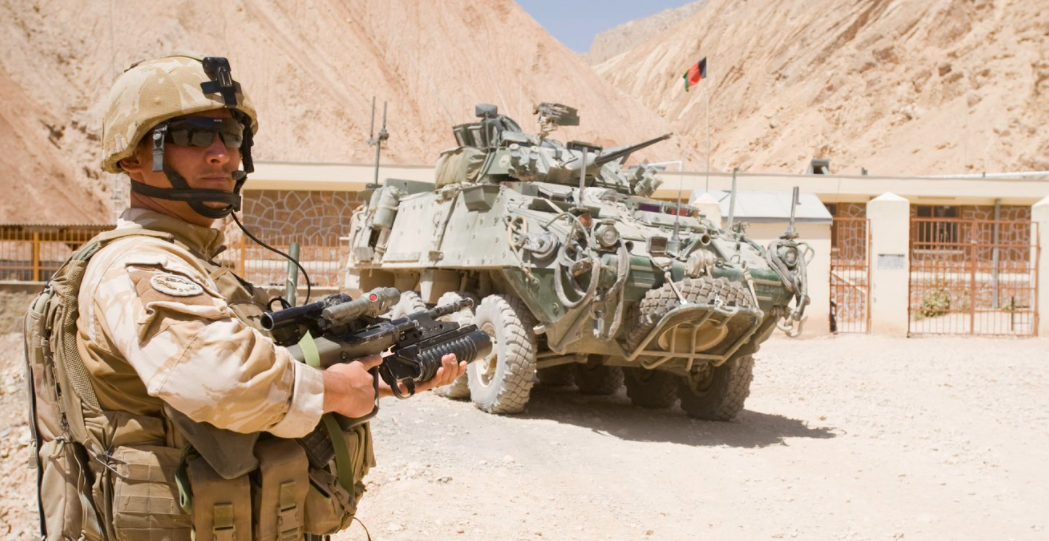
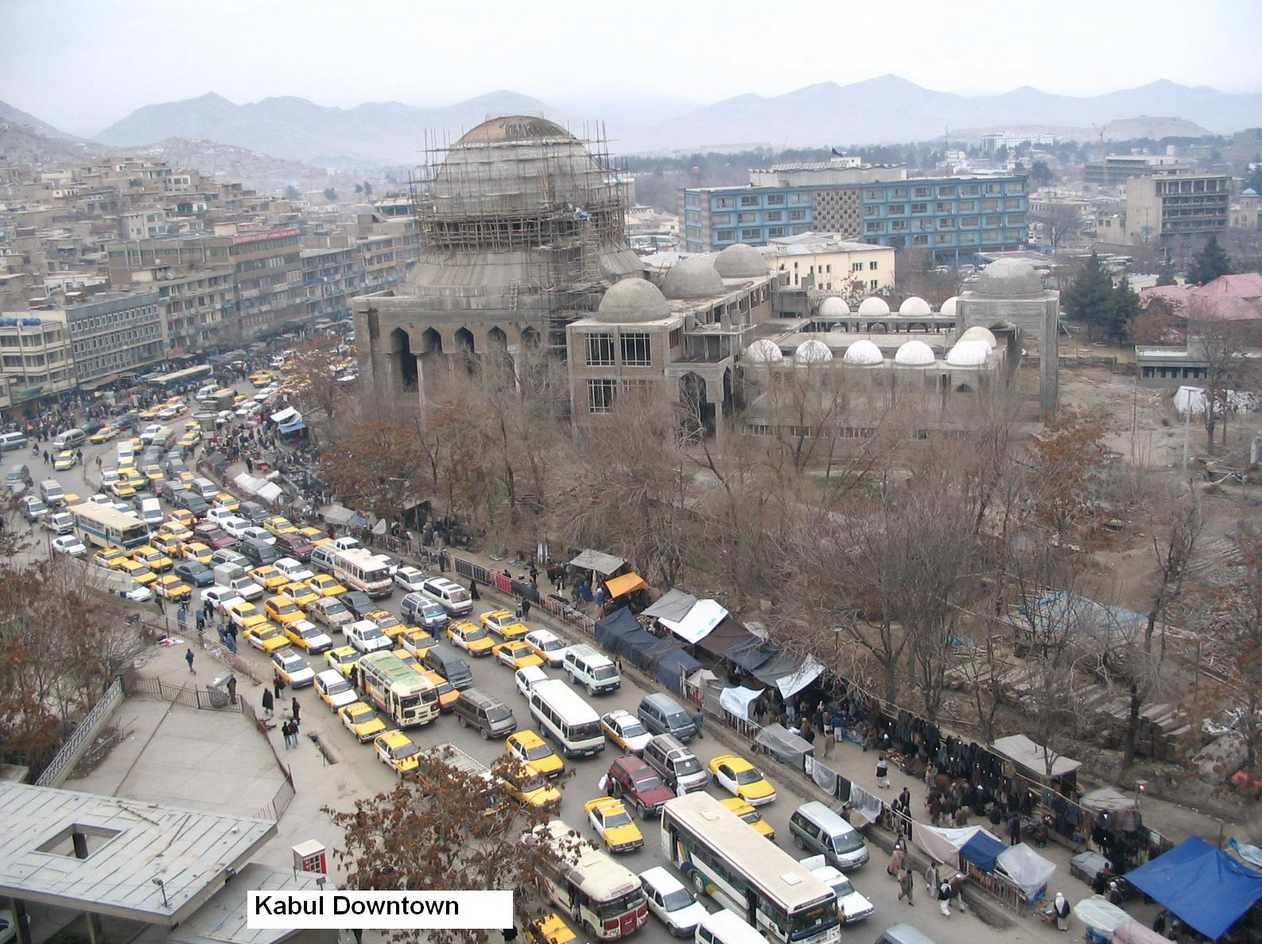
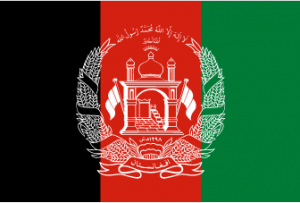
Reportedly, last Saturday in Firozkoh, Taliban fighters executed a female police officer in front of her family. Some claim the woman was also pregnant, however, the Taliban have stated that they had no involvement in the death. On Sunday, the Taliban elaborated on plans for education, stating that segregation based on sex must be enacted, with females being taught by female professors.  On Tuesday in Herat, two demonstrators were killed, and eight injured during an anti-Taliban protest. At the Pakistan embassy in Kabul, protestors called attention to the alleged aid from Islamabad in the recent Taliban assaults on the Panjshir province, which houses the anti-Taliban National Resistance Front (NRF).  On Wednesday, Chinese government officials promised to give 31 million dollars of aid in the form of food supply, vaccine stocks, and medicines to the Taliban government, as a part of the larger covid-19 stockpile reserve for South Asian nations. The same day, dozens of women demonstrated in Kabul, chanting “We want equal rights, we want women in government” in response to the Taliban’s cabinet featuring no women, and the women’s affairs ministry being abolished. In response to the protests, the Taliban sent around 40-50 fighters to follow the protest, where women claim to have been whipped, beaten with electric shock batons, and told to return to their place in the home. While the Taliban have claimed to gain control over the Panjshir valley, the NRF have claimed that they still hold strategic positions in the stronghold. Video evidence of the Taliban capturing positions in Panjshir surfaced, and geolocation backed up the Taliban’s appearance in the Panjshir centre and the provincial capital of the province, with one video depicting armed men on the streets. Another video showed the Taliban flag being raised over the Panjshir Governor’s office. This evidence itself is not proof of a Taliban hold over the entire valley.
 

Myanmar:

Leader Duwa Lashi La of Myanmar’s shadow government, the National Unity Government (NUG), that was formed by opponents of military rule, called for a nationwide uprising against the junta on Tuesday. New protests and violence has flared between the army and ethnic military groups. The shadow government has said it is launching a “people’s defensive war”, suggesting in a speech that they plan to coordinate armed militias and ethnic forces more intensely in the coming weeks. Declaring a state of emergency, Duwa Lashi La called for a “revolt against the rule of the military terrorists led by Min Aung Hlaing in every corner of the country”. Junta spokesman Zaw Min Tun dismissed the NUG’s call for revolt, saying “it was an attempt to gain international attention and recognition from the United Nations General Assembly later this month and would not succeed”. In his 14-point speech,  Duwa Lashi La said that “military-appointed administrators should immediately leave your positions”, and calling for allies to attack the military. Following this declaration, Southeast Asian and Western countries have urged all different sides of the conflict in Myanmar to resist violence and instead allow in humanitarian aid. Chris Sidoti of the Special Advisory Council for Myanmar, a panel of international experts, said NUG had reached a line in being frustrated by the junta’s brutality and the inaction by the international community. “Violence is the cause of the suffering of the people of Myanmar, it is not the solution,” Sidoti said. “We empathize with the NUG, but we fear for what will happen as a result of this decision.”
 

The United States:

Kentucky is set to extend the state of emergency bill until January 2022 as the rising Covid-19 cases broke state records two weeks in a row. President Joe Biden on Thursday outlined new approaches to control the COVID-19 pandemic in the United States. Biden plans to focus on six key areas that include requiring all federal employees and government contractors to get vaccinated against COVID-19 and will roll out new guidelines for schools. Secretary of State Antony Blinken and Defense Secretary Lloyd Austin are traveling to the Gulf separately on Sunday to talk about prevention of a resurgence of threats from armed groups in Afghanistan and will also see how the failed war in Afghanistan may be reshaping the United States’ relationships in the Middle East. Blinken thanked Qatar’s emir on Monday for Qatar’s extraordinary support in facilitating the safe transit of US citizens, partners, and other Afghans at risk during the US’s chaotic military pullout from Afghanistan. He will be testifying at least twice in Congress next week as lawmakers examine the U.S. withdrawal from Afghanistan as part of the houses’ aggressive investigations. Statue of Civil War General Robert E. Lee, which was the largest remaining Confederate statue in the United States was taken down after the Virginia Supreme Court decided to remove it last week. On Wednesday 8th September, New Orleans lifted its nightly curfew as the city moved closer to regaining full power 10 days after Hurricane IdaHurricane Ida had slammed into the Louisiana coast with 150 mph winds on Aug. 29, causing a death toll of 26 with the additional 11 deaths all occurring in the city of New Orleans as recorded on Wednesday.
 

Cuba:

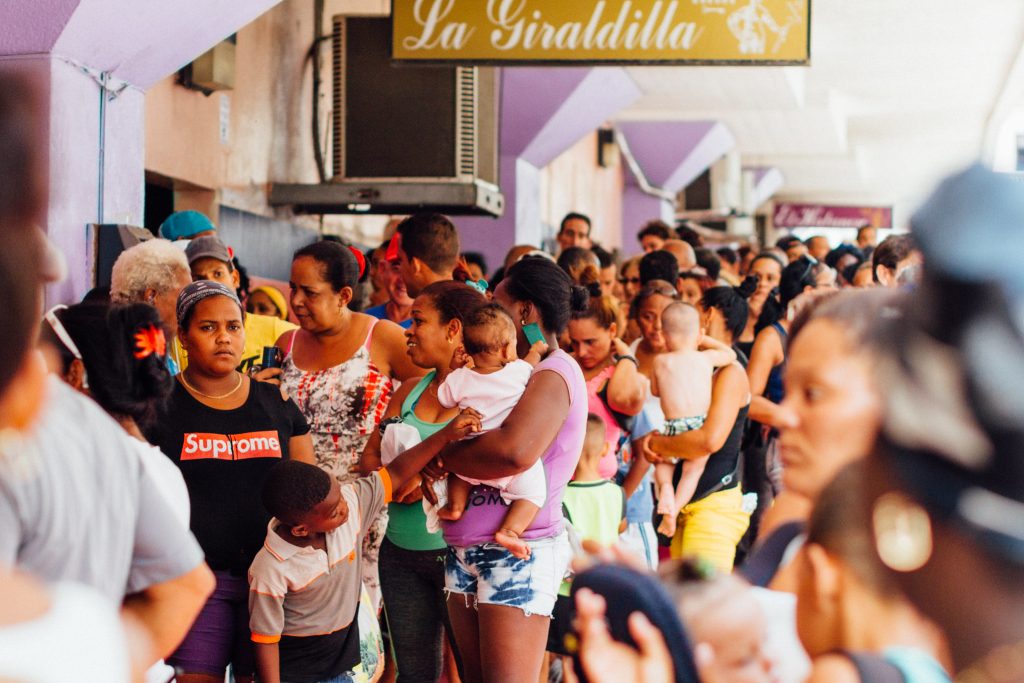
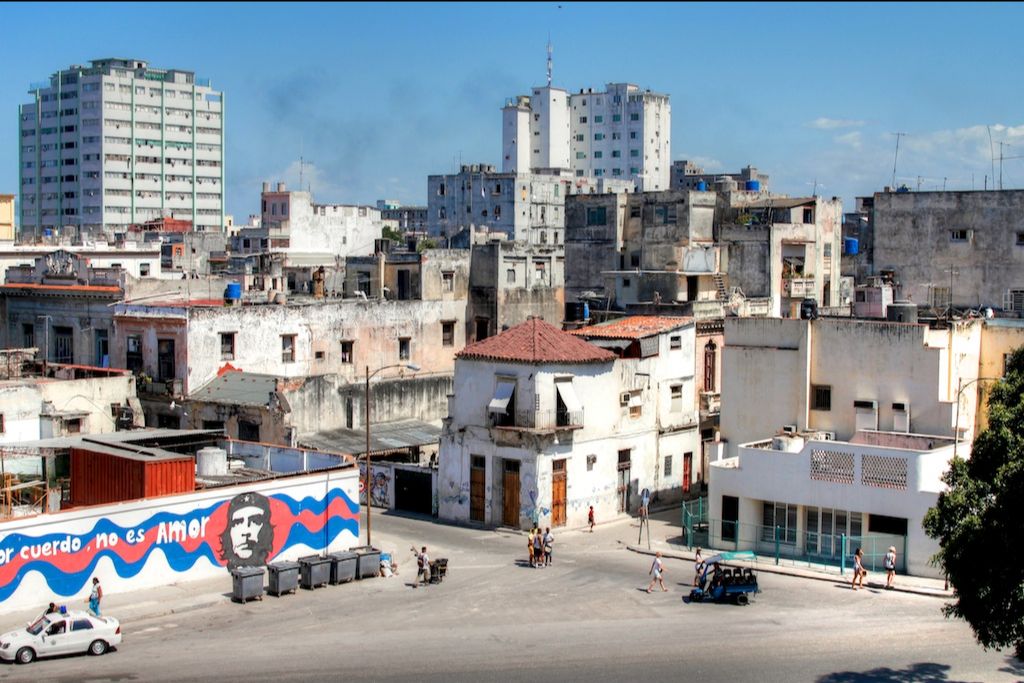
On Monday, Cuba became the first country in the world to vaccinate children from the age of two against Covid-19, three days after it started vaccinating children 12 years and older. The Cuban vaccines Abdala and Soberana have completed clinical trials on minors but are yet to undergo international and scientific peer review. The decision comes after Cuba’s plans of inoculating all its children before reopening schools. Cuban authorities will also reopen the country’s borders starting in mid-November with relaxed COVID-related measures at airports, focused on symptomatic patients and taking the temperature. Cuba is aiming to have vaccinated 90 percent of its population by the beginning of the high season for tourism and its borders will start reopening “gradually” on the fifteenth of November. As of today, only 30 percent of the population has been fully immunized. Cuba has just passed legislation treating “misinformation” and online criticism of the Cuban government as “cyberterrorism” after the widespread anti-government protests gripped the nation. Previously, The Daily Wire had reported how Cuba is using Chinese technology to censor its citizens and this law has put down further restrictions on Freedom of voice.
 

Nicaragua:

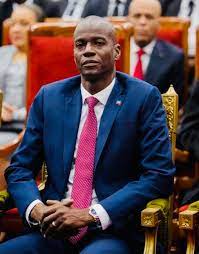
Since 2018, the Ortega-Murillo regime has stripped various non-governmental organizations of their legal status and thus, permission to operate. In the first eight months of 2021, The Confidencial reported that the government has shut down 45 NGOs, targeting medical and women’s organizations in particular, six with links to US and Europe-based organizations like Oxfam. Among the canceled organizations are the Oyanka Association of Jalapa Women against Violence (est. 1993), and the Nicaraguan Network for Democracy and Local Development Federation. According to Amaru Ruiz, coordinator of the latter, in an interview with The Confidencial: “What’s at stake here is the right to receive development aid…Also at stake is the third fundamental pillar of a democratic state, which is civil society.” On why the Ortega-Murillo regime is targeting NGOs, Ruiz replied that “the regime wants to get rid of those who have influence in the outer territories.” The Prosecutor’s office in Nicaragua has issued an arrest and search warrant against former vice president and writer Sergio Ramirez Mercado, for acts that “incite hatred” and for “conspiring” against the nation’s sovereignty. Mercado, who is currently out of the country and has stated he will not return, is also being accused of receiving funds from the Violeta Barrios de Chamorro Foundation, which was accused of money laundering. The funds Mercado received were allegedly supposed to finance the foundation’s “Media Program for Nicaragua” project. And yet, the Prosecutor’s Office claimed that the funds were actually used to “provide financing to people and organizations that sought to destabilize the smooth running of the country’s economic and social developments.” In response, Mercado denied these accusations. In a video he posted on Twitter, he stated: “this is not the first time this [sort of accusation] has happened in my life,” referring to the accusations against him leveled by the Somoza family in 1977, “dictatorship lacks imagination and repeat their lies, their fury, their hatred and their whims.” If convicted, Mercado could face up to 15 years in prison. The Confidencial links Mercado’s arrest as part of a larger trend of persecution by Ortega “against opponents and independent professionals.” They cited that 36 people have been arrested on similar charges Mercado is facing, and 31 out of those people have been convicted.
 

Bolivia:

According to a statement by the deputy of the Movement for Socialism (MAS) Andres Flores, Bolivia’s national parliament has scheduled President Anez’s trial for Wednesday, 8 September. He added that the Assembly will address four accusations against the former president, which include an unauthorised loan agreement with the IMF, the Senkata and Sacaba Cases, and the expansion of Fundempresa’s operations. Meanwhile, her social media has shown that President Anez’s daughter, Carolina Ribera, has gone to the United States to meet with the leaders of international organizations about the alleged human rights abuses against her mother. Among said leaders, Pagina Siente reported that Ribera is scheduled to meet the director of the Americas Division of Human Rights Watch (HRW), Jose Miguel Vivanco. Also with regard to the Senkata Case, former Police Commander General Rodolfo Montero was arrested by order of the Prosecutor’s Office on Tuesday, 7 September. According to a statement by Colonel Alberto Aguilar, the National Director of the Bolivian Police (FELCC), Montero is being charged for “genocide, homicide, serious, and minor injuries.” According to Los Tiempos, Montero is purportedly also being investigated for the Sacaba Case of November 15, 2019. In other news, as of Tuesday, September 7, the XI Indigenous March has completed its 13th day of walking. The marchers departed with Beni and are planning to arrive at Santa Cruz on September 24. Several outlets report that the marchers are demanding that the government respect their land and–following confrontation from a group of villages–guarantee them their constitutional right to protest. The marchers are led by the President of the Centre of Indigenous Peoples of Beni (CPIB) Abdon Justiniano. News outlets estimate that there are 120-150 marchers, with more to come as they are expected to be joined by the Chiquitanos Indigenous group later in the march. Among the marchers are children and the elderly.  A press release from the Bolivian Health Ministry confirmed that three variants of the novel coronavirus are circulating in Bolivia: the Mu variant (identified in 12% of the population), Gamma P1 (53%), and Lambda/Andean C37 (18%). The press release is allegedly based off of studies by the INLASA (the National Institute of Health Laboratories), which were supposedly confirmed by “important laboratories in Argentina and Germany.” Meanwhile, as of 7 September 2021, the Health Ministry has reported 403 new cases, 762 recovered patients, and 15 deaths, alongside the 33,025 active cases to date.
 

Belarus:
Following last week’s plea from the Polish government, Poland has imposed a state of emergency on the Belarus border on the grounds of upcoming Russian-led military exercise and an accusation on Belarus of inducing a surge of migrants in Poland. This law affects the movements in close to 200 towns within a 3km strip along the border and bans any large gathering in that space for 30 days. While Belarus strongly denied the allegations of engineering this migrant influx, Polish Prime Minister Mateusz Morawiecki said Poland is dealing with a “Wide-ranging political provocation” and that this is not only a diplomatic conflict. Lithuania has also accused President Lukashenko of encouraging the migrant flow in retaliation for EU sanctions and asked fellow EU countries and the bloc’s border agency Frontex for assistance in building a fence along the border with Belarus. On Wednesday, President Lukashenko Submitted a draft law that might freeze the EU refugee accord which obliges Minsk to take back migrants who entered the EU via Belarus but who violated their conditions of stay, entry, or residence. In other news, two leading opposition activists Maria Kolesnikova and Maxim Znak were charged with lengthy prison terms of 11 years and 10 years respectively.


Georgia:

The refusal of macro-financial assistance from the European Union, in the form of 75 million Euros aimed at aiding the country through the pandemic, by Georgia’s government in late August was explained by a high level of economic growth and desire to avoid foreign debt. The deal had a condition of the implementation of several reforms, as well as the agreement  to hold new national elections if the ruling party obtained fewer than 43% of the votes in the local elections. EU issued a statement stating that the Georgian government was actually not eligible for the rest of the aid package as it had “failed to sufficiently address the condition for this macro-financial assistance, and notably, to increase the independence, accountability, and quality of the judicial system”. Georgia has received acknowledgment and praise for its role in providing critical assistance to the US and the Western partners in the evacuation at Kabul’s airport following the crisis with the Taliban takeover. 20 flights have been conducted from Kabul to Tbilisi with approximately 2,500 people having been evacuated. Georgia’s airspace and territory has been used as a transit route from Afghanistan to Europe. Georgian authorities have claimed that they have provided evacuees with medical aid, and food, and have allowed NATO member states to deploy their military and civilian personnel to the airport in Tbilisi. Members of the EU expressed its gratitude to Georgia. Ambassador of Georgia to the EU, Vakhtang Makharoblishvili, told EURACTIV that it was Georgia’s, “moral obligation to stand by our European and American Allies in those difficult times”.
 

China:

On Wednesday, Hong Kong police arrested four members of a pro-democracy group that organizes the annual memoriam of the Tiananmen Square crackdown. This arrest received criticism from the British foreign minister Dominic Raab. He took twitter to express how this instance is “another chilling demonstration of how the National Security Law is being used by Beijing to dismantle civil society and stifle political dissent in Hong Kong”. The next day police also raided the premises of the closed June 4th Museum, although the reason for the raid remains unclear. China is showing its interest in maintaining communication with the leaders of the new Taliban government in Afghanistan, and has also pledged 200 million yuan ($31m, £22m) worth of aid including food supplies and coronavirus vaccines. Foreign ministry spokesperson Wang Wenbin commented that China respects the sovereignty, independence and territorial integrity of Afghanistan. On North Korea’s 73rd foundation anniversary President Xi Jinping congratulated leader Kim Jong-un on the vigorous development of the socialist cause and vowed to further develop ties with North Korea. President Xi Jinping is actively moving away from the hands-off approach to reassert the party’s dominance and has created some new rules in shaping the private lives of Chinese citizens. These include rules on after-school classesfan activitiesconsumption of entertainment, and video games. Government has conveyed education officials and elite universities in China to step up ideological education and enforce party discipline on campus.
 

Hong Kong:

Authorities in Hong Kong raided the Tiananmen massacre museum earlier this week and removed material from the building. This occurred the day after authorities arrested four managers of the museum, who are also members of the Hong Kong Alliance in Support of Patriotic Democratic Movements of China civil society group. Under heavy government scrutiny, Hong Kong’s arts institutions have struggled to survive in recent years. The Tiananmen massacre museum was shut down in June just days after hundreds attended a new exhibition. The police investigation had authorities claiming operation without a license. Three days before the shutdown, the museum had hosted a new exhibition that saw attendance in the hundreds. On September 9th, a dozen Hong Kong pro-democracy activists pleaded guilty Thursday to participating in an unauthorized vigil to mark the anniversary of the Tiananmen Square massacre. The 12 were charged with participating in the unauthorized assembly for last year, with seven of the 12 also charged with inciting others to take part in the assembly. The Office of the Commissioner of the Chinese Foreign Ministry in the Hong Kong Special Administrative Region (HKSAR) expressed on September 9th its opposition to Western politicians’ remarks regarding affairs in Hong Kong, especially following the arrest of “Hong Kong Alliance” members. The remarks have been called “a gross interference in Hong Kong’s and China’s internal affairs”.
 

Indonesia:

A fire on Wednesday that killed 41 prisoners and injured 80 has highlighted systematic problems in the Indonesian prison system. Authorities investigating the fire found that the fire was started by an electrical short circuit. The fire started in Block C, a cell that primarily houses drug offenders. This block held more than triple the 40 inmates it was built to hold spread across 19 cells. Located in the outskirts of Jakarta, the Tangerang prison was built to hold 900 prisoners; currently the prison has more than 2,000 inmates. Indonesia has struggled with upholding suitable housing for prisoners (various problems include: overcrowding, mass escapes, protest riots, extremism and corruption). According the Indonesia Department of Corrections, since July there were 268,610 inmates in Indonesia’s prison system however the system was only built to accommodate 132,107 people. The government blames drug incarceration for extreme prison overcrowding and therefore has stated that it will change their approach. The head of corrections at the Ministry of Law and Human Rights, Reynhard Silitonga stated that he wants to look at drug offenders as people who need treatment not incarceration. Silitonga stated that over the next five years if the problem is not address the prisons could reach over 400,000 people. Following a meeting between Indonesia foreign and defense ministers and their Australian counterparts, Indonesia’s foreign minister, Retno Marsudi, urged the Taliban to respect the rights of women. She continued on to encourage the Taliban not to make the land become a breeding ground for extremist activities. The meeting was held to bolster security ties between the two countries. Australia and Indonesia continue to maintain good relations. Australia provided 1 million vaccine doses, 1,000 ventilators and 800 oxygen concentrators to the country. It was revealed the ministers agreed to cooperate on measures such as defense, cybertechnology and countering terrorism and extremism.
 

Thailand:

​​Protests calling for the resignation of Prime Minister Prayuth Chan-ocha over the mishandling of the Covid-19 pandemic have continued in Thailand. The movement has been gaining momentum, especially following the lifting of some lockdown measures earlier this week in Bangkok. The police now regularly deploy rubber bullets, tear gas and water cannons laced with burning chemicals. Protesters have been responding with their own arsenals, including flamethrowers and slingshots. Prominent figures in the opposition say that the urge to confront the police during a pandemic is a sign of widespread desperation. “When the government is authoritarian, they think they can censor the media, they think they can stop the people from protesting,” said Rangsiman Rome, an opposition lawmaker. “But people are still coming out to protest every day, demanding change”. Thailand has made plans to reopen Bangkok and other popular cities to foreign tourists next month, with the aim of rejuvenating the country’s prominent travel industry after over a year of economic distress surrounding the loss of income for the sector. Bangkok, Hua Hin, Pattaya and Chiang Mai will be added to a program in which fully vaccinated and tested visitors who satisfy certain criteria can travel into, said government spokesman Thanakorn Wangboonkongchan. Vaccinations could be an obstacle to an October reopening, however, with only 34% of Bangkok residents fully vaccinated so far, and just 15% of people nationwide given the required two doses.
 

Iran:

Fears of further US and EU censures and sanctions in Iran surface in the face of the new report by the International Atomic Energy Agency which claimed that the new government under President Raisi has not allowed for UN inspectors to oversee the nuclear program. Raisi has previously warned that any censures from the EU or US would stop him from allowing Iran to return to the nuclear deal talks with the US. Foreign ministry spokesman Saeed Khatibzadeh responded to criticism from Saudi Arabia, Egypt, the UAE, and Bahrain on the lack of transparency of Iranian nuclear methods leading to interventions in other Arab countries by saying that they were accusatory and ultimately, serve Israel. Khatibzadeh has espoused the belief that nuclear achievement is a goal for the Islamic Republic at large in order to protect them from Western and Israeli military.  Part of the Western campaign against Iran has involved the removal of three Iranian applications from the Google Play platform. The Iranian Ministry of Communications spoke out against the “unilateralism of U.S. platforms and the unfair sanctions against the country’s technology and cyberspace”. This practice has been used before in 2017, when Apple removed many Iranian applications due to U.S. sanctions against the state. A report this week from a former Pentagon spokeswomen claimed that following the assassination of Iranian General Qassem Soleimani, former US President Trump coerced the military into minimizing the severe injury toll of the retributive bombing of a U.S. military base in Iraq by the Iranian military.
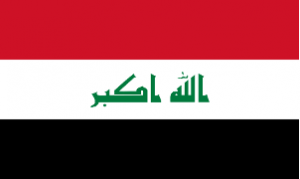
 

Iraq:
On Thursday, Iran’s Revolutionary guards utilized drone bombs and heavy artillery to assault Kursdish fighters in Iraq’s northern Kurdistan, part of an ongoing series of attacks involving Iranian military and Iranian Kurdish militant groups who oppose the Iranian government, including the PKK. On Friday, six PKK members were killed in a Turkish airstrike in northern Iraq as a part of Operations Claw-Lightning and Claw-Thunderbolt, a military operation that often crosses the border into northern Iraq to target claimed terrorists. Prior to this attack, on Thursday the Turkish National Intelligence Organization killed three PKK members, claiming they had been planning to attack Turkish security forces. The Turkish Intelligence service did not list the names of the deceased, but claimed they were responsible for PKK activities in Jabal Kara, Qandil Mountain, the PKK stronghold in Iraqi Kurdistan, and YazidiI Sinjar. 


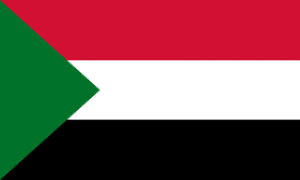
Sudan:

Around three million children under the age of five living in Sudan suffers from acute malnutrition. The Healthy Ministry issued a joint statement with various UN organization stating that the malnutrition rates constitute a “serious public health concern”. This report found many shocking data sets related to children and their health. A studied showed that 36.4 percent of children under-five are stunted (this refers to low height-for age) and 13.6 are wasted (this refers to low weight for height). According to UNICEF, “Stunting rates rise above 30 per cent in 128 out of 188 localities making Sudan one of the 14 countries where 80 per cent of the world’s stunted children live”. As the Health Ministry investigated newborn to five-year old’s, researchers found that only 62 percent of children are exclusively breastfed and only 24 percent receive age-appropriate meals. Due to this report, officials are encouraging COVID-19 isolation centers to provide information about the nutritional needs of children and vaccinate breastfeeding women. On September 8th, Sudan summoned Ethiopia’s ambassador to Khartoum to show him 29 corpses of Ethiopians of the Tigray ethnic group. Tensions have been increasing between Sudan and Ethiopia due to the conflict in northern Tigray region and Ethiopia’s construction of a hydropower dam. Tens of thousands of refugees have fled from Ethiopia to Sudan due to the conflict. On Sunday, Sudanese authorities confiscated a weapons shipment that had arrived by air from Ethiopia. It was confiscated under suspicion the arms would be used as “crimes against the state”
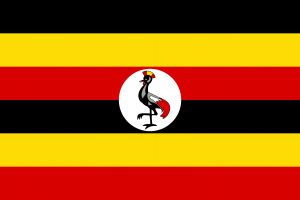
 

Uganda:

Two Ugandan opposition members of Parliament have been charged with arranging a wave of machete killings in the region of Masaka located in the southern part of Uganda. For two months, gangs have been ruthlessly attacking the area. According to police, they have killed around 30 people in their homes at night; the targets have been mostly elderly people. The MP’s accused are Muhammed Ssegirinya and Allan Sewanyana, both have been indicted on three counts of murder and one at attempted murder. The lawyer’s representing the men stated, “They have denied all charges. This is political persecution by the military regime of (Ugandan President Yoweri) Museveni”. Residents in Masaka have called on their government to take stronger action to stop the gang members. Many elderlies in the region have fled to safer areas like Kampala. Members of the community are calling on the government to, “ensure the protection of the elderly in the countryside, and the people behind the murders must be identified and punished.


Zimbabwe:

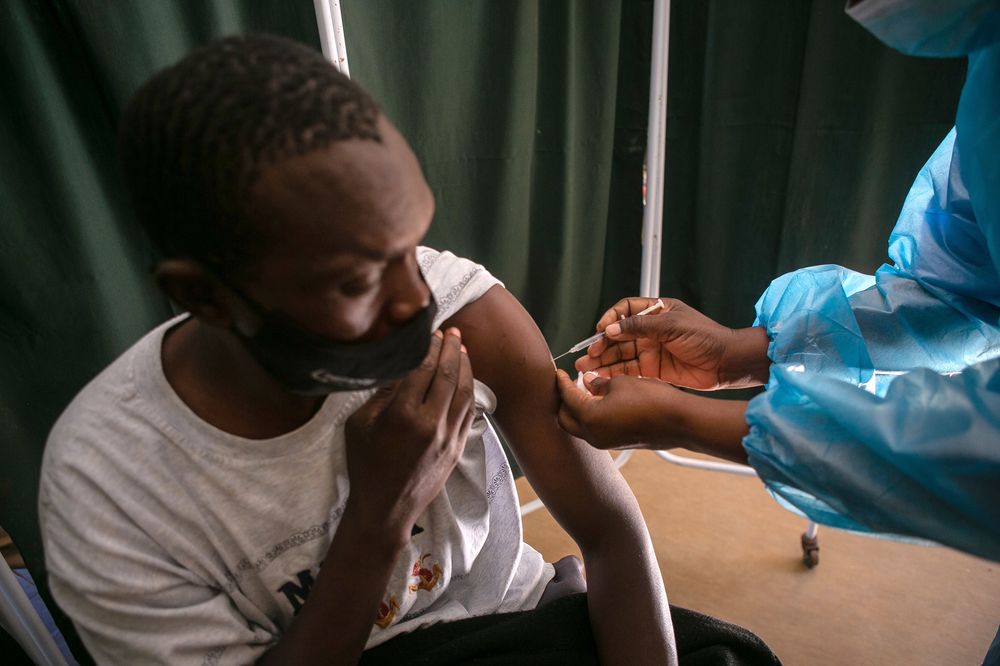
In efforts to stop the spread of COVID-19, Zimbabwe’s government now demands civil servants to get the vaccine or resign. Currently, the country has 4.4 million people who have received their first dose of a vaccine but 89% still remains unvaccinated. During an interview on a local radio show, Justice Minister Ziyambi Ziyambi stated, “If you are employed by the government, for the protection of others and those you serve, get vaccinated”. On September 10th, a Provencial magistrate has discarded an appeal by former President Robert Gabriel Mugabe’s children to stop the exhumation and reburial of their father. A group of leaders from Zvimba ordered the exhumation and reburial of the late President at the National Heroes Acre. Mugabe ruled Zimbabwe for 37 years until a coup removed him from power in 2017.  In the decision, Magistrate Ruth Moyo explained that the late ex-Presidents children had no locus standi (the right to bring an action to court) to contest the traditional court’s decision.

CANVAS Weekly Update – September 3rd, 2021

Dear Friends,


CANVAS is pleased to bring you another weekly report! This week covers the American pullout in Afghanistan, violent dispersal of protests in Sudan, continued violence in Gaza, crisis at the border in Belarus, and the global COVID-19 situation.

Conflict Update:

In Saudi Arabia, a drone bomb targeting the airport wounded 8 people, another attack in the kingdom’s war with Yemen. The bombing followed one sustained days earlier in Yemen, where missiles and drones targeted a key military base, killing 30 Saudi-back Yemeni troops. From last week, hundreds of protesters gathered on the Gaza border from Saturday to Thursday, burning tires and flinging explosives, resulting in the injury of Omar Hassan Abu al-Nile, a 12 year old boy. This Saturday, he succumbed to his injuries, and the funeral was attended by hundreds. In response to incendiary devices sent over the border, the IDF carried out an airstrike on a Hamas military compound Saturday night, following the hundreds strong night protest at the border. As a result of the protests, 11 Palestinians were injured, three by live rounds. Seven Palestinian journalists were arrested on Friday covering non-violent protests in Hebron, on charges of being in a ‘closed military zone’, despite IDF laws allowing reporters to enter such aread. In a video of the event, a soldier is shown saying “We’ll arrest all the journalists. Is this what you want?”. On Wednesday hundreds more gathered to mourn the death of Ra’id Jadullah , shot by Israeli soldiers as he returned from working in Israel Tuesday night. The UN has recently urged Israel to bring charges against the six settlers who, two weeks ago, tied a 15 year olf palestinian boy to a tree and continued to assault, cut, and burn him. The IDF and police have not pursued any course of action against the settlers, but have claimed the brutal attack was due to the boy throwing stones at the settlers. 

Coronavirus Update:

South African scientists have detected a new coronavirus variant with multiple mutations but are still researching to establish whether it is more contagious or able to overcome the immunity provided by existing vaccines or antibodies from prior infection. The new variant, known as C.1.2, or the Beta variant, was first detected in May, and according to research, which is yet to be peer-reviewed, has now spread to many provinces in South African and to seven other countries in Africa, Europe, Asia, and Oceania. Currently, Beta is believed to be more infectious than the original Covid-19 strain, and evidence supports that vaccines are less effective against it. This has led some countries to restrict travel to and from South Africa. The Centers for Disease Control and Prevention are warning against the use of the Covid-19 vaccine in ways that aren’t authorized by the federal government in the wake of many Americans getting booster shots. Such uses include giving the vaccine out as a booster shot to people who are not immunocompromised or using it to vaccinate children under the age of 12 for whom the shot is not yet authorized. In mid-August, the CDC reported that more than 1.1 million people had already received unauthorized doses of the vaccine. There is an ongoing debate surrounding the off-label use by healthcare providers of the Pfizer vaccine. Last week, Japanese authorities suspended the use of some batches of the Moderna Covid-19 vaccine containing 1.63 million doses after being notified of an issue with contamination. Following an investigation, Moderna said stainless steel contaminants were found in some vials. The stainless steel contamination probably occurred during production, and while Japan’s Health Ministry said they don’t think the particles pose any significant health risk, two deaths of individuals who received their second dose from the suspended batch are being further investigated. Indonesia and Thailand, which have the largest economies in the South East Asia region, are beginning to ease their Covid-19 restrictions in the wake of economic issues, despite the Delta variant sweeping the region. Vaccination rates are still low in both countries, and epidemiologists are concerned that by lifting restrictions on dine-in restaurants and in-person retail, there will be a huge spike in cases.

Afghanistan:

NATO has reported 20 deaths in the airport and surrounding areas in the past week, not including the attack on the the Kabul airport last Thursday, in which at least 90 Afghans and 13 U.S. service members were killed in a suspected Islamic State suicide bombing. The Wazir Akbar Khan Hospital in Kabul alone has claimed to have received 145 bodies. Immediately after the attack, gunmen shot into the crowd, and another bombing at a hotel just outside the airport injured 18 U.S. service members.

On August 30th, a US official reported up to 5 rockets were fired at the Kabul Airport, claiming the responsibility laid with ISIS-K, who claimed responsibility for the last attack on the airport. 

Following the suicide bombing on Friday, the US carried out a drone strike targeting the islamic State in Kabul, killing two suspected ISIS-K members, and 10 civilians, including 9 members of one family, six of which were children, and a previous US translator.

Between August 14th and August 30th, 116,700 people have been evacuated. It was also reported that in the aftermath of the suicide bombing on Friday, US troops through smoke bombs into crowds to disperse them, injuring civilians. The BBC has reported eyewitness claims that some casualties from the Friday attack were not a result of suicide bombing, but of gun fire in the chaos after, by Turkish or American soldiers. 

On Tuesday, the National Resistance Front(NRF), a resistance group quartered in the Panjshir Valley, clashed with the Taliban in the province, as well as the Parwan and Baghlan provinces. The NRF claims 350 Taliban casualties and 40 prisoners have been captured. This followed another clash on Monday, in which 7-8 Taliban members are claimed to have been killed by the NRF. Unconfirmed reports state the Taliban had blown up an essential bridge connecting to Panjshir. The Taliban have also shut down the internet and essential supply flow in the valley, which has a stockpile to last until winter.

On Wednesday, Taliban members paraded captured military hardware, flying a Black Hawk helicopter over Kandahar in a celebration of the final removal of US troops on August 31st. On Thursday, 50 women and university students demonstrated for the inclusion of women in the new Taliban government, chanting for the right to education, work, and security. This followed the Taliban spokespersons announcement, that despite the supposed right for women to work, there “may or may not” be a place for them in government positions and other leading roles. 

The UN has issued a warning of humanitarian crisis in Afghanistan, claiming food stocks in Afghanistan may run out by the end of the month, and millions of Afghans are in danger of starvation. Essential good prices have dramatically increased as currency has been weakened, and Afghans are unable to withdraw money as banks are closed. This is made worse by the cut off of international aid by the US and World Bank after the Taliban takeover.


Myanmar:

On Thursday the United Kingdom announced new sanctions on Myanmar, targeting a key business associate of the military junta for providing arms and financial support following a coup by the junta earlier this year. The British foreign ministry said it would freeze the assets of conglomerate Htoo Group of Companies and its founder Tay Za, who was the tycoon that was involved in arms deals on behalf of the military junta. Foreign minister Dominic Raab said in a statement: “Along with our partners, the UK will continue to restrict the junta’s access to finance and the supply of arms used to kill innocents, including children, and target those who support the junta’s actions”.

A dozen different regional branches of the People’s Defense Force Militia in Myanmar have formed an alliance to collectively attempt to take on the country’s junta, members said Wednesday. The PDF groups, which are mostly based in the Sagaing region, Chin state, and Mandalay and Magway regions, as well as Kachin and other ethnic states, announced on August 28th that they had allied in their resistance to the military and told RFA’s Myanmar Service they would welcome additional militias to the alliance.
On the 100th day since the arrest of American journalist Danny Fenster by the military junta in Myanmar, his family has appealed for his release following their suspicion that he has contracted Covid-19 in prison. His family said they limited communication with Fenster, who was arrested on May 24 at the international airport in Yangon as he tried to board a plane out of the country.


The United States:

In a 5-4 vote on September 2nd, the United States Supreme Court denied an emergency request by women’s health providers for an injunction on the enforcement of the Texas abortion ban. On a ruling on Wednesday, Texas moved to ban abortions after six weeks of pregnancy. This is the most restriction ban on abortion since the landmark ruling of Roe vs. Wade in 1973. Texas is one of a dozen Republican-led states to ban the procedure once a fetal heartbeat can be detected often at six week.  The six-week cutoff is two weeks after a missed menstrual cycle which is often before a woman realizes she is pregnant. This is a devasting law for abortion rights in the state of Texas. Abortion rights advocates state that the law will be a near-total ban on the abortions in the state, as 85%-90% of abortions are obtained after six weeks of pregnancy.  

Former U.S. Cardinal Theodore McCarrick will be arraigned on September 3rd on charges of molesting a 16-year-old boy in 1974. He will be the highest-ranking U.S. Catholic official to be prosecuted for sexually abusing a minor. McCarrick was expelled by the priesthood in 2019 and found guilty in a Vatican investigation of sexual crimes against minors and adults

The United States Gulf Coast is continuing the long road to recovery after Hurricane Ida plowed through on Sunday. The hurricane made landfall as a category 4 storm with 150 mile-per-hour winds. Louisiana Governor John Bel Edwards stated that Ida was one of the strongest storms to make landfall in modern times. The storm was a test of the $14.5 billion of levee improvements that had been built after Hurricane Katrina in 20005.  In Louisiana, more than 900,000 homes remain without electricity.  Hurricane Ida caused record flooding in the Northeast United States which has killed at least 44 people. Fourteen people died in New York City, including a two-year old boy while eleven people drowned while trapped in their basements. President Biden declared a state of emergency in New Jersey and New York—a decision that will allow for both states to receive federal funding. Climate experts explain how warming sea surface temperature heat the air above the water therefore producing more energy to drive hurricanes and increase rainfall. A record of 3.15 inches of water fell in Central Park in the span of one hour.  In the wake of the storm, President Joe Biden is calling for Congress to work with him on his Build Back Better plan. Part of this imitative includes modernizing infrastructure to withstand extreme weather. President Biden will visit Louisiana on September 3rd to inspect the damage.  


Cuba:

In an effort to circumvent American sanctions, Cuba has pledged to recognize and regulate cryptocurrencies for payments. Due to increased sanctions in the last year, US dollars have been increasingly difficult to use in transactions, leading the island nation to follow in El Salvador’s footsteps to recognize cryptocurrency. 

Last Friday, Hurricane Ida hit Cuba hard with winds of up to 80 miles per hour on its course to the US. Hit hardest was Cuba’s Isle of Youth, where trees were felled and roofs ripped off houses, and Pinar del Rio. In Pinar del Sol, one of the provinces most affected by coronavirus, residents were already struggling with food and medicine shortages, so any damage sustained is made even worse.  Crop losses were reported, but no deaths due to the evacuation facilitated by the Cuban Civil Defense. 

On Tuesday, the U.S. took 13 Cuban migrants into custody who had landed on a Key West beach after sailing from Cuba, all of whom were turned over to ICE. This is following a similar boat of 14 Cuban’s that landed in the keys last Friday. Sadly, a Cuban man was found drifting in the sea Saturday near the landing site, but died after rescue. 


Nicaragua:

Journalist Carlos Chamorro, a critic of President Daniel Ortega, has had charges filed against him on account of money laundering. Chamorro fled to Costa Rica in June following the political persecution of his siblings, journalist Cristiana Chamorro, and politician Joaquin Chamorro, which ended in them being detained by police. The same charges were raised against Cristiana and seven other workers of the Violeta Barrios de Chamorro Foundation, whose mission is gaining access to public information, and different charges leveled at his brother Joaquin.
Judges who under Ortega’s regime have imprisoned opposition leaders, journalists, former diplomats, and student leaders, have been accused by former justice system official Yader Morazan of being complicit in committing criminal offenses with the dictatorship, citing that evidence was gained in ways that violated constitutional guarantees. Morazan also highlighted the fact that there was no legal justification for the secrecy of the hearings, and the fact that they should be thrown out due to the lack of defense lawyers present alone. He has also claimed that judges who aren’t willing to break such laws are being fired at the behest of the Ortega regime. Nicaragua’s legislature has also ordered the closure of 15 more NGO’s, bringing the total number of NGOs whose permits have been revoked in the past month to 45.


Bolivia:

 Last Friday, Bolivian prosecutors announced their plan to put ex-interim president Jeanine Anez on trial for the charges of genocide, serious and minor injury, and injury followed by death. These charges are a result of the 20 people killed during the 2019 protests in Sacaba and Senkata. These charges are a result of the OAS report detailing the multiple massacres ordered by Anez during her presidency. These new charges were added to the initial charges she has been held under since March, for terrorism, sedition, and conspiracy.

The next day, Anez attempted suicide in Miraflores prison, but failed. On September 1st the Mexican Air Force reported that during their 2019 evacuation of former president Evo Morales, the Bolivian armed forces targeted the aircraft with an RPG rocket launcher. The pilot describes having to maneuver to avoid impact. Morales had been granted asylum in Mexico, but upon trying to take off, clearance was denied and the flight was grounded. Surrounded by the Bolivian military, the Pilot got off to speak with the Secretary of Defense, and was beaten by the military for refusing to eject Morales from the plane, and was held at gunpoint shortly thereafter.


Belarus:

This week, the Polish government asked the President to declare a state of emergency at the border  between Poland and Belarus. The number of asylum seekers from Afghanistan and Iraq trapped along the border continues to grow. Human rights advocates are critical of Polish authorities stating that the government’s reluctance to accept the asylum seekers and denying them adequate medical care is inhumane. However Polish officials say Belarusian authorities are to blame. The EU placed strict economic sanctions on Belarus after President Lukashenko claimed victory in a rigged election. Now the EU has accused Lukashenko of, “deliberately encouraging asylum seekers to cross irregularly into Poland and the Baltic states as a form of “hybrid warfare”’ 

Russia plans to deliver a large supply of military equipment to Belarus this month. The Russians are set to deliver equipment including, aircraft, helicopters, and air defense systems.  Analysts believe this delivery is a sign of Moscow’s steadfast support for Lukashenko’s government. Belarus is a strategic ally for Russia acting as a security buffer between the EU and NATO military alliance. The close allyship is concerning for many Belarusians who fear that Lukashenko may trade sovereignty in order to gain more political backing from the Kremlin. This comes as President Lukashenko and Russian President Vladamir Putin announce a joint military exercise later this month. When speaking with news outlets about the planned military exercise, Lukashenko said “If we see during the exercise that we need something else, then we will buy it from the Russian Federation and commission it
 

Georgia:

The Georgian government has decided to turn down a 75-million-euro loan from the European Union following an EU threat to cut financial assistance in response to Tbilisi’s failure to implement reforms. A 150-million-euro loan was offered to Georgia last year in attempt to help the country mitigate the impact of the COVID-19 pandemic. 75 million Euros had already been disbursed, and the other half had been conditioned on Georgia meeting certain political obligations, especially judicial reforms to reduce political influence over the court system. Prime Minister Irakli Garibashvili announced the government’s refusal of the loan on August 31, and government officials have justified the move by a desire to reduce foreign debt, avoid “political insinuations”, and that the economic growth the country has been experiencing has obviated the need for the loan.

The European Union said, that while it respects the Georgian Government’s decision not to ask for the disbursement of 75 million Euro loan, it notes that “Georgia failed to sufficiently address the condition for this macro-financial assistance and notably, to increase independence, accountability and the quality of the judicial system”. Experts have said that the refusal of the authorities to accept EU assistance creates the appropriate prerequisites for a decrease in investment and an economic downturn and the threat of an economic recession on the horizon. However, some say to not make rash conclusions, because, since April, the country’s economic growth exceeded 20%, but it has seen an economic decline.

Following last year’s disputed presidential elections in Belarus, a Georgian-Belarusian security cooperation agreement has come into effect and Critics fear that the treaty would allow authorities in Minsk to target political dissidents and critics of the Belarusian government residing in Georgia. The aftermath of the disputed 2020 election in Belarus caused some Belarussians to flee to Georgia, and those émigrés are now concerned with the new cooperation agreement between Georgia’s State Security Service and the State Security Committee of Belarus. The agreement, which has entered into force this month, will enable the two countries are to regularly exchange information, including personal data, to cooperate in the fight against “terrorism”, “corruption”, and other crimes including those committed “against the constitutional order, sovereignty and territorial integrity”.


China:

Chinese President Xi Jinping has been enforcing a crackdown on the tutoring industry, where most of its companies prepare students to study overseas, in an attempt to help create a more equal society by leveling the educational playing field. Backlash is already evident, and there have been eight protests involving workers in the nation’s education sector so far in August, as concern surrounds wages for employees, especially of smaller companies. There is pressure on the All-China Federation of Trade Unions to help the educators get their pay and promote their rights.

Taliban spokesman, Zabihullah Mujahid, has said that the group will begin to rely mainly on financing from China to support their economy. He said, “China is our most important partner and represents a fundamental and extraordinary opportunity for us because it is ready to invest and rebuild our country”. They are looking to put copper mines back into operation with the money from China, as well as access some global markets through China.

An Italian company that makes military-grade drones for NATO has had six of its managers reported to prosecutors after the financial crimes police completed an investigation into the sudden takeover of the country. Tax police said the takeover of the unnamed company broke arms laws and that while a firm based in Hong Kong had bought a majority stake in the drone company at 90 times its value, the real buyer was two state-owned companies in China.

President Xi Jinping has announced the country’s plan to create a new stock exchange in Beijing with the aim of helping to fund smaller companies’ pursuit of new technologies. “We will continue to support the innovation and development of small and medium-sized enterprises and deepen reforms of the new third board by creating the Beijing Stock Exchange,” Xi told the 2021 China International Fair for Trade in Services in Beijing. This will be the mainland’s third after Shanghai and Shenzhen.


Hong Kong:

Seven pro-democracy activists and former legislators in Hong Kong have been sentenced to jail, with sentences ranging from 11 to 16 months for their role in an unauthorized assembly at the height of anti-government protests in 2019. They had pleaded guilty to charges, including organizing and inciting others to take part in the illegal assembly in October 2019, where thousands of people protested on the streets against the tightening control of the Chinese government. 

The national security law imposed in Hong Kong in June 2020 has caused an estimate of 100,000 residents to have relocated overseas. This outflow of residents could prove to be a serious problem for the city, in a sort of “brain drain” that could impact the economy. Hong Kong’s strict quarantine program has the government is facing growing pressure from business lobby groups to open borders or risk losing executives and investment. The decision to increase mandatory hotel quarantine to three weeks for most arrivals has caused significant backlash from banks, hedge funds, and traders who say it is damaging the cultivation of new investment into the asset management market and risks setting off a brain drain.


Indonesia:

On September 2nd, President Joko Widodo’s COVID-19 vaccine certificate was leaked online through an app called PeduliLindungi and shared all over social media. The leak raises concerns over the government’s commitment to data security. The app displays private biodata, vaccination dates, and types of administration. This hack follows as the government is investigating a breach earlier in the week where 1.3 million users’ vaccine information was exposed.  

Eighteen years after his arrest in Thailand the former leader of Indonesia’s Jemaah Islamiyah and current Guantanamo detainee, Encep Nurjamen will face trial on account of war crimes. Nurjamen was arrested in connection to a series of terror attacks that took place in Indonesia in the early 2000s. He will face charges of war crimes including murder, terrorism and conspiracy. Alongside two Malaysian accomplices, Nurjamen (also known as Hambali and Riduan bin Isomudin) was involved with attacks on the JW Marriott Hotel in Jakarata and the 2002 bombings at nightclubs in Bali. Around 213 people were killed and more than 350 were injured during the attacks. Nurjamen was involved with a series of foiled plots and held close ties to Osama bin Laden the former leader of al-Qaeda. After his arrest, he was held in a secret detention camp run by the CIA and was allegedly subjected to torture. The abuse is alleged to have continued with Nurjamen was transferred to Guantanamo Bay Detention Center in 2006 where he has been held since without a trial.  


Thailand:

Thousands of protesters have continued to gather in the streets of Bangkok to call for the resignation of Prime Minister Prayuth Chan-Ocha, and the protestors have said that the pressure will continue until he leaves office. One of the biggest protests this year was the September 2nd demonstration at the Asoke intersection in central Bangkok. Earlier that day, police had warned that protests were banned due to Covid-19 restrictions. Demonstrators blame Prayuth for the handling of the pandemic, particularly his failure to secure timely and adequate supplies of vaccines resulting in a poor inoculation effort.

The killing of a suspect in a drug case was caught on a security camera in the Thai central province of Nakhon Sawan on August 5th. The footage was leaked online, outraging the public and creating discourse over the issue of police brutality in Thailand. The Cross-Cultural Foundation, a Thai rights group, has documented and published at least 20 deaths of individuals in custody in Thailand since 2007 and nearly 300 complaints of torture since 2014 in southern Thailand, where there is a decades-long conflict between separatists and the Thai security force. While the torture complaints involve violence against civilians by the military, the CCF says that abuse was probably much higher when factoring in the Thai police’s anti-drug campaign.

On Thursday, Thailand’s health ministry said that its COVID-19 vaccine experiment of firstly injecting a British-developed AstraZeneca Covid-19 vaccine dose and following up with China’s Sinovac one was safe and successfully boosted immunity among its first 1.5 million recipients. In July, Thailand became the first country in the world to mix a Chinese vaccine and a Western-developed vaccine as cases and deaths in the country surged and the government struggled with vaccine supplies and had to find solutions, including intradermal injections.


Iran:

Iran’s President Raisi has reportedly shut down ideas of resumed talks surrounding the Iran Nuclear Deal, which was instituted in 2015 and abandoned in 2018. Former President Hassan Rouhani has had a legal complaint filed against him by the Iranian parliament as a result of not properly fulfilling his duties while in office. Many in the Parliament had run on the promise to punish Rouhani for his part in depreciating the currency, and heightened unemployment and inflation. Rouhani’s charges are focused mainly on the state’s influence on capital and forex markets. 

On Wednesday, a man was jailed for burning a statue of general Revolutionary Guard Quassem Soleimani, infamous for his assassination by American drone strike in Baghdad at the beginning of 2020. The assassination sparked many protests by Iranians calling for US exit from the region, and he is considered a national hero and martyr. 

Prosecutors have raised criminal charges against six guards at the Evin Prison in Tehran on Tuesday after footage depicting prisoner abuse was leaked last week. The facility is known to hold political prisoners, importantly ones with western ties for iran to use in international negotiations for bargaining. The video, leaked by a hacking group, had been compiled over the course of multiple years, showing clear abuse, prisoners attempting self-harm, and terrible living conditions.


Iraq:

On Tuesday, Iraqi government officials approved a draft law for compulsory military service, which hasn’t existed in the region for 18 years. It has allegedly been approved in order to promote ethnic mixing, and dissuade youth from joining military groups like the Popular Mobilization Forces(PMF) and other secular militia groups.

Turkey, who has recently been engaged in a series of airstrikes against YBS and PKK members, has been reified by Iraqi minister, who announced that their attacks against the PKK are justified, despite the outcry of infringed sovereignty following the 28 airstrikes in Kurdistan from Turkey just last week. The US has also called on the PKK and PMF to to withdraw from the Sinjar region on Monday, and claimed that the groups have so far been cooperating.

Shia leader Moqtada al-Sadr has reversed his pledge to abstain from the election, calling on his supporters to take part in Iraq’s October general election. Sadr, one of the most powerful politicians in Iraq, claimed the move came after a confidential group of Iraqi political leaders sent out a charter reform to combat corruption.


Sudan:

On Tuesday August 31st, two unarmed university students were killed after government security forces used live ammunition to disperse a demonstration in front of the former United Nations African Union Mission in Darfur building. Central Darfur continues to reopen however the University of Zalingei, where the two students attended, has been closed until further notice. The University gave students 48 notice to vacate; this decision has left many students without housing forcing them to sleep in the streets. Activist and resistance committees organized a demonstration in downtown Khartoum to protest the violence used against the students. The Public Prosecution in Khartoum formed a committee to investigate the incident

The African Centre for Justice and Peace Studies (hereinafter: ACJPS) made a statement–with the utmost urgency—claiming the Sudanese government needs to take the appropriate measures to improve the conditions in detention centers because of the spread of COVID-19. ACJPS reported that the Sudanese detention centers are overcrowded, lack professional health care, and poorly ventilated. Experts claim the poor state of these detention centers create a stressful which can make COVID-19 even more dangerous for prisoners. COVID-19 vaccines have been administered to 829,682 people, none of whom are detainees. Shareef Omar Badr, the leader of Omar Al Bashir’s National Congress party, died from COVID in prison.  


Uganda:

On September 2nd Uganda Security Forces arrested Lawrence Muganga, the Vice-Chancellor of Victoria University, on suspicion of espionage. A military spokeswomen responded to the event stating he was arrested for connection with espionage and illegal stay. A video on social media was taken of Vice-Chancellor forced into a van by gunman; the van, referred to as a “drone”, is commonly associated with abductions of government opponents. Followers on social media are suggesting Muganga was taken because of his close ties with Uganda’s regional rival Rwanda. Muganga is Uganda’s most notable Banyarwanda, an ethnic Rwandan living in Uganda, and lead advocate for the community. Last year he began a movement to rename the ethnic Rwandan community Abavandimwe. In the movements campaign, Muganga stated that Banyarwandas are often marginalized by Ugandan government such as issues with citizenry and denial of public services such as ID cards.  

Kenya has scheduled a cut of 79% of sugar and 35% liquid gas cylinders exports from Uganda rekindling trade disputes. As a landlocked country, these cuts will severely limit Uganda’s exports. Ugandan Agriculture Minister Frank Tumwebaze expressed his irritation with Kenya’s Agriculture Minister Peter Munya over the decision on Twitter tweeting, “we need a honest conversation about these restrictions from your side”.  Due to this cut, there are now threats of retaliation by Ugandan officials.  

Chief Information Minister, Dr. Chris Baryomunsi, appeared on a popular morning talk show to inform the public about the plans to reopen schools.  Newspapers and other media had been reporting the government would reopen schools within two weeks, however Baryomunsi announced this timeline is incorrect. Last year, reopening schools was followed by a large spike of new COVID-19 infections. To avoid a spike this year, Baryonmunsi stressed the importance of ensuring clear safety measures are followed in schools and adults receive their COVID-19 vaccinations.  


Zimbabwe:

Zimbabwe authorities have begun easing COVID-19 restrictions for sports and artistic events and foreign travel requirements. Cinemas, art galleries and fitness centers will now be allowed to reopen at half their normal capacity. Full access to these facilities and other activities sectors, however, will be limited to people who are fully vaccinated. Workers unions in Zimbabwe are critical of the move stating that requiring clients and workers to be fully vaccinated is discriminatory. Authorities are also relaxing requirements for travelers enter the country. Travelers will no longer be subject to compulsory quarantine this includes people visiting from countries with high rates of the Delta variant. Even though Zimbabwe has one of the highest vaccination rates in Africa only 16% of the targeted number of people have been fully vaccinated. According to the World Bank, since the first lockdowns in March 2020 around a million more people to fallen into extreme poverty.  

Under the Zimbabwe Peace Project, researchers have found that children and grandchildren of victims of the Gukurahuni massacre have been deprived of their right to access birth registration. Gukurahundi massacres occurred between 1983 and 1987, when Zimbabwe National Army (hereinafter:ZNA) carried out attacks on Ndebele civilians in the Midland provinces; the ZNA detained and sent many Ndebele people to re-education camps or executed them. More than 20,000 people were killed. The national government has guaranteed victims they will be allowed to register for free and under protection however many victims are disincentivized by fear of discrimination and violence.  

The Zimbabwe government has renewed a contract with sugar can field operators Tongaat Hullet for another 20 years. Adding to their previous contacts, the company, who owns more than 65,000 hectares, now have a 99-year lease with the government. The latest contract increases funding for Project Kilimanjaro which is a sugar cane development project operated by Tongaat Hullett, the government and local banks. This project allows Tongaat Hullet to clear land in order to develop more sugar cane fields. The company has promised the government to work collaboratively with food security initiatives and increase job opportunities to locals.  


CANVAS Weekly Update – August 20th, 2021

Dear Friends,


CANVAS is pleased to bring you another weekly report! This week covers the Taliban takeover of Afghanistan, new internet regulations in Cuba, protests in Thailand, democratic crackdowns in Hong Kong, and the global COVID-19 situation.


Conflict Update:

Since May, Taliban forces have been seizing road posts and small cities across Afghanistan, gaining power through the forfeiture of posts by reportedly starving Afghan forces. On August 15th, hours after Afghan President Ashraf Ghani fled the country, the Taliban took power. Seizing the capital Kabul, photos of Taliban fighters in the presidential office circulated as panicked frenzies of citizens swarmed banks, visa offices, and the airport. A reported 17,000 Northern Afghans attempting to escape the Taliban forces fled to Kabul for safety just last week and are now stranded outdoors without sustenance as violent conflict continues in the city. From Kunduz, a reported 60,000 have fled. No medical assistance has been provided for those in the camps. The US Defense Secretary reports that there have been no violent confrontations between US service members and Taliban forces during the installment of the new regime as the US continues to evacuate ambassadors, citizens, and some afghans seeking refuge. The airport is flooded with people seeking escape, some clinging onto moving US cargo planes. Taliban forces have set up checkpoints outside the airport, using batons and firing into crowds to keep people from fleeing. Reportedly 8,000 total have been evacuated from the Kabul Airport, with the bulk of them flying to the US, but reports vary. Many attribute the quick takeover of the Taliban to the withdrawal of US forces, whose military equipment and biometric tracking devices have now been seized by the Taliban. As of Thursday, in the city of Khost, the Taliban will set a curfew indefinitely, prohibiting all movement in reaction to the hundreds strong anti-Taliban protests that took place on Wednesday. Similar protests in Jalalabad occurred on Wednesday, with demonstrators removing the Taliban flag and replacing it with the Afghan flag, leading to a violent response where protestors were beaten, and shots fired into the crowd, with one confirmed death and six injuries. On Thursday, in Asadabad as a result of the Taliban firing at a group waving the Afghan Flag at an Independence Day celebration, there were 2 dead and 6 injured. On Thursday in Kabul, a group of cars carried banners with the colors of the Afghan flag near the airport. In Nangarhar, during a protest on Thursday, a video circulated of a protestor with a gunshot wound being carried away. Russian Foreign Minister Sergei Lavrov has claimed that anti-Taliban forces are gathering in the Panjshir Valley, the last remaining territory to not be overtaken by the Taliban, led by vice president Amrullah Saleh and Ahmad Massoud, the son of a well-known anti-Taliban fighter. There have reportedly been talks of an armed resistance movement under the banner of the Northern Alliance, a group of mujahadeen militias that allied with the US during the invasion, corroborated by Ahmad Massoud article in the Washington Post, asking for weapons, ammunition, and supplies to fight the Taliban. The Taliban have claimed to offer amnesty to people who had worked with Afghan or foreign governments, and maintained that their forces would not disrupt businesses or enter homes. A UN document has claimed, contrary to Taliban reports, that the group is escalating it’s search for previous NATO and US collaborators, with priority lists of individuals to arrest, and targeting those who will not surrender and their families according to Sharia law. They have also encouraged women to join the government, saying “The Islamic Emirate doesn’t want women to be victims”, and are “committed to the rights of women within the framework of Sharia”. A harsh break from the politics of the prior Taliban, in which women were barred from employment, education, and kept covered and in the home. As such, many Afghans do not believe the more tolerant views espoused by Enamullah Samangani, part of the Taliban’s cultural commission. In his press conference, Samangani encourages Afghans to rejoice at expelling the foreign military forces and embrace the Taliban as legitimate in comparison to Ghani’s propped up, foreign run government. He has claimed that the Taliban will not seek revenge, and that all embassies will receive complete security. As of right now, only China, Iran, and Russia’s embassies remain in Afghanistan. The Taliban have requested the international community recognize international boundaries and request the right to act on religious and cultural principles.


Coronavirus Update:

The CDC announced on Wednesday the creation of a disease forecasting center to assess emerging health threats and help guide public health decisions around the globe. This follows concerns regarding the high infection rate of the Delta variant of Covid-19 along with declines in testing and lack of granular data about hospitalizations in vulnerable communities. This lack of consistent new data over a year into the pandemic has made it difficult to make effective public health decisions. The new disease forecasting center will help focus public attention on infectious disease risks, which is especially important with many reopening plans steadily approaching. The W.H.O.’s African Director, Dr. Matshidiso Moeti, has publicly criticized the choice of many countries to begin administering “booster shots” to fully vaccinated members of their population, claiming it “makes a mockery of vaccine equity” when the African continent is still struggling to get any vaccine supplies. With only 2 percent of the continent’s 1.3 billion people fully vaccinated against Covid-19 and with many of its poor countries having been ravaged by the virus, Dr. Moeti pushes rich countries to give priority to poor nations, and that they “threaten the promise of a brighter tomorrow for Africa” by hoarding vaccine doses. Scientists at the University of Oxford have conducted a study finding that a fully vaccinated person who contracts the Delta variant of Covid-19 carries a similar amount of the coronavirus as unvaccinated people who also contract the variant. UK survey data suggest that vaccinated people with breakthrough infections still pose the risk of infection for those who are unvaccinated, and while data has not yet shown this trend with the Delta variant, the strong virality of the variant suggests it would behave similarly. Researchers continue to stress the importance of vaccination as protection against catching the virus at all, getting seriously ill, and preventing hospitalization to avoid overcrowding. Israel, known for having high vaccination rates following a swift and sweeping vaccine campaign in spring, now has one of the highest infection rates in the world with the daily rate of confirmed new virus cases more than doubling in the past two weeks, with the Delta variant being the primary form of the virus in Israel. This has brought up questions regarding the efficacy of the vaccine for some, especially against the Delta variant. Following China’s refusal to cooperate with the WHO on a request for a renewed probe into the origins of Covid-19 earlier in August, the WHO now reports that China will be willing to cooperate with the effort. The WHO seeks to update the previous investigation earlier in 2021 that was criticized, especially by the United States, for lack of transparency and for lack of thorough examination of the controversial lab leak theory. The WHO is also requesting for China to share raw data on early Covid-19 cases in the country.


Myanmar:

Myanmar’s military junta is targeting the ousted NLD (National League for Democracy), including leader Aung San Suu Kyi and its lawmakers in an attempt to remove the party from politics through disbandment to secure the junta’s power. Since February 1st, the military have arrested 324 NLD members, 98 being members of parliament, and some members have died in custody. According to human rights group Fortify Rights, commanders of the Karen National Defense Organization (KNDO) admitted that their security forces detained and killed 25 men in June by Myanmar’s border with Thailand, placing responsibility for the massacre on their men. Activist group Assistance Association of Political Prisoners have figures showing that, on Wednesday, the death toll in Myanmar since the Feb. 1st coup has topped 1,000. Covid-19 is spreading mainly in the country’s prisons. With a heightened number of prisoners admitted since the escalation of arrests following the military coup on February 1st, prisons have been overcrowded and the virus has spread quickly in such unsanitary conditions. Numbers are difficult to estimate due to little information being shared by the military junta. With only 3% of the country vaccinated, the United Kingdom has called for a pause in conflict to enable the vaccine effort to get further underway. The conflict has greatly weakened Myanmar’s health system and put a stopper on the country’s vaccine plan.


The United States:

On Tuesday, New York’s Democratic Governor Andrew Cuomo abruptly announced that he would resign in the face of sexual harassment allegations. An extensive report released last week by the state attorney general’s office found that Cuomo had sexually harassed 11 women. Although Cuomo had previously defied calls to resign, it is almost certain that he would have faced impeachment and removal in the state Legislature had he attempted to stay in office. Lieutenant Governor Kathy Hochul will take power in Cuomo’s place, making her the first female governor of New York. Although many see Cuomo’s resignation as a first step to justice, he ultimately did not express guilt or remorse for his behavior. Cuomo instead framed his resignation as a means to avoid the divisiveness and inefficiencies that an impeachment proceeding would undoubtedly have brought. Another sweltering heat wave swept North America this week, with 150 million people in the United States under a heat alert. Power outages across the Midwest last week have left hundreds of thousands of people facing the current heat wave without electricity or air conditioning. Wildfires continue to rage in the western US with especially devastating blazes burning in California and Montana. In other news, Florida braces for heavy rains and wind on Saturday as Tropical Storm Fred approaches.


Cuba:

Cuba has introduced new restrictive internet regulations aimed at quelling dissent following protests in July. Under the new laws, any social media posts or media that aim to alter the “public order,” “spread fake news,” or “hurt the image of the state” are illegal. To enforce this, the government is ordering internet providers to cut the internet of anyone who breaks these regulations. Additionally, Jose Daniel Ferrer, the “leader of the Patriotic Union of Cuba (UNPACU), one of the Communist-run country’s largest and most active opposition groups,” was arrested and sentenced to 4 years in prison. In reaction to the continued crackdown on dissent, the United States continues its hardline stance by announcing new sanctions on Cuba, the fourth of many more expected rounds of sanctions. American Homeland Security Secretary Alejandro Mayorkas met with Cuban Americans on Tuesday regarding Biden’s foreign policy towards Cuba. Covid continues to ravage the country, destabilizing the country’s national health care system, which is “long a source of national pride.” More than 9,700 cases were reported on Monday, which is 6 times the levels from two months ago. Cuba’s prime minister, Manuel Marrero Cruz, blamed doctors for the failure of health care in a speech last week. Doctors, in retaliation, responded by denying these claims. One doctor publicly declared “that doctors are not to blame for the collapse of the public health system.” A lack of medicine, oxygen, and doctors continues to worsen the situation.


Nicaragua:

As Nicaragua prepares for a general election in November, 3-term sitting President Ortega has been cracking down on dissenting voices and opposition to his power. This week the oppression continues, as a 2020 anti-treason law is being used to arrest 30 political critics, with six of them being presidential candidates. The persecution of activists and journalists is also widespread, with up to 140 current political prisoners in jail. Last week, an opposition newspaper was raided by Nicaraguan police on a charge of “customs fraud and money laundering.”  As a result of the crackdown, many Nicaraguans are applying for asylum in Costa Rica in huge numbers, the highest since 2018. The Nicaraguan government has also cancelled operating permits for six NGOs in the country, following sanctions from the United States and EU last month as a result of human rights and freedom of speech violations. This is following a larger crackdown last month, when 24 NGO’s were shut down. Rodriguez accused the NGOs of having “undertaken activities outside the law and thus acted against the existing laws.” Many of the NGOs targeted were medical NGOs who critiqued the regime in its handling of the pandemic.


Bolivia:

Ex-Interim President Jeanine Áñez, infamous for gaining power through a military coup, was found by the Organization of American States (OAS) review this week to have used “systematic torture” and “summary executions” carried out by security forces to punish political opponents after Evo Morales’ resignation in 2019. The report also notes excessive force used by police, including using lethal ammunition against unarmed Morales supporters in the streets. Such events are strongly characterized in the report as massacres, with security forces killing 20 people in two separate incidents, under the approval of Áñez, who “guarantee[d] amnesty for those working to reestablish public order.” In effect, Áñez’s security forces were barred from any and all criminal responsibility. In total, 38 people were killed as a result of massacres and other acts of violence, including executions, around the country, with hundreds seriously injured. The report has also found evidence of sexual and racial abuse carried out largely against young indigenous detainees, mostly women. Religion and racial motivations were behind many attacks. It is possible that these attacks were aided by illegal shipments of weapons, ammunition, harassment gas, and more anti-riot materials for the express purpose of repressing protests in November 2019, after the resignation and departure of Evo Morales. This claim has been revealed in the judicial complaint against former Argentine President Mauricio Macri. The smuggled materials arrived in La Paz only one day after Áñez assumed power.While the report does not definitely state whether Jeanine Áñez’s presidency was a result of a coup Áñez arrest on the charges of sedition and terrorism in March (charges which she once brought against her opponent Evo Morales), has been criticized by US President Joe Biden as politically motivated. Other US officials have criticized both Luis Arce and Evo Morales’ rules as undemocratic, but have had no such criticism for Áñez’s right-wing, coup-installed, brutal regime. Opponent Evo Morales, who was running for a fourth term in 2019, has claimed this week “I resigned so that no one was killed. Not a single death by bullet happened during my administration.”


Belarus:

In a striking diplomatic action against the United States, Belarus announced on Wednesday that it would deny permission for the American ambassador’s appointment in Minsk. The Belarusian Foreign Ministry also called for the US to reduce its embassy staff to only five diplomats. The announcements from the Foreign Ministry came after American President Biden marked the one-year anniversary of Belarus’ fraudulent presidential election with a fresh round of sanctions  against the Lukashenko regime. Widespread protests broke out in Belarus last summer when Belarus’ longtime dictator claimed victory in the disputed election. In the year since the election, Lukashenko’s regime has undertaken a targeted campaign of assaults on civil society and restrictions on civil rights. A spokesman for the Foreign Ministry blamed the US for the deterioration of US-Belarus relations this week, calling the sanctions “hostile.”


Georgia:

Six Georgians were evacuated from Afghanistan this week, reports Georgia’s foreign ministry. The Georgian citizens were employees of a U.S. company based in Afghanistan but had been trying to leave the country since the Taliban seized Kabul on August 15. The six have already safely arrived in Tbilisi, but sixteen other Georgians remain in Afghanistan. The Georgian foreign ministry has stated they’re doing everything they can to bring them home but say that extracting the 16 is an extremely difficult task due to the chaos in Afghanistan’s airports. Former member of parliament and Olympic champion, Zurab Zviadauri, has been arrested and charged with premediated murder. The charges are based on Zviadauri’s shooting of three others, one of whom was Zviadauri’s own brother.  Zviadauri claims he was acting out of necessity and that the killings were not premeditated. Nonetheless, the former gold medalist has been denied bail. Starting on Wednesday, masks became mandatory both indoors and outdoors in Georgia. This new mandate responds to the rising cases that started in July. Additionally, Georgia’s ministry of health announced they are opening a mass vaccination center on the territory of the Georgian National University.


China:

China recently passed a major data protection law to protect personal data. Going into effect on November 1st, the law “states that companies must have a valid interest in obtaining personal information and that the use of the data should be restricted to the minimum scope necessary to achieve the goals of handling.” Additionally, consent must be acquired from an individual before using their data and includes regulations for data being moved outside of China’s borders; the punishment for breaking these rules is a fine. The law is “one of the world’s toughest on personal data security” and it will make it much more difficult for China’s firms to access information from consumers. These laws are being ushered in the context of a great trend of strict regulation from the Chinese government towards tech companies over the past few months. The three-child policy has finally been officially passed into law. Announced back in May, couples may officially have up to 3 children now, a huge shift from the historically famous one-child policy that existed in China for many decades. A “social-maintenance fee” has been cancelled, which is a penalty for having more children than legally allowed, and additional funds have been funneled towards childcare and women’s employment rights. Claims that the one-child policy “has prevented over 400 million births” and the national birth rate has been declining has led to these recent reforms. Additionally, couples are claiming that it is too difficult and expensive to have a child, which is why the 2-child policy in 2015 wasn’t as successful as initially anticipated.


Hong Kong:

Following the latest crackdown by Hong Kong national security police, four student union leaders at the University of Hong Kong were arrested on Wednesday, charged with “advocating terrorism” following a moment of silence held for a man who stabbed a police officer and then killed himself. The four were denied bail due to a national security law imposed by Beijing last year. Global banks and other financial institutions are investigating details of China’s planned imposition of an anti-sanctions law on the city. In June, Beijing adopted a law under which involvement in discriminatory measures against Chinese citizens or entities can put one on a government anti-sanctions list. Financial firms are closely monitoring the situation and this week’s meeting with the National People’s Congress Standing Committee will help them see how and when similar legislation will be introduced in Hong Kong. The Civil Human Rights Front (CHRF), a pro-democracy group that organizes mass demonstrations in Hong Kong, disbanded earlier this week due to pressure from the government. In a statement, the group claims that “the government has continued to use the epidemic as an excuse to reject demonstrations’ applications from CHRF and other groups. Member groups have been suppressed, and civil society has faced unprecedented severe challenges.” This disbandment follows the dissolution of the Hong Kong Professional Teachers’ Union, Hong Kong’s largest single-profession union, in late July, following the crushing of pro-democratic unions in the city by the government. Hong Kong has decided to tighten entry restrictions from 16 countries, including the United States, Malaysia, Thailand, France, and the Netherlands, by extending the required Covid-19 quarantine period for arrivals to 21 days. These countries have been included in these strict restrictions due to high rates of transmission of the delta variant and therefore being classified as high-risk. This change was catalyzed following the return to Hong Kong of a domestic worker from a visit to the U.S. who then tested positive for Covid-19, despite receiving two shots of vaccine and testing positive for antibodies.


Indonesia:

On Thursday, the chief of staff for the Indonesian Army announced that the army would end the practice of requiring “virginity tests” for female cadets. These invasive vaginal exams have long been criticized by rights groups as intrusive, unscientific, discriminatory and a form of gender-based sexual violence. The army previously used these tests to determine if female cadets had prior sexual intercourse and therefore to judge their morality. Although organizations such as the National Commission on Violence Against Women welcomed the announcement, they called for evidence that the practice had been abolished. As COVID-19 pandemic continues in Indonesia and hospitals fill with patients, authorities have searched for creative solutions to slow the spread of the virus. Off of the Indonesian port city of Makassar, the passenger ship the KM Umsini has been turned into a floating isolation facility for mild cases of the coronavirus. Patients on the ship spend ten days in isolation, with routine medical checkups and the opportunity to exercise on the deck and even fish off of the side of the ship. Town authorities report that the project has been successful in keeping sick people out of densely populated areas.


Thailand:

Protesters in Bangkok are demanding the resignation of military-backed Prime Minister Prayuth Chan-Ocha due to unaddressed economic and social-political crises of the pandemic. Thai police have been reported firing rubber bullets and tear gas at protesters, injuring several. Police have also been accused of firing live rounds at young protestors, with a 15-year-old protestor in comatose with what is believed to be live ammunition lodged in his brain. According to the Bank of Thailand’s Monetary Policy Committee, the Baht has dropped over 10% in value this year amidst the outbreak. Foreign investors, foreseeing no positive outlook for growth, have collectively pulled out a net of $3.34 billion of Thailand’s stocks, and the country’s GDP is likely to drop this year. Earlier this week, Governor Sethaput Suthiwartnarueput called for 1 trillion baht in additional government spending to aid the economy. On Friday, it was reported that Thailand has surpassed 1 million total Covid-19 cases, 97% of which have been reported only in the last 5 months. Pressure is therefore being put on the Thai vaccine effort which so far has only treated 8.3% of the population. The government has restricted travel to and from the island of Phuket to control the spread of the virus. The vaccine effort has currently been experimenting with intradermal injections to try and conserve a limited supply, as these use 25% of what a muscular injection does. Should trials prove effective, Thailand could vaccinate four or five times more people with the same amount of vaccine. The government is also pursuing a “mix and match” approach for vaccine shots, by following up locally produced Astra-Zeneca shots with imported Sinovac shots.


Iran:

Reports of Iran speeding up uranium metal and enriched uranium production have caused the UK, Germany, and France to express worry, and warn for the necessity of a new Iranian nuclear agreement soon, as the talks in Vienna have been halted for two months with no set date for resumption. Iran has also reported finding a large gas deposit in their territory under the Iranian region of the Caspian Sea named “Chalous”. If estimates are correct, this deposit can supply for 20% of European gas consumption. However, the technology and trade of this gas will likely tie Iran further to Russia, as the two countries share a 20 year agreement giving Russia control over the pricing and buyers of the gas Iran sells. Iran is one of the few countries whose embassy has remained open and fully operational in Kabul. Tehran has made ties with the Taliban, with President Raisi saying “ The military defeat and the U.S. withdrawal from Afghanistan should offer an opportunity to restore life, security, and lasting peace in that country”, possibly out of the worry of the Taliban adopting anti-Iran policies. As a bordering nation, Iran holds already 3 million Afghans, some of whom participated in anti-Taliban protests in the city of Isfahan from Sunday to Tuesday. Protests were also held in Tehran, Mashhad, and Qom, with many blaming Pakistani aid to the Taliban for the group’s newfound resurgence. In Qom, the protests were broken up by Iranian security forces, possibly in order to reinforce the ties between the Iranian government and the Taliban. This allyship was made possibly because of the more progressive claims of the new Taliban, including statements that the Taliban are no longer targeting Shia for genocide. Groups such as the National Front of Iran have criticized the state for trusting Taliban leadership and whitewashing the historical atrocities they have committed. It’s been claimed that Iranian authorities have even instructed media outlets to soften Taliban criticism, telling them to not use words like “brutality, crime, atrocity” in reference to the group.


Iraq:

On Tuesday, five were killed and an unconfirmed amount of injuries sustained as a result of a Turkish airstrike on a makeshift hospital in the Sinjar region, populated mainly by the persecuted Yazidi minority. Victims were both civilians, and members of the Yazidi militia “Sinjar Resistance Units” (YBS), trained by the Kurdistan Workers Party (PKK) during the Islamic State’s (IS) genocide of Yazidi in 2014.  The day before, a Turkish drone strike was carried out killing senior YBS official Said Hasan Said, and two other YBS members, as well as causing three civilian injuries in Kocho, Sinjar. The following hospital attack is thought to have been in effort to further wound injured fighters receiving treatment, as it was the only medical facility in the region. The YBS claim that Turkey aims to continue the previous genocide of Yazidis carried out by the IS, and accuse the state of collaborating with the Kurdistan Democratic Party (KDP), one of the three main groups who hold control over Sinjar, in opposition to the PKK and YBS, and the Iran backed Popular Mobilization Units(PMU). The PKK is a designated terrorist group in Turkey, but the closely affiliated group YBS is subsidized by the Iraqi government by money allocated for PMU’s, as they oppose KDP gaining power in the region. The KDP works with Turkey in order to weaken the YBS in order to gain power over Sinjar. It is believed that the attacks were a result of a larger Turkish opposition campaign to the PKK, as the PKK’s position in the Sinjar mountains is a favorable transfer point for fighters and weapons into northeast Syria, a region whose administration is backed by the US, and linked to the PKK. The attacks raise questions of Iraqi sovereignty over the disputed region, as Prime Minister Mustafa al-Kadhimi chose to not mention Turkey in his condemnation of military action, but instead only condemned the military strikes in the region. Turkey has been accused of war crimes in their onslaught against the PKK, driving upwards of 1,500 Kurds from their homes, and the use of chemical weapons.


Sudan:

The heavy rains reported in 11 of Sudan’s 18 states have destroyed 6,270 homes, and damaged 3,380 others. The flooding has also caused more than 6 deaths in Sudan’s River Nile state just in the past few days and killed countless amounts of livestock. As of Wednesday, a total of 55,000 Sudanese citizens had been affected by the rains. On Sunday, a group of armed men attacked a paramilitary vehicle, killing one officer and wounding three others. The victims were part of the Rapid Support Forces (RSF), the military set up under the now overthrown Omar al-Bashir regime. Since the transitional government was put in place, the RSF have operated alongside the Sudan Armed Forces. The motivation for this attack is unknown. In other news, following an armed looting incident that resulted in one death, protests erupted in a village west of South Kordofan’s capital. Protestors voiced their frustration with the continued violence and insecurity in the area.


Uganda:

This week Uganda suspended over fifty civic groups and NGOs. Uganda’s Non-Governmental Organization Bureau defended the suspension by alleging the organizations were not complying with certain regulations. The suspended groups, which include rights watchdog and women rights organizations, previously helped thousands of Ugandans who will now be without their aid. In response to the worsening situation in Afghanistan, Uganda has pledged to take in 2,000 Afghan refugees. The U.S. reportedly asked Uganda to take in these refugees and has promised to cover the costs of testing the refugees for Covid-19. The first group of 500 Afghan refugees were supposed to arrive on Tuesday. Uganda has a long history of accepting refugees, and now has the largest refugee population in Africa. Uganda’s ministry of health confirmed a polio outbreak in the country. The virus strain is suspected to have been circulating through the population for two years, raising questions about the efficacy of Uganda’s polio surveillance. In response, the government has promised to increase and improve surveillance, and to start immunizations in October.


Zimbabwe:

Zimbabwean officials have charged a man, Hatirarami Momberume, with rape chargers after a 15 year old girl, Anna Machaya, dies from childbirth. Outrage has been expressed around the world from the incident and the bigger systemic issue of child marriages in the country. One in three girls under 18 get married, despite a ban on child marriages. Children’s and women’s rights organization have called for swift action to confront sexual predators as an online petition, #justiceformemory, is trending on twitter with over 92,000 signatures already. ​​Nyaradzayi Gumbonzvanda, African Union goodwill ambassador on ending child marriage, says that “I am angry and outraged because child rape and child marriage should have no place in our modern society. We have all the laws, and the knowledge to prevent [it]. It’s so painful that as a country, we have left this practice to fester unchecked.” Anna’s parents have also been arrested, as they were “accused of lying about her age and also pledging their nine-year-old daughter to the same man”. Capital city Harare aborted city council on Friday, as there have been disputes over who has mayoral power and jurisdiction. People are unsure whether to report to suspended mayor Jacob Mafume or acting Mayor Musarurwa Mutizwa, leading to a deadlock. Mufame, who claims his suspension is over because his case is still pending in courts, was accused of bribery and stealing funds last year. The council will attempt to reconvene again next week, pending the “finalization of the mayoral issue.”

CANVAS Weekly Update – August 13th, 2021

Dear Friends,


CANVAS is pleased to bring you another weekly report! This week covers the developing situation in Afghanistan, Nicaraguan oppression of the media, protests in Thailand, and COVID-19 developments.


Conflict Update:

Amid urgent international calls for de-escalation, the Ethiopian government is calling upon Ethiopians to take up arms against the Tigray People’s Liberation Front. Conflict has expanded from the Tigray region to Afar and Amhara, six weeks after the government declared a unilateral ceasefire. Tigrayan forces, dismissing the ceasefire, say the government should accept the conditions for a truce. Months of fighting have left an estimated 1,300,000 people displaced, according to the United Nations Office for the Coordination of Humanitarian Affairs. Over 400,000 people are facing famine-like conditions. Amnesty International reported on Tuesday that Ethiopian government-aligned forces have subjected hundreds of Tigrayan women and girls to sexual violence as a weapon of war; the organization claims the scale of the violence is “particularly shocking” and amounts to war crimes. Three major Afghan cities fell to the Taliban this week, as the insurgent group continues its push to take over the country. The Taliban has control over 18 of 34 provincial capitals (about 65% of the country’s territory), and the rapid rate of its advancement has deepened the sense of panic across Afghanistan. Government forces are collapsing, and some American officials believe the government will not last through the month. Since May, at least 244,000 people have been internally displaced and 1,000 killed as clashes between Afghan and Taliban forces have left cities in ruins. The UNHCR warned that the heaviest toll has been on women and children, who make up about 80% of displaced persons. Fearing the fall of Kabul, the nation’s capital, the U.S., Denmark, and Norway are evacuating most members of their respective embassies.


Coronavirus Update:

Discussion over vaccine access inequity is becoming more present as the United States Food and Drug Administration (FDA) authorizes a third vaccine dose for immunocompromised people. This comes after the World Health Organization called on Global North countries, such as the United States, to halt booster shots until at least 10% of every country worldwide was vaccinated. The balance between welcoming tourists and imposing lockdowns has also been growing worldwide. With rising Covid-19 cases, Phuket, Thailand has been caught in the middle of making decisions. In the first month of reopening alone, Phuket welcomed over 14,000 tourists, generating an estimated 829 million baht (24.8 million USD). While charter flights are still approved by the Civil Aviation Authority of Thailand, the city has closed the Phuket Town Fresh Market for a week and converted unused prisons into field hospitals. Meanwhile, New Zealand is planning to reopen its borders to international travels early next year. Borders will not reopen until after New Zealand’s vaccine rollout is completed. Prime Minister Jacinda Ardern said that the government planned to follow the advice of experts, maintain the elimination strategy and proceed with caution. Only fully vaccinated travelers from low-risk countries would not be required to quarantine, however, everyone else will be expected to quarantine for some duration of time. In other news, Iran is facing a rising wave of Covid-19 cases, according to interviews with physicians and health workers, social media postings, and even some state media. The official recorded death toll is around 500-600 people a day, but frontline doctors in Tehran, Isfahan, Ahvaz and Mashhad told the New York Times that the real death toll was closer to 1,000 a day. With insufficient testing, lack of access to care, and less than 3% of Iran’s population fully vaccinated, the government is facing growing criticisms of incompetence.


Myanmar:

A junta-appointed local administrator said that Myanmar’s Rohingya Muslim population is not on the list of priority groups for vaccine rollout, despite living in densely packed camps primed for spreading Covid-19. The Rohingya located in Sittwe live in crowded camps separated from the Buddhist majority population by barbed wire. Since Myanmar’s covid-response plan collapsed with the Feb 1st coup, densely populated areas like Rohingya camps have been hardest hit. Many Rohingya express fear regarding how they will be treated if they seek Covid-19 care at local hospitals. The administrator refused to comment on whether the lack of a plan to vaccinate the Rohingya is based in discrimination, stating the vaccine adminsters “are only following orders.” Myanmar officials estimate that 300 people die from Covid-19 a day in Myanmar, but the number is suspected to be much higher. To battle the virus, the U.S. announced this week that it is donating $50 million in humanitarian aid to Myanmar. In other news, 88 year-old Than Shwe, Myanmar’s former dictator, was admitted to a military hospital this week after contracting covid -19. Than Shwe ruled Myanmar’s previous junta for two decades before ushering in a civilian government in 2011. He is receiving treatment in the capital Naypyitaw and is said to be in stable condition.


The United States:

On Tuesday, New York’s Democratic Governor Andrew Cuomo abruptly announced that he would resign in the face of sexual harassment allegations. An extensive report released last week by the state attorney general’s office found that Cuomo had sexually harassed 11 women. Although Cuomo had previously defied calls to resign, it is almost certain that he would have faced impeachment and removal in the state Legislature had he attempted to stay in office. Lieutenant Governor Kathy Hochul will take power in Cuomo’s place, making her the first female governor of New York. Although many see Cuomo’s resignation as a first step to justice, he ultimately did not express guilt or remorse for his behavior. Cuomo instead framed his resignation as a means to avoid the divisiveness and inefficiencies that an impeachment proceeding would undoubtedly have brought. Another sweltering heat wave swept North America this week, with 150 million people in the United States under a heat alert. Power outages across the Midwest last week have left hundreds of thousands of people facing the current heat wave without electricity or air conditioning. Wildfires continue to rage in the western US with especially devastating blazes burning in California and Montana. In other news, Florida braces for heavy rains and wind on Saturday as Tropical Storm Fred approaches.


Cuba:

Tropical storm Fred downgraded to a tropical depression as it heads towards Cuba, expected to hit the eastern and northern parts of the island on Thursday and Friday. Fred will lose steam as it passes over mountain Hispaniola before hitting Cuba. Moving over the water at 14mph, it is expected to have winds up to 35mph. It is expected to hit Florida and the American South this weekend after hugging Cuba for two days. Fred is the 6th storm to be named this busy hurricane season in the Americas, but only one storm, Elsa, has been classified as a hurricane. Politics between the United States and Cuba has been turbulent under the Biden administration, taking a different approach than Trump or Obama. Pressure has been increased towards Cuba, with Biden sanctioning the island and restricting travel between. While Obama has tried to end cold-war restrictions and Trump has taken a harder reversed stance, Biden has been the most strict towards the island compared to the former administrations. “To many Cubans who had seen in the election of a Democratic president reason to hope for a return to normalized relations — with more flights to the island and more channels to send cash, medicine and food to loved ones — Mr. Biden’s approach has been a blow.” ‘Living through a war’: Coronavirus continues to rattle the island, with the healthcare system and mortuary services overwhelmed and suffocated. “I witnessed queues of more than 20 hours, people dying in the corridors (of the polyclinic)…Simply put, I saw what I would have hoped to never see: the collapse of our health system,” wrote local professor Ana Iris Diaz. The communist-run nation is shaken to its core, as the right to health care, central to the government’s ideology, is being put to a huge test. Cuba’s current 7-day average is close to 9,000 cases, near its highest peak ever, with one in five tests turning out positive.


Nicaragua:

With the presidential election in November, Daniel Ortega’s government has been finding ways to repress political opponents and complicate the process of publishing criticisms against him. On Thursday, the Nicaraguan government suspended print edition newspapers, crippling media critical of President Daniel Ortega. Newspapers, like La Prensa, will continue publishing online. However this move marks the third time the government has withheld paper or ink. Alongside this, Spain is recalling its ambassador to Nicaragua after Ortega accused Madrid of “unacceptable interference.” The withdrawal came a day after Nicaragua recalled its own ambassadors to Mexico, Argentina, Colombia and Costa Rica. The move follows the four countries’ own decision to recall their ambassadors from Nicaragua due to Ortega’s crackdown.


Bolivia:

Bolivia’s second biggest lake has dried up, most likely permanently. Lake Poopo dried up in 2015, and scientists and locals are now heavily doubting the lake will ever fill up ever again. “Scientists say the one-time lake, which sprawls across Bolivia’s sun-drenched, high-altitude altiplano, has fallen victim to decades of water diversion for regional irrigation needs.” And with global climate change accelerating worldwide, a permanently “warmer, drier climate has made its recovery increasingly unlikely.” As a shallow lake that ebbs and flows across decades, locals were expecting the lake to fill up again; but this time, no one is too sure. One local questions, “Will the lake fill again? With this climate change and pollution, it seems to me that the weather can no longer be predicted. In our Aymara language, it is said that, ‘Our mother Earth is tired.’” Covid is decreasing in Bolivia, with a reported average of about 700 infections per day. Indigenous people in rural distant areas of the country are concerned over the uneven distribution of vaccines, as many have gone missing before reaching underserved communities. “When the vaccines were coming people were a bit nervous about it, but later the vaccines were missing and people were left unvaccinated, that’s what happened” said local resident, Fausto Lopez. A government official from the Ministry of Health is declining to comment while lawmakers are planning on investigating the situation.  Covid vaccines are being administered at high rates in the country, with 20% of the population being inoculated so far. Spain has sent 585,600 vaccines to Bolivia, according to the Bolivian Government on Tuesday; the vaccines will arrive by the end of the month. In total, Bolivia has had 476,000 infections, 17,910 deaths, and 4,630,979 vaccines administered.


Belarus:

In a striking diplomatic action against the United States, Belarus announced on Wednesday that it would deny permission for the American ambassador’s appointment in Minsk. The Belarusian Foreign Ministry also called for the US to reduce its embassy staff to only five diplomats. The announcements from the Foreign Ministry came after American President Biden marked the one-year anniversary of Belarus’ fraudulent presidential election with a fresh round of sanctions  against the Lukashenko regime. Widespread protests broke out in Belarus last summer when Belarus’ longtime dictator claimed victory in the disputed election. In the year since the election, Lukashenko’s regime has undertaken a targeted campaign of assaults on civil society and restrictions on civil rights. A spokesman for the Foreign Ministry blamed the US for the deterioration of US-Belarus relations this week, calling the sanctions “hostile.”


Georgia:

The Georgian government imposed restrictions this week to curb the spread of the coronavirus. According to Our World in Data, cases in Georgia have increased by 88% in the last two weeks, leaving the country ranking 5th worldwide in terms of coronavirus spread per 100,000 people. On August 10th, Georgia recorded 5,697 new cases of coronavirus, a record daily high. The three-week restrictions will halt all public transport within cities, ban festivals and sporting events, and encourage all employees to work remotely when possible. Vaccine rollout has been inhibited by high levels of distrust––a recent poll reported that 45% of respondents would not get vaccinated against the coronavirus. In other news, polls released by the National Democratic Institute on Thursday shed light on lack of party loyalty in Georgia. When asked “Which party is closest to you?,” 45% responded “No party”; the ruling Georgia Dream party only received 24%. Of the most important national issues, jobs, poverty, and rising prices and inflation ranked the highest. Only 35% of the public believes Georgia is a democracy.


China:

The Chinese government has unveiled a 5 year plan to regulate businesses around the country further. The “ten point plan,” released on Wednesday, plans to tackle monopolies and foreign businesses with non-Chinese ways of conducting business that the government does not agree with. Shares in many Chinese companies listed in the US have plummeted since earlier this year, when the government started the regulatory crackdown. In April, technology company Alibaba accepted a 2.8billion fine after a crackdown on its monopoly on the market, and recently, music giant Tencent was told to break all exclusive music deals with international record labels. According to the government, “The people’s growing need for a better life has put forward new and higher requirements for the construction of a government under the rule of law,” it said. “It must be based on the overall situation, take a long-term view, make up for shortcomings, forge ahead, and promote the construction of a government under the rule of law to a new level in the new era.” China is also cracking down on Karaoke songs at bars around the country. Effective October 1st, a blacklist has been created by the government that prohibits songs with “illegal content.” According to the new rules, “karaoke must not endanger national unity, sovereignty or territorial integrity, incite ethnic hatred or undermine ethnic unity, promote cults or superstition or violate the state’s religious policies,” in addition to not promoting taboo themes such as “obscenity, gambling, violence, drug-related activities or crime.” In a stand against songs that do not promote “national unity,” the new regulation will put the pressure on content providers to filter through the hundreds of thousands of songs that exist in music libraries at karaoke bars around the country. Covid continues to return in China, with the government punishing 40 local officials for failing to contain the covid outbreak. The zero-tolerance policy enacted by China is fairly successful, but with consequences: the economy is being choked, with the tourist industry hurting the most. With 125 cases being recorded on Monday, China’s reaction is seen as radical compared to the rest of the world, which records millions of cases of daily. “The jury’s out on whether or not China’s traditional methods will be able to contain it this time,” said Craig Allen, a former U.S. ambassador. “Has the virus outsmarted them? We don’t know the answer to that, but that is the real-life drama being played out.”


Hong Kong:

On Tuesday the Hong Kong Professional Teachers Union announced its disbandment. Following criticisms from state sponsored media last week, Hong Kong’s largest teacher’s union  decided that there was no way to continue its operations effectively. The teachers union is not the only group that has come under fire from Chinese State Media. This week four members of the government-funded Hong Kong Arts Development Council have resigned after being accused by newspapers of being “troublemakers” and potentially violating the national security law. On Thursday a written statement regarding a Hong Kong activist charged under the National Security law was published by the judiciary. Owen Chow is one of the 47 democrats accused of subversion in connection to a primary election from last July. The activist has been jailed since February and no trial date has been set. Despite this, High Court Judge Esther Toh released Chow on bail in late June, citing that they gave him the “benefit of the doubt.” Despite the complexity and pressure of posting bail in a national security matter, the judge found Chow’s character and humble upbringing as a sign of discontinuing political involvement. In other news, crackdowns continue as the National Flag and National Emblem Ordinance was amended this week, outlawing any desecration of the Chinese flag or emblem on the internet.


Indonesia:

On Thursday, the chief of staff for the Indonesian Army announced that the army would end the practice of requiring “virginity tests” for female cadets. These invasive vaginal exams have long been criticized by rights groups as intrusive, unscientific, discriminatory and a form of gender-based sexual violence. The army previously used these tests to determine if female cadets had prior sexual intercourse and therefore to judge their morality. Although organizations such as the National Commission on Violence Against Women welcomed the announcement, they called for evidence that the practice had been abolished. As COVID-19 pandemic continues in Indonesia and hospitals fill with patients, authorities have searched for creative solutions to slow the spread of the virus. Off of the Indonesian port city of Makassar, the passenger ship the KM Umsini has been turned into a floating isolation facility for mild cases of the coronavirus. Patients on the ship spend ten days in isolation, with routine medical checkups and the opportunity to exercise on the deck and even fish off of the side of the ship. Town authorities report that the project has been successful in keeping sick people out of densely populated areas.


Thailand:

On Monday Parit “Penguin” Chiwarak, along with 3 other well-known activists leading protests against the government turned themselves in to the National Police Headquarters. Arrest warrants were issued for protesting in violation of the Emergency decree. The four leaders were taken into custody and transported to Khlong Ha police station and are awaiting transfer to the Thanyaburi Provincial Court. Protests continued this week, targeting companies financially supporting the government. On Wednesday, protestors moved from Ratchaprasong intersection to Asok, ending up in front of Sino-Thai Engineering and Construction. The demonstration continued on to Thamanat Prompow’s residence, the controversial Secretary General of the Palang Paracharath Party. Rallies were organized by the Taluh Fah group, closely allied with pro-democracy groups. Protestors at the Victory Monument ended up clashing with police outside the roadblock leading to PM Prayut Chan-o-cha’s residence. Fireworks were thrown at officers and a police kiosk was set on fire. Police responded with rubber bullets and teargas to disperse protestors. The Talu Fah group has posted an apology on Facebook, saying the violence was from younger members, but still pointed out the police’s inappropriate behavior. Immediately following the protests, a journalist and photographer filed a suit against the police for using rubber bullets and teargas at various protests. After being injured, the plaintiffs are seeking 1.4 million baht (42,200 USD), a formal apology, and a pledge for no violence against the press. The suit was thrown out by Thailand’s Civil Court this week.


Iran:

Amnesty International released a report this Wednesday calling out the Iranian security forces for unlawful use of force against the largely peaceful protests in a Western Azerbaijan province. Kurdish protesters took to the streets on August 7th in front of a police station after Fardin Ebrahimi, a Kurd, was killed in a fight. Since mid-July, there have been dozens of protests across Iran, which security forces have met with tear gas and live ammunition. Iran’s new president, Ebrahim Raisi, presented his hard-line-dominated Cabinet list on Wednesday. The conservative president selected several officials from Iran’s paramilitary Revolutionary Guard and no women for his administration. Of note is the appointment of IRGC General Ahmad Vahidi to the Ministry of the Interior, for whom there is an international arrest warrant against for crimes related to the 1994 bombing of an Argentine-Jewish Mutual Association in Buenos Aires. The Iranian health ministry and health care system seem to have collapsed, as daily Covid deaths reach the highest number since the beginning of the pandemic. Low vaccination rates coupled with the spread of the highly-contagious Delta variant has put significant stress on the country’s hospitals and healthcare workers. Unrestricted religious gatherings, officials worry, are likely to worsen the already dire situation.


Iraq:

ISIS militants conducted a series of attacks on the Iraqi power grid this week, disrupting an already strained sector. Explosions have damaged or destroyed high-voltage towers in multiple provinces, causing power outages across Ninewa. Iraqi forces have reportedly thwarted an additional 18 attacks on electricity lines in the past two weeks. A spokesperson from the Joint Operations Command said that the “ISIS terrorist organization seeks to create panic through targeting these power lines”; the U.S. Pentagon echoed these remarks in a report: “ISIS probably views infrastructure as a soft target; the attacks require minimal resources and personnel, but the resulting electricity disruptions garner attention and undermine the Iraqi government.” Protests escalated in Nasiriyah on Monday after security forces targeted activists in night raids. Activist leaders fear that raids may push activists to seek refuge in other provinces. A police spokesman denied conducting night raids.


Sudan:

​​Sudan plans to turn Omar al-Bashir over to the International Crime Court, it was announced on Wednesday. The decision, which still awaits official approval by Sudan’s ruling sovereign council, follows the ICC chief prosecutor’s visit to Sudan. Mr. al-Bashir has been imprisoned in Sudan since he was removed from his dictatorship in 2019. Since then, the ICC has pressured Sudan’s transitional governments to try him for the atrocities his government committed, which the United Nations reports resulted in the deaths of 300,000 people, and the displacement of 2.7 million others. Meanwhile, at least five victims of the continuing violence in Darfur were reported dead this weekend, with many more injured. The majority of the assailants are gunmen who have clashed with local farmers over livestock and agricultural land. Residents of Darfur protested the violence in front of the governor’s house on Tuesday, demanding increased security to protect civilians. As of Tuesday, the official death toll from flooding across Sudan has risen to 24. Almost one thousand residences have been destroyed due to water damage. The flooding is a result of especially heavy and torrential rains that have persisted since June.


Uganda:

The push for immunization continued this week after Uganda received 586,000 new vaccines. This new shipment, which includes AstraZeneca and Sinovac vaccines, is the first since Uganda ran out of shots in June. Authorities report that people are more confident in the vaccine and are eager to receive it. Despite this drop in vaccine hesitancy, however, vaccination rates remain low and only 1.1 million Ugandans have been vaccinated to date. On Tuesday, health centers reported being overwhelmed with Ugandans hoping to receive a dose. In other news, Uganda has started a new campaign to reduce plastic emissions. Beatrice Anywar, the Junior Minister for Environment, says the ban on polythene bags and other plastics is just one measure the Cabinet has passed in a recent push to conserve the environment.  Still, local environmentalists doubt that there is the political will for strict implementation.


Zimbabwe:

The UN has condemned Zimbabwean child marriages after 14-year old girl Memory Machaya died while giving birth last month. Human rights activists, local citizens, and international institutions alike are outraged, especially when learning that “she was reportedly forced to abandon school to get married.” The government has traditionally always allowed child marriage, as there is no minimum age of consent for marriages in the country. However, a new bill seeks to create an age of consent of 18 years old for marriage and prosecute adults who are marrying minors. Zimbabwe’s cases are going down while the vaccine rate is going up, but the country is still overwhelmed. Morgues are trying to catch up with the large rate of covid deaths, especially last month. Many morgues have fallen behind or run out of room for burials, leading many citizens and officials to beg their fellow countryman to be safe and receive a vaccine when available. Additionally, Zimbabwe is trying to bring tourism back by vaccinating the entire town of Victoria Falls, population 35,000, which is the top tourist destination in the country.  Tourism has been heavily affected by the pandemic, with hotel occupancy rates being so low that many hotels have gone out of business. About 60% of the town’s population has already been vaccinated with sinovac and sinopharm vaccines, both from China. In the country overall, nearly 7% of the population has been fully vaccinated.

CANVAS Weekly Update – August 6th, 2021

Dear Friends,


CANVAS is pleased to bring you another weekly report! This week covers Myanmar updates, repression from Belarus, a Bolivian lake, and the spread of the Delta variant of COVID-19.


Conflict Update:

This week, fighters from Ethiopia’s Tigray region gained control over a UN World Heritage Site in the neighboring region of Amhara. Lalibela, known as the “Jerusalem of Ethiopia,” contains 11 medieval churches carved out of a rock face. Ethiopian Orthodox Christians consider the churches to be a holy site. While the United States called on the Tigrayan fighters to protect the sacred site, the Ethiopian government warned that further expansion into Amhara and neighboring regions would be cause for fresh fighting. Last week, the United States announced its intention to deliver $149 million in humanitarian aid to the Tigray region. Nearly 400,000 people in Tigray are currently enduring famine-like conditions as the conflict continues. In recent weeks, the withdrawal of American troops from Afghanistan has emboldened Taliban fighters to launch an aggressive offensive campaign. The Taliban hold more territory now than at any point in time during the twenty-year war since the initial American invasion in 2001. Although much of the country remains contested or under control of the Afghan government, Taliban militants are gaining ground in rural provinces and some major cities like Kunduz, Herat and Kandahar. The US has increased airstrikes in recent weeks with the intent to slow the Taliban’s momentum as the Afghan security forces prepare to fully take over the war effort.


Coronavirus Update:

The known total of global Covid-19 infections has surpassed 200 million on Wednesday. Alongside this, the World Health Organization called for a temporary delay on booster shots until the end of September, so that vaccine supplies can be sent to other countries. With a goal of helping all countries vaccinate at least 10% of their population, The WHO has shifted their attention to the wealthiest nations. According to director general of The Who Tedros Adhanom Ghebreyesus, of more than four billion vaccine doses administered around the world, more than 80% have been used in high and upper-middle-income countries. With the rise of the Delta variant, cities across the world are beginning to impose strict lockdowns and regulations. Sydney, Australia is scheduled to be under lockdown until at least August 28th. In an attempt to avoid another lockdown, Israel has reinstated mask wearing requirements, a shift to work-from-home policy. Other regulations popping up across cities include vaccination mandates for certain job fields and proof of vaccination to travel and enter restaurants or entertainment venues. In other news, monthly shipments of vaccines acquired by the African Vaccine Acquisition Trust (AU) has begun this week to all AU member states. A total of 6.4 million Johnson and Johnson vaccines will be distributed throughout August. Monthly shipments will continue with a target to deliver around 50 million vaccines by the end of the year. Following a concerning fourth wave of infections and deaths, Africa has begun to see a small dip. Africa and Europe have witnessed a two percent decrease in COVID-19 deaths, according to WHO’s COVID-19 Weekly Epidemiological Update. South-East Asia, on the other hand, has seen a three percent increase, according to the same update. On Wednesday, Indonesia recorded a total of more than 100,000 deaths from Covid-19. Due to distribution issues and infrastructure, only 8% of the population is fully vaccinated. Alongside mitigation efforts, the Thai government has opened its mass vaccination campaign to the general public to anyone 18 or over, including foreign residents. By the end of the month, the government plans to have 80% of Bangkok residents vaccinated. Bangkok and 28 other cities have been recently labeled as “dark red” provinces, facing heavy infection rates and rising regulations. Numerous businesses are closed until the end of August and a new ban on mass gathering has just been issued this week, discussed further in Thailand’s section in CANVAS’ Weekly Report.


Myanmar:

With Sunday marking six months since the military took power from civilian leader Aung San Suu Kyi, Myanmar’s military leader declared himself the prime minister of the new “caretaker government”. Gen. Min Aung Hlaing also announced a state of emergency for the next two years and promised elections by August 2023, citing the need to “make preparations” beforehand. Pro-democracy militia have reported finding about 40 dead bodies in Myanmar’s jungles over the past few weeks. The bodies, some showing signs of torture, were found around Kani, a town in the Sagaing area, which has been a hotspot for violence between anti and pro-junta militias. The opposition militia and Myanmar’s UN envoy, Kyaw Moe Tun, believe the murders are extrajudicial killings by Myanmar’s junta and have labeled the event a massacre. Kyaw Moe Tun represents Myanmar’s elected civilian government and has refused to leave his UN post since the coup. He declared in a letter to ​​UN Secretary-General Antonio Guterres that the killings are “clearly amounting to crimes against humanity”. In his letter, Kyaw Moe Tun also pleaded for humanitarian aid to Myanmar. According to the Association of Political Prisoners, military-controlled security forces have killed over 946 people since the coup in February. The junta denies this statistic as well as the claims of a massacre in Kani. On Friday, the military announced they will grant amnesty to activists currently on the run from the junta, as long as they turn themselves in. Many in hiding responded with skepticism and plan to remain hidden, as they have no reason to trust the junta’s word.


The United States:

A report released Tuesday found that New York’s Governor Andrew Cuomo had sexually harassed 11 women and created a hostile work environment. Investigators found a pattern of inappropriate behavior including suggestive and sexual comments and unwanted touching by Cuomo, as well as an inner circle of loyal advisors who sought to protect the Governor against the consequences for his behavior. While President Biden and New York legislators across the aisle called for Cuomo to resign immediately, he showed no intention to do so. Cuomo will likely face an impeachment vote in the New York State Assembly if he fails to step down. The United States has reinstated a Trump-era migrant expulsion policy known as Title 42 at the US-Mexico border. Title 42 allows Mexican and Central American migrants seeking asylum in the US to be expelled into Southern Mexico on a schedule of regular flights. Although advocates of the policy cite COVID-19 concerns as US detention centers fill with migrants, pro-migrant groups have taken legal action against the Biden administration. The American Civil Liberties Union (ACLU) argues that the policy returns migrants to dangerous situations in Mexico and denies them a legal right to seek asylum.


Cuba:

In the aftermath of Cuba’s mass protests last month, hundreds of Cubans are still detained, including prominent activists. So far, 62 people have been sentenced in trials for participating in the demonstrations. However, Cubalex, an organization committed to monitoring human rights abuses in Cuba, claims that 555 people are still in detention out of 770 cases that have been documented so far. 45 people have disappeared without a trace, with no information being available for their safety or whereabouts. Cuba’s covid situation continues to worsen. A new peak of over 9,000 daily cases is straining the island, making it difficult for the government to respond adequately. In many areas, like covid hotspot Ciego de Avila, hotels are becoming hospitals to better accommodate the largest wave of the coronavirus Cuba has ever seen. According to local Mayi Del Valle,  “the people are very frightened. Every day, more sick, more deaths — a relative, a neighbor, a friend. There are people treating COVID in their houses based on herbs.”


Nicaragua:

Last week, The Citizens Alliance for Liberty announced their presidential and vice-presidential candidates. On Tuesday vice-presidential hopeful, Berenice Quezada, was detained by police at her home and placed under house arrest. Nicaragua’s Confidencial news outlet reported that “a complaint of terrorism crime” was filed against Quezada Tuesday following remarks over lack of freedoms in the country. As the number of political prisoners grows, countries and organizations are taking action. This week, the EU imposed sanctions against eight more officials, including current Vice President Rosario Murillo. The curbs prohibit travel and transit in the EU, a freeze on any EU based assets, and a ban on EU businesses or citizens doing businesses with them. Alongside this, the head of the Human Rights Watch’s Americas division called on the United Nations to “step up UN efforts to prevent further abuses.”


Bolivia:

Bolivia’s second biggest lake has dried up, most likely permanently. Lake Poopo dried up in 2015, and scientists and locals are now heavily doubting the lake will ever fill up ever again. “Scientists say the one-time lake, which sprawls across Bolivia’s sun-drenched, high-altitude altiplano, has fallen victim to decades of water diversion for regional irrigation needs.” And with global climate change accelerating worldwide, a permanently “warmer, drier climate has made its recovery increasingly unlikely.” As a shallow lake that ebbs and flows across decades, locals were expecting the lake to fill up again; but this time, no one is too sure. One local questions, “Will the lake fill again? With this climate change and pollution, it seems to me that the weather can no longer be predicted. In our Aymara language, it is said that, ‘Our mother Earth is tired.’” Covid is decreasing in Bolivia, with a reported average of about 700 infections per day. Indigenous people in rural distant areas of the country are concerned over the uneven distribution of vaccines, as many have gone missing before reaching underserved communities. “When the vaccines were coming people were a bit nervous about it, but later the vaccines were missing and people were left unvaccinated, that’s what happened” said local resident, Fausto Lopez. A government official from the Ministry of Health is declining to comment while lawmakers are planning on investigating the situation.  Covid vaccines are being administered at high rates in the country, with 20% of the population being inoculated so far. Spain has sent 585,600 vaccines to Bolivia, according to the Bolivian Government on Tuesday; the vaccines will arrive by the end of the month. In total, Bolivia has had 476,000 infections, 17,910 deaths, and 4,630,979 vaccines administered.


Belarus:

Belarusian activist Vitaly Shishov was found dead in Kyiv, Ukraine on Tuesday. Twenty-six-year-old Shishov went missing on Monday after he failed to return from a jog and was later found hanged in a park. Shishov served as the head of the Belarusian House in Ukraine (BHU), which helps Belarusian exiles fleeing repression to resettle in Ukraine. Kyiv Police have opened an investigation into the suspicious circumstances surrounding Shishov’s death, which Shishov’s partner says was likely a murder disguised as a suicide. On Friday, the International Olympic Committee expelled two Belarusian coaches from the Olympic Village. The removal of Artur Shimak and Yury Maisevich comes after the coaches reportedly tried to force a Belarusian athlete to leave the Olympics against her will. Belarusian sprinter Krystsina Timanovskaya criticized team coaches on social media after being forcibly scheduled into a race she had not planned to run. Team officials then ordered Timanovskaya to withdraw from the Olympics and return to Belarus. Once at the airport in Tokyo, she refused to board the flight to Minsk. Timanovskaya managed to seek the protection of the Japanese police and has now fled to Poland on a humanitarian visa. Both the death of Vitaly Shishov and the near kidnapping of Krystsina Timanovskaya this week have instilled fear in members of the Belarusian diaspora. Belarusian President Alexander Lukashenko has made it abundantly clear that no one is safe from his regime, not even those who have sought refuge abroad.


Georgia:

This week marks the 13th anniversary of the Russo-Georgian War, a five-day long war largely fought in the province of South Ossetia. The Russian Foreign Ministry remarked on the occasion, calling on Georgia’s western allies to “abandon the unpromising line of ‘reintegration’ of Abkhazia and South Ossetia into Georgia” and reiterating that the blame for the war lies with Georgian ex-president Mikheil Saakashvili. Russia also said it is ready to restore relations with Georgia “to the extent Georgia is ready for this,” and that it hopes Tbilisi will start developing relations with the Russian-occupied Abkhazia and Tskhinvali regions “as independent states.” The Georgian Foreign Ministry harshly criticized these remarks, labeling them as propagandistic disinformation. It cited “Russia’s aggressive policy, its unlawful occupation of Georgian territories, the violation of the territorial integrity of our country and breach of inviolability of internationally recognized state borders” as the debilitating factors in developing amicable relations between the two nations. The U.N. Security Council stood behind Georgia, condemning Russia’s military occupation of the Abkhazia and Tskhinvali regions.


China:

The 12th round of meetings between China and India regarding the border conflict ended well, creating cause for optimism in the future. According to the press, “the two sides had a candid and in-depth exchange of views on resolving the remaining areas related to disengagement along the LAC in the Western Sector of India-China border areas, and both sides noted that this round of meeting was constructive, which further enhanced mutual understanding.” Both sides have agreed to resolve remaining conflicts and issues, in addition to maintaining constant communication and dialogue. On Wednesday, troops disengaged from the Gogra Post in Ladikh, showing a commitment to peace in the region as the two parties agreed on during the previous talks. The extremely contagious delta variant is testing China’s ability to handle coronavirus and the strength of its own vaccine. New approaches from the government to deal with crisis include mass testing, closed cities, and cancelled flights. Many are worried of the economic repercussions of a complete shutdown, as the previous lockdown contracted the Chinese economy into the lowest point in 50 years. China reported the biggest outbreak of covid in the most recent wave, with 124 new cases confirmed on Thursday, mostly coming from the eastern Jiangsu Province.


Hong Kong:

On Monday, Hong Kong’s Independent Commission Against Corruption arrested the Cantopop singer Anthony Wong Yiuming for allegedly violating campaign laws over his performance at an election rally in 2018. The charges carry a potential sentence for up to seven years in prison, adding on to the 10-month sentence Wong is serving currently for involvement in a 2019 protest. However, on Thursday prosecutors announced they were dropping charges because Wong only sang two songs at the election. In other news, On Saturday, China’s state-media outlets called on Hong Kong Professional Teachers’ Union to be eradicated, saying its role as a political organization has incited riots across the city. Following this, Hong Kong’s Education Bureau said it would no longer recognize the union and cease meeting its representatives or hearing concerns raised. The union has responded with two released statements stating that they never incited student protests and opposes separatism since its foundation. Following tightening restrictions over civil liberties and current tensions with China, the President of the United States Joe Biden has shifted his attention to Hong Kong. On Thursday the White House announced that Hong Kong residents who are in the United States are now granted temporary “safe haven,” allowing them to remain and work in the country for at least 18 months. While it is not clear how many people will be affected by this, according to a senior administration official, the vast majority of Hong Kong residents in the U.S are expected to be eligible.


Indonesia:

This week, the United States and Indonesia launched their largest joint military exercises to date, including 4,500 troops. The two-week Garuda Shield drill is an annual exercise which underscores the existing defense partnership between the countries. American and Indonesian diplomats believe that a closer military partnership and bilateral relations between the two nations will be beneficial. As the US seeks to increase its influence in Asia and to counter China’s global power, strategic ties with Indonesia will be valuable. The US plans to donate $30 million in COVID-19 aid to Indonesia as the country struggles with surging infections, oxygen shortages and a slow vaccine rollout. Indonesians continue to suffer amid out-of-control COVID-19 infections. On Wednesday, the country surpassed the grim marker of 100,000 deaths from the coronavirus. The true death count is likely to be far higher.


Thailand:

On Tuesday night a new order was published in the Royal Gazette, banning all mass gatherings, including rallies, protests, and assemblies. Implemented under the Emergency Decree, the government is denying any political motivation, despite the weekly pro-democracy protests. However, the order has raised a stir on social media, where political activists are encouraging people to still attend the latest protest scheduled for this weekend. In order to be Covid-19 friendly, demonstrations are planned to take form in another car mob. However, the upcoming protest from the Free Youth movement is facing additional challenges. On Thursday, pro-monarchy groups in Thailand requested military protection against the protest. The Centre of the People for the Protection of Monarchy submitted a petition Thursday. The leader of another pro-monarchy group, Thai Pakdee, posted an accusation on Facebook, claiming that the pro-democracy movements were weaponizing Covid-19 into “biological warfare.” While military assistance was sought out, Pakdee asked other monarchy supporters to refrain from counter protests, and instead wait.


Iran:

Iran’s parliament moved forward with a controversial internet censorship bill this week. The bill, entitled ‘Legislation to Protect Cyberspace Users’ Rights’, would require foreign social media and messaging companies to adhere to Iranian laws and regulations and appoint an Iranian representative. Since 2000, Iran has blocked thousands of websites, including YouTube and Facebook; it is unlikely that Instagram, which is currently available in Iran, will comply if the bill is passed. Communications Minister Mohammad-Javad Azari-Jahromi criticized the bill, warning it will be unpopular with the Iranian people and will restrict, rather than establish, “cyber-sovereignty”. Since July 15th, protesters in the region of Khuzestan have taken to the streets, calling for better living conditions and government resolution of the severe water shortage. This week the protests spread to other regions; in Baharestan on Wednesday, protesters blocked roads and burned a banner of Supreme Leader Ali Khameni while chanting “Death to Khamenei”.  The protests have been met with tear gas and firearms, and four men have been officially reported dead. Human Rights Watch called for the release of detained protesters and an independent investigation into the security agencies’ use of force.


Iraq:

The U.S. agreed to return more than 17,000 artifacts to Iraq, after they were looted and smuggled out during the invasion in 2003. The most important of the treasures is the Gilgamesh tablet, which holds the 3,500-year-old Sumerian tale that is considered one of the first pieces of literature. Tens of thousands of antiquities have been looted since the beginning of the U.S.-led invasion to topple Saddam Hussein and have been illegally traded around the world. The culture minister in Baghdad is calling this an “unprecedented” restitution.


Sudan:

USAID administrator Samantha Power arrived in Sudan on Sunday to demonstrate the United States’ support for Sudan’s transition to democracy. In a talk Power gave at the University of Khartoum, she stressed that unifying the separate existing security forces into one national army is crucial to Sudan’s success. She also announced that USAID is providing Sudan $700 Million to support the more difficult parts of the transition, especially improving security in regions experiencing regular tribal violence. Local authorities in the Kassala province discovered approximately 50 bodies floating in the river between Sudan and Ethiopia. Some had several gunshot wounds and others had their hands tied, but the exact cause of death is unknown for most. The bodies have yet to be identified, but they are assumed to be victims of the war in Ethiopia’s Tigray region. On Thursday, a Sudanese court sentenced six former paramilitary officers to death for the killing of six student protestors in June 2019. The former officers were members of the Rapid Support Forces after the fall of the al-Bashir regime. Because the RSF is now headed by Sudan’s transitional government, the sentencing of officers for human rights abuses is seen as a sign of the country’s commitment to democratization. It is still unclear if the accused plan to appeal the verdict.


Uganda:

Fred Lumbuye, a supporter of Uganda’s opposition party, was arrested on Tuesday for spreading a false rumor that President Museveni had died from Covid-19 and that Ugandan soldiers were planning a government takeover. The rumor spread across social media in June and July. After allegedly starting the rumor, Lumbuye fled to Turkey, but was located by officials after just a few weeks. Lumbuye is charged with spreading falsehoods about the government. Uganda had a great week in the Olympics, winning gold in both the women’s 3,000m steeplechase, and the men’s 5000m.  Joshua Cheptegei is the first Ugandan to win the men’s 5000m event. The winner of the women’s 3,000m, Peruth Chemutai, is the first Ugandan woman to ever win an Olympic medal. Reporters Without Borders (RSF) has criticized a recent increase of police attacks against journalists. Over the past six weeks, police have violently attacked four journalists for being out after curfew, despite the fact that media personnel are considered essential workers and therefore allowed out past curfew. Following these attacks, RSF expressed concern that Uganda’s police are using lockdown measures as an excuse to repress free press.


Zimbabwe:

Rural communities are recently being hit hard by the covid pandemic, once previously seen as only a ‘city disease.’ Cities are not the epicenter of the pandemic, as Zimbabwe enters its 3rd wave mostly due to the highly infectious delta variant. “No province has been spared” according to a local, as the country maintains a daily average of over 1,000 cases, prominent for a country with only 14 million people. Deaths are averaging between 40-50 per day, which is slightly optimistic, as the peak of the wave seems to have been last month, when there were a reported 100 deaths per day. Covid vaccinations are slowly rising, with 11.9% of the country receiving at least one dose so far. Members of parliament have been frustrated by the slow vaccination rate, critiquing the government for not providing enough doses, especially to people in need of a follow-up shot. Many are frustrated with how the vaccines are being bought and used up without planning for the second dose, rendering the vaccination drives to be less effective. Additionally, the Zimbabwean vice president was traveling in China when one of his staff tested positive for covid, raising questions about recklessness and covid-19 protocols. China hasn’t listed this case in its national average, leading many to believe that the government is not honestly reporting on the accurate amount of coronavirus cases in the country. In better news, Zimbabwe will be receiving 5 million doses of the Johnson & Johnson vaccine, secured for the entire continent from the African Union (AU).

CANVAS Weekly Update – July 30th, 2021

Dear friends,

CANVAS is pleased to bring you another weekly report! This week covers new legislation in Iran, persevering protests in Thailand, and continued coverage of Tigray.

Conflict Update:

This week UNICEF announced that more than 100,000 children in Tigray, Ethiopia, could suffer from life-threatening malnutrition in the next twelve months. Tigray remains extremely dangerous and riddled in conflict, creating a significant challenge for aid organizations to operate within the region. The World Food Programme (WFP) announced that a convoy of more than 200 trucks are on their way to Tigray, but its impact is small in scale. Conditions are expected to worsen as Ethiopia’s Amhara regional president Agegnehu Teshager called on armed residents to mobilize for battle in a “survival campaign” against rebels in Tigray. Mobilization continues across the country as thousands of Ethiopian army recruits paraded farewell in Addis Ababaon Tuesday.

The Afghan government has imposed a month-long curfew across the country on Sunday. Conflict between the Taliban and Afghan government have increased dramatically over the past two months as international troops have begun to withdraw. The Taliban have been making rapid territorial gains across rural areas, leading to clashes outside the city of Kandahar. In response, the United States launched airstrikes in the region on Thursday. While the Taliban have not captured any major cities, the Afghan government and international figures are concerned over what the next few months will hold.

Following a period of unrest that left over 300 people dead in South Africa, soldiers have continued patrolling neighborhoods and streets. As tensions continue to simmer, South African President Cyril Ramaphosa has begun to shift his attention abroad. On Wednesday, Ramaphoa authorized the use of 1,495 members of the military to help Mozambique fight a rising jihadist insurgency. Attacks have been steadily escalating in the Cabo Delgado province since 2017. Recent violence has disrupted major gas exploration projects and civilian life in the town of Palma. South Africa’s forces will be in Mozambique for three months as part of a deal agreed in June by the 16 nations of the Southern African Development Community.

Coronavirus Update:

With rising Covid cases in the United States, the Center for Disease Control and Prevention (CDC) announced on Tuesday that vaccinated people should resume wearing masks in public indoor spaces. The Delta variant has been the center of concern for health officials and are calling for universal masking for teachers, staff, and students in schools, regardless of vaccination status. However, actual re-enforcement of mask mandates in the country will likely meet resistance among states and Americans.

Meanwhile, the European Union has passed the U.S in Covid-19 vaccinations, giving at least one shot to 58.3% of the total population of its member countries as of Thursday. However, the Delta variant is a worldwide concern, causing some European governments seeking approval for restrictions on those who don’t get vaccinated. France and Italy have seen small protests opposing tightening restrictions, however wide-scale opposition has not spread.

This week, COVAX reported nearly 4 million doses arriving in Africa. With only 245,000 doses shipped through the month of June, this move is a promising start to COVAX’s goal of shipping 520 million doses to the continent by the end of 2021. The African Union’s Africa Vaccine Acquisition Trust (AVAT) is in charge of distribution and with only 1.6% of the continent’s population vaccinated, AVAT will be busy for the next few months. Dr. Matshidiso Moeti, World Health Organization Regional Director for Africa, announced that this is a delicate light at the end of the tunnel situation and further urged “all countries with surplus doses to urgently share more in the spirit of life-saving solidarity and enlightened self-interest, because no country is safe until all countries are safe.”

Myanmar:

Myanmar’s military government officially annulled the results of the 2020 general election which Aung San Suu Kyi’s party won in a landslide victory. The annulment is based on the military-run election commission’s determination that a third of the ballots were invalid and that Suu Kyi’s party had abused administrative power. However, the International community continues to assert that Myanmar’s 2020 election was credible. Following the annulment, the junta officially declared a national state of emergency, promising to hold elections after an interim period of 2 years.

State media reports that 600 inmates of Myanmar’s largest prison were vaccinated against covid on Thursday, the first mass vaccination of prisoners since the coup d’état in February. The vaccinations follow a prison protest last week against the rampant spread of covid due to terrible living conditions and the junta’s mismanagement of the pandemic. Since February the junta have forced many doctors underground and failed to contain massive covid outbreaks. Even after this series of vaccinations was announced, Britain’s UN ambassador asserted his belief that half of Myanmar’s population will be infected with Covid in just two weeks if cases continue to spread at their current rate.

Over 72 hours of heavy rains caused flooding in three states this week. The ASEAN Coordinating Centre for Humanitarian Assistance on disaster management (AHA Centre) estimates that over 48,500 people have been affected or displaced by the flooding.

The United States

On Monday, President Biden reached a formal agreement with Iraqi Prime Minister Mustafa al-Kadhimi to end the US combat mission in Iraq by the end of 2021. Biden hosted Kadhimi in the Oval Office for the talks. The 2,500 American troops stationed in Iraq will now take on the role of supporting and training local Iraqi forces in their fight against the Islamic State. In practice, the role of US forces in Iraq is unlikely to change as training efforts are already underway. The agreement comes at a time when the Iraqi Prime Minister faces enormous domestic pressure from Iran-backed groups to call for the total withdrawal of all US forces. In a statement following the meeting, Kadhmini expressed his gratitude for US support.
The Biden Administration’s bipartisan infrastructure bill is moving forward through the US Senate. The $1 trillion deal would include federal funding for roads, bridges, water systems and other physical infrastructure projects. Although the bill would be one of the most significant investments in American infrastructure in decades, many progressives remain unhappy because of the laundry list of spending items that were cut from the bill. An earlier proposal of the bill included funding for clean energy, childcare, housing, and education, all of which have been eliminated.
In a decision that drew widespread media attention this week, American star gymnast Simone Biles withdrew from the Tokyo Olympics individual all-around competition for mental health reasons. However, Biles’ teammate Sunisa “Suni” Lee went on to win gold in the competition, becoming the first Asian-American woman to win the all-around in gymnastics.
 

Cuba:

Following weeks of intense protests, Cuba has started mass trials for anyone involved in the demonstrations. Convictions are coming quickly as trials are done without lawyers and fair proceedings. According to exile group Cubalex, about 700 Cubans have been arrested since the start of the protests.“ The families of some protesters, who did not want to be identified, told CNN their relatives were arrested merely for being in the street while the protests took place or simply for filming the demonstrations. Many young people in Cuba had not seen protests on such a scale in their lifetime.” The Cuban government claims that all trials are being “conducted lawfully,” prosecuting people who broke laws only. According to one official, “Having different opinions, including political ones, doesn’t constitute a crime,” yet, in practice, challenges to the single party communist government are threats and many human rights groups are reporting otherwise.
 
Cuba continues to have the highest caseload in the Americas, struggling to contain its outbreak amidst mass protests. Covid is surging on the island, with almost 8,000 cases a day; for comparison, the daily case number was 1,000 earlier this month. This outbreak is allegedly linked to the mysterious deaths of five prominent generals. The sudden deaths from such prominent officials caught the eye of US Senator Marco Rubio, who tweeted ““Nine days. Five dead generals in #Cuba. Very strange.”  Additionally, Iran has started producing Cuban-made vaccines on an industrial-scale, the first country outside of Cuba to do so.

Nicaragua:

On Wednesday the Citizens Alliance for Liverty’s (CXL) named former right-wing fighter Oscar Sobalvarro and beauty queen Berenice Quezada as their presidential candidate. Sobalvarro is a former member of the Contras, a US backed rebel group that opposed the Sandinista government in the 1980s. Following the announcement, hundreds of supporters in the capital Managua chanted their support. CXL will be the main opposition to current President Daniel Ortega, who represents the Sandinista National Liberation Front.
 
As the November elections draw closer, President Daniel Ortega has been under a microscope for the arrests and detainment of presidential candidates Cristina Chamorro, Arturo Cruz, Félix Maradiaga, Juan Sebastián Chamorro, Miguel Mora, Medardo Mairena, and Noel Vidaurre. Other current prisoners include civic leaders, two former NGO employees and a journalist. The Public Prosecutor’s Office, the national police and the court have issued an official statement confirming the detention of 28 people but have not responded to criticisms over the prisoners’ treatment and access to legal protection. Human rights organizations across the world have called on Nicaragua to immediately free opposition figures, however no new action has been taken.

Bolivia:

Indigenous Bolivians in the Uru Chipaya are raising concerns over lack of Covid-19 vaccine access. A mass vaccination campaign was planned after the government confirmed it would  deliver a batch of Johnson & Johnson vaccines. However, the batch never arrived and most residents left disappointed and unvaccinated. Indigenous leaders, including Cecilia Moyoviri and local activist Alex Villca, have criticized the government’s lack of support to Bolivia’s Indigenous communities and promised to investigate the issue. The Ministry of Health has yet to explain why the promised vaccine doses never arrived in Uru Chipaya.
 
In other news, on Monday, Rosatom broke ground for Bolivia’s first nuclear reactor. Located in the city of El Alto, the reactor is part of a $350 million USD plan to build a Centre for Nuclear Technology Research and Development. This project is projected to “greatly contribute to the development of science, medicine, agriculture and education in Bolivia,” while providing jobs for residents.

Belarus:

Belarusian opposition leader Svetlana Tikhanovskaya met with American President Biden in Washington this week. At the White House on Wednesday, Biden and Tikhanovskaya discussed democracy and human rights issues in Belarus, which has suffered under President Alexander Lukashenko’s repressive rule. Following the meeting, President Biden reiterated American support for the people of Belarus and their efforts to preserve democracy. Tikhanovskaya’s visit comes as part of her two-week effort to convince American diplomats to increase international pressure on Lukashenko’s regime. Tikhanovskaya met with Secretary of State Antony Blinken, national security advisor Jake Sullivan and members of Congress last week to advocate for targeted sanctions against Belarus.
 
On Thursday, the Belarusian Association of Journalists demanded that jailed journalist Andrei Skurko be transferred to a civilian hospital to receive medical care. Skurko worked as the head of advertising at the popular Nasha Niva newspaper before his arrest three weeks ago. He is reported to have been infected with COVID-19 while in detention and is feared to be severely ill with coronavirus-induced pneumonia.
 

Georgia:

On Wednesday, the ruling Georgia Dream (GD) party announced its decision to annul the “April 19 Agreement”, an EU-brokered deal that put an end to the protracted political crisis earlier this year. The agreement, originally seen as a positive turning point in Georgia’s democratic development, called on signatories to engage in judicial and electoral reform and continue working together until the next parliamentary elections. Departure from the deal highlights the ongoing challenges Georgia’s democracy faces. Leaders of the GD cite the fact that the biggest opposition party (the Uniten National Movement) is not a signatory as their explanation for the annulment. Irakli Kobakhidze, the head of the party, also stated that the agreement “had completed its mission” and that the opposition is at fault for not fulfilling their end.

The decision to annul the agreement has received international condemnation, and political leaders are calling on Georgia’s parties to work together to strengthen democracy in the nation. The U.K. has urged the parties “to abide by the spirit of the 19 April agreement, and refocus efforts to deliver the series of judicial, electoral and constitutional reforms envisaged by the agreement.” The U.S. state department warned of the risk of a return to the political crisis.

China:

A second nuclear missile site has been spotted in a Chinese desert this week, 1,200 miles west of Beijing. As the superpower vies to match the powerful arsenals of Russia and the United States, it could signify a large expansion of nuclear weapons in China. It may also be a costly negotiating ploy. The site was identified by nuclear experts at the Federation of American Scientists using Planet Fleet satellite images. Historically, China has held back in the nuclear arms race, only building a fifth of the nuclear weapons of the United States and Russia. That precedent is shifting under President Xi Jinping, who is more focused on asserting dominance on the world stage, which is contributing to increased nuclear stockpiles. According to a study, “the silo construction at Yumen and Hami constitutes the most significant expansion of the Chinese nuclear arsenal ever.” Many republican members of US congress are concerned about this development.
 
China is fighting the worst covid outbreak in many months. 170 people have been diagnosed with the delta variant, centered in Nanjing Province. However, the outbreak has not been contained, as the cluster has spread to 15 Chinese Cities, including Beijing. China’s zero-tolerance approach to covid has been largely successful, but this week is showing weaknesses in the strict pandemic approach, with “senior officials admitting to the need to ‘deeply reflect’ on lessons learned and improve their political judgment and understanding of epidemic control.” Meanwhile, the mass vaccination program is one of the best in the world, with 1.5 billion doses having been administered thus far.

Hong Kong:

On Tuesday, Tong Ying-Kit became the first person to be charged under Hong Kong’s national security law. Tong was found guilty of terrorism and inciting secession. The trial mainly presided over the contested slogan, “Liberate Hong Kong, revolution of our time,” and judges ruled that Tong was aware of the slogan’s meaning and intended to advance a political agenda. On Friday it was announced that Tong will serve nine years in jail. Tong’s lawyers are contemplating whether to file an appeal and Amnesty International condemned the outcomes, calling it, “the beginning of the end for freedom of expression in Hong Kong.
 
In other news, Chow Hang-Tung did not apply for bail as she appeared in court on Friday. Chow is Vice Chairperson of Hong Kong Alliance in Support of Patriotic Democratic Movement of China and was arrested in connection to the banned Tiananmen Square memorial service. During court Chow stated, “mourning is not a crime, I plead not guilty.” Her trial is set to begin on October 5th 2021.

Indonesia:

Indonesia remains the epicenter of the global COVID-19 pandemic. As the Delta variant of the virus rages across Indonesia’s islands, new infections surged this week and the country recorded 2,069 coronavirus deaths in only 24 hours. COVID-19’s brutal sweep through Indonesia has triggered an exodus as foreign nationals escape to their home countries. Even as the situation remains grim, some stores, restaurants, mosques, and shopping malls were allowed to reopen this week. Indonesian President Joko Widodo has been criticized for catering his policies to business interests instead of following epidemiological evidence.
 
On Wednesday, Sumatra’s Mount Sinabung erupted. The volcano spewed an enormous column of gas and ash into the sky over the course of the 12-minute eruption. Although ash from the volcano coated buildings and streets in nearby towns, no casualties were reported. Residents were advised to stay at least three miles away from the mouth of the crater in case of further volcanic activity.

Thailand:

On Monday, peaceful protestors gathered in Bangkok for pro-democracy demonstrations and a Buddhist Lent ceremony. Organized by Taloo-Fah and their leader Jatupat “Pai Dao Din” Boonpattararaksa, protestors participated in the candle making ceremony and later walked to Victory Monument. There, the candles served as a symbol for the core demands of the protest, including the resignation of PM Prayut Chan-o-cha. Protests remained peaceful and ended without any incident.
 
While demonstrations steadily continue, PM Prayut Chan-o-cha has been focusing his attention elsewhere this week. On Wednesday, there was an announcement of a restriction order to be signed, banning the media from spreading fake or ‘distorted’ news around COVID. Thai media organizations have issued joint statements calling on the government to discard the tightening restrictions on freedom of expression. However, on Friday, Prayut Chan-o-cha signed it into order. Now every media is barred from publishing information that, “foments fear or has the intention of distorting information and causes confusion.” People who are found guilty can have their IP address traced and have their internet access revoked by the National Broadcasting and Telecommunications Commission.
 
In other news, more than 200,000 prison inmates and convicts on house arrest were pardoned by King Maha Vajiralongkorn on his 69th birthday. 35,000 of them will be released on parole, expected to participate in the agricultural training program, Khkok Nong Na. Others will have their sentences reduced. One of the notable activist names included in this pardon is Chairman of the red-shirt United Front for Democracy Against Dictatorship, Jatuporn Prompan.

Iran:

Iran’s parliament moved forward with a controversial internet censorship bill this week. The bill, entitled ‘Legislation to Protect Cyberspace Users’ Rights’, would require foreign social media and messaging companies to adhere to Iranian laws and regulations and appoint an Iranian representative. Since 2000, Iran has blocked thousands of websites, including YouTube and Facebook; it is unlikely that Instagram, which is currently available in Iran, will comply if the bill is passed. Communications Minister Mohammad-Javad Azari-Jahromi criticized the bill, warning it will be unpopular with the Iranian people and will restrict, rather than establish, “cyber-sovereignty”.
 
Since July 15th, protesters in the region of Khuzestan have taken to the streets, calling for better living conditions and government resolution of the severe water shortage. This week the protests spread to other regions; in Baharestan on Wednesday, protesters blocked roads and burned a banner of Supreme Leader Ali Khameni while chanting “Death to Khamenei”.  The protests have been met with tear gas and firearms, and four men have been officially reported dead. Human Rights Watch called for the release of detained protesters and an independent investigation into the security agencies’ use of force.

Iraq:

This week U.S. President Joe Biden and Iraqi Prime Minister Mustafa al-Kadhimi announced an agreement to formally end the U.S. combat mission in Iraq by the end of 2021. The two met at the White House on Monday after a series of conversations regarding the future of U.S. presence in Iraq. The agreement entails a withdrawal of all U.S. combat troops, with the remaining U.S. forces serving in an advisory and training capacity. In 2014, President Obama sent forces to Iraq to fight ISIS; there are currently 2,500 U.S. troops still there, fighting the remnants of the Islamic State. It is unlikely that this change will have a great effect on the situation on the ground, but is seen as an important political step for PM Kadhimi who is looking to appease the Iran-backed militia and politicians that have been calling for U.S. withdrawal.
Days later, the Green Zone, which hosts foreign embassies and government buildings, was hit by rockets launched from eastern Baghdad. Although no groups have claimed responsibility for the attacks, analysts believe they were carried out by Iran-backed militias, who have been implicated in similar attacks against U.S. officials this month. No casualties were reported.

Sudan:

A police brutality trial against former NISS agents began on Monday in Khartoum Central Court. The agents are accused of murdering a student who participated in free speech protests against the al-Bashir regime in 2019. The second-year college student, Mahjoub El Taj Mahjoub, allegedly died from torture after being detained for protesting. The charges against the NISS agents include premeditated murder, crimes against humanity, and criminal complicity.
 
In other news, Sudan’s refugee camps are struggling under the influx of incoming refugees fleeing the fighting in neighboring Ethiopia. Authorities estimate that just over this past week at least 3,000 refugees entered Sudan, putting a substantial strain on the camps’ resources. Those managing the refugee camps made pleas this week to aid groups and the Sudanese government for increased support. Compounding the issue, hepatitis E has infected hundreds of the refugees. The camps are ill equipped to treat all the cases and the infections pose a risk to neighboring Sudanese communities. The spread is likely due to unsanitary living conditions in the camps.

Uganda:

This week opposition activists and human rights watchers criticized President Museveni’s plan to install digital trackers on every car in Uganda. Museveni promoted the tracker program as a solution to crime, but critics claim the trackers violate privacy laws and can be misused for political gain. With Museveni being Afica’s fourth longest-ruling leader, many rights groups fear that the proposed trackers are a way for him to suppress the opposition.
 
Julius Ssekitoleko, the Ugandan weightlifter who attempted to escape into Japan after his loss at the Olympic trials, has returned to Uganda against his will. He is currently detained without charges and officials claim they are waiting to determine if any of his actions were criminal. Ssekitoleko’s lawyer filed a petition for his release and shared with the media that unjustified extended detentions are common in Uganda. Some Ugandans have labeled Ssekitoleko as a traitor for his attempts to leave the country; others believe his actions represent the desperation for improved living conditions that many Ugandans feel.

Zimbabwe:

Zimbabwe plans to send 300 military personel to Mozambique to comabat an ongoing islamist insurgency. These troops plan to train Mozambique’s forces to better fight domestic terrorism. Mozambique, which shares Zimbabwe’s eastern border, has been destabilized by the violence from Islamic State-linked militants since 2017, with recent attacks on the port city of Palma in March of this year. Zimbabwe, along with other countries such as Botswana and South Africa, are sending thousands of troops collectively in response to recent attacks on oil refineries, which threatens the stability of the entire region, including neighboring Tanzania.
 
Zimbabwe approved of the Johnson & Johnson vaccine for emergency use on Wednesday, the first vaccine from the United States and Europe to be approved by the government. The third wave continues to spread throughout the country, but it seems that the daily caseload has peaked: on July 28th, daily new cases reached1,856, down from 2,705 a week prior.
 
On Thursday morning, Janet banana, widow of former president Canaan Banana, passed away at the age of 83.

CANVAS Weekly Update – July 23rd, 2021

Dear friends, CANVAS is pleased to bring you another weekly report! This week covers growing wildfires across the United States, persevering protests in Iran, and a devastating flood in China.

Conflict Update:

After weeks of dueling protests in the wake of Peru’s presidential election, leftist candidate Pedro Castillo was declared the official winner.  Keiko Fujimori, Mr. Castillo’s right-wing opponent, finally conceded the race after weeks of spreading claims of election fraud.  Still, Ms. Fujimori also encouraged her supporters to peacefully mobilize against what she maintains is an “illegitimate” presidency. Mr. Castillo will be sworn in on July 28.

On Monday, it was announced that Ariel Henry will replace Claude Joseph as Haiti’s leader, following a period of uncertainty after President Jovenel Moïse’s assassination on July 7th.  Dr. Henry, a neurosurgeon and politician, was selected as Moise’s successor shortly before the assassination, but Mr. Joseph claimed the position instead. Following Monday’s announcement some Haitian politicians, such as the president of Haiti’s senate, argue that America especially has played too influential a role in the selection of Haiti’s new leader. American officials claim that they simply wish to see a united government fill the power vacuum left by the assassination. Dr. Henry says he will announce his interim government soon and hold elections in September. However, tensions resulting from the assassination have not died out, and protests erupted at President Moise’s funeral on Friday, as some protestors believe the police chief played a key role in the assassination.

Israel’s army and southern Lebanon militants briefly exchanged artillery fire on Tuesday. The shells from both sides landed in open areas resulting in little damage and no casualties. An anonymous Israeli military official asserted the belief that the rockets were fired by Palestinian militants in Lebanon, although no faction in Lebanon has taken responsibility.

Coronavirus Update:

After becoming Asia’s new epicenter for Covid-19, Indonesia has begun to see new cases slightly fall this week. President Joao Widodo hinted towards easing up restrictions on Tuesday, citing the slight drop in cases. However, some health and humanitarian officials said the decline may be due to fewer tests being administered to Indonesians. A growing number of people are hesitant to get tested, not wanting to isolate or face the stigma if they test positive. The World Health Organization is urging the country to implement stricter lockdowns to combat infection.

On Wednesday, the Department of Health’s Nicholas Crisp announced that South Africa is aiming to give at least one dose of the vaccine to 35 million people by Christmas. With a population of around 60 million and hardest hit by the third wave, South Africa is racing to get vaccinated. While the country has not laid out a clear plan for meeting this goal, it has stirred further interest in the region. On the same day Pfizer announced that a South African firm will begin to manufacture the vaccine. Starting in 2022, Biovac Institute based in Cape Town will begin to produce Pfizer-BioNTech vaccines, with a long-term goal of 100 million doses distributed annually across the continent.

Meanwhile, Emmanuel Macron is dealing with sporadic protesters angered by his newest Covid-19 regulations. Last week, Macron announced sweeping measures across France to fight surges in new infections. This included mandatory vaccination of health workers and a new Covid-19 vaccine certificate or negative PCR test to enter bars, restaurants, cinemas, or any place that welcomes more than 50 people. Protests across Paris, Nantes, Marseille and Montpellier have sprouted. Tear gas has been used by police to disperse demonstrators.


Myanmar:

Inmates in a prison in Yangon, the country’s commercial capital, staged a protest on Friday against the junta and terrible Covid-19 outbreaks inside prisons. Shouts of “End the dictatorship” and “Revolution” were heard and filmed from outside the prison walls. There are currently unverified reports that the protests commenced in the women’s ward with the support of some of the prison staff, who had their weapons confiscated by the military earlier that day. Prisoners’ demand for increased healthcare follows the death of prominent political prisoner U Nyan Win on Tuesday after he contracted Covid-19 in prison. Mr. Nyan Win served as the spokesperson to the now-ousted governing party, the National League for Democracy, and as the lawyer for former civilian leader Aung San Suu Kyi. Like most other party officials, Mr. Nyan Win was charged with sedition after the coup d’état, and remained in jail until he was transferred to a hospital on July 11 due to his severe case of Covid. The protests and Mr. Nyan Win’s death reflect the dire state of the pandemic in Myanmar’s poorly managed and overcrowded prisons.

Overwhelming Covid cases and oxygen shortages continue to rise outside prisons as well. In addition to hoarding oxygen, reports have increased of Myanmar’s Military government arresting doctors who refuse to support their regime. In response, many health care workers have been forced underground, further exacerbating the Covid crisis. Although Myanmar’s junta has mostly received widespread international backlash, on Wednesday the head of Russia’s state arms exporter announced they are continuing to provide Myanmar’s military with weapons. Russia’s cooperation with the junta is considered by rights activists as a despicable legitimization of the regime.

The United States

Wildfires continue to rage across the American West. Oregon’s Bootleg Fire began with a lightning strike in early July and has grown to be twice the size of New York City; it is now powerful enough to generate its own weather. The Bootleg Fire is just one of 80 large fires burning across 13 US states. Smoke from the wildfires created a thick haze across the country this week, causing unhealthy air quality in the Midwest and Northeast. The record-setting drought and fire season is likely the result of global warming.
As the US continues to withdraw troops from Afghanistan, the fate of the Afghans who assisted American military forces remains in question. Many Afghan interpreters, military personnel and their families face potential retribution from the Taliban for their work with American forces. American veterans have played a large role in advocating for their Afghan colleagues. On Thursday, the House of Representatives voted to expand the number of special visas available to Afghan allies and to eliminate complications in the application process. However, uncertainty remains as the Senate has yet to vote on the issue. Many Afghans have already been waiting for years to receive their visas. Meanwhile, the Taliban’s advance continues across the country.
 

Cuba:

The US government has imposed sanctions on Cuba in response to human rights abuses during the recent massive protests on Thursday. The Biden administration has pledged to support the protesters and will “continue to sanction individuals responsible for oppression of the Cuban peopl,.” in addition to finding ways to keep internet access open on the island. The Cuban government has attempted to dampen the demonstrations by detaining masses of people, silencing journalists, and running “sham” trials, according to the US government.
 
The Cuban Foreign minister has refuted these claims and responded to the sanctions angrily, saying that the US had no place to critique the Cuban government when the US has its own record of “daily repression and police brutality.” The Cuban presidenthas since called the media coverage of the protests a “lie”,  claiming that there were “false images” of the protests that painted an unrealistic picture of the demonstrations. The leader also claimed that these protest images glorified violence and encouraged the destruction of property. As government forces have mobilized, the protests have since petered out.
 
Cuba now has the highest covid rate per capita in the Americas. With nearly 4,000 cases per million people in the last week, Cuba is experiencing a covid outbreak that is 9 times the global average. The healthcare system is struggling, with oxygen and health supplies lacking in covid hot spots, such as Matanzas. So far, only a fifth of the population has been vaccinated.

Nicaragua:

On Monday, Nicaraguans celebrated the 42nd anniversary of the Sandinista Revolution, which overthrew Anastasio Somoza’s dictatorship and led to the establishment of a leftist democratic government.42 years later, however, there is little to celebrate. With his regime resembling Somoza’s more and more day by day, Daniel Ortega is trying to gather popular support as the uncertain November presidential elections come closer. None of the 26 main political prisoners (including 5 presidential candidates) have been freed thus far, disregarding various claims from international organisms like the European Union, the Organization of American States, and most importantly the Inter-American Court of Human Rights.
 
For the first time, this week the Nicaraguan church –a key political actor throughout the country’s history– took action in the turbulent political scenario, encouraging young citizens to partake in the electoral verification process and act as “watchdogs” in an imperiled “democracy.” As if potential electoral fraud was not enough, the Ortega administration has cracked down on critical media under the new Cybercrime law, which can incarcerate (with up to 10 years of prison) journalists for writing pieces that “pose a threat to Nicaragua’s sovereignty.” Gloomy days for civil and political liberties in a country that commemorates its 42 years of longed-for “freedom.”

Bolivia:

As investigations of the alleged involvement of Argentine officials in the shipment of anti-riot weapons to Bolivia amid the sociopolitical crisis of November 2019 carry on, the Bolivian government shared a video on Monday showing some of the unused material stored at a police warehouse. In the footage, most boxes shown are labeled as “property of the National Gendarmerie of Buenos Aires, Argentina,” which the Bolivian public prosecutor Claudio Navas Rial deemed as “further evidence” that “strengthens the thesis of foreign intervention, championed by the Argentine and Ecuadorian governments, in the illegitimate ousting of Evo Morales.” The Argentine office of the public prosecutor has also taken action on the matter and is currently investigating the involvement of former President Mauricio Macri and former Security Minister Patricia Bullrich in the infamous shipment.
 
In other news, Bolivia has eradicated over 3,200 hectares of illegal coca plant cropsthus far in 2021. The countrywide operation has funding of USD$ 15.3 million and around 1750 on-ground police and military personnel at its disposal. The United Nations Office on Drugs and Crime (UNODC) has commended the Bolivian government’s actions on the matter, praising what they deem to be a “very important step forward in the fight against drug trafficking in the region.”

Belarus:

On Monday, Belarusian opposition leader Svetlana Tikhanovskaya visited Washington D.C. to encourage American diplomats to increase pressure on President Lukashenko’s regime. Tikhanovskaya challenged Lukashenko in the Belarusian presidential election last August but was forced to flee the country in the chaos following the election. During her visit, Tikhanovskaya met with Secretary of State Anthony Blinken, USAID director Samantha Power and national security advisor Jake Sullivan. They discussed the ongoing repression in Belarus as Lukashenko’s assault on free media and NGOs continues. Tikhanovskaya urged the Biden administration to impose harsher sanctions on Belarus to weaken Lukashenko’s regime, advocating for targeted sanctions on Belarusian oil, wood, steel and potash sectors. However, some experts worry that increasing economic pressure on Lukashenko will put Belarus more firmly under Russian influence without resolving human rights abuses.
 
In other news, President Lukashenko is on course for his third constitutional referendum in his 27 year presidency. In 1996 and again in 2004, Lukashenko amended the Belarusian constitution to expand executive power and to remove constraints on the presidency. A Constitutional Commission formed in March 2021 has proposed new reforms such as increasing age and residency requirements for presidential candidates, expanding the power of the prime minister and declaring that marriage is “a union between a woman and a man.” Activists fear that the constitutional reforms are a way for Lukashenko to exercise influence over the country even after he leaves office. A new draft of the constitution will be completed by the end of the year and it will be put to a referendum vote in 2022.
 

Georgia:

Protests continued in Tbilisi this week, demanding Prime Minister Irakli Garibashvili’s resignation and an investigation into an attack on journalists at the July 5th Pride counter-rally. The protesters, mainly media representatives, politicians, and civil activists, claim that the PM holds responsibility for the events and has given right-wing groups “a green light” to act violently. Participating journalists call the protests “an uncompromised fight for freedom,” which capture a broader sentiment of dissatisfaction with the ruling Georgia Dream party’s treatment of the media and democratic backsliding. On Wednesday activists projected an image of TV Pirveli cameraman Lekso Lashkarava, who was beaten severely at the demonstration and passed away days later, onto the walls of the Administration of the Government of Georgia. In response to the protests, Tbilisi mayor Kakha Kaladze accused the journalists of “psychological violence”; this prompted the Georgian Charter of Journalistic Ethics, an NGO, to ask the government “to stop discussing laws to restrict freedoms of expression and switch to a ‘working relationship regime.’”

China:

Central China’s Henan Province was devastated by a historic ‘thousand year’ floodearlier this week. At least 51 people have died, with many still missing. The populated city of Zhenghzhou was hit the hardest, with horrifying scenes of the subway flooding and a dozen people drowning. “During the evening rush hour on Tuesday, hundreds of commuters were trapped in rising water as murky torrents gushed into the tunnel and seeped into carriages.” According to the World Meteorological Organization, the four days of rainfall in Zhengzhou was more than a year’s worth of rainfall the city typically experiences on average. Attributed to global climate change by many scientists, this closely follows devastating floods in Germanythat killed hundreds last week.
 
China has rejected a World Health Organization (WHO) plan to research the origin of Covid in a second follow-up phase. WHO wants to investigate “alleged laboratory violations of China’s laboratory protocols” by looking at “certain science research institutions” after admitting that the first phase response prematurely ruled out the possibility that covid could have been created in a lab. China’s response was surprised and upset: “We hope the WHO would seriously review the considerations and suggestions made by Chinese experts and truly treat the origin tracing of the Covid-19 virus as a scientific matter, and get rid of political interference.” The US government response was critical, saying that China was acting irresponsibly and dangerously. White House press secretary added that the “phase-two investigation of the virus’s origins is about saving lives in the future.”

Hong Kong:

The former executive editor-in-chief of defunct Apple Daily was arrested by national security police Wednesday morning. Lam Man-chung was charged with allegedly conspiring to collude with foreign powers to endanger national security. Alongside this, Apple Daily’s ex-associate publisher Chan Pui-man and Fung Wai-kong, ex-editor-in-chief of the English news section and editorial writer, had their bails revoked this week.
 
In other national security news, closing arguments were heard on Tuesday for Tong Ying-Kit’s trial. Lasting 15 days and to be decided by three appointed judges, Ying-Kit’s case was primarily focused over the slogan, “Liberate Hong Kong, revolution of our times,” and whether he intentionally ran into police officers. The verdict will be handed down next week, setting an important precedent for how future national security trials will proceed.
 
Finally, Human Rights Watch published a letter composed of 72 international organizations and individuals urging that all charges are dropped against Chow Hang-Tung. Chow was one of the primary organizers for the annual Victoria park vigil commemorating the 1989 Tiananmen massacre. Banned this year, Chow was arrested and has been in and out of jail since, awaiting a trial.

Indonesia:

COVID-19 continues to sweep through Indonesia. The explosion of coronavirus cases in recent weeks has brought the country’s healthcare system to the brink of collapse, with hospitals overcrowded, healthcare workers getting sick and oxygen supplies running out. President Joko Widodo announced that he would extend restrictions this week as Indonesian Muslims celebrate Eid al-Adha, one of the most important Muslim holidays of the year. Activists worry that harsh restrictions will worsen the situation of Indonesia’s poor, many of whom are already struggling to find food and work to survive. In addition, there is a risk that air pollution from forest fires could exacerbate the COVID-19 crisis as the country enters the dry season.
 
On Thursday, plans were announced to build the world’s largest solar farm in Indonesia. The floating array of solar panels will be developed by Singapore-based Sunseap Group and will be installed at Batam Island, 20 miles south of Singapore. The solar farm has the potential to offset 1.8 million metric tons of carbon every year and will cost over $2 billion.

Thailand:

Anti-government protests continued this week in Bangkok. Taking a different approach, demonstrators burned mock body bags to represent the casualties from the pandemic and a puppet of Prayut Chan-o-cha. With more than 1,000 people at the protest, N95 masks, medical gloves, and raincoats were distributed to make the gathering more Covid friendly. The protest took a turn for the worse when some members attempted to get past the metal barricades and barbed wire blocking the Democracy Monument. Police responded by using tear gas and rubber bullets to disperse demonstrators. 13 people were arrested and one reporter was injured. While the demonstration was called off at 6pm, over one hundred protestors remained in a standoff with the police till 9pm.

Iran:

At least five have died this week over the course of eight consecutive nights of protests in the region of Khuzestan as water shortages sweep through the nation. Iran is facing the worst drought in 50 years, and the water crisis has been exacerbated by years of severe natural resource mismanagement. Hydroelectric power generation has also suffered during the drought, leading to sporadic blackouts across Iran. Large crowds gathered in cities across the region as protesters chanted “we want water” and demanded the resignation of local officials. The protests have been met with tear gas and firearms, which security forces use to disperse the crowds. While five have been confirmed dead, Amnesty International reported it has documented 106 deaths.
 
Amid the protests, mobile internet services had shown significant slowdowns and, in some places, a complete internet shutdown. Internet blockage observatory NetBlocks claimed the shutdowns were meant to stifle protests and limit civil communication. Iran began to restore internet access on Thursday, but NetBlocks reported that only 10% of connectivity has been covered.
 
Also on Thursday, state TV showed pro-government rallies taking place in dozens of cities, with participants carrying national flags and slogans “Rioting is not protesting”.

Iraq:

A suicide bomber killed at least 30 people in an attack on a crowded Baghdad market on Monday. The Islamic State took credit for the attack, which took place on the eve of the Islamic festival of Eid al-Adha. It was the deadliest bombing in Baghdad in six months, and health officials fear the death toll will rise as more than 60 were wounded. Prime Minister Mustafa al-Kadhimi has ordered the arrest of the commander of the federal police regiment in charge of security in the market area, and President Barham Salih condemned the attacks in a tweet.
In other news, top U.S. and Iraqi officials are set to release a statement calling for U.S. combat troops to leave Iraq by the end of the year. The statement reaffirms, however, that U.S. military cooperation is still needed in the intelligence and training fields to support Iraq’s fight against the Islamic State.

Sudan:

Peace-signed and regular security forces of the former regime have been accused of perpetrating a violent attack on the Sortony camp for internally displaced people (IDP) in North Darfur. In the early hours of Saturday, the camp faced an onslaught of artillery shelling, and several houses were burned. At least seventeen people, including children, were killed during the attack. The remaining displaced people fled the area and now live without shelter.  On Tuesday, hundreds protested against the attacks and the government inaction. Although the new governor of North Darfur has promised to increase security after the attack, the General Coordination of the Displaced and Refugee Camps condemned what they claim is the transitional government’s complicity in the violence.
 
In West Darfur, inter-communal fighting is taking a disproportionally large toll on women, who are at high risk for sexual violence and are largely responsible for their family’s livelihood. The sixty-five thousand displaced since fighting broke out in April are mostly women and children, many of whom suffer from extreme anxiety and depression due to constant stress and uncertainty. In other news, Sudan’s Minister of Health, Dr Omar El Najeeb, appealed for continued adherence to Covid-19 safety measures amid reports of rising cases in Khartoum and red sea states.

Uganda:

Officials have located twenty-year-old Ugandan weightlifter Julius Ssekitoleko a few days after his disappearance from the Olympic training camp in Osaka. Ssekitoleko left a note in his hotel room explaining that he didn’t wish to return to his country and intended to find work in Japan. He traveled over 100 miles away from the training camp before being identified by police. He is set to return to Uganda next week.
 
Activists previously detained for supporting opposition leader Robert Kyagulanyi (also known as Bobi Wine) claim to have experienced a myriad of human rights abuses while in prison. The alleged abuses range from being denied representation to undergoing systematic torture. These claims follow a general increase in human rights abuses in Uganda since current President Yoweri Museveni started facing political challengers. In other news, it has been confirmed that the fake doses of the Covid-19 vaccine administered to over 800 people in Uganda just contained water, not a harmful substance. However, some who received the fraudulent vaccines have since died in the newest wave of infections after assuming their immunity. The doctor and nurses accused of orchestrating the vaccination scheme still await trial.

Zimbabwe:

Zimbabwe is sending its first black swimmer to the Olympics in Tokyo this week. Donata Karai is competing in the 100 backstroke, following in the footsteps of white swimmer Kristin Coventry, the most decorated African Olympian of all time. Historically, African Olympians, especially swimmers, have been white, so sending a black olympian from a 99% black country is significant and exciting. While unlikely to medal in these games, Karai has broken Coventry’s youth records, setting herself up for future global success in the sport.
 
Zimbabwe has ordered government workers to all receive the vaccine, with pay consequences if they do not comply. However, one of the largest government worker groups is refusing to comply with the required vaccinations. Covid continues to skyrocket in Zimbabwe, with only 1.2 of 14 million Zimbabweans receiving their first shot of the vaccine. In response, the government has increased restrictions on citizens by decongesting public and private sector workspaces by 25%, in addition to previous restrictions implemented for the past month. In total, Zimbabwe has 88,415 confirmed coronavirus infections and 2,747 deaths. Numbers will plateau soon, according to the government, as the vaccination campaign kicks into full gear.

CANVAS Weekly Update – July 16th, 2021

Dear friends,

CANVAS is pleased to bring you another weekly report! This week covers anti-government protests in Cuba, deadly riots in South Africa, and a costly fire in an Iraqi Covid hospital.

Conflict Update:

Cubans continue to take to the streets as anti-government demonstrations grow in both size and number across the island. Last Sunday, the Caribbean nation saw the largest wave of protests since the 1994 “Maleconazo” – and the whole world is watching. Cubans protest a lack of freedom, food, medicine as the country undergoes a dire economic crisis aggravated by the covid-19 pandemic and U.S. sanctions. According to anti-government activists of the Movimiento San Isidro, the famed Cuban art collective, more than 100 people have been arrested or are missing on the island following the first day of protests. Moreover, one person died during clashes with police on Monday, Cuba’s Ministry of Interior said Tuesday according to state-run Radio Rebelde. Find more information on the situation in Cuba in the country-specific section below.

South African security forces were struggling to restore order in part of the country on Tuesday, as police said the number of people killed in days of protests and looting rose to at least 72, some of the worst violence the country has seen in years. Protests began last week as former South African President Jacob Zuma turned himself in to the authorities to serve a 15-month jail term for contempt of court. He had refused to appear at an anti-corruption commission to face several allegations, including bribery and fraud, which he has repeatedly denied. Among those killed were 10 who died in a stampede in the township of Soweto as demonstrators ran from police.

Coronavirus Update:

On Wednesday, the World Health Organization (WHO) reported that Covid-19 cases have risen 10% last week, with the highest numbers recorded in Brazil, India, Indonesia and Britain. With the rapid spread of the Delta variant, low vaccination rates, and relaxation of safety guidelines, the world is seeing a surge in infections. Some cities have begun to reinstate restrictions and lockdowns. Sydney, Australia will remain in lockdown throughout the rest of July. Seoul, South Korea is under strict distancing guidelines. Parts of Spain are seeing curfews imposed and London has reinstated masks on public transportations.

On Thursday, the World Health Organization reported that Coronavirus-linked deaths in Africa have increased by 43% this past week due to lack of intensive-care beds and oxygen. Dr. Matshidiso Moeti, WHO regional director for Africa, said that “this is a clear warning sign that hospitals in the most impacted countries are reaching a breaking point.” With shortages of healthcare workers, supplies, and infrastructure needed to support Covid-19 patients, leaders are turning their focus to vaccines. Less than three percent of Africa’s total population has received its first dose of the vaccine. After talking with the World Bank on Thursday, African leaders have appealed for at least $100 billion USD for financial support by the end of the year.

Indonesia reported 54,517 new cases on Wednesday, making it the new epicenter for Coronavirus in Asia. Officials are worried about how Indonesia’s health care system will be able to handle the rising hospitalizations rates alongside draining supplies. A recently published study showed that nearly half of Jakarta’s residents may have contracted Covid-19. President Joko Widodo responded to the country’s situation, stating that vaccines are Indonesia’s hope to recover. On Tuesday almost 3.5 million doses of Astrazeneca vaccines arrived as part of COVAX. The government has not announced how the vaccines will be distributed yet.

Myanmar:

On Friday, anti-junta activists set off a bomb at the office of Myanmar’s state electricity provider. State TV reports that four employees and three others were injured in the explosion. Myanmar’s Electric Power Corp. faces increasing pressure from both the military and opposition activists. After the military coup in February, large numbers of civilians refused to pay their electric bills as a low-risk form of resistance against the oppressive regime. Recently, however, the military has begun forcing electricity companies to shut off the power of those with outstanding bills. Many rely on electricity too heavily to continue boycotting the ECP. In response, those opposition activists willing to use violence have attacked at least nine ECP offices in Myanmar’s largest city, Yangon, warning the companies and their employees not to cut off power.

Myanmar counted 5,000 daily Covid-19 cases on Monday. With cases so high, the demand for oxygen has skyrocketed; but according to reports, hospitals are so overwhelmed that they are turning away patients deemed too sick for treatment. In cities like Yangon and Mandalay, desperate Covid patients are forming lines to access limited supplies of oxygen. Over the past months the military has exacerbated the pandemic by arresting health officials and occupying clinics. Now, amid a nationwide oxygen shortage, doctors report that the military is blocking the oxygen supply to private clinics, instead funneling oxygen into military hospitals. Others have reported that soldiers have opened fire into crowds of people lined up for oxygen. The junta’s handling of the pandemic, especially hoarding necessary covid treatments, has resulted in hundreds of preventable deaths.

In light of the exponentially worsening situation in Myanmar,  U.S. Secretary of State Anthony Blinken met with the Association of Southeast Asian Nations (ASEAN) on Wednesday to urge them into action. Given that ASEAN membership includes both Myanmar’s military government and their unofficial ally, Russia, diplomatic efforts to restore democracy in Myanmar have stalled. All ASEAN members agreed on a five point plan in April that called for increasing humanitarian aid to civilians, assigning a special envoy, and ending military violence. Since then however, Myanmar’s military has rejected ASEAN’s consensus and suggested their own completely different plan. Many outspoken members of ASEAN including Malaysia, Indonesia, and Singapore, are also demanding that Myanmar release ousted civilian leader Aung San Suu Kyi and are growing frustrated at the lack of productive action as the situation in Myanmar declines steadily.

In other news, after being selected to represent Myanmar at the Olympics, swimmer Win Htet Oo announced in April his decision to boycott the Olympics in protest of the junta’s rule. Now Win Htet Oo has condemned the International Olympic Committee’s decision to allow Myanmar’s participation in the games at all, pointing out that its neutrality policy “[recognizes] the legitimacy of a murderous regime.” Instead, he requests that Myanmar’s athletes be allowed to compete under a neutral flag.

The United States

On Thursday, President Biden hosted German Chancellor Angela Merkel at the White House. The meeting between the heads of state came as Biden continued to emphasize his commitment to America’s European allies and to improving trans-atlantic relations at a crucial moment. During the meeting, the two leaders discussed a wide range of joint priorities, from climate change and the pandemic to Russian cyberattacks and the U.S. withdrawal from Afghanistan. However, Biden expressed concern over the Nord Stream 2 pipeline. U.S. officials worry that the major natural gas line being built from Russia to Germany could threaten European energy securityby encouraging an overreliance on Russian resources. Merkel sought to reassure Biden that the new pipeline would not displace existing Ukrainian pipelines. As Merkel nears the end of her four terms in office, the meeting seemed to be a friendly farewell between leaders without making significant progress on pressing issues.
Coronavirus cases are on the rise in all 50 states. Although nearly half of Americans are fully vaccinated against COVID-19, the number of new cases per day has doubled over three weeks. Dr. Rochelle Walensky, Director of the US Centers for Disease Control and Prevention, worries that the situation is quickly becoming a “pandemic of the unvaccinated.” Researchers at Georgetown University have identified regions across the U.S. where clusters of counties have low vaccination rates and significant populations. These under-vaccinated areas are predominantly in the Southeast and Midwest, in states such as Georgia, Texas, and Missouri among others. Experts worry that dense clusters of unvaccinated people leave areas vulnerable to outbreaks and can act as breeding grounds for new, more dangerous variants of the virus.
 

Cuba:

Anti-government protests continue throughout Cuba and the international diaspora. Potentially hundreds of people have been detained, as activists and journalists have been reported to be missing, arrested, or under house arrest. 136 people have been detained or have been reported missing, according to an NGO-made working list of names. Internet cuts have disrupted communication and access to information around the country: “network data from Netblocks has reported that several social media and communications platforms, including Whatsapp, Facebook, and Instagram were disrupted in Cuba from 12 July.”
 
Cuba’s President admits to mistakes in a self-criticizing statement taking some responsibility for the protests. He acknowledged that the government played a role in handling shortages and other issues Cuba is facing. This is a reversal from previous statements that laid all blame on US intervention and social media. “We have to gain experience from the disturbances,” the president said. “We also have to carry out a critical analysis of our problems in order to act and overcome, and avoid their repetition.” Additionally, in a small concession to protesters, food and medicine import restrictions have been lifted by the government. “Cuba will allow passengers flying to the island to bring unlimited food, hygiene and medicine products with no import fees starting Monday through Dec. 31.”
 
The United States is considering intervention as Cuba cracks down on widespread protests. “They’ve cut off access to the internet,” Biden said at the White House Thursday afternoon. “We’re considering whether we have the technology to reinstate that access.” Additionally, The Black Lives Matter Global Networking Foundation faced backlash after releasing a statement on the Cuban protests, blaming the US embargo for Cuba’s issues and supporting the government’s “solidarity with oppressed peoples of African descent.”

Nicaragua:

The Canadian government has sanctioned 15 public servants in the Nicaraguan government for “failing to guarantee free and fair elections.” Several high-ranking officials comprise the list, including Daniel Ortega’s daughter, Camila Antonia Ortega Murillo. In a press release signed by Marc Garneau, Canada’s Foreign Affairs Minister, the Canadian government calls once again for the immediate release of all political prisoners, condemns all the abuses and human rights violations in the Central American  country, and states that sanctions will not be withdrawn until Nicaragua abides by the sentence of the Inter-American Court of Human Rights. Sanctioned individuals are barred from entering the country and banned from partaking in any Canada-related financial transaction. As the November elections come closer, the situation in Nicaragua does not show signs of improvement.
 
Concerns over freedom of press in the country are increasing as last week the Nicaraguan newspaper La Prensa accused Ortega’s regime of attempting to implement an “information blackout” to prevent criticism. On Wednesday, Nicaraguan Vice President Rosa Murillo warned journalists against the publishing of “fake news,” which is punished by Nicaraguan law under the Special Law against Cybercrime. Popularly known as the “Muzzle Law,” said legal instrument establishes prison sentences that can go up to 10 years for citizens charged with cybercrimes. The law contains 25 definitions of cybercrime-related jargon, but it fails to define two concepts that are crucial in its application: “fake news” and “misinformation.” Journalists fear that this void might lead to ambiguous interpretations of the law, which might lead to a harsh crackdown on reporters by the pro-Sandinista judiciary branch.

Bolivia:

Argentina’s former President Mauricio Macri is currently under investigation by Bolivian authorities for his alleged involvement in a shipment of anti-riot equipment and ammunition to the Andean nation, used by Bolivian police to crack down on protestors during the November 2019 mass demonstrations following the ousting of Evo Morales. As stated in a letter addressed to the Argentine ambassador in Boliviaat the time, signed by Commander-in-chief of the Bolivian Airforce General Jorge Gonzalo Terceros, Jeanine Añez’s administration received +40.000 rubber bullets and several dozens of tear gas grenades at the peak of turmoil. Last week, Argentine President Alberto Fernández issued an official apology to the Bolivian people on behalf of the Argentine nation, where he condemned the actions of the previous administration and called for the “protection and consolidation” of Latin American democracies. Patricia Bullrich, former Security Minister, was also charged with smuggling by the Bolivian public prosecutor Claudio Navas Rial despite last week’s declarations, where she firmly denied her involvement in the shipment.
 
In other news, Bolivia received on Saturday another 500.000 doses of the Sinopharm vaccine, along with a million Johnson & Johnson doses donated by the United States. In view of the mass inflow of vaccines into the country, Foreign Trade Vice-minister Benjamin Blanco said that the Bolivian government expects to inoculate 46% of the country’s eligible population by late August. With nearly half a million cases reported so far, Bolivia has undergone several months of struggle with the covid-19 due to a lack of medical equipment and personnel. Nonetheless, due to their mass vaccination efforts, the Andean nation is starting to see light at the end of the tunnel.

Belarus:

President Alexander Lukashenko’s assault on human rights continued this week in Belarus. On Wednesday, police raided the offices of at least 19 human rights organizations and NGOs across the country including the Vyasna Human Rights Centre, the Belarusian Association of Journalists, and the For Freedom movement. The crackdown on NGOs unfolded across the cities of Minsk, Brest, Polotsk, Orshaand targeted organizations with a wide range of goals, from women’s rights to media freedoms to civic participation. During the raids, security forces seized equipment such as computers and cell phones and detained at least a dozen activists and journalists. Police claim that the raids were in response to alleged public order violations during protests last August, when tens of thousands of Belarusians took to the streets to protest the fraudulent election that gave Lukashenko his sixth consecutive term in office. Wednesday’s searches and detentions are only the latest developments in Lukashenko’s carefully orchestrated campaign to silence dissenting voices in Belarus.
 

Georgia:

The aftermath of the July 5th Tbilisi Pride demonstration and counter-demonstration has played out this week as rallies were held following the death of a cameraman. Lekso Lashkarava, 36, passed away Sunday morning from injuries he sustained during the attack of media representatives by right-wing groups, who were protesting the LGBT event. Later that day, journalists, activists, and politicians gathered outside the Tbilisi parliament building to commemorate Lashkarava and demand Prime Minister Irakli Garibashvili’s resignation. The crowd amassed to 10,000 and remained peaceful as they demanded immediate and effective governmental response to the attack. Journalists have continued to hold rallies this week in front of the Ministry of Internal Affairs, stating that they would not stop protesting until the attackers are punished and Garibashvili steps down. The international community has condemned the violence and called on the Georgian government to protect journalists, the freedom of the press, and human rights. The Ministry of Internal Affairs is conducting a forensic analysis on the death of Lashkarava, and as part of an interim report stated the cause of death may have been related to a drug overdose. Prior to the demonstrations, Garibashvili warned about civic confrontation, citing Georgia’s large conservative majority. While he said “we will hold all the perpetrators accountable,” he continues to refer to the Pride march as a “propaganda parade.”

On Monday, Georgia’s Parliament appointed six judges to the Supreme Court, after ongoing controversy over the judicial validity of the appointments. Interviews were conducted over the past week with nine candidates, who were nominated by the High Council of Justice, an unelected judiciary body. Three of the nine failed to reach enough votes. The vote had been delayed by opposition lawmakers who were calling to suspend the election, citing an April 19th agreement to first conduct significant judicial reform. The U.S. Embassy responded to the appointment, calling it “extremely disappointing” and noting that it “constitutes a significant missed opportunity to strengthen confidence in Georgia’s judiciary and advance its democratic development.”

China:

On Friday, China started the largest carbon trading market in the world, heralded as a “long-awaited step aimed at fighting climate change.” The decision is meant to curb emissions and emissions in a move intended to prevent the future global climate change crisis. 2,000 companies will be included in the pilot phase, who produce about 40% of all emissions in China. Other companies, such as airlines and steelmakers, will be added in a later phase. President Xi Jinping previously stated that he plans for China to reach “carbon neutrality” by 2060.
 
The Biden administration warned American businesses on Friday to be wary of conducting business in Hong Kong because of China’s financial and political restrictions on freedom. A Hong Kong Business Advisory published by the departments of Treasury, State, Commerce, and Homeland Security outlines the risks, especially in terms of access and surveillance of data. “Beijing has chipped away at Hong Kong’s reputation of accountable, transparent governance and respect for individual freedoms, and has broken its promise to leave Hong Kong’s high degree of autonomy unchanged for 50 years,” Secretary of State Antony Blinken wrote in a statement.

Hong Kong:

Tong Ying-Kit’s trial entered its 13th day on Wednesday. Ying-Kit is facing charges of “incitement to secession” and “terrorist activities” after riding a motorbike into police officers over a year ago. The court continued its cross examination of the defense’s witnesses, including Francis Lee. Director and professor at the Chinese University’s School of Journalism and Communications, Lee was called in front of the judges to explain the meaning behind the phrase, “Liberate Hong Kong, revolution of our time.”Ying-Kit displayed the phrase on his motorbike the day of his arrest. Lee’s role was to explain whether there was a correlation between the phrase and calls for Hong Kong independence. After finishing, prosecutors responded to Lee’s research and methods, calling it unreliable and irrelevant. The High Court will hear closing statements next Tuesday, concluding the first trial under the new national security law.
 
Alongside this, locally known activist “Grandma Wong” was sentenced to one month in prison on Wednesday. After allegedly pushing a security guard at a High Court lobby back in January 2019, Alexandra Wong was arrested and sent before the Eastern Magistrates’ Court. The 65-year-old activist is a regular presence at pro-democracy rallies and has on other occasions been arrested at demonstrations. As she was leaving the court on Wednesday, she shouted, “Liberate Hong Kong, Revolution of our times,” adding further weight to the buzzing phrase.

Indonesia:

Indonesia’s COVID-19 crisis is now the worst in the world. This week, Indonesia surpassed the daily number of new cases in India and Brazil, recording 54,517 new infections on Wednesday. Experts fear that the true extent of the outbreak could be much worse as testing remains inadequate outside of urban areas. Although Indonesia continues to inoculate hundreds of thousands of people each day, just over 5% of the country’s 270 million people have been fully vaccinated. Oxygen shortages plague hospitals across the country causing skyrocketing prices and preventable deaths. It is certain that Indonesia’s COVID tragedy will color the political legacy of President Joko Widodo. Ahead of the 2024 presidential election, potential candidates have begun to distance themselves from Widodo and criticize his government’s inadequate policies.
 
In Taman Sari village on the island of Lombok, a joint local-international construction team constructed Indonesia’s first school built of Eco-Blocks in June. Lombok was devastated by a 2018 earthquake, which damaged over 1,000 school buildings across the island and disrupted the education of hundreds of thousands of young students. Despite government efforts to rebuild following the earthquake, many students still study in makeshift shelters rather than permanent school buildings. Eco-Blocks present a potential solution. Made by a Finland-based company, Eco-Blocks are made from recycled plastic mixed with wood fibers to form building blocks that fit together like lifesize Legos. The blocks are lightweight, earthquake-resistant, and fast to build with; the five classroom school in Taman Sari was constructed in only five days. Now that the pilot project is complete, there are plans to open an Eco-Block factory in Lombok to locally source the materials for future schools. Eco-Blocks present hope for improving educational opportunities in Indonesia in a cheap, innovative and sustainable way.

Thailand:

Anti-government protests continued over the weekend in Bangkok. With rising COVID cases and a recently announced lockdown, protestors began “The Sombat Tour,” a vehicle demonstration. Protestors piled into hundreds of cars and motorbikesand effectively jammed the streets, making noise and slowing traffic. Alongside the new tactic, protestors have begun to target PM Prayut Chan-o-cha’s coalition and other political supporters. Cars swamped the streets outside of the Bhumjaithai, Democrats and Palang Prachachart Thai party offices, urging them to withdraw their support.
 
The demonstrators poured Tapioca flour on the ground of the Palang Pracharat headquarters, symbolizing the shady past of Thamanat Prompow, the new Secretary General of the party. Convicted of drug-related charges in Australia in the 1990s, Prompow’s defense was that the drugs found were in fact “just flour.” Around 4pm, the car mob protesters met with other anti-government protestors outside of the Thai Lai Than demonstration at the Central World shopping centre. The day ended with activists giving the government two weeks to meet their demands and urging others to organize similar car mob protests across other provinces.
 
In other news, Labour Minister Suchat Chomklin is under pressure to explain a leaked proposal of discriminatory COVID-19 testing. Emails sent on July 5 show the Foriegn Workers Administration of the Department of Employment cancelling COVID-19 tests for foreign workers due to shortage of medical equipment and staffing. Chomklin responded saying that testing will continue and the Ministry is instead devoting its attention to finding more venues that can be turned into hospitals.

Iran:

On Tuesday, four Iranian intelligence members were charged in Manhattan with plotting to kidnap a Brooklyn-based Iranian American journalist. While she has not been identified by prosecutors, Masih Alinejad confirmed that she was the intended target. Alinejad is a prominent Iraninan opposition activist and writer who was living in exile after fleeing Iran in 2009, following the disputed presidential election and subsequent crackdown on protesters. The court alleges that the accused plotted to lure Alinejad to a third country, capture her, and bring her to Iran. There were also similar plans for three more people in Canada, a person in the United Kingdom, and targets in the United Arab Emirates. Alinejad has been living under U.S. government protection since last year, when authorities notified her that she and members of her household were being photographed and video recorded. Alinejad told the Associated Press “I knew that this is the nature of the Islamic Republic, you know, kidnapping people, arresting people, torturing people, killing people. But I couldn’t believe it that this is going to happen to me in United States of America.” The Iran Foreign Ministry responded on Wednesday, calling the accusations “baseless and ridiculous.”
 
Reuters reported that, in a meeting last week between the Iranian Revolutionary Guard and Iraqi Shia militias, a senior Iranian commander encouraged the Iraqis to increase attacks on U.S. targets in Iraq and Syria. This comes at a time of escalating tensions between the U.S. and Iran-backed militias in Iraq: prior to the meeting, U.S. airstrikes targeted operational and weapons storage facilities on the Iraq-Syria border and, following the meeting, American forces were attacked several times. However, the Iranians did advise exercising relative restraint in order to prevent the situation from spinning out of control. This meeting highlights the integral role Iran plays in the U.S. conflict in Iraq and Syria: the attacks on U.S. forces have thus far been linked to Iraq’s state-supported Popular Mobilisation Forces (PMF), which are made up primarily of Iran-backed militias. Their main goal is American withdrawal from the region. However, a separate report claimed that Iran may be losing some control of its proxies in Iraq: senior commanders have been met with defiance by faction leaders, whose own retaliatory goals are beginning to diverge from those of Tehran.
 
In Covid news, the New York Times reported on Sunday that thousands of Iranians are traveling to neighboring Armenia to get the vaccine. Vaccine rollout in Iran has been slow, with only an estimated two percent of Iranians fully vaccinated. Across the border, Armenia, whose vaccine supply exceeds demand, is providing free shots to foreigners without registration. This comes as the World Health Organization (WHO) announced on Wednesday its concern of a surge in cases in the Middle East, aggravated by the spread of the Delta variant. Next week, large religious and social gatherings are expected, in celebration of the Muslim Eid al-Adha holiday. The WHO warns of “catastrophic consequences” if the current surge continues.

Iraq:

On Monday night a fire tore through an Iraqi hospital’s Covid ward, killing a confirmed 60 and injuring over 100 people. The fire broke out at the Imam Hussein Teaching Hospital in the southern city of Nasiriya, spreading for three hours. Police and civil defence authorities say that sparks from faulty wiring caused an oxygen tank to explode, which started the deadly fire. This is the second time in three months an Iraqi hospital lost patients to fire, with the first taking place in a Baghdad coronavirus hospital that killed over 80 people. The Prime Minister’s office called for national mourning and ordered the detention of the provincial health director, the civil defense chief and the hospital director. Iraqis have funneled their despair and anger towards the government, blaming the provincial and federal levels for years of neglect and mismanagement. President Barham Salih echoed this sentiment, referring to “persistent corruption and mismanagement that undervalues the lives of Iraqis.”
In other news, Shia cleric Moqtada Sadr said on Thursday that he will not participate in the October parliamentary election. Sadr is an influential religious and political figure, and his electoral boycott is a “blow to election plans by Prime Minister Mustafa al-Kadhimi, who had called the early vote in response to demands by pro-democracy activists.” In a five-minute televised statement, Sadr explained that he is withdrawing his support from “anyone who claims they belong to us in this current and upcoming government” because in Iraqi politics “everyone is tainted with corruption and nobody is above being held accountable.” Sadr’s own political organization, the Sadrist Movement, has gained influence over the past two years, and many had expected the movement to dominate in the upcoming election. It is yet to be seen the impact of Sadr’s announcement.

Sudan:

On Saturday an explosive device and armed attack killed four people at a sports venue in Port Sudan. Fueled by growing economic and political insecurity, Port Sudan has become a hot spot for tribal and anti-government violence. Anti-government protestors blocked off several streets over the weekend. Sudan’s interior Minister Lt Gen Ezzeldin El Sheikh visited the area and ordered the blockades be removed and that “life in the city return to normal within 24 hours.” Sudan’s Defense and Security Council met on Monday to address the rise in violence in the Red Sea state and South Kordofan. The council sent military security reinforcements to the areas and promised to increase internal security as well.
 
Also on Monday, Sudan signed an agreement with Japan for $2.72 million in food assistance to help Sudan “fulfil its responsibility and meet its people’s food needs.” Japan’s ambassador praised their relationship with Sudan and vowed to continue to support the country as they battle food shortages.

Uganda:

A Ugandan weightlifter who was training in Japan for the Olympic trials has been missing since noon on Friday. Twenty-year-old Julius Ssekitoleko did not show up for his regular Covid testing and was not in his room. So far, the police and city officials have been unable to locate him. Ssekitoleko’s disappearance is especially concerning as all athletes are expected to stay within their very restrictive Covid “bubbles” in order to protect against a Covid-19 outbreak among Olympic athletes. The hotels are very securely guarded, leading to much confusion over how Ssekitoleko might have left undetected.
 
The five suspects in the attempted assassination of Minister of Works Gen Edward Katumba Wamala appear to have been tortured by security forces while in custody. The suspects are charged with one account of terrorism, two accounts of murder for the death of Wamala’s daughter and driver, and three accounts of attempted murder. Their lawyer reported the claims of torture last Thursday, and one suspect removed his pants to show a series of open wounds. The Ugandan Law Society has since demanded the security officers responsible be punished and criticized the Nakawa Chief Magistrate for not allowing the suspects to receive treatment at a nearby hospital. Their lawyer continues to call attention to the human rights abuses they have suffered at the hands of security forces. In other news, Uganda’s vaccination campaign is still behind schedule. Since vaccine rollout, only five percent of the targeted population has been vaccinated against Covid-19.

Zimbabwe:

One million Zimbabweans have received their first dose of the covid-19 vaccine. President Emmerson Mnangagwa expressed gratitude and appreciation “Thank you to all the doctors, nurses and health officials who have made this possible. You are true Zimbabwean heroes.” As lockdown measures were extended for another 14 days, the President made a goal to vaccinate another million Zimbabweans in the same time period. Last week, Zimbabwe received 2 million vaccine doses of the coronavirus vaccine, and plans to receive 3.5 million more by the end of the month. In total, Zimbabwe has recorded a total of 70,426 infections and 2,236 deaths to date.
 
A vehicle corruption scandal rocked the government on Friday. Over the course of a few months, commerce officials were allegedly giving out import licences for second-hand vehicles while 3.5 million (USD) worth of license books vanished. Industry minister Sekai Nzenza, along with other government officials, are being accused of failing to keep corruption accountable in this sector. One arrest has been made and four officials are on suspension pending investigation.

Cuba’s Largest Anti-Government Protests in Decades

Protests against the communist Cuban government began on Sunday in the town of San Antonio de los Baños. The demonstrations, which are the largest anti-government protests the island has seen since the Malecón protests in 1994, have now spread across the country. Over 100 people have been detained, but protesters continue to take to the streets chanting “freedom” and “down with dictatorship!” The demonstrators are protesting food and medicine shortages and demanding an increase in COVID-19 vaccinations. Only 15% of Cuba’s population of 11 million is vaccinated and the country is reporting 7,000 new cases per day, the highest figures the island has seen since the start of the pandemic. 

Cuba’s economy has been struggling as a result of the pandemic, United States sanctions and a devastating reduction in sugar yields. Cuba’s economy shrank 11% in the past year and the country is facing its worst economic crisis since the collapse of the USSR in 1991. Travel restrictions imposed during the pandemic have devastated Cuba’s tourism industry, which is responsible for 10% of the country’s GDP. The government has exhausted its foreign currency reserves, leading to a shortage of commodities that normally could be imported. Food lines have increased drastically and hours-long power shortages have become a daily occurrence. 

Even purchasing food poses a significant problem for most Cubans: the government-run shops that sell food and other necessities are only accepting foreign currencies, whereas locals are largely paid in Cuban pesos, the national currency. Making matters worse, last month banks were barred by the government from receiving cash deposits in the form of dollars, the main currency through which remittances from abroad are received.

In addition, Cubans are struggling from a lack of doctors and medical supplies. Beds and oxygen tanks, crucial for treating COVID patients, are becoming increasingly scarce as cases continue to rise. Basic medicines are nearly impossible to come by, including those used to treat high blood pressure and scabies. The chronic shortage is driving people to use herbal remedies and purchase medicines on the black market out of desperation.

While the medical and economic crises served as the catalyst for the protests, the movement has evolved into a broader call for freedom and the downfall of dictatorship. This weekend’s protests come at a time when longstanding dissatisfaction with the government has reached a boiling point. Since the beginning of the pandemic, the Cuban communist state has used the COVID-19 crisis to further limit civil and political freedoms. The government instigated harsh crackdowns against dissident artists and intellectuals as well as expanding the number of ‘regulados,’ the list of Cuban citizens forbidden from leaving the country due to their dissident activities. Detentions, interrogations and raids against human rights activists and independent journalists have also increased. 

While governmental security forces repressed Sunday’s protesters, social media and the ensuing international coverage have served as deterrents to more brutal practices. Demonstrators live-streamed the events that took place on Sunday, making it difficult for the government to deny the widespread dissatisfaction. Social media has also enabled the demonstrators to document abuses committed by security forces, which include the use of tear gas and batons to break up demonstrations. When Cuban foreign minister Bruno Rodríguez uploaded a video of pro-government demonstrations, government critics were quick to share footage of their own protests in response. 

The scope of the protests has elicited a government response: in a televised emergency nationwide address, Cuban President Miguel Díaz-Canel called for government loyalists to “defend the revolution,” which resulted in an eruption of simultaneous pro-government counter-demonstrations. The president claims that the recent wave of anti-government protests is the result of an attempt by the U.S. to destabilize Cuba and blames the economic crisis on the long-standing American trade embargo. 

On Monday, President Biden released a statement of support for the anti-government protestors and appealed to the Cuban government to listen to their demands. However, the Biden administration has yet to respond to President Díaz-Canel’s claims that the U.S. is responsible for Cuba’s struggling economy. As of July 2021, the U.S. government has not reversed the 200+ sanctions placed on Cuba by the previous administration. 

The scale of these protests signal that Cubans will not tolerate the dire economic situation, the shortages of basic supplies, and the government’s mismanagement of the COVID-19 crisis. One protestor captured the widespread feeling of extreme discontent, telling the BBC, “This is the day. We can’t take it anymore. There is no food, there is no medicine, there is no freedom. They do not let us live. We are already tired.” 

CANVAS Weekly Update – July 9th, 2021

Dear Friends, CANVAS is pleased to bring you another weekly report! This week covers the assasination of Haitian president Jovenel Moïse, the withdrawal of American troops from Afghan territory, and airstrikes in Iran.

Conflict Update:

In the early hours of Wednesday, a group of gunmen stormed Haitian president Jovenel Moïse’s residence in the outskirts of Port-au-Prince, the nation’s capital. The assailants shot the president dead and left her wife, First Lady Martine Moïse, badly wounded in what officials called a “well-planed operation that included ‘foreigners’ who spoke Spanish.” Police have so far arrested 20 suspects in connection to the fatal shooting and a mass, countrywide manhunt is underway for at least five additional subjects. On Friday, police published a list of the names of 19 suspects who had been apprehended by authorities, which they said included 17 Colombians and two Haitian-Americans. As investigations continue their course, Haitian authorities are concerned that the political void might deepen the turmoil and violence that have gripped the country for months, threatening to tip one of the world’s most troubled nations further into lawlessness.

Ethiopian Prime Minster Abiy Ahmed has won the country’s delayed elections with an overwhelming majority, the election board said on Saturday. According to the board, Mr. Abiy’s Prosperity Party won 410 out of 436 seats, giving him another five-year term in office. However, opposition movements and the international community have raised concerns over the integrity of the ballot, Ethiopia’s first multi-party election in 16 years, albeit one riven with conflict, jailed opposition figures, and parts of the country – Tigray being the largest and most relevant – unable to vote. Many Ethiopians in conflict-ridden areas will have to wait until September 6 to cast their ballots when the second round of voting will be held.

Dozens of people have been arrested in South Africa as violence spreads following the jailing of former president Jacob Zuma. Pro-Zuma protesters first took to the streets after the 79-year-old handed himself to the authorities on Wednesday to begin a 15-month sentence over charges of fraud, racketeering, corruption, and money laundering. Over 300 people barricaded a major highway in Johannesburg as unrest unleashed in the streets of Zuma’s home province of KwaZulu-Natal, leaving three wounded police officers so far.   

Coronavirus Update:

On Thursday, the world’s known Covid death toll passed four million. During a news conference, Dr. Tedros Adhanom Ghebreyesus, the Director General of the World Health Organization (WHO), said this number was due to the spread of variants and unequal vaccine distribution. To date, just under 3.3 billion doses have been administered across the world, not nearly enough to curve the recent spikes. In order to deal with rising infection rates, some countries are seeing makeshift hospitals spring up. On Thursday, authorities in Thailand announced that they were converting the Suvarnabhumi Airport’s new terminal into a field hospital that can hold up to 5,000 beds.

Countries are seeing a return to former safety protocols, including curfews and masks. In tourist hot spots, cases have been steadily rising, leading to a number of countries forced to re-examine their guidelines. As the Delta variant continues to spread, Portugal announced the return of curfews starting at 11pm. Spain’s Canary Islands are petitioning for the central government to bring back mandatory night curfews to counter rising infections in tourist hotspots. With recent spikes in Tokyo and the Olympics only two weeks away, organizers announced all foreign spectators are banned from watching the games in person.

Following predictions made last week, Africa has hit its “worst pandemic week ever,”according to the WHO. More than 251,000 new cases have been reported, a 20% increase from the previous week. Dr. Matshidiso Moeti, the WHO General Director for Africa, said that 16 countries are reporting a resurgence in infections, with Malawi and Senegal added this week. The African Union’s special envoy on COVID-19 urged Europe to relax restrictions on exports so African countries could try to control the third wave. Pfizer-BioNTech and Johnson & Johnson doses are expected to arrive in the next few days. Only 1% of the continent is vaccinated and while other countries from the Global North have pledged to distribute vaccines worldwide, logistics and results are still left in the dark.  

Myanmar:

Resistance against Myanmar’s military government continued this week. On Wednesday, demonstrators commemorated the student protests against the 1962 military coup d’état which overthrew Myanmar’s then-parliamentary democracy. More than 100 students were killed in 1962 and thousands more arrested by the new military government which stayed in power for over 50 years afterward. This history resonates deeply with the present-day demonstrators who intend to overthrow the current military government that took power in February. As part of their commemoration, the nonviolent protestors displayed the common three-fingered salute of resistance and utilized flash mob tactics to avoid violent police crackdowns. Although these non-violent tactics are still prevalent, violent actions against the regime are increasing.

The People’s Defense Force (PDF), a major resistance group, believes violence is necessary to overthrow the junta. This week the PDF increased sporadic attacks on the police for their part in violently crushing the widespread anti-junta protests that have taken place since February. PDF actions have included burning down police stations and executing officers. With mounting pressure to choose between the citizens of Myanmar or the military government, some police officers have defected and dedicated themselves to restoring democracy. Like other anti-junta activists, defected police officers who ‘cross the line’ face harsh jail sentences and likely execution. Virtually all of them must live in secret camps to avoid these consequences.

Reports from Myanmar have alleged that the military-run State Administration Council (SAC) is arresting the family members of anti-junta activists. With much of the opposition in hiding, the SAC has reportedly interrogated the family members as to the activists’ whereabouts and hope to use relatives as a source of power over the dissidents. Reports from the Assistance Association for Political Prisoners in Thailand show that while the junta have arrested family members since the beginning of the coup, recently the rate of arrests has increased. The most recent data shows 85 family members arrested since February, with 53 still held in custody. So far it seems that SAC’s actions have not been successful in coercing activists to turn themselves in.


The United States

America’s longest foreign war is coming to an end as US troops leave Afghanistan. American military forces left the Bagram Air Base this week, leaving the sprawling complex of barracks, aircraft, and equipment in the hands of Afghan security forces. The stealthy overnight exit carried out by American forces has brought criticism from Afghan officials who say they were not aware of the American departure until after the troops had left. Because of an apparent miscommunication, looters entered the complex briefly before it could be secured. A Pentagon spokesperson claimed that there had been high-level communication on the matter, although he conceded that the time of departure had not been shared for security reasons. The Biden administration now faces the dual challenges of ending a long and unpopular war while reassuring Afghan allies of continued American support. The American withdrawal comes at a time of heightened concern for the stability of the country, with some officials predicting that the Afghan government could fall to the Taliban in just a few months.
This week, Eric L. Adams declared victory in New York City’s Democratic primary election for mayor. As the Brooklyn borough president and a former police captain, Adams’ centrist campaign spoke to working-class New Yorkers interested in confronting issues of racial injustice and increasing crime rates. Although the election took place on June 22nd, NYC’s ranked choice voting system required multiple weeks to process the ballots. Adams is predicted to win the general election in November against Republican Curtis Sliwa due to NYC’s strongly Democratic political leaning. Second and third place finishers Maya Wiley and Kathryn Garciahave conceded the mayoral race to Adams.
 

Cuba:

On July 3rd, Category 1 Hurricane Elsa swept through Cuba, leaving behind structural damage and evacuating 144,000 Cubans in the process. Passing through the Carribean before landing on the island nation, the storm passed from the south to the north before making its way towards the United States. While the hurricane is mild in strength and typical for a Carribean nation, Cuba is in a concurrent crisis with the Covid pandemic hitting new highs.
 
“A new record of positive Covid-19 cases was set on July 6th at 3,664”. Fatalities are at an all time high, with the country reporting 21 deaths, which is “the highest number of fatalities since the beginning of the pandemic in March 2020.” The intersection of these two crises is proving to be complex and difficult, with evacuation efforts attempting to balance pandemic public health with hurricane evacuation efficiency. Officials are encouraging residents to maintain social distancing, personal hygiene, and mask wearing. Notably, typical centers of evacuation have been re-utilized as Covid-19 treatment and testing facilities, adding further complexity to the dire situations.
 
Cuba’s response to the pandemic includes prevention, with their new two-shot Soberana 2 vaccine, proving to be 91.2% effective in late stage clinical trials against Covid-19. This is Cuba’s second foray in the vaccine race, with Abdala, their first vaccine, reporting 92.28% efficacy last month. The legitimacy of these vaccines has been questioned outside of Cuba, with health officials decrying the use of Abdala because of a lack of data transparency. The World Health Organization (WHO) continues to refuse to include either vaccine on the” list of vaccines approved for emergency use in battling the coronavirus,” but that isn’t stopping countries like Venezuela from buying doses and administering it to millions in their respective countries. About 1.5 million of the country’s 11.2 million residents have been fully vaccinated to date.  

Nicaragua:

Tension in Nicaragua continues to build up and does not show any signs of stopping – now, the international community demands accountability. On Thursday, the European Parliament passed a resolution that “energetically condemns the repressive actions of the Nicaraguan government,” asking for the enlargement of people and organisms to be sanctioned for its actions, including president Ortega and her wife and vice president Rosario Murillo. The resolution, passed with 629 votes in favor, 19 against, and 40 abstentions, also calls for the “immediate and unconditional release of all political prisoners,” including 6 presidential candidates and 20 additional opponents in the final stretch of the November 7 presidential elections. Moreover, the Regional Office of the United Nations High Commissioner for Human Rights, together with the Inter-American Commission for Human Rights, also call for the immediate release of the prisoners and the prompt implementation of legal guarantees to prevent more arbitrary arrests in the country.
 
Furthermore, the Nicaraguan government did not abide by this Thursday’s deadline, set by the Inter-American Court of Human Rights, to comply with the provisional measures ruled by the organism in favor of Ortega’s political opponents. Given the official refusal, Jared Genser – Maradiaga’s, Chamorro’s, and Granera’s attorney – declared that they would request a hearing at the IACHR so that the Nicaraguan state can justify the reasons for non-compliance.  

Bolivia:

Under Luis Arce’s administration, the Bolivian government continues to inquire into the November 2019 mass protests following the ousting of Evo Morales in a nationwide investigation that has come to be known as “Case Coup d’état.” In a press conference on Thursday, Arce denounced Argentinian former president Mauricio Macri’s implication in the protests by providing Añez’s government with anti-riot ammo and teargas. On Friday, Argentinian president Alberto Fernández issued an official apology to the Bolivian people on behalf of the country, addressing them with “great grief and shame for the unforgivable actions of the previous Argentinian cabinet.” On the other hand, Security Minister under Macris’ administration Patricia Bullrich denies the shipment of “war material” to the Andean nation during her time in office, arguing that, in fact, she collaborated with Morales’s regime by providing additional security to the Bolivian embassy during the civilian turmoil.  As the investigation carries on, the implication of international actors during the November 2019 protests is at the spotlight and might reshape the geopolitical alliances in the region, leading to further polarization in the continent.
 
In other news, the public prosecutor’s office presented on Monday additional charges against former acting president Jeanine Añez, this time over genocide and grievous bodily harm. According to the prosecutor, Añez needs to account for her negligent actions and leadership in the deployment of police and military personnel during the protests, which led to +20 civilians losing their lives as a consequence of the use of lethal ammunition to “deescalate” the enraged citizenry.  

Belarus:

On Tuesday, former presidential candidate Viktor Barbaryko was sentenced to 14 years in prison by the Supreme Court in Minsk. Barbaryko was set to challenge President Lukashenko in the election last August when he was arrested two months before the vote. Barbaryko has been charged with corruption including money-laundering and accepting a bribe during his tenure as head of the Rusian-owned bank Belgazprombank. Western nations including the US and the UK have condemned the charges as politically motivated. Although Barbaryko is unable to appeal his sentence, his lawyer, Dmitry Layevsky, says he plans to bring the case before the UN Human Rights Council. Barbaryko is only one of the hundreds of Belarusian political prisoners that were arrested in relation to last summer’s presidential election, either for running an opposition campaign or for protesting the results of the fraudulent election.
 
Lukashenko’s crackdown on free media in Belarus continued this week with accusations against Nasha Niva. Nasha Niva is one of the country’s oldest weekly newspapers; it was founded in 1906 and maintains an online readership of over 100,000 people. On Thursday, online access to the media outlet was blocked and Nasha Niva’s offices were searched. Yahor Martsinovich, the paper’s chief editor, was arrested by authorities. The Belarus Information Minister has accused Nasha Niva of posting unlawful information online, but rights groups see the allegations as part of a larger campaign against pro-democracy media in Belarus. Nasha Niva is not the first media outlet to come under fire from the government. In May, the news site TUT.BY was blocked and law enforcement officers detained 12 of the organization’s journalists and employees.  

Georgia:

Far-right anti-pride protesters clashed with attendees of the Tbilisi Pride March on Monday, as members of the far-right group attacked dozens of journalists. As of Thursday, fifteen have been arrested, and eight are facing court charges. A reported 53 journalists were injured at the attack, including a cameraman who sustained a severe concussion. In a statement on Tuesday, Prime Minister Irakli Garibashvili condemned the violence, saying “What happened yesterday is categorically unacceptable. Violence against journalists is unacceptable and of course, it has to be condemned.” Prior to the march, Garibashvili warned of civic confrontation, citing the broad disapproval of the demonstration among the Georgian population. While members of the ruling Georigian Dream Party also condemned the violence, many also expressed their disapproval of the ‘radical opposition’ behind the pride movement, calling it a “fight against the church.” These events highlight the ongoing tensions within Georgia regarding LGBT rights: while discrimination on the basis of sexual orientation is illegal, the country remains largely conservative and LGBT people often face societal discrimination.
 

China:

An “ongoing clampdown on LGBTQ spaces appeared to accelerate on July 6, when China’s most popular messaging app WeChat suddenly shut down dozens of LGBTQ accounts run by university students, one of the most widespread and coordinated acts of censorship targeting sexual minorities in the country in decades.” An LGBT activist group from one of China’s top universities released a statement in response: “Our activities will not stop due to the closure. On the contrary, we hope to use this opportunity to start again with a continued focus on gender and society, and to embrace courage and love.” While widespread homophobia and censorship exists in China today, this extreme reaction was partly sparked in response to a major athlete, Li Ying, coming out as queer on June 22 using social media app Weibo. Internationally, the reaction was mostly positive to the soccer star’s post, but within China, the reaction was more mixed and the government immediately took down the post.
 
Controversy around the major ride-hailing app Didi from the Chinese government continues. “China’s cyberspace administration on July 9th said it would remove 25 mobile apps operated by Didi Global Inc from app stores as the government stepped up a crackdown on the ride-hailing giant.” This is a response to last week’s events, when Didi was criticized for illegally collecting user’s personal data, days after the Chinese company launched its IPO in the U.S. Since then, China has opened a cybersecurity review into three more Chinese companies listed in the U.S, further increasing tensions between the two global superpowers.
 
Covid has also spiked in the country, with 57 new Covid cases being reported in Mainland China on July 7th. This is the highest number of daily cases since January 30th, raising fears of another possible incoming wave.  

Hong Kong:

On Thursday, five more pro-democracy district counselors announced their resignation. Following media reports that up to 200 counsellors may be disqualified, Hong Kong has seen an increase in resignations. Any past action “deemed to be in violation of their oaths to loyalty to the Hong Kong government” was reason enough to be disqualified. What this seems to translate into is any political activism, such as signing petitions regarding Hong Kong’s special trade status or displaying “Liberate Hong Kong, revolution of our times.” Some of those who resigned this week include Josephine Chan, Cary Lo, Alfred Lai, and Ho Hang-Mui.
 
Hong Kong has also seen a drop in civil and pro-democracy groups within the past two weeks. In the wake of the national security law enacted over a year ago and lack of resources, many groups have decided to cease operations. On Sunday, the Progressive Teachers’ Alliance decided to disband. Following this, the Progressive Lawyers Group announced it was dissolving on Monday. The day after, the Civil Rights Observer chose to end their group as well. All websites and social media pages have already been deleted.
 
Hong Kong’s crackdown on activists is not only being felt on the streets. This week, a lower court transferred Hong Kong activist Andy Li’s case to the city’s High Court. Accused of conspiring with Jimmy Lai and collusion, Li can now face a maximum penalty of life in prison. On Friday, a request made by activist Chow Hang-Tung to have her bail status reviewed was rejected by Magistrate Amy Chan. Hang-Tung was arrested on June 4th in connection to this year’s banned Tiananmen Massacre Vigil. While she was released on bail, it was revoked on June 30th for allegedly publicising a banned pro-democracy rally.  

Indonesia:

The COVID-19 crisis in Indonesia continues to worsen. Exacerbated by the highly-contagious Delta variant and increased travel, the outbreak in Indonesia has quickly become the worst in all of Southeast Asia. On July 7th, the world’s fourth most populous country recorded its highest ever daily increase in numbers of new cases and new deaths due to COVID-19. And due to testing shortages, experts worry that the true numbers of cases are far higher. Chronic oxygen shortages plague hospitals across the country, with some having to close emergency rooms or turn patients away because they are unable to keep up with demand. Cases among people under the age of 18 are rising at a rapid rate and experts especially fear for the lives of young children and pregnant women as the crisis worsens.
 
In other news, Rachmawati Sukarnoputri, daughter of Indonesia’s founding president, has died this week. Her father, Sukarno, challenged Dutch colonialism and led the Indonesian independence movement. A family feud led Mrs. Rachmawati’s older sister, Megawati Sukarnoputri, to enter politics and eventually win the Indonesian presidency in 2001. Although involved in politics herself, Mrs. Rachmawati did not see the same political success as her sister despite her family’s revered legacy in Indonesia. She was 70 years old when she died of COVID-19.  

Thailand:

On Saturday, multiple protests merged together as several groups marched across Bangkok. Demonstrations calling for the resignation of PM Prayut Chan-o-cha and dissolution of the senate crossed paths with those frustrated with the government’s handling of the COVID-19 pandemic. Pro-Democracy protests have been occurring since last week, and have had known activists, such as Parit “Penguin” Chiwarak, speak. The rallies for the COVID-19 pandemic are fairly new, but dissatisfaction with government protocols are not. The hashtag #Killergovernment has been circulating across Twitter and demonstrations led by local businessowners, sex workers, and others affected have sprouted. The groups marched towards the barricaded Government house, where speeches were heard and a flea market was set up.Serving food and local goods, the market served as a greater symbol for the businesses left behind by the government during the pandemic.
 
While the protest was nonviolent and no arrests were made, the government has found other ways to target activists. On Thursday, the Metropolitan Police Bureau confirmed it’s filing to revoke bail for five pro-democracy leaders. While the names have not been confirmed, they allegedly broke bail conditions by attending protests and giving speeches. Alongside this, on Friday the Supreme Court announced that former red-shirt leader Jatuporn Prompan will serve back-to-back sentences. He will now spend another 11 months and 16 days in prison.
 
In other news, Phuket’s “Sandbox” reopening has reported its first COVID case. The man was taken to a hospital and the tourist group he was part of is now in quarantine for the next 14 days. Phuket has been strict with their COVID protocols as 2,113 tourists have arrived over the past 9 days. COVID cases across the country, especially in Bangkok, have seen a spike. With low vaccine availability, the government is negotiating with vaccine manufacturers and governments abroad to meet the demand. Until then, travel restrictions and nightly curfews were announced on Friday, set to start in Bangkok for the next two weeks.  

Iran:

Tensions escalated between the U.S. and Iran on Wednesday as at least 14 rockets hit the U.S.’s Al-Asad Air Base in Iraq. This was the fourth attack this week on U.S. troops in the region. The base was attacked early afternoon, injuring two U.S. service members and damaging nearby village homes and a mosque. While it is not yet clear who is behind the attacks, the Iranian media has reported that the Thar Al-Muhandis Brigade, a pro-Iran militia, claimed responsibility. The newly-formed group is widely considered to be a cover for the Iran-backed militia Kataib Hezbollah, and aims to push U.S. forces out of Iraq. In a statement, the group warned U.S. troops “We will force you to leave our lands defeated.” The strikes seem to be a response to theJune 27th U.S. attacks on Iran-backed militia groups in Iraq and Syria.
 
Tehran hosted high-level peace talks between Taliban representatives and Afghan officials this week. In a joint statement, Taliban and Afghan officials said they agree that “war is not the solution to the Afghanistan problem,” and they are both committed to continuing talks on how to achieve lasting peace. Yet on Friday Taliban fighters seized control of a key border crossing with Iran after a series of advances within the country. This comes as American troops complete their withdrawal from Afghanistan.
 
In Covid news, President Hassan Rouhani warned of a fifth wave of coronavirus infections. Over the past two weeks, average daily new cases have risen by 21 percent as the highly contagious Delta variant spreads. Rouhani urged Iranians to adhere to health and safety protocols in order to avoid another imposition of severe restrictions; yet, adherence to these rules is declining, as fewer than 70 percent are estimated to be using masks and engaging in physical distancing. With only two percent of the population fully vaccinated, Iran’s vaccination program has lagged substantially. But, Rouhani remains hopeful that a combination of imported and domestically produced vaccines will end the shortage.  

Iraq:

The Iraqi government condemned the recent Iran-backed attacks on U.S. military personnel in Iraq, calling it a “blatant and unacceptable violation of Iraqi sovereignty and national security.” Iraq has been increasingly caught in the middle of the proxy war, and officials are concerned about the expansion of the U.S.-Iran conflict in their territory. In recent months, Iraq has seen an increase in the number of rocket and drone attacks on U.S.-bases; in the past couple of weeks, attacks have escalated even further. Although Iraqi officials promised to hold the attackers accountable, domestic political fragility and economic instability pose several challenges.


In other news, protests erupted in Basra as summer temperatures rise amid widespread power cuts. The protesters are putting pressure on the government to address these electricity shortages and, more generally, poor public services. Earlier this week, Electricity Minister Majed Mahdi Hantoosh submitted his resignation, but protests continue, and many fear that violence will ensue. The electricity ministry cited terrorist attacks on electricity lines, shortages of fuel for power stations, and Iran’s suspension of energy supplies as the causes for the shortages. So far, the Iraqi government has responded to the consistently 50 degrees Celsius heat by cutting the working day to less than five hours. Power-cuts were among the main catalysts of the mass 2019 anti-government protests; today, many of those same activists are calling on the government to provide the “basic rights” of electricity and social services.

Sudan:

Sunday marked the fourth day of constant tribal violence in West Darfur, especially around the Sirba locality. Since the violence commenced at least twenty people have been killed and many more have been wounded. Additionally, reports claim that five villages, Kafani, Karkar, Krekar, and Ammar Jadeed, have been burned and their residents displaced. Sirba’s Coordination of the Resistance Committees demanded the government intervene soon before even more damage is done. So far, there has been little government assistance to the area.
 
After meeting on Thursday, the United Nations Security Council (UNSC) has announced it will work with Ethiopia, Sudan, Egypt, and the African Union to foster a “win-win” compromise regarding Ethiopia’s construction of The Grand Ethiopia Renaissance Dam (GERD). Sudan and Egypt are concerned with how the GERD will affect their water supply; the concerns have intensified as widespread droughts worsen. The UN’s involvement is extremely timely, as Ethiopia informed Sudanese officials on Wednesday that they had initiated the second filling of the dam despite not having reached agreement on a framework.  The UNSC expressed their hopes to put to rest decades of conflict between Ethiopia and the downstream countries over the GERD.
 
In other news, Sudan has received over 60,000 refugees fleeing Ethiopia since November of 2020 according to the United Nations High Commissioner for Refugees (UNHCR). Most of these refugees are running from the civil war in Tigray and entering into the Sudanese border village of Hamdayete. Many then resettle in refugee camps in Um Rakuba and Al Tanideba. On top of this influx, a minimum of 7,500 Eritrean refugees also arrive in Eastern Sudan each year.  

Uganda:

Covid-19 cases in Uganda have declined by half in the weeks since the third lockdown commenced. Cumulative recoveries have also risen by almost fifteen thousand cases, and deaths have dropped. In further good news, the High Court in Kampala ruled that it is the responsibility of Uganda’s Attorney General and Health Minister to ensure private hospitals don’t overcharge their Covid-19 patients. This decision follows mounting pressure on the government to intervene as patients are being charged unmanageable costs, required to pay cash deposits before receiving treatment, and sometimes even denied discharge without first paying their bills. Furthermore, the court mandated that the medical and dental practitioner’s council work with private hospitals to develop an analysis of what a reasonable hospital bill should be. This update should bring relief to many Ugandans, some of whom had to abandon the bodies of their dead relatives at the hospitals because they couldn’t afford the fees.
 
On Tuesday the government began its appeal against the constitutional court’s judgment that trying civilians in military court is unconstitutional. The court came to this decision after former Nakawa Division Member of Parliament Michael Kabaziguruka filed a petition challenging his own trial under military court. The court adopted Kabaziguruka’s reasoning that the military court is too connected to the executive branch to be fully impartial. The Government’s appeal against the court’s decision argues just the opposite, that the military courts are indeed independent. In the meantime, civilians currently being charged by military courts are being transferred to civilian courts.  

Zimbabwe:

Zimbabwe is reverting to a “2020 lockdown as covid-19 cases rise” around the country. With the new delta variant rapidly spreading, 2,156 new covid cases and 56 covid-related deaths were reported on Thursday, a new record of daily fatalities this year. Only 9% of Zimbabweans have received the vaccine, with a mere 3.7% receiving both doses. The crisis is deeping as equipment shortages, misinformation, and low vaccine rates ravage the country. Restrictions are already in place as of last week, which include a “night curfew, reduced business hours, localized lockdowns in hotspot areas, and a ban on inter-city travel”. As of Tuesday however, in an effort to further curb the high daily covid case count, new restrictions seek to make it more difficult to travel and move locally without explicit permission.
 
Zimbabwe National Army Commander Edzai Chimonyo passed away on Thursday after a long battle with cancer. He was deputy commander and heavily involved in the Gukurahundi massacres, which claimed the lives of over 20,000 people in Matabeleland and Midlands provinces in the early 1980’s. Many are upset that this commander, along with many others, are dying before “accounting for their crimes,” since the judicial process is moving very slowly.