CANVAS Weekly Update – November 21, 2020

Dear friends,

CANVAS is pleased to bring you another weekly report! This week covers promising COVID-19 vaccines, an intensifying refugee crisis in Sudan, the end of a lengthy teachers’ strike in Zimbabwe, and more.

Conflict Update

37 people were killed in the riots in Uganda after the arrest of the opposition leader Bobi Wine. Wine was released on bail, after he was arrested on Wednesday for allegedly violating coronavirus measures.
German police broke up demonstrations in Berlin against opponents of the restrictive Covid 19 measures. Police used water cannons on protesters after they ignored calls to wear masks and keep a safe distance from each other.

Coronavirus [UPDATE]

The World Health Organization has recommended that the COVID-19 medication remdesivir not be used to treat hospitalized coronavirus patients of any severity due to emerging evidence from a study that demonstrates it has little to no effect on the wellness of the patient. Bioceutical company Pfizer and its German partner BioNTech have sought emergency authorization for a coronavirus vaccine in the US. American bioceutical company Regeneron has also applied for emergency use authorization for its antibody treatment for the coronavirus. Meanwhile, Brazil surpassed 6 million coronavirus cases on Friday, becoming the third country to hit this milestone following the United States and India.
The United States

The aftermath of the 2020 Presidential Election continues to play out. Joe Biden was confirmed the winner in Georgia after a recount, while Donald Trump continues to dispute the election results by claiming voter fraud and rigging. Trump is focusing his election fraud claims on Michigan, attempting to rally certification board members to overturn endorsements of Biden. Meanwhile, concerns are mounting about Trump’s potential drastic actions during his last weeks in office with important implications for foreign policy, especially with regards to China, Afghanistan, Iran and Israel. Meanwhile, a coalition of climate activists has protested Biden’s decision to appoint people with connections to the oil industry to his staff.
Hong Kong

A Beijing representative said that the mainland Chinese government is “considering changes” to Hong Kong’s Basic Law, a document that has long acted as the city’s mini-constitution and guaranteed certain liberties to all residents. Another official made it clear on Tuesday that Beijing wants to reform Hong Kong’s judicial system. The local government continues to crack down on dissent: this week, a high-ranking official rejected a protest application from journalist groups seeking to rally against the recent arrest of a journalist covering last year’s controversial Yuen Long incident. Police are also set to investigate students who chanted “separatist slogans” at the Chinese University of Hong Kong, as such slogans have been criminalized under the National Security Law.
Belarus

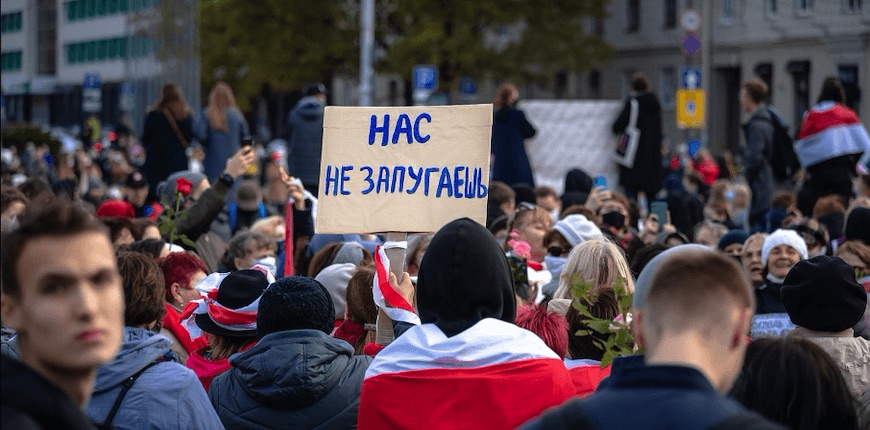
Anti-government protester Roman Bondarenko died last Thursday after spending several days in a hospital following a severe beating by the police. In response, protesters have begun chanting his last words at demonstrations around the country: “I’m going out.” Belarusian authorities have also ordered banks to freeze the assets of Andrei Leonchik, who has raised millions of dollars to help protesters pay fines and medical bills, on the pretense that the funds were going to be used to “topple the government.” In other news, the Belarusian Journalist Association won the Media Freedom Award earlier this week for its “ongoing commitment to journalistic ethics…and its perseverance and self-sacrifice in the face of increased targeted crackdowns on media in Belarus.”
Zimbabwe

A teachers’ strike that started back in September has come to an end now that the Zimbabwe Teachers’ Association (ZIMTA) has accepted a 41% pay rise. ZIMTA claims they are already engaging with their 2021 strategies to improve conditions and salaries for their 40,000 members. In other news, there have been reports of illegal miners being murdered on Chinese-owned mines. The Zimbabwe Republic Police (ZRP) is investigating but little details have been uncovered so far. Meanwhile, government critic Hopewell Chin’ono continues to be detained after his bail was denied.
Indonesia

Indonesia’s candidate vaccine, CoronaVac, was announced to not be distributed by January. This serves as a blow to the country’s president Joko Widodo, who planned to fast-track the final trials of the vaccine and mass distribute it by December. Indonesian police discovered soda bottles stuffed with smuggled parrots on a ship docked in the country’s eastern region of Papua. The animals found were black-capped lories, a protected species native to New Guinea.
China

On Sunday, sixteen countries — China included — signed the Regional Comprehensive Economic Partnership (RCEP) to form the world’s largest trading bloc. The agreement includes approximately a third of the world’s population and GDP and aims to eliminate tariffs and implement new regulations. Major economies, such as India and the US, are not party to the agreement. In other news, Chinese-Australian relations have soured over accusations of Coronavirus mismanagement, continued fallout from the evacuation of two Australian journalists back in September, and new defense pacts between Australia and Japan.
Thailand

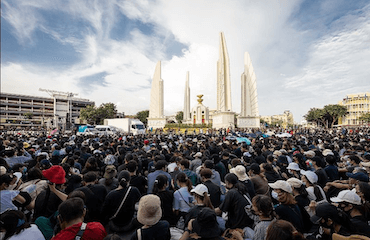
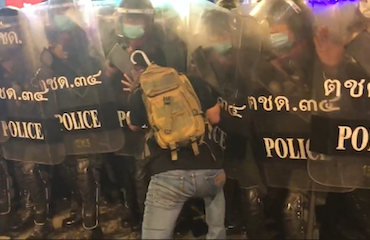
Pro-democracy protests still march through Thailand despite increased political repression sanctioned by the government. However, the movement has adopted a new and unlikely mascot: inflatable yellow rubber ducks. When facing police violence at a protest on Tuesday, protestors utilized a collection of inflatable yellow ducks that was brought to the demonstration as a joke as armor against water cannons and tear gas. This interaction was captured and shared on social media, becoming a new symbol for the movement nearly overnight. In other news, the Royal Thai police headquarters in Bangkok was splattered with paint by angered protestors.
Iraq

A pro-Iranian militia launched a series of seven rockets targeted at the U.S. Embassy in Baghdad this week. Though the embassy was not directly hit, the attack injured five civilians and killed a child. Just two days earlier, a U.S. official ordered another 500 American troops to be withdrawn from Iraq by January 15 of next year. Separately, a financial alliance was formed among the G-7, World Bank, European Bank for Reconstruction and Development, and parts of the Iraqi government this week to assist the country with its financial crisis. This comes as the Office of the High Commission for Human Rights announced that 40 percent of people in the Basra governorate are living below the poverty line, marking an all-time high.
Iran

The United States has yet again imposed more sanctions on Iran. On Wednesday, US President Donald Trump imposed broad sanctions on the country, targeting a foundation controlled by Ayatollah Khamenei. This action is one of many in the White House’s bid to place “maximum pressure” on the country, coming only two months before Trump is scheduled to hand power over to President-elect Joe Biden. Additionally, Iran’s Revolutionary Guard launched a warship on Thursday, with photographs showing it carries an array of missiles and smaller ships. Experts speculate this release is a response to US navy patrols in the region near Bahrain.
Nicaragua

Hurricane Iota brought yet more devastation to Nicaragua while the country was still in shock from Hurricane Eta, which ravaged Central America just days earlier. Iota is thought to be the strongest hurricane to ever hit Nicaragua; its destruction has left many residents without electricity. 60,000 people were evacuated as a result of the storm, and at least three children have died. Meteorologists are claiming this year’s unprecedented hurricane season was caused by climate change, an idea that Joe Biden has also emphasised. International aid and regional banks have provided assistance; however, accessing funds is a slow and difficult process.
Sudan

Conflict in the neighboring country of Ethiopia continues to fuel a refugee crisis in Sudan. The United Nations estimates that about 25k Ethiopians have sought refuge in Sudan in recent weeks, with many crossing the river on the border by boat or by foot. Meanwhile, leaders from the Sudan Revolutionary Front returned to Khartoum this week, signifying that they “have become part of the transitional government” following a peace deal signed in early October. The government also announced this week that Russia will proceed with building a military base near Port Sudan. The base will accommodate approximately 300 military personnel and enable Russia to more easily conduct operations in the Indian Ocean.
Bolivia


The fire departments of Chiquitania and Santa Cruz in Bolivia have declared states of emergency as active forest fires have consumed nearly a million hectares in the past few months. A deadly Ebola-like virus called Chapare is having a second outbreak in Bolivia. The lethal virus was originally identified in 2004 but caused its first outbreak in 2019. It is likely a pygmy rice rat-borne illness, and can cause a hemorrhagic fever if allowed to progress. Though the virus is unlikely to spread outside the outbreak site, it is untreatable and doctors caution those in Bolivia to be cautious when handling unwashed rice or rats.
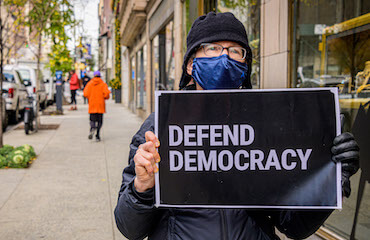

He’s Advised Pro-Democracy Activists in 50 Countries. Here’s His Advice for Americans.

The source of the article: Mother Jones

Serbian revolutionary Srdja Popovic talks about how to mobilize massive nonviolent movements.

Let our journalists help you make sense of the noise: Subscribe to the Mother Jones Daily newsletter and get a recap of news that matters.
He’s been called “the secret architect of global revolution” (by the Guardian) and a “nonviolent storm trooper” (in the pages of our magazine). Now, after two decades traveling the world training pro-democracy activists in more than 50 countries, Serbian revolutionary Srdja Popovic finds himself in the United States, where he’s teaching strategic nonviolent struggle to students at Colorado College. Upon arriving here not long before the election, Popovic was struck by the deluge of headlines questioning whether the upcoming presidential race would be free and fair, which he found eerie but unsurprising.

“Some people get haunted by ex-lovers, or scary movies, or ghosts,” he told me shortly before the election, in an edifying and hilarious video chat. “What haunts me is the spirit of the disputed election.”

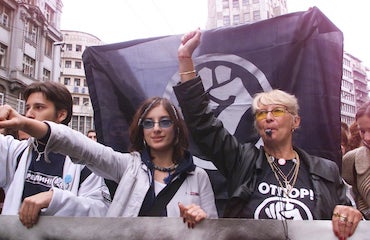
Popovic first tasted the “narcotic collectivism” of movement-building while studying ecology in Belgrade. When Serbia’s autocratic President Slobodan Milošević refused to recognize opposition victories in local elections in 1996, Popovic and other activists founded Otpor! (Resistance!), which organized mass demonstrations and strikes until Milošević recognized the election results three months later; he later resigned from the presidency following another disputed election in 2000. Four years later, Popovic founded the Centre for Applied Nonviolent Actions and Strategies (CANVAS), based in Belgrade, which seeks to undermine autocrats worldwide by distributing handbooks to activists and consulting with movements fighting regimes from Ukraine and Myanmar to Venezuela and the Maldives.

As the United States endures what, at least for now, feels like a failing slow-motion coup, Popovic—also an instructor at Harvard’s Kennedy School and rector of Scotland’s University of St. Andrews—explains how activists can not only ensure that Trump leaves office, but sustain the popular movements for racial justice, gun control, and climate action that will continue into the Biden years.

Delilah Friedler: What did you learn from Serbia’s disputed elections in the 1990s?

Srdja Popovic: Movements witness exponential growth when things stop being political and start being personal. I vote Republican, you vote Democrat—that’s politics. Government steals my vote—that’s personal. That’s like stealing my wallet. This is where the people who don’t traditionally participate in politics come in. Serbia is a country of 6 million people, and we had 70,000 people mobilized before the elections. Then it grew into a half million, because people felt somebody stole something from them.

You need organizations that can net that mobilization. This is a large problem with movements across the globe, and in the United States. You often misunderstand that successful movements are the happily married couple of mobilization and organization. In the case of the gun control movement, you have these peaks of mobilization when, unfortunately, innocent people get killed. But you need to recruit the people who are out then, put them into some kind of organization and give them tasks, so next time, when there is a window of opportunity—when there is a law passing your local legislature, or another school shooting—you use this increased organization in order to have bigger-scale results. Mobilization is like the sea, it comes in waves. Your organization needs to be there to build on this.

What’s different about an election being disputed by someone like Trump, who’s supposedly a democratic figure, as opposed to the more authoritarian figures we see in other countries?

You don’t want to look at the politicians or the people in power. You want to examine the status of the pillars. What’s happening in the US is incomparable with the situations like in Serbia, Georgia, and elsewhere, because you guys, at least in my view, have strong democratic institutions: the way your elections are conducted; the way your media operates. It’s very difficult to expect that that we would witness some kind of major election fraud in the United States. But when you have disputed elections, there are five main things you want to focus on.

First, if you think elections will be disputed, you need to win, and win big. The bigger the win, the larger the landslide, the more refutable is the claim that the elections are stolen. This is what worked in Belarus: huge participation, large turnout, a lot of new voters and young voters. That gives gravitas to the results that is very difficult to dispute.

Second thing, have a comprehensive plan for putting pressure on pillar after pillar. In Serbia, demonstrations were held across the country, but it was the general strike that was more important. Labor unions were involved, citizens were blocking the streets, every Serbian version of a 7-Eleven was closed with a sticker that said “closed because of the fraud.” You couldn’t buy cigarettes, you couldn’t buy gas, you couldn’t buy anything. Milošević called the army and police with orders to intervene and they refused, because they knew their kids were in the crowd.

Number three, to sustain the struggle, you need nonviolent discipline. Put your strong points against your opponent’s weak points. If you need to defeat Mike Tyson, is the boxing ring the battlefield you would pick? No, because your life expectancy in a ring with Mike Tyson is probably 37 seconds. Depends how fast you can run. But if you pick Scrabble, or chess, or a puzzle, you may win. Having violence involved in a situation where your opponent, the state, has more weapons and a legal monopoly over violence—that’s entering the ring with Mike Tyson.

Then you need to sustain this struggle. Election defense tends to be a marathon, not a sprint. It’s taken six weeks in Georgia, three months in Serbia, three months in the Ukrainian winter. This is not something that could be resolved if enough people show on the street for one day; it’s always going to be back and forth. I doubt this scenario is ever possible in the US, but as Ronald Reagan—not my favorite American president—once said, “Freedom is never more than one generation away from extinction.” Theoretically, a disputed election can happen anywhere.

Finally, you need to maintain your democracy. I have to remind my American friends that democracy is like a marriage. You didn’t win by getting married; you need to make love every day, buy flowers for your wife. It’s not, “We have a constitution, so we’ll have democracy forever.” You need to nurture this thing. The fewer people participate in the process, the more you get unorganized, and when the wrong guy comes into power, next thing you know, you live in a dictatorship like Turkey

Having worked in dozens of countries, what have you seen that makes movements successful?

You need to have a vision and unity. Know what you want, not only what you don’t want, and have a clear answer to the question: If we win, what will be different? Movements never win by mobilizing only like-minded people; movements win because they are capable of building diversity, figuring out who potential allies are and finding the smallest common denominator between them. Often that means building weird coalitions with people you wouldn’t normally have a coffee with. Look at the Polish Solidarity Movement, which ended domination of the Soviet Union in Poland. It was the urban intelligentsia, blue collar workers led by Lech Wałęsa, and the Roman Catholic Church—very unlikely allies, but they found a way to work together.

When you see millions of people in the streets, it may appear spontaneous, but the truth is there are only two types of nonviolent movements: they’re either spontaneous or successful. And either the mobilization wanes, or it turns into chaos.

That’s why we talk about nonviolent discipline. You win by numbers, and the less a movement is likely to get involved in violence, the more people will participate. If a protest is going to have rock bands and church singing, I will bring my two kids and wife. If, however, I think they will burn down a Wendy’s, I may still come, but I’m not bringing my kids. The first time they burn a police car, I won’t come. By turning to violence, you lose four out of four from our household. What you want is to be bringing people to your side.

The way movements grow, whether you like it or not, is from the extreme to the mainstream. That’s how you win in football—and I mean the real football, not this game in the US where people wear armor and push each other—you win by controlling the middle ground, and that’s the way you win in social change. People were tying themselves to the fences of nuclear power plants in 60s, but the movement became effective when it reached the point of building institutions like the Environmental Protection Agency. To get into the mainstream, your largest vehicles are staying nonviolent so you don’t disrupt people from joining, and finding what speaks to lots of people without being exclusive.

You are going to have people in your movements who are angry, and people that you’ve never seen ready to act. You need the organization to tell them what to do, otherwise, there will be more Wendy’s. Poor Wendy’s. My kids love Wendy’s.

How have you seen these kinds of strategies play out in the United States?

When people think of Rosa Parks, they see a heroic Black woman who decided not to follow the rules of segregation. The story people don’t ask themselves is, Why Montgomery? Why not New York? Why buses, not planes? Because this was strategic thinking. If you were a Black civil rights organizer in Montgomery, Alabama, one of the most segregated, awful places to be a Black person, what would you do? You get angry, go in front of the City Hall, you march. Then the police or the white folks come and beat you up. City Hall ignores you, because they are elected by the very people who love segregation.

So turn your gaze somewhere you have power: public transportation. The majority of people riding public transportation in the South were African Americans, so this is where they have leverage, the power to deny the companies their money until the buses get desegregated, using tactics that are very difficult to suppress. How can you make me use the bus?

The kids from Parkland fighting for gun control, they think strategically. They figured out that the people who can bring gun control legislation don’t give a damn about them. They care more about the money they’re getting from the NRA. Now we see the enemy. They put pressure on airlines and car rental companies to stop giving discounts to NRA members, and that helps us get to where we are now with the NRA being weaker than before. The kids try to get background checks at Dick’s Sporting Goods and Walmart, chains where people buy guns. The stores start listening, because they don’t care about politics, they care about customers. This is where people have leverage. Improvements haven’t come from the legislative pillar, they’re coming from the pillar of business.

You go after these victories, you win, you proclaim the victory, you empower people, you give them a boost to go off to next victory. The road to success is paved with small victories, and determining what we call the “order of battle” is really important. What do you attack first? Which institutions do you engage first? And I love the word “engage”—because it’s not always attack.

But the Parkland movement hasn’t done much to curtail gun violence in our country. The civil rights struggle still continues. Why do you think US movements aren’t having more success?

In democracies, people are often content with how they are living—it’s not bad enough to get engaged. People are too busy distracted with football or Wendy’s. They’re comfortable, they think the problem is something happening to somebody else, which is why I needed to quote Reagan.

But it’s not that it’s not working. Some of the most important achievements of the modern world have happened in the US. The environmental movement was sparked by people here, the anti-racial movement starts here. You now have the Indian minority in Burma using the hashtag #BlackLivesMatter. There would never be Nelson Mandela if there wasn’t Martin Luther King. We would never have our gay prime minister in Serbia if it wasn’t for Harvey Milk.

People are looking at environmental movement and saying, “America has left the Paris Climate accord. We are back to fossil fuels. The EPA is run by a political climate activist denier.” But the thing is, every single Friday, students of high schools everywhere in the world are marching for climate. These people will vote in four years. Sometimes it doesn’t work tomorrow, but it will work. Despite all odds, my kids will live in the world where majority of the energy will be renewable. For these global challenges of race and environment, it takes time. It’s a marathon. You’re not losing just because you’re on the second or third kilometer, you need to keep running, and keep the pace.

You say the pillars of US democracy are strong, but under Trump, we’ve seen a rise in dangerous misinformation from unreliable sources. How can we rebuild the integrity of our media?

Conspiracy theories like QAnon and such—they’re not just attacking the other side, they’re destroying the middle. Autocrats do this in other countries: to socially disenfranchise your opponent, you want to hurt their capability to recruit neutrals. So the opponent needs to be pedophiles, terrorists, drug dealers, the stooge of the foreign power; whatever will prevent people from speaking with you. This is done with intention, whether through blunt tools like state TV attacks, or with more subtle tools like this mysterious QAnon that doesn’t really need to say who you need to support. It’s more subtle, and it can be more brutal. It’s an assault on truth.

You defend your movement by holding on to values, building up your own narrative that sticks to the science, and not getting engaged in relativization of the facts—but also not taking yourself too seriously, potentially mocking the other side. I read this amazing piece on how K-pop groups are actually the largest threat to QAnon, which sells its conspiracy theories under mainstream hashtags. I couldn’t recognize a K-pop star if he was driving my car, but with their huge internet firepower, the fans are using these hashtags to post K-pop songs and water down the number of conspiracy stories. Young, clever people respond to bullshit with wit, and that builds civil resistance. By watching and engaging in satire, you’re building your common sense immunity, getting the fake news vaccine.

In other words, non-traditional attacks need non-traditional responses.

Everything is non-traditional. We are living in a time where my six-year-old downloads five games on my phone between me going to the café and coming back. I didn’t know how to turn the radio when I was six. So this is a very non-traditional world, and we need to accommodate.

Crash Course in Revolution: Srdja Popovic on Toppling Dictators with Peaceful Protests and Key Strategies for Building Successful Movements

Listen podcast on: Superhumanize

He is a thorn in the flesh and a threat to dictators and autocrats worldwide. For democracy fighters, from Tehran to Minsk, to Istanbul, he is the guru of peaceful resistance.

My guest today is the Serbian political activists Srdja Popovic. Srdja is one of the founders of the student movement OTPOR and one of the leading figures of the revolution that toppled the Milosevic regime of Yugoslavia In October, 2000.

International media calls Srdja the secret architect of global revolution. He is co-founder of the Belgrade think tank CANVAS, Center for Applied Nonviolent Action and Strategies.

To date, he has trained pro-democracy activists in more than 50 countries over the world. He also lectures on the topic of nonviolent struggle and building movements at universities such as Harvard, Johns Hopkins and Columbia.

Apart from being nominated for the Nobel Peace Prize in 2012, Srdja was listed as one of the top 100 global thinkers by Foreign Policy Magazine. And in 2014, he was named one of the Young Global Leaders by the World Economic Forum in Davos.

Silent Threats to Democracy in the Balkans Reach a Roar

The source Harvard International Review

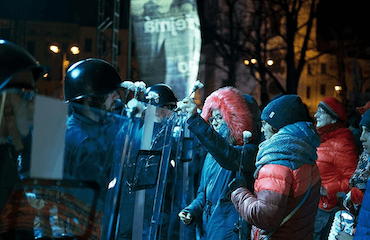
On the night of July 7, thousands of protesters faced off with police in Belgrade. Incensed over a snap COVID-related lockdown that they viewed as another self-serving move of a government already known to modify the system for its own benefit, the crowd attempted to storm parliament. The air filled with tear gas and repeated chants of “Ostavka! Ostavka!”—a word meaning “resignation” in many Slavic languages.

Just two days later, Bulgarians took to the streets of the capital en masse after a journalist reported on yet another act of corruption within the political elite. As they stood in front of the National Assembly waving flags and staring down state security forces, they rallied around a familiar cry: “Ostavka! Ostavka!”

While the EU has locked its eyes on the Belarusian and Hungarian cases of democratic backsliding, threats to institutions in the Balkans have continued to grow. The EU has failed to recognize how declining democracy on the peninsula will erode civil rights protections, undercut the legitimacy of both national governments and the EU, and cause it to lose control over human rights norms in Europe.

Causes of the Current Protests

Both Serbia and Bulgaria, two neighboring states on the Balkan peninsula, have watched their democracies quietly erode for years. This July’s protests marked the end of that silence. As Bulgaria is an EU member state, but Serbia is not, examining these case studies side-by-side can provide a valuable perspective on the EU’s role in the protection of democracy.

Although the largest wave of protests in recent Bulgarian history started on July 9, its citizens’ frustrations have existed for much longer, especially over government corruption. During Bulgaria’s Communist era just a few decades ago, the mafia controlled much of the business and political worlds. Oligarchs still control much of Bulgarian society today, despite the judicial and economic reforms that were instituted prior to the country’s accession to the EU in 2007. A prominent mobster has accused Prime Minister Boyko Borissov of having strong ties to the mafia, an allegation that protesters, and even President Rumen Radev, give weight to. The consequences of corruption on this scale are staggering: according to a Eurobarometer poll from 2019, 78 percent of Bulgarians believe that the “only way to succeed in business is to have political connections,” and an estimated 11 billion euros (approximately US$13 billion) are lost from the economy to corruption every year.

Beyond corruption, Bulgaria’s track record with human rights is reprehensible. The country has by far the worst press freedoms in the EU: it ranked 111th in the world in 2019, trailing behind many widely-criticized countries such as Kenya and Malaysia. Just last year, Bulgarian journalists protested the suspension of reporter Silvia Velikova from a public radio station for urging her audience to oppose the appointment of Ivan Geshev for Chief Prosecutor, though their numbers paled in comparison to the sheer volume of demonstrators on the street now. This demonstration is just one example of a broader trend of media suppression. Oligarchs control many formerly independent news organizations. Journalists outside of those organizations who may have more discretion about what they report on are harassed or threatened when they report on the mafia or government misdoings; some are threatened with up to a year of jail time for defamation. During the current protests, police have beaten and pepper sprayed journalists even after these reporters have shown their media IDs. The International Press Institute reports that members of the media were also prevented from approaching protests so they could document the events.

If the Bulgarian people have faced these concerns for decades, why have they started protesting now? As the answer often is nowadays, it is because of social media. On July 7, the leader of Bulgaria’s anti-corruption party showed on a livestream that an honorary chairman of the state’s ethnically Turkish party had illegally privatized a beach—despite all beaches in the country being public—and defended it with state-funded security guards. This corruption scandal was the spark that “lit the powder keg.” Every single night since July 9, Bulgarian protesters have taken to the streets in droves demanding the resignation of the Prime Minister Borissov and his entire cabinet.

The protests remained relatively peaceful on both sides, until Borissov’s party, known as Citizens for European Development of Bulgaria (GERB), attempted to solve the crisis by proposing a new constitution—one that glossed over most of the demonstrators’ demands. In order to secure enough votes to begin deliberations on the constitution, GERB had to form a coalition with one of the nation’s far-right parties and include provisions like mandatory conscription for adults into the Bulgarian army. In response, unprecedented numbers of protesters well into the thousands joined demonstrations on September 3 in a “grand national uprising.” As police pushed protestors to the ground and used pepper spray to suppress any resistance, they arrested 126 people and injured over 50.

Just across the border, the deterioration of Serbia’s democracy has grown increasingly apparent in recent years. Earlier this year, Freedom House demoted Serbia and Montenegro (as well as Hungary) from democracies to “hybrid regimes” that exist “in a ‘grey zone’ between democracies and pure autocracies.” The prominent rights group called the backsliding “unprecedented.” The Serbian government controls all daily newspapers and nationwide television channels and gives significant loans to private media companies, evidence of how the country has the worst press freedoms in the Western Balkans. Opposition members in parliament are prevented from fully engaging in legislative debate and proposing amendments to bills because President Vučić’s allies fast-track nearly half of all laws through parliament under “urgent procedure.” This trend of rushed process began before the COVID-19 emergency emerged. In short, almost all of the country’s power is consolidated in the ruling party.

When protesters stormed Parliament in Belgrade, they were reacting to President Vučić’s move to impose strict COVID-19 lockdown measures just days after securing re-election. Prior to the election, he lifted restrictions so that people could attend sports matches and vote while under the impression that the state had defeated the virus. In response to this rapid policy reversal from a government that many viewed as “botching” a COVID-19 response, Serbians rushed to parliament and clashed with police officers in Belgrade. Though the Serbian protests have fizzled out, the underlying issues with the manipulative electoral politics remain.

The State of the EU


In spite of the recent turmoil, the EU has remained woefully silent. Although the European Commission authors annual “rule of law” reports on member and candidate countries, these reports usually have no teeth. Serbia and Bulgaria failed to muster an appropriate response to critiques on their democratic institutions in their 2020 reports. In fact, Borissov actually commented that this year’s report on Bulgaria was “exceptionally objective” and did not seem to be concerned by its findings. In contrast to their radio silence on Serbia, though, the European Commission passed a resolution in October that “chastised Bulgaria for flaws in respecting the rule of law, combating endemic corruption, and supporting media freedom.” However, the reports and resolution have no enforcement and, at best, merely embarrass Bulgaria and Serbia’s leaders.

The EU has made a critical mistake by remaining inert in the face of these threats to democracy given the massive internal implications of Bulgaria’s fragile democracy. Bulgarians already distrust governing systems as a whole. If the EU does not defend the values it claims to embody by decisively standing with the Bulgarian people during their time of need, Bulgarians’ support for the Union will likely fall while the breakneck growth of Euroskepticism across the continent in countries such as Italy already threatens the health of the EU.

Beyond Euroskepticism, the EU will face disastrous consequences for letting Bulgaria’s corruption run rampant. If Bulgaria continues to misuse EU funds, other nations in the EU may grow resentful of how the Bulgarian government wastes their contributions and resist paying into the EU’s initiatives.

In addition to decreased faith in the EU and its funding, democratic backsliding threatens to undermine the enforcement of human rights protections throughout Europe. The EU’s Charter of Fundamental Rights lays out standards for the protection of rights that it expects from each of its member states. If constituents of the EU fail to uphold those standards, enforcement elsewhere becomes much more difficult. This is especially true as it pertains to countries wishing to accede to the EU: membership in the valuable economic and political union is often used as leverage to force candidate states to significantly decrease human rights violations.

Serbia stands out as a prominent example. In order to accede to the EU, Serbia must meet certain standards for transparency and human rights. Clearly, Serbia does not yet meet those standards, based on its issues with media freedom and the democratic process; but, the EU has good reason to want Serbia as an eventual member state. Otherwise, it will likely fall into the arms of China, a nation that has already invested heavily in the Balkan state’s infrastructure and COVID-19 response. The citizens of Serbia are no stranger to this aid: the Institute for European Affairs found that 40 percent of Serbian citizens consider China their largest donor, whereas only about 20 percent believed the EU filled that role. Similarly, Russia could occupy this role: Serbia already imports 75 percent of its natural gas from Russia, has a strong connection with Russia through the Orthodox church, and is influenced by Serbian-language Russian state media. Close ties between either of these non-Western powers and Serbia could limit the EU’s influence. This becomes especially important considering that Russia and China are not exactly champions of democratic values like the EU views itself as. If Serbia knows it will receive assistance from China or Russia regardless of its human rights practices, it is less likely to rectify its current abuses; the Serbian government is unlikely to listen to the shouting voices of its constituents unless the EU leverages it to do so.

When faced with the threats in Serbia and Bulgaria, the EU has a few options. For the case of Bulgaria, members of the European Parliament can put party differences aside and call the corruption what it is, in contrast to the partisan vote held on the statement of condemnation earlier this month. It can also stop pouring funds into projects riddled with corruption until the government makes substantial reforms ranging from the judiciary to the press. Serbia can face either the carrot or the stick for its actions: either the EU can back up its abhorrent rule of law report with consequences, or it can incentivize President Vučić and his party to halt anti-democratic practices. Without this action, the EU has failed both its member states and neighbors.

The people of Bulgaria and Serbia are no longer staying silent about the threats to their democracies. The EU should not be, either.

CANVAS Weekly Update – November 14, 2020

Dear friends,

CANVAS is pleased to bring you another weekly report! This week covers police brutality in Thailand, closures of displacement camps in Iraq, sanctions on Iran, protests in Sudan, as well as other news!

Conflict Update


This week, a link between a recent mass shooting in a Nice church in France has been tied to the beheading of a schoolteacher two weeks prior.
Russian troops have been deployed to the Nagorno-Karabakh region following a peace deal with Armenia and Azerbaijan, which have been mired in conflict since July 2020.
Post-election violence following the win of controversial president Alassane Ouattara in the Ivory Coast between ethnic groups has come to a lull after a month of fighting.
Indian and Pakistani troops exchanged fire along the Line of Control, with both officers of both countries accused of firing at civilians.

Coronavirus [UPDATE]


This week in the United States, the state of California hit 1 million total COVID-19 cases, placing it with the second highest number of infections of any state in the country, just after Texas. In recent weeks, Iran’s coronavirus infection rate has skyrocketed, bringing the country to a death count of 40,000. Italy has measured more than 40,000 coronavirus infections and 550 deaths in 24 hours. A new study has shown that ethnic minorities in both the US and UK have a greater risk of infection than white people. This may be due to the higher employment rates of ethnic minorities as essential workers and lower socioeconomic status.

The United States

Lawyers for the presidential campaign of incumbent Donald Trump have dropped a lawsuit in Arizona, in which the president made claims of voter fraud. This comes after a projected loss to Democrat Joe Biden, who has won the state. Pundits believe Trump may face prosecution once he leaves office, as he is currently under a pending grand jury investigation by a district attorney in New York into his businesses and taxes. The US Constitution states that a sitting president may not be subpoenaed, however once the president leaves office the subpoena, if granted, will allow him to be charged in state courts.

Lawyers for the presidential campaign of incumbent Donald Trump have dropped a lawsuit in Arizona, in which the president made claims of voter fraud. This comes after a projected loss to Democrat Joe Biden, who has won the state. Pundits believe Trump may face prosecution once he leaves office, as he is currently under a pending grand jury investigation by a district attorney in New York into his businesses and taxes. The US Constitution states that a sitting president may not be subpoenaed, however once the president leaves office the subpoena, if granted, will allow him to be charged in state courts.

China

US president Donald Trump signed an executive order this week that dictates no American should invest in Chinese military firms. The White House claims that these military firms are owned by the Chinese government. This caused shares to drop for multiple companies on the New York Stock Exchange, such as China Telecom. The automaker company Volkswagon has defended its decision to keep an operating car manufacturing plant in Xinjiang, amid allegations that Uighur Muslims are being detained and forced to work in factories or labor camps. The company claims they have no ties to this practice and control their hiring process; however, critics state the company has a moral obligation to not be tied to such practices given their history in the Nazi party and their historic use of forced labor.

Hong Kong

The central Chinese government removed four opposition lawmakers from the Hong Kong Legislative Council on Wednesday, dealing a devastating blow to political freedom in the city. The U.S. was quick to condemn the action as a “flagrantly violation” of “its commitments to Hong Kong,” and the E.U. voted unanimously in favor of a resolution calling for the “immediate reinstatement of the Legislative Council members” on Thursday. 15 of the remaining opposition members of the LegCo have responded by resigning en masse, leading many to fear that democracy in the city is all but over. China has rebuked the walkout as an “open challenge to its authority.”

Zimbabwe

Since the beginning of the academic year, Zimbabwean teachers have been on strike over their low pay and insufficient school safety measures in the wake of COVID-19. This week, the government voted to double teachers salaries to about US$180 per month in an effort to bring educators back to schools; teachers’ unions rejected the salary increase, arguing that the new figure was still far below the poverty line (~US$540 per month) and thus did not meet their demands. Separately, prominent government critic Hopewell Chin’ono has been denied bail while facing charges of obstruction of justice. Chin’ono claims that the charges are false and he is “being persecuted for exposing corruption in [the] government.”

Indonesia

Indonesian officials will meet with high-level executives of the U.S. automaker Tesla next week in order to become the world’s largest producer of electric batteries. This meeting is supposedly a part of the country’s new omnibus bill, which faces criticism for the removal of worker and environmental protections. Additionally, the president has stated the country will begin a mass COVID-19 vaccination effort later this year after final trails of the vaccine have been run. Politicians in Indonesia are deliberating a ban on alcohol. An alcohol-prohibition bill was first introduced in 2015, and though it was not passed the possibility has prompted protests from tourist destinations, producers and some community leaders.

Thailand

In a demonstration on Sunday, pro-democracy protestors trying to deliver letters of their grievances to the Thai monarch were blasted with water cannons by police forces. No one suffered serious injuries, however the protest was largely nonviolent and did not warrant the use of police force. Earlier this year, an American tourist posted a negative review of a Thai hotel on the website TripAdvisor and was arrested in September for defamation, prompting TripAdvisor to put a warning on the page of the hotel.

Iraq

International bodies such as the Norwegian Refugee Council have criticized the Iraqi government’s decision to continue closures of displacement camps in seven provinces on short notice, despite the coming winter and COVID-19 pandemic. The government expects that the estimated 100k people who will be left homeless by these closures will “return to their areas of origin.” At the same time, the government has been dealing with a wave of protests across the country. Hundreds of civil servants have taken to the streets in multiple cities to express anger over their salaries being delayed, while others have protested outside of the U.S. Embassy in Baghdad to demand the immediate withdrawal of U.S. troops from the country. In Basra, Iraqi forces opened fire on protesters, wounding 40 and killing the first protester since May.

Iran

The International Atomic Energy Agency, a UN watchdog on the possession of global powers of nuclear energy, has stated that Iran has an enriched uranium stockpile of nearly twelve times the amount permitted underneath the 2015 nuclear arms programme. The organization will continue to monitor the country for any other dangers or infractions. In other news, the United States has imposed more sanctions on six companies and four people for supplying good to military organizations in Iran.

Nicaragua

Nicaragua is still reeling from the devastation of Hurricane Eta, which left hundreds of residents homeless. Spain’s Agency for International Development Cooperation has committed to sending 150k euros of humanitarian aid to the battered country. Meanwhile, Nicaragua’s parliament voted Tuesday to approve a much-criticized amendment to the constitution that allows perpetrators of hate crimes to receive life sentences in prison. Since “crimes motivated by hate against the government” fall under this categorization, human rights groups have criticized the amendment, arguing that it will be weaponized against opponents of President Ortega’s regime.

Sudan

Protests popped up across Sudan this past weekend. Workers in Port Sudan went on a three-day strike as others protested and held vigils to express their dismay at increased electricity prices in the Red Sea state; residents of Kordofan demonstrated against a fuel shortage that has led to a “transportation crisis;” and Ethiopians in Khartoum protested a decision by the UNHCR office to change their status from “refugees” to “asylum seekers.” The biggest news of the week, though, is the flood of Ethiopian refugees into Sudan. According to the UN, an estimated 11,000 Ethiopians have fled to Sudan following a deadly military campaign by the Ethiopian government in the Tigray region. As a result, Sudan has partially closed its border with the embattled country.

Bolivia
Luis Arce, the president-elect of Bolivia was inaugurated on Sunday in a ceremony at a pre-Incan site of Tiwanaku. Some speculate he may face This week, former Bolivian president and Movement Towards Socialism Party (MAS) leader Evo Morales returned to the country, from which he was exiled after a military coup ousted him from office in 2019. Morales was residing in Argentina.

Belarus

Amnesty International has reported that over 1,000 peaceful protesters were detained in a single day across Belarus last weekend. International tensions continue to run high: the U.K. government reported that Belarus had expelled two of their diplomats for “legitimately observing protests” and decided to expel two Belarusian diplomats in response. Separately, Belarus’ Astravyets nuclear power plant halted operation within a day of opening after several transformers exploded. The incident worsened pre-existing safety concerns voiced by the neighboring country of Lithuania, whose capital is just 25 miles (40 km) away from the Astravyets plant.

CANVAS Weekly Update – November 7, 2020

Dear friends,

CANVAS is pleased to bring you another weekly report! This report covers the state of the U.S. presidential election, new scandals in Zimbabwe, and natural disasters in Nicaragua and Indonesia.

Coronavirus [UPDATE]


London researchers have discovered that certain antibodies created by the human body whilst fighting the common cold may target the COVID-19 virus and offer some protection against the strain. Over the past week, both Italy and France have hit new daily coronavirus infection highs of 37,809 and 60,486, respectively. On Friday, northern Denmark went into another lockdown as the transmission of a mutated strain of the coronavirus between minks and humans is being investigated. This has led to a nationwide order to kill millions of the animals. Additionally, the president of Portugal has declared a COVID-19 state of emergency that will go into effect next week, strongly recommending that people stay home in order to help lift some of the pressure on the country’s overwhelmed healthcare system. Aspirin is being tested as a treatment for the coronavirus in a UK-based study. The International Monetary Fund has approved a 370 million USD coronavirus aid loan for Afghanistan, which is already struggling from violent conflict.

Conflict Update


Over 50,000 Bangladeshis protested and demanded a boycott on French goods this week after President Emmanuel Macron defended criticism of Islam as an exercise of freedom of speech.

Fears of a civil war in Ethiopia have grown following a crisis of legitimacy resulting from September’s elections and a military offensive in Tigray.

Four were killed and 24 were wounded in Vienna on Monday when a 20-year-old man opened fire on a popular nightlife district. The Islamic State claimed responsibility for the attack, and the shooter was killed by the police.

Bolivia

On Thursday, conservative opposition leaders called a two-day strike, claiming election fraud in last month’s elections despite the validation of the election results by multiple intergovernmental organizations, such as the Organization of American States. Luis Arce, the victor of October’s election, will be sworn in on Sunday despite the tensions. Following the Movement Towards Socialism Party’s return to the presidency last month, former president Evo Morales of Bolivia will return from his exile in Argentina next week.

United States of America

Amidst a slow ballot count, allegations of voter fraud and the fear of a non-peaceful transfer of power, the United States has maintained an air of tension following the country’s election day on November 3rd between current president Donald Trump and challenger Joe Biden. Biden has effectively been declared the winner. Trump has attempted to pursue multiple lawsuits that, if successful, could change the outcome of the election; however, these efforts appear to be fruitless as there has not been any legitimate evidence of voter fraud.

Indonesia

Without much fanfare, Indonesian president Joko Widodo signed a divisive omnibus bill into law on Monday night, disregarding the mass protests demanding the revocation of the bill taking place in the country throughout the past few weeks. Activists worry the bill will have a negative impact on the working class and the environment, as it has stripped regulations that previously protected related issues. Indonesian authorities have begun to evacuate residents near Mount Merapi, an active volcano that the Yogyakarta’s Volcanology and Geological Hazard Mitigation Center warns may erupt soon. During its last eruption, over 350 people were killed and nearly 20,000 people living in the area were evacuated.

Thailand

In a continuation of anti-monarchy protests that have persisted in the country since this summer, thousands of Thai protestors marched towards the German embassy in Bangkok, demanding the German government investigate the king’s multiple stays in Germany in recent months. Protestors have also begun to adopt celestial imagery during demonstrations, challenging symbolism that has traditionally been reserved for the monarchy.

Belarus

As nationwide protests and strikes continue in Belarus, the contested regime faces more and more international scrutiny: the EU is “expected to approve” new sanctions on members of President Lukashenko’s government this week, and Belarus’ human rights record drew massive criticism at their Universal Periodic Review at the Human Rights Council. At the same time, Lukashenko closed many of his nation’s land borders, acting on a threat he had been making for weeks. The most notable protest of this past week was a demonstration involving over 200 disabled Belarusians. Several of them were detained during their march in Minsk.

Sudan

The U.S. Secretary of State announced this week that he had begun to officially push the United Nations to end sanctions that it placed on Sudan back in 2005 following the Darfur conflict. Despite this, President Trump renewed a 23-year-old “state of emergency” declaration on Sudan, saying that the country continues “to pose an unusual and extraordinary threat to the national security and foreign policy of the U.S.” Meanwhile, three-way talks among Egypt, Ethiopia and Sudan over the contested Grand Ethiopia Renaissance Dam ended on Wednesday without any new progress.

Iraq

Iraq’s president and parliament passed a law allowing for early elections in 2021 under new rules intended to increase competitiveness, such as the division of each province into multiple electoral districts. This came days after the country’s security forces used bulldozers to clear out Baghdad’s Tahrir Square, a key landmark in the year-long anti-government protest movement where demonstrators were still staging a sit-in. In other news, one of Prime Minister Mustafa Al-Kadhimi’s advisers was arrested this week on corruption charges.

Hong Kong

Residents of Hong Kong can now anonymously submit photo, audio, and video files to a new police hotline that aims to gather information on violations of the national security law. A Human Rights Watch researcher has criticized the service, claiming that people could abuse the hotline by reporting “people who they dislike or are in a different political camp.” Meanwhile, the judicial system continues to hand down punishments for those who act against the current government. Pro-democracy activist Chan King-hei will go to jail for two years after doxxing three police officers as part of what the judge called a “deterrent sentence.” Around the same time, reporter Bao Choy Yuk-ling was arrested on charges related to a TV program she co-produced about last year’s controversial Yuen Long incident, drawing outrage from multiple journalism groups.

Zimbabwe

Prominent journalist Hopewell Chin’ono has been arrested once again for violating the conditions of his bail. When he was released back in September, the court ordered him to stop using his Twitter account; in response, he created a new account on the platform where he writes about corruption and other critiques of the government. Separately, there have been new developments in last week’s gold-smuggling scandal: the mining official caught with 14 gold bars claimed she “picked up the wrong handbag,” and her colleague claims that President Mnangagwa’s wife and son are major players in the smuggling ring.

Nicaragua

On Tuesday night, Nicaragua was devastated by Category 4 storm Hurricane Eta. At least three people have died as a result of the hurricane that caused mudslides, flooded rivers, and ripped homes apart. Over 10,000 have been huddled in close quarters in storm shelters, despite the risk that it poses for COVID-19 transmission in a country already struggling with the pandemic. In the wake of this destruction, Nicaraguans have pleaded with the international community for humanitarian aid.

China

The only major economy to grow in the historic year, Chinese president Xi Jinping announced the country is expected to import nearly $22 trillion worth of goods over the next ten years, advocating for free trade. On Tuesday, Nepali opposition leaders accused China of seizing territory on the border of the two countries in the Himalayan mountains, a claim that both the Nepali and Chinese governments have denied. An Indian military commander has commented on tension in the Himalayas on the Indian-Chinese border, voicing concerns a months-long standoff could become a larger conflict in the near future.

Iran

The foreign ministers of Iran and Cuba met in Havana this week in order to show solidarity with each other in the face of American sanctions against both countries. The Iranian foreign minister traveled Havana after a visit in Venezuela, another country also currently facing American sanctions. Grand Ayatollah Khamenei of Iran mocked the U.S. elections in a tweet earlier this week, calling it a “spectacle” and saying the elections show the true nature of American democracy.

CANVAS Weekly Update – November 1, 2020

Dear friends,

CANVAS is pleased to bring you another weekly report! This report covers police brutality protests in the United States and Iraq, a contested election in Tanzania, a new Nicaraguan cyber crimes law, sanctions on Iran, and much more!

Conflict Update


Over 100,000 people flooded the streets in Budapest on Friday, protesting the Hungarian government’s efforts to undermine academic freedom for students of the University of Theatre and Film Arts, calling it an “attack on culture.”


A top court in Poland ruled in a decision that is not subject to appeal to ban all abortions, prompting widespread women-led protests across the country despite a spike in coronavirus infection rates.
Somewhat violent anti-coronavirus restriction protests broke out across Italy on Monday following the national government’s order to close restaurants, bars and gyms, as well as the implementation of a curfew by some local governments. Both protestors and police exhibited violence towards each other.


Anti-lockdown protests also took place in London, United Kingdom following the government’s decision to strengthen social gathering restrictions, leading to 18 arrests.


Amid accusations of “shameless vote-rigging” by the ruling party’s opposition, 11 Tanzanian members of the opposition were shot and killed by police after trying to prevent soldiers from depositing pre-filled ballots before the polls opened in order to sway the upcoming election.

Coronavirus [UPDATE]


Friday, NBC reported that coronavirus antibodies may provide protection against reinfections, though they may wane over time. The prime minister of Belgium announced a national lockdown which may be the country’s “last chance” to keep the country’s overrun healthcare system from collapsing. European countries have been documenting new daily records each week, showing no sign the pandemic will slow down on the continent. The United States surpassed nine million known coronavirus cases this week, recording a new daily average of 89,000 infections, as well.

Bolivia

On Tuesday, a Bolivian the Plurinational Legislative Assembly approved a report penned by Movement Towards Socialism (MAS) party members that recommended ex-interim president Jeanine Áñez and her advisors face consequences for their involvement in the massacres of Senkata, Sacaba and Yapacani peoples of Bolivia, including a judgement for involvement in genocide. Áñez has declared herself to be innocent, but stated that she will remain in Bolivia for an investigation she hopes will be “impartial.” Unrelatedly, a regional news source reported on Friday that formerly ousted president Evo Morales will resume leadership of the Six Federations for the Tropic of Cochabamba, a powerful union for coca growers.

United States of America

Tensions are high leading up to the U.S. general election on November 3rd. On Monday, 27-year old Walter Wallace Jr. was murdered by two cops in Philadelphia during a wellness call regarding Wallace’s ongoing psychological episode. In the following days, protesters and police officers clashed in another instance of national outcry over police brutality. The demonstrations grew increasingly violent, with police officers aggressively targeting protestors, firing tear gas and striking them with batons. In many local elections, police brutality and police reform have become the centerpiece of campaigns, however the unprecedented number of mail-in ballots and concerns surrounding whether they will be counted remains at the forefront of election concerns.

Indonesia

As protests against Indonesia’s unpopular omnibus law continue, local news sources have reported that intruders have disrupted the peaceful protests and damaged a dozen traffic cameras. Unrelatedly, inmates have tested positive for coronavirus at a prison in Pekanbaru, a major economic hub located on the country’s Sumatra island. With one death thus far, concerns of prison overcrowding leading to quick coronavirus transmission have been voiced by authorities within the corrective facility and international media.

Thailand

Protests calling for reform of the Thai monarchy that started mid-June continue to rage on despite Prime Minister Prayuth refusing to step down, citing loyalty to the Thai king. Prayuth has faced criticism for his engineering of last year’s elections to keep himself in power. Other members of parliament have also called upon him to step down, adding to the mounting local and international pressure for democratic reform. There have been increasing instances of royalist counter-protestors showing up at demonstrations and raising tensions. Analysts have voiced concerns about the protests, calling upon activists to keep a watchful eye on Thailand lest the protests turn violent and lead to a military coup.

Belarus

Nationwide strikes began this week after President Lukashenko refused to resign by the Sunday deadline given to him by opposition leader Svetlana Tikhanovskaya. Since the beginning of the strikes, police have detained doctors, forcing them to postpone life-saving operations for their patients, who participated in the protests and Lukashenko threatened to conscript student participants. Dozens of student protesters have already been expelled from their universities for the same reason. General hostility towards protesters continues: police fired stun grenades into crowds on Sunday, detained over 500 demonstrators nationwide that same day, and even violently raided homes that protesters took shelter in after receiving orders to do so from Lukashenko.

Sudan

Sudan’s foreign ministry announced on Sunday that the country will discuss cooperation agreements on trade and migration with Israel in the weeks to come. The announcement has been met with opposition from Iran, who says Sudan was held “ransom” by the U.S., and high-level Sudanese officials who say that such normalization should not take place until the formation of a transitional parliament. Normalization has also led some 6,000 Sudanese asylum seekers in Israel to fear deportation back to their home country. On a more positive note, a representative of the International Monetary Forum said that Sudan’s removal from the U.S. list of state sponsors of terror “eliminated one of the hurdles to possible…debt relief,” an encouraging sign for the country in a time of economic crisis.

Iraq

On October 25, thousands of Iraqis hit the streets of Baghdad, Najaf, Nasiriyah, and Basra, renewing a movement against government corruption and emphasizing earlier demands for the prosecution of those who killed protesters during the past year. The protests first began just over a year ago, but were temporarily halted due to COVID-19 concerns. Police and protesters exchanged blows in this new round of demonstrations: as the police employed tear gas and stun grenades, protesters hurled molotov cocktails, burned tires, and threw rocks. Dozens of civilians were injured in the process. In other news, Kurdistan authorities announced this week that they had foiled a PKK-led attack on diplomats in the city of Erbil.

Hong Kong

Lasting unrest in Hong Kong has taken a toll on its citizens’ feelings of security: the city, which previously ranked 5th in the world on Gallup’s Global Law and Order Index, tumbled to 82nd place in 2020. Official figures show that an increasing number of Hong Kongers are seeking asylum, especially in Canada and Australia; this week, four activists attempted to seek asylum at the U.S. Consulate but were rejected within hours. One of the activists, 19-year-old Tony Chung, was arrested on charges of secession soon after. Meanwhile, calls for the Chinese government to release twelve Hong Kongers who have been detained ever since attempting to flee to Taiwan are intensifying around the world. Opposition lawmaker Helena Wong Pik-wan hung up banners saying #save12HKyouths, a hashtag echoed by prominent activists such as Greta Thunberg.

Zimbabwe

China, the Zimbabwe Human Rights Commission, and the African Union have all urged the international community to halt sanctions on Zimbabwe after the country’s anti-sanction campaign this week. The series of events ended with an all-night online “extravaganza” with Zimbabwe’s top musical talent that drew just 14 viewers. Separately, the government has amended the Criminal Law Act to criminalize “unauthorized communications with foreign governments,” “protesting during international events or visits,” and making “unsubstantiated claims of torture or abduction” in a move that experts say takes aim at opposition activists and charities. The ruling party drew additional fire this week when a relative of President Mnangagwa was arrested after attempting to smuggle 14 gold bars past airport security prior to boarding her flight to Dubai.

Nicaragua

Nicaragua’s legislature has approved the Special Cyber Crimes Law, which includes provisions for imprisoning anyone who “promote[s] or distribute false[s] or misleading information that causes alarm, terror, or unease in the public,” “incites hatred or violence,” or “puts at risk economic stability, public health, national sovereignty or law and order.” Many fear that this law will be disproportionately applied to members of President Ortega’s political opposition, which is why the European Union and United States expressly disavowed the law after its proposition.

China

On Thursday, China unveiled a new 5-year economic plan, emphasizing quality growth over speed in order to become a self-reliant “technological powerhouse.” This plan aims to encourage domestic demand and slowly open up the economy throughout the duration of the plan. It is expected that President Xi Jinping’s pledge of making the country carbon neutral by 2060 will heavily shape how the country carries out the five year plan. China has announced its plans to impose sanctions upon Raytheon, Lockheed Martin and Boeing following the U.S. approved a nearly $ 2 billion arms sale to Taiwan last week.

Iran

On Thursday, United States announced it would place sanctions upon 11 firms and individuals for their alleged participation in the sale and purchase of Iranian petrochemical products. Additionally, the country announced it had seized missiles and oil from Iran on route to Yemen. UN atomic power watchdog International Atomic Energy Agency has confirmed that Iran is in the process of building an underground centrifuge assembly plant after the country’s previous one exploded. Following the hit of a new coronavirus infection number, Grand Ayatollah Khamenei has called for stricter rules for those who flout public health rules.

Five Lessons for Fighting Back After a Disputed Election

The source of the article: Slate

The leader of the movement that brought down Milosevic on what Americans might need to prepare for.

When I was 23, my country’s president lost an election and, not caring for that outcome, decided to annul the results. His name was Slobodan Milosevic—a lovely character sometimes called the “the Butcher of Balkans”—and my homeland was Serbia. In 1996, Milosevic’s party had lost local elections to a united opposition in 15 of the 18 largest cities. It took three months of demonstrations and street protests to make him concede. And that experience changed my life forever.

Four years later, he tried to do it again, after he lost the presidential election in a landslide. But this time, together with my friends in the Serbian student movement Otpor, I led nationwide demonstrations and strikes that inspired hundreds of thousands of my fellow Serbs. Milosevic finally conceded on Oct. 5, 2000, only after our movement had turned out half a million protesters in front of the national assembly and strikes brought the country to a standstill.

For the last 15 years, my organization CANVAS, which specializes in empowering pro-democracy movements, had worked with dozens of groups around the world facing unfair, stolen, and disputed elections. Some of them like Ukrainians in 2004, Georgians in 2005, or Maldivians in 2008 were capable of defending democracy, despite the vast arsenal of autocratic tricks they had to overcome, including bribing voters, ballot stuffing, annulling results in state-controlled courts, and, if that didn’t work, brutal violence and repression.

Last Autumn, I moved to the United States, so imagine my surprise when I discovered that the overwhelming fear of my American friends is that their country may now be on the verge of a disputed election. I may be a newcomer to American democracy, but after my work combating autocracies globally, I believe there are some universal tips that people facing the danger of a disputed election should know.

  1. Win, and win big. Numbers are important, and history teaches us that the larger the turnout and margin of victory, the more difficult it is for anyone to cast doubt on the result.

When Georgia held parliamentary elections in 2003, exit polls and parallel vote tabulations by local nongovernmental organizations showed opposition parties winning by a landslide, while the state-run electoral commission affiliated with long time country’s leader Eduard Shevardnadze claimed the opposite.* International organizations like the OSCE deemed the election neither free nor fair. Soon after, a series of nationwide nonviolent protests known as the “Rose Revolution” brought the county to a standstill, resulting in Shevardnadze’s resignation on Nov. 3 as well as the Supreme Court of Georgia annulling the results of the election. (Americans may not be able to count on their own Supreme Court in this election.)

When a fresh round of elections was held six weeks later, opposition leader Mikheil Saakashvili won 80 percent of the vote.* None of this would have been possible if the real winner had not been so clear and obvious from the beginning.

  1. Plan. And do it before the election results are disputed. Serbia, Georgia, Ukraine, Gambia … basically every case study teaches us that disputed elections are likely to trigger an unprecedented opportunity for mobilization. Remember: Elections are “political” (so they drive “political” people), but election fraud is personal (so it affects everybody). Expect people who have never been active to feel the urge to join. Make sure you have the organization to channel that mobilization, and that’s not something that can be built over a coffee. Successful movements strategically select the institutions that they want to target or defend with nonviolent strategies early, and prepare step-by-step plans and proper tactics for targeting each one of them. Do not wait for the storm to start planning.
  2. Stay nonviolent . Anticipating, preventing, and resisting political violence is always critical to protecting the vote and ensuring the survival of democracy in any country. Remember the iconic photos of smiling women handing flowers to armored members of Ukrainian security forces in 2004? This is exactly what I am talking about. Political scientists Erica Chenoweth and Maria J. Stephan in their landmark work Why Civil Resistance Works demonstrated that nonviolent movements are twice as likely to succeed as those that fail to prevent looting, rioting, or outright violence. Humor and creativity help also. As my recent research with professor Sophia McClennen shows, wit works far better than anger.
  3. Prepare for the marathon. Bad news: Movements to defend democratic elections rarely end quickly. After Milosevic annulled election results in autumn 1996, Serbian citizens protested for more than 100 days, sometimes in harsh winter temperatures. We learned our lesson well, so when he tried to steal the election again in 2000, we made him concede in less than three months. Even that was less challenging and heroic than the Ukrainians who defended their election victory from November 2004 until January 2005 in a far harsher Ukrainian winter! Gather your warm clothes, persistence, and patience. Tell your kids that you will be out a lot, or even better, embrace the idea that marches and protests are great for building family connections. It’s your democracy to defend—and this may well be the most important battle of your lifetime.
  4. Never, ever take democracy for granted. Ronald Reagan was not my favorite U.S. president, but his warning that “Freedom is a fragile thing and is never more than one generation away from extinction” is unfortunately true. We have witnessed dozens of democracies backslide or slowly die across the globe—from the Philippines to Hungary—because people were either too busy or lazy to defend them. No, defending the vote is not “somebody else’s problem.” It’s your country.

Never forget that democracy is not something granted to you because of your place of birth. Rather, think of democracy like love: You need to practice it every day.

CANVAS Weekly Update – October 23, 2020

Dear friends,

CANVAS is pleased to bring you another weekly report! This report covers groundbreaking foreign policy developments in Sudan, Iran-sponsored interference in the U.S. Presidential election, developments in Southeast Asian protests, and more.

Conflict Update
Protests have continued since the Indonesian government approved a new omnibus bill two weeks ago that loosened labor and environmental regulations on the country; with no change to the law, many Indonesians will see severance pay and hazard pay go down, as well as the removal of environmental checks for some companies, prompting further concern that the government is serious about keeping the bill.

The Thai government has placed an emergency decree outlawing all public gatherings of more than five people on Bangkok and granted security forces more power to crush dissent. Demonstrators have defied this, even surrounding Bangkok’s Victory Monument with more than ten thousand people in order to block traffic in a busy area of the city. While the emergency measures have since been lifted, residents of Bangkok are now calling upon the Thai Prime Minister to resign within three days. Watch our ten-minute interview with prominent Thai activist Mook on our Instagram page.

About 2,000 protesters engaged in violent clashes with the police in Prague last Friday after the Czech government imposed a new set of COVID-19-related lockdown measures in light of record-breaking case numbers. Many protesters threw firecrackers at the police, who responded with tear gas and a water cannon.

Last Friday’s beheading of a teacher who used caricatures of the prophet Mohammed has sparked protests across France. While some have joined the protests to “protect free speech,” other demonstrators have been spotted holding signs such as “No to Islamization” and “Nazislamization is cutting our throats.”

Coronavirus [UPDATE]


The number of active COVID-19 cases in the United States has increased to over 77k people, a record-breaking statistic. The total number of coronavirus cases in the country is now at nearly 8.5 million with 224,280 deaths. The Prime Minister of Scotland introduced a new five-tier system of coronavirus restrictions, placing different parts of the country under different lockdown measures depending on infection rates. North Korea has warned its citizens of the seasonal dust clouds that travel from China each year, claiming they might be infected with coronavirus. However, there is no known link between dust clouds and the spread of the coronavirus. As the first western European countries to report more than a million coronavirus infections, Spain and France are starting to re-implement lockdown measures in order to mitigate the spread of the disease.

Bolivia

On October 18, presidential candidate Luis Arce of the Movement Towards Socialism Party (MAS) won the Bolivian presidential election in a landslide vote, beating his opponent by more than 20 points. Arce’s victory has been recognized by interim president Jeanine Añez, former president and fellow presidential candidate Carlos Mesa, and the Organization of American states. Though ousted president Evo Morales remains the head of the MAS party, Arce claims Morales will have “no role” in his administration. The United Nations electoral mission to Bolivia cleared the electoral process of any fraud, highlighting the transparency of the elections in a feat much different than the alleged voter tampering in the elections of 2018.

Belarus

Protests against the embattled regime of President Lukashenko continue as 280 protesters were detained nationwide, most during a rally of over 30,000 in Minsk on Sunday. Many senior citizens have taken to the front lines of these protests; one woman was quoted as saying, “I have nothing to lose. If they arrest me, I’ll be proud in front of my grandkids.” Despite this, Russian intelligence chief Sergei Naryshkin said this week during a visit to Belarus that the USA and its allies have been behind these months of protests. In other news, the European Union awarded the Sakharov Prize, its top human rights prize, to opposition leader Svetlana Tikhanovskaya and her movement. The announcement came just days after a senior police official announced that Tikhanovskaya was officially wanted on charges of “jeopardizing national security.”

Sudan

Sudan is set to be removed from the U.S. terrorism watchlist after the African nation’s government agreed to pay US$335 million to the families of American terrorism victims. Soon after, reports from the Sudanese government indicated that Prime Minister Abdalla Hamdok is “ready to proceed with normalizing relations with Israel once a yet-to-be-formed transitional parliament has approved the step.” Normalizing relations between Sudan and Israel was a key during talks with the USA last month in Abu Dhabi. Meanwhile, a delegation from the International Criminal Court visited Sudan this week to discuss the charges of former leader Omar al-Bashir and two others. The Prime Minister says that he is “committed to achieving justice.

Iraq

A deal struck between Baghdad and the Kurdistan Regional Government last week has drawn fire from the Yazidi population, a religious minority group that was heavily targeted by the Islamic State. Though the plan provides a framework that would allow Yazidis to return to their hometown of Sinjar, Yazidis were not involved in the creation of the deal and say that its “security measures” will create divisions in their community. Separately, Human Rights Watch denounced the Iraqi government for “failing to take serious action against violent attacks on local journalists.” In the past year, media outlets have been raided, torched, and threatened without seeing substantial government response. An anonymous correspondent in Iraq said, “For us, it is hard to obtain information without constantly fearing for our lives.”

Hong Kong

The policies of many Western nations towards Hong Kongers have been in the spotlight this past week. Germany granted refugee status to a university student who fled Hong Kong out of fear that she would not be given a fair trial for the charges she was facing regarding her involvement in pro-democracy protests. After Canada granted asylum to a Hong Kong couple for similar reasons earlier this month, China’s ambassador to the nation publicly condemned them this week for meddling in their internal affairs and encouraging “violent criminals” in the city. Additionally, the British government announced that it would begin accepting applications from Hong Kongers for a new type of visa next January, which would allow those wishing to leave the city a clear path to full British citizenship.

Zimbabwe

President Mnangagwa implored the international community to lift all sanctions immediately in his State of the Nation address this week. Though such sanctions, like those imposed by the US and European Union, were imposed in response to the government’s human rights violations, the President argued that the measures were harming ordinary citizens. Meanwhile, outrage is rising among Zimbabwean healthcare workers who have been prevented from seeking employment abroad after the government passed a policy requiring them to obtain “official signatures to receive a ‘Certificate of Good Standing.’” Most doctors cannot secure employment without this certification, prompting one doctors’ group to label the policy as “an attempt to stop a mass exodus [of doctors] after poor treatment during the COVID-19 pandemic.”

Nicaragua

President Ortega spoke out this week about the opposition he faces both at home and abroad. He said that Western powers were involved in a “campaign of viciousness” against his country, alleging that the USA is promoting and financing “terrorists who disguise themselves as democratic politicians” in Nicaragua and slamming recent sanctions imposed by the USA and European Union. He went on to deny widespread allegations that his government has been torturing jailed opposition activists. Just days earlier, the secretariat Organization of American States issued a statement condemning “persistent human rights violations” in Nicaragua.

China

This week, a Canadian parliamentary committee called upon Ottawa to condemn the human rights abuses inflicted upon the Uighur muslim population by China’s repressive policies and impose sanctions on the country, causing Beijing to release a statement rejecting the allegation. On Thursday, the United States approved a sale of US$1.8 billion worth of arms to Taiwan; Beijing released a statement threatening retaliation over the deal, claiming it violates diplomatic agreements between the US and China signed in the 1970s.

Iran

The US Department of Homeland Security issued a statement accusing the Iranian government of sending Americans emails demanding they vote for US President Trump in a tactic widely associated with a US white supremacist group called “the Proud Boys.” Iranian officials issued a statement in response, condemning the “baseless accusation of meddling in a US election.” As a result, the United States sanctioned five entities, including the Islamic Revolutionary Guard Corps (an elite Iranian security force) “for having directly or indirectly engaged in, sponsored, concealed, or otherwise been complicit in foreign interference.” Unrelatedly, the Human Rights Watch reported this week that human rights advocates are being prosecuted by Iranian authorities for reporting abuse in prison.

CANVAS Weekly Update – October 19, 2020

Dear friends,

CANVAS is pleased to bring you another weekly report! This today’s report covers the Bolivian elections, Belarus’ authorization to use deadly weapons against protestors, US sanctions on Nicaragua, a ceasefire in Iraq, and our weekly Conflict Update!

Conflict Update


The recently-implemented ceasefire between Armenia and Azerbaijan over the Nagorno-Karabakh region was broken soon after it went into effect.
Governor Adegboyega Oyetola of the Osun state of Nigeria escaped an assassination attempt after marching with End SARS protestors.
Ex-president Almazbek Atambayev of Kyrgyzstan was re-arrested after being freed by protestors last week.
Indonesia is entering its third week of mass protests in Jakarta and other cities against the newly-passed omnibus law.

Coronavirus [UPDATE]


According to Johns Hopkins University, the United States surpassed 8 million coronavirus cases on Friday, the highest total number of infections in the world. Living samples of the coronavirus were found by the CDC on frozen food packaging in China’s port city of Qingdao, confirming the “theoretical possibility” that the virus could be transmitted via contaminated objects. Rare coronavirus complications of multi-system inflammatory syndrome usually reported in young children manifested in an adult in New York City, calling into question the commonality of the syndrome in COVID-19 positive patients.

Bolivia

On Sunday, the first election since the ousting of former president Evo Morales was held in Bolivia. Though the weeks leading up to the election were fraught with tension, the voting processes remained mostly peaceful, despite the slow count and the long queues outside of some polling places. The two leading candidates are Luis Arce, from Morales’ Movement Towards Socialism Party (MAS) and former president Carlos Mesa, from the Community of Citizens. The Supreme Electoral Tribunal of the country decided to not publish exit polls in order to prevent panic similar to that of the country’s most recent election, in which Evo Morales was accused of committing election fraud. The decision to not release polling updates has prompted calls of concealment and concern from Morales and other MAS party members. However, the candidates have pledged to respect the outcome of the election in order for a peaceful transition of power.

Belarus

In response, Svetlana Tikhanovskaya, the leader of Belarus’ opposition, has given embattled President Lukashenko an ultimatum: resign by October 25, or the anti-government movement will launch nationwide strikes. Her statement elaborated on this threat, saying, “all enterprises will begin a strike, all roads will be blocked, [and] state-owned stores will no longer have any sales.” This came in response to an announcement by the Interior Ministry earlier in the week that police had received authorization to use lethal weapons against protestors. Security forces used flare guns and water cannons against demonstrators this week.

Sudan

Following talks held in South Sudan, the Sudanese government signed an agreement with the Sudan People’s Liberation Movement-North (SPLM-N) to integrate the major rebel group into the national armed forces over the coming 39 months. The deal stipulates that rebel forces will operate under the Sudanese army’s command for the next 14 months while staying in their current positions in the Nuba Mountains and the Blue Nile, after which they will be stationed across the country for 13 months before being completely integrated. The deal has been lauded as “historic.”

Iraq

After the US threatened to close its embassy in Baghdad several weeks ago, Iran-backed militias have agreed to a conditional ceasefire with American interests in the nation, so long as the US provides a timeline for the full withdrawal of its troops from Iraq. Meanwhile, there have been protests in Iraq’s Shengal region following the signing of an agreement between the Kurdistan regional government and Baghdad that was drawn up as part of UN-backed negotiating efforts. The minority Yazidi population says it was excluded from discussions and has since called on international organizations to “use their influence to preserve the existence of Yazidi society.”

Hong Kong

Following last week’s uproar over a teacher who was fired for “promoting Hong Kong independence” in her primary school classroom, the Secretary of Education announced that the Bureau was reviewing multiple other cases brought against teachers, likely on similar charges. In a similar move to quash dissent, anyone who assumes public office in the city now has to “confirm in writing or take an oath to uphold the Basic Law and swear allegiance to the Hong Kong Special Administrative Region” or else they will be fired. Eventually, all current public servants will have to do the same; if they refuse, their decision will “become a factor in deciding promotions and other career development.”

Zimbabwe

A high court ordered that opposition legislator Joanah Mamombe be released from Chikurubi Maximum Security Prison, where she was held for nearly two weeks prior to facing trial for “public violence” and violation of public health measures. In other legal news, activist Godfrey Tsenengamu turned himself in to the police last Friday after appearing on the police wanted list for “inciting public violence.” His bail hearing has been postponed. Additionally, the Zimbabwean government has formally requested that South Africa extradite former minister Saviour Kasukuwere, who faces several corruption-related charges for his time in office.

Nicaragua

The United States imposed a new wave of sanctions on Nicaraguan government officials and institutions this week, targeting “Attorney General Ana Julia Guido De Romero, Secretary of the Presidency Paul Herbert Oquist Kelley, and financial institution Cooperativa De Ahorro Y Credito Caja Rural Nacional RL.” Despite objections from the USA and other international actors, a body within the Nicaraguan parliament said it had deemed the controversial “foreign agents” bill “favorable to approve.” If passed, the bill would require all Nicaraguan citizens working with foreign entities to register with the government and be subject to considerable restrictions and scrutiny. ”

China

Following the arrest of Chinese scholars in the United States, Chinese officials threatened to detain Americans in the country if the Justice Department proceeds with the prosecution of said scholars. The scholars, members of the Chinese military, are accused of including false information on their visa applications. Unrelatedly, disappeared Hong Kong protester affectionately known as “Grandma Wong” has reported that she was taken to mainland China and ordered to renounce her activism, followed by a “patriotic tour” in which she was forced to take photographs of her with the Chinese flag and sing the Chinese national anthem.

Iran

The United Nations arms embargo on Iran was lifted on Sunday, allowing the country to now buy and sell conventional weapons despite protests from the United States. The lift of the embargo was a part of the 5-year timetable described in the Iran nuclear deal signed in 2015. Despite being hailed as a “momentous occasion” by the country, Iran will not see an arms-buying spree, claiming that “Unconventional arms, weapons of mass destruction and a buying spree of conventional arms have no place in Iran’s defense doctrine.”