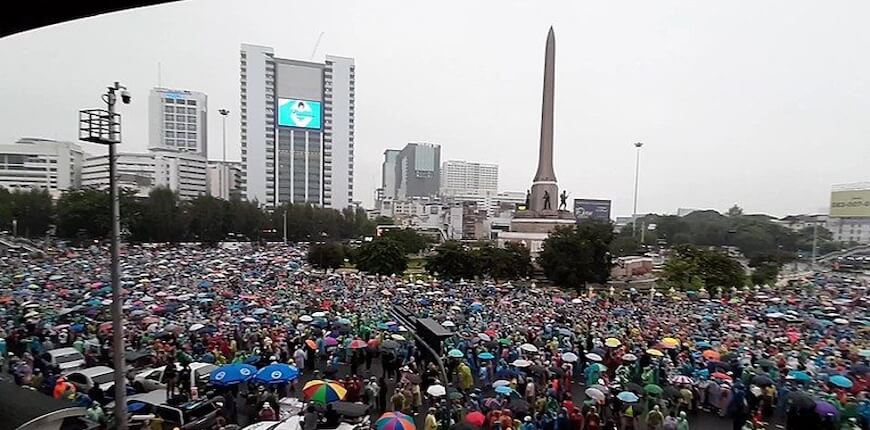
This module addresses the importance of negotiations in any nonviolent social change. Trainers will delve into ways to change the attitude and behavior of the other party in negotiations, tactics for achieving better outcomes in negotiations, the importance of third parties, and methods of cultivating external support and building relationships with third parties.
Objectives
Understand the types of negotiations and negotiations partners
Learn how to avoid most common pitfalls in negotiations
Every day, it seems a new brush stroke is added to the dystopian picture we call 2020. The coronavirus pandemic environment has and is disrupting civil society globally. Lockdowns and physical distancing measures are conectning people to their homes and upending their ability to meet, organize, and advocate. Social distancing measures effectively disabled some of the most popular forms of protests (rallies, marches, etc), and wherever you speak to human rights and democracy defenders you will hear that “it is so difficult to engage people or event talk about democracy and human rights as everybody talks only about the pandemic and economic disaster.”
But, despite depressing conditions there are growing signs that movements are increasingly adapting to new circumstances. From Hong Kong to Bolivia, from Philippines to Uganda, activists and peacebuilders are confronting the need to innovate tactically and adapt their strategies amid national lockdown orders, social distancing, and other measures intended to curb the spread of the coronavirus.
Objectives
Learn how to adapt movement to the to the everchanging environment in which you operate
What will be the long-term impact of the pandemic on how people engage activism and protests.
Found creative ways to build organizations and reputation during the time of the pandemic.
Sophisticated phishing and social engineering methods turn simple modes of communication into entry points into information about organizations plans and activities. As a result, cybersecurity awareness training is essential to reduce the risk to activists.
Objectives
Recognize the importance of digital security when operating in oppressed societies
Learn about online threats and how to avoid them
Understand how digital security reflects to physical security and vice versa
If a movement intends to succeed, members must first understand the methods and techniques used to overcome the adverse effects of fear. Removing or reducing fearful stimuli and anticipating surprises, through improved understanding and developed skills and discipline, have proven to be effective. This module will explain the psychological characteristics of fear and techniques used to overcome it.
Objectives
Understand what fear is and responses to fear
Learn about the techniques for handling fear and techniques to be used during the action
Coup, not so rare phenomenon in a societies that crave for change. We have witnessed numerous coups in a last decade that prevented nonviolent change. What are the consequences for a non-violent movement, what is the role of a non-violent movement in the event of a coup and what steps should be taken to prevent the consequences is what this module will try to answer.
Objectives
Discover rules in dealing with the coup
Analyzing most important pillars and how to engage them during the coup
Learning strategy and tactics that work in cases of coup
CANVAS is pleased to bring you another weekly report! This week covers ongoing protests in India, biological testing of soldiers in China, pressure on the Belarusian regime, and much more.
Conflict [UPDATE]
Ethiopian authorities claimed it had killed or captured rebel leaders in a mountainous region of the country bordering Eritrea, however the local rebel leaders in Tigray have countered that people are currently protesting against occupying soldiers that are looting civilian neighborhoods. The country has recently allowed humanitarian and aid workers access into the region, which many view as long-prevented and much-needed. Mine workers in Peru from the Doe Run metallurgical plant have joined a group of striking farmworkers blocking major highways across the country in order to place pressure onto the country’s interim president, Francisco Sagasti.
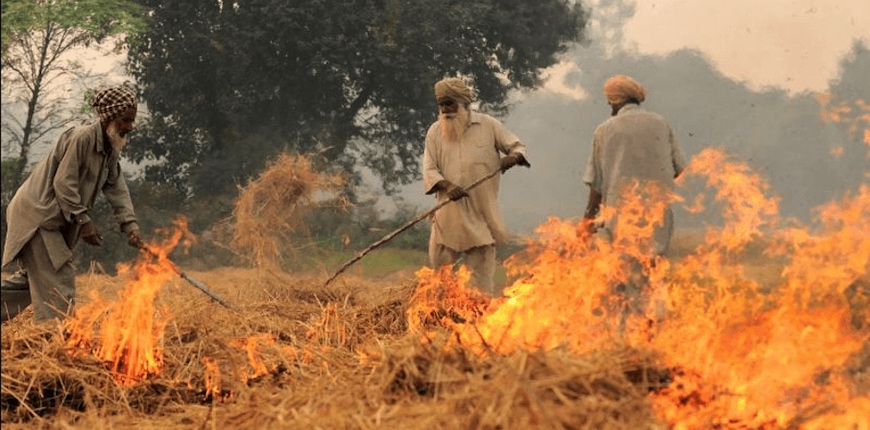
In an effort to protest Indian Prime Minister Narenda Modi’s proposal to overhaul the state-run system in which many farms do business, many farmers have set their fields on fire. Knowing the implications for the air quality of cities like Delhi, these farmers burn their farms out of fear that produce prices will drop and corporations will take over their farms. This week, Catholic-majority Argentina lit up with protests against a government-backed bill that would legalize abortion. This is the ninth abortion legalization bill to be introduced to the Argentine Parliament.
Coronavirus [UPDATE]
The global coronavirus death count lays around 1.5 million as the global case count has climbed to 64.91 million. This week, the Wall Street Journal reported pharmaceutical company Pfizer was only able to roll out 50 million doses of a coronavirus vaccine, half the total number of doses they had projected to distribute by the end of the year. This caused its shares to drop nearly 2% by the end of the trading session last week. Italy has imposed some of the strictest holiday rules in Europe, banning travel around the country in order to mitigate the spread of the coronavirus.
Cuba
The San Isidro Movement launched protests in Havana to demand the release of a jailed group member and rapper Denis Solís. The group of artists, intellectuals and journalists are critical of the communist’s encroachment of civil liberties, in particular freedom of expression. Following a statement by 300 artists and the risky protests staged in front of the Ministry of Culture, the artists secured a meeting with Fernando Rojas, the vice minister of culture. However, since then, authorities dispersed the protesters base in Old Havana, in which 6 protesters were on hunger strike, and state media is defaming the movement as US-backed imperialism. The movement is gaining support and is drawing international attention.
The United States
The House of Representatives passed a bill to decriminalise marijuana, which is considered a milestone for social justice movements. Trump and Giuliani continue their campaign to delegitimize the US election. However, Barr announced that the Justice Department uncovered no significant voter fraud and it has been revealed that Guiliani is seeking a presidential pardon. Meanwhile, Biden is preparing for office by urging action on the economy and Covid-19. The November employment report reveals 3.9 million people in long-term unemployment and the slump is disproportionately affected people of colour. Congress is divided over the stimulus packages, however, a bi-partisan group has detailed a $908 billion plan to move forward.
China
US Spy Chief, John Ratcliffe, is claiming that China has conducted biological testing in the People’s Liberation Army in an effort to genetically enhance its soldiers. Furthermore, he accused China of economic espionage and claimed China poses the largest global threat to freedom, to which the Chinese retorted that the US is entrenched with a Cold-War mindset. Meanwhile, Sino-Australian relations continue to deteriorate after a fabricated photo was tweeted depicting an Australian soldier threatening a child; this has drawn international criticism and calls for renewed dialogue between the spatting states. In other news, 23 people were trapped in a coal mine in Chongqing, due to an accident involving carbon monoxide. Finally, President Xi Jinping made remarks regarding China’s improved rates of absolute poverty, while outlining more work ahead.
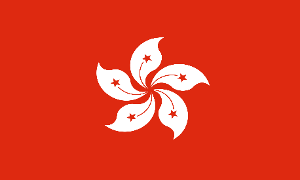
Hong Kong
Prominent pro-democracy activist Joshua Wong was sentenced to 13 months in prison for violating the national security law by “organising and inciting others to join a 15-hour siege of police headquarters” last year. His fellow activists Agnes Chow Ting and Ivan Lam Long-ying were sentenced to 10 and 7 months in jail, respectively, on similar charges. The next day, pro-democracy media mogul Jimmy Lai was arrested on fraud charges. He has been denied bail and will be detained until his hearing in April after the court determined he would be a “flight risk.”
Indonesia
The intensity of Indonesia’s coronavirus outbreak has come to light following the death of a senior doctor and his wife on Wednesday due to the inability to find a ventilator to treat their severe COVID infections. This death has “raised alarm bells” in Indonesia, representing the intense overcrowding in Indonesian hospitals. This week, the Indonesian city of Medan was flooded due to torrential rain, forcing the evacuation of thousands of people and left over 2,700 homes flooded.
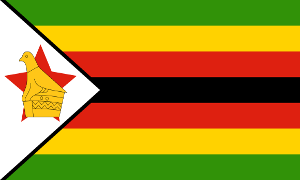
Zimbabwe
Flooding has hampered rescue efforts to save the 10-40 illegal miners trapped in the Ran Gold Mine in Bindura. The miner’s explosives hit a support pillar causing the shaft to collapse; so far only 6 have been rescued, 1 body has been retrieved, and the remaining are feared dead, trapped under water and rubble. Zimbabwe’s economy is in crisis; with high inflation and unemployment rates, exacerbated by Covid-19 lockdowns, Zimbabweans are increasingly turning to the dangerous trade of illegal gold mining. In other news, hundreds are stuck at border posts due to a lack of sufficient Covid-19 test certificates and other documentation, following the reopening of borders. At the Beitbridge border post, 622 people were refused entry in a single day, consequently, many families and traders are struggling to get home.
Flooding has hampered rescue efforts to save the 10-40 illegal miners trapped in the Ran Gold Mine in Bindura. The miner’s explosives hit a support pillar causing the shaft to collapse; so far only 6 have been rescued, 1 body has been retrieved, and the remaining are feared dead, trapped under water and rubble. Zimbabwe’s economy is in crisis; with high inflation and unemployment rates, exacerbated by Covid-19 lockdowns, Zimbabweans are increasingly turning to the dangerous trade of illegal gold mining. In other news, hundreds are stuck at border posts due to a lack of sufficient Covid-19 test certificates and other documentation, following the reopening of borders. At the Beitbridge border post, 622 people were refused entry in a single day, consequently, many families and traders are struggling to get home.
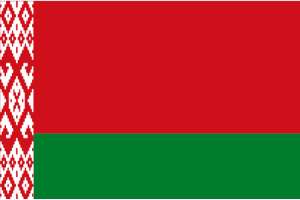
Belarus
The contested regime of President Lukashenko faced new sources of pressure from abroad this week. On Wednesday, Russian President Putin urged Lukashenko and the opposition to hold talks intended to resolve the current unrest. Soon after, the UN convened to review an independent report created by 16 OCSE countries that contained calls to “cancel the results of the elections of August 9…release political prisoners, ensure the safety of journalists, and refrain from limiting access to [the] internet.” The Belarusian opposition has simultaneously launched a lobbying effort to convince state prosecutors across Europe to investigate allegations that Belarus’ security forces have tortured detainees. In line with this, opposition leader Svetlana Tikhanovskaya announced this week that the movement planned to compile a “book of crimes” committed by the police during the past several months of protests.
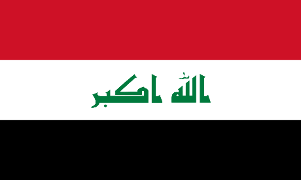
Iraq
The U.S. recalled more than half of its diplomats from its embassy in Baghdad this week as tensions between the superpower and Iran rise. Unrest within Iraq itself continues. To the north, hundreds of government employees protested yet another delay in wages that were due to them two months ago. In Baghdad, similar numbers of university graduates have demonstrated against the lack of employment opportunities for their demographic. In the southern city of Nasriyah, thousands participated in the funeral march of a protester who died in clashes earlier in the week. Eight people have been killed in Nasriyah, along with several dozen injured, since the unrest began.
Thailand
Five people are facing charges of violating the Thai lese majeste law, including human rights lawyers and protest leaders. They are expected to report to the police by December 7th. Protest leaders see this as a sign: the monarchy is unwilling to listen to the people and feels seriously threatened by the ongoing anti-government pro-democracy movement. In other news, Thai king Maha Vajiralongkorn issued thousands of pardons this week in honor of his father’s birthday on Saturday. Among those being pardoned are political opponents, including those from the red-shirt protests of 2006.
Iran
Iranians took to the social media site Twitter this week in an outpouring of support for Vahid and Habib Afkari, recently arrested brothers of a professional Iranian wrestler that was hanged last year for speaking out against the government. Vahid and Habib were imprisoned for their involvement in demonstrations protesting against the regime in 2018. This week, Iran has rejected President-Elect Joe Biden’s terms for reconstituting a nuclear deal between the two countries. Iran’s foreign minister, Javas Zarif, has said that the US must strictly comply with their end of the 2015 nuclear programme before Iran would consider having talks with the global power. This comes amid a breach in treaty between Iran and multiple world powers that dictates the country should only have access to first-generation IR-1 centrifuges. Iran has told the International Atomic Energy Agency, a UN watchdog organization, that it has installed three advanced IR-2m machines in an underground bomb-resistant location in Natanz.
Nicaragua
A two-year report published by the Inter-American Commission for Human Rights (IACHR) details the human rights abuses against political protesters following April 2018. The testimonies of 266 people report arbitrary detention, dire prison conditions and (sexual) violence against political prisoners. The abuse was carried out by the National Police, however, parapolice and armed civilian groups also engaged in excessive violence. Meanwhile, Nicaragua continues to suffer the aftermath of Hurricanes Eta and Iota. The damages are set to contract the economy by 6%, and as an agriculture-dependent state, the risk of future extreme weather looms.
CANVAS is pleased to bring you another weekly report! This week covers ongoing protests in Belarus, illegal gold mining in Zimbabwe, the arrest of government officials in Indonesia, and more.
Conflict Update:
In Ethiopia, the government is launching a military operation in the Tigray region where the TPLF party vows to keep fighting. The humanitarian impact could be massive as the regional capital Mekelle is home to 500,000 people. Furthermore, at least 54 civilians were massacred in the Oromia region by the Oromo Liberation Army (OLA). In Taiwan, protests have erupted over the government’s decision to overturn a ban on US pork imports which contains ractopamine, a drug banned in the EU and in China.
Coronavirus Update:
In increasingly harsh coronavirus measures, North Korea has executed an official for violating coronavirus rules, according to South Korean officials. The country has also completely locked down capital Pyongyang and some industries to further prevent the spread of the virus. In other news, NPR reported in an interview that the soon-to-be released COVID-19 vaccine by Pfizer will not be available for children, as very few were involved in clinical trials, the youngest enrolled being 12 years of age. However, prospects are hopeful: scientists predict that the vaccine may be more efficient in children when studied in a pediatric population. This week, the online media platform YouTube has suspended the One America News Network – an organization that is openly supportive of US President Donald Trump – for sharing misinformation about COVID-19 and a new possible “cure”. This comes among a bid for YouTube to clean the platform of misinformation, as it has also banned alt-right group QAnon from using the site. Finally, G-20 leaders discussed coronavirus supply distribution in a two-day virtual conference. This comes in an effort to not prevent less economically developed countries from proceeding quickly with coronavirus recovery measures.
The United States
Donald Trump voices for the first time that he will leave office if the electoral college declares Joe Biden the winner. However, Trump and his allies continue with their unsubstantiated claims of electoral fraud. Biden is picking his cabinet in preparation for taking office; the nominations are diverse and have extensive experience, however, commentators are criticising their backgrounds in ivy league colleges and the Obama administration. Internationalism is set to improve under Biden with a renewed emphasis on positive relationships with allies and value-based world leadership.
China
Chinese-Australian relations continue to deteriorate following Australia’s support for a probe into Coronavirus. China has imposed a 212% tax on Australian wine imports, the latest of a string of import restrictions on Australian goods. Australia, along with Washington and Japan, has concerns over China’s military construction in the disputed South China Seas. Malaysia claims Chinese vessels are ‘harassing’ their drilling rig as the two face off in the area over hydrocarbon exploration. Chinese-Indian relations flared after satellite images revealed that China was building along a disputed border shared with Bhutan and India. Meanwhile, Pope Francis has criticised China for its treatment of Muslim Uyghur’s.
Hong Kong
Hong Kong is currently facing its fourth wave of COVID-19 infections, which has resulted in the closure of bars & nightclubs as well as the delay of the long-awaited travel bubble with Singapore. Leading pro-democracy figure Joshua Wong and two other activists pleaded guilty to “unauthorized assembly charges” and will be sentenced next week. In the meantime, Wong is being kept in solitary confinement at a medical center where the lights are on “24 hours a day” after doctors claimed to see a shadow on an X-ray of his stomach. Wong has not been allowed to see the X-ray. Finally, the city’s Secretary for the Civil Service has stated that city officials who refuse to sign a loyalty pledge to the government will face negative consequences for promotions.
Indonesia
Indonesian Maritime and Fisheries minister Edhy Prabowo arrested on Wednesday in the Soekarno-Hatta International Airport upon returning from a working visit to the United States. The country’s anti-corruption agency released a statement regarding suspicions of Prabowo taking bribes in relation to lobster larvae export permits and using the money to shop for luxury goods in the United States. He was arrested alongside five other government officials and businesspeople for taking bribes in exchange for permits.
Zimbabwe
The disused Bindura gold mine has collapsed, trapping approximately 30 illegal miners who are now feared dead. Research has revealed that $1.5 billion worth of gold is illegally smuggled out of Zimbabwe annually. The government’s centralised gold buying scheme forces miners to sell to the central bank which underpays producers and causes delays. In other news, Marfume, the mayor of Harare, Zimbabwe’s capital, has been arrested for alleged corruption and abuse of office in 2010. Opposition groups claim that his arrest is politically motivated.
Belarus
Lukashenko announced on state television that he would step down following the adoption of a new constitution, however, the implications and sincerity of this announcement remain unclear. On Friday, thousands of Belarusians attended the funeral of Roman Bondarenko, an anti-government protester who died after being beaten by security forces last week. Last Sunday, thousands of demonstrated in Minsk for the 15th consecutive week in a “March Against Fascism”. More broadly, the government continues to punish those who oppose President Lukashenko’s regime: thousands of homes in the Novaya Borovaya district, an opposition stronghold, have lost heating and water while at least 16 journalists have been beaten, arrested, and jailed for reporting on the ongoing movement. Meanwhile, seven non-EU members, such as North Macedonia and Ukraine, have joined the EU in sanctioning Belarus.
Iraq
Iraq has drawn criticism from two international human rights watchdogs this week. First, Amnesty International reported that following the closure of displacement camps that sheltered hundreds of thousands of people, displaced people with “perceived ties” to the Islamic State have been “subjected to arbitrary detention, enforced disappearances, and unfair trials” while also being denied “civil documentation essential for employment, education, access to state benefits, and free movement.” Second, Human Rights Watch condemned a cybercrime bill being considered in the legislature that “includes vague provisions that will allow Iraqi authorities to harshly punish expression they decide constitutes a threat to governmental, social, or religious interests.”
Thailand
Thailand saw the revival of the country’s lese majeste, or royal insult law, this week. In its first use since 2018, police officials summoned seven leaders of the ongoing anti-government demonstrations for speaking out against the royal family. These summons came directly before another planned rally, which the location was changed in order to avoid clashes with the police and counter-protestors. The rubber duck, now symbolic of the Thai protests for shielding demonstrators from water cannons, has inspired solidarity memes online. Unrelatedly, Thai authorities admitted to a failed seizure of what they believed was nearly $1 billion in ketamine but was actually 11.5 tonnes of a food additive.
Iran
Leading Iranian nuclear scientist Mohsen Fakhrizadeh was assassinated near Tehran on Friday, according to authorities. Fakhrizadeh was rumored to have piloted Iran’s covert atomic bomb program in 2003, although Iran denies any claims trying to weaponize nuclear energy. State media has stated that Fakhrizadeh was killed by terrorists, although no group or state has claimed responsibility for the attack. Australian professor Kylie Moore-Gilbert was recently released from her two-year detention in Iran in a trade-off with Iranian prisoners detained abroad.
Nicaragua
Nicaragua continues to suffer the aftermath of Hurricane Iota, a category four storm, which hit last week, and Hurricane Eta which hit a week prior. The storms have caused at least $743 million worth of destruction, with 44,000 homes destroyed; the additional damage from Iota is yet to be calculated. The Inter-American Development Bank has pledged $1.7 billion in aid for the millions impacted across Central America. Costa Rica is offering safe passage for Nicaraguans seeking refuge or asylum, and with the assistance of the EU and the UN, is aiming to improve protections for the thousands migrating.
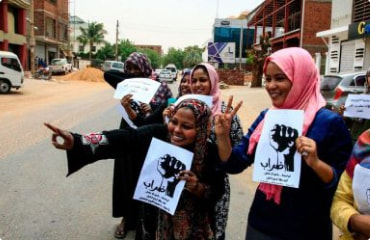
Sudan
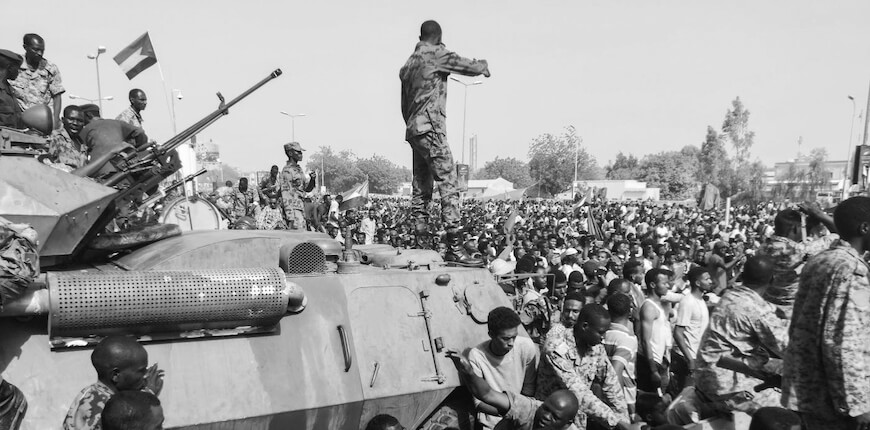
The UN says it expects up to 200,000 refugees from Ethiopia to flee to Sudan over the next half-year if fighting continues in Tigray; 40,000 have already crossed into Sudan as of this week. This refugee crisis comes as Sudan is already battling a new stage of the COVID-19 pandemic: the country is considering new lockdowns due to this month’s spike in cases that has left many dead, including several doctors and a former prime minister. Separately, the governing alliance announced that the formation of the country’s transitional parliament has been postponed until the end of 2020. They say this delay will enable them to account for the needs of the Sudan Revolutionary Front with whom the government signed a peace agreement with in October.
Bolivia
This week, the Inter-American Commission on Human Rights (IACHR) began an investigation into the deaths protestors in Bolivia last year following the ejection of former president Evo Morales from office. This investigation will examine individual deaths and the deaths as a whole and investigate the human rights abuses perpetuated by the interim government. Unrelatedly, President Luis Arce announced that the multimedia platform teleSUR would be allowed to air content in the country after being prohibited from airing by the interim government of Jeanine Anez.
This website uses cookies to improve your experience. By closing this message, you consent to their use in accordance with our cookie policy, unless you have disabled them. ACCEPTRead More
Manage consent
Privacy Overview
This website uses cookies to improve your experience while you navigate through the website. Out of these, the cookies that are categorized as necessary are stored on your browser as they are essential for the working of basic functionalities of the website. We also use third-party cookies that help us analyze and understand how you use this website. These cookies will be stored in your browser only with your consent. You also have the option to opt-out of these cookies. But opting out of some of these cookies may affect your browsing experience.
Necessary cookies are absolutely essential for the website to function properly. This category only includes cookies that ensures basic functionalities and security features of the website. These cookies do not store any personal information.
Any cookies that may not be particularly necessary for the website to function and is used specifically to collect user personal data via analytics, ads, other embedded contents are termed as non-necessary cookies. It is mandatory to procure user consent prior to running these cookies on your website.