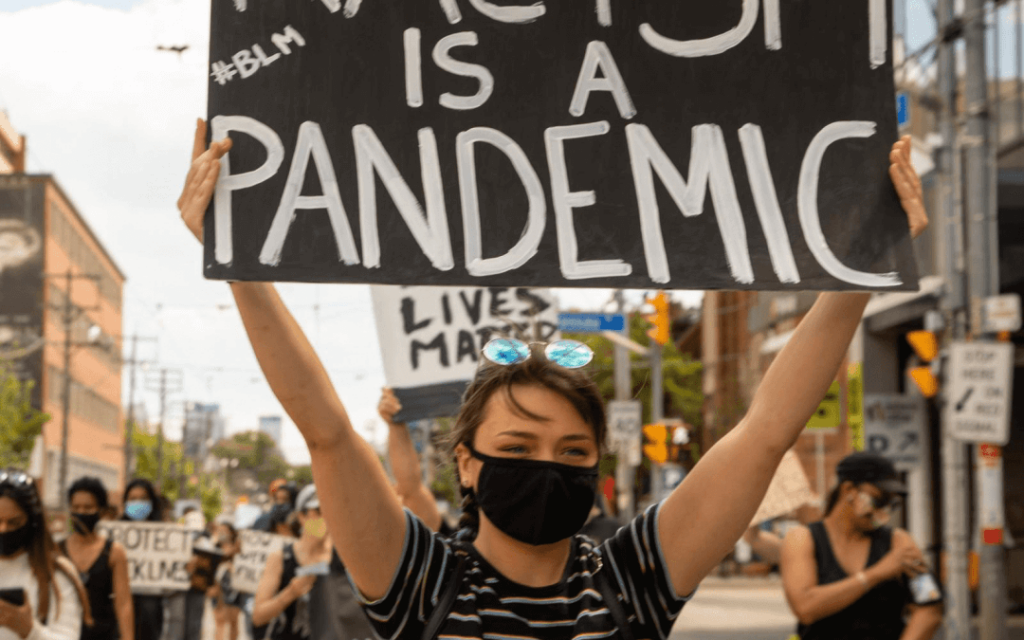
Weekly Report August 9 2020


Coronavirus

The U.S. economy added 1.8 million jobs in July, but the momentum of the recovery appears to be slowing. Africa has surpassed one million cases of the coronavirus, but the true toll may be much higher, hidden by extremely low testing rates. The global number of confirmed cases approach 20 million, and deaths approach 750,000; the top 3 centers of the virus remain the United States, Brazil, and India.


United States

Oregon has experienced violent clashes this week between protesters and police, ratcheting up tensions in the city days after an agreement between state and federal officials appeared to bring calm. Demonstrators continued to rally in Portland on Thursday night, hours after the city’s mayor criticized the current unrest that has roiled Portland since George Floyd was killed. “You are not demonstrating, you are attempting to commit murder,” Mayor Ted Wheeler said on Thursday in a hastily called news conference alongside Portland police chief Chuck Lovell. Earlier this week, Amnesty International released a report documenting widespread and egregious human rights violations by police officers against protesters, medics, journalists and legal observers who gathered to protest the unlawful killings of Black people by the police and to call for systemic reform in May and June of 2020.


China

Last week, a video surfaced showing a first-hand account of China’s highly secure and secretive detention system in Xinjiang. Over the past few years, estimates suggest more than one million Uighurs and other minorities have been forced into a network of highly secure camps in Xinjiang that China has insisted are voluntary schools for anti-extremism training.


Hong Kong

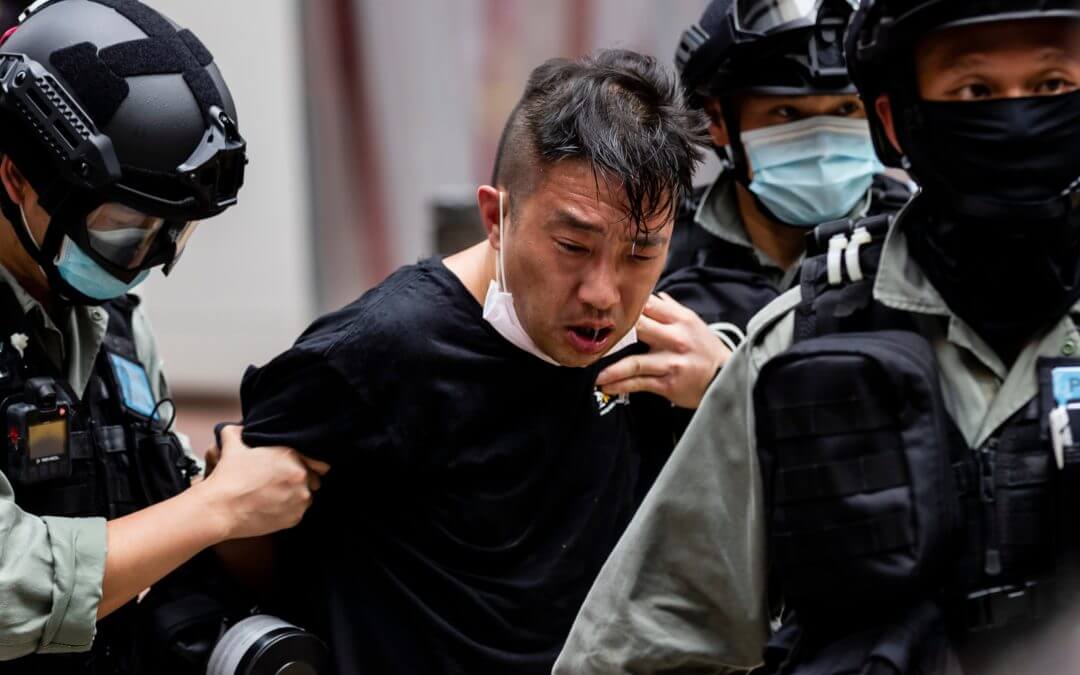
Hong Kong and Chinese officials condemned and mocked a Friday move by the Trump administration to impose sanctions on Hong Kong’s chief executive, Carrie Lam, and 10 other senior officials for their roles in a prolonged crackdown on political dissent in the city. Last week, the government arrested four activists who had posted pro-democracy sentiments online, and barred a dozen pro-democracy candidates from running in the upcoming legislative elections, before postponing the elections entirely.


Myanmar

A court in Myanmar has sentenced a Canadian pastor to three months in jail for holding church services in defiance of a ban on gatherings to combat the spread of the novel coronavirus. Myanmar’s military and 10 ethnic armed groups agreed to hold bilateral meetings during the state-level Joint Ceasefire Monitoring Committee meetings to discuss the Nationwide Ceasefire Agreement, amidst hopes of a renewed peace process between the groups.


Zimbabwe

The Zimbabwean government cracked down on peaceful anti-corruption protests on July 31, 2020. Zimbabwe authorities have arrested at least 60 people, including the novelist Tsitsi Dangarembga and the opposition MDC Alliance spokesperson, Fadzayi Mahere, in connection with the protests. Sixteen people were injured and required medical attention. Meanwhile, Zimbabwe’s president Mnangagwa has vowed to “flush out” his opponents, as anger with his government grows over alleged corruption and economic mismanagement. Over the last few days, in response to this brutal clampdown by security forces, the hashtag #ZimbabweanLivesMatter has gone viral, globally. 


Chile

In southern Chile, a confrontation between Mapuche indigenous protesters and residents turned violent Sunday. Several government buildings in the Araucanía region were damaged as the violence erupted. Local media reported that residents tried to force the Mapuche protesters out of the municipality buildings, before burning and overturning vehicles belonging to them. Chilean police intervened to evict the protesters and prevent other violent acts.


Iraq 

This week the Iraq prime minister Mustafa al-Kadhimi has called for early parliamentary elections for June 2021. The United Nations has praised the prime minister’s announcement stating that it would promote “greater stability and democracy.” The original election was scheduled for May 2022. On the 1st of August, 16-year-old Saeed was released from Iraqi custody following extensive police brutality. Prime Minister Mustafe al-Kadhimi stated in a press briefing that those responsible have been suspended pending investigation. Saeed was originally arrested in May 2020 while selling water and taking part in an anti-government protest on Baghdad’s Tahrir.


Libya

This week, the Trump administration backed UN calls for a cease-fire amid the many factions, and signaling again that the country’s oil fields are off limits to those seeking to profit on the war. The US initiative comes during an escalation of fighting between the Libyan Government of National Accord, which is recognized by the UN and backed by Turkey, and the insurgent forces of former general Khalifa Hifter, who has the support of Egypt, the United Arab Emirates, Russia and France.


Syria 

On Monday this week an Israeli aircraft attacked targets in Syria as a retaliation for an attempted bombing of the border fence by an enemy squad. The strike hit Syrian observation posts, intelligence collection systems, anti-aircraft batteries and command-and-control bases. Meanwhile, opposition factions fired several rockets on the Russian positions in Kensaba frontlines in the northern countryside of Latakia. There is yet to be a full report on the number of casualties.


Lebanon  

Thousands are left homeless following a massive explosion on Tuesday in Beirut. The explosion killed at least 157 people with 5000 injured. Lebanese authorities have taken into custody 16 individuals as part of an investigation into the Beirut port warehouse explosion that shook the capital, state news agency NNA said on Thursday. Protesters in Beirut are calling however for the government’s resignation following the investigation probe. Following investigations it has become apparent that the explosion could not have happened without a huge stockpile of ammonium nitrate. The exact details of the explosion are still under investigation.


Palestine 

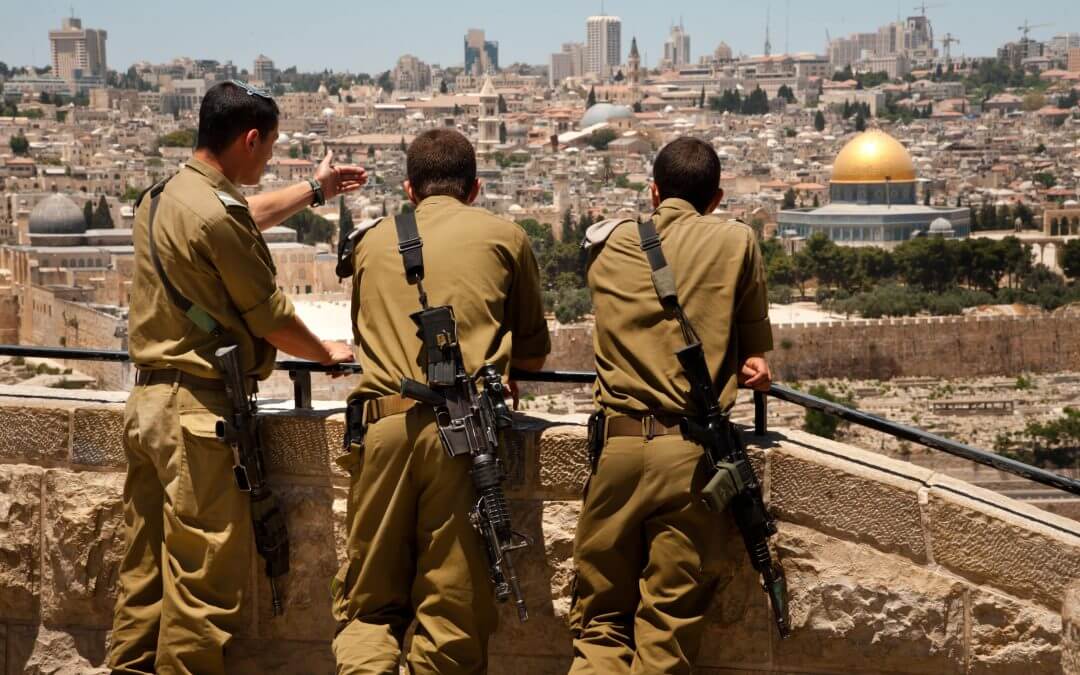
Israeli forces have destroyed numerous irrigation ponds in the al-Jiftlik village in Jordan Valley. The three ponds that were destroyed were used to irrigate 70 dunums of village land. The further restricts Palestinians access to water in the area both for drinking and for farming irrigation. Meanwhile, the Palestinian Human Rights Organizations Council in a press statement condemned the arrest of human rights defender Mahmoud Nawajaa. Last Thursday, Nawajaa was arrested in his home by the Israeli occupying forces and relocated to the Al-Jalama interrogation centre. This was done in violation of International Humanitarian laws. Coronavirus cases have surged in the occupied West Bank, East Jerusalem and Gaza, reaching 13,457 last friday.


Russia

Thousands of demonstrators have gathered again for a fifth week in Russia’s southeastern city of Khabarovsk to denounce the arrest of the region’s governor a month ago. Sergei Furgal was arrested on July 9 on suspicion of involvement in murders and taken to jail in Moscow. Russia is about to become the first country to approve a COVID-19 vaccine, with mass vaccinations planned as early as October.


North Korea

North Korea is quarantining thousands of people and shipping food and other aid to a southern city locked down over coronavirus worries, officials said, as the country’s response to a suspected case reinforces doubt about its longstanding claim to be virus-free.


Iran 

An investigation over the weekend suggests that Iran’s actual coronavirus death toll is three times the official government numbers. An anonymous source leaked data which showed vastly more people had tested positive and further died from the virus suggesting the suppression of data by the Iranian government. Iran’s health ministry claimed that 279,000 people had been infected and only 14,000 have died; however, the BBC’s Persian service has reported more than 451,000 positive cases with more than 42,000 deaths. Meanwhile, The United Nations Security Council will vote next week on a US bid to extend an international arms embargo on Iran.


Nicaragua

Aljazeera reported this week about the pattern of incarceration of opposition-minded people in Nicaragua that human rights organisations have been documenting since the mass protests of 2018. There are more than 90 activists imprisoned on trumped-up charges. Daniel Ortega’s administration has been accused of using the judiciary to punish those who have dared criticise its policies and practices.


Sudan

Local reporters warn against plans by the Sudanese army to file legal complaints against journalists for cyber libel and “insulting” the armed forces, saying that these actions echo the intimidation tactics used under the rule of ousted President Omar al-Bashir. In a statement last month, the armed forces said a cybercrime military commissioner had been appointed. The commissioner, working under the military prosecutor, will monitor and document “insults” against the army, and any violations will result in criminal complaints brought against journalists in Sudan or outside its borders.


Venezuela

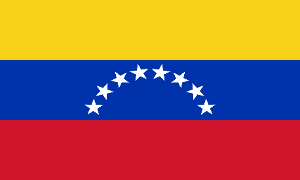
The Venezuelan government is being accused of taking punishing measures against people who break quarantine rules imposed to curb the spread of COVID-19. Witnesses and rights groups say that security forces are punishing some Venezuelans who violate anti-coronavirus measures with physical exercise, sitting under the sun and even beating. A Venezuelan court has sentenced two former American soldiers to 20 years in jail for trying to overthrow President Nicolás Maduro. 


Bolivia

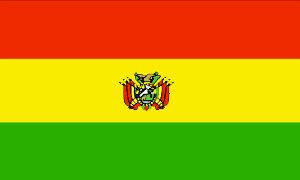
Anti-government protesters in Bolivia blockaded some of the country’s main roads this past week to challenge the delay of general elections and rebuke the government’s poor response to the coronavirus pandemic. The protesters, who support Bolivia’s former president, Evo Morales, say they have set up 70 roadblocks, marooning about six million residents of three highland regions, including Bolivia’s most important metropolis, La Paz. The government on Thursday said it would break up the blockades by force if it can’t reach an agreement with the protest organizers.
Weekly Report July 17 2020


Coronavirus

The United States reported more than 75,600 new cases on Thursday shattering its previous single-day record. It was the eleventh time in the past month that the record has been broken, and the number of daily new cases has more than doubled since June 24th. Elsewhere, India became the third country to see more than one million total cases, joining Brazil and the United States. Brazil passed two million cases, adding one million cases in a month.


United States

 The United States is steadily increasing its case count, repeatedly shattering its daily virus count record. On Thursday, the U.S. daily record hit 75,600 new cases, with the number of deaths also increasing. This week, the Trump administration announced that it is considering a sweeping ban on travel to the United States by members of the Chinese Communist Party, based on the same statute in the Immigration and Nationality Act that inspired a travel ban on several predominantly Muslim countries.


China

The U.K. has barred the use of Huawei’s 5G equipment in its high-speed wireless infrastructure, marking a victory for the Trump administration. The U.S. government is also purportedly considering a sweeping travel ban on Chinese Communist Party members amid worsening relations. The CCP has 92 million members, and enforcement would be unclear. Meanwhile, U.S. Attorney General William Barr has accused Hollywood and U.S. tech firms of bowing down to Beijing in order to do business in China. Barr further alleged that the Chinese government was able to access Apple phones though the company had denied similar access to the US government, emblematic of an emerging “double standard.” In the race for a coronavirus vaccine, a state-owned Chinese company is boasting that its employees, including top executives, received experimental shots even before the government approved testing. The Chinese economy is also growing again after its worst three-month period in decades, indicating good news for global coronavirus recovery.


Hong Kong 

U.S. President Donald Trump has ended Hong Kong’s preferential trade status following China’s decision to impose a new security law. Hong Kong is expected to be treated the same as mainland China, meaning its goods will be subjected to increased tariffs. Trump also signed the Hong Kong Autonomy Act passed by Congress, which would introduce sanctions on banks doing business with Chinese officials responsible for the security law. Meanwhile, China has moved to dramatically increase tax rates on Hong Kong residents, prompting bankers and professionals to mull leaving the financial hub. TikTok recently announced that it would withdraw from Hong Kong to avoid complying with government requests for user data under the new security law. However, the app is owned by ByteDance, a Chinese company that will still operate in Hong Kong. Additionally, many virtual private network (VPN) operators are now removing or limiting Hong Kong servers to avoid turning over user data to authorities under the security law. Amidst a new outbreak of coronavirus cases, Hong Kong will impose the most stringent social distancing measures the city has seen since the start of the breakout.


Myanmar 

Fresh fighting between government forces and the rebel Arakan Army in Myanmar’s Rakhine state made more than 3,000 civilians flee villages over three days. These refugees join a tide of 200,000 civilians living in Buddhist monasteries and crowded camps. Myanmar is set to hold its third general election in nearly six decades on November 8. The Fourth Session of the 21st-Century Panglong Peace Conference is also scheduled to be held in August to discuss the Nationwide Ceasefire Agreement, and further talks on forming a federal Union are planned after the election. Ahead of the election, a group of interfaith leaders are appealing to all ethnic armed groups and political parties to work for peace and democracy. 


Zimbabwe 

Zimbabwe is now among the four most food insecure countries in the world alongside Yemen, Somalia and South Sudan. Along with high inflation and an economic recession, there is increasing political instability and civil unrest; Vice-President Constantino Chiwenga is now reportedly being prepared to assume authority, as President Mnangagwa has lost much popularity.


Chile

Struggling in the grips of the pandemic, Chile announced on Tuesday that it will widen emergency support for middle-class citizens hit hard by the economic shutdown. Some theorise that the pressure of the health crisis will have implications for the country’s market-led economic model, and may shift it to become more socially democratic. The pandemic has revealed many inequities in the country.


Iraq

On the 16th of July the United Nations and The International coalition Religions for Peace held an online discussion for the key signatories of a landmark Interfaith Statement on the Victims and Survivors of ISIL. Participants condemned ISIL’s ideologically-driven acts of terror and reaffirmed their commitment to support survivors of crimes perpetrated by ISIL terrorist fights in Iraq. Meanwhile, two businessmen have been convicted of a £4.9million bribery plot in order to secure oil contracts following the overthrow of Saddam Hussein in 2003. The Central Criminal Court in London found them guilty of “conspiracy to make corrupt payments.” Both men will face sentencing next week. On the ground, however, Iraq’s Prime Minister has instituted measures, such as  security force supervision of border guards, to help curb corruption and bribery.


Libya

The Libyan civil war continues to escalate. Already exacerbated by international backers, the civil war could soon have a new actor, as the Egyption President, on Thursday, said they “will not stand idle” against threats to national security and could arm Libyan tribes against the internationally recognised government in Tripoli. The GNA is based in Tripoli, supported by Turkey, while Haftar is supported by the United Arab Emirates, Egypt and Russia. Libya is a major gateway for migrants, and a recent report shows that Libya has seen an increase this year in kidnappings and torture of migrants by militia groups, who extort ransom payments from desperate family members.


Syria  

British aid worker Tauqir Sharif has been released on bail after spending more than three weeks in detention by the dominant armed group Hay’et Tahrir al-Sham. Sharif was arrested on June 22 from his home along the Syria-Turkey border for “mismanagement of humanitarian funds and its use towards projects that sow sedition and division.” Sharif will appear in front of a military court in 15 days. Meanwhile, judges announced on Thursday that a British-born woman who was sent to Syria as a schoolgirl to join the Islamic State can return to the UK to challenge the government’s removal of her citizenship. Shamima Begum, left London in 2015 at only 15 and married an Islamic State fighter; she was discovered in 2019 in a detention camp in Syria, however, Britain stripped her of citizenship on security grounds. 

On the 10th of July, the UN Security Council approved aid deliveries to Syria through only one border crossing from Turkey, a day after the six-year-long humanitarian operation officially ended. Russia and China vetoed an extension of the original aid mission, halving the amount of aid, reducing the aid provided to almost 1.3 million syrian people.


Lebanon 

On the 9th of July, the Lebanese attorney general’s office filed criminal charges against Neshan Der Haroutiounian, a Lebanese-Armenian TV host, for his remarks about Turkish President Erdo?an. In the filing it is alleged that Der Haroutiounian’s remarks critical of Erdo?an in a June 10 episode of his “Ana Heik” (“I am Like This”) talk show violated the Lebanese penal code, which criminalize harming ties to a foreign country and inciting sectarian strife. Furthermore, a Nigerian domestic worker has arrived back in Nigerian following being detained for six-weeks in Lebanon on charges of theft and attempted murder. Ariwolo Olamide Temitope documented her abuse by former employers in Lebanon. The family has been blacklisted by the Lenabese labor ministry.


Palestine 

On July 9th, hundreds of Palestinian women participated in a rally in besieged Gaza to protest Israel’s proposed annexation of the West Banks. The rally was organized by the “Popular March Against Annexation” where protests called on international actors to take action. Some signs read “#StopAnnexation No to Annexing the West Bank.” The rally paid tribute to Palestinian women killed and imprisoned by Israeli forces. The UK and France have both made calls this week to drop the annexation of the West Bank as it will contravene international law. Moreover, a social media post that accused Google of removing Palestine for all online maps has gone viral. However, Google responded stating that there has never been a ‘Palestine’ label.


Russia 

Intelligence agencies in the United States, United Kingdom and Canada have alleged that Russian hackers have attempted to steal valuable private information about a coronavirus vaccine. The alleged culprit is the same hacking group blamed for American election interference four years ago. British officials have also said that they are “almost certain” that “Russian actors” sought to interfere in the U.K.’s general election last year. Additionally, following Vladimir Putin’s win in Russia’s national referendum, a new wave of raids and arrests targeting journalists and Kremlin critics have spurred fears of opposition crackdown.


North Korea

South Korean prosecutors have launched an investigation into Kim Yo Jung, Kim Jong Un’s sister, over Pyongyang’s move to blow up a liaison office last month. The complaint was filed by a lawyer, who said that Kim “used explosives to destroy” South Korea’s “quasi-diplomatic mission building that served the public interest.” A recent report by the U.S. government’s Congressional Research Service has found North Korea is developing nuclear arsenal to evade missile defenses.


Iran

Protests break out on the streets of Shiraz and Behbahan following the Supreme Court death penalty sentencing of three young men who were arrested during the November 2019 protests. The three men were arrested on charges of “enmity against God” through acts of arson and vandalism.” Iranians have also taken to social media to voice their opposition to the sentencing using the hashtag “Don’t execute” that topped Twitter trends in Iran and reached 4.5 million retweets worldwide. Further, last week, Iran executed a former defence ministry employee convicted of spying on behalf of the US’s Central Intelligence Agency. Reza Asgari worked in the aerospace department of the Iranian ministry and retired in 2016; however, in the last years of his service he was accused of selling Iranian missile information to the CIA. Additionally, on the 14th of July, two men convicted of a 2010 bombing at a military parade in northwestern Iran that killed 12 spectors and injured 75 more, were hanged.


Nicaragua 

The pandemic continues to be met with silence in Nicaragua, leading Nicaraguan doctors to declare that the population is fighting both the virus and its own government. Doctors who have been outspoken about the government’s failing response face intimidation and punishment. On Friday, the United States Treasury sanctioned President Daniel Ortega’s son for alleged ties to drug trafficking.


Sudan

Sudan and Egypt raise alarms as the Grand Ethiopian Renaissance Dam (GERD) starts to fill up. Sudan and Egypt are both downstream from Ethiopia on the Nile, and worry this project will hurt the livelihoods of people who rely on the river for cultivation. Earlier this week, talks between the three nations over the $4bn dam project ended without agreement, Ethiopian officials said.


Venezuela

A report, published by the UN Human Rights Council, revealed that gold, diamond, and bauxite mines in Venezuela’s Amazon region are controlled by criminal gangs, and that Venezuelan military forces have not only failed to intervene, but have also participated in much of the violence and criminality. The UN has urged the Venevuelan government to dismantle the gangs involved. Off the coast of Venezuela, the US Navy is challenging what it calls Caracas’ “excessive maritime claims in international waters,” by carrying out another “freedom of navigation” operation on Wednesday. The Venezuelan government denounced the move as an “inexcusable act of provocation.”


Bolivia

Thousands in Bolivia defied quarantine restrictions on Tuesday to march in an anti-government protest, inspired largely by grievances about health and education policies and widespread layoffs. Many attendees chanted in favour of immediate elections in hopes to oust interim President Jeanine Anez. The current elections are scheduled for September.


Weekly Report July 10 2020

Coronavirus

The United States and Brazil continue to record confirmed cases at record pace. The United States again hit its daily record for cases, its sixth in 10 days, with 59,880 cases on Thursday. Brazil’s President Bolsonaro announced on Tuesday that he had contracted the virus, and Brazil experienced over 47 thousand new cases on Wednesday.

United States

The coronavirus continues to devastate the United States as the country hits three million cases, recording a record 60,000 daily increase on Wednesday. As many universities announce prolonged transitions to remote or hybrid learning for the upcoming school year, the U.S. Immigration and Customs Enforcement (ICE) reported that it would not provide student visas for online learning, threatening the over one million foreign students studying in the country. Various universities have recently launched lawsuits challenging these modifications to be heard in court next week.

China

The United States has imposed sanctions on a number of officials in Xinjiang, condemning the reported human rights abuses against Uyghur Muslims in the region. China vows to retaliate for these measures, claiming them as foreign interference in its internal affairs, and also dismissed the U.S. offer for arms control talks, reporting Beijing has “no interest” in any such negotiations.

Hong Kong 

China has stopped operations of TikTok in Hong Kong after the passing of the new Chinese security law, which has broad implications for the semi-autonomous region. Beijing-based ByteDance, the company that launched the popular app, announced that it may return to Hong Kong under a new business structure, adding that it has never provided data to the Chinese government, nor would it do so if requested. The response comes after numerous calls from Western countries to ban the Chinese app. Additionally, American President Donald Trump is expected to sign into law as early as next week the Hong Kong autonomy act in response to the new security law. The legislation will give the U.S. government the ability to impose sanctions on officials accused of undermining Hong Kong’s semi-autonomous status, also putting pressure on banks and state entities that do “significant transactions” with them. Lastly, Hong Kong daily COVID-19 infections hit a record high this week, spiking fears of renewed community spread and the closure of all schools starting Monday.

Myanmar 

Amnesty International has found new evidence indicating that the Myanmar military have used indiscriminate airstrikes in conflict between the country’s Rakhine and Chin states, killing civilians, including children. Meanwhile, the government this week accused China of arming insurgent groups with sophisticated weapons as a bargaining chip to force implementation of Belt and Road Initiative projects despite COVID-19-related setbacks. In an effort to balance China’s presence in the country, Myanmar has decided to expedite India-backed infrastructure projects and strengthen its relations with India.

Zimbabwe 

The Economist wrote today that Zimbabwe is facing its worst economic crisis in more than a decade. They reported that Covid-19, currency manipulation, and a lack of reforms from President Mnangagwa has hurt all Zimbabweans. Nurses, soldiers, bureaucrats, teachers have seen their real incomes evaporate as annualised inflation approaches 1,000%. Meanwhile, one of Zimbabwe’s biggest creditors rejected a government request for debt relief until it improves its human rights record and pays arrears on outstanding debt. The group represents creditor nations including members of the Organisation for Economic Cooperation and Development.

Chile

Though officials were confident of the country’s response to the coronavirus pandemic just months ago, weeks of soaring infections makes Chile seventh in the world for reported cases. The country is now struggling to contain the virus as it has spread to its poor and vulnerable portion of the population, and its once robust economy has similarly been devastated by the crisis.

Iraq

On the 5th of July Iraq armed groups expert Hsiham al-Hashemi was shot dead in Baghdad after receiving threats from Iran-backed militia. Al-Hashemi was a respected security analyst who had a keen focus on understanding groups such as ISIL(ISIS) and Al-Qaeda, appearing regularly on Iraqi television and providing expertise to government officials, journalists and researchers. The UN, foreign governments and Iraqi leaders have condemned the killing, calling for recourse. However, his death comes amidst a spate of rocket attacks near the US embassy in Iraq that are suspected to be conducted by Iran-backed militia. Activists and journalists across the nation fear they might also be targeted as Iraqi Prime Minister Mustafa al-Kadhimi struggles to control groups acting outside the state. Meanwhile, coronavirus cases throughout the nation are surging and morgues are overflowing with the casualties.

Libya

The UN Secretary-General Antonio Guterres said on Wednesday, “The conflict has entered a new phase with foreign interference reaching unprecedented levels, including in the delivery of sophisticated equipment and the number of mercenaries involved in the fighting.” Russian private military contractor Wagner Group has up to 1,200 people deployed in Libya. The United Arab Emirates minister for foreign affairs said there are “roughly 10,000 Syrian mercenaries operating in Libya”. Guterres said between April and June this year the UN mission has documented at least 102 civilian deaths and 254 civilian injuries – a 172 percent increase compared with the first quarter of 2020. He added there were also at least 21 attacks on medical facilities, ambulances and medical personnel. 

Syria  

As a bread shortage looms, Russia and China vetoed a United Nations Security Council resolution which would have extended cross-border humanitarian aid to Syria from Turkey for an additional year. The resolution expires this Friday. Russia put forward a proposal to reduce cross-border humanitarian aid; however, this was opposed by the UN with US Ambassador Kelly Craft noting that “we’re talking about the difference between life and death.” New drafts are being prepared; yet, consensus is slow due to limitation of in-person gatherings imposed by coronavirus. The UN Commission of Inquiry on Syria has also released a report concluding that Syrian and Russian airstrikes on schools and hospitals in Idlib province ahead of a March ceasefire broker with Turkey amount to war crimes. The report further condemns attacks by Islamist militants. 

Meanwhile, a British aid worker in Syria is being held in an undisclosed location after being arrested by Hay’et Tahrir al-Sham (HTS), an al-Qaeda linked group and UN designated “terrorist” organization that controls Idlib province. Tauqir Sharif was arrested on June 22 being suspected of “mismanagement of humanitarian funds and its use towards projects that sow sedition and division,” stated HTS’s media relations manager. However, allegations remain unclear.

Lebanon 

Four men assaulted a prominent Lebanese activist and independent politician as they left a news radio station in broad daylight. Opposition to the Lebanese government suggested “the attack is part of a campaign to silence the set.” US Secretary of State Mike Pompeo reiterated the US’ commitment to supporting Lebanon as long as it succeeds at imposing socio-political reforms and Hizbullah does not gain control of the government. Further, following a Cabinet meeting on Thursday, Energy Minister Raymond Ghajar announced that the government is focusing on improving power supply following lengthy power cuts that have been rolling for the past few weeks as fuel supplies dwindle.

Palestine 

On 9th July, a US congressional committee approved a $66 billion spending bill to restore aid to Palestine as well as maintain US funding for the World Health Organization through the end of 2021. The bill would reverse a Trump administration decision suspending aid to Palestinians in 2018 and restore aid to non-governmental organizations working in the West Bank and Gaza. This decision comes as Egypt, France, German and Jordan continue to urge Israel to abandon annexation plans, warning that such actions could have “consequences” for relations. This comes with a steady increase of coronavirus cases in the occupied West Banks and Israel, with Israel ordering thousands of people into quarantine.

Russia 

Russian officials deny American allegations that their military intelligence paid bounties for killing U.S. and allied troops in Afghanistan, a story released in The New York Times that the Russian Foreign Ministry referred to as propaganda. Following tensions at the China-India border, Russia and the United States also compete for arms sales to India, a top buyer of foreign weapons on the international market to which Russia has historically been the main supplier.

North Korea

Kim Yo Jong, sister of North Korean leader Kim Jong Un, has casted doubt on the future of nuclear negotiations with the U.S.—Kim said this week that another nuclear summit between North Korea and the U.S. would be unlikely and be “unprofitable” unless Washington changes its stance.

Iran

In a United Nations report released on Tuesday, a UN expert on extrajudicial killings concluded that the US drone strike that killed Iran’s top general Qassem Soleimani was “unlawful,” and an “arbitrary killing” that violated the UN charter. US President Donald Trump ordered the killing in a drone strike on the 3rd of January claiming that Soleimani posed an imminent threat. However, the UN inquiry concluded that “no evidence has been provided.” The US, however, has responded by calling the report “a special kind of intellectual dishonesty” and further went on to denounce the report. Locally, on the 9th of July, Iran reported its highest single-day coronavirus related death toll of 200 casualties since the start of the pandemic.

Nicaragua 

Both domestic and international pressure continue to focus on President Daniel Ortega’s response to the pandemic, with an open letter from the International Bar Association’s Human Rights Institute (IBAHRI) being the most recent condemnation of the Nicaraguan government’s weak response. Nicaraguan doctors also continue to face political repercussions for speaking out against the government’s approach.

Sudan

Sudan’s prime minister has replaced the finance, foreign, energy and health ministers and three other senior cabinet post-holders as part of a sweeping reshuffle, the government said on Thursday. This happened nine days after tens of thousands of protesters took to the streets for largely peaceful protest in Sudanese cities to demand a transition towards democracy after al-Bashir’s removal last year.

Venezuela

President Nicolás Maduro seized control of internationally-backed opposition leader Juan Guaidó’s party following a ruling of the government-controlled supreme court. The move gives Maduro a clear path to gaining control of the National Assembly in the upcoming election. The newly-appointed leader of Guaidó’s party, José Gregorio Noriega, was only recently sanctioned by the EU for undermining democracy and the rule of law in Venezuela alongside other pro-Maduro officials. Meanwhile, socialist party chief Diosdado Cabello, the second-most powerful person behind Maduro, becomes the highest-ranking leader in the country to test positive for COVID-19, which he announced on twitter earlier this week.

Bolivia

Bolivia’s controversial interim president Jeanine Añez became the third Latin American head of state to test positive for COVID-19 this week. Several members of her cabinet also confirm infections.

Weekly Report July 3 2020

Coronavirus

Latin America remains the epicenter of the virus while the United States sees a new spike in cases that has resulted in a return to stricter measures.

United States

The country’s coronavirus count takes a turn as it sets a new daily record of infections on Thursday. The spike in cases has led many states to pause reopening and reimpose restrictions in an attempt to curb infection. The Centers for Disease Control and Prevention now projects thousands more deaths this month.

China

China has warned of strong countermeasures against the U.S., Australia, and the U.K. should they pursue retaliatory actions against their national security law in Hong Kong. Senior officials have said that the U.K. has no right to grant residency to Hong Kongers, and that it would “bear all consequences” for breaching international law. In the latest standoff between China and India that began with a violent border clash, India has banned 59 apps developed by Chinese firms over concerns that these apps were engaging in activities that threatened India’s national security. Among the apps banned are TikTok, WeChat, QQ, and Xiaomi which count India as one of their biggest overseas markets. Disturbing new evidence from leaked Chinese government documents have also revealed a systematic state campaign to suppress minority births in Xinjiang with potentially genocidal sterilization plans. This campaign’s explicit aim is to reduce 2020 birth and population growth rates in Xinjiang’s southern Uighur regions by “at least” 0.4 percentage points below the 2016 level. Last but not least, researchers in China have discovered a new type of swine flu with purported pandemic potential. Named G4, the virus is genetically descended from the H1N1 strain that caused a pandemic in 2009. The World Health Organization (WHO) has announced that it would study the virus carefully.

Hong Kong 

Forty days after China announced it would pass a national security law for Hong Kong, that legislation is now in full force. The law was drafted almost entirely in secret in closed-door meetings that even Carrie Lam, Hong Kong’s Chief Executive, was not part of. Promulgated on Tuesday night through China’s National People’s Congress, the law now criminalizes “acts of secession, subversion of state power, terrorist activities, and collusion with foreign or external forces to endanger national security.” The maximum sentence given for each of these four crimes is life imprisonment. The national security law now trumps any existing Hong Kong laws in the case of conflict and grants Beijing broad powers to prosecute Hong Kongers deemed to have committed especially egregious crimes. Just this week, Hong Kong Police have reportedly made more than 300 arrests for illegal assembly and other offences, with nine involving violations of the new law.

In response, the United States and its allies have taken steps to punish China. The U.S. Senate unanimously passed a bill to sanction Chinese officials involved in the national security law’s implementation and the House of Representatives passed legislation to sanction banks that conduct business with these officials. The United Kingdom, meanwhile, has laid down plans to allow 3 million Hong Kongers to seek refuge and apply for citizenship. Australia is considering offering safe haven, and Taiwan has also opened a new office to help fleeing Hong Kong residents.

Myanmar 

In a rare move, three Myanmar military officers have been found guilty by a military court-martial for atrocities committed against the Rohingya people in the Rakhine state. Myanmar is currently facing charges of genocide before the United Nations. A recent landslide in a Myanmar jade mine has killed at least 162 people, and many others are still missing. The disaster was reportedly triggered by heavy rain in the area, which set off waves of rock and mud. Myanmar officials appear to be calling out China for arming terrorist groups to allegedly use them as a bargaining chip for smooth implementation of Belt and Road Initiative projects. Many weapons seized by the military from ethnic armed groups have been found to be Chinese-made. The country has also set its general election day for November 8, in a vote widely seen as a test for the country’s fledgling democratic government led by the National League for Democracy.

Zimbabwe 

This week the Zimbabwe government shut down the stock exchange in an attempt to stabilise the local currency as it continues to lose value with hyperinflation at more than 785%. Shop owners and traders are reportedly refusing to accept payment in local banknotes, sparking a police crackdown earlier this week in which 102 people have already been arrested. They are being charged with breaching a section of the Bank Use Promotion Act for their opposition to the use of local currency.

Chile

The country is reporting the highest per capita infection rate of the coronavirus of any major country, with 13,000 cases for every 1 million people. Reporters point to widespread social inequity in the country as the main reason for the devastating impact of the pandemic. Additionally, as borders remain closed to curb infection, thousands of foreign workers are left stranded within Chile.

Iraq

Iraqi officials discovered a new mass grave this week in the North of Iraq – a remnant of the brutal rule of the Islamic State (IS) group. The mass grave, located in the village of Humeydat, stretches several hundred meters with dozens of bodies excavated. Although awaiting investigation, it is believed that the bodies are Shiite convicts taken from the local Badoush prison by IS shortly after IS seized Mosul in June 2014. According to an investigation by the Human Rights Watch, 1,500 inmates were kidnapped and taken to this stretch in the desert. Meanwhile on the 2nd of July, the U.S. Supreme Court declined to hear a plea by almost 1,400 Iraqis who have been convicted of crimes in the U.S. requesting to delay immediate deportation to Iraq where they will likely face persecution and torture. The group hoped to reopen their case before immigration judges and present new evidence.

Libya

On Wednesday, U.S. officials encouraged Haftar’s Libyan National Army (LNA) to disband in a virtual meeting. Libya’s conflict is a “rapidly escalating proxy war” between regional powers, contrary to both American and Libyan interests the officials claimed. Today, Russia announced that it will reopen its embassy in the country, though it will be temporarily based in Tunisia. Russian diplomats were last evacuated from Libya in October 2013 after the embassy in Tripoli was attacked.

Syria  

On Tuesday, the European Union led a virtual conference of over 60 governments and Non-governmental organizations as the UN called for $10 billion worth of aid for Syria. The aid, $3.8 billion for aid inside Syria and $6.04 billion for countries hosting refugees, will be used to support refugees as Syria enters its ninth year of armed conflict and the coronavirus still remains prevalent. International donors have pledged $7.7 billion in humanitarian aid; however, aid group Oxfam said the sum is “simply not enough.” However, in the meantime, there have been reports that numerous tents in war-torn Idlib province are being replaced with new brick houses, with more than 2,000 families now living in brick houses and a limited set of household necessities.

Lebanon 

Arab Tawhid Party leader e-minister Wiam Wahhab called on Prime Minister Hassan Diab to resign when he posted a tweet stating “I call on PM Diab to resign before they oust him through street action, because there are negotiations behind the scenes on forming a government and the disagreement is only over some details.” Meanwhile, a number of Lebanese media outlets broadcast interviews with US Ambassador Dorthy Shea, ignoring a judge’s ruling that banned local and foreign media from featuring her statements after she criticized Iran-backed Hezbollah in an interview last week.

Palestine 

As the Israeli self-created deadline of the 1st of July for the finalization of their annexation plans of the West Bank passed, Palestinian offcials state that the mounting pressure of their diplomatic campaign over the past few months forced Israeli Prime Minister Benjamin Netanyahu to “backpedal” on the finalization of the annexation plans. Cabinet minister Ofir Akunis however suggested that the annexation will take place later in July. Meanwhile, protesters in DC linked the Palestinian cause with the Black Lives Matter movement, shouting anti-Israel slogans such as “Israel, we know you, you murder children too.

Palestinian civil society organizations have formed a national campaign that rejects the European Union’s conditional funding that includes an “anti-terror clause.” This clause, included in the EU’s grant proposals late last year, identifies at least seven Palestinian political parties as “terrorist groups” and calls for civil society organizations to conduct background checks on all members ensuring they are not affiliated with any of the seven identifies parties. Civil society organizations have described this clause as “criminalizing the Plaestinian national struggle against the Israeli occupation.”

Russia 

In a constitutional referendum, Russians have overwhelmingly voted in favor of changes that enable President Vladimir Putin to potentially stay in power up to 2036. The state electoral commission reported that the final vote was 77.9% in favor and 21.2% against with a 65% turnout rate, though critics question the legitimacy of the outcome based on voting irregularities. The New York Times recently broke an explosive story about how a unit of Russia’s military intelligence, Unit 29155 of the GRU, allegedly offered bounties to militants in Afghanistan to kill U.S. troops. A recent nuclear leak detected by the Comprehensive Nuclear Test Ban Treaty Organization (CTBTO) may be related to new nuclear-powered strategic weapons Russia is developing, though Russia denies radiation originated from its nuclear power stations.

North Korea

North Korean leader Kim Jong Un announced that the country had thoroughly prevented COVID-19 from making inroads at a meeting of the politburo, according to state media. Defections from North Korea have reportedly reached a record low as authorities have exploited the COVID-19 pandemic to strengthen technological surveillance. South Korea recently called for a meeting between U.S. President Donald Trump and North Korean leader Kim Jong Un before the U.S. presidential election in November in order to resume stalled nuclear negotiations. 62 countries also allegedly violated United Nations Security Council sanctions against North Korea from February 2019 to February 2020, according to a report from D.C.-based think tank Institute for Science and International Security. China led the list with more than 60 alleged violations, while Hong Kong followed with 20. 

Iran

On the 29th of June, Iran issued an Interpol arrest warrant for US president Donald Trump and 35 other government officials for their role in the assassination of Iranian military general Qassem Soleimani on the 3rd of January this year. President Trump has insisted that he was not briefed by intelligence officials over an alleged Russian plot to pay out bounties to Taliban-linked militia in exchange for targeting American and British soldiers in Afghanistan. 

Iran has also issued a death sentence for opposition journalist Ruhollah Zam for his active involvement in the widespread Iranian protests in 2017 and 2018. Zam was found guilty by a court in Tehran of “corruption on earth.”

Nicaragua 

On Thursday, Nicaragua bishops criticise Ortega’s handling of the coronavirus, which has devastated the country despite the government’s claim to the contrary.

Sudan

Tens of thousands of people took to the streets on Tuesday in largely peaceful demonstrations demanding faster reform and greater civilian oversight in the country’s transition towards democracy. A government spokesperson reported that one person has been killed and several others injured during the demonstrations. The protestors are also asking for justice for the killing of demonstrators since December 2018.

Venezuela

Venezuela has announced that it will hold parliamentary elections in December for an expanded number of seats in the new National Assembly. While President Maduro supported the decision, internationally-recognised interim President Juan Guaido accused the government of failing to meet “the minimum conditions of transparency,” announcing a boycott of the polls. 

Bolivia

After months of strictly enforced quarantine, Bolivian streets have seen a return of protestors reflecting the country’s ongoing political crisis. Elections remain scheduled for September increasing the political stakes as the coronavirus continues to overwhelm the medical system.

Weekly Report June 26 2020

Coronavirus

Despite warnings from public health officials, new research suggests Black Lives Matter protests across the U.S. have not led to a jump in coronavirus cases. A new study, published this month by the National Bureau of Economic Research, used data on protests from more than 300 of the largest US cities, and found no evidence that coronavirus cases grew in the weeks following the beginning of the protests.

United States

The US House of Representatives on Thursday passed an expansive policing overhaul bill aimed at combating racial discrimination and excessive use of force in law enforcement, as Democrats sought to respond to a nationwide outcry for racial justice and pushed through legislation that is doomed in the Republican-controlled Senate. Republicans have said the bill is a federal overreach into policing, and the White House has threatened a veto. However, the bill was endorsed by over 100 civil rights groups as well as some of the families’ of the victims. The bill would create a national registry to track police misconduct and require law enforcement agencies to report data on the use of force, aim to force departments to eliminate the use of chokeholds, and condition some federal grants on the adoption of anti-discrimination training and practices, among other reforms. 

The most recent theme of the anti-racist protests is the toppling of statues that glorify the confederacy and slave owners; more than a dozen statues have been toppled, including several Confederate figures. This has inspired similar actions across the world; in England, a 17th-century slave trader was dumped into Bristol Harbor; in Antwerp, a Belgian king who brutalized Congo was burned and ultimately removed.

China

New satellite images show that China has built new structures near the site of a Himalayan border clash that recently left 20 Indian troops dead. Bunkers, tents and storage units for military hardware are visible in an area where there were previously none. In response to the clash, India has suspended more than $600 million in deals with Chinese companies. A report by the International Federation of Journalists has found that China is strategically targeting journalists from non-English speaking countries to promote its global influence. The report identifies Chinese efforts to build control over messaging infrastructure through foreign media acquisitions and large-scale telecommunications ventures. China also recently completed its launch of Beidou, its rival global navigation system to GPS, after two decades.

Hong Kong 

The U.S. Senate has passed a pair of bills by unanimous consent to punish China for restricting Hong Kong’s autonomy. The Hong Kong Autonomy Act would impose sanctions on businesses and individuals that help China restrict Hong Kong’s autonomy. Details of China’s proposed national security law appear to upend Hong Kong’s independent legal system by allowing Beijing to override local laws while giving China the power to exercise jurisdiction over select criminal cases. Under this law, China would also set up a national security office in Hong Kong to gather intelligence and handle specific crimes. At a recent shopping protest against the proposed law, police arrested 14 people and deployed pepper spray. Activists estimate that at least 200 protesters from Hong Kong have fled to Taiwan, where authorities have discreetly allowed them to stay by extending tourist visas.

Myanmar 

Since June 2019, the Myanmar government has shut down internet services in the conflict-ridden Rakhine State, and this blackout has now been extended till August 2020. This move has drawn heavy criticism from humanitarian groups, who say that restrictions on information keep civilians in the dark about COVID-19 and impede aid distribution efforts. Ahead of Myanmar’s upcoming election, Myanmar military representatives have said that military personnel in the Tatmadaw will not be pressured to vote for any party. The Union Solidarity and Development Party (USDP) is widely viewed as the proxy of the Myanmar military.

Zimbabwe

Obadiah Moyo, Zimbabwe’s health minister, was arrested on Friday after the government came under pressure from the opposition and on social media over a scandal surrounding the procurement of coronavirus tests and equipment. He is facing corruption charges related to a $20 million contract awarded to a Hungary-registered firm. The government has not commented. Moyo is the second minister in Emmerson Mnangagwa’s cabinet to face corruption charges. This week, Zimbabwean President Mangagwa warned that his government will tackle “malpractices” that have undermined his government’s efforts to end an economic crisis, even though attempts to stabilize the economy have borne little fruit; consumer inflation is running at 786%; the country’s recently revived currency has collapsed; and the World Bank estimates the economy will shrink as much as 10% this year.

Chile

The coronavirus pandemic is highlighting social inequalities, including a serious digital divide in many countries. In Chile, about half the population lacks access to the internet, which is hurting many students’ ability to learn. Al Jazeera reports, a lack of technology is having a serious effect on millions of students in South America.

Iraq

Last week, Turkey’s Defense Ministry launched its first hybrid land-aerial operation dubbed “Operation Claw-Eagle,” that primarily targets the Kudistan Workers Party (PKK) fighters in northern Iraq in an effort to “end terrorism at its roots.” However, on Friday the 19th of June, four civilians were killed in airstrikes that targeted 81 PKK sites; while, hundreds fled their villages in fear of further strikes. A demonstration in Duhok province the following day protesting the airstrikes turned violent, leaving two civilians severely injured. The Iraqi foreign ministry has submitted two letters of protest against the Turkish for violations of Iraq’s sovereignty and a second to Iran for the Iranian artillery bombardment of the region’s border villages. Further, Iraq reported record highs of nearly 2,500 new coronavirus cases and over 100 deaths on Thursday 25th June. 

Libya

On June 22nd, the Human Rights Council created a Fact-Finding Mission on Libya to investigate violations of international human rights law and international humanitarian law by all parties to the Libya conflict since the beginning of 2016. The resolution passed by consensus. This happened as ceasefire talks continued to go through difficulties despite international calls for peace talks, as Libya’s internationally recognised Government of National Accord (GNA) rejected Egypt’s invitation to hold a meeting this past week.

Syria

On the 22nd of June, a Syrian doctor was arrested in Germany on suspicion of carrying out “crimes against humanity” at a prison run by Syrian intelligence services in the city of Homs in 2011. The doctor, Alaa M, is accused of having “tortured a detainee… in at least two cases.” The UK-based Syrian Observatory for Human Rights estimates that at least 100,000 people have died from torture or horrific conditions in Syrian government prisons since the start of the civil war. Meanwhile, a French jihadist member, Tyler Vilus, is facing charges for crimes committed in 2013-2015 namely: belonging to the Terrorist group IS, heading a unit of the IS group fights and aggravated murder.

Lebanon

President Michel Aoun, hosted a “national unity” meeting with the Lebanese government and its internal allies in Baabda on Thursday, 25th of June. However, opposition parties and civil society began boycotting the meeting the evening before with protesters taking to the streets across the country to denounce the dire economic and financial situation in Lebanon. Protesters blocked the Ashrafieh-Hamra lane of the Ring highway, which has become iconic of most anti-government protests in the state. Further tensions erupted between protesters and riot police which resulted in reports of injury. The aim of the meeting was to promote the “protection of stability and civil peace;” however, President Aoun also warned of an “atmosphere of civil war.”

Palestine

Addressing a virtual meeting of the UN Security Council on Wednesday, UN chief Antonio Guterres described Israel’s annexation plans as a “watershed moment” that will constitute a “most serious violation of international law.” The UN chief called for Israel to drop the US-backed plan which is scheduled to take effect beginning next week. This tension lay backdrop to the killing of Ahmad Erakat, nephew of a senior Palestinian official, by Israeli forces at a checkpoint in the West Bank on the 23rd of June. Israeli border police say that the suspect was attempting to run over an officer at the checkpoint in the Palestinian village of Abu Dis; however, Palestinian officials reject this allegation asserting the shooting as an “execution.” Erakat was on his way to his sister’s wedding.

Russia

Russians have begun voting on constitutional reforms that could allow Vladimir Putin to serve another two terms in office as President. Although the official vote is scheduled for July 1, authorities have opened polling stations a week early to prevent overcrowding. Outside of a change that would allow Putin to lead Russia until 2036, other proposed reforms would give the president power to nominate top judges and prosecutors and effectively ban gay marriage. Russia also recently held its annual Victory Day parade in Moscow on June 24 amidst coronavirus concerns, in a show of force and patriotism. Separately, the president of Belarus has accused authorities in Russia and Poland of interfering in the country’s presidential election.

North Korea

After weeks of escalating rhetoric and an explosive bombing of the joint liaison office, North Korea has suspended plans to take “military action” against South Korea, according to state media. Pyongyang also began to dismantle loudspeakers it had erected only last week, which have traditionally been used to blast anti-South Korean messages over the border. South Korean President Moon Jae-In has issued an unusually stern warning to North Korea, stating that he would “respond resolutely to anyone who threatens our people’s safety or lives.” Elsewhere, the North Korean embassy in Moscow has reportedly threatened a “new round of the Korean War” to “put an end” to the United States.

Iran

According to a report released by the International Federation for Human Rights and the London-based rights group Justice for Iran, Iran’s state broadcaster, the Islamic Republic of Iran Broadcasting (IRIB), aired more than 860 forced confessions and defamatory content since 2009. The report discusses how Iran has systematically used forced confessions to “instil fear and repress dissent.” 

On the 25th of June, 15 students from the University of Mohaghegh Ardebili were suspended for organizing a candlelight vigil to honor the victims of the Ukrainian 737-800 plane that was shot down by Iran’s Islamic Revolutionary Guard Corps (IRGC) in January this year. The university suspended the students to “help keep the university educational atmosphere healthy.” In January, Students in Tehran protested the IRGC by gathering outside their universities. Meanwhile, a resurgeness of coronavirus has increased Iran’s death toll to nearly 10,000.

Nicaragua

Nicaragua’s opposition formally united Thursday with the goal of ousting President Daniel Ortega in elections next year. The formation of the National Coalition came one day after members of the Organization of American States met to discuss the deterioration of Nicaragua’s democracy under Ortega. Representatives from a broad spectrum of political parties and civic organizations signed onto the coalition promising to “fight for justice, democracy and against the dictatorship,” inside a hotel surrounded by police vehicles and anti-riot police. The Human Rights Watch reported this week that Nicaraguan authorities have fired at least 10 health workers in apparent retaliation for voicing concern about the Daniel Ortega government’s management of the Covid-19 health crisis. On May 18, 2020, more than 700 health workers from the public and private sectors signed a letter urging the government to acknowledge that the virus was spreading in Nicaragua and to put in place preventive measures recommended by the World Health Organization to limit its further spread.

Sudan

On June 25, 2020, a group of governments and multilateral organizations, known as the Friends of Sudan, which includes the USA, France, Germany, Britain, Ethiopia, Saudi Arabia, the United Arab Emirates, and Egypt, will hold a partnership conference in Berlin, Germany, to discuss support for the democratic transition and economic reforms set out in Sudan’s transitional constitution. Sudan’s president of 30 years, Omar al-Bashir, was ousted in April 2019 after months of popular protests across Sudan. A transitional military council took power, and during months of negotiations with civilian groups, its forces cracked down violently on protesters. In August, a power-sharing agreement between the military council and civilian groups was developed, but there has been little progress on accountability for the months of crackdowns on protesters.

Venezuela

This week, claims were heard in the high court that the Bank of England is unlawfully blocking the release of 31 tonnes of gold valued at nearly $1 billion and intended to combat the coronavirus in Venezuela. The leftwing and heavily sanctioned government of Nicolás Maduro claims the bars are being held hostage under the direction of the British government in a bid to curry favour with the US. But Maduro’s rival, Juan Guaidó, hailed as interim president of Venezuela by the UK Foreign Office in February 2019, claims the gold belongs to his parallel Central Bank, and that Maduro only wants the money to prop up his crumbling and corrupt regime.

Bolivia

Bolivia’s de-facto president Jeanine Áñez, on the night of June 21, enacted the law that calls to hold general elections on September 6. The decision was celebrated by citizens, social movements and trade unions, who have been mobilizing against Áñez’s mishandling of the health and economic emergencies caused by the pandemic since May 11.

Despite the Authoritarian Wave, People Will Be Back

The source of the article: RealClear World

Every day, it seems a new brush stroke is added to the dystopian picture we call 2020. The canvas is the coronavirus pandemic that is disrupting civil society globally. As someone who spent the last two decades as a nonviolent movement leader, the pandemic has caused me no slight amount of worry. A recent report by the Carnegie Endowment for International Peace outlined how lockdowns and physical distancing measures are confining people to their homes and upending their ability to meet, organize, and advocate. Social distancing measures effectively disabled some of the most popular forms of protests (rallies, marches, etc), and for a time, whenever you spoke to human rights and democracy defenders, you would hear that it has become very difficult to engage people in talk and action about democracy and human rights.

Not anymore.

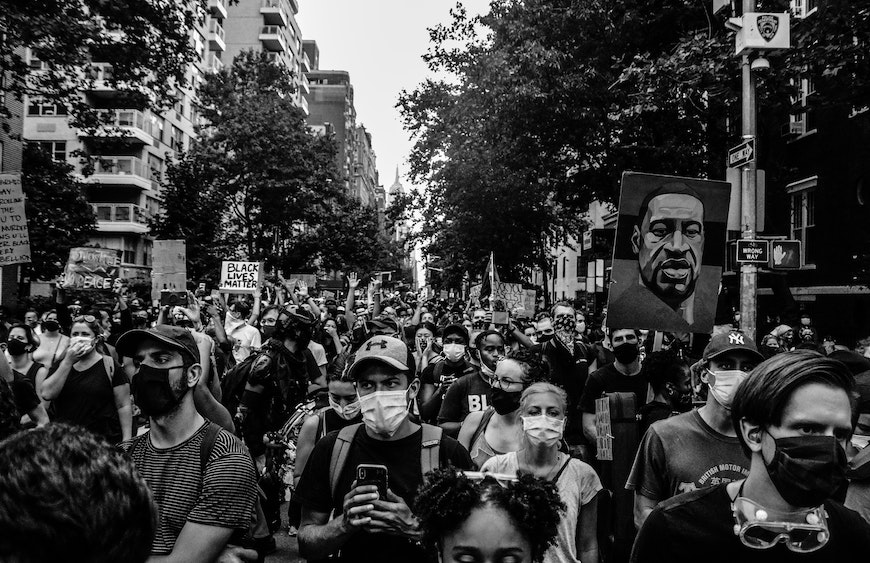
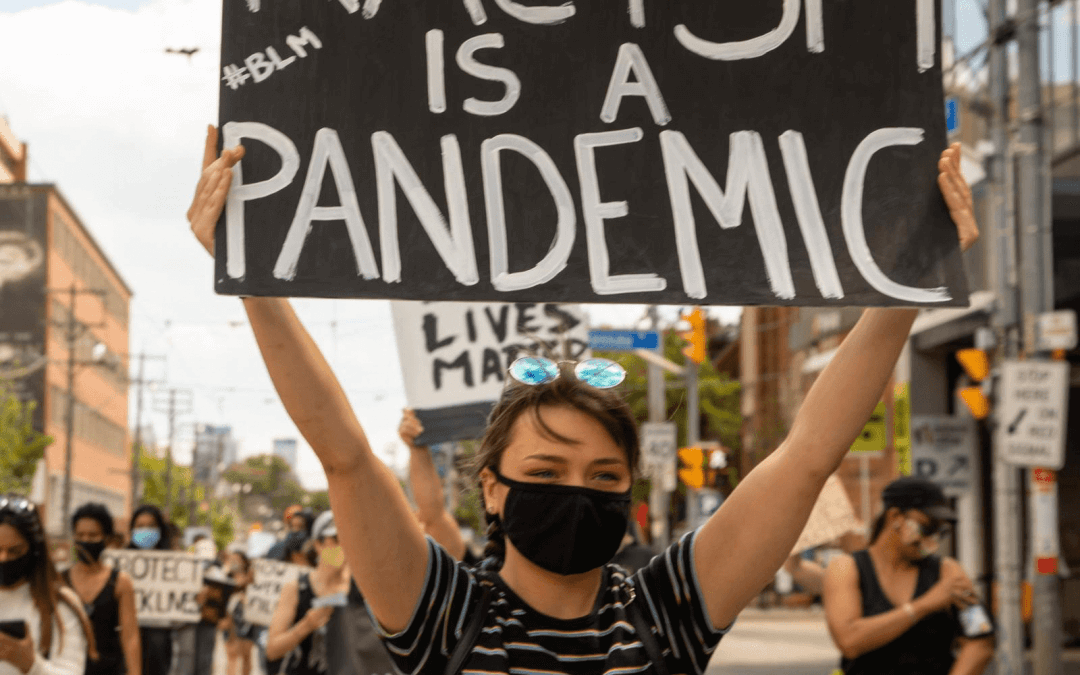
George Floyd, whose name will forever be ingrained in protest history, died in Minneapolis on May 26, his neck under the knee of a policeman until he stopped breathing. The event was recorded on video, and then, everything changed. Within a week we saw mass protests, mostly nonviolent, shake over 80 U.S. cities and many capitals worldwide, calling for an end to police brutality and racial inequality.

Now is a good time to take stock of protest movements around the world, and how they have been impacted by the pandemic, and by the rising global tide of autocracy/

Why external threats and crises are an autocrat’s best friend

External threats, natural disasters, and epidemics were always fertile ground for seeds of authoritarianism and despotism. Throughout history, external threats have regularly been utilized by autocrats to limit freedoms and disrupt independent checks and balances to their power. I lived through the state of emergency proclaimed in Serbia in March 1999, after President Slobodan Milosevic’s confrontation with the West, and his ambitions for ethnic cleansing, brought 78 days of NATO bombing to my country. Happy to increase his wobbling grip on power, Milosevic proclaimed the state of emergency and relished it in much the same way my two kids would enjoy a candy store. He imposed absolute censorship on his critics, enforced the closure of independent radio and TV stations, thrived on arbitrary arrests, and led a propaganda witch-hunt. The state-sponsored assassination of Slavko Curuvija, editor and owner of Serbia’s largest opposition newspaper, caused some of us troublemakers to temporarily flee the country.

So, there is no wonder that illiberal leaders are taking advantage of the COVID 19-crisis, tightening their political grip by weakening checks and balances, imposing censorship, and expanding state surveillance — all at a time when civil society groups are less able to fight back.

Take a look at Thailand, where a vivid student movement has been challenging a military junta that recently achieved a slim majority through controlled elections. Only weeks after the pandemic started, on March 26, the government invoked the Emergency Decree on Public Administration in Emergency Situations (2005). Under Article 9 of the decree, officials are empowered to censor or edit any information they deem to be false or distorted, with a possible penalty of up to two years in jail.

Looking elsewhere, Russia is using supposed “COVID tracking measures” to install surveillance-camera facial-recognition systems, which activists know will be used to monitor and crack down on dissent. Then there are at least three cases of healthcare workers who mysteriously died “falling from windows” after some of them criticized the government for the lack of protective equipment they had received.

Even in democracies such as Poland or Hungary, and hybrid democracies like my own country, Serbia, we see the extraordinary appetite of political leaders to sideline democratic institutions, concentrate power, and rule by decree.

But despite these depressing conditions, there are growing signs that movements are increasingly adapting to new circumstances.

Adapting to crisis

From Hong Kong to Bolivia, activists and peacebuilders are confronting the need to innovate tactically and adapt their strategies amid national lockdown orders, social distancing, and other measures intended to curb the spread of the coronavirus.

The first action of many activists was to go online, turning to digital platforms to inform and educate citizens about COVID situations. Some of these activities have scaled up quickly. In Tunisia, for example, more than 100,000 people joined a Facebook group bringing together volunteers to help fight the virus. Some of these campaigns, like the one in Poland that pushed for postponement of presidential elections, are also combining what you do in a virtual space with real individual protest acts such as banners draped by activists from the windows of their homes, which are then uploaded on social media.

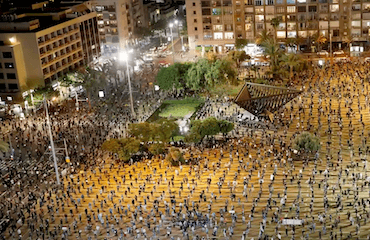
The second example of creative adaptation may be physical protests which include disciplined social distancing. Israeli protesters outraged with Prime Minister Bibi Netanyahu’s securing of a new term and possible avoidance of a corruption trial gathered in Tel Avivs main square on April 20. X marked a spot where someone could stand under Israel’s social distancing guidelines (2 meters away). Though protest organizers marked 2,800 spots for protesters to stand, twice as many people showed up to protest, with many people standing on the surrounding streets. Similarly, in one of most iconic videos of the latest racial-equality protest wave in the United States, Denver activists used a disciplined “lying on the ground while social distancing tactic” to mimic the last seconds of George Floyds torture, launching into the cry, “I Can’t Breathe.”

The third adaptation that we are increasingly seeing might be a shift toward creating disruption without mass gatherings. On April 14, Polish feminists made headlines by blocking traffic at Rondo Dmowskiego, the intersection of Warsaw’s two main boulevards. Responding to a call on social media, they paralyzed traffic at noon as they stopped their cars and bikes adorned with banners. This “our vehicles are broken” type of protest was used to address situations where the conservative government led by the PiS party is using the pandemic to push controversial laws banning all abortions — laws that had previously been stopped due to mass protests.

The last adaptation that we are seeing is that with limited options for large concentrations, activists increasingly resort to what we in CANVAS call “tactics of dispersion.” Faced with the world`s second-largest outbreak of coronavirus, and the epically incompetent response from the government, people in Brazil have expressed anger at President Jair Bolsonaro’s mishandling of the pandemic by banging pots and pans together on balconies. Croats used a similar tactic to protest the mayor of their capital, Zagreb. For more than 10 days in a row I personally enjoyed the “noise from the balcony protest” that lamented the situation in my own country, Serbia, with two of our kids contributing. They had a blast.

All of these adaptations show that despite the crisis, activism may be still around, alive and kicking. But protesting is so much more than strategic nonviolence. There is a deeper phenomenon transforming our societies for the better: civic resilience.

The lasting vaccine to the authoritarianism virus?

If we treat individuals’ tactical adaptations to pandemic restrictions as an immediate treatment to the autocracy virus, then a more strategic approach is civic resilience. We could see it as a long-lasting vaccine that will prevent the autocratic infection of our societies in the future.

In short: Societies with strong community bonds and a history of united action are more likely to contain any attempt of manipulation coming from either governments or non-state actors. So if civic resilience is, like some form of antibody, already spread in the population, developed through some form of civic engagement, can it make our societies more immune to crises like a global pandemic?

Many times in the history of social movements, human rights defenders, and even small NGOS, have operated with some acknowledgment of Albert Einstein’s quote that “within every crisis lies a great opportunity.”

Remember Burma in 2005? Using the fact that the military junta was completely unable to provide for victims of a devastating tsunami, civil society and NGOs stepped in as first responders. Civil society did what the military junta could not: It helped villagers bury their dead, prevent cholera outbreaks, and meet basic needs. As a result, civil society, which was at the time mostly underground, gained both prominence and legitimacy, recruiting thousands of volunteers — some of whom were crucial in voter mobilization in the years to come.

Another example of a political movement gaining from its strategic reaction in crisis is “Occupy Sandy,” an organized relief effort created to assist the victims of Hurricane Sandy in the northeastern United States. The effort has worked in partnership with many local community organizations.

When a forest fire struck the “lungs of the planet,” causing millions of acres of Amazonian forest in Brazil and Bolivia to burn, we witnessed how environmental groups quickly filled the vacuum left by an unresponsive government. They built a network of aid and volunteers to help immediate victims, won the hearts and souls of the local population as well as firefighters and doctors, and later leveraged that support into large anti-government protests. If it wasn’t for the Amazon, Evo Morales would probably still be ruling Bolivia.

The strategic advantage of these popular movements lies in the fact that they correctly recognized vacuums that appeared during crises. They seized the empty spaces created between the immediate need for support in the face of disaster and governments’ absolute inability to deliver, and then used their numbers and organization to help people in need. This allowed civil society to build new layers based on reputation, and to recruit thousands of supporters through community and humanitarian work.

Take a look at Hong Kong, where, with the government flailing, the city’s citizens decided to organize their own coronavirus response. Hong Kong Governor Carrie Lam dragged her feet in closing the city’s borders and never fully closed down the land border with China. The hospitals suffered from shortages of personal protective equipment. Lam wavered on masks, and even ordered civil servants not to wear them. There were shortages of crucial supplies and empty shelves in stores.

The civic resilience of Hong Kong stepped in. Thanks to a previous wave of protest, it seems that “civic resilience antibodies” were already within society. In response to the crisis, Hong Kongers spontaneously adopted near-universal masking on their own, defying the government’s ban on masks. In response to the mask shortage, the foot soldiers of the protest movement set up mask brigades. They acquired and distributed masks, especially to the poor and elderly, who may not be able to spend hours in lines on their own. An army of volunteers also spread among the intensely crowded buildings to install hand-sanitizer dispensers and keep them filled. During the protest movement, Hong Kongers developed shared digital maps that kept track of police blockades and clashes; now similar digital maps kept track of outbreaks and hand-sanitizer distribution.

So amid the government’s sloppy response, the people of Hong Kong took their defense into their own hands, effectively surviving the virus with minimal consequences. The secret ingredient of Hong Kong’s response was its civically resilient population and, crucially, the movement that engulfed the city in 2019.

Similar support networks, with pro-democracy activists turning their organization into societal hubs, are filling in gaps left by governments to provide essential services, spread information about the virus, and protect marginalized groups. In some places they are partnering with businesses and public authorities to support local communities strapped for economic relief. They are also forging new coalitions to hold their governments to account. We witness their growing role, numbers and reputation across the globe. We can take a look at dozens of examples in Malaysia, the Philippines, Thailand, Nicaragua, and Bolivia.

Is there a new global protest wave ahead?

How can we explain the latest post-COVID wave of protests in the United States, and can we somehow predict the future of protesting at this dramatic moment?

History teaches us about a very interesting phenomenon called rallying around the flag. Even at the very dawn of humanity, we always had our disputes and quarrels — where to hunt, who would marry whom within the tribe. And we had complaints about leaders at that time as well. But then an external threat appears, and for a moment all quarrels cease. Instinctively societies rally around their leader, even a bad leader, until the outside threat passes. We haven’t changed much. Look at the ratings of world leaders in times of crisis: The classic example is George W. Bush, whose approval ratings skyrocketed in the days following 9/11.

But once the immediate external threat is out of picture, another phenomenon happens. People start asking questions. When the state of emergency was lifted after the NATO bombing of Serbia in June 1999, Milosevic seemed invincible, and our opposition was in disarray. Eighteen months later, in the autumn of 2000, the butcher of the Balkans was ousted in an electoral landslide amid million-strong protests.

So it is now. The sooner we see the normalization of life, the sooner people will start asking questions about how the crisis was handled. Take a look at Belgium, and the iconic video of healthcare workers silently turning their backs to the prime minister’s motorcade to protest her handling of the pandemic, which resulted in Europe’s highest death rate per-capita. Soon you will get an idea of what may be happening everywhere.

Expect first responders to be on the front lines of accountability campaigns, demanding checks and balances from their officials. Strikes and other noncooperation tactics are already erupting as labor unions try to defend essential workers who are forced to appear at work without enough protective gear, like in the case of the New York branch of Amazon. Very soon we may be witnessing a wave of protests targeting businesses who are trying to hastily reopen without necessary testing, or firing workers en-masse, like what’s happening in the French auto industry.

Others will follow. Though crises like the pandemic can resurrect the political prospects of some leaders, as 9/11 did for President Bush, and as the pandemic has done for German Chancellor Angela Merkel, they can also present a dire threat to other leaders — those less lucky, less skilled, less able to lead properly in times of disaster. People will be back. Many of them will be angry. Unfortunately, in many cases, they won’t have much to lose — they have already lost their loved ones, or jobs, or perspective. So they will be more willing to take risks. And they will have more time on their hands to do it.

Below the dystopian surface of a post-pandemic world hammered by health and economic crises, as well as by shrinking freedoms and vanishing human rights, peoples’ creativity and civic resilience may be resurging. Watch carefully and remember: Societies are as healthy and vital as are their citizens.

Srdja Popovic, co-founder, and Executive Director of the Center for Applied Nonviolent Actions (CANVAS), has trained activists in over 50 countries to promote democracy, accountability, and human rights. He is also the author of “Blueprint for revolution”. Theodore Weiss is a former research analyst at CANVAS and a board member of Build A Movement, is based in Colorado. The views expressed are the authors’ own.

Protest in a Time of Pandemic

Unjust Systems of Power are Solvable

Listen the podcast on Spotify

Episode Description

Host Anne Applebaum speaks with Srdja Popovic about how strategic nonviolent action can bring about lasting and meaningful social change. Srdja Popovic is the executive director of the Centre for Applied Nonviolent Action and Strategies (CANVAS). He’s a social change educator who draws on his experience as a leader of the student movement Otpor! Optor! is credited with helping to oust Serbian president Slobodan Milošević using creative and strategic techniques that marry humor and coalition building. He is the author of Blueprint for Revolution: How to Use Rice Pudding, Lego Men, and Other Nonviolent Techniques to Galvanize Communities, Overthrow Dictators, or Simply Change the World. Popovic references a series of short educational videos about nonviolent strategies which can be found at www.canvasopedia.org

Weekly Report June 19 2020

Coronavirus

As anti-racist protests continue to shake the U.S. and other parts of the world, some officials expressed worry that they could cause spikes in coronavirus cases. Additionally, some of the aggressive police responses to protests, like tear gas and pepper spray have been demonstrated to further enhance the possibility of transmission. Latin America remains the epicenter of the virus with devastating implications for the region’s politics and people.

United States

Friday marks Juneteenth, also known as Freedom Day, in the United States, which marks the effective end of slavery in the United States. Disregarding the significance of the holiday, President Donald Trump announced his intention to hold a rally in Oklahoma, but rescheduled to Saturday after met with backlash. This decision comes as the Black Lives Matter movement continues to rage across the country against the deep racial inequities felt in the country and long-standing police brutality against people of colour. Meanwhile, infections have been increasing in much of the U.S., indicating the country is due for a second wave of coronavirus. The virus has reportedly left more Americans dead than the First World War.

China

Twenty Indian soldiers died after a violent clash with Chinese troops along the countries’ de facto border in the Himalayas. The deaths are the first military casualties along the disputed border for more than 40 years. China has reportedly also freed ten Indian soldiers seized during the clash. U.S. President Donald Trump signed a law to introduce sanctions punishing Chinese officials for human rights abuses against the Uighur Muslim minority in the country. In response, China promised to “resolutely take countermeasures.” A new outbreak of coronavirus in Beijing’s wholesale food market has infected more than 100 people and prompted authorities to elevate official emergency response in what they have called an “extremely severe” situation.

Hong Kong 

China’s top legislative body drafted a national security law for Hong Kong on Thursday, covering four categories of crimes: succession, subversion of state power, local terrorist activities and collaborating with foreign or external foreign forces to endanger national security. The draft law has been put before the standing committee of the National People’s Congress, indicating Beijing’s intention to rush the legislation through. The Taiwanese government recently announced a humanitarian aid plan that includes a basic living allowance to Hongkongers seeking asylum from government prosecution in connection to anti-government protests.

Myanmar 

The United Nations has launched a new five-year project in Myanmar to document all forests and pinpoint deforestation risks. A new report on ongoing clashes in the Rakhine State has found that more than 20 civilians were killed and 100 injured in landmine blasts from January to May this year. The Myanmar government recently launched a tribunal to investigate a controversial China-backed city development project near the Thai border in Karen State. The project has been criticized for the influx of Chinese money and suspected illicit activity.

Zimbabwe 

In Harare this week, healthcare workers went on strike and protested after the government cut their wages by half. As a result, the government announced an immediate 50% increase in civil servants and pensioners wages.

Chile

On Wednesday, Chilean authorities revealed that a series of accounting glitches resulted in the omission of more than 31,000 confirmed coronavirus cases, an error stemming back to mid-March. Only last week, the Health Minister resigned due to controversy over the reporting of coronavirus-related deaths. On Monday, the lockdown was extended for at least an additional 90 days. Meanwhile, for Indigenous people in the country, the U.S. race protests reportedly reflect their own struggle against deep racial inequities in Chilean society.

Iraq

In a report released on the 16th of June, the Human Rights Watch has called on the Iraqi authorities to “amend laws that limit free speech to comply with international law.” Iraqian authorities, including the Kurdistan Region, have frequently used vaguely worded laws to bring criminal charges against individuals and groups expressing opposing opinions to the government. The report, “We Might Call You in at Any Time: Free Speech Under Threat in Iraq” details numerous cases of the violation of the right to free expression during widespread protests at the end of the former government’s term. Meanwhile, on Thursday, rockets hit Baghdad’s green zone, the location of the US embassy. This is assumed to be the fifth instance in a series of similar attacks across the country in the past 10 days.

Libya

The Human Rights Watch reported on June 16th that the Libyan Arab Armed Forces (LAAF) should urgently investigate evidence that fighters affiliated with it apparently tortured, summarily executed, and desecrated corpses of opposing fighters. On a separate note, ceasefire negotiations in Libya have been mired with uncertainty over the past week, after heavy clashes erupted as the Turkish supported Government of National Accord (GNA) laid siege to the Russia-backed Libyan National Army-held (LNA) Sirte, close to major energy export terminals on the Mediterranean seaboard, and the postponement of ministerial ceasefire talks planned for Sunday between Russia and Turkey.

Syria  

The United States’ “Caesar Syria Civilian Protection Act of 2019” came into effect on Wednesday, 17th of June. The Act aims to “promote accountability for the regime’s atrocities” and to promote a peaceful political transition. These sanctions authorize the US president to impose economic sanctions and travel restrictions on any foreign person who supports the Syrian government in any material way. US Secretary of State, Mike Pompeo, announced that currently sanctions would be imposed on 39 individuals and entities under the act, including Asma al-Assad, the wife of President Bashar al-Assad. 

Further, seven syrians have submitted a criminal complaint to prosecutors in Germany for allegedly suffering and witnessing sexual abuse in detention centers under President al-Assad. Meanwhile, the U.N. is considering a proposal to reopen a border crossing from Iraq into Syria for six months to allow the delivery of humanitarian aid following the repercussions of the novel coronavirus and the devaluation of the Syrian pound.

Lebanon 

On the 18th of June, Demonstrators blocked the Jounieh-Beirut highway with burning tires in protest of the arrest of activist Michel Chamoun. Chamoun was arrested in the morning for posting a video online calling President Michel Aoun’s rule a “humiliation” in response to new presidential defamation laws introduced earlier in the week. Lebanon’s state prosecutor issued an order that decreed suing individuals who posted materials specifically on social media that were deemed insulting to the presidency. These tensions add to the ongoing protests across Lebanon calling for the government’s resignation following further economic deterioration during the coronavirus pandemic.

Palestine 

More than 50 United Nations Human rights experts have condemned the Israeli annexation plan of the West Bank, exclaiming that it is a “vision of a 21st Century Apartheid.” Israel has reportedly began the construction of a ring road that links Israeli settlements and outposts while isolating East Jerusalem, undermining the possibility of East Jerusalem as the capital of the Palestinian state. Tensions regarding the annexation grow as Israeli soldiers shot and killed Palestinian settlers in the north of the West Banks when they attempted to stop Israeli extremists from setting their farms lands on fire.

Russia 

The U.S. Africa Command (AFRICOM) alleged that Russia has deployed fighter jets in Libya to support Khalifa Haftar’s Libyan National Army. AFRICOM raised concerns about the Russian aircraft’s noncompliance with laws of armed conflict. German prosecutors recently announced murder charges against a Russian accused of assasinating a Georgian refugee in Berlin last year, prompting Russia to announce that it would retaliate. Russia has also accused one of its leading Arctic researchers of spying for China and divulging state security secrets. A new research study has revealed an obscure disinformation campaign by Russian operatives which flooded false stories in seven languages and across 300 social media platforms.

North Korea

In an explosive rebuke to South Korea, North Korea blew up an inter-Korean liaison office on its side of the border. The provocation appears to have followed from tensions over grassroots activists sending anti-Kim Jong Un propaganda over the border, as well as over South Korea’s continued support for U.S.-led sanctions against Pyongyang.  North Korea has also reportedly mobilized its military to move closer to frontlines near its neighbor. 

Iran

25-year-old civil and labor rights activist Sepideh Qolyan (Gholian) is set to return back to prison for refusing to request a pardon from the Islamic Republic Supreme Leader Ali Khamenei. In a video on her Instagram page, Qolyan stated, “I refused. Therefore, I must report to Qarchak Prison next Sunday.” Qolyan was arrested in November 2018, for her involvement in the Haft Tapeh Sugar Mill protests and charged with “disseminating fake news” and “anti-Islamic Republic regime propaganda.” She was sentenced to 5 years in prison although was released in December 2019 on bail. Meanwhile, Iran fears a second wave of the novel coronavirus as the number of covid-19 related deaths spiked to over 100 deaths  earlier this week, the highest number since the 13th of April.

Nicaragua 

The country continues to feel the hard impact of the coronavirus despite President Daniel Ortega’s rejection of this reality. In the past three months, at least six politicians have reportedly died, “express burials” for those killed by coronavirus continue throughout the nights, and doctors have allegedly been fired for countering the government’s approach.

Sudan

Sudanese militia leader Ali Kushayb, charged with 50 crimes against humanity and war crimes in the Darfur conflict, was arrested last week, 13 years after a warrant was issued for him, and appeared before the International Criminal Court on Monday. In a different vein, Sudanese officials have announced the discovery of a mass grave southeast of the capital, Khartoum, suspected to contain the remains of conscripts who in 1998 tried escaping military service from a training camp.

Venezuela

The country’s Supreme Court reportedly ousted the leaders of two key opposition parties in advance of the parliamentary elections this year, which have not been formally scheduled. The decision spikes fear that President Nicolás Maduro is tampering with the upcoming vote, which will elect a new National Assembly, the only institution controlled by the opposition. As Venezuela extends its lockdown into July, the UN released a statement expressing concern over the many millions of Venezuelan refugees abroad, the world’s second-largest diaspora of refugees, who are hit particularly hard by the impacts of the virus.

Bolivia

The extended reign of President Jeanine Áñez, who took power following a coup in fall 2019, has been met with continued discontent across sectors of the population. On Friday, the leader of the Federation of Trade Unions of Mining Workers of Bolivia (FSTMB) warned the President that without elections in September, there will be a “people’s uprising.” His message was echoed by the leaders of the Central Obrera Boliviana (COB). 

Weekly Report June 12 2020

Coronavirus

As COVID-19 peaks in Latin America, the new epicenter of the virus, disillusionment with democracy is reportedly on the rise. Survey data by the Latinobarómetro reveals that trust in government in the region fell from 45% in 2010 to 22% in 2018. The effect of delayed elections due to the pandemic have yet to be measured.

United States

As protests for Black Lives Matter continue to rage across the United States, statues venerating Christopher Columbus and Confederate leaders have become the new targets for the movement, leading to widespread defacement of these monuments. Meanwhile, there is an alarming rise in coronavirus cases following several states’ decision to roll back lockdowns. An associated Press analysis reveals that cases are rising in nearly half the states, a worrying trend spiking fear of a second wave and new lockdowns.

China

Twitter has taken down 170,000 China-linked accounts identified as part of a coordinated campaign to spread disinformation and “deceptive narratives” around the Hong Kong protests, COVID-19, and U.S. protests in relation to George Floyd. The Australian Strategic Policy Institute found that while Twitter is blocked in China, the campaign was targeted at Chinese-speaking audiences outside the country. After U.S. and Hong Kong-based activists reported that their Zoom accounts had been suspended and meetings disrupted after they attempted to hold events related to the anniversary of China’s Tiananmen Square crackdown, Zoom said that it would not allow further requests from the Chinese government to affect users outside the country. Elsewhere, American aircraft carriers have begun patrolling Indo-Pacific waters for the first time in nearly three years, a show of naval force against the backdrop of rising tensions between the U.S. and China in the region. In a tech race with the U.S., China has reportedly embarked on a $1.4 trillion dollar campaign to develop 5G and artificial intelligence capabilities. 

Hong Kong 

Hong Kong police have informed organizers of the annual Tiananmen Massacre vigil that they will face incitement charges for defying a police ban. On the whole, Hong Kong police have made 8,981 arrests between June 9, 2019, and May 29, 2020 in connection with protests. Among those arrested, 1,749 people have been charged, and 100 have been convicted. Pro-democracy organizers recently postponed a demonstration planned for June 12 to mark the anniversary of the blocking of the anti-extradition bill in Hong Kong, citing coronavirus restrictions on public gatherings. The protest has been rescheduled for June 19, when the emergency rule is due to be lifted. In addition, a pro-democracy lawmaker invoked a rarely used legal mechanism to file suit against a Hong Kong police officer for the shooting of a protester, marking the first member of the police force to face charges in court. However, the government could still block the case from advancing. Japanese Prime Minister Shinzo Abe also recently suggested that Japan would take in Hong Kong residents in the financial sector and specialized fields if China moves forward with imposing national security measures.

Myanmar 

Lawyers bringing a case before the International Court of Justice (ICJ) accusing Myanmar of genocide against its Rohingya Muslim minority have requested a United States District Court order Facebook to release posts from the country’s military and police. The lawyers believe the communications “may constitute genocidal intent.” Facebook has responded that it would evaluate the request in accordance with applicable laws. In the Rakhine State, shelling attacks, purportedly perpetrated by rebel groups, have continued to kill and wound villagers. Two cases of Rohinngya men contracting COVID-19 after leaving refugee camps in Bangladesh have also fuelled Myanmar’s dispute with the country.

Zimbabwe 

An opposition lawmaker and two activists were rearrested on the 10th of June on accusations that they lied about being abducted from police custody and tortured. In May 2020, the three women were charged and arrested for their participation in a citizen demonstration in Harare that violated coronavirus lock down regulations. The women reported that they were then tortured and sexually assaulted by unknown assailants. United Nation human rights experts have called on Zimbabwe to “immediately end a reported pattern of disappearances and torture” that appears to be aimed at suppressing protests and dissent. In 2019, 49 cases of abductions and torture were reported in Zimbabwe – all without investigations leading to prosecutions of perpetrators.

Chile

Chile’s women and gender minister, and great-niece of the late dictator Augusto Pinochet, Macarena Santelices resigned on Tuesday after just one month in office. Her short stint in office was marred by a string of controversial decisions, that resulted in the hashtag #WeDoNotHaveAMinister to trend in Chile. Also on Tuesday, Chilean senators reopened a debate over a new migration law that will tighten rules on how prospective immigrants can enter Chile. The move comes after a report last week suggested Chile could become a migration hotspot following the decline of the coronavirus pandemic.

Iraq

Following an independent fact-finding inquiry into the hundreds of deaths, injuries and abductions among anti-government protesters in October 2019, the first arrest was made on Thursday. The Supreme Judiciary Council said last month that it released detainees based on Article 38 of the constitution that guarantees the right to protest, “provided that it is not accompanied by an act contrary to the law.” However, human rights groups say that those abducted were most likely subjected to torture and violence and many protesters are yet to be released. 

On the 6th of June, Iraqi lawmakers approved the remainder of newly elected Prime Minister Mustafe al-Kadhimi’s picks for his cabinet. With vacancies in seven cabinet positions such as that of oil, justice, migration, displacement and culture, agriculture, foreign affairs and trade finally filled, the 22-member cabinet is now able to tackle the implications of coronavirus. Meanwhile, ISIS attacks in Iraq have surged. There are currently 5,200 American troops in Iraq dedicated to counter-terrorism and training of Iraqi forces.

Libya

The United Nations reports with horror that at least eight mass graves have been discovered in the country, which the UN-recognized Government of National Accord (GNA) has promised to investigate. The graves are primarily outside of Tarhuna, a key city to the southeast of capital Tripoli, that the GNA only just recovered from general Khalifa Haftar. The militia was long accused of committing atrocities in the city. On Saturday, Egypt called for a ceasefire starting this week through the UN-led negotiations, but the proposal was dismissed by Turkey. 

Syria  

Protests erupted in the South West province of Syria on Sunday night. The increased economic hardship following the novel coronavirus and the almost 50 percent devaluation of the Syrian pound last week sparked protests where demonstrators openly denounced President Bashar al-Assad. Anti-regime slogans from the 2011 uprising “Syria is for us and not for the House of Assad,” have been chanted throughout the week. This is the biggest protest in Sweida since the assassination of a local military man in 2015. Furthermore, on the 11th of June, President al-Assad dismissed Prime Minister Imad Khamis. No reason for the dismissal has been given as of yet.

Lebanon 

As the novel coronavirus continues to impede the Lebanese economy, anti-government protests erupted in Beirut against the Lebanese political class and financial crisis. Protesters blocked roads across Lebanon, forcing the Prime Minister to call an emergency cabinet meeting. Branches of the country’s central bank were set on fire and vandalized as protesters shouted that they are “hungry.” Protesters weigh up the risk of succumbing to coronavirus or to hunger as security forces turn to tear gas and rubber bullets to disperse crowds.

Palestine 

On the 30th of May, a 32-year-old autistic Palestinian man was shot and killed in East Jerusalem by Israeli police. Iyad el-Hallak was unarmed, however, was shot for not stopping walking when instructed by police. Protests quickly erupted throughout the city with parallels being drawn to the death of George Floyd in the US, protesting police brutality and using hashtags such as “Palestinian Lives Matter.” On the 9th of June, six people were arrested for using violence while protesting. The human rights group B’Tselem cites at least 11 cases during 2018 and 2019 of Israeli forces fatally shooting Palestinians as they fled.

Russia 

Twitter recently uncovered 1,152 accounts associated with Current Policy, a group engaged in state-backed political propaganda within Russia. The network and its peer companies were suspended for “cross-posting and amplifying content in an inauthentic, coordinated manner for political ends.” Meanwhile, as Russia’s confirmed coronavirus tally officially surpassed 500,000 this week, the government claims that lock down restrictions can be lifted ahead of Moscow’s Victory Day Parade on June 24 and a constitutional referendum on July 1. The World Health Organization has asked Russia to review its methodology for counting coronavirus deaths, describing the country’s low death toll as “unusual,” given its similar trajectory to other European countries.

North Korea

Two years after its historic summit with the U.S., North Korea has declared that it sees no future benefit in maintaining ties between its leader Kim Jong-Un and U.S. President Donald Trump. Instead, the country has vowed to boost its nuclear program, saying its hopes of diplomacy had faded into a “nightmare.” Activists threatened with a crackdown by South Korea for launching anti-Pyongyang messages over the border have vowed to move underground, clandestinely spreading information into North Korea. In addition, a report by researchers at the Washington-based Center for Advanced Defense Studies has revealed that North Korea might be breaking UN trade sanctions and making millions by selling sand.

Iran

Human rights and press freedom fighters Reporters Without Borders (RSF) have filed an official complaint with the German federal judicial authorities demanding the arrest of Iranian cleric Judge Gholamreza Mansouri while he is in Europe. Mansouri has been accused of abusing his position in the Iranian legal system to torture and suppress at least 20 Iranian journalists in 2013, issuing unfair verdicts based on fabricated charges. Meanwhile, Iran has announced that it will execute the Iranian man who provided information to the US and Israeli intelligence services that led to the US-led assassination of Islamic Revolutionary Guard Corps commander Qassem Soleimani in January 2020. 

Nicaragua 

On Tuesday, at least eight – ten doctors working for Nicaragua’s public health system were fired following expressed criticism of the Ortega government’s slow response to the pandemic, though numbers are not clear. The United Nations Office of the High Commission for Human Rights expressed its concern over the firings, highlighting the violation of freedom of expression in the country. The country is one of the last to reject strict measures to reduce the spread of the virus as the government insists it has the pandemic under control, but the predicted death toll indicates otherwise.

Sudan

Sudanese militia leader Ali Kushayb, charged with 50 crimes against humanity and war crimes in the Darfur conflict, has been arrested more than 13 years after a warrant was issued for him. Kushayb surrendered in the Central African Republic and was transferred to the custody of the International Criminal Court (ICC). The Prosecutor of the ICC has urged the UN Security Council to press Sudan to bring more indicted persons, including ex-president Omar Al-Bashir, to justice for genocide and mass atrocities. Earlier in the week, supporters of Al-Bashir gathered in central Khartoum to protest the UN’s new support mission for Sudan’s transition, escalating to a degree of force. New criminal charges have been filed against Al-Bashir for the squandering of state funds, as the Sudanese anti-corruption committee discovered he received $20 million monthly on his personal bank account. Peace talks between the Sudanese government and rebel movements also resumed on June 9 via media conferencing.

Venezuela

Last month American AT&T pulled DirecTV out of Venezuela due to U.S. sanctions. Arrest warrants were issued this past week for three local executives of the service company, who claim that they had no prior knowledge of the cuts and are innocent of any crimes. At the border, thousands of Venezuelans who previously fled their homeland are trying to return after the severe economic downturn caused by the coronavirus pandemic.

Bolivia

The New York Times admits that a close look at Bolivian election data indicates that the initial analysis by the Organization of American States (OAS) suspecting vote-rigging in Morales’ fall 2019 election success was “flawed.” The accusations helped force out the president in November. On Wednesday, Bolivia’s parliament approved the new date of 6 September for the country’s election, which was delayed due to the coronavirus pandemic.