Weekly Report 25 October, 2019

Weekly Report 25 October, 2019
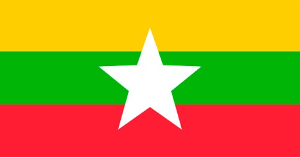
Myanmar 

Last Friday, Myanmar state counsellor Daw Aung San Suu Kyi stated that, despite recent international attention, the Myanmar people will seek to resolve the Rakhine crisis on its own without foreign intervention. This remark from Myanmar’s de facto leader follows nearly a year of escalated conflict between the Tatmadaw and the predominantly Buddhist Arakan Army, which seeks more autonomy in Rakhine state. 

This week, Myanmar fisherman discovered approximately US$20 million of methamphetamine sacks floating off of Myanmar’s coast. One of the world’s largest producers of Crystal Meth, Myanmar’s drug industry is a significant contributor to Southeast Asia’s drug trade, netting more than US$60 billion a year according to the United Nations Office on Drugs and Crime. Crystal Meth is often smuggled out of Myanmar to more lucrative markets such as Laos, Thailand, Cambodia, Japan, South Korea and Australia. The failed large-scale drug operation is the second of this year, with Myanmar authorities seizing over US$26 million in Crystal Meth in March.
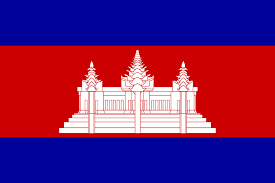
Cambodia

Sam Rainsy, the former leader of the opposition party in Cambodia has recently announced a planned return to the country. The exiled politician’s plans may be in jeopardy, however, as his colleague from the opposition party was barred from entering Thailand this week. Despite the dwindling likelihood of Rainsy being able to return to Cambodia, officials in the country have started to train riot police to combat protests. Cambodian leaders have dubbed Rainsy and his followers traitors and Prime Minister Hun Sen has promised that Rainsy will be arrested should he return. 
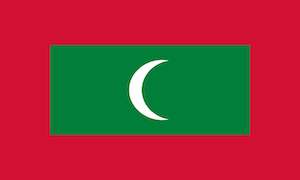
Maldives

This Monday, Maldivian minister Ahmed Sameer was accused of intimidating Anti-Corruption Commission president Mariyam Shiuna, who is currently investigating a Maldivian state minister following a corruption complaint. Sameer denied the allegations of undue influence, and told media outlets that although he did call the ACC chief, it was a non-threatening call and did not interfere with the investigation. 

Later on Monday, the Maldivian Parliament approved the appointment of veteran journalist Hussain Fiyaz Moosa as the new information commissioner. Moosa was previously the CEO of Raajje TV, and was overwhelmingly elected from among nine individuals nominated by President Ibrahim Mohamed Solih. In years past, Moosa has faced several criminal charges as a journalist while covering events of significant public interest. Moosa has long been an advocate for freedom of speech and freedom of the press. 
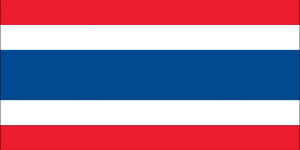
Thailand 

Two small Thai parties have formed a coalition to increase influence; the Thai Forest Conservation Party and the Palang Thong Thin Thai Party have allied and have invited other small parties to join them. Together, the two parties have a combined 5 of 125 seats in the House; though their influence remains limited, the alliance indicates a shift in the dynamics of Thai politics. 

The Thai King has stripped his consort of all her titles and has fired six senior officials in the palace. The King has cited “evil actions” and disloyalty by the officials and consort, though no further details have been released. The royal family of Thailand is fully protected from defamation of any form in Thai media, though the current scandal has gained significant attention from domestic and international news outlets. 
Vietnam

Following several months of tension, a Chinese oil survey vessel named the “Haiyang Dizhi 8” left Vietnamese waters on Thursday morning, accompanied by a Chinese escort. The vessel’s presence in Vietnam’s region of the South China Sea represents China’s widespread attempt to delegitimize its neighbors’ claims to the territory. According to Ha Hoang Hop, a member of the International Institute for Strategic Studies, it is likely that China will “send an oil rig to drill” in Vietnam’s exclusive economic zone in the coming months, in partnership with Russian oil giant Rosneft. 
Malaysia

Malaysian Prime Minister Mahathir’s public criticism of India’s handling of the Kashmir region has resulted in a so called “trade war” between Malaysia and India. This week, India announced its boycott on Malaysian palm oil. India is Malaysia’s third largest exporter of palm oil and just last year India’s exports in palm oil and palm-based products amounted to 1.63 billion US dollars. In response to the palm oil boycott, Malaysia is seriously “considering raising imports of raw sugar and buffalo meat from India.” Despite the heightened tensions between Malaysia and India, Mahathir has defended his criticism of India’s handling of the Kashmir region, saying “We speak our minds, and we don’t retract or change.”  
North Korea

This week, North Korean leader Kim Jung-un visited the Mount Kumgang tourist zone. The Mount Kumgang tourist zone, which opened in 1998, was initially operated by both North and South Korea. The shared tourist zone was built in an effort to build trust between the two nations. Approximately one million South Koreans visited Mount Kumgang before all tourism halted in 2008. Tourism halted after a South Korean tourist was shot dead by a North Korean soldier because he had entered restricted territory. On his visit, Kim Jung-un called for the destruction of all South Korean built facilities in the tourist zone. He called these facilities “unpleasant looking” and wanted North Korean “modern service facilities” to be built in their place. The North Korean leader’s actions are believed to be retaliation against South Korea’s continued “refusal to break ranks with the United States.” South Korea has responded by voicing their commitment for peace between the North and the South.
Hong Kong

Authorities in Hong Kong have formally withdrawn the extradition bill that sparked city-wide protests in March. The withdrawal is unlikely to alter the course of ongoing demonstrations, as protestors have emphasized that officials must meet all 5 demands to quell discontent. Hong Kongers have come out in support of the Catalonian people, who are fighting for independence from Spain; many Hong Kong protesters see Catalonian demonstrators as fighting for similar ideals. The sentiment was mirrored in Barcelona when 100 Catalonians gathered outside the Chinese consulate to voice support for Hong Kong. 
Libya

This week, survivors of an airstrike on a Tripoli migrant detention center spoke with BBC correspondent Orla Guerin. The survivors of the airstrike, which killed “53 migrants and refugees”, shared that they are still trapped in Tripoli four months after the attack. They believe the United Nations to have failed and abandoned them. The UN has rejected “scores of refugee relocation requests, including women and children previously held in Libyan government-run detention centers where they were allegedly subject to abuse.” Also, the UN has rejected asylum seekers who were originally hosted in a transit center in Tripoli by the UN refugee agency. These rejected asylum seekers were then asked to leave the facility. 

On Thursday, in reaction to the UN’s rejection of refugee relocation requests 40 people came to protest at the UNHCR’s Gathering and Departure Facility. These protesters held signs that read, “Refugees want peace not rejection” and “We need a system of appeal.” Protesters who spoke with Al Jazeera shared that just last week, 87 applications for refugee relocation requests were rejected. The UNHCR has responded to the protest via an emailed statement, which read there are “simply not enough evacuation and resettlement places available.” 
Sudan

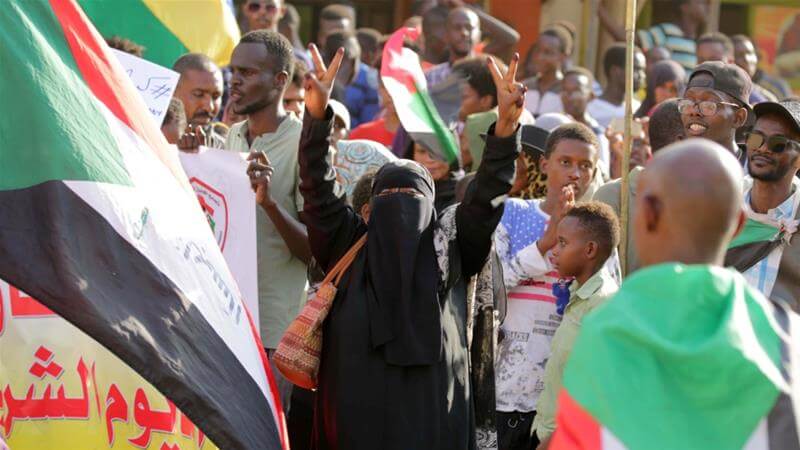
Thousands of peaceful protesters have taken to the streets of Khartoum to call for the dissolution of former leader Omar al-Bashir’s political party. The demonstrations additionally called for justice concerning the killings of protesters by the Transitional Military Council (TMC) earlier this year. Many members of the TMC have been integrated into the current transitional government, as part of a deal struck between military leader and activist groups. As the road towards democracy continues for Sudan, many are looking to the United States to remove the country from its terrorist list. Once this is done, there will be heightened prospects for trade between the US and Sudan; though the US has not voiced the intention of removing Sudan from the list in the near future, Sudanese policy-makers remain optimistic due to recent friendly talks with the country.  
Iran

Reports surfaced this week describing the amputation of a man’s fingers on Wednesday by Iranian authorities after he was convicted of 28 counts of theft. Though such reports are rare, they spurred intense responses from human rights activists, criticizing the allowance of amputation under Iran’s penal code. Despite protests from human rights groups, Iranian authorities defended the practice, stating that amputation is the most effective way to deter theft and other crimes. 

Experts predict an imminent escalation of violence between Iran and Israel in the coming weeks, following clashes in August and September. Iran, which attempted to smuggle precision weapons to Hezbollah in Lebanon and deploy advanced weapons systems in Syria and Iraq, faced targeted strikes from the Israeli Defense Forces (IDF). The Iranian government is reportedly not deterred by the strikes, and allegedly plans to respond to every Israeli attack with a “swift military response”.
Iraq

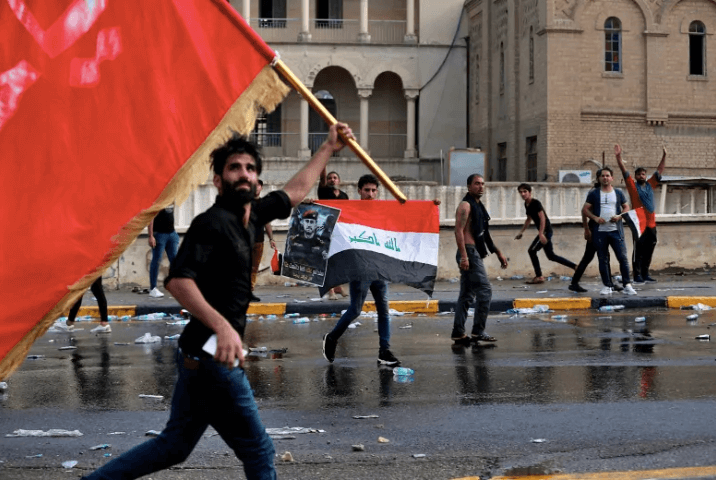
Iraqi protesters were met with live ammunition and tear gas by police this Friday, causing the death of two civilians and injuring over two hundred. The protests come after a three-week hiatus in demonstrations; the Iraqi people started to organize protests in response to high rates of employment, corruption in the government and low quality of life. Past demonstrations have also turned deadly, as police forces have employed the use of live ammunition on multiple occasions.  
Syria

On Thursday, Russian forces deployed in northeastern Syria to help facilitate the removal of Kurdish fighters from the Turkish-Syrian border, with nearly 300 officers still to arrive. The joint goal of Russian and Syrian forces in the operation is to push Kurdish fighters 30 km into Syria, as outlined by a deal  between Russian President Vladimir Putin and Turkish leader Recep Tayyip Erdogan. Brokered on Tuesday, the deal sealed the return of Syrian President Bashar al-Assad’s forces along the northeastern border for the first time in several years. The deal also marked Moscow’s deepening influence in the region, just two weeks following the United States’ withdrawal from northeastern Syria. Over the last two weeks, at least 120 Syrians have died in the clashes, 176,000 people have been displaced, 20 Turkish civilians have died, and at least 100 ISIS fighters have escaped from captivity in Syria. 
Zimbabwe

The power cuts in Zimbabwe have continued to spread and have been increased to up to 18 hours a day without power. The state-owned electricity plant has announced that it will be cutting power to mines, farms and civilians while it attempts to collect payment; the electricity company is reportedly owed $77 million by the people of Zimbabwe, though it appears the state-controlled apparatus will not take into account the 320% increase in electricity tariffs, the crippled economy, lowered wages and severe drought when seeking payment. 

Wildlife activists in Zimbabwe have responded to the deaths of 70 elephants within the national parks. The elephants have been starving to death due to the drought affecting the region. Activists brought 9,000 bales of hay to the elephant habitats in aims of keeping the animals alive. 
Cuba

Last Friday, the US once again imposed new sanctions on Cuba. The sanctions were imposed because of  Cuba’s continued support for Venezuelan leader Nicolas Maduro. Licenses for aircraft leases have been canceled and future applications will no longer be considered for all Cuban state-owned airlines. Sanctions on foreign goods with US content have also been broadened.  US Secretary of Commerce Wilbur Ross shared that “this action by the Commerce Department sends another clear message to the Cuban regime.” Cuban President Miguel Diaz-Canal responded to the increased sanctions on Twitter, commenting that the harshened sanctions were “inhuman, cruel, unfair and genocidal.” 
Venezuela

On Thursday, Venezuela was elected to one of two seats allotted for Latin America on the United Nations Human Rights Council. Despite Venezuela’s lengthy record of human rights abuses, the country was elected to the prestigious council with 105 votes out of the 193 member body. As of 2019, approximately  4.5 million Venezuelans have fled the country due to economic and social collapse, as President Nicolás Maduro has deployed the military to snuff out dissent, opposition activists and  journalists. Human rights defenders are often jailed, while security forces loyal to Maduro commit abuses while enjoying impunity. According to Rodolfo Montes de Oca, a lawyer at Provea, a Venezuelan rights group, the inclusion of Venezuela on the Council “marks a backwards step in the advancement of human rights in the region”.  
Nicaragua 

President Daniel Ortega was recently found to have topped 2019’s global list of deadliest active administrations against social activism; thus far, 328 civilian protestors have died this year in direct relation to crackdowns by the Nicaraguan dictator. Ortega’s actions have pushed organizations like Human Rights Watch to lobby for increased international pressure; the NGO recently appealed to the European Union to reiterate a proposed outline for pressing sanctions against the Ortega regime. The sanctions aim to immobilize key figures and cripple the financial support structure of the administration. In an effort to secure the standing of the regime, Ortega has put a significant portion of national funds towards security of the regime’s elite. Police budgeting shows that roughly 10 million USD will be dedicated to protecting senior political leaders while 1.5 million USD has been given to road safety. 
Russia

This week, Russian President Vladimir Putin and Turkish President Recep Tayyip Erdogan reached an accord concerning the Turkish offensive in Northeastern Syria. The accord stipulates that the Kurds in Northeastern Syria be pushed back 19 miles from the Turkish-Syrian border. It also called for Syrian President Bashar al-Assad’s forces to be placed alongside the Northeastern Syrian border. This is the first time in many years that Bashar al-Assad’s forces have entered the de facto autonomous Kurdish region in Northeastern Syria. Russia has also deployed troops in the northeastern border town of Kobane, in an effort to “drive out Kurdish fighters”. In all, the accord strengthens Russia’s influence in the Middle East in the wake of US absence.  
United States 

Despite the withdrawal of U.S. troops from Northeastern Syria two weeks ago, the Pentagon announced on Friday that troops and heavily armored tanks will be deployed to northeastern Syria in order to secure oil fields from ISIS fighters. The planned reinforcement will take place in coordination with the Kurdish-led Syrian Democratic Forces (SDF), contrasting the alleged severed alliance between the U.S. and the SDF. Specific details were not provided on how many or what kind of forces would be sent. The policy reversal comes as a shock to the public, seeing as President Trump has adamantly defended his decision to withdraw from Syria, stating on Wednesday that the U.S. should not fight over the “long blood-stained sand” of the Middle East. 

Other News: 

Lebanon

Following a televised address to the public on Thursday, Lebanon’s President Michael Aoun said that he was willing to meet demonstrators calling for Lebanon’s post-civil war leadership to be held accountable for years of corruption and economic mismanagement. However, protesters have rejected both the peace talks and the recently unveiled reform package. Both were found to be unsatisfactory to demonstrators seeing as neither “fulfill the needs of the people”. Despite fears of economic collapse, the protests have crossed sectarian lines and are projected to continue until the government and political elite formally address their role in weak economic growth, high unemployment and gross mismanagement of national funds. 

Ecuador 

On Wednesday, Ecuador’s indigenous movement said that it paused talks with President Lenin Moreno because of the government’s “persecution” of the group’s leaders since a halt to violent anti-austerity protests. The negotiations, which proceeded after President Moreno abandoned an IMF-backed plan to terminate fuel subsidies last week, quickly soured as the Confederation of Indigenous Nationalities of Ecuador (CONAIE) members felt persecuted. According to Ecuadorian authorities, seven people died, several hundred suffered injuries and more than 1,000 people were arrested during the protests, which began on October 3. The government has expressed concern about a return to violence after the deterioration of the negotiations. 

Chile

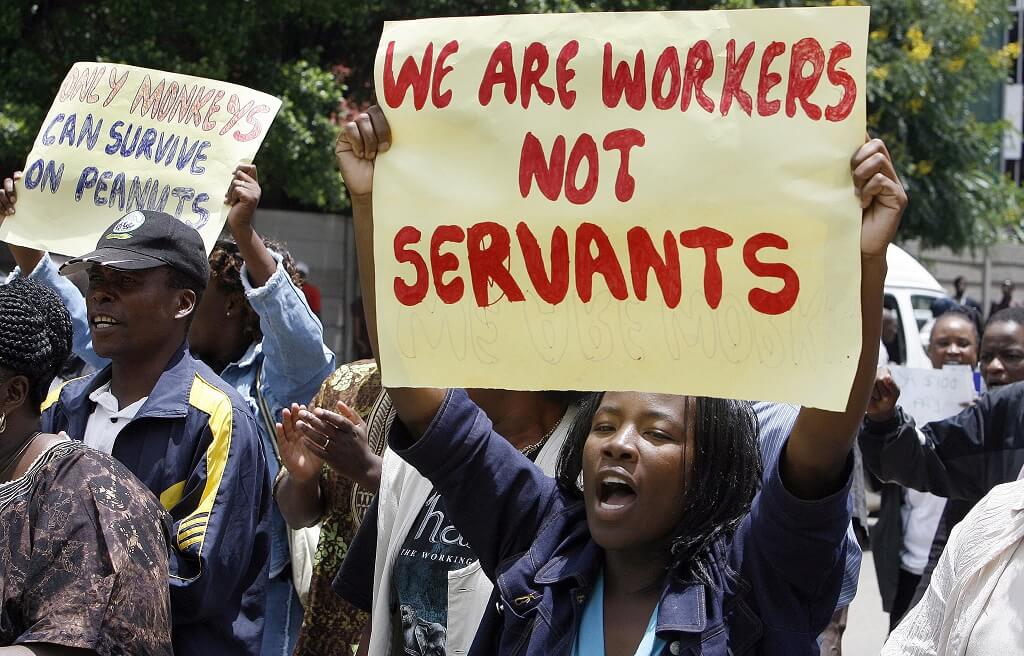
This week, protests have broken out in Santiago, Chile centering around raises in the cost of living. The largest chant heard from the protesters and written on protesters’ signs is: “Chile has woken up”. Many protesters also criticize the growing inequality in Chile. One shared, “We need to share a piece of the pie with everyone and have a better Chile.” 

So far, 18 Chileans have died from the protests and a state of emergency has been declared. On Tuesday, Chilean President Pinera publicly apologized on national television and “announced some concessions including higher wages and an increase in pensions, as well as higher taxes for the rich.” In the Global News Podcast by the BBC World Service these concessions were considered to be achievements of “people power”. Despite the reforms, protests have continued and calls for the President’s resignation have been issued. For a state in which military rule ended just 30 years ago, many worry about its possible return in the wake of a state of emergency and increased military presence.
Weekly Report 18 October, 2019

Weekly Report 18 October, 2019

Myanmar

In Kachin state, Myanmar’s Arakan army has picked up recruitment efforts in light of ongoing clashes with Myanmar forces and failed cease-fire talks. The Arakan Army has set up multiple training camps in Kachin state, home to fellow Northern Alliance member, the Kachin Independence Army (KIA). Currently, the Arakan Army allegedly possesses 7,000 troops. The goal of the Arakan Army is self-autonomy and control over their territory in Northern Myanmar.  

Cambodia

As the return of famed opposition leader Sam Rainsy nears, Cambodian officials have escalated the repression of his supporters. This year, at least 27 members of the dissolved Cambodia National Rescue Party (CNRP) have been arrested, facing five to ten years in prison. In the case of civil servants found conspiring against Prime Minister Hun Sen, a life sentence will be given. Social Media and private phone calls have been closely monitored by Cambodian officials, leading to the increase of arrests within the CNRP’s critical ranks. 

Maldives

Maldivian Chief Justice Ahmed Abdulla Didi stated on Wednesday that the Judicial Service Commission (JSC) lacks the constitutional mandate to investigate Supreme Court justices over the top court’s decisions, despite its intention to launch an independent investigative probe. The JSC planned to examine 17 instances where the Supreme Court allegedly violated the constitution or usurped the powers of state institutions. However, neither the legitimacy nor constitutionality of Supreme Court decisions could be undermined, as it would impede the independence and freedom of the court, according to Chief Justice Didi. 

Maldivian President Ibrahim Mohamed Solih affirmed on Wednesday that criticism of Islam and the use of religion to create discord will continue to be illegal, warranting punishment from the government. 

Thailand

This Thursday, Thai opposition Future Forward Party protested the transfer of two Army units to the command of Thai King Maha Vajiralongkorn, citing the move as inconsistent with the laws of the constitutional monarchy. A leader of the Future Forward Party,  Piyabutr Saengkanokkul, stated that the royal decree unjustly used emergency provisions to bypass parliament, despite its confirmation by a majority of lawmakers this Thursday. The disagreement has heightened tensions in Thailand’s struggle between military and democratic rule, in which pro-military and royalist supporters have portrayed their opponents as threats to the monarchy. 

Vietnam

This Tuesday, Vietnamese President and Communist Party chief Nguyen Phu Trong called for restraint in the disputed South China Sea amid a tense stand-off involving Chinese ships. Tensions escalated this summer when Beijing deployed a research ship to conduct an energy survey in waters controlled by Vietnam. Though President Trong assured the public that Vietnam and China maintain good relations, the rising tensions represent challenges to Vietnamese sovereignty and security. The announcement comes after Dreamworks movie ‘Abominable’ was pulled from theaters this week due to its feature of a map that validates China’s claim to the South China Sea, negating Vietnam’s legal claim to the territory. 

Malaysia

In a video documentary by Al Jazeera’s Florence Looi,  Malaysian fish farmers and activists call on the government to improve marine pollution. Malaysia’s marine pollution has been affecting fish farmers in Northern Malaysia, causing them financial losses. In coming years, marine pollution is only expected to worsen, raising concerns among Malaysian fish farmers for further financial losses. 

The creation of artificial islands has also sparked outrage among fish farmers. Proposed artificial islands will cover approximately 18 square kilometers.  The most controversial artificial island is expected to be built in the center of rich fishing grounds, where farmers catch the majority of their fish, prawns and crabs. This construction would likely devastate the fish farmers’ income. 

North Korea

This Tuesday,  North Korea and South Korea met for the first time since 1990 on the football field for the World Cup qualifiers. The match, however, was not your typical match. There were no fans in the stadium and no media to broadcast the game. One of the few attendees was FIFA President Gianni Infantino. In a statement he made after the game he expressed that he was “disappointed to see there were no fans in the audience.” The historic match, which ended in a tie, demonstrates the slow progress in North and South Korean diplomatic relations. These teams accepted competing against each other, however advances must still be made in order to normalize relations. 

Hong Kong

Parliamentary proceedings were disrupted this week as 11 opposition members were removed from the chambers after Carrie Lam’s annual policy address. The ejected lawmakers, holding white flowers in solidarity with those injured in the protests, interrupted and criticized her for not addressing the ongoing political crisis in her policy speech. Lam’s sentiments centered around a commitment to nonviolence and adhering to the rule of law, which proved unsatisfactory. 

This week, leader of the Civil Human Rights Front (CHRF), Jimmy Sham, was hospitalized after being attacked by a hammer. The violent act against Sham occurred just hours after Carrie Lam suspended her annual policy address after the interruption from opposing lawmakers. From the hospital, Sham reassured the public via social media of his continued commitment to nonviolent resistance. The CHRF is a principal organizer of the ongoing demonstrations across Hong Kong, and one of Hong Kong’s largest pro-democracy organizations. 

Libya

The Libyan government has started its first steps of economic reform; this week, the commercial price of kerosene was raised to .85 Libyan dinars ($0.6 USD) per liter, though the domestic prices will remain the same, at .15 dinars per liter. The Libyan government intends on lowering domestic prices following an increase in commercial sales. The Libyan ministry additionally stated that “the aim of this decision is primarily to combat the smuggling of this substance”. It is unclear whether this tactic will be effective, though the measure is surprising due to the Libyan government’s unwillingness to start reforms in the midst of widespread conflict. 

Sudan

Talks between the transitional government and rebel groups started this week in Sudan. The aims of the talks are to foster peace and communication between the two parties. President Abdalla Hamdok has voiced his hope for ending conflict with rebel groups in addition to helping Sudan transition to civilian rule. The peace talks between the groups is the next step in creating a strong foundation for a formal transition to a civilian-run government and signifies forward progress in the way of change.   

Iran

Iran has announced that the country will be limiting nuclear inspectors’ access to the nation’s nuclear plants. The action comes as a continuation of reducing responsibility in accordance with the nuclear deal. The deal, which was signed by major world powers, started to fall apart following U.S. President Trump’s withdrawal from the agreement. The European powers remain vocally committed to the deal and it appears that this measure by Iran serves to put pressure on the European signatories, who had previously promised increased trading between the EU and Iran.  

Pakistan’s foreign minister reported that Iran and Saudi Arabia showed willingness to have talks, following weeks of rising tensions between the two countries. Neither Iran nor Saudi have announced a plan for talks, and the prospect of dialogue at this juncture seems somewhat unlikely on the Saudi side. However, the threat of war between the nations, following an alleged Iranian attack on a Saudi oil facility, appears to be decreasing. 

Iraq 

This Thursday, the Iraqi government has announced their plan to restore 3G services. The services were initially cut off in the first week of October when deadly protests broke out in the capital, killing at least 110 people and wounding 6,000 others. The government aimed to control the sharing of grotesque images, in an effort to stop potential sympathizers. After the protests calmed and the news of the amount of deaths and injuries spread, protesters demanded the government “to produce a report on who in the Iraqi Security Force was responsible for firing at civilians.” Protesters also called for a nationwide protest on October 25th, coinciding with the deadline they put in place on the government to produce the report on responsibility. After the government received notice of the protest, in an effort to calm tensions the government then announced their plan to restore 3G services. 

Syria 

Following a deal brokered by Moscow, Damascus has allied with Kurdish-led Syrian Democratic Forces (SDF) to secure the Syrian-Turkish border. Though the deal resulted in significant territorial losses for the SDF, which had previously established an autonomous territory in Northeastern Syria, the security of Kurdish people is its top priority. President Assad’s forces have viewed this development as strategic both in terms of regaining territory previously lost during the civil war, and also securing access to resources located in the area. 

Zimbabwe

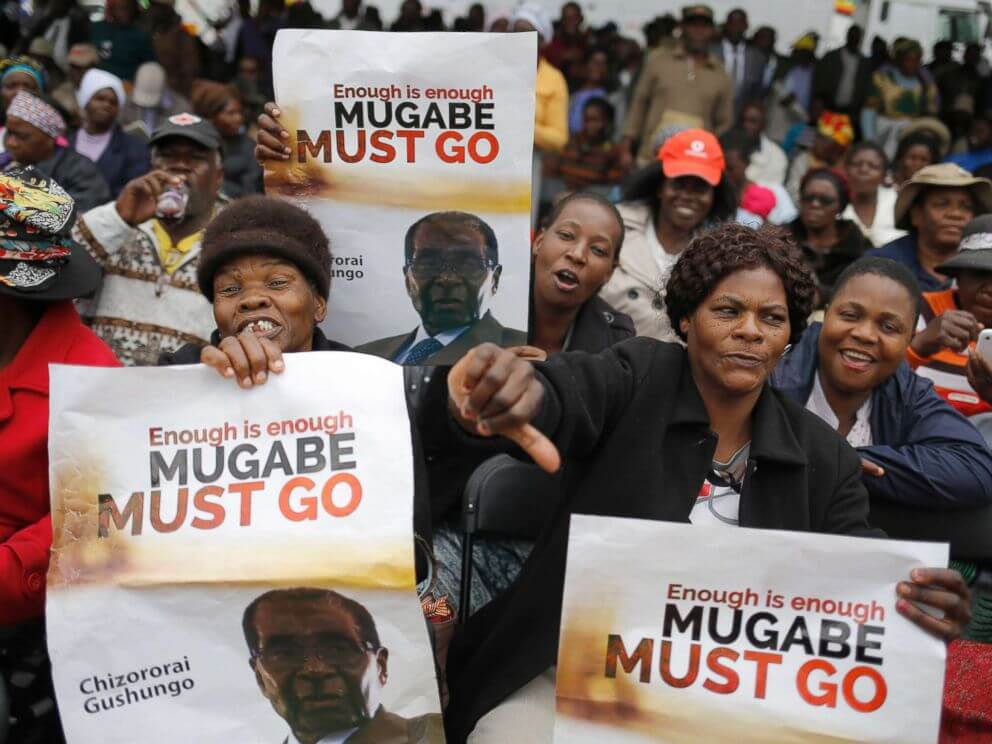
Zimbabwean doctors have continued to strike for the sixth consecutive week, ignoring court orders to return to work. Public workers joined the doctor’s this week in a show of support. Doctors started to strike in response to drastically decreased monthly wages; demonstrators were made more enthusiastic following the kidnapping and eventual release of the doctors’ union leader, Dr Magombeyi, by government authorities. The doctor’s strike reflects the worsening economic situation of Zimbabwe; the economic environment has appeared to worsen under President Mnangagwa, whose administration followed the Mugabe regime. 

Cuba

In reaction to strict US sanctions, Cuba is making due with only 62% of the petrol it needs to fully operate. The Cuban government has prioritized petrol use for  “hospitals, schools and food distribution.” All other petrol using substances have been placed on the back burner. Transportation, for example, is facing harsh realities as hundreds of people cram into public busses, while many are left behind on bus curbs. The resilience of the Cuban government and its citizens has been demonstrated during this shortage, however, has left many to question for how long can this continue? 

Venezuela

This week, Guatemala’s president-elect Alejandro Giammattei was denied entry into Venezuela. Here, he planned to hold a meeting with Juan Guaido, the leader of the opposition party in Venezuela. However, once he landed at Simon Bolivar International Airport he was denied entry and immediately placed on a departing flight. This act has been seen as a message from President Maduro demonstrating his intolerance of Guaido supporters. In reaction to his denied entry, Giammattei shared “we are with you,” referring to Guatemala’s strong support for Guaido. 

Russia

Russia’s zone of permafrost has come under threat due to climate change, potentially costing the country $2.3 billion a year. The area of permafrost has started to thaw, following an increase in temperature in the region. The thawing has caused the ground to soften, threatening the infrastructure of the entire area; the permafrost region is home to a significant portion of Russia’s oil facilities and the destruction of said facilities would be very harmful to the Russian economy. 

Russia has accused United States diplomats of attempting to gain access to restricted areas in the country. Russian officials allegedly caught 3 U.S. diplomats in a secure military testing site. This accusation comes as a continuation of consistently heightened tensions between Washington and Moscow. 

United States

The United States has brokered a deal with Turkey that allows for a five day ceasefire in northern Syria. The pause in attacks will hopefully allow Kurdish fighters, a group formerly allied with the United States until President Trump’s sudden withdrawal from the region, to retreat. President Trump has dealt with criticism from both the Republicans and the Democrats on the matter of withdrawal, as was indicated by a House resolution condemning his decision.

KEEP IT CIVIL (AND DISOBEDIENT): the power of non-violent direct action, podcast

The source of the podcast: Podfollow

Episode notes

Hello! Is mobilising 3.5% of the population all it takes to achieve political change? As Extinction Rebellion continue their latest action in London, we’re talking about the ideas behind non-violent civil disobedience. We hear from some of those involved in Extinction Rebellion, before spokesperson Zion Lights talks us through their theory of change. Historian Talat Ahmed explains Gandhi’s approach to civil disobedience and how this has inspired movements since. And Serbian activist Srdja Popovic tells us about the principles of effective non-violent strategy that he teaches to campaigners around the world. 

Weekly Report 11 October, 2019

Weekly Report 11 October, 2019

Myanmar

Myanmar Investments International, a London-based firm, has pulled its foreign investments from Myanmar amid instability and conflict in the Rakhine region. One of several investors to withdraw from Myanmar since 2017, MII’s move represents the lack of confidence in the country’s future. In addition to the fallout from the Rakhine conflict, former investors have cited Myanmar’s fragile domestic banking system as grounds for withdrawal. Foreign investment is expected to drop significantly in the coming months and years as Myanmar becomes further enveloped in civil unrest. 

This Week, 30 Rohingya Muslims were arrested in Myanmar while trying to travel from Rakhine State to the city of Yangon without official travel documents. According to Human Rights Watch, police arrested the group of Rohingya and sentenced 21 of them to two years in prison, while eight children were sent to a child detention center. The youngest, a five-year-old, is being held in prison with his mother. This incident is an addition to a long list of discriminatory arrests that target Rohingya in Myanmar, inhibiting their freedom of movement. 

Cambodia  

This Monday, Cambodian Prime Minister Hun Sen threatened to deploy the military if opposition leaders from the dissolved CNRP return next month, as he would consider it an attempted coup. Specifically, opposition Sam Rainsy is expected to return to the country following his self-exile. Rainsy has repeatedly called for a revolution due to Hun Sen’s abuse of power and unwillingness to hold free and fair elections. This Monday, the Prime Minister ordered police forced to “Attack wherever [supporters] are seen, there is no need to wait for an arrest warrant or not”. In 2019 alone, over 30 activists have been accused of plotting to overthrow the government, and were subsequently arrested. 

Maldives

Maldivian President Ibrahim Mohamed Solih criticized a report made by the Maldivian Democracy Network (MDN). The NGO published a report on human rights in the Maldives, which was accused of “mocking” Islam. Because of the large criticism the report received, MDN removed the report, apologized and vowed “to revise the report with the help of religious scholars” to ensure religious sensitivity. Responding to the MDN’s report, MP Mohamed Nasheed Abdulla brought forth a motion in parliament, which called for “‘eradication’ of secularist or ‘irreligious’ people, ‘rainbow-colored people’, and advocates of gender equality.” The proposed motion provoked outrage among Maldivian human rights activists who largely criticize the motion.

Thailand

Following the acquittal of 5 Muslim men on murder charges, Yala Province Cheif judge Kanakorn Pianchana delivered an impassioned speech against corruption in the Thai judicial system, and then shot himself in the courtroom. Alleging that he had been pressured to find the men guilty despite lack of credible evidence, Pianchana stated that the Thai court system was neither transparent nor just. Following the suicide attempt, the judicial commission announced this week that an independent inquiry into the case will be launched in the next two weeks.

Vietnam

 Vietnamese activist Nguyen Quoc Duc Vuong was arrested in late September for criticizing the Communist government on social media. This week, Human Rights Watch reported that Vuong is being held under conditions “conducive to mistreatment or torture”. Police arrested Vuong on charges of “making, storing, disseminating or propagandizing information, materials and products that aim to oppose the State of the Socialist Republic of Vietnam,” under article 117 of the country’s penal code. Vuong’s arrest represents challenges to freedom of expression in Vietnam as well as the Vietnamese government’s extreme efforts to censor online material. According to Human Rights Watch, Vuong’s arrest is part of a crackdown against critics and pro-democracy campaigners. During the first nine months of 2019, the Vietnamese authorities convicted at least 11 people for criticizing the government.

North Korea

Following nuclear talks between the U.S. and North Korea earlier this week in Stockholm, North Korean officials have cast doubt on peace relations, stating that the “negotiations have not fulfilled out expectations”. This Thursday, a North Korean Foreign Ministry spokesperson further  noted that the Communist state might reverse steps to build trust with the United States, following an inflammatory appeal from the UN Security Council. On Tuesday, the Council called for North Korea to “take concrete steps” to cease its nuclear weapons and ballistic missiles development in a meaningful, measurable and irreversible way. The spokesperson noted that the Council appeal, largely representative of U.S. interests, undermines the peace-building process between the two countries and unjustly questions North Korea’s right to self-defense. 

Hong Kong

This weekend, protests in Hong Kong saw a sharp increase in violence, which led Hong Kong leader, Karrie Lam, to announce that “the protests were no longer ‘a peaceful movement for democracy.’” The announcement comes after thousands of protesters violated Hong Kong’s latest ban on wearing face masks. Lam argued that if the violence continues, she will have no choice but to ask China to step in. China desperately wants to stop the Hong Kong protests, because of the political threat they pose to Chinese President Xi Jinping. 

Libya

This Sunday, a boat leaving from Libya capsized carrying approximately 50 people attempting to reach Italy and seek asylum. 22 of the 50 migrants were rescued by Italian authorities, while 13 women died and 8 children went missing during the incident. These numbers contribute to the growing number of migrants and refugees attempting to reach Italy from North Africa by sea and highlights the dangers of doing so. Last month alone, approximately 2,500 migrants and refugees coming from North Africa arrived in Italy: a figure that does not account for the individuals who have died when attempting the perilous journey. Since 2013, 20,000 migrants and refugees have died in their attempt to reach Europe. 

Sudan

Al Jazeera’s Hiba Morgan released a short video documentary on daily life for residents in Nyala, Sudan. In the documentary a Nyala student accounts a protests two weeks ago led by school children. This protest sparked after the school released its students early because of a shortage in bread. During the protest, soldiers fired tear gas and live ammunition at the students. One of the bullets struck the interviewees’ foot and at least six other people were injured during the two-day protest. 

The protest may have been sparked because of bread shortages, however this was not the only matter being protested. Many residents in Nyala have yet to see changes after the transitional power-sharing deal implemented more than six weeks ago. For example, state governors appointed by the previous president, Omar al-Bashir, have yet to be dismissed and replaced. Some argue the notion that these state governors have not been dismissed symbolizes how the old regime has yet to be overturned. 

Iran

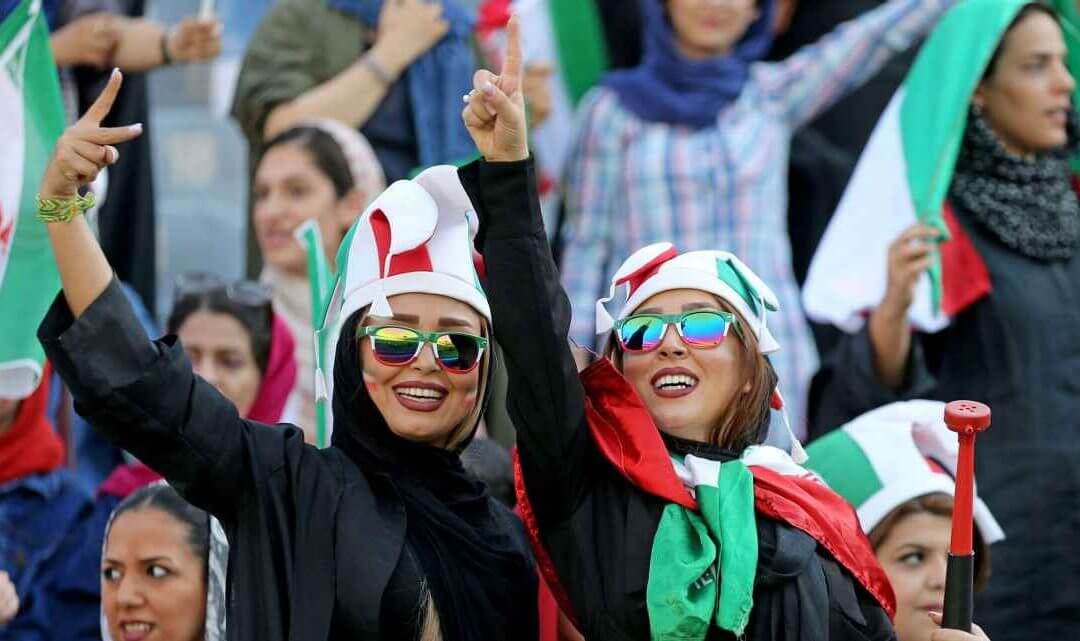
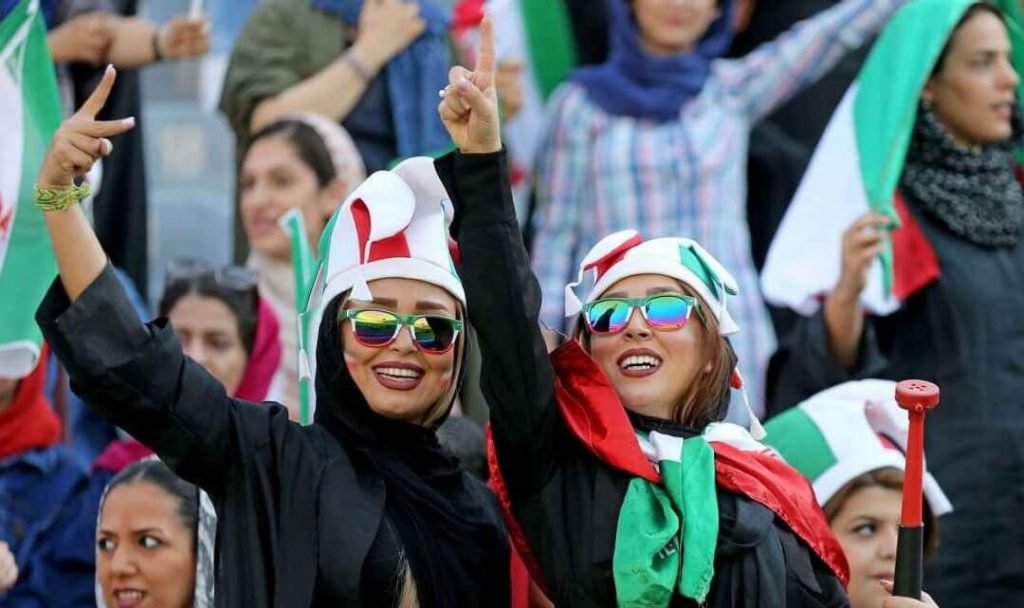
Iranian women for the first time were allowed to attend the World Cup qualifier match against Cambodia on Thursday, October 10th. The lift on Iran’s ban on women attending football matches came after a 29-year-old woman, Sahar Khodayari, set herself on fire outside a Tehran court in protest of the ban. Khodayari died from her injuries, which sparked domestic and international pressure on Iran to lift the ban. Although Thursday’s game only allocated 5% of the stadium to female fans, activists regarded the partial lift as the “first official step forward.” Concerns regarding the women attendees safety during the match were raised, but failed to discourage female fans from attending. For female football fans, the excitement of attending Thursday’s match overweighed fears of potential safety.  In fact, the first 850 tickets released to women were sold out in minutes.  

Iraq 

This Thursday, Iraq’s Prime Minister has announced three days of mourning in tribute to demonstrators killed in recent anti-government and anti-corruption protests. 110 deaths and thousands of injuries have been confirmed in Baghdad as well as other cities across the country. Curfews and internet blackouts are still in effect across Iraq as the government attempts to quell the protests. Multiple reports have emerged that news stations and journalists have been targeted by Iraqi security forces, which activists view as a broad effort to suppress the media. So far, Iraq’s army has admitted to the use of “excessive force” against protesters in al-Sadr district, according to a statement posted to the Iraqi state security Facebook page on Monday.

Zimbabwe

This Wednesday, electricity prices increased for the second time within three months; tariffs on electricity have raised by 320%. Rises in the price of electricity coincides with last week’s steep price increases in fuel and basic goods. The government, in an effort to reinvigorate the Zimdollar, banned “the use of foreign currencies in local transactions”. However, this effort largely failed. Initial hopes that Mnangagwa would rebound Zimbabwe’s economy after Robert Mugabe have dwindled. In response to critics, Mnangagwa called on Zimbabweans to allow time and patience for Zimbabwe’s economy to rebound. 

Cuba

The Trump administration’s tough sanctions on Cuba are deterring Western firms from operating and investing in the country. After sanctioning almost “200 Cuban military-run companies and hotels as well as any company or vessel involved with shipping Venezuelan oil to Cuba,” Western firms worry their investment may lead to reactionary US sanctions. They reason that investing in Cuba is not worth its costs. President of the US-Cuba Trade and Economic Council, John Kavulich, equated US financial sanctions to weapons of mass destruction, while Cuban Foreign Minister, Bruno Rodriguez, called the sanctions “genocidal” . Cuba is now facing trouble in financing their sugar harvest, venture projects are finding it almost “impossible to obtain private credit,” and Cuban embassies abroad are hindered in their ability to open accounts. 

Venezuela

Venezuela is projected to lose ownership of Citgo this month, unless the U.S. Treasury Department intervenes. The Venezuelan government is expected to default on a $913 million bond issue payment due on October 27th, meaning that bondholders could seize the 50.1% of Citgo shares that President Nicolas Maduro formerly placed as collateral for the bond issue. However, such recourse in the case of payment default is only possible with a special license from the U.S. Treasury Department, which was granted to Interim President Juan Guaido earlier this year.  With the revocation of the special license, Guaido could maintain ownership of Citgo. 

Crude oil suspected to be from a Venezuelan spill has contaminated hundreds of miles of Brazilian beaches, a crisis that is likely to further strain relations between the two countries. Though the original spill occurred over a month ago, Brazil’s Environment Minister Ricardo Salles asserted on Wednesday that the oil is “very likely from Venezuela”, which will almost certainly escalate tensions in the coming days.  

Nicaragua

After more than a year in exile, university student leader Lesther Aleman returned to Nicaragua on Monday from the United States despite running a “very high risk” by returning. Aleman rose to prominence as a student activist when he interrupted a speech by Daniel Ortega at the beginning of the first national dialogue in May of 2018, and demanded that he order the cessation of repression. At the time, more than 50 people had been killed in anti-corruption protests, many of them being students. The Inter-American Commission on Human Rights reports today that 328 people were ultimately killed, hundreds arrested and at least 70,000 fled into exile. 

This week, one of Nicaragua’s oldest newspapers, “Nuevo Diario,” shut down this week due to extreme economic strain and the challenging environment for journalists in the Central American country. This announcement follows a decision made this week by the Nicaraguan government to not return “Noticias TV”, a private station seized last December, to its owners. The Nicaraguan government alleged that the station incited anti-government violence, orchestrated by the station’s director Miguel Mora and news director Lucía Pineda. Both Mora and Pineda were arrested for 6 months and investigated for involvement in a “failed coup attempt. 

Russia

This Wednesday, Russia labeled Mr. Navalny’s Anti-Corruption Foundation (FBK) a “foreign agent”, implying that the foundation is accepting international funds and spies for foreign governments. Navalny responded to the labeling by stating that the group is funded “exclusively by Russian citizens.” He urged the government to “publicly prove” that his organization is accepting international funds before placing a label on them. FBK spokeswomen Kira Yarmysh shared that the government’s decision for labeling FBK was meant to “put pressure on [them] and attempt to stop [their] activity.” FBK has become Putin’s primary critic and a threat to the Kremlin. Just as Navalny was barred from the 2018 presidential elections, labeling FBK a foreign agent is just “another attempt to suffocate” FBK and block criticism of the Kremlin. 

United States

On Monday, President Trump called for the withdrawal of American troops from Syria’s border with Turkey, despite appeals from Republicans Congress members, the State Department, and the international community. The withdrawal allowed for Turkish forces to invade Northeastern Syria this week in an attempt to eliminate Kurdish strongholds along the Turkish-Syrian border, and establish a safe-zone for the return of Syrian refugees currently residing in Turkey. The move is projected to be disastrous for the Kurdish-led Syrian Democratic forces, who are both allies to the U.S. and instrumental in containing IS fighters in Northeastern Syria. Though President Trump threatened to devastate the Turkish economy in case of an escalated attack against the Kurds, he implied in a tweet that mediation was his preferred solution.

A Trump Administration spokesperson announced this week that the White House will not cooperate with the impending impeachment investigation into President Trump’s interactions with Ukrainian officials. 

Other News: Turkish Offensive in Syria

At least 11 people have been killed in Northeastern Syria as the Turkish offensive against the Syrian Democratic Forces, a Kurdish-led resistance force, enters its third day. Tens of thousands of civilians have fled their homes as attacks have escalated, prompting widespread criticism from the international community. The fighting between the SDF and Turkish forces is concentrated around the two border towns of Ras al-Ain and Tal Abyad. The SDF has responded to the attacks by shelling nearby Turkish border towns, resulting in at least five casualties.

Weekly Report 4 October, 2019

Coronavirus

Latin America remains the epicenter of the virus while the United States sees a new spike in cases that has resulted in a return to stricter measures.

United States

The country’s coronavirus count takes a turn as it sets a new daily record of infections on Thursday. The spike in cases has led many states to pause reopening and reimpose restrictions in an attempt to curb infection. The Centers for Disease Control and Prevention now projects thousands more deaths this month.

China

China has warned of strong countermeasures against the U.S., Australia, and the U.K. should they pursue retaliatory actions against their national security law in Hong Kong. Senior officials have said that the U.K. has no right to grant residency to Hong Kongers, and that it would “bear all consequences” for breaching international law. In the latest standoff between China and India that began with a violent border clash, India has banned 59 apps developed by Chinese firms over concerns that these apps were engaging in activities that threatened India’s national security. Among the apps banned are TikTok, WeChat, QQ, and Xiaomi which count India as one of their biggest overseas markets. Disturbing new evidence from leaked Chinese government documents have also revealed a systematic state campaign to suppress minority births in Xinjiang with potentially genocidal sterilization plans. This campaign’s explicit aim is to reduce 2020 birth and population growth rates in Xinjiang’s southern Uighur regions by “at least” 0.4 percentage points below the 2016 level. Last but not least, researchers in China have discovered a new type of swine flu with purported pandemic potential. Named G4, the virus is genetically descended from the H1N1 strain that caused a pandemic in 2009. The World Health Organization (WHO) has announced that it would study the virus carefully.

Hong Kong 

Forty days after China announced it would pass a national security law for Hong Kong, that legislation is now in full force. The law was drafted almost entirely in secret in closed-door meetings that even Carrie Lam, Hong Kong’s Chief Executive, was not part of. Promulgated on Tuesday night through China’s National People’s Congress, the law now criminalizes “acts of secession, subversion of state power, terrorist activities, and collusion with foreign or external forces to endanger national security.” The maximum sentence given for each of these four crimes is life imprisonment. The national security law now trumps any existing Hong Kong laws in the case of conflict and grants Beijing broad powers to prosecute Hong Kongers deemed to have committed especially egregious crimes. Just this week, Hong Kong Police have reportedly made more than 300 arrests for illegal assembly and other offences, with nine involving violations of the new law.

In response, the United States and its allies have taken steps to punish China. The U.S. Senate unanimously passed a bill to sanction Chinese officials involved in the national security law’s implementation and the House of Representatives passed legislation to sanction banks that conduct business with these officials. The United Kingdom, meanwhile, has laid down plans to allow 3 million Hong Kongers to seek refuge and apply for citizenship. Australia is considering offering safe haven, and Taiwan has also opened a new office to help fleeing Hong Kong residents.

Myanmar 

In a rare move, three Myanmar military officers have been found guilty by a military court-martial for atrocities committed against the Rohingya people in the Rakhine state. Myanmar is currently facing charges of genocide before the United Nations. A recent landslide in a Myanmar jade mine has killed at least 162 people, and many others are still missing. The disaster was reportedly triggered by heavy rain in the area, which set off waves of rock and mud. Myanmar officials appear to be calling out China for arming terrorist groups to allegedly use them as a bargaining chip for smooth implementation of Belt and Road Initiative projects. Many weapons seized by the military from ethnic armed groups have been found to be Chinese-made. The country has also set its general election day for November 8, in a vote widely seen as a test for the country’s fledgling democratic government led by the National League for Democracy.

Zimbabwe 

This week the Zimbabwe government shut down the stock exchange in an attempt to stabilise the local currency as it continues to lose value with hyperinflation at more than 785%. Shop owners and traders are reportedly refusing to accept payment in local banknotes, sparking a police crackdown earlier this week in which 102 people have already been arrested. They are being charged with breaching a section of the Bank Use Promotion Act for their opposition to the use of local currency.

Chile

The country is reporting the highest per capita infection rate of the coronavirus of any major country, with 13,000 cases for every 1 million people. Reporters point to widespread social inequity in the country as the main reason for the devastating impact of the pandemic. Additionally, as borders remain closed to curb infection, thousands of foreign workers are left stranded within Chile.

Iraq

Iraqi officials discovered a new mass grave this week in the North of Iraq – a remnant of the brutal rule of the Islamic State (IS) group. The mass grave, located in the village of Humeydat, stretches several hundred meters with dozens of bodies excavated. Although awaiting investigation, it is believed that the bodies are Shiite convicts taken from the local Badoush prison by IS shortly after IS seized Mosul in June 2014. According to an investigation by the Human Rights Watch, 1,500 inmates were kidnapped and taken to this stretch in the desert. Meanwhile on the 2nd of July, the U.S. Supreme Court declined to hear a plea by almost 1,400 Iraqis who have been convicted of crimes in the U.S. requesting to delay immediate deportation to Iraq where they will likely face persecution and torture. The group hoped to reopen their case before immigration judges and present new evidence.

Libya

On Wednesday, U.S. officials encouraged Haftar’s Libyan National Army (LNA) to disband in a virtual meeting. Libya’s conflict is a “rapidly escalating proxy war” between regional powers, contrary to both American and Libyan interests the officials claimed. Today, Russia announced that it will reopen its embassy in the country, though it will be temporarily based in Tunisia. Russian diplomats were last evacuated from Libya in October 2013 after the embassy in Tripoli was attacked.

Syria  

On Tuesday, the European Union led a virtual conference of over 60 governments and Non-governmental organizations as the UN called for $10 billion worth of aid for Syria. The aid, $3.8 billion for aid inside Syria and $6.04 billion for countries hosting refugees, will be used to support refugees as Syria enters its ninth year of armed conflict and the coronavirus still remains prevalent. International donors have pledged $7.7 billion in humanitarian aid; however, aid group Oxfam said the sum is “simply not enough.” However, in the meantime, there have been reports that numerous tents in war-torn Idlib province are being replaced with new brick houses, with more than 2,000 families now living in brick houses and a limited set of household necessities.

Lebanon 

Arab Tawhid Party leader e-minister Wiam Wahhab called on Prime Minister Hassan Diab to resign when he posted a tweet stating “I call on PM Diab to resign before they oust him through street action, because there are negotiations behind the scenes on forming a government and the disagreement is only over some details.” Meanwhile, a number of Lebanese media outlets broadcast interviews with US Ambassador Dorthy Shea, ignoring a judge’s ruling that banned local and foreign media from featuring her statements after she criticized Iran-backed Hezbollah in an interview last week.

Palestine 

As the Israeli self-created deadline of the 1st of July for the finalization of their annexation plans of the West Bank passed, Palestinian offcials state that the mounting pressure of their diplomatic campaign over the past few months forced Israeli Prime Minister Benjamin Netanyahu to “backpedal” on the finalization of the annexation plans. Cabinet minister Ofir Akunis however suggested that the annexation will take place later in July. Meanwhile, protesters in DC linked the Palestinian cause with the Black Lives Matter movement, shouting anti-Israel slogans such as “Israel, we know you, you murder children too.

Palestinian civil society organizations have formed a national campaign that rejects the European Union’s conditional funding that includes an “anti-terror clause.” This clause, included in the EU’s grant proposals late last year, identifies at least seven Palestinian political parties as “terrorist groups” and calls for civil society organizations to conduct background checks on all members ensuring they are not affiliated with any of the seven identifies parties. Civil society organizations have described this clause as “criminalizing the Plaestinian national struggle against the Israeli occupation.”

Russia 

In a constitutional referendum, Russians have overwhelmingly voted in favor of changes that enable President Vladimir Putin to potentially stay in power up to 2036. The state electoral commission reported that the final vote was 77.9% in favor and 21.2% against with a 65% turnout rate, though critics question the legitimacy of the outcome based on voting irregularities. The New York Times recently broke an explosive story about how a unit of Russia’s military intelligence, Unit 29155 of the GRU, allegedly offered bounties to militants in Afghanistan to kill U.S. troops. A recent nuclear leak detected by the Comprehensive Nuclear Test Ban Treaty Organization (CTBTO) may be related to new nuclear-powered strategic weapons Russia is developing, though Russia denies radiation originated from its nuclear power stations.

North Korea

North Korean leader Kim Jong Un announced that the country had thoroughly prevented COVID-19 from making inroads at a meeting of the politburo, according to state media. Defections from North Korea have reportedly reached a record low as authorities have exploited the COVID-19 pandemic to strengthen technological surveillance. South Korea recently called for a meeting between U.S. President Donald Trump and North Korean leader Kim Jong Un before the U.S. presidential election in November in order to resume stalled nuclear negotiations. 62 countries also allegedly violated United Nations Security Council sanctions against North Korea from February 2019 to February 2020, according to a report from D.C.-based think tank Institute for Science and International Security. China led the list with more than 60 alleged violations, while Hong Kong followed with 20. 

Iran

On the 29th of June, Iran issued an Interpol arrest warrant for US president Donald Trump and 35 other government officials for their role in the assassination of Iranian military general Qassem Soleimani on the 3rd of January this year. President Trump has insisted that he was not briefed by intelligence officials over an alleged Russian plot to pay out bounties to Taliban-linked militia in exchange for targeting American and British soldiers in Afghanistan. 

Iran has also issued a death sentence for opposition journalist Ruhollah Zam for his active involvement in the widespread Iranian protests in 2017 and 2018. Zam was found guilty by a court in Tehran of “corruption on earth.”

Nicaragua 

On Thursday, Nicaragua bishops criticise Ortega’s handling of the coronavirus, which has devastated the country despite the government’s claim to the contrary.

Sudan

Tens of thousands of people took to the streets on Tuesday in largely peaceful demonstrations demanding faster reform and greater civilian oversight in the country’s transition towards democracy. A government spokesperson reported that one person has been killed and several others injured during the demonstrations. The protestors are also asking for justice for the killing of demonstrators since December 2018.

Venezuela

Venezuela has announced that it will hold parliamentary elections in December for an expanded number of seats in the new National Assembly. While President Maduro supported the decision, internationally-recognised interim President Juan Guaido accused the government of failing to meet “the minimum conditions of transparency,” announcing a boycott of the polls. 

Bolivia

After months of strictly enforced quarantine, Bolivian streets have seen a return of protestors reflecting the country’s ongoing political crisis. Elections remain scheduled for September increasing the political stakes as the coronavirus continues to overwhelm the medical system.

Weekly August 23

Weekly August 23

North Korea 

Talks of denuclearization between the United States and North Korea have stalled after North Korean diplomat called the U.S. Secretary of State a “diehard toxin”. South Korean officials have attempted to get talks back on track, though it is currently unclear as to whether more meetings will take place with Secretary Mike Pompeo involved. The continued launching of test missiles by North Korea has aided in maintaining heightened tensions, and the test launch of a missile by the United States (an action directed at Russia) has only further complicated the situation.

Nicaragua 

Protests against Nicaraguan President Daniel Ortega have continued outside the country in Costa Rica. Nicaraguan exiles who fled after the government crackdown in April have become increasingly vocal about the state of the country under Ortega. The economically spiraling nation has been dealt another blow, as it appears the 50 billion dollar canal project will officially fall through; the project, largely funded by a Chinese billionaire, has a contract that is set to expire in September, but construction is yet to start.

Brazil

The Amazon rainforest in Brazil has been set alight by thousands of deliberate fires, signaling an international environmental emergency. Pressure by the international community has failed to move Brazilian President Bolsonaro, who has blamed NGOs for the blaze (despite lack of proof). Many have blamed Bolsonaro for pushing deforestation in a bid to jump start the Brazilian economy. Leading scientists have warned that the scale of the fires in the Amazon will have dire consequences if something is not done.

Zimbabwe 

A Zimbabwean opposition MP has been arrested after riot police violently thwarted organized rallies against austerity measures; Amos Chibaya, organizing secretary for the Movement for Democratic Chance (MDC) party, is facing charges of disobeying a police ban on demonstrations.  This high profile arrest comes in the wake of a number of incidents reported to human rights activists, including the abduction and beating of comedian and satirist Samantha Kureya, who has now gone into hiding. Protestors gathered in Africa Unity Square to protest the ban, a number of opposition party members at the protest were arrested.

Venezuela 

The US and Venezuela confirm ‘secret talks’ between high profile officials, Venezuelan president Nicolas Maduro described the talks as a way to “normalise the conflict that exists with the US empire,” claiming that these talks have been ongoing for up to four months. The talks come at a time where President Maduro and opposition leader Juan Guaido are meeting in Norway in an effort to end the countries lengthy political stalemate. The UN estimates that at least four million Venezuelans have fled the country due to the crushing economic crisis.

Sudan 

The Sudan power-sharing deal between the Transitional Military Council and opposition leaders has come to fruition in the official appointing of a transitional Prime Minister and a Sovereign Council. The Sudanese Prime Minister is Abdalla Hamduk, who has worked at the UN as a senior economist since 2011. The Sovereign Council, headed by a military general, is made up of military and opposition leaders; the council will remain in place until elections are held roughly 39 months from now. Former dictator of Sudan, Omar al-Bashir, appeared in court this week to face corruption charges; it is possible that he will face more charges in the future from the nation of Sudan or the International Criminal Court, who has accused him of genocide. Al-Bashir’s next hearing will take place in September.

Russia 

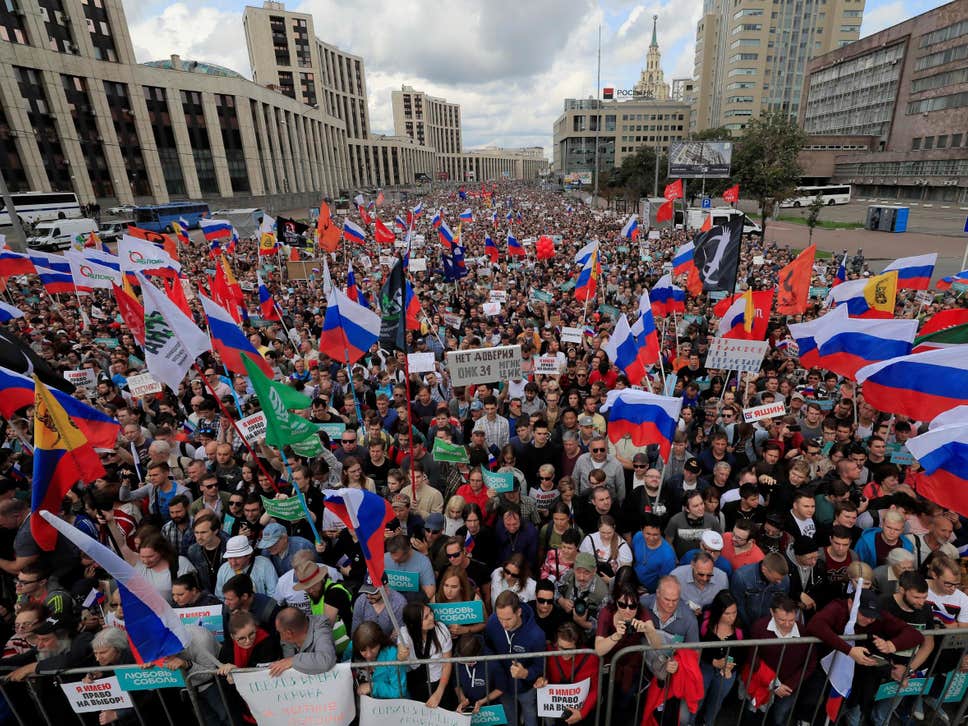
The crackdown on Russian protesters has intensified whilst Russian officials have blamed “foreign meddling” for the rise in government opposition. Protesters have continued to be beaten and jailed by government police forces, despite Russian officials’ alleged condemnation of police violence. Police action has not deterred protesters however, as last week’s demonstration of 60,000 people proved there to be growth in the movement.

Domestic protests are not the only issue concerning the Putin administration; since the nullification of the INF Treaty has led to the first test launch of a non-nuclear missile by the United States since the treaty was signed in 1987. In response to U.S. actions, Putin has promised to launch a parallel response.

Libya

UN envoy Ghassan Salame pushes for peace in war-weary Libya, as combatants begin to tire of the conflict. Salame sees an opening after both sides agree to a ceasefire over the Eid al-Adha holidays. Strongman Khalifa Haftar and the Libyan National Army (LNA), and Fayes Serraj, leader of the Government of National Accord (GNA), resumed the conflict soon after the holiday passed. However, Salame remains optimistic that the ongoing deadlock will strengthen his position that Libya needs a third option to achieve peace. Tentative international support has been offered to both leaders, but neither side has yet to make any serious gains.

Eritrea 

The Human Rights Watch has published an 87 page paper that describes the Eritrean secondary education system as a “conscription machine that subjects students to forced labour and physical abuse as they are groomed for indefinite government service.” the HRW report found that many Eritreans have spent their entire lives working for the Government, in either a military or civilian capacity. The Global Slavery Index estimates at 93 out of 1000 Eritreans are living in modern slavery, ranking the country at second worst in the world. Laetitia Bader, senior Africa researcher at HRW stated: “Now that peace with Ethiopia is restored, reforms on human rights, starting with the rights and freedom of the country’s youth, need to follow.”

Hong Kong 

The Chinese government has been accused of backing an online campaign to disrupt the protests in Hong Kong through the spreading of false information. Facebook stated that “although the people behind this activity attempted to conceal their identities, our investigation found links to individuals associated with the Chinese government”. In response, major social media platforms, YouTube, Facebook and Twitter, have disabled accounts that appeared to be part of a campaign against pro-democracy Hong Kong protesters. Hundreds of accounts were suspended after the social media giants claimed that posts and videos concerning the Hong Kong protests were being uploaded in a deliberate and coordinated manner.

Meanwhile, Hong Kong activists have continued to protest; this week, there are reportedly plans for a protest led by accountants, as well as an event that will mimic the Baltic Chain. Large companies have started to apply pressure to the Chinese government, as Hong Kong is on the brink of economic recession, but Chinese officials have yet to meet the demands of protesters.

Why a Successful Cultural (R)evolution Requires a Movement

The source of the podcast: Agabajer

Meet Srdja Popovic, an activist who formed the Otpor! movement in 1998 to overthrow Slobodan Milosevic.

Born and raised in Belgrade, Serbia during times that he describes as culturally schizophrenic, economically devastating, and historically confusing, Srdja initially didn’t see himself as a change agent.

A bass player in a band, Srdja just wanted to play music and have fun. Like most of his friends, he despised the security police, the terror, and the repression, but he didn’t believe anything could be done about it. That is, until he and his friends realized that activism could be…cool and that it was, in fact, possible to mobilize people to resist Milosevic regime.

Today, Srdja is the Executive Director of The Centre for Applied Nonviolent Action and Strategies or CANVAS, a Belgrade-based NGO he founded with a handful of other Otpor! members in 2003. He has now advised and trained pro-democracy activists in more than 50 countries, including India, Iran, Zimbabwe, Burma, Ukraine, Georgia, Palestine, Belarus, Tunisia, and Egypt.

I really wanted to interview Srdja because the principles he developed are extremely relevant to creating change in organizations, especially in evolving organizational culture.

Episode Highlights

In this interview, Srdja and I discuss:

What changed Srdja’s self-perception and allowed him to view himself as a change agent

How Srdja and his colleagues from CANVAS identified the main principles of nonviolent movements

What makes a movement successful

What makes humor such a powerful tool in building movements

How nonviolent action principles can be applied to non-movement organizations (aka: to your company!)

What to do after you have succeeded with the change you were looking to create

Why disruption can be one of the best opportunities to shake things up and improve them

More about Srdja Popovic

Srdja was born and raised in Belgrade, Serbia (then part of Yugoslavia). Popovic played the guitar in a rock band and graduated from the Faculty of Biology in Belgrade, holding a master’s degree in animal ecology. Since his early twenties, he has focused on activism, democracy, and human rights issues.

Apart from being nominated for the Nobel Peace Prize in 2012, Popovic was listed as one of the Top 100 Global Thinkers of 2011 by the Foreign Policy Magazine. And in 2014, he was listed as a Young Global Leader by the World Economic Forum in Davos. Popovic is also the author of the recent book Blueprint for Revolution: How to Use Rice Pudding, Lego Men, and Other Nonviolent Techniques to Galvanize Communities, Overthrow Dictators, or Simply Change the World.

Weekly Report August 2nd

Weekly Report August 2nd

Cuba

Though Cuba, is one of the least wired nations in the Western Hemisphere, on Monday the communist-run nation took a step that may soon solve its disconnection after putting into place a new regulation that allows the creation of private wired and Wi-Fi internet networks in homes and businesses and allow the importation of routers and other networking equipment — though still giving the government’s iron-fisted monopoly over commercial internet access. 

That wasn’t the only good news for Cubans: US Senator Patrick Leahy introduced the “Freedom for Americans to Travel to Cuba Act of 2019” that would lift the congressional ban on American travel to Cuba, which was signed in 1996 by Bill Clinton under the Helms-Burton Act.  It is the only congressional law that prohibits Americans from visiting a country.

While Congress has sought to cease long-standing tensions, further ignited by President Trump, Cuban President Miguel Diaz-Canel blamed Washington D.C. and its Secretary of State as “ignorant of the history and principles of the Cuban Revolution.” Cuban officials have denounced Pompeo’s claim that Cuba controls the political and oil elite in Venezuela. 

Nicaragua

On Wednesday, opposition leaders went back to the negotiating table but there was no one from the government to negotiate with. The Civic Alliance opposition group accused the Ortega administration of intransigence saying “the ability to re-establish (dialogue) depends on diplomatic efforts by the Organization of American States.” According to the Alliance, “the political, social and economic crisis continues to deteriorate and the civic path is the one chosen by the Nicaraguan people.” This week, the Nicaraguan government  made a controversial move by granting citizenship to Mauricio Funes, ex-President of El Salvador and his family.  Funes served as President of El Salvador from 2009 to 2014 has been in Nicaragua since 2016 seeking political asylum. He is wanted for allegations of embezzlement and illicit enrichment, diverting $351 million in public funds, which he denies. With Nicaraguan citizenship, he is now under the protection of the Nicaraguan constitution which explicitly prohibits extradition of Nicaraguan nationals. 

North Korea

North Korea continued to fire missiles this week, further heightening tensions between Pyongyang and Seoul. North Korea stated that the missiles are in response to the continued U.S. military drills in the region, though Washington has not stopped the drills. The Trump administration has downplayed the missile launches and has voiced the desire for continued diplomatic talks with North Korean leader Kim Jong Un. North Korean Foreign Minister Ri Yong Ho cancelled plans to attend the ASEAN regional forum where U.S. Secretary of State Mike Pomepeo was hoping to meet with North Korean counterparts. As of now, there are no formal plans for talks between Pyongyang and Washington. 

Myanmar

On Thursday, the Arakan Army released 52 villagers from holding in western Myanmar. The 52 prisoners, comprised of ethnic Khumi villagers, were detained over six months ago. The Arakan Army claimed the villagers were fleeing from a nearby fight, and had asked for help from the Arakan Army. Bystanders and fellow villagers deny this claim; spectators said that the soldiers arrived to the village and called on people to meet near the church. Upon arrival, the villagers were detained and sent to a border camp without consent. Alleged abductions have ravaged Myanmar for months, picking up recently in March. According to RFA, five people have been killed while in police or military custody since March of 2019.

United States

US oil prices collapsed Thursday after President Donald Trump fired another shot in the US-China trade war vowing to impose a 10% tariff on another $300 billion of US imports from China. The demand worried investors that a severe economic slowdown could eat into demand for oil and other commodities. The escalation also raises the risk that China will retaliate by imposing tariffs on US oil. The collapse coincided with the Federal Reserve lowering interest rates for the first time since the Great Recession. President Trump did not just attack foriegn trade-adversaries but American cities and congressmen. After a racist attack on Rep. Elijah Cummings and his majority-black district of Baltimore, President Trump racistly lambasted other liberal hubs like Los Angeles, San Francisco, and Chicago as having higher crime rate than Afghanistan. A campaign spokesman for the Trump Team remarked that as long as progressive Democrats maintain their current positions on immigration, taxes and health care, Trump can use them to his advantage as “socialist.” This did stop progressive Democrats on Tuesday and Wednesday night at the second presidential debate from betting on more radical reforms like medicare for all, slavery reperations, and impeachment. Regardless, an evident progressive-moderate rift further divided the party vis-a-vis 2016 Bernie Sanders contra Hilary Clinton. 

(Un)Diplomatically, the United States formally let the historic Cold War pact expire by pulling out of the Intermediate-Range Nuclear Forces (INF) Treaty to develop its own new warheads after the Russians refused to destroy their new missiles, which NATO says violate the pact. Secondly, the US slapped sanctions on Iran’s Foreign Minister Mohammad Javad Zarif, the latest move by Washington in its “maximum pressure” campaign against Tehran. Zarif brushed off the sanctions on Twitter, saying the US move indicated Washington saw him as a “threat” was “childish.” 

Cambodia

In mid-July, the US House of Representatives unanimously voted to pass the Cambodia Democracy Act to “encourage free and fair elections, the respect for human rights and political rights as well as to impose economic sanction and restrict visas for Hun Sen’s senior officials for their undermining democracy and violating human rights in Cambodia.” However, Cambodian officials have reacted negatively to the move, claiming that it threatens to cut ties with the two nations. With rising tensions, Cambodian officials have asked American diplomats to “pack up and leave” after the American embassy in Phnom Penh made a Facebook post highlighting the “one-year anniversary of deeply flawed national elections in Cambodia.”

Maldives

The former Vice President of Maldives, Ahmed Adeeb, has been detained trying to enter India by sea this Thursday. Adeeb made news in 2015, becoming the country’s youngest Vice President, at 33 years old. Months later, he was arrested on charges of corruption and money laundering as well as plotting to kill the president. He was then jailed for 33 years in a trial widely recognized as unfair. Mid-July, Adeeb was freed from house imprisonment by appeal courts that claimed his imprisonment was part of former president Yameen’s effort to stifle opposition. Adeeb is a key witness in the trial on corruption charges of former president Yameen. Adeeb himself claims that he fled in fear for his life. 

Zimbabwe

A year after former dictator Robert Mugabe was deposed, Zimbabwe’s economic and environmental situation is rapidly deteriorating. A water crisis has gripped the country, leaving many citizens to wait in long lines for minimal access to water. In Harare, Zimbabwe’s capital, more than half of the city’s 4.5 million residents only have access to running water once a week. This is due to the fact that Zimbabwe has experienced a drought that has left two out of four of Harare’s water reservoirs empty. The remaining water is under poor management and plagued by problems such as leakage and theft, leaving 45-60% of the remaining water to be lost. Relief from the shortage does not seem to be on the way, as residents daily lives are upended as they wait for water. The economic situation in the country is also in a dire state, with inflation reaching over 175%. There is widespread fear that the conditions could return to 2008, when the country was in a severe economic crisis where inflation was in the hundreds of millions. On top of the inflation, residents are facing daily blackouts and fuel shortages. The new president, Emmerson Mnangagwa, has done little to relieve the crisis and is bent on placing blame with political opponents. Many Zimbabweans are losing hope, while many political analysts are predicting a return to instability.  

Democratic Republic of the Congo

The second ebola-related death has been reported in the border-city of Goma in the Democratic Republic of the Congo. Over 1,600 people in the DRC have died of ebola in the past year, though cases have been contained to more remote areas; the presence of ebola in Goma has led to fears that the disease will spread across the border to Rwanda. In response to the death in Goma, Rwanda has closed its borders near the Congolese city. 

Venezuela

Carlos Vecchio, who represents opposition leader Juan Guaido, announced in a speech in Washington D.C. that talks will resume between Nicolas Maduro. Without giving details relating to the talks, Vecchio described Maduro as an “obstacle to peace.” The two sides held Nowegian-mediated talks for several days earlier this month in Barbados but nothing came from it. While both sides rhetorically have insisted for peace, Maduro is methodologically cracking on dissent. Later this week, news revealing Venezuela as a new arena of proxy geopolitics, after President Donald Trump said he may order a blockade of Venezuela on Thursday with the hopes of crippling Venezuela’s leadership. Meanwhile, reports revealing Russian oil ships sailing thousands of miles to sanction-stained Venezuela buying over one million Russian barrels of oil. In another twist, the aforementioned Vecchio said Chinese technicians are working with Venezuelan strongman Maduro to knock out internet access in the country.

Malaysia

Pahang’s Sultan Abdullah Ri’ayatuddin, was installed as Malaysia’s 16th Malaysian King on Tuesday, July 30th in a ceremony steeped in royal customs and tradition. The installation came six months after the surprise abdication of his predecessor, Sultan Muhammad V of Kelantan. The 60-year-old ruler of the state of Pahang was crowned king for the next five years in a ceremony at the Istana Negara, the national palace in Kuala Lumpur. The power turnover is unique to Malaysia, which is a constitutional monarchy, whereby the national throne changes hands every five years between royal rulers of the country’s nine states.

Philippines

The Philippines have “staged” a diplomatic protest against China after reports claim that more than  100 Chinese fishing vessels were spotted in recent days about a Philippine-administered island in the South China Sea. The country’s national security advisor recommended the filing of the protest against China. The Philippines and China (along with multiple other countries) have been competing for influence over the South China Sea, a resource-rich maritime area that has been economically vital to all countries of interest. In a statement on Tuesday, Defence Secretary Delfin Lorenzana accused the Chinese of bullying, citing recent actions in territories claimed by Beijing. 

On July 30, Global Witness published a robust report calling the Philippines the “deadliest country in the world” for land and environmental defenders. The report outlines the repression and killings of environmental activists all over the country, According to their findings, Global Witness put the Philippines at the top of the list for total number of killings at 30 activists. 

Thailand

At least four people were injured on Friday when several small bombs went off in the Thai capital Bangkok during the morning rush hour. The explosions sounded as the city hosted a regional security meeting of foreign ministers from the Association of Southeast Asian Nations (ASEAN), along with representatives from the United States, China and Russia. While the bombs were central, they were not close or related to the ASEAN. Thai Prime Minister Prayuth Chan-o-cha has already ordered an investigation into the several small explosions and no immediate claim of responsibility.

Vietnam

On August 5, the EU will sign a new defense agreement with Vietnam, which will be the first that the EU has with a Southeast Asian nation. Federica Mogherini, the EU’s chief diplomat, said that the agreement will be for “Vietnam’s participation in European military and civilian missions.” The EU will also sign a Framework Participation Agreement with Vietnam, which will make Vietnam a part of the EU’s crisis management operations as well as allowing it to contribute to operations and missions under the EU’s Common Security and Defense Policy. The EU sees many reasons to increase cooperation with Vietnam, in large part due to wanting to influence the nation to pressuring China on the issue of Chinese expansionism in the South China Sea. The EU also wants more leverage in Southeast Asian affairs, and sees Vietnam as the path to it. Vietnam is also joining the UN Security Council for the next two years, which will see the country  working on international diplomacy with several EU member states. 

Iran

The United States government announced new sanctions on Iranian Foreign Minister Mohammad Javad Zarif calling him the “regime’s primary spokesperson around the world.”  In response, Mr. Zarif tweeted, “The US’ reason for designating me is that I am Iran’s ‘primary spokesperson around the world’ Is the truth really that painful? It has no effect on me or my family, as I have no property or interests outside of Iran.  Thank you for considering me such a huge threat to your agenda.” Additionally, the US extended waivers allowing Russia, China and European countries to “continue civilian nuclear cooperation with Iran.” According to White House security advisor John Bolton, “the idea here is we are watching those nuclear activities very, very closely.”

Sudan

Talks between Sudan’s Transitional Military Council (TMC) and protest leaders have been cancelled in response to the shooting of peaceful student protestors. Rapid Support Forces (RSF) fired on children who were protesting food and water shortages, killing at least four people. The massacre has led to the closure of schools in the area and heightened tensions have led to continued protests in the nation. The recent events put into question the power-sharing deal signed by military and protest leaders in July. 

It has been announced that the trial of former Sudanese leader Omar al-Bashir will begin on August 17th; al-Bashir is being tried on corruption charges. Despite external pressure from the African Union, it is unknown whether there will be trials held for those responsible for the shooting of student protestors. 

Russia

On Saturday in Moscow, an estimated ten thousand protesters took to the streets after election officials barred around 30 opposition-leaning candidates from running for the 45-seat Moscow-city legislature on the grounds they failed to garner enough signatures to qualify. The barred leaders assert they did gather the required signature count but were disqualified by election officials in the pocket of authoritarian President Vladmir Putin. Leading opposition leader and figurehead, Alexei Navalny, was present, hobnobbing and shaking protesters’ hands, and talking to the candidates who were not registered. While Russian opposition leaders tend to be factitious, demands for free and fair elections is one of the rare issues that unite the usually divided opposition.

Libya

Libya’s Interior Minister Fathi Bashagha announced plans to shut down three of its biggest migration detention centres in Misrata, Tajoura and Khoms following criticism that migrants were being returned to Tajoura after it was hit by a deadly missile attack in July. In the wake of the “outrageous” attack,the UN’s Libya envoy Ghassan Salamé and top human rights official Michelle Bachelet said it could amount to a war crime. But the UN Security Council failed to condemn it after the US declined to endorse a joint statement, according to diplomats. While Renegade commander Khalifa Haftar’s forces appear to have made little progress as they resort to using more powerful weapons, resulting in more casualties. The UN envoy to Libya Ghassan Salame has also called for a truce on the Muslim holiday of Eid as the conflict deepens.

Hong Kong

For the third straight week, violent protests and clashes with police in Hong Kong have unfolded, capping off two months of rolling public demonstrations against China and Hong Kong leader Carrie Lam. While the protests are ongoing, on Monday, China offered its full support to Hong Kong’s embattled leader and its police force, and said violent protesters must be swiftly punished, in rare remarks by the government office that oversees policy towards the territory. It came days after a People’s Liberation Army spokesman hinted that military force could be used to bring to heel the anti-government demonstrations to an end. China’s rhetoric matched its rulesless and ruthless arrest of eight people, including a prominent pro-independence activist, on suspicion of having offensive weapons and explosives, ahead of a weekend of mass protests on Friday. Days earlier, forty-four Hong Kongers were arrested, detained, and later released without charges, including pro-democracy leader Johnson Yeung. 

Iraq

The Iraqi government announced this week that around $10 million in aid for displaced Iraqis in northern Iraq’s Nineveh province was embezzled by its fugitive ex-governor. The country’s anti-corruption commission said that the funds, which were meant to help 1.6 million Iraqis currently living in displacement camps, were transferred to Kurdistan. Kurdistan is an autonomous region where the governor, Nawfel Akoub, is thought to be in hiding. Nineveh is the province where ISIS set up base in Iraq, forcing millions to flee from their homes. Public services in the province have not been reestablished, keeping many from their homes. 

UN experts warned in a report released this week that ISIS is aiming for a resurgence in Iraq and Syria. The report says that ISIS leaders are consolidating power to create a resurgence of the group in the region. ISIS leader Abu Bakr al Baghdadi, along with most of the group’s leadership, is now based in Iraq following the fall of their “caliphate.” The experts warn that as the group continues to gain strength, terrorists attacks like the ISIS-inspired Easter Day Bombings in Sri Lanka can become more common before the end of 2019. 

Other News:

Bono, Nigeria: In a suspected revenge attack, terrorist group Boko Haram have been killed at least 65 people after opening fire on a funeral in Nigeria’s north-eastern state of Borno. Gunmen arrived on motorcycles and in vans at the village near the state capital, Maiduguri, on Saturday. reportedly killing mourners straight away, while others died trying to chase off the attackers. Local government official Muhammed Bulama said the latest attack was in revenge for the killing of 11 Boko Haram fighters by the villagers two weeks ago; however, Al Jazeera’s Ahmed Idris said that while there has been no claim of responsibility, the attack bore the hallmark of Boko Haram.

 Brazil: Brazil, a country with the third country largest carceral system in the world, saw over 57 people were killed in a prison riot in Brazil on Monday. Rival gangs battled for five hours, officials say, when gang members from one prison block invaded another part of Altamira jail in Pará state. Sixteen of the dead were decapitated and the remainder suffocated after part of the prison was set on fire. Two prison officers who were taken hostage have since been freed. Members of the Comando Classe A (CCA) gang set fire to a cell where rival gang members from Comando Vermelho (Red Command) were kept, the Pará state government said in a statement.

Hawaii: Starting July 15, a protest on the big island near Maunakea quickly gained traction within weeks. Starting with a handful of native-Hawaiin elders who were blocking the construction of the Thirty Meter Telescope (TMT) project, the crowd grew to 2,000, even drawing in celebrities such as Bruno Mars, Jason Mamoa, and the Rock. When asked about their thoughts, many leaders of the protest claim they are not against science or the construction of the project. However, they are opposed to its construction on historical and culturally-important land. On Tuesday, Gov. David Ige rescinded an emergency proclamation that was issued to help remove demonstrators. However, he has also extended the permit for the construction of the telescope, reminding the people of his commitment to make this project work peacefully. 

Weekly Report: 26 July 2019

Protests in Moscow (REUTERS)

Cuba

The recent brain scans of Cuba-based American diplomats insinuate some sort of brain damage; in late 2016, multiple staff members at the U.S. embassy in Cuba reported concussion-like symptoms, leading the United States to expel two Cuban diplomats. Dubbed “Havana Syndrome”, the mystery illness led to accusations of sonic attacks by Cuba. While no evidence of sonically capable technology has been found, recent images of the diplomats’ brains shows various abnormalities; although the scans appear to prove something happened, findings are inconclusive. Cuba has denied any possibility of a sonic attack and pointed out that U.S. diplomats have experienced the described symptoms in other locations. 

Gabon

A former member of the Gabonese parliament, Bertrand Zibi Abeghe, was sentenced to six years in prison for his role in instigating post-electoral violence. The Libreville Criminal Court sentenced Abeghe on charges of “violence and assault” and “illegal possession of a firearm.” His arrest stems from the 2016 elections in which he supported Jean Ping in the disputed election against longtime Gabonese President Ali Bongo, who first came to power in 2009. 

Nicaragua

A group of students submitted a request to stage a protest for National Student Day, despite the ban on protests that was implemented by the Nicaraguan government in September of 2018. The objective of the protest, the students say, is to reaffirm the demand for university autonomy. Despite direct warning from Daniel Ortega, the president of Nicaragua, the students plan to hold the protest on July 25. A government spokesperson called the students “delinquents,” further causing tension leading up to the protest.

North Korea

This Monday, North Korea publicized its claim that 99.98% of eligible voters cast their ballot in city, district and provincial elections. The electoral ballot has only one candidate on it, approved by the state, and the voters can either tick ‘Yes’ or ‘No’ under the name. The sham elections are ostensibly held periodically to perform a theatrical vision of unity between people and the state in North Korea.

On Thursday, North Korea launched missiles into the Sea of Japan during a joint military drill between the US and South Korea, raising military tensions just less than a month after US President Trump visited North Korea. South Korean authorities have declared that the launches are a military threat, raising tensions in the region further. North Korea declared that it could cancel its moratorium on nuclear testing over the drills. 

Myanmar

Myanmar’s conflict-ridden Rakhine state is in the midst of an information blackout, as an internet shutdown enters its fifth week. Human rights groups in Myanmar say the move by the government is detrimental to the delivery of humanitarian aid to thousands of civilians displaced by armed conflict, as well as a way to provide cover for abuses committed by the government. The government initially ordered the shutdown due to fighting between government forces and the Arakan Army, an ethnic Rakhine armed group fighting for greater autonomy in the Rakhine state. The internet shutdown has, according to the U.S. special rapporteur on human rights in Myanmar, prevented reports of army atrocities from reaching outside news sources. The shutdown has also hampered critical information from reaching the state, such as flood warnings during the country’s current monsoon season. 

United States

This week, former special counsel Robert Mueller testified before the House Judiciary Committee and the Permanent Subcommittee on Intelligence. Mueller’s investigation into the 2016 presidential election culminated in the “Mueller Report” which explored allegations of Trump-Russia relations, election meddling and obstruction of justice; the Mueller hearing sought to clarify the conclusions drawn in the report. Both Republicans and Democrats were hoping for significant statements and findings to come out of the hearing; Republicans aimed to discredit the findings of the report and excuse Trump’s actions, while Democrats attempted to demonize the actions of President Trump and his indicted associates further than was expressed in the report. Overall, the hearing failed to specifically serve the Democratic or Republican agendas and was instead dubbed by the media as a “disaster” with no consequential conclusions.   

Cambodia

Human Rights Watch has called on the Cambodian authorities to release two ex-Radio Free Asia journalists who are about to go on trial for espionage charges. Uon Chhin and Yeang Sothearin were arrested in 2017 and charged with supplying a foreign state with information prejudicial to Cambodia’s national defense under article 445 of the criminal code, an offense punishable by a prison term of 7 to 15 years. The arrests came after Radio Free Asia shut down its Cambodian operation after accusing Cambodian government officials of harassing their reporters. The trial is set to begin on July 26th. 

Maldives

The former president of the Maldives, Abdulla Yameen, pled not guilty to charges of money laundering on Sunday, in the first hearing of a nationally televised criminal court case accusing Yameen of profiting off government funds in exchange for exclusive hotel developments in the tropical island. During his tenure as president, Yameen drew the Indian Ocean archipelago-country closer to China, in a geo-political tug-of-war with India. In doing so, he became closely associated with private companies, and is accused of handing development deals to executives, and receiving over one million dollars of government money through a private company, SOF Private Ltd, for his favors. The corruption scandal, originally uncovered by an internal audit, has also implicated several other leading politicians and businessmen, all of whom have denied any wrongdoing. Yameen, unexpectedly lost an election last year, and was subsequently arrested in February. He has repeatedly denied the allegations against him.

Zimbabwe

A Zimbabwe court has ruled that the Zimbabwe Broadcasting Corporation (ZBC) and Zimbabwe Newspapers (1980) through their titles Herald, Chronicle among others were found to have failed to live up to their constitutional obligations. The judge found that both institutions were guilty of lacking impartiality in coverage and failure to accommodate dissenting views during the 2018 general elections. The ruling is a blow to large media outlets in the country and is a victory for many activists who have been fighting for greater freedom in Zimbabwe. 

Laos

This week, the Lao government issued a decree on a new moral and ethical code for Laotian civil servants. The code stipulates fair treatment of citizens and a more stringent attitude against corruption — not taking bribes or abusing their position. This decree is part of Laos’ ruling party’s effort to combat widespread corruption in the country, mirroring the campaigns in other communist states in the region, China and Vietnam. However, the campaigns in all three countries have served more as purges of the civil service and the parties rather than an establishment of proper institutional oversight.

Democratic Republic of the Congo

The head of the UN peacekeeping force in the DRC is reporting this week that ethnic violence in northeastern part of the country is preventing refugees from returning to their homes. In the Ituri Province, violence between Lendu farmers and Hema herders resulted in more than 350,000 fleeing from their homes. The deteriorating security situation in the region is hindering the return process that has been taking place since 2018. 

The World Bank announced on Wednesday that it was deploying an additional $300 million in crisis aid to the DRC to help stop the spread of ebola, which has plunged the country into a health crisis for the past year. Last week, the World Health Organization declared the most recent outbreak a Public Health Emergency of International Concern. Since last August, there have been over 2,500 cases of Ebola in the DRC, with more than 1,700 dying from the illness.

Venezuela

A major blackout paralyzed the city of Caracas this week in a continuation of power shortages that have been plaguing Venezuelans for months. Opposition leader Juan Guaidó used the most recent blackout to bring attention to the incompetence of the current administration; President Nicolás Maduro claimed that the blackout was a result of an attack by foriegn agents- an accusation he has made during past power shortages. On July 15th the Lima Group, an organization that includes Canada and a dozen Latin American countries, expressed their support for Guaidó and urged Maduró to allow free democratic elections. Despite the rising tension in the region and pressure from the international community, Maduró has expressed no plans to cede power.

Malaysia

The Malaysian Senate has extended the franchise to thousands of people by voting to lower the voting age from 21 to 18. The bill also allows for automatic voter registration and the lowering of the minimum age for elected representatives to 18. 

After a standoff with China last week, Malaysia restarted cooperation with China on a massive infrastructure project in northern Malaysia as part of the Belt and Road Initiative. Malaysia managed to reduce the price of the project by a third.

Philippines

A cyber-libel trial against the editor of the news site Rappler, an influential Philippines online news site critical of President Rodrigo Duterte, started on Tuesday in a case widely seen as Duterte seeking to intimidate journalists and suppress critics of his widespread abuse and human rights violations. Maria Ressa, the journalist in-question, describes her overnight arrest in 2012 as “baseless and preposterous,” adding that how the court rules “will have an impact on all Filipinos who post on Facebook – and of course, the quality of journalism in the digital age in the Philippines.” Moreover, the cyberlaw she is accused of breaking, was enacted four months after the 2012 incident in which Rappler alleged ties between a Philippine businessman, Wilfredo D Keng, and a high court judge.

Thailand

The Human Rights Watch has published a piece that criticizes the Thai government of disregarding human rights as the Prime Minister Gen. Prayuth Chan-ocha’s second term begins: “The new Thai government’s policy statement fails to provide a pathway for restoring respect for human rights after five years of military rule,” Human Rights Watch said today. According the HRW, Prayuth submitted a report that is supposed to outline his agenda while in office. However, the 40-page report fails to outline any plan to address human rights issues in the country, which have been an area of concern for years now. 

Vietnam

On Monday, July 22nd, Vietnam launched Gapo, a home-grown social network, in an attempt to tighten the regime’s grip on the internet and social media, while luring users away from Facebook, which is very popular in the country. Vietnam’s increasing control over the internet and social media is troubling, as social media sites have been the last refuge for activists and dissidents, with independent media quashed and blogs being shut down by the government routinely. 

In the South China Sea, the standoff between China and Vietnam has intensified. Vietnam has deployed vessels near a Chinese oil block in the South China Sea. The move has been criticized by other countries in the region, with Philippines warning Vietnam that it risks armed hostilities with China. 

Iran

Iran claimed this week that it has arrested 17 Iranian nationals allegedly recruited by the CIA to spy on the country’s nuclear and military sites. Iran says that some of those arrested have already been sentenced to death, although it is not clear how many death sentences were handed out. Donald Trump has rejected the claim, tweeting that “The Report of Iran capturing CIA spies is totally false.”

President Hassan Rouhani of Iran announced on Wednesday that Iran might release a British tanker the country seized last week in exchange for the return of an Iranian ship seized by the British military off the coast of Gibraltar. The British seized the Iranian tanker off the coast of Gibraltar on July 4 on suspicion of violating a European Union embargo on the sale of oil to Syria. Iran in return seized the British ship in the strategically important Strait of Hormuz, claiming that it had collided with a fishing boat and violated international law. The offer is seen as a potential gesture toward reducing the escalating tensions between Iran and the West.

Sudan

The second part of the power-sharing deal is yet to be signed by the opposition group, who are seeking a postponement. The creation of a constitutional document is reportedly causing problems between the two sides, as is the matter of whether military leaders will be granted immunity from prosecution for the killing of civilians. The Revolutionary Front, a sect of the pro-democracy movement, has rejected the power-sharing deal, signifying the potential of a divide in the opposition party. As time goes on without a solidified deal, the Sudanese people have taken to the streets to protest the massacre of civilians by the Transitional Military Council. 

Russia

On Saturday in Moscow, an estimated ten thousand protesters took to the streets after election officials barred around 30 opposition-leaning candidates from running for the 45-seat Moscow-city legislature on the grounds they failed to garner enough signatures to qualify. The barred leaders assert they did gather the required signature count but were disqualified by election officials in the pocket of authoritarian President Vladmir Putin. Leading opposition leader and figurehead, Alexei Navalny, was present, hobnobbing and shaking protesters’ hands, and talking to the candidates who were not registered. While Russian opposition leaders tend to be factitious, demands for free and fair elections is one of the rare issues that unite the usually divided opposition.

Libya

Two refugee ships going from Libya to Europe capsized by the coast of Libya, resulting in 150 deaths. Over 130 people were rescued on the coast and returned to Libya. This tragedy prompted statements from UNHCR and other human rights organizations about the necessity of changing the process of crossing the Mediterranean and minimizing unnecessary tragedies. 

The head of Libya’s High Council of State, Khalid al-Mishri, declared that the UN-backed Government of National Accord will not negotiate with parties that utilize violence to achieve their goals. This statement continues to rule out the possibility of the GNA negotiating with militias run by Haftar, but al-Mishri discussed a possibility of returning to the political process run by the UN. 

Eritrea

Despite beginning just one year ago, peace talks between Ethiopia and Eritrea have stalled, leaving many emotional and confused. Initial peace talks aimed at normalizing relations led to quickly re-opened embassies, meetings and resumed flight schedules across the region.  However, many goals have been unmet including trade deals providing Ethiopia with access to Eritrea’s ports. The border which was opened just one year ago, has now been closed, inconveniencing many and serving as a symbol of failure.  While the two nations continue diplomatic talks, the media and the public have been shut out from the details, unaware of what is preventing forward progress. Many are pointing the finger at Eritrean President Isaias Afwerki, believing his desire to hold onto power is limiting partnerships with the Ethiopian government.

Hong Kong

Tensions due to protests in Hong Kong have escalated. Activists and lawmakers are accusing Hong Kong police of merely standing by after forty-five people were beaten with sticks and hospitalized during this week’s protests. Video footage shows a group of masked men storming a transit station in Yuen Long and beating dozens of passengers including a woman holding a child and a pregnant woman. Ray Chan, a pro-democracy lawmaker tweeted “Hong Kong has one of the world’s highest cop to population ratio. Where were @hkpoliceforce?” Pro-Beijing lawmaker Junius Ho has been accused of hiring the men to attack the protestors. The Hong Kong police have since arrested 5 individuals believed to be part of the attack. Wednesday, China said it was willing to use force to contain the protests, “The behavior of some radical protesters challenges the central government’s authority, touching on the bottom line principle of ‘one country, two systems,’” said the chief spokesman for the Ministry of National Defense, Senior Col. Wu Qian. “That absolutely cannot be tolerated.”

Iraq

An Islamic State sleeper cell was arrested in Nineveh, Iraq on Monday. The group, called “Baghdadi’s Men”  included a senior aide to IS leader Abu Bakr al-Baghdadi. Members of the sleeper cell confessed to terrorist acts in Syria and Egypt against foreign embassies and churches and admitted to authorities they had plotted to commit similar terrorist attacks against Iraqi civilians in the Nineveh province.

Other News:

Puerto Rico:  After days of protests that filled the streets of San Juan, the governor of Puerto Rico, Ricardo Rosselló announced he will be stepping down on August 2nd. The protests were sparked after group messages were leaked in which Rosselló used homophobic and misogynistic language, as well as made fun of the victims of Hurricane Maria. Rosselló was also found out to manipulate public polls to boost his own image. However, in an atmosphere of broad political distrust, Rosselló’s successor did not evoke much joy in the protesters. When Wanda Vázquez, the Justice Secretary, was announced as Rosselló’s replacement, the protesters erupted in boos, saying they will not stop protesting until the system is shaken up.

Ukraine: After winning by a landslide in April, President Volodumr Zelensky, a former comedian turned politician, called an early parliamentary snap election seeking to consolidate parliamentary power. With half the votes counted on Monday, Zelenskiy’s party Servant Of The People (SOTP) was on course to win an absolute majority in the Rada, Ukraine’s parliament, with win 42% of the vote, with a strong showing in single-mandate districts. If successful, it would be the first time in Ukraine’s post-Soviet history that a single party commands an outright majority. Four other parties are expected to reach the 5% threshold to enter parliament with the pro-Russian Opposition Party coming in second with 13%. The party of former president Petro Poroshenko, who was trounced by Zelenskiy in the presidential elections, came third, while parties led by veteran politician Yulia Tymoshenko and the country’s best-known rock star, Svyatoslav Vakarchuk, were also set to gain seats with around 6%.

UK: Boris Johnson, after winning the race for leader of the Conservative Party in a 2:1 victory, has taken office as Prime Minister of the United Kingdom. On Wednesday Johnson formed his cabinet, packing it with hardline Brexiteers like Dominic Raab and Jacob Rees-Mogg in hopes of delivering his DUDE promise: Deliver Brexit, Unite Britain, Defeat Corbyn, and Energize England. Prime Minister Johnson has committed to deliver Brexit by October 31st, deal or no-deal, which, according to experts, would send shockwaves to the country’s economy and its political relationship to Brussels.  

CANVAS Weekly Report July 19th

CANVAS Weekly Report July 19th

Cuba

Communst-run Cuba passed sweeping governance reforms that solidifies a one-party system, while restructuring its government to have a prime-minister and provincial governors. The new law, which was unanimously approved, amends the 1976 constitution that vested all power into the president by outsourcing power to the legislative body and the prime-minister. The new law allows for two five year terms by the prime minister and shrinks its representative body from an unwieldy 605 to 407–– a number that is expected to shrink even further. The law aims to lighten the bureaucratic load on single-figureheads –– like the president –– and instead boost policy execution by more legislative bodies. Cuba has long touted its governance structure as more democratic than other Western powers but many are hoping that, Miguel Diaz-Canel, who took the presidency from Raul Castro last year, would further restructure its one-party system in light of Cuba’s social and economic over the last decade.

Gabon

On July 15th, the president of the Gabonese Patriotic Front (FPG), Gérard Ella Nguéma was arrested by the judicial police prior to taking part in a march in the town of Libreville. A FPG spokesman stated: “We still do not know the reason for his arrest,” adding that “it is possible that this is related to the somewhat harsh remarks that Nguema made against the Gabonese authorities during a press conference last week.” The spokesman was referring to a July 7th speech in which Nguéma accused several close relatives of Gabonese President Ali Bongo Ondimba, who is currently recovering from a stroke in late October of a stroke, of trying to “manipulate” him. In his speech, Nguéma attacked the chief of staff of President Brice Laccruche Alihanga , the first lady Sylvia Bongo Ondimba and the president of the Constitutional Court Marie-Madeleine Mborantsuo. The arrest of Nguéma comes days after the arrest of four leaders of Gabon’s main trade union coalition, Dynamique Unitaire, which declared in early July that Gabonese President Ali Bongo Ondimba was “dead”.

Bolivia

Bolivia has one of the highest rates of femicide in the world and the highest in South America, officially declared it a national priority. Since January, 73 femicides –– a term to denote men who kill women based on gender –– which is roughly one woman killed every two days and the highest since 2013. A ten point “emergency plan” seeks to combat femicide and domestic violence through increased funding, the creation of a government commission, obligatory training courses for civil servants and public sector employees on gender violence and prevention, and teachers will also receive training about “the psychological, sexual and physical violence” women and girls face. Femicide usually goes unpunished or univestigated in bolivia with 288 out of the 627 cases since 2013 left open. 

Nicaragua

Last week, the Inter-American Commission On Human Rights (IACHR)  Special Monitoring Mechanism for Nicaragua (MESENI) denounced the continued and recent escalation of religious persecution. The repression, which is now targeting religious celebrations, is classified by IACHR as constituting “grave restrictions of public liberties.” The Daniel Ortega regime has restricted political assembly and dissent with over 700 political prisoners since April of 2018 but has increased religious persecution. The MESENI report states that the Ortega regime’s police frequently kidnap demonstrators at places of worship following services or mass: “These events occur within a context of increasing threats against the Catholic Church and religious leaders.”

North Korea

Rates of malnutrition and starvation have jumped in North Korea after it faced a dire drought in May. The severe drought has resulted in an underwhelming harvest; farmers harvested half of what was expected, according to the International Federation of Red Cross and Red Crescent Societies (IFRC). South Korea has sent 50,000 tons of rice over the border, as well as donating millions of dollars to the UN World Food Programme and the UN Children’s Fund, in order to help North Korea through their struggle.

  Myanmar

The U.S. has announced sanctions on some of the top ranking officials of the Myanmar military. Myanmar’s Commander-in-chief, Deputy Commander-in-chief, as well as two generals were all banned from entering the United States. Last Tuesday, the Department of State said that they took action after evidence arose of the four’s involvement in violence against the Rohingya. Persistent violence against the Rohingya minority has been the leading contributor to the United States’s involvement in Myanmar. The presence of human rights violations has forced over 740,000 Rohingya Muslims to cross the border to reach Bangladesh.

United States 

President Donald Trump said last Sunday that “Progressive Democratic Congresswomen” should go back to their country, in a series of tweets that have ben labeled as “xenophobic” by House Speaker Nancy Pelosi. “I reject @realDonaldTrump’s xenophobic comments meant to divide our nation. Rather than attack Members of Congress, he should work with us for humane immigration policy that reflects American values,” said Madame Pelosi. President Trump’s tweets targeted representatives Alexandria Ocasio-Cortez, Ilhan Omar, Ayanna Pressley, and Rashida Tlaib. At a Trump campaign rally in North Carolina, supporters chanted “Send Her Back” targeted against Omar. Trump disavowed the chant the next day, saying he “disagreed with it” but during the rally he did not stop the racist chant.  

 Cambodia

The US House of Representatives recently approved a legislation that would target Cambodian officials that helped arrest peaceful activists that were commemorating the death of political activist, Kem Ley. The legislation, known as “HR 526 Cambodia Democracy Act”, currently has to pass through the senate in order to receive a seal from President Donald Trump. The legislation specifically calls for the reinstatement of Kem Sokha, the leader of the Cambodia National Rescue Party, as well as the restoration of the CNRP’s seats in the Cambodian Parliament. The cambodian government has been regularly accused of violating human rights, and has been called out for unfair elections, as well as political oppression.

Zimbabwe

On July 16th, Zimbabwean civil servants’ union protested in Harare against “slave salaries”, caused by the massive spike in inflation caused by the reintroduction of the Zimbabwean dollar as the sole legal tender. Inflation rose from 97% in May to 176% in June, pricing many Zimbabweans out of basic foodstuffs and necessities like gasoline, electricity and water. The protesters threatened to strike if their wages will not be increased. The price hikes are exacerbating the food and water deprivation caused by a major drought leaving two million people in Harare and Bulawayo with minimal access to clean water. 

Laos

This week, the Ministry of Information of Laos has ordered registration of social media news platforms by the proprietors of accounts posting news and information, under pain of legal action. Users of social media that post news on their accounts that refuse to register may be fined 4 to 20 million kip (460 to 2290 USD), or face imprisonment for three months to three years. Laos has several major criteria to register a media organization, including ideology, thus making this order effectively a crackdown on independent reporting in social media.

The Democratic Republic of Congo

This week, the World Health Organization declared an international emergency over the Ebola epidemic in the eastern part of the Democratic Republic of the Congo (DRC) that has killed over 1500 people so far. The emergency was declared after a case of Ebola was found in the city of Goma, which has 2 million people and is an important gate to Rwanda. 

In other news, the government of the DRC promised to reestablish the transmission of RTVS1, a television channel run by one of the leaders of the opposition group Lamuka, which was cut off in late June, after broadcasting a message from the opposition leaders. The promise, however, was conditional upon state censorship of broadcast material. Lamuka also saw one of its leaders, Freddy Matungulu, step down after being offered a job in the African Development Bank, in a move that recalls the former president Kabila’s strategy to neutralize opposition by coopting them with positions of power.

Venezuela 

Over the weekend, the Bishops of Latin America issued an indirect statement to Nicolas Maduro. Archbishop Miguel Cabrejos Vidarte of Trujillo, president of the Conference of Latin American Bishops, sent out a letter last Friday to express their concern for the “illegitimate and failed” government of Maduro. Additionally, Vidarte included words of encouragement for the starving citizens, as well as praisal for Caritas Venezuela, a branch of the local catholic church that provided food and aid to the struggling civilians.

Malaysia

In a step towards strengthening democracy, Malaysia’s parliament is debating this week over a proposal to amend the constitution to lower the voting age to 18. The proposal also includes measures to allow people to stand for elections once they turn 18 as well as automatic voter registration. Malaysia remains one of the only countries in the world where the voting age is 21, as 90% of countries have a voting age of 18. If passed, this will be the first time that the country’s government and opposition parties have worked together on a proposal to change the country’s constitution. The lower house passed the bill by a vote of 211-11, and the bill has to be approved by the Senate before it becomes law. The new amendment would add 7.8 million people to the electoral roll by 2023, in a country of 32 million people. 

Philippines

Philippine President Rodrigo Duterte called on the United States this week to send a naval fleet to the South China Sea under a mutual defense treaty. The ask is in order to exert more pressure on China over incursions by Chinese fleets into Filipino territory in the South China Sea. Facing pressure over his recent handling of an incident with the Chinese in the South China Sea, Duterte said he is prepared to invoke the 1951 Mutual Defense Treaty to gain US aid. Facing aggressive Chinese expansionism in the sea, Duterte acknowledged that the Philippines does not have the strength or resources to stop it. Though US Secretary of State Mike Pompeo assured the Philippines that it would back them militarily over Chinese aggression, it is unlikely that the United States will respond to Duterte’s request. 

Health officials in the Philippines have also declared an emergency over an alarming spike in the number of dengue patients this year, as over 100,000 cases have been reported since January. This represents an 85% increase in the number of cases over the same period in 2018, prompting officials to issue the first ever national dengue alert. Officials are preparing to use military hospitals and clinics to treat the mosquito-borne disease, which affects about 390 million people annually. 

Vietnam

There have been new developments in the rising tension between Vietnam and China in the South China Sea. The Chinese have deployed ships to the Vanguard Bank  to prevent Vietnam from “advancing its interests in the region before a deal is reached on a code of conduct for the South China Sea,” according to the South China Morning Post. Beijing hopes that a deal can be reached by 2021 to establish claims over oil and gas reserves in the area. 

The Political Bureau of the Communist Party of Vietnam Central Committee on July 19 decided to issue a disciplinary warning against Vu Van Ninh, former Deputy Prime Minister. According to the Bureau, Ninh signed documents allowing the equitisation and divestment of State capital from Quy Nhon Port JSC and Quang Ninh Port JSC. Both of these actions were violations of the party’s principles and tarnished the prestige of the party. 

Iran 

When the United States increased tension between Iran by pulling out of the Iran Nuclear Deal and imposing harsher sanctions, Iran clinched to European powers who remained in the deal. But on Thursday, Iranian boats “tried to intercept” a British oil-tanker which is “contrary to international law” according to a BP spokesman. SMH Montrose, a Royal Navy ship  later forced to move to move between the Iranian boats to protect it. Two weeks before the BP altercation, the United States claimed Iranian forces had bombed two oil tankers in international waters. An allegation that Britain back but the Iranians disputed, calling the White House “mentally retarted.”  This week, Iranian President Hassan Rouhani mocked Britain calling it “scared” and “hope

Sudan

The deal solidifying a transitional power-sharing council was made official in Khartoum this week. Civilian protest leaders and ruling military officials signed an accord outlining a transitional council made up of both civilians and military personnel that aims to lead the country to democracy. The body will be made up of 11 individuals (6 civilians and 5 soldiers) and the protest movement has been charged with nominating a Prime Minister. The two parties are also currently drafting a constitutional declaration. Whether members of the Transitional Military Council (TMC) will be tried for the killing of civilians remains to be seen, and although a deal has been signed, Sudanese protesters are still demanding justice for the murderous actions of the TMC in June. 

Russia

Early this week, it was announced that Russia would soon start jointly producing S-400’s with Turkey; shortly after this announcement, the United States pulled Turkey from its F-35 program, indicating high tensions between Washington and Moscow as the deadline for the INF treaty draws closer. On July 18th, NATO Secretary-General Jens Stoltenberg urged Russia “to take the responsible path” and destroy a newly developed missile so as to preserve the INF treaty. The US has claimed it will formally withdraw from the INF treaty if a deal is not reached by August 2nd, leaving both countries to freely develop medium-range nuclear missiles. 

Libya

The turmoil in Libya continued this week with the kidnapping of a Libyan MP, the explosion of car bombs and an air strike on a field hospital. On July 11th, a Libyan official confirmed that multiple car bombs had exploded in the vicinity of Libyan National Army (LNA) leaders while attending a funeral service, leading the LNA to accuse the Government of National Accord (the U.N.-backed government) of the attack. The bombing did not kill or wound military leaders, but 2 civilians and 2 soldiers were killed. On July 17th, the LNA carried out an air strike on a GNA field hospital which killed at least 3. On the same day, it was reported that Libyan MP, Siham Sirgiwa, has been kidnapped by LNA forces; the UN mission in Libya (UNSMIL) has called for her release and LNA forces have yet to respond. Britain, France, Egypt, the UAE, the US and Italy released a joint statement early this week urging de-escalation in Libya, but the statement does not appear to have had an immediate impact as violence has only continued. 

Togo

This week, Togo announced an agreement with The United Arab Emirates’ Khalifa Fund for Enterprise Development (KFED). The agreement includes a set of guidelines to be followed for the partnership which will provide over $15 million funding assistance to small and medium enterprises in Togo. The agreement is estimated to finance nearly 4,000 projects and provide around 13,000 new job opportunities primarily across agricultural and technology sectors. The project is aimed at helping youth and 40 percent of the projects will be reserved for women. The agreement was signed last March by H.E. Hussain Jassim Al Nowais, Chairman, KFED and H.E. Noël Bataka, Togo Minister of Agriculture in Lomé. 

Additionally, Togo signed a memorandum of understanding with the International Finance Corporation (IFC) to develop and construct Solar projects. The details for the project have not been disclosed, but the projects will be developed under the pre-existing Scaling Solar Initiative, and finalized in the next two years. Togo frequently experiences energy shortages and according to USAID, they are supplied with power from hydropower and thermal plants imported from Ghana and Nigeria. Togo’s access rate to power is only around 28 percent currently and the government hopes to raise this to 75 percent in 2020 with full access to power by 2030.

Eritrea

The Roman Catholic Church, which makes up 5 percent of the Eritrean population of 6 million reports being under attack from President Isaias Afwerki’s regime. Nuns reported being evicted from their residences in church run-hospitals in the village of Zager, which is 20 miles north of Asmara, the capital. The church reports soldiers in military fatigues raided church convents that ran health clinics  and forcibly took over. The church says nearly two-dozen Catholic run clinics have been closed in the last month.

Hong Kong

Over one-tenth of European Parliament members came together to call for the government of Hong Kong to formally introduce democratic reforms, withdraw its extradition bill and to demand an EU-wide ban on supplying weapons to the city’s police. On Thursday (18 July), the European Parliament passed a cross-party, multinational motion to “strongly condemns the constant and increasing interference by China in Hong Kong’s internal affairs, as well as the recent assertion by China that the Sino-British Joint Declaration of 1984 is a historic document and hence is no longer valid.” Next, the recommendation will be forwarded to the European Council. The motion demands the immediate release of peaceful protestors and echoes their demands for the government of Hong Kong to set up “independent, impartial, effective, and prompt investigations into the use of force” by police during recent protests. Currently, Britain and Germany are independently considering suspending arm sales to police in Hong Kong. Thousands are joining the protests in Hong Kong each week, many demanding universal suffrage.

Beijing called the European motion full of “ignorance and prejudice”.  Chinese officials are working quickly to develop their own strategy to deter political chaos and have ruled out using military force. Reports say Beijing doesn’t want to get involved directly and hopes Hong Kong authorities will resolve the situation. China condemned the joint motion for the European Parliament motion to “investigate export controls and deny China and Hong Kong access to technologies”. 

Kingdom of Eswatini

Children at an eSwatini school are being forced to work as groundmen because the government has not paid a grant it owes the school.  Reports say children at Vulamehlo are cutting grass, sweeping the school yard and picking up paper, duties a groundsman used to do, before he lost his job due to the school not paying him. This school and many others across the kingdom have yet to receive their free primary education (FPE) grants from the government.  Because of the lack of funding, students are also being denied meals, and an estimated 6 in 10 schools do not have enough teachers. After the government banned a witchcraft and magic competition,  it received international support. 

Other News:

Indonesia:  Over the weekend, President President Joko Widodo and defeated rival Prabowo Subianto met on the new Jakarta subway to discuss the future of Indonesia. The meeting marked the first time the rivals have met face-to-face since violent protests over the candidacy erupted in the capital. The reunion went smoothly with citizens taking pictures as the two exchanged smiles and handshakes. Afterwards, Subianto said that he would help President Widodo and the Indonesian government in any way he can, “because democracy requires checks and balances.”

San Juan, Puerto Rico: Protests broke out in Puerto Rico –– likened to those that happened during military presence in 1999 ––  demanding the resignation of Governor Ricardo Rosllo after hundreds of pages of private messages between Mr. Rosselló and some of his closest aides were leaked on Saturday. The messages revealed a slew of crude and inappropriate exchanges; some are homophobic, others are vile nicknames and attacks against journalist. The messages come in the wake of large corruption arrests which unleashed months of built-up frustration over Mr. Rosselló’s handling of Hurricane Maria, his education policies, and the federal oversight board that controls Puerto Rico’s troubled finances. While police used tear gas and pepper spray to stop protesters who damaged property, Governor Rosello applauded the protests calling it “an expression that I respect and keep very much in mind.” Other senior officials implicated already resigned, but Rosello is yet to do so saying they were inappropriate but not illegal. The protests continue featuring a number of high-profile Puerto Ricans, including the actor and playwright Lin-Manuel Miranda, singer Ricky Martin and trap artist Benito Martínez Ocasio, known by his stage name Bad Bunny, have also lent vocal support to the protests. 

Algeria: General Gaid Salah, Algeria’s de facto military leader, has increased crackdowns on demonstrators whose mass mobilization resulted in the end of the authoritarian rule of Abdelaziz Bouteflika. The military authorities have arrested dozens of protesters, blocked access to news websites, and, in preparation to the African Cup finals, where Algeria will face Senegal, it has also engaged in a media crackdown. Salah has also stoked ethnic tensions in the country by arresting protesters that fly the flag of the Berbers, an ethnic group indigenous to Algeria and other countries of North Africa. 

Johannesburg, South Africa: In 2009,the UN declared through a resolution that July 18th to be Nelson Mandela International Day as a call to action against bigotry, racism, and hatred. And on its 10th anniversary, the UN Secretary-General António Guterres asserted that “on this day of reflection on Nelson Mandela’s life and work, let us embrace his legacy and aspire to emulate his example.” Activists, leaders, and layman alike all inherit the vast void Mandela left with his unconditional commitment to nonviolence, the persistence for a better tomorrow, and the fortitude he bestowed to the people of South Africa and the world –– and we ought to not just emulate him, but his message of a better tomorrow.