Weekly Reports July 12th

Weekly Reports July 12th
Cuba

For the past year, the U.S. has hit Cuba hard with sanctions against its ally Venezuala’s  state run oil company. But stopping the flow of Venezuelan oil to Cuba might prove harder than the U.S. expected. According to data compiled by Bloomberg News, tankers are being renamed and vessels are switching off their transponders to sail under the radar of the U.S. government. The vessel Ocean Elegance, an oil tanker that has been delivering Venezuelan crude to Cuba for the past three years, was renamed Oceano after being sanctioned in May. 
Gabon

FIFA, the international body governing football relations, has given Gabon’s football federation until Monday to explain how it is addressing salary errors dating back to 2016 totalling just over $1.35 million. As many as 20 clubs in the West African nation that hosted the 2017 Africa Cup of Nations owe money to a number of important players. African football’s ruling body stated that if the errors are not settled by the end of that month, Gabon’s clubs would be barred from continental competition. 
Nicaragua

Nicaragua’s political opposition says it is willing to resume dialogue with President Daniel Ortega’s government over resolving the country’s political standoff. The announcement to a letter directed to the Organization of American States by the Civic Alliance opposition group on Friday calls for the return international human rights groups in Nicaragua. In its most recent general assembly, the OAS gave Ortega 75 days to fulfill agreements from previous talks and return to the table. The Civic Alliance left talks May 20 after a man detained for political reasons died behind bars, and amid delays in releasing hundreds of others considered political prisoners. The last group of prisoner releases came June 11.
North Korea

Kim Jong Un has been formally named head of state of North Korea and commander-in-chief of the military in a new constitution observers said was possibly aimed at preparing for a peace treaty with the United States. The new constitution said that Kim as chairman of the State Affairs Commission (SAC), a top governing body created in 2016, was “the supreme representative of all the Korean people”, which means head of state, and “commander-in-chief”. The previous constitution simply called Kim “supreme leader” who commands the country’s “overall military force.” The amendment to the constitution is seen as  normalizing North Korea from a rogue state to a 21st century denuclearized one. 
 Myanmar

Hundreds of protesters have marched in Yangon amid outrage over the alleged rape of a two-year-old girl following a viral online campaign in a case that has left Myanmar society reeling. The alleged incident took place in the country’s capital Naypyidaw in May but a public campaign escalated last week after the girl’s father spoke to local media, venting his anger over the lack of progress in the inquiry.
United States 

President Donald Trump back away from adding a question about US citizenship to the 2020 census on Thursday, instead asking government agencies to provide records that could determine a head-count of citizens without polling census-takers directly. The turnaround comes after Trump repeatedly said he would continue fighting to insert the question despite a Supreme Court ruling that dealt a blow to the effort last month. The move would have substantial consequences appropriating government funding and congressional redistricting. In another attempted indictment of Trump’s policy, House Democrats again tried to cut US funding supporting the war in Yemen. 
 Cambodia

A new train connecting Bangkok and the Thai-Cambodian border for the first time since tracks were cut 45 years ago at the end of the US-Vietnam War.  The new rail link ends one of the last infrastructural disruptions caused by the Cold War era conflict and will more tightly connect the peacetime economies of tow former staunch adversaries. The trainline is symbolic of recent economic and political developments; Bilateral trade, currently estimated at $6 billion. During the Vietnam War, Thailand hosted US airbases for attacks on Cambodia, Laos and Vietnam during America’s Vietnam War.
Maldives

The Maldives continues to clash with China over its rising debt to the country, which currently stands at $3.4 billion. Parliament Speaker and Former President Mohammed Nasheed has said his country will have to spend 15% of its yearly budget paying back the debt owed to Chinese companies starting in 2020. This comes as India is regaining strategic ground in the region after the exit of the pro-Beijing former President Abdulla Yameen.
Zimbabwe

The Zimbabwean government formally characterized and charged a high-ranking member of the opposition party with treason for comments attributed to him for threatening to overthrow the government unconstitutionally. Job Shika, who is the vice-chairman of the opposition MDC party, denied the charges. Government critics and state dissidents are frequently targeted by the police and security forces of President Emmerson Mnangagwa. Mnagagwa’s oppositional forces grows by the day as hyper-inflation and resentment towards the government soars. This week, Zimbabwe’s public workers rejected a pay-raise of 21 million dollars from President Mnangagwa citing the increase in funding to be inadequate to deal with hyperinflation.  
The Democratic Republic of Congo

Congolese warlord Bosco Ntaganda was convicted for war crimes and crimes against humanity by the International Criminal Court (ICC). Ntaganda’s charges include mass killings and sexual violence in the Ituri province in the east of the country. The trial has left many Congolese disappointed as the charges did not involve Ntaganda’s killing sprees in North and South Kivu provinces. 
Venezuela 

On July 2nd, self declared Venezuelan President, Juan Guaido, announced that he would not participate in talks with Maduro, because there is “never” a good time to speak with a “murderous dictator”. However, this past Sunday Guiado announced that discussions between Maduro and the opposition group would be under way in the near future. The meeting, mediated by Norway, is scheduled to occur in Barbados. 
Malaysia

The United States Justice Department is investigating whether Deutsche Bank AG violated foreign corruption or anti-money-laundering laws in its work for state fund 1Malaysia Development Berhad (1MDB). Latheefa Koya, the chief commissioner of the Malaysian Anti-Corruption Commission (MACC), said the agency has filed complaints against 41 individuals and entities to recover money given to them by former Prime Minister Najib Razak.
 Philippines

President Rodrigo Duterte infamous war on drugs has killed thousands of people over the last three years, and has come under fire for its brutality and secrecy from human rights organizations. Senator Ronald dela Rosa, Duterte’s former police chief and top enforcer of the drug war, told reporters in Manila that authorities “never intend” to harm the innocent during anti-narcotics operations.  After the killing of two young girls during a raid, dela Rosa quipped “S* happens during operations. S* happens. Honest to goodness, there are some collateral damage,” igniting a firestorm of condemnation.  This week, following widespread demand for investigations into a “crimes against humanity” from Amnesty International, the United Nations approved a resolution seeking action into Philippine President Rodrigo Duterte’s “war on drugs”
  Thailand

Thai Prime Minister Prayuth Chan Ocha named his cabinet after a prolonged rule by decree. In the 36 person cabinet, the junta leader-turned-Prime Minister will also serve as the Minister of Defense, with other seats filled with loyalists and members of the junta government. During the transition into the new cabinet, Prayuth has revoked 66 out of 500 executive orders he had issued, in a move that has been criticized by civil society groups as an attempt to improve his image. The cabinet is expected to be confirmed in the parliament next week, ceasing the rule of the junta nominally.

In other news, a Thai Buddhist monk has finished his ‘peace walk’ around the United States of America, trekking from the West Coast of the country to the East.
 Iran 

When the United States increased tension between Iran by pulling out of the Iran Nuclear Deal and imposing harsher sanctions, Iran clinched to European powers who remained in the deal. But on Thursday, Iranian boats “tried to intercept” a British oil-tanker which is “contrary to international law” according to a BP spokesman. SMH Montrose, a Royal Navy ship  later forced to move to move between the Iranian boats to protect it. Two weeks before the BP altercation, the United States claimed Iranian forces had bombed two oil tankers in international waters. An allegation that Britain back but the Iranians disputed, calling the White House “mentally retarted.”  This week, Iranian President Hassan Rouhani mocked Britain calling it “scared” and “hope.
Sudan

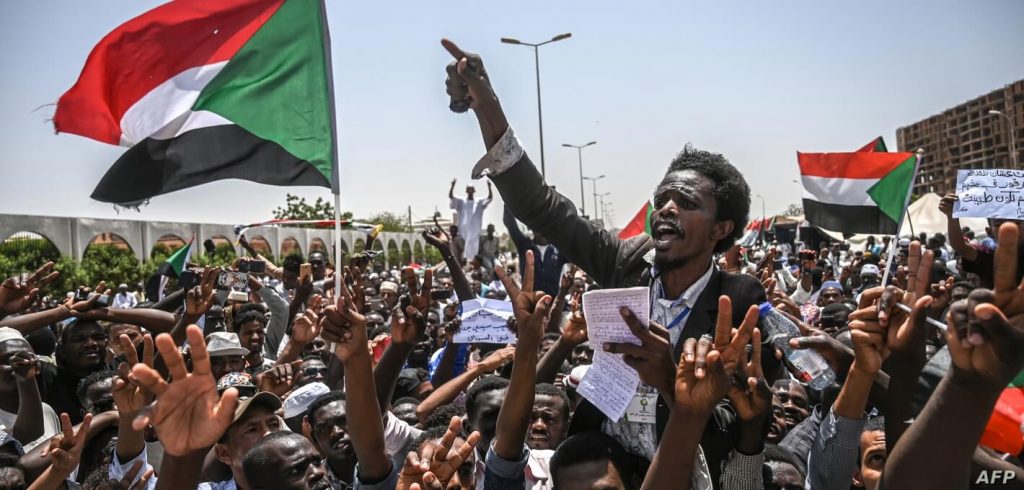
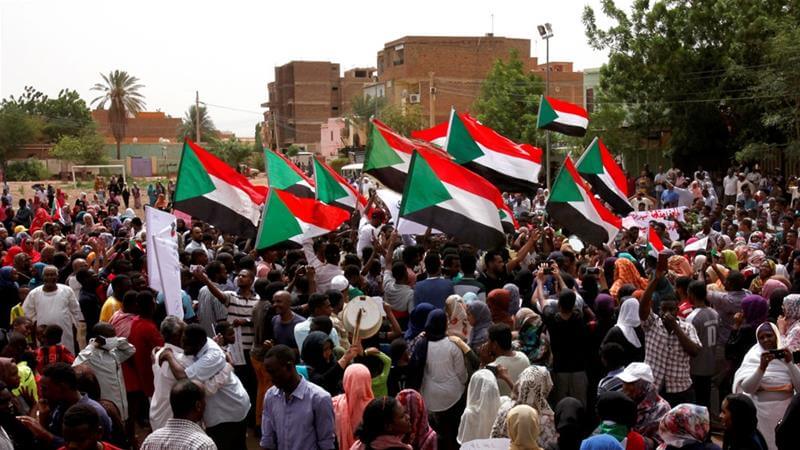
Last week, Sudan’s civilian opposition made a historic deal with the Transitional Military Council, which ruled the country since it toppled long-time leader Omar al-Bashir, to cement civilian rule in Sudan. Tensions between the TMC and the opposition were high in June after government forces opened fire on demonstrators at a peaceful sit-in outside the army headquarters June 3, killing more than 100 people. Following the government crackdown, the TMC cut off all internet services in Sudan. But this week, after the deal, the TMC lifted its ban, and videos during the tumultuous month of June are finally emerging. Videos revealing the brutality that the Sudanesee people had to endure during the month of June, including during the June 3rd crackdown, giving caution to the optimism that came out of last week’s deal.
Russia

On Monday, Russia’s ban on flights to neighboring Georgia came into effect causing both political and economic uncertainty for the Caucasus nation of 3.7 million people. Georgia annually hosts more than one million Russian tourists and will cost the nation around 300 million dollars. The travel blockade, which affects all Russian and Georgian airlines operating between the two countries also included tightening restrictions on wine. The ban was activated in the middle of the high tourist season. The Kremlin also urged Russian tourists visiting the country to return home, claiming that “Russophobic hysteria” made the country dangerous for citizens. The ban was announced in response to anti-Kremlin protests in Tbilisi angering a visit of a Russian legislator, Sergei Gavrilov, who gave an address from the Georgian parliamentary speaker’s chair sparked fear for many Georgians on Russian presence and aggression in the region.
Libya

Libya’s UN-backed government said the United Arab Emirates used a US-made F-16 fighter jet in Wednesday’s attack on a migrant detention center that killed at least 53 people.

Fathi Bashaagha, the Interior Minister of the Tripoli-based Government of National Accord (GNA), made the accusation to CNN on Friday: “We accuse the UAE of bombing the center with an F-16 jet.”  When asked if the GNA had any proof that an Emirati jet conducted the attack, the minister said: “The sound of the jet was identified by technicians and pilots who heard it. The destructive power (of the bombs) is very big and is similar to the destructive power (of the bombs dropped) in 2014.” Bombings and social unrest have led to many Libyans fleeing, and this week, 44 people, including four women and three children who were stranded in the Mediterranean. The ship contained citizens from Syria, Libya, Pakistan, Bangladesh, and Guinea, said they had left Zuwara in Libya early on Saturday in a wooden boat, according to AFP news agency. 
Togo

A former presidential guard from Togo who faces the death penalty for helping his country’s opposition was deported from Russia to the West African nation, Moscow-based activists have said. Russia has for the past five years denied refugee status to Bozobeyidou Batoma, 42, a former member of the Togolese commando guard force, Russia’s Civic Assistance Committee said. A Russian court ruled last month to deport Batoma back to Togo, which he had escaped after allegedly being imprisoned and tortured and where he faced the threat of extrajudicial execution.
Eritrea

This week marks the first anniversary of the historic Ethiopia – Eritrea peace deal which Eritrean President Isaias Afwerki and Ethiopian Prime Minister Abiy Ahmed reached last year sparking hope. Conflict began between the two countries sparling a two-year war between that killed an estimated 70,000 people from both sides. While the deal has yet to end all strife in the region, Eritreans and Ethiopians are able to move more freely between the two countries, especially in the disputed area of Badme, allowing families to reconnect. Citizens are also welcoming less military presence along the border. The two neighbors and their respected statesmen are working to fulfill and maintain the goals signed in Asmara last year.
Hong Kong

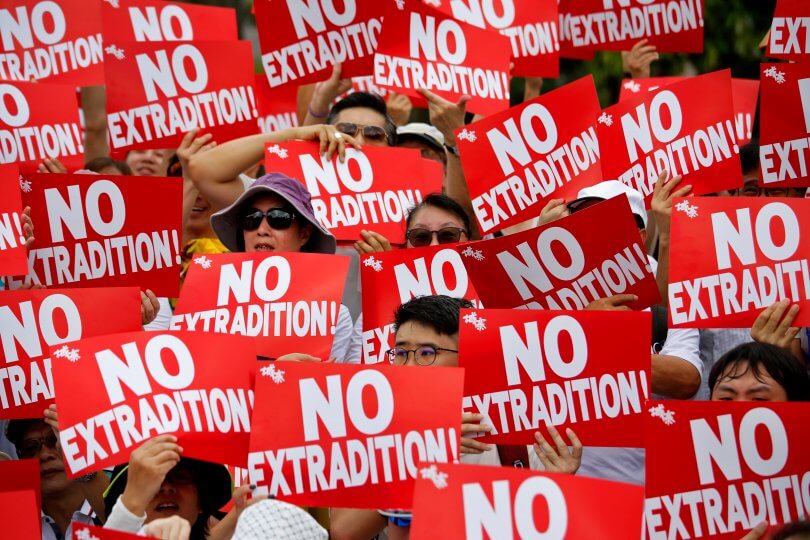
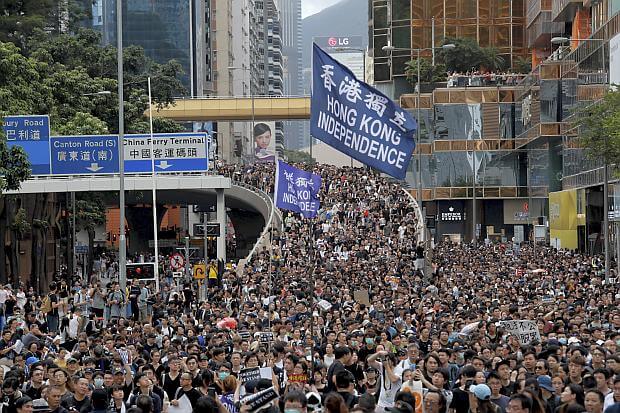
The Chief Executive of Hong Kong, Carrie Lam, has declared the extradition bill that provoked mass protests that engulfed the city for weeks, “dead”. Lam criticized the government’s work on the now-suspended bill, but she refrained from withdrawing the bill from the Legislative Council. Lam’s statement came a day after a major protest by tens of thousands of Hongkongers which was organized to attract the attention of mainland Chinese visitors. The pro-Beijing camp has taken one more hit as TVB, a Hong Kong television broadcaster reported to have a pro-Beijing stance, lost multiple advertisers, including Pocari Sweat, after a social media campaign encouraging businesses to pull their ads from TVB. More protests are planned for this weekend. 

Kingdom of Eswatini

This week, the Kingdom of eSwatini has banned witchcraft and magic competition. Local organisers had planned to hold the competition in Manzini, the second city of eSwatini, but a statement issued on Tuesday citing that the Witchcraft Act of 1889 defines witchcraft, sorcery or the practice of voodoo as a punishable offense. eSwatini has a population of 1.3 million people, with many following Christianity and indigenous beliefs. 

Other News:

Greece, Athens: On Sunday, Greece held nation-wide elections for the prime minister and parliamentary positions. Center-right New Democracy party won by a landslide over leftist Syriza, which had been in power since 2015, and ND’s leader, Kyriakos Mitsotakis, was sworn in as Greece’s new prime minister, a day after results showed New Democracy gaining 39.85% of the vote in Sunday’s snap election, compared with 31.53% for Syriza, led by outgoing Prime Minister Alexis Tsipras. The election result gave New Democracy an outright majority with 158 seats in the 300-member Greek parliament. The election marks a significant shift for the crisis-hit country that has seen a decade of governments made from fragile coalition made from cloths with ideologically divergent parties united by their stance favor or against Greece’s bailout deals. 

Mali: More than two hundred thousand people have or are fleeing their homes in Mali, where deadly attacks on villages are destabilising an already critical situation in the country’s center. More people have fled since the start of the year with almost six times the number that were displaced in the same period last year. Nearly 600 civilians were killed in the first half of 2019.

Sarajevo, Bosnia-Herzegovina: Thousands of mourners gathered in Bosnia on Thursday to commemorate the 24th anniversary of the Srebrenica massacre, the worst mass killing in Europe since World War II. Relatives of the more than 8,000 Bosnian Muslim men and boys killed by Bosnian Serb troops were among those attending a ceremony at a memorial site that included the burial of 33 newly identified victims of the July 11-22, 1995 massacre. More than 1,000 are still considered missing from the mass slaughter during the Bosnian civil war.
Weekly Report July 5th

Cuba

According to a report from SBS-AAP, Cuba is considering the use of cryptocurrency in order to bolster its finances. The country’s Communist government announced on state-run TV that it would potentially use crypto as part of a package aimed to boost incomes for as much as a quarter of Cubans and assist with market reforms. The announcement comes in the wake of new sanctions from the United States and Brazil on Cuba this week with the hopes to further cripple Cuba’s ally Venezuela. Venezuela implemented its own form of cryptocurrency last year to curb hyperinflation and economic catastrophe.  

Nicaragua

In a letter to EU High Representative Federica Mogherini and foreign ministers, Human Rights Watch argued that the EU should impose targeted sanctions against high-level Nicaraguan officials implicated in gross human rights violations and condition financial support to Nicaragua’s National Police. The European Union should increase pressure on the Nicaraguan government to curb human rights violations by police and other officials in the wake of anti-government protests, The crackdown on anti-government protests by Nicaragua’s National Police and armed pro-government groups that began in April 2018 led to more than 300 deaths and 2,000 people injured. The HMR wasn’t the only organization to condemn the gross human rights violations, The Organization of American States (OAS) General Assembly adopted a joint resolution condemning the Nicaraguan government on Wednesday. 

North Korea

Australian Prime Minister Scott Morrison has said that Alek Sigley is “released and safe” after being detained by the North Norean government. Last week, his family and friends lost contact with him, sparking fears he might have been detained, and these concerns were true. Sigley was the only “Austrialian living in North Korea” where he was pursuing a master’s degree and running a tourism business in Pyongyang. His release was said to comes after a meeting between officials from the Swedish embassy in Pyongyang and the North Korean government. Australia does not have its own embassy in the North Korean capital, but Sweden does, and often acts as a liaison for countries. It is not known why the student, a fluent Korean speaker, had been detained.

  Myanmar

The U.N. envoy for Myanmar said Monday that progress on alleviating the crisis that led more than 720,000 Rohingya Muslims to flee to neighboring Bangladesh has been slow and if there is no action it will be time to “ring the alarm bell.” Special UN Envoy on Myanmar Christine Schraner Burgener, said that there have been “little changes on the ground” to the situation for Rohingya Muslims citing discrimination, military presence, and last week when Myanmaar suspended internet service cuasing a communication black out in Rhakine. 

United States 

On Sunday, after hobnobbing with G-20 leaders in Osaka, Japan, President Donald Trump made one of the most audacious diplomatic photo-ops in history when he crossed over the DMZ and into Norea Korea shaking hands with North Korea’s leader Kim-Jong Un. In doing so, President Trump became the first sitting American President in history to set foot in North Korea. The meeting was set up via Twitter with less than 24 hours. Both leaders said that the meeting marked a reboot to two previous failed summits regarding North Korea’s nuclear capabilities. While the meeting was historic, foreign policy experts criticized Trump’s tactics arguing the exchange should be the last step, not the first, to a nuclear arms agreement. Democrats parroted these concerns as presidential candidates criticized him for “coddling with tyrants” and “legitimizing dictators.” 

President Trump also came under fire for his jingoistic July 4th celebration that boasted the US’ military prowess. The “Salute to America” event featured military flyovers and fireworks. For the first time in recent memory, the Independence Day celebration featured a military parade. Opponents accused Mr. Trump of wasting money and politicizing the holiday ahead of his re-election campaign.

 Cambodia

Cambodian Prime Minister Hun Sen on Monday said that his country “will not bow down to any advice from foreigners” as he prepares to head to Geneva, where he is expected to address a United Nations human rights session on July 4 about Cambodia’s human rights progress. Despite Sen’s claim that human rights in Cambodia are improving, an activist and former elected official, Sun Yen, was beaten nearly to death in Cambodia’s Kampong Thom province by a group of unidentified men. Yen is a member of the banned opposition Cambodia National Rescue Party (CNRP), which was disbanded in November 2017 for its alleged role in a plot to overthrow the government. The move was part of a wider crackdown by Sen on political opposition, NGOs, and the independent media that paved the way for Sen’s Cambodian People’s Party (CPP) to win all 125 seats in parliament in the country’s July 2018 general election.

Zimbabwe

Eskom, a South-African based eclecticity provider, announced that Zimbabwe has failed to pay $10 million (R140 million) of its outstanding debt, despite undertakings by Zimbabwe Finance Minister Mthuli Ncube. Moreover, Eskom is refusing to be paid in Zimbabwean dollars, which is experiencing one of the highest levels of hyper-inflation in recorded history, and instead in South African Rand or in USD. Zimbabwe has been forced to implement power-cuts due to its inability to pay for foreign electricity imports and a severe drought leading to fewer outputs by its hydro-plant. The announcement marks another step towards social, political, and economic turmoil: if Zimbabwe is unable to produce electricity, other sectors of its mineral and oil rich economy will ultimately fail. Some Zimbbwean’s power is only available for a few hours in the middle of the night. 

 The Democratic Republic of Congo

President Felix Tshisekedi described interethnic bloodshed in DRC’s northeast as “attempted genocide” after scores of people were killed and tens of thousands displaced. The leader of the Democratic Republic of the Congo said the violence appeared to be a “plot” and vowed to “find out the truth” about who was behind the deadly unrest. Fighting in Ituri province between militias connected to Lendu farmers and Hema herders has killed at least 160 civilians since June 10, Tshisekedi said on Tuesday at the end of a three-day visit there. Earlier this week, Amnesty International called on the DRC  to withdraw its armed forces from the Fungurume mines to overt bloodshed after reports found that the DRC sent approximately a thousand of soldiers to protect Chinese Mining Incorporation.

Venezuela 

Following the death of a navy officer in custody over an alleged coup plot, Venezuela’s opposition leader Juan Guaido said on Tuesday there were no plans to restart talks with the “murderous dictatorship” of President Nicolas Maduro. President Maduro has not said how the officer died, but a sixteen-page UN report released this week details the injuries inflicted on the navy captain, “including electric shocks, suffocation with plastic bags, water boarding, beatings, sexual violence, water, and food deprivation, stress positions and exposure to extreme temperatures”. Despite opposition leader Guaido’s statement that there would “never” be a time to negotiate with a “dictatorship” and the UN report, President Maduro was optimistic about future talks with the opposition: there “will be good news in the coming weeks about how well the contact, negotiation and pre-agreement processes are going.” 

 Philippines

This week in Manila, approximately 2,500 people gathered to honor the 90-year-old widow of the late dictator Ferdinand Marcos and celebrate a birthday party for Imelda Marcos, the former first lady of the Philippines. However, more than two hundred and fifty guests fell ill with suspected food poisoning after the celebratory meal at a Ambulances rushed vomiting friends and supporters from a sports stadium Although Marcos was toppled by a peaceful uprising in 1986, the family is still revered by many in the Philippines and has made a political comeback in recent years.

 Thailand

Human Rights organizations have urged Thai authorities to investigate attacks on pro-democracy activists after one was beaten and left unconscious on a pavement last week. Amnesty International submitted open letters to Thailand’s defense minister and its police commissioner on Wednesday asking them to bring justice to the attackers. who have targeted three vocal pro-democracy activists on multiple occasions since the military seized power in a coup in 2014. In the letter, AI asserted that the attacks against the activists “appear to fit a pattern of systemic violence timed to coincide with their efforts to draw attention to perceived election irregularities and problems relating to the formation of a new government”.

Vietnam

Vietnam was a direct beneficiary of the trade-war between the United States and China; however, there were worries that the country might be on the receiving end of the tarifs. To combat these fears, Vietnam signed a “historic” trade deal with the European Union that effectively cut 99% of all tariffs between Vietnam and the EU. On Thursday, President Donald Trump put a 456% tariff on imported Vietnameese steel amid a surge in exports to the U.S. and growing evidence of Chinese and other manufacturers diverting their goods via the Southeast Asian nation to bypass Chinese tariffs. In response, Vietnam Prime Minister Nguyen Xuan Phuc ordered government officials to intensify their crackdown on fraudulently mislabeled products for exports and closely monitor U.S. reactions 

 Iran 

 President Hassan Rouhani said on Wednesday that Iran will boost its uranium enrichment after July 7 to whatever levels it needs beyond the cap set in the landmark 2015 nuclear deal, defying US efforts to force Tehran into renegotiating the pact. Early this week, Iran announced has stockpiled more low-enriched uranium than is permitted under the accord. While the situation looks more like a disaster than a diplomatic triumph when both the United States and Iran are hitting back, Iranian Minister Mahmoud Alavi was cited by the state-run IRNA news agency as saying “negotiation between Iran and America will take place if the supreme leader gives the permission.” 

Sudan

On Wednesday, Sudan’s protest and opposition leaders resumed face-to-face talks with Sudan’s ruling Transitional Military Council (TMC). TMC and the opposition coalition have struggled for weeks over what form Sudan’s new government should take after the military deposed long-time president Omar al-Bashir on April 11. The meditators of the talk were done by Ethiopian Prime Minister Abiy Ahmed who flew down after talks broke down. After months of peaceful protest and a violent military crackdown, Sudan’s military leaders reached an agreement with the opposition alliance to share power until elections can be held. The two sides agreed to rotate control of the sovereign council for at least three years with the first president being picked by the TMC. They have also pledged to form an independent technocratic government and to investigate the aforementioned violence of recent weeks. News of the agreement reportedly sparked frenzied street celebrations.

Russia

On Wednesday, President Vladimir Putin said that Russia is ready to restart discussions with the U.S. over arms control and that recently there have been signs that Washington is beginning to consider resuming bilateral dialogue on a wide-ranging strategic agenda,” Despite fears that both countries pulling out of the Intermediate-Range Nuclear Forces Treaty (INF treaty) signed in 1987 would lead to an arms-race, both countries have denied that the collapse of a significant nuclear missile treaty between the two nations would prompt an arms race. 

Libya

On Thursday, a UN official has said that the attack on a detention centre outside the Libyan capital attack, which killed more than 44 migrants, could constitute a war crime. At least 130 people were injured in the attack, which the Libyan government blamed on an airstrike by forces loyal to a warlord, General Khalifa Haftar. Thousands of migrants are being held in government-run detention centres in Libya. Most of the dead are believed to be sub-Saharan Africans who were attempting to reach Europe from Libya.

Togo

On Sunday, Togo held its first local elections in 32 years where the country’s 3.4 million eligible voters were called to elect 1,527 municipal councilors to six-year terms, renewable twice, in 117 towns. However, most opposition parties are boycotting the election. The West Africa Nation has been governed by a single family for over three decades, and President Faure Gnassingbe stated the elections “mark a major advance in the establishment of democracy.” Gnassingbe has been in power for nearly 15 years since succeeding his father Eyadema Gnassingbe, who ruled the country with an iron fist for 38 years. Turnout was low with the polling stations visited by AFP reporters showing an average abstention of 75 percent.

Eritrea

A UN expert said in a report that the human rights situation in Eritrea shows no sign of improvement since it signed a peace agreement with neighboring Ethiopia last year, ending two decades of war. UN special rapporteur lamented that the peace deal failed to bring widespread abuse and violations to an end stating that “the dividends of peace are not yet benefiting ordinary Eritreans, nor are there any signs to suggest they will.” Despite an end to the conflict, Eritreans lack political rights and the government does not allow for dissent. 

Hong Kong

For the past month, protesters have been demanding the withdrawal of a bill that would allow extraditions to the Chinese mainland. The anger against the bill has grown against Hong Kong authorities and morphed into a wider political crisis. On Monday, a massive peaceful protest in which organizers say more than half a million people marched through the city on the anniversary of Hong Kong’s 1997 return to Chinese rule. However, during the peaceful parade, a much more violent a riot emerge when Hong Kongers stormed and occupied the legislative night clashing with police on Monday night. On Thursday, the Hong Kong police made its first arrest. 

Iraq

Iraq declared victory over the Islamic State of Iraq and the Levant group (ISIS or ISIL) in late 2017, and has continued to carry out arrests of suspected fighters, The Iraqi government does not provide figures on detention centers or prisoners, but some studies have estimated 20,000 are being held for alleged ISIL links. A recent investigation by the Human RIghts Watch reveals that the conditions for the suspects charged with “terrorism” are held in “degrading” conditions. The government does not allow the suspects to access a lawyer and many have already been charged but are still held in prison for months on end. One prison with a max capacity of 2,500 had over 4,000 prisoners. 

Other News:

Istanbul, Turkey: Hundreds of protestors marched the streets of Istanbul, attacking Syrian shops and residential areas after allegations that a young Syrian boy verbally harassed a young Turkish girl. A group of Turkish youths reportedly damaged several Arab businesses in the Syrian neighborhood on Saturday night before police dispersed the crowd, arresting 18. All 18 were released. Local government officials denied a physical assault had taken place.

Amsterdam, Netherlands: Amsterdam’s first female mayor is facing a battle with sex workers in the city’s famous red-light district after raising the prospect of closing it down. Femke Halsema, a former leader of the national Green party who became mayor last year, is under fire for suggesting that the city “must dare to think about the red-light district without prostitution”.

Xinjiang, China: Thousands of Muslim children in China’s western Xinjiang region are being separated from their parents in what a new study calls a “systematic campaign of social re-engineering and cultural genocide”. The research sheds light on what happens to the children of so-called “double-detained” parents – when both a mother and father have been abducted by the state into what it calls compulsory “re-education” facilities. The UN says China has detained more than one million minority Muslims, mostly ethnic Uighurs, since a dramatic escalation of the policy in the spring of 2017.

June 28th Weekly Reports

June 28th weekly reports

Cuba

A Russian warship, the Admiral Gorshkov, docked in Havana, Cuba this week giving foregin policy experts Cold War deja vu. The warship is armed with cruise missiles, air defence systems and other weapons. Russian Deputy Foreign Minister Sergei Ryabkov said on Monday that US plans to deploy missile systems near the Russian border risks a nuclear standoff on a par with the height of the Cold War. The ship is docked in the same port where until last month American cruise ships docked until President Trump banned them from entering Cuban ports.

Gabon 

Gabonese women rights activists are denouncing Gabon’s President and dictator Ali Bongo Ondimba after he scrapped the ministry responsible for women’s affairs early this week. President Bongo pledged to empower the central African country’s women but activists say this move directly contradicts his promises. Gabonese women do not have full political or economic rights, and in the most recent elections, women won 15 of 120 seats in the National Assembly and 19 of 102 seats in the Senate. 

Bolivia

Notorious for its brutal prisons, Bolivia announced this week plans to reform and overhaul the prison system. The reform includes plans to build a new 10,000 capacity maximum security prison 40km from the Bolivian capital of La Paz. The prison will replace the current San Pedro maximum security prison, designed to hold 800 inmates but currently holding about 2,800. Bolivia has one of the highest murder rates in Latin America, ahead of neighbors Paraguay and Chile. The new prison is meant to alleviate overcrowding, which has led to deadly rioting in the past. 

Nicaragua

Four men with suspected ties to the Islamic State (IS) group were arrested in Nicaragua after crossing illegally from Costa Rica, officials say. The identities of three of the men matched those in an alert attributed to US officials saying three suspected jihadists were in Central America. According to reports, officials feared they could have plans to try to enter into the United States. The four, aged between 26 and 41, included two Egyptians and two Iraqis. They have been deported to Costa Rica.

After a crackdown on opposition members last year by the Nicaraguan government and in the wake of a new law that provides immunity to human rights violators, the Human Rights Watch sent a letter in advance to the Organization of American States (OAS) recommending that OAS “ redouble the pressure on the Nicaraguan government to curb human rights violations through the concrete step” like targeted sanctions, suspend all cooperation with the military force, and to exercise criminal jurisdiction in accordance with the UN Convention on tortue. 

 North Korea

Despite multiple summits, claims by leaders stating otherwise, and continued talks tensions in the Korean Peninsula remain. On Thursday, North Korea asked South Korea to stop trying to mediate between Pyongyang and Washington, as it stepped up its pressure on the United States to work out new proposals to end the seemingly deadlocked talks on its nuclear program. Later that day, it is suspected that Australian student Alek Sigley has been detained while studying abroad in Pyongyang. His family has not heard communicated with him Tuesday, which they said was irregular. 

Myanmar

Human rights activists are decrying Myanmar’s government order to cut internet and telecommunication services in the Rakine state as a “gross human rights violation.” After the Myanmar’s military cracked down after allegedly the Rohingya militants attacked police outposts in 2017, US and international bodies have stated the attacks amount to genocide and ethnic clensing. The crackdown has caused when more than 720,000 people to flee are into Bangladesh as a result of the ensuing violence. Rakine is in a total blackout as reporters and humanitarian groups are banned from entering, and many worry the internet shut down is another way to censor human rights violations from being known. The order does not specify when the order will end, but officials stated it was administered for public security issues. 

United States 

The House this week approved a $4.5 billion humanitarian aid package to address the crisis at the Southern border, after infighting among Democrats over provisions of the bill. The bill, which faces an uphill battle to pass the Senate and a potential veto from the White House, strictly stipulates that the money is only to be used for humanitarian relief and not to further any of President Trump’s harsh border measures and immigration tactics. The bill was passed after many reports of “inhumane” conditions and overcrowding at border detention centers for children separated from their parents came to light. The reports state that children were kept without clean clothes, adequate food, and without access to soap and toothpaste for weeks on end. 

Tensions continue to rise between the US and Iran, as Iranian President Hassan Rouhani described the White House as “mentally crippled” in response to new sanctions imposed against Iranian Supreme Leader Ayatollah Khamenei. Iran announced that they have shut the door to diplomacy, leaving many to speculate that the path to a resolution over this nuclear crisis is shrinking. Iran recently announced they will speed up the enrichment of uranium, much to the outrage of the US. 

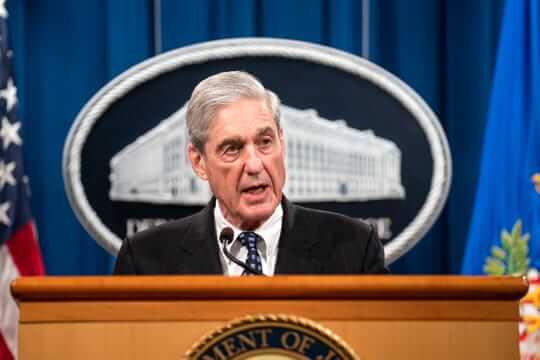
House Democrats announced that former Special Counsel Rorbert Mueller will publicly testify before Congress about his investigation into Russia’s 2016 election interference and possible obstruction of justice by President Trump. Mueller agreed after subpoenas by the House Judiciary and House Intelligence committees.

 Cambodia

On June 25, a court in Cambodia charged seven people, including five Chinese nationals, after a fatal building collapse which killed 28 and injured 26 people in the beach city of Sihanoukville over the weekend. This accident has sparked discussion in Cambodia surrounding Chinese investment and business in the country and its lack of regulation.     

Zimbabwe

This week, Zimbabwe’s government increased its arsenal of war weapons to deal with looming street protests, as the intractable political and economic crisis deepens. Documents obtained by Harare based the Independent found that the government purchased 343 assault rifles, 600 sniper rifles, 5,000 motors, and 500  grenades. Domestic and foriegn opposition leaders fear that state violence would plunge Zimbabwe back into a pariah state. Yet despite the concerns, the Zimbabwe government, its people, and foreign experts all believe the likelihood of mass opposition protests of President Mnagagwa are growing. The looming civil unrest is in part due to the illegal detainment of various opposition leaders, sky-high inflation nearing 100%, and gas prices higher than wealthier countries like Monaco and Hong Kong. Later this week, the government announced that it banned foreign currency for local transactions with the hope to strengthen the economy and curb political unrest.

The Democratic Republic of Congo

The Democratic Republic of Congo has been suffering from humanitarian tragedies this week. An outbreak of ethnic violence in the eastern province of Ituri has resulted in more than a hundred deaths and thousands fleeing their homes to other parts of the Democratic Republic of the Congo or across Lake Albert to Uganda. The ebola epidemic continues to ravage the eastern part of the country, making this outbreak the second deadliest in history. 

On June 23rd, one of the major opposition leaders Jean-Pierre Bemba returned to the Democratic Republic of Congo, immediately meeting with Martin Fayulu, the true winner of the 2018 presidential election according to the independent reports. Bemba has joined Fayulu in calling for peaceful demonstrations against the government scheduled to happen on Sunday, June 30th.

Venezuela 

Venezuelan President Nicolas Maduro warned on Wednesday that he would be “ruthless” with the opposition if they attempted a coup d’etat, after his government said it had thwarted a plot to assassinate him. A spokesman for the Maduro regime would later say that the a group of mostly retired police officers were caught planning to bomb a government building, loot Venezuela’s central bank, and seize a military airbase. The spokesman said the coup attempt was supported by neighboring countries like Colombia, yet like other reported coup attempts in the conflict ridden country, the government offered little evidence. Opposition leaders say the baseless accusations enable Maduro to crackdown on dissent.  On Thursday, the Organization of American States said Venezuela is the region’s top priority. 

Malaysia 

Mahathir Mohamad, the 93-year-old prime minister of Malaysia, said on Saturday that he will step down within three years and hand over the reins to Anwar Ibrahim. The power will be usurped by Ibrahim, who was Mohamad’s protege-turned-rival before the two reconciled again to win last year’s general elections. Experts argue that the three year time limit is inadequate due to the Prime Minister’s age, which could yield uncertainties for the country if he were to pass away before hand. 

 Philippines

As single-use plastic is wreaking havoc on the Phillipino environment, environmental activists are training and engaging school children to help put an end to the disaster. Approximately 160 million bits of plastic wash up on the Phillipino shore every day, which come from single-use plastics such as straws and plastic bags. This has put immense pressure on the environment and has left activists and the government scrambling to find a solution. Activists from Green Antz Builders are using plastic waste collected by school children to make bricks that are used in buildings, including in the schools the children attend. 

In order to salvage relations between the Philippines and China, Phillipino President Rodrgio Duerte announced that a government investigation into the sinking of a Philippino fishing boat by a Chinese boat in the South China Sea was an ordinary mishap and should not strain relations between the two countries. This comes amidst growing tension between Southeast Asian countries and China over disputes in the South China Sea, which China has claimed full control of. 

Thailand

The Muslim population in the southern provinces of Thailand are in uproar as telecommunication companies began requiring all users of the majority-Muslim provinces’1.5 million mobile numbers to submit a photo of themselves for facial recognition purposes following orders from the army. While the army and military junta claim that this move will improve security in the region, the representatives of the Malay and Muslim communities say this move amounts to racial profiling that in conjuction with faulty facial recognition technology will lead to arrests of innocent people.

Thailand’s junta leader-turned-Prime Minister Prayut has announced that the new government is going to be formed by mid-July, nearly four months after the legislative elections in March. Until a new government is formed, Mr Prayut is both the legitimate elected prime minister and also the head of the coup-installed National Council for Peace and Order (NCPO). Critics say that the reason for the delay in forming the new government is Mr Prayut enjoying the powers the control of the two institutions gives him. 

 Vietnam

The Vietnamese government  “state dissidents” crackdown continues after an American citizen, Michael Phuong Minh Nguyen, has been sentenced to 12 years for trying to overthrow the state. The court on Monday also sentenced two Vietnamese men to eight and 10 years in prison for the same offence as Nguyen. Despite almost radical economic and social change in recent years, the Vietnamese government continues a harsh line towards state criticism and dissent. 

Iran 

Turmoil in the Middle East is looking more likely by the day after the United States and Iran traded rhetorical and political blows last week. Last year, the US pulled out of the Iran Nuclear Deal, and last month Iran scaled back some of its commitments under the deal, including on the amount of low enriched uranium it is allowed to stockpile. This month, the United States accused Iran of shooting down an unmanned drone over international waters and the bombing of six oil tankers. While leaders of both countries have urged for dialogue over destruction, tensions continue to grow rhetorically and politically. President Donald Trump imposed sanctions on the Supreme Leader of Iran Ayatollah Ali Khamenei, his office, and those closely affiliated with him, which Iranian President Hassan Rouhani described as “useless” and showed the White House was “mentally retarded.” A spokesman for Iran’s government asserted that while Iran wants to negotiate, the sanctions are a “permanent closure of the path of diplomacy”. 

Sudan

After Sudan’s military leaders rejected Ethiopia’s proposal for a transitional government, Sudan’s opposition announced they are planning new mass demonstrations against the regime on June 30th. The revolutionary opposition is demanding a transition into a fully civilian government, and want to make sure the generals hear the opposition demands loud and clear. The opposition previously accepted Ethiopia’s roadmap to civilian rule, which they saw as an option that would get them out of the political impasse. After cutting off civilian access to the internet, activists have been using other tactics to mobilize and are hoping the internet will be restored soon after a lawyer won a lawsuit against telecoms operator Zain Sudan over the blackout. 

The United States is considering imposing more sanctions against the military regime if more violence was committed against protesters, after a deadly crackdown against protests left scores dead. The US has made clear that a military government is not acceptable, and believe the best solution is an agreement between the military government and the opposition Forces for Freedom and Change (FCC). 

Russia

Tensions are rising even more between Russia and its neighbors. Following the demonstrations in Georgia after a Russian lawmaker addressed the Georgian parliament from the speaker’s chair, Russia has suspended flights to Georgia and is looking to ban wine imports from the ex-Soviet country. Tensions with Ukraine and the Baltic States have risen after the Council of Europe, a human rights watchdog voted to readmit Russia five years after its suspension due to the Crimean annexation. Ukraine lobbied Western governments to vote against Russia’s readmission, and after the vote in Strasbourg, President Zelensky expressed disappointment with the vote. In military news, Jens Stoltenberg, the General-Secretary of NATO has declared that Russia must destroy its short-range nuclear-ready cruise missile system, or the alliance will be forced to respond. Meanwhile, a Russian military plane landed in Venezuela, carrying military experts, repeating the action that heightened tensions between Moscow and Washington three months ago. 

Libya

Forces allied to Libya’s UN-recognised government say they have retaken Gharyan, a strategic town south of the capital, Tripoli, although forces loyal to renegade military commander Khalifa Haftar denied the claims. Libya, mired in chaos since a NATO-backed uprising that toppled and killed longtime ruler Muammar Gaddafi in 2011, has seen a multitude of militias vying for control of the oil-rich country. Yet, if the reports are true, it could lead to an end to conflict ridden country. A spokesperson for the forces that its capture was a “significant victory” that should lead to the “collapse” of Gen Haftar’s campaign. 

Eritrea

After the release of a report on the state of human rights in Eritrea by the UN Special Rapporteur highlighting continually dismal human rights conditions, Human Rights Watch (HRW) has called on the UN to maintain pressure on Eritrea to fix the situation. The report comes as the UN Human Rights Council, which Eritrea sits on, is going to start debate over whether to keep Eritrea in the spotlight at its 41st session.  

In an effort to continue to repair and build relations with Eritrea, Ethiopia has announced that it is about to pursue a railway building project to connect Ethiopia with Eritrean port cities. Announced at the Ethio-Italian Business forum, the Ethiopian finance minister says the project has the backing of the World Bank and a feasibility study has been launched. 

Hong Kong

Hundreds of Hong Kongers have marched towards various foreign consulates in the city before the G20 summit in Osaka, pleading countries like the United States, France and the United Kingdom to free and liberate Hong Kong from Beijing’s influence. The protesters delivered petitions to the consulates of nineteen G20 countries. This march is one of many protests happening this week, most of them being impromptu and not registered, which marks them apart from the two-million person march that happened on June 16th. 

Other News:

Prague

The largest protests since the downfall of communism took place over the weekend in Prague, Czech Republic. An estimated 200,000 marched to Letna Park ––  the same location of the protests during the collapse of the Soviet Union in 1989 –– demanding the resignation of Prime Minister Andrej Babis. The billionaire Prime Minister, who was elected to fight corruption, has been accused of misusing subsidies from the Europen Union. In April, the police formally recommended charging the PM but an indictment can only occur through the Justice Minister. However, after the police made their recommendation, the Justice Minister resigned. He was succeeded by Marie Benesova, who is close to the country’s president, Milos Zeman, an ally of the PM. No political consequences have emerged from the protests, and PM Babis is expected to narrowly survive a no-confidence vote. 

Istanbul

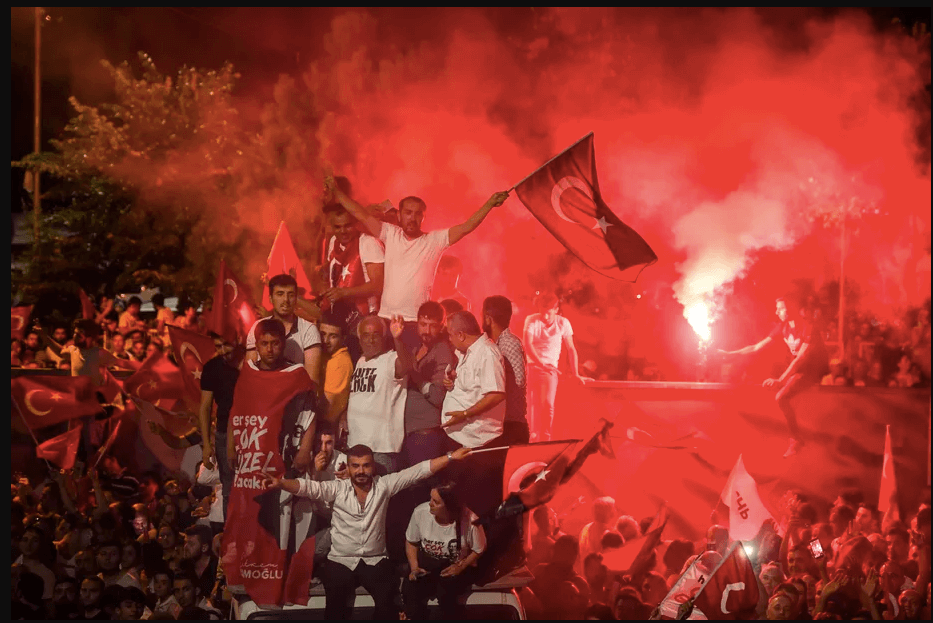
In a stunning indictment on the countries economic and political situation, Turkish opposition candidate Ekrem Imamoglu won the redo of the Istanbul mayor’s race by a landslide on Sunday with over 54% of the vote. Imamoglu already won in March by 18,000 votes, but the countries top electoral authority voided the election, giving democratic skeptics more worries about Turkish politics. In June, Imamoglu won by over 800,000 votes. Istanbul is a pivotal economic and political center for country, giving President Erdogan’s rule a strong rebuttal. Later this week, a trial for 16 people accused of “terrorism” charges and organising anti-government protests in 2013 begun with rights groups calling the allegations baseless.

Mauritania:

For the first time in Mauritania’s history, voters chose a presidential successor in a democratically elected election. Mohamed Ould Ghazouani won the presidential election with 52% of the vote according to the elections tribunal, but opposition leaders are crying foul. The leading opposition leader and second-place winner Mohamed Ould Boubacar disputed the election: “We are launching an appeal to the Mauritanian people … to resist, within the bounds of the law, this umpteenth coup d’etat against the will of the people.” Boubacar cited that the election was fraught with “multiple irregularities … eliminated any credibility” of the election in the West African nation.” Opposition leaders boycotted the 2014 elections. Regardless of opposition, Ghazouani declared himself winner Sunday night promising to continue economic growth and stability. 

Weekly Report: 20 June 2019

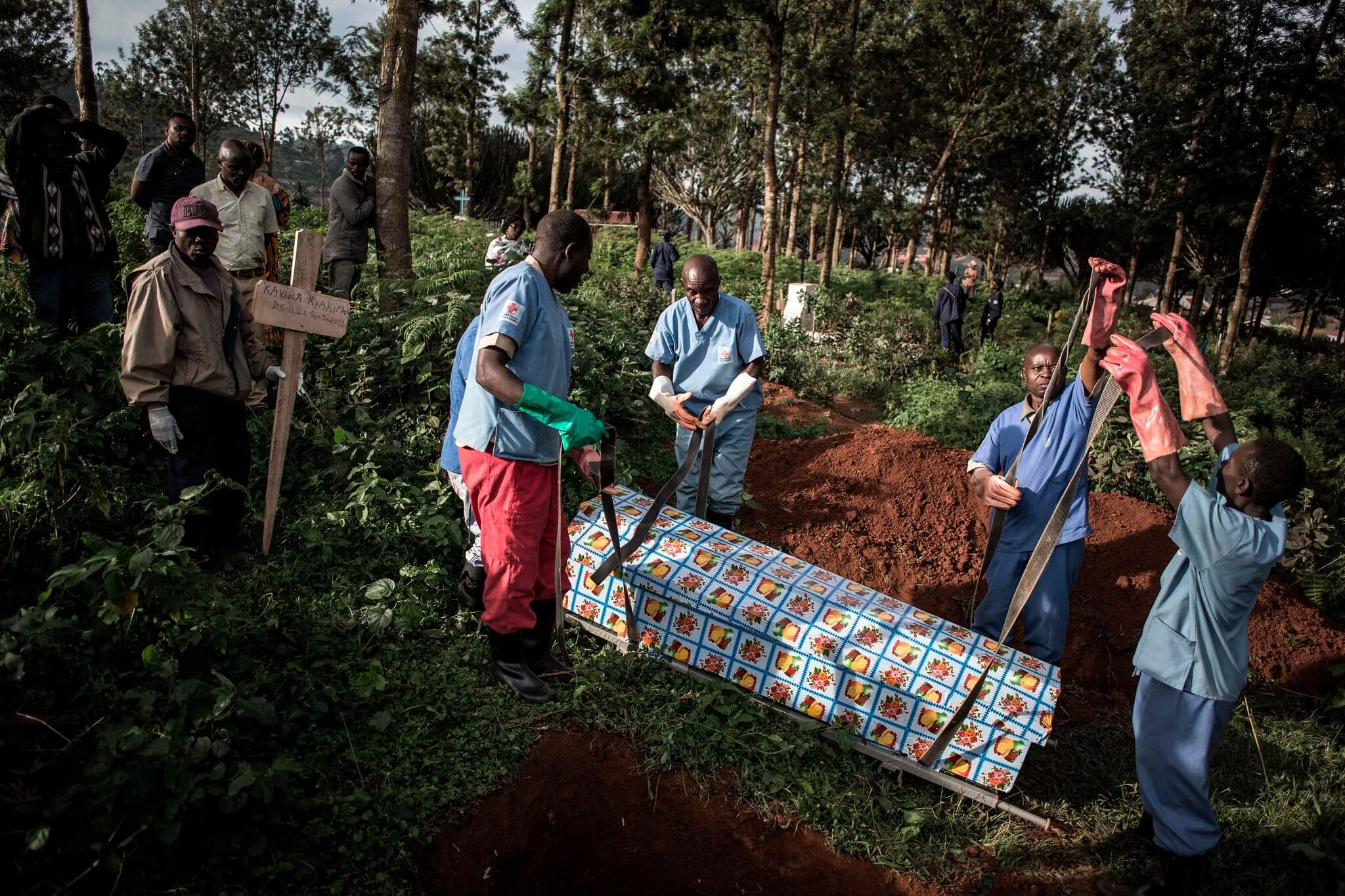
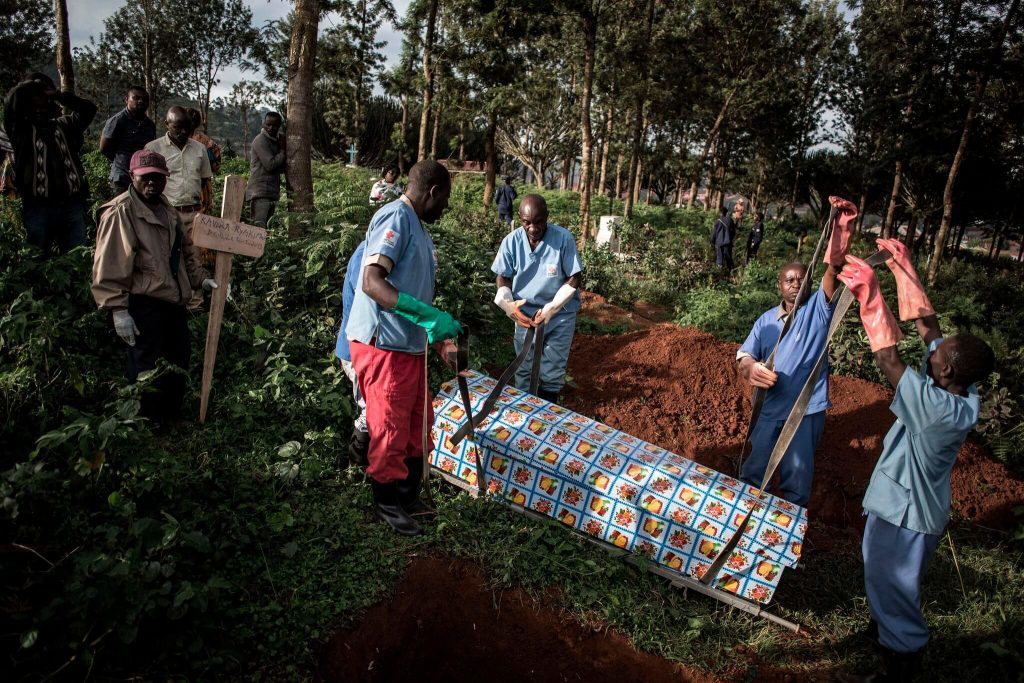
Health workers prepare to bury a coffin containing a victim of the ebola virus on May 16, 2019 in Butembo, a city in the Democratic Republic of Congo. Credit John Wessels/Agence France-Presse — Getty Images

Cuba

Cuba and the Cuban people are enduring economic turmoil after US sanctions and restrictions continue to take fold. Civilians are being forced to queue for food and endure sharp cuts in transport services. The latest move by President Donald Trump has been to ban American cruise ships from the communist-ruled nation last month, forcing approximately 800,000 tourists to change their travel plans. The Cuban state is also facing an economic crisis after its Southern communist ally, Venezuela, also faces international sanctions and continues to enter into more chaos.

Nicaragua

According to a report published by the Human Rights Watch (HRW) on June 19, the pro-government forces in Nicaragua committed human rights violations, some amounting to torture, during the suppression of protests against Daniel Ortega that began in April 2018. The abuses detailed in the report include, but are not limited to, “beating captured protestors…raping detainees…acid burns… [and] forced self-incriminating confessions.” The report also calls for governments in North America and Europe to impose targeted sanctions against top Nicaraguan authorities.

North Korea

State media reported from both China and North Korea that China’s President Xi Jinping will make his first trip to North Korea to meet with Kim Jong Un, marking the first trip by a Chinese president in fourteen years to North Korea. The meeting will take place two days before the G-20 Summit, amid rising tensions in the Korean Peninsula after failed talks between US President Donald Trump and Kim Jong Un earlier this year, and a trade-war between the US and China. China will reportedly give 100,000 tons of humanitarian aid and food to the North Korean regime.

Myanmar

A new UN report commissioned by UN Secretary-General Antonio Guterres has concluded that there was a “systemic failure” of the UN in handling the Rohingya crisis over the past decade. The report sheds light on serious errors and a “dysfunctional performance” in crafting and handling a response to the Rohingya crisis in Myanmar. The report mainly highlighted the fact that there were competing strategies between UN agencies and a mistrust in relations with Myanmar’s government, which helped enable the 2017 crackdown on the Rohingya ethnic minority in the Rakhine state. This report comes as the UN threatens to withdraw aid to the Rakhine state  to avoid being complicit in a “policy of apartheid” for Rohingya Muslims. This policy shift is meant to put pressure on the government to close internally displaced persons (IDP) camps, which currently house about 128,000 displaced Rohingya.

United States

The tensions between the United States and Iran are reaching a boiling point as Iran shoots down a US naval drone, claiming it infringed on its airspace. This happened just two days after Mike Pompeo, the US Secretary of State privately delivered warnings intended for Iranian leaders that any attack by Tehran or its proxies resulting in the death of even one American service member will generate a military counterattack. As part of raising pressure on Iran, the Pentagon announced the deployment of additional 1000 troops in the Middle East.

In response to the United States’ scrapping trade privileges for India, the South Asian country has responded by imposing retaliatory tariffs on 28 United States goods, raising tensions between the two countries before the upcoming G20 meeting.

On Wednesday, Donald Trump formally launched his campaign for the 2020 election in Orlando, Florida. In his speech, he focused on the growing economy and announced that the Immigration and Customs Enforcement agency would next week conduct raids aimed at finding and deporting millions of people who live in the US without the proper documentation.

Cambodia

On June 19, the Human Rights Watch (HRW) released a statement that urged Cambodian authorities to drop charges against two former Radio Free Asia journalists, claiming that the espionage charges are politically motivated. The two were arrested on claims that they had “illegally collected information for a foreign source.” The arrests and nine-month detention of the journalists is seen as just a small piece of Cambodia’s crusade against media dissidents.

Cambodian authorities have questioned, summoned, or detained more than 140 members of the former Cambodia National Rescue Party (CNRP) in what seems to be an effort to silence dissent. The CNRP was the only opposition party until it was dissolved by a court in late 2017. Some of those detained were charged with “incitement to commit a felony” which is an inappropriate charge for showing political support.

Mexico

After US President Donald Trump announced hardball immgration policies to curb immigration northwards –– imposing five percent tariffs and cutting humanitarian aid in Latin America –– Mexico deployed approximately 6,000 troops to its southern border with Guatemala. Mexico said that the country detained 800 migrants over the weekend. Mexico’s counter reactionary policies may help counter the American tariffs, but have hurt the popular Mexican President Andres Manuel Lopez Obrador. The immigration crisis marks the first strife between President Obrador and his base with resignations from the head of the immigration authority, Tonatiuh Guillen, after Mexico agreed to house migrants at the American-Mexico border, and his favorability rating is down seven points since March. Regardless, Obrador remains popular with 72% approval. In another attempt to appease President Trump’s hardball policies, Mexico became the first nation to pass the USMCA in a 114-4 vote, but the deal is still being debated in Canada and America, meaning that the trade deal ratified on Thursday will not be the final version.

Maldives

The Maldives has recently been caught in a geo-political tug-of-war between China and India due to its strategic location in the Indian Ocean. This week, India got the leg up as the Maldives announced that it has canceled a deal with China to build an observatory with the Maldives in the Indian ocean. India was concerned that this observatory would give the Chinese an advantage in an important Indian Ocean shipping route as well as having the potential for military encroachment on India, as the observatory would have been close to Indian land. This announcement comes after a recent visit to the Maldives by Indian Prime Minister Narendra Modi, the first in eight years.

As the political situation in the Maldives cools off after many tumultuous years, the European Union has announced that they are revoking sanctions against the Maldives that were meant to stabilize the country and create an inclusive political situation. This announcement coincides with the Maldives Partnership Forum, where the government announced that over 1 billion USD were raised for development projects.

Zimbabwe

The economic crunch in Zimbabwe, which is experiencing a rise in inflation rates unseen since 2009, when the Zimbabwean dollar collapsed due to hyperinflation, has prompted the government to implement strict austerity policies, promising prosperity. This austerity has manifested itself in the inability of the government to provide certain core services — the Zimbabwean government does not have enough paper or ink to print passports, denying people the access to medical services and employment abroad. The prisons in Zimbabwe, overfilled with people imprisoned by the new government, are severely lacking medicine and food, as well as show uninhabitable conditions. Currently, Zimbabweans, who are struggling with cash shortages and a 100% inflation rate, do not have access to electricity for eighteen to twenty hours a day, as load-shedding allows access to power mostly in the dead of the night.

Democratic Republic of the Congo

The World Health Organization (WHO) has said the ebola outbreak in the Democratic Republic of Congo (DRC) does not qualify as an international threat, even though cases have been confirmed in neighbouring Uganda. Despite the WHO characterization –– or lack thereof –– there remains growing concern about the spread of the virus as at least 161 people were killed in the northeastern province of the DRC during ethnic clashes between farming and herding communities. Since June, hundreds of thousands have fled the northeastern province because of the clashes. Survivors describe victims being burned alive or hacked to death with machetes, including young children and babies. On Tuesday, the United Nations refugee agency (UNHCR) expressed deep alarm over the brutal outbreak of violence in the DRC.

Colombia

Major landslides in central Colombia have disconnected the eastern portion of the country with the rest of the country. A road that connects the two regions has been completely wiped out. These landslides have had a major impact on trade, transport, and travel thus far and has led to the region asking the central government to declare an economic emergency for relief. The regions worry that the landslides will lead to a temporary spike in food and transport prices. Poor weather has hindered the reconstruction process of the road.

Meanwhile, the United Kingdom and Colombia signed a new climate partnership agreement that has the UK committing $8.5 million to help Colombia protect their unique ecosystem and fight climate change. This new investment comes on top of the $130 million the UK has already given to the country for this push. Both countries reaffirmed their commitment to the Paris Climate Accords, and this new investment is meant to accelerate the reduction in greenhouse gas emissions.

Venezuela

The United Nations Human Rights Chief Michelle Bachelet has arrived to Caracas to probe the human rights violations by the Maduro regime, meeting with the regime and the victims of human rights violations. Juan Guaidó, the leader of Venezuelan opposition has called for protests and mobilizations to coincide with Bachelet’s visit, in a bid to make violations of the regime much more visible to the international arena.

Guaidó has been under fire this week, as the government accuses him and his team of corruption in connection to United States humanitarian aid coming from Colombia. In response, Guaidó has dismissed the individuals accused and opened an inquiry into corruption amidst his ranks, offering transparency.

The Venezuelan refugee crisis is continuing, as projections show that over 5 million people will have fled the country by the end of 2019, creating new issues with human rights and the treatment of asylum seekers in Latin America.  As of now, only 21,000 Venezuelans out of 460,000 who have sought asylum have been recognised as refugees.

Malaysia

Over the past six weeks, 15 Batek nomadic tribes people have died in the village of Kuala Koh, an isolated village deep in Malaysia’s northeast region. Measles is to blame for the deaths and the treatment of over 100 others in the village. Malaysia health ministry confirmed on Monday that 37 of the 112 who had fallen sick had been infected with measles. The village of Kuala Koh is quite isolated, and suffers from a lack of running water and electricity, with the nearest hospital being 75 kilometers away.

Philippines

On Monday, Phillipino President Rodrigo Duterte broke his silence regarding the sinking of a Filipino fishing boat by a Chinese ship in the West Philippine Sea (or the South China Sea). President Duterte dismissed it as a ” little maritime accident,” and not what protesters are calling Chinese aggression. The sinkage is the most heated issue in the West Philippine Sea since the Scarborough Shoal standoff in April 2012, which prompted the Philippines to file a historic case against China months later. Some anti-Chinese Filipino protests were not content with Duterte’s statement, burning twenty-two Chinese flags, an homage to the amount of Phillipino sailors killed.  

Thailand

Thailand was selected as a member of the United Nations’ Economic and Social Council (ECOSOC) from 2020 until 2022. Thailand has been selected to sit on the committee for the Asia and Pacific Region, alongside China, Bangladesh and South Korea. The last time Thailand sat on the council charged with proposing and reviewing international policy on economic, social, and environmental development was from 2005 to 2007. The government of Thailand has said they are committed to advancing ECOSOC’s 2030 Agenda for Sustainable Development, and will use previous Thai development initiatives to help guide them.

Vietnam

Vietnam has placed tariffs on certain Chinese imports like steel and aluminum in order to close China’s access to bypassing US tariffs by branding the products as “Made in Vietnam” and exporting them from the country. This action shows a commitment to good trade relations with the United States, supporting them in the US-China trade conflict. Vietnam was visited by the Thai Navy Commander as part of growing political and defense ties between the two countries, perhaps indicative of a closer alliance in Southeast Asia.

Iraq

On Wednesday June 19, a rocket hit the headquarters of several global oil companies, including US company Exxon Mobil, in Iraq’s southern city of Basra. Three workers were injured while the others were medically examined at the location. The oil ministry claimed there was no damage to any of the oil production after the explosion. The explosion comes at a time of increased tension between the United States and Iran, with Iraq being seen as a potential battleground for the two nations.

Other News

France: The Women’s World Cup is under way in Paris, France. Scores of fans are hailing from all over to see 32 different countries compete for the sports’ most sought out trophy. The United States Women’s team set the record for most goals scored and largest victory when they defeated Thailand 13-0. There has been much debate over the implementation of video assistant referee (VAR) as France has twice been the beneficiary of VAR decisions. The host nation was awarded match-winning penalties against Norway and Nigeriain the group stages.

Ukraine: Ukrainian MP and military affairs analyst Dmytro Tymchuk, who had blogged extensively about the conflict in eastern Ukraine, was found shot dead at his home in Kiev on Thursday. According to officials, it is unclear whether he was murdered, killed himself deliberately, or shot himself on accident. Tymchuk was one of the most prominent and outspoken critics of Russian aggression and presence in Ukraine, leading to suspicion towards his death.

Saudi Arabia: United Nations special rapporteur, Agnes Callamard, published a report on June 19 that provides new details of journalist Jamal Khashoggi’s murder. The report places blame on Saudi Arabia,  claiming that aspects of Khashoggi’s death are coinsidered as torture. The report also claims there is credible evidence “warrants an additional probe into Crown Prince Mohammed’s role in the killing.” Saudi Minister of State for Foreign Affairs Adel al-Jubeir says the UN report “contains clear contradictions and unfounded allegations, casting doubt on its credibility.”

Weekly Report: 14 June 2019

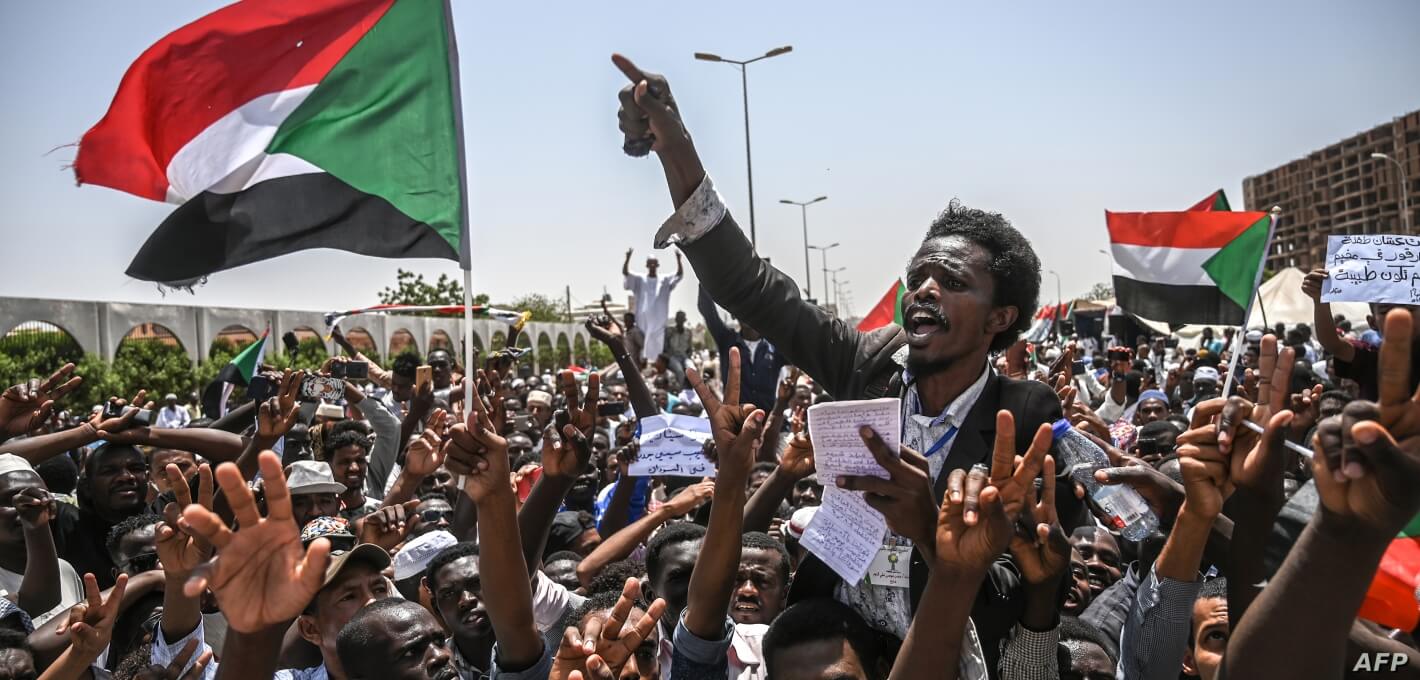
Sudanese protesters wave national flags as they chant slogans during a sit-in outside the army headquarters in the capital Khartoum, April 26, 2019. VOA.

Nicaragua

Nicaragua’s Congress passed a sweeping amnesty law backed by President Ortega that offers protection to police and military officers who took part in the government’s violent suppression of anti-government protests last year. Nicaraguan lawmakers said they were taking a stand for national unity, but the move has been rebuked by the United Nations’ top human rights official, Michelle Bachele. Those opposed to the law cite that it impedes the ability of domestic and international actors to determine who violated human rights; other opposition groups say that it offers impunity to violent state sponsored criminals. Another objection to the newly passed law is that it stipulates that political opposition members released cannot partake in new protests –– opposition members demur the law: “Free, but still imprisoned.”

North Korea

Tension and hostility continued to grow between the United States and North Korea this week. The United States, along with 25 other countries, is accusing North Korea of violating United Nations sanctions on the import of refined petroleum via illegal ship-to-ship transfers. A report submitted to the UN sanctions committee by the US calls for the immediate halt of these petroleum transfers and for stricter enforcement of sanctions against North Korea. Meanwhile, North Korean state media called for the United States to change its “hostile policy” towards the North on the eve of the one year anniversary of the US-North Korean Nuclear Summit. This announcement comes at the same time the Research Center for Nuclear Weapons Abolition at Nagasaki University in Japan released a report saying that the North has up to 30 nuclear warheads in a growing stockpile.

The human rights situation in the North has not improved since the Nuclear Summit. A South Korean based human rights watchdog, The Transitional Justice Working Group (TJWG), has identified over 300 purported execution sites across North Korea. After four years of research and interviews with over 600 North Korean defectors, the TJWG concluded that these public execution sites were used “as part of an arbitrary and aggressive use of the death penalty designed to intimidate its citizens.” Neither the North Korean or United States governments have responded to the report, although President Trump has recently cast doubt on the supposed execution of North Korea officials involved in nuclear talks with the US.

Myanmar

A revived free speech movement in Myanmar known as “Blue Shirts” have spoken out against the recent arrests of their activists. Myanmar’s military have shown little mercy on activists, many of which are facing charges for their connection to the protests. Civil society groups in Myanmar, such as Athan, Coexist Myanmar, and the Burmese-American Saddha: Buddhists for Peace have spoken in support of the activists and their right to freedom of speech. Activists say that 30 cases have been brought against people in Myanmar just between April and May. The group has also been active in their attempts to release two Reuters journalists reporting on the human rights violations committed against Rohingya Muslims .

This week, Bangladesh’s State Minister for Foreign Affairs M Shahriar Alam met with UN Secretary General Antonio Guterres to discuss ongoing human rights violations of Rohingya Muslims and Myanmar’s unwillingness in starting the repatriation. Bangladesh has taken over 1.2 million Rohingyas, forced to leave Myanmar after a brutal crackdown targeted the ethnic minority towards the middle of 2017. Myanmar was supposed to begin repatriation in January of 2018, only to be delayed to November 15, 2018, and still no significant progressions have been made.

United States

The United States Commerce Department announced Monday that the 2020 Census will have a question of citizenship. The question was part of a pledge made by the Trump administration in order to better enforce the Voting Rights Act, and has been opposed by most democratic lawmakers and a number of immigrant-rights groups. The State of California also filed a lawsuit against the Trump administration over the question, arguing that it violates the constitution. Critics say that asking for citizenship status is racially motivated and could deter non-citizens from filling out the census, leading to a population undercount. President Trump has defended the question, saying that it would be “ridiculous” not to ask it. Democrats have voted to hold the Trump administration officials in contempt for refusing to hand over the files with the motivation for the question.

Mexico

Mexico is rapidly fortifying its southern border with Guatemala under pressure from the United States. It was given a 45-day deadline to establish a high-security border infrastructure at the fairly porous border with Guatemala, a stretch of jungle, river and mountains. Although Mexico’s president Andres Manuel Lopez Obrador stated that the country’s migration policy will remain welcoming and progressive, the government sent 6000 troops to the southern border. The Trump administration threatens tariffs and designating Mexico as America’s enemy if the country does not meet the deadline imposed by the United States.

Maldives

India’s newly elected statesman, Prime Minister Narendra Modi, made his first diplomatic trip to the Maldives where he promised to build a new cricket stadium and train young Maldvian men in the sport. The trip and gift by Prime Minister Modi was more than just an altruistic token: sources find that India sees an opportunity to use its soft power to draw the strategic archipelago deeper into its political orbit, and away from India’s economic rival, China. The trip is one of many diplomatic trips Modi and other ranking Indian officials will be taking into the region to solidify the world’s biggest democracy’s hegemon in the region. India also announced that it will restart tri-lateral NSA-level talks with Sri Lanka and the Maldives.

Zimbabwe

In a continuing crackdown on civil society in Zimbabwe, the Zimbabwe National Army’s Military Intelligence (MI) unit placed several activists on its watchlist that it claims are planning to unseat President Emmerson Mnangagwa through violent activities. The MI unit claims that the people who were put on the list were being sponsored by and working closely with US nationals to unleash unrest across the nation. The activists have denied the allegations, saying the allegations fit into a larger crackdown on civil society after the government’s prosecution of seven human rights activists trained by CANVAS. This comes amidst fears that the deteriorating economy could plunge Zimbabwe into chaos and anarchy if the leaders of the major political parties fail to address societal issues without resorting to violence. A worrying report shows that the Mnangagwa government is preparing plans to crack down on any demonstrations. The report shows that steps taken in preparation include training police officers in paramilitary tactics and purchasing weapons and ammunition such as assault rifles and mortar bombs and grenades.

Laos

Following the dam collapse in the province of Attapeu in July 2018, the government has once again fallen behind on living allowance payments promised to survivors. Each survivor is entitled to $12 per month, as many have lost their property and family members as a result of the collapse. In November 2018, the government did not pay allowance for two months, and it seems they are back in a similar cycle.

Democratic Republic of the Congo

A border point between the DRC and Uganda is on high alert after a family infected with ebola was able to escape an isolation unit and cross into Uganda. Two of them died a few days after crossing the border. The spread to Uganda comes after months of trying to contain usually porous border crossings with rigorous health checks and isolation units. While there was a huge effort to keep the disease from spreading into Uganda, many are not surprised that it eventually did – though there are questions on how the family was able to get across the border with such heightened security. In order to contain the spread of the disease, the Ugandan government has suspended market days and urged people to stop shaking hands and hugging. Since the outbreak began in the DRC, nearly 2000 cases have been confirmed, with over 1300 confirmed deaths.

Colombia

Since the start of 2016, as Colombia began implementing its peace treaty with the leftist guerrilla group FARC, over 500 activists have been killed, including indigenous leaders, Afro-Colombian activists, and human rights campaigners. As the United Nations encourages the state to fully investigate the deaths of these human rights activists and campaigners, Bogota’s central Bolivar Plaza is becoming the site for a public display of art by artist Doris Salcedo and other community organizers as they etch the names of the dead using broken glass.  

Meanwhile, Jesus Santrich, a former FARC rebel, wanted in the United States for cocaine trafficking, has been sworn into office as a congressman, taking one of the 10 seats guaranteed for former rebels under the peace deal and evoking the anger of the detractors of the peace agreement.

Venezuela

World leaders are expected to meet in Stockholm, Sweden to discuss the ongoing conflict in Venezuela. Attendees of the meeting are expected to be Russia, some members of the EU, some members of the UN, and other countries. The United States was invited to the talks but decided against participating. Further, the Venezuelan government has put into circulation new banknotes that are aimed at lessening the economic burden on Venezuelans. However, people are skeptical, claiming that the banknotes make it more difficult to obtain change and will not alleviate the economic crisis.

On June 12, thirty-two Venezuelans went missing when their boat sank on its travel to Curacao, according to a politician. According to BBC, this is the third boat to capsize in recent weeks and is only a small fraction of the consequences of the severe economic crisis that has ravaged Venezuela and lead to an estimated four million leaving the country since 2015.

Philippines

President Duterte uses death squads to pursue his “War on Drugs,” but in an alarming development this week Duterte has turned the death squads on political activists. Vigilante death squads back by the government are killing farmers and protestors across the Philippines while the government is calling these protestors “armed communist rebels.” Duterte recently threatened to suspend the writ of habeas corpus for critics due to claims of a supposed communist plot to unseat his presidency. Activists are concerned that the President’s forces are indiscriminately using the death squads to go after his opponents.  

Thailand

Following election results in Thailand, opposition leader Thanathorn Juangroongruangkit revealed to DW that he will not give up hope in becoming prime minister. Thanathorn represented the Democratic Front, an anti-military coalition, after his initial Future Forward Party (FFP) came in third in March’s vote. Thanathorn still faces legal charges, which could ultimately ban him from participating in politics. Voters of the opposition were vocal on social media following the election results, with hashtags #RIPTHAILAND and #NotMyPM trending on Twitter.

Vietnam

Michael Nguyen, a United States citizen detained in Vietnam on charges of “attempting to overthrow the state” is expected to go on trial at the end of the month. If found guilty, he could face the death penalty. Nguyen, along with two other activists, was arrested last July while traveling. Since a change in leadership three years ago, Vietnam has been intensifying its crackdown on dissidents. According to Amnesty International, 128 prisoners, including lawyers, human rights defenders, and pro-democracy campaigners, are currently being held for similar crimes.

Iran

Iranian TV reported that Nizar Zakka, a permanent resident of the United States who had been arrested in 2015 on disputed spying charges, was released from prison on June 10. The act, coming at a time when American-Iranian tensions have come to a boil, seems to be an effort to repair relations between the two countries.

Reports arrived claiming that two tankers, one belonging to Norway and one to Japan, suffered explosions in the Gulf of Oman on June 13. By the afternoon, US Secretary of State Mike Pompeo claimed that Tehran was responsible for the attacks, further fueling tensions between the two countries. Late Thursday, the US Military released a video of what appears to show Iranian Naval forces removing an unexploded mine from one of the ships. The attacks came the same day that Japanese Prime Minister Shinzo Abe met with Iranian Supreme Leader Ayatollah Ali Khamenei in Tehran, ensuring the Iranians’ commitment to peace and de-escalation of tensions in the region. The attack raises questions about American-Iranian relations and the security of one-third of the world’s oil that passes through the waterway.

Sudan

After negotiations with an Ethiopian envoy in Sudan, opposition protestors agree to suspend civil disobedience in exchange for concessions from the military on Tuesday June 11. With little progress being made, more international actors step in. On Thursday June 13, the United States named Donald Booth as the special envoy to Sudan to ensure American aid in finding a peaceful solution between protestors and the Transitional Military Council (TMC). Boothis set to meet with envoys from Saudi Arabia, Egypt, and the United Arab Emirates.

In addition to the network shutdown, events in Sudan have begun to gain coverage on social media, particularly on Twitter and Instagram where users have changed their profile pictures to blue backgrounds to show solidarity with those who have died and those who continue to protest in Sudan.

In most recent news, Human Rights Watch published a statement urging an end to the network shutdown immediately. “If the Transitional Military Council genuinely intends to restore peace and maintain good will with civilian opposition leaders, it should reverse this dangerous shutdown, which puts even more lives at risk,” said the acting emergencies director at Human Rights Watch. Further, On June 14, the TMC claimed responsibility for the attack that left over 100 dead in the capital city of Khartoum over a week ago. The spokesperson for the TMC, Sams al-Din Kabashi, stated, “We ordered the commanders to come up with a plan to disperse this sit-in. They made a plan and implemented it … but we regret that some mistakes happened.”

Russia

Police authorities abruptly released investigative journalist Ivan Golunov after being arrested for drug possession in Moscow last week. Golunov denies the allegations, and opposition members argue it’s just the Kremlin suppressing free media. Before Golunov was released, thousands peacefully protested with the notoriously factitious opposition members rally around the “fabricated criminal case.” Over 500 of the marchers were detained for participating in an unauthorized rally,” including prominent Russian opposition leader Alexei Navalny and other known journalists.

Libya

Armed clashes over control of Tripoli resumed yesterday between the UN-recognized Libyan government (GNA) and its rival forces affiliated with Gen. Khalifa Haftar. Despite an offensive started in April by Haftar’s forces to take Tripoli from the UN-recognized government, the GNA has retained its grip on the capital city. The US has called for a political solution between the two governments, even as the GNA is optimistic that it has the full support of the US government and that the US government will pressure Saudi Arabia and Egypt to end their support for Haftar. The continued fighting comes as UN Secretary-General Antonio Guterres called for all countries to implement a UN arms embargo against Libya. The appeal was made before the UN Security Council approved a resolution that authorized the inspection of ships going to and from Libya in order to implement the embargo.

Eritrea

A social media campaign has begun in Eritrea to oust Isaias Afwerki and force change in the one-party state. The campaign was inspired by the neighboring state Sudan’s overthrow of longtime ruler Omar al-Basshir. The campaign, #Enough in Arabic, Tigrinya, and other Eritrean languages, has been modeled along the lines of the viral ice bucket challenge, and has been started mostly by young Eritreans living in Europe and the United States after being forced to leave their country. The campaign on Facebook and Twitter calls on people to share and nominate their friends, as well as celebrities, to speak out on violence and repression in the country. Activists in the country have also taken to distributing leaflets and flyers to spread the word, since only 1.3% of the population has access to the highly restricted internet. Thirty human rights organizations also authored a letter this week to the UN HUman Rights Council calling out the worsening human rights situation and urging the council to support the adoption of a resolution to “maintain a monitoring and repor­ting mandate on the human rights si­tu­ation in Eritrea”.

Mr. Isaias first took power in 1993, and there has not been an election since. The government has banned all opposition parties and private media, as well as arresting critics and enforcing a military draft, forcing tens of thousands of young people to flee into Europe. Many had hoped that a peace deal with neighboring Ethiopia would open up political space, but Isaias remains as authoritarian as ever.

Hong Kong

On June 10th, Agnes Chow, a prominent student activist from Hong Kong went to Tokyo to present the protestors’ case to Japanese media and politicians in a bet to get their backing, vowing to resist the extradition bill. In response to the extradition bill proposed by the pro-Beijing Chief Executive of Hong Kong, Carrie Lam, the United States declared that the bill puts Hong Kong’s special status under the 1992 Hong Kong Policy act in jeopardy. The act allows the semi-independent entity to be treated as distinct from China in trade and economic matters — if the United States abrogates the special status, Hong Kong would be struck by the ongoing tariff war between the US and China.

On June 12th, as Hong Kong’s lawmakers got ready to debate the bill, the legislative session was delayed due to the protests that shut down parts of the city. The police responded to the protests by using rubber bullets, pepper spray, tear gas and by employing violence, brutalizing the peaceful protesters, leaving 72 people injured. After the imprisonment of the leaders of the 2014 Umbrella Revolution, the mood in Hong Kong is much darker, as protesters don hard hats and refuse being photographed in fear of reprisals. The encrypted messaging application Telegram, used by the protesters was also a target of a major hacking campaign, most likely carried out by Beijing. As the final vote on the bill is scheduled for June 20th, the protesters are getting ready to continue their manifestations this weekend and next week.

Other News

Algeria – Algeria’s peaceful protest movement continues throughout this week, the grassroots movement known as “Hirak” among Algerians demanding a civilian-led transition to democracy. Algerian Army chief Ahmed Gaid Salah pushed out former Algerian President Abdelaziz Bouteflika about two months ago, and mass peaceful protests have persisted since. The military and protestors have yet to turn violent, one prominent sociologist of Algeria citing the reason for this among Algerian generals being, “because they are not sure their troops will be loyal to them.”

Moldova – After an inconclusive election in February, a coalition was formed between the pro-Russian Socialists and the pro-EU ACUM on June 8th, in a bet to unseat the Democratic Party, run by a prominent oligarch, Vlad Plahotniuc. The coalition was immediately challenged by Plahotniuc’s party, backed by the Constitutional Court, for missing a June 7th deadline. The court proceeded to unseat Socialist president Ivan Dodon, appointing former Democratic Party Prime Minister Pavel Filip as interim president, who called snap elections. The rival governments are vying for power, as the coalition Prime Minister Maia Sandu, with the support of Russia and European countries, tells civil servants to ignore the orders of the outgoing government.

Lebanon – Though Lebanon hosts over 1 million Syrian refugees, the country has remained firm on preventing the refugees from creating permanent settlements. Lebanese authorities have extended the deadline for refugees to deconstruct their settlements to July. The Lebanese policies continue to put strain on the refugees, many of which have been displaced for years now.

George Clooney: How Congress Can Help Stop the Killing in Sudan

[et_pb_section][et_pb_row][et_pb_column type=”4_4″][et_pb_text admin_label=”Text” background_layout=”light” text_orientation=”left” text_line_height=”2em” use_border_color=”off” border_color=”#ffffff” border_style=”solid”]

George Clooney and John Prendergast are Co-Founders of The Sentry (www.thesentry.org), which follows the dirty money connected to African war criminals and transnational war profiteers and seeks to shut those benefiting from violence out of the international financial system.

Traveling throughout the Sudanese region of Darfur and neighboring refugee camps during the mid-2000s, we saw firsthand evidence of the monster the Sudanese regime had built to carry out a genocide. The government organized, armed and deployed militias, known then as the “Janjaweed,” alongside the regular army as the primary instruments of its killing machine. Ethnic cleansing and mass rape were the Janjaweed’s weapons of choice.

Fast forward to the present: Massive peaceful protests that erupted throughout Sudan in mid-December led to the removal in April of Sudan’s 30-year dictator, Omar al-Bashir. In May, the protesters’ leadership and the military leaders who assumed power after the coup reached a tentative deal to establish civilian rule in the country, agreeing on a three-year transition to democratic elections and granting power to civilian-controlled institutions. Massive peaceful protests continued during and after the negotiations, as demonstrators kept pushing to dismantle the violent, undemocratic kleptocratic system built up during al-Bashir’s reign.

But there was one big problem with the deal. The big losers in such an arrangement would be al-Bashir’s allied generals, who had looted the country with impunity for 30 years, and the Janjaweed militias, who would no longer have free, lawless rein in their areas of deployment.

As a result, on June 3, Sudanese security forces spearheaded by the Janjaweed attacked a major protester encampment. Now known by the deceptively anodyne term “Rapid Support Forces,” the Janjaweed militias over the last few days have killed more than 100 unarmed protesters, dumping many bodies in the Nile River, as well as raping, whipping and robbing Sudanese civilians throughout Khartoum. Hundreds more are missing and feared dead. Janjaweed have raided several hospitals and assaulted medical staff. Internet and phone networks are blocked to limit communication. The regime’s military leaders cancelled the agreements it had reached with the protesters and instead called for quick elections that they will surely rig in their favor.

If this sounds like another hopeless African crisis, it isn’t. Sudan is a country that has unified Republicans and Democrats in Congress and successive administrations in Washington in defense of human rights and peace. Much more can be done now by the current Congress and the Trump administration—as well as allies in Europe and Africa—to create consequences for the leaders of the regime and the Janjaweed destroying and looting the country.

In 2016, the U.S. Congress passed an incredibly effective new tool to combat corruption and human rights abuses: the Global Magnitsky Act, which allows the U.S. government to sanction human rights offenders and corrupt officials worldwide. Now, the leadership of both the House and Senate foreign affairs committees can formally request the Trump administration to sanction a list of Sudanese regime officials and their commercial accomplices who are most responsible for ongoing violence and state looting, starting with Janjaweed leader Lieutenant General Mohamed Hamdan Dagalo, the vice chair of the current military regime. And instead of just sanctioning one or two officials individually, the Global Magnitsky authorities allow for the use of network sanctions, in which an entire network involved in human rights abuses and/or mass corruption can be sanctioned with much greater impact.

The Trump administration could build major leverage if it deployed available but unused policy tools. In addition to the Global Magnitsky network sanctions, the Treasury Department could issue an anti-money laundering advisory to thousands of banks around the world to be on the lookout for illicit financial flows that have come out of Sudan during the last year as the economy has imploded and the political crisis has escalated. Our own initiative, The Sentry, is gathering evidence on some of this illegal activity, but if the Treasury Department issued one of these advisories, as it has regarding Venezuela and Ukraine, it would suddenly enlist bank compliance officers globally in the search for stolen assets that are being laundered through the international financial system.

Freezing and seizing some of those assets—and blocking some of these officials from the international financial system—would be a major and unutilized point of leverage for peace and human rights. Diplomats file in and out of Khartoum, cajoling regime leaders into returning to the previous deal for a transition to civilian, democratic rule. But given the support the regime enjoys from Gulf states, Russia and China, it will take more than words to alter this deadly equation. By creating significant financial consequences for regime leaders and their commercial collaborators, diplomats from Africa, Europe and the United States will be able to to influence the cost-benefit calculus of Khartoum’s generals, who until now have looted and killed for three decades with total impunity. U.S. Assistant Secretary of State for African Affairs Tibor Nagy will be in Khartoum this week, and his diplomatic entreaties will fall on deaf ears if not backed by the unique power that U.S. Treasury Department actions can have over the kind of illicit financial activity that Sudan’s leaders have been engaged in for years.

This regime got away scot-free in committing genocide in Darfur and devastating the people of the now-independent South Sudan for decades. Al-Bashir might be out of power, but the same regime still rules, and the same Janjaweed militias are still committing atrocities. Today, the U.S. Congress and Executive Branch—along with the African Union and European Union—have a second chance to create serious consequences for serious crimes and to invest in high-level diplomacy to bring civilian rule to Sudan. There are plenty of reasons to do so. Resolving Sudan’s current crisis would prevent an escalation in the flow of refugees from Sudan, address the persecution of Christians and other religious minorities, counter the activity of extremist organizations supported by the al-Bashir regime—and prevent another round of mass atrocities in a country whose suffering has few parallels globally.

[/et_pb_text][/et_pb_column][/et_pb_row][/et_pb_section]

Weekly Report: 10 June 2019

Protesters hold placards as they stage protest against the extradition law in Hong Kong, Sunday, June 9, 2019. (AP Photo)


Gabon

President Ali Bongo made his first speech on Saturday following his return to Bongo two months ago. In his speech, he called on the country’s Prime Minister to form a new government after last month’s timber smuggling scandal. Bongo had previously fired both his vice president and forestry minister in regards to the scandal, saying that the new government must be “exemplary, honest, and ethical”.


Bolivia

As the October 2019 general election approaches in Bolivia, the opposition has explored potential failures on their part to avoid the re-election of current President Evo Morales. Valeria Silva, the legislator of the Movement Towards Socialism (MAS) was interviewed by La Razon newspaper in which she discussed the Inter-American Commission on Human Rights (IACHR) failure to address the political problems and potential for dictatorship in August 2018 while in Bolivia. Silva believes that the threat of dictatorship is the strongest argument the opposition can use against Morales running for another term.


Nicaragua

The Nicaragua government said Thursday it has released 50 prisoners detained in protests from jail to house arrest as an agreed-upon deadline to release all such prisoners approaches. The government says that the prisoners were being held for crimes against public peace and security. Other releases have been made, but the opposition group, Civic Alliance, pulled out of talks with the Nicaraguan government because not all prisoners had been released. The Nicaraguan state says that it will release all 142 prisoners, but Civic Alliance says the number behind bars could be higher.


North Korea

Kim Yong Chol, North Korea’s former top nuclear envoy who South Korean media had reported was executed last week, was seen Sunday night at an event with Kim Jong Un. The South Korean newspaper Chosun Ilbo reported last Friday that Kim Yong Chol and Kim Hyok Chol, a top North Korean diplomat, had been executed after February’s failed summit with the United States. The newspaper cited an anonymous source within North Korea, but both the North and South’s governments, as well as the US’ Special Representative to North Korea were unable to confirm the men’s deaths. When Kim Yong Chol was seen at an arts performance with Kim Jong Un, it became clear that neither man had been executed, though it is confirmed that Kim Hyok Chol remains in prison and still faces “heavy punishment”.


Myanmar

This week, the Organization of Islamic Conference (OIC) has officially called for human rights violations committed in Myanmar against Rohingya Muslims to be investigated and taken to the International Court of Justice. The Islamic Summit Conference was held in Makkah on Friday, May 31. Bangladesh Prime Minister Sheikh Hasina was the leader in asking the OIC to aid in the process. In a joint statement, the OIC pleaded with its ad hoc Ministerial Committee to launch a case with the International Court of Justice.

A leaked report from the ASEAN’s “Emergency Response and Assessment Team” (ASEAN-ERAT) predicted that half a million Rohingya refugees would return home in two years, an estimation that has left international observers both angry and shocked. Many believe that this estimation does not address the severity of the situation, which includes widespread murder, rape, and arson that has led UN investigators to consider charging Myanmar’s top generals with genocide. The report also approves of Myanmar’s efforts to ensure a “smooth and orderly” return. Amnesty International even responded to the report calling it “astonishing” that the report did not mention any of the atrocities committed by the military that were purely aimed at forcing Rohingya to leave, or the continued human rights violations continued in the Rakhine.


United States

President Trump capped off his state visit to the United Kingdom and Normandy, where he celebrated the 75th anniversary of the D-Day attacks. The countries statesman, President Macron, President Trump, and Prime Minister Theresa may all praised the lasting friendship between the United States, the U.K., and France. Other President Trump praised the countries “everlasting bond,” critics argue that Trump’s rhetoric against the European Union and support for Brexit. President Trump also stirred controversy when he described newlywed Duchess of Sussex Meghan Markle as “nasty.”

Domestically, President Trump was still made headlines. House Speaker Nancy Pelosi told Democrats pushing for an impeachment effort that rather than wanting to see President Donald Trump impeached, she wanted to see him “in prison,” Politico reported. According to the report, Pelosi made the remark at a meeting on Tuesday night as House Judiciary Chairman Jerry Nadler asked to be able to begin an impeachment inquiry. The House Speaker went further than just impeachment: “I don’t want to see him impeached,” Pelosi said, according to the report. “I want to see him in prison.”


Cambodia

European Union officials arrived in Cambodia on June 3 to review the Cambodian government’s human rights record with the potential to take away the country’s Everything but Arms trade privileges. In relation to the visit, human Rights Watch has urged Cambodian leaders to stop the harassment of former CNRP opposition party members and their supporters. In their report, they state that in 2019 alone, over 145 opposition party members have been arbitrarily arrested or summoned to court. Freedom of expression online has also been significantly diminished, with critics on social media facing prosecutions and a loss of certain online forums.


Mexico

This week, a senior Mexican delegation arrived in Washington to begin talks with the US following US President Donald Trump’s threatened tariffs on the country. Mexico’s foreign minister Marcelo Ebrard was joined at the White House by US Vice President Mike Pence and Secretary of State Mike Pompeo, but their discussions ended without a clear agreement. Ebrard stated to a news conference after the discussions that much of the meeting focused on migration flows affecting the United States, rather than the humanitarian concern of Central America. Donald Trump’s proposed tariffs would raise duties by 5% each month, reaching 25% by October. An eventual deal was made on Friday, June 7, with Mexico promising to crack down on illegal migration “giving a priority to its southern border” and the United States agreeing not to imposed punitive tariffs on Mexican goods.


Zimbabwe

The Zimbabwean government is expected to pass a law this week banning all future protests or strikes by workers. Since the disputed election in July of last year, the government has grown increasingly repressive with harsh crackdowns on dissent becoming more and more common. The Zimbabwe Republic Police has been avoiding protests and violence by meeting with groups and appealing to the public, though with the country’s dire economic situation only worsening, public backlash is likely to continue. Just last week, the government met with teachers unions to review salary increases due to inflation – with the goal of stopping a looming teachers’ strike. The country plans to combat rising inflation with the release of a new currency by the end of the year, President Emmerson Mnangagwa announced on Friday.


Colombia

Venezuela’s borders  with Colombia reopened for the first time in four months on Saturday, June 8, originally closed under Nicolas Maduro’s orders in retaliation of humanitarian aid entering the country. Tens of thousands of people crossed the border, many entering Colombia to buy basic necessities like food and medicine. On Friday, the UNHCR stated that 4 million Venezuelans have left the country, fleeing the political and economic crisis.

On May 29, a panel of judges ruled that a peace tribunal that was part of the 2016 peace deal with the FARC guerrillas will continue under the previously agreed-upon terms, despite Colombia’s President Ivan Duque requesting that the sentences of the rebels be harsher. Nearly all of the 6,804 FARC guerrillas who disarmed in 2016 must carry through with the regulations of the peace tribunal, swear to testify, and willingly be interviewed by Colombia’s truth commission. Those who the commission believe did not commit human rights violations will be able to rejoin society, while those who are believed to be guilty will be sentenced to jail or community service.


Venezuela

This week, the 12-nation Lima Group regional bloc and an EU-led contact group on Venezuela issued a joint statement calling on the international community to work harder for the restoration of democracy in Venezuela. The statement wrote that the crisis “requires the region and international community”, although it did not go further to elaborate specifically what the community should do.

Canada has temporarily shut down its embassy in Venezuela, a move confirmed by Global Affairs on Sunday, May 31. Canada will also be “evaluating the status” of Venezuelan diplomats to Canada that have been appointed by Nicolas Maduro.

40 former Venezuelan oil workers reached hour 74 of a hunger strike this week attempting to get back wages and compensations that they stated Venezuela’s government promised them over a decade ago. Hundreds of other former oil workers stood guard over those involved in the hunger strike, many of whom say they represent thousands of ExxonMobil workers who believe they are also owed years-worth of compensation and wages. According to some of the protestors, Nicolas Maduro met with the group three months ago but no progressions have been made.


Philippines

The Philippines Department of Foreign Affairs announced last week that they would reject a call made by the United Nations to investigate the “staggering number” of police killings and human rights violations from the country’s war on drugs. The DFA said that the call made on Friday by 11 UN Human Rights Council Special Rapporteurs was in bad faith and that a probe may “undermine domestic processes”. The palace and other state leaders have also come out against the UN’s request for a probe, saying that it is an “outrageous interference” by “foreign propagandists”. The Philippine Drug Enforcement Agency acknowledged in January the deaths of 5,281 “drug personalities”, though human rights groups say the actual number is between 20,000 – 30,000.


Thailand

Thailand’s pro-Democracy Party held a secret ballot in which sixty-one members voted in support of joining pro-government Paland Pracharath and voting for Prayut Chan-o-Cha as prime minister, while 16 voted against it (The Straits Times, 2019). The expansion of the coalition makes Prayut’s chance at the prime minister position more likely. Thailand’s election for prime minister took place on Wednesday, June 5th. However, it may be a while till we hear the results – the results from the contentious election on March 24th took a month to be released.

Arriving much quicker than the previous election, Prayut Chan-o-Cha was voted in to remain prime minister of Thailand. Prayut was the expected winner –– under his watch, the military appointed a majority of the upper parliament house senators. Prayut garnered 500 total votes with 250 coming from the Senate and 249 coming from the lower house. His opponent, Thanathorn Juangroongruangkit, a young billionaire representing the Future Forward Party, was able to take only 244 votes. The future of Thailand still seems uncertain.

Read more here.


Vietnam

Vietnam continues to use Facebook as a vehicle to crackdown on dissidents and opposition of the state. An environmental activist faces a trial for his Facebook posts, as part of Vietnam’s ongoing attack on freedom of expression, according to Human Rights Watch. The activist, Nguyen Ngoc Anh, is charged with “making, storing, disseminating, or propagandizing information, materials, and products that aim to oppose the State of the Socialist Republic of Vietnam” under article 117 of the 2015 penal code. Nguyen Ngoc Anh is scheduled to hear his case on June 6, 2019.


Image result for iran flag   Iran

On June 2nd, US Secretary of State Mike Pompeo stated that the Trump administration is ready to negotiate with Iran’s clerical government with “no preconditions”, a softening of the US’ previous position to talks with the country. This statement was followed by new economic sanctions on June 7th, targeting Iran’s biggest petrochemical group, Persian Gulf Petrochemical Industries Company (PGPIC). PGPIC and its subsidiaries hold 40% of Iran’s petrochemical production capacity and are responsible for 50% of Iran’s petrochemical exports. Abbas Mousavi, a spokesman for the Iranian Foreign Ministry, called the sanctions “economic terrorism”, claiming that it shows that the Trump administration’s offer for talks is “hollow”.

A German diplomatic source confirmed that Foreign Minister Heiko Maas landed in Tehran to meet his counterpart Mohammad Javad Zarif and Rouhani on Monday, June 10th, in an effort to salvage the Iranian Nuclear Deal. Maas announced that France, Germany and the United Kingdom have set up a payment system for trade that circumvents sanctions imposed by the United States. The system called Instex aims to get Iran to keep its commitment to cut back on its nuclear program, rather than mediating the tensions between the US and Iran. The position of a mediator was taken up by Qatar, as the country’s Foreign Minister said Doha had been in discussions with Washington and Tehran in a bid to de-escalate the tension.


Image result for sudan flag  Sudan

On June 5th, just several days after paramilitary troops in Khartoum broke up a two month sit-in and murdered over 120 people, Sudan’s military leader (also serving as the head of the Transitional Military Council (TMC)) General Abdel Fattah al-Burhan offered to reopen talks with the pro-democracy activists without preconditions. The pro-democracy group Force of Freedom and Change (FFC) refused this offer, joining other activist groups such as Sudanese Professionals Associations in urging supporters to continue the efforts of civil disobedience. This resulted in an indefinite general strike beginning on June 9th. Currently, with the general strike underway, the RSF has killed at least four people.

Khartoum is reported to be in the grip of Rapid Support Forces (RSF), led by Lt. General Mohamed Hamdam, who came into prominence as the leader of the Janjaweed militia that engaged in genocidal atrocities in the Darfur region of Sudan in the 2000s. The RSF was integrated into the Sudanese Armed Forces in 2013. Hamdam has integrated his Janjaweed forces into the RSF, which, with money, weapons and other immaterial support from Saudi Arabia and the United Arab Emirates, is terrorizing the Sudanese capital. The violence of the RSF and the Internet shutdown is disrupting activists’ actions.

Internationally, the response to the violence carried out by the TMC and RSF is mixed. While the African Union suspended Sudan immediately, urging the creation of a civilian-led transitional authority rather than military rule, the United Nations Security Council failed to get a consensus condemning the violence after Russia and China blocked the motion.


Libya – After the ousting of dictator Moamer Kadhafi in 2011, Fayez al-Sarraj became the prime minister of Libya in 2016 when he was selected to head the UN-backed Government of National Accord (GNA), the internationally-recognized interim government of Libya. Originally a supporter, the Libyan House of Representatives would withdraw its recognition of the GNA and with backing from the General National Congress (GNC), become the GNA’s primary opposition. The GNA is based in the Eastern city of Tobruk while the GNA, under al-Sarraj, is located in the country’s capital of Tripoli. Over the next couple of years, the GNA would struggle to gain legitimacy in Libya while the government in Tobruk has come under de facto control of Khalifa Haftar, a former Libyan military general who, after living in the US for 20 years in exile, returned to Libya in 2011 to fight in the revolution. Over the years, he has gained control of the Libyan National Army (LNA), many smaller militias, and large amounts of land in Southern and Western Libya.

On April 4, Haftar lead a March to Tripoli in an attempt to oust the UN-backed government of al-Sarraj. The military attack came only a month after Haftar and al-Sarraj reached an agreement in Abu Dhabi in hopes of putting an “end [to] the transitional stages in Libya through the holding of general elections,” according to UN Secretary-General Antonio Guterres. The conflict surrounding Tripoli has expanded over the past two months as the LNA under Haftar continues to clash with militia forces defending the capital. As of early June, at least 510 people have been killed and 75,000 displaced, according to the World Health Organization.

In the last week (June 3-June 9), attacks by the LNA have continued, specifically targeting the Tripoli airport. On June 7, the LNA attacked the military section of the airport, targeting a Turkish plane. Further, the problem pertaining to internally displaced people has grown dramatically. The international aid organization Doctors Without Borders (MSF) has released a statement calling for the nearly 6,000 refugees trapped in detention centers be transported to Europe. In the United States, the White House’s stance on the ongoing issue in Libya has become uncertain after by President Trump seemed to show support for General Haftar. Eight Democratic members of the Foreign Affairs Committee released a letter to the US Secretary of State, Mike Pompeo, on June 9. In the letter, the representatives called for clarification of the country’s position.


Hong Kong – This past Sunday, over one million protesters took to the streets in Hong Kong in opposition to a proposed bill that would allow suspected criminals to be extradited to mainland China for trial. Protesters worry that the bill would erode the legal autonomy of Hong Kong and that China would be able to target political opponents in the region. Organizers claim that the protest is the largest protest in Hong Kong since the 1997 handover of the territory to China by the British. Carrie Lam, the leader of Hong Kong, has said that she will not scrap the bill despite the protests and plans to push forward with the plan.   

Russia – Russia detained one of their most prominent opposition journalists last week, Ivan Golunov, on drug charges. Golunov is accused of having three grams of mephedrone or “ball salts,” but domestic and international opposition media members say the accusations are “absurd,” accusing the Russian government of suppressing.  freedom of the press. Golunov is Russia’s leading oppositional investigative reporter and the author of multiple hard hitting on government corruption and government-linked businesspeople. Friends and colleagues described Golunov as mild mannered and tame: “His only drug is curiosity,” wrote Leonid Bershidsky, a journalist and former colleague, on Twitter “but in Russia that’s against the law.”

Press release from CANVAS regarding latest developments On Illegal Crackdown of Zimbabwean Civil Society

“Nonviolence is a basic human right”

The Center for Applied Non-Violent Action and Strategies (CANVAS) firmly condemns the illegal arrest of seven (7) Zimbabwean civil society activists on their way home from attending a training workshop organized by CANVAS in the Maldives from May 15 to 19, 2019. All of them have been denied bail so far. Six are remanded in person. The seventh person has serious health issues – she is remanded in a public hospital and denied the right to seek treatment in her preferred private clinic. Their names are George Makoni, Nyasha Frank Mpahlo, Tatenda Mombeyarara, Gamuchirai Mukura, Farirai Gumbonzvanda, Stabile Dewa, and Rita Nyampinga. During the workshop, the State-controlled newspaper, The Herald, published an article that falsely accused participants of plotting to unleash violence in Zimbabwe in a bid to overthrow the Government.

CANVAS would like to inform Zimbabweans and the international community that the charges against these activists are blatantly false. The charges include: “subversion”, “counterintelligence”, and “being trained in use of small arms”. The activists could face up to twenty years in prison for these charges. The workshop focused on advocacy and civic engagement capacity building such as: Developing Shared Vision of Tomorrow; Civic Engagement; Effective Communications; Protecting Privacy and Security; and Organizational Planning.

For a decade and a half, CANVAS’ mission has been focused on the fact that nonviolence is morally and ethically superior to violence, and more likely to produce constructive outcomes and build strong and stable societies.

The arrests clearly violate provisions of the Zimbabwean Constitution on freedom of assembly and expression, and the African Charter on Human and People’s Rights. Basic universal principles of due process, the presumption of innocence until proven guilty, and conducting an unbiased investigation before arrest need to be upheld.

As long as the Government continues to violate the fundamental rights the constitution confers to Zimbabweans, it will not be seen by citizens and the international community as democratic or law abiding.

CANVAS calls on the Government of Zimbabwe to immediately and unconditionally release the seven (7) activists and follow the rule of law.

Participation in a workshop with a focus on peacebuilding and nonviolence should never be considered a crime, as the practice of nonviolence and peaceful assembly are fundamental human rights.

Weekly Report: 31 May 2019

Special counsel Robert Mueller speaks on May 29, 2019. (Photo: Jim Lo Scalzo/epa-EFE)

Cuba 

Cuba announced this week that it would legalize private Wi-Fi networks and allow foreign companies to import equipment like routers to the country. The move will expand connectivity across the island, where up until 2013, Wi-Fi could only be accessed at tourist hotels. The new rules will go into effect on July 29 and allow private businesses to provide customers with wifi. The many existing wifi networks built using smuggled equipment will now be legal and regulated, and the creation of new networks will be encouraged. While citizens will now be able to access the internet easier and legally, the state has not loosened their control of the internet, itself. The only internet provider on the island, state-owned Etecsa, will still be the only option for connectivity.

Bolivia 

Bolivia’s committee for the Defense of Democracy and other large opposition groups claim to declare a “state of emergency” after President Evo Morales and Vice President Alvaro Garcia Linera announced their unconditional bid for a fourth term last week. Opposition leaders met Friday in Santa Cruz, Bolivia to demand the resignation of the Supreme Electoral Tribunal after the members sided with the nation’s Constitutional court to allow Morales to seek a fourth term. The opposition parties have also called for all party leaders to step down by May 31st. Opposition leaders argue if successful in his reelection, Morales will become a dictator for life and will set a dangerous precedent for leaders worldwide.

Despite Morales’ power grab, opposition leaders, including former President Carlos Mesa, failed to commit to any alliances with other opposition leaders against Morales. Mesa was met with protesters shouting “Are you with Bolivia? Are you with democracy?” after leaving the meeting on Friday. While opposition parties did not reach a consensus, President Morales solidified support for his reelection after Luis Almagro, Secretary General of the Organization of American States (OAS) recently gave approval to Morales’ reelection bid. The Trump Administration and other Latin American countries have largely remained silent after Morales launched his campaign for a fourth presidential term despite constitutional restraints limiting.

Nicaragua

The Organization of American States passed a resolution on Wednesday calling for Nicaragua to take several steps in order to reach a peaceful solution to the political crisis which has been ongoing since April last year. The resolution specifically calls on the government to ensure freedom of expression and press, allow peaceful protests, bring back the Special Monitoring Mechanism for Nicaragua, and unconditionally release all political prisoners by June 18. Along with these requests, the OAS also asked that the arbitrary detentions stop, and that refugees who were forced to leave be allowed to return safely, without reprisals. The decision to pass the resolution was split, with 20 countries supporting the measure, 10 countries abstaining from voting, and 3 voting against it.

Also this week, the Civic Alliance for Justice and Democracy moved to suspend all negotiations with President Ortega’s regime after the murder of political prisoner and American citizen, Eddy Montes, in jail. The decision gives the Alliance opposition group room to find a new path of political pressure, calling for a revitalized nationwide strike to follow last week’s 24 hour strike. The group continues to call for the freedom of all political prisoners, different from Ortega’s strategy of releasing prisoners without actually liberating them.

North Korea 

Thae Yong-ho, former North Korean deputy ambassador to the UK who defected in 2016, has called on European tourists and travel companies to boycott cultural displays that appeal to first-time visitors. He called many of the displays “child exploitation”, and accused the country of encouraging brainwashing and forced labour on young children. This is not the first time the official has engaged in such accusations, as he spoke to the Oslo Freedom Forum in Norway condemning the gymnastic displays and their tendency to both take children away from school and excuse malnutrition and forced exercise.  

On Monday, US President Donald Trump told reporters that he did not think the recent North Korean missile test violated UN resolutions. He was quoted saying, “My people think it could have been a violation. I view it differently”, and he referred to Kim Jong Un as a man “who wants to get attention”. The missile test was North Korea’s first since 2017 and is an indication of the frustration the leader feels in the months following the February Vietnam summit held between Kim Jong-Un and Donald Trump. US Secretary of Defense, Patrick Shanahan, contradicted Trump’s statements by stating on Wednesday that the tests were a violation of UN resolutions. He added that the Department of Defense’s job is to both enforce sanctions and, “be ready in the situation that diplomacy fails”.

A recent UN human rights report released on North Korea highlighting the severity of the food shortage in the country. The World Food Programme estimates that 10.1 million people in the country are suffering from food shortages. Michelle Bachelet, UN High Commissioner for Human Rights, stated her concern that the nuclear issues in North Korea are detracting the international community from the significant violations of human rights occurring in the country.

Myanmar 

Myanmar has granted early release to seven soldiers jailed for the killing of 10 Muslim Rohingya men and boys during a 2017 military crackdown in the western state of Rakhine. The seven soldiers were the only security personnel the military has said it has punished over the 2017 operation in Rakhine, which drove more than 730,000 Rohingya Muslims to flee to Bangladesh. The soldiers were freed in November of last year, serving less than a tenth of their 10-year prison sentence, which is less time served than the two Reuters reporters who uncovered the killings, Wa Lone and Kyaw Soe Oo. Prison officials declined to provide further details about the release, which was not disclosed publicly.

In other Myanmar military news, an Amnesty International Report released Wednesday says that the Myanmar military is again committing war crimes. In the report, the organization claims “indiscriminate” attacks against civilians began on Jan. 4, after the Arakan Army, an ethnic Rakhine armed group, launched a series of coordinated attacks on police posts that left 13 officers dead.

A court in Myanmar has issued an arrest warrant against Wirathu, a notorious Buddhist monk know for hate-speeches against the Rohingya and other minority Muslims have stoked religious tensions. Officials did not state why the arrest warrant was issued, but the Monk’s recent speeches derailing the government in which he attacked Myanmar’s Aung San Suu Kyi are suspected. Wirathu has not been arrested as of Friday, May 31st.

United States 

Robert Mueller spoke publicly on Wednesday about the findings of his two-year investigation into Russia’s interference in the 2016 presidential election. In his statement, Mueller made it clear that President Trump had not been exonerated of obstruction of justice, and that the president’s conduct had warranted a criminal investigation. He also alluded to the possibility of impeachment, saying that it was not possible to indict a sitting president, but that the “Constitution provides for another remedy to formally accuse a president of wrongdoing”. When Attorney General WIlliam Barr discussed the findings in April, he was much more lenient, saying that Mr. Trump was not guilty of “obstructive conduct,” and his attempts to stop the investigation were out of frustration rather than criminal intent. In response to Mr. Mueller’s statement, three more democratic senators joined fellow presidential hopefuls in calling for impeachment. Despite the growing support for impeachment proceedings, House Majority Leader Nancy Pelosi has continued to avoid the issue, saying it would be counter-productive. Mr. Trump addressed Mueller’s statement on Twitter, posting “How do you impeach a Republican president for a crime that was committed by the Democrats? WITCH-HUNT!”

President Trump also announced on Thursday that beginning on June 10, all goods coming from Mexico into the United States would be taxed an additional 5 percent. This tariff would apparently increase over time if the inflow of undocumented immigrants did not stop. In a presidential statement after the initial announcement, Trump stated that the tariff would increase to 10% by July 1, and an additional 5% per month “if the crisis persists”. After three months, the tariff would stay at 25% until Mexico acted. The tariff on all Mexican goods is likely to take a toll on American consumers and businesses, and also compromise Trump’s plans for revising NAFTA.

Cambodia 

International observers are beginning to notice a pattern of abuse and harassment of political opponents of Cambodian Prime Minister Hun Sen. It seems the recent EU threat to withdraw its trade agreement with Cambodia due to human rights violations in the country has only worsened treatment of opposition supporters, as Hun Sen threatened a crackdown on the opposition if Europe did not reconsider their threat. While the CNRP has been disbanded at the national level, their influence and history remains strong, which has forced many former party members and supporters to go into hiding. Since March, at least three people have been assaulted in Cambodia, all of which could be described as being politically motivated.

This week, the National Union Alliance Chamber of Cambodia (NACC), a trade union that represents around 400,000 Cambodian workers, wrote an open plea to the EU trying to dissuade them from revoking Cambodia’s tariff-free access to the EU. NACC wrote, “We are most concerned about the prospect of losing our hard-earned livelihood”. The EU’s threat came from ongoing concerns of human rights violations as well as political repression under Prime Minister Hun Sen.

Chhun Dymey, a hip-hop artist in Cambodia that goes by Dymey-Cambo, was forced to delete his song after opposition leader Sam Rainsy shared the song on Facebook. The song discussed economic inequality, police brutality, and corruption within the government.

Mexico 

Mexico asked the United States to fund 7 projects aimed at promoting economic well-being and opportunities in Central America to mitigate the northward flow of migrants. Mexico’s Foreign Secretary Marcelo Ebrard met with the United States’ Deputy Secretary of Defense John Sullivan to discuss the Northern Triangle of Honduras, Guatemala and El Salvador. Secretary Ebrard also meet with officials to urge the United States “to commit to the development of Guatemala, Honduras and El Salvador.” Two of the economic development plans presented were investments in natural gas and electricity grids, and a $1-billion plan for schools. Secretary Ebrard also hoped that the United States would commit additional funds to development funding in Southern Mexico and Central America after the US committed 10.6 billion in December.  

Later this week, President Donald Trump threatened on Thursday to add a 5% tariff on all Mexican imports going into effect on June 10th. The administration stated that the tariffs should be added pressure for Mexico to more faithfully deal with the surge of Central American migrants heading towards the US. The tariff threat jeopardizes both Secretary Ebrard’s diplomatic talks in the US and the newly passed USMCA deal. Mexico has vehemently attacked the recent tariffs.

While Secretary Ebrard was busy with immigration talks in the the US, so too were other ranking Mexican officials. Minister of the Environment, Josefa González-Blanco, and Germán Martínez Cázares, head of the Mexican Social Security Institute resigned last week. González-Blanco resigned after facing backlash for delaying a commercial flight and Cázares did so because of funding cuts.

Maldives 

India announced this week that they will appoint financial experts in the Maldives to work on matters of money laundering and financial crime. The officers will initially be located in the country for a year working with local government, law enforcement, and agencies. Together, they will work to stop the prevalence of financial crime and assist in investigations, as well as suggesting methods to receive further assistance from Interpol, the FBI, and more.

Zimbabwe 

Zimbabwe’s main opposition group, The Movement for Democratic Change (MDC), elected unopposed new leadership hoping to boost a party plagued by infighting since the death of revered founder, Morgan Tsvangirai. The MDC elected Nelson Chamisa as its next president, who took the party helm after becoming its champion in the first presidential elections since the authoritarian Robert Mugabe was ousted.

This week, a message was circulated on social media calling for a National Shutdown on Thursday, May 30 in Zimbabwe. The message urged Zimbabweans to stay indoors on Thursday, saying that if they were outdoors they would be considered “enemies of the struggle”. In the message, the group stated that they “are not afraid of the army”, and that “blood will be shed”. The Zimbabwean police force responded by telling people to disregard the message, and to disengage from any form of violent protest.  

Democratic Republic of the Congo 

The Democratic Republic of Congo is seeing its ebola crisis worsen as the virus continues to spread. Health workers are not only facing difficulties containing the deadly virus, but are finding themselves under attack as more than 30 armed militia groups vie for control of the region. Treatment centers and health workers have been repeatedly targeted, hampering efforts to contain the virus. The virus is not the only thing spreading either: misinformation regarding health workers and the virus is impeding the DRC and health worker’s ability to curb the virus that has already killed over 500 people.

Politically, the DRC’s prominent business leader and one time presidential candidate, Moise Katumbi, returned to the CDR after three years of exile. Katumbi was barred from running in the last December election; however, Katumbi seeks to run again and unite opposition leaders. He was met by thousands of supporters when he arrived at the airport last week.

Colombia 

Colombian officials announced Thursday that the aid sent to Venezuela by the United States in February would be distributed in Colombia instead. Venezuelan president Maduro repeatedly blocked foreign aid from entering, leaving the envoys sitting unused at the Colombian border for months. The decision was reached with Colombian and US officials, as well as representatives of Juan Guaido. The national disaster agency released a statement saying that the aid would be distributed among some of the 1.2 million Venezuelans who have fled into Colombia since the crisis began. The aid will also benefit some Colombians living in poverty.

Venezuela 

This week, Venezuela was at the forefront of international discussion as Norway hosted potential negotiation talks between Nicolas Maduro and opposition leader Juan Guaido in the hopes of ending the political and economic crisis. Juan Guaido’s office announced late this week that talks ended “without agreement”. Despite this, his office stated their willingness to continue discussions, with evidence of notable progress being made. Representatives of Guaido stated that during their meeting their provided a “road map” for ending Maduro’s presidency, and installing a transitional government before holding free elections. Following announcements of the failed negotiations, Guaido stated that street protests will continue. Ine Eriksen Soreide, Norwegian Foreign Affairs Minister, remained hopeful about continued talks, stating that “the parties have demonstrated their willingness to move forward in the search for an agreed-upon and constitutional solution for the country”.

In the midst of negotiations in Oslo, the United States remained steadfast in their stance that the only thing that should be actively discussed is the end of Maduro’s leadership. Morgan Ortagus, US State Department spokesperson, told reporters, “As we have repeatedly stated, the United States believes the only thing to negotiate with Nicolas Maduro is the conditions of his departure”.

Malaysia 

Malaysia has ordered several thousand tonnes of imported plastic waste to be sent back to the countries it came from. The country’s government says it has become a dumping ground for wealthier nations and that much of the refuse was imported illegally. It is estimated that the country will return approximately 450 tonnes in a refusal to become a dumping ground by wealthy countries waste. A recent Greenpeace report found that US import to Malaysia doubled since 2018 to Malaysia.

Philippines 

After a 6 year long dispute with Canada over 1,500 tons of garbage illegally dumped in the Philippines, the trash is finally being sent back to Vancouver. The waste will arrive by the end of June, and Canada is paying for all shipment costs, moving quickly in recent weeks to solve the issue after years of avoiding it. On Thursday, Philippine environmental groups urged the Duterte administration to ban all imports of waste and ratify the Basel Ban Amendment, which bans the import of waste, including recycling, for any reason. Other Southeast Asian countries have followed suit in moving to no longer accept garbage from Western countries, with Malaysia announcing this week that they would ship back 450 tons of garbage to its sources.

Thailand 

Thanathorn Juangroongruangkit, leader of Thailand’s Future Forward Party (FFP), was ordered out of office just minutes after being sworn in on Saturday. Thailand’s Election Commission has accused Juangroongruangkit of violating electoral law by holding shares in a media company. His parliamentary duties are currently suspended as the Constitution Court investigates allegations further. This is not the leader’s only investigation, as Juangroongruangkit is waiting for a decision expected on June 28 on his potential indictment for computer crimes after the release of a Facebook post in which he criticized the ruling military government during a speech.

This week, the Human Rights Watch has called on Thailand to investigate the increased number of attacks of pro-democracy activists. Brad Adams, HRW’s Asia Director, stated his concern that the junta is involved in the violence due to their failure to arrest attackers. Anurak Jeantawanich, a prominent critic of the Thai military government, has been attacked on several occasions, most recently on May 25 as six unidentified men attacked Jeantawanich near his home.

Vietnam

A Vietnamese law that came into effect this January is revealing its political consequences for local dissidents. The new law requires online data companies to set up local offices and store data in the country. Data analysts worry that the law enables for the Vietnamese government to have greater oversight on online political discourse . A Facebook report released last Friday, the tech giant said they increased online content restriction by 500% in 2018 as Vietnam seeks to crack down on online dissent. Another report from Amnesty International finds that nearly 10% of Vietnamese political prisoners were jailed for posting anti-state comments on social media platforms like Facebook.

An outbreak of African swine fever culled a further 500,000 pigs over the past two weeks to tackle an outbreak of African swine fever taking the total to 1.7 million pigs.

 Iran

This week, the United States stated that they have evidence linking Iran to attacks that took place earlier this month on oil tankers off the coast of the United Arab Emirates. US Security Adviser John Bolton has stated their desire to present evidence to the United Nations Security Council as early as next week.

An emergency Arab summit was held on Thursday of this week, where Saudi Arabai’s king stated that decisive action was necessary to effectively end Iranian “escalations” in the region, following attacks on oil assets in the Gulf. At this Arab Summit, Saudi Arabia stated that they were joining the United States and Israel to mobilize regional opinion against Tehran, a statement that Iran calls “baseless”.

Earlier this week, Donald Trump stated that he will support Japanese Prime Minister, Shinzo Abe’s efforts to act as a mediator between the United States and Iran. Reports suggest that the Japanese Prime Minister will be traveling to Tehran next month to meet with Iranian President Hassan Rouhani.

Other News 

EU: Last week, voters in 28 European countries went to the polls to elect their European Parliament representatives in the world’s largest multi-country vote. The results yield mixed results for the future state of the EU as parties on the Left and Right saw wins and losses across the board. (Politico)

Brazil: In over 350 cities across Brazil, thousands took to the street to support President Bolsonaro and to further push for his reform agenda. These pro-Bolsonaro movements hope to act as a catalyst of support as in recent weeks, Bolsonaro has faced massive street protests against his education budgets freezes and cuts, a sharp decline in approval ratings, and rising opposition in Congress.

South Africa: South African President Cyril Ramaphosa has announced a new cabinet this week, in which 50 percent of all ministers are women. This is the first gender-balanced cabinet in the country’s history, and many journalists have admitted their surprise at the announcement. Ramaphosa also included a significant number of young people as well as an opposition party leader. Ministers will be sworn into office later this week. (BBC)

Israel: Although Prime Minister Benjamin Netanyahu won another term, after what seemed like a clear victory for in the April 9th elections, the long-time Israeli leader, failed to bring together a coalition government from the parties elected to parliament on April 9th for the first time in Israel’s history. Israel will hold a snap election in the late summer to elect leaders, Netanyahu is confident his Lukid party will maintain power and will be able to form a new government. .

Mike Pompeo Is Needed in Sudan

[et_pb_section transparent_background=”off” allow_player_pause=”off” inner_shadow=”off” parallax=”off” parallax_method=”off” padding_mobile=”off” make_fullwidth=”off” use_custom_width=”off” width_unit=”on” make_equal=”off” use_custom_gutter=”off”][et_pb_row][et_pb_column type=”4_4″][et_pb_text admin_label=”Text” background_layout=”light” text_orientation=”left” text_line_height=”2em” use_border_color=”off” border_color=”#ffffff” border_style=”solid”]

They deserve more U.S. support; Photographer: ASHRAF SHAZLY/AFP

[/et_pb_text][et_pb_text admin_label=”Text” background_layout=”light” text_orientation=”left” text_line_height=”2em” use_border_color=”off” border_color=”#ffffff” border_style=”solid”]

[/et_pb_text][/et_pb_column][/et_pb_row][/et_pb_section]