Weekly Report: 12 January 2018

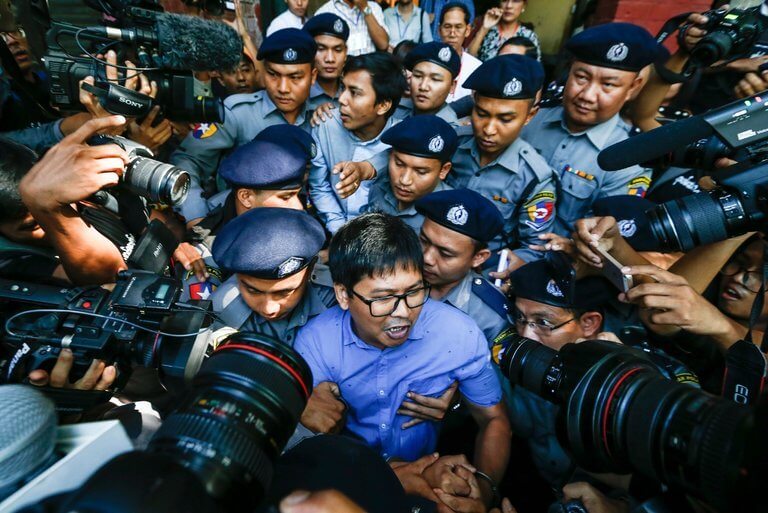
Photo: “The Reuters journalists U Wa Lone, center front, and U Kyaw Soe Oo, center back, were escorted by the police in Yangon, Myanmar, on Wednesday, after being charged with obtaining state secrets.” (Lynn Bo Bo/European Pressphoto Agency, via NY Times)
Democratic Republic Congo

After violent acts by security forces in the context of recent demonstrations, the UN human rights office called on DRC not to use force against protests, reported the UN News Centre late last week. Liz Throssell, spokesperson for the Office of the UN High Commissioner for Human Rights, also underlined “that ‘necessity, proportionality, non-discrimination and accountability are key principles that underpin the use of force for the management of peaceful assemblies,’” and pointed out the importance of ensuring the exercise of freedom of association, peaceful assembly, opinion and expression. According to her, “credible and independent investigations” should also be conducted in cases of alleged use of excessive force and human rights violators “should be brought to justice.” The DRC authorities should further hold “constructive dialogue with the opposition”. Furthermore, the UN is to investigate into the attack leading to the death of 15 peacekeepers in DRC in December, the bloodiest attack in DRC’s UN Mission (MONUSCO) since 1999 so far. Investigators are also set to examine other assaults on UN personnel in the area, and to subsequently make recommendations on the prevention of such incidents in the future, reported Al Jazeera.

From Monday to Wednesday, two days of national mourning for recent deaths caused by flooding and mudslides in the capital Kinshasa were held in DRC. According to an Agence France Press article on News24, this comes in the context of a concern of a recent cholera outbreak as it bares higher risk for contamination. As CANVAS has been reporting the past months, DRC is already facing a humanitarian crisis, particularly in the Kasai region, which the UN has compared to those of Syria and Yemen. Michael Arunga from Christian Aid now published an article on ReliefWeb, highlighting the necessity of humanitarian assistance, but also especially of peace initiatives. According to Arunga “Without peace, there can be no end to this humanitarian crisis.”

UN News Centre
Al Jazeera
Michael Arunga/Christian Aid/ReliefWeb
Cambodia

As Chinese state news agency Xinhua reported, Chinese Premier Li Keqiang paid an official visit to Cambodia on January 10 and 11 in the context of the sixth Lancang-Mekong Cooperation Leaders’ Meeting. China pledged more financial support for the cooperation framework between the countries of the Lancang-Mekong river, including Cambodia, all maintaining large trade relations with China. Li Keqiang also met Cambodian Prime Minister Hun Sen, underlining their relation as “neighbors with profound friendship”. The two countries agreed on a “deepening bilateral comprehensive strategic cooperative partnership” and signed 19 bilateral documents in various areas, including those of politics, economy and culture.

Internally, Cambodia witnessed the 39th anniversary of the fall of the Khmer Rouge regime responsible for the Cambodian genocide between 1975 and 1979 leading to the death of about 1.7 million Cambodians. Tens of thousands, more than in the past years, attended a rally led by Hun Sen on Sunday. According to Agence France Press, the Prime Minister used this event to “burnish his reputation as saviour of the nation” at a time of firm control over Cambodia. The Khmer Times reported that Hun Sen further highlighted his “government’s success in preventing a colour revolution”, accusing the opposition of having “attempted to collude with a foreign power to overthrow the government.”

The National Police announced the need to collect financial information of 118 senior members of the resolved main opposition party, reported the Phnom Penh Post on Tuesday. Another official stated asset seizures as a possibility in the case of continuance of the “purported ‘colour revolution’ overseas”. According to The Post, a political observer stated there was no reason for such inquiry “reserved for serious crimes.” Also this week, a woman was sentenced to one year in prison for posting a Facebook video accusing Prime Minister Hun Sen of ordering the murder of government critic Kem Ley last year, wrote Radio Free Asia. While a former soldier was sentenced for the murder, government involvement in the incident is still widely suspected. Also on Tuesday, the Khmer Times reported on a new media pass being introduced by the end of January. According to the Information Ministry, it will be used to “easily manage and collect data from journalists.” It will only be valid for one year, opposing to the former three years, and “[if] there is a report that a pass holder behaves contrary to the profession, we will take action accordingly,” said an Information Ministry official.

Xinhua (Cambodia-China cooperation)
Agence France Press / South China Morning Post
Phnom Penh Post
Myanmar

On Wednesday, the two Reuters journalists who had been arrested on December 12, have been officially charged at a Yangon court with “obtaining state secrets”, wrote NY Times. They are accused of violating the colonial era Official Secrets Act with a maximum punishment of 14 years in prison. The two had been invited to meet with police officials, were handed unidentified documents and subsequently detained by the police. Reuters President and Editor in Chief, Stephen Adler, “called the move to prosecute the reporters ‘a wholly unwarranted, blatant attack on press freedom,’” being one of the voices condemning the decision. Lately, journalists have not been able to conduct their work in Rakhine state and many journalists reporting on abuses have been imprisoned. The next hearing of the two Reuters journalists is set for January 23.

The two had been investigating about a mass grave which was found outside Inn Din village. In this context also on Wednesday, the Myanmar military officially admitted killing ten Rohingya who had been found in the grave. “The army’s unprecedented acknowledgement came after months of denial of any wrongdoing towards the persecuted Rohingya minority”, wrote Al Jazeera. Officials explained that armed “‘Bengali terrorists’” attacked soldiers in September and ten of them were first detained, but later killed as “’it was found that there were no conditions to transfer’” them. Amnesty International’s regional director, James Gomez, called this account “an ‘appalling’ attempt to ‘justify extrajudicial executions.’”

Meanwhile, a militant group saying to fight for Rohingya rights has admitted responsibility for an attack on a military truck in Rakhine State last Friday. BBC reported that in 2017, “an armed Rohingya insurgency has grown” and the assaults launched in August were what triggered the fierce military response. VOA also reported of new fighting between the military and other ethnic armed groups, especially over the past months in the country’s north. This seems particularly significant in light of the upcoming third Peace Conference next month. Most observers are not confident that “any significant progress will be made in the months ahead.” Before Auung San Suu Kyi’s National League for Democracy took power in January 2016, Myanmar’s current civilian leader had vowed to make the peace process the top priority on her agenda. To do so, she would be seeking to advance the Nationwide Ceasefire Agreement from November 2015 which had been signed by eight ethnic armed groups – excluding some bigger groups from the north.

NY Times
Al Jazeera
BBC
VOA
Poland

In the context of ongoing tensions between Poland and the EU, Prime Minister Morawiecki said this week “he could convince Brussels that Poland was forming its first independent judiciary since the post-war communist era” with ‘dialogue’, wrote BBC. Tuesday, the Prime Minister replaced the positions of Defense Minister as well as Foreign Minister in a current, major cabinet reshuffle seeking to “mend ties with the country’s EU partners”. According to BBC, Morawiecki said Poland does not “want to be a dogmatic, doctrinaire or extremist government”, after a meeting with the EU Commission’s President Jean-Claude Juncker and Vice-President Frans Timmermans.

Meanwhile as The Times reported, European Council President Donald Tusk said he had no doubt that the Polish government might intend to get out of the European Union. The Independent as well as The Guardian published pieces this week, warning of Europe’s “illiberal alliance” of Poland and Hungary who are slowly turning away from European Union norms, “prefer[ing] ‘conservative nationalist’ states to democracy”.

Inside Poland, the Parliament passed a reform bill early Thursday, aiming at the country’s election process, now leaving it for decision to President Andrzej Duda, after the Senate had already supported the bill in December. The changes it would introduce might seem insignificant first, but changes included the selection process of officials for Poland’s National Election Commission and its National Election Bureau. As a result, the ruling party might be able to bring control over elections and “further weaken democratic checks and balances”, wrote the Washington Post. Furthermore, the Polish Parliament debated two draft laws regarding abortion, one seeking to liberalize the law and the other aiming to ban abortion in cases when the foetus is deformed, wrote Euractiv.com and AFP. This brings the topic back on the agenda more than a year after tens of thousands, especially women, went to the streets of Poland to stop a further tightening of the already restrictive law. Besides, Poland’s National Broadcasting Council lifted a controversial fine which the Scripps Networks Interactive station TVN had been set to pay in December. The body’s regulator announced the decision after hearing other positions, analyses and arguments. The council further stated to create a Media Round Table, wrote Broadband TV News on Thursday.

BBC
Washington Post
Euractiv.com
Broadband TV News
The Maldives

On Monday, the Maldives opposition alliance started discussions to find a single candidate for the 2018 presidential elections in which each party voiced their terms for such a candidate, reported Avas. Main opposition leaders include former presidents Maumoon Abdul Gayoom and Mohamed Nasheed, as well as Gasim Ibrahim from the Jumhoory Party and Sheikh Imran Abdulla from the religiously conservative Adhaalath Party. According to Avas, Chair of the meeting and main opposition Maldivian Democratic Party leader Ibrahim Mohamed Solih was confident about the ‘reform alliance’ being able to succeed in their undertaking. On Thursday, Member of Parliament Qasim Ibrahim expressed certainty that whichever opposition single candidate would be get chosen, he or she would be able to win “at least ‘eighty percent’ of all votes”, reported Raajje. He also urged the government to “release political prisoners and encouraged his supporters to remain ‘steadfast and true to their principals.’” Last year, the MP himself had been sentenced to a jail term for bribery allegations as the third of four opposition leaders to receive a jail sentence.

Meanwhile, Avas reported on the Maldivian government seeking to amend the penal code to add specifications concerning corruption and embezzlement which it does not contain so far. Attorney General Mohamed Anil disclosed on Wednesday, that the government now looks to make two major amendments including some recommendations made by the Maldivian Anti-Corruption Commission. This comes after the current penal code was only adopted in 2015 after a decade in the making, replacing the former 1968 code.

After growing influence of China in the Maldives, the latter now forged a new agreement with another East Asian country. During the first visit of a Japanese Foreign Minister to the island state, the two countries agreed to cooperate closely within Japan’s Indo-Pacific strategy. The latter seeks to establish cooperation with countries of similar values “to contribute to stability” in an area reaching from East Asia to Africa, and it “is being promoted as China strengthens ties with Indian Ocean countries”, wrote the Japan Times. At the same time, while an EU election follow-up mission already came to the Maldives last Saturday, a senior EU delegation is expected to arrive for their visit tomorrow.

Avas (Opposition alliance)
Avas (Corruption amendment)
Raajje
Japan Times
Syria

Over the course of the week, the Syrian government has stepped up its offensive against key rebel-held areas in northern Syria. According to CNN, President Bashar al-Assad has resumed airstrikes on rebel-held areas in places like Idlib province, where medical organizations say several hospitals and medical facilities have been hit over the past two weeks. The renewed military attacks have also caused several thousands to flee their makeshift homes. Officials stated that around half of the civilian population of 2 million people in Idlib province have already been living in “extremely dire” circumstances before being forced to flee again in the current winter cold. Meanwhile, rebels launched a counter attack against the Syrian government forces and their allies on Thursday, seeking to roll back an advance that is fuelling tension with neighboring Turkey.

In that same week, the Turkish authorities have made it clear they will continue operation Euphrates Shield, in Syria’s Afrin and Manbij regions, bordering with Turkey, which was launched in 2016. President Recep Tayyip Erdogan said this on Tuesday during a parliamentary address to his ruling AK Party. Ankara is working closely with President Bashar al-Assad’s main allies Russia and Iran, but has stepped up criticism of the regime’s behavior. Only last month, President Erdogan said it was impossible to advance with Assad in power, describing him as a “terrorist.” In recent days, according to ArabNews, Turkish Foreign Minister Mevlut Cavusoglu was quoted as saying that “regime forces are striking moderate opposition with the pretext of fighting against Al-Nusra (Front),” referring to the latest developments in Idlib-province.

Then on Thursday, Human Rights Watch called on the UN Security Council to act in the Eastern Ghouta situation. Mainly the safety and rights of children are in danger, according to the human rights organization. Bill Van Esveld, senior children’s rights researcher at Human Rights Watch, stated that “Syrian and Russian forces appear to view the lives of children in Eastern Ghouta as utterly disposable.” Based on their own research conducted over the month of November, the organizations conclude that the attacks in Eastern Ghouta are apparently indiscriminate, in violation of the laws of war. The attacks, led by Syrian-Russian forces, killed eight children and destroyed or damaged four schools in the period under research, October and early November. The attacks resulted in the closing of schools, depriving many children in the besieged area of access to education.

CNN
ArabNews
HRW
Zimbabwe

Late last week, Zimbabwean President Emmerson Mnangagwa made a home visit to the leader of the country’s main opposition party MDC-T, Morgan Tsvangirai, who has been battling cancer. According to Mnangagwa, who was accompanied by his deputy and former military leader Constantino Chiwenga, Tsvangirai was “recuperating very well” following his colon cancer diagnosis two years ago. Nevertheless, the opposition leader still looks frail, and talk of him stepping down continues. Early this week, Tsvangirai himself hinted towards stepping down, which would mean the first national elections since 2002 without the political veteran. According to Associated Press, Tsvangirai said he is “looking at the imminent prospects of us as the older generation leaving the levers of leadership to allow the younger generation to take forward this huge task.”

On the weekend, Reuters reports about two former Zimbabwean ministers loyal to Mugabe, who are now charged with corruption. Former minister of Foreign Affairs Walter Mzembi and ex-energy minister Samuel Undenge were charged with “criminal abuse of office”, their lawyers said. Both men denied wrongdoing, as they were granted bail one day after their first appearance in the court. The duo joins former finance minister Ignatius Chombo, former mines minister Walter Chidhakwa, and several other officials, who are out on bail on similar corruption related charges. Some voices have been speaking about the real reason behind their prosecutions being the men’s support for former first lady Grace Mugabe to take over from her husband as President of Zimbabwe.

Finally this week permanent under-secretary in the UK Foreign and Commonwealth Office, Simon McDonald, visited Zimbabwe. McDonald is the second high-profile British government representative to visit Zimbabwe within three months, which positivist spirits see as sign of the improving relations between governments in Harare and London. In the last two decades, the relationship between Mugabe and the UK severely soured, mainly due to sharp differences arising from its 2002 elections as well as the more aggressive turn of the land redistribution program, finally leading to its withdrawal from the Commonwealth in 2003. With President Mnangagwa’s focus on economic recovery, Zimbabwe might have prioritized its external relations now.

News24
Reuters
The Zimbabwe Mail
Venezuela

Deputy Timoteo Zambrano who had represented the opposition coalition “Democratic Unity Roundtable” at talks between the opposition and President Maduro’s government in the Dominican Republic, announced last weekend that he will no longer do so, published Panam Post. According to the article, Zambrano stated that censuring and questioning by leaders of the coalition, and even accusations of collaborating with the Maduro regime, had led him to do so. This comes at a time, where Zambrano lost the election for President of Venezuela’s opposition-controlled but sidelined National Assembly (NA), “rais[ing] doubts about the true motivations for Zambrano’s resignation, as the allegations that he is a collaborator with the Maduro regime are not new.” Omar Barboza, former governor and new leader of the NA, is also involved in the talks which are seen to be falling apart.

An article published by Foreign Affairs last Friday, addresses “The Tragedy of the Venezuelan Opposition” which, despite Maduro being widely unpopular, has not managed to keep up the electoral support it had received in the 2015 NA elections. Besides the President “chang[ing] the rules”, the article blames the inability to convey the opposition’s commitment towards their vision of a more democratic future and internal divisions for these developments. Nevertheless, in light of the shared difficulties “truly committed democrats” might still be able to create a more effective opposition “with a positive policy program”, and the current crisis might proof a new opportunity for the opposition.

Meanwhile, The Guardian reported of some opposition leaders talking about a coup d’état being the only realistic chance for regime change. Some say the Venezuelan military could play a role in turning the tide towards a more democratic future as most officers seem to be against the current chaos, according to Julio Borges, former NA President. Political analysts have, however, deemed such a coup “unlikely due to a growing and mutually beneficial alliance between the Maduro government and the military”, labelled as a “civic-military partnership”.

Maduro had ordered the temporary shutdown of traffic between Venezuela and three Caribbean islands, allegedly due to large smuggling activities, though the timing of the decision was unclear. At the same time, the US introduced sanctions for four more Venezuelan officials, accusing them of being engaged in political repression and corruption, being part of the Maduro regime. After Maduro had ordered the issuance of nearly $6 billion in “Petros” on Friday, the NA outlawed the cryptocurrency, “calling it an effort to illegally mortgage the cash-strapped country’s oil reserves”, wrote Reuters early this week.

Panam Post
Foreign Affairs
The Guardian
Reuters

The United States of America

Early on Friday, BBC reported on President Trump’s plan to continue the suspension of key sanctions on Iran, having decided on the extension of sanction reliefs for additional 120. This comes after European states had urged the US to uphold the agreement “which helped end a long crisis”, describing it as vital for international security. However, according to officials, Trump who sees the 2015 agreement as flawed, is “expected to set a deadline for Congress and European allies to improve the deal or the US will abandon it”. US Treasury Secretary Steve Mnuchin expects Trump to introduce “a separate set of sanctions, which are likely to target Iranian businesses and people allegedly involved in missile tests, supporting terrorism, and human rights abuses.” Further information is expected in an official announcement later today.

Within the US, Steve Bannon had been unable to handle pressure from criticism from conservative circles and the Republican Party following remarks attributed to him in the new book ‘Fire and Fury’, questioning “President Trump’s mental fitness and disparage[ing] his son Donald Trump Jr.” After his firing as Trump’s chief strategist and having been the leading figure behind the Trump campaign, Bannon now stepped down from his post as executive chairman of hard-edge nationalist Breitbart News, reported the NY Times on Tuesday.

Also on Tuesday, a San Francisco judge temporarily barred the Trump administration from ending the so-called DACA program, protecting young people from deportation after their parents had brought them illegally to the US. The decision to rescind DACA in September last year had been repeatedly challenged in court. US District Judge William Alsup now ruled that the program has to continue while litigations are being resolved, and that while first-time applications for protection did not have to be processed, those applications for renewal did. This comes when Trump and congressmen are seeking to introduce immigration reforms, including for the ‘Dreamers’ – those covered by DACA. For the reforms, President Trump announced at a meeting on Tuesday, to support a two-phased approach, first focusing on DACA and funding for the wall, alongside “other restrictions that Democrats have opposed”, then addressing “even more contentious issues” such as possible citizenship for 11 million illegal immigrants, wrote Reuters.

BBC
NY Times
Reuters

Other News

Tunesia – Early this week, street protests broke out and led to violent clashes as demonstrators lamented steep increases in prices as a result of government austerity measures. The government arrested more than 300 people and started deploying the military. – The Guardian

South/North Korea – The first officials talks after two years between the two countries were held this week and led to the agreement to start military talks, as well as to send a North Korean delegation to the upcoming Winter Olympics in the South. – Reuters/South China Morning Post

Hong Kong – Lawyers defending nine leaders of the 2014 pro-democracy Umbrella Movement demonstrations called the charges faced by their defendees “’unconstitutional’ and ‘unnecessarily’ formulated to increase pressure”, and asked the Judge to remove a so-called double inchoate charge – Hong Kong Free Press

Mexico – While the NY Times published an in-depth article about different areas dealing with the most violent period in Mexico’s history, last weekend six officials were killed in XXX, causing fears among aspiring candidates and for the democratic process ahead of the upcoming presidential elections – Al Jazeera

Iran – The continued protests in Iran led to thousands of arrests and human rights activists are largely concerned about the detainees treatment in prison, especially after at least three deaths of imprisoned demonstrators in a notorious jail. In an interesting opinion piece by Nazila Fatih who already followed earlier protests in Iran, the author asks whether the protests will help the hard-liners. – NY Times

CANVAS’ News

Article: Crumbling Democracy and Protest Movements in Evo Morales’ Bolivia

Video: Srdja Popovic for The Economist – How to Bring Down a Dictator in 5 Simple Steps
Srdja Popovic for The Economist – How to Bring Down a Dictator in 5 Simple Steps
Over half of the world still lives under an authoritarian regime, ruled by all different types of dictators. But people are not powerless to overcome their suffering under these regimes. On Kim Jong Un’s very own birthday, The Economist published this ultra-short lecture: How to fight for freedom and democracy in 5 simple steps, by CANVAS’ very own Srdja Popovic!

Crumbling Democracy and Protest Movements in Evo Morales’ Bolivia

Picture: Early December, an egg-protest depicted the lack of courage to stand up against the Morales-administration. “This is a peaceful protest, we do not get anyone to throw eggs, we only bring eggs to business people if they are missing,” said María Belén Mendívil, spokesperson for the protest. 

Published 10. January 2018

In the last week of 2017, CANVAS wrote about the rising tension in Honduras, after the November 2017 elections turned into a true stand-off. A little further south, in Bolivia, citizens also face an increasingly authoritarian government. As President Evo Morales tries to sideline the country’s constitution to assure himself of another term in office, Bolivian citizens are rising up to restore democracy in their Andean country, using nonviolence as one of their main weapons.

Morales’ path to the Presidency

Evo Morales’ political career originated from protest movements against former President Sánchez de Lozada (in 2003) and his successor Carlos Mesa (in 2005). These movements evolved from the grievances caused by two decades of so called “pacted democracy”, in which three main political parties governed the country in shifting coalitions. Their market reforms, involving liberalization, deregulation and privatization, had an exclusionary bias that caused most of Bolivia’s poor and indigenous people to feel excluded and marginalized. The grievances associated with neoliberal reforms added to this. Already during the 1990s, indigenous and social movements increasingly challenged the system of agreements between elites.

Between 2000 and 2005, a series of political crises caused massive social protests and forced two Presidents out of office. The protest movement also paved the way for Morales, who was a union leader and coca grower himself. Late 2005, Morales was elected President of Bolivia, becoming the country’s first head of state of indigenous origin. Since then, Morales has led a process of decisive political change that has included a profound reshaping of the country’s political system through constitutional reform as well as a change of course in economic, social and coca/drug policies.

A new constitution was drafted and a broad majority (61%) adopted the new document in a referendum early 2009. By significantly increasing the role of the state in the economy, Morales was able to boost economic growth at an average rate of 5.15% a year between 2006 and 2016. His social policies significantly improved indigenous rights, and reduced poverty and inequality.

Crumbling Democracy

Bolivian President Evo Morales and his Movimiento al Socialismo (MAS) are still supported by a broad majority of the Bolivian population. Morales is particularly popular among the so-called “popular sectors”, which includes the country’s diverse indigenous majority. The President was re-elected for a third term in the 2014 elections with more than 60% of the vote, allowing the governing MAS party to maintain its two-thirds majority in Parliament.

But with time, Morales seemed to develop an understanding of democracy that did not apply to him. Despite the fact that the Bolivian Constitution only allows for a President to serve two terms in office, Morales’ 2014 electoral victory was the start of his third consecutive term. Early October 2017, Morales launched his bid to extend legal term limits clearing the way for him to run for a fourth term in 2019. On November 28, 2017, the Bolivian Constitutional Court then annulled Constitutional articles that forbid Morales to run for a fourth term in the 2019 presidential elections, allowing indefinite reelection.

This decision is the more salient, as the Bolivian people has already decided against that exact possibility in a 2016 referendum. The “No” option won nationwide with 51.3% of the votes. Nevertheless, halfway 2017 Morales’ Movement to Socialism ignored the will of the people, and asked the country’s highest court to rescind legal limits barring elected authorities from seeking re-election indefinitely. The party argued that the term limits violate human rights. With the Constitutional Court ruling in favor of that argument, Morales might have gone one step too far.

Pro-democracy Movements

Already in October, thousands of people across the country participated in protest-rallies against Morales’ bid for re-election in 2019. Two months later, as the decision of the Constitutional Court ruled in favor of Morales and his Movimiento al Socialismo, the protest movement revived. According to Jhanisse Vaca Daza, “citizens took to the streets to protest on the day the Constitutional Court ruling was announced, and have stayed active through different means of protest since.”

Several new action groups have appeared in Bolivia over the last year, characterized by certain features not seen before in the Southern-American state. Where male actors used to dominate the Bolivian political space, several activist groups strongly empower women and project them as the new leaders in society. Protests are also turning increasingly creative. A group of female protesters brought eggs to the Chamber of Industry and Commerce as an offering of encouragement to have the “balls” to stand up against the government early December. Around that same time, activists from the Kuna Mbarete group staged a symbolic funeral for the Civic Committee, as that body failed to pronounce itself against the Constitutional Court ruling.

Finally, the nature of the protest-movement opposing the Morales-administration has also fundamentally changed. In the past, movements have backed particular individuals and their battle to facilitate Morales’ fall from the throne. But the Bolivian population has turned its eyes to younger generations looking for new leaders, with new developments mainly concentrated in the city of Santa Cruz. Currently, citizen platforms are organizing themselves in a singular, horizontal group of socially coordinated movements, which seek to “empower not any one individual but the message of struggle for democracy itself,” according to Vaca Daza.

In line with this new strategic direction, over 15 platforms and independent activists united themselves with a manifesto on December 29th. A broad coalition of student unions, female civic resistance groups, health workers, environmental groups and democracy activists pledged to build on the active and interventionist tactics of nonviolent resistance to “resist the tyranny” and called on fellow citizens to join them in making their voice heard. CANVAS will be following the developments in Bolivia closely!

Weekly Report, 5 January 2018

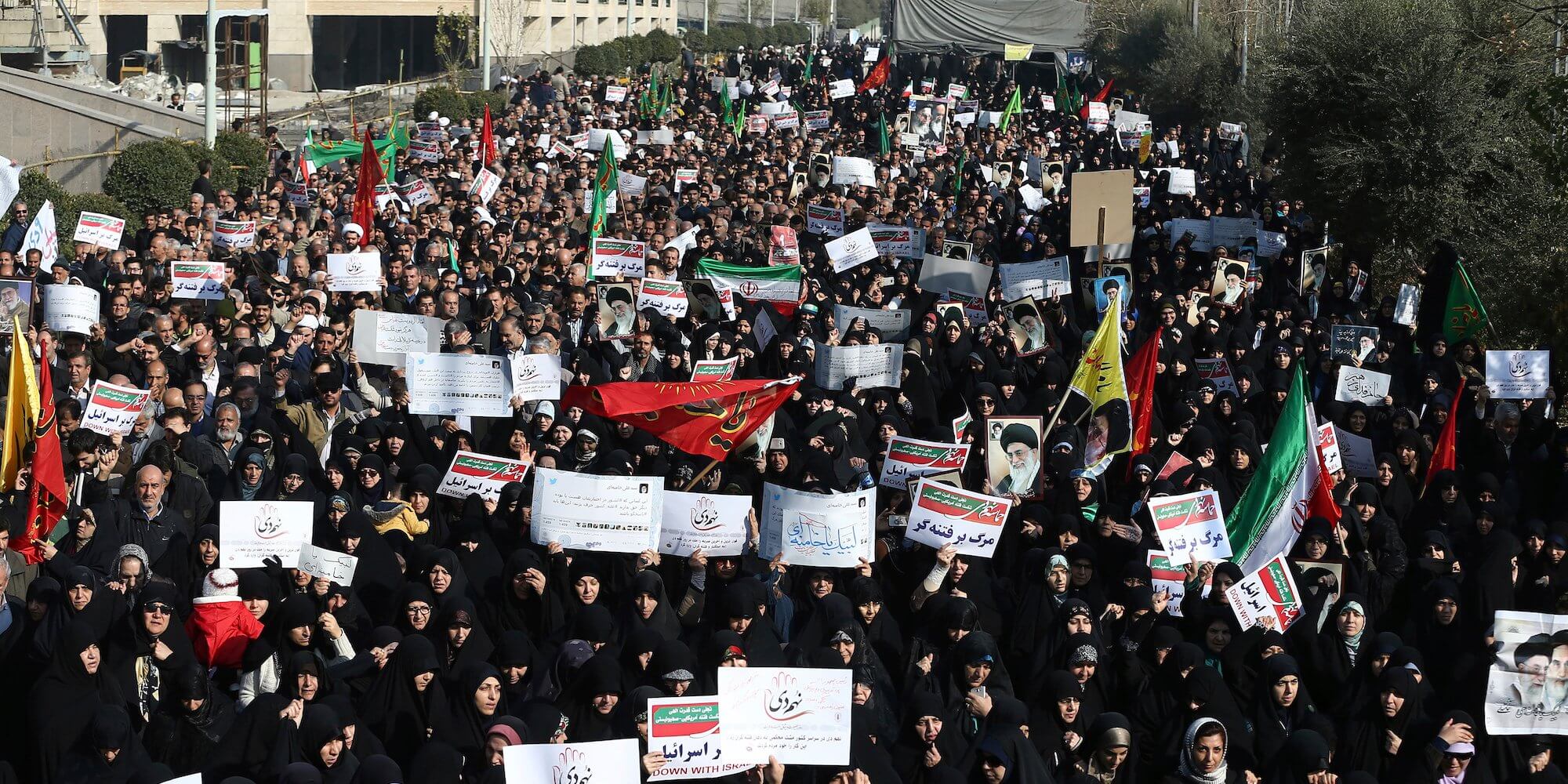
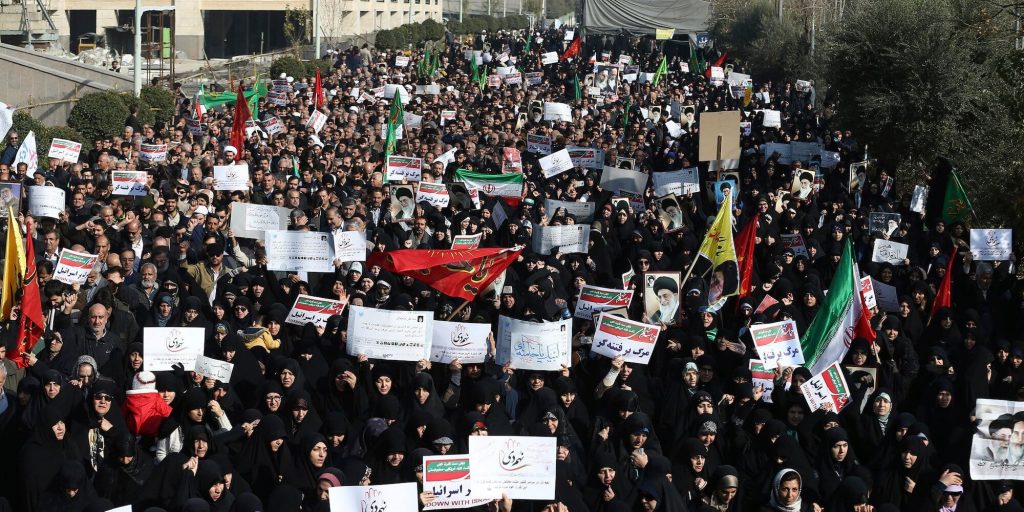
Photo: Iranian protesters at a rally in Tehran, Iran, on Saturday. Iranian hard-liners rallied Saturday to support the country’s supreme leader and clerically overseen government as spontaneous protests sparked by anger over the country’s ailing economy roiled major cities in the Islamic Republic – Credit: AP Photo/Ebrahim Noroozi

Democratic Republic Congo

The last days of the year ended very violently in DRC. UN Peacekeepers have said that security forces killed at least seven people on the last day of 2017, during protests against President Joseph Kabila’s refusal to step down from office. Catholic churches and activists called for peaceful demonstrations after Sunday mass, to which police responded with teargas and bullets, according to the Guardian. UN Secretary-General Guterres expresses concern about the violent dispersion of protests by national security forces in Kinshasa and a number of other cities.

In a reaction to these events, this week Catholic Church leader Cardinal Laurent Monsengwo, the Archbishop of Kinshasa, has condemned the state’s response to protests over the weekend as “barbarism”. In these protests, a dozen people were killed, according to recent estimates from protest-organizers. The protesters were mobilized by a Catholic Church committee in DRC, and supported by opposition groups, civil society organizations, and other activist-groups. According to Reuters, the Cardinal stated that the deadly crackdown on protesters who marched all over the country on Sunday has “created a sociopolitical malaise that cuts across our dear and beautiful country.”

The Guardian
Reuters

Cambodia

Late last week, Globe and Mail reporter Nathan Vanderklippe wrote on the changing media-field in Cambodia. As one of the most open media environments in Southeast Asia has slowly turned into a repressive state, “critical voices have been receding in a co-ordinated CPP effort to repulse Western influence and weaken political adversaries.” Now, while several reporters have been jailed, human-rights organizations are closing down and foreign-funded news services are being pulled from the airwaves, Cambodian Prime Minister Hun Sen has sought support from China. The Asian superpower has become a critical source of investment capital and is now also beginning to establish a presence in Cambodia’s media industry. Read Vanderklippe’s full piece to understand what this might imply for the country’s media landscape.

On Monday, Cambodia’s detained opposition leader Kem Sokha called for free and fair elections in the Southeast Asian country in a New Year’s message. A two page letter containing his writings was read out by his daughter Kem Monovithya and posted on Facebook. Sokha stated that Cambodia faces losing aid and its export markets abroad as well as condemnation by the international community after the CNRP’s dissolution, according to Reuters. After the dissolvent of main opposition party last month, the European Union and the United States already withdrew their support of the 2018 election. Soon after their decision, China promised to provide the necessary equipment for Cambodia’s 2018 vote.

The Globe and Mail
Reuters

Myanmar

On the last day of 2017, the New York Times publishes a long-read story about the mental health impact the ongoing Rohingya-crisis is feared to have on its children. According to Save the Children, close to 60 percent of the more than 655,000 Rohingya who have fled to Bangladesh since the Myanmar military began its crackdown in late August 2017, are minors. As the prospects for these young refugees are grim, experts claim the situation to be “the perfect breeding ground for a massive mental health crisis for children.” Because they are living in an almost permanent state of “fight or flight” arousal, this “hyper-stressed” condition can change the architecture of the children’s brains, according to the report.

On Thursday, Myanmar’s Independence Day, the country’s civilian president Htin Kyaw called for reform of the military-drafted 2008 Constitution. The debate on amending the Charter to remove a dominant political role for the military has been one of the most contentious issues facing Myanmar, but has been muted since the assassination of a lawyer advising Aung San Suu Kyi’s ruling party one year ago. The Constitution bars government leader Suu Kyi from becoming president, and reserves 25% of the seats in Parliament and several major Cabinet posts for the military. Kyaw also pled for justice for all recognized minorities under a federal system, but made no mention of the treatment of its Rohingya Muslim people.

New York Times
The Straits Times

Poland

While Poland has taken its seat as a non-permanent member of the UN Security Council as of this Monday, its relationship with the European Union deteriorates further. The Polish Prime Minister Morawiecki met with like-minded Hungarian leader Viktor Orban on Wednesday, to reaffirm their joint stance against criticism from the European Union. That body claims that both countries’ current reforms run counter to the bloc’s core values and threaten the rule of law. Orban pledged to defend Poland last month after the EU launched unprecedented “article 7” disciplinary proceedings against its government over a raft of new laws boosting executive influence over the judiciary. Hungary itself is being dragged in front of the European Court of Justice by Brussels already, for its tightening control over foreign-funded NGOs and education reforms, and its refusal to accept refugees under the controversial quota plan.

Also this week, the Polish Prime Minister Mateusz Morawiecki has reaffirmed that his country opposes mandatory quotas for refugees. Morawiecki, according to Radio Poland claimed that the ruling party’s position formulated before the elections remains unchanged, and “Poland opposes the mandatory quota system for immigrants from North Africa and the Middle East, but [it] also assists and will provide financial and other assistance to victims of conflicts in their host countries and refugee camps.” One of his more prudent arguments to stick to that opinion was the fact that Poland has already received thousands of Ukrainian refugees over the last couple of years.

Irish Times
UNIAN

The Maldives

Early this week, the Nikkei Asia Review writes about the influence the growing relationship between the Maldives and China has on India. After last month’s trade agreement between the former two countries, the Maldives seems like it is looking for a new ally on the international stage. But the Maldives, an Indian Ocean archipelago with a population of 400,000, is regarded by New Delhi as being within its sphere of influence. Within the more and more repressive Yameen regime, the Maldives seems like it is looking how far it can push the boundaries of those countries that have any meddling in their internal political business. According to the article, Yameen’s bold stance towards both India and Sri Lanka has to be understood in the light of its new ally China.

On Thursday, the Diplomat releases a strong read on the deteriorating state of the right to free speech in the Maldives. According to Aaquib Khan, political unrest, radicalization, and the intimidation of journalists and human right activists have plagued the island nation in recent years, and cannot be seen separately from each other. Pleading different cases of violence and murder in the last decade, the author argues that the government is reluctant to investigate these cases too deeply, which led some to suspect a state-supported attempt to silence those who criticize the government or radical Islam in the Maldives. Do these developments in the Maldives fit in a larger trend of intolerance throughout South Asia? Read the full article for more.

Nikkei Asian Review
The Diplomat

Syria

Despite the fact that fighting continuous on the outskirts of Damascus, medical workers seem to have completed the evacuation of critically ill civilians from the besieged Eastern Ghouta suburbs of the capital at the end of last week, Agence France-Presse reported. The evacuation of 13 civilians happened on Friday, and the evacuees are among some of the most critical cases on a United Nations list of 500 civilians who could die in the besieged enclave if they did not receive urgent medical care.

Early this week, The Independent released an interesting piece on the future of ISIS in Syria and Iraq. In the second half of 2017, the caliphate declared in 2014, which was once the size of Great Britain, caved, and its de facto capitals, Mosul and Raqqa, were captured after long and bloody sieges in the second half of 2017. But does this mean the organization is really dead, or will ISIS revert to a guerrilla war of surprise attacks, ambushes and terrorist atrocities? Alternatively, will ISIS now send it commanders and fighters to other countries where the opposition is weaker than in Iraq and Syria, and wait for better (or worse) times? Read the full article for more.

AFP
The Independent

Zimbabwe

On December 30th, Reuters publishes one of its special reports, on the developing relationship between the two main powerhouses in Zimbabwe at the moment: President Emmerson Mnangagwa and vice-President/Defense Minister Constantino Chiwenga. Reuters claims that “since Mugabe was deposed and Mnangagwa installed, moves by senior military men have suggested the president is the junior partner in an army-dominated administration.” Based on Zimbabwean internal intelligence reports, Reuters suggest that the generals who have played their role in removing Mugabe are now slowly demanding the enjoyment of the fruits that their actions brought.

On Thursday, a Zimbabwean court freed the American citizen Martha O’Donovan, who was charged with subversion for allegedly describing former president Mugabe on Twitter as a “sick man.” O’Donovan had faced up to 20 years in prison. A magistrate removed her from remand after prosecutors failed to provide a trial date. That decision only temporarily frees her from the charges, as the prosecution can still summon her if it feels like it has accumulated more evidence against her. For those who think that, with Mnangagwa as Zimbabwe’s President, the country’s days of repressed freedom of expression might be over; you might be cheering to early. Late last week, the military arrested eight activists for carrying placards denouncing Mnangagwa during a church service led by the president. A court released them on Tuesday, after ruling that the military had no arresting powers.

In the same week that the Zimbabwean authorities decided to extend its voter registration campaign by a month, the Zimbabwe Election Resource Centre (ERC), has written an open letter to President Emmerson Mnangagwa urging him to introduce a raft of reforms to ensure free and fair elections ahead of the crucial polls in six months. The non-partisan think tank and advocacy institution on elections and democracy urged the president to “walk the talk” and ensure that the Zimbabwe Electoral Commission is independent and that prisoners and those in the diaspora are eligible to vote in the 2018 general elections.

Reuters
CNN
VOA News

Venezuela

As food riots and rowdy queues outside supermarkets have become common amid widespread shortages in Venezuela, the country this week witnessed another low. The Venezuelan authorities had to arrest a National Guard soldier, accusing him of killing a pregnant 18-year-old during an incident that local media described as a melee over scarce pork. After a group of soldiers ordered the people waiting in a food-line to move on because the traditional Christmas meat had run out, their refusal to do so led to shots being fired. Critics of President Nicolas Maduro’s leftwing government claimed the incident to be a stark example of the oil-rich country’s meltdown. “This is how the murderous regime treats the people,” opposition lawmaker Delsa Solorzano tweeted according to the Guardian. “The sorrow of this man, whose wife and baby to be were killed by a bullet from the state, is Venezuela’s sorrow.”

Where it seemed very improbable that Nicolas Maduro would hang on to the Presidency amidst mass protests in 2017, he is still there. This is, in large part, Maduro’s doing. By marginalizing his rivals and creating a new legislative body stacked with his supporters, Maduro cut the legs off the opposition. But, according to Vice, in many ways, the opposition made this easy for him. Opposition politicians fight amongst each other, making protesters feel that their sacrifices were all in vain. Read and watch Vice’s short report for the faces behind these stories.

Also this week, both Venezuela and Russia began moving forward with an official state crypto-currency. Both countries are dealing with economic sanctions imposed by the United States and have economies that are heavily dependent on the price of oil. Late last week, Venezuela’s information minister, Jorge Rodriguez, announced on state TV that his country’s new crypto-currency, the petro, would be issued in “a matter of days.” Although President Nicolas Maduro announced his crypto-currency strategy as an alternative to the rapidly depreciating Venezuelan bolivar, critical voices have argued that this might be hard to effectuate. Read the full Gizmodo-article for more.

The Guardian
Vice News
Gizmodo

The United States of America

In his New Year’s Day speech, North-Korean leader Kim Jong Un had a specific message for the United States. After relatively reconciliatory words towards its neighbor South Korea, the leader stated that the whole United States territory is within the reach of the country’s nuclear capabilities, and that the nuclear button was on his desk at all times. This should not be taken as a threat, Kim stated, but as simple reality. This is the main reason, according to the leader, why the United States could never start a war against his country. Early on Wednesday, then, Donald Trump reacted, saying that someone within the Kim Jong Un regime should remind the leader that the American President also has a similar button, only this one, of course, is much bigger and more powerful…

Starting of 2018 where he left 2017, Donald Trump started this week picking fights. CNN reports that Pakistan’s government held an emergency security meeting on Tuesday, after US President Trump accused Islamabad of “lies and deceit” in a tweet on January 1st. On that same day, the White House stated that it would continue to withhold $255 million in military aid to Pakistan, out of frustration over what it has characterized as Islamabad’s stubbornness in confronting terrorist networks. Following the meeting, the National Security Committee expressed its “deep disappointment” over Trump’s comments. According to Al Jazeera, it stated that the recent remarks by the US leadership “were completely incomprehensible as they contradicted facts manifestly, struck with great insensitivity at the trust between two nations built over generations, and negated the decades of sacrifices made by the Pakistani nation”.

Finally, this week saw a new battle erupt within US politics’ highest right-wing circles, with Donald Trump and his former-top advisor Steve Bannon as the two main competitors. Main topic of discussion is the pending investigation on the contact between the Trump campaign and Russian representatives. As the latter would have preferred Trump in the White House, they allegedly offered camp-Trump some dirty information on Hillary Clinton. Despite the fact that Bannon’s opinion does not matter a single bit in a legal manner, the fact that he is so critical on his former allies does. If their eventual break-up will come through, right-wing US will have to re-group, according to the Guardian.

Time
CNN
The Guardian

Other News

Iran – Anti-government protests against poverty, clerical rule and corruption continued this week, with security forces allegedly cracking down on peaceful protesters. Several sources have confirmed the death of up to forty people. Iranian authorities also blocked several social media messaging platforms throughout the week – NBC News

Hong Kong – On the first day of the New Year, thousands marched through the streets of Hong Kong to warn China not to meddle further in the city’s affairs and undermine its autonomy – Reuters

Uganda – On Tuesday, Uganda’s President Yoweri Museveni signed a law that scraps a 75-year age cap for presidential candidates. Critics say this move critics will allow the President himself to remain in power indefinitely – Reuters

North/South-Korea – North and South Korea announced official talks to be held next week, for the first time in more than two years after Pyongyang accepted Seoul’s offer for dialogue. This happened late on Thursday, just hours after the United States and South Korea delayed a joint military exercise – Reuters

CANVAS Annual Review: December 29, 2017

Photo: “Demonstrators clash with the Bolivarian National Police during a protest in Caracas, Venezuela, April 10, 2017.” (AP, via VOA.com)

Venezuela

Tensions from 2016 continued and on 30 March 2017, the Venezuelan Supreme Court decided to take over legislative powers from the National Assembly (NA). This decision triggered widespread protests and the court quickly reversed its decision on April 1st. Nevertheless, protests continued almost daily for over three months. Protests regularly included violence and led to clashes between young protesters and the National Guard, causing the death of about 120 people this year. Critics did not only come from the opposition blaming the government for increasing autocratic tactics, but also from within the chavista ranks, formerly loyal to Maduro.

Amidst growing pressure, President Maduro announced the decision to call for a new constitution “saying it was the ‘only road to restore peace’ in the country“, and the establishment of a Constituent Assembly (CA) to draft the new constitution. The opposition which largely criticized the President’s intentions then organized a symbolic and unofficial referendum against the plan. While it coincided with a trial-run for the official July 30-vote for the new CA, the opposition’s unofficial referendum produced high turnouts, showed large rejection of the government’s plan and raised hopes for further pressuring the government.
However, the CA was eventually created in a controversial vote, criticized for being illegitimate and boycotted by the opposition. Large numbers of security forces had appeared to overlook the election sites, but also at protests – peaceful and violent – which were repressed violently with no tolerance for the pro-democracy demonstrators. The new pro-government assembly then went on to replace and take over the powers of the elected NA. This was deemed “illegal and unconstitutional”, also by international actors, especially the US which called the vote a ‘sham’ and Maduro a ‘dictator’, introducing financial sanctions against the country.

Despite the protests earlier this year, Venezuela’s opposition coalition partly faces distrust and has suffered from internal divides. In November, regional gubernatorial elections did not bring results in favor of the opposition as had been expected before, causing outcry by the opposition. Most recently, President Maduro banned three of the main opposition parties from participating in next year’s presidential election after a boycott of mayoral polls earlier in December, saying he was following criteria set by the CA. “The presidential vote had been scheduled for December 2018, but analysts say it could now be brought forward.” This brings the opposition into deeper crisis, after it had even been awarded the Sakharov Prize for Freedom of Thought by the European Parliament. Several rounds of talks between the opposition and government in the Dominican Republic have failed to reach an agreement and are set to resume in January.

Like Venezuela’s (former) chief prosecutor and government critic Luisa Ortega Diaz or ousted Caracas mayor and opposition leader Antonio Ledezma, many Venezuelans are fleeing the country due to the crackdown on political dissent as well the deteriorating economic situation and humanitarian crisis. Venezuela’s economy strained by falling oil prices, subject to hyperinflation, sanctions and its failure to repay government debts, have led to shortages of food and medicine in the country. Widespread violence and crime have joined these problems. In response to economic consequences of sanctions, Maduro also announced the launch of the “Petro”, a digital cryptocurrency.

The Maldives

Early 2017, Former president of Maldives Mohamed Nasheed claimed that he wants to run for office again. Where Nasheed´s return would not be without a risk, the move would have proven a good step towards uniting the broad coalition of opposition-groups and coming out with a single candidate. In the remainder of the year, however, things went silent around Nasheed´s return. For the Maldives, 2017 was another year of aggravating government authoritarianism.

In April, a prominent blogger was stabbed to death in capital Male. Yameen Rasheed ran a blog called “The Daily Panic”, known for ridiculing the countries politicians, both ruling party and opposition. Rasheed was not the first media figure to be targeted in the Maldives, but so far all cases go unsolved. Besides guessing what the motives for these murders were, they have been said to “represent a new type of violence” in the Maldives that follow a new type of violent discourses, related to the country’s political context, and “thrive on the failure of its non-religious politics, as well as its fragmented religious landscape.” The murder even brought UN High Commissioner for Human Rights Zeid Ra’ad Al Hussein to urge for a swift and thorough inquiry into the killing, connecting the act to an upsurge in arrests and prosecutions of the political opposition.

Over the last year, however, space for legitimate dissent has been shrinking at alarming speed. The government of President Abdulla Yameen intensified its crackdown on the rights to freedom of expression and of peaceful assembly. Authorities used new laws and criminal cases to silence political opponents, as well as human rights defenders, journalists and civil society. Halfway August, the Maldivian military locked down the country’s parliament, in what opposition lawmakers said was an attempt to hold them from voting on a motion to impeach the speaker of the house. Only a month before, a similar scenario played out, as the armed forces padlocked the gates of parliament to prevent another attempt at impeachment, in which the opposition said it had the majority of votes.

Also in 2017, the Maldives announced the reintroduction of the death penalty after a 60-year moratorium. The Yameen government claimed the measure was necessary to try and reduce the rising number of murders and stop drug-trafficking. Amnesty International has stated that the executions are a ploy by the government to distract attention from its own problems and ensure its political survival.

Lack of independence of the judiciary remained a concern, as it is said to be highly influenced by the country’s President. In September of this year, the Department of Judicial Administration suspended at least 54 lawyers and charged them with contempt of court, after they filed a petition demanding the rule of law in the country. Corruption, finally, also played a salient role in the Maldives this year. After Al Jazeera exposed how Yameen and his former deputy coordinated the theft of millions of dollars from state coffers, the President admitted receiving bags of stolen cash at his private residence, but has not been prosecuted since.

Zimbabwe

The first months of 2017 in Zimbabwe are characterized by two things. First, there is a degenerating political, social and economic situation in the country which is not adequately addressed by its ruling elite. Despite the fact that Robert Mugabe called Zimbabwe the second-most developed country in Africa, the country was struggling with deadly floods, Air Zimbabwe was struggling to keep afloat, and protesters had to face harsh reprisals. The country also faced shortages of fuel and basic commodities over the course of the year.  Government repression continued unabated throughout 2017. After the introduction of a new ministry responsible for Cyber Security, the Zimbabwean police charged an American woman over a tweet that appeared to insult President Robert Mugabe early October.

Secondly, both ZANU-PF as well as the political opposition seems to be more busy with internal alliances and disputes than guiding their country. Especially the factionalism within the ruling party takes over the headlines. The so called ‘G-40’-faction, representing the younger generation within ZANU-PF, supports Mugabe’s wife Grace to succeed her husband. On the other hand, there is the so called ‘Team-Lacoste’-faction, which backs up Vice-President Mnangagwa as Mugabe’s successor for party-leadership.

Then, seemingly out of nowhere, the military takes over Zimbabwe. After Zimbabwe’s army chief Constantino Chiwenga demanded a “stop” to the purge in the ruling party on November 13th, soldiers take over Harare the next day. Military spokesman, Major General SB Moyo makes the announcement that the military has temporarily taken control of the country to “target criminals” around President Robert Mugabe, but that the President and his family are “safe and sound and their security is guaranteed”. After a week of negotiations, Robert Mugabe announces his resignation, after 37 years as the leader of Zimbabwe, sparking massive celebrations all over Zimbabwe.

Former Vice-President Emmerson Mnangagwa, who was sacked early November, is put forward by the party as their new leader. After his inauguration at the end of November, the new President has been trying to re-engage with those who can help him to stabilize the Zimbabwean economy: the international community, foreign investors, and white farmers. Despite a promising new budget statement, the removal of Zimbabwe’s corrupt police, and the acquaintance of several social movement leaders, skepticism remains, especially because of the deeply ingrained system of patronage that was built in 37 years under Mugabe. The opposition, shut out of Mnangagwa’s Cabinet in favor of military and ruling party members, now seems to focus on the 2018 elections.

The United States of America

This year, the US did not only witness natural disasters like wildfires or Hurricane Harvey, it also experienced two of its deadliest shootings in history. In October, a gunman fired into the crowd at a Las Vegas music festival, killing 58 and leaving hundreds injured. Only a month later, a man opened fire in a Sutherland Springs, Texas, church, killing 26 and injuring 20 more.

Besides these tragedies, the US experienced political tensions surrounding Donald Trump’s first year of presidency. At the beginning of 2017, the history Women’s March brought one million people to the streets of Washington DC and more around the world, showing their discontent with the new president’s inauguration. But other protests throughout the US took place during the course of the year as well. One of the most prominent incidents in 2017 in which Donald Trump received criticism, was his initial reaction and – as perceived by many – lack of harsh condemnation of the events in Charlottesville in August. White supremacists planned to protest the removal of a Confederate icon statue on August 12th which was described as “one of the largest white supremacist events in recent US history”, when people also marched through the streets with burning torches, chanting slogans like “white lives matter” and “blood and soil”. Protests turned violent when white supremacists and nationalists clashed with counter-demonstrators, and a car driven into the crowd killed one and injured many others. CANVAS also followed the protests of professional athletes, especially in the NFL, kneeling during the national anthem seeking to raise awareness for racial injustice. While some supported the athletes, others opposed their protests, including President Trump, as they were perceived as being disrespectful to the anthem and the US.

Another topic which generated repercussions not only in the US but also around the world, was what became known as the #MeToo-campaign. After actress Alyssa Milano shared her account of sexual harassment by Hollywood producer Harvey Weinstein, other high-profile accounts and accusations“about the pervasice damage wrought by sexual harassment” joined her. This “created a wave of awareness and brave confrontations over sexual harassment and assault, taking down powerful men in the process.” Time magazine even went on to name the #MeToo movement ‘Person’ of the Year 2017. Recent elections in Alabama were widely followed in this context as well, as controversial Republican Candidate Roy Moore was accused in various cases of sexual misconduct against teenage girls. The election surprisingly resulted in a Democratic win in the southern state.

Heightened tensions and reciprocal threats between the US and North Korea have raised fears of (nuclear) escalation on the Korean Peninsula, especially after repeated ballistic missile tests. On the international stage Donald Trump’s recent announcement to recognize Jerusalem as Israel’s official capital and to move diplomatic representations to the city, has led to widespread condemnation. The move which sparked protests and clashes in the Palestinian territories and beyond, has most recently been condemned by the UN General Assembly and “’demanded’ that all countries comply with Security Council resolutions regarding the status of Jerusalem”.

Syria

For Syria, the country that has been in war for more than 6 years now, this year was one in which the international superpowers played a game of chess on its future, while close to ten thousands of its people died in the meantime. Hopes of greater democracy and openness have been mostly replaced by chaos and violence, with the Syrian president Bashar al-Assad and his backers largely back in control of the main urban centers. The war is likely to go on for years and many millions of refugees who fled to neighboring countries are not yet able to return.

After the balance of power slowly but steadily shifted towards Assad late 2016, in January, Russia, Iran and Turkey agree to enforce a ceasefire between the government and non-Islamist rebels, after talks between the two sides in Kazakhstan. Early March, Russia and China veto a UN resolution to impose sanctions on Syria over the alleged use of chemical weapons. After the election of Donald Trump as the new US-President, the United States of America intervenes in Syria, directly targeting Syrian military positions for the first time. In April, Trump orders a missile attack on an airbase from which Syrian government planes allegedly staged a chemical attack on the rebel-held town of Khan Sheikhoun.

Throughout the year, diplomatic efforts to restore peace in Syria continue in both Geneva and Astana. After six years of war, the US and Russia agree to a limited ceasefire in three war-torn provinces in southwest Syria, in July.  2017 ends with the collapse of the eighth round of UN-sponsored talks in Geneva designed to end the Syrian civil war, as those who represent Assad are unwilling to meet anyone with a different opinion, according to the Guardian.

In the meantime, the battle against Islamist groups continued throughout 2017. ISIS was pushed back heavily throughout the year. In May, President Trump approves military plans to arm the Kurdish YPG as part of the effort to retake the Syrian city of Raqqa from IS militants, in a move which infuriates NATO-ally Turkey. After conceding defeat to the Syrian regime in Palmyra early March, the Islamic State group is driven from Raqqa, its de-facto capital in Syria in October. One month later, the Syrian army also takes full control of Deir al-Zour from Islamic State.

Poland

For Poland, 2017 was a year of deteriorating democracy and strong efforts to counter this dynamic. Continuing from 2016, Poland’s governing Law and Justice party (PiS), in office since 2015, is seen to slowly destroy the pillars under the Polish democracy. Polish public television is turned into a platform for ruling party propaganda, and the country’s constitutional court has effectively been brought under the control of justices close to the ruling party. Meanwhile, Poland also had to deal with the rising far-right movement in the country. In November, white supremacist and racist views were expressed by some of the 60,000 people who took part in a march on Poland’s Independence Day.

The European Union tries to do all it can to curb Poland’s efforts to turn away from democracy. According to the EU, serious questions have to be raised about the effective application of EU law, in the absence of judicial independence. Poland and the EU also clashed over the logging in Poland’s Bia?owie?a forest. The EU imposed a ban on logging in the primeval woodland, which was subsequently ignored by the Polish authorities. Only ten days before the end of the year, the European Commission triggered the so called Art. 7-procedure, which could result in the suspension of Poland’s voting rights in EU institutions, and block EU financial transfers. While these measures require unanimity among member-states, the outcome is unlikely, but it is telling for Poland’s direction in 2017. The EU’s interference could count on the support of a big part of Polish society, it also came across severe protest of those citizens supporting Polish conservatives.

Meanwhile, the Polish citizens have proved very effective in mobilizing and organizing against the state. In July, two new legislative bills caused eight days of mass mobilization across the country, in which hundreds of thousands of Poles took to the streets in capital Warsaw, as well as hundreds of other towns and cities, and held vigils in front of courthouses. Polish president Andrzej Duda eventually moved in to veto the two bills that sparked protests throughout the nation. The bills were meant to bring the Polish Supreme Court under control of the ruling party, and would allow the Ministry of Justice to appoint judges.

Democratic Republic Congo

For DRC, 2017 is mainly another year of unrest, violence and instability. The violence in Kasaï was perhaps 2017’s biggest news story. The Wire reports that in Kasai, “little children were being hacked to pieces  with machetes.” The south and northeastern parts of the DRC also witnessed deadly conflict in 2017. There was major fighting between the local Twa and Bantu populations in Tanganyika province. Uvira, on the outskirts of Lake Tanganyika, was the site of a battle between the rebel Yakutumba militia and government forces in September. Early December, 14 Tanzanian UN peacekeepers and five Congolese air force members are killed in the Democratic Republic of the Congo in the “worst attack in recent history”, as stated by the UN.

President Joseph Kabila has succeeded in ignoring the request for elections in 2017. The President, who was originally supposed to step down at the end of his term in November 2016, is clinging on to power, and suppressing dissenting voices. Early 2017, DRC got to deal with another disappointment, after the deal the Catholic Church thought that it had reached with Kabila that would deny him a third term, collapsed. In February, long-standing opposition figure Étienne Tshisekedi dies, dealing a major blow to the talks between Kabila and the various opposition groups. His death deprived the opposition of its principal figure-head, who could mobilize popular support as well as cut political deals in Kinshasa. After negotiations in which the UN plays a role, new elections have now been planned not earlier as December 2018, which the opposition movement seems to find hard to accept.

Meanwhile, the humanitarian crisis in DRC has outpaced Syria, Yemen and Iraq in the number of people forced to flee. Averages of  5,500  people a day were being uprooted from their homes because of violence and insecurity, in the first half year of 2017. Following failed attempts to organise elections at the end of this year, analysts have forecast that postponing the elections is likely to incite grievances among communities in Congo, which may be used by armed groups to muster support into 2018. As the year is coming to an end, there seems to be little hope of a resolution to the major crises that have intensified over the past 12 months. The violence in Kasai is escalating and the conflict in south eastern Congo looks set to continue.

Cambodia

Towards the 2018 elections, Prime Minister Hun Sen seems to intensify his efforts to silence every form of political dissent against his rule. After coming close to defeat in 2013, the ruling Cambodian People’s Party (CPP) has since cracked down on any form of political dissenting, or dissenting voices. In 2017, the CPP arrested key political figures and members of civil society, cracked down on independent media platforms, and eventually dissolved the main opposition party.

Over the course of the year, independent media have been silenced. Halfway 2017, the Cambodian government launched a systematic attack aimed at independent media in the country. At least six media outlets (one daily newspaper, two foreign media services and three local radio stations)  were shutdown, forced off the air, or facing closure.  A staggering $6.3 million tax bill forced the Cambodia Daily to close , and radio stations carrying programs from Voice of America and Radio Free Asia were shut down for supposed technical and administrative violations. ASEAN lawmakers from around Southeast Asia expressed grave concern about the status of independent media outlets and civil society organizations in Cambodia.

Police arrested Cambodia National Rescue Party leader Kem Sokha over allegations of treason in September, with Prime Minister Hun Sen accusing the opposition president of conspiring with the United States to oust his regime. Where the main opposition party initially defied Hun Sen’s threats, his words turn out to be more than bluff. After Cambodia’s main opposition-party CNRP is dissolved by the Supreme-Court halfway November, Cambodia’s ruling Party is left unopposed in Parliament. The court accepted the government’s claim that the party conspired with foreigners to stage a revolution. This harsh measure is said to have had a wider effect on the already stifling debate in Cambodian society.

Cambodia can also be seen to slowly turn towards China, turning its back on the wider international community. After the Cambodian government closed a prominent American pro-democracy organization and ordered its foreign staff to leave the country in August, the US threatened to push for travel restrictions for Cambodian top officials. Hun Sen, however, played along the power game and expressed that sanctions by Western donors don’t worry him, subsequently challenging the United States to cut all aid. Part of his lack of worries is due to his administrations strong relationship with China, which has become by far the biggest giver of foreign aid as well as the biggest investor in Cambodia.

Myanmar

For Myanmar, the international headlines were completely occupied with the Rohingya-crisis, from the start of 2017 all the way through to the end. Myanmar military’s persecution of the Muslim minority group, which is not recognized as a national ethnic group by the government, caused an international outcry. World leaders pressed the country’s leader Aung San Suu Kyi to end the persecution of religious minorities and allow aid workers full access to areas of conflict. International organizations condemned the violence, which according to them amounted to crimes against humanity and ethnic cleansing.

From September, an unprecedented refugee crisis forms in Myanmar and over the border of Bangladesh. As of October, hundreds of thousands had already fled to the neighboring country. The people have no place to return to, as the Myanmar military allegedly went on a campaign to burn entire villages. Over time, military groups emerge in Rakhine state, with the intention to fight back against what they see as decades of oppression by the Buddhist majority.

Besides the deal that was reached late November between Myanmar and Bangladesh over the terms for the return of the Rohingya Muslims from Bangladesh, so far no decisive measures have been taken. Myanmar de-facto leader Aung San Suu Kyi over the course of the year had to endure increasing criticism for her impotence or unwillingness to do anything about the crisis. She gets stripped from her Freedom of Oxford and Dublin Honors, and several voices call on the Nobel Peace Prize committee to follow these examples. At the end of the year, Myanmar blacklisted and barred UN investigator and special rapporteur on the situation of human rights in Myanmar, Yanghee Lee, from entering the country. Also at the end of the year, two Reuters-reporters get arrested in Yangon, in a case which, according to U.N. Secretary-General Antonio Guterres, is related to their reporting on the continued persecution of Rohingya Muslims in the country.

Other essential stories CANVAS has covered in 2017

 Spain – The struggle for Catalan independence dominated the headlines for several weeks in 2017, and the saga is very likely to continue into 2018 – Politico

South Africa – The political party that has represented the majority of South African citizens since 1994, ANC, is getting under more and more pressure, as they elected a new leader end of the year – Guardian

Honduras – Late November, tens of thousands flooded the streets of Honduras in opposition to what has been seen as a fraudulent election, that has decided in favor of incumbent President Hernandez – New York Times

Kenya – After months of allegations, protests and violence, Kenya’s Supreme Court ruled unanimously to uphold the re-election of President Uhuru Kenyatta in October’s repeat presidential vote which opposition candidate Odinga had boycotted, dismissing two legal challenges –  Reuters

Hong Kong – In 2017, protests over democratic freedom and independence in the Chinese ruled city continued – CNN

Iraq – Towards the end of 2017, the Iraqi Kurds voted for independence for their region. After weeks of reprisals and battlefield defeats, Massoud Barzani, the region’s president who led an independence push for the Kurdish region more than a decade, announced that he would quit as president – VOA

Romania – Early in 2017, Romania witnessed its biggest protests since 1989, accusing the government of corruption and putting other powers under growing government control. Recently in November, new demonstrations erupted throughout Romania and brought thousands to the streets, again. – The Guardian

Other essential stories CANVAS has covered in 2017

 Spain – The struggle for Catalan independence dominated the headlines for several weeks in 2017, and the saga is very likely to continue into 2018 – Politico

South Africa – The political party that has represented the majority of South African citizens since 1994, ANC, is getting under more and more pressure, as they elected a new leader end of the year – Guardian

Honduras – Late November, tens of thousands flooded the streets of Honduras in opposition to what has been seen as a fraudulent election, that has decided in favor of incumbent President Hernandez – New York Times

Kenya – After months of allegations, protests and violence, Kenya’s Supreme Court ruled unanimously to uphold the re-election of President Uhuru Kenyatta in October’s repeat presidential vote which opposition candidate Odinga had boycotted, dismissing two legal challenges –  Reuters

Hong Kong – In 2017, protests over democratic freedom and independence in the Chinese ruled city continued – CNN

Iraq – Towards the end of 2017, the Iraqi Kurds voted for independence for their region. After weeks of reprisals and battlefield defeats, Massoud Barzani, the region’s president who led an independence push for the Kurdish region more than a decade, announced that he would quit as president – VOA

Romania – Early in 2017, Romania witnessed its biggest protests since 1989, accusing the government of corruption and putting other powers under growing government control. Recently in November, new demonstrations erupted throughout Romania and brought thousands to the streets, again. – The Guardian

Tension is Rising in Honduras, as Election Standoff Continues

Picture: Supporters of opposition presidential candidate Salvador Nasralla march in protest for what they call electoral fraud in Tegucigalpa, Honduras, Dec. 3, 2017 – Credit: AP Photo/Rodrigo Abd

Mainly outside the scope of the mainstream media, tension has been rising in Honduras, over the 26th of November election results. Most recently, the United States of America have recognized the re-election of Honduran President Hernández, despite massive allegations of fraud. What do you need to know about the developments in the central-American country?

November 2017 Elections

Juan Orlando Hernandez, who became the country’s President in 2012, has not been famous for his stunning human rights record. Several journalists and human rights activists have been killed over the last couple of years, almost always with impunity. Where the Honduran Constitution strictly allows Presidential candidates to only one term in office, those rules were declared “inapplicable” to Hernandez by the Supreme Court in 2015, paving the way for his reelection bid for the 2017 race.

Despite the ruling National Party’s abuse of public resources, the electoral campaign offered Honduran citizens several alternatives for President. The opposition, however, was heavily divided between the center-right Liberal Party and the center-left Opposition Alliance. It was therefore a huge surprise when, with nearly 60% of the votes counted, Salvador Nasralla led by five percentage points. One of the magistrates on the Supreme Electoral Tribunal, called his win “irreversible,” and Liberal candidate Luis Zelaya publicly recognized Nasralla with his victory.

Then, the ruling party’s authoritarian forces started working, and after a 24-hour radio silence, the electoral council announced Hernandez as the winner. This dubious shift triggered accusations of fraud and, subsequently, street protests. As the authorities cracked down on protesters, the state declared a state of emergency early December, establishing a curfew and the right to involve the participation of the armed forces to support the national police in maintaining security and order. At least 14 people were killed during post-election protests, and more than 800 people have been arrested, according to Amnesty International.

Protest Movement got sparked

But the genie seems to be out of the bottle in Honduras. Over the last few weeks, “the disputed election has united diverse opposition groups and sparked a pro-democracy protest movement calling for a full and transparent recount.” Where several protests have led to violent standoffs between activists and security forces, a nonviolent movement has also taken hold of Honduras. The movement has mainly build on Honduran youths, leading peaceful rallies and candlelight vigils, while distributing white orchids to those who are supposed to repress them. The actions have even led members of the Honduras National Police force to refuse orders from the right-wing Hernandez government. Only a week ago, Honduras’ Opposition Alliance called on the protesters to continue their struggle in the streets.

Role Played by the International Community

Despite these hopeful developments, the opposition still faces significant challenges. The international community could play an important role in Honduras’ current struggle. On December 17, the same day that Juan Orlando Hernández was officially declared the winner by the electoral council, the Secretary General of the Organization of American States, declared that the election process was plagued by irregularities, and called for new elections. The US, however, recently validated the results favoring Hernandez’s reelection.

The United States is by far Honduras’ most important international partner, providing large sums of security assistance to its government. Moreover, a large portion of Honduras’ GDP is due to receiving remittances from the States. Despite organizations calling on the American government to denounce fraud and violent repression following the elections, the Trump administration has decided to re-certify the Honduran government as complying with human rights protocols in order to allow the financial assistance to continue. As Steven Levitsky and Carlos Flores write in LA-times, “U.S. officials view the right-wing Hernandez as an ally, [and therefore] they seem willing to give him a pass on democracy and human rights.”

How has the United States policy of promoting democracy in the Americas changed over time? And how could the opposition movement overcome severe challenge for their pro-democracy movement?

Read more about the Honduras-situation here, here, and here.

Weekly Report, 22 December 2017

As a sign of solidarity and support, residents of eastern Ghouta, but also politicians and activists elsewhere have posted pictures of themselves covering one eye, in tribute to a baby who lost an eye and had his skull crushed during government attacks on his besieged hometown. Credit: AFP/Getty Images

Want to sign up and receive our Weekly Report in your mailbox? CLICK HERE

Venezuela

On Wednesday, Venezuela’s Constituant Assembly ruled that parties who boycotted this month’s local elections had lost legitimacy. By doing so, the pro-government body potentially eliminated the main opposition groups from the 2018 presidential race, as main opposition parties Justice First, Democratic Action and Popular Will did not run candidates in this month’s mayoral polls in protest against what they said was a „biased election system designed to perpetuate leftist President Nicolas Maduro’s dictatorship,” according to Reuters. By doing so, the Assembly ruled, the parties have lost their legal status and should re-apply to the National Election Board.

As Venezuela sees more and more of the worlds nations turning against it, the Maduro-regime is looking towards other nations to support their regime. On Thursday, Venezuela’s foreign Minister Jorge Arreaza stated: “Thank God humanity can count on the People’s Republic of China to guarantee peace or at least less conflict,” according to South China Morning Post. The statement came after Arreaza lashed out at Donald Trump, US and EU sanctions, and American interference in Venezuela’s internal affairs at the Venezuelan embassy in Beijing during a three-day official visit. The foreign minister blamed the US for his country’s spiralling debt crisis on Thursday, saying Washington’s “permanent attack” had left the economy crippled. In this same week, Venezuela has awarded the Russian energy giant Rosneft with licences to develop two offshore gas fields.

Reuters
SCMP

The Maldives

Early this week, former President Mohamed Nasheed stated that “the actions of the present administration pose Maldives to risk of war“. Raajje reports that in a tweet on Monday, the former President noted that the Parliament was hijacked and the Yameen government was engaging in activities that harmed bilateral relations with neighbors. The statement came after Maldives and China signed a controversial China Maldives Free Trade Agreement, on which CANVAS reported last week, much to the concern of regional partners, such as India. In line with Nasheed’s accusations, a pro-Yameen newspaper has kicked up a fresh political storm in the this week by describing PM Narendra Modi as a Hindu extremist who is also anti-Muslim. The editorial went on to describe India as the biggest enemy nation and said that a “new best friend” for Maldives would be China.

A week after the Maldives government announced new regulations under which local officials can no longer meet diplomats and NGOs without government permission from the home, three opposition party councilers have been suspended. The government suspended the members of a local body on charges of meeting with the Indian ambassador, Akhilesh Mishra, without seeking prior permission. All three suspended councillors belonged to the principal opposition party, Maldivian Democratic Party (MDP). On Monday, British ambassador to the Maldives James Dauris tweeted that this was the latest in a number of “unfortunate steps” taken by the government.

Raajje
The Wire

The United States of America

On Monday, the UN Security Council failed to adopt a draft resolution which would have voiced the regret among its members about the US’ controversial decision to recognize Jerusalem as the capital of Israel, after a veto by the US itself. The resolution would have called on the US to refrain from establishing diplomatic missions in the city and reiterated the member states’ stance on the status of Jerusalem. In a briefing, Special Coordinator for the Middle East Peace process had highlighted the lack of significant positive progress towards peace in the recent reporting period and stated that “developments on the ground [cannot] be divorced from the broader context in which they are happening”, underlining the current uncertainty about the future of the peace process. Following the earlier decision by the United States to recognize the Holy City as the capital of Israel, the UN called for an Emergency Special Session on the issue. Happening on Thursday, Member States in the United Nations General Assembly “demanded” that all countries comply with Security Council resolutions regarding the status of Jerusalem, by an overwhelming majority.

On Wednesday afternoon, the House of Representatives approved the new GOP tax reform for the second time, sending it off to be signed in by President Trump. The House had to vote again on changes made to the bill by the Senate which had approved the bill earlier that day. While this has been described as Donald Trump’s first ‘major legislative victory’ and largely backed by Republicans, no Democrats – neither in the House nor in Senate – had voted in favor. The bill has earned widespread criticism for disproportionately favoring corporations and the US’ wealthy, as well as likely driving up state debt, besides seemingly having been a rushed endeavor before the year’s end. The Guardian reported of the bill being “deeply unpopular” and wrote that during the Senate vote, activists have reportedly shouted “Kill the bill, don’t kill us” in the press gallery. This has been the most drastic changes to the US tax system for 30 years.

UN News Centre
CNN

Poland

This week, CANVAS’ executive director Srdja Popovic and Greg Satell wrote about the worrying direction of the Polish democratic movement for RealClearWorld. After two waves of democratic movement in the last four decades, we are now seeing that same democratic process moves in reverse. However, almost as soon as PiS assumed power, activists have been able to mobilize civil society outside the sphere of party politics. They have extended the battlefield by strongly emphasizing the involvement of the international community, and effectively combined mass mobilization for street protests with concrete actions. Thus, this years’ developments in Poland cause both worries and hope. Can Poland become a model once again and point the way to defeating authoritarianism and protecting civil society?

On Wednesday, the European Commission has triggered Article 7, which serves as a warning but could lead to sanctions and suspension of voting rights in the EU.The Commission accuses the Polish government of having increasingly undermined the independence of the judiciary, common European values and the rule of law, despite repeated warnings and efforts for dialogue. The Commission’s recommendation now has to be accepted by a two-third majority of the member states in order to pass. When agreed upon, the Polish government also would receive a three-month period for adopting recommendations to restore judicial legitimacy by the Commission. PiS spokeswoman dismissed the decision and said it “‘had no merit’ and […] it was ‘solely a political decision’”, while Justice Minister Zbingniew Ziobro stated that his government “’must continue the reforms’”, wrote Deutsche Welle.

This coincides with the final signing in of two bills overhauling the judiciary, as Polish President Andrzej Duda declared also on Wednesday. Earlier this week, Poland’s upper house had approved the controversial judicial reform criticized for undermining the rule of law. Additionally, Poland’s lower house of parliament approved a different law admitting wide-ranging political power over the electoral commission as well. The latter, together with opposition politicians, criticized the move.

Deutsche Welle
Financial Times

Syria

Late last week, the UN-sponsored talks in Geneva designed to end the Syrian civil war collapsed. UN special envoy for Syria Staffan de Mistura claimed that “a golden big opportunity” had been missed. He openly blamed the Syrian government delegation, stating that those who represent Assad are “unwilling to meet anyone with a different opinion,“ according to the Guardian. The Syrian government delegation had allegedly refused to discuss two of the major agenda items – a constitutional process and presidential elections – insisting instead it would only discuss terrorism. De Mistura urged the government’s long time ally Russie to save the peacetalks. With implausible change on the battlefield, and under-resourced opposition, this might be the only way out to keep the peace-process moving. On Tuesday, however, the United Nations proposed a timeline for elections and guidance on constitutional reform to Syria’s warring parties, in a bid to revive stalled peace talks.

While President Vladimir Putin has said he will convene a Syrian Congress of National Dialogue in the Black Sea resort of Sochi in February, delegations from the Syrian government and some opposition groups are already arriving in Kazakhstan’s capital, Astana, for the eight round of Astana-talks on Thursday and Friday.  Talks spearheaded by Russia, Turkey, and Iran are expected to address the functioning of de-escalation zones, the release of detainees, transfer of bodies, and the search for missing civilians. While the talking continious abroad, the fighting continious inside Syria. In Eastern Ghouta – on the outskirts of the Syrian capital Damascus – hundreds of thousands of people remain trapped as government bombings proceed. BBC writes about air-strikes on rebel held Idlib, which killed at least 19 people on Wednesday.

On Wednesday, the Independent writes about a symbolic act of defiance. In eastern-Ghouta, Syrians have launched a campaign in support of a baby who lost an eye and had his skull crushed during government attacks on his besieged hometown. As a sign of solidarity and support, residents of eastern Ghouta, but also politicians and activists elsewhere have posted pictures of themselves covering one eye, in tribute to the three-month-old child. The campaign, also known as  the „Solidarity with Karim“ campaign is the latest effort to draw international attention to the government siege that has been going on for almost four years now. The area is suffering from severe food-shortages and is in need of dire medicle aid.

The Guardian
Al Jazeera
The Independent

Zimbabwe

On Monday,  the Zimbabwean army announced that “Operation Restore Legacy” – the military take over officially ended. National Army commander Phillip Sibanda released a statement that affirmed claimes made on the 13 of November, syaing that the operation was launched by the security services “to remove criminals that had surrounded  former president, resulting in anxiety and despondency amongst our people.” The official end of what is claimed to have definitely been a coup has not freed former G-40 senior faction members from prosecution. IOL writes about several renowned officials that have fled the country, remain in detention, or have been charged with corruption.

Late last week, we could see the signs of a new Zimbabwean Cabinet trying to re-engaged with the international community. As Mnangagwa administration has made economic recovery a priority, this means a need for reconciliation with that community. Newly installed Foreign Minister Sibusiso Moyo state on the weekend that the newly installed Cabinet “is focusing on reassuring our friends and creating new friends, reengagement with those who were sitting on the fence before.” In reaction to critical testimonies made at the U.S. Senate Committee on Foreign Relations last week, Moyo said its important for Zimbabweans to show unity at this time, specially on the issue of sanctions, which he said must be lifted. VOA expressed a particular scepsis towards the proclaimed „new agenda for the country“, mostly because those using this frame were part of the same party and government which held back this agenda for the past 37-years.

Another strongly expressed agenda-priority for Mnangagwa is corruption. On Wednesday, during his first state-of-the-nation address, the Zimbabwean President promised zero tolerance in his government’s push to punish corruption that stifled political freedom and economic growth under Robert Mugabe. Last week, Mnangagwa already claimed to have a list of key officials that violated the exchange-controle law, by illegally stashing money abroad. Those were given until March to return the stolen cash, in return for amnesty. The President stated that “corruption remains the major source of some of the problems we face as a country and its retarding impact on national development cannot be overemphasized,” according to Reuters. In what still looks like a focused attack on former G-40 faction-members, the government is also pursuing corruption charges  against former finance minister Ignatius Chombo. Chombo, whose allegedly commited crimes date back over two decades, faces trial early next year.

VOA-News
Reuters
Independent Online

Democratic Republic Congo

UN chief peacekeeper Jean-Pierre Lacroix met President Joseph Kabila on Sunday, following an attack which killed 14 peacekeepers in the country’s east. Kabila and Lacroix discussed the attack as well as DRC’s need of greater security, according to sources who talked to Agence France Press. AFP further wrote that the UN official stated that “the violence in eastern DRC was ‘a collective problem that needs to be tackled collectively’.” DRC’s east has long been plagued by violence, but fighting and clashes have increased especially this year, between government soldiers and militia groups, as well as among ethnic groups. In a period of about three years, the hardline Allied Democratic Forces have killed more than 700 people in the Beni region, where UN peacekeepers had also been killed last week.

As it has now been one year since President Kabila’s second term in office has officially expired and new elections are only set for a year from now, the opposition Union for Democracy and Social Progress (UDPS) had called for protests throughout the country on Tuesday. However, AFP reported of low turnouts and only “a few dozen people” at the demonstrations, due to rain and a lack of coordination, said Felix Tshisekedi from the “Rassemblement” opposition coalition. According to a police spokesman, Tshisekedi himself had been stopped from leaving his house, and at least 30 people were arrested in the context of the protests. Though not many people reportedly attended them, witnesses said traffic and economic activity seemed lower than normal and more police were in the streets. Despite low attendance of the demonstrations, the opposition vowed to continue its campaign to push for Kabila to step down. So far, its protest campaign had been met with a police crackdown leading to deaths and arrests. On Tuesday, LUCHA – a citizen’s movement for change in Congo – had reported on their twitter that their peaceful protest had been repressed by the police in Kindu and has now called for ‘non-stop demonstrations’ from December 29 onwards until Kabila resigned.

After HRW had released a report revealing the recruitment of M23 Rebels to suppress protests in the DRC, the International Federation for Human Rights (FIDH) and its member organizations in the DRC have released a report on Wednesday addressing the “slaughter” and “crimes against humanity” perpetrated in Congo’s Kasai region. The report, only available in French, reveals “the scale and seriousness of the crimes committed against the civilian population by the Congolese defence and security forces and their auxiliaries, the militia known as Bana Mura.” After FIDH and its partners had conducted a fact finding mission in Angola, talking to Congolese refugees in July this year, the organizations concluded among other things, that “[w]ith the elections repeatedly being postponed in the DRC, the atrocities committed in Kasai are part of a recurring scheme of Joseph Kabila’s regime to mobilise tension and violence in order to retain power through chaos and diversion.”

AFP/News24 (Lacroix meets Kabila)
AFP/News24 (Protests)
FIDH

Cambodia

On Monday, Cambodia shut down 330 what it says to be “inactive” print media outlets, reported the Bangkok Post. The Cambodian government stated the prevention of such outlets misusing their press passes for different purposes as the reason for closure. Information Ministry representative Phos Sovann added that so far, none of the affected media companies had complained and many had already turned into online media. This move comes at a time of rising concerns about a government crackdown on opposition and independent media in Cambodia, ahead of next year’s general election.

Deputy President of the recently resolved CNRP Eng Chhay Eang, who lives in self-imposed exile, rejected a suggestion by Cambodia’s Prime Minister Hun Sen to “form a new party” this week. Speaking to garment workers in the country’s capital, Hun Sen stated that those CNRP members who have not been banned from politics should give up hope for the CNRP to be reinstated and go on to form a new party ahead of the elections. Eng Chhay Eang said the Prime Minister was therein trying to give next year’s elections new legitimacy in the midst of international criticism.

Bangkok Post
Radio Free Asia

Myanmar

Human Rights Watch (HRW) published a report on Tuesday, revealing details about abuses by security forces in the Rohingya Tula Toli village. “Massacre by the River: Burmese Army Crimes against Humanity in Tula Toli” is partly based on interviews with survivors and supports that abuses against the Rohingya “amount to crimes against humanity, including murder, rape, persecution, and force deportation.” HRW calls on the Burmese government to stop its “campaign of ethnic cleansing” and allow access for aid organizations and the UN fact-finding mission to Rakhine State, and also on the UN and concerned governments to impose targeted sanctions.

Meanwhile, amidst increasing international condemnation, Myanmar blacklisted and barred UN investigator and special rapporteur on the situation of human rights in Myanmar, Yanghee Lee, from entering the country as she was due to visit in January. The country’s government also said to withdraw “any government cooperation for the rest of her tenure”, wrote TIME. Lee’s assessment of human rights abuses and criticism in Myanmar had sparked backlash within the country before. According to the media outlet, the decision “comes as an escalation of Myanmar’s crackdown, but is not necessarily surprising.” Another UN fact finding mission has not been able to secure visas for the country and Lee had experience increasing resistance on the Myanmar side.

HRW
TIME

Other News

South Africa – The ruling but decreasingly popular ANC party voted on Monday in South Africa, to eventually elect Cyril Ramaphosa to replace incumbent President Jacob Zuma as the party’s leader. This makes the “anti-apartheid hero and business tycoon” likely to become South Africa’s next president in 2019. While he raises hope of improving the current ANC position again, others are more sceptic about his ability to change something in the system. – NY Times

Israel – Last weekend, thousands of people went out to protest Israel’s Prime Minister Bejamin Netanyahu. This makes it the third week in a row for demonstrators to protest over the PM’s alleged corruption. Though he is subject of criminal investigations into two separate corruption cases, has repeatedly denied any wrongdoings. – Middle East Monitor

Argentina – Early on Tuesday, the Argentinian Congress passed a reform to the country’s pension system, following days of demonstrations and violent clashes between protestors and police. The latter had led to the re-schedule of the debate in Congress from last Thursday to Monday, after the Senate had already approved the bill last month. Critics say the bill will hurt retirees while President Mauricio Macri wants to push efforts to slash fiscal deficit and attract investment. – Reuters

Uganda – On Tuesday, Uganda’s parliament abruptly adjourned a debate over the Presidential age limit after a lawmaker said soldiers had entered the building and members of parliament scuffled with police. The debate was suspended after opposition MPs protested alleged presence of the soldiers – The Nation

Honduras – On Wednesday, Honduras’s leftwing opposition urged days of intensified protests to challenge President Juan Orlando Hernandez’s claims that he won a new mandate in the November elections, that were allegedly marred by fraud – News 24

CANVAS’ Daily News

Music as a Tool in Protest and Nonviolence? – Yes!

Inauguration Day Protesters’ Trial Could Set Dangerous Precedent For Government’s Handling of Civil Disobedience

REAL CLEAR POLITICS – How Poland Can Be an Example Again, by Srdja Popovic and Greg Satell

Inauguration Day Protesters’ Trial Could Set Dangerous Precedent For Government’s Handling of Civil Disobedience

Photo: Spencer Platt/Getty Images (Via The Intercept)

On 20 January 2017, the United States saw mass protests against the inauguration of Donald Trump as the country’s next President. Where most protest-efforts, better known as J20, were focused on disrupting the official event in a nonviolent way, over 200 people were arrested in Washington that day. Activists clashed with the police close to the White House, “in an outburst of violence rare for an inauguration,” according to Reuters. Black block anarchists smashed windows, threw bottles and rocks at the police, and set cars on fire. Police encircled a large group of protesters and thereafter arrested them. Now, almost a year later, 194 of those who were arrested face their trials in small groups, with charges including felony property destruction, misdemeanor rioting, and misdemeanor conspiracy to riot.

Salient feature in their process is that the public prosecutors never made the argument that the defendants actually broke the windows or otherwise destroyed property. To make its case against nearly 200 defendants, the prosecution is using the Pinkerton liability rule. This rule attributes every crime committed during what is judged to be a “conspiracy” to all those involved. In this particular case, by marching with those who committed violence, wearing the same style of clothes, and chanting the same slogans, the suspects “provide[d] cover for the ‘sea of black’ and those [who were actually] committing destruction,” argued assistant US Attorney Rizwan Qureshi. A conviction would mean that all defendants on trial for the protests can be sentenced for all crimes committed during the action by mere virtue of their proximity to the crimes committed.

As one author justly asked, is marching in a group the same as driving a getaway car? Defense attorneys have argued that, by failing to make the distinction between lawbreakers and protesters, the case amounts to criminalizing the First Amendment of the American Constitution. This Amendment should guarantee the freedom to associate with each other, and protects US citizens from being prosecuted for being present, walking, wearing clothing or having (antifascist) opinions the government does not approve off, according to the defense attorneys.

The prosecution of one particular protester has given this court-case an even more complicated character. Defendant Alexei Wood, a photojournalist from Texas, whose work focuses on resistance movements, live-streamed the entire demonstration, covering the violent acts amongst other things, before getting arrested. In an interview with The Intercept, Wood stated that part of the government’s case against him revolves around defining who is — and, in his case, who isn’t — a journalist. According to Woods and his attorney, that is not a determination which the state is supposed to make. In addition to undermining the First Amendment right to political speech, specifically Wood’s prosecution is portrayed as an alarming reflection of the government’s attempt to define — and criminalize — journalism.

Out of many, let us choose two points to make about all this. First of all, next to the fact that the charges together carry a maximum sentence of 50 years in prison, the prosecution of these protestors could set a dangerous precedent for the freedom of activists all over the United States. “The dispute comes down to what the First Amendment does or doesn’t protect.” Although CANVAS would never put itself behind any form of violence in a campaign for social change, this court case could put prosecution of civil disobedience on a sliding scale. Where many critics have said that the prosecutors’ strong opinions are a sign of a nationwide toughening stance against protest, a right balance needs to be found between what the First Amendment protects, and public safety. Sentencing activists for vague and seemingly trumped-up charges does not seem to secure any of the two.

Nevertheless, these events show the importance of nonviolence and nonviolent discipline. Where anarchists and Antifa-groups might use destruction of property and other forms of violence as a conscious method in their struggle, this method will withhold them from mobilizing critical masses and building large coalitions needed for sustainable social progress. Nonviolent discipline then will not only save your activists from unnecessary encounters with state-forces, but will also strongly de-legitimize those same forces when a confrontation will prove inevitable.

A jury will now decide over the first batch of prosecuted protesters, including Alexei Wood. The remaining protesters will be put on trial in groups of five or six, over the next year.

Read more about the importance of nonviolent discipline in CANVAS’ Core Curriculum (page 90 and onwards).

Published 21/12/2017

Music as a Tool in Protest and Nonviolence? – Yes!

Photo: “Martello (L) also played with the crowd as he brought his grand piano to what was the center of a battlefield a day earlier.” (Hürriyet DAILY NEWS photo, Emrah GÜREL)

Published on 19/12/2017

Last Wednesday, The Hill featured an article by Judy Kurtz, addressing the topic of protest songs. Making reference to different artists in the past and presence, Kurtz examines the current role of protest-music in what she calls a “noisy political climate”. Different voices made various claims to why, but mostly agreed that protest songs are largely missing in the US today. Not saying they are totally absent, there at least seems to be a lack of big names or wide reach. This is unlike in the 1960s and early 1970s, when songwriters and musicians “gave voice to a generation, as Vietnam sparked violence at home and Watergate toppled a president, by capturing the angst and pain of a tumultuous political climate.”

What is different now? The arguments range from claims of a lesser urgency of what is happening, through a scattered pop culture, to a different media landscape today in comparison to before. Music analyst Bob Lefsetz further claimed that, besides frequently voicing criticism, artists seem reluctant and afraid to be ‘too’ political in their songs, fearing to alienate fans. In this context, Lefsetz makes reference to the country music band Dixie Chicks. Their music was widely stopped from airing on country music stations, after a comment by its lead singer criticizing then-President Geogre W. Bush at a London concert which some fans perceived as “unpatriotic”.

But maybe, it is also a matter of perspective. Pitchfork and Stacey Anderson, drew a slightly different picture in November, stating that “in 2017, ‘protest music’ seemed like a redundant term; when all identities are this politicized, all music feels political.” According to Pitchwork and Anderson, “[t]his year redefined our notions of politically reactive music: what it sounds like, who it comes from, and how much identity ignites its contents. Unlike other modern eras of American populist resistance, there was no single, centralized scene for discordant song […]. Sometimes they explicitly condemned the policies and people who dominated the year. And, just as often, for many artists, visibility itself was the defiance; this was music made by the marginalized voices Trump was working to exclude.” Taking this broader range of styles and topics into consideration for what they would categorize as protest music, Pitchfork and Anderson compiled a list of 20 songs, including well-known names like Eminem, Kendrick Lamar and Beyoncé.

If you were wondering, why discuss the subject of (protest) music? Music has played an important role in nonviolent movements around the world, and different sources have addressed the ‘power of music’ in this context. But before explaining where and how music has played an important role, put on this song from Turkey as your background tune to get inspired by one example of protest music. As PRI described it, this song by the well-known ensemble “Kardes Turkuler” (Songs of Fraternity) became “a sort of anthem for the protests” that happened mostly around Gezi Park and Taksim Square, in Istanbul, 2013. And this “Song of Pots and Pans” was not the only case in which music and humoristic elements took an important part in Turkey’s protests (also see cover photo).

In the US, the aforementioned role of music in the anti-Vietnam war movement is also only one example. Earlier in the United States, the Civil Rights Movement also largely counted on the power of music, even to a degree which inspired the documentary “Soundtrack for a Revolution” to address this topic in 2009. During the Civil Rights Movement, “’freedom songs’ raised courage, stated the goals, declared commitment, united separated communities, and sometimes took melodic aim at notorious police chiefs”, as Mary Elizabeth King put it on Waging Nonviolence in 2011. One of its most powerful and well-known songs has probably been “We shall overcome”.

In Ukraine during its 2004-2005 Orange Revolution, musicians played at rallies, 17 days in a row, day and night, to support those on the streets and give them “staying power”. And more recently at the beginning of the Syrian uprising or elsewhere during the Arab Spring, music also played a role in nonviolent opposition. But one of the most powerful examples of music in nonviolent movements and resistance, has probably been what even became known as the “Singing Revolution” in Estonia, restoring its independence from the Soviet Union at the end of the 1980s, alongside its neighboring Baltic states Lithuania and Latvia.

Reading Mary Elizabeth King’s article as well as listening to interviewees on an event by the United States Institute of Peace which brought together activists, artists and peacebuilders to explore music as a strategic tool in nonviolent resistance, several aspects seem to explain the  power of music in nonviolence. First, the music represents a powerful medium to articulate one’s message. In music, the latter can be expressed not only through the words themselves, but also through its rhythm and melody, something rather universal. It is thus easier to reach people on different levels, including not only their reason, but their emotions as well. Music as a medium to express oneself can sometimes even be the only way to do so, when other mediums are regulated and limited. In this, the internet as a possibility to publish and disperse such music, has also played an important role.

Regarding music’s universal character and ability to affect people more easily, it is also a powerful tool to mobilize people and create solidarity with those who might not have been supporters or even opponents of a cause. And it can certainly act as a crucial means to create unity in a movement and its activities, thus helping to uphold one of the three basic factors of success. And it can also help encourage people to stick to nonviolent discipline and keep faith, especially in otherwise repressive environments. Mary Elizabeth King wrote: “As in the civil rights movement, singing the right song at the fitting moment can involve heart, mind, body, soul—one’s entire being—in making the decision to face fear, stand unflinching in attacking the political power of the adversary, or confronting likely grave retaliation.”

These former examples and arguments have shown, that music can play a vital role in nonviolence on many levels. And it underlines again, that not everyone who wants to make a political statement or contribute to a movement has to be very ‘political’ to start with, or go out to protest in the street. As with the sewing of protest banners, making use of one’s individual talent and creativity, in this case through music, can make a great contribution to nonviolent movements. May it be to inspire people through its lyrics, melody and rhythm, to become a symbol or means of protest itself, or to support the morale in the field.

Find out more about protest songs and music here:

Weekly Report, 15 December 2017

Photo: Harlem Désir, OSCE Representative on Freedom of the Media, this week said that the decision by Poland’s National Broadcasting Council (KRRiT) to impose a fine on one of the country’s leading private independent broadcasters, TVN SA, is unjustified and disproportionate – PhotoCredit: OSCE

Did you like this Weekly Report? Please SUBSCRIBE and receive the Weekly Update every week, automatically, by email.

The United States of America

“A peaceful beginning to the workweek was shattered Monday after an explosion rattled through one of the busiest transit hubs in New York City, causing the authorities to evacuate hundreds of commuters and throwing the morning into chaos,” writes the New York Times. Mayor Bill de Blasio spoke of an attempted terrorist attack and said no other devices had been found. Akayed Ullah, main suspect, made it clear from a hospital bed where he was being treated for burns from the pipe bomb he strapped to his body that he was on a mission to punish the United States for attacking the Islamic State group, said acting US attorney Joon Kim. The suspect had clearly hoped to die in the act, taking as many innocent people as he could with him, but through incredible good fortune, his bomb did not seriously injure anyone other than himself.

Also on Monday, a federal judge ruled that transgender people will be able to join the U.S. military as of January 1, 2018. The ruling denies a request by President Donald Trump’s administration to enforce his ban on transgender troops while the government appeals an order that is blocking it. The army members who sued Trump, defence Secretary James Mattis and military leaders in August had been serving openly as transgender people in the U.S. Army, Air Force and Coast Guard. They claimed that Trump’s ban discriminated against them based on their sex and transgender status, and that they had relied on the Obama-era policy to reveal they are transgender.

As we wrote about Roy Moore’s contested electoral race two weeks ago, voters in Alabama headed to the polls on Tuesday in a hard-fought U.S. Senate race. With Donald Trump endorsing fellow Republican Roy Moore in spite of allegations against him of sexual misconduct toward teenagers, the stakes were high. With the President’s approval ratings at an historically low, a win by Moore would have strengthened Trump’s grip on the Republican Party, some of whose leaders have not backed Moore, according to Reuters.  Against all odds, democratic candidate Doug Jones is announced the winner of the Senators-race in the conservative Alabama late on Tuesday, shaking the Republican establishment

1. CNN

  1. AOL
  2. Reuters

Myanmar

On Monday, the South China Morning Post reports on the rape of Rohingya women by Myanmar’s security forces. An independent research by Associated Press has found that the forces’ behaviour has been sweeping and methodical, concluding that rape was used as a ‘calculated tool of terror’ against Rohingya. In interviews with 29 women and girls who fled to neighbouring Bangladesh, AP found that the stories of sexual assault survivors had a “sickening sameness” to them, with distinct patterns in their accounts, their assailants’ uniforms and the details of the rapes themselves. According to the SCMP, “the testimonies bolster the UN’s contention that Myanmar’s armed forces are systematically employing rape as a “calculated tool of terror” aimed at exterminating the Rohingya people.” The interviewees ranged in age from 13 to 35 and described assaults between October 2016 and mid-September this year.

Then on Thursday, Dublin councillors vote to revoke the Freedom of the City of Dublin award given to Myanmar leader Aung San Suu Kyi. The decision is a new chapter to the story of symbolic protests against her handling of violence against Rohingya Muslims in the country, the Guardian reports. Only a month ago, musician Bob Geldof returned his own freedom award at Dublin city hall, as a protest against Suu Kyi. The news comes on the same day that Doctors Without Borders claims it has found at least 6,700 Rohingya Muslims were killed between August and September in a crackdown by Myanmar’s security forces. The organization makes this claim based on field surveys conducted by its own people over the last couple of months, in refugee camps in Bangladesh.

Also on Thursday, Reuters reports on the arrest of two of its journalists in Yangon this week. According to U.N. Secretary-General Antonio Guterres, these acts were a signal that press freedom is shrinking in Myanmar and the international community must do all it can to get them released. Guterres implied a relation between the arrests and the continued persecution of Rohingya Muslims in the country. “It is clearly a concern in relation to the erosion of press freedom in the country,” he told a news conference in Tokyo, referring to the detention of Wa Lone and Kyaw Soe Oo, who had been working on stories about the strife in Rakhine State.

1. SCMP

  1. The Guardian
  2. Reuters

Zimbabwe

On Monday, Al Jazeera reports on the ongoing protests of Zimbabwean diaspora, after the ousting of Robert Mugabe a month ago. The article reflects the feeling of disillusionment, after the end of the 37-year Mugabe rule sparked scenes of jubilation all over the country. Members of the Zimbabwe Vigil Coalition have demonstrated outside the Zimbabwean embassy in London every Saturday since October 2002. Now, even though Mugabe is gone, they claim that Emmerson Mnangagwa, Mugabe’s replacement, has filled his cabinet with “contaminated genocidaires from the armed forces and discredited former Mugabe freeloaders”. The article goes on quoting Sue Onslow, a specialist in African history at The Institute of Commonwealth Studies in London: “There were hopes that Mnangagwa would reach out to other elements, to build upon the extraordinary multiple agenda of supporters of the opposition and civil society activists in those massive street demonstrations in Harare and Bulawayo, [but] these have been swiftly disabused,” she told Al Jazeera.

On Thursday, VOA reports on United States’ efforts pressuring the Zimbabwean president Emmerson Mnangagwa to address the 1980s Gukurahundi. US lawmakers and a top Department of State official have urged the ZANU-PF leader to address atrocities committed by the country’s North Korean-trained Fifth Brigade, which left more than 20,000 supporters of the then opposition Zapu party led by Joshua Nkomo dead and thousands maimed and displaced. “Thousands of Zimbabweans still live with physical and psychological wounds of the atrocities,” said remarks made at a Congressional hearing on Zimbabwe conducted by the Congressional Committee on Foreign Relations. Mnangagwa is believed to have had a strong hand in the atrocities, which were covered as a fight against dissidents that were killing innocent civilians. The Congressional Panel also urged Mnangagwa’s government to allow people living in the diaspora to vote in the next elections.

On Friday, at the long-awaited ZANU-PF congress, the party was expected to announce Emmerson Mnangagwa as their candidate for the 2018 national elections. ZANU-PF also would endorse their recall of Robert Mugabe from the party and government. Farai Mutsaka, writing for the National Post, signals some “bold moves” in the new President’s first weeks in office. A new budget plan proposes to reduce diplomatic missions and ban first-class travel for everyone but the president; the new cabinet also plans to amend an unpopular, Mugabe-backed indigenization law; Zimbabwe’s corrupt police, have been removed from the streets and told to reform; and Cabinet ministers who rarely attended parliamentary question-and-answer sessions seem to have changed their ways. Despite the fact that such changes would have been unthinkable under Mugabe, Mutsaka remains sceptical, especially because of the deeply ingrained system of patronage that was built in 37 years under Mugabe.

  1. Al Jazeera
    2. The National Post
    3. VOA-News

Syria

Syria Deeply writes about a new dynamic among Syrian refugees seen in recent months. Syrian asylum-seekers have begun to move in the opposite direction because of what they describe as a rise in anti-Muslim sentiment in host countries. The article describes the story of Um Farouk, a 47-year-old Syrian refugee, who decided to leave Europe and return to Turkey. Farouk felt lonely, had difficulty coping with the Danish culture, and felt looked down upon for wearing a veil. The article moves on to argue that, “although few in comparison to the number of people who fled Syria for Europe, stories like Um Farouk’s no longer are so unusual as they once were. The number of Syrians leaving Europe is on the rise after an increase in anti-Muslim sentiment. Little is known about how many refugees are leaving Europe, as the majority of those leaving are illegally smuggled out through Greece and most are not returning to Syria – but to neighbouring countries like Turkey.

On Tuesday, a UNHCR appeal for $4.4 billion to support 5.3 million Syrian refugees in surrounding countries focused on a possible opposite movement of refugees. Syrian refugees could again seek to reach Europe in droves if aid programs are not sustained in five neighbouring countries hosting the bulk of them, as well as the host communities in Turkey, Lebanon, Iraq, Jordan and Egypt that have taken them in, the United Nations claimed. UNHCR referred to 2015, a year in which the lack of funding led to an acute shortage of services, when one million refugees fled to Europe.

  1. Syria Deeply
  2. Reuters

The Maldives

Late last week, The Maldives signed an important free trade deal with China. While President Yameen said the Maldives viewed China as “among our closest friends, most trusted and most dependable partners”, his government had to defend its free trade agreement with the country against criticism from the opposition that it was signed in haste and with insufficient parliamentary scrutiny. The deal was said to be especially important for fish-exports, since the EU declined to extend tax exemptions for Maldives fish in 2014. Main reason to do so was the country’s failure to comply with international conventions on freedom of religion. According to VOA, the main opposition Maldivian Democratic Party said it was deeply concerned over what it claimed to be a rushed deal. It said lawmakers had requested access to FTA paperwork but the government gave parliament less than one hour to approve a document of more than 1,000 pages.

On Tuesday, Raajje reports on a new government decision under which local officials can no longer meet diplomats and NGOs without government permission. The government announced that every councillor from now on requires a special permission from the home ministry to meet members or diplomats of foreign nations and organizations. According to the news platform, the United States’ Ambassador to Maldives Atul Keshap has criticized the government’s decision to restrict local councils from meeting members or diplomats of foreign nations and organizations. In a tweet on Monday, Keshap stated that it was a “further restriction on democracy and transparency” in Maldives.

1. VOANews

  1. Raajje

Poland

On Thursday, the OSCE Representative on Freedom of the Media has said that the decision by Poland’s National Broadcasting Council (KRRiT) to impose a fine of 1.48 million Polish Z?otys (€352,000) on one of the country’s leading private independent broadcasters, TVN SA, is unjustified and disproportionate. TVN SA received the fine for coverage by one of its channels, TVN24, of opposition demonstrations in Warsaw in December 2016. The protests came as a response by the opposition and public to the Polish government’s proposals to limit the media’s access to the Polish parliament. OSCE representative Harlem Désir stated that the channel’s coverage of the protests in Warsaw was clearly about an issue of public interest, in the light of which “there appears no justification for the finding that TVN24’s coverage breached the law and in any case the huge fine levied is clearly disproportionate to the alleged violation.”

Newly appointed Prime Minister Mateusz Morawiecki, making his debut on the European stage, claimed he is happy that Poland’s opposition to allowing refugees into Europe seems to be gaining greater acceptance in the 28-nation bloc. The Prime Minister’s comments came in reaction to European Council President Donald Tusk’s statement that the EU’s mandatary refugee quota system has been divisive and ineffective. Tusk called on EU leaders to reach unanimous agreement on reforms to the European asylum system, and claimed he will propose alternatives if there is no consensus. Morawiecki’s predecessor Beata Szydlo’s term as prime minister was marked by bitter conflicts with the EU over migrants, the environment and the state of Poland’s democracy.

1. OSCE

  1. The National Post

Venezuela

On Monday, Reuters writes about the growing number of Venezuelans fleeing economic hardship, crime and what critics call an increasingly authoritarian government. The nearby Brazilian city of Boa Vista fears a full-fledged humanitarian crisis when more Venezuelan migrants make their way over the border, especially since the local towns have limited infrastructure, social services and jobs to offer the migrants. According to United Nations High Commission on Refugees, shelters are already crowded to their limit. The crush of migrants have also fled to Trinidad and Tobago, the Caribbean country to Venezuela’s north, and Colombia, the Andean neighbour to the west. We can also see a completely different demographics leaving Venezuela now, compared to early on in the conflict. “Unlike earlier migration, when many Venezuelan professionals left for markets where their services found strong demand, many of those leaving now have few skills or resources. By migrating, then, they export some of the social ills that Venezuela has struggled to cope with,” according to Reuters.

On Tuesday, the country’s chief prosecutor stated that Venezuela will open a criminal investigation into former oil czar Rafael Ramirez. As Nicolas Maduro has named a completely new and military leadership to the country’s state oil company PDVSA, this broad shakeup of the OPEC nation’s oil industry has resulted in the arrest of dozens of executives. The Maduro administration claimed that the decision came forth out of a review of documents known as the Panama Papers that showed Ramirez’s involvement in the “intermediation” of oil sales together with his cousin Diego Salazar, who was arrested this month. Only a week ago, Rafael Ramirez had to announce his resignation as Venezuela’s UN Ambassador claiming he “was removed for expressing ‘opinions’ critical of the Venezuelan president”.

1. Reuters
2. Reuters

Cambodia

On Wednesday, the United States called on Cambodia to reverse steps that “backtracked on democracy” before the general elections next year. After a year in which a rival of long-serving Prime Minister Hun Sen, Kem Sokha, was arrested, and his opposition Cambodia National Rescue Party (CNRP) was dissolved, the U.S. Deputy Assistant Secretary of State for Southeast Asia stated that the US is “advising that these steps that have taken place here that have backtracked on democracy could be reversed.” Murphy told reporters in Phnom Penh that Cambodia still had time before the general election in July to “conduct an electoral process that is legitimate”. The statements come in the same week that the Committee on Foreign Affairs for the U.S. House of Representatives called for a list of individuals and businesses in Cambodia that should be subject to sanctions. That same Committee also talks about a review of trade agreements with the country as part of a bid to pressure its government to reverse restrictions on democracy ahead of a general election next year. Both the EU and the US this week suspended funding for the 2018 elections.

On Friday, Reuters writes about Cambodian Prime Minister Hun Sen’s reaction, in which he allegedly challenged the United States and European Union to freeze the assets of Cambodian leaders abroad, in response to his government’s crackdown on the opposition and civil society. “I encourage the European Union and United States to freeze the wealth of Cambodian leaders abroad,” he stated in Phnom Penh. As part of the measures, the US and EU have suspended funding for next year’s election and Washington has put visa curbs on some Cambodian leaders.

1. Reuters

  1. Reuters

Democratic Republic Congo

Late last week, DRC makes the international news for a bit, when 14 Tanzanian UN Peace Keepers were killed in the country. On Monday, The United Nations mission in the DRC paid tribute to the Tanzanian soldiers, who were killed on 7 December in “the worst attack on UN ‘blue helmets’ in recent history.” The killings are attributed to an Islamist extremist group. Besides the death of 14 UN staff, more than 50 peacekeepers were left wounded after militant fighters overran a remote base in the east of DRC, the Guardian reports. The attack was said to be well-coordinated with the attackers being armed with mortars and rocket-propelled grenades.

Close to the end of 2017, The Wire writes about the tough year for DRC and especially its citizens. The list of reasons why the country would like to forget 2017 seems endless. “Presidential and legislative elections were delayed, the violence in Kasai intensified, a long-standing opposition leader died and violence in eastern Congo continued,” forming just a fraction of the list. Like this is not enough, Time on Thursday writes about eleven Congolese fighters who have been jailed for life, for raping dozens of children. The militiamen were found guilty of raping 40 children aged between 18-months and 12-years old. Reuters also reports on the verdict, saying that human rights groups hailed Wednesday’s decision as a strike against the culture of impunity around sexual violence in Congo, where rape is used as a weapon of war.

  1. UN News Centre
  2. The Wire

Other News

Saudi Arabia – Citizens of Saudi Arabia will soon be able to go to the movies for the first time in more than 35 years. From March next year, commercial movie theatres will be granted licenses, Saudi Arabia’s Ministry of Culture and Information said in a statement on Monday. Will the need to diversify its economy make the conservative country open up even more? – CNN

Uzbekistan – President Shavkat Mirziyoyev’s decision to liberalize the ex-Soviet nation has urged some mosques in Uzbekistan to start broadcasting the Muslim call to prayer from loudspeakers for the first time in a decade – Reuters

European Union/Israel – While Benjamin Netanyahu paid the first visit to the European Union headquarters by an Israeli prime minister in 22 years on Monday, he did not find similar endorsement from the EU as he got from President Trump on the issue of recognition of Jerusalem as Israel’s capital – NY-Times

Ukraine – On Monday, A Ukrainian judge turned down the prosecutors’ request to place opposition figure Mikheil Saakashvili under house arrest, paving the way for his release from detention – Reuters

Bulgaria – Early this week, Bulgaria has frozen assets, property and bank accounts belonging to businessman and media owner Ivo Prokopiev, who said the state was trying to silence the country’s independent media – Reuters

South Africa – The country’s ruling ANC will pick a new leader this weekend to replace Jacob Zuma. The next party leader will also very likely become South Africa’s next President, and face the difficult task to revitalize the Zimbabwean economy and fight corruption – Reuters

CANVAS’ Daily News

Palestinian Nonviolence in the context of Trump’s Jerusalem announcement