Three years after the origination of the Umbrella-movement, pro-democracy activism in Hong Kong continues. On the third birthday of the movement, several protests and gatherings are organized. Not only to remember the harsh crack-down by the authorities three years ago, but also to continue the fight for more democratic rights in the autonomous territory. The repressive government reaction on the protests have had a chilling effect on peaceful assembly and freedom of expression. “Three years on from the start of the unprecedented 79-day protest in late 2014, scores of protesters, who were arrested for their involvement in the largely peaceful protests, remain in legal limbo, uncertain if they will face charges,” Amnesty International reports.
This, however, does not withhold Hong Kong activist to organize a new range of protests around the three year anniversairy of the movement. Civic groups are to host a rally outside the government headquarters on Thursday to commemorate the birth of the pro-democracy Occupy protests. They will stand still for three minutes at 5:58pm – the exact time tear gas canisters were shot at protesters. “Although the Occupy movement was forced to stop, Hong Kong people’s demand for genuine universal suffrage will never stop. We hope Hong Kong people will continue the spirit of the Umbrella Movement,” Citizen Charter 617-activist James Hon said.
Read about the other creative protests that will be organized in Hong Kong during the next weeks here.
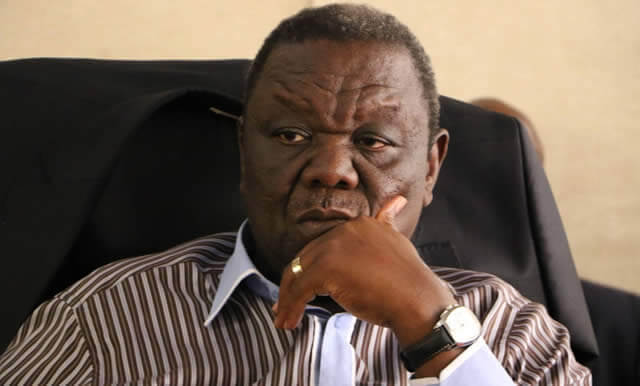
Photo: Opposition Leader Morgan Tsvangirai denies alligations of a secret deal with Zanu PF’s embattled Vice President, Emmerson Mnangagwa, to form a coalition government outside of elections. Photograph: www.zimbabwesituation.com
Zimbabwe
Earlier this month, opposition Movement for Democratic Change (MDC) said it had no plans to join factions of the ruling ZANU-PF party to form a national unity coalition after the eventual death of 93-year-old President Robert Mugabe. A Reuters investigation revealed that Vice-President Emmerson Mnangagwa, favourite to succeed Mugabe, has been looking to build a broad coalition that would kickstart the economy by reintegrating thousands of white farmers booted off their land in the early 2000s. However, the MDC said it would never consider joining an administration that was not the product of an election. “While stability is important, President Tsvangirai and the MDC have always placed a far higher premium on legitimacy and democracy,” a statement said.
In the meantime, the Zimbabwe Electoral Commission (ZEC) finally rolled out their long expacted Biometric Voter Registration system, to compile a new voter’s role. The commission plans to register more than 7 million Zimbabweans by January. These plans, however, are met with scorn, as it has only a quarter of the registrations kits needed available at the moment. Zimbabweans are sceptical and see the BVR-technology as a new way for the ruling party to rig the 2018 elections.
Finally, this week there was an upsurge of indignation about several members of the Mugabe family and their spending behaviour. For Zimbabwe, the 72nd United Nations General Assembly has been characterized by controversies over the expenditure of President Robert Mugabe’s sons in Harare and New York. In a country in which the economic crisis is worsening still, Grace Mugabe’s son Russell Gorereza welcomed two new luxury cars to his fleet of vehicles last Friday, receiving a lot of criticism online. President Mugabe himself took along a 70-member delegation, including his wife Grace Mugabe, to participate in the UNGA, where his son Bellarmine Chatunga was spotted shopping in the city with a bodyguard carrying his shopping bags.
On Monday, the New York based Congo Research Group (CRG) released a report on the killing of hundreds of people around Beni, in north-eastern DRC, between 2014-2016. The report claims that Congolese army commanders orchestrated the wave of massacres, as they vied for influence with anti-government insurgents in north-eastern DRC. The report is the first of its kind to offer a definite theory of the perpetrators’ motives, of these violent incidents that have “largely been shrouded in mystery.” The report also reflects on the role of the UN Peacekeeping mission in the specific area.
On Wednesday, i.a. AlJazeera reports on an incident in South-Kivu, where Congolese security forces opened fire on a group of protesting Burundian refugees. “At least 39 people – including a 10-year-old girl – were killed and 94 others wounded.” After the arrest of four Burundian refugees, allegedly holding ‘weapons’, Burundian refugees and asylum seekers living in the area left their camps and went to the office of the National Intelligence Agency to protest the detainment of the four men. The Congolese government claims that the army was attacked by armed persons and not refugees.
In this same week, President Joseph Kabila, has travelled to the restive Kasai region to attend a forum for peace. The eastern Kasai region has been home to armed clashes over the last year. Militia and state forces have engaged in running battles that have led to deaths and displaced thousands. The main opposition have criticized the forum describing it as a mini rally for the ruling party.
While anti-Trump protests did not take off full speed yet earlier this week at the UN General Assembly, the President’s speech caused for the main headlines in the beginning of the past week. While running for office, Trump had labelled the UN weak and incompetent. In his first speech at the UNGA, Trump literally put America first, also encouraging other nations to use their national sovereignty “to do more to ensure the prosperity and security of their own countries.”
Earlier this week, violent clashes erupted between police and protesters after a memorial vigil for a Georgia Tech student, who was killed by campus officers late last week. The Georgia Tech shooting happened as police across the United States are facing protests and scrutiny over the use of deadly force.
Donald Trump at the UNGA called the collapsing situation in Venezuela “completely unacceptable”. Adding to the escalating relationship with the regime of President Maduro, Trump warned that the United States was considering what further actions it can take. “We cannot stand by and watch,” he said.
At the same time, China strengthens its ties with the Southern-American nation. On Tuesday, on the side-lines of a U.N. meeting, Chinese foreign Minister Wang told Venezuelan Foreign Affairs Minister Jorge Arreaza that China’s strategic partnership with Venezuala will not change. China adheres the principle of non-interference in the internal affairs of other countries. Venezuela’s government and people should have the ability to resolve problems via talks within a legal framework and protect national stability, according to the Chinese Foreign Minister.
In Venezuela itself, opposition parties blamed President Nicolas Maduro’s government for the death of a sick activist in detention, saying he was framed and then denied medical help. Carlos Garcia, a local legislator in western Apure state, suffered a stroke in August after being arrested in late 2016 during protests. Venezuela’s opposition parties accuse the Maduro-regime of being dictatorial and maintaining hundreds of political prisoners on trumped-up charges.
On Tuesday, militants assault government targets in Hama-province, complicating cease-fire talks. Militants linked to al-Qaeda (Hayat Tahrir al-Sham) started a large-scale offensive against government targets in western Syria, state media and opposition activists said. The violence could potentially impede international efforts to quell fighting in that part of the country. Iran, Russia and Turkey are in a month-long process of establishing “de-escalation zones” in four regions of Syria, including parts of Hama and Idlib, which hosts a growing number of displaced civilians, according to Washington Post.
A renewed attempt for peace in Syria did not seem to be at the top of the list in the first days of the UNGA in New York, as newly installed French President Macron tried to set up an international contact-group on Syria, to revive stalled peace talks in Geneva. Trump’s anti-Iran stance, however, has partly complicated those efforts.
Also at the UNGA, The United States, Britain and other countries opposed to Syrian President Bashar al-Assad claimed they will not support the reconstruction of the country until there is a political transition that moves away from Assad. This stance of the “Friends of Syria” group opposes the stance of Iran and Russia, who support an ‘Assad-inclusive’ solution for the Syrian crisis.
In Spain, the battle between the federal government in Madrid and Catalonia’s regional government over the independence referendum continues. Catalonia’s regional authorities plan to hold a vote on independence on October 1, despite Spain’s Constitutional Court having ruled the ballot illegal as it would defy the nation’s constitutional decree declaring Spain indivisible. This week, Madrid added to the escalation of the conflict by seizing more than a million pro-referendum posters and pamphlets in Catalonia, after ordering a criminal investigation into the 712 Catalan mayors who have agreed to help stage the referendum on September 14. State police arrested several Catalonian officials on Wednesday, in an unprecedented raid of regional government offices. The Catalonian authorities claim that this behaviour from Madrid intimidates both local mayors as well as media, according to Al Jazeera. Following Wednesday’s raids by the Guardia Civil, tens of thousands of protesters gathered outside the regional government offices in central Barcelona as well as in several Catalan cities, waving the red-and-yellow Catalan flag and chanting “Occupying forces out” and “Where is Europe?”. On Thursday, several hundred people gathered in front of the High Court of Justice of Catalonia to demand the release of the dozen officials arrested.
Early this week, an interesting piece from the hand of Omkar Khandekar on Indian news-platform Scroll appeared, on the increasing politicisation of the judiciary under President Yameen. At the end of August, a 14-point petition endorsed by 56 lawyers outlining concerns about the deteriorating state of the judiciary in the country, was presented to the Supreme Court. “Predictably, the petition wasn’t accepted. But more shockingly, on September 10, the Department of Judicial Administration – controlled by the Supreme Court – suspended all signatories, which together reportedly make up a third of all practicing lawyers in the Maldives, over charges of contempt and for gathering in a manner that “obstructs the independence of justice system”, without explaining how, Khandekar writes. The lawyers’ effort was part of a larger plan: to kick-start a series of awareness workshops, TV appearances and mount pressure on the judiciary to initiate reforms, through the civil society and diplomatic channels, starting with a photo-op outside the Supreme Court. Read the full article by Khandekar via the link below.
The ongoing prosecution of Rohingya in Myanmar was one of the top-priorities at the United Nations General Assembly this week. On Wednesday, U.S. Vice President Mike Pence accused the Myanmar military of responding to militant attacks “with terrible savagery, burning villages, driving the Rohingya from their homes.” Pence called the crisis a threat to the world and said U.S. President Donald Trump wanted the U.N. Security Council to take “strong and swift action” to the violence.
Bangladesh’s prime minister Sheikh Hasina accused Myanmar of ethnic cleansing of its Rohingya people and urged the country to allow the return of the refugees. Bangladesh is now sheltering over 800,000 Rohingya, of whom 430,000 had arrived in the past three weeks. The PM urgently called on the UN to create safe zones in in Myanmar’s Rakhine state. In the meantime, Aung San Suu Kyi’s first public speech on the Rohingya-crisis has been receive with lots of scepticism worldwide. The human-rights icon and Nobel laureate, now the de facto leader of Myanmar’s civilian government, did not condemn the atrocities so far. Now, Instead of reaching out to the Rohingya, she questioned the international outcry itself. Her government, she said, was “concerned” about reports of villages burning in Rakhine, but had to weigh “allegations and counterallegations” before taking action. According to Kenneth Roth, executive director of Human Rights Watch, her speech “tried to sugarcoat ethnic cleansing.”
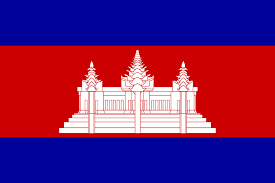
Late this week, AlJazeera reports on the regressing media freedom in Cambodia. Nearly a dozen stations have had licenses suspended without notice, ahead of 2018 election. Especially Cambodia’s poorest and most remote populations remain heavily reliant on radio for independent news, also now television is almost entirely dominated by parties affiliates to the government. Other organisations are also under pressure, Al Jazeera reports. The Cambodia Daily – the country’s highly regarded, longest-running English daily newspaper – shut its doors on September 4 after being ordered to pay a $6.3m tax bill that many believe to be politically motivated. Last week, Mother Nature, a prominent environmental group, suspended its operations citing ongoing harassment.
On the side-lines of the United Nations General Assembly, the Oslo Freedom Forum organized their first ever meeting in New York, on September 19th. OFF offered a platform for riveting talks, world-class networking, interactive exhibits, music, art, comedy, and conversations between courageous activists and leaders from business, philanthropy, technology, and media. The Young TurksPolitics Reporter Nomiki Konst spoke with Srdja Popovic about how to successfully lead a peaceful revolution in one’s country.
Read more about the Oslo Freedom Forum in New York here.
The power of humor in nonviolent protest! In Odisha, a very unusual form of protest has kept politicians on their toes and security-forces on point! In the Eastern Indian province. egg-pelting (throwing eggs as a form of protest) has been reported over 15 times in the last two years. Targeting political figures from the ruling Biju Janata Dal state political party with the egg attacks gave the security apparatus a firm scare. “The police’s intelligence wing worked overtime to sensitise routes taken by politicians, particularly to interior regions, restricting sale of eggs by roadside stalls. Some policemen were even suspended for failing to prevent the attacks,” according to Priya Ranjan Sahu. Biju Janata Dal’s MP from Bhubaneswar Prasanna Patasani went to the extent of equating the egg attackers with terrorists and demanded that they be charged with attempt to murder!
Read Priya Ranjan Sahu’s full article on www.scroll.in here.
Back to last week, when thousands of protesters in London took action against the Defence and Security Equipment International, or DSEI. As the arms fair prepared to open its doors at the Excel centre in London’s Docklands, a diverse array of participants led to a wide range of creative and humorous actions.
DESI is billed as the world’s largest arms fair, where buyers and sellers of arms to network and make preliminary deals. Although no actual trade takes place, this year’s four-day event will be attended by around 34,000 people from the world’s arms companies, militaries and government representatives, including military delegations from countries with appalling human rights records and countries at war.
Wagingnonviolence.org gives us an insight into several of the nonviolent tactics used to mobilize a diverse group of people and the end-goals of the protests organized against DESI. It also answers the question why the preparations for the arms fair were targeted, instead of the event itself. Read the full article here.
Photo: Dancers block a vehicle as part of the “Festival of Resistance to Stop DSEI” on Sept. 9. (CAAT/Paige Ofosu)
At what was supposed to be the first big protest against Donald Trump’s appearance in New York for the UN General Assembly, fewer than 1,000 protesters attended.
“It’s kind of like battle fatigue. People are worn out.’’
Are people tired of protesting against their president? How can the popular campaign against the Trump presidency stay energized?
Read the full article from Barbara Demick for Los Angeles Times here.
From Syriza to Podemos, Hong Kong to the UK, people from outside the establishment have been shaking up politics.
Serbian revolutionist Sr?a Popovi? argues that the popularity of these political insurgents lies in the impression that they are allowing the people to influence the system, in ways that seem impossible in traditional politics. But how do these outsiders fare once they enter the halls of power? And can they ever truly replace the old guard?
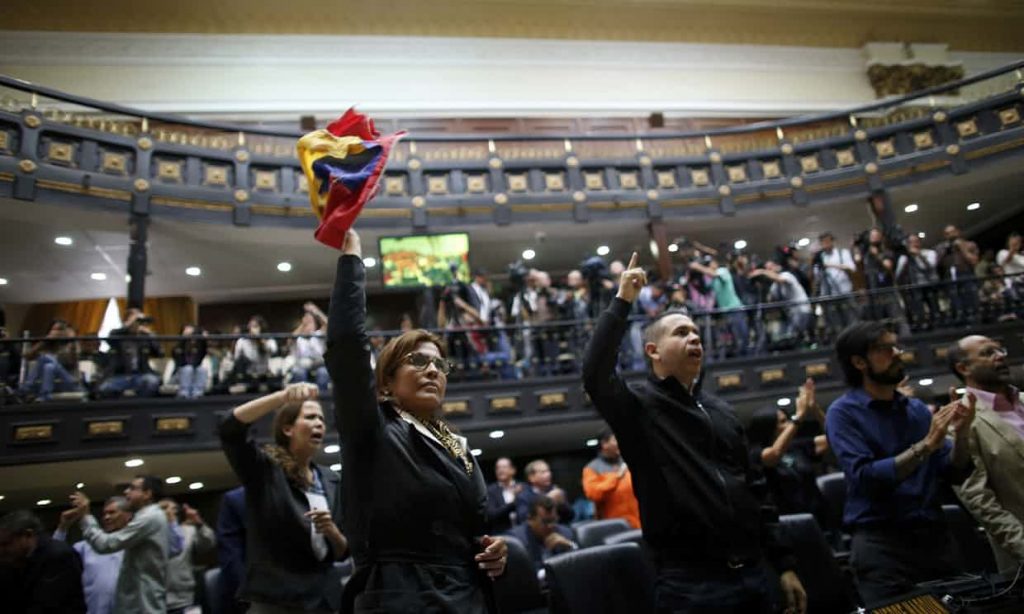
Photo: Anti-government lawmakers shout ‘fraud’ during a session of Venezuela’s National Assembly in Caracas Wednesday. Photograph: Ariana Cubillos/AP.
The Democratic Republic of Congo
A series of marches took place across the DRC to demand that President Joseph Kabila leaves office and organizes elections by the end of the year. They were organized by pro-democracy group Lucha, and backed by opposition politicians. The Congolese authorities, which banned opposition demonstrations last September, arrested several protesters. Amnesty International reported that more than 100 people had been arrested, while the UN condemned the ‘arbitrary arrests’.
A UN report based on interviews with almost 100 victims says that more than 250 people, including 62 children, have been killed in attacks in the DRC’s Kasai region that are “taking on an increasing and disturbing ethnic dimension”. It also reported that the DRC government might be complicit in the massacres.
As measles sweeps across the DRC, more than one million children have been vaccinated against the disease in a nine-month campaign by Médecins Sans Frontières, led in different regions across the country.
Fears over the events taking place in the Maldives have only continued to escalate since July 24th, on which day the Maldivian military blockaded parliament and expelled Members of Parliament from the building in order to protect a successful impeachment vote against a close ally of the president. Now, the government is planning to follow through with the execution of three men “in the next few days.” Amnesty International reports that the executions are also a way for the government to divert attention away from its other troubles. In response to the mounting threat, the British Foreign office has updated its travel advice for those traveling to the area, urging tourists to avoid any large gatherings.
US-based foundation Human Rights First published a troubling new report on the ruling party’s assail on Poland’s journalists, activists and NGO workers. Using state controlled media, the PiS has launched a smear-campaign on organizations whose advocacy focuses on the rule of law and human rights, insinuating their funding was only the result of “corruption” and would soon be eliminated. While independent groups are facing cuts and declines in public support due to malicious propaganda, the government is actively surrounding itself with organizations which share its conservative worldview – and largely focus on promoting Catholic family values, the rights of Christian refugees and nationalist Poles. In July, it even announced plans to create a new entity which would centralize EU and state funding for NGO’s, a move local activists fear would deal the final blow to Poland’s fragile civil society.
After a suspect election, the Venezuelan government announced it will go ahead with the creation of its “Constitutional Assembly”, a new, 545-member body tasked with re-writing the constitution, an objective many observers equate with effectively destroying all outlets for dissent. Members of the opposition, which has gained majority in the National Assembly for the first time in years, have already announced they will continue holding plenary sessions, irrespective of the restrictions the CA will likely impose on their political activities. A day after the results came out, the software company contracted to set up and support the country’s electronic voting system, announced that the government had reported a false turnout rate, inflating the figure by more than 1 million votes. Amidst mounting concerns for the near-irreversible erosion of democracy in Venezuela and growing evidence of fraud, other state actors have already denounced the elections as illegitimate. The US State Department will respond by placing Nicolas Maduro on its sanctions list, while the EU signaled it would undertake similar measures in the case of further assaults on democracy by the Venezuelan government.
On Thursday, Zimbabwean soldiers reportedly clashed with police in the capital Harare. Armed with sjamboks, logs and sticks, soldiers are reported to have chased the police down Robert Mugabe road. Zimbabwean police have come under increasing fire in the last year for using unconventional methods of dealing with the public causing uproar amongst many. Although the reasoning behind the attack remains unclear, some believe that the soldiers were retaliating after the police had placed spikes under the tires of military vehicles. However, others fear that this may be a sign of the factional fights taking place within the Zanu-PF. With President Mugabe’s health in decline, there has been increased fighting over who might take over in the event of his death. Indeed, last week President Mugabe made accusations against the military, suggesting that they were plotting a coup against him. Some speculate that Mugabe is fearful the military may choose to support one of its own generals in a bid for the presidency instead of President Mugabe’s Wife Grace should he die.
In other news, there has been reports uncertainty in the country as many worry about how the Trump administration may cut some or all foreign aid to Zimbabwe in the coming year. Currently, the country receives $150 million from the United States to help fight food insecurity and the effects of climate change.
This week, Bassel Khartabil Safadi, an internet entrepreneur and an enthusiastic participant in the 2011 uprising in Syria, was confirmed dead by an undisclosed source in Damascus. He was detained in March 2012 after his participation in the Syrian uprising and was later executed by the government in October 2015. Amnesty International has reported thousands of such secret executions of political prisoners at the prison of Sednaya outside Damascus.
Meanwhile, in a letter to UN’s special envoy Staffan de Mistura, 160 Syrian civil society groups complain that peace talks are failing due to external interference. They urge the UN to focus more on the political transition and to give less time and space to external players with their own agenda, such as Turkey, Russia, Iran and the Gulf States. The letter is understood to be specially aimed at Russian interference.
Furthermore, a ceasefire between Syrian forces and rebels north of Homs has been agreed and will come into effect on Thursday, announces Russia’s defence ministry. It would be the third “de-escalation zone” put in place after talks between powers backing and opposing the Syrian government.
On Wednesday, President Trump supported a new bill in the Senate that would aim to slash illegal immigration levels by half in the next decade. Modified since its initial version in February, the bill would seek to create a ‘merit-based’ immigration system, favoring those with skills over those with family connections. The bill would reduce the yearly award of permanent legal residence (or green-cards) to 500,000 from the original figure of over 1 million. Moreover, the bill would work on a point based system, similar to systems already in place in Australia and Canada, looking at factors such as English ability, education levels and job skills. The bill is titled the Reforming American Immigration for Strong Employment act (RAISE).
It was also revealed Tuesday that the Trump administration will now begin investigating the use of Affirmative Action policies in college admissions procedures. It is believe that the investigation by the Justice department will specifically target those policies that give typically disadvantaged groups such as African-Americans and Latinos a slight edge over other applicants from more privileged backgrounds who may have higher test scores.
In other news, Special Counsel Robert Mueller has been continuing to pursue the Russia probe and is now using a Washington D.C. based grand jury to further investigate claims. Mueller has likewise begun issuing a series of subpoenas and it is even reported that Mueller’s investigation has extended beyond 2016 election and may potentially even be looking at the entirety of Trump’s financial and business history. Matters have only become more troubling for President Trump as it was recently revealed that Trump deliberately dictated his son to release a misleading statement about his meeting with a Russian lawyer earlier last year.
It was also reported last Friday that Trump appeared to be encouraging police to treat suspects with more brutality as he spoke to law enforcement officers in Suffolk county, New York.
Finally, the last week has seen a serious reshuffling of White House staff as Trump swore in retired four star Marine general John F. Kelly as his new Chief of Staff, a move that was immediately followed by the dismissal of Anthony Scarmucci, the former White House Communications Director who had only held the job for a grand total of 10 days.
Srdja spoke at TEDxKraków, an independently organised TED event which took place on 20 October 2011 at the Manggha Centre for Japanese Art and Technology in Kraków, Poland. Srdja talked about people power movements and bringing down dictators through non-violent struggle.
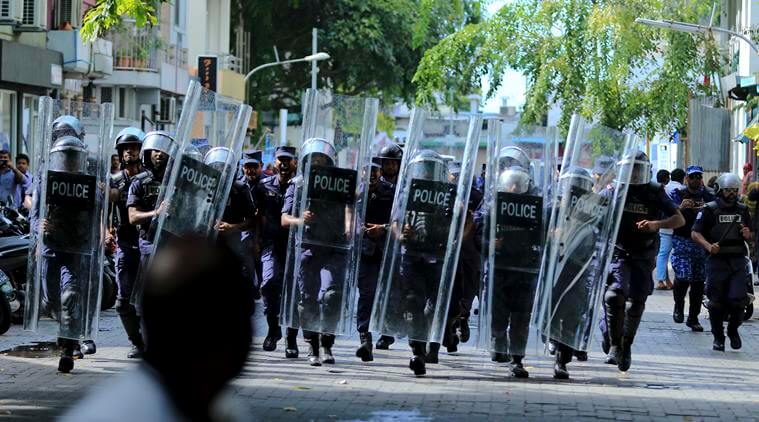
Police block the road leading to the Parliament building in Male, Maldives, Monday, July 24, 2017. (AP Photo/Ahmed Shurau).
Cambodia Cambodia launched a free mobile application with the comprehensive history of the Khmer Rouge. Since seventy percent of Cambodia’s population is under thirty, developers felt it was imperative to educate the younger generations about the development of the Pol Pot-led regime, which started as a guerilla group in the 1950s. Thanks to funding by the EU and the Rei Foundation, the app will be introduced in 80 schools and 20 universities in October.
These efforts coincide with the trials of the last two surviving top leaders of the Khmer Rouge in the Cambodia Tribunal. One is the second-in-command and chief ideologist of the regime, Nuon Chea, and the other is its former head of State, Khieu Samphan — both were sentenced to life imprisonment during the first part of the trial in 2014
Syria ISIS is losing more and more territory in Syria. The Islamic State is struggling to mount an effective defense of the city of Raqqa, its headquarters, as local forces make rapid headway in ousting the militants, the U.S. military said. The U.S.-backed Syrian Democratic Forces (SDF) said they have captured 40% of the city since June 6, when a ground assault began.
Meanwhile, US president Donald Trump and Lebanese Prime Minister Saad Hariri held a joint press conference on Tuesday. Trump mentioned that the US will support “the humanitarian needs of displaced Syrian citizens as close to their home country as possible”, thus allocating new funding to Lebanon, in support of Syrian refugees there.
The Maldives: In the Maldives, an ongoing political crisis is unfolding after President Abdulla Yameen ordered troops to barricade Parliament on July 24. Opposition lawmakers have been physically barred from entering and assaulted with pepper spray. This comes after the unified opposition declared a no-confidence vote for July 24 against the Speaker Abdulla Maseeh; the Opposition claims it has support from 45 out of 85 MPs. The situation escalated after last week, when Yameen arrested and jailed the son of Abdul Maumoon Gayoom. Gayoom is the former authoritarian leader who has now joined the opposition against Yameen.
Democratic Republic of the Congo This week, the UN issued two declarations related to the DRC. The first focused on the mass graves found in the insurrection-ravaged Kasai region: for the first time, the UN has directly suggested that government forces dug most of these graves. Congo’s authorities, however, have repeatedly denied this accusation. The second declaration urged Congo’s government to hold presidential elections by the end of the year. Current president Kabila has been trying to postpone these elections, blaming the lack of funds and voter registration.
Meanwhile, as the conflict in Congo continues, the Congo Central Bank predicted a steep rise in 2017 inflation, from a previous forecast of 33.12% to 44%. Moreover, Ntabo Ntaberi Sheka, the founder and leader of a Congo rebel group who is wanted for crimes against humanity surrendered Wednesday in the country’s North Kivu province, the United Nations mission in Congo said.
The United States of America As republicans failed to once again pass a successful health care reform bill, President Trump shifted tactics and has now set his sights on repealing Obamacare. The so-called “skinny repeal” that republicans attempted to pass would have stripped 16 million people of healthcare insurance by 2026 and eliminated the mandate requiring all Americans to have health care coverage. Although Trump secured a victory Monday after John McCain flew in to cast a yes vote, allowing for debate to begin health care legislation reform, republicans were dealt a major blow after the skinny repeal failed to pass in a 49-51 vote. As a result, all three Obamacare repeal bills have now failed to pass.
Meanwhile, President Trump also announced Wednesday that Transgender people would no longer be allowed to serve in the military, citing costs of gender reassignment surgery and hormone therapy. Soon after, hundreds of protestors took to the streets of New York, D.C. and San Francisco to speak out. Protestors held signs saying such things as “Resist” and “Trans is not a burden.” Although the military has yet to act upon Trump’s announcement, many currently out service men and women fear for their future in the military. Trump’s announcement is seen as a significant reversal in White Policy, after previous President Barack Obama had earlier declared that Transgender people would be allowed to freely serve in the military.
Venezuela On Thursday, the Venezuelan government banned protests and said violators would be punished with 5-10 years in prison. This came on the second day of a 48-hour national strike, organized by the opposition, in an attempt to thwart the upcoming vote on Sunday that would give President Maduro’s government power to rewrite the constitution. Thousands are fleeing the country leading up to the vote, and the protest ban demonstrates an escalation of repression by the Maduro government.
Zimbabwe This week, it is reported that Zimbabwe’s First Lady, Grace Mugabe, has urged her husband, President Robert Mugabe, to appoint an heir. Over the past year, President Mugabe has flown to Singapore at least three times in order to receive medical treatment. Although the government has attempted to downplay the severity of Mugabe’s health problems, many are starting to think that Mugabe may not survive until even the next president presidential election.
In other news, almost 100 Zimbabwean civil rights groups are protesting a recent ruling that would alter Zimbabwe’s current constitution. The previous constitution had been amended twenty times, and people fear that Zimbabwe’s current constitution might go the same way. This has only cemented fears that the government has no intention to undergo reform.
This website uses cookies to improve your experience. By closing this message, you consent to their use in accordance with our cookie policy, unless you have disabled them. ACCEPTRead More
Manage consent
Privacy Overview
This website uses cookies to improve your experience while you navigate through the website. Out of these, the cookies that are categorized as necessary are stored on your browser as they are essential for the working of basic functionalities of the website. We also use third-party cookies that help us analyze and understand how you use this website. These cookies will be stored in your browser only with your consent. You also have the option to opt-out of these cookies. But opting out of some of these cookies may affect your browsing experience.
Necessary cookies are absolutely essential for the website to function properly. This category only includes cookies that ensures basic functionalities and security features of the website. These cookies do not store any personal information.
Any cookies that may not be particularly necessary for the website to function and is used specifically to collect user personal data via analytics, ads, other embedded contents are termed as non-necessary cookies. It is mandatory to procure user consent prior to running these cookies on your website.