According to the latest Freedom House index, the denoted territory of Tibet is right at the bottom of the ranking, in the good company of countries as Syria, North-Korea and Eritrea. “Yet the situations in Syria and North Korea get far more media coverage, thanks to the crises’ threats of terrorism and nuclear war,” writes Josh Rogin for the Guardian, late last week. Tibetan leaders lament that their nonviolent movement is ignored while violent movements and violent regimes succeed.
The (in this case Chinese) surge of nationalism and the retreat of human rights and democracy promotion, should be seen as global trends, according to Rogin. Although the Tibetan issue has moved to the background of world-politics over the last years, their nonviolent movement is at a crossroads, facing increasing Chinese oppression. Loss of visible support from the United States and the rest of the international community prompted the Tibetan government-in-exile in northern India to convene the ‘Five-Fifty’-conference last weekend to determine its path forward.
The Five-Fifty-forum refers to the bilateral goal of the conference: chart a five-year plan for pursuing a return to dialogue and negotiations with China, or, alternatively, plan for another 50 years of resistance to China’s occupation, systematic repression and attempted cultural genocide in Tibet.
Guiding Tibet’s quest for a sustainable solution is the so called “middle way approach,” which seeks limited autonomy within the Chinese system, and not ethnic purity or even an autonomous state. The middle-way approach is a nonviolent, but more importantly very pragmatic approach to conflict-resolution, in which genuine dialogue conducted with a spirit of openness and reconciliation are the most important values. Where the Dalai Lama has held the Tibetan movement to a strict policy of nonviolence for decades, that commitment could perish when the 82-year-old spiritual icon passes on.
More on the Chinese-Tibetan conflict, and the role the United States could play as an international power can be found in Rogin’s complete opinion-article for the Guardian – here.
Photo: United States President Barack Obama meets with His Holiness the Dalai Lama in the White House on 18 February 2010. While President Trump may not prioritize human rights or the viability of nonviolent movements, supporting Tibet could also be in the United States’ national interest, according to Josh Rogin. Photograph: WikiMedia
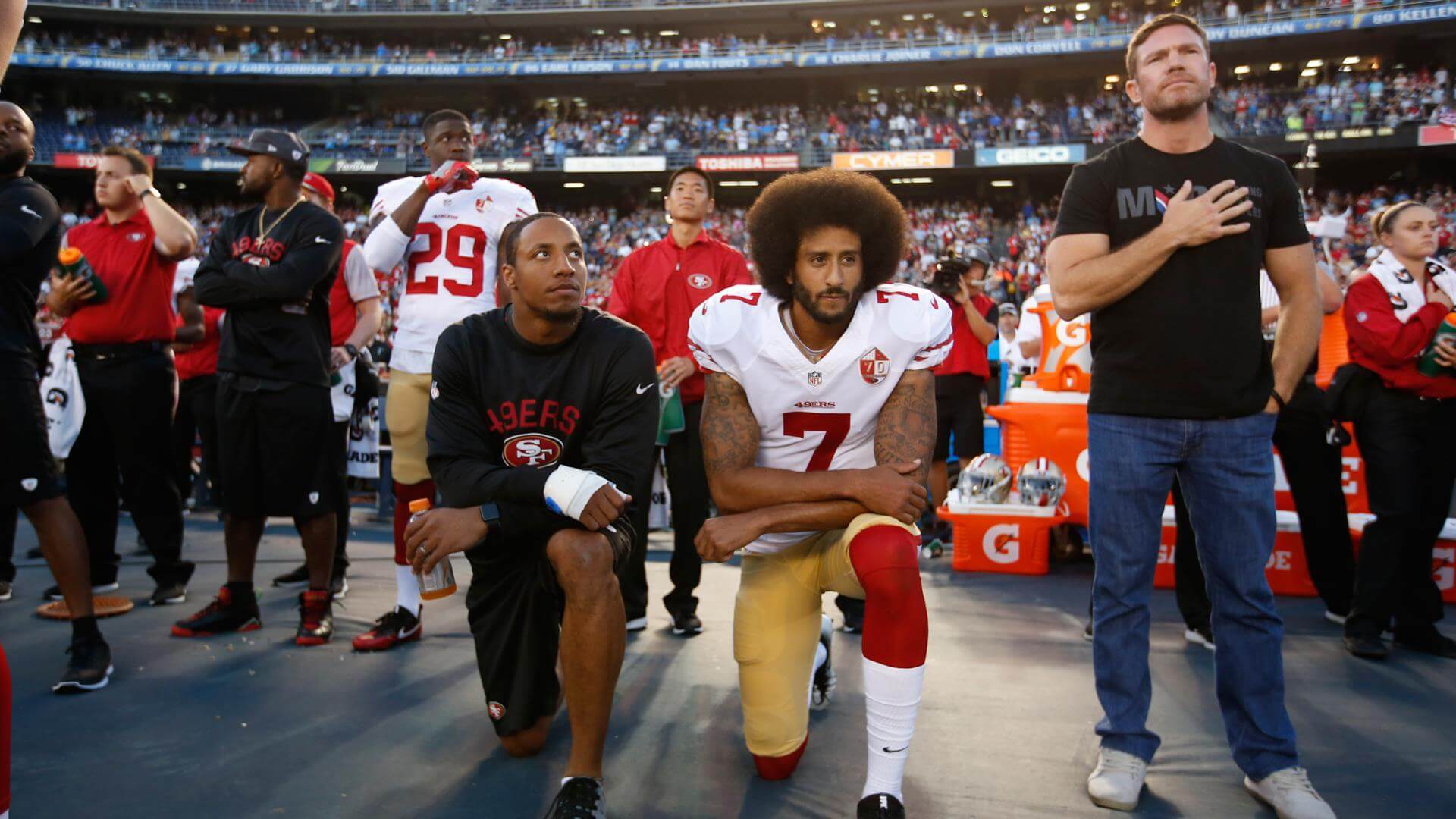
A new chapter in the US-campaign, in which NFL-players try to play their part in raising awareness for racial injustice in America. The protests during the anthem by NFL players, almost all African American, began last year when the then 49ers quarterback Colin Kaepernick kneeled in protest against racial injustice and police brutality. 49ers players have been prominent among those kneeling this season.
Though Kaepernick had knelt to protest against unpunished police killings of African Americans, the president and the White House insisted that protesting during the anthem showed disrespect to the flag and to American troops, veterans and first responders.
On Sunday, after at least 20 members of the San Francisco 49ers were kneeling during the national anthem, US Vice President Mike Pence decided to leave the stadium, staging his own little protest. Pence announced his departure from the Lucas Oil Stadium on Twitter. A White House statement followed, with a tweet from President Donald Trump which confirmed the walkout was not spontaneous.
“I will keep doing what I feel is necessary to use a platform that I have to make those changes. It is just really disheartening when everything I was raised on, was to be the best person I could be to help people that need help. And the Vice-President of the United States, is trying to confuse the message that we are trying to put out there,” said 49ers player Eric Reid.
Late last week, CANVAS wrote about the ‘Monopoly-man’ protest. Activist and consumer protection advocate Amanda Werner performed the stunt to raise awareness about forced arbitration clauses and their effects on consumers. Vice Magazine contacted Werner and gave her a platform for a more detailed explanation about the message behind the method.
Werner’s aim was to achieve more than just a laugh with her actions. “Equifax and Wells Fargo are using these arbitration clauses as a way to [to use another Monopoly reference] get out of jail free, and deny consumers justice,” she told VICE. Before her appearance in the hearing went viral, Public Citizen and Americans for Financial Reform already distributed mocking “get out of jail free cards” on Capitol Hill, symbolizing how forced arbitration lets banks get away with wrongdoing.
Werner describes how she needed to find a balance between catching the camera’s and not crossing the line of what was still acceptable surrounded by Equifax execs and representatives. “I was getting a lot of dirty looks, and folks were very uncomfortable with the fact that I was in the room,” Werner told VICE. “I think honestly they kept waiting for me to do something that was going to get me kicked out, but luckily I did my homework, I knew what I was allowed to do and not do.”
Where her attendance made a big impact, kicking her out in the middle of the hearing might have raised even more eyebrows. Dilemma-action in its prime! Read the full Vice Magazine-article here.
Photo: Efforts to bring those responsible for atrocities in Syria before European courts are starting to bear fruit. While various authorities in Europe have opened investigations of serious international crimes committed in Syria, Sweden and Germany are the first two countries that have prosecuted and convicted people for these crimes. Photograph: Human Rights Watch
Syria
In a report released on Wednesday, Human Rights Watch said that efforts to bring those responsible for atrocities in Syria before European courts are starting to bear fruit, notably in Sweden and Germany. In the 66-page report, the countries efforts to investigate and prosecute people implicated in war crimes, crimes against humanity, and genocide in Syria are outlined. The report emphasizes that Syrian refugees consistently stressed to Human Rights Watch the importance of bringing to justice those responsible for atrocities committed in Syria.
On this same Wednesday, ISIS claims responsibility for bombing in Damascus on which happened two days before. Killing 17 people in the central and famous al-Midan neighborhood of the city, the attack was the first of its kind in the capital since July this year. Midan is a predominantly Sunni Muslim area that witnessed some of the biggest peaceful protests against President Bashar al-Assad at the start of the civil war.
On Tuesday, Al Jazeera covers the UNHCR reporting of Congolese refugees fleeing towards Zambia. More than 3,000 people have fled to that country from DRC in the past month to escape escalating violence, according to the United Nations. UNHCR stated that unrest in parts of southeastern Congo since 30 August has driven these numbers into northern Zambia – the largest influx of its kind in the past five years. People “are escaping inter-ethnic clashes, as well as fighting between Congolese security forces and militia groups”, Andrej Mahecic, UNHCR spokesman, told reporters in Geneva.
In the meantime, opposition leaders in the Democratic Republic of the Congo (DRC) have mobilized for a new effort to oust President Joseph Kabila, calling for civil disobedience by citizens. The Guardian reports on these new efforts under the banner of ‘Go Kabila Go’. Protests, however, have proven to not be without a risk. “The government shut down protests in December. Its message is simple: if you demonstrate, we will shoot you. And it has done that in the past … Fayulu [Martin Fayulu, an opposition member of parliament] is a brave man, but when was he last able to get more than 500 people on to the streets? The opposition has not put a ding in the Congolese government,” said Jason Stearns, director of the Congo Research Group at New York University.
Late on Friday last week, Zimbabwean police fired teargas to break up protests in Harare. Led by the anti-government social movement #Tajamuka, demonstrators demanded the resignation of central bank chief John Mangudya, over severe cash shortages. Zimbabwe’s economic crisis is visibly worsening since early this year, as rising prices fuel opposition to President Robert Mugabe’s regime.
Towards the 2018 elections in Zimbabwe, the battle for succession of Robert Mugabe is heating up. On Wednesday, one of Zimbabwe’s vice presidents accused the other of “using lies” over an allegation of poisoning, fueling political tensions within ZANU-PF. Emerson Mnangagwa, 75, was flown to South Africa for emergency treatment after falling ill at the ZANU-PF party rally in the southern town of Gwanda on August 12. The Vice-President claimed he had been given poisoned ice cream in an attempt to kill him. After Mugabe later said that Mnangagwa was not poisoned, Vice-President Phelekezela Mphoko of making a “calculated” challenge to the president’s account of the incident. “There appears to be an agenda to undermine the authority of President Mugabe and to destabilize the country by using lies,” Mphoko said in a statement. “This must stop.”
Meanwhile, the ‘tribal’- discussion fired up in Zimbabwe again this week. The tribal divide between Shona and Ndebele within the country came to a head when MDC-T deputy president, Thokozani Khupe strongly opposed the formation of MDC Alliance, arguing some of the coalition parties do not bring anything to the table. Khupe was then accused of being a tribalist. When Tendai Biti fell out with his colleagues in the People’s Democratic Party later that week, he also accused his secretary general, Gorden Moyo and everyone supporting him, of tribalism. NewsDay reporter Nqaba Matshazi wrote an interesting article about how “labelling someone a tribalist could be meant to deflect from substantial issues, […] and is quite a lazy way to avoid political debate.”
On the weekend, the South China Morning Post reports on the Cambodian government cracking down on dissenting voices. Around half the opposition members of Cambodia’s parliament have allegedly left the country in fear of Prime Minister Hun Sen’s repressive regime, a deputy party leader said. After the arrest of opposition leader Kem Sokha early September, the government has said there could be more arrests linked to the alleged plot, which the opposition has dismissed as a ploy to ensure Hun Sen keeps his more than three-decade hold on power in next year’s general election. Where the ruling party accuses the United States to be behind a plot to democratically remove the prime minister in next year’s elections, the opposition says it is evidence of an election strategy, not a coup plot.
On Wednesday, Human Rights Watch released a statement in which it calls on UN Rights bodies to ensure pre-election reporting on Cambodia. Summing up the main human- and civil rights violations, HRW concludes that “the Cambodian government’s actions amount to a comprehensive campaign of intimidation, violence, and misuse of legal mechanisms in the lead-up to next year’s national election. In view of this campaign, pre-election reporting, followed by Council discussion, should be a red line in the resolution currently under consideration,” according to the statement.
This week, the United States news was completely dominated by the Las Vegas shooting. After a man opened fire at a crowd, killing 59 people and injuring several hundred others, the bitter debate about gun rights is moved back to the center of Washington politics. Despite the fact that support for stricter gun laws spikes after mass-shootings, that shift in public opinion largely fades over time. “Gun owners are too powerful of an interest group and anybody who crosses them will pay a steep political price,” according to Andy Sullivan for Reuters. Jimmy Kimmel on Monday delivered an emotional monologue after the mass shooting, imploring Congress to act. Kimmel focused on the contrast between the aggressive US response to terror-threats, and the countries in-action concerning gun violence, which has a far larger death-tole.
On Monday, Human Rights Watch Senior Researcher Tamara Taraciuk Broner puts out a small summary on the attention the profound human rights and humanitarian crisis in Venezuela got at the UN Human Rights Council session that ended last week. Although member states, including from Latin America, spoke up clearly and forcefully about the countries increasingly brutal crackdown on dissent, “the challenge now is to keep up the multilateral pressure on the Venezuelan government,” according to Taraciuk Broner.
The Atlantic featured a great long read on Wednesday, addressing a central question in the countries deteriorating situation. “Given Maduro’s deep unpopularity and the widespread chaos, hunger, violence, and scarcity of basic goods under his rule, an obvious question arises: After three years of determined, ceaseless efforts, why has the opposition failed to unseat him?” About the importance of image, small victories, and how high-profile failure has generated a pessimism among the public about the oppositions’ chances for success.
On Thursday, the Washington Post features a story on the Venezuelan government’s anti-crime campaign. A new report, by the local news site RunRun.es in partnership with a Colombian-based journalism nonprofit called Connectas, alleges that instead of pacifying the country, the operation has left more than 500 people dead. Very worrying, then, is that the report concludes that the operations led to the installation of pro-government armed groups in slums, replacing organized-crime groups with violent pro-government gangs known as “colectivos”. The report relied on official figures, media reports from around Venezuela, and interviews with people in five states to document the impact of the anti-crime program, known as Operation for the Liberation and Protection of the People, or OLP.
With 90 percent in favor of independence on a turnout of 42 percent at the independence-referendum on Sunday, the Catalans gave of a strong statement to their federal government in Madrid. After the vote on Sunday, separatist parties and unions urged Catalans to stop working and join a general strike on Wednesday, to put pressure on Spanish national authorities to take note of their referendum vote in favor of independence. After an earlier pledge to engage parliament on a unilateral declaration of independence within 48 hours of the vote, Catalan leader Carles Puigdemont has meanwhile pulled back, saying he wants the European Union to help mediate what he calls “a new understanding” with the Spanish state. Puigdemont called on Europe to step in to make sure fundamental rights were fully respected but for now Brussels is maintaining a determined silence.
Spain’s constitutional crisis deepened Wednesday after the nation’s king lashed out at Catalan’s secessionist leaders in a TV address. King Felipe’s rare TV speech was unexpectedly hard; he accused pro-independence leaders of “unacceptable disloyalty” and made no mention of the nearly 900 people injured in clashes with Spain’s national security forces. Instead, the king blamed the referendum’s organizers for the strife. Catalan President Puigdemont vowed to declare independence within days; late this week or early next week, his government will act to split from Spain. According to CNN, declaring independence would be a huge gamble for Puigdemont. While there was broad support for holding the referendum, support for independence is not overwhelming in Catalonia.
On Thursday, the Guardian publishes a worrying article about the role of the UN in the run up to the current Rohingya-crisis in Myanmar. Based on information provided by inside-sources, Guardian claims that the highest UN-authorities commissioned and then “suppressed” a report that criticized its strategy in Myanmar and warned it was ill-prepared to deal with the impending Rohingya-crisis. The report, which was released in May this year, accurately predicted a “serious deterioration” in the six months following its submission and urged the UN to undertake “serious contingency planning”. However, sources within the UN and humanitarian community claimed the recommendations were ignored and the report was suppressed. The BBC also wrote about the UN failing the Rohingya last week.
Some days earlier on Tuesday, Reuters reports on the skepticism among the Muslim minority, on the chances of ever going home. The Rohingya in Bangladesh are skeptical about their chances of ever going back to Myanmar, even though the government there has given an assurance it would accept people verified as refugees. At the root of the problem is the refusal by Buddhist-majority Myanmar to grant citizenship to members of a Muslim minority seen by a mostly unsympathetic, if not hostile, society as interlopers from Bangladesh, according to Reuters.
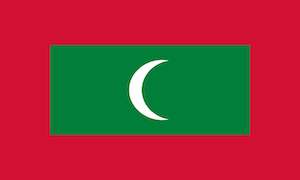
In the second half of this week, The Maldives have announced to suspend all trade activities and relations with Myanmar, said the Maldivian government. The Maldivian effort is part of an outcry by mainly Muslim countries in Asia, representing a growing chorus of criticism aimed at Myanmar and its civilian leader Aung San Suu Kyi over the plight of the Rohingya Muslim minority. Resolutions were passed today in provincial assemblies of Pakistan condemning the brutal killing of Rohingya Muslims in Rakhine State.
On Friday, the news platform TRT-World published an article on the current aggravating situation in the Maldives. Basing their information on interviews with several activists opposing the regime, the article sketches a good macro-level understanding of the current circumstances. The spread of Salafism through new found partner Saudi Arabia and the developing relationship with China make the short analysis into a good introductory read.
Hong Kong – Popular protest continues in Hong Kong on Sunday, as thousands of protesters call for justice secretary’s resignation in aftermath of prominent activists being sent to jail. Organisers claimed 40,000 people took part. They had projected a turnout of 20,000. Police put the figure at 4,300. – https://www.scmp.com/news/hong-kong/politics/article/2113583/national-day-protest-hong-kong-draws-40000-streets?utm_content=buffereda52&utm_medium=social&utm_source=twitter.com&utm_campaign=buffer
Uganda – On Wednesday, Reuters reports on attacks that were committed against MP’s who opposed the scrapping of the presidential age limit and thereby extending President Yoweri Museveni’s more than 31 years in power – https://www.reuters.com/article/us-uganda-politics/grenades-thrown-at-homes-of-ugandan-mps-opposed-to-extending-presidents-rule-idUSKCN1C81LM?feedType=RSS&feedName=worldNews&utm_source=Twitter&utm_medium=Social&utm_campaign=Feed%3A+Reuters%2FworldNews+%28Reuters+World+News%29
West Papua – The UN decolonization-committee, responsible for monitoring the progress of former colonies towards independence, will not accept a petition signed by 1.8 million West Papuans calling for independence. On Tuesday, the exiled West Papuan leader Benny Wenda presented the petition, but the committee claims that West Papua’s cause is outside the it’s mandate – https://www.scmp.com/news/asia/southeast-asia/article/2113504/united-nations-refuses-accept-west-papua-independence?utm_content=buffer900f2&utm_medium=social&utm_source=twitter.com&utm_campaign=buffer
Who doesn’t know the top hat wearing, mustached man covering the popular board game “Monopoly”? Pictures and videos of a person dressed up as this well-known figure in a US Senate hearing appeared on the Internet throughout the last days. Protesting financial company Equifax’ behavior after a data breach had become known, activist Amanda Werner from Public Citizen and Americans for Financial Reform wore the costume during former CEO Richard Smith’s hearing at the Senate.
The data breach that first became public in September had possibly exposed data of more than 145 million people. In the following, “Equifax offered a credit monitoring service that required consumers to accept arbitration to settle disputes, something it has since removed”. Americans for Financial Reform declared in a statement this week that “Forced Arbitration Is a ‘Get-Out-of-Jail-Free’ Card for Banks That Cheat Customers”. Such “Get-Out-of-Jail-Free” Cards were also handed out during the protest.
Making her appearance at the hearing in the costume, the activist used Laughtivism, a powerful and humorous form of nonviolent action and activism. Through this, she drew attention to the case and issue, triggering widespread reactions on social media.
Many places in the world commemorated the International Day of Non-Violence on Monday, October 02, Mahatma Gandhi’s 148th birthday. The UN had set up this day to spread the message of nonviolence, and promote peace and tolerance. On Monday at the 72nd Session of the UN General Assembly it was celebrated for the tenth time.
Some others have chosen a very creative way to make statements on the topic, creating art projects conveying messages against violence, weapons and war: Making artwork from bombs and bullets on the streets of Douma, Syria, or using images from popular movie scenes in which weapons are replaced with a Thumbs Up. The creators believe that “real tough guys don’t need guns, they just need a positive, can-do attitude”. To learn more about their projects and others, consult the following blogpost on artists turning weapons into “powerful messages of nonviolence”.
Right on time for the three-year anniversary of the mass demonstrations in Hong Kong, writer and activist Kong Tsung-Gan published his book “Umbrella: A Political Tale from Hong Kong” in September.
The book does not only examine what happened during the occupations, how they began and what they were about. But it also provides an assessment of the movement and gives an outlook for Hong Kong’s democratic future. Besides sharing his knowledge on Hong Kong and its people’s democratic struggle, the author offers a global perspective, drawing from his experience in many parts of the world.
Learn more about the content of the book and how to order it here. The limited copies in Hong Kong whose proceeds are donated to four pro-democracy organizations, have already sold out. However, you can still order it internationally.
Last Thursday, at an address held by US American Education Secretary Betsi DeVos on school choice, a group of students staged a mainly silent protest, displaying signs and raising their fists. Only occasionally they cheered or snipped their fingers in support of other protesters.
Signs held up by the students addressed various issues, featuring slogans like “White Supremacist”, “Protect Survivors’ Rights” or “Our Students are not 4 Sale”. DeVos did not react to the protest during her speech, however she did take some questions afterwards.
The Education Secretary’s speech addressed the topic of school choice for parents and students which is supposed to offer alternative options to local public schools, like charter or private schools. Critics have claimed that the options of charter schools take important budget needed for public schools as well, and that school choice is used by large corporations ‘to make money off the backs of students’. Besides this issue being part of the students’ motives for protest, DeVos’ had recently revoked the Obama administration’s guidance for colleges on handling cases of sexual assault. She demands new rules on campus sexual assault to be ‘fair to all students’, the victims and the accused.
The demonstrations have not only been covered in articles online, but parts of DeVos’ speech and the ongoing protest have been recorded in video footage as well.
Photo: Reuters / Mary Schwalm (www.nationalreview.com)
Laughtivism in Zimbabwe! #HomwePanze or the #PocketsOutCampaign is the latest nonviolent protest in Zimbabwe. Today (Friday), citizens all over Zimbabwe made a statement about the nearing economic crisis. To show the world how the current economic challenges have made many Zimbabweans poor and broke, one only has to do three simple things:
Wear clothing with pockets
Pull out your pockets
Proceed with your daily routines!
“The state gets terrified! For a silly thing like pulling out your pockets. The raided the offices of the rural teachers-union today. That is ridiculous! It shows the kind of police-state we are in. But there is nothing they can do to an ordinary citizen. Because there is nothing illegal about keeping your pockets out, right?” stated Zimbabwean activist Doug Coltart in a little video on his Twitter.
The campaign comes in a week in which Finance Minister Patrick Chinamasa stated that the government will tighten control over use of social media. In the light of the latest developments in the Mawarire-case, authorities blame social media for fueling shortages of basic commodities and bank notes in the country. By making ‘false’ claims over social media, the minister claimed, ‘faceless saboteurs’ caused panic in the country. Government maintained the position that the Zimbabwean economy is in a sound state.
Photo: Late last week, Trump called on NFL owners to dismiss players who choose to kneel in protest during the national anthem. Famous basketball-players like Michael Jordan, LeBron James and Stephen Curry are now face to face with the President. Photograph: NBC News
The Maldives
On Wednesday, The International Commission of Jurists, or ICJ, has called on the Maldives to revoke the suspension of 54 lawyers, adding that the mass suspension is incompatible with international law and standards. An open letter, signed by the Commission’s secretary general Sam Zarifi, condemned the suspension, emphasizing that it must be revoked unconditionally. It further called on the Supreme Court and the Department of Judicial Administration (DJA) to revoke the suspension “and ensure any disciplinary proceedings against lawyers comply with the Maldives’ obligations under international standards”.
On Wednesday, hundreds of police and soldiers descended on the island of Villingili in Gaafu Alif atoll ahead of a visit from President Abdulla Yameen, cracking down on opposition protesters by removing banners and placards. Around 300 security officers, some armed, were sent to Villingili two days prior to Yameen’s arrival. Members of the ruling party were allegedly “intervened and blocked the opposition” from protesting.
On Tuesday, Human Rights Watch claimed that Myanmar is committing crimes against humanity in its campaign against Muslim insurgents in Rakhine state, and it called for the U.N. Security Council to impose sanctions and an arms embargo. Human Rights Watch said its research, supported by analysis of satellite imagery, had found crimes of deportation and forced population transfers, murder and attempted murder, rape and other sexual assault and persecution.
The United Nations says a planned visit to Myanmar’s Rakhine state, which has seen a mass exodus of Rohingya Muslims, has been cancelled by the authorities. The visit would have been the first by UN officials to the area since violence broke out on 25 August. UN spokesman Stephane Dujarric said on Wednesday, before the cancellation, that chiefs of UN agencies were due to take part in the trip, which he hoped would be “a first step towards much freer and wider access to the area”.
Cambodia’s main opposition party on Monday put up banners around the country calling for the release of its detained leader Kem Sokha in a challenge to the government of Prime Minister Hun Sen, which has accused him of treason.
On Tuesday, U.N. official responsible for monitoring human rights in Cambodia said the countries government must do more to protect democratic freedoms in the run-up to national elections scheduled for next year. In a report submitted to the U.N. Human Rights Council, special rapporteur Rhona Smith proved violent rhetoric and threats directed by prime minister Hun Sen against the opposition Cambodian National Rescue Party (CNRP) and its supporters, along with the jailing on questionable charges of opposition figures.
On Sunday, new travel-bans were imposed by the Trump-administration. Contrary to the former ban, the one that will go into effect on October 18 will have no end date! Activists claim that adding North Korea and Venezuela to the list is a simple way of the Trump administration to get around the accusations of the ban being directed against Muslims in particular. Iran, Libya, Syria, Yemen and Somalia were left on the list of affected countries in a new proclamation issued by the president. Restrictions on citizens from Sudan were lifted.
Another hot news item in the U.S. this week was Donald Trump’s reaction to the peaceful activism by sports figures, kneeling during the national anthem in protest of racial inequality and injustice. Late last week, Trump called on NFL owners to dismiss players who choose to kneel in protest during the national anthem. Famous basketball-players like Michael Jordan, LeBron James and Stephen Curry are now face to face with the President.
On Tuesday, Venezuela’s political opposition said it wouldn’t send representatives to the next round of scheduled talks with government officials. The accuse the country’s president, Nicolas Maduro, of failing to follow through on human rights commitments and electoral guarantees. They also accused the president of failing to nominate an independent third observer to facilitate any eventual negotiations. The opposition refuses to back away from their demand that elections will be held at the end 2018 at the latest. It also insists that hundreds of political prisoners will be released.
Where Nicolas Maduro called Donald Trump “the new Hitler” last week, Venezuela’s top diplomat on Monday accused Donald Trump of acting like “the world’s emperor”, batting back the US president’s biting rebukes of Venezuela on the global stage of the UN General Assembly. “As if he were the world’s emperor, the president of the United States, Donald Trump, used this podium built for peace to announce wars, total destruction of member states” and “coercive measures, threatening and judging as if he had absolute, dictatorial powers over the sovereign member states of our organization”, Foreign Minister Jorge Arreaza said. The Trump-administration slapped sweeping economic sanctions on Venezuela last month, and the president said he wouldn’t rule out military action against the country.
On Monday, a Human Rights Watch-report came out on two aerial attacks near Raqqa, Syria in March. The bombings killed at least 84 civilians, including 30 children, and raised concerns that US-led coalition forces fighting the extremist armed group Islamic State (also known as ISIS) did not take adequate precautions to minimize civilian casualties.
On Tuesday, the Syrian government declared it is open to negotiations with Kurds over their demand for autonomy within Syria’s borders. The foreign minister Moualem reiterated his government’s rejection of the Iraqi Kurdi referendum, saying Damascus supported Iraqi unity, but he noted that Syria’s Kurds “want a form of autonomy within the borders of the Syrian Arab Republic”.
On Wednesday, www.wired.com releases a long-read on Bassel Khartabil, a Palestinian-Syrian who fought for freedom in Syria using the Free Internet, which cost him his life in October 2015. People like Khartabil were convinced that by documenting and broadcasting what was happening, using their real names, other countries would intervene. “We thought if we only reported what was happening to international news, and the UN saw, we thought it would end. Then we saw that the whole world is a liar, and humanity is a lie.” Read more about this hero of the Syrian revolution via the link below.
On Sunday, Pastor Evan Mawarire was arrested at HIS Generation Church in Milton Park Harare, where he ministers. The police arrived and picked up the activist directly after the morning-service. Mawarire, who is making waves in Zimbabwe since he founded the #ThisFlag-movement in April 2016, was taken to Harare Central police station and first charged with inciting violence, then with attempting to subvert a constitutionally elected government. The direct cause according to the authorities was a live video Mawarire did the day before, on the worsening economic situation in the country. After two days in custody, Mawarire was released on Tuesday after the court decided that he was not brought before the court within the legal 48-hour term.
On Wednesday, Finance Minister Patrick Chinamasa stated that the government will tighten control over use of social media. In the light of the latest developments in the Mawarire-case, authorities blame social media for fueling shortages of basic commodities and bank notes in the country. By making ‘false’ claims over social media, the minister claimed, ‘faceless saboteurs’ caused panic in the country. Government maintained the position that the Zimbabwean economy is in a sound state.
Meanwhile, the infighting within the ruling party ZANU-PF continues. Vice-President Emmerson Mnangagwa has given Higher and Tertiary Education minister Jonathan Moyo a seven-day ultimatum to retract allegations that the veteran politician forced a prominent broadcaster to jump from the second floor of a Harare building, leaving him paralyzed for life. However, a defiant Moyo yesterday said he was ready to meet the VP in court, signaling what could be the beginning of a bruising legal battle between the two Zanu PF politicians who are at loggerheads over Mugabe’s succession.
Finally, The Standard reports on similar struggles in main opposition party MDC-T over the succession of its leader Morgan Tsvangirai. University of Zimbabwe political science lecturer Eldred Masunungure said the Zanu PF culture of one centre of power appeared to also be MDC-T’s biggest challenge. MDC-T is facing the same predicament as Zanu PF in dealing with the replacement of its ailing leader, the leading political analyst has said.
On Tuesday, 45 Congolese and international human rights organizations called on the national authorities to immediately and unconditionally release nine Congolese human rights and pro-democracy activists wrongfully detained for their participation in peaceful activities. “The Congolese authorities have thrown activists in jail for joining peaceful protests calling for elections and for Congo’s constitution to be respected. The government should release them immediately and ensure that all Congolese have the right to peacefully demonstrate and express their political views,” said Ida Sawyer, Central Africa director at Human Rights Watch. In addition to human rights defenders and pro-democracy activists, the government has targeted political opposition leaders and supporters, journalists, and people suspected of having links to the political opposition. Many have been held for weeks or months in secret detention, without charge and without access to families or lawyers.
Meanwhile, the cholera-epidemic that broke out early September has not seen its end yet. On Tuesday, MSF reports that Since the cholera epidemic in the Democratic Republic of Congo (DRC) was declared on 9 September, they have treated over 17,000 people. The organization warns that, now the rainy season is coming, the virus spreads even faster and can lead to a critical situation.
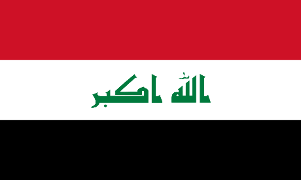
On Monday, the voting began in northern Iraq in an independence referendum organized by Kurdish authorities. Turnout among 5.2 million eligible voters was 78 percent, the Kurdish Rudaw TV station said, and vote-counting had started. The national regime in Baghdad, as well as Turkey and Iran, do not agree with the referendum, openly threatening its organizers. More internationally there was the fear that the vote may ignite yet more regional conflict. Final results were announced within 72 hours. As expected, the Kurds overwhelmingly voted in favor of independence from Iraq.
Uganda – Protests over the planned amendment of the Constitution to lift the presidential age-limit spread over the country of Uganda this week. – https://mg.co.za/article/2017-09-26-ugandan-police-shut-down-protests-over-presidential-age-limit-bill/
South Africa – On Wednesday, thousands of South Africans will march against corruption under President Jacob Zuma’s rule, in protests led by unions which have backed a rival to the president’s faction as the next leader of the ANC. – https://www.aljazeera.com/news/2017/09/thousands-march-corruption-south-africa-170927092332199.html
Poland – On Monday, the European Commission called for Poland to seek European legal advice on two draft judicial reform laws put forward by President Andrzej Duda, to check that they comply with European democratic standards. – https://www.reuters.com/article/us-poland-judiciary-eu/eu-calls-for-legal-commission-to-vet-new-polish-judicial-reform-laws-idUSKCN1C0205?il=0
Rwanda – Early on Friday, Human Rights Watch reports on Rwandan authorities arresting, forcibly disappearening, and threatened political opponents since the August 2017 presidential elections. Those targeted include a would-be independent presidential candidate, Diane Rwigara, and her family members and supporters, and several leaders and members of the Forces démocratiques unifiées (FDU)-Inkingi opposition party – https://www.hrw.org/news/2017/09/28/rwanda-post-election-political-crackdown
This website uses cookies to improve your experience. By closing this message, you consent to their use in accordance with our cookie policy, unless you have disabled them. ACCEPTRead More
Manage consent
Privacy Overview
This website uses cookies to improve your experience while you navigate through the website. Out of these, the cookies that are categorized as necessary are stored on your browser as they are essential for the working of basic functionalities of the website. We also use third-party cookies that help us analyze and understand how you use this website. These cookies will be stored in your browser only with your consent. You also have the option to opt-out of these cookies. But opting out of some of these cookies may affect your browsing experience.
Necessary cookies are absolutely essential for the website to function properly. This category only includes cookies that ensures basic functionalities and security features of the website. These cookies do not store any personal information.
Any cookies that may not be particularly necessary for the website to function and is used specifically to collect user personal data via analytics, ads, other embedded contents are termed as non-necessary cookies. It is mandatory to procure user consent prior to running these cookies on your website.