
Author: Canvas User

1. Building unity through articulating a strong “vision of tomorrow”
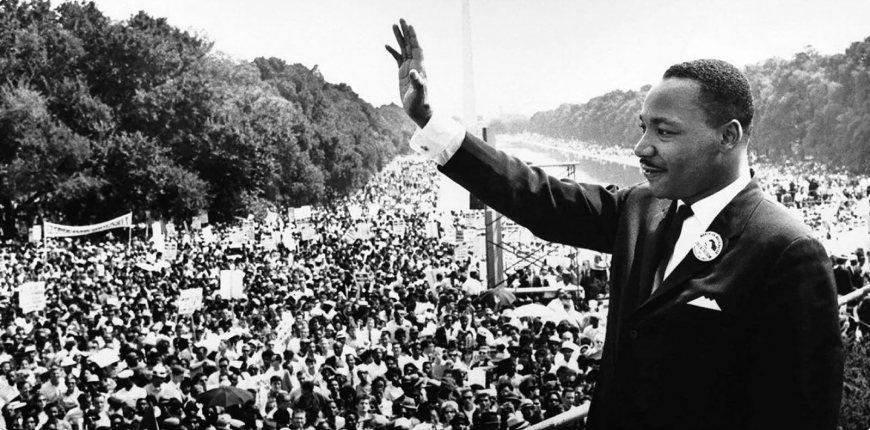
If “divide and conquer” is a common approach of the powerful, creating sources and bonds of unity within movements and across alliances is an essential countermeasure. A shared vision of a better tomorrow provides hope to act and guidance for the difficult path to come. Creating that vision with others is the basis for strong alliances and shared struggle. Successful campaigns have created visions with broad appeal that energize the numbers of people needed to win.
In this lesson, participants will see the importance of setting goals that establish a strong sense of unity for their movement. They will learn the steps necessary for creating a vision that appeals to broad numbers within your spectrum of allies and reflects the needs of the people.
Objectives:
- Understand the role of “vision of tomorrow” in creating effective nonviolent struggles
- Map and analyze various groups/stakeholders/organizations that may be critical parts of your future movement
- Given that a number of people are in the middle of the political spectrum, understand the power of appealing to broader numbers
- Develop leadership skills to create a powerful vision, including:
- Listening to the needs of people rather than telling them what to do
- Identifying the steps of designing an effective process and following them.
1.1 Exercise
Participants will be instructed on how to prepare/present their Vision of Tomorrow and Spectrum of Allies exercises. Sample PowerPoint slides will be provided in order to prepare more uniformed presentations. After participants present their Vision of Tomorrow, they will receive feedback from CANVAS trainers and the other participants. While participants are presenting their visions, trainers will be coaching them. Other participants, if any, are involved and will be invited to ask specific questions to contribute to the session.
2. Analyzing power in society/Pillars of support/Powergraph

The pluralistic theory of power defines a basis for viewing political power and some of its sources. A “relational view” of power argues that power rests on popular consent, and that no system can stand without the cooperation of the people. Activists will study “pillars of support,” a concept that helps to identify what key groups may support a nonviolent movement’s opposition and what key groups are available to support nonviolent mobilizations.
This will be followed by a discussion of how to shift the loyalties of your target group’s supporters so they can be mobilized by you. Then, the module will explore how power graphs visually depict societies so that participants can discern patterns in societal behavior, achievements of nonviolent movements and mobilizations, and practical plans for future campaigns.
Objectives:
- Understand the sources of power and how they work
- List the key groups within the society that can support the campaign or a movement
- Determine patterns in behavior over the certain period on time during important events to be able to understand and predict how loyalties change
2.1 Exercise
In part one of this exercise, participants will list the most important pillars within their society and then visually present how pillars change their ranking during certain events in the past. In part two, participants will analyze and rank specific institutions/organizations that need to be converted or influenced in order for positive change to take place. The aim is to have them use the given format for strategic and tactical planning in a nonviolent struggle, then analyze and present detailed overview of future strategic approach towards selected pillars of support.
3. Strategies and Tactics of Nonviolence

Tactics are concrete activities designed to serve strategic purposes. Each tactic should be chosen based on requirements of strategy, with clear ideas of which pillar (institution) is being targeted and what the intended goal is. This session will explain how the purpose of each tactic employed by nonviolent movements should fulfill one of the following three purposes:
- Disrupting your opponent/their pillars of support
- Mobilizing your own movement, or
- Influencing the neutral audience in your spectrum of allies.
This module goes into detail about both mobilization and disruption tactics. It discusses what these tactics are, highlights elements like “dilemma actions” “laughtivism” and the “cool” factor, and explains how they relate to mobilization of support and disruption of an opponent’s “business as usual”. As part of the session, participants will look at successful examples of tactics and use them to conduct cost/benefit analyses of the tactics they brainstorm later on.
Objectives:
- Introduce and understand the relationship of tactics to strategy
- Understand key concepts used in the formation of strategy and how they are useful to planning and conducting a campaign
- Understand the concept of targeting
- Develop skills needed to understand the costs and benefits (as they relate to the key resources of a movement: material resources, human resources, and time) of tactics selected for a campaign
3.1 Exercise
At the end of the session, participants will be instructed on how to prepare/present a cost-benefit analysis for selected tactics. Sample PowerPoint slides will be provided in order to prepare more uniformed presentations. The goal of this exercise is to create either a disruptive tactic for your opponent, a mobilization tactic for members and supporters of your movement, or a tactic by which your movement will weaken a pillar of support important for your opponent.
4. Targeted communication: Message development

When mobilizing the public, communication should be carefully planned and precisely targeted. Participants will gain insight into the importance of targeted communication, analyze their most important target audiences, discuss the elements of a good message, consider the role of messengers and feedback, and walk through how to develop communication plans.
Objectives
- Learn how to change public opinion about an issue
- Understand how to modify the habits and behavior of the public in relation to that issue
4.1 Exercise
Participants will design proper messages and messengers for different targeted groups. Sample Power Points will be provided to participants to guide them through the exercise. The goal of this exercise is to help participants create the right message and prepare them for an opponent’s propaganda attack, which is increasingly likely as the movement becomes perceived as a growing threat.
5. Visual communication and importance of branding

When mobilizing, the use of visuals and branding helps activists to target an audience by giving them a way to relate to, and be inspired by, the movement. This module will help activists articulate visual messages through various mediums and help them mobilize a wider audience. The content of this lesson addresses the “carriers” of political and social messages, the means of selecting the best messengers (media), and the importance of using symbols and branding in nonviolent struggle.
Objectives
- Make a movement or a campaign recognizable
- Understand the key elements of good visuals and the importance of branding
5.1 Exercise
Participants will analyze previous visuals used in their campaigns and try to come up with new or redesigned symbols with the help of CANVAS trainers & designers.
6. How to make big stories out of small news – Using Media and Social Networks in NVS

This module addresses new developments in media evolution and examines the importance of new media and social networks in civil mobilization and NVS. Trainers will explain how to communicate with the media and how to approach journalists with focus on how to gain their trust and how to make a small local story big. Additionally, participants will discuss how “citizen journalism” works in more oppressed societies.
Objectives
- Understand the importance of media in NVS and how they work
- Make action plans and campaigns into news
6.1 Exercise
Participants use one of the action plans and transform it into a news piece. They will choose what content, pictures, and videos are best suited for the post.
7. Fundraising in early stages of the movement

This module helps activists achieve initial sustainability by fundraising from friends, family, and close members of theircommunity in the early stages of the movement/organization. They will also answer questions like: how to cultivate your members’ financial and in-kind non-financial contributions (e.g. free transport, printing, office space contributed by supporters); how to address the “business” pillar of support; what some methods of fundraising are; how to approach and talk to donors; what the pros and cons of fundraising from international donors are; how to decide if and when to partner with other CSO’s; how to run a crowdfunding campaign; how to write grant applications and reports; how to identify the best format and preferred language for international donors; and how to deal with potential accusations coming from authorities regarding sources of funding
Objectives
- Understand different approaches in fundraising
- Learn different fundraising methods
- Learn how to obtain and expend donor community
7.1 Exercise
Using the planned campaign or action plan, participants prepare a budget based on the template provided, list all potential donors (individuals, organizations, companies…) that might support their campaign/movement/action, and link them to the budget category when appropriate.
8. Plan Format

Planning is essential to effective action; the discipline of investing resources into planning is an essential leadership skill. There are many methods of planning that are often taught as orthodoxy: first this step, then this step, and so on.Yet, in a contested struggle, planning is an iterative process that both projects where we want to go and subjects the plan to reality checks of the availability of resources, the most precious of which is time. This is the art of both planning forwards and backwards.
Objectives
- Understand the importance of strategic and tactical planning
- Produce detailed plans for a future activity or campaign that is to be implemented after the workshop
8.1 Exercise
After understanding the planning format for strategic/tactical planning in a nonviolent struggle, participants will use it to analyze and present a detailed overview of a future strategic approach aimed towards selected pillars of support.
9. Movement Start Up
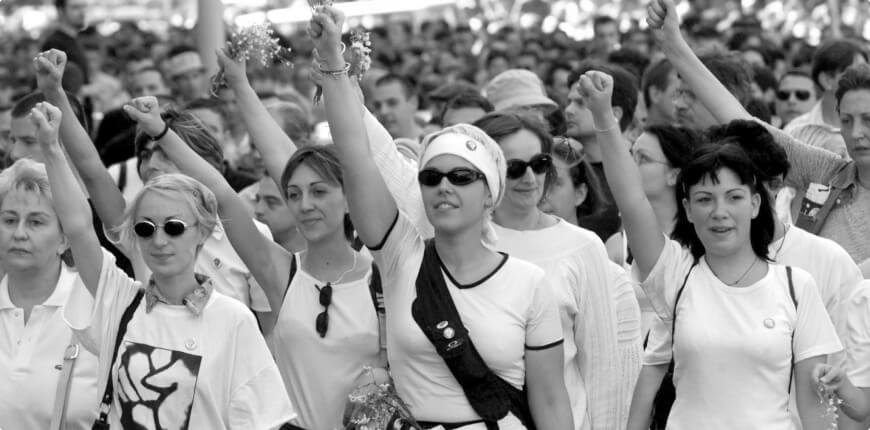
As nonviolent social change depends on participation, the numbers that one can bring into a movement are essential for its success. This module explains the principles of creating an ‘army of change’ throughout three basic stages of the movement. It examines case studies of effective recruitment, then discusses training and informing new members about the movement, as well as getting them involved in initial actions. The key for emerging movements is always to explore ways to recruit the first 100-200 members, as this is the number needed to enable a movement to be engaged in dozens of different tactics. This is also the number needed to engage and train members (recruit-train-act).
Objectives
- Understand the importance of human resources in nonviolent movements
- Understand the concept of the “recruit-train-act” triangle
- Develop a short “one-pager” for the movement that will serve as introductory material for freshly recruited members
- Develop a database of volunteers
9.1 Exercise
Participants will create a “Movement Manifesto,” identify useful skills for their movement, and adapt their own “Activist Cards.” In addition, participants will be encouraged to brainstorm recruitment opportunities and explore ‘low-risk-low-investment’ tactics to employ in their movement. Participants will get the chance to present their “Movement Manifesto” and receive feedback from trainers.